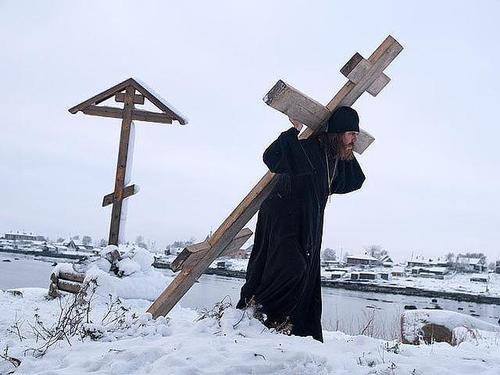
A hideous and impure passion! All evil catches a fish in this murky water! God does not even want to hear about a proud person! He takes all grace away from him, so that he might stumble—maybe then he will become humble, as the Scripture says (cf. 1 Pet. 5:5).
He abandons him, and that person becomes a great abomination; He takes from him all sense of beauty, leaves him to roam around in chaos, in all manner of filthy back alleys of the world. He has no image, or likeness, or healthy reason. The holy fathers say truly, “Wherever there was a fall, pride first did its work.” No other passion will liken you to a devil like pride.
All passions can, let’s say, be excused due to nature and bad life circumstances; but pride cannot be justified by anything! It has an unbearable insolence—it attaches itself to any virtue if it can, and it even hides behind humility, which serves as its shield. We see this very often, and to prove what I am saying, it is as one father said: “That proud one is so humble!”
Because it is so dangerous and so broadly present in all ages and ranks, it would be good if no one would disdain any person, no matter how unimportant he may be—for Christ is within him—and would even ask his opinion, even if it is for a lark. This would be the first step, one length along the path of the Gospels.
It would be good to ask everyone’s opinion, no matter who you are; for who knows? After all, God’s grace rests more often upon the simple and unnoticed. Make a prostration, as they say, if only for the sake of humbling the body—for this also shows good manners—and you will see how much you need these people with whom God has assigned you to live. You will see, and will be convinced in life that wisdom really does abide more in places where there is humility—for God is there.
Lucifer fell irreparably; his grandiose fall happened due to one word only: “I”. Having fallen, he became an adversary for eternity, an abomination of desolation. Let no one be deceived, thinking that without true purification in the only water of humility he can enter into the Kingdom from which the angels fell!
These are, in brief, my thoughts and exhortations about this, so that one might realize that God created us beautiful only for Himself!
~Elder Arsenie of Romania

Love the poor and co-suffer with them, so God may also have mercy on you.
Do not rebuke those sorrowful at heart, that you might not be paid back with the same rod, so that when you’ll seek for someone to have mercy on you, you might find him there!
Remember that you also bear a mortal body, and do good to all with no exception.
Discernment is greater than all other virtues.
Do not reproach anyone for their sins, but consider yourself responsible for everything, even for your neighbor’s sins.
It is better to be despised than to despise. It is better to be insulted than to insult another.
Do not live with a proud man, so that your soul would not lose the grace of the Holy Spirit becoming thus the habitation of evil passions.
He who flees the vain glory of this world, feels the glory of the future life in his soul.
Despise repose and a comfortable existence, so that you might preserve your thoughts in tranquility.
Avoid meeting excessively with others and take care of your own soul, so that you might preserve her peace.
Avoid small sins, so that you might not fall into greater ones.
It is more profitable to resurrect your soul from the passions, contemplating the Divine, than it is to raise the dead.
Many have done wondrous deeds, raised the dead, and labored in asceticism; they worked great miracles in order to bring the lost to the path of salvation. Many have been brought to God through their efforts. However, many who raised the dead have fallen into shameful passions and by their sinful deeds that became known, have led many into temptation. In reality they themselves were sick, but instead of caring for their own soul, they threw themselves into the open sea of this world in order to heal and save the souls of others, thereby ruining both their hope and their souls.
Whoever despises the seductions and distractions of the mind that come from worldly affairs will meet his Master and Lord in his heart.
So that the Lord might pay attention to our virtues, they must be accompanied by physical temperance and a pure conscience.
It is better to live with eagles than with the greedy and insatiable.
It is better to live with a crippled and outcast person than with a proud man.
It is better to be persecuted than to persecute; it is better to be crucified than to crucify; it is better to be insulted than to insult; it is better to be slandered than to slander others.
Self-justification has no place in the life of a Christian, for it’s not found in any of Christ’s teachings.
If you love meekness, you will find peace in your soul. And if you become worthy to acquire peace, you will rejoice in any trial.
God forebears all our infirmities, but He cannot bear one who constantly murmurs, so He punishes him in order to correct him.
The lips and the heart that give thanks to God in any trial or temptation receive His blessing and Divine grace.
God’s grace is preceded by the humble thought, but God’s punishment is preceded by high-mindedness.
When your life is according to God, do not be saddened over afflictions or your passions, for God will lift them from you one day. Fear not death, my child for God has prepared greater things in order to raise us above death.
Elder Justin Pârvu

What is our responsibility when it comes to using our financial resources to help the needy? Are to give all we have to the poor? The spiritual issue involved is about our love of money and our priority given to efforts to the acquisition of more and more for our own benefit and a luxurious life style. As Paul said in his letter to Timothy, "For the love of money is the root of all evil" (Tim 6:10). In our alms giving we need to be reasonable as well as compassionate. We must remember that we have responsibilities to our family which need to be met.
Here is advice from Elder Marcarius,
Living in the world, surrounded by your family, you cannot possibly give away all of your possessions. So you must aim at finding the golden mean, and strive to keep to it: never turn your back on the world, but see to it that the world does not engross you. All things that your children require you should carefully keep for them. Any surplus of any kind, give away to the needy.He emphasizes the idea of reasonableness. This is important as the needs of the needy are very large and one person cannot possible fulfill them all. Our good intentions to give all we have to help others must be tempered with reason.
Elder Macarius says,
Give your mite with a feeling of deep compassion. But above all be reasonable.
Even if you gave all you had, you could not properly alleviate the intense misery of them all. On the other hand you have your family to care for and must strive to keep them comfortable, although it is right to dispense all luxury for yourself and them.A part of this reasonableness is to avoid lavish spending. Every luxury can be seen as taking something away from those who do not have what they need for basic daily life.
Finally the Elder says,
Humble yourself and find peace.
I recommend careful examination of your own expenses, with a view to cutting down a margin of unnecessary little luxuries.

It is just as shameful for lovers of the flesh and the belly to search out spiritual things as it is for a harlot to discourse on chastity.
- St. Isaac the Syrian
Offer to the Lord the weakness of your nature, fully acknowledging your own powerlessness, and imperceptibly you will receive the gift of chastity.
- St. John of the Ladder
The good Lord shows His great care for us in that the shamelessness of the feminine sex is checked by shyness as with a sort of bit. For if the woman were to run after the man, no flesh would be saved.
- St. John of the Ladder
Those who are inclined to sensuality often seem sympathetic, merciful, and prone to compunction; while those who care for chastity do not seem to have these qualities to the same extent.
- St. John of the Ladder
Indeed, who was ever able to grasp Christ or His Spirit perfectly without first purifying himself? Chastity is the exercise which from childhood prepares the soul for glory by making it attractive and lovable, and with ease brings this adornment for her to the next world untried. It holds up great expectations as the reward for small toil and renders our bodies immortal. It is only fitting then that all should gladly praise and esteem chastity above all other things; some, because by practicing virginity they have been espoused to the Word: others, because by chastity they have been emancipated from that condemnation, "Earth thou art, and unto earth thou shalt return".
- St. Methodius of Olympus

Ὁ Υἱός τοῦ Θεοῦ ἔγινε ἄνθρωπος, γιά νά χαρίσει ξανά στόν ἄνθρωπο, ἐκεῖνο γιά τό ὁποῖο τόν προόρισε. Τόν δημιούργησε σύμφωνα μέ τή δική του εἰκόνα· ἐλεύθερο, προορισμένο νά τοῦ μοιάζει, νά εἶναι ὅπως κι ὁ ∆ημιουργός του τέλειος, ἐνάρετος.
Ὁ Θεός λοιπόν, δημιούργησε τόν ἄνθρωπο σέ πλήρη κοινωνία μαζί του. Ἐμεῖς ὅμως, αὐτά τά γνωρίσματα τῆς θείας φύσης, τά ἀλλοιώσαμε καί τά μπερδέψαμε· περάσαμε στή παράταξη τῆς κακίας, μέ ἀποτέλεσμα, νά χάσουμε τήν κοινωνία μέ τό Θεό. Κι ὅταν πιά στερηθήκαμε τή ζωή, πέσαμε στή φθορά τοῦ θανάτου.
Ἐπειδή τώρα ὁ Θεός μᾶς πρόσφερε τό ὕψιστο καί δέν τό διαφυλάξαμε, χρειάστηκε νά κατέβει αὐτός στό χείριστο, δηλαδή στή δική μας ξεπεσμένη φύση. Ἔγινε ἄνθρωπος γιά
νά μᾶς ξαναδώσει τήν πρώτη εἰκόνα.
νά μᾶς διδάξει τήν ἐνάρετη ζωή.
νά μᾶς ἐλευθερώσει ἀπ’ τή φθορά καί τό θάνατο.
νά μᾶς ἐπαναφέρει σέ κοινωνία μαζί Του.
νά ἀνοίξει τό δρόμο τῆς δικῆς μας ἀνάστασης.
νά λύσει τά δεσμά τῆς κυριαρχίας τοῦ διαβόλου.
νά μᾶς γεμίσει κουράγιο.
νά μᾶς ἐκπαιδεύσει νά πολεμοῦμε τόν τύραννο, μέ τήν ὑπομονή καί τήν ταπείνωση.
Αὐτά εἶναι τά ἀποτελέσματα τῆς παρουσίας τοῦ Χριστοῦ. Ἔσωσε ὅλους τούς ἀνθρώπους ἀπ’ τή φθορά τῆς ἁμαρτίας καί τοῦ θανάτου. ∆έν τούς ἀνάγκασε μέ τή βία, νά ἀσκήσουν τήν ἀρετή· τούς δίδαξε νά ἀκολουθήσουν τό δρόμο Του μέ πραότητα, μέ ὑπομονή καί μέ συγχωρητικότητα.
Πρίν γεννηθεῖ ὁ Χριστός, οἱ ἄνθρωποι πού ἁμάρταναν, τιμωροῦνταν μέ θανάσιμα χτυπήματα· κι ὅμως ἐπέμεναν στήν ἁμαρτία, πού τήν εἶχαν θεοποιήσει· τώρα ὅμως, γιά χάρη τῆς ὑπακοῆς τους στό Θεό, δέχονται συνέχεια χτυπήματα· καί γιά χάρη τῆς ἀρετῆς, καταδέχονται νά κακοπαθοῦν καί νά θανατώνονται.
∆όξα σέ σένα Χριστέ, Λόγε τοῦ Θεοῦ καί Σοφία καί ∆ύναμη καί Θεέ Παντοκράτορα. Τί δῶρα ἀντάξια νά σοῦ προσφέρουμε ἐμεῖς οἱ ἄπραγοι, γιά ὅλα ὅσα μᾶς χάρισες;
Ἐσύ ὅλα μᾶς τά ἔχεις δώσει πλούσια. Μόνο ἕνα ζητᾶς ἀπό ἐμᾶς· νά ἀποδεχτοῦμε τή σωτηρία, πού μᾶς πρόσφερες, δίνοντάς μας συγχρόνως καί τή δύναμη νά τήν πετύχουμε.
Σ’ εὐχαριστοῦμε, Ἐσένα πού μᾶς ἔδωσες τήν ὕπαρξη, μά καί μᾶς χάρισες τήν αἰώνια ζωή· Ἐσένα, πού κι ὅταν τή χάσαμε καί τήν ἀρνηθήκαμε, μᾶς ὁδήγησες πίσω σ’ αὐτήν, μέ τήν ἐναθρώπησή Σου, πού καμμιά γλῶσσα δέν τολμᾶ νά ἑρμηνεύσει.
Ἅγιος Ἰωάννης ὁ ∆αμασκηνός

Τὸ χειρότερο πρᾶγμα γιὰ τοὺς ἀνθρώπους εἶναι ὁ θάνατος: τὸ νὰ γίνω λάσπη, νὰ μεταβληθῶ σὲ σκουλήκια, σὲ πηλό! Ἀξίζει τάχα νὰ εἶναι κανεὶς ἄνθρωπος; Γιατὶ νὰ σὲ ἀγαπήσω, Θεέ μου, ἀφοῦ αὔριο θὰ μεταβληθῶ σὲ σκουλήκια καὶ πηλό;
Νά, ὅμως, ποὺ ὁ Κύριος Ἰησοὺς Χριστὸς σὲ σώζει ἀπὸ τὸν θάνατο διὰ τῆς Ἀναστάσεώς Του, ἐξασφαλίζει τὴν αἰώνιο ζωὴ γιὰ τὴν ψυχή σου καὶ τὸ σῶμα, ὅταν ἐκεῖνο θὰ ἀναστηθεῖ λαμπερό καὶ θά ἐνωθεῖ μὲ τὴν ψυχή.
Γι' αὐτὸ καὶ ὁ Κύριος Ἰησοὺς ἔχει τὸ δικαίωμα νὰ ἀποκαλεῖται ὁ Μόνος Φιλάνθρωπος, ὁ μόνος ἀπὸ κατασκευῆς κόσμου μέχρι τῆς Φοβερᾶς Κρίσεως.
Μονάχα ἐκεῖνος ποὺ νίκησε τὸν θάνατο εἶναι ὁ Μόνος Φιλάνθρωπος καὶ ὅλα τὰ ἄλλα εἶναι ἁπλὲς φλυαρίες.
Καὶ οἱ κουλτούρες, οἱ πολιτισμοί, οἱ ἐπιστῆμες καὶ οἱ τέχνες; - Τὶ ἀστεῖα πράγματα! Μὰ τὶ νὰ τὴν κάνω τὴν τεχνολογία καὶ τὴν ἐπιστήμη ὅταν μὲ μεταβάλουν σὲ σκουλήκια καὶ λάσπη;
Ἐκεῖνος εἶναι ὁ μόνος φιλάνθρωπος, αὐτὸς ποὺ μὲ ἐλευθερώνει ἀπὸ τὴν ἁμαρτία, τὸν θάνατο καὶ τὸν διάβολο. Γιατὶ ὁ διάβολος εἶναι ὁ ἐφευρέτης τῆς ἁμαρτίας καὶ μαζὶ μ' αὐτὴν καὶ τοῦ κακοῦ.
Αὐτὸ εἶναι ἡ ἀγάπη τοῦ Χριστοῦ πρὸς τὸν ἄνθρωπο: ἡ λύτρωση ἀπὸ τὸν θάνατο. Λέει ἡ δεύτερη μεγάλη ἐντολή: «Ἀγαπήσεις τὸν πλησίον σου ὡς σεαυτόν» .
Πότε ἁγαποῦμε λοιπόν πραγματικὰ τὸν ἄνθρωπο; Ὅταν τὸν λυτρώνουμε ἀπὸ τὴν ἁμαρτία του, ἀπὸ τὴν κόλαση... αὐτὴ εἶναι ἡ γνήσια ἀγάπη πρὸς τὸν ἄνθρωπο.
Ἀπατᾶ ἑαυτόν ὁποῖος νομίζει πῶς ἀγαπᾶ τὸν ἄνθρωπο ἐνῶ ἐγκρίνει τὶς ἁμαρτίες του καὶ ἀναπαύει τὰ πάθη του. Τότε ἀγαπᾶ τὸν θάνατό του καὶ ὄχι τὸν ἴδιο.
Μονάχα ὅταν ἀγαπᾶ κανεὶς τὸν ἄνθρωπο διὰ τοῦ Χριστοῦ -μέ ὅλη τὴν ψυχή καὶ τὴν δύναμή του- τότε τὸν ἀγαπᾶ ἀληθινά.
Θὰ ρωτήσει κάποιος: καὶ ἡ ἀγάπη τῶν γονέων πρὸς τὰ τέκνα; Καὶ ἡ ἀγάπη τοῦ συζύγου πρὸς τὴν σύζυγο; Καὶ ἡ ἀγάπη τοῦ ἀνθρώπου πρὸς τὴν πατρίδα; Δὲν εἶναι καὶ αὐτά ἀγάπη; Τὰ ἀνομάζουμε βέβαια ὅλα αὐτά ἀγάπη ἀλλὰ εἶναι ἄραγε ἔτσι;
Ὅλα αὐτά δὲν ἔχουν ἴχνος ἀγάπης ἐάν δὲν εἶναι ὁ Χριστὸς ἡ δύναμη ἐκείνη μέσα ἀπὸ τὴν ὁποία ἀγαπᾶμε. Ἄν ὁ πατέρας δὲν ἀγαπᾶ τὰ τέκνα του μὲ τήν ἀγάπη τοῦ Χριστοῦ, ἄν δὲν τὰ παιδαγωγεῖ στὸ ἀγαθό, ἄν δὲν τὰ ὁδηγεῖ στὸν ἴσιο δρόμο, ἄν δὲν τὰ διδάσκει νὰ σωθοῦν ἀπὸ τὴν ἁμαρτία, παρὰ μονάχα τὰ χαϊδεύει καὶ τὰ κολακεύει, τότε τὰ μισεῖ καὶ τὰ φονεύει.
Ἄν πάλι, ὁ σύζυγος ἀγαπᾶ τὴν σύζυγο μονάχα σαρκικά, γίνεται ὁ φονιάς της. Ἔτσι συμβαίνει μὲ κάθε γήινη, σαρκικὴ ἀγάπη.
Άγιος Ιουστίνος Πόποβιτς
-Dstructive thoughts destroy the stillness within. and then we have no peace.
Elder Thaddeus of Vitovnica
-The mind of someone affected by listlessness is filled with nothing but vain distraction.
St. John Cassian
-It is necessary for us to hasten to repentance before sin becomes a habit for us,because then, it is impossible for us to be saved.
St. Nectarios of Aegina
Since our sweet Jesus is so good, compassionate and kind, why should you
despair ? We seek one small thing from Him, and He gives us so much! We
ask for one beam of light , and He gives us Himself as all Light, Truth, and
Love. So humble yourself and rest all your hope in Him.
Elder Joseph the Hesychast

The Panagia is the most exciting person in history. The Fathers of the Church, in their hymnology and theology, do not hesitate to compare her with the angels to privilege her own holy person. They greet her as "more honorable than the Cherubim and beyond compare more glorious than the Seraphim".
Indeed the Panagia has a uniqueness. First, she is the greatest benefactor of mankind. Through her our Lord the God-man took human nature and made it possible for every person to have communion with Him. Second, she is the closest creature to God with the greatest boldness before Him, "for the prayer of a Mother avails much to the good will of the Master". Third, she is the nearest to each of us individually. She is closer to us than our closest relatives, closer to us even than our guardian angel, and she is more of a mom than our mother. Fourth, the Panagia is also connected personally with the greatest miracle in the history of the world - the Divine Incarnation. Lastly, the Panagia, as the Mother of God, introduces us to the greatest mystery for which "every tongue is at a loss to praise you as is due" in as much as it reflects on how through the gate of the body of the Divine Mother our Lord and God entered into history and His world "in the form of a servant".
These five distinctive features also identify five internal experiences that are born out of our communion with her. This relationship causes the deepest gratitude that a person could feel, which is why we cannot thank and glorify her enough. She also invites us to have the firmest confidence, which makes us seek her help even for our most difficult problems: "No one is turned away from you, ashamed and empty, who flee unto you, O Pure Virgin Theotokos; but one asks for the favor, and the gift is received from you, to the advantage of their own request." We also feel the sweetest, warmest and most deepest comfort together with her. This is why among the names we ascribe to her we also call her the following: Comforter (Paramythia), Consolation (Parigoritissa) and Sweet-kissing (Glykofilousa). The great theological Fathers, such as Saint John of Damascus, Saint Gregory Palamas, and Saint Nikodemos the Hagiorite, express the awe and wonder of the Church with unique hymnography and dogmatic formulations in an effort of gratitude and glorification to put into words the miracle of her virginity. Finally, every prayer to the Mother of God endows us with interior illumination that can illuminate our human soul.
I pray that God will allow to exist essential fruitfulness in our prayers and that the Panagia will redeem us from all our needs, sorrows, pains and daily difficulties, and that she especially accomplishes for each of us that secret prototype for another life in grace and spirit.
+ Metropolitan Nicholas of Mesogaias and Lavriotikis
http://www.johnsanidopoulos.com/2013/08/the-most-exciting-person-in-history.html

-Γέροντα, όταν έχουμε ένα αίτημα για κάποιο σοβαρό θέμα, μήπως πρέπει η προσευχή να συνοδεύεται με νηστεία;
Αυτό δεν χρειάζεται συζήτηση· είναι κάτι το οποίο επιβάλλεται. Η νηστεία, η άσκηση, είναι προϋποθέσεις. Αλλά για να γίνει σωστή προσευχή, πρέπει να πονάει κανείς για τους άλλους. Γιατί είναι και τυπικό πολλών χριστιανών της εποχής μας να μη θέλουν να στενοχωρηθούν.
Και συνταξιούχοι ακόμη που όλη μέρα κάθονται, δεν πάνε να πλησιάσουν ένα παιδί εγκαταλελειμμένο, γιατί αυτό έχει φασαρία. Θα φάνε, θα πιουν τον καφέ τους και θα κάνουν έναν περίπατο, θα πάνε σε ένα νοσοκομείο που έχει νοσοκόμους, σε κάτι οργανωμένο, για να δουν έναν άρρωστο, γιατί αυτό είναι πιο εύκολο. Πάλι δηλαδή για να ευχαριστηθούν, οπότε αναπαύουν και τον λογισμό τους ότι έκαναν το καθήκον τους. Πόσους έχω στριμώξει να βοηθήσουν κάτι παιδάκια εγκαταλελειμμένα! Αυτοί τίποτε.
Στο Άγιον Όρος έκαναν κάπου Λιτανεία για την ανομβρία και, αντί να βρέξει, έπιασε πυρκαγιά! Δεν γίνεται λιτανεία σαν να κάνουμε περίπατο. Θέλει να πονέσουμε.
Μπορεί να παραμείνει πειρασμός ή μια δύσκολη κατάσταση, αν κάνουν καρδιακή προσευχή οι καλόγεροι; Παρ' όλα τα δύσκολα χρόνια βλέπω στα μοναστήρια να επικρατεί ένα πνεύμα... Να είμαστε χαρούμενοι! Εδώ καίγεται ο κόσμος!
Μας ζητούν να κάνουμε μια αγρυπνία, ας υποθέσουμε, για έναν άρρωστο, και ψάλλουμε «Ανοιξαντος Σου την χειρα» και χαιρόμαστε. Εμείς περνάμε ευχάριστα την ώρα μας και ο άλλος εν τω μεταξύ πεθαίνει. «Κάνουμε, λέει, αγρυπνία για τον άρρωστο». Τι αγρυπνία; Εσείς κάνετε διασκέδαση. Αυτό είναι πνευματική διασκέδαση.
Μερικές φορές, ούτε όταν ο ιερέας λέει «Υπέρ των εν ασθενειαις κατακειμενων», προσευχόμαστε για τον άρρωστο. Θα βοηθούσαμε πιο θετικά, αν κάναμε και λίγη ευχή με το κομποσχοίνι. Δεν λέω να καταργήσουμε τις πανηγυρικές αγρυπνίες που προβλέπει το τυπικό, αλλά σε τέτοιες περιπτώσεις να διαθέτουμε και λίγη ώρα, για να κάνουμε τουλάχιστον ένα-δυο κομποσχοίνια λέγοντας «Κύριε Ιησού Χριστέ, ελέησον τον δούλο σου».
Όλη η βάση είναι η ποιότητα της προσευχής. Η προσευχή πρέπει να είναι καρδιακή, να γίνεται από πόνο. Για τον Θεό δεν μετράει τόσο η ποσότητα της προσευχής όσο η ποιότητα. Η προσευχή που γίνεται στα μοναστήρια έχει ποσότητα, αλλά δεν φτάνει αυτό· πρέπει να έχει και ποιότητα. Τόσες ώρες προσευχή που γίνεται από τόσα άτομα, αν ήταν καρδιακή θα είχε αλλάξει ο κόσμος. Γι' αυτό σκοπός είναι οι Ακολουθίες να γίνονται από την καρδιά.
Η καρδιακή προσευχή βοηθάει όχι μόνον τους άλλους αλλά και τον ίδιο τον εαυτό μας, γιατί βοηθάει να έρθει η εσωτερική καλοσύνη. Όταν ερχόμαστε στην θέση του άλλου, έρχεται φυσιολογικά η αγάπη, ο πόνος, η ταπείνωση, η ευγνωμοσύνη μας στον Θεό με την συνεχή δοξολογία, και τότε η προσευχή για τον συνάνθρωπό μας γίνεται ευπρόσδεκτη από τον Θεό και τον βοηθάει.
Γεροντας Παϊσιος
Ρίξτε το μεγαλύτερο βάρος του αγώνος σας στην προσευχή, γιατί αυτή θα σας κρατάει σε επαφή με το Θεό. Και η επαφή αυτή πρέπει να είναι συνεχής.
Η προσευχή είναι το οξυγόνο της ψυχής,είναι ανάγκη της ψυχής και δεν πρέπει να θεωρείται αγγαρεία.
Η προσευχή για να εισακουστεί από το Θεό, πρέπει να γίνεται με ταπείνωση, με βαθιά συναίσθηση της αμαρτωλότητάς μας και να είναι καρδιακή.
Εάν δεν είναι καρδιακή, δεν ωφελεί. Ο Θεός πάντοτε ακούει την προσευχή του ανθρώπου, που είναι πνευματικά ανεβασμένος.
Η μελέτη της Αγίας Γραφής βοηθάει πολύ την προσευχή, γιατί θερμαίνει την ψυχή και την προετοιμάζει".
Γεροντας Παισιος

Why is it really necessary for Christians to pay attention to the death of Mary the Mother of Jesus? Does it add anything to our spirituality, does it increase our moral sensibilities, does it fill our minds with wisdom? These are interesting questions. I can remember as a Protestant Christian that I would have certainly answered any questions like this in the negative, and I can remember teaching people to believe that the life and contribution of Mary really had nothing to do with their day to day Christian walk. But I’ve certainly changed my mind on this issue. in this episode of Harmony of Thunder we’re going to look again at the sermon of Patriarch Modestus on the Dormition of the Theotokos in order to try and uncover the answer to the question: in what way does our attention to this great feast of the Orthodox Church benefit us as Christians?
Hi, welcome to Harmony of Thunder, where we explore and enjoy the rich tradition of Orthodox preaching. I’m your host, Fr. David Smith. Each week, Harmony of Thunder chooses a sermon from scripture or from the works of a saint and we spend our time together looking at the style, the illustrations, and the spiritual message of the preacher. For the past two weeks we’ve been looking at the sermon entitled, “An Encomium on the Dormition of our Most Holy Lady, Mary, Mother of God and Ever Virgin By Our Father the Holy Modestus, Archbishop of Jerusalem” as found in the book On The Dormition of Mary, Early Patristic Sermons, translated and with an introduction by Brian E. Daley, S.J., and we’ll spend one more week with it. I think he has some answers to our question that will help and enlighten us.
While I don’t address this particular sermon in my book Mary Worthy of All Praise, published by Conciliar Press in 2003, I do speak to the difference between my pre-and post-Orthodox conversion opinion of the Mother of our Savior. If you’d like to hear more about this, I hope you look for it in my book.
Lord Jesus Christ, through the prayers of Your Most Pure Mother and of all the saints, bless your Holy Orthodox Church with great preachers and people who want to hear them. Amen.
There are three aspects of the celebration of the Dormition that add to the spiritual riches of Orthodox Christians. First, the Holy Spirit has designated that this fast and feast become a part of the church. Second, the invisible events which occurred around the falling-asleep of the Mother of God are truly amazing and worthy of recollection. And third, Mary does not cease to be the Mother of God, even after her earthly demise. We not only have her as an intercessor for us before the throne of her Son, but we also must expect that in the eternal Kingdom of God she will continue to play a major role, just as the mothers of earthly kings play an important part in their courts.
First, we have the fact that the Holy Spirit has moved upon the fathers of the church to make the feast of the Dormition of the Theotokos one of the major days of commemoration in the calendar, made even more consecrated by the inclusion of a strict fast during the 14 days preceding. This is part of the opening of Patriarch Modestus’ sermon: “…these inspired prophets (and here he’s speaking of those who were chosen to be “teachers in the Church of Christ our God”), these inspired prophets have been judged worthy to discover sacred writings and to expound them for each holy festival of the Mother of God, and so to escort the devout people towards riches that can never be taken away, toward the Spirit’s most splendid array of honors, towards the divinely designed edification of the orthodox Churches, for the glory of God our Savior.”
The preacher really speaks about two works of the Holy Spirit here. First, the Spirit chooses those who He wants to serve as teachers, prophets and leaders in the Church. When he first mentions those “teachers in the Church of Christ our God,” he specifically says that they were given that place “by the divine grace of the all-holy Spirit.” While it is not the safe prerogative of Orthodox Christians to simply sit back and let the hierarchy do, say, and teach as they please, it is likewise the duty of all Orthodox Christians to understand that a movement of the Holy Spirit has placed these leaders in our midst, and that any criticism must take this important fact into account.
The preacher then speaks of a second gift of the Holy Spirit, which is the actual teaching of these inspired prophets. Let me read a part of the sermon in which he speaks of the miraculous gathering of the apostles at her death: “So the divine apostles, whom we have mentioned before, hastened from every corner of the earth, led and assisted by an impulse from on high, to find that all-holy Mother, through whose offices they had been found by Christ and had been considered worthy of a mission in the Holy Spirit – the highest dignity by far which the Spirit bestows. She had already attained that honor, and was, at that moment, about to receive in addition Christ’s heavenly gifts.” The Brian Daley, the translator of the sermon, points out that the preacher here refers to a comparison of the Spirit’s call upon the apostles and His earlier call to Mary. The Holy Spirit had given her a job to do, a job which, when done properly, would make the call of the apostles possible. Here we see how the Spirit moved upon a series of God-lovers; Mary, then the apostles, then the fathers of the Church, in order to bring to us the amazing story of the salvation of the world, a story in which we play, hopefully, an additional, contemporary role.
Secondly, this great feast of the Dormition feeds our souls by teaching us about the unseen forces that accompanied the events it commemorates. Listen to these remarkable words by Modestus: “Think of it! Holy angels were sent from God to his holy and glorious Mother, to one who is higher than they and all the powers of heaven, the one who had found grace with God; they are sent from heaven on high to one who has been shown by God to be higher and wider than heaven itself – sent now, not to announce the incomprehensible news that God has been conceived, as once the archangel Gabriel did, but to lead her towards the one she conceived, in his heavenly kingdom; not to proclaim her inconceivable childbirth to all the world by bringing good tidings to shepherds, but to receive her with everlasting glory and to let her enter into the ineffable joy of the Lord, who was born of her.”
Now you might say, “How does Modestus know all this?” Look at what he’s done. We have in the Holy Scriptures the clear description of the angelic activity around her giving birth to the Christ. Doesn’t it follow that that there was a similar angelic gathering at her falling-asleep? Certainly! All that Modestus has done is to bring the two events together, as he says: “sent now, not to announce the incomprehensible news that God has been conceived … but to lead her towards the one she conceived.” His witness here is reasonable, poetic, and true.
And finally, we look toward the heavenly kingdom. There Christ is king over all, and every subject bows before him in love. Will his mother just stand to the side as one of the rank and file? Not a chance. Not a chance. If you’re a person who desires to dwell with Christ eternally in the Kingdom of God, you’re a person who is preparing to honor his mother forever, as Modestus says, “They placed in a tomb as in a shrine of life, in the place called Gethsemane – they who had become the eye-witnesses and servants of the Word, and those holy ones who then were in their company. Their desire in doing this was that through her, our kindly and just judge might be rendered merciful towards us – Christ our God, who came forth from her, and who will appear in glory like lightning from heaven, to take his place where the prophets have foretold, to judge the living and the dead with the divine apostles, through the ministry of the holy angels.”
The picture is truly awesome, the lightning, the judgment of the living and the dead, the ministry of angels. This picture is truly awesome, and those who carefully handled the body of the Theotokos after her demise had this awesome picture in their mind. “Remember how we lovingly cared for her body!” we can hear them say, “when you come to judge the earth with awesome power and glory!”
What a lovely sermon this has been, how good it has been to explore and enjoy it! Especially with you, dear listener. I’m still not sure if I’m going to read you a couple of my favorite poems on the Theotokos next week, but I hope you’ll give Harmony of Thunder a listen to find out!
Lord Jesus Christ, born of a virgin, the Savior of the world, grant that we may glorify you with our love for you and your mother as we acknowledge the angelic powers and the reality of your eternal Kingdom, in the name of the Father and of the Son and of the Holy Spirit, one God, Amen.

Ἕνας γέροντας εἶπε:
- Ἂν ἀρρωστήσεις καὶ ζητήσεις ἀπὸ κάποιον νὰ σοῦ δώσει ἕνα πρᾶγμα ποὺ χρειάζεσαι, καὶ δὲν σοῦ τὸ δώσει, μὴ γογγύσεις ἐναντίον του, ἀλλὰ πές:
«Ἂν ἤμουν ἄξιος νὰ τὸ πάρω, θὰ πληροφοροῦσε ὁ Θεὸς τὸν ἀδελφὸ νὰ μοῦ τὸ προσφέρει σὰν ἐλεημοσύνη».
***
Εἶπε πάλι (ὁ ἴδιος):
- Ἂν σὲ κρατήσουν (κάπου) γιὰ τραπέζι καὶ σὲ βάλουν στὴν πιὸ ἀσήμαντη θέση, νὰ μὴ γογγύσει ὁ λογισμός σου (ἐναντίον ἐκείνων ποὺ σὲ φιλοξενοῦν), ἀλλὰ νὰ λές: «Οὔτε κι ἐδῶ ἤμουν ἄξιος (νὰ καθήσω)». Γιατὶ πρέπει νὰ ξέρεις, ὅτι καμιὰ θλίψη δὲν ἔρχεται στὸν ἄνθρωπο, παρὰ μόνο «ἄνωθεν», ἀπὸ τὸ Θεό, εἴτε γιὰ νὰ δοκιμαστεῖ εἴτε ἐξαιτίας τῶν ἁμαρτιῶν του. Καὶ ὅποιος δὲν ἔχει αὐτὴ τὴν πεποίθηση, δὲν πιστεύει ὅτι ὁ Θεὸς εἶναι δίκαιος κριτής.
***
Ὁ ἀββᾶς Ἰσίδωρος εἶπε:
- Ἡ σύνεση τῶν ἁγίων εἶναι τούτη, τὸ ὅτι ἀπέκτησαν ἐπίγνωση τοῦ θελήματος τοῦ Θεοῦ. Γιατὶ ὅλα τὰ νικάει ὁ ἄνθρωπος μὲ τὴν ὑπακοὴ στὴν ἀλήθεια, ἀφοῦ εἶναι εἰκόνα καὶ ὁμοίωμα τοῦ Θεοῦ. Ἀπ᾿ὅλα τὰ πάθη, πάλι, τὸ φοβερότερο εἶναι νὰ ἀκολουθεῖ κανεὶς τὴν καρδιά του, νὰ ὑπακούει δηλαδὴ στὸ θέλημά του καὶ ὄχι στὸ νόμο τοῦ Θεοῦ. Αὐτὸ (τὸ πάθος) στὴν ἀρχὴ μὲν δείχνει ὅτι ἀναπαύει κάπως (ψυχικά) τὸν ἄνθρωπο, ὕστερα ὅμως τὸν ὁδηγεῖ στὴν κατάθλιψη, ἐπειδὴ ἀγνόησε τὸ μυστήριο τῆς θείας οἰκονομίας καὶ δὲν βρῆκε τὸ δρόμο τοῦ Θεοῦ, γιὰ νὰ τὸν ἀκολουθήσει.
*****

Τρία πράγματα ἀποκτᾷ μὲ δυσκολία ὁ ἄνθρωπος - καὶ εἶναι αὐτὰ ποὺ συντηροῦν ὅλες τὶς ἀρετές: τὸ πένθος, τὰ δάκρυα γιὰ τὶς ἁμαρτίες του καὶ ἡ θύμηση τοῦ θανάτου του. Γιατὶ ὅποιος καθημερινὰ συλλογίζεται τὸ θάνατο καὶ λέει στὸν ἑαυτό του, «Μόνο τὴ σημερινὴ μέρα ἔχω νὰ ζήσω σ᾿ αὐτὸν τὸν κόσμο», αὐτὸς ποτὲ δὲν θ᾿ ἁμαρτήσει ἐνώπιον τοῦ Θεοῦ.
Ὅποιος, ἀντίθετα, ἐλπίζει πὼς θὰ ζήσει πολλὰ χρόνια, αὐτὸς θὰ πέσει σὲ πολλὲς ἁμαρτίες.
Ὁ Θεὸς φροντίζει νὰ διατηρεῖ καθαρὸ ἀπὸ τὴν ἁμαρτία τὸ δρόμο τῆς ζωῆς ἐκείνου, ποὺ ἑτοιμάζεται νὰ δώσει λόγο γιὰ ὅλες του τὶς πράξεις στὸ Θεό. Ἐκεῖνος ὅμως ποὺ ἀδιαφορεῖ λέγοντας, «Ἔχω καιρὸ ὡς τότε», βρίσκεται δίπλα στοὺς δαίμονες.
Κάθε μέρα, πρὶν πιάσεις δουλειά, νὰ θυμᾶσαι ποῦ βρίσκεσαι καὶ ποῦ πρόκειται νὰ πᾶς ὅταν χωριστεῖς ἀπὸ τὸ σῶμα. Καὶ μὴν παραμελήσεις οὔτε μία μέρα τὴν ψυχή σου. Νὰ παρακολουθεῖ προσεκτικὰ τὸν ἑαυτό σου, ὥστε πάντα νὰ θυμᾶται, πάντα νὰ ἔχει μπροστὰ στὰ μάτια του τὸ θάνατο καὶ τὰ αἰώνια κολαστήρια καὶ ὅσους βασανίζονται καὶ ὑποφέρουν ἐκεῖ. Καὶ νὰ θεωρεῖς τὸν ἑαυτό σου σὰν ἕναν ἀπὸ ἐκείνους μᾶλλον παρὰ ἀπὸ τοὺς ζωντανούς.
Ἀλίμονό μας! Ἐνῷ πρόκειται νὰ φύγουμε ἀπὸ τὴ γῆ, ὅπου προσωρινὰ κατοικοῦμε, καταπιανόμαστε μὲ πολύχρονες φροντίδες γιὰ γήινα καὶ φθαρτὰ πράγματα. Καὶ στὸν καιρὸ τῆς ἀναπόφευκτης ἀναχωρήσεώς μας ἀπὸ δῶ, δὲν εἴμαστε ἱκανοὶ νὰ κρατήσουμε τίποτα δικό μας.
Ἀλίμονό μας! Γιὰ κάθε πράξη τῆς ἐπίγειας ζωῆς, γιὰ κάθε ἀργὸ λόγο, γιὰ κάθε πονηρὸ καὶ ἀκάθαρτο λογισμό, γιὰ κάθε ἀναθύμηση τῆς ψυχῆς θὰ λογοδοτήσουμε στὸν φοβερὸ Δικαστῆ. Ὡστόσο, λὲς καὶ εἴμαστε ἀνεύθυνοι, μιὰ ὁλόκληρη ζωὴ ἀδιαφοροῦμε γιὰ τὶς ψυχές μας. Γι᾿ αὐτὸ μᾶς περιμένει ἐκεῖ ἡ ἄσβεστη φωτιὰ τῆς γέενας καὶ τὸ μακρινὸ σκοτάδι καὶ τὸ ἀκοίμητο σκουλῆκι καὶ ὁ θρῆνος καὶ τὸ τρίξιμο τῶν δοντιῶν καὶ τὸ αἰώνιο ντρόπιασμα μπροστὰ σὲ ὅλα τὰ οὐράνια καὶ ἐπίγεια δημιουργήματα (Ματθ. 5:22, 8:12, Μάρκ. 9:43-48, Β´Θέσ. 1:8-10).
Ἀλίμονό μας! Τὰ κεντρίσματα καὶ τὰ δαγκώματα τῶν ψύλλων καὶ τῶν κοριῶν καὶ τῶν ψειρῶν καὶ τῶν μυγῶν καὶ τῶν κουνουπιῶν καὶ τῶν μελισσῶν δὲν τὰ ὑποφέρουμε. Δὲν φροντίζουμε ὅμως -οὔτε καὶ θέλουμε!- νὰ ξεφύγουμε ἀπὸ τὸν νοητὸ δράκοντα, ποὺ καθημερινὰ μᾶς δαγκώνει καὶ μᾶς ρουφάει καὶ μᾶς καταπληγώνει ἀπὸ παντοῦ μὲ τὰ φαρμακερὰ κεντριὰ τοῦ θανάτου. Πῶς λοιπὸν θὰ μπορέσουμε νὰ ὑποφέρουμε τὶς φοβερὲς καὶ αἰώνιες τιμωρίες;
Αββᾶ Ἡσαΐα

The Maker of all human beings (GOD) is recalling all units manufactured, regardless of make or year, due to a serious defect in the primary and
central component of the heart.
This is due to a malfunction in the original prototype units code named Adam and Eve, resulting in the reproduction of the same defect in all
subsequent units. This defect has been technically termed "Sub-sequential Internal Non-Morality," or more commonly known as S.I.N., as it is
primarily expressed.
Some of the symptoms include:
1. Loss of direction
2. Foul vocal emissions
3. Amnesia of origin
4. Lack of peace and joy
5. Selfish or violent behavior
6. Depression or confusion in the mental component
7. Fearfulness
8. Idolatry
9. Rebellion
The Manufacturer, who is neither liable nor at fault for this defect, is providing factory-authorized repair and service free of charge to correct
this defect.
The Repair Technician, JESUS, has most generously offered to bear the entire burden of the staggering cost of these repairs. There is no
additional fee required.
The number to call for repair in all areas is: P-R-A-Y-E-R.
Once connected, please upload your burden of SIN through the REPENTANCE procedure. Next, download ATONEMENT from the Repair Technician, Jesus,
into the heart component.
No matter how big or small the SIN defect is, Jesus will replace it with:
1. Love
2. Joy
3. Peace
4. Patience
5. Kindness
6. Goodness
7. Faithfulness
8. Gentleness
9. Self control
Please see the operating manual, the B.I.B.L.E. (Basic Instructions Before Leaving Earth) for further details on the use of these fixes.
WARNING: Continuing to operate the human being unit without correction voids any manufacturer warranties, exposing the unit to dangers and
problems too numerous to list and will result in the human unit being permanently impounded. For free emergency service, call on Jesus.
DANGER: The human being units not responding to this recall action will have to be scrapped in the furnace. The SIN defect will not be permitted
to enter Heaven so as to prevent contamination of that facility. Thank you for your attention!
- GOD
P.S. Please assist where possible by notifying others of this important recall notice, and you may contact the Father any time by 'Knee mail'!
Because He Lives!

The professor answered, "If God created everything; then God created evil. And, since evil exists, and according to the principle that our works define who we are, then we can assume God is evil."
The student became quiet and did not answer the professor's hypothetical definition. The professor, quite pleased with himself, boasted to the students that he had proven once more that the Christian faith was a myth.
Another student raised his hand and said, "May I ask you a question, professor?"
"Of course", replied the professor.
The student stood up and asked, "Professor, does cold exist?"
"What kind of question is this? Of course it exists. Have you never been cold?"
The other students snickered at the young man's question.
The young man replied, "In fact sir, cold does not exist. According to the laws of physics, what we consider cold is in reality the absence of heat. Every body or object is susceptible to study when it has or transmits energy, and heat is what makes a body or matter have or transmit energy. Absolute zero (-460 F) is the total absence of heat; and all matter becomes inert and incapable of reaction at that temperature. Cold does not exist. We have created this word to describe how we feel if we have no heat."
The student continued, "Professor, does darkness exist?"
The professor responded, "Of course it does."
The student replied, "Once again you are wrong sir, darkness does not exist either. Darkness is in reality the absence of light. Light we can study, but not darkness. In fact, we can use Newton's prism to break white light into many colors and study the various wavelengths of each color.
You cannot measure darkness. A simple ray of light can break into a world of darkness and illuminate it. How can you know how dark a certain space is? You measure the amount of light present. Isn't this correct? Darkness is a term used by man to describe what happens when there is no light present."
Finally the young man asked the professor, "Sir, does evil exist?"
Now uncertain, the professor responded, "Of course, as I have already said. We see it everyday. It is in the daily examples of man's Inhumanity to man. It is in the multitude of crime and violence everywhere in the world. These manifestations are nothing else but evil.
To this the student replied, "Evil does not exist, sir, or at least it does not exist unto itself. Evil is simply the absence of God. It is just like darkness and cold, a word that man has created to describe the absence of God. God did not create evil. Evil is the result of what happens when man does not have God's love present in his heart. It's like the cold that comes when there is no heat, or the darkness that comes when there is no light."
The professor sat down.
The young man's name - Albert Einstein

Εκκλησιές παντού, διάσπαρτες. Μικρά διαμάντια αγάπης και ομορφιάς.
Απλοί τόποι, καταδεχτικοί στις προσευχές μας, στην ξεκούραση των περιπλανήσεών μας, "μικρά κεριά" που βρίσκονται σε όλη την Ελλάδα μας.
Πότε κυκλωμένες από θαλασσινές αύρες, πότε αποκαλύπτονται στις καταλήξεις μονοπατιών, πλάι σε ποτάμια ή φαράγγια.
Σχεδόν πάντα, κάποιος θρύλος τις ακολουθεί.
Σημεία θεϊκής και ανθρώπινης συνεύρεσης, πάντα πρόθυμα να προσφέρουν μια στιγμή ανάπαυσης, έναν δροσερό ίσκιο, καταφύγιο σε ξαφνικές μπόρες της φύσης, αλλά κυρίως της ζωής. Για μερικούς τόποι αποκάλυψης!

Ο Άγιος Φανούριος στη λίμνη Δόξα

Ένα μικρό εκκλησάκι στη χαράδρα του Βίκου

Η Παναγιά Καστριανή στη Τζια

Η εκκλησία της Παναγιάς στη Φολέγανδρο

Ο Άγιος Ισίδωρος στη Λέρο

Η Παναγιά η θαλασσινή στην Άνδρο

Παναγιά η Καβουράδαινα στη Λέρο

Η Ζωοδόχος Πηγή στη Σπαρτούντα της Χίου


Άγιος Γεώργιος (δύο εκκλησάκια) στα Δίδυμα Αργολίδας

Παναγιά η Μακρινή στη Σάμο

Ο Άγιος Νικόλαος στη λίμνη Ηραίου

Η Αγία Θεοδώρα στη Βάστα Αρκαδίας

Ο Άγιος Νικόλαος στη Γεωργιούπολη Χανίων

Ο Άγιος Σώζων στη Νάξο

Ο Άγιος Στέφανος στην Ελάτα της Χίου

Ο Άγιος Ισίδωρος στο Παντουκιός της Χίου

Η Αγία Μαρίνα των Μεσσηνιακών Οινουσσών
--
If you bear your cross with perseverance and seek comfort only from Him, then He, through His mercy, will not abandon you but will touch your heart and will impart to you the gifts of the Holy Spirit.
It is then that you will feel an indescribable delight, a wonderful inner peace and joy such as you have never experienced before, and at the same time you will feel an influx of spiritual strength. Prayer will become easier and your faith stronger. Then your heart will be kindled with love of God and all people.
St. Innocent of Alaska
God has surrounded the tongue with a double wall, with the barrier of the teeth and fence of the lips, in order that it may not easily and heedlessly utter words it should not speak.
St. John Chrysostom
If you give something to someone who is in need, then let a cheerful face precede your gift, along with kind words and encouragement for his suffering.
St. Isaac the Syrian
We must strive so that all of our life , as a whole, and not certain hours and days, is based on the Law of God.
We must arrange all of our activities so that they are in agreement with the will of God.
Only under these conditions will our heart be pure, and only the pure in heart will see God.
. ( Matthew 5:8 ).
St. Nikon of Optina

Ν' ἀγαπήσουμε τόν Χριστό. Τότε ἀπό μέσα μας θά βγαίνει μέ λαχτάρα, μέ θέρμη, μέ θεῖο ἔρωτα τό ὄνομα τοῦ Χριστοῦ, θά φωνάζουμε τό ὄνομά Του μυστικά, ἀλάλητα. Νά στεκόμαστε ἀπέναντι στόν Θεό μέ λατρεία, ταπεινά, πάνω στά χνάρια τοῦ Χριστοῦ. Νά μᾶς ἐλευθερώσει ὁ Χριστός ἀπό κάθε πτυχή τοῦ παλαιοῦ μας ἀνθρώπου. Νά παρακαλοῦμε νά μᾶς ἔλθουν δάκρυα πρίν τήν προσευχή.
Ἀλλά προσοχή! «Μή γνώτω ἡ ἀριστερά σου τί ποιεῖ ἡ δεξιά σου». Νά προσεύχεσθε μέ συντριβή: «Εἶμαι ἄξιος νά μοῦ δώσεις τέτοια χάρι, Χριστέ μου;». Καί τότε τά δάκρυα αὐτά γίνονται δάκρυα εὐγνωμοσύνης. Συγκινοῦμαι· δέν ἔκανα τό θέλημα τοῦ Θεοῦ, ἀλλά ζητῶ τό ἔλεός Του. Νά προσεύχεσθε στόν Θεό μέ λαχτάρα κι ἀγάπη, μέσα σέ ἠρεμία, μέ πραότητα, μαλακά, χωρίς ἐκβιασμό. Κι ὅταν λέτε τήν εὐχή, «Κύριε Ἰησοῦ Χριστέ, ἐλέησόν με», νά τή λέτε ἀργά, ταπεινά, ἁπαλά, μέ θεῖο ἔρωτα. Μέ γλυκύτητα νά λέτε τό ὄνομα τοῦ Χριστοῦ. Νά λέτε μία μία τίς λέξεις, «Κύριε... Ἰησοῦ... Χριστέ... ἐλέησόν με», ἀπαλά, τρυφερά, ἀγαπητικά, σιωπηλά, μυστικά, νοερά, ἀλλά καί μέ ἔξαρση· μέ λαχτάρα, μέ ἔρωτα, δίχως ἔνταση, βία ἤ ἀπρεπή ἔμφαση, χωρίς σφιξίματα καί σπρωξίματα. Πῶς ἐκφράζεται ἡ μάνα, πού ἀγαπάει τό παιδί της; «Παιδάκι μου!... κορούλα μου!... Παναγιωτάκη μου!... Χρηστάκη μου!». Μέ λαχτάρα. Λαχτάρα! Αὐτό εἶναι ὅλο τό μυστικό. Ἐδῶ μιλάει ἡ καρδιά. «Παιδάκι μου, ψυχή μου!». «Κύριέ μου, Ἰησοῦ μου, Ἰησοῦ μου, Ἰησοῦ μου!...». Αὐτό πού ἔχεις στήν καρδιά σου, στό νοῦ σου, αὐτό ἐκφράζεις «ἐξ ὅλης τῆς καρδίας σου καί ἐξ ὅλης τῆς ψυχῆς σου καί ἐξ ὅλης τῆς ἰσχύος σου καί ἐξ ὅλης τῆς διανοίας σου». Κάποιες φορές καλό εἶναι νά λέτε δυνατά τό «Κύριε Ἰησοῦ Χριστέ, ἐλέησόν με», γιά νά τ' ἀκοῦνε καί οἱ αἰσθήσεις, ν' ἀκούει καί τ' αὐτί! Εἴμαστε ψυχή καί σῶμα καί ὑπάρχει ἀλληλεπίδραση.

«Σήμερα οι άνθρωποι ζητούν να τους αγαπήσουν και γι’ αυτό αποτυγχάνουν.
Το σωστό είναι να μην ενδιαφέρεσαι αν σε αγαπούν, αλλά αν εσύ αγαπάς τον Χριστό και τους ανθρώπους.
Μόνο έτσι γεμίζει η ψυχή».
«Αγάπα όλους»
«Δεν πρέπει να κάνεις τον χριστιανικό σου αγώνα με κηρύγματα και αντιδικίες, αλλά με πραγματική μυστική αγάπη. Όταν αντιδικούμε, οι άλλοι αντιδρούν. Όταν τους αγαπάμε, συγκινούνται και τους κερδίζουμε.
Όταν αγαπάμε, νομίζουμε ότι προσφέρουμε στους άλλους, ενώ στην πραγματικότητα προσφέρουμε πρώτα στον εαυτό μας. Η αγάπη χρειάζεται θυσίες. Να θυσιάζουμε ταπεινά κάτι δικό μας, που στην πραγματικότητα είναι του Θεού»
«Όταν αγαπάς τον Χριστό, αγαπάς όλους»
«Ο Χριστός είναι η Εκκλησία και η Εκκλησία είναι ο Χριστός, που μας έχει προσλάβει όλους στον Εαυτό Του. Όταν αγαπάς τον Χριστό, αγαπάς συγχρόνως όλους τους ανθρώπους, χωρίς να ρωτάς αν οι άνθρωποι είναι άξιοι της αγάπης ή ακόμη αν την αποδεχθούν ή την απορρίψουν. Όταν θέλεις να συναντήσεις τον Χριστό, θα Τον βρεις στο χώρο της Εκκλησίας, γιατί εδώ είναι ενωμένη ολόκληρη η ανθρωπότητα με τον Θεό στο Πρόσωπο του Χριστού. Δεν μπορεί να επικοινωνείς με τον Χριστό και να μην τα έχεις καλά με τους άλλους ανθρώπους».
«Ο Θεός δεν τιμωρεί»
«Όχι, ο Θεός δεν τιμωρεί, ο άνθρωπος αυτοτιμωρείται, απομακρυνόμενος από τον Θεό.
Είναι, ας πούμε: Εδώ νερό, εκεί φωτιά.
Είμαι ελεύθερος να διαλέξω. Βάζω το χέρι μου στο νερό, δροσίζομαι, το βάζω στη φωτιά, καίγομαι».
«Η αγάπη προς το Θεό»
Μια άλλη μέρα ερωτώ το Γέροντα πώς πρέπει να είναι η αγάπη μας προς το Θεό και μου λέει:
«Η αγάπη μας προς το Θεό, παιδί μου, πρέπει να είναι πάρα πολύ μεγάλη και χωρίς να υπάρχει καμιά διάσπαση σε άλλα πράγματα. Σου φέρνω σαν παράδειγμα το εξής: Ο άνθρωπος μοιάζει να έχει εντός του μια μπαταρία με ορισμένη ενέργεια. Όταν αυτή την ενέργεια την ξοδεύει σε άλλα διάφορα πράγματα εκτός της αγάπης προς τον Θεό, η ενέργεια που απομένει μέσα του γι ́ Αυτόν είναι ελάχιστη και ίσως πολλές φορές μηδαμινή. Όταν όμως διαθέτουμε όλη μας την ενέργεια προς τον Θεό, τότε η αγάπη μας είναι μεγάλη προς Αυτόν».
«Σου λέω και τούτο το άλλο».
«Ήταν μια φορά μια κοπέλα που είχε ερωτευθεί πάρα πολύ ένα νέο, που τον έλεγαν Νίκο. Αυτή που λες, σηκωνόταν κάθε νύκτα και κρυφά από τους δικούς της, πηδούσε το παράθυρό της και πήγαινε ξυπόλητη μέσα απ ́ τα χωράφια που υπήρχαν αγκάθια για να συναντήσει τον αγαπημένο της ματώνοντας τα πόδια της. Όταν επίσης γύριζε στο σπίτι της και καθόταν μέσα, πάντοτε ο Νίκος της ήταν εδώ, και μου έδειχνε το μέτωπό του. Ό,τι δουλειές και να έκανε, ο Νίκος της εδώ, και μου ξανάδειχνε το μέτωπό του. Έτσι πρέπει και συ, παιδί μου, να δίνεις όλη σου τη δύναμη στο Θεό και ο νους σου να είναι πάντα σ ́ Αυτόν, γιατί έτσι του αρέσει».
«Αγάπη με απλότητα χωρίς φόβο»
Μου έλεγε ο παππούλης πολλές φορές:
«Αγάπη σου συνιστώ να έχεις πάντοτε. Πρώτα αγάπη και μετά όλα τα άλλα».
«Πρέπει ν ́ αγαπάμε εν απλότητι καρδίας, όπως το ίδιο πρέπει και να προσευχόμαστε».
«Δεν θέλω με το φόβο του θανάτου να πλησιάσεις το Θεό. Θέλω με την πολλή αγάπη προς Αυτόν να το κάνεις. Αυτό είναι το ανώτερο, παιδί μου».
«Ο Χριστός είναι το παν»
Ο γέροντας Πορφύριος είπε:
«Λοιπόν, ζωή χωρίς Χριστό δεν είναι ζωή. Πάει, τελείωσε.
Αν δε βλέπεις το Χριστό σε όλα σου τα έργα και τις σκέψεις, είσαι χωρίς Χριστό.
Πώς το κατάλαβες; Θυμάμαι κι ένα τραγούδι. «Σύν Χριστώ πανταχού, φόβος ουδαμού».
Το ’χετε ακούσει; Έ; Το λένε τα παιδιά, δε το θυμάμαι.
Λοιπόν, έτσι πράγματι πρέπει να βλέπομε το Χριστό. Είναι φίλος μας, είναι αδελφός μας, είναι ό,τι καλό και ωραίο.
Είναι το Παν. Αλλά είναι φίλος και το φωνάζει: «Σας έχω φίλους, βρέ, δεν το καταλαβαίνετε; Είμαστε αδέλφια.
Βρε εγώ δεν είμαι... δεν βαστάω την κόλαση στο χέρι, δεν σας φοβερίζω, σας αγαπάω.
Σας θέλω να χαίρεσθε μαζί μου τη ζωή». Κατάλαβες;
Έτσι είναι ο Χριστός. Δεν έχει κατήφεια, ούτε μελαγχολία, ούτε ενδοστρέφεια, που ο άνθρωπος σκέπτεται ή βασανίζεται από διάφορους λογισμούς και διάφορες πιέσεις, που κατά καιρούς στη ζωή του τον τραυμάτισαν.
Ο Χριστός είναι νέα ζωή. Πώς το λέω; Ο Χριστός είναι το Παν. Είναι η χαρά, είναι η ζωή, είναι το φως, το φως το αληθινόν, που κάνει τον άνθρωπο να χαίρεται, να πετάει, να βλέπει όλα, να βλέπει όλους, να πονάει για όλους, να θέλει όλους μαζί του, όλους κοντά στο Χριστό.
Όταν εμείς βρίσκουμε κάποιονε θησαυρό ή ό,τι άλλο, δεν θέλομε να το λέμε πουθενά.
Ο Χριστιανός όμως, όταν βρει το Χριστό, όταν γνωρίσει τον Χριστό, όταν ο Χριστός εγκύψει μέσα στην ψυχούλα του και τον αισθανθεί, θέλει να φωνάζει και να το λέει παντού, θέλει να λέει για το Χριστό, τι είναι ο Χριστός.
Αγαπήσατε το Χριστόν και μηδέν προτιμήστε της αγάπης Αυτού.
Ο Χριστός είναι το πάν, είναι η πηγή της ζωής, είναι το άκρον των εφετών, είναι το Πάν. Όλα στο Χριστό υπάρχουν τα ωραία. Και μακράν του Χριστού η θλίψις, η μελαγχολία, τα νεύρα, η στεναχώρια, οι αναμνήσεις των τραυμάτων της ζωής, των πιέσεων, των αγωνιωδών, έτσι, ωρών. Όλα, ζούμε εκείνα εκεί της ζωής μας. Και πάμε εδώ και πάμε εκεί, και τίποτα, και πουθενά δεν στεκόμαστε. Όπου βρούμε το Χριστό, ας είναι μια σπηλιά, καθόμαστε εκεί και φοβούμαστε να φύγουμε, να μη χάσουμε το Χριστό. Διαβάστε να ιδείτε. Ασκηταί, που εγνώρισαν το Χριστό, δεν ήθελαν να φύγουν από τη σπηλιά, ούτε βγαίναν έξω να κάνουνε πιο πέρα« θέλαν να είναι εκεί που αισθανόντουσαν το Χριστό μαζί τους. Ο Χριστός είναι το Πάν.
Ο Χριστός είναι η πηγή της ζωής, της χαράς. Το Πάν».
Ἀποσπάσματα ἀπό τούς λόγους τοῦ μακαριστοῦ Γέροντα Πορφυρίου Καυσοκαλυβίτη
Κοζάνη Μάρτιος 2006
Pray, my brethren, to the Mother of God when the storm of enmity and malice bursts forth in your house. She, Who is all-merciful and all-powerful, can easily pacify the hearts of men.
Peace and love proceed from the one God, as from their Source, and our Lady-in God, as the Mother of Christ, is zealous and prays for the peace of the whole world, and above all- of all Christians.
St. John of Kronstadt
My children, whatever grievous thing the devil, the enemy of our souls,reminds you of, make an effort to drive it away immediately without delay,for every delay brings about unfavorable consequences.
The devil is completely vanquished with prayer and vigilance. The essence of watchfulness consists of being sleeplessly vigilant with the nous, pitting it against the passionate thoughts and fantasies of the vile demons.
On this depends life or death, degradation or improvement. In other words, a soul that prays noetically and loathes and scorns the various evil thoughts is purified and sanctified with time.
Elder Ephraim of the Holy Mountain

When God appeared to Saint Stephen the first martyrin Heaven, He manifested Himself with glory:“he looked up steadfastly into Heaven, and he
saw the glory of God, and Jesus standing on the right hand of God” (Acts 7:55).
When God opened the heavens and appearedto the prophet Ezekiel, “It was the appearance of the glory of the Lord” (Ez. 1:28).
Similarly, when God appeared high on the summit of Mount Sinai, He made Himself manifest with much glory(cf. Ex. 19:16)
. However, when He appeared to Moses on the earth, He made Himself manifest within the burning bush: a plant full of prickly thorns(cf.Ex. 3:2)
.
The Lord did so in order for us to realize and comprehend that He Who is worshipped and glorified in Heaven by the saints and angels is foundhere on the earth within the thorns of sorrows. Just as Moses was deemed worthy of beholding God's glory on Mount Sinai only after first seeing
Him here on the earth amongstthe thorns, likewise it is necessary for us to labor to find the Lord first
here on the earth within the thorns of sorrows and hardships if we wish to behold the glory and bliss of His heavenly Kingdom in the next life.
How foolish and ungrateful we are! If happiness and delight are concealed within sorrows, why should we detest hardships and difficulties? Shouldn't we rather thirst for them since through them we acquire Paradise and Christ Himself,
Who is the actual source of all happiness and contentment? When the venerable and God-bearing SaintIgnatius found out that he would be fed to the lions, he was overcome with great joy and cried out gleefully,
"When will the beasts come to devour my body? I am wheat of my Lord, and I must be milled by the teeth of the lions in order to become sweet bread for my Lord. Now I am truly starting to become His disciple!"Saint Andrew the Apostle desired for quite some time to suffer for the love of Christ. Eventually he was sentenced to be crucified. When he was brought before his dearly beloved Cross, he voiced the following with jubilation, "Hail, O
most-holy and precious Cross!
For the longest time, exceedingly have I desired
thee, and, finally, thou art about to fulfill my dream.
Behold, I proceed with elation to thee. Rejoice as thou receiveth me, the disciple of Him Who hung from thee."Since every good thing and all glory comes to us through the Cross, come my dear Christians! Let us extol and praise it; let us venerate it reverently; let us yearn for it wholeheartedly. And when it comes to us from time to time, let us embrace it and receive it joyfully—because through it we receive many divine gifts and graces. This is the key that opened Paradise for us. We are blessed if we learn to love the cross of sorrows and if we endure difficulties with thankfulness; for then we will be pleasing to God and loved by Christ. And since we will have suffered with Christ and been crucified along with Him in this life, we will be glorified with Him in the next life(cf. Rom. 8:17 &
2Tim. 2:11-12) unto the endless ages of ages. Amen.

«Αν δεν γίνουμε σαν τα παιδιά, δεν θα μπούμε στη Βασιλεία Του». Ο λόγος αυτός ανήκει στο Χριστό. Δείγμα πραγματικής σοφίας είναι η απλότητα, η αμεσότητα και η ζωντάνια του λόγου άσκηση στη πνευματική ζωή ορίζεται και ως απέκδυση του παλαιού ανθρώπου, να ξεντυθούμε το ψεύτικο, το υποκριτικό, τα φτιασιδώματα των συστημάτων. Αν έχουμε εμπιστοσύνη στην Πατρική Αγάπη, όπως τα παιδιά, νοιώθουμε ασφαλείς με τον εαυτό μας και δεν προσπαθούμε να αποδείξουμε κάτι, για να διεκδικήσουμε την αναγνώριση και την αποδοχή. Στον κόσμο του ανταγωνισμού και των συγκρούσεων το πρώτο πράγμα που μαθαίνουμε είναι να μην είμαστε ο εαυτός μας, για να μπορέσουμε να «επιτύχουμε». Χάνουμε έτσι την παιδική αθωότητα και την επαφή με τον εαυτό μας. Μας αναγνωρίζει ίσως η κοινωνία, αλλά δε μας χαίρεται ο εαυτός μας. Προσπαθούμε να πείσουμε τον εαυτό μας να χαίρεται με τα κατορθώματά του, αλλά τα βιώματα της καρδιάς μας έχουν άλλη γνώμη. Είμαστε οι σπουδαίοι και ευφυείς. που μας είναι βάσανο ο προσωπικός μας χρόνος με τον εαυτό μας.
Οι καλοί τρόποι συμπεριφοράς δεν είναι πάντα έκφραση ευγένειας ψυχής, αλλά ένας επιτηδευμένος τρόπος να κρύψουμε την υπαρξιακή μας ασχήμια, όπως η γυναίκα που προσπαθεί να κρύψει τα σημάδια της φθοράς του προσώπου της με υπερβολικά βαψίματα. Ένας ανεπιτήδευτος-παιδικός τρόπος συμπεριφοράς με στοιχεία αγένειας μπορεί να κρύβει μεγαλύτερη καθαρότητα ενώπιον του Θεού από προσεγμένες καθώς πρέπει συμπεριφορές. Ο φόβος της έκθεσης, η ανάγκη μας για τη καλή γνώμη των άλλων, η κενοδοξία μας, επιβάλλουν συμπεριφορές που θάβουν την παιδική καθαρότητα και απλότητα. Γινόμαστε πονηροί, με σύγχυση λογισμών και συναισθημάτων. Χάνουμε τη δυνατότητα σχέσης και αγάπης. Δεν μπορούμε να παίξουμε και να απολαύσουμε τη ζωή. Όλα τα υπολογίζουμε και η καρδιά αιχμαλωτίζεται στη σκέψη. Το παιδί εμπιστεύεται τον πατέρα του, φαντάζει στα μάτια του παντοδύναμος, που μπορεί να του εξασφαλίσει ό,τι έχει ανάγκη. Όλη η ουσία της πίστης μας είναι η προσέγγιση του Ουράνιου Πατέρα με αυτό το λογισμό. Ό,τι ζαβολιές και να’ χουμε κάνει, ξέρουμε ότι είναι πατέρας, θα μας καταλάβει και θα μας δεχθεί, αρκεί να μη νοιώθουμε πως είμαστε οι σπουδαίοι, που δυσκολεύονται να παραδεχθούν ότι κάνουν και λάθη. Ό,τι πόνο και θλίψη και αν έχουμε, ξέρουμε ότι κάτι καλύτερο ετοιμάζει για μας ως πατέρας. Πόσο δυστυχισμένοι είμαστε, που χάθηκε το παιδί από μέσα μας;
ΠΑΤΡΟΣ ΒΑΡΝΑΒΑ

1. Ο Θεός δεν θα μας ρωτήσει τι μάρκα αυτοκίνητο οδηγούμε. Θα μας ρωτήσει πόσους ανθρώπους μεταφέραμε με το αυτοκίνητό μας, όταν δεν είχαν μέσο συγκοινωνίας να μετακινηθούν.
2. Ο Θεός δεν θα μας ρωτήσει πόσα τετραγωνικά είναι το σπίτι μας. Θα μας ρωτήσει πόσους ανθρώπους φιλοξενήσαμε σ’αυτό.
3. Ο Θεός δεν θα μας ρωτήσει για τα επώνυμα και ακριβά ρούχα που έχουμε στις ντουλάπες μας. Θα μας ρωτήσει πόσους φτωχούς ντύσαμε.
4. Ο Θεός δεν θα μας ρωτήσει πόσο μεγάλο μισθό παίρνουμε. Θα μας ρωτήσει εάν συμβιβάσαμε τον χαρακτήρα μας για να τον αποκτήσουμε.
5. Ο Θεός δεν θα μας ρωτήσει τον τίτλο ή τα αξιώματα της εργασίας μας. Θα μας ρωτήσει εάν εκτελέσαμε την εργασία μας με ήθος και με προσοχή.
6. Ο Θεός δεν θα μας ρωτήσει πόσους φίλους έχουμε. Θα μας ρωτήσει με πόσους ανθρώπους είμαστε φίλοι.
7. Ο Θεός δεν θα μας ρωτήσει σε ποια γειτονιά μένουμε. Θα μας ρωτήσει πώς φερθήκαμε στους γείτονές μας.
8. Ο Θεός δεν θα μας ρωτήσει για το χρώμα του δέρματος μας. Θα μας ρωτήσει για το περιεχόμενο της καρδιάς μας.
9. Ο Θεός δεν θα μας ρωτήσει σε πόσα μέρη του κόσμου ταξιδεύσαμε και διασκεδάσαμε. Θα μας ρωτήσει εάν επισκεφτήκαμε φτωχικές συνοικίες και αν προσφερθήκαμε να βοηθήσουμε.
10. Ο Θεός δεν θα μας ρωτήσει αν είμαστε επώνυμοι και ισχυροί. Θα μας ρωτήσει αν είμαστε ταπεινοί και εάν συγχωρούμε τον πλησίον...

Αγαπητοί μας αδελφοί,
Σαλπίζουμε εγερτήριο σάλπισμα.
Οι εχθροί μας δαίμονες δεν κοιμούνται και εργάζονται ακατάπαυστα να μας ρίξουν στις αμαρτίες και εξ αιτίας αυτών και των παθών μας στα βάθη της κολάσεως. Με άλλο τρόπο δεν μπορούμε να τους αντιμετωπίσουμε παρά μόνον, με την προσευχή. Η ανάγνωση πνευματικών βιβλίων είναι καλή και ωφέλιμη. Η ανάγνωση ή παρακολούθηση των ακολουθιών της Εκκλησίας μας, βοηθούν όσους έχουν την δυνατότητα να τα κάνουν.
Για τους πολλούς όμως ένας τρόπος που μπορεί να αντικαταστήσει τους άλλους τρόπους προσευχής, είναι με το κομποσχοίνι. Σε κάθε κόμπο επικαλείσαι το όνομα του Κυρίου Ιησού, λέγοντας την σύντομη ευχή: «Κύριε Ιησού Χριστέ Υιέ του Θεού ελέησόν με», ή απλώς: «Κύριε Ιησού Χριστέ ελέησόν με».
Θα αρχίσεις με το: «Δι’ ευχών των Αγίων Πατέρων ημών, Κύριε Ιησού Χριστέ ο Θεός ημών, ελέησον ημάς. Αμήν». «Δόξα σοι ο Θεός», «Βασιλεύ ουράνιε», «Τρισάγιον», «Παναγία Τριάς», «Πάτερ ημών». Τον Ν' ψαλμό. Μία σύντομη αυτοσχέδια προσευχή μια φορά την ημέρα με σύντομη δοξολογία, ευχαριστία, εξομολόγηση, αίτηση αφέσεως των αμαρτιών σου, ενισχύσεώς σου και των εν Χριστώ αδελφών σου στον αγώνα τον καλό και προσευχή με κομποσχοίνι όπως παρακάτω:
Α. Εσπερινός με κομποσχοίνι ή με το ρολόι χωρίς κομποσχοίνι (κομποσχοίνι των 300 κόμπων = τρακοσάρι, κομποσχοίνι των 100 κόμπων = εκατοστάρι).
Τρία τρακοσάρια του Χριστού ή 15 λεπτά με το ρολόι. Ένα τρακοσάρι της Παναγίας ή 5 λεπτά με το ρολόϊ. Ένα εκατοστάρι του Αγίου της ημέρας ή 2 λεπτά με το ρολόϊ. Ένα εκατοστάρι του Αγίου της Ενορίας ή 2 λεπτά με το ρολόι. Ένα εκατοστάρι του Αγίου της εβδομάδος ή 2 λεπτά με το ρολόϊ.
Β. Απόδειπνο Το ίδιο ως ο Εσπερινός με επιπλέον 2 τρακοσάρια της Παναγίας ή 10 λεπτά με το ρολόι και ένα εκατοστάρι του Αγίου Αγγέλου ή 2 λεπτά με το ρολόι.
Γ. Μεσονυκτικόν Τέσσερα τρακοσάρια του Χριστού ή 20 λεπτά με το ρολόϊ και ένα τρακοσάρι της Παναγίας ή 5 λεπτά.
Δ. Όρθρος Εννέα τρακοσάρια του Χριστού ή μία ώρα με το ρολόι, τρία τρακοσάρια της Παναγίας ή 15 λεπτά με το ρολόϊ. Από ένα εκατοστάρι του Αγίου της ημέρας, της ενορίας και της εβδομάδος ως στον Εσπερινό ή δύο λεπτά και επιπλέον ένα τρακοσάρι των Αγίων Πάντων ή 5 λεπτά με το ρολόι.
Ε. Θεία Μετάληψη Τέσσερα τρακοσάρια του Χριστού ή 20 λεπτά και ένα τρακοσάρι της Παναγίας ή 5 λεπτά.
ΣΤ. Παράκληση στον Χριστό, την Παναγία ή σε Άγιο. Δύο τρακοσάρια ή δέκα λεπτά.
Ζ. Ώραι 1η, 3η, 6η και 9η έξι τρακοσάρια του Χριστού η μισή ώρα και δύο τρακοσάρια της Παναγίας η δέκα λεπτά.
Αν δεν έχεις πολλή ελεύθερη ώρα ταξιδεύοντας στο λεωφορείο ή οπουδήποτε βρίσκεσαι, αντί να κουβεντιάζης με τον ένα ή τον άλλο, κοίταξε το ρολόϊ σου, κλείσου στον εαυτό σου και λέγε την ευχή όπως είπαμε πιο πάνω.
Με τη συνήθεια, την ασταμάτητη προσοχή και την αδιάλειπτη προσευχή γίνεσαι δύσκολος στόχος του πονηρού. Μαζί με αυτά η καλλιέργεια της αγάπης, της ευσπλαχνίας, της πίστης, της συμπόνοιας, της κατανύξεως, της αυτοκατηγορίας, της ελπίδας στον Θεό, της τακτικής εξομολογήσεως και Θείας Κοινωνίας, αποκτάς ένα γερό οπλοστάσιο και καθιστάς τον εαυτό σου θωρακισμένο με την Χάρη του Θεού και σχεδόν απρόσβλητο από τα θανατηφόρα βέλη του διαβόλου. Ο Κύριος είπε: «Άνευ εμού, ου δύνασθε ποιείν ουδέν». Γι αυτό γνωρίζοντας την ασθένειά σου ταπεινώσου, και έχε στον Θεό την ελπίδα σου για να μην καταισχυνθής και δόξαζε τω Πατρί και τω Υιώ και τω Αγίω Πνεύματι νυν και αεί και εις τους αιώνας. Αμήν.
Στα κομποσχοίνια:
Του Χριστού λέμε: Κύριε Ιησού Χριστέ ελέησόν με.
Της Παναγίας λέμε: υπεραγία Θεοτόκε σώσον με.
Του Αγίου της ημέρας: Άγιε πρέσβευε υπέρ εμού.
Του Αγίου της ενορίας: Άγιε πρέσβευε υπέρ εμού.
Του Αγίου της εβδομάδος*: Άγιε Πρέσβευε υπέρ εμού.
Για τον Άγγελο φύλακα: Άγιε Άγγελέ μου φύλαξόν με.
*Δευτέρα: Άγιοι Αρχάγγελοι πρεσβεύσατε υπέρ εμού.
Τρίτη: Βαπτιστά του Χριστού πρέσβευε υπέρ εμού.
Τετάρτη και Παρασκευή: Σταυρέ του Χριστού σώσον με τη δυνάμει σου.
Πέμπτη: Άγιοι Απόστολοι πρεσβεύσατε υπέρ εμού και Άγιε Νικόλαε πρέσβευε υπέρ εμού.
Σάββατο: Άγιοι Πάντες πρεσβεύσατε υπέρ εμού.
Κυριακή: Παναγία Τριάς (Ο Θεός) ελέησόν με.
Γέροντας Παπαχαραλάμπης, Προηγούμενος
Ιερά Μόνη Αγίου Διονυσίου Αγίου Όρους

Although it is natural and usual to love those who love us and to do good to those who do good to us (Mt 5:46-47; Lk 6:32-33), to love our enemies is distasteful to our nature. One can say that it isn't in our power but is an attitude that can only be the fruit of grace, given by the Holy Spirit. This is why St. Silouan the Athonite writes, "The soul that has not known the Holy Spirit does not understand how one can love one's enemies, and does not accept it."
The Staretz repeatedly says that love of enemies is impossible without grace: "Lord, You have given the commandment to love enemies, but this is difficult for us sinners if Your grace is not with us"; "Without God's grace we cannot love enemies"; "He who does not love his enemies, does not have God's grace"; "He who has not learned to love from the Holy Spirit, will certainly not pray for his enemies." On the contrary, St. Silouan always teaches that this attitude is a gift of the Holy Spirit: "The Lord has commanded us to love our enemies, and the Holy Spirit reveals this love to us"; "One can only love one's enemies through the grace of the Holy Spirit"; "When you will love your enemies, know that a great divine grace will be living in you."
This grace does not suddenly erupt in the soul, but rather shows itself in a divine pedagogy, where taking into account the weakness and the difficulties of man, the Holy Spirit progressively teaches him to love and teaches him all the attitudes and ways which will allow him to do so. "The Holy Spirit teaches us to love even our enemies"; "The Holy Spirit teaches the soul a profound love for man and compassion for the lost. The Lord had pity for those who were lost. . . . The Holy Spirit teaches this same compassion for those who go to hell"; "I could not speak about it if the Holy Spirit had not taught me this love"; "The Lord taught me love of enemies. . . . The Holy Spirit taught [me] to love."
The grace of the Holy Spirit shows to him who possesses it the way to love his enemies. But it also reveals to him the foundation of this love: the love of God for all people and His will to save them: "No man can know by himself what divine love is if the Holy Spirit does not instruct him; but in our Church divine love is known through the Holy Spirit, and that is why we speak about it." Grace also "gives man the capacity and the strength to love his enemies, and the Spirit of God gives us the strength to love them."
Staretz Silouan insists that because love of enemies is a fruit of grace, it is essentially through prayer that it can be obtained. Several times he urges us to "ask the Lord with our whole being to give us the strength to love all men." He also advises to pray to the Mother of God and the Saints: "If we are incapable [of loving our enemies] and if we are without love, let us turn with ardent prayers to the Lord, to His Most Pure Mother, and to all the Saints, and the Lord will help us with everything, He whose love for us knows no bounds." The Staretz confesses that he himself constantly prays God for this: "I continuously beg the Lord to give me the love of enemies. . . . Day and night I ask the Lord for this love. The Lord gives me tears and I weep for the whole world." Wishing in his universal love for all men to receive such a gift, he links them to himself in his prayer: "Lord, teach us through Your Holy Spirit to love our enemies and to pray for them with tears . . . Lord, as you prayed for your enemies, so teach us also, through the Holy Spirit, to love our enemies."
Yet obtaining the grace to love one's enemies presupposes other conditions.
The love of enemies is completely bound to the love of God: we have seen that the principal foundation for the love of enemies is the love that God shows to all His creatures equally and His will that all people should be saved, and Christ gave us a perfect example of such love throughout his earthly life. The love of God leads man to accomplish His will and to imitate Him as much as possible, and so also to love his enemies. The Staretz also notes that he who does not love his enemies shows that he has not learned from the Holy Spirit to love God.
To love one's enemies is also tightly bound to humility. The Staretz often associate these two virtues. Almost all the difficulties we encounter in loving our enemies are linked with pride: it is from pride that flows the affliction that follows upon insults, hated, bad temper, spite, the desire for revenge, contempt for one's neighbor, refusing to forgive him and to be reconciled with him.
Pride excludes the love of enemies and love of enemies excludes pride: "If we love our enemies, pride will have no place in our soul." The fact that humility goes hand in hand with love of enemies proves the presence of grace and the authenticity of love: "If you have compassion for all creatures and love your enemies, and if, at the same time, you judge yourself the worst of all people, this shows that the great grace of the Lord is in you."
Indeed humility is the indispensable condition to receive and keep the grace that teaches us to love our enemies and gives us the strength to do so. The Staretz advises: "Humiliate yourself, then grace will teach you." On the other hand, "pride makes us lose grace. . . . The soul is then tormented by bad thoughts and does not understand that one must humiliate oneself and love one's enemies, for without that one cannot please God."
The Staretz sometimes also stresses the role played by penitence in connection with humility. "Regard yourself the worst of men," he advises. This is an attitude of great humility that of its nature implies penitence. He who counts himself the worst of men necessarily thinks others better than himself; he will judge and blame himself, and not judge and criticize his enemies, for he tends to estimate them better than himself.
The Staretz also gives us the example of another penitential attitude -- asking God's forgiveness each time one has not loved one's enemy: "If I judge someone or look at him angrily, my tears dry up and I fall into despondency; and again I start asking the Lord to forgive me, and the merciful Lord forgives me, a sinner. "Through such an attitude, by which the soul humbly recognizes before God its faults and shortcomings and obtains from Him forgiveness, an opening can be made that becomes bigger and bigger for grace and unceasing progress in love. As to a total absence of compassion for enemies, it shows the presence and the action of an evil spirit; sincere repentance is the only way to be freed from it."
The insistence on prayer, humility and penitence shows that, although St. Silouan recognizes a determining role to the action of grace in acquiring love of enemies, he does not neglect the role played by the efforts that man makes. The Staretz is very conscious of the importance of the initial action; this is why he says, "I beg you, try," and states, "In the beginning, force your heart to love your enemies." The efforts one makes must manifest themselves in a general way in a straight intention and constant good will, stretched toward the realization of God's command. God will not fail to respond.
For the person who feels discouraged by such a demanding task, St. Silouan reassures him: "Seeing your good intention, the Lord will help you in everything." The Staretz who felt in himself so acutely human powerlessness and weakness seems to think constantly of these words of the Apostle: "I can do all things through Christ who gives me strength" (Phil 4:13) and witnesses in his own experience the mighty help that everyone can receive from God.
For Christ there are no enemies The Staretz would say that for Christ there are no enemies -- there are those who accept "the words of eternal life," there are those who reject and even crucify; but for the Creator of every living thing, there can be no enemy. So it should be for the Christian, too, who "in pity for all must strive for the salvation of all."
Wherein, then, lies the force of the commandment, "Love your enemies"? Why did the Lord say that those who keep His commandments would know from very experience whence the doctrine?
. . . . God is love, in superabundance embracing all creatures. By allowing man to actually know this love the Holy Spirit reveals to him the path of fullness of being. To say "enemy" implies rejection. By such rejection a man falls from the plenitude of God. . . ."The whole paradise of Saints lives by the Holy Spirit, and from the Holy Spirit nothing in creation is hid," writes the Staretz. "God is love and in the Saints the Holy Spirit is love. Dwelling in the Holy Spirit, the saints behold love and embrace it, too, in their love."
. . . .[It] is possible to judge whether a given state of contemplation was a reality or an illusion only after the soul had returned to consciousness of the world; for then, as the Staretz pointed out, if there were no love for enemies and so for all creatures, it would be a true indication that the supposed contemplation had not been a real communion with God.
-- The Monk of Mount Athos (London: Mowbrays, 1973) by Archimandrite Sophrony; pp 70-71