Showing posts with label Humility. Show all posts

Saturday, July 15, 2017

Humble yourself and you will see the glory of God within yourself. ( St. Seraphim of Sarov )
When people curse us, we must consider ourselves unworthy of praise, imagining that if we were worthy, everyone would be bowing down to us. We must always, and before everyone, humble ourselves, according to the teachings of St. Isaac the Syrian: "Humble yourself and you will see the glory of God within yourself."

St. Seraphim of Sarov

Tuesday, June 13, 2017

Has someone offended thee? ( Saint John Chrysostom )


Has someone offended thee? Guard thy breast with the sign of the Cross; remember what took place on the Cross, and all will be extinguished. Think not of offenses only, but recall also whatever good thou hast received from the one who has offended thee, and at once thou shalt grow meek. Bring to mind the fear of God, and quickly thou shalt grow more temperate and calm. Train thyself not to offend another during offenses themselves, and then, when offended, thou wilt not feel grief. Think to thyself that he who is offending thee is in a frenzy and not in his right mind, and then thou wilt not be vexed at the offense.

Saint John Chrysostom

Sunday, October 16, 2016

True Humility ( St. Simeon the New Theologian )

He, who grieves sorely in his heart when dishonored or offended by others, ought to know from this that he bears within himself the ancient serpent. If he will bear the offense in silence, or will answer the one offending him with deep humility, then he has thereby weakened and crushed this serpent.

St. Simeon the New Theologian

Tuesday, August 18, 2015

More humility and a lighter stomach - St. Paisios


It is better for someone to eat a little twice a day and have more humility and a lighter stomach, than to eat once a day, have a full stomach and a head full of pride.


St. Paisios

Friday, August 7, 2015

Prayer , Repentance and Humility ( Elder Joseph the Hesychast )


“The only hope of salvation from the delusions and the heresies, the innovations and the traps of wicked people and of the devil is prayer, repentance and humility.”

+ Elder Joseph the Hesychast, Elder Joseph the Hesychast: Struggles, Experiences, Teachings

Tuesday, April 21, 2015

God is Where There is Humility ( Elder Arsenie Papacioc)


—Fr. Arsenie, tell us, how can we be saved from our many earthly cares, so that we might have more time for prayer?
—Fr. Ioannichie, pure prayer from the heart and lips to God is a great work! Prayer is a sharp arrow that all the saints have aimed at heaven for thousands of years, and not only they, but also the simplest Christians. Prayer has pierced the heart of the heavens, perhaps it has reached those who were displeased with the earth's inhabitants, and salvific replies have returned along the same path; thus was faith preserved on earth from generation to generation.
Brother Christian, you also have your own history: you have entered into the great Christian union—the Church—and are forever redeemed by the Savior's sacrifice. That means that you are of great worth, and you have a great and noble responsibility. Is it so difficult for each of us to simply and directly ask God to help us in our troubles and sufferings, and to thank Him?!
Where is the man who has nothing to ask of our Lord Jesus Christ and the Mother of God? They say that the Mother of God is offended by those who never ask her for anything! She is the prayerful intercessor for people; and as much as God can do through His power, so much can the Mother of God do by Her prayer. Show that you are the child of the Mother of God, having a child's heart in your breast!
And we can be free of earthly cares only if we want to be—after all, our salvation depends upon us. As souls given by God, we must show more will, in order not to immerse ourselves in these earthly cares and burden ourselves with them to such an extent. We shall manage our lives as people of higher thought, and as responsible human beings. If we were to ask those who are saved and living in heaven, "What did it cost you to attain such blessedness?" they would reply, "Time, a little time well spent on the earth!" That means that we have absolutely no other time to bring our souls to perfection—souls that are called, gifted, and full of such resolve.
We must think about the fact that we are called "the angelic ranks" [the monastic rank is called the angelic rank. –OC]. Angels pray unceasingly, throughout eternity.
—What is the easiest way to overcome in the struggle against fornication and fleshly thoughts?
—In order to overcome in the struggle against fornication, in whatever stage it may be, we must first of all ask for grace from the Good God. This is not a short term battle, because we must definitely achieve total victory. At first, each one sees that he is powerless to withstand it; but with God all things are possible.
He who enters into this struggle must:
–want to be freed of this struggle, no matter what happens;
–pray with all his heart to the Mother of God, and ask her help;
–avoid, as much as possible, all circumstances that might arouse passions;
–do not accept into your mind those suggestions that might seem innocent, but then begin to solidify into images. Route all these thoughts, changing your mind to prayer—but your own prayer, and not something someone else recommended, no matter who that might be; into prayer with your own sighing, even if it is without words.
If the attack is aggressive, pleasurable, and vanquishing, one must call out to the Mother of God, and not give in. During the first phases, he should confess contritely and purely, not sparing himself and not blaming incidents, circumstances, or other individuals. He will be greatly helped if he goes to confession often.


Fr. Ioannichie (Balan)


The father-confessor will understand him, console him, and assure him that he is not alone, yet not allow him to harden in his motivations, as if it were all "necessary and perfectly natural."
The father-confessor should have zeal and kindness in order to be able to tear his spiritual child away from this secret and many-headed passion. It is recommended to read books and everything that has as its goal the preparation for death. The lost one will be forgiven through repentance, no matter what sin he committed, and this will be a great achievement; but let no one deceive himself or suppose that he can find any forgiveness without repentance. Because of this sin, you cannot ever know what heaven and hell really are; and one should think about this and pray.
A person who is more spiritually inclined, but nevertheless gets wounded to a greater or lesser extent and then passes through the bath of repentance, counts this as a misfortunate accident. He will have a serious reason for truly meek humility—and this gives God more joy than when someone thinks highly of himself as never having fallen.
This is not a paradox, but divine justice and mercy. He, the Master of the house and Good Pastor, left his sheepfold of sheep and went to find the lost sheep, and then happily put it on His shoulders and carried it into the gates of the Kingdom of glory. I once read what I am telling you now: "Brother Christian, believe me, there are two kinds of joy, which cannot be combined—you cannot rejoice here on earth in pleasures that are transient and sinful, and then reign with Jesus Christ." "Then, iniquity will stop its mouth" (cf. Ps. 106:42). "Thou fool, the time that you use for evil digs a pit for you, and tomorrow eternity will come!" Saying this, I think that the father confessor can encourage the person who is struggling with onslaughts from without, and with nature from within.
—How can one conquer and route ambition and prideful thoughts from himself?
—A hideous and impure passion! All evil catches a fish in this murky water! God does not even want to hear about a proud person! He takes all grace away from him, so that he might stumble—maybe then he will become humble, as the Scripture says (cf. 1 Pet. 5:5).
He abandons him, and that person becomes a great abomination; He takes from him all sense of beauty, leaves him to roam around in chaos, in all manner of filthy back alleys of the world. He has no image, or likeness, or healthy reason. The holy fathers say truly, "Wherever there was a fall, pride first did its work." No other passion will liken you to a devil like pride.
All passions can, let's say, be excused due to nature and bad life circumstances; but pride cannot be justified by anything! It has an unbearable insolence—it attaches itself to any virtue if it can, and it even hides behind humility, which serves as its shield. We see this very often, and to prove what I am saying, it is as one father said: "That proud one is so humble!"
Because it is so dangerous and so broadly present in all ages and ranks, it would be good if no one would disdain any person, no matter how unimportant he may be—for Christ is within him—and would even ask his opinion, even if it is for a lark. This would be the first step, one length along the path of the Gospels.
It would be good to ask everyone's opinion, no matter who you are; for who knows? After all, God's grace rests more often upon the simple and unnoticed. Make a prostration, as they say, if only for the sake of humbling the body—for this also shows good manners—and you will see how much you need these people with whom God has assigned you to live. You will see, and will be convinced in life that wisdom really does abide more in places where there is humility—for God is there.
Lucifer fell irreparably; his grandiose fall happened due to one word only: "I". Having fallen, he became an adversary for eternity, an abomination of desolation. Let no one be deceived, thinking that without true purification in the only water of humility he can enter into the Kingdom from which the angels fell!
These are, in brief, my thoughts and exhortations about this, so that one might realize that God created us beautiful only for Himself!
—What can one do to restrain the tongue and acquire the gift of silence?
—This is truly a serious matter—to not be the master of your tongue. As the saints say, "The tongue leads us to great falls." More vanity than benefit comes from loquacity, and malignant gossip brings great danger not only in this world, but also in the next. They say that most of the people in hell are those who murdered with malicious words!
Brother, you must love you brother. Isn't this the Savior's most important commandment? He gave this commandment as the crown of all His teachings—that the only way to salvation is love; and He ascended the unforgettable and soul-rending Golgotha!
We must always reiterate to people the responsibility that we bear for our lifetime, the only time given to us, so that we would set a lock upon our tongue and purify our hearts from evil. St. Gregory the Theologian says: "We must answer for every superfluous word, even more so for every shameful word"; how much more horribly for every murderous word! The Patericon is very useful in this regard with its chapter on "The benefit of silence."
St. Isidore of Pelusium says, "Speaking with benefit is a blessing, but if it is reinforced by deeds, it is crowned." "For life without words brings greater benefit, while a commanding word evokes anger. If word and life are united they comprise the personification of all philosophy."
Treasure the Lord in your heart and let your attention abide there, and remain there before the Lord without leaving. Then you will notice every speck of dust in yourself. This is how mystical knowledge begins. It is a mirror for the mind and a lamp for the conscience. It dries up lust, extinguishes rage, humbles anger and disperses sorrow, tames insolence, scatters despondency, gives clarity to the mind, casts out sloth, truly humbles you and makes your reason undeceivable; it wounds the demons, and purifies the body. Such a person is no longer the participant in any wicked deed, but rather is alien to it. He thinks all the time, "Who shall I go to? I am a worm…" This is something different, having to do with remembrance of death and man's eternal lot, and belongs to mystical knowledge.


Source: Ne vorbeşte părintele Arsenie. Ediţia îngrijită de а Arhimandrit Ioanichie Bălan. Vol. 1–3. Editura Mănăstirea Sihăstria, 2004.

Tuesday, March 10, 2015

If we were humble ( Elder Siluan )

If we were humble, the Lord in His kindness would show us everything, reveal all secrets, but we are not humble, we are proud and vain over all details, and in this we suffer ourselves and torment others.


Elder Siluan

Sunday, March 8, 2015

Humility: Divine Protection from Spiritual Deception ( Elder Daniel of Katounakia )


 “A sinner can easily repent, but it is difficult for one in delusion…” (Elder Daniel of Katounakia, Contemporary Elders, p. 258).

“All of us are subject to spiritual deception. Awareness of this fact is the greatest protection against it. Likewise, the greatest spiritual deception of all is to consider oneself free from it. We are all deceived, all deluded; we all find ourselves in a condition of falsehood; we all need to be liberated by the Truth. The Truth is our Lord Jesus Christ (Jn. 8:32-14:6)… With tears let us cry out to the Lord Jesus to bring us out of prison, to draw us forth from the depths of the earth, and to wrest us from the jaws of death! ‘For this cause did our Lord Jesus Christ descend to us,’ says the venerable Symeon the New Theologian, ‘because he wanted to rescue us from captivity and from most wicked spiritual deception.’” (St. Ignatius, On Spiritual Deception).

The following is a story about Elder Daniel of Katounakia’s spiritual insight into delusion, from the book Contemporary Elders written by Elder Cherubim and published by St. Herman of Alaska Brotherhood (pp. 259-260). May God protect us from similar delusions and spiritual deceptions by granting us the virtues of humility and obedience!


When Elder Daniel Katounakiotis (+1929) was in the Russian Monastery, he observed that a certain monk living in asceticism in a kathisma outside the Monastery played a role of a great ascetic. He fasted severely, wore the most wretched clothes, walked around barefoot even in winter, etc. Among other things, while the rule called for 300 prostrations a day, he made 3000. For this reason the other monks marveled at him.

Elder Daniel, even though he was younger at the time, displayed no enthusiasm. His clear-sighted eyes discerned a situation that was not pleasing to God. He noticed that the door of his kathisma contained an opening which allowed the passers-by to look in and praise his great asceticism.

His love moved him to report the situation to the abbot, and thus save the brother from delusion. The abbot set out for the kathisma of the “super-ascetic”.

“How are you doing here, father?”

“By your prayers, Elder, well. I struggle and weep over my sins.”

“Only you never come to tell me your thoughts.”

“What could I tell you, Elder? You know them all. I am a sinner who struggles.”

“How do you struggle? Tell me, do you make prostrations?”

“Yes, Elder, I make a few.”

“How many?”

“By your prayers, 3000 a day.”

“What! Why 3000? Who gave you a blessing to do so many? No, don’t ever do 3000 again. What are you trying to portray – a ‘super-ascetic’? From now on do only fifty, so you won’t get proud.”

With that the abbot left. The incision had been made, and the abscess soon revealed its foul contents. For the former “great ascetic” made a 180-degree turn. He was unable to make even fifty prostrations. Instead of ragged clothes he now wore whatever was most expensive, and had the choicest foods brought to his poor table. Naturally, the other fathers were astonished, and they understood that his excessive ascetic practices had been fed by the spirit of pride. This explained this surprising change, for the spirit of delusion runs after extremes. According to Patristic wisdom, the extreme, the superfluous, and the excessive are “of the demons”.

matushka constantina 


https://lessonsfromamonastery.wordpress.com/

Friday, January 9, 2015

A humble person ..... ( Saint Isaiah )

A humble person doesn’t even have the tongue to say that someone else is careless or neglectful in matters of salvation. He doesn’t have eyes to see the faults of others. He doesn’t have ears to hear detrimental conversations. He doesn’t concern himself with anything temporal, but is concerned solely about his sins.


Saint Isaiah

Thursday, January 8, 2015

A good deed is a mother of sorrow ( Saint Isaac the Syrian )

A good deed is a mother of sorrow. From sorrow comes humility, and humility receives a blessing. The reward then follows not after the good deed, or the effort because of it, but after the humility that came through them. If there is an absence of humility, then the good deeds are useless.

Saint Isaac the Syrian

Wednesday, December 24, 2014

Bear the insults of your enemy ( St. Seraphim of Sarov )
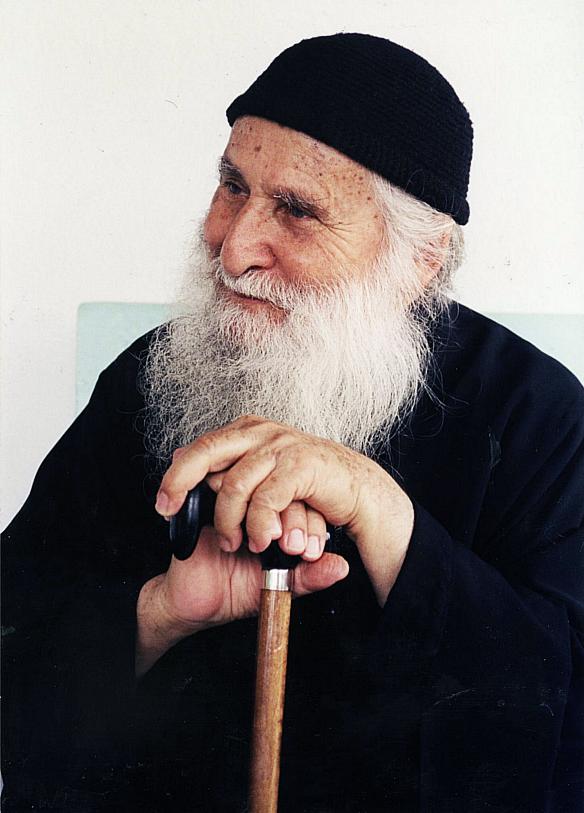
Bear the insults of your enemy in silence, and open your heart only to the Lord. Try in any way possible to forgive those who humiliate you or take away your honor, by the words of the Gospel: "Of him that taketh away thy goods ask them not again" (Lk. 6:30).

St. Seraphim of Sarov

Sunday, December 14, 2014

Seek God daily ( Saint Nektarios of Aegina )

Seek God daily. But seek Him in your heart, not outside it. And when you find Him, stand with fear and trembling, like the Cherubim and the Seraphim, for your heart has become a throne of God. But in order to find God, become humble as dust before the Lord, for the Lord abhors the proud, whereas He visits those that are humble in heart, wherefore He says: "To whom will I look, but to him that is meek and humble in heart?"


Saint Nektarios of Aegina

Tuesday, December 2, 2014

On Humility and the Humble Outlook – 1 ( Elder Joseph of Vatopaidi )


Without question, the Scriptures as a whole, as well as Patristic philosophy, are ‘seasoned with salt’, as it were, garlanded with the good mother of the virtues, the humble outlook. This is particularly noticeable at the points related to the behavior and comportment of people living by the direct instructions to reach their destination and striving to put these into practice through repentance.

In another homily, we referred to obedience as a virtue. Now we’re obliged to describe humility as an attribute, the character and form of the soul and of the personality.

If duty is an inviolable rule of life for rational beings, how much superior to it must be the personal attributes, the form and the character? And if, again, humility were only a human skill and achievement, which adorns and perfects rational beings, without it also being divine, human boldness would be able to describe it. But from the moment that it was revealed to us that it reaches as far as the Incarnate Word of God Himself, humility became something beyond that which human thought can conceive, and which can be understood only with admiration and astonishment. He Himself says: ‘Learn from my example, for I am meek and humble in heart’.

In order to confirm what I’m saying, let me quote a description of the humble outlook from one of the greatest luminaries, a real philosopher of grace and of the Holy Spirit, Saint Isaac the Syrian, who continued the authenticity of the Fathers. It’s from his 20th discourse, from the 1770 Leipzig edition: ‘I would like to open my mouth, brethren and speak about the important matter of humility, and am filled with fear, just like someone who knows he’s going to speak about God with his own, human way of thinking. Because it’s the raiment of divinity. The Word incarnate wore it and spoke to us about it’.

As regards the nature of this great virtue, suffice it to leave the Patristic term as it is, which is that it is divine and the garment of divinity in its spiritual completion and, therefore, a gift of the Most Holy Spirit. Let’s confine ourselves instead to its attributes and energies and, even more so, to how it’s acquired and what it consists of, again with fear and on the basis of the judgment of our Fathers.

Since, in our terminology, we call it character and person in rational nature, it’s apposite to mention, broadly speaking, how it acquires these terms. So that, from the outset, it’s credible and desirable for people, since everybody has the right to acquire their real personality through it.

In the first place, the humble outlook should be placed within the context of moral law. But beyond the moral law, we should also look for the more general reason which makes it imperative, because it’s here we see that it’s endorsed by the new creation, the Word of God incarnate, and that He assigns it, not to doing one’s duty, but to the place of personality, private life and character.

It may be that the Apostles wished to learn what Jesus was like in the most profound depths of His being, in His Godly, inner world, but that they didn’t dare to inquire, though they asked so many other questions which He answered freely at the right time. This is why, on His own initiative, He told them these astonishing words: ‘Learn from my example, because I am meek and humble in heart and your souls will find rest’ (Matth. 11, 29).
The all-powerful God the Word, by Whom ‘all things were created, in heaven and on earth, visible and invisible, all things were created through him and for him’ (Col. 1, 16), is the centre of all personality and, through His grace, all personalities find their place.

The ‘humility of heart’ of the Word of God is characterized as a position of certainty and stillness. Since our Lord is the centre of every personality, it’s right and proper that He be called ‘humble in heart’, because the whole of the authority of His dominion is manifested in this position of stillness and certainty. It’s not our purpose here to go into theological terms regarding the Godly attributes, but to extol the particular significance of His humility, as well as that of all His followers in all ages and in every period of the divine revelation.

***

Humility penetrates and is penetrated, it doesn’t fear, doesn’t question, doesn’t seek and therefore doesn’t move. As truth in Himself, life in Himself and all-loving, Jesus also, rightly, has humility as the universal position of His personality. This is precisely what is transferred to those who follow Him and participate in it. It is demonstrated by this that humility is not merely a branch of moral law, which inverts the corresponding evil, as is the case with other virtues, but is an ontological feature of the integrity of people who by the nature of their existence are characterized as being self-contained, decisive and active in the certainty of their immobility.

At the other end of the spectrum are the characteristics of the absence of humility: uncertainty, fear, suspicion, need and- later- the undesirable mobilization of all kinds of lies and deception for salvation and safety.

A living image of this condition is the devil who suffers and activates all these negative positions of the perversion of the personality, and others like them. The outlook which is not humble, what we call egotism and pride, remains bogged down by itself in the mire of selfishness and individualism. It’s constrained by the suffocating framework of being a single unit, and, under pressure from the impersonal selfishness of individualism, diminishes constantly but increases in cowardice, uncertainty and isolation, until it bursts out in a variety of undesirably cunning attempts at self-justification. The constraints of nihilism do away with the notion of the absolute, of truth, of eternity, of the breadth of the union of all. Nihilists don’t recognize anyone other than their own sick selves. Nihilists evolve into anarchists, who don’t recognize any authority or divine or human dependence. They end up as atheists, which is the greatest of all the preceding woes, in essence becoming diabolical and utterly destroyed.

If you look carefully at his characteristics, what else is the devil? An individualist, a great individualist. He doesn’t welcome anything into himself except himself. Nor does he recognize any other principle, dominion or power. Always and everywhere he’s alone and, necessarily, a total nihilist, since nothing can get close to him. He went into self-exile, was expelled from everywhere and sits in the nothingness of his nihilism. This is why he fell. ‘I saw Satan fall like lightning from the sky’. This is why he was condemned: ‘the ruler of this world is condemned’ (Jn.16, 11). This is why he was expelled: ‘now will the ruler of this world be cast out’ (Jn. 12, 31). Outside every place and locus of life, the devil has a place only in the darkness of death, of perdition and of hell. He no longer has any place among other beings, because he expelled himself with his accursed individualism. This is why, since he himself is nothing, he tries to acquire significance and personality by treachery, lies and deceit and why he forms imaginary values that he pretends are his own, whereas, in fact, they don’t belong to him.

‘Wherever the basis of humility is missing, there’s no safety, because then the unity of all in Jesus, who is the peace of all and the resurrection, is also missing’.

This is the devil and this is the poverty of the egotism of his supporters, which forces them to pretend, to transform themselves, to act a part, because they want positions and honours of which they aren’t worthy, because, in essence, they’re destitute and poor because they’ve removed themselves from the body of others through their sick individualism. This misery is followed by all the other woes, culminating in hatred, envy and crime. The dark veil of death shrouds these unfortunates who’ve given themselves to the devil, these faded replicas of the murderer who sinned from the beginning and misleads, since he himself is a liar and the father of lies.

Elder Joseph of Vatopaidi


http://pemptousia.com/2014/07/on-humility-and-the-humble-outlook-1/

Thursday, November 13, 2014

Need of Humility ( Elder Paisios )


Every single act of ours and every single virtue has need of humility, love and discernment, the latter being the salt of the virtues. This is why Christ tells us in the Gospel: "Every sacrifice shall be salted with salt" (Mark 9:49).

Elder Paisios

Wednesday, November 12, 2014

Humbleness is the key to keep the Grace ( Fr. Raphael Noica (of Essex) )


 Monasticism is like living something from the age that shall come, in which, as the Savior says: “They neither marry, nor are given in marriage, but are as the Angels of God in heaven” (Matthew 22:30). We [monks] are not like the angels, yet life has a tendency towards that, and when you receive the call [to monasticism], you don’t know what hit you, because in this [human] nature you don’t have any confirmation. So then, of course, you need someone to validate or invalidate your call. Because if you don’t [do this], you will suddenly find – or you will start to think: I’ll go to madhouse with my calls!

So, the Spiritual Father can validate or invalidate this thing on some level, but even this level is quite difficult to be defined. The essential line is this: I’m the only one who knows if I am for monasticism or not. Nobody else [would]! And the Spiritual Father can validate or invalidate, but he can’t… Father Sophrony [Sakharov] had [in Paris] Fr. [Sergius] Bulgakov as Spiritual Father and when he confessed to him that he would like to go in Mount Athos to became a monk, his Spiritual Father replied to him with a French saying: “The best is the enemy of the good”. Father Sophrony considered this word of his Spiritual Father, but he didn’t accept it – finally he went to Mount Athos and became a monk.


I got you here to a very difficult matter, to a thinking in which we all must assume our responsibility before God, before eternity – and not only in patterns in which we entered, but yet in a spirit of responsibility and obedience. And I say again: monasticism exists only in the intimate dialogue of every soul with God our Creator. So, I am deeply touched by the love of that sister for her own monasticism and for you; she thinks if she was fulfilled [in monasticism], you will be fulfilled too. But if this [call] isn’t from God – not for her reasons (they have some value, but they’re relative) – the most important thing, the absolute thing is to find into God: is this my way, or not? And: are really the hardships I endure a sign that I’m not on the right path, or they are some obstacle that needs to be overcome – all of these, through prayer…

Question: What prayers do I need to make, for me to find out?

Fr. Raphael: Begin [to pray] with this question. Put it before God – any prayer. Ask Him: “O, Lord, how should I pray? What do You expect of me?” Any thought you have – just add to it “Lord!”; add to your thinking a bit of “Lord!”, add [Him] to all your thoughts. This way, if you add a bit of “Lord!”, instead of you thinking like an engine which runs for nothing, your thinking will become prayer, and the engine will start to move the wheels.

Question: Is it possible to have matrimony, and also holiness and Jesus’ Prayer?

Fr. Raphael: The holiness is the nature of the man, the one that we should acquire in this ephemerality, and it isn’t something special for man – I mean it’s something different from transient, for biological life. The holiness is the nature that’s eternal in God, so it’s the nature of man. And either in matrimony, either in monasticism, either in other ways – if they are – the man always seeks the holiness. But we transformed the sanctity into a pattern; we made from it a false image; we put the Saints onto a pedestal which is very high and distant from us, and we look at them with a reversed binocular, to make it even more distant – and afterwards we are wondering why we don’t get there.

Question: And how do we escape from these patterns?

Fr. Raphael: O, may Lord deliver you! You may have a little too much confidence in your youth. [You have to keep] always before your eyes the fact that God is a God of Love and, from there, [you have] to seek and to examine why [is happening] anything that hurts you…

I don’t like what I heard – Why? Because I’m a sinner, or because that word isn’t right.

And for the rest, I say again: May God guide you! The path [together] with God is the path of freedom. The freedom is, of course, dangerous – but I also got this image, when I was afraid to soar. I said to myself: But, if I won’t go… – let’s say we’re travelling to the Jerusalem above – if we won’t go on road because we’re afraid that something may happen to us on the way there, we’ll know only one thing for sure: we will remain here. If we’ll go, fine, maybe we won’t get there (which is not the case [when we are] together with God), but if we think [like] “Maybe we’ll get there, maybe we won’t get there”, we still have in our imagination 50% and 50%. If I stay, [if I remain], I have a 100% certitude I won’t get there!

I want, with all these, to give you a bit of courage. But with God, as long we stick to God, is impossible not to get there, as Christ said: “My sheep shall never perish, neither shall any one pluck them out of my hand” (John 10:28). And He added immediately: “My Father is greater than all; and no one is able to pluck them out of My Father’s hand” (John 10:29). I emphasize this “no one is able”! Yet man is gifted with such a great Divine freedom, that in my freedom I don’t have my Salvation guaranteed – God didn’t put me in a concrete box. I have a frightful freedom, but this doesn’t mean God can’t support me until the end. I can’t express myself here more concrete, more correct, less clumsy, because we are at some boundaries where the human reason isn’t applicable anymore. We have for the one side absolute certainty that we will get there, because Christ said “no one is able to pluck them”, and for the other side my freedom, which could separate me from God in any moment; but if I add “God forbid!”, I can’t get separated.

There is one more thing: when we begin to see Who is the God of Love, Who is also Almighty, you’ll begin to see that you can’t get lost with this God – it’s impossible! [It is] when you see that our fallen nature is so evil, that everything God does for our Salvation we undo for our perdition, [that] you can’t save yourself in no way. We live, as a Serbian woman said many years ago, [thinking]: “I am tormented in Orthodoxy by this incertitude: that I may be saved, or I may be not. I would rather be like Protestants, who are sure that they are already saved!”

But something in her words “scratched” me and, after some time, I realized that we Orthodox aren’t living in incertitude, but into a double certitude. As I see myself, it’s impossible to save myself. Look, Christ spilled His blood for the Hebrew people and for the entire world, and the Jews called “His blood [to be] on us and on our children” (Matthew 27:25) as a curse. So, how can be saved such a man, even with the almighty love of God? And yet, when you see that God Christ, with divine power, divine word, tried to put off that curse, saying to the women of Jerusalem: “Weep not for me, but weep for yourselves, and for your children” (Luke 23:28) – meaning “weep for those upon you called some minutes ago My blood, as a curse, and I spill it for Salvation.” [We have] such a God, Who even then doesn’t get offended!… And [Who], when they put nails through His hands, says: “Father, forgive them; for they know not what they do” (Luke 23:34); [Who], when He was dying by our hands, gives for our Salvation His body, broken by us; gives His blood, spilled by us – only if we want to. Well, with such a God, Who defeated even the Hell when He got there, making a path up to the staying to the right of Father – with such a God, how could you get lost?!

So, we have two certitudes: with me, salvation is totally impossible, and this is part of my confession. But, if I confess this, I also confess God – it is impossible to be lost with God. And, between these two impossibilities, I think God’s impossibility must triumph. It’s enough just to cling and stay, not to despair until the end because of enemy’s assaults – and [finally] God will drew me into his fishing net.

Question: How can we know if we have Grace after Liturgy?

Fr. Raphael: Notice one thing: when we are in Grace, we feel that everything is beautiful, that everything can’t have something else but a happy end. When we lose the Grace, we feel the darkness is so great, that we’ll never get out of it. Notice this is the characteristic of that condition. There is not and cannot be tragedy in God, however tragic our life may be. But those things of Hell and of falsehood are as any things of Hell – the work of falsehood wants us to despair. This is one thing, and I emphasize these effects for you to notice.

The second thing is we put very much emphasis on the preparation before Communion, for us to be, supposedly, worthy of commune. I say “supposedly” because we remain unworthy. Our worthiness is Christ. [Yet I see] we don’t understand well the need to find how to keep Communions’ Grace after Communion. In a way, this thing is more important than the preparation; this preparation before Communion is not for us to be worthy. This preparation is to prepare the soil of our soul. […] The most important thing is how to keep that Grace.

In this matter, I say to you, if you look to all the Philokalic Fathers, humbleness is the key. But what is humbleness? Because, beyond a certain pattern, we don’t know what humbleness is. For one thing, humbleness is spiritual realism. If I am the greatest sinner, then may God grant me the power to see I am the greatest sinner amongst people! This is a divine vision, that doesn’t belong to human reason, neither to comparison with the others. [Humbleness] belongs to a spiritual way of seeing things, a realist one. This is not a mannerism, but spiritual realism.

Secondly, Father Sophrony [Sakharov] defined humbleness as that quality of divine love which gives itself to the loved one without returning upon itself. This “without returning upon itself” means the humble one doesn’t consider upon himself, but seeks towards his loved one. Yet humbleness doesn’t mean just humiliation and carelessness for humiliation, but also care for the fulfillment of the loved one. Why? Because it lives through the loved one. It seeks into the loved one, it empties itself into the loved one, for it to receive in its emptied ego the loved one – for the loved one to rest into it, and for it to rest into the loved one. And that, in our [ecclesiastic] language, is called “perichoresis” – Father Sophrony used to called this “the pharmaceutical language of modern theology” [Fr. Raphael smiles], but [it is] a word which is the essence of eternal love.

On the other hand, I think a second definition will give you a better understanding of what we need to seek. Humbleness isn’t a thing by itself, it belongs to love. Father Sophrony said to me one day: “You think that what Saint Silouan said were great things, but know this: the only great thing is humbleness, because the pride prevents love.” Pride dwells in itself, and then, if I live in myself, neither of you will have place [here], nor God. But if I learn to empty myself, to give myself with the aim that God and whole humanity will have place [in me], then every person become a bearer of God and of the entire Universe. This is humbleness.

And then, [following] these paths, we’ll find both the justification to draw near the Holy Communion – [or] the worthiness, if you prefer, because the worthiness is not ours: then Christ will partake with us His worthiness. And, living in this spirit, we’ll be able to keep the Grace we receive in Communion.

Question: And, yet, how can we keep the Grace?…

Fr. Raphael: Well, by persisting on this path of humbleness. I mean, there are many things to say, but I say again – you will find your way through God, [together] with your Spiritual Father, each of you. The general path is the humbleness. Humbleness is the key to keep the Grace.

Question: And what if we don’t know what [humbleness] is, and we ask Lord to give us [humbleness]?

Fr. Raphael: [Then] Lord shall give it to you, so ask it from Lord – speaking of correct understanding…

Transcript from a conversation with youth of Association of Romanian Orthodox Christian Students, Bucharest, 14 March 2002

http://pemptousia.com/2014/11/humbleness-is-the-key-to-keep-the-grace/

Thursday, October 9, 2014

Bring to mind the fear of God ( Saint John Chrysostom )


Has someone offended thee? Guard thy breast with the sign of the Cross; remember what took place on the Cross, and all will be extinguished. Think not of offenses only, but recall also whatever good thou hast received from the one who has offended thee, and at once thou shalt grow meek. Bring to mind the fear of God, and quickly thou shalt grow more temperate and calm. Train thyself not to offend another during offenses themselves, and then, when offended, thou wilt not feel grief. Think to thyself that he who is offending thee is in a frenzy and not in his right mind, and then thou wilt not be vexed at the offense.


Saint John Chrysostom.

Saturday, October 4, 2014

On Humility and the Humble Outlook ( Elder Joseph of Vatopaidi )


With a variety of definitions, our Fathers lead us to humility, but the meaning is almost the same: the comprehensive labour of love that supports all the other virtues.

We shall now note some of the sayings of the Fathers which refer to the qualities and fruits of the humble outlook and the manner in which those who have it behave. This will give us more practical knowledge.

Anthony the Great, when he was once in an ecstatic state, saw all the land around him full of traps set by Satan. He sighed and asked God to tell him how anyone could avoid them and then heard a voice telling him: ‘only with humility’.


The same saint, when he was asked by Pimin (Poemen) the Great what the perfect work was for spiritual people, as regards virtue, answered that it is self-censure and living continuously in the expectation of temptation.

Abba Pimin [the word means ‘shepherd’ in Greek] said that those who condemn themselves obtain endurance and patience.

Abba Evagrios said that the beginning of spiritual progress for people is self-censure.

Another great ascetic, who had authority over demons, asked them what work or virtue of the saints vanquished them and they answered ‘being humble’.

Saint John the Short used to say that being humble and fearing God were above all the virtues.

Abba Longinos said that humble-minded people are incapable of judging others.

Saint John the Theban said that, above all, spiritual people have to achieve humility.

Abba Pimin, again, said that people need a humble outlook and fear of God the way they need air to breathe.

Abba Sisoïs, who was great among the Fathers, said that the route to a humble mind consists of restraint, constant prayer and a struggle to acquire the view that you’re inferior to all others.

Abbas Kronios said that the means that lead to humility are abandonment, as far as possible, of material things and whatever leads to fragmentation of the mind; bodily labour; and remembrance of death.

Another Elder said that those who have humility humiliate the demons. And again, he said that the soul acquires humility when it’s concerned only about its own woes and errors.

Another said that, just as the ground never falls down, neither do humble people, because they’re always so lowly.

When another was asked what humility was, he said, ‘If your brother sins against you and you forgive him before he asks’. He also said that people’s progress depended on the depth of their humility: the more profound their humility, the greater their progress.

Abbas Isaiah said that, with humility, all the achievements of the Evil One are destroyed.

Saint Synklitiki said that the beginning and end of all good things, that is the spiritual life, is the humble outlook.

The incontrovertible judgment of the Fathers regarding the practical manner in which to achieve this God-pleasing quality is- in their experience- bodily labour and self-knowledge, and these are things which are present in everyday life. In general, the narrow path of all-inclusive Christian morality leads to the fear of God and He then becomes a guide to that which constitutes ‘sentience in God’ and the great virtues, which are ‘not to think highly of yourself’, ‘to censure yourself’ and ‘to withstand all temptations’. Apart from his other efforts, the Prophet David put forward his struggles as means of expiation, saying: ‘Look upon my humility and my effort and forgive all my sins’. And elsewhere he offers as a convincing example of his forgiveness that: ‘I was humbled and the Lord saved me’. Again, he reveals that the Lord, ‘gives grace to the humble’, in contrast, of course to the egotists. So, if, ‘God will not despise a humble and contrite heart’, this is known to us because our Fathers and, indeed, all of those in the whole of human history who have been granted some knowledge of God, have all tried to be humble more than anything else.

With the sense of human insignificance, since, according to the Lord, we can do nothing without His help, and with the awareness of our likeness to Christ through His grace, which we are granted by acting and thinking in a humble manner, let no-one absent themselves [from the struggle] by investigating, desiring and doing whatever leads to easy, or rather, free salvation, because they’ll hear in their ears the blessed and sweet voice of the Lord saying that He’ll come again to bring close to Him those who are worthy. He said ‘blessed are the poor in spirit’ (i.e. the humble), for theirs is the kingdom of heaven, which we all hope to gain. Amen

Source: Elder Iosif, Λόγοι Παρακλήσεως, Ψυχωφελή Βατοπαιδινά 15, published by the Holy and Great Monastery of Vatopaidi, pp. 118-130


Tuesday, August 19, 2014

On Humility ( Elder Siluan )


One might suffer greatly from poverty and ill-health, yet not be humbled: and so suffer in vain. But whoever is humbled is happy with any fate because the Lord is his wealth and joy, and all people will be amazed at the beauty of his soul.


Elder Siluan

Saturday, June 28, 2014

In a humble person, there is never any haste, hurry, confusion ( St. Isaac the Syrian )


In a humble person, there is never any haste, hurry, confusion, agitated or petty thoughts — he dwells in tranquility at all times. There is nothing that could astonish, confuse or terrify him — because he is not terrified in sorrows and does not become dispirited, nor does he advance into a state of amazement or rapture when he is joyful. But all his joy and gladness are found in that, which is pleasing to His Lord.


St. Isaac the Syrian

Friday, June 20, 2014

Need of Humility ( Elder Paisios )


Every single act of ours and every single virtue has need of humility, love and discernment, the latter being the salt of the virtues. This is why Christ tells us in the Gospel: "Every sacrifice shall be salted with salt" (Mark 9:49).


Elder Paisios
Related Posts Plugin for WordPress, Blogger...