Showing posts with label Divine Liturgy. Show all posts

Thursday, March 5, 2015

The Mission of the Divine Liturgy ( Elder Sophrony of Essex )


The greatest missionary activity occurs with the Divine Liturgy.
When the Fathers came to any place or city, they set up an Altar. And this is because, when in the Divine Liturgy the heart is sweetened, then one seeks God, and begins to desire to live the Orthodox ecclesiastical life, whose center is the divine Eucharist.
I told the brotherhood to keep in the Monastery first and foremost the Divine Liturgy.
The prayers in the Divine Liturgy should not be said in a personal tone, because at that hour the Priests speak for all those who are praying, and because of this, the Priests should not pray with personal emotions.
They do not serve as individuals.

Elder Sophrony of Essex 


http://full-of-grace-and-truth.blogspot.ca/search/label/Elder%20Sophrony%20of%20Essex

Thursday, February 5, 2015

The hand of a priest ( Protopresbyter Stephanos K. Anagnostopoulos )

Taken from Experiences During the Divine Liturgy, Protopresbyter Stephanos K. Anagnostopoulos

[While the Cherubic hymn is being sung during liturgy the priest reads the prayer which begins with the words, -ed]…”No one who is bound with the desires and pleasures of the flesh is worthy to approach…”

None of the priests ever approaches the Holy Altar, in order to serve the Divine Liturgy, trusting in his holiness. If he is ever fooled and believes that he is holy, he must not perform the Liturgy; in which case we have delusion and heresy. But at this point, we should not say much, for the more we say, the worse it is for us. Here, we do the sign of the Cross, are silent, and we priests ask for God’s mercy.

In order to comprehend what man is worth, for which God’s love can do anything, we ought to give some thought to the high ministry of the Priesthood. The priest, as a human being might not be wealthy, strong, wise and a scholar, but may be humble and insignificant. From the moment, however, he received the gift of the Priesthood and puts on “the grace of priesthood”, from that moment on the Priest receives spiritual power, which surpasses all secular power.

Saint Cosmas Aitolos used to say: “If I ever encounter the emperor of Byzantine. or the king and a poor priest on the street, I will first hasten to kiss the priest’s hand then greet the Emperor. And if I ever encounter an Angel or an Archangel or a Cherubim walking together with a priest on the same road, I will first hasten to kiss the hand of the Priest and then the hand of the Angel.”

The priest’s blessing is Christ’s blessing. It is Christ’s Grace. Whether the priest is young, or elderly, worthy, or unworthy, he bears Christ’s Priesthood, he possesses his Grace and imparts His divine Blessing.

Tuesday, November 4, 2014

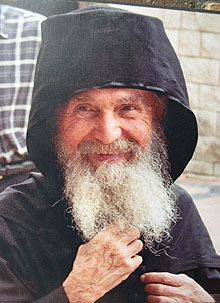
The Divine Liturgy ( Elder Ephraim of Arizona )


Elder Ephraim of Arizona

The Divine Liturgy, what a splendor indeed! Man has been honored by God in such a way that He Himself comes down to earth with His Angelic Orders every time there is a Liturgy, in order to nurture man with His Most Holy Body and His Most Precious Blood! For He has given us everything. Is there anything physical or spiritual, perishable or everlasting, that has not been offered to us? None! Is there anything superior to His Most Holy Body and Blood, which is given to us on a daily basis? There is certainly not. God has enabled man, who is full of soil and dirt, to serve the Divine Liturgy. So priceless is the Divine Love that just a tiny drop exceeds any earthly, physical and secular love.

Adam and Eve’s sin was the starting point of all the distressing events that have occurred to this day and of those that will occur until the end of time. Disobedience, like a sperm inside Eve’s womb, gave birth to and transmitted physical and spiritual death to all of humanity. Poor Eve, could there have been a way for her to see that “the split second” taste of the fruit would cause such turmoil, thus compelling the Holy Trinity to have a “co-entreaty” so that the one Person of the Life-Giving Trinity would be sent to the world and endure, by the works of His hands, the blows, insults, whipping, spitting as well as all kinds of obscenity and ultimately be hung on the Cross as a curse! “Cursed is everyone that hangeth on a tree” (Gal. 3:13).

The sweet redemption of our Jesus, the light of our troubled souls, His Passion and Life-Giving Resurrection, are re-enacted in every Divine Liturgy through which every sinful soul is delivered. Great indeed is Jesus’ love for us! For He took on our human nature and was hung on the Cross, giving us freedom and thus wiping clean all our debts towards our Heavenly Father. And as our beloved Brother He makes us worthy of His co-inheritance which consists of the infinite riches of His Heavenly Father. And if during the time when the Law, which existed before Christ, had overshadowed things, and the blood of oxen and goats as well as a calf’s embers purified those who had partaken of them, how much more will Christ’s Most Holy Blood, which is partaken from the Holy Altar of the Holy Churches of God, cleanse us from sin and warm up our souls in order to receive the divine love of our most sweet Jesus. The Lamb which was slaughtered for our personal salvation will rinse us with His Most Precious Blood from the filth of our sins and give us eternal rest.


In any case, we owe it to ourselves to become partakers of this heavenly banquet which offers us this most wonderful Mystery of the Holy Altar. Once inside the church, we should stand in fear and devoutness, since our Lord Jesus Christ and His holy angels are present. Those who are attentive and devout are filled with grace and blessings; however, those who are inattentive are condemned, being unworthy.

On the one hand, the Angels serve the Divine Liturgy, and on the other, the faithful come to church in order to partake of the Body and Blood of Christ – “Receive the Body of Christ and taste the Fountain of Immortality” – so that they will live in Christ and not perish in sin. Thus, “let a man examine himself, and so let him eat of that Bread and drink of that Cup, for he that eateth and drinketh unworthily eateth and drinketh damnation to himself” (1 Cor. 11:28-29). For instance, when someone wants to appear before a king, it takes him days to get ready, in terms of general preparation, cleanliness, speech, manner, ethos, etc., so that he would succeed in drawing the king’s compassion and, in this way, have his desirable request granted. Even though there is no comparison as far as the two different kings are concerned, each believer should prior to Holy Communion prepare oneself in order to obtain divine mercy and forgiveness. Those who appear before a secular king are, most of the time, adorned by iniquity, flattery, pretence as well as deceit, in order to obtain that which is desired; nevertheless, the Christian believer who appears before the King of kings who in turn keeps an eye on the inner person must be adorned by holiness, humility and the sheer ethos of the soul that is more precious than lost gold.


The Lord created His Church on earth as a Bride, so that She would intercede for His children. He left us the Great Mystery of the Holy Eucharist, in order to be cleansed, become holy and thus become one with God. He has invited us all; some in their childhood, others in their middle as well as old age. As He is Good, He took hold of us like a hen gathers her chicks under her wings, in order to make us partakers of His divine Kingdom. Nothing repelled Him – no ulcer, no wound, no illness, not even the deformity of spiritual phenomena which may characterize our soul. As a father He accepted us, as a mother He breast-fed us, and as an unmercenery doctor He took care of us and clothed us in the garment of adoption, with grace ignoring the heavy debt of our trespasses. We thus owe Him infinite love and worship. Love should remain in the heart like a life-giving source, gushing forth springs of communion wine and streams of divine eros.


We should be partakers of the Sacrifice of the Slaughtered Lamb as often as we can, and as long as we are free to do so, since Holy Communion is a great aid for the believer which in turn helps him to fight sin. Also, we should approach this divine Mystery in a spirit of compunction, crushed hearts, and a good sense of our sins. Great is the mercy of God Who condescends to enter into us; not abhorring the multitude of our sins. Nonetheless, due to His infinite love and affection, we are sanctified, and in this way we are made worthy to become His children and co-heirs of His Kingdom. Hence, let us prepare with a pure conscience aiming at the fortification of our senses, and in chastity let us enter along with the Holy Apostles to the Mystical Supper and partake of our sweet Jesus so that He should dwell with us unto the infinite ages of ages.


Unworthy as I am, I serve my Lord. A ministry rendered that is holy and mighty. Everyday I offer God a well-pleasing sacrifice, the Lamb of God, Immaculate to His Immaculate Father and God, in order that He might be merciful for the things with which we sadden the most good God. He whom we cause grief and Who sacrificed His only begotten Son. My God, Your most beloved Son for our sake! And who are we to deserve this ultimate sacrifice! “For being enemies, we were reconciled to God by the death of His Son” (Rom. 5:10). [...]

The most unworthy of all,

+ Father Ephraim

Source: Experiences During the Divine Liturgy, Piraeus, Greece 2008 


http://pemptousia.com/2014/11/the-divine-liturgy/

Tuesday, October 8, 2013

Not paying attention during the Divine Liturgy


One of the things that folks often mention when they’re making their confession is inattention during the divine services. So, I thought I would use this month’s column to talk about that important subject.
If we want to be focused during the services, one thing we can do is prepare adequately. And even if we can’t do all the prayers that the Church encourages us to do leading up to the Divine Liturgy, we can at least avoid over-stimulation from media. For example, if we stay up late Saturday night to watch an exciting movie and then read the paper or check out our favorite web-sites before we leave for Church—and then listen to music or text our friends right up to the very moment that we get out of the car and walk into the nave, then we’ll probably spend most of the Liturgy processing all those experiences and all that information instead of attending to what the Father, Son, and Holy Spirit are trying to say to us. Another thing we can do is spend more time in the Divine Services. In fact, one of the main reasons why our services are so long is because the Church understands that it takes most of us a good while just to relax and calm down before we can ever get around to actually praying. A good rule of thumb that works for most people is one hour in the Divine Services equals about two minutes of genuine interaction with the Most Holy Trinity. Of course, that two minutes can be life changing and world-changing. However, if we never actually spend a full hour in the Divine Services, then we’ll never experience that two minutes of authentic prayer. So, the more time we invest in the services, the more focused we will be.
But what if you have an infant or a small child, and you’re constantly in and out during the Divine Liturgy? What if you are an usher or a chanter or you sing in the choir? Does that mean that you’re never going to be able to really communicate with the Father, Son, and Holy Spirit? Of course not, because there is a special grace that accompanies each of those roles. Folks who are raising young children or helping with the service are performing important tasks, and the Most Holy Trinity is going to make sure that they get what they need while they are doing their jobs. But we’re not going to receive any special grace if we just wander in and out of the nave because we’re bored or because we don’t like to be still.


Still another thing we can do to stay focused during the services is to be honest about who we are. For example, if we are concerned about our health or stressed about our job or anxious about a family situation, it’s not going to do any good at all to pretend like we’re not thinking about those issues. But rather than just obsess over those things, we should turn them into prayers. And there are lots of ways to do that: we can light a candle for each of those problems when we first go into the nave; we can make the sign of the cross or make a metanioa every time one of those subjects pops up in our mind; we can touch the priest’s vestments during the Great Entrance and attach all those topics to his intercessions; we can raise all of those issues up to the Most Holy Trinity when the deacon elevates the Holy Gifts over the altar. It may take quite a while and a lot of effort, but, eventually, we will clear all that stuff out of our hearts, and then we will be able to hear what the Father, Son, and Holy Spirit are saying to us.
Worship is hard work—there’s no doubt about it. But it is the most important work that we do all week long, because it’s how we are getting closer to the Most Holy Trinity, it’s how the people we love are going to get closer to the Most Holy Trinity, and it’s how this world is being transformed through the love of the Most Holy Trinity. And the more attentive we are during at that work, the more those incredibly important goals will be realized.

Source: The Voice in the Wilderness: The Parish Newsletter of St. John the Forerunner Antiochian Orthodox Christian Church

Wednesday, March 6, 2013

The Splendor of the Divine Liturgy ( Elder Ephraim of Arizona )


The Splendor of the Divine Liturgy, by Elder Ephraim of Arizona


The Divine Liturgy, what a splendor indeed! Man has been honored by God in such a way that He Himself comes down to earth with His Angelic Orders every time there is a Liturgy, in order to nurture man with His Most Holy Body and His Most Precious Blood! For He has given us everything. Is there anything physical or spiritual, perishable or everlasting, that has not been offered to us? None! Is there anything superior to His Most Holy Body and Blood, which is given to us on a daily basis? There is certainly not. God has enabled man, who is full of soil and dirt, to serve the Divine Liturgy. So priceless is the Divine Love that just a tiny drop exceeds any earthly, physical and secular love.

Adam and Eve's sin was the starting point of all the distressing events that have occurred to this day and of those that will occur until the end of time. Disobedience, like a sperm inside Eve's womb, gave birth to and transmitted physical and spiritual death to all of humanity. Poor Eve, could there have been a way for her to see that "the split second" taste of the fruit would cause such turmoil, thus compelling the Holy Trinity to have a "co-entreaty" so that the one Person of the Life-Giving Trinity would be sent to the world and endure, by the works of His hands, the blows, insults, whipping, spitting as well as all kinds of obscenity and ultimately be hung on the Cross as a curse! "Cursed is everyone that hangeth on a tree" (Gal. 3:13).

The sweet redemption of our Jesus, the light of our troubled souls, His Passion and Life-Giving Resurrection, are re-enacted in every Divine Liturgy through which every sinful soul is delivered. Great indeed is Jesus' love for us! For He took on our human nature and was hung on the Cross, giving us freedom and thus wiping clean all our debts towards our Heavenly Father. And as our beloved Brother He makes us worthy of His co-inheritance which consists of the infinite riches of His Heavenly Father. And if during the time when the Law, which existed before Christ, had overshadowed things, and the blood of oxen and goats as well as a calf's embers purified those who had partaken of them, how much more will Christ's Most Holy Blood, which is partaken from the Holy Altar of the Holy Churches of God, cleanse us from sin and warm up our souls in order to receive the divine love of our most sweet Jesus. The Lamb which was slaughtered for our personal salvation will rinse us with His Most Precious Blood from the filth of our sins and give us eternal rest.

In any case, we owe it to ourselves to become partakers of this heavenly banquet which offers us this most wonderful Mystery of the Holy Altar. Once inside the church, we should stand in fear and devoutness, since our Lord Jesus Christ and His holy angels are present. Those who are attentive and devout are filled with grace and blessings; however, those who are inattentive are condemned, being unworthy.

On the one hand, the Angels serve the Divine Liturgy, and on the other, the faithful come to church in order to partake of the Body and Blood of Christ - "Receive the Body of Christ and taste the Fountain of Immortality" - so that they will live in Christ and not perish in sin. Thus, "let a man examine himself, and so let him eat of that Bread and drink of that Cup, for he that eateth and drinketh unworthily eateth and drinketh damnation to himself" (1 Cor. 11:28-29). For instance, when someone wants to appear before a king, it takes him days to get ready, in terms of general preparation, cleanliness, speech, manner, ethos, etc., so that he would succeed in drawing the king's compassion and, in this way, have his desirable request granted. Even though there is no comparison as far as the two different kings are concerned, each believer should prior to Holy Communion prepare oneself in order to obtain divine mercy and forgiveness. Those who appear before a secular king are, most of the time, adorned by iniquity, flattery, pretence as well as deceit, in order to obtain that which is desired; nevertheless, the Christian believer who appears before the King of kings who in turn keeps an eye on the inner person must be adorned by holiness, humility and the sheer ethos of the soul that is more precious than lost gold.

The Lord created His Church on earth as a Bride, so that She would intercede for His children. He left us the Great Mystery of the Holy Eucharist, in order to be cleansed, become holy and thus become one with God. He has invited us all; some in their childhood, others in their middle as well as old age. As He is Good, He took hold of us like a hen gathers her chicks under her wings, in order to make us partakers of His divine Kingdom. Nothing repelled Him - no ulcer, no wound, no illness, not even the deformity of spiritual phenomena which may characterize our soul. As a father He accepted us, as a mother He breast-fed us, and as an unmercenery doctor He took care of us and clothed us in the garment of adoption, with grace ignoring the heavy debt of our trespasses. We thus owe Him infinite love and worship. Love should remain in the heart like a life-giving source, gushing forth springs of communion wine and streams of divine eros.

We should be partakers of the Sacrifice of the Slaughtered Lamb as often as we can, and as long as we are free to do so, since Holy Communion is a great aid for the believer which in turn helps him to fight sin. Also, we should approach this divine Mystery in a spirit of compunction, crushed hearts, and a good sense of our sins. Great is the mercy of God Who condescends to enter into us; not abhorring the multitude of our sins. Nonetheless, due to His infinite love and affection, we are sanctified, and in this way we are made worthy to become His children and co-heirs of His Kingdom. Hence, let us prepare with a pure conscience aiming at the fortification of our senses, and in chastity let us enter along with the Holy Apostles to the Mystical Supper and partake of our sweet Jesus so that He should dwell with us unto the infinite ages of ages.

Unworthy as I am, I serve my Lord. A ministry rendered that is holy and mighty. Everyday I offer God a well-pleasing sacrifice, the Lamb of God, Immaculate to His Immaculate Father and God, in order that He might be merciful for the things with which we sadden the most good God. He whom we cause grief and Who sacrificed His only begotten Son. My God, Your most beloved Son for our sake! And who are we to deserve this ultimate sacrifice! "For being enemies, we were reconciled to God by the death of His Son" (Rom. 5:10).

It is a fact that numerous interpretations of the Divine Liturgy which were mainly based on the illumination and grace of the Holy Spirit were handed down to us by the Church Fathers. What makes this current analysis of the Divine Liturgy of my spiritual child Father Stephanos Anagnastopoulos noteworthy and beneficial, is the fact that it is offered through the experiences and revelations of worthy Liturgists of the Most High, older and more recent ones.

I, as well as its author, wish that this book will lead us all to the genuine liturgical conscience and life in order to urge us in a spirited way, as grateful servants, to try to rest the heart of His feelings so that He will be comforted, according to the Psalter: "...and because of His servants shall He be comforted" (Psalm 134:14). May we sense that which God offered us and thus rejoice in the beauty of His eros. Amen.

The most unworthy of all
+ Father Ephraim

Sunday, February 17, 2013

The Divine Liturgy of the Greek Orthodox Church in English

The Divine Liturgy of Saint John Chrysostom chanted in English by the Mount Lebanon Choir of Byzantine Music. 01-The Great Litany 02-The First Antiphon 03-The Little Litany 04-The Second Antiphon 05-The Little Litany II 06-The Third Antiphon & Little Entrance 07-The Trisagion Hymn 08-The Epistle Reading & Alleluia 09-The Holy Gospel 10-The Cherubic Hymn 11-The Litany of Supplication 12-Praise to the Holy Trinity 13-The Anaphora 14-The Meghalinarion 15-Commemoration of Hierarch 16-The Litany Before the Our Father 17-Communion Hymn 18-Communion Hymns 19-The Prayer at the Ambon 20-Blessed Be the Name of The Lord 21-The Dismissal 22-Lord Have Mercy

Thursday, December 27, 2012

Every Divine Liturgy is Theophany ( Elder Sophrony of Essex )


Every Divine Liturgy is Theophany by Elder Sophrony of Essex 
We Orthodox live Christ in the Divine Liturgy, or better yet, Christ lives within us in through the duration of the Divine Liturgy. The Divine Liturgy is a work of God. We say: “It is the time for the Lord to act” (Psalm 119:126). Among other things, this means that now is the time for God to work. Christ liturgizes, we live together with Christ.


The Divine Liturgy is the way that we come to know God, and the way that God comes to know us.


Christ accomplished the Divine Liturgy once, and this has passed unto eternity. He overcame corrupted human nature in the Divine Liturgy. We come to know Christ specifically in the Divine Liturgy. The Divine Liturgy that we celebrate is the same Divine Liturgy which Christ worked on Holy Thursday at the Mystical Supper.


Chapters 14-17 of the Gospel of St. John are a Divine Liturgy. Thus we understand the Holy Scriptures in the Divine Liturgy.


The first Church lived without the New Testament, however, not without the Divine Liturgy. The first forms, hymns, scriptures exist within the Divine Liturgy.


In the Divine Liturgy we live Christ, and we understand His word.


As Christ cleansed His Disciples with His work and told them: “Now you are clean by the word that I have spoken to you” (John 15:3), and He cleansed the feet of the Disciples with water during the Holy Niptir, thus the first part of the Divine Liturgy cleanses us that we might later sit at the Table of love. The purpose of the Divine Liturgy is for us to partake of Christ.


The Divine Liturgy teaches us an ethos, the ethos of humility. As Christ was sacrificed, thus we must sacrifice. The form of the Divine Liturgy is the form of He Who became poor for us. In the Divine Liturgy we try to humble ourselves, because we have the sense that there exists a humble God.


Every Divine Liturgy is Theophany [The Revealing of God]. The Body of Christ is revealed. Every member of the Church is an icon of the Kingdom of God.


After the Divine Liturgy we must try to continue to depict the Kingdom of God, keeping His commandments. The glory of Christ is that every one of His members might bear fruit. Thus His word explains: “This is to my Father’s glory, that you bear much fruit, showing yourselves to be my disciples.” (John 15:8)
 http://full-of-grace-and-truth.blogspot.ca/2012/08/every-divine-liturgy-is-theophany.html

Related Posts Plugin for WordPress, Blogger...