
"Do not turn to mediums or seek out spirits, for you will be defiled by them. I am the Lord your God … I will set my face against the person who turns to mediums and spiritists to prostitute himself by following them, and I will cut him off from his people" (Leviticus 19:31, Lev. 20:6).
"Let no one be found among you who sacrifices his son or daughter in the fire, who practices divination or sorcery, interprets omens, engages in witchcraft, or casts spells, or who is a medium or spiritist or who consults the dead. Anyone who does these things is detestable to the Lord , and because of these detestable practices the Lord your God will drive out those nations before you" (Deuteronomy 18:10-13).
"When men tell you to consult mediums and spiritists, who whisper and mutter, should not a people inquire of their God? Why consult the dead on behalf of the living? To the law and to the testimony! If they do not speak according to this word, they have no light of dawn" (Isaiah 8:19-20).
"All the counsel you have received has only worn you out! Let your astrologers come forward, those stargazers who make predictions month by month, let them save you from what is coming upon you. Surely they are like stubble; the fire will burn them up. They cannot even save themselves from the power of the flame. Here are no coals to warm anyone; here is no fire to sit by" (Isaiah 47:13-14).
"So do not listen to your prophets, your diviners, your interpreters of dreams, your mediums or your sorcerers who tell you, 'You will not serve the king of Babylon.' They prophesy lies to you that will only serve to remove you far from your lands; I will banish you and you will perish" (Jeremiah 27:9-10).
"The days of punishment are coming, the days of reckoning are at hand. Let Israel know this. Because your sins are so many and your hostility so great, the prophet is considered a fool, the inspired man a maniac" (Hosea 9:7).
"On that day every prophet will be ashamed of his prophetic vision. He will not put on a prophet's garment of hair in order to deceive" (Zechariah 13:4).
Lord Jesus Christ said about false prophets:
"Thus, by their fruit you will recognize them. … Many will say to me on that day, 'Lord, Lord, did we not prophesy in your name, and in your name drive out demons and perform many miracles?' Then I will tell them plainly, 'I never knew you. Away from me, you evildoers!" (Matthew 7:20-23).
"He who is not with me is against me, and he who does not gather with me scatters" (Matthew 12:30).
The prophecy of the Savior about the last times:
"For false Christs and false prophets will appear and perform great signs and miracles to deceive even the elect--if that were possible. See, I have told you ahead of time. " (Matthew. 24:24-25).
Apostle John the Theologian:
"Dear friends, do not believe every spirit, but test the spirits to see whether they are from God, because many false prophets have gone out into the world" (1 John 4:1).
Apostle Paul:
"Jews demand miraculous signs and Greeks look for wisdom, but we preach Christ crucified: a stumbling block to Jews and foolishness to Gentiles, but to those whom God has called, both Jews and Greeks, Christ the power of God and the wisdom of God" (1 Corinthians 1:22-24).
"The Spirit clearly says that in later times some will abandon the faith and follow deceiving spirits and things taught by demons. Such teachings come through hypocritical liars, whose consciences have been seared as with a hot iron" (1 Timothy 4:1-2).
About the antichrist:
"And then the lawless one will be revealed, whom the Lord Jesus will overthrow with the breath of his mouth and destroy by the splendor of his coming. The coming of the lawless one will be in accordance with the work of Satan displayed in all kinds of counterfeit miracles, signs and wonders, and in every sort of evil that deceives those who are perishing. They perish because they refused to love the truth and so be saved" (2 Thessalonians 2:8-10).
Prophecies of the Apostle John about the time of the antichrist:
"He exercised all the authority of the first beast on his behalf, and made the earth and its inhabitants worship the first beast, whose fatal wound had been healed. And he performed great and miraculous signs, even causing fire to come down from heaven to earth in full view of men. Because of the signs he was given power to do on behalf of the first beast, he deceived the inhabitants of the earth. He ordered them to set up an image in honor of the beast who was wounded by the sword and yet lived. He was given power to give breath to the image of the first beast, so that it could speak and cause all who refused to worship the image to be killed" (Revelation. 13:12-15). "But the beast was captured, and with him the false prophet who had performed the miraculous signs on his behalf. With these signs he had deluded those who had received the mark of the beast and worshiped his image. The two of them were thrown alive into the fiery lake of burning sulfur" (Revelation. 19:20).
About the future capital of the world state (Babylon):
"The light of a lamp will never shine in you again. The voice of bridegroom and bride
will never be heard in you again. Your merchants were the world's great men. By your magic spell all the nations were led astray. " (Revelation. 18:23)
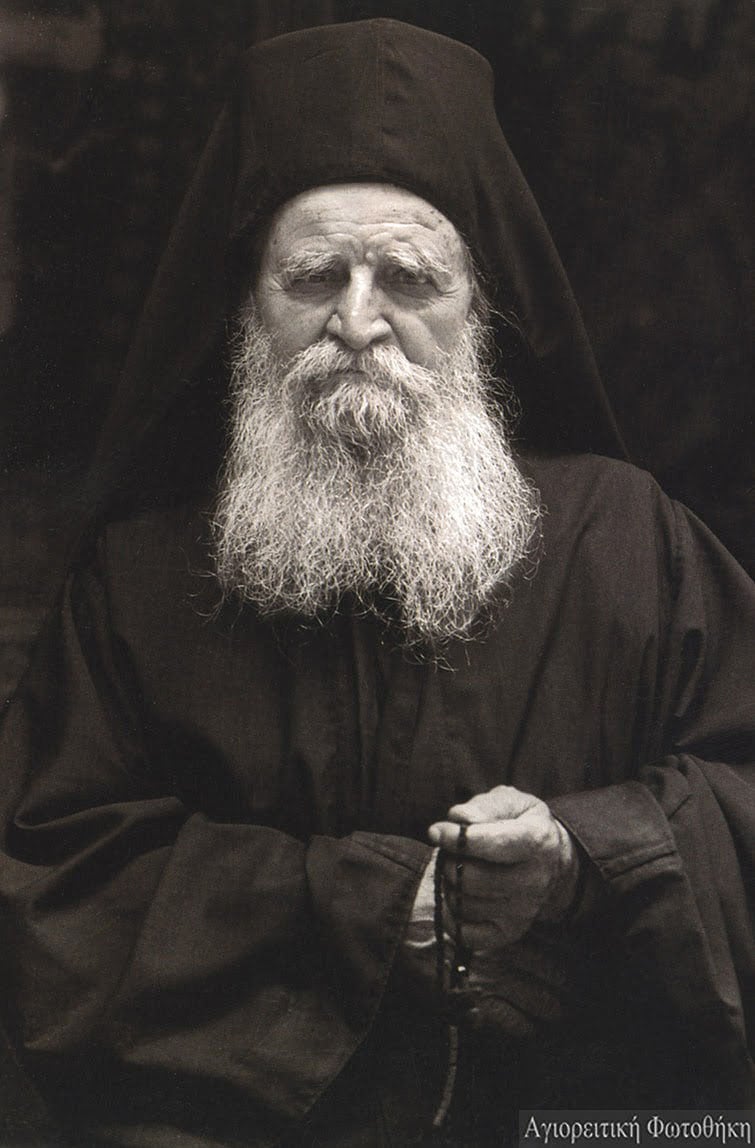 So, do you want me to tell you how we, who are illiterate, read the Scriptures?
After I’ve prayed for five or six hours, I then read the Scriptures, and for preference the Gospels.
I can assure you that my mind opens so much, I understand so clearly, that I’m overcome with emotion.
I put aside the book and am moved to tears for a long period of time…
Elder Charalambos of Dionysiou
http://pemptousia.com/2015/03/elder-charalambos-of-dionysiou-how-we-read-the-scriptures/

From a lecture delivered by Hieromonk Seraphim Rose at the 1979 St. Herman Summer Pilgrimage Platina, CA
IT IS WELL known that Protestants spend a great deal of time on Holy Scripture, because for them it is everything. For us Orthodox Christians the Scripture also holds an essential place. Often, however, we do not take advantage of it, and do not realize what importance it has for us; or if we do, we often do not approach it in the right spirit because the Protestant approach and Protestant books about the Scriptures are widespread, while our Orthodox approach is quite different.
The fact that Scripture is an essential part of our Faith can be seen in our Orthodox services. There are daily readings from the New Testament from both the Epistles and Gospels. In one year we read through almost the entire New Testament. In the first three days of the week before Pascha--the feast of Christ's Resurrection, the four Gospels are read in church, and on Thursday night of Passion Week twelve long selections from the Gospels are read concerning the Passion of our Lord, with verses sung in between, commenting on these passages. The Old Testament is also used in the services. In the vespers for every great feast three parables are read prefiguring the feast. And the Divine services themselves are filled with Scriptural quotations, Scriptural allusions and inspiration coming directly from Holy Scripture. Orthodox Christians also read the Scripture outside the services. St. Seraphim, in his monastic life, read the entire New Testament every week. Perhaps it is because we have such a richness of Scripture in our Orthodox tradition that we are often guilty of taking them for granted, of not valuing and making use of the Scriptures.
One of the leading interpreters of Holy Scripture for us is St. John Chrysostom, an early 5th century Holy Father. He wrote commentaries on practically the whole of the New Testament, including all of St. Paul's epistles and also many Old Testament books. In one sermon concerning Scripture, he addresses his flock:
'I exhort you, and I will not cease to exhort you to pay heed not only to what is said here, but when you are home also you should occupy yourselves attentively with the reading of Holy Scripture. Let no one say to me such cold words-worthy of judgment---as these: 'I am occupied with a trial, I have obligations in the city, I have a wife, I have to feed my children, and it is not my duty to read the Scripture but the duty of those who have renounced everything.' What are you saying?! It is not your duty to read Scripture because you are distracted by innumerable cares? On the contrary, it is your duty more than those others, more than the monks; they do not have such need of help as do you who live in the midst of such cares. You need treatment all the more, because you are constantly under such blows and are wounded so often. The reading of Scripture is a great defense against sin. Ignorance of the Scripture is a great misfortune, a great abyss. Not to know anything from the word of God is a disaster. This is what has given rise to heresies, to immorality; it has turned everything upside down."
Here we see that the reading of Holy Scripture provides us with a great weapon in the fight against the worldly temptations surrounding us – and we do not do enough of it. The Orthodox Church, far from being against the reading of Scripture, greatly encourages it. The Church is only against the misreading of Scripture, against reading one's own private opinions and passions, even sins into the sacred text. When we hear that the Protestants are all excited about something that they say is in the Scripture--the rapture, for example, or the millennium--we are not against their reading the Scripture but against their misinterpretation of the Scripture. To avoid this pitfall ourselves we must understand what this sacred text is and how we should approach it.
The Bible --the Holy Scripture, the Old and New Testaments---is not an ordinary book. It is one that contains not human but divinely revealed truths. It is the word of God. Therefore, we must approach it with reverence and contrition of heart, not with mere idle curiosity and academic coldness. Nowadays one cannot expect a person who has no sympathy for Christianity, no sympathy for the Scriptures to have a proper attitude of reverence. There is, however, such power in the words of Scripture--especially in the Gospels-that it can convert a person even without this proper attitude We have heard of cases in communist countries; the police go out in special squads to persecute believers and break up their meetings; they confiscate all their literature: Bibles, hymn books, patristic texts---many written out by hand. They're supposed to burn them, but sometimes either the person who is assigned to bum them or the person collecting them gets curious and begins reading the condemned materials. And there have been cases where this has changed the person's life. All of a sudden he meets Jesus Christ. And he's shocked, especially if he has been raised with the notion that this is a great evil; here he discovers that there is no evil here but rather something quite fantastic.
Many modern scholars approach the Scriptures with a cold, academic spirit; they do not wish to save their souls by reading Scripture: they only want to prove what great scholars they are, what new ideas they can come up with; they want to make a name for themselves. But we who are Orthodox Christians must have utmost reverence and contrition of heart; i.e., we must approach the word of God with a desire to change our hearts. We read the Scripture in order to gain salvation, not, as some Protestants believe, because we are already saved without the possibility of falling away, but rather as those desperately trying to keep the salvation which Christ has given us, fully aware of our spiritual poverty. For us, reading Scripture is literally a matter of life and death. As King David wrote in the Psalms: Because of Thy words my heart hath bee, afraid. I will rejoice in Thy sayings as one that hath found great spoil.
The Scripture contains truth, and nothing else. Therefore, we must study the Scripture believing in its truth, without doubt or criticism. If we have this latter attitude we shall receive no benefit from reading Scripture but only find ourselves with those "wise" men who think they know more than God's revelation. In fact, the wise of this world often miss the meaning of Scripture. Our Lord prayed: I thank Thee, O Father ..that Thou hast hid these things from the wise and prudent and hast revealed them unto babes (Luke 10:21). In our approach we must not be sophisticated, complicated scholars; we must be simple. And if we are simple the words will have meaning for us.
http://www.sfaturiortodoxe.ro/orthodox/orthodox_advices_seraphim_rose_holy_scriptures.htm
What you read has an impact on the way you think. So does what you watch on TV or at the movies. Think about what you want to let into your mind to influence your thinking. Your reading should be something that will be a positive impact on your spiritual growth, that will shape your mind and orient it towards God.
To maximize the positive conditioning of your mind, you should plan to make time to regularly read the Holy Scriptures, the writings of the Holy Fathers and the lives of the Saints. You should organize your life so that you can spend at least a half hour a day for this task, maybe instead of one of the TV programs you watch regularly. A good time for this is in the evening just before bedtime, before or after your evening prayer. When you do this, you will then fall asleep with these sweet thoughts in your mind.
The spiritual life is challenging. It is like an ascent up a steep slope or mountain side. It is a long and slow pathway with joyful moments along the way. As you move along the path, you gain strength. You can begin to look back and reflect on how far you have come while still seeing that you have much further to travel. As you gain strength, you will be able to face an ever more difficult terrain as well as the uncertainty of storms that you cannot predict. It is often a lonely path, and at times it seems like you will never reach the summit.
As you face these difficulties the readings, especially the lives of the Saints, can inspire you with courage to continue along the path. You can see that others have traveled this path before you, and with persistence and faith, they have reached much higher heights than you can now see. As you turn to those who had an intimate relationship with God, they will give you hope and kindle a spark of warmth in your heart. They will help you keep your head high and your eyes fixed on the summit ahead. They will show you that your capacity to choose, to change, and to endure is a reality. They will show you the way to wisdom and love and the potential to be able to radiate spiritual glory as you discover the uncreated light of God and find yourself in glorious union with Him.
The Bible contains the most important books to read regularly. Here are some suggestions on how to read the Bible:
Read the Bible with obedience. Remember that it is inspired by God. It is Christ Himself speaking to you. This means you need to maintain a sense of wonder along with listening without judgment. Don’t take wonder for granted. Because of your familiarity or the commonness of the Bible, you can take what is written in the Bible just like any other written material and lose your sense of awe and wonder as you read it. Reading the Bible cannot be like reading a novel or the daily newspaper. Just like prayer, you need to prepare your mind to the nature of the text you are about to read. This is the Word of God. With wonder, you can open yourself to listen to what is being said. Look for the spiritual significance of what is written. Remember the Bible is not a textbook, but a spiritual document. As you listen to the words as you read them, you will realize the awesome task that God has for you and His unlimited love He has for all humankind.
When you read the Bible, don’t try to make up your own interpretation. Scripture is to be interpreted through the Church. Remember the story of Philip coming in contact with the Ethiopian reading the Bible in his chariot? Philip asks him, “Do you understand what you are reading?” The Ethiopian replied, “How can I unless someone guides me”. This is the same attitude you should have. Scripture is not always self-explanatory. When you are at different stages of your spiritual growth, passages will take on different significance. As you grow spiritually, the Bible has more and more to teach you. You should take advantage of Biblical commentaries of the Church Fathers to help you. This is one of the advantages of using the Orthodox Study Bible, as it contains comments to help you understand what is written as interpreted by the Church. When you read the Bible you make full advantage of your own understanding illuminated by the Holy Spirit and also make full understanding of the commentaries of the Church Fathers. In the end when you have questions or opinions, submit them to the Church for clarification.
Your reading of the Bible should always be Christ-centered. Your interpretation should be made in light of the harmony and completeness that Jesus brought to this world. You cannot take an analytical approach and break each book or chapter into its own part. The Bible must be understood as a whole, with Christ as the bond and union.
You should also read the Bible for a personal application. Saint Mark the monk (5th-6th century) says, “He who is humble in his thoughts and engaged in spiritual work, when he reads Holy scriptures, will apply everything to himself and not to his neighbor.” Do not ask, “What does this mean?” But, instead ask “What does this mean for me?” When reading the Bible, first reflect that Scripture is a sacred history of the world from the time of Creation through the formation of the early Church. Then observe the particularity of this history where we find God intervening at specific times and places and entering into dialogue with specific individuals. After reliving this spiritual history, apply it to yourself. You need to bring these distant places and times into your own place and time and see that these stories include you.


