
In the Scripture, we see the necessity to observe fasts, firstly from the example set by Christ Himself, who fasted 40 days in the wilderness, even though He was God and had no need of this. Secondly, to the Disciples’ question as to why they could not drive out the evil spirit in a person, He replied: "Through your unbelief;" and then added: "This kind can come out by nothing but prayer and fasting." (Mark 9:29) Apart from this, there are directions in the Scripture that we must observe Wednesdays and Fridays as days of fasting. On Wednesday, Christ was given up for crucifixion and on Friday, He was crucified.
Plain food is not nasty food. It does not corrupt the body but fattens it. And St.Apostle Paul says: "Even though our outward man is perishing, yet the inward man is being renewed day by day" (2 Cor 4:16) He calls the outward person as body and the inward, as the soul.
The Bible states that every deprivation and every constraint is precious before God: "...the Kingdom of Heaven suffers violence, and the violent take it by force" (Matt. 11:12) Those who audaciously and wilfully violate the established fasting rules, are called enemies of the Cross. To them, their God is their stomach and their glory lies in their shame. It is stated in the Psalms: "lost through the stomach." Understandably, its another matter if a person violates the fast due to an illness and weakness of the body. But the healthy become healthier and on top of that, they sometimes live longer even though they may look gaunt. With fasting and self-restraint, the body does not rebel as much, we don’t succumb to sleep as much, less empty thoughts invade our mind, and spiritual books are read more eagerly and with greater understanding.
And so, if by the grace of God you developed a desire to cleanse yourself of your internal iniquities – let it be known to you that their origins cannot be extracted except through sincere prayer and fasting, and then sagaciously. Otherwise, you may have a foolhardy example that occurred here. One landowner, living an indulgent life suddenly wanted to observe a severe fast: he resolved that all he would eat during Great Lent is ground hemp-seed washed down with kvass (a Russian soft drink). From this severe change of indulgence to fasting, his stomach was so damaged that it could not be remedied after one whole year. Incidentally, there are words of Holy Fathers that tell us we should not be body killers but vice killers.
Elder Ambrose of Optina
Do you fast? Then feed the hungry, give drink to the thirsty, visit the sick, do not forget the imprisoned, have pity on the tortured, comfort those who grieve and who weep, be merciful, humble, kind, calm, patient, sympathetic, forgiving, reverent, truthful and pious, so that God might accept your fasting and might plentifully grant you the fruits of repentance.
Fasting of the body is food for the soul.
St. John Chrysostom
In the Scripture, we see the necessity to observe fasts, firstly from the example set by Christ Himself, who fasted 40 days in the wilderness, even though He was God and had no need of this. Secondly, to the Disciples’ question as to why they could not drive out the evil spirit in a person, He replied: "Through your unbelief;" and then added: "This kind can come out by nothing but prayer and fasting." (Mark 9:29) Apart from this, there are directions in the Scripture that we must observe Wednesdays and Fridays as days of fasting. On Wednesday, Christ was given up for crucifixion and on Friday, He was crucified.
Plain food is not nasty food. It does not corrupt the body but fattens it. And St.Apostle Paul says: "Even though our outward man is perishing, yet the inward man is being renewed day by day" (2 Cor 4:16) He calls the outward person as body and the inward, as the soul.
Elder Ambrose of Optina

St. John the Forerunner and Baptist of Christ, who fasted his entire life in the desert (source)
"Fasting is a commandment of God. Because of this, we should also fast, my children. I have not neglected fasting in my 70 years. My mother taught me fasting from childhood. I am not being a hypocrite, my children, when I fast, but I am doing that which my parents taught me and that which I keep until today, my children. Fasting has never brought sickness upon me.
Physicians and Bishops say that frugal fasting is very beneficial to man. Once, a doctor told me: "Father, don't eat for five days, nor even drink a drop of water, because we will do a test to see what is going on with your body." Therefore I fasted for five days. It had done great things to me. How much more are we benefited when we fast for our soul! Because within our body inhabits an eternal soul. Therefore, let us take care for our soul, which is truly an immortal thing.
Let us fast, my children, do not listen to those who say that fasting is nothing, and that this is something from monks. This is not from monks, my children, forgive me, God says this. The first commandment of God is fasting, and our Christ fasted.
We can say that we are fasting, and eat so much. Now, what fasting are we doing, my children? When we eat, forgive me, so much food, even if it is without oil. It is sufficient that man have his health and the desire to fast.
Once, someone came to me and said: "My priest, they told me that fasting doesn't exist." "And who told you that there was no fasting? Go tell the Priest to open the Bible and see that which discusses fasting: 'without prayer and fasting' (Matthew 17:21, Mark 9:29), which our Christ says, and other things.' And the demons, and sicknesses, and all the passions are cast out with fasting. The Holy Forerunner, what did he eat in the desert? What did the Venerable David eat? With an antidoron, he passed the whole week in his cell of asceticism."
-Elder Iakovos Tsalikis of Evia
(amateur translation of text from source)
Through the prayers of our Holy Fathers, Lord Jesus Christ our God, have mercy on us and save us! Amen!
http://full-of-grace-and-truth.blogspot.ca/
Fasting is an ordinance of the Church, obliging the Christian to observe it on specific days. Concerning fasting, our Savior teaches: "When thou fastest, anoint thine head, and wash thy face; that thou appear not unto men to fast, but unto thy Father Who is in secret: and thy Father, Who seethe in secret, shall reward thee openly." From what the Savior teaches we learn (a) that fasting is pleasing to God, and (b) that he who fasts for the uplifting of his mind and heart towards God shall be rewarded by God, Who is a most liberal bestower of Divine gifts, for his devotion.
In the New Testament fasting is recommended as a means of preparing the mind and the heart for divine worship, for long prayer, for rising from the earthly, and for spiritualization.
Saint Nektarios of Aegina
Prayer and fasting banish all sinful thoughts, stop the fever of the brain, preserve the mind from
disturbance, gather it away from dispersion, and enlighten it. Prayer and fasting banish from a man unclean spirits and heal those who are tormented by demons, as the Lord said:
This kind (that is, the devils) goeth not out save by prayer and fasting (Matt. 17:21). Prayer and fasting also cleanse the mind in which the devils often cause darkness. Prayer and fasting are
weapons which protect every access of the devils to us. Prayer, like a grace-given spirit, enlightens the mind, and gives fervor. Prayer with sobriety of
heart is the guardian of the mind, extinguishes its forgetfulness as water does fire.
St. Paisius Velichkovsky
The more days of fasting there are, the better the healing is, the longer the period of abstinence, the more abundant the gain of salvation is.
St. Augustine of Hippo
Fasting is a medicine; but a medicine, though it be never so profitable, becomes frequently useless owing to the unskillfulness of him who employs it. For it is necessary to know, moreover, the time when it should be applied, and the requisite quantity of it; and the nature of the country, and the season of the year; and the corresponding diet; as well as various other particulars; any of which, if one overlooks, he will mar all the rest that have been named. Now if, when the body needs healing, such exactness is required on our part, much more ought we, when our care is about the soul, and we seek to heal the distempers of the mind, to look, and to search into every particular with the utmost accuracy.
St. John Chrysostom
An excellent faster is he who restrains himself from every impurity, who imposes abstinence on his tongue and restrains it from idle talk, foul language, slander, condemnation, flattery and all manner of evils peaking, who abstains from anger, rage, malice and vengeance and withdraws from every evil.
Saint Tikhon of Zadonsk
Prayer and fasting banish all sinful thoughts, stop the fever of the brain, preserve the mind from
disturbance, gather it away from dispersion, and enlighten it. Prayer and fasting banish from a man unclean spirits and heal those who are tormented by demons, as the Lord said:
This kind (that is, the devils) goeth not out save by prayer and fasting (Matt. 17:21). Prayer and fasting also cleanse the mind in which the devils often cause darkness. Prayer and fasting are
weapons which protect every access of the devils to us.
Prayer, like a grace-given spirit, enlightens the mind, and gives fervor. Prayer with sobriety of
heart is the guardian of the mind, extinguishes its forgetfulness as water does fire. Therefore, one should call by an honorably name this virtue which gives birth to bright visions.
St. Paisius Velichkovsky
Fasting is an ordinance of the Church, obliging the Christian to observe it on specific days. Concerning fasting, our Savior teaches: "When thou fastest, anoint thine head, and wash thy face; that thou appear not unto men to fast, but unto thy Father Who is in secret: and thy Father, Who seethe in secret, shall reward thee openly." From what the Savior teaches we learn (a) that fasting is pleasing to God, and (b) that he who fasts for the uplifting of his mind and heart towards God shall be rewarded by God, Who is a most liberal bestower of Divine gifts, for his devotion.
In the New Testament fasting is recommended as a means of preparing the mind and the heart for divine worship, for long prayer, for rising from the earthly, and for spiritualization.
Saint Nektarios of Aegina
Fasting is an ordinance of the Church, obliging the Christian to observe it on specific days. Concerning fasting, our Savior teaches: "When thou fastest, anoint thine head, and wash thy face; that thou appear not unto men to fast, but unto thy Father Who is in secret: and thy Father, Who seethe in secret, shall reward thee openly." From what the Savior teaches we learn (a) that fasting is pleasing to God, and (b) that he who fasts for the uplifting of his mind and heart towards God shall be rewarded by God, Who is a most liberal bestower of Divine gifts, for his devotion.
In the New Testament fasting is recommended as a means of preparing the mind and the heart for divine worship, for long prayer, for rising from the earthly, and for spiritualization.
Saint Nektarios of Aegina
IF THOU, O man, dost not forgive everyone who has sinned against thee, then do not trouble thyself with fasting. If thou dost not forgive the debt of thy brother, with whom thou art angry for some reason, then thou dost fast in vain God will not accept thee. Fasting will not help thee, until thou wilt become accomplished in love and in the hope of faith. Whoever fasts and becomes angry, and harbors enmity in his heart, such a one hates God and salvation is far from him.
St. Ephraim the Syrian

The leader of feats and our Saviour, the Lord Jesus Christ, before setting out on the feat of redeeming the human race, fortified Himself with a lengthy fast. And all ascetics, proceeding to work for the Lord, armed themselves by fasting and did not set out on the path of the Cross without the feat of fasting. They measured the very success of their ascetism by their success in fasting.
Despite their fasting, and to the surprise of others, the holy fathers did not know weakness but always remained hearty, strong and ready for the task at hand. Illnesses were rare among them and their lives were extraordinarily prolonged.
During the time that the body of one fasting becomes thin and light, the spiritual life attains to perfection and reveals itself through miraculous manifestations. The spirit then performs its actions as if in a bodiless body. External feelings are as shut out, and the mind, renouncing the worldly, ascends to the heavenly and becomes completely immersed in the contemplation of the spiritual world. Yet not everyone can take upon himself strict rules of abstinence from everything, nor deprive himself completely of all that serves to relieve infirmities: "He that is able to receive it, let him receive it" (Mt. 19:12).
One should take enough food everyday to strengthen the body, so that it can be a friend and helper to the soul in accomplishing virtues: otherwise it can happen that through the exhaustion of the body the spirit can weaken. On Wednesdays and Fridays, particularly during the four Lenten periods, follow the example of the Fathers and take food once a day — and the Angel of the Lord will affix himself to you
Saint Seraphim of Sarov

The leader of feats and our Saviour, the Lord Jesus Christ, before setting out on the feat of redeeming the human race, fortified Himself with a lengthy fast. And all ascetics, proceeding to work for the Lord, armed themselves by fasting and did not set out on the path of the Cross without the feat of fasting. They measured the very success of their ascetism by their success in fasting.
Despite their fasting, and to the surprise of others, the holy fathers did not know weakness but always remained hearty, strong and ready for the task at hand. Illnesses were rare among them and their lives were extraordinarily prolonged.
During the time that the body of one fasting becomes thin and light, the spiritual life attains to perfection and reveals itself through miraculous manifestations. The spirit then performs its actions as if in a bodiless body. External feelings are as shut out, and the mind, renouncing the worldly, ascends to the heavenly and becomes completely immersed in the contemplation of the spiritual world. Yet not everyone can take upon himself strict rules of abstinence from everything, nor deprive himself completely of all that serves to relieve infirmities: "He that is able to receive it, let him receive it" (Mt. 19:12).
One should take enough food everyday to strengthen the body, so that it can be a friend and helper to the soul in accomplishing virtues: otherwise it can happen that through the exhaustion of the body the spirit can weaken. On Wednesdays and Fridays, particularly during the four Lenten periods, follow the example of the Fathers and take food once a day — and the Angel of the Lord will affix himself to you.
Saint Seraphim of Sarov

In the Scripture, we see the necessity to observe fasts, firstly from the example set by Christ Himself, who fasted 40 days in the wilderness, even though He was God and had no need of this. Secondly, to the Disciples’ question as to why they could not drive out the evil spirit in a person, He replied: "Through your unbelief;" and then added: "This kind can come out by nothing but prayer and fasting." (Mark 9:29) Apart from this, there are directions in the Scripture that we must observe Wednesdays and Fridays as days of fasting. On Wednesday, Christ was given up for crucifixion and on Friday, He was crucified.
Plain food is not nasty food. It does not corrupt the body but fattens it. And St.Apostle Paul says: "Even though our outward man is perishing, yet the inward man is being renewed day by day" (2 Cor 4:16) He calls the outward person as body and the inward, as the soul.
The Bible states that every deprivation and every constraint is precious before God: "...the Kingdom of Heaven suffers violence, and the violent take it by force" (Matt. 11:12) Those who audaciously and wilfully violate the established fasting rules, are called enemies of the Cross. To them, their God is their stomach and their glory lies in their shame. It is stated in the Psalms: "lost through the stomach." Understandably, its another matter if a person violates the fast due to an illness and weakness of the body. But the healthy become healthier and on top of that, they sometimes live longer even though they may look gaunt. With fasting and self-restraint, the body does not rebel as much, we don’t succumb to sleep as much, less empty thoughts invade our mind, and spiritual books are read more eagerly and with greater understanding.
And so, if by the grace of God you developed a desire to cleanse yourself of your internal iniquities – let it be known to you that their origins cannot be extracted except through sincere prayer and fasting, and then sagaciously. Otherwise, you may have a foolhardy example that occurred here. One landowner, living an indulgent life suddenly wanted to observe a severe fast: he resolved that all he would eat during Great Lent is ground hemp-seed washed down with kvass (a Russian soft drink). From this severe change of indulgence to fasting, his stomach was so damaged that it could not be remedied after one whole year. Incidentally, there are words of Holy Fathers that tell us we should not be body killers but vice killers.
Elder Ambrose of Optina
Καλή Σαρακοστή να έχουμε!

Άγιον Όρος…
Μοσχομύριστος, Αγιοβάδιστος τόπος. Σπαρμένος απ’ άκρη σ’ άκρη με λείψανα Αγίων. Χώρος συνάντησης των απογόνων του Αδάμ με τον ξεχασμένο δημιουργό. Εδώ ο άνθρωπος προσπαθεί, αγωνίζεται. Ο Θεός διαρκώς του προσφέρεται. Το ίδιο και ο άνθρωπος. Αγία Τράπεζα, θυσιαστήριο ο Άθωνας. Προχωράς και η ψυχή σου αναπνέει. Κάθε συνάντηση πνευματικό διδασκαλείο. Ρίχνεις τα δίχτυα σου και ψαρεύεις τροφή πνευματική από θάλασσες παραδείσιες.
- Ευλογείτε Γέροντα.
- Ο Kύριος να σε ευλογεί χαρά μου.
- Είστε πολλά χρόνια στο Άγιον Όρος;
- Είμαι εξήντα χρόνια, αλλά τι είναι εξήντα χρόνια για το Θεό; Μια ανάσα είναι.
- Γέροντα θα ήθελα να πείτε δύο πράγματα για τη νηστεία.
- Για να πεις κάτι πρέπει να το βιώνεις, να το ζεις. Μόνο ένας που έχει γεννηθεί κοντά σε θάλασσα ή είναι ναυτικός μπορεί να μιλήσει για τη θάλασσα. Αλλά θα κάνω υπακοή στο θέλημά σου και θα σου πω τί λένε οι πατέρες οι οποίοι ήταν φίλοι της νηστείας.
- Η νηστεία Γέροντα είναι σκοπός;
- Η νηστεία δεν είναι σκοπός, είναι μέσο. Να, σκοπός σου ήταν να έλθεις στο Άγιον Όρος, ήταν ο προορισμός σου. Το καραβάκι που σε έφερε είναι το μέσο. Έτσι και η νηστεία, είναι ένα από τα μέσα που μας έδωσε η αγάπη του Θεού για να Τον ποθούμε. Ο Θεός είναι ο προορισμός μας.
- Πότε εμφανίστηκε η νηστεία;
- Η νηστεία είναι συνομήλικη με την ανθρωπότητα. Μέσα στον Παράδεισο δόθηκε στον άνθρωπο από τον Θεό, μας λέει ο Μ. Βασίλειος.
- Γιατί όμως ο Θεός έδωσε τη νηστεία, για να περιορίσει τον άνθρωπο;
- Όχι, για να τον ελευθερώσει! Ο Ιερός Χρυσόστομος γράφει ότι ο Θεός δημιουργώντας τον άνθρωπο τον έφερε και τον παρέδωσε στο χέρι της νηστείας, η οποία είναι φιλόστοργη μητέρα και άριστος διδάσκαλος. Της εμπιστεύτηκε δηλαδή την σωτηρία του. Άρα η νηστεία είναι παιδαγωγός, δεν περιορίζει αλλά καλλιεργεί τον άνθρωπο.
- Είναι αναγκαία η νηστεία Γέροντα;
- Θα σου απαντήσει πάλι ο Χρυσόστομος: «Αν η νηστεία ήταν αναγκαία στον Παράδεισο, είναι πολύ περισσότερο αναγκαία έξω από τον Παράδεισο. Αν ήταν χρήσιμο το φάρμακο πριν από τον τραυματισμό, είναι πολύ περισσότερο χρήσιμο μετά τον τραυματισμό». Κατάλαβες;
- Τι;
- Η νηστεία μέσα στον Παράδεισο δόθηκε προληπτικά στον άνθρωπο για να μην πέσει. Αφού ο άνθρωπος έπεσε δίδεται θεραπευτικά.
- Τελικά ποιος ο σκοπός της νηστείας;
- Η νηστεία μαραίνει τις κακές επιθυμίες, λέει ο Άγιος Μάξιμος ο Ομολογητής, την καρδιά μας την μαλακώνει, συμπληρώνει ο Άγιος Συμεών ο νέος Θεολόγος. Κάθε καλό και αγαθό έργο δια της νηστείας κατορθώνεται και τελειοποιείται, γράφει ο Άγιος Γρηγόριος ο Παλαμάς. Για όλους αυτούς τους λόγους ο Ιερός Χρυσόστομος μας εξομολογείται την αγάπη του προς τη νηστεία. «Αγαπώ τη νηστεία, γιατί είναι μητέρα σωφροσύνης και πηγή κάθε φιλοσοφημένης πράξεως».
- Πώς πρέπει να νηστεύουμε;
- Η νηστεία είναι μέσο και όπλο πνευματικό το οποίο δεν περιορίζεται μόνο στη διατροφή, πρέπει όλος ο άνθρωπος ψυχοσωματικά να συμμετέχει. Άκου τι μας λέει ο Ιωάννης ο Χρυσόστομος. «Νηστεύεις; Απόδειξέ το δια μέσου των ίδιων των έργων. Αν δεις εχθρό, να συμφιλιωθείς μαζί του. Αν δεις φτωχό, να τον ελεήσεις. Να νηστεύουν τα χέρια, παραμένοντας καθαρά από την αρπαγή και την πλεονεξία. Να νηστεύουν τα πόδια ξεκόβοντας από δρόμους που οδηγούν στην αμαρτία. Δεν τρως κρέας; Να μη φας και την ακολασία δια μέσου των ματιών. Ας νηστεύει και η ακοή. Και η νηστεία της ακοής είναι να μη δέχεσαι κακολογιές και διαβολές. Ας νηστεύει και το στόμα από αισχρά λόγια. Διότι τι όφελος έχουμε, όταν απέχουμε από πουλερικά και ψάρια, δαγκώνουμε όμως και κατατρώγουμε τους αδελφούς μας;
- Πως δαγκώνουμε και κατατρώμε τους αδελφούς μας;
- Με την συκοφαντία και την κατάκριση, που ξεκινούν από την έλλειψη αγάπης για τον αδελφό μας.
- Ευχαριστώ Γέροντα, πολύ με ωφελήσατε.
- Ευχαριστίες πρέπουν στον Θεό που φώτισε του Αγίους μας.
- Την ευχή σας.
- Στο καλό η Χάρις του Θεού να σε σκεπάζει, η Παναγιά μας να σε προστατεύει και οι Άγιοί μας να σε συντροφεύουν. Και μη ξεχνάς νηστεία κυρίως είναι να πεινάσεις για Θεό!!!
Dialogue With an Athonite Elder on Fasting
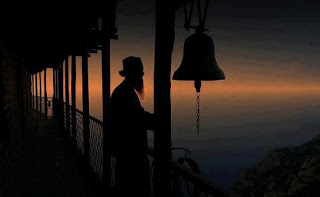
Mount Athos…
A fragrant-smelled saint-walkled land. Strewn from end to end with the relics of the saints. A meeting place of the descendants of Adam with their forgotten Creator. Here man is trying, he is struggling. God is constantly being offered. The same with man. Athos is a Holy Altar, a place of sacrifice. You move forward and the soul breathes. Every meeting is a spiritual education. You throw your nets and fish for spiritual food from the seas of paradise.
Bless Elder.
"The Lord bless you, my joy."
Are you on Mount Athos for many years?
"I’ve been here for sixty years, but what is sixty years to God; it is a breath.
Elder, I would like you to tell me a few things about fasting.
"In order to say something you must experience it, you must live it. Only one who was born near the sea or is a seaman can speak of the sea. But I will be obedient to your will and tell you what the Fathers said who were friends of fasting."
Elder, is fasting the aim?
"Fasting is not the aim, but the means towards it. See, it was your aim to come to Mount Athos, it was your destination. The boat which brought you was the means by which you arrived. Such is fasting; it is one of the means given to us by the love of God to crave for Him. God is our destination."
When did fasting appear?
"Fasting is commingled with humanity. In Paradise it was given to man by God, says Basil the Great."
But why did God give fasting? To reduce man?
"No, in order to free him! The Sacred Chrysostom writes that when God created man He took him and placed him in the hands of fasting, which is an affectionate mother and excellent teacher. He entrusted it for his salvation. Though fasting is a teacher, it does not limit but it cultivates man."
Is fasting necessary, Elder?
"Chrysostom will again reply to you: ‘If fasting was necessary in Paradise, it is much more necessary outside of Paradise. If medicine was useful before an injury, it is much more useful after an injury.’ Do you understand?"
What?
"Fasting was given in Paradise as a precaution to not fall. Since man fell it is given therapeutically."
Then what is the purpose of fasting?
"Fasting withers evil desires, says Saint Maximus the Confessor; and Saint Symeon the New Theologian says it softens our hearts. Through fasting every good work is accomplished and perfected, says Saint Gregory Palamas. For all these reasons Sacred Chrysostom confesses his love for fasting: ‘I love fasting, because it is the mother of wisdom and the well of philosophical acts.’"
How should we fast?
"Fasting is a means and spiritual tool which is not limited to food, but the entire man must participate in it psychosomatically. Listen to what John Chrysostom says: ‘Do you fast? Give me proof of it by your works. If you see a poor man, take pity on him. If you see a friend being honored, do not envy him. Do not let only your mouth fast, but also the eye and the ear and the feet and the hands and all the members of our bodies. Let the hands fast, by being free of greed. Let the feet fast, by ceasing to run after sin. Let the eyes fast, by disciplining them not to glare at that which is sinful. Let the ear fast, by not listening to evil talk and gossip. Let the mouth fast from foul words and unjust criticism. For what good is it if we abstain from birds and fish, but bite and devour our brothers?’"
How do we bite and devour our brothers?
"With slander and criticism, which proceed from the lack of love for our brother."
Thank you, Elder. You have benefited me much.
"May we thank God for enlightening our saints."
Your prayers.
"Go in goodness, and may the Grace of God cover you, the Panagia protect you, and the saints accompany you. And don’t forget that fasting is primarily to hunger for God!"
Even though fasting is clearly documented in the Holy Scriptures, some people still challenge this commandment of God. Often times the words of our Lord “not what goes into the mouth, but what comes out defiles man” are misused to claim that
neither does God require us to fast, nor is it a sin if someone chooses not to fast.
Let us examine this Gospel verse to see what exactly is recorded.The scribes and Pharisees once asked our Lord: “Why do Your disciples transgress the tradition of the elders? For they do not wash their hands when they eat bread” (Mt.15:2).
This question evidently refers to why Christ’s
disciples did not wash their hands before eating.
It makes no mention of fasting. Thus Christ
responded:“Hear and understand: not what goes into the mouth defiles a man, but what comes out of the mouth, this defiles a man” (Mt. 15:11).
That is to say, even if the food or our hands are not perfectly clean and we consume foreign particles, this will not render us sinful before God. Why?
Because “whatever enters the mouth goes into the stomach and is eliminated.”
Evil desires, however, which are contrary to the law of God, which originate from within man, and which man externalizes, are what render man sinful before God.
“For out of the heart proceed evil thoughts, murders, adulteries, fornications, thefts, false witness, blasphemies. These are the things that
defile a man. But to eat with unwashed hands,”
underlines the Lord, “does not defile a man” (Mt.15:18-19).
It is thus evident that Christ’s statement that “what goes into the mouth does not defile man” is in no way related to nor negates the commandment of fasting.

Άγιον Όρος…
Μοσχομύριστος, Αγιοβάδιστος τόπος. Σπαρμένος απ’ άκρη σ’ άκρη με λείψανα Αγίων. Χώρος συνάντησης των απογόνων του Αδάμ με τον ξεχασμένο δημιουργό. Εδώ ο άνθρωπος προσπαθεί, αγωνίζεται. Ο Θεός διαρκώς του προσφέρεται. Το ίδιο και ο άνθρωπος. Αγία Τράπεζα, θυσιαστήριο ο Άθωνας. Προχωράς και η ψυχή σου αναπνέει. Κάθε συνάντηση πνευματικό διδασκαλείο. Ρίχνεις τα δίχτυα σου και ψαρεύεις τροφή πνευματική από θάλασσες παραδείσιες.
- Ευλογείτε Γέροντα.
- Ο Kύριος να σε ευλογεί χαρά μου.
- Είστε πολλά χρόνια στο Άγιον Όρος;
- Είμαι εξήντα χρόνια, αλλά τι είναι εξήντα χρόνια για το Θεό; Μια ανάσα είναι.
- Γέροντα θα ήθελα να πείτε δύο πράγματα για τη νηστεία.
- Για να πεις κάτι πρέπει να το βιώνεις, να το ζεις. Μόνο ένας που έχει γεννηθεί κοντά σε θάλασσα ή είναι ναυτικός μπορεί να μιλήσει για τη θάλασσα. Αλλά θα κάνω υπακοή στο θέλημά σου και θα σου πω τί λένε οι πατέρες οι οποίοι ήταν φίλοι της νηστείας.
- Η νηστεία Γέροντα είναι σκοπός;
- Η νηστεία δεν είναι σκοπός, είναι μέσο. Να, σκοπός σου ήταν να έλθεις στο Άγιον Όρος, ήταν ο προορισμός σου. Το καραβάκι που σε έφερε είναι το μέσο. Έτσι και η νηστεία, είναι ένα από τα μέσα που μας έδωσε η αγάπη του Θεού για να Τον ποθούμε. Ο Θεός είναι ο προορισμός μας.
- Πότε εμφανίστηκε η νηστεία;
- Η νηστεία είναι συνομήλικη με την ανθρωπότητα. Μέσα στον Παράδεισο δόθηκε στον άνθρωπο από τον Θεό, μας λέει ο Μ. Βασίλειος.
- Γιατί όμως ο Θεός έδωσε τη νηστεία, για να περιορίσει τον άνθρωπο;
- Όχι, για να τον ελευθερώσει! Ο Ιερός Χρυσόστομος γράφει ότι ο Θεός δημιουργώντας τον άνθρωπο τον έφερε και τον παρέδωσε στο χέρι της νηστείας, η οποία είναι φιλόστοργη μητέρα και άριστος διδάσκαλος. Της εμπιστεύτηκε δηλαδή την σωτηρία του. Άρα η νηστεία είναι παιδαγωγός, δεν περιορίζει αλλά καλλιεργεί τον άνθρωπο.
- Είναι αναγκαία η νηστεία Γέροντα;
- Θα σου απαντήσει πάλι ο Χρυσόστομος: «Αν η νηστεία ήταν αναγκαία στον Παράδεισο, είναι πολύ περισσότερο αναγκαία έξω από τον Παράδεισο. Αν ήταν χρήσιμο το φάρμακο πριν από τον τραυματισμό, είναι πολύ περισσότερο χρήσιμο μετά τον τραυματισμό». Κατάλαβες;
- Τι;
- Η νηστεία μέσα στον Παράδεισο δόθηκε προληπτικά στον άνθρωπο για να μην πέσει. Αφού ο άνθρωπος έπεσε δίδεται θεραπευτικά.
- Τελικά ποιος ο σκοπός της νηστείας;
- Η νηστεία μαραίνει τις κακές επιθυμίες, λέει ο Άγιος Μάξιμος ο Ομολογητής, την καρδιά μας την μαλακώνει, συμπληρώνει ο Άγιος Συμεών ο νέος Θεολόγος. Κάθε καλό και αγαθό έργο δια της νηστείας κατορθώνεται και τελειοποιείται, γράφει ο Άγιος Γρηγόριος ο Παλαμάς. Για όλους αυτούς τους λόγους ο Ιερός Χρυσόστομος μας εξομολογείται την αγάπη του προς τη νηστεία. «Αγαπώ τη νηστεία, γιατί είναι μητέρα σωφροσύνης και πηγή κάθε φιλοσοφημένης πράξεως».
- Πώς πρέπει να νηστεύουμε;
- Η νηστεία είναι μέσο και όπλο πνευματικό το οποίο δεν περιορίζεται μόνο στη διατροφή, πρέπει όλος ο άνθρωπος ψυχοσωματικά να συμμετέχει. Άκου τι μας λέει ο Ιωάννης ο Χρυσόστομος. «Νηστεύεις; Απόδειξέ το δια μέσου των ίδιων των έργων. Αν δεις εχθρό, να συμφιλιωθείς μαζί του. Αν δεις φτωχό, να τον ελεήσεις. Να νηστεύουν τα χέρια, παραμένοντας καθαρά από την αρπαγή και την πλεονεξία. Να νηστεύουν τα πόδια ξεκόβοντας από δρόμους που οδηγούν στην αμαρτία. Δεν τρως κρέας; Να μη φας και την ακολασία δια μέσου των ματιών. Ας νηστεύει και η ακοή. Και η νηστεία της ακοής είναι να μη δέχεσαι κακολογιές και διαβολές. Ας νηστεύει και το στόμα από αισχρά λόγια. Διότι τι όφελος έχουμε, όταν απέχουμε από πουλερικά και ψάρια, δαγκώνουμε όμως και κατατρώγουμε τους αδελφούς μας;
- Πως δαγκώνουμε και κατατρώμε τους αδελφούς μας;
- Με την συκοφαντία και την κατάκριση, που ξεκινούν από την έλλειψη αγάπης για τον αδελφό μας.
- Ευχαριστώ Γέροντα, πολύ με ωφελήσατε.
- Ευχαριστίες πρέπουν στον Θεό που φώτισε του Αγίους μας.
- Την ευχή σας.
- Στο καλό η Χάρις του Θεού να σε σκεπάζει, η Παναγιά μας να σε προστατεύει και οι Άγιοί μας να σε συντροφεύουν. Και μη ξεχνάς νηστεία κυρίως είναι να πεινάσεις για Θεό!!!
Dialogue With an Athonite Elder on Fasting

Mount Athos…
A fragrant-smelled saint-walkled land. Strewn from end to end with the relics of the saints. A meeting place of the descendants of Adam with their forgotten Creator. Here man is trying, he is struggling. God is constantly being offered. The same with man. Athos is a Holy Altar, a place of sacrifice. You move forward and the soul breathes. Every meeting is a spiritual education. You throw your nets and fish for spiritual food from the seas of paradise.
Bless Elder.
"The Lord bless you, my joy."
Are you on Mount Athos for many years?
"I’ve been here for sixty years, but what is sixty years to God; it is a breath.
Elder, I would like you to tell me a few things about fasting.
"In order to say something you must experience it, you must live it. Only one who was born near the sea or is a seaman can speak of the sea. But I will be obedient to your will and tell you what the Fathers said who were friends of fasting."
Elder, is fasting the aim?
"Fasting is not the aim, but the means towards it. See, it was your aim to come to Mount Athos, it was your destination. The boat which brought you was the means by which you arrived. Such is fasting; it is one of the means given to us by the love of God to crave for Him. God is our destination."
When did fasting appear?
"Fasting is commingled with humanity. In Paradise it was given to man by God, says Basil the Great."
But why did God give fasting? To reduce man?
"No, in order to free him! The Sacred Chrysostom writes that when God created man He took him and placed him in the hands of fasting, which is an affectionate mother and excellent teacher. He entrusted it for his salvation. Though fasting is a teacher, it does not limit but it cultivates man."
Is fasting necessary, Elder?
"Chrysostom will again reply to you: ‘If fasting was necessary in Paradise, it is much more necessary outside of Paradise. If medicine was useful before an injury, it is much more useful after an injury.’ Do you understand?"
What?
"Fasting was given in Paradise as a precaution to not fall. Since man fell it is given therapeutically."
Then what is the purpose of fasting?
"Fasting withers evil desires, says Saint Maximus the Confessor; and Saint Symeon the New Theologian says it softens our hearts. Through fasting every good work is accomplished and perfected, says Saint Gregory Palamas. For all these reasons Sacred Chrysostom confesses his love for fasting: ‘I love fasting, because it is the mother of wisdom and the well of philosophical acts.’"
How should we fast?
"Fasting is a means and spiritual tool which is not limited to food, but the entire man must participate in it psychosomatically. Listen to what John Chrysostom says: ‘Do you fast? Give me proof of it by your works. If you see a poor man, take pity on him. If you see a friend being honored, do not envy him. Do not let only your mouth fast, but also the eye and the ear and the feet and the hands and all the members of our bodies. Let the hands fast, by being free of greed. Let the feet fast, by ceasing to run after sin. Let the eyes fast, by disciplining them not to glare at that which is sinful. Let the ear fast, by not listening to evil talk and gossip. Let the mouth fast from foul words and unjust criticism. For what good is it if we abstain from birds and fish, but bite and devour our brothers?’"
How do we bite and devour our brothers?
"With slander and criticism, which proceed from the lack of love for our brother."
Thank you, Elder. You have benefited me much.
"May we thank God for enlightening our saints."
Your prayers.
"Go in goodness, and may the Grace of God cover you, the Panagia protect you, and the saints accompany you. And don’t forget that fasting is primarily to hunger for God!"

It would be a gross understatement to say that much has been written about the Feast of the Dormition of the Theotokos. Yet very little has been written about the fast that precedes it.
Every Orthodox Christian is aware and generally knows the reason behind the fasts for Pascha and Christmas. But while they may know of the Dormition Fast, few follow it, and more than a few question why it is there, neither knowing its purpose. First, given the pervasive misunderstanding of the purpose of fasting itself, a refresher on its purpose is always a good idea.
There is a perception that we should fast when we want something, as though the act of fasting somehow appeases God, and seeing us “suffer” gets Him to grant our request. Nothing can be further from the truth. It is not our fasting that pleases God, it is the fruits of our fast (provided we fast in the proper mind set, and do not merely diet) that please Him. We fast, not to get what we want, but to prepare ourselves to receive what God wants to give us. The purpose of fasting is to bring us more in line with another Mary, the sister of Lazarus, and away from their sister Martha, who in the famous passage was “anxious and troubled about many things.” Fasting is intended to bring us to the realization of “the one thing needful.” It is to help us put God first and our own desires second, if not last. As such it serves to prepare us to be instruments of God’s will, as with Moses in his flight from Egypt and on Mt. Sinai, as well as our Lord’s fast in the wilderness. Fasting turns us away from ourselves and toward God. In essence it helps us become like the Theotokos, an obedient servant of God, who heard His word and kept it better than anyone else has or could.
So why do we fast before Dormition? In a close-knit family, word that its matriarch is on her deathbed brings normal life to a halt. Otherwise important things (parties, TV, luxuries, personal desires) become unimportant; life comes to revolve around the dying matriarch. It is the same with the Orthodox family; word that our matriarch is on her deathbed, could not (or at least should not) have any different effect than the one just mentioned. The Church, through the Paraklesis Service, gives us the opportunity to come to that deathbed and eulogize and entreat the woman who bore God, the vessel of our salvation and our chief advocate at His divine throne. And as, in the earthly family, daily routines and the indulgence in personal wants should come to a halt. Fasting, in its full sense (abstaining from food and desires) accomplishes this. Less time in leisure or other pursuits leaves more time for prayer and reflection on she who gave us Christ, and became the first and greatest Christian. In reflecting on her and her incomparable life, we see a model Christian life, embodying Christ’s retort to the woman who stated that Mary was blessed because she bore Him: blessed rather are those who hear His word and keep it. Mary did this better than anyone. As Fr. Thomas Hopko has stated, she heard the word of God and kept it so well, that she of all women in history was chosen not only to hear His Word but give birth to it (Him). So while we fast in contemplation of her life, we are simultaneously preparing ourselves to live a life in imitation of her. That is the purpose of the Dormition Fast.
When the assumption of thine undefiled body was being prepared, the Apostles gazed on thy bed, viewing thee with trembling. Some contemplated thy body and were dazzled, but Peter cried out to thee in tears, saying, I see thee clearly, O Virgin, stretched out, O life of all, and I am astonished. O thou undefiled one, in whom the bliss of future life dwelt, beseech thy Son and God to preserve thy people unimpaired.
(Sticheron after the Gospel, Orthros)


