Showing posts with label Cross. Show all posts

Friday, July 3, 2015

Starting our day on the right foot, the sign of the Cross ( Elder Cleopas )


“Do not do anything without signing yourself with the sign of the Cross! When you depart on a journey, when you begin your work, when you go to study, when you are alone, and when you are with other people, seal yourself with the Holy Cross on your forehead, your body, your chest, your heart, your lips, your eyes, your ears. 


All of you should be sealed with the sign of Christ’s victory over hell. Then you will no longer be afraid of charms, evil spirits, or sorcery, because these are dissolved by the power of the Cross like wax before fire and like dust before the wind.”

Elder Cleopas

Wednesday, October 29, 2014

Pick up your Cross ( Elder Paisios )


Those who think about the heavy crosses of the righteous, never worry about their own small trials, for, although they have made more mistakes in their life, they suffer less than the righteous.


Elder Paisios

Thursday, July 17, 2014

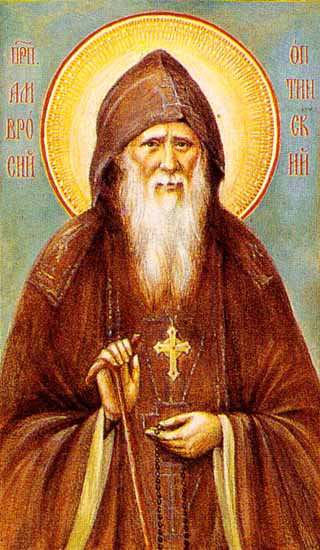
If a person walks a straight path, for him there is no cross ( Elder Ambrose of Optina )


"God does not create crosses for people, that is, cleansing spiritual and physical sufferings. And however heavy that cross may be for that individual, the tree that produces its timber grows from the soil of his heart."

"If a person walks a straight path, for him there is no cross. However, when he starts to lurch from one side to the other, then different circumstances appear which push him back onto the right track. These elements constitute a cross for a person. Of course they occur differently, according to the individual’s need."


Elder Ambrose of Optina

Tuesday, July 15, 2014

Carrying your cross ( St. Innocent of Alaska )


In following Jesus Christ, it is not enough to carry only an outward cross. Indeed, external crosses are borne not only by Christians but by everyone. There exists no person free one or more sorrows.

He who wishes to become a true disciple of Christ must also carry his own inner cross.


St. Innocent of Alaska

Saturday, May 31, 2014

About the sign of the cross


 Before Christ, the cross was an instrument of the cruelest punishment, and a symbol of horror. After His sufferings, it became the sign of the victory of good over evil and of life over death; it became the reminder of the limitless love of God and a source of happiness. 

The incarnate Son of God sanctified the cross with His blood and made it the carrier of His blessings and holiness. Because of these properties, the sign of the cross became an essential component of Christian life since apostolic times, used in all Church services and private prayers. For instance, water is blessed and becomes holy with the sign of the cross, and bread and wine are transformed into the Body and Blood of Christ; in summary, all Sacraments acquire their spiritual power through the sign of the cross. 

As flies cannot tolerate flame, so demons cannot stand the presence of the cross. The sign of the cross protects a Christian from accidents and misfortunes and attracts God's help to him. That is why Orthodox Christians revere the cross so much, bless themselves with the sign of the cross, wear a cross on their chest and adorn their homes and churches with crosses.

Saturday, March 29, 2014

The Venerable Cross ( Subdeacon Damascene the Studite )


This present Sunday of the Holy Cross is a day of preparation, similar to the one that takes place
when a nation prepares to welcome back its king who is returning victorious from war. Just as a king who has vanquished his enemies sends heralds to inform his people and announce to
them the joyous news of his victory, prior to
returning to his homeland, similarly our Lord Jesus Christ, the Great King, has sent us the Venerable and Holy Cross today as a herald
instructing us to prepare to receive Him— because
shortly He will come to show us how He

conquered the devil through His death and His
Holy Resurrection.


Today the Orthodox Church of Christ resembles
Paradise. Just as in the middle of the Garden of Eden there was the tree of knowledge, which put Adam to death through his disobedience, similarly our Holy Church sets forth the Cross, the tree of life, which resurrected Adam through the death of Christ. Christ presents the Venerable Cross to us today so that we may cheerfully adore  it as the cause of the resurrection for the entire human race. 


Today, the following prophecy of the Prophet David was fulfilled:
“Let us worship at the place where His feet have stood” (Ps. 131:7).We have made an effort to fast
thus far through Great Lent; now, the day has come for us to rejoice.


People who travel by foot on a far journey
oftentimes begin to grow weary, especially in times when the hot sun is beating down on them.
If, however, they encounter a tree with dense
foliage along the way, they find solace, they rest and recuperate under its shade, and then continue their journey with renewed strength.


Similarly, since we have struggled to observe
this arduous fast, as we encounter the Venerable Cross today midway through Great Lent, we rejoice in this divine celebration, we find
consolation, we are fortified, and thus eagerly
proceed on the remainder of our journey through the fast. The Venerable Cross is an invincible weapon for every Christian. It is the victory for kings, the honor of the Church, the persecutor
of the demons, and the guard of the faithful.


Blessed are they who venerate the Cross with a pure heart. Fortunate are the people who the Lord speaks of in His Holy Gospel, who are worthy of following Him:
“If anyone desires to come after Me, let him deny himself, and take up his cross, and follow Me” (Mt. 16:24)

Thursday, February 20, 2014

The meaning of the Cross in our life.( Bishop Alexander (Mileant) )


As we have seen, the apostles taught that all the blessings of this life and in the life to come are the direct result of the suffering on the Cross of the incarnate Son of God. These blessings extend not only to mankind but also to all of nature and even the entire universe, which will be renewed on the day of the general resurrection.

For us the most important blessing of the redemptive death and resurrection of Christ is the gift of a new life in Christ — the ability to live spiritually, to perfect oneself and become likened to God. All this is referred to in the Scriptures as becoming a new man or new creation. Before Christ, man was unable to lead a true spiritual life and was a prisoner of his corporal, often sinful desires. The blessings of redemption inspire new thoughts, a new outlook on life. Redemption exposes the emptiness and vanity of our earthly existence and reveals how joyful and wonderful is the life to come. The grace of the Holy Spirit constantly helps us on the way to our ultimate goal. It replaces the feeling of oppression and bitterness with lightness and inner peace; the thirst for vile pleasures with the sweetness of a relationship with God; sickly self-love with a noble desire to do good.

Of course, any kind of growth and perfection demands personal effort as well. God leads and helps us and gives us all the tools to succeed, but constancy and struggle are necessary ingredients to become virtuous. These difficulties, both outer and inner, are called personal "crosses." Every Christian has to carry his personal cross if he wants to participate in his victory over evil. Salvation consists of two parts: the objective part already accomplished by Jesus Christ on the Cross, and the subjective part which consists of a personal effort to become a true Christian. About this second aspect of salvation, Jesus says: "He who follows after Me [wants to be My disciple] but does not take his cross, is not worthy of Me" (Matt. 10:38). There is nothing bleak in this carrying of one's personal cross. The Apostles, in talking about a Christian's struggle, comforted themselves and others with the words: "The sufferings of this present time are not worthy to be compared with the glory which shall be revealed in us" (Rom. 8:17). And the more a Christian shares in Christ's sufferings, the more he will share in His glory.

A few words about the sign of the cross. Before Christ, the cross was an instrument of the cruelest punishment, and a symbol of horror. After His sufferings, it became the sign of the victory of good over evil and of life over death; it became the reminder of the limitless love of God and a source of happiness. The incarnate Son of God sanctified the cross with His blood and made it the carrier of His blessings and holiness. Because of these properties, the sign of the cross became an essential component of Christian life since apostolic times, used in all Church services and private prayers. For instance, water is blessed and becomes holy with the sign of the cross, and bread and wine are transformed into the Body and Blood of Christ; in summary, all Sacraments acquire their spiritual power through the sign of the cross. As flies cannot tolerate flame, so demons cannot stand the presence of the cross. The sign of the cross protects a Christian from accidents and misfortunes and attracts God's help to him. That is why Orthodox Christians revere the cross so much, bless themselves with the sign of the cross, wear a cross on their chest and adorn their homes and churches with crosses.

Sunday, January 26, 2014

The Cross Preserves the Universe ( Saint John of Shanghai )


In the Prophet Ezekiel (9:6), it is said that when the Angel of the Lord was sent to punish and destroy the sinning people, it was told him not to strike those on whom the "mark" had been made. In the original text this mark is called "tau," the Hebrew letter corresponding to the letter "T," which is how in ancient times the cross was made, which then was an instrument of punishment.

So, even then, it was foretold the power of the Cross, which preserves those who venerate it. Likewise, by many other events in the Old Testament the power of the Cross was indicated. Moses, who held his arms raised in the form of a cross during the battle, gave victory to the Israelites over the Amalekites. He also, dividing the Red Sea by a blow of his rod and by a transverse blow uniting the waters again, saved Israel from Pharaoh, who drowned in the water, while Israel crossed over on the dry bottom (Exodus, ch. 14, 17).

Through the laying on of his hands in the form of a cross on his grandsons, Jacob gave a blessing to his descendents, foretelling at the same time their future until the coming of the "expectation of the nations" (Genesis, ch. 48).

By the Cross, the Son of God, having become man and accomplished our salvation. He humbled Himself and became obedient unto death, even death on the Cross (Phil. 2:8). Having stretched out His hands upon the Cross, the Savior with them as it were embraced the world, and by His blood shed on it, like a king with red ink, He signed the forgiveness of the human race.

The Cross of the Lord was the instrument by which He saved the world after the fall into sin. Through the Cross, He descended with His soul into hell, to raise up from it the souls who were awaiting Him. By the Cross Christ opened the doors of paradise which had been closed after our first ancestors had been banished from it. The Cross was sanctified by the Body of Christ which was nailed to it when He gave Himself over to torments and death for the salvation of the world. Then it was filled with life-giving power. By the Cross on Golgotha the prince of this world was cast out (John 12:31) and an end was put to his authority. The weapon by which he was crushed became the sign of Christ's victory.

The demonic hosts tremble when they see the Cross, because the kingdom of hell was destroyed by the Cross. They do not dare to draw near to anyone who is guarded by the Cross.

The whole human race, by the death of Christ on the Cross, received deliverance from the authority of the devil, and everyone who makes use of this saving weapon is inaccessible to the demons.

When legions of demons appeared to St. Anthony the Great and other desert-dwellers, they guarded themselves with the sign of the Cross, and the demons vanished.

When there appeared to St. Symeon the Stylite, who was standing on his pillar, what seemed to be a chariot to carry him to heaven, the Saint, before mounting it, crossed himself and it disappeared. The enemy, who had hoped to cast down the ascetic from the height of his pillar, was put to shame.

One cannot enumerate all the various incidents of the manifestation of the power of the Cross. Invisibly and unceasingly, Divine grace that gushes from it saves the world.

The sign of the Cross is made at all the Mysteries and prayers of the Church. With the making of the sign of the Cross over the bread and wine, they become the Body and Blood of Christ. With the immersion of the Cross the waters are sanctified. The sign of the Cross looses us from sins. "When we are guarded by the Cross, we oppose the enemy, without fearing his nets and barking." Just as the flaming sword in the hands of the Cherubim barred the entrance into paradise of old, so the Cross now acts invisibly in the world, guarding it from perdition.

The Cross is the unconquerable weapon of pious kings in the battle with enemies. Through the apparition of the Cross in the sky, the dominion of Emperor Constantine was confirmed and an end was put to the persecution against the Church. The apparition of the Cross in the sky in Jerusalem in the days of Constantius the Arian proclaimed the victory of Orthodoxy. By the power of the Cross of the Lord, Christian kings will continue to reign until Antichrist, barring his path to power and restraining lawlessness (St. John Chrysostom, Commentary on II Thes. 2:6-7).

The "sign of the Son of Man" (Matt. 24:30), that is, the Cross, will appear in the sky in order to proclaim the end of the present world and the coming of the eternal Kingdom of the Son of God. Then all the tribes of the earth shall weep, because they loved the present age and its lusts, but all who have endured persecution for righteousness and called on the name of the Lord shall rejoice and be glad. The Cross then will save all who conquered temptations, from eternal perdition by the Cross, who crucified their flesh with its passions and lusts, and took up their cross and followed afar Christ.

However, those who hated the Cross of the Lord and did not engrave the Cross in their soul will perish forever. For "the Cross is the preserver of the whole universe, the Cross is the beauty of the Church, the Cross is the might of kings, the Cross is the confirmation of the faithful, the Cross is the glory of angels and the scourge of demons" (Octoechos: Exapostilarion, Monday Matins).


Saint John of Shanghai

Saturday, December 28, 2013

The Sign of the Cross in the Old Testament


In his first epistle to the Corinthians Saint Paul mentions that the “Jews seek a sign” (I Cor. 1, 22), that they wanted a supernatural sign, such as the resurrection of the dead, cure of the possessed, and so on that would allow them to believe in the teaching concerning the Cross. So they looked for some supernatural sign, ignoring and overlooking the signs and wonders that God had already shown them in the past, every time they were in danger. Of course, the sign they were seeking could hardly have been anything other than that of the Cross, which, on the one hand, was prefigured throughout the Old Testament and, on the other, was permanently present and saved the people of Christ from destruction and annihilation.


The Cross is prefigured many times in the Old Testament, but we shall quote here six cases which are particularly apposite.

Perhaps the most important example of the sign of the Cross in the history of the Jewish people is that made by Moses with his staff when he parted the waters of the Red Sea, at God’s command, so that the Israelites, who were being pursued by the Egyptians, could cross and be saved, before Moses returned the waters to their original state. (Ex. 14, 1-31). Because of this event, at the feast of the Elevation of the Honourable Cross, the Orthodox Church declares: “With his rod, Moses inscribed the Cross directly on the Red Sea and parted it for Israel on foot (Irmos of the 1st ode of the canon at Mattins).

When the Israelites arrived at Refidim, Moses made the sign of the Cross twice. The first was when he smote the rock to allow water to flow from it and quench the thirst of the people, and the second when he raised his arms and his staff to the heavens to strengthen the Israelites, who were making war against the Amalekites (Ex. 17, 1-16). According to Saint Gregory Palamas, ( P. G. 133-6) it was the sign of the Cross that strengthened the Israelite warriors and encouraged them, while, according to Theodoritos Kyrou (P. G. 80, 260-1) it was not only the sign of the Cross which was prefigured, but also the crucified Lord.

Moses prefigured this holy sign one more time, when he led the people of Israel into the land of Edom. There they lost heart and their faith in God, with the result that God sent poisonous and deadly snakes to bite them, so that many of them died. When they had repented, the Lord ordered Moses to construct a snake of copper and raise it up on a pole so that all those who had been bitten and then looked upon it would immediately be healed Num. 21, 4-9). Even though the Biblical text does not give a detailed description of the manner in which the elevation of the copper snake was performed, Saint Gregory gives a very clear picture, relating that Moses raised the serpent in a horizontal position against a vertical pole, so that it formed the arms of a cross (P. G. 133-6). Besides, in the narrative in Saint John’s Gospel, Christ Himself is presented as foretelling the manner of His death, which He equates with the elevation of the copper serpent in the desert: “As Moses raised the serpent in the desert, so must the Son of Man be raised” (3, 14).

In the Old Testament, the sign of the Cross also saved the prophets Daniel and the three “children” [=young men] from extermination. Together with Daniel, the three young men, Hananiah, Azariah and Mishael [Shadrach, Meshach and Abednego are simply the Chaldean names which were assigned to them, perhaps by the Chief Official, Ashpenaz] were active in Babylon at the time of the exile and captivity of the Jews there. When they were placed in the fiery furnace, they were saved, thanks to the miraculous intervention of God (Dan. 3, 23), just as Daniel himself was saved when he was thrown into the lion’s den (Dan. 16, 23).

Of course, in these cases the Biblical text does not present an image of the survival of the three young men, but this is given by Saint Andrew of Crete, who states that they, and thereafter Daniel the prophet, were saved because they formed the shape of the cross with their arms, raising them to the heavens (P.G. 97, 1040-1). The hymnology of the Church preserves the same tradition: on the Sunday of the Veneration of the Cross we sing: “Having once been thrown into the lion’s den the great prophet Daniel extended his arms in the form of a cross and was saved unharmed from being devoured by them” (Ode 8 of the canon at Mattins).

It is not only Christ’s Cross which is prefigured in the Old Testament, but other events, too, such as the Nativity, the Passion and the Resurrection. But the Cross of Christ is the means by which Christ vanquished the primeval enemy and was glorified. He defeated death and, through the Resurrection, brought people into a new condition of life, liberated from the bonds of death and decay.

Even though the cross was a symbol of death and damnation in the era before Christ, (because, according to the provisions of Deuteronomy, anyone dying upon the tree [pole] was considered to be cursed. 21, 23), once Christ had been crucified, it became the symbol of victory over death, of glory and majesty. The Cross lost the attributes of degradation, wretchedness, obloquy and humiliation, and became an expression of sanctity, benediction, honour, glory and magnificence.

But how did this radical change, this miracle, this transformation occur? Naturally, through the incarnation of the Son and Word of God, when “the Word became flesh” (Jn. 1, 14) and through His crucifixion by which He “died for us” (Rom. 5, 8), “and in the appearance of a man, humbled himself

by becoming obedient unto death, even death on a cross” (Phil. 2, 8), ransoming “us from the curse of the law by becoming a curse for our sakes” (Gal. 3, 13).

Christ’s crucifixion and resurrection opened the way to paradise and rescinded the fiery sword which barred the way to the tree of life (Gen. 3, 24). If we look at the hymnography of the feast of the Veneration of the Cross, we observe the praise lavished upon it. It is called: guardian of the gate of paradise, victory-sign of kings, boast of priests, support of the faithful, guardian of the world, glory and boast of the Church, the much-vaunted boast of Christians, particular teaching of the Apostles, diadem of the martyrs and priceless adornment of the prophets (Vespers, Sunday of the Veneration of the Cross [Third Sunday in Great Lent]).

- See more at: http://pemptousia.com/2013/10/the-sign-of-the-cross-in-the-old-testament/#sthash.R9kMWcrM.dpuf


Sunday, November 24, 2013

The cross we have to bear ( Elder Ambrose of Optina )


"God does not create crosses for people, that is, cleansing spiritual and physical sufferings. And however heavy that cross may be for that individual, the tree that produces its timber grows from the soil of his heart."

The Starets also said: "If a person walks a straight path, for him there is no cross. However, when he starts to lurch from one side to the other, then different circumstances appear which push him back onto the right track. These elements constitute a cross for a person. Of course they occur differently, according to the individual’s need."

"Sometimes The cross is a mental one, confusing the individual with sinful thoughts. But the person is not at fault if he doesn’t accede to them. The Starets cited an example: ‘Once a female ascetic was agitated for a long period over having unchaste thoughts. When Christ appeared and drove them away from her, she cried out to Him: ‘Sweet Jesus, where were You up to this time?’ Christ replied: ‘I was in your heart.’ She said: ‘How can that be? But my heart was filled with unchaste thoughts.’ And Christ said to her: ‘Therefore understand that I was in your heart, and that you had no disposition toward those unclean thoughts but more so, endeavoured to liberate yourself from them. Not being able to do so, you suffered over them, thereby preparing a place for me in your heart.’

"Sometimes, suffering is sent to an innocent person, so that he, as with the example of Christ, suffers for others. Christ Himself suffered for people. Likewise, His Apostles were tortured for the Church and people. To have absolute love means to suffer for your close ones."


 Elder Ambrose of Optina

Thursday, October 10, 2013

What does it mean to take up our cross? ( St. Ignatius Brianchaninov )


Whosoever will come after me, let him deny himself, and take up his cross, and follow me (Mk. 8:34) 


Dear brothers and sisters! We too are disciples of our Lord Jesus Christ, because we are Christians. We too are called unto the Lord, to this holy temple, to hear His teaching. We stand before the face of the Lord. His gaze is directed at us. Our souls are laid bare before Him; our secret thoughts and hidden feelings are open to Him. He sees all of our intentions; He sees the truth, and the sins we have committed from our youth; He sees our whole life, past and future; even what we have not yet done is already written in His book.[1] He knows the hour of our passing into immeasurable eternity, and gives us His all-holy commandment for our salvation: Whosoever will come after me, let him deny himself, and take up his cross, and follow me.
Through living faith, let us lift up the eyes of our mind to the Lord Who is present here with us! Let us open our hearts, rolling back the heavy stone of hardness from its entrance; let us hear, ponder, accept, and assimilate the teaching of our Lord.
What does it mean to deny ourselves? It means leaving our sinful life. Sin, through which our fall occurred, has so encompassed our nature that it has become as if natural; thus, denial of sin has become denial of nature, and denying nature is denying ourselves. The eternal death that has struck our souls has become like life for us. It demands food: sin; it demands to be pleased—with sin. By means of such food and pleasure, eternal death upholds and preserves its dominion over man. But fallen man accepts the growth of the dominion of death in himself as growth and success in life. Thus, he who is infected with a fatal disease is overcome by the forceful demands of this disease and looks for foods that would strengthen him. He seeks them as the most essential foods, as the most needed and pleasant delights. The Lord pronounced His sentence against this eternal death, which mankind, sick with terrible fallenness, imagines to be life: For whosoever will save his life, cultivating in it the life of fallenness or eternal death, shall lose it; but whosoever shall lose his life for my sake and the gospel’s, the same shall save it (Mk. 8:35). Placing before our eyes the whole world with all its beauty and charm, the Lord says, For what shall it profit a man, if he shall gain the whole world, and lose his own soul? What good is it for man, what has he really acquired if he should come to possess not only some minor thing, but even the entire visible world? This visible world is no more than man’s temporary guesthouse! There is no item on the earth, not a single acquirable good that we could call our own. Everything will be taken from us by merciless and inevitable death; and unforeseen circumstances and changes often take them away even before our death. Even our own bodies are cast aside at that sacred step into eternity. Our possession and treasure is our soul, and our soul alone. What shall a man give in exchange for his soul? (Mk. 8:37), sayeth the word of God. There is nothing that can recompense the loss of the soul when it is killed by eternal death, which deceitfully calls itself life.
What does it mean to take up our cross? The cross was an instrument of shameful execution of commoners and captives deprived of a citizen’s rights. The proud world, a world at enmity with Christ, deprives Christ’s disciples of the rights enjoyed by the sons of this world. If ye were of the world, the world would love his own: but because ye are not of the world, but I have chosen you out of the world, therefore the world hateth you. Whosoever killeth you will think that he doeth God service. And these things will they do unto you, because they have not known the Father, nor me (Jn. 15:19; 16:2–3). Taking up our cross means magnanimously enduring the mocking and derision that the world pours out upon followers of Christ—those sorrows and persecutions with which the sin-loving and blind world persecutes those who follow Christ. For this is thankworthy, says the Apostle Peter, if a man for conscience toward God endure grief, suffering wrongfully. For even hereunto were ye called (1 Pet. 2:19, 21). We were called by the Lord, Who said to his beloved ones, In the world ye shall have tribulation: but be of good cheer; I have overcome the world (Jn. 16:33).
Taking up our cross means courageously enduring difficult unseen labor, agony, and torment for the sake of the Gospels as we war with our own passions, with the sin that lives in us, with the spirits of evil who vehemently make war against us and franticly attack us when we resolve to cast off the yoke of sin, and submit ourselves to the yoke of Christ. For we wrestle not against flesh and blood, says the holy Apostle Paul, but against principalities, against powers, against the rulers of the darkness of this world, against spiritual wickedness in high places (Eph. 6:12). (For the weapons of our warfare are not carnal, but mighty through God to the pulling down of strong holds;) Casting down imaginations, and every high thing that exalteth itself against the knowledge of God, and bringing into captivity every thought to the obedience of Christ (2 Cor. 10:4–5). After gaining victory in this unseen but laborious warfare, the Apostle exclaimed, But God forbid that I should glory, save in the cross of our Lord Jesus Christ, by whom the world is crucified unto me, and I unto the world (Gal. 6:14).
Taking up our cross means obediently and humbly submitting ourselves to those temporary sorrows and afflictions that Divine Providence sees fit to allow against us for the cleansing away of our sins. Then the cross will serve us as a ladder from earth to heaven. The thief in the Gospels who ascended this ladder ascended from out of terrible crimes into most radiant heavenly habitations. From his cross he pronounced words filled with humility of wisdom; in humility of wisdom he entered into the knowledge of God, and through the knowledge of God, he acquired heaven. We receive the due reward of our deeds, he said. Lord, remember me when thou comest into thy kingdom (Lk. 23:41–42). When sorrows encompass us, let us also, beloved brothers and sisters, repeat the words of the good thief—words that can purchase paradise! Or like Job, let us bless the Lord who punishes us, Who is just yet merciful. Shall we receive good at the hand of God, said this sufferer, and shall we not receive evil? As it hath pleased the Lord so is it done; blessed be the name of the Lord (Job 2:10; 1:21). May God’s promise, which is true, be fulfilled in us: Blessed is the man that endureth temptation: for when he is tried, he shall receive the crown of life, which the Lord hath promised to them that love him. (Js. 1:12).
Taking up our cross means willingly and eagerly submitting ourselves to deprivations and ascetic labors, by which the irrational strivings of our flesh are held in check. The Apostle Paul had recourse to such a crucifixion of his flesh. He says, But I keep under [in Slavonic: “deaden,” or “mortify”] my body, and bring it into subjection: lest that by any means, when I have preached to others, I myself should be a castaway (1 Cor. 9:27). They that are in the flesh, that is, those who do not restrain their flesh, but allow it to overcome the spirit, cannot please God (Rom. 8:8). Therefore, though we live in the flesh, we should not live for the flesh! For if ye live after the flesh, ye shall die (Rom. 8:12) an eternal death; but if ye through the Spirit do mortify the deeds of the body, ye shall live (Rom. 8:13) an eternal, blessed life. The flesh is essentially restrained by the spirit; but the spirit can only take control of the flesh and rule it when it is prepared to submit to its crucifixion. The flesh is crucified by fasting, vigil, kneeling in prayer, and other bodily labors placed upon it wisely and within measure. A bodily labor that is wise and within measure frees the body from heaviness and corpulence, refines its strength, keeps it ever light and capable of activity. They that are Christ’s, says the Apostle, have crucified the flesh with the affections and lusts (Gal. 5:24).
What does it mean to take up our cross, and take up specifically our own cross? It means that every Christian should patiently bear those very insults and persecutions from the world that come to him, and not any others. This means that every Christian should manfully and constantly war with those very passions and sinful thoughts that arise in him. It means that every Christian should with obedience and dedication to God’s will, with confession of God’s justice and mercy, with thankfulness to God, endure those very sorrows and deprivations that Divine Providence allows to come upon him, and not some other things painted and presented to him by his proud dreams. This means being satisfied with those bodily labors that correspond to our physical strength, the ones that our flesh require in order to keep it in order, and not to seek after increased fasting and vigil, or all other ascetic feats beyond our measure, which destroy our physical health and direct our spirit towards high self-opinion and self deceit, as St. John Climacus describes.[2] All mankind labors and suffers upon the earth, but these sufferings differ; the passions differ that war against us, the sorrows and temptations differ that God sends us for our healing, for the cleansing away of our sins. What differences there are in people’s physical strength, in their very health! Precisely: every person has his own cross. And each Christian is commanded to accept this cross of his own with self-denial, and to follow Christ. He who has denied himself and taken up his own cross has made peace with himself and with his own circumstances, with his own position both internal and external; and only he can reasonably and correctly follow Christ.
What does it mean to follow Christ? It means studying the Gospels, having the Gospels as the only guide of the activity of our mind, heart, and body. It means adapting our thoughts to the Gospels, tuning the feelings of our heart to the Gospels, and serving as an expression of the Gospels by all our deeds and movements, both secret and open. As we said before, only the person who has escaped deceit through voluntary humility (Col. 2:18), who has desired to obtain true humility of wisdom where it abides—in obedience and submission to God—is capable of following Christ. He who has entered into submission to God, into obedience combined with complete self-denial, has taken up his own cross, and accepted and confessed this cross to be his own.
Beloved brothers and sisters! Bowing down bodily to worship the precious Cross of the Lord today according to the rule of the Holy Church, we bow down also in spirit! We venerate the precious Cross of Christ—our weapon of victory and banner of Christ’s glory—each confessing from his own cross, “I have received the due reward of my deeds! Remember me, O Lord, when Thou comest into Thy Kingdom!” By recognizing our sinfulness with thankfulness to God and submission to His will, we make our cross—that instrument of execution and mark of dishonor—an instrument of victory and sign of glory, like unto the Cross of the Lord. Through the cross we open paradise to ourselves. Let us not allow ourselves any evil murmuring, and especially not any soul-destroying blasphemy, which is often heard from the lips of the blind and hardened sinner, who writhes and thrashes upon his cross, vainly endeavoring to escape from it. With murmuring and blasphemy the cross becomes unbearably heavy, dragging to hell the one crucified upon it. “What have I done?” cries the sinner in denial of his sinfulness, accusing the just and merciful God of injustice and mercilessness, blaming and rejecting God’s Providence. The one who saw the Son of God crucified, mockingly and evilly demanded of him, If thou be Christ, save thyself and us (Lk. 23:39),—let him now come down from the cross (Mt. 27:42). But our Lord Jesus Christ was pleased to ascend the Cross in the flesh and to endure death[3] in order by the cross to make peace between God and man, and to save mankind by death from eternal death. Having prepared the holy Apostles for this great event—the incarnate God-man’s sufferings and shameful death, potent to redeem the human race—the Lord informed the Apostles in good time that He must be given over into the hands of sinners, must suffer much, be killed, and resurrected. This forewarning seemed strange and unlikely to certain of the holy Apostles. Then the Lord called unto Him his disciples and said to them: Whosoever will come after me, let him deny himself, and take up his cross, and follow me. Amen.

 St. Ignatius (Brianchaninov)

Sunday, August 11, 2013

Bearing your cross ( St. Innocent of Alaska )


If you bear your cross with perseverance and seek comfort only from Him, then He, through His mercy, will not abandon you but will touch your heart and will impart to you the gifts of the Holy Spirit.
 

It is then that you will feel an indescribable delight, a wonderful inner peace and joy such as you have never experienced before, and at the same time you will feel an influx of spiritual strength. Prayer will become easier and your faith stronger. Then your heart will be kindled with love of God and all people.

St. Innocent of Alaska


Monday, July 22, 2013

WE MUST ENDURE LIFE'S DIFFICULTIES WITH JOY (PART 2)—from the book The Salvation of Sinners—


It is truly foolish for us to flee from sorrow—
because the more we try to avoid sorrow and suffering, the more they overpower us. Conversely, when we greet difficulties and sorrows with joy,
they become frail and collapse before us, just as when Christ voluntarily proceeded to meet His enemies:“When Jesus went forth and said unto them, ‘Whom seek ye?’ they answered, ‘Jesus of
Nazareth.’ Jesus then said unto them, ‘I am He.’
As soon as He said ‘I am He,’ they went backward and fell to the ground” (Jn. 18:4-6).


We can actually experience the joy of Paradise when we find ourselves nailed to the cross of sorrows, if we thank God in times of difficulty and confess that we deserve to suffer, just as the good thief did while hanging on the cross.


He acknowledged Christ as the Lord and rebuked the other thief, “Dost not thou fear God? We indeed suffer justly, for we receive the due reward of our
deeds” (Lk. 23:40-41).
Do you see the gratitude of this thief? People who love the Lord behave in the same manner. They realize that they are worthy of condemnation; however, as they hang from their cross they do not lose hope but rather professChrist
to be the Almighty God, and they beseech Him to be deemed worthy of entering His Heavenly Kingdom.


The more we patiently endure our cross, the lighter it becomes for us. If we carry our cross eagerly and joyfully, it will become a source of great delight, an
inseparable memory of our Savior, and a certain
hope of eternal life with in Paradise, as took place with the good thief, who heard these blessed words from the Lord: “Verily I say unto thee, today shalt thou be with Me in paradise” (Lk. 23:43)
.
An exceptional degree of perfection exists, indeed, when a person remains patiently affixed to the cross with determination for the love of God, and without
complaining to God or others that his cross is unbearable.
Blessed is the man who not only thanks the Lord in times of poverty, sickness, loss of his family members, and various other misfortunes, but also blesses and glorifies the Lord always—even when death itself approaches—, and joyfully embraces every cross for the love of God. Such a person resembles the holy martyrs who glorified the Lord as they were tortured on the cross and thanked Him for allowing them to die on account of His holy name.


O my beloved Christians: we find and acquire glory upon the Cross—not within pleasure and enjoyment!

Thursday, July 18, 2013

WE MUST ENDURE LIFE'S DIFFICULTIES WITH JOY(PART 1)—from the book The Salvation of Sinners—


No one is exempt from sorrows and difficulties in this life. Therefore, we must try to endure life's difficulties joyfully because there is no other more
beneficial road leading to the salvation of our soul as the narrow and sorrowful path of hardships, through which we mimic and follow our Lord Jesus Christ, Who suffered so much in this life. He chose this path for both Himself as well as His followers, and advised us that we cannot become His disciples if we do not carry our cross and follow Him:
"And whosoever doth not bear his cross, and
come after me, cannot be my disciple" (Lk. 14:27).


We cannot hope to make progress in the  spiritual life and become Christ's co-heirs along with all the Saints in Paradise if we do not first swim through the waters of sorrow, just as our Lord and all the Saints were glorified after first carrying their Cross. This cross of suffering is so noble and so highly regarded by the Lord that He Himself promises to be next to the person who suffers, to deliver him from his affliction, and to glorify him in a wondrous manner: "I will be with him in affliction; I will deliver him, and glorify him" (Ps. 91:15). 


Who then will not embrace life's difficulties with joy and not seize the opportunity to acquire such a sweet, faithful, and almighty Companion? God, in His compassion and wisdom, allows us to be faced with these small and transient sorrows in order to
grant us the indescribable and eternal riches in His heavenly Kingdom.


Truly, we must thank them who harm and ridicule us more than them who help and support us. They who wrong us become purifying agents of our soul,
through which we receive forgiveness of our sins. When our merciful Lord allows us to be confronted with difficulties and sorrows, He expresses greater love for us than when He grants us temporary enjoyment and spiritual consolation.
Indeed, we should despise them who impede us from the Cross and love them who grieve us, just as the Holy Gospel teaches. When Peter, moved by
love for Christ and not wanting to see his Master suffer, urged Him not to die on the Cross, the Lord rebuked him, "Get thee behind me, Satan: thou art an offence unto me:for thou savourest not the things that be of God, but those that be of men" (Mt.16:23). 


 From this, we mustrealize that sorrows are pleasing to the Lord; moreover, that we must shun them who advise us to forsake our cross, whereas thank them who harm us.This is precisely what the Lord did:
He referred to Judas as His "friend"(Mt. 26:50)
when he betrayed Christwith a kiss, showing us in this manner that we must consider our persecutors as friends and agents of our salvation.

Sunday, June 2, 2013

The Power In Crossing Ourselves -


Mysterious is the power of the Cross no matter how unexplainable, it is true and indisputable.

Yet, St. John Chrysostom speaks of the custom of his time that the sign of the cross is attached "on the emperor's diadem, on the accouterments of the soldiers and tracing it on parts of the body: the head, the breast [chest] and the heart and also on the table of oblations and over beds." "If it is necessary to expel demons", says he, "we use the cross and it also helps to heal the sick."

St. Benedict made the sign of the cross over a glass which contained poison and the glass burst as though it were struck by a stone.

St. Julian made the sign of the cross over a glass of poison brought to him and drank the poison, but he did not feel any pain in his body.

The Holy Female Martyr Vasilissa of Nicomedia enveloped herself with the sign of the cross, stood amidst the flames and remained unharmed.

The Holy Martyrs Audon and Senis crossed themselves when the wild beasts were released on them and the beasts became docile and meek as lambs.

Among the ascetics of old, as it is today, the sign of the cross was the most powerful weapon against the temptations of the demons.

The most horrible fears of the devil vanish into nothing, as smoke, when man traces the sign of the cross over himself.

Thus, the Lord Jesus Christ Himself willed to the one time sign of crime and shame, the Cross, following His crucifixion on the wood of the cross, all victorious power and might.


St. Nikolai Velimirovich

Tuesday, May 21, 2013

It Is Better To Bear Five Crosses Than One


From the counsels of Elder Paisios the Athonite:


- Elder, the little cross you gave me to wear continually helps me with difficulties.

- See, such little crosses are our own crosses, like the ones hanging around our necks and protecting us in our lives. What, do you think we have large crosses?

Only the Cross of our Christ was very heavy, because Christ out of His love for us people did not want to use for Himself His divine power.

Further He lifts the crosses of the whole world and He reduces the pains of our tests with His divine help and sweet consolation.

The Good God economizes for each person a cross analogous with his resistance, not to be tortured, but to be raised from the cross to Heaven - because in essence the cross is a ladder to Heaven.

If we understood the treasure we gather from the pain of testing, we would not murmur, but glorify God while lifting the little cross given to us, so that in this life we will rejoice, and in the next life we will receive retirement and a "lump sum".

God has secured for us estates there in Heaven. But when we ask that God spare us from testing, He gives these estates to others and we lose them. However, if we have patience, He will give with interest.

Blessed is the one who suffers here, because, the more one struggles in this life, so much more he will be helped in the next, having repaid for his sins.

The crosses of testing are higher than "talents", the charisms, which are given from God. Blessed is the one who has not one cross but five. Some suffering or a martyric death is clean payment.

So in every test, let us say: "Thank you, my God, because this was needed for my salvation."

Tuesday, April 2, 2013

Bearing the Cross - What Does This Mean? ( Saint Theophan the Recluse )


Jesus told his disciples, “Whoever wants to be my disciple must deny themselves and take up their cross daily and follow me.” (Luke 9:23) What does it mean to take up our cross daily? This is a question that St. Theophan the Recluse addressed in a series of homilies in 1885.


First, let's examine what is meant by the Cross. St. Theophan says the following:

The Lord accomplished our salvation by His death on the Cross; on the Cross He tore up the handwriting of our sins; through the Cross He brought upon us grace-filled gifts and all heavenly blessings.” But there is more, as the above is Christ’s Cross, and we must take up our personal cross. St. Theophan says:

When the personal cross of each of us is united with Christ’s Cross, the power and effect of the latter is transferred to us and becomes, as it were, a conduit through which “every good gift and every perfect gift” (James 1:17) is poured forth upon us from the Cross of Christ.
The message is clear that there is more to our salvation than just believing in Christ, His Incarnation, His Crucifixion and Resurrection. In addition to His Cross, our personal cross is equally essential for our salvation.

But, what is our personal cross? Saint Theophan outlines three kinds. One is outward, another is inward and a third is spiritual.


1. The outward cross involves the trials and tribulations of our life. St. Theophan describes them as follows:

These are sorrows, misfortunes, the loss of loved ones, failures at work, every sort of deprivation and loss, family troubles, adversities related to outward circumstances, insults, offenses, wrongful accusations, and, in general, our earthly lot… Neither eminence, nor riches, nor glory, not any kind of earthly greatness will deliver one from them.
He makes the important point that we must make use of these difficulties in life in accordance with God’s intention for our salvation. So, why does God allow us these difficulties in life? Saint Theophan says he gave them to us “so that we would live on earth, not as someone in his own land, but as a stranger and a foreigner in a foreign land.” As foreigners, we are to seek our return to His kingdom. To understand this we must refresh our understanding of the story of Adam and Eve told in Genesis, and how they were originally living in Paradise in union with God. But they disobeyed Him and suffered the consequences of death and sorrow and sickness, and were ousted and banned from Paradise. This is our outward cross to bear, the difficulties of a mortal life outside of Paradise. And how are we to bear them? St. Theophan tells us to “endure them and don’t be annoyed...bear your lot with equanimity.”

Remember, these difficulties encountered in life are similar for all of us. We are all subject to misfortune and sorrow. God allows them for our benefit. St. Theophan tells us,

The Lord wants to wash away some sin, or to lead us away from a sinful deed, or to cover up a greater sorrow with a smaller one, or to give us an occasion for patience and for demonstrating faithfulness to the Lord, so as to show forth the glory of His mercy on us later… If you don’t clearly see precisely what God wanted to give you through sorrow that has overwhelmed you, raise up in your heart the general, non-speculative belief that everything that comes from the Lord is for our good, and give a shove to your disturbed soul: this is what is pleasing to God. Endure! He whom punishes is like a son to Him!
Enduring your sorrows with faith are what it means to bear your personal cross. Enduring with the love of God, giving thanks for all He gives us, you are bearing your cross in a way that will bring salvation. Saint Theophan says, "Arouse gratitude within yourself, humble yourself under the mighty hand of God, repent, and correct your life."


2. The second kind of cross is inward. This is the struggle against the passions. Saint Paul says, “They that are Christ’s have crucified the flesh with the affections and lusts” (Gal 5:14). Saint Theophan says,

There is a cross upon which these passions and lusts are crucified. To crucify the passions means to weaken them, suppress them, and uproot them… When someone is fighting against the passions, sometimes it seems as if his hands were nailed, as if he is wearing a crown of thorns on his head, as if his living heart is pierced.
The culprit is self love, advises Saint Theophan. He writes,
Anger burns, envy dries one up, lust enfeebles one, miserliness does not let one eat or sleep, and offended pride murderously eats away at one’s heart… Everyone has them. As soon as there is self love, there are all the passions, for this is the mother of the passions…
So what is one to do? Saint Theophan says,
One has only to turn the knife around and, instead of satisfying the passions, to strike oneself with it, to strike the passions with it, beginning the fight against them and contradicting them in everything… One must say to every passionate person: “You're perishing on the cross of passions. Destroy that cross and set up another: the cross of the fight against it. And you’ll be crucified on it unto salvation!”…. go courageously to the cross of self-crucifixion, through the crucifixion and uprooting of the passions and lusts. Let us turn away from self-pity and become inflamed with zeal for self-accusation… the Cross is the tree of life.
3. The third cross is the devotion to the will of God. It is not enough to crucify the passions. This is only preparatory for this step which involves our obedience to God’s will. We are now ready to offer ourselves up as a sacrifice to God. We follow Christ’s example in the Garden of Gethsemane before His Crucifixion. Christ prayed that He be spared, but was resolute in saying, “Nonetheless not as I will, but as Thou will” (Mark 26:39). CHrist as fully man bound his will with that of God. It is as Paul says, “I am crucified with Christ: nevertheless I live; yet not I, but Christ lies in me” (Gal 2:20). Saint Theophan says this is the “height of Christian perfection… It is the beginning of he future state after the resurrection, when God will be “all in all” (1 Cor 15:28). Those who are perfect live and act through God alone."

Saint Theophan further says,

Many have the idea that Christianity is the same as other kinds of life, but this is not so. It begins with repentance, ripens through the fight against passions, and is perfected when the pure, inner man, immersed in God, is crucified with Christ… If Christians do have pleasures they are purely incidental. The most distinguishing characteristics of their existence are sufferings and sickness––inward and outward, voluntary and involuntary. We must through much tribulation enter into the kingdom, and into that which is within it.….If you want good for yourself, get rid of pleasures and enter on the path of the cross of repentance, burn up in the fire of self-crucifixion, be tempered in tears of heartfelt contrition––and you’ll become gold, or sliver, or a precious stone, and in due time you’ll be taken by the Heavenly Householder as an adornment for His most bright and most peaceful mansions.


Reference: Three Homilies of the Bearing of the Cross by Saint Theophan the Recluse in The Orthodox Word, No. 285,

2012, pp 187-202.


Monday, December 10, 2012

The True Cross Circles the Earth 16 Times a Day

The Gospels, four icons, crosses and a relic of the True Cross are aboard the Russian segment of the International Space Station (ISS). A photo taken by the station crew shows an icon and a crucifix floating in zero gravity in the ISS.


The True Cross was given to A.N. Merminov, the head of Roscosmos, by the late Patriarch of Moscow Aleksy II. The Cross was delivered to the station in 2006 by the crew of Soyuz TMA-8.


In 2010 Cosmonaut Maksim Suraev said he also has a relic of the True Cross in his cabin: “A priest gave it to me at Baikanur before the launch. Father Job told me a piece of the original cross on which Jesus was crucified is contained in mine.”

He added that his Cross was blessed in the major monastery of Sergiev Posad. “It will be with me the whole expedition and will return with me to Earth,” the cosmonaut wrote.


Many Russian astronauts, according to Fr. Job Talats, spiritual father of many cosmonauts, have converted from atheism to Orthodoxy and often bring icons and relics with them. A piece of the True Cross remains aboard and circles the earth 16 times a day.


Fr. Job has also established the Church of the Transfiguration at the Yuri Gagarin Cosmonaut Training Centre at Zvezdnogo Gorodoka (Star Town) near Moscow. He has further stated:


"The cosmonauts call me before they exit the spaceship to walk in Space, asking for my prayers and blessings. Yuri Lonchakov, a spaceship commander, had read the entire Bible during the entire length of his flight. During the last hours of their flight we kept in touch regularly, discussing theological matters such as how God created the world, why He created it that way, how the Saints comprehended the nature of the Universe.... Οleg Skripinchko, while still in orbit, rang up to congratulate us on the visit by the Patriarch Kirill to the church in the Space Centre. Moreover, Fyodor Yurchikhin of Greek descent who had recently returned from a 6-month orbit around the Earth, had with him some holy relics of Saints Theodore the Army Commander and Theodore the Overseer."


Monday, November 12, 2012

Making the sign of the Cross ( Saint Cyril of Jerusalem, )


Let us not then be ashamed to confess the Crucified. Be the Cross our seal made with boldness by our fingers on our brow and in everything; over the bread we eat, and the cups we drink; in our comings in, and goings out; before our sleep, when we lie down and when we awake; when we are in the way and when we are still.


Great is that preservative; it is without price, for the poor’s sake; without toil, for the sick, since also its grace is from God. It is the Sign of the faithful, and the dread of evils; for He has triumphed over them in it, having made a shew of them openly; for when they see the Cross, they are reminded of the Crucified; they are afraid of Him, Who hath bruised the heads of the dragon. Despise not the Seal, because of the freeness of the Gift; but for this rather honor thy Benefactor.

         Saint Cyril of Jerusalem  
Related Posts Plugin for WordPress, Blogger...