“Protestantism? It is the loyal child of Papism. It went from one heresy to another over the centuries because of its rationalistic scholasticism, and it is continually drowning in the various poisons of its heretical errors. In addition, Papal haughtiness and ‘infallible’ foolishness reign absolutely within it, ruining the souls of its faithful. First of all each Protestant is an independent pope when it comes to matters of faith. This always leads from one spiritual death to another; and there is no end to this ‘dying’ since a person can suffer countless spiritual deaths (in a lifetime).
Since this is the way things are, there is no way out of this impasse for the Papist-Protestantic Ecumenism with its pseudo-Church and its pseudo-Christianity without wholehearted repentance before the God-man Christ and His Orthodox Catholic Church. Repentance is the remedy for every sin, the medicine given to man by the only Friend of man (Christ).”
St. Justin Popovich, Orthodox Faith & Life in Christ , “Humanistic Ecumenism”

The sin, which synthesizes all the sins of the world is: “the pride of life.” That is the first sin in all the worlds: the sin of Satan. The source of all sins, which always was and will forever stay as such. It can be said: pride is the ultimate sin. Every sin, through its life force, comes from it and holds to it: “the pride of life”–woven from countless multifarious prides, both great and small, both short-term and long term. Let us remember the primary things: the pride of glory (scientific, government, in any rank or position in general), pride of beauty, pride of wealth, pride of benevolence, pride of humility (yes! of humility), pride of charity, pride of success…There is not a virtue that pride cannot convert into a vice. The pride of prayer converts the person praying into a Pharisee, and the ascetic into a self-murderer. So, every sin, in reality is a sin through pride, because Satan in in reality Satan through pride. If it were not for pride, sin would not exist, neither in the angelic or the human world. All this “is not of the Father.” That which is of the Father is the Only Begotten Son of God. He is incarnate and personified humility before all of His divine perfections. In His Gospel, the beginning virtue, the ultimate virtue is humility (Matt. 5:3). Humility is the only medicine for pride and all other sins.
St. Justin Popovic

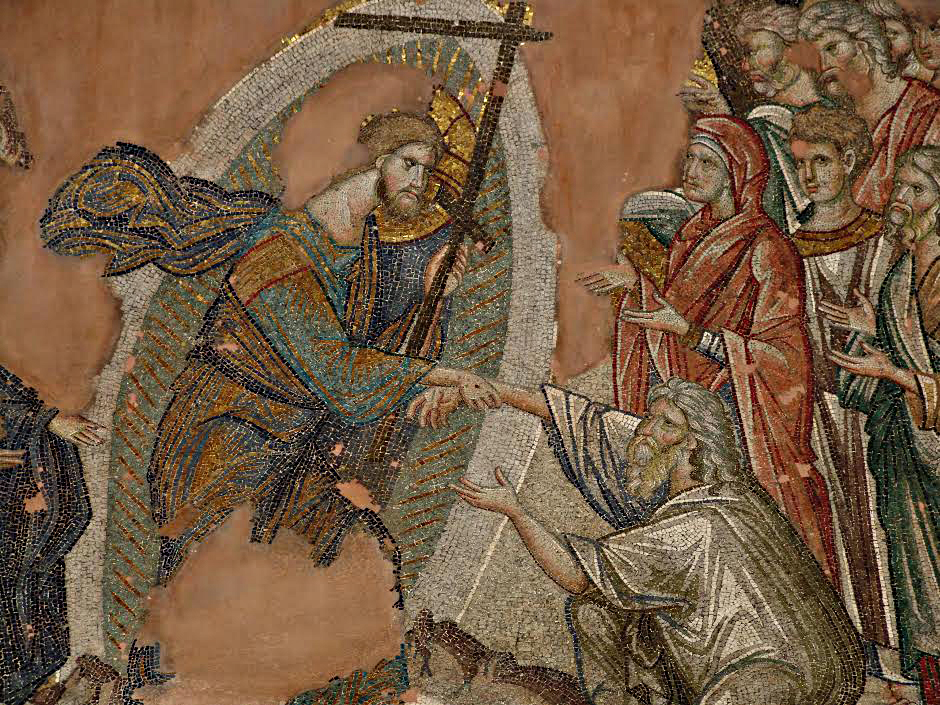
Χριστὸς ἀνέστη! Ἀληθῶς ἀνέστη!
Christ is risen! Truly He is risen!
Христос Воскресе! Воистину Воскресе!
Kristus (ir) augšāmcēlies! Patiesi viņš ir augšāmcēlies!
ქრისტეაღსდგა! ჭეშმარიტადაღსდგა!
St. Justin (Popovich) of Chelije
Man sentenced God to death; by His Resurrection, He sentenced man to immortality. In return for a beating, He gives an embrace; for abuse, a blessing; for death, immortality. Man never showed so much hate for God as when he crucified Him; and God never showed more love for man than when He arose. Man even wanted to reduce God to a mortal, but God by His Resurrection made man immortal. The crucified God is Risen and has killed death. Death is no more. Immortality has surrounded man and all the world.
By the Resurrection of the God-Man, human nature has been led irreversibly onto the path of immortality, and has become dreadful to death itself. For before the Resurrection of Christ, death was dreadful to man, but after the Resurrection of Christ, man has become more dreadful to death. When man lives by faith in the Risen God-Man, he lives above death, out of its reach; it is a footstool for his feet…
Because of the Resurrection of Christ, because of His victory over death, men have become, continue to become, and will continue becoming Christians. The entire history of Christianity is nothing other than the history of a unique miracle, namely, the Resurrection of Christ, which is unbrokenly threaded through the hearts of Christians form one day to the next, from year to year, across the centuries, until the Dread Judgment.
Man is born, in fact, not when his mother bring him into the world, but when he comes to believe in the Risen Christ, for then he is born to life eternal, whereas a mother bears children for death, for the grave. The Resurrection of Christ is the mother of us all, all Christians, the mother of immortals. By faith in the Resurrection, man is born anew, born for eternity. “That is impossible!” says the skeptic. But you listen to what the Risen God-Man says:
“All things are possible to him that believeth!” (Mark 9:23 ).
The believer is he who lives, with all his heart, with all his soul, with all his being, according to the Gospel of the Risen Lord Jesus.
Faith is our victory, by which we conquer death; faith in the Risen Lord Jesus…
For us Christians, our life on earth is a school in which we learn how to assure ourselves of resurrection and life eternal. For what use is this life if we cannot acquire by it life eternal? But, in order to be resurrected with the Lord Christ, man must first suffer with Him, and live His life as his own. If he does this, then on Pascha he can say with Saint Gregory the Theologian:
“Yesterday I was crucified with Him, today I live with Him; yesterday I was buried with Him, today I rise with Him” (Troparion 2, Ode 3, Matins, Pascha).
Christ’s Four Gospels are summed up in only four words. They are:
“Christ is Risen! Indeed He is risen!”
In each of these words is a Gospel, and in the Four Gospels is all the meaning of all God’s world, visible and invisible. When all knowledge and all the thoughts of men are concentrated in the cry of the Paschal salutation, “Christ is Risen!”, then immortal joy embraces all beings and in joy responds: “Indeed He is risen!”
https://iconandlight.wordpress.com/orthodox_greek_icons_blog/
“If you are suffering for your faith in Christ, the Lives of the Saints will console you and encourage you and make you bold and give you wings, and your torments will be changed into joy.
If you are in any sort of temptation, the Lives of the Saints will help you overcome it both now and forever. If you are in danger from the invisible enemies of salvation, the Lives of the Saints will arm you with the ‘whole armor of God,’ and you will crush them all now and forever and throughout your whole life.
If you are in the midst of visible enemies and persecutors of the Church of Christ, the Lives of the Saints will give you the courage and strength of a confessor, and you will fearlessly confess the one true God and Lord in all world─Jesus Christ─and you will boldly stand up for the holy truth of His Gospel unto Death, unto every death, and you will feel stronger than all deaths, and much more so than all visible enemies of Christ; and being tortured for Christ you will shout for joy, feeling with all your being that your life is in heaven, hidden with Christ in God, wholly above all deaths.”
St. Justin Popovich

Until the coming of the Lord Christ into our terrestrial world, we men really knew only about death and death knew about us. Everything human was penetrated, captured, and conquered by death. Death was closer to us than we ourselves and more real than we ourselves, and more powerful, incomparably more powerful than every man individually and all men together. Earth was a dreadful prison of death, and we people were the helpless slaves of death. Only with the God-man Christ "life was manifested"; "eternal life" appeared to us hopeless mortals, the wretched slaves of death. And that "eternal life" we men have "seen with our eyes and handled with our hands," and we Christians "make manifest eternal life" to all. For living in union with the Lord Christ, we live eternal life even here on earth. We know from personal experience that Jesus Christ is the true God and eternal life. And for this did He come into the world: to show us the true God and eternal life in Him. Genuine and true love for man consists of this, only of this: that God sent His Only-Begotten Son into the world that we might live through Him (1 John 4: 9) and through Him live eternal life. Therefore, he who has the Son of God has life; he who has not the Son of God has not life (1 John 5: 12)—he is completely in death. Life in the one true God and Lord Jesus Christ is really our only true life because it is wholly eternal and completely stronger than death. Can a life which is infected by death and which ends in death really be called life? just as honey is not honey when it is mixed with a poison which gradually turns all the honey into poison, so a life which ends in death is not life.
There is no end to the love of the Lord Christ for man: because for us men to acquire the life eternal which is in Him, and to live by Him, nothing is required of us—not learning, nor glory, nor wealth, nor anything else that one of us does not have, but rather only that which each of us can have. And that is? Faith in the Lord Christ. For this reason did He, the Only Friend of Man, reveal to the human race this wondrous good tiding: God so loved the world that He gave His Only-Begotten Son so that whoever believes in Him should not perish but have everlasting life. He that believes in the Son has eternal life (John 3: 16-36). As the one true God giving people what no angel or man can give them, the Lord Christ alone in the human race had the boldness and right to declare: verily, verily I say unto you: he that believes in me has eternal life (John 6: 47), and he has already passed from death unto life (John 5: 24).
Faith in the Lord Christ unites man with the eternal Lord Who, according to the measure of man's faith, pours out in his soul eternal life so that he then feels and realizes himself to be eternal. And this he feels to a greater degree inasmuch as he lives according to that faith which gradually sanctifies his soul, heart, conscience, his entire being, by the grace-filled Divine energies. In proportion to the faith of a man the sanctification of his nature increases. And the holier the man is, the stronger and more vivid is his feeling of personal immortality and the consciousness of his own and everybody else's immortality.
Actually, a man's real life begins with his faith in the Lord Christ, which commits all his soul, all his heart, all his strength to the Lord Christ, Who gradually sanctifies, transfigures, deifies them. And through that sanctification, transfiguration, and deification the grace-filled Divine energies, which give him the all-powerful feeling and consciousness of personal immortality and personal eternity, are poured out upon him. In reality, our life is life inasmuch as it is in Christ. And as much as it is in Christ is shown by its holiness: the holier a life, the more immortal and more eternal it is.
Opposed to this process is death. What is death? Death is ripened sin; and ripened sin is separation from God, in Whom alone is life and the source of life. This truth is evangelical and Divine: holiness is life, sinfulness is death; piety is life, atheism is death; faith is life, unbelief is death; God is life, the devil is death. Death is separation from God, and life is returning to God and living in God. Faith is indeed the revival of the soul from lethargy, the resurrection of the soul from the dead: "he was dead, and is alive: (Luke 15: 24). Man experienced this resurrection of the soul from death for the first time with the God-man Christ and constantly experiences it in His holy Church, since all of Him is found in Her. And He gives Himself to all believers through the holy mysteries and the holy virtues. Where He is, there is no longer death: there one has already passed from death to life. With the Resurrection of Christ we celebrate the deadening of death, the beginning of a new, eternal life.
True life on earth indeed begins from the Resurrection of the Savior, for it does not end in death. Without the Resurrection of Christ human life is nothing else but a gradual dying which finally inevitably ends in death. Real true life is that life which does not end in death. And such a life became possible on earth only with the Resurrection of the Lord Christ the God-man. Life is real life only in God, for it is a holy life and by virtue of this an immortal life. just as in sin is death, so in holiness is immortality. Only with faith in the risen Lord Christ does man experience the most crucial miracle of his existence: the passover from death to immortality, from transitoriness into eternity, from hell to heaven. Only then does man find himself, his true self, his eternal self: "for he was dead, and is alive again; he was lost, and is found" (Luke 15: 24).
What are Christians? Christians are Christ-bearers, and by virtue of this bearers and possessors of eternal life, and this according to the measure of faith and according to the measure of holiness which is from faith. The Saints are the most perfect Christians, for they have been sanctified to the highest degree with the podvigs of holy faith in the risen and eternally-living Lord Christ and no death has power over them. Their life is entirely from the Lord Christ, and for this reason it is entirely Christ's life; and their thought is entirely Christ's thought; and their perception is Christ's perception. All that they have is first Christ's and then theirs. If the soul, it is first Christ's and then theirs: if life, it is first Christ's and then theirs. In them is nothing of themselves but rather wholly and in everything the Lord Christ.
Therefore, the Lives of the Saints are nothing else but the life of the Lord Christ, repeated in every saint to a greater or lesser degree in this or that form. More precisely it is the life of the Lord Christ continued through the Saints, the life of the incarnate God the Logos, the God-man Jesus Christ who became man. This was so that as man He could give and transmit to us His divine life; so that as God by His life he could sanctify and make immortal and eternal our human life on earth. "For both he who sanctifieth and they who are sanctified are all of one" (Heb. 2: 11).
The Lord Christ made this possible and realizable in the world of man from the time that He became man, partook of flesh and blood, and thus became a Brother of man, a Brother according to flesh and blood. Having become man but having remained God, the God-man led a holy, sinless, Divine-human life on earth, and by this life, death, and Resurrection, annihilated the devil and his dominion of death and by this act gave and constantly gives His grace-filled energies to those who believe in Him, so that they may annihilate the devil and every death and every temptation. That Divine-human life is found entirely in the Divine-human Body of Christ—the Church—and is constantly experienced in the Church as an earthly-heavenly whole, and by individuals according to the measure of their faith.
The lives of the saints are in fact the life of the Godman Christ, which is poured out into His followers and is experienced by them in His Church. For the smallest part of this life is always directly from Him because He is life, infinite and boundless and eternal life, which by His Divine power vanquished all deaths and resurrects from all deaths. According to the all-true and good tidings of the All-True One: "I am the resurrection and the life" (John 11: 25). The miraculous Lord who is completely "resurrection and life" is in His Church in His whole being as Divine-human reality, and consequently there is no end to the duration of this reality. His life is continued through all ages; every Christian is of the same body with Christ, and he is a Christian because he lives the Divine-human life of this Body of Christ as Its organic cell.
Who is a Christian? A Christian is a man who lives by Christ and in Christ. The commandment of the Holy Gospel of God is divine: "live worthily of God" (Col. 1: 10). God, Who became incarnate and Who as the Godman has in entirety remained in His Church, which lives eternally by Him. And one lives "worthily of God" when one lives according to the Gospel of Christ. Therefore, this Divine commandment of the Holy Gospel is also natural: "Live worthily of the Gospel of Christ" (Phillip. 1: 27).
Life according to the Gospel, holy life, Divine life, that is the natural and normal life for Christians. For Christians, according to their vocation, are holy: That good tiding and commandment resounds throughout the whole Gospel of the New Testament. To become completely holy, both in soul and in body, that is our vocation. This is not a miracle, but rather the norm, the rule of faith. The commandment of the Holy Gospel is clear and most clear: as the Holy One who has called you is Holy, so be ye holy in all manner of life (1 Peter 1: 15). And that means that according to Christ the Holy One, Who, having been incarnate and become man, showed forth in Himself a completely holy life, and as such commands men: "be ye holy, for I am Holy" (1 Peter 1: 16). He has the right to command this, for having become man He gives men as Himself, the Holy One, all the Divine energies which [are] necessary for a holy and pious life in this world. Having united themselves spiritually and by Grace to the Holy One—the Lord Christ—with the help of faith, Christians themselves receive from Him the holy energies that they may lead a holy life.
Living by Christ, the saints can do the works of Christ, for by Him they become not only powerful but all-powerful: "I can do all things in Christ Jesus who strengthens me" (Phillip. 4: 13). And in them is clearly realized the truth of the All-True One, that those who believe in Him will do His works and will do greater things than these: "Verily, verily I say unto you: he that believeth in me, the works that I do he shall do also and greater works than these shall he do" (John 14: 12). And truly: the shadow of the Apostle Peter healed; by a word St. Mark the Ascetic moved and stopped a mountain... When God became man, then Divine life became human life, Divine power became human power, Divine truth became human truth, and Divine righteousness became human righteousness: everything which is God's became man's.
What are the "Acts of the Holy Apostles"? They are the acts of Christ which the Holy Apostles do by the power of Christ, or better still: they do them by Christ Who is in them and acts through them. And what are the lives of the Holy Apostles? They are the living of Christ's life which in the Church is transmitted to all faithful followers of Christ and is continued through them with the help of the holy mysteries and the holy virtues.
And what are the "Lives of the Saints"? They are nothing else but a certain kind of continuation of the "Acts of the Apostles." In them is found the same Gospel, the same life, the same truth, the same righteousness, the same love, the same faith, the same eternity, the same "power from on high," the same God and Lord. For "the Lord Jesus Christ is the same yesterday and today and for ever" (Heb. 13: 8): the same for all people of all times, distributing the same gifts and the same Divine energies to all who believe in Him. This continuation of all life-creating Divine energies in the Church of Christ from ages to ages and from generation to generation indeed constitutes living Holy Tradition. This Holy Tradition is continued without interruption as the life of Grace in all Christians, in whom through the holy mysteries and the holy virtues, Jesus Christ lives by His Grace. He is wholly present in His Church, for She is His fullness: "the fullness of Him who filleth all in all" (Eph. 1: 23). And the God-man Christ is the all-perfect fullness of the Godhead: "for in Him dwelleth all the fullness of the Godhead bodily" (Col. 2: 4). And Christians must, with the help of the holy mysteries and the holy virtues, fill themselves with "all the fullness of God" (Eph. 3: 19).
The Lives of the Saints show forth those persons filled with Christ God, those Christ-bearing persons, those holy persons in whom is preserved and through whom is transmitted the holy tradition of that holy grace-filled life. It is preserved and transmitted by means of holy evangelical living. For the lives of the saints are holy evangelical truths which are translated into our human life by grace and podvigs (asceticism). There is no evangelical truth which cannot be transformed into human life. They were all brought by Christ God for one purpose: to become our life, our reality, our possession, our joy. And the saints, all, without exception, live these Divine truths as the center of their lives and the essence of their being. For this reason the "Lives" of the Saints are a proof and a testimony: that our origin is in heaven; that we are not from this world but from that one; that a man is a true man only in God; that on earth one lives by heaven; that "our conversation is in heaven" (Phillip. 3: 20); that our task is to make ourselves heavenly, feeding ourselves with the "heavenly bread" which came down to earth. And He came down to feed us with eternal Divine truth, eternal Divine good, eternal Divine righteousness, eternal Divine love, eternal Divine life through Holy Communion, through living in the one true God and Lord Jesus Christ.
In other words, our vocation is to fill ourselves with the Lord Christ, with His Divine life-creating energies, to live in Christ and to make ourselves christs. If you set about this you are already in heaven although you walk on earth; you are already wholly in God even though your being has remained within the limits of human nature. The man who makes himself a christ surpasses himself, as man, by God, by the God-man, in Whom is given the perfect image of the true, real whole man in the image of God; and in Him are also given the all-vanquishing Divine energies, by the help of which man raises himself above every sin, above every death, above every hell; and this he does by the Church and in the Church, which all the powers of hell cannot overcome, because in Her is the whole wondrous God-man the Lord Christ, with all His Divine energies, His truths, His realities, His perfections, His lives, His eternities.
The Lives of the Saints are holy testimonies of the miraculous power of our Lord Jesus Christ. In reality they are the testimonies of the Acts of the Apostles, only continued throughout the ages. The saints are nothing other than holy witnesses, like the Holy Apostles who were the first witnesses—of what?, of the God-man Jesus Christ: of Him crucified, resurrected, ascended into heaven and eternally alive; about His all-saving Gospel which is unceasingly written with evangelical holy deeds from generation to generation, for the Lord Christ, who is always the same, constantly works miracles by His Divine power through His holy witnesses. The Holy Apostles are the first holy witnesses of the Lord Christ and His Divine-human economy of the salvation of the world, and their lives are living and immortal testimonies of the Gospel of the Savior as the new life, the life of grace, holy, Divine, Divine-human and therefore always miraculous, miraculous and true as the Savior's life itself is miraculous and true.
And who are the Christians? Christians are those through whom the holy Divine-human life of Christ is continued from generation to generation until the end of the world and of time, and they all make up one body, the Body of Christ-the Church: they are sharers of the Body of Christ and members of one another. The stream of immortal divine life began to flow and still flows unceasingly from the Lord Christ, and through him Christians flow into eternal life. Christians are the Gospel of Christ continued throughout all the ages of the race of men. In the Lives of the Saints, everything is ordinary as in the Holy Gospel, but everything is extraordinary as in the Holy Gospel—both one and the other, uniquely true and real. And everything is true and real by the same Divine-human reality; and the same holy power—Divine and human—bears witness to it: Divine in an all-perfect way, and human—also in an all-perfect way.
What are the Lives of the Saints? Behold, we are in heaven, for earth becomes heaven through the Saints of God. Behold, we are among angels in the flesh, among Christ-bearers. And whoever they are, the Lord is completely in them, and with them, and among them; and there is the whole Eternal Divine Truth, and the whole Eternal Divine Righteousness, and the whole Eternal Divine Love, and the whole Eternal Divine Life.
What are the Lives of the Saints? Behold, we are in Paradise, in which everything which is Divine, holy, immortal, eternal, righteous, true, and evangelical grows and increases. For by the Cross in every one of the saints the tree of eternal, Divine, immortal life blossomed and brought forth much fruit. And the Cross leads to heaven; it leads even us after the thief, who for our encouragement entered Paradise first after the All-Holy Divine Cross-bearer—the Lord Christ—and entered with a cross of repentance.
What are the Lives of the Saints? Behold, we are in eternity: no longer is there time, for in the Saints of God Eternal Divine Truth, Eternal Divine Righteousness, Eternal Divine Love, Eternal Divine Life reign and rule. And in them there is no longer any death, for their entire being is filled with the resurrecting Divine energies of the Risen Lord Christ, the Only Vanquisher of death, of all deaths in all worlds. There is no death in them—in holy people: their whole being is filled with the Only Immortal One—the All-Immortal One: the Lord and God Jesus Christ. Among them—we are on earth among the only true immortals: they have conquered all deaths, all sins, all passions, all demons, all hells. When we are with them, no death can harm us, for they are the lightning-rods of death. There is no thunderbolt with which death can strike us when we are with them, among them, in them.
Saints are people who live on earth by holy, eternal Divine truths. That is why the Lives of the Saints are actually applied dogmatics, for in them all the holy eternal dogmatic truths are experienced in all their life-creating and creative energies. In The Lives of the Saints it is most evidently shown that dogmas are not only ontological truths in themselves and for themselves, but that each one of them is a wellspring of eternal life and a source of holy spirituality.
According to the All-True Gospel of the unique and irreplaceable Savior and Lord: "My words are spirit and life" (John 6: 63), for each one pours out from itself saving, sanctifying, a life-creating, transfiguring power. Without the holy truth of the Holy Trinity we have none of that power from the Holy Trinity on which we draw by faith and which vivifies sanctifies, deifies, and saves us. Without the holy truth about the God-man, there is no salvation for man, for from it, when it is lived by man, wells forth the saving power which saves from sin, death, the devil.
And this holy truth about the God-man—do not the lives of countless saints most evidently and experimentally bear witness to it? For the saints are saints by the very fact that they constantly live the entire Lord Jesus as the soul of their soul, as the conscience of their conscience, as the mind of their mind, as the being of their being, as the life of their life. And each one of them together with the Holy Apostle loudly proclaims the truth: "Yet not I live, but Christ liveth in me" (Gal. 2: 20). Delve into the Lives of the Saints: from all of them wells forth the grace-filled, life-creating, and saving power of the Most Holy Theotokos, Who leads them from podvig to podvig, from virtue to virtue, from victory over sin to victory over death, from victory over death to victory over the devil, and leads them up into spiritual joy, beyond which there is no sadness nor sighing nor sorrow, but rather everything is only" joy and peace in the Holy Spirit" (Rom. 14: 17), joy and peace from the victory obtained over all sins, over all passions, over all deaths, over all evil spirits.
And all this, without a doubt, is the practical and living testimony to the holy dogma concerning the Most Holy Theotokos, truly "more honorable than the Cherubim and beyond compare more glorious than the Seraphim," the holy dogma which the saints by faith carry in their hearts and by which they live with zealous love. Again if you want one, two, or thousands of irrefutable testimonies of the life-bearing and life-creating nature of the All-Venerable Cross of the Lord, and with it an experimental confirmation of the all-truthfulness of the holy dogma of the saving nature of the death of the Savior on the Cross, then start out with faith through the Lives of the Saints. And you will have to feel and see that to each saint individually, and to all the saints together, the power of the Cross is the all-vanquishing weapon with which they conquer all visible and invisible enemies of their salvation. Furthermore, you will behold the Cross in all their being: in their soul, in their heart, in their conscience, in their mind, in their will, and in their body, and in each one of them you will find an inexhaustible wellspring of the saving, all-sanctifying power which unfailingly leads them from perfection to perfection, and from joy to joy, until finally it leads them into the eternal Heavenly Kingdom where there is the unceasing triumph of those who keep festival and the infinite delight of those who behold the ineffable beauty of the face of the Lord.
But not only these aforementioned dogmas are witnessed by the Lives of the Saints, but all the other holy dogmas: of the Church, of grace, of the holy mysteries, of the holy virtues, of man, of sin, of the holy relics, of the holy icons, of life beyond the grave, and of everything else which makes up the Divine-human economy of salvation. Yes, the Lives of the Saints are experimental dogmatics. Yes, the Lives of the Saints are experienced dogmatics, experienced by the holy life of the holy people of God.
In addition, the Lives of the Saints contain in themselves Orthodox ethics in their entirety, Orthodox morality, in the full radiance of its Divine-human sublimity and its immortal life-creating nature. In them is shown and proven in a most convincing manner that the holy mysteries are the source of the holy virtues; that the holy virtues are the fruit of the holy mysteries—they are born of Them, they develop by Their help, they are nourished by Them, they live by Them, they are perfected by Them, they become immortal by Them, they live eternally by Them. All the Divine moral laws have their source in the holy mysteries and are realized in the holy virtues. For this reason the Lives of the Saints are indeed experiential ethics, applied ethics. Actually, the Lives of the Saints prove irrefutably that Ethics is nothing other than Applied Dogmatics. The entire Life of the Saints consists of the holy mysteries and the holy virtues, and the holy mysteries and the holy virtues are gifts of the Holy Spirit Who accomplishes all in all (1 Cor. 12: 4, 6, 11).
And what else are the Lives of the Saints but the only Orthodox pedagogical science. For in them in a countless number of evangelical ways, which are completely worked out by the experience of many centuries, it is shown how the perfect human personality, the completely ideal man, is built up and fashioned, and how with the help of the holy mysteries and the holy virtues in the Church of Christ he grows into "a perfect man, according to the measure of the stature of the fullness of Christ." And this is indeed the educational ideal of the Gospel, the only educational ideal worthy of a being made in the image of God, as man is, and which is established by the Gospel of the Lord Christ, established and realized first by the God-man Christ, and afterwards realized in the Holy Apostles and the other Saints of God. At the same time, without the God-man Christ, and outside the God-man Christ, with any other educational ideal, man forever remains an incomplete being, a wretched being, a miserable being, who deserves all the tears of all eyes in God's worlds.
If you wish, the Lives of the Saints are a sort of Orthodox Encyclopedia. In them can be found everything which is necessary for the soul which hungers and thirsts for eternal righteousness and eternal truth in this life, and which hungers and thirsts for Divine immortality and eternal life. If faith is what you need, there you will find it in abundance: and you will feed your soul with food which will never make it hungry. If you need love, truth, righteousness, hope, meekness, humility, repentance, prayer, or whatever virtue or podvig, in them, the Lives of the Saints, you will find a countless number of holy teachers for every podvig and will obtain grace-filled help for every virtue.
If you are suffering for your faith in Christ, the Lives of the Saints will console you and encourage you and make you bold and give you wings, and your torments will be changed into joy. If you are in any sort of temptation, the Lives of the Saints will help you overcome it both now and forever. If you are in danger from the invisible enemies of salvation, the Lives of the Saints will arm you with the "whole armor of God," and you will crush them all now and forever and throughout your whole life. If you are in the midst of visible enemies and persecutors of the Church of Christ, the Lives of the Saints will give you the courage and strength of a confessor, and you will fearlessly confess the one true God and Lord in all worlds—Jesus Christ—and you will boldly stand up for the holy truth of His Gospel unto death, unto every death, and you will feel stronger than all deaths, and much more so than all visible enemies of Christ, and being tortured for Christ you will shout for joy, feeling with all your being that your life is in heaven, hidden with Christ in God, wholly above all deaths.
In the Lives of the Saints are shown numerous but always certain ways of salvation, enlightenment, sanctification, transfiguration, "christification," deification; all the ways are shown by which man conquers sin, every sin; conquers passion, every passion; conquers death, every death; conquers the devil, every devil. There is a remedy there for every sin: from every passion—healing, from every death-resurrection, from every devil—deliverance; from all evils—salvation. There is no passion, no sin for which the Lives of the Saints do not show how the passion or sin in question is conquered, mortified, and uprooted.
In them it is clearly and obviously demonstrated: There is no spiritual death from which one cannot be resurrected by the Divine power of the risen and ascended Lord Christ; there is no torment, there is no misfortune, there is no misery, there is no suffering which the Lord will not change either gradually or all at once into quiet, compunctionate joy because of faith in Him. And again there are countless soul-stirring examples of how a sinner becomes a righteous man in the Lives of the Saints: how a thief, a fornicator, a drunkard, a sensualist, a murderer, an adulterer becomes a holy man-there are many, many examples of this in the Lives of the Saints; how a selfish, egoistical, unbelieving, atheistic, proud, avaricious, lustful, evil, wicked, depraved, angry, spiteful, quarrelsome, malicious, envious, malevolent, boastful, vainglorious, unmerciful, gluttonous man becomes a man of God-there many, many examples of this in the Lives of the Saints.
By the same token in the Lives of the Saints there are very many marvelous examples of how a youth becomes a holy youth, a maiden becomes a holy maiden, an old man becomes a holy old man, how an old woman becomes a holy old woman, how a child becomes a holy child, how parents become holy parents, how a son becomes a holy son, how a daughter becomes a holy daughter, how a family becomes a holy family, how a community becomes a holy community, how a priest becomes a holy priest, how a bishop becomes a holy bishop, how a shepherd becomes a holy shepherd, how a peasant becomes a holy peasant, how an emperor becomes a holy emperor, how a cowherd becomes a holy cowherd, how a worker becomes a holy worker, how a judge becomes a holy judge, how a teacher becomes a holy teacher, how an instructor becomes a holy instructor, how a soldier becomes a holy soldier, how an officer becomes a holy officer, how a ruler becomes a holy ruler, how a scribe becomes a holy scribe, how a merchant becomes a holy merchant, how a monk becomes a holy monk, how an architect becomes a holy architect, how a doctor becomes a holy doctor, how a tax collector becomes a holy tax collector, how a pupil becomes a holy pupil, how an artisan becomes a holy artisan, how a philosopher becomes a holy philosopher, how a scientist becomes a holy scientist, how a statesman becomes a holy statesman, how a minister becomes a holy minister, how a poor man becomes a holy poor man, how a rich man becomes a holy rich man, how a slave becomes a holy slave, how a master becomes a holy master, how a married couple becomes a holy married couple, how an author becomes a holy author, how an artist becomes a holy artist...
http://orthodoxinfo.com/general/stjustin_intro.aspx
A man in this world must solve a problem, to be with Christ, or to be against Him. Every man decides this, whether he wants to or not. He will either be a lover of Christ or a fighter of Christ. There is no third option.
St. Justin Popovich
A man in this world must solve a problem, to be with Christ, or to be against Him. Every man decides this, whether he wants to or not.
He will either be a lover of Christ or a fighter of Christ. There is no third option.
St. Justin Popovich
A man in this world must solve a problem, to be with Christ,or to be against Him. And every man decides this, whether he wants to or not. He will either be a lover of Christ or a fighter of Christ. There is no third option.
St. Justin Popovich
Man is born, in fact, not when his mother brings him into the world, but when he comes to believe in the Risen Christ, for then he is born to life eternal, whereas a mother bears children for death, for the grave.
The Resurrection of Christ is the mother of us all, all Christians, the mother of immortals. By faith in the Resurrection, man is born anew, born for eternity.
'' That is impossible,'' says the skeptic. But you listen to what the Risen God-Man says, '' All things are possible to him that believeth!'' ( St. Mark 9:23 )
The believer is he who lives, with all his heart, with all his soul, with all his being, according to the Gospel of the Risen Lord Jesus.
St. Justin Popovich
A Christian's life is a ceaseless, Christ-centered theophany, the Holy Spirit, through the holy mysteries and the holy virtues, transmits Christ the Saviour to each believer, renders him a living tradition....
St. Justin Popovich

1. The Significance of the Lives of the Saints
In order to begin to understand the importance of the Lives of the Saints for our spiritual lives, I believe we can turn to no better or more thorough source than St. Justin Popovich's Introduction to his own compilation of the Lives of the Saints. A theologian, St. Justin saw no dichotomy between the Lives of the Saints and the theological writings of the Church. For him, as for the Church, theology and the Lives of the Saints form one whole. He called the Lives of the Saints "experiential theology" or "applied dogmatic theology," and he viewed them and wrote about them in a theological manner. Likewise, he viewed theological writings as an expression of the experience of the life of Grace in the Church, and not just an intellectual, abstract or polemical exercise.
How does St. Justin view the Lives of the Saints theologically? At the center of all of St. Justin's thought is the Theanthropic vision: the fact that God became man in Jesus Christ, uniting human nature with Divine Nature. The fact of the God-man, the Theanthropos, is the axis of the universe: it is the reality according to which everything else must be viewed, whether it be the nature of the Church or the problems and issues of everyday life.
Thus, when St. Justin looks at the Lives of the Saints, he does so in the light of the God-man. Real and true life—eternal life in God—became possible only with the Incarnation, death and Resurrection of the Saviour, and this life is the Life of the Saints. St. Justin saw the Lives of the Saints as bearing witness to one life: the Life in Christ.
St. Justin wrote: "What are Christians? Christians are Christ-bearers, and, by virtue of this, they are bearers and possessors of eternal life.... The Saints are the most perfect Christians, for they have been sanctified to the highest degree with the podvigs of holy faith in the risen and eternally living Christ, and no death has power over them. Their life is entirely Christ's life; and their thought is entirely Christ's thought; and their perception is Christ's perception. All that they have is first Christ's and then theirs.... In them is nothing of themselves but rather wholly and in everything the Lord Christ."
The Saints live in Christ, but Christ also lives in them through His Divine Energies, His Grace. And where Christ is, there is the Father and the Holy Spirit also. Christ says, Abide in Me, and I in you; and elsewhere He says, If a man love Me, he will keep My words: and My Father will love him, and We will come unto him, and make Our abode with him (John 15:4; 14:23).
Thus, St. Justin makes bold to say that the Lives of the Saints not only bear witness to the Life in Christ: they may even be said to be the continuation of the Life of Christ on earth. "The Lives of the Saints," says St. Justin, "are nothing else but the life of the Lord Christ, repeated in every Saint to a greater or lesser degree in this or that form. More precisely, it is the life of the Lord Christ continued through the Saints, the life of the incarnate God the Logos, the God-man Jesus Christ Who became man."
This is an amazing thing that St. Justin is saying: when we read the Lives of the Saints, we are reading the Life of our Lord Jesus Christ. This in itself should be enough to convince us of the importance of filling our souls with the Lives of the Saints.
St. Justin also says that the Lives of the Saints are a continuation of the Acts of the Apostles. "What are the 'Acts of the Apostles'?" he asks. "They are the acts of Christ, which the Holy Apostles do by the power of Christ, or better still: they do them by Christ Who is in them and acts through them. "And what are the 'Lives of the Saints'? They are nothing else but a certain kind of continuation of the 'Acts of the Apostles.' In them is found the same Gospel, the same life, the same truth, the same righteousness, the same love, the same faith, the same eternity, the same 'power from on high,' the same God and Lord. For the Lord Jesus Christ is the same yesterday and today and for ever (Heb. 13:8): the same for all peoples of all times, distributing the same gifts and the same Divine Energies to all who believe in Him.
With these words of St. Justin before us, we might well ask ourselves if Orthodox spiritual life is even possible without the testimony of the Lives of the Saints. The answer to this, I believe, must be "no." True spiritual life begins when we live in Christ and Christ lives in us, right here on this earth. And the Lives of the Saints bear witness to us that the Life of Christ on earth did not end with His Ascension into Heaven, nor with the martyrdom of His Apostles. His Life continues to this day in His Church, and is seen most brilliantly in His Saints. And we, too, in our own spiritual lives, are to enter into that continuing, never-ending Life.
I spoke recently to an Orthodox priest who had converted to Orthodoxy from Protestantism. He told me that, when he was received into the Church, the officiating priest told him: "You will never be truly Orthodox without reading the Lives of the Saints." Later, when he himself became a priest, he found that the most pious people in the churches are those who read the Lives of the Saints, and that those who make the most progress in the spiritual life are those who read the Saints' Lives.
The Orthodox Faith is not, first of all, of the head. First of all, it is of the heart: it is felt
and believed by the heart. Through the Lives of the Saints, we develop an Orthodox heart. Our monastery's co-founder, Fr. Seraphim Rose, emphasized constantly this "Orthodoxy of the heart," especially in his writings and talks at the end of his life; and he frequently referred to Lives of the Saints as a means of developing this.
2. How to Make Use of the Lives of the Saints
Having looked at the importance and meaning of the Lives of the Saints, let us look now at the various ways we can make use of them in our spiritual lives.
First, we look to the Saints as our examples. Be ye imitators of me, even as I also am of Christ (I Cor. 11:1), the Saints say to us along with the Holy Apostle Paul. As Christians, we want to grow in the likeness of Christ, to have that likeness shine in us. For this to occur, we need to look often to the Saints to see that shining likeness: we must look to them for real, practical examples of how to live. St. Basil the Great gives this analogy:
"Just as painters, in working from models, constantly gaze at their exemplar and thus strive to transfer the expression of the original to their own artistry, so too he who is eager to make himself perfect in all kinds of virtue must gaze upon the Lives of the Saints as upon statues, so to speak, that move and act, and must make their excellence his own by imitation."
Secondly, we must look to the Saints as our heavenly friends, as our brothers and sisters in the Faith, and as our preceptors. We read about them not as people who are dead, but as people who are living. And this is even more immediate than just reading a biography about someone who is still alive. Let's say we are reading the biography of some famous living person. As we read it, we may dream of perhaps one day meeting this person, or perhaps of writing him a letter and having it actually reach him, and even of receiving a reply from him, despite the fact that he is so famous that thousands of people are probably writing to him. Reading the Lives of the Saints offers us much more than this, because the Saints are alive in God, and are not bound by time and space in the same way we are. We can address them in prayer immediately and at any time, even right in the middle of reading their Lives. And they will hear us. Besides our private prayers to them, the Church offers us many other ways of communing with them as our friends and honoring them as our preceptors. We sing their troparia, we venerate their icons, we perform services to them, and with a blessing from our Bishop we can even compose services in their honor.
As we read the Lives of the Saints each day, we will discover little by little those Saints whom our hearts go out to. They will become our close friends, those whom we pray to most of all, those in whom we confide our joys and sorrows. As Archimandrite Aimilianos, the present Abbot of the Holy Monastery of Simonos Petras on Mount Athos, writes: "These close friends will be the guides of our choice and a great comfort to us along the strait and narrow way that leads to Christ. We are not alone on the road or in the struggle. We have with us our Mother, the All-Holy Mother of God, our Guardian Angel, the Saint whose name we bear, and those close friends we have chosen out of the Great Multitude of Saints who stand before the Lamb (Rev. 7:9). When we stumble through sin, they will raise us up again; when we are tempted to give up hope, they will remind us that they have suffered for Christ before us, and more than us; and that they are now the possessors of unending joy. So, upon the stony road of the present life, these holy companions will enable us to glimpse the light of the Resurrection. Let us search, then, in the Lives of the Saints, for these close friends, and with all the Saints let us make our way to Christ."
St. Justin Popovich, as we have said, called the Lives of the Saints "applied dogmatic theology." The Saints are proofs and illustrations of the reality of Christ, of His saving work of redemption. The Saints are transformed human beings, proof positive that people are redeemed, purified, illumined, transformed and recreated by Jesus Christ.
St. Justin also calls the Lives of the Saints "applied ethics." They are embodiments of the life of Divine virtue that is possible only in Jesus Christ. They are embodiments of the life of Grace in the Church, through the Holy Sacraments, through the life-giving Body and Blood of the Lord.
Fr. Seraphim Rose once counseled a budding Orthodox writer to make use of the Lives of the Saints as "applied dogmatic theology" and as "applied ethics." Fr. Seraphim said that, when one is writing on a spiritual subject, one should try to not only discuss it in the abstract, but to give living examples from the Lives of the Saints. Fr. Seraphim wrote to his fellow Orthodox writer: "If I have any suggestion for your future articles, it would simply be to keep in mind the Lives of the Saints. In your article, there is a point that would be more forceful by references to the life of the author of the citations, who is a Saint. You quote St. John of Kronstadt on 'love'—but he is not merely a great Orthodox Saint of this century, he is a very incarnation of the love he talks about, and there is scarcely to be found a parallel in the Lives of other Saints to his absolute self-crucifying love and service to others, blessed by God in the manifestation of an abundance of miracles that can only be compared to those of St. Nicholas."
3. An Example of How to Make Use of the Lives of the Saints
I will now attempt to implement Fr. Seraphim's advice here. In speaking about how to make use of the Lives of the Saints, I will give the example of a Saint who made use of them to an astounding degree. This is Fr. Seraphim's mentor, and the Bishop who blessed the establishment of our Brotherhood: St. John Maximovitch, Archbishop of Shanghai and San Francisco.
Archbishop John was born Michael Maximovitch in the city of Kharkov in southern Russia in 1896. As a boy he collected religious and historical books, and loved above all to read the Lives of the Saints. Being the oldest child, he had a great influence on his four brothers and one sister, who knew the Lives of the Saints through him.
When he was eleven years old Michael was sent to the Poltava Cadet Corps (military academy). When he graduated in 1914, he wished to attend the Kiev Theological Academy. His parents insisted, however, that he attend Law School in Kharkov, and out of obedience to them he put away his own desire and began to prepare for a career in law.
It was during his university years that the Orthodox education and outlook which Michael had received in his childhood came to maturity. Young Michael saw the point of this upbringing. He saw that the Lives of the Saints, in particular, contain a profound wisdom which is not seen by those who read them superficially, and that the proper knowledge of the Lives of the Saints is more important than any university course. And so it was, as his classmates noticed, that Michael spent more time reading the Lives of the Saints than attending academic lectures, although he did very well in his university studies also. One could say that he studied the Orthodox Saints precisely "on the university level': he assimilated their world-outlook and their orientation toward life, and studied the variety of their activity and ascetic labors and practice of prayer. He came to love them with all his heart, was thoroughly penetrated by their spirit—and began to live like them. Many years later, during the sermon he gave when he was consecrated a Bishop, he said: "While studying the worldly sciences, I went all the more deeply into the study of the science of sciences, into the study of the spiritual life."
In 1921, as the Russian Civil War was raging, Michael—then twenty-four years old—was evacuated with his entire family to Belgrade. There he entered the University of Belgrade, from which he graduated in 1925 in the faculty of theology. A year later he was tonsured a monk in Serbia and was given the name John, after his own distant relative, St. John Maximovitch of Tobolsk. During the same year he was ordained a hieromonk.
For five years Hieromonk John was a teacher and tutor at the Seminary of St. John the Theologian in Bitol, Serbia. The city of Bitol was in the diocese of Ohrid, and at that time the ruling bishop of this diocese was another future Saint: St. Nikolai Velimirovich. St. Nikolai valued and loved the young Hieromonk John, and exerted a beneficial influence on him. More than once he was heard to say, "If you wish to see a living Saint, go to Bitol to Father John."
One of the seminarians who was at the Bitol Seminary at that time recalls: "Bishop Nikolai often visited the seminary and spoke with the teachers and students. For us his meeting with Fr. John was unusual. After mutual prostrations, there was an unusually cordial, loving conversation. Once, before parting, Bishop Nikolai turned to a small group of students (of whom I was one) with these words: 'Children, listen to Fr. John; he is an angel of God in human form.' We ourselves became convinced that this was the correct characterization of him. His life was angelic. One can rightly say that he belonged more to Heaven than to earth. His meekness and humility were like that recorded in the Lives of the greatest ascetics and desert-dwellers."
By this time, it had indeed become evident that Fr. John was an entirely extraordinary man. It was his own students who first discovered what was perhaps his greatest feat of asceticism. They noticed at first that he stayed up long after everyone else had gone to bed; he would go through the dormitories at night and pick up blankets that had fallen down and cover the unsuspecting sleepers, making the sign of the Cross over them. Finally it was discovered that he scarcely slept at all, and never in a bed, allowing himself only an hour or two each night of uncomfortable rest in a sitting position, or bent over on the floor praying before icons. Years afterward he himself admitted that since taking the monastic vows he had not slept lying in a bed. Such an ascetic practice is a very rare one; yet it is not unknown in the Orthodox tradition of the Lives of the Saints. In the fourth century, St. Pachomius the Great of Egypt was told by an angel to have his monks follow this practice.
In 1934, Fr. John was consecrated a Bishop in the Russian Church in Belgrade, and he was assigned to the diocese of Shanghai in China. The first thing he did in Shanghai was to restore Church unity, establishing contact with the Serbs, Greeks, and Ukrainians. He paid special attention to religious education. He actively participated in charitable activities, especially after seeing the needy circumstances in which the majority of his flock, refugees from the Soviet Union, were placed. He organized a home for orphans and the children of needy parents. He himself gathered sick and starving children off the streets and dark alleys of Shanghai's slums: Russian children, Chinese children, and others. The orphanage housed up to a hundred children at a time, and some 3,500 in all.
It soon became apparent to his new flock that Archbishop John was a great ascetic. The core of his asceticism was prayer and fasting. He ate once a day at 11 p.m. During the first and last weeks of Great Lent he did not eat at all, and for the rest of this and the Christmas Lent he ate only bread from the altar. His nights he spent usually in prayer, and when he finally became exhausted he would put his head on the floor and steal a few hours of sleep near dawn.
Then it became known that Archbishop John not only was a righteous man and an ascetic, but was also so close to God that he was endowed with the gift of clairvoyance, and was a great miracle-worker. There are many, many firsthand accounts of both his clairvoyance and his miracle-working, which show him to be equal to the great Saints of ancient times. On more than one occasion, he was seen surrounded in the Uncreated Light of deification while praying.
In 1949, the Communists took over China. Archbishop John was forced to evacuate his flock, including his entire orphanage. He brought 5,000 refugees to camps in the Philippines. He himself went to Washington, D.C. to get his people to America. Legislation was changed and almost the whole camp came to the New World—thanks to St. John. Later he was assigned to Western Europe, and then to San Francisco, where reposed in 1966
Perhaps the most remarkable thing about St. John's life is that he manifested in himself so many different kinds of sanctity. It was as if, through the intense study of the Lives of the Saints that he had undertaken in his early years, he had internalized and made his own the whole realm of Orthodox sanctity, in all its varied forms. He was a true student of the Saints, one who sought to follow in their footsteps, and thus to follow in the footsteps of Christ. By living like the Saints, he became one of them.
Let's look at some of the varied forms of sanctity that could be seen in Archbishop John:
1. He was first of all a great ascetic in the tradition of the ascetic, monastic Saints of old, such as St. Macarius the Great, St. Pachomius the Great, and others.
2. He was a clairvoyant reader of hearts, and one who could identify and name people he had never seen before. Enlightened by the Grace of God, he could hear and answer people's thoughts before they would express them. He also foretold the future, including the time of his own death. In this way, he was very much in the tradition of the great monastic elders of the past, especially the clairvoyant Russian elders such as those of Optina Monastery.
3. He was an almsgiver in the tradition of St. Philaret the Almsgiver, St. John the Almsgiver, etc. We have seen how he sacrificed himself for orphaned children, going himself into dangerous slums and houses of prostitution in order to rescue children from starvation or unhealthy environments. He was constantly giving to and working to help the needy. He himself wore clothing of the cheapest Chinese fabric. He often went barefoot, sometimes after having given away his sandals to some poor man.
4. He was a hierarch and theologian, a Church writer and apologist who defended the Church against error, much in the tradition of St. Athanasius the Great, St. Gregory the Theologian, and others. Besides his many published sermons, rich in theological content, he wrote valuable theological treatises in order to defend traditional Orthodox teachings which were being undermined in modern times. One of these works, in which he presents the Orthodox teaching on the Mother of God in contrast to Protestant and Roman Catholic distortions, has been published in English.He also wrote an extensive essay pointing out the fallacies of the modern teaching of Sophiology.
5. He was an apostle, evangelist and missionary to new lands, in the tradition of Sts. Cyril and Methodius, St. Nahum of Ohrid and others. When he was in Western Europe, he worked hard to establish indigenous Orthodox Churches in France and the Netherlands: churches made up of the native peoples of these lands who had converted to the Orthodox Faith. He understood that the Orthodox Church is universal, and he said that the Orthodox Gospel of Christ must be spread throughout the world. Later, when he came to America, he instituted English Liturgies in addition to Slavonic Liturgies, in a Cathedral that had only known Slavonic Liturgies. He helped and supported our newly begun St. Herman Brotherhood, which was dedicated to bringing Orthodoxy to the English-speaking world.
6. He was a healer and miracle-worker, in the tradition of St. Martin of Tours, St. Nicholas of Myra in Lycia, and others. Through his prayers, he healed people of almost every imaginable malady; and he continues to do so after his repose.
7. He was a loving and self-sacrificing pastor, in the tradition of St. John of Kronstadt and all the other hierarch and priest Saints of ages past. So great was his love that everyone felt that he or she was his "favorite." He was overflowing with self-sacrificing love for his flock, and for those outside of his flock as well, such as a dying Jewish woman whom he suddenly healed with the words "Christ is Risen."
8. He was a deliverer of his people from captivity, in the tradition of St. Moses the God-seer. As we have seen, he brought 5,000 Orthodox believers out of Communist China and into freedom in America.
9. Finally, he was to a limited degree a fool-for-Christ in the tradition of St. Andrew the fool-for-Christ and others. He could not be a fool-for-Christ in the full sense of the term, since this would compromise the dignity of his hierarchical office. And yet at many times he did things which were at odds with the ideas of the world, and thus he evoked censure from people who did not see him for what he was: a man of God. He was criticized, for example, for serving barefoot, and for wearing a collapsible cardboard mitre that had been lovingly made for him by his orphans.
We have now looked at nine different types of sanctity manifested in this one Saint, St. John of Shanghai and San Francisco. Nine types which he had learned about through his study of the Lives of the Saints.
What the contemporary hagiographer Constantine Cavarnos says of modern Saints in general applies perfectly to St. John: "Modern Saints admire and imitate the older ones: they follow closely their example, study their teaching carefully, and—what is extremely significant—they confirm it. Those of the modern Saints who write or preach amplify and illustrate the teaching of the older Saints, and relate it to modern realities."
4. "Remember the Saints of God"
It should not be thought that, after his formative years at the Cadet Corps and at the University of Belgrade, St. John finished his profound study of the Lives of the Saints. Quite the contrary: he continued to learn about the Saints right up until the time of his repose.
St. John believed that, in whatever land an Orthodox Christian found himself, it was his responsibility to venerate and pray to its national and local Saints. Wherever St. John went—Russia, Serbia, China, France, Belgium, the Netherlands, Italy, Tunisia, America—he researched the Lives of the local Orthodox Saints. He went to the churches housing their relics, performed services in their honor, and asked the Orthodox priests there to do likewise. By the end of his life, his knowledge of Orthodox Saints, both Western and Eastern, was seemingly limitless.
Here is a story which illustrates St. John's love for the Saints, and how he went out of his way to learn about them and venerate them:
One of St. John's spiritual children was Archimandrite Spyridon, who later became the father confessor of our monastery in the 1970s. Like St. John, Fr. Spyridon was born in Russia, but went to Serbia following the Russian Revolution. He knew St. John from a young age, when St. John was still studying at the University of Belgrade.
When Serbia fell to the Communists, Fr. Spyridon and many of his fellow Russians settled on the border of Italy and Serbia, in a refugee camp in the Italian city of Trieste. Fr. Spyridon was ordained to the priesthood in 1951 and was assigned as a pastor of the camp church in Trieste.
At this time, St. John had just been assigned as the Bishop of Western Europe, and so he would visit Fr. Spyridon and his flock in the refugee camp in Trieste. When St. John came to the place where Fr. Spyridon served, he was already fully informed about the early Western Saints of Trieste—such as Justus the Martyr, after whom the city had originally been called Justinopolis, St. Sergio the Martyr, and St. Frugifer, the first bishop of Trieste. Finding that nothing had been done to venerate the local Saints, Archbishop John was disappointed. Fr. Spyridon later said how he regretted not having thought of it before. No one had done such a thing: the Saints of Trieste had largely been forgotten, and it was St. John who restored their local veneration. Before doing anything else in Trieste, he took Fr. Spyridon to the relics of the Saints, vested in an epitrachelion and a small omophorion. With a censer and a cross in his hand he would descend into the crypts under cathedrals where, according to his long lists of information, the Saints had been buried. He would sing troparia and kontakia written on pieces of paper which he would pull out his pockets, imploring the Saints to intercede for the city. And only then would he go to celebrate the services in Fr. Spyridon's camp church.
As Fr. Spyridon recalled, St. John acted as if the ancient local Saints were present wherever he walked. Before leaving Trieste, he contacted local Roman Catholic clergy, acquiring from them various permits so that the Orthodox church in Trieste would have free access to the relics and sites of the Saints. Then he gave Fr. Spyridon strict instructions on how to commemorate the Saints, how he should take his parishioners to the shrines of all local Saints on their feast-days, venerate them, sing services to them, and so on. St. John said that no services should be conducted without first addressing these local Saints, and no Liturgies performed without first commemorating them at the proskomedia.
While in Western Europe, St. John collected the Lives and icons of Orthodox Saints from many different Western European countries, who lived before the time of the schism of the Latin Church. Since most of these Saints were included in no Orthodox Calendar of Saints, St. John compiled a list of these Saints with information about their lives, and submitted this to his Synod of Bishops for inclusion in the Orthodox Calendar.
Since he was an Apostle of Christ, St. John called upon each local Saint he learned about to provide heavenly help in evangelizing new lands. As Archbishop of San Francisco, he called upon all the Saints of America, including the most local of all Saints, the Native American St. Peter the Aleut, who was martyred in California.
Archbishop John had an especially great devotion to St. Herman of Alaska as a patron of the American Orthodox mission. He sought to have St. Herman canonized, and this occurred four years after St. John's repose, in 1970.
On June 28, 1966, St. John came to the Orthodox bookshop in San Francisco that had been started with his blessing by our St. Herman Brotherhood. After he had blessed the shop and printing room with the icon, he proceeded to talk to the brothers about Saints of various lands. As Fr. Seraphim Rose later recalled: "He promised to give us a list of canonized Romanian Saints and disciples of Paisius VelichkovskyPaisius Velichkovsky, Elder. He mentioned having compiled (when in FrancFrancee) a list of Western pre-schism Saints, which he presented to the Holy Synod."
In particular, St. John Maximovitch, Archbp talked to the brothers in the shop about St. Alban, St.n, the first martyr of Britain. Out of his little portfolio he pulled a short life of the Saint, together with a picture postcard of a Gothic cathedral in the town of St. Albans, England. St. Albans near, London in which he had been buried. St. John looked into the brothers' eyes to see if they got the point. St. Alban, like most of the Saints of Western Europe, was not in the Orthodox Calendar; and St. John was letting them know that he should be venerated by Orthodox Christians, especially in English-speaking lands.
This turned out to be St. John's last contact with the shop and our Brotherhood while he was alive on this earth. Four days later he reposed in Seattle.
Right after St. John's repose, Fr. Seraphim Rose wrote in his Chronicle of our Brotherhood: "Amid the talk of the 'testament of Vladika John,' what has our Brotherhood to offer? This seems to be clearly indicated both by our very nature and by Vladika John Maximovitch, Archbp's instructions to us. On his last visit to us especially, he talked of nothing but Saints—Romanian, English, French, Russian. Is it not therefore our duty to remember the Saints of God, following as closely as possible Vladika's example? I.e., to know their lives, nourish our spiritual lives by constantly reading of them, making them known to others by speaking of them and printing them—and by praying to the Saints."
This, then, is St. John's testament to our Brotherhood, and I believe to all Orthodox Christians: To remember the Saints of God.
St. John himself wrote beautiful words about the Saints. These words well express what he saw as the essence of sanctity, as well as the blueprint of his own life. "Holiness is not simply righteousness," St. John wrote, "for which the righteous merit the enjoyment of blessedness in the Kingdom of God, but rather it is such a height of righteousness that men are filled with the Grace of God to the extent that it flows from them upon those who associate with them. Great is their blessedness; it proceeds from personal experience of the Glory of God. Being filled also with love for men, which proceeds from the love of God, they are responsive to men's needs, and upon their supplication they appear also as intercessors and defenders for them before God."
5. The Call to Sanctity
In remembering the Saints of God according to the testament of St. John, we must always remember, as he did, that each one of us is called to be a Saint.
The Saints, says St. Justin Popovich, are the most perfect Christians, who have been sanctified to the highest degree. The Saints, says St. John Maximovitch, are those who show forth in themselves a height of righteousness and are filled with the Grace of God to such an extent that it flows from them upon those around them. Both St. Justin and St. John are saying the same thing. The Saints are deified human beings, who are filled with the Grace, the Uncreated Energies of God, and who live the Divine-human life of Christ in the Church.
Every Orthodox Christian partakes to some extent of this Divine-human life. St. Justin Popovich writes: "Christ's life is continued through all the ages; every Christian is of the same body with Christ, and he is a Christian because he lives the Divine-human life of this Body of Christ as Its organic cell.
"Life according to the Gospel, holy life, Divine life, that is the natural and normal life for Christians. For Christians, according to their vocation, are holy." To become completely holy, both in soul and in body—that is our vocation. This is not a miracle, but rather the norm, the rule of faith. "Having united themselves spiritually and by Grace to the Holy One—the Lord Christ—with the help of faith, Christians themselves receive from Him the Holy Energies that they may lead a holy life."
It is our task as Christians, then, to acquire more and more of this Divine-human life, to go deeper and deeper into it, to grow more and more in the likeness of Christ, to be filled with more and more of his Grace. Perhaps we will never acquire such Grace as was seen in St. Nicholas the of Myra in Lycia, St. Sava of Serbia, St. Seraphim of Sarov, St. Nektarios of Pentapolis, or St. John of Shanghai and San Francisco, but we are called to be growing toward such an overflowing measure of Grace.
If we have much further to go in the spiritual life, we are not alone: even the greatest Saints had further to go. "Sanctification admits of degrees," explains Constantine Cavarnos. "The sanctification or perfection of a human being attained even in theosis [deification] is not complete during this life. It is an 'unfinished perfection,' as it is called in the Ladder of Divine Ascent by St. John Climacus."
Furthermore, spiritual perfection or holiness is not even complete in the other world; it grows endlessly in the life to come. St. Symeon the New Theologian, himself a deified human being, writes concerning this: "Through a clear revelation from Above, the Saints know that in fact their perfection is endless, that their progress in glory will be eternal, that in them there will be a continual increase in Divine radiance, and that an end to their progress will never occur."
6. Overcoming Doubt and Discouragement
The Saints of God—the martyrs and ascetics, miracle-workers and apostles—truly did accomplish those great feats which we read about in their Lives. If we have underlying doubts regarding the veracity of these accounts, we should acquaint ourselves more thoroughly with the Lives of Saints who lived in times close to our own—Saints like Archbishop John of Shanghai and San Francisco—so that by seeing what is possible in our own times through the power of Christ, we may believe in what occurred through that same power in the remote past. St. Nicodemus of the Holy Mountain, in his Introduction to The New Martyrologion, discusses this in connection with the New Martyrs of the Church: "The antiquity of the period during which the early Saints lived, the long time that has intervened from then to the present, can cause in some, if not unbelief, at least some doubt and hesitation. One may, that is, wonder how humans, who by nature are weak and timid, endured so many and frightful tortures. But these New Martyrs of Christ, having acted boldly on the recent scene of the world, uproot from the hearts of Christians all doubt and hesitation, and implant or renew in them unhesitating faith in the old Martyrs. Just as new food strengthens all those bodies that are weak from starvation, and just as new rain causes trees that are dried from drought to bloom again, so these New Martyrs strengthen and renew the weak, the withered, the old faith of present-day Christians."
What St. Nicodemus says about the relevance of the New Martyrs to contemporary Orthodox Christians can, of course, be applied to all the other orders of modern Saints: hierarchs, missionaries, monastics, etc.
Even if we do not have doubts concerning the veracity of the Lives of the Saints, we may come up against another stumbling block: discouragement that their feats of asceticism and faith are beyond us. If we ever experience this, we must pray for more humility. As Archimandrite Aimilianos of Simonos Petras says, "Reading about the exploits of the Saints discourages only the proud who rely on their own strength. For the humble it is a chance to see their own weaknesses, to weep over their insufficiency and to implore God's help."
St. John Climacus tells us: "The man who despairs of himself when he hears of the supernatural virtues of the Saints is most unreasonable. On the contrary, the Saints teach you supremely one of two things: Either they arouse you to emulation by their holy courage, or they lead you by way of thrice-holy humility to deep self-contempt and the realization of your inherent weakness.
As we study the Lives of the Saints, humility must be our safeguard. We need to soberly apply what we read to our own conditions and circumstances, realizing our own infirmity, not thinking too much of ourselves, not dreaming of ascetic feats that truly are beyond us. As Fr. Seraphim Rose used to say, we must take spiritual life step by step, and not expect to make one great leap into sanctity.
At the same time, however, we must not make excuses for ourselves, as if we are somehow separated from the Saints by some eternally unbridgeable gulf. The Saints are our fellow Orthodox Christians. The Saints have lived, and still live, the same life in the Church that we live. They are sinners like we are, but they have borne the fruits of repentance and have been transfigured by Christ. They are more perfect than we are, but we are called to seek their "unfinished perfection" as God gives us strength.
May St. Justin Popovich be a guide to us in understanding the theological significance of the Lives of the Saints, and may St. John Maximovitch be an example to us of how to make us of the Lives of the Saints in our own spiritual lives. The Saints are called stars in the spiritual firmament. May we, by remembering the Saints of God, also begin shine in that firmament. And by making the Saints our friends and preceptors now, may we have them as our heavenly companions in the never-ending Kingdom of Light. Amen.
St. Justin Popovich
What is the essence of Orthodoxy? It is the God-man Christ. Everything that is Orthodox has a divine-human character: knowledge, the senses, the will, the mind, morality, dogma, philosophy, and life. Divine humanity is the only category in which all the manifestations of Orthodoxy are received and fully operate. In all creation, God occupies the first place, man the second. God leads while man is led; God acts and man cooperates. God does not act transcendentally, He is not the abstract God of deism, but rather the God of the most immediate historic reality, the God of revelation, the God who became man and lived within the categories of our human existence while appearing everywhere as absolute holiness, goodness, wisdom, justice, and truth.
- St. Justin Popovich
 Christians, always rejoice, for evil, death, sin, the
devil and hell have been conquered by Christ. But when
all of this is conquered, is there anyone in the world
who can bring our joy to naught?
You are the lord of
this eternal rejoicing as long as you do not give in
to sin. Joy burns in our hearts from His truth, love,
resurrection, and from the Church and His saints.
Joy
burns in our hearts all because of sufferings for Him,
mockings for Him, and death for Him, insofar as these
sufferings write our names in heaven.
There is no true
joy on earth without the victory over death, but the
victory over death does not exist without the
Resurrection, and the Resurrection does not exist
without Christ.
The risen God-Man Christ, the founder
of the Church, constantly pours out this joy into the
hearts of His followers through the Holy Mysteries and
good deeds.
Our faith is fulfilled in this eternal
joy, insofar as the joy of faith in Christ is the only
true joy for human nature.
Christians, always rejoice, for evil, death, sin, the
devil and hell have been conquered by Christ. But when
all of this is conquered, is there anyone in the world
who can bring our joy to naught?
You are the lord of
this eternal rejoicing as long as you do not give in
to sin. Joy burns in our hearts from His truth, love,
resurrection, and from the Church and His saints.
Joy
burns in our hearts all because of sufferings for Him,
mockings for Him, and death for Him, insofar as these
sufferings write our names in heaven.
There is no true
joy on earth without the victory over death, but the
victory over death does not exist without the
Resurrection, and the Resurrection does not exist
without Christ.
The risen God-Man Christ, the founder
of the Church, constantly pours out this joy into the
hearts of His followers through the Holy Mysteries and
good deeds.
Our faith is fulfilled in this eternal
joy, insofar as the joy of faith in Christ is the only
true joy for human nature.
- St. Justin Popovich