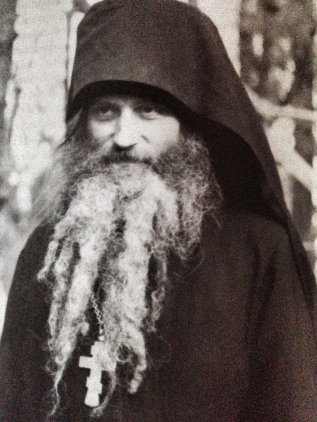
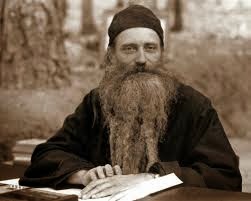
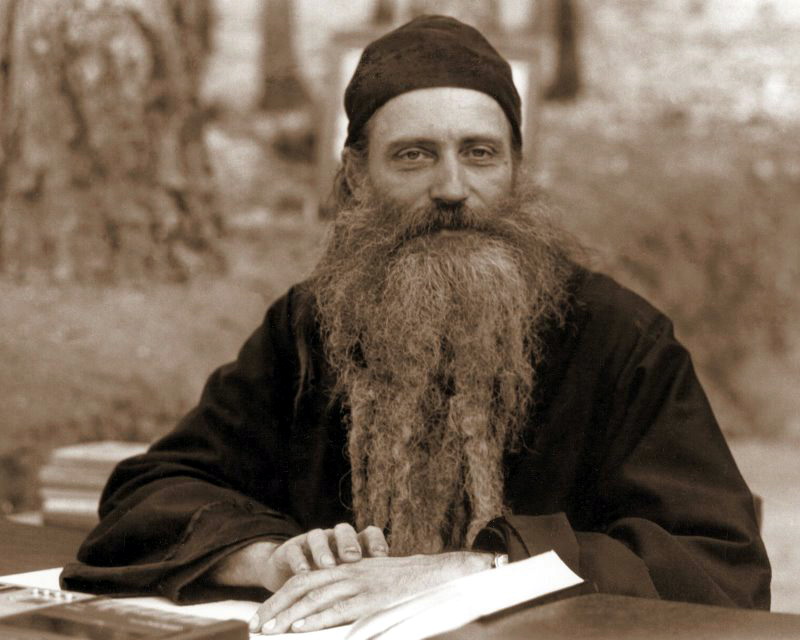
Showing posts with label Father Seraphim Rose. Show all posts
Monday, November 2, 2015
Tuesday, May 12, 2015
Be patient my brethren ( Father Seraphim Rose )
Count it all joy, my brethren, when ye fall into manifold temptations, knowing that the testing of your faith produces patience. And let patience have its perfect work, that ye may be perfect and entire, lacking nothing. (James 1:2-4)
"By taking one small step at a time, and nobody not thinking that in one big step we are going to get any place, we can walk straight to the Kingdom of Heaven––and there is no reason for any of us to fall away from that ."
Fr. Seraphim Rose
Thursday, February 19, 2015
On Hagiography ( Hieromonk Seraphim Rose )
A touchstone of true Orthodoxy is the love for Christ’s saints. From the earliest Christian centuries the Church has celebrated her saints – first the Apostles and martyrs who died for Christ, then the desert-dwellers who crucified themselves for the love of Christ, and the hierarchs and shepherds who gave their lives for the salvation of their flocks.
…A person with a modern education must be taught how to approach these works, just as a person who has been trained in classical Western painting must be re-educated in order to understand the quite different art of the icon. Hagiography, like iconography, is a sacred art and has its own laws which are quite different from those of secular art. The Life of a saint is not mere history of him, but rather a selection of events in his life which reveal how God has been glorified in him; and its style is devout, and often exalted and reverential, in order to give a proper spiritual tone and feeling to the narration and arouse in the reader both faith and piety. This is why a mere retelling of a saint’s life can never take place in the original hagiographical account. A “Life” thus differs from a “biography” much as an icon differs from a naturalistic portrait. (Prologue to the Vita Patrum of St. Gregory of Tours)
http://classicalchristianity.com/2012/12/30/on-hagiography/
Thursday, December 11, 2014
How to Read the Holy Scriptures ( Father Seraphim Rose )
From a lecture delivered by Hieromonk Seraphim Rose at the 1979 St. Herman Summer Pilgrimage Platina, CA
IT IS WELL known that Protestants spend a great deal of time on Holy Scripture, because for them it is everything. For us Orthodox Christians the Scripture also holds an essential place. Often, however, we do not take advantage of it, and do not realize what importance it has for us; or if we do, we often do not approach it in the right spirit because the Protestant approach and Protestant books about the Scriptures are widespread, while our Orthodox approach is quite different.
The fact that Scripture is an essential part of our Faith can be seen in our Orthodox services. There are daily readings from the New Testament from both the Epistles and Gospels. In one year we read through almost the entire New Testament. In the first three days of the week before Pascha--the feast of Christ's Resurrection, the four Gospels are read in church, and on Thursday night of Passion Week twelve long selections from the Gospels are read concerning the Passion of our Lord, with verses sung in between, commenting on these passages. The Old Testament is also used in the services. In the vespers for every great feast three parables are read prefiguring the feast. And the Divine services themselves are filled with Scriptural quotations, Scriptural allusions and inspiration coming directly from Holy Scripture. Orthodox Christians also read the Scripture outside the services. St. Seraphim, in his monastic life, read the entire New Testament every week. Perhaps it is because we have such a richness of Scripture in our Orthodox tradition that we are often guilty of taking them for granted, of not valuing and making use of the Scriptures.
One of the leading interpreters of Holy Scripture for us is St. John Chrysostom, an early 5th century Holy Father. He wrote commentaries on practically the whole of the New Testament, including all of St. Paul's epistles and also many Old Testament books. In one sermon concerning Scripture, he addresses his flock:
'I exhort you, and I will not cease to exhort you to pay heed not only to what is said here, but when you are home also you should occupy yourselves attentively with the reading of Holy Scripture. Let no one say to me such cold words-worthy of judgment---as these: 'I am occupied with a trial, I have obligations in the city, I have a wife, I have to feed my children, and it is not my duty to read the Scripture but the duty of those who have renounced everything.' What are you saying?! It is not your duty to read Scripture because you are distracted by innumerable cares? On the contrary, it is your duty more than those others, more than the monks; they do not have such need of help as do you who live in the midst of such cares. You need treatment all the more, because you are constantly under such blows and are wounded so often. The reading of Scripture is a great defense against sin. Ignorance of the Scripture is a great misfortune, a great abyss. Not to know anything from the word of God is a disaster. This is what has given rise to heresies, to immorality; it has turned everything upside down."
Here we see that the reading of Holy Scripture provides us with a great weapon in the fight against the worldly temptations surrounding us – and we do not do enough of it. The Orthodox Church, far from being against the reading of Scripture, greatly encourages it. The Church is only against the misreading of Scripture, against reading one's own private opinions and passions, even sins into the sacred text. When we hear that the Protestants are all excited about something that they say is in the Scripture--the rapture, for example, or the millennium--we are not against their reading the Scripture but against their misinterpretation of the Scripture. To avoid this pitfall ourselves we must understand what this sacred text is and how we should approach it.
The Bible --the Holy Scripture, the Old and New Testaments---is not an ordinary book. It is one that contains not human but divinely revealed truths. It is the word of God. Therefore, we must approach it with reverence and contrition of heart, not with mere idle curiosity and academic coldness. Nowadays one cannot expect a person who has no sympathy for Christianity, no sympathy for the Scriptures to have a proper attitude of reverence. There is, however, such power in the words of Scripture--especially in the Gospels-that it can convert a person even without this proper attitude We have heard of cases in communist countries; the police go out in special squads to persecute believers and break up their meetings; they confiscate all their literature: Bibles, hymn books, patristic texts---many written out by hand. They're supposed to burn them, but sometimes either the person who is assigned to bum them or the person collecting them gets curious and begins reading the condemned materials. And there have been cases where this has changed the person's life. All of a sudden he meets Jesus Christ. And he's shocked, especially if he has been raised with the notion that this is a great evil; here he discovers that there is no evil here but rather something quite fantastic.
Many modern scholars approach the Scriptures with a cold, academic spirit; they do not wish to save their souls by reading Scripture: they only want to prove what great scholars they are, what new ideas they can come up with; they want to make a name for themselves. But we who are Orthodox Christians must have utmost reverence and contrition of heart; i.e., we must approach the word of God with a desire to change our hearts. We read the Scripture in order to gain salvation, not, as some Protestants believe, because we are already saved without the possibility of falling away, but rather as those desperately trying to keep the salvation which Christ has given us, fully aware of our spiritual poverty. For us, reading Scripture is literally a matter of life and death. As King David wrote in the Psalms: Because of Thy words my heart hath bee, afraid. I will rejoice in Thy sayings as one that hath found great spoil.
The Scripture contains truth, and nothing else. Therefore, we must study the Scripture believing in its truth, without doubt or criticism. If we have this latter attitude we shall receive no benefit from reading Scripture but only find ourselves with those "wise" men who think they know more than God's revelation. In fact, the wise of this world often miss the meaning of Scripture. Our Lord prayed: I thank Thee, O Father ..that Thou hast hid these things from the wise and prudent and hast revealed them unto babes (Luke 10:21). In our approach we must not be sophisticated, complicated scholars; we must be simple. And if we are simple the words will have meaning for us.
http://www.sfaturiortodoxe.ro/orthodox/orthodox_advices_seraphim_rose_holy_scriptures.htm
Monday, July 21, 2014
Theology is life ( Father Seraphim Rose )
…Orthodox Christians of these latter times are indeed spiritually sleeping and desperately need to be awakened by a trumpet of the Spirit like Saint Symeon [the New Theologian]. Those who are Orthodox by birth and habit are not those who will inherit the eternal Kingdom of Heaven; they must be awakened to the conscious fulfillment of Christs commandments and a conscious reception of God’s Holy Spirit, as Saint Symeon so eloquently taught.
…For Saint Symeon, as for all true Orthodox Christians, theology is life; the true words of God which speak to the Christian heart, raise it from its sloth and negligence, and inspire it to struggle for the eternal Kingdom, which may be tasted in advance even now in the life of grace which God sends down upon His faithful through His sanctifying Holy Spirit.
Father Seraphim Rose
Sunday, July 6, 2014
Why the Orthodox World-View ( Father Seraphim Rose )
by Hieromonk Seraphim (Rose) of Platina
“It is truly later than we think; the Apocalypse is now.“
Before beginning my talk, a word or two on why it is important to have an Orthodox world-view, and why it is more difficult to build one today than in past centuries.
In past centuries—for example, in 19th century Russia—the Orthodox world-view was an important part of Orthodox life and was supported by the life around it. There was no need even to speak of it as a separate thing—you lived Orthodoxy in harmony with the Orthodox society around you, and you had an Orthodox world-view provided by the Church and society. In many countries the government itself confessed Orthodoxy; it was the center of public functions and the king or ruler himself was historically the first Orthodox layman with a responsibility to give a Christian example to all his subjects. Every city had Orthodox churches, and many of them had services every day, morning and evening. There were monasteries in all the great cities, in many cities, outside the cities, and in the countryside, in deserts and wildernesses. In Russia there were more than 1000 officially organized monasteries, in addition to other more unofficial groups. Monasticism was an accepted part of life. Most families, in fact, had somewhere in them a sister or brother, uncle, grandfather, cousin or someone who was a monk or a nun, in addition to all the other examples of Orthodox life: people who wandered from monastery to monastery, and fools for Christ. The whole way of life was permeated with Orthodox kinds of people, of which, of course, monasticism is the center. Orthodox customs were a part of daily life. Most books that were commonly read were Orthodox. Daily life itself was difficult for most people: they had to work hard to survive, life expectancy was not great, death was a frequent reality—all of which reinforced the Church’s teaching on the reality and nearness of the other world. Living an Orthodox life in such circumstances was really the same thing as having an Orthodox world-view, and there was little need to talk of such a thing.
Today, on the other hand, all this has changed. Our Orthodoxy is a little island in the midst of a world which operates on totally different principles—and every day these principles are changing for the worse, making us more and more alienated from it. Many people are tempted to divide their lives into two sharply distinct categories: the daily life we lead at work, with worldly friends, in our worldly business, and Orthodoxy, which we live on Sundays and at other times in the week when we have time for it. But the world-view of such a person, if you look at it closely, is often a strange combination of Christian values and worldly values, which really do not mix. The purpose of this talk is to see how people living today can begin to make their world-view more of one piece, to make it a whole Orthodox world-view.
Orthodoxy is life. If we don’t live Orthodoxy, we simply are not Orthodox, no matter what formal beliefs we might hold.
Life in our contemporary world has become very artificial, very uncertain, very confusing. Orthodoxy, it is true, has a life of its own, but it is also not very far from the life of the world around it, and so the life of the Orthodox Christian, even when he is being truly Orthodox, cannot help but reflect it in some way. A kind of uncertainty and confusion have also entered into Orthodox life in our times. In this talk we will try to look at contemporary life, and then at Orthodox life, to see how better we might fulfill our Christian obligation to lead other-worldly lives even in these quite terrible times, and to have an Orthodox Christian view of the whole of life today that will enable us to survive these times with our faith intact.
Life Today Has Become Abnormal
Anyone who looks at our contemporary life from the perspective of the normal life lived by people in earlier times—say, Russia, or America, or any country of Western Europe in the 19th century—cannot help but be struck by the fact of how abnormal life has become today. The whole concept of authority and obedience, of decency and politeness, of public and private behavior—all have changed drastically, have been turned upside down except in a few isolated pockets of people—usually Christians of some kind—who try to preserve the so-called “old-fashioned” way of life.
Our abnormal life today can be characterized as spoiled, pampered. From infancy today’s child is treated, as a general rule, like a little god or goddess in the family: his whims are catered to, his desires fulfilled.; he is surrounded by toys, amusements, comforts; he is not trained and brought up according to strict principles of Christian behavior, but left to develop whichever way his desires incline. It is usually enough for him to say, “I want it!” or “I won’t do it!” for his obliging parents to bow down before him and let him have his way. Perhaps this does not happen all the time in every family, but it happens often enough to be the rule of contemporary childrearing, and even the best-intentioned parents do not entirely escape its influence. Even if the parents try to raise the child strictly, the neighbors are trying to do something else. They have to take that into consideration when disciplining the child.
When such a child becomes an adult, he naturally surrounds himself with the same things he was used to in his childhood: comforts, amusements, and grown-up toys. Life becomes a constant search for “fun” which, by the way, is a word totally unheard of in any other vocabulary; in 19th century Russia they wouldn’t have understood what this word meant, or any serious civilization. Life is a constant search for “fun” which is so empty of any serious meaning that a visitor from any 19th-century country, looking at our popular television programs, amusement parks, advertisements, movies, music—at almost any aspect of our popular culture—would think he had stumbled across a land of imbeciles who have lost all contact with normal reality. We don’t often take that into consideration, because we are living in this society and we take it for granted.
Some recent observers of our contemporary life have called the young people of today the “me generation” and our times the “age of narcissism,” characterized by a worship of and fascination with oneself that prevents a normal human life from developing. Others have spoken of the”plastic” universe or fantasy world in which so many people live today, unable to face or come to terms with the reality of the world around them or the problems within themselves.
When the “me generation” turns to religion—which has been happening very frequently in the past several decades—it is usually to a “plastic” or fantasy form of religion: a religion of “self-development” (where the self remains the object of worship), of brainwashing and mind-control, of deified gurus and swamis, of a pursuit of UFO’s and “extra-terrestrial” beings, of abnormal spiritual states and feelings. We will not go into all these manifestations there, which are probably familiar enough to most of you, except to discuss a little later how these touch on the Orthodox Christian spiritual life of our days.
It is important for us to realize, as we try ourselves to lead a Christian life today, that the world which has been formed by our pampered times. makes demands on the soul, whether in religion or in secular life, which are what one has to call totalitarian. This is easy enough to see in the mind-bending cults that have received so much publicity in recent years, and which demand total allegiance to a self-made “holy man”; but it is just as evident in secular life, where one is confronted not just by an individual temptation here or there, but by a constant state of temptation that attacks one, whether in the background music heard everywhere in markets and businesses, in the public signs and billboards of city streets, in the rock music which is brought even to forest campgrounds and trails, and in the home itself, where television often becomes the secret ruler of the household, dictating modern values, opinions, and tastes. If you have young children, you know how true this is; when they have seen something on television how difficult it is to fight against this new opinion which has been given as an authority by the television. The message of this universal temptation that attacks men today—quite openly in its secular forms, but usually more hidden in its religious forms—is:Live for the present, enjoy yourself, relax, be comfortable. Behind this message is another, more sinister undertone which is openly expressed only in the officially atheist countries which are one step ahead of the free world in this respect. In fact, we should realize that what is happening in the world today is very similar whether it occurs behind the Iron Curtain or in the free world. There are different varieties of it, but there is a very similar attack to get our soul. In the communist countries which have an official doctrine of atheism, they tell quite openly that you are to: Forget about God and any other life but the present; remove from your life the fear of God and reverence for holy things; regard those who still believe in God in the “old-fashioned’ way as enemies who must be exterminated. One might take, as a symbol of our carefree, fun-loving, self-worshipping times, our American “Disneyland”; if so, we should not neglect to see behind it the more sinister symbol that shows where the “me generation” is really heading: the Soviet Gulag, the chain of concentration camps that already governs the life of nearly half the world’s population.
Two False Approaches to Spiritual Life
But what, one might ask, does all this have to do with us, who are trying to lead, as best we can, a sober Orthodox Christian life? It has a lot to do with it. We have to realize that the life around us, abnormal though it is, is the place where we begin our own Christian life. Whatever we make of our life, whatever truly Christian content we give it, is still has something of the stamp of the “me generation” on it, and we have to be humble enough to see this. This is where we begin.
There are two false approaches to the life around us that many often make today, thinking that somehow this is what Orthodox Christians should be doing. One approach—the most common one—is simply to go along with the times: adapt yourself to rock music, modern fashions and tastes, and the whole rhythm of our jazzed-up modern life. Often the more old-fashioned parents will have little contact with this life and will live their own life more or less separately, but they will smile to see their children follow after its latest craze and think that this is something harmless.
This path is total disaster for the Christian life; it is the death of the soul. Some can still lead an outwardly respectable life without struggling against the spirit of the times, but inwardly they are dead or dying; and— the saddest thing of all—their children will pay the price in various psychic and spiritual disorders and sicknesses which become more and more common. One of the leading members of the suicide cult that ended so spectacularly in Jonestown four years ago was the young daughter of a Greek Orthodox priest; satanic rock groups like Kiss—”Kids in Satan’s Service”—are made up of ax-Russian Orthodox young people; the largest part of the membership of the temple of satan in San Francisco, according to a recent sociological survey—is made up of Orthodox boys. These are only a few striking cases; most Orthodox young people don’t go so far astray—they just blend in with the anti-Christian world around them and cease to be examples of any kind of Christianity for those around them.
This is wrong. The Christian must be different from the world, above all from today’s weird, abnormal world, and this must be one of the basic things he knows as part of his Christian upbringing. Otherwise there is no point in calling ourselves Christian—much less Orthodox Christians.
The false approach at the opposite extreme is one that one might call false spirituality. As translations of Orthodox books on the spiritual life become more widely available, and the Orthodox vocabulary of spiritual struggle is placed more and more in the air, one finds an increasing number of people talking about hesychasm, the Jesus Prayer, the ascetic life, exalted states of prayer, and the most exalted Holy Fathers like St. Symeon the New Theologian, St. Gregory Palamas, and St. Gregory the Sinaite. It is all very well to be aware of this truly exalted side of Orthodox spiritual life and to have reverence for the great saints who have actually lived it; but unless we have a very realistic and very humble awareness of how far away all of us today are from the life of hesychasm and how little prepared we are even to approach it, our interest in it will be only one more expression of our self-centered, plastic universe. “The me-generation goes hesychast!”— that is what some are trying to do today; but in actuality they are only adding a new game called “hesychasm” to the attractions of Disneyland.
There are books on this subject now that are very popular. In fact, Roman Catholics are going in very big for this kind of thing under Orthodox influence and themselves influencing other Orthodox people. For example, there is a Jesuit priest, Fr. George Maloney, who writes all kinds of books on this subject and translates St. Macarius the Great and St. Symeon the New Theologian and tries to get people in everyday life to be hesychasts. They have all kinds of retreats, usually “charismatic”; people are inspired by the Holy Spirit, supposedly, and undertake all types of these disciplines which we get from the Holy Fathers, and which are far beyond the level at which we are today. It is a very unserious thing. There is also a lady, Catherine de Hueck Doherty (in fact, she was born in Russia and became a Roman Catholic), who writes books about Poustinia, the desert life, and Molchanie, the silent life, and all these things which she tries to put into life like you would have some fashion for a new candy. This, of course, is very unserious and is a very tragic sign of our times. These kind of exalted things are being used by people who have no idea of what they are about. For some people it is only a habit or a pastime; for others who take it seriously, it can be a great tragedy. They think they are leading some kind of exalted life and really they have not come to terms with their own problems inside of them.
Let me re-emphasize that both of these extremes are to be avoided—both worldliness and super-spirituality—but this does not mean that we should not have a realistic awareness of the legitimate demands which the world makes upon us, or that we should cease respecting and taking sound instruction from the great hesychast Fathers and using the Jesus prayer ourselves, according to our circumstances and capacity. It just has to be on our level, down to earth. The point is—and it is a point that is absolutely necessary for our survival as Orthodox Christians today—we must realize our situation as Orthodox Christians today; we must realize deeply what times we live in, how little we actually know and feel our Orthodoxy, how far we are not just from the saints of ancient times, but even from the ordinary Orthodox Christians of a hundred years or even a generation ago, and how much we must humble ourselves just to strive as Orthodox Christians today.
What We Can Do
More specifically, what can we do to gain this awareness, this realization, and how can we make it fruitful in our lives? I will try to answer this question in two parts: first, concerning our awareness of the world around us, which as never before in the history of Christianity has become our conscious enemy; and second, concerning our awareness of Orthodoxy, which, I am afraid, most of us know much less than we should, much less than we have to know if we wish to keep it.
First, since whether we wish it or not we are in the world (and its effects are felt strongly even in a remote place like our monastery here), we must face it and its temptations squarely and realistically, but without giving in to it; in particular, we must prepare our young people for the temptations facing them, and as it were inoculate them against these temptations. We must be aware that the world around us seldom helps and almost always hinders the upbringing of the child in the true Orthodox spirit. We must be ready every day to answer the influence of the world by the principles of a sound Christian upbringing.
This means that what a child learns at school must constantly be checked and corrected at home. We cannot assume that something he is going to learn at school is simply something that is profitable or secular and has nothing to do with his Orthodox upbringing. He may be taught useful skills and facts (although many schools in America today are failing miserably even at this; many school teachers tell us that all they can do is keep the children in good order in class without even teaching them anything), but even if he gets this much, he is also taught many wrong attitudes and philosophies. A child’s basic attitude towards and appreciation of literature, music, history, art, philosophy, even science, and of course life and religion—must come first of all not from school, for the school will give you all this mixed up with modern philosophy; it must come first from the home and Church, or else he is bound to be miseducated in today’s world, where public education is at best agnostic, and at worst openly atheistic or anti-religious. Of course, in the Soviet Union all this is forced upon the child, with no religion whatsoever and an active program of making the child an atheist.
Parents must know exactly what is being taught their children in education courses, which are almost universal today in American schools, and correct it at home, not only by a frank attitude to this subject (especially between fathers and sons—a very rare thing in American society), but also by a clear setting forth of the moral aspect of it which is totally absent in public education.
Parents must know just what kind of music their children are listening to, what is in the movies they see (listening and seeing together with them when necessary), what kind of language they are exposed to and what kind of language they use, and give the Christian attitude to all this.
Television—in households where there is not enough courage to throw it out the window—must be strictly controlled and supervised to avoid the poisonous effects of this machine which has become the leading educator of anti-Christian attitudes and ideas in the home itself, especially to the young.
I speak about the raising of children because this is where the world first strikes its blows at Orthodox Christians and forms them in its image; once wrong attitudes have been formed in a child, the task of giving him a Christian education becomes doubly difficult.
But it is not only children, it is all of us, who are facing the world which is trying to form us in anti-Christianity, by means of schools, television, movies, popular music, and all the other influences that pound in upon us, most of all in the big cities. We have to be aware that what is being pounded in upon us is all of one piece; it has a certain rhythm, a certain message to give us, this message of self-worship, of relaxing, of letting go, of enjoying yourself, of giving up any thought of the other world, in various forms, whether in music, or in movies, television, or what is being taught in schools, the way subjects are emphasized, the way the background is given, and everything else; there is one particular thing which is being given to us. It is actually an education in atheism. We have to fight back by knowing just what the world is trying to do to us, and by formulating and communicating our Orthodox Christian response to it.
Frankly, from observing the way Orthodox families in today’s world live and pass on their Orthodoxy, it would seem that this battle is more often lost than won. The percentage of Orthodox Christians who retain their Orthodox identity intact and are not changed into the image of today’s world, is small indeed.
Still, it is not necessary to view the world around us as all bad. In fact, for our survival as Orthodox Christians we have to be smart enough to use whatever is positive in the world for our own benefit. Here I will go into a few points where we can use something in the world which seems to have nothing to do directly with Orthodoxy in order to formulate our Orthodox world-view.
The child who has been exposed from his earliest years to good classical music, and has seen his soul being developed by it, will not be nearly as tempted by the crude rhythm and message of rock and other contemporary forms of pseudo-music as someone who has grown up without a musical education. Such a musical education, as several of the Optina elders have said, refines the soul and prepares it for the reception of spiritual impressions.
The child who has been educated in good literature, drama, and poetry and has felt their effect in his own soul—that is, has really enjoyed them—, will not easily become an addict of the contemporary movies and television programs and cheap novels that devastate the soul and take it away from the Christian path.
The child who has learned to see beauty in classical painting and sculpture will not easily be drawn into the perversity of contemporary art or be attracted by the garish products of modern advertising and pornography.
The child who knows something of the history of the world, especially in Christian times, and how other people have lived and thought, what mistakes and pitfalls people have fallen into by departing from God and His commandments, and what glorious and influential lives they have lived when they were faithful to Him—will be discerning about the life and philosophy of our own times and will not be inclined to follow the first new philosophy or way of life he encounters. One of the basic problems facing the education of children today is that in the schools they are no longer given a sense of history. It is a dangerous and fatal thing to deprive a child of a sense of history. It means that he has no ability to take examples from the people who lived in the past. And actually, history constantly repeats itself. Once you see that, it becomes interesting how people have answered problems, how there have been people who have gone against God and what results came from that, and how people changed their lives and became exceptions and gave an example which is lived down to our own times. This sense of history is a very important thing which should be communicated to children. In general, the person who is well acquainted with the best products of secular culture—which in the West almost always has definite religious and Christian overtones—has a much better chance of leading a normal, fruitful Orthodox life than someone who knows only the popular culture of today. One who is converted to Orthodoxy straight from “rock” culture, and in general anyone who thinks he can combine Orthodoxy with that kind of culture—has much suffering to go through and a difficult road in life before he can become a truly serious Orthodox Christian who is capable of handing on his faith to others. Without this suffering, without this awareness, Orthodox parents will raise their children to be devoured by the contemporary world. The world’s best culture, properly received, refines and develops the soul; today’s popular culture cripples and deforms the soul and hinders it from having a full and normal response to the message of Orthodoxy.
Therefore, in our battle against the spirit of this world, we can use the best things the world has to offer in order to go beyond them; everything good in the world, if we are only wise enough to see it, points to God, and to Orthodoxy, and we have to make use of it.
The Orthodox World-view
With such an attitude—a view of both the good things and the bad things in the world—it is possible for us to have and to fire an Orthodox world-view, that is, an Orthodox view on the whole of life, not just on narrow church subjects. There exists a false opinion, which unfortunately is all too widespread today, that it is enough to have an Orthodoxy that is limited to the church building and formal “Orthodox” activities, such as praying at certain times or making the sign of the Cross; in everything else, so this opinion goes, one can be like anyone else, participating in the life and culture of our times without any problem, as long as we don’t commit sin.
Anyone who has come to realize how deep Orthodoxy is, and how full is the commitment which is required of the serious Orthodox Christian, and likewise what totalitarian demands the contemporary world makes on us, will easily see how wrong this opinion is. One is Orthodox all the time every day, in every situation of life, or one is not really Orthodox at all. Our Orthodoxy is revealed not just in our strictly religious views, but in everything we do and say. Most of us are very unaware of the Christian, religious responsibility we have for the seemingly secular part of our lives. The person with a truly Orthodox world-view lives every part of his life as Orthodox.
Let us, therefore, ask here: How can we nourish and support this Orthodox world-view in our daily life?
The first and most obvious way is to be in constant contact with the sources of Christian nourishment, with everything that the Church gives us for our enlightenment and salvation: the Church services and Holy Mysteries, Holy Scripture, the Lives of Saints, the writings of the Holy Fathers. One must, of course, read books that are on one’s own level of understanding, and apply the Church’s teaching to one’s own circumstances in life; then they can be fruitful in guiding us and changing us in a Christian way.
But often these basic Christian sources do not have their full effect on us, or don’t really affect us at all, because we don’t have the right Christian attitude towards them and towards the Christian life they are supposed to inspire. Let me now say a word here about what our attitude should be if we are to obtain real benefit from them and if they are going to be for us the beginning of a truly Orthodox world-view.
First of all, Christian spiritual food, by its very nature, is something living and nourishing; if our attitude towards it is merely academic and bookish, we will fail to get the benefit it is meant to give. Therefore, if we read Orthodox books or are interested in Orthodoxy only to gain information—or show off our knowledge to others, we are missing the point; if we learn of the commandments of God and the law of His Church merely to be “correct” and to judge the “incorrectness” of others, we are missing the point. These things must not merely affect our ideas, but must directly touch our lives and change them. In any time of great crisis in human affairs—such as the critical times right in front of us in the free world—those who place their trust in outward knowledge, in laws and canons and correctness, will be unable to stand. The strong ones then will be those whose Orthodox education has given them a feel for what is truly Christian, those whose Orthodoxy is in the heart and is capable of touching other hearts.
Nothing is more tragic than to see someone who is raised in Orthodoxy, has a certain idea of the catechism, has read some Lives of Saints, has a general idea of what Orthodoxy stands for, understands some of the services, and then is unaware of what is going on around him. And he gives his children this life in two categories: one is the way most people live and the other way is how Orthodox live on Sundays and when they are reading some Orthodox text. When a child is raised like that he is most likely not going to take the Orthodox one; it is going to be a very small part of his life, because the contemporary life is too attractive, too many people are going for it, it is too much a part of reality today, unless he has been really taught how to approach it, how to guard himself against the bad effects of it and how to take advantage of the good things which are in the world.
Therefore, our attitude, beginning right now, must be down-to-earth and nominal. That is, it must be applied to the real circumstances of our life, not a product of fantasy and escapism and refusal to face the often unpleasant facts of the world around us. An Orthodoxy that is too exalted and too much in the clouds belongs in a hothouse and is incapable of helping us in our daily life, let alone saying anything for the salvation of those around us. Our world is quite cruel and wounds souls with its harshness; we need to respond first of all with down-to-earth Christian love and understanding, leaving accounts of hesychasm and advanced forms of prayer to those capable of receiving them.
So also, our attitude must be not self-centered but reaching out to those who are seeking for God and for a godly life. Nowadays, wherever there is a good-sized Orthodox community, the temptation is to make it into a society for self-congratulation and for taking delight in our Orthodox virtues and achievements: the beauty of our church buildings and furnishings, the splendor of our services, even the purity of our doctrine. But the true Christian life, even since the time of the Apostles, has always been inseparable from communicating it to others. An Orthodoxy that is alive by this very fact shines forth to others—and there is no need to open a “department of missions” to do this; the fire of true Christianity communicates itself without this. If our Orthodoxy is only something we keep for ourselves, and boast about it, then we are the dead burying the dead—which is precisely the state of many of our Orthodox parishes today, even those that have a large number of young people, if they are not going deeply into their Faith. It is not enough to say that the young people are going to church. We need to ask what they are getting in church, what they are taking away from church, and, if they are not making Orthodoxy a part of their whole life, then it really is not sufficient to say that they are going to church.
Likewise, our attitude must be loving and forgiving. There is a kind of hardness that has crept into Orthodox life today: “That man is a heretic; don’t go near him;” “that one is Orthodox, supposedly, but you can’t really be sure;” “that one there is obviously a spy.” No one will deny that the Church is surrounded by enemies today, or that there are some who stoop to taking advantage of our trust and confidence. But this is the way it has been since the time of the Apostles, and the Christian life has always been something of a risk in this practical way. But even if we are sometimes taken advantage of and do have to show some caution in this regard, still we cannot give up our basic attitude of love and trust without which we lose one of the very foundations of our Christian life. The world, which has no Christ, has to be mistrustful and cold, but Christians, on the contrary, have to be loving and open, or else we will lose the salt of Christ within us and become just like the world, good for nothing but to be cast out and trodden underfoot.
A little humility in looking at ourselves would help us to be more generous and forgiving of the faults of others. We love to judge others for the strangeness of their behavior; we call them “cuckoos” or “crazy converts.” It is true that we should beware of really unbalanced people who can do us great harm in the Church. But what serious Orthodox Christian today is not a little “crazy”? We don’t fit in with the ways of this world; if we do, in today’s world, we aren’t serious Christians. The true Christian today cannot be at home in the world; he cannot help but feel himself and be regarded by others as a little “crazy.” Just to keep alive the ideal of other-worldly Christianity today, or to get baptized as an adult, or to pray seriously, is enough to put you into a crazy house in the Soviet Union and in many other countries, and these countries are leading the way for the rest of the world to follow.
Therefore, let us not be afraid of being considered a little “crazy” by the world, and let us continue to practice the Christian love and forgiveness which the world can never understand, but which in its heart it needs and even craves.
Finally, our Christian attitude must be what, for want of a better word, I would call innocent. Today the world places a high value on sophistication, on being worldly-wise, on being a “professional.” Orthodoxy places no value on these qualities; they kill the Christian soul. And yet these qualities constantly creep into the Church and into our lives. How often one hears enthusiastic converts especially, express their desire of going to the great Orthodox centers, the cathedrals and monasteries where sometimes thousands of the faithful come together and everywhere the talk is of church matters, and one can feel how important Orthodoxy is, after all. That Orthodoxy is a small drop in the bucket when you look at the whole society, but in these great cathedrals and monasteries there are so many people that it seems as though it is really an important thing. And how often one sees these same people in a pitiful state after they have indulged their desire, returning from the “great Orthodox centers” sour and dissatisfied, filled with worldly church gossip and criticism, anxious above all to be “correct” and “proper” and worldly-wise about church politics. In a word, they have lost their innocence, their unworldliness, being led astray by their fascination with the worldly side of the Church’s life.
In various forms, this is a temptation to us all, and we must fight it by not allowing ourselves to overvalue the externals of the Church, but always returning to the “one thing needful”: Christ and the salvation of our souls from this wicked generation. We needn’t be ignorant of what goes on in the world and in the Church—in fact, for our own selves we have to know—but our knowledge must be practical and simple and single-minded, not sophisticated and worldly.
Conclusion
It is obvious to any Orthodox Christian who is aware of what is going on around him today, that the world is coming to its end. The signs of the times are so obvious that one might say that the world is crashing to its end.
What are some of these signs?
—The abnormality of the world. Never have such weird and unnatural manifestations and behavior been accepted as a matter of course as in our days. Just look at the world around you: what is in the newspapers, what kind of movies are being shown, what is on television, what it is that people think is interesting and amusing, what they laugh at; it is absolutely weird. And there are people who deliberately promote this, of course, for their own financial benefit, and because that is the fashion, because there is a perverse craving for this kind of thing.
—The wars and rumors of wars, each more cold and merciless than the preceding, and all overshadowed by the treat of the unthinkable universal nuclear war, which could be set off by the touch of a button.
—The widespread natural disasters: earthquakes, and now volcanoes— the newest one forming not far from here near Yosemite Park in central California—which are already changing the world’s weather patterns.
—The increasing centralization of information on and power over the individual, represented in particular by the enormous new computer in Luxembourg, which has the capacity to keep a file of information on every man living; its code number is 666 and it is nicknamed “the beast” by those who work on it. To facilitate the working of such computers, the American government plans to begin in 1984 the issuance of Social Security checks to persons with a number (apparently including the code number 666) stamped on their right hand or forehead—precisely the condition which will prevail, according to the Apocalypse (ch. 13) during the reign of antichrist. Of course, it doesn’t mean that the first person to get himself stamped 666 is the antichrist, or the servant of antichrist, but once you are used to this, who will be able to resist? They will train you first and then they will make you bow down to him.
—Again, the multiplication of false Christs and false Antichrists. The latest candidate just this summer spent probably millions of dollars advertising his impending appearance on world television, promising to give at that time a “telepathic message” to all the world’s inhabitants. Quite apart from any occult powers that might be involved in such events, we already know well enough the opportunities for presenting subliminal messages by radio and especially by television, as well as the fact that this can be done by anyone with the technology for breaking into normal radio and television signals, no matter how many laws there might be against it.
—The truly weird response to the new movie everyone in America is talking about and seeing: “E.T.”, which has caused literally millions of seemingly normal people to express their affection and love for the hero, a “Saviour” from outer space who is quite obviously a demon—an obvious preparation for the worship of the coming Antichrist. (And incidentally, the movie editor of the official Greek Archdiocese newspaper in America, an Orthodox priest, has heartily recommended this movie to Orthodox people saying that it is a wonderful movie which can teach us about love, and everyone should go see it. There is quite a contrast between people who are trying to be aware of what is going on, and those who are simply led into the mood of the times.)
I could go on with details like this, but my purpose is not to frighten you, but to make you aware of what is happening around us. It is truly later than we think; the Apocalypse is now. And how tragic it is to see Christians, and above all Orthodox young people, with this incalculable tragedy hanging over their heads, who think they can continue what is called a “normal life” in these terrible times, participating fully in the whims of this silly, self-worshipping generation, totally unaware that the fool’s paradise we are living in is about to crash, completely unprepared for the desperate times that lie just ahead of us. There is no longer even a question of being a “good” or a “poor” Orthodox Christian; the question now is: will our Faith survive at all? With many, it will not survive; the coming Antichrist will be too attractive, too much in the spirit of the worldly things we now crave, for most men even to know that they have lost their Christianity by bowing down to him. Still the call of Christ comes to us; let us begin to heed it. The clearest expression of this call today is coming from the enslaved atheist world, where there is real suffering for Christ and a seriousness of life which we are rapidly losing or have already lost. One Orthodox priest in Romania, Fr. George Calciu, is now near death in a communist prison for daring to challenge young seminarians and students to put off their blind allegiance to the spirit of the times and come forward to labor for Christ. After speaking of the emptiness of atheism, he tells today’s young people: “I call you to a much higher flight, to total abandonment, to an act of courage which defies reason. I call you to God. To the One that transcends the world so that you might know an infinite heaven of spiritual joy, the heaven which you presently grope for in your personal hell, and which you seek even while in a state of non-deliberate revolt….Jesus has always loved you, but now you have the choice to respond to His invitation. In responding, you are ordained to go and bear fruit that will remain. To be a prophet of Christ in the world in which you live. To love your neighbor as yourself and to make all men your friend. To proclaim by every action this unique and limitless love which has raised man from the level of a serf to that of a friend of God. To the prophets of this liberating love which delivers you from all constraint, returning to you your integrity as you offer yourself to God.”
Fr. George, speaking to young people who had little inspiration to serve Christ’s Church because they had accepted the worldly opinion (common also among us in the free world) that the Church is only a set of buildings or a worldly organization, calls them and us to a deeper awareness of Christ’s Church and of how our “formal membership” in it is not enough to save us.
“The Church of Christ is alive and free. In her we move and have our being, through Christ Who is her Head. In Him we have full freedom. In the Church we learn of truth and the truth will set us free (John 8:32). You are in Christ’s Church whenever you uplift someone bent down in sorrow, or when you give alms to the poor, and visit the sick. You are in Christ’s Church when you cry out: “Lord, help me.” You are in Christ’s Church when you are good and patient, when you refuse to get angry at your brother, even if he has wounded your feelings. You are in Christ’s Church when you pray: ‘Lord, forgive him.’ When you work honestly at your job, returning home weary in the evenings but with a smile upon your lips; when you repay evil with love—you are in Christ’s Church. Do you not see, therefore, young friend, how close the Church of Christ is? You are Peter and God is building His Church upon you. You are the rock of His Church against which nothing can prevail….Let us build churches with our faith, churches which no human power can pull down, a church whose foundation is Christ….Feel for your brother alongside you. Never ask: ‘Who is he?’ Rather say: ‘He is no stranger; he is my brother. He is the Church of Christ just as I am.”
With such a call in our hearts, let us begin really to belong to the Church of Christ, the Orthodox Church. Outward membership is not enough; something must move within us that makes us different from the world around us, even if that world calls itself “Christian” and even “Orthodox.” Let us keep and nourish those qualities of the true Orthodox world-view which I mentioned earlier: a living, normal attitude, loving and forgiving, not self-centered, preserving our innocence and unworldliness even with a full and humble awareness of our own sinfulness and the power of the worldly temptations around us. If we truly live this Orthodox world-view, our Faith will survive the shocks ahead of us and be a source of inspiration and salvation for those who will still be seeking Christ even amidst the shipwreck of humanity which has already begun today.
From The Orthodox Word, vol. 18, no. 4 (105), July-August 1982, pp. 160-176.
(Source)
Wednesday, November 6, 2013
Look at thyself before judging others ( Father Seraphim Rose )

By St. Nazarius of Valaam
Self-knowledge is needful; this is the knowledge of oneself and especially of the limitations of one’s talents, one’s failings, and lack of skill. From this it should result that we consider ourselves unworthy of any kind of position, and therefore that we do not desire any special positions, but rather accept what is placed upon us with fear and humility. He who knows himself pays no heed to the sins of others, but looks at his own and is always repenting over them; he reflects concerning himself, and condemns himself, and does not interfere in anything apart from his own position. He who is exercising himself in self-knowledge and has faith, does not trust his faith, does not cease to test it, in order to acquire a great and more perfect one, heeding the word of the Apostle: "Examine yourself, whether ye be in the faith" (II Cor. 13:5).
From Abbot Nazarius by Fr. Seraphim Rose, p. 88
Tuesday, November 5, 2013
My Spiritual Deception ( Father Seraphim Rose )
Having recently discovered that throughout much of my Christian life I was involved with "spiritual deception," I find it necessary now to seek ways to fully understand and totally reject this error.
My deception began with a well meaning pastor at the United Methodist Church where I grew up. I asked him, "Why are there so many different religions? How can we say that the Christian way the the best way?" His answer was, "There are many paths to God. Ours is the most direct and easiest path." He did not know how to answer this question from a true Christian perspective and advise me of the struggle that I would necessarily face. I now know that what he taught me was a serious deception. It is very clear now that the other paths will not lead to a God-oriented spiritual life and union with God. They only lead one to a life of self-satisfaction and greater pride. Jesus Christ came after these early attempts to reach God which were inadequate and showed all mankind how to gain union with God. He showed us the need for extreme humility in our relationship with God. He showed us a path that involves purifying ourselves and continually struggling against many things, yet relying on God's will. I discovered that the path He opened for us is not an easy path. It is a difficult one along which we are easily deceived by seeking pleasures though various forms of meditation, yoga and others activities, taught by well meaning teachers from other eastern religions who have not discovered for themselves the way of Jesus Christ.
I now know this from experience, having experimented with Vedanta, a Hindu religion, Buddhism, and Eastern forms of meditation. Regrettably, I even led an effort to find the "universal principles" of all religions and then set up a organization (formally organized as a church under IRS rules, no less) to teach this to others. Oh, how easily we are deceived by psychic level religious experiences which only serve to boost our pride and our sense of self-sufficiency.
Through this experience, I learned that it is essential to recognize that we are engaged in spiritual warfare as Saint Paul so clearly tells us. In my youth I was never prepared for this battle by being properly instructed in the spiritual disciplines. I didn't appreciate the power of the Sacraments that Christ initiated for us to help us in this battle. Growing up Methodist, communion was symbolic. It was grape juice and a wafer symbolizing the blood and body of Jesus Christ. Powerless when compared to the actual Blood an Body of Jesus Christ that is offered in the Orthodox Church for remission of sins and eternal life in union with Him. I faced many such deceptions along the path. Fortunately, I have a very strong guardian angel that kept me on a path seeking God and who taught me the Jesus Prayer in the midst of these deceptions. It was this prayer that protected me and led me back to Orthodoxy.
Seraphim Rose saw this attitude I experienced as one that permeates much of Christianity today. He wrote on this sad condition of "Christians" in his book, Orthodoxy and the Religion of the Future. Here is an excerpt.
The life of self-centeredness and self-satisfaction lived by most of today's "Christians" is so all-pervading that it effectively seals them off from any understanding at all of spiritual life; and when such people do undertake "spiritual life," it is only as another form of self-satisfaction. This can be seen quite clearly in the totally false religious ideal both of the "charismatic" movement and the various forms of "Christian meditation": all of them promise (and give very quickly) an experience of "contentment" and "peace." But this is not the Christian ideal at all, which if anything may be summed up as a fierce battle and struggle. The "contentment" and "peace" described in these contemporary "spiritual" movements are quite manifestly the product of spiritual deception, of spiritual self-satisfaction––which is the absolute death of the God-oriented spiritual life. All these forms of "Christian meditation" operate solely on the psychic level and have nothing whatever in common with Christian spirituality. Christian spirituality is formed in the arduous struggle to acquire the eternal Kingdom of Heaven, which fully begins only with the dissolution of this temporal world, and the true Christian struggler never finds repose even in the foretastes of eternal blessedness which might be vouchsafed to him in this life; but the Eastern religions, to which the Kingdom of Heaven has not been revealed, strive only to acquire psychic states which begin and end in this life.
From Orthodoxy and the Future by Seraphim Rose, pp 187-188Some of my friends will think this is a bit harsh and it is not my intent to condemn those who sincerely seek union with Jesus Christ no matter what their form of Christianity is. But I can say without a doubt, that we can be deceived as I know I was. For me, I found the fulness of the Truth in the Orthodox Church where the sacramental life is emphasized and practiced with regularity. It was in the context of the Orthodox Church that I found I could surrender and then seek, not my own way, but instead follow the way the Church sets out for all of us.
Father Seraphim Rose
Saturday, September 21, 2013
Heart must be soft, the heart must be warm ( Father Seraphim Rose )
We should not think we can be hard and cold and correct and still be Christians. Being correct is external side of Christianity. It's important but not of first importance. Of primary importance is the heart. The heart must be soft, the heart must be warm. If we do not have this warm heart, we have to ask God to give it, and we have to try ourselves to do those things by which we can acquire it.
One thing that can save us is simplicity. It can be ours in our hearts if we pray to God to make us simple; if we just do not think of ourselves so wise...
As soon as you begin to hear or think to yourself critical statements [about people in the Church], you have to stop and warn yourself that, even it its true––because often those statements are true to some degree––this critical attitude is a very negative thing. It will not get you anywhere. ...remember not to judge, not to think you're so wise that you know better. On the contrary, try to learn perhaps without words, from some of those people whom you might be critical of....
If we follow the simple path––distrusting our own wisdom, doing the best we can with our mind, yet realizing that our mind, without warmth of heart, is a very weak tool––then an Orthodox philosophy of life will begin to be formed in us.
Father Seraphim Rose
Friday, July 26, 2013
God often isolates those whom He chooses ( Father Seraphim Rose )

“Alison was witness to incidents which indicated how Eugene was “going crazy” and trying to “break the bonds” without really knowing how to do so. She recalls the night when Eugene and John’s argument about God came to a head. John, Eugene, Alison, and a few others had gone to the top of Mount Baldy, another local meeting place of the group of friends.
Everyone became drunk with wine, except Alison. “John was crying and ranting about how he had to give up women for God.” Alison recall, “and Eugene became totally disgusted with the whole scene.”
Then something unexpected happened. Eugene stood up and began shouting at John. “There is no God!” he bellowed. “Your God is a fable! If there was a God, He wouldn’t torment his followers. You believe that God is having fun sticking pins in people. Such a God does not exist!”
In his drunken rage, Eugene proceeded to pour win over John’s head, saying, “I’m John the Baptist!” Then, raising a fist to heaven from the top of the mountain, he cursed God and dared Him to damn him to hell. “See! Nothing happened,” he cried, looking at the distraught Alison with wild eyes. The others took this as some kind of joke, but Alison could see in it Eugene’s horrible struggle with God. In his despair, it seemed worth being damned forever by God’s wrath, if only he could empirically know that God existed – rather than remain in a stagnant state of indifference. If God did damn him to hell, at least then he would, for that blissfull instant, feel God’s touch and know for sure that He was reachable.”
In this excerpt, we see Eugene’s (Father Seraphim) passion to find God through his struggle with Him. He is so desperate to feel God that he doesn’t care if he damns him to hell forever, he just wants to feel his touch. Most of us would think that, this is no way to find God, but that is the same passion that later made God reveal himself to Eugene. As Alison once quoted, “God often isolates those whom He chooses, so that we have nowhere to turn except to Him, and then He reveals Himself to us.” Let the same passion that filled Eugene’s heart, fill our hearts too. –
Father Seraphim Rose
Wednesday, July 10, 2013
LOVERS OF TRUTH: THE LIFE OF HIEROMONK SERAPHIM ROSE
Father Seraphim was born into a typical white middle class Protestant family in San Diego in 1934. While growing up, he was the proverbial dutiful child and academic achiever. After high school, however, he began to passionately seek the answer to the question "Why?"--and, not finding it in the society in which he had been raised, he began to rebel. He refused to accept the accepted answers. This was at the very beginning of the modern counterculture, the early 1950's. Father Seraphim became a student of one of the counterculture's first pioneers, Alan Watts (whom he realized later was totally pseudo) and became a Buddhist Bohemian in San Francisco. He learned ancient Chinese in order to study the Tao Teh Ching and other ancient Eastern texts in their original language, hoping thereby to tap into the heart of their wisdom. By this time he had wholly rejected the Protestant Christianity of his formative years, which he regarded as worldly, weak, and fake; he mocked its concept of God and that that it "put God in a box." He Read Nietzsche until the Prophets words began to resonate in his soul with an electric, infernal power.
All this time, he had been seeking the Truth with his mind, but the Truth had eluded him. He fell into a state of despair which he described years later as a living hell. He felt he did not fit in the modern world, even his family, who did not understand him. It was as if he had somehow been born out of place, out of time. He loved to roam under the stars, but he felt that there was nothing our there to take him in--no God, nothing. The Buddhist "nothingness" left him empty, just as it did the founder of the Beat movement, Jack Kerouac; and, like Kerouac, Father Seraphim turned to drink. He would drink wine voraciously and then would pound on the floor, screaming to God to leave him alone. Once while drunk, he raised his fist to heaven from a mountaintop and cursed God, daring Him to damn him to Hell. In his despair, it seemed worth being damned forever by God's wrath, if only he could empirically know that God exists--rather than remain in a stagnant state of indifference. If God did damn him to hell, at lest then he would, for that blissful instant, feel God's touch and know for sure He was reachable
"Atheism," Father Seraphim wrote in later years, "true 'existential' atheism, burning with hatred of a seemingly unjust or unmerciful God is a spiritual state; it is a real attempt to grapple with the true God Whose ways are so inexplicable even to the most believing of men, and it has more than once been known to end in a blinding vision of Him Whom the real atheist truly seeks. It is Christ Who works in these souls. The Antichrist is not to be found in the deniers, but in the small affirmers, whose Christ is only on the lips. Nietzsche, in calling himself Antichrist, proved thereby his intense hunger for Christ..."
In searching through various ancient religions and traditions, Father Seraphim once went to visit a Russian Orthodox Church. Later he wrote of his experience.
Click here
"For years in my studies I was satisfied with being 'above all traditions' but somehow faithful to them... When I visited an Orthodox Church, it was only in order to view another 'tradition'. However, when I entered an Orthodox Church for the first time (a Russian Church in San Francisco) something happened to me that I had not experienced in any Buddhist or other Eastern temple; something in my heart said this was 'home,' that all my search was over. I didn't really know what this meant, because the service was quite strange to me and in a foreign language. I began to attend Orthodox services more frequently, gradually learning its language and customs... With my exposure to orthodoxy and Orthodox people, a new idea began to enter my awareness: that Truth was not just an abstract idea, sought and known by the mind, but was something personal--even a Person--sought and loved by the heart. And that is how I met Christ."
On becoming Orthodox Father Seraphim continued to despise modern world and hoped for nothing from it; he wanted only to escape it. He felt no less, if not more, estranged from the Christianity he had been raised in, for while that Christianity was at home in the world, his was radically otherworldly. He had finally found the designation of man's existence, and it was this: man is meant for another world.
Father Seraphim's was an ascetic Faith. He wanted a Christianity that emphasized not earthly consolation and beliefs, but rather heavenly redemption through suffering on this earth. No other kind rang true to him who had suffered much. Only a God Who allowed His children to be perfected for heaven through suffering, and Who Himself set the example by coming to a life of suffering--only such a God was capable of drawing the afflicted world to Himself and was worthy to be worshiped by the highest spiritual faculties of man.
In his journal, Father Seraphim wrote: "Let us not, who would be Christians, expect anything else from it than to be crucified. For to be a Christian is to be crucified, in this time and in any time since Christ came for the first time. His life is the example--and warning--to us all. We must be crucified personally, mystically; for through crucifixion is the only path to resurrection. If we would rise with Christ, we must first be humbled with Him--even to the ultimate humiliation, being devoured and spit forth by the uncomprehending world.
"And we must be crucified outwardly, in the eyes of the world; for Christ's Kingdom is not of this world, and the world cannot bear it, even in a single representation of it, even for a single moment. The world can only accept Antichrist, now or at anytime.
"No wonder, then, that it is so hard to be Christian--it is not hard it is impossible. No one can knowingly accept a way of life which, the more truly it is lived, leads more surely to one's own destruction. And that is way we constantly rebel, try to make life easier, try to be half-Christian, try to make the best of both worlds. We must ultimately choose--our felicity lies in one world or the other, not in both.
"God give is the strength to pursue the path of crucifixion; there is not other way to be Christian."
Before he had found the truth, Father Seraphim had suffered for the lack of it. Now, having found it, he suffered for the sake of it. He devoted the rest of his life to living that truth, and killing himself to give it to others. Together with a young Russian man, named Gleb Podmosphnesky, he formed a Brotherhood which practiced the "Do it yourself" philosophy. They opened a bookstore in San Francisco and began printing a small magazine called the Orthodox Word by hand on a small letterpress, translating Ancient Christian texts and bringing Orthodox Literature to America. Later, to avoid the emptiness of the city, they moved their printing operation to the wilderness of Northern California, where they began to live like the ancient desert dwellers, of ancient times. There was not running water on their forested mountain, no telephone, no electric lines. They built their buildings themselves out of old lumber taken from pioneer dwellings and hauled water on their backs up the mountain. They lived with deer, rabbits, bear, foxes, squirrels, bats, mountain lions, scorpions, and rattlesnakes.
In 1970 the became monks, thus dying forever to the world. In the wilderness Father Seraphim's spirit began to soar "The city," he once said, "is for those who are empty, and it pushes away those who are filled and allows them to thrive."
Working by candlelight in his tiny cabin, Father Seraphim created a great number of original writings and translations of ancient ascetic texts. In America his writings have so far reached only select circles but in countries formerly behind the Iron Curtain they have had and incalculable impact on human lives. During the communist era, Father Seraphim's writings were secretly translated into Russian and distributed in the underground press (samizdat) in the form of typewritten manuscripts. By the time the fall of Communist power in 1991, Father Seraphim was known all over Russia. Today his books are on sale everywhere in Russia, including book tables in the Metro (subway) and on the street. The reason that he has made a much greater mark on Russia that on his homeland is because in Russia people knew how to suffer. Father Seraphim's message of underground Christianity, of suffering and persecution in this world for the sake of truth, touches a responsive chord in people who have already been crucified. In America people would rather hear the "nice" messages of preachers like Rev. Robert Schuler (who, by the way, broadcasts his show in Russia, where people can hardly believe how stupid it is). I met Father Seraphim a year and a half before his death in 1982. Like him, I had been seeking reality through Eastern religions, etc., by seeking to escape pseudo-reality through a Zen-like breakdown of logical thought processes. Finally, reduced to despair, I listened to Sid Barrett's two schizophrenic-withdrawal, childhood-regression solo albums over and over, until I had memorized all his word salads. One day Father Seraphim came to the campus where I was going to school. He drove up in an old beat up pick-up truck and emerged in his worn out black robe, his long hair, and his exceedingly long grey beard which had become matted. I was the image of absolute poverty. Next thing I remember I was walking with Father Seraphim through the college. Dinner had just ended and students were milling and hanging around the outside cafeteria. Everyone was staring at Father Seraphim, but he walked through them as naturally as if he had been at home. I the middle of a progressive American college, he seemed like someone who had just stepped out of the 4th century Egyptian desert.
Father Seraphim went to a lecture room and delivered a talk called "Signs of the Coming of the End of the World." He had happened to be sick at the same time and sniffled throughout his lecture. Obviously exhausted, he yet remained clear-headed, cheerful, and ready to answer questions at length. I could see that he was at least as learned and far more wise than any of my professors, and yet he was clearly a man of the wilderness, more at home in the forest than in a classroom.
What struck me most about Father Seraphim was that here was a man who was totally sacrificing himself for God, for the truth. He was not a university Professor receiving a comfortable salary for being a disseminator of knowledge, nor was he a religious leader who hankered after power, influence, or even a bowl of fruit to be placed at his feet, as did the "spiritual masters" who had followings in that area. He was not "into religion" for what could he get out of it; he was not looking for a crutch to "enjoy spiritual life." He was just a simple monk who sought the Truth above all else. And I knew beyond a shadow of a doubt that he would die for that Truth, for I could see he was dying for it already.
Monk Damascene
http://o-nekros.blogspot.ca/2010/09/life-of-blessed-hieromonk-seraphim-rose.html
Thursday, June 6, 2013
LOVERS OF TRUTH ( Father SERAPHIM ROSE )
Father Seraphim was born into a typical white middle class Protestant family in San Diego in 1934. While growing up, he was the proverbial dutiful child and academic achiever. After high school, however, he began to passionately seek the answer to the question "Why?"--and, not finding it in the society in which he had been raised, he began to rebel. He refused to accept the accepted answers. This was at the very beginning of the modern counterculture, the early 1950's. Father Seraphim became a student of one of the counterculture's first pioneers, Alan Watts (whom he realized later was totally pseudo) and became a Buddhist Bohemian in San Francisco. He learned ancient Chinese in order to study the Tao Teh Ching and other ancient Eastern texts in their original language, hoping thereby to tap into the heart of their wisdom. By this time he had wholly rejected the Protestant Christianity of his formative years, which he regarded as worldly, weak, and fake; he mocked its concept of God and that that it "put God in a box." He Read Nietzsche until the Prophets words began to resonate in his soul with an electric, infernal power.
All this time, he had been seeking the Truth with his mind, but the Truth had eluded him. He fell into a state of despair which he described years later as a living hell. He felt he did not fit in the modern world, even his family, who did not understand him. It was as if he had somehow been born out of place, out of time. He loved to roam under the stars, but he felt that there was nothing our there to take him in--no God, nothing. The Buddhist "nothingness" left him empty, just as it did the founder of the Beat movement, Jack Kerouac; and, like Kerouac, Father Seraphim turned to drink. He would drink wine voraciously and then would pound on the floor, screaming to God to leave him alone. Once while drunk, he raised his fist to heaven from a mountaintop and cursed God, daring Him to damn him to Hell. In his despair, it seemed worth being damned forever by God's wrath, if only he could empirically know that God exists--rather than remain in a stagnant state of indifference. If God did damn him to hell, at lest then he would, for that blissful instant, feel God's touch and know for sure He was reachable
"Atheism," Father Seraphim wrote in later years, "true 'existential' atheism, burning with hatred of a seemingly unjust or unmerciful God is a spiritual state; it is a real attempt to grapple with the true God Whose ways are so inexplicable even to the most believing of men, and it has more than once been known to end in a blinding vision of Him Whom the real atheist truly seeks. It is Christ Who works in these souls. The Antichrist is not to be found in the deniers, but in the small affirmers, whose Christ is only on the lips. Nietzsche, in calling himself Antichrist, proved thereby his intense hunger for Christ..."
In searching through various ancient religions and traditions, Father Seraphim once went to visit a Russian Orthodox Church. Later he wrote of his experience.
"For years in my studies I was satisfied with being 'above all traditions' but somehow faithful to them... When I visited an Orthodox Church, it was only in order to view another 'tradition'. However, when I entered an Orthodox Church for the first time (a Russian Church in San Francisco) something happened to me that I had not experienced in any Buddhist or other Eastern temple; something in my heart said this was 'home,' that all my search was over. I didn't really know what this meant, because the service was quite strange to me and in a foreign language. I began to attend Orthodox services more frequently, gradually learning its language and customs... With my exposure to orthodoxy and Orthodox people, a new idea began to enter my awareness: that Truth was not just an abstract idea, sought and known by the mind, but was something personal--even a Person--sought and loved by the heart. And that is how I met Christ."
On becoming Orthodox Father Seraphim continued to despise modern world and hoped for nothing from it; he wanted only to escape it. He felt no less, if not more, estranged from the Christianity he had been raised in, for while that Christianity was at home in the world, his was radically otherworldly. He had finally found the designation of man's existence, and it was this: man is meant for another world.
Father Seraphim's was an ascetic Faith. He wanted a Christianity that emphasized not earthly consolation and beliefs, but rather heavenly redemption through suffering on this earth. No other kind rang true to him who had suffered much. Only a God Who allowed His children to be perfected for heaven through suffering, and Who Himself set the example by coming to a life of suffering--only such a God was capable of drawing the afflicted world to Himself and was worthy to be worshiped by the highest spiritual faculties of man.
In his journal, Father Seraphim wrote: "Let us not, who would be Christians, expect anything else from it than to be crucified. For to be a Christian is to be crucified, in this time and in any time since Christ came for the first time. His life is the example--and warning--to us all. We must be crucified personally, mystically; for through crucifixion is the only path to resurrection. If we would rise with Christ, we must first be humbled with Him--even to the ultimate humiliation, being devoured and spit forth by the uncomprehending world.
"And we must be crucified outwardly, in the eyes of the world; for Christ's Kingdom is not of this world, and the world cannot bear it, even in a single representation of it, even for a single moment. The world can only accept Antichrist, now or at anytime.
"No wonder, then, that it is so hard to be Christian--it is not hard it is impossible. No one can knowingly accept a way of life which, the more truly it is lived, leads more surely to one's own destruction. And that is way we constantly rebel, try to make life easier, try to be half-Christian, try to make the best of both worlds. We must ultimately choose--our felicity lies in one world or the other, not in both.
"God give is the strength to pursue the path of crucifixion; there is not other way to be Christian."
Before he had found the truth, Father Seraphim had suffered for the lack of it. Now, having found it, he suffered for the sake of it. He devoted the rest of his life to living that truth, and killing himself to give it to others. Together with a young Russian man, named Gleb Podmosphnesky, he formed a Brotherhood which practiced the "Do it yourself" philosophy. They opened a bookstore in San Francisco and began printing a small magazine called the Orthodox Word by hand on a small letterpress, translating Ancient Christian texts and bringing Orthodox Literature to America. Later, to avoid the emptiness of the city, they moved their printing operation to the wilderness of Northern California, where they began to live like the ancient desert dwellers, of ancient times. There was not running water on their forested mountain, no telephone, no electric lines. They built their buildings themselves out of old lumber taken from pioneer dwellings and hauled water on their backs up the mountain. They lived with deer, rabbits, bear, foxes, squirrels, bats, mountain lions, scorpions, and rattlesnakes.
In 1970 the became monks, thus dying forever to the world. In the wilderness Father Seraphim's spirit began to soar "The city," he once said, "is for those who are empty, and it pushes away those who are filled and allows them to thrive."
Working by candlelight in his tiny cabin, Father Seraphim created a great number of original writings and translations of ancient ascetic texts. In America his writings have so far reached only select circles but in countries formerly behind the Iron Curtain they have had and incalculable impact on human lives. During the communist era, Father Seraphim's writings were secretly translated into Russian and distributed in the underground press (samizdat) in the form of typewritten manuscripts. By the time the fall of Communist power in 1991, Father Seraphim was known all over Russia. Today his books are on sale everywhere in Russia, including book tables in the Metro (subway) and on the street. The reason that he has made a much greater mark on Russia that on his homeland is because in Russia people knew how to suffer. Father Seraphim's message of underground Christianity, of suffering and persecution in this world for the sake of truth, touches a responsive chord in people who have already been crucified. In America people would rather hear the "nice" messages of preachers like Rev. Robert Schuler (who, by the way, broadcasts his show in Russia, where people can hardly believe how stupid it is). I met Father Seraphim a year and a half before his death in 1982. Like him, I had been seeking reality through Eastern religions, etc., by seeking to escape pseudo-reality through a Zen-like breakdown of logical thought processes. Finally, reduced to despair, I listened to Sid Barrett's two schizophrenic-withdrawal, childhood-regression solo albums over and over, until I had memorized all his word salads. One day Father Seraphim came to the campus where I was going to school. He drove up in an old beat up pick-up truck and emerged in his worn out black robe, his long hair, and his exceedingly long grey beard which had become matted. I was the image of absolute poverty. Next thing I remember I was walking with Father Seraphim through the college. Dinner had just ended and students were milling and hanging around the outside cafeteria. Everyone was staring at Father Seraphim, but he walked through them as naturally as if he had been at home. I the middle of a progressive American college, he seemed like someone who had just stepped out of the 4th century Egyptian desert.
Father Seraphim went to a lecture room and delivered a talk called "Signs of the Coming of the End of the World." He had happened to be sick at the same time and sniffled throughout his lecture. Obviously exhausted, he yet remained clear-headed, cheerful, and ready to answer questions at length. I could see that he was at least as learned and far more wise than any of my professors, and yet he was clearly a man of the wilderness, more at home in the forest than in a classroom.
What struck me most about Father Seraphim was that here was a man who was totally sacrificing himself for God, for the truth. He was not a university Professor receiving a comfortable salary for being a disseminator of knowledge, nor was he a religious leader who hankered after power, influence, or even a bowl of fruit to be placed at his feet, as did the "spiritual masters" who had followings in that area. He was not "into religion" for what could he get out of it; he was not looking for a crutch to "enjoy spiritual life." He was just a simple monk who sought the Truth above all else. And I knew beyond a shadow of a doubt that he would die for that Truth, for I could see he was dying for it already.
Monk Damascene
Thursday, May 23, 2013
God often isolates those whom He chooses

“Alison was witness to incidents which indicated how Eugene was “going crazy” and trying to “break the bonds” without really knowing how to do so. She recalls the night when Eugene and John’s argument about God came to a head. John, Eugene, Alison, and a few others had gone to the top of Mount Baldy, another local meeting place of the group of friends.
Everyone became drunk with wine, except Alison. “John was crying and ranting about how he had to give up women for God.” Alison recall, “and Eugene became totally disgusted with the whole scene.”
Then something unexpected happened. Eugene stood up and began shouting at John. “There is no God!” he bellowed. “Your God is a fable! If there was a God, He wouldn’t torment his followers. You believe that God is having fun sticking pins in people. Such a God does not exist!”
In his drunken rage, Eugene proceeded to pour win over John’s head, saying, “I’m John the Baptist!” Then, raising a fist to heaven from the top of the mountain, he cursed God and dared Him to damn him to hell. “See! Nothing happened,” he cried, looking at the distraught Alison with wild eyes. The others took this as some kind of joke, but Alison could see in it Eugene’s horrible struggle with God. In his despair, it seemed worth being damned forever by God’s wrath, if only he could empirically know that God existed – rather than remain in a stagnant state of indifference. If God did damn him to hell, at least then he would, for that blissfull instant, feel God’s touch and know for sure that He was reachable.”
In this excerpt, we see Eugene’s (Father Seraphim) passion to find God through his struggle with Him. He is so desperate to feel God that he doesn’t care if he damns him to hell forever, he just wants to feel his touch. Most of us would think that, this is no way to find God, but that is the same passion that later made God reveal himself to Eugene. As Alison once quoted, “God often isolates those whom He chooses, so that we have nowhere to turn except to Him, and then He reveals Himself to us.” Let the same passion that filled Eugene’s heart, fill our hearts too.
– Father Seraphim Rose His life and Works.
Subscribe to:
Posts (Atom)