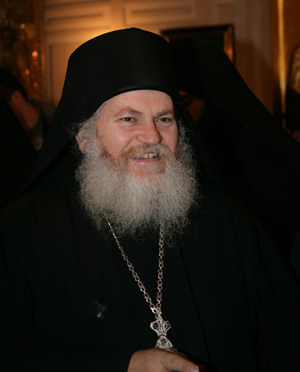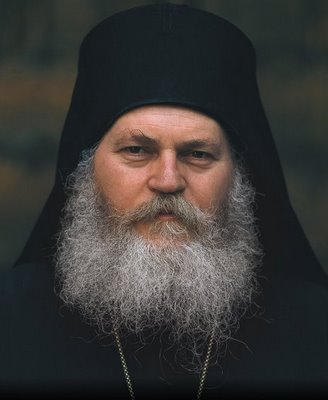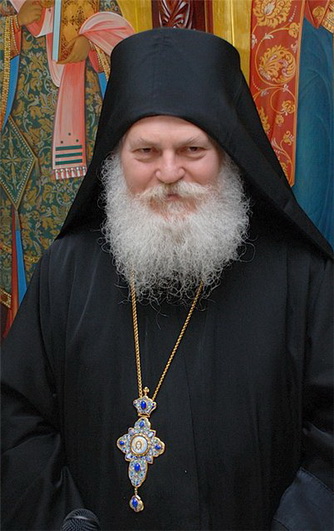
Showing posts with label Elder Ephraim of Vatopaidi. Show all posts

Saturday, July 2, 2016

What is the difference between desire and thought? ( Elder Ephraim of Vatopaidi )


A. Desire is the mood we have to do something, to ask for something is a movement of the heart, while thought moves in the area of the intellect.

First we desire and after this desire it is expressed internally through thoughts. Desire is the beginning, the root. By cutting off sinful desires we are essentially freeing ourselves from sinful thoughts.

This is why our Lord emphasized: "But I tell you that anyone who looks at a woman with desire has already committed adultery with her in his heart" (Matt. 5:28). He wanted to cut off the root of the passions.

Saint Gregory Palamas says that the intellect of the believer who struggles in prayer is easily purified of thoughts, just like the heart of a person (which is the power that produces thoughts), cannot be purified unless all the other powers of the soul, the appetitive and spirited, are purified.


Elder Ephraim of Vatopaidi

Tuesday, July 30, 2013

Creation (part 2) - Elder Ephraim of Vatopaidi


The greatest ecological disaster described in the Scriptures is the flood during Noah’s times; it took place because “the wickedness of man was great in the earth, and that every intention of the thoughts of his heart was only evil continually” (Genesis 6, 5). Man rebelled absolutely against God and against anything which had to do with his spiritual existence. Because of the prevailing wickedness those days, which was the result of man abusing his freedom, the Lord is forced to say: “My Spirit shall not abide in man forever, for he is flesh” (Genesis 6, 3).

By ‘flesh’ it is meant ‘man’s carnal attitude, his beastly and full of passions life’. Thus the flood was not imposed by the Lord as a punishment but was caused by the comprehensive rebellion of mankind. There is a similar situation in the case of Sodom and Gomorra. In the conversation between Abraham and God, it is revealed that not even ten righteous people could be found in these cities, which would have aborted their destruction (Genesis 18, 20-33). However, in the case of Nineveh, peoples’ repentance annulled the city’s destruction (Jonah 3, 10). That is, man’s good intention cooperates with God’s will to shape history. The Lord is not the Judge, the Critic. We must not view the Lord through the prism of legal justice.

In the Old Testament we have many passages regarding the end of ages, describing the signs of those times in the writings of the prophets: Amos, Joel, Nahum Jeremiah, Ezekiel and Daniel. However, Jesus, the only Savior of mankind, gives an account of the hardships and the destruction which will precede the end of ages. This has been handed over to us by Evangelist Matthew, the Lord’s disciple and the Evangelists Marc and Luke. Similarly Peter and Paul, the Apostles, inform the faithful about the circumstances which will prevail during the end of ages and Christ’s Second Coming.

If one studies the passages in the Old and the New Testament which we have mentioned, he will recognize that during those days there will be a general apostasy similar but greater than Noah’s times, since the ‘son of lawlessness’, Antichrist, will reign for a short time. The last book of the New Testament, the Revelation, describes the events which will take place during the end of ages. However, because it is a prophetic book, it remains indecipherable to the many, sealed with ‘seven seals’ (Revelation, 5, 1). Only those who themselves possess the prophetic charisma are able to comprehend other prophets; therefore, the only authentic explanation of the Revelation is given by the Fathers of our Church.

We will not give an explanation of the Revelation, here; neither will we refer to the specific events mentioned, whether they have already taken place, or determine the time they will happen, since this does not have such significance for theology, neither affects our salvation. Because of its contents, this book attracts the interest of both the faithful and the heathen and intrigues them to examine it. For instance, from 1970 to 1987, 700 papers were presented on the issue. One can only imagine how many more presentations were written after the Gulf war in 1991. We, however, will only focus on the main figure of the Revelation, Christ, ‘the Alpha and the Omega’ (Rev. 22. 11) and the main event which is the establishment of God’s kingdom, namely the regeneration whereby ‘a new heaven and a new earth’ (Rev. 21, 1) will be established.

The forthcoming ecological disasters will be take place not because God will inflict them but because man is abusing his freedom. The human race will become perfectly irrational and there will be a general apostasy. The cause of such irrationality, partly seen today, is man’s unclean mind. St Maximus, the Confessor, stresses that the misuse of thoughts causes the abuse of things (St Maximus, The Confessor: Chapters on Love 2, 78). Indeed, man during the end of ages will be constantly abusing things as well as the world itself.

God will not inflict punishment. We must abandon the notion of a vindictive God. “God is love” (A John 4, 8). “Word became flesh” (John 1, 14) so “that through death he might destroy the one who has the power of death, that is, the devil” (Hebrews 2, 14). The purpose and the cause of the divine incarnation, as well as Christ’s emptying Himself on the Cross, was to abolish death, corruption and the Devil, who is the father of deceit and of all sin. According to Anselm of Canterbury (1033-1109) Christ, through His sacrifice on the Cross, does not gratify divine justice but “saves the sheep that went astray” (Matthew 18, 11), reconciles man with God and grants him deification. St John Chrysostom says that the Lord was never vindictive but it is us, humans, who are spiteful. The Lord does not need anything. He does not offer salvation in order to gain something. He offers salvation because he loves man; and He loves him because He wants to. He saves man by the free and operative love of the body of Christ. In other words, He saves us through His Church.

In the Church one experiences the end of ages as time at hand. He experiences the Kingdom of God through the Grace of the Holy Spirit. Particularly during the Holy Eucharist, the entire creation participates and is being offered to the loving Lord for ‘the unity of all’ and not just the faithful, the saints or the angels. The Divine Liturgy is not only about the salvation of the soul. The priest or the congregation does not supplicate for the Lord’s grace in order to sanctify his soul alone but he also prays for his material needs and for the rest of the creation. “For favorable weather, an abundance of the fruits of the earth and temperate seasons. …For travelers by land, sea, and air, for the sick, the suffering, the captives, and for their salvation…. For peace of the whole world”. By praying for the whole world during the Divine Liturgy and by giving thanks for the creation, it is demonstrated that the world has never stopped being God’s world. It also indicates that who we are, what we do, the natural environment in which we live in, can and must go through the hands of the priest as ‘anafora’ to the Lord, so that it does not remain deformed by sin but is regenerated into ‘being good always’, as St Maximus the Confessor says.

Whoever has been initiated into the mystery of the Divine Liturgy experiences it with awareness and full consciousness and comprehends that the eternal life will be an incessant Divine Liturgy, a feast of the resurrection. After His Second Coming, Christ, ‘the Lamb’ according to the Revelation, will reign jointly with all the saints and all those saved. According to St Nicholas Kavasilas: “He will be a God amongst gods; beautiful amongst the beautiful, leading the chorus” (St Nicholas Kavasilas: On life with Christ). Man, as a person, can never become a non-being or be led into a non-existence. St Simon, the New Theologian, says that the Second Coming will take place primarily for the people who gratify their passions and live in sin and not for the saints who already experience the presence of Christ (St Simon the New Theologian: Moral issues).

Hell and Paradise do not exist because of God but because of man. Indeed, Hell and Paradise exist as two ways of living but God did not cause their creation. God Himself is paradise for the saints and those saved; the same God is hell for the sinners. That is, both the righteous and the sinners will perceive God and will have their nature regenerated as an eternal entity, but the sinners will not be able to participate in the bliss and glory of the Lord. In other words, human will and freedom will not be restored; the Lord will not infringe upon man’s freedom. Righteousness indicates that the soul is healthy; sin is a sign of disease. Therefore, it is not God who punishes; rather, man has not been healed during his abode on earth.

In His Second Coming, Christ will not only restore human nature but the entire creation. Since the rest of the creation fell because of man, it will be regenerated by the sanctified man. When man attains sanctification, his surrounding environment is also sanctified. We find many such examples in the lives of the saints. A lion was attending the needs of St Gerasimos of Jordan; St Seraphim of Sarov was feeding a bear as if it was a tame lamb; elder Paisios, the Hagiorite, was known to be keeping company with snakes and other wild animals.

Along with the resurrection and regeneration of man, nature will also be absolved of corruption. According to St Simon the New Theologian, nature will become non-material and eternal. “During the regeneration, nature will become a non-material abode, beyond human perception” (St Simon, The New Theologian: Moral issues, 1, 5).

God has created time, space and substance “from what was not”; these will be regenerated into eternity “beyond perception” in the kingdom of God; they will be eternal, immaterial and incorruptible. All these gifts are granted to man by the love of the Lord. However, if man is to receive the Lord’s love, his heart must be open to Him. And that which will open a person’s heart is humility. The more humble one becomes, the closer he comes to the Lord. The more one comprehends the Lord, the more humble he becomes. At the same time, the more selfish one is the further away from God he turns. “God opposes the proud, but gives grace to the humble” (James 4, 6). If man properly appreciates the love of the Lord, he will be enthused to fight “the good fight” (A. Timothy 6, 12) so that not only he will attain eternal life in the kingdom of God but he will also show his love for his brethren and his respect for the environment, while still alive.

The righteous always respect the environment. St Silouan, the Athonite, writes: “Our heart must sympathize and not only love our brethren but also ache for every being, for everything the Lord has created. Behold! This is a green leaf and you have cut it off for no reason. Even though it is not a sin, how can I say it, it causes an ache; the heart which has learnt to love, feels even for the leaf and for the entire creation” (Arch. Sofrony: St Silouan, the Athonite). Blessed Elder Joseph, the Hesychast, viewed nature as an instrument which gives thanks to the Lord. He wrote: “It is nice here, after spring-that is, from Easter up to the Feast of the Dormition of the Most Holy Lady in August. The pretty rocks and the rest of the creation carry on theologizing, as theologians without voice- each with its own voice or its lack of it. If you touch a small twig, it immediately cries out very loudly with its natural fragrance: ‘Ouch! You don’t see me, but you’ve hurt me!’ And so on…Everything has its own voice. As soon as there is a breeze, everything moves in harmony with each other and offer melodic praises to the Lord” (Elder Joseph: An expression of Monastic experience).

He who has been cleansed from passions through divine Grace and has attained illumination “is watchful and somber in every circumstance”. He becomes a perfect person and is able to deal successfully with the issues of our times, especially with that of the environment. However reading from the Scriptures and the Holy Fathers, he recognizes that one day this world will end when Christ will regenerate it during His Second Coming. According to the Revelation, He will regenerate it into the city of the Lord, where the temple and the light will be the Lamb Himself (Revelation, 21, 22-23).

Let us, therefore, be spiritually prepared at every moment of our lives; so that we are be able to cry along with St John, the Theologian and writer of the Revelation: “Come, Lord Jesus” (Revelation, 22, 20).


Elder Ephraim of Vatopaidi

Creation (part 1) - Elder Ephraim of Vatopaidi


Man has been trying to make sense of the creation ever since antiquity as it is manifested in the teachings of many religions and philosophies. Generally, we may say that ancient Greek philosophers have offered three explanations as to the creation of the world: a) the Stoics and the Epicureans advocated that the world was self-existent, autonomous and eternal, b) The Pythagoreans argued that the physical elements and laws were divine and c) The Aristotelians attributed the cause of the creation to a god “who was the first mover, unmoved”. We may also argue that all subsequent theories, whether hailing from scientific or philosophical/religious circles, are divided into the following three main categories: the materialists, the pantheists and the theocrats.

However, we derive from the Scriptures definite proof that God created the entire physical and non-material world not from previously existent matter but “from what was not” (Maccabeus 7, 28) and that the Lord lives in the world (see psalms 138, 7-10) and He is not an unmoved being. These are the basic dogmas of our Church. Word-God created every living being: “All things were made through him, and without him was not anything made that was made” (John 1, 3). The creation of the world from nothing does not mean that that which was created subsequently becomes autonomous and independent. It means that God and the world are two different entities which are connected with unbreakable bonds. The uncreated Lord is the only uncreated cause and the world is the created outcome. When the Lord said “Let it be light” and “it was so” or when He said “let there be lights in the expanse of the heavens” and “ it was so” or when He finally created everything that was made “and it was very good” He did not withdraw from the world ( see Genesis 1, 3-31).

The Triune God created the world in His infinite goodness and wisdom. The word ‘kosmos’ (world) means ‘kosmima’ (jewel); a jewel is an artefact which causes pleasure even to the artist. Of course the self-sufficient Lord does not need such gratification, but He wished and became Creator in an outward expression of His excessive love (which is other than the love which exists among the Persons of the Trinity).

The Lord’s presence is continuous throughout the universe; just as with His creative energy He brought all beings into being ‘from what was not’, through His ‘cohesive and observational’ energy He maintains all beings ‘into existence’ (St Gregory Palamas: Writings). The Lord’s cohesive and observational or providential, uncreated energy determines all physical and spiritual laws which govern the material and the spiritual worlds. The Lord’s uncreated energy as a cause becomes created as an outcome and is ‘altered’ into various kinds of created powers like the physical force, motion, heat, chemical and nuclear power.

The creation is the result of the divine will-which for the Triune God is the same for all three Persons- and not the product of divine substance, otherwise pantheism would govern the universe ( St John of Damascus: A publication of the Orthodox Faith). The Triune God through His uncreated energies is connected to the entire creation. As St Gregory Palamas says the simple beings (the non-living) participate in the substance-creating energy of the Lord; the living beings (animals, plants) also participate in His life-giving energy; additionally, rational beings participate in His wisdom-giving energy. Only angels and men, who attain deification, participate in His deifying energy (St Gregory Palamas: Writings).

The Lord first created the spiritual, invisible world, which includes the myriads of angels and then the material world, which became visible through His Word, the divine commands. Finally, He created man, the crown of the creation, who as St John of Damascus says, is made of visible and invisible substance. For this reason St Gregory Palamas describes man as “the major in a small world”.

Human nature was not created by command like the rest of the visible and invisible creation where the Lord “spoke, and it came to be; he commanded, and it stood firm” (Psalm 33, 9). In order to create man all the three Persons of the Holy Trinity came together and said: “Let us make man in our image, after our likeness” (Genesis 1, 26). Thus the Lord and Creator Himself took dust from the ground and created the body and breathed into his nostrils ‘the breath of life’, namely divine Grace, His uncreated deifying energies. Thus man has acquired “an abundance of life” (John 10, 10) more than any other being; namely, his adoption. St Gregory Palamas says that “the image’ of man is higher than ‘the image’ of angels. Man’s soul is the only one with intellect, word and life-giving spirit. Because the angels do not possess a material body they do not have a life-giving spirit which would give life to the attached body, like humans have”. (St Gregory Palamas: Writings. Chapters 38-39).

The creation is a mystery for man; a mystery which encompasses the creative and providential presence of the Lord in the world and at the same time proves His divine greatness. Man has the ability to penetrate this mystery and comprehend the love, all-wisdom and special providence the Lord has for His creatures. Thus, he may choose to live in constant communion with the Lord by giving thanks and glory to the One, who because of His excessive love, gives him everything and especially his deification, namely his ‘likeness’.

According to Christian anthropology, Adam, the first man, having been placed in Paradise, was given the command to ‘work and keep it’ and govern over the entire material creation ‘freely’. In order to preserve the necessary reliance on the Lord- Creator, man was issued with a prohibition; namely not to eat from a certain fruit, in order to test his free will. Adam, being free, did not keep this command and as theology says ‘the forefathers sinned” or “fell’.

Many explanations are given as to what caused man’s fall. One of the most distinctive, which is harmonized with patristic tradition, is the explanation given by St Erinaios, Bishop of Lougdounou (Lyon). He argues that Adam was like an infant, who was placed in Paradise in order to grow into adulthood by exercising his free will. After his creation, man had to be raised, grow up, multiply and gain spiritual strength before being glorified through his deification (Αγιος Ειρηναίος Λουγδούνου: Έλεγχος ψευδωνύμου γνώσεως, βιβλίο Δ). However, he was deceived and acted wrongly. For this reason repentance was given to him as an opportunity to return to Paradise. This was something which was not given to the ‘fallen angels’, who became demons; namely specific evil and crafty beings.

After the fall, the forefathers, Adam and Eve, ‘were clothed with garments of skins’ (Genesis 3, 21); namely with corruption, mortality and with the blameless passions: hunger, thirst, sleep and pain. The powers of their soul were also diffused. ‘The image’ was blackened and man’s spiritual energy, with which he was united with the uncreated deifying energy, was hidden. Thus, divine Grace, as a deifying gift, withdrew until the time man was to recall it through repentance. Repentance is an act of man’s free will; the latter remained intact.

Let us cite here the Catholic and Protestant views of the fall. The Catholics believe that after the fall, man was left with ‘the image’ untarnished but lost the special supra-natural (created) Grace, he had acquired from God, to attain ‘the likeness’. It is from this point onwards that logic prevails in the western theological and social circles. The Protestants on the other hand, believe that human nature was totally perverted after the fall, even as to ‘the image’. Thus they advocate the premise on the ‘absolute destination’.

The fall of man, who was the ‘crown of the creation’, has caused the fall of the entire creation which “has been groaning together in the pains of childbirth” (Romans 8, 22). This explains the main teaching of our Church, which views the creation as a whole, which is being guided towards perfection and deification; man and nature together. Man and nature are not distinct in the design of the creation. Therefore man has a duty to maintain a good relationship with the rest of the creation. The fact that man remains in the fallen condition perilously prolongs the world enduring in the same condition. Thus man contributes to the perversion and degradation of nature. Therefore, the fall has not only distorted man existentially and morally but also his very same environment.

Thus the person who has an unclean heart relates towards other human beings in a way which serves his passions and acts wrongly towards nature, by abusing it. Christ himself reveals: “For from within, out of the heart of man, come evil thoughts, sexual immorality, theft, murder, adultery, coveting, wickedness, deceit, sensuality, envy, slander, pride, foolishness” (Mark 7, 21-22). Man’s heart is full of passions because he does not strive for virtue, neither does he obey the Lord’s commands. St Gregory Palamas stresses: “The mind which has rebelled against God either becomes beastly or diabolical; having rebelled against the laws of nature man does not put a limit to his pleasure” (St Gregory Palamas: Homilies. KB). Abba Dorotheos says that a proper conscience defines a person’s relationship with others but also with the rest of the creation. Thus in his homily on conscience he says: “To have a proper conscience towards material things means that one does not abuse anything, neither does he let it perish nor throws it away” ( Abba Dorotheos: Ascetic Works, Teaching 3).

Nowadays we have reached such a level of irrationality, such a degree of lack of conscience and such an extensive state of rebellion that the entire human race is threatened with partial or total extinction from a nuclear disaster as a result of war or nuclear accident; from the depletion of the ozone layer as a result of the increase of harmful substances in the air and from the increased desertification and the pollution of waters.

For example, it is said that the constantly increasing average temperature of the earth causes the melting of the ice in the poles. If the polar ice melts the average level of the oceans will rise by 70 meters and areas which are inhabited by a quarter of the earth’s population will be submerged in water. It is estimated that every year, 24 billion tons of soil is lost from all continents. During the last few decades the volume of soil lost was equal to the farming land of the entire United States. The United Nations Development Program (UNDP) estimates that desertification costs some 40 billion dollars a year. Almost all subsoil waters in Europe have been polluted by substances harmful to man, making them undrinkable. This is the direct result of the over fertilization of farmlands because of intensive farming. The ongoing successes in Genetics which may culminate in the human cloning will cause terrible moral and social consequences. The nuclear waste is increasing so much that the United States alone has massed seven hundred thousand tons of depleted uranium, which has become very costly to store and thus it is being used in the creation of bombs. However, these issues will be more extensively dealt with by the scientists who will speak at the conference tomorrow.

Throughout history, mankind has experienced ecological disasters which have been described in the Holy Scriptures. It is worth turning our attention to the causes of these disasters and not to the historical events themselves. In the God inspired passages of the Holy Scriptures, the incarnate Word-God and the Fathers of the Church refer to the various causes and their effects and not to the precise way they took place and progressed; they talk about the causation of beings and not their substance. The latter is something immaterial for the Holy Scriptures and the Patristic Tradition but not for science which treats it as its main subject. Scientific method, relying on the rational faculties of man, contributes towards the development of the material knowledge of substances. Theology, however, which relies on the experiences of the saints and especially on the perception of God exclusively through the mind- as defined by the Patristic writings-, leads man to experience the Uncreated One.

Elder Ephraim of Vatopaidi

Monday, July 8, 2013

"Do Not Look for Joy Outside of Yourself" ( Elder Ephraim of Vatopaidi )


A talk given in the New-Tikhvin women's Monastery, Ekaterinburg, Russia, October, 2011, during the visit of the Cincture of the Mother of God to Russia.


Your Eminence, eminent bishops, honorable fathers, dear Mother Abbess, brothers and sisters! It is a great joy for me to be in your monastery once again. As you know, this time we have arrived with the holy Cincture of the Mother of God. This is a very special holy shrine — very precious from the spiritual point of view. By God's providence we have brought the relic to this city in order to sanctify the city, and of course, for the sake of the monastics who live here. We know how pleasing the monastic life, and in general the existence of monasteries is to the Mother of God. We know how many times in the history of the Church the Mother of God appeared to chaste and pure souls and said, "There is my icon, take it and build a monastery." The Holy Mountain is the only existing monastic republic, dedicated entirely to her. The Most Pure Virgin is the Protectress of Mt. Athos. She herself told St. Peter the Athonite to go and live on the Holy Mountain, and said that he and his co-strugglers will be under her direct Protection. "I myself will be your Protectress, Healer, and Nourisher," she said. Appearing to St. Athansius the Athonite, she said the same thing she had said to St. Peter, adding, "I will be your Economissa (steward) and I will take care of all of you; but I want only one thing from you—that you keep your monastic vows." And to this day we, the Athonites, delight in her patronage and special intercession.

Therefore, my dear ones, it is a great blessing that we have come to monasticism. Our elder Joseph of Vatopedi of blessing repose very often said to us, "There is no greater blessing for a person than when God calls him to the monastic life. May the monk never, not even for a second, ever forget that God Himself called him." When we remember how we left the world, what went along with us then, we see that God's grace was upon us, that it accomplished our renunciation of the world, and led us to the monastery. Here we must fulfill three virtues in their entirety: non-acquisitiveness, obedience, and chastity. These virtues lead us in the spiritual life, root us in it, and help us attain the fullness of maturity in Christ.

Monasticism is the path of perfection, and therefore we monastics are called to acquire the fullness of grace. Not long ago, one monk came to me and said, "You know, I have no time to read." I said to him, "My child, the monastery is not a place of reading. You have come to the monastery not to read, and not even to pray. You have come to deny yourself and submit yourself to spiritual guidance. If you give yourself over in obedience to the abbot and not try to get as comfortable as possible in this life, then you will fulfill Christ's commandment exactly. He never said anything accidently, but always unmistakenly, and He said to us monks: Whoever will come after me, let him take up his cross and follow Me."

Whoever in the monastery fulfills his own desires and dreams is not denying himself. A monk should not have any dreams at all—no ambitions or plans. He comes as a man condemned to death, lifts his arms and says to the abbot, "Do with me as you will." By this he fulfills another of Christ's words: "He who wants to save his own soul will lose it." And if a monk understands the meaning of these words and places them at the foundation of his life, he will have a correct understanding of podvig, and all his problems will be solved. He becomes an organ of God's Providence and fully imitates our Lord Jesus Christ, Who, although sinless, came and stood on the level of us penitents, as if He also needed repentance. Christ did not just give commandments from the heavens for us to observe; He Himself came to us and demonstrated them to us in practice. And what did He say to us, absolutely clearly? "I have come not to do my own will, but the will of my Father Who sent Me." Our blessed elder Joseph told us in his talks, "What do you think, brothers: if Christ were to fulfill His own will—would that have been sinful? Nevertheless, He did not do that, so that He could be One Who first does, and then teaches." Man's will and desire is a brass wall. Not a clay, not a stone, not a cement, but a brass wall separating him from God. Blessed is the monk who obeys. Obedience is not a discipline; it is something different. Obedience is when you give over your heart. Monastic life is fully Christ-centered. Therefore the elder does not use his spiritual children's obedience for his own purposes. His task is to convince the monk to submit his will to the will of God.

If you have any questions, ask them and I will answer them if I can.

—How can one notice the appearance of a sinful thought, and cut off in time a passionate thought that infect us while it is still at the state of suggestion?

—Do not be over-preoccupied with thoughts—they need to be treated with disdain. One monk in our monastery once came to me and said, "I need to confess." I saw that he was carrying a notebook. I asked him, "What is that you have?" "It is my confession," he answered. "Well, give it to me," I said. "I will read your notebook." Just imagine—thirty pages of thoughts! I said to him, "Do you think you need to confess every thought that comes into your head? You'll end up in a psychiatric hospital that way!" He had written down even the thoughts that came to him during services. I told this brother, "Thoughts that come in do not mean anything." Even if the mind inclines toward them for a moment, this does not mean anything, absolutely nothing! Forget them! You need to confess only those thoughts that do not go away for a long time, that stay in the mind for days or weeks; but in general thoughts are soap bubbles.

I will tell you about yet another incident from life. One young man, a church-going man, fell into gluttony—he wanted to eat a shish kebob on a Wednesday, and went to buy it. He came to the store and the salesman said, "Forgive me but I just sold the last one." This young man then came to me and said, "This is what happened, and I would have eaten a shish kebob!" I said to him, "But you did not eat it? That is all! You gave in to a thought, but did not sin in deed." How is it with us? First there is the thought, and then it becomes a word, and then a deed. But a sin is considered committed when it becomes a deed. Therefore, be attentive and do not be preoccupied much with thoughts; disdain them. "For the thoughts of mortal men are miserable" (Wis. 9:14), literally, "Thoughts are cowardly"

—Fr. Ephraim, to what do you think monastics in Russia should be paying particular attention, so that our monasteries would be stronger and flourish?

—You need to pay attention to obedience. A monk should obey and not have passionate attachments; this especially relates to women monastics. I have one women's monastery, and when I go there, it all begins: "Geronda, pray for my aunt, my nephew, my nephew's neighbor. Geronda, pray for my brother, for my sister's friend." You shouldn't be concerned with your aunt's, your nephews' or their neighbors' needs. Pay attention to this, because the virtue of exile is particularly hard for women; they tend to be very attached to their relatives. They start praying fervently for them, but under the guise of prayer for their relatives, their hearts cleave to them again. Obedience, however, tells us to give ourselves wholly to Christ. Whoever does not renounce his property, says the Lord, cannot be my disciple. These are the words of Christ, Who was merciful, Who was a teacher of mercy! But do you remember what the man said after the Savior called him to follow Him? "Allow me to go and bury my father." He was not lying, after all; he would have done just that. But Christ said, "No let the dead bury their dead. You follow Me." Why do you think He said that? Because man's mind is called to illumination, and compared to this illumination, this sanctity, everything is insignificant, nothing. Or, for example, many people write letters to their relatives who are monks. The brothers ask me, "Geronda, should I answer the letter?" "No," I say, "you don't need to answer it. Pray for them, and that will be your greatest offering."

—How can a complicated and responsible monastic job having to do with monastery property management be combined with the commandment not to care for tomorrow?

—Whoever cares for these things is doing them in obedience—he has a "carefree care". St. Silhouan the Athonite was the steward, not even of the monks, but of the lay workers. At the same time he was a great man of silence, a true hesychast. Pay attention to this! Do you remember how he himself admitted in his recollections: "The abbot told me to be the steward of the workers, and I inwardly resisted. 'Oh, father, what are you burdening me with…'" He did not accept it right away only inwardly, and did not show swift obedience, although he went and did this job. But the level of his spiritual progress did not allow him the right to resist even inwardly. He himself admitted that for this resistance against the abbot he had headaches his whole life as a penance. So, be very careful. Look at how Christ mysteriously, in an amazing way equated the will of a lawful organ—that is, the abbot—with His own will. What does He say? "Whoever hears you hears Me, and whoever rejects you rejects Me." Therefore, another great saint of our times, Elder Porphyrius of Kavsokalyvia, emphasized the significance of joyful obedience.

—How can repentance be combined with spiritual joy, compunction and inner peace? Both are needed, but apparently contradict each other.

—To the extent that a person repents and has that inner lamentation commanded by Christ, he will feel simultaneously that this lamentation is joy-producing. Do not contemplate spiritual things by using the feelings or sentimentality. One may weep because he has a psychological problem, another weeps from sentimentality, while a third weeps for spiritual reasons. Unfortunately, we have not worthily responded to God's call—I am speaking of myself—and we do not measure up to God's grace and long-suffering for us. But we have known holy elders, our contemporaries, who had compassion for people and prayed for everyone with great pain of heart. They were always peaceful, joyful, and easy to be around. This is the wonder of a spiritual person.

—Do you think that the monastic virtues of the ancient fathers are possible in modern monasticism?

—Both monasticism and man have always been the same throughout all times. Of course, people of the twenty-first century unfortunately do not have the same self-mastery or strength as the ancients had. But if a person wants this, he can labor in asceticism according to his strength and experience the same grace as did the ancient fathers.

—How can we avoid depression when repenting? Where is the boundary between repentance and depression?

—In order to help us discern this, we have spiritual guides. One day a nun came to elder Porphyrius, who was clairvoyant. She had read much about remembrance of death and had begun to feel depressed from it, because it was beyond her strength. As soon as the elder saw this nun he could immediately see what the problem was. Before she even said anything, he said to her, "You do not have a blessing to exercise the remembrance of death. Think only about Christ's love." Thus, the podvig of repentance should be directed by a spiritual guide who looks at each person's spiritual state. When my elder, Joseph of Vatopedi, was young, he put much effort into self-criticism and began to get depressed because of it. Then our "grandfather", Joseph the Hesychast, said to him, "Son, work with this—but only a little, not too heavily." Of course, after maturing spiritually he had no problem with this practice.

It is because the spiritual state of the monk must be observed that the holy fathers prescribed that the spiritual father, the abbot, be always in the monastery. Of course, he can be absent for a few days, but in general he is continually with the brothers. Our laypeople, for example, see their spiritual father once or twice a month, the more reverent ones once a month; continual association with a spiritual father is not for them. But the holy fathers did institute this for monks because monks are as if walking a tightrope, and they need continual help.

—How can we discern salvific memory of death from ordinary fear of death, which even non-religious people feel?

—One person told me that he used to be very afraid of death. After he began coming to Mt. Athos, this fear disappeared completely. God gave him such a gift. Psychological fear is not a good fear; it rejects [death], but remembrance of death in Christ is victory over death.

Once a group of pilgrims came to our monastery, and after Compline I talked with them a little. I do not know why, but I began to talk with them about remembrance of death. There was one psychologist among them. He said to me later, "Father, we came to you on the Holy Mountain, and you began talking to us about such sad things." At first I did not understand what had happened. He then said, "Couldn't you have found something else to talk about? Why talk about death?" He was continually tapping his wooden armchair—a superstitious action against the evil eye. However, remembrance of death in Christ does not cause depression in people—it fills them with joy. After all, in Christ we conquer death, and pass over from death into life! We monks are the heralds of eternal life. Why? Because we already have a presentiment of the Kingdom of God in our hearts. Do you remember what Abba Isaiah said? "Remember the Kingdom of Heaven, and it will draw you in little-by-little." That is why a monk is always joyful. He already tastes the Kingdom of God with his spiritual senses. And the Lord Himself says that this Kingdom is within us.

—How can we fulfill the Apostle's command: "Be joyful at all times" and acquire true spiritual joy?

—When a monk gradually obtains constant communion with God, the fruits of this communion will be joy. True joy is not a psychological but a spiritual state. St. Nectarios, a great saint of our times, put it very well in a letter he wrote: He who seeks sources of joy within himself has gone astray, and is in a state of delusion. For example, one person we love, comes from abroad to our monastery. Naturally, we rejoice that he is with us. But as much as we rejoice in his presence, we equally grieve when he leaves. We can take this thought further. We love a certain person, but God takes him from us and he leaves this life, and the love we had for him turns into equal pain after his death. Therefore, a person should not absolutize the joys that are outside of him. The source of joy is in his heart; it is the constant presence of grace. Therefore a man of God is always peaceful and calm at both joyful and sad events.

—How can we unite the commandment of love for neighbor with the obligation to be concentrated and silent?

—Here also discernment is needed, because we often fall into extremes. For example, one of our brothers in the monastery did not have a very good voice. I said to him, "You know, son, don't sing in the catholicon (the main church), but sing in our smaller churches, with three or four other fathers". So he came one day to sing; there were four of them, but then the cook came and then there were five. The brother stopped singing and said to the cook, "Either you or me." The cook was surprised. "Why?" he said. The brother answered, "The Elder blessed me to sing only when there were up to four brothers in the choir." What am I trying to say? We must have a correct understanding of our spiritual father's commandments. We have to know when to talk and when to be silent. After all, silence can come from egoism, or neurasthenia; but there is also spiritual silence. I once asked my monks not to talk during services. So, during a service, one brother came up to another brother and asked him about something to do with the kitchen, and instead of answering him, the other showed him by a gesture that it is forbidden to talk (he placed his finger over his lips). This is not obedience. He was obligated to answer because this was something necessary. But when a monk loves silence, God gives him the opportunity and the time to be silent.

Elder Ephraim of Vatopaidi

Sunday, April 7, 2013

"Do Not Look for Joy Outside of Yourself"


Elder Ephraim of Vatopaidi 


A talk given in the New-Tikhvin women's Monastery, Ekaterinburg, Russia, October, 2011, during the visit of the Cincture of the Mother of God to Russia.


A talk given in the New-Tikhvin women's Monastery, Ekaterinburg, Russia, October, 2011, during the visit of the Cincture of the Mother of God to Russia.
Your Eminence, eminent bishops, honorable fathers, dear Mother Abbess, brothers and sisters! It is a great joy for me to be in your monastery once again. As you know, this time we have arrived with the holy Cincture of the Mother of God. This is a very special holy shrine — very precious from the spiritual point of view. By God's providence we have brought the relic to this city in order to sanctify the city, and of course, for the sake of the monastics who live here. We know how pleasing the monastic life, and in general the existence of monasteries is to the Mother of God. We know how many times in the history of the Church the Mother of God appeared to chaste and pure souls and said, "There is my icon, take it and build a monastery." The Holy Mountain is the only existing monastic republic, dedicated entirely to her. The Most Pure Virgin is the Protectress of Mt. Athos. She herself told St. Peter the Athonite to go and live on the Holy Mountain, and said that he and his co-strugglers will be under her direct Protection. "I myself will be your Protectress, Healer, and Nourisher," she said. Appearing to St. Athansius the Athonite, she said the same thing she had said to St. Peter, adding, "I will be your Economissa (steward) and I will take care of all of you; but I want only one thing from you—that you keep your monastic vows." And to this day we, the Athonites, delight in her patronage and special intercession.
Therefore, my dear ones, it is a great blessing that we have come to monasticism. Our elder Joseph of Vatopedi of blessing repose very often said to us, "There is no greater blessing for a person than when God calls him to the monastic life. May the monk never, not even for a second, ever forget that God Himself called him." When we remember how we left the world, what went along with us then, we see that God's grace was upon us, that it accomplished our renunciation of the world, and led us to the monastery. Here we must fulfill three virtues in their entirety: non-acquisitiveness, obedience, and chastity. These virtues lead us in the spiritual life, root us in it, and help us attain the fullness of maturity in Christ.
Monasticism is the path of perfection, and therefore we monastics are called to acquire the fullness of grace. Not long ago, one monk came to me and said, "You know, I have no time to read." I said to him, "My child, the monastery is not a place of reading. You have come to the monastery not to read, and not even to pray. You have come to deny yourself and submit yourself to spiritual guidance. If you give yourself over in obedience to the abbot and not try to get as comfortable as possible in this life, then you will fulfill Christ's commandment exactly. He never said anything accidently, but always unmistakenly, and He said to us monks: Whoever will come after me, let him take up his cross and follow Me."
Whoever in the monastery fulfills his own desires and dreams is not denying himself. A monk should not have any dreams at all—no ambitions or plans. He comes as a man condemned to death, lifts his arms and says to the abbot, "Do with me as you will." By this he fulfills another of Christ's words: "He who wants to save his own soul will lose it." And if a monk understands the meaning of these words and places them at the foundation of his life, he will have a correct understanding of podvig, and all his problems will be solved. He becomes an organ of God's Providence and fully imitates our Lord Jesus Christ, Who, although sinless, came and stood on the level of us penitents, as if He also needed repentance. Christ did not just give commandments from the heavens for us to observe; He Himself came to us and demonstrated them to us in practice. And what did He say to us, absolutely clearly? "I have come not to do my own will, but the will of my Father Who sent Me." Our blessed elder Joseph told us in his talks, "What do you think, brothers: if Christ were to fulfill His own will—would that have been sinful? Nevertheless, He did not do that, so that He could be One Who first does, and then teaches." Man's will and desire is a brass wall. Not a clay, not a stone, not a cement, but a brass wall separating him from God. Blessed is the monk who obeys. Obedience is not a discipline; it is something different. Obedience is when you give over your heart. Monastic life is fully Christ-centered. Therefore the elder does not use his spiritual children's obedience for his own purposes. His task is to convince the monk to submit his will to the will of God.
If you have any questions, ask them and I will answer them if I can.
—How can one notice the appearance of a sinful thought, and cut off in time a passionate thought that infect us while it is still at the state of suggestion?
—Do not be over-preoccupied with thoughts—they need to be treated with disdain. One monk in our monastery once came to me and said, "I need to confess." I saw that he was carrying a notebook. I asked him, "What is that you have?" "It is my confession," he answered. "Well, give it to me," I said. "I will read your notebook." Just imagine—thirty pages of thoughts! I said to him, "Do you think you need to confess every thought that comes into your head? You'll end up in a psychiatric hospital that way!" He had written down even the thoughts that came to him during services. I told this brother, "Thoughts that come in do not mean anything." Even if the mind inclines toward them for a moment, this does not mean anything, absolutely nothing! Forget them! You need to confess only those thoughts that do not go away for a long time, that stay in the mind for days or weeks; but in general thoughts are soap bubbles.
I will tell you about yet another incident from life. One young man, a church-going man, fell into gluttony—he wanted to eat a shish kebob on a Wednesday, and went to buy it. He came to the store and the salesman said, "Forgive me but I just sold the last one." This young man then came to me and said, "This is what happened, and I would have eaten a shish kebob!" I said to him, "But you did not eat it? That is all! You gave in to a thought, but did not sin in deed." How is it with us? First there is the thought, and then it becomes a word, and then a deed. But a sin is considered committed when it becomes a deed. Therefore, be attentive and do not be preoccupied much with thoughts; disdain them. "For the thoughts of mortal men are miserable" (Wis. 9:14), literally, "Thoughts are cowardly"
—Fr. Ephraim, to what do you think monastics in Russia should be paying particular attention, so that our monasteries would be stronger and flourish?
—You need to pay attention to obedience. A monk should obey and not have passionate attachments; this especially relates to women monastics. I have one women's monastery, and when I go there, it all begins: "Geronda, pray for my aunt, my nephew, my nephew's neighbor. Geronda, pray for my brother, for my sister's friend." You shouldn't be concerned with your aunt's, your nephews' or their neighbors' needs. Pay attention to this, because the virtue of exile is particularly hard for women; they tend to be very attached to their relatives. They start praying fervently for them, but under the guise of prayer for their relatives, their hearts cleave to them again. Obedience, however, tells us to give ourselves wholly to Christ. Whoever does not renounce his property, says the Lord, cannot be my disciple. These are the words of Christ, Who was merciful, Who was a teacher of mercy! But do you remember what the man said after the Savior called him to follow Him? "Allow me to go and bury my father." He was not lying, after all; he would have done just that. But Christ said, "No let the dead bury their dead. You follow Me." Why do you think He said that? Because man's mind is called to illumination, and compared to this illumination, this sanctity, everything is insignificant, nothing. Or, for example, many people write letters to their relatives who are monks. The brothers ask me, "Geronda, should I answer the letter?" "No," I say, "you don't need to answer it. Pray for them, and that will be your greatest offering."
—How can a complicated and responsible monastic job having to do with monastery property management be combined with the commandment not to care for tomorrow?
—Whoever cares for these things is doing them in obedience—he has a "carefree care". St. Silhouan the Athonite was the steward, not even of the monks, but of the lay workers. At the same time he was a great man of silence, a true hesychast. Pay attention to this! Do you remember how he himself admitted in his recollections: "The abbot told me to be the steward of the workers, and I inwardly resisted. 'Oh, father, what are you burdening me with…'" He did not accept it right away only inwardly, and did not show swift obedience, although he went and did this job. But the level of his spiritual progress did not allow him the right to resist even inwardly. He himself admitted that for this resistance against the abbot he had headaches his whole life as a penance. So, be very careful. Look at how Christ mysteriously, in an amazing way equated the will of a lawful organ—that is, the abbot—with His own will. What does He say? "Whoever hears you hears Me, and whoever rejects you rejects Me." Therefore, another great saint of our times, Elder Porphyrius of Kavsokalyvia, emphasized the significance of joyful obedience.
—How can repentance be combined with spiritual joy, compunction and inner peace? Both are needed, but apparently contradict each other.
—To the extent that a person repents and has that inner lamentation commanded by Christ, he will feel simultaneously that this lamentation is joy-producing. Do not contemplate spiritual things by using the feelings or sentimentality. One may weep because he has a psychological problem, another weeps from sentimentality, while a third weeps for spiritual reasons. Unfortunately, we have not worthily responded to God's call—I am speaking of myself—and we do not measure up to God's grace and long-suffering for us. But we have known holy elders, our contemporaries, who had compassion for people and prayed for everyone with great pain of heart. They were always peaceful, joyful, and easy to be around. This is the wonder of a spiritual person.
—Do you think that the monastic virtues of the ancient fathers are possible in modern monasticism?
—Both monasticism and man have always been the same throughout all times. Of course, people of the twenty-first century unfortunately do not have the same self-mastery or strength as the ancients had. But if a person wants this, he can labor in asceticism according to his strength and experience the same grace as did the ancient fathers.
—How can we avoid depression when repenting? Where is the boundary between repentance and depression?
—In order to help us discern this, we have spiritual guides. One day a nun came to elder Porphyrius, who was clairvoyant. She had read much about remembrance of death and had begun to feel depressed from it, because it was beyond her strength. As soon as the elder saw this nun he could immediately see what the problem was. Before she even said anything, he said to her, "You do not have a blessing to exercise the remembrance of death. Think only about Christ's love." Thus, the podvig of repentance should be directed by a spiritual guide who looks at each person's spiritual state. When my elder, Joseph of Vatopedi, was young, he put much effort into self-criticism and began to get depressed because of it. Then our "grandfather", Joseph the Hesychast, said to him, "Son, work with this—but only a little, not too heavily." Of course, after maturing spiritually he had no problem with this practice.
It is because the spiritual state of the monk must be observed that the holy fathers prescribed that the spiritual father, the abbot, be always in the monastery. Of course, he can be absent for a few days, but in general he is continually with the brothers. Our laypeople, for example, see their spiritual father once or twice a month, the more reverent ones once a month; continual association with a spiritual father is not for them. But the holy fathers did institute this for monks because monks are as if walking a tightrope, and they need continual help.
—How can we discern salvific memory of death from ordinary fear of death, which even non-religious people feel?
—One person told me that he used to be very afraid of death. After he began coming to Mt. Athos, this fear disappeared completely. God gave him such a gift. Psychological fear is not a good fear; it rejects [death], but remembrance of death in Christ is victory over death.
Once a group of pilgrims came to our monastery, and after Compline I talked with them a little. I do not know why, but I began to talk with them about remembrance of death. There was one psychologist among them. He said to me later, "Father, we came to you on the Holy Mountain, and you began talking to us about such sad things." At first I did not understand what had happened. He then said, "Couldn't you have found something else to talk about? Why talk about death?" He was continually tapping his wooden armchair—a superstitious action against the evil eye. However, remembrance of death in Christ does not cause depression in people—it fills them with joy. After all, in Christ we conquer death, and pass over from death into life! We monks are the heralds of eternal life. Why? Because we already have a presentiment of the Kingdom of God in our hearts. Do you remember what Abba Isaiah said? "Remember the Kingdom of Heaven, and it will draw you in little-by-little." That is why a monk is always joyful. He already tastes the Kingdom of God with his spiritual senses. And the Lord Himself says that this Kingdom is within us.
—How can we fulfill the Apostle's command: "Be joyful at all times" and acquire true spiritual joy?
—When a monk gradually obtains constant communion with God, the fruits of this communion will be joy. True joy is not a psychological but a spiritual state. St. Nectarios, a great saint of our times, put it very well in a letter he wrote: He who seeks sources of joy within himself has gone astray, and is in a state of delusion. For example, one person we love, comes from abroad to our monastery. Naturally, we rejoice that he is with us. But as much as we rejoice in his presence, we equally grieve when he leaves. We can take this thought further. We love a certain person, but God takes him from us and he leaves this life, and the love we had for him turns into equal pain after his death. Therefore, a person should not absolutize the joys that are outside of him. The source of joy is in his heart; it is the constant presence of grace. Therefore a man of God is always peaceful and calm at both joyful and sad events.
—How can we unite the commandment of love for neighbor with the obligation to be concentrated and silent?
—Here also discernment is needed, because we often fall into extremes. For example, one of our brothers in the monastery did not have a very good voice. I said to him, "You know, son, don't sing in the catholicon (the main church), but sing in our smaller churches, with three or four other fathers". So he came one day to sing; there were four of them, but then the cook came and then there were five. The brother stopped singing and said to the cook, "Either you or me." The cook was surprised. "Why?" he said. The brother answered, "The Elder blessed me to sing only when there were up to four brothers in the choir." What am I trying to say? We must have a correct understanding of our spiritual father's commandments. We have to know when to talk and when to be silent. After all, silence can come from egoism, or neurasthenia; but there is also spiritual silence. I once asked my monks not to talk during services. So, during a service, one brother came up to another brother and asked him about something to do with the kitchen, and instead of answering him, the other showed him by a gesture that it is forbidden to talk (he placed his finger over his lips). This is not obedience. He was obligated to answer because this was something necessary. But when a monk loves silence, God gives him the opportunity and the time to be silent.
Archimandrite Ephraim of Vatopedi
Translation by OrthoChristian.com

29 / 11 / 2011
Related Posts Plugin for WordPress, Blogger...