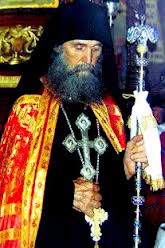
Let us cry not only for our own sins, but also for the sins of others.
Has someone else sinned? Do not judge him; that is, do not criticize and condemn him. Cry for his mistake as if it was your own fall. We are “each other’s members”(cf. Rom. 12:5). The other person is a member of and belongs to the same body as you: he is a member of the body of Christ. You should cry for this person just as the Apostle Paul would cry for others:“
I did not cease to admonish everyone night and day with tears” (Acts 20:31). Cry for your child who transgressed; for the Christian who slipped and fell. Sin is like fire. The droplets that extinguish this fire are the droplets of repentance. If the house next door to you catches fire, won’t you run to help put out the fire? If you remain indifferent, the fire will spread to your home as well. Similarly, you cannot remain indifferent when someone else is being burned by the inferno of sin. Shed tears in order to put out the fire.
If you remain indifferent, you will also be at fault; you will also have a sin. If, however, you not only remain indifferent but also make fun of, criticize, and openly ridicule the other person’s sin, then God will permit you to fall as well, and the fire of your sin may turn out to be your initiation into Hell, according to Saint John Chrysostom.
The venerable Chrysostom insists that we must lament for the sins of others, if we truly love them. If the other person is about to be devoured by a wolf, will we allow him to perish? If another person is in danger of drowning, will we let him sink?
Elder Ephraim of Arizona
from the book
The Art of Salvation
http://www.stnektariosmonastery.org/

The mystery of repentance is the greatest and most blessed mystery, which prepares us perfectly beforehand for Heaven...
There is no sin on earth which is unforgivable for the person who will repent, and for the God of love Who receives him.
God is pleased and takes rest in the man who repents, no matter how great a sinner he is. Repentance is always open to every sinful person. God desires only the confession of the error. From there forward, all things are perfected. Through humility comes confession, and confession brings purification, and purification brings the vision of God.
The tears of the repenting soul purify the heart, the nous, the soul, the body, the life, the word, and purify more than every expression of man.
Let us never loose home. Even if we fall and are traumatized, let us not loose hope. As long as God grants us life, let this become an approach towards God, for He waits for us. If God were not incomparably merciful, no one would be saved. Our Christ waits for us, we should not procrastinate and put it off.

http://pemptousia.com/files/2015/02/Expelled-FB.jpg
 Slander is a great evil. Just as the little rudder steers the whole ship wherever it wants, likewise the tongue leads a person either to good or to evil. The holy fathers greatly censure judging other people’s sins, faults, or evil habits. When we judge our brother, we condemn ourselves to a great sin. But when we cover our brother, God will also protect us from great sins. When we expose our brother, we drive the grace of God away from us and He permits us to fall into the same sins so that we learn that we are all weak and that the grace of God supports us. Whoever guards his tongue guards his soul from great sins and grievous falls. The chief cause of criticism and slander is pride and egotism, because one considers onesrlf better than the others. For this reason it is very beneficial for a person to think of himself as below everyone, so that he considers his brother than him in order that, with the help of God, he may be delivered from this evil.
If something pushes you to criticism in any matter regarding a brother or the monastery, try to pray about the matter instead, without passing it under the judgment of your reason. If you turn within yourself through prayer, humility, and mourning, you will find a spiritual treasure—just keep pride and criticism far from you.
Be attentive, my child, that you not judge any soul. For God permits the one who judges his neighbor to fall, so that he learns to have sympathy for his weak brother. The mercy of God supports all of us, but if we become proud, God will remove His grace and we shall become worse than the others. It is one thing to condemn someone and another to be fought by thoughts of condemnation. To condemn is a terrible passion, but to be fought by such thoughts and to fight back—this is an occasion for crowns.
Each person must bear the weaknesses of others. Who is perfect? Who can boast that he has kept his heart undefiled? Hence, we are all sick, and whoever condemns his brother does not perceive that he himself is sick, because a sick person does not condemn another sick person. Love, endure, overlook, do not get angry, do not flare up, forgive one another, so that you resemble our Christ and are counted worthy to be near Him in His kingdom. My children, avoid condemnation—it is a very great sin. God is greatly saddened when we condemn and loathe people. Let us concern ourselves only with our own faults—for these we should feel pain. Let us condemn ourselves and then we shall find mercy and grace from God.
Love one another, and do not be embittered out of egotism. Humility is a sure guide; it does not let the one who possesses it hit the reefs of carelessness and be shipwrecked, but as a luminous guide it leads him faultlessly on sure ground. Egotism is the most evil of evils; it causes all our lapses through unsubmissive thoughts. Fear this and strive to get rid of it, for the more it remains within us, the more it will wound us with the proportionate pain. I beg that you not criticize one another, for this is downright egotism. Excuse your brother’s fault; this is evidence of humility and love. The brother who acts thus will find much grace from God, but he who judges and scandalizes his neighbor should know that not only will he not find grace, but even if he has something he will lose it, so that he may learn the lesson of humility through suffering. Be particularly afraid of inner criticism, that is, thoughts of criticism, because it does not come to light through the spoken word, in which case it is likely to be corrected by someone who hears it. Be careful, I say, about criticism from within, which imperceptibly makes us fatally guilty and deprives us of the life of divine grace and offers as a most bitter drink the death of the soul. I pray that love and freedom from criticism will reign in every expression among you, so that the Holy Spirit may rest in your souls.
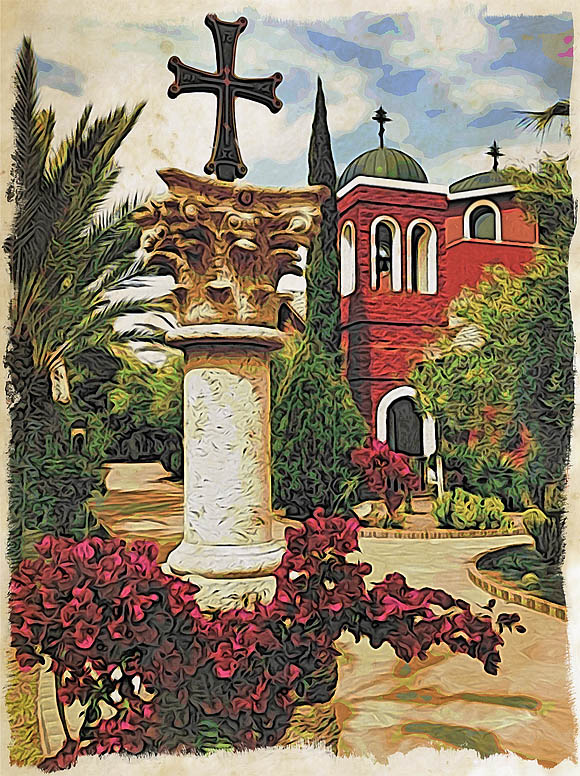
St. Anthony Orthodox Monastery, Arizona. Artwork by Ken Bosma ©©
Experience has shown that it is wrong to accuse and condemn someone without letting him defend himself. As also the sacred Gospel says: “Does our law judge a man before it hears him and knows what he is doing?” (Jn. 7:51 ). If we are not attentive, many sins of condemning others heap up within us, and then repentance is needed. How often a person repents because he spoke! Let us bear in mind the words of Abba Arsenios: “I have often repented for speaking, but I have never repented for keeping silent”. If we are often deceived by the sense of touch, how much more so we are by people’s words. Therefore, much attention is needed, for the devil prowls around roaring to devour us (cf. 1 Pet. 5:8 ). A Christian ought to be like the many-eyed Cherubim, for evil has multiplied greatly, especially the sin of condemnation, which is a common as “bread and cheese”. May God cleanse us and sanctify us for His glory. “Do not let the sun go down on the wrath of your brother” (cf. Eph. 4:26 ). That is, let no one be angry and enraged against his brother past the setting of the sun. have you heard about that brother who was negligent and lazy, who did not go to the all-night vigils and did not do his duties, whom the brethren knew to be a negligent monk? When he fell ill and the hour of his death drew near, the brethren gathered to hear something beneficial, or to comfort him, or in case he wanted to say something to them, but they saw him joyful, cheerful. One brother was scandalized and said, “What is this we see in you, brother? We see that you are joyful even though you are approaching death. But we have the thought that you were not a violent* monk, so how do you have such courage and a cheerful face? How do you justify yourself?” “Yes, brethren”, he said, “indeed I was a negligent person and I did not fulfill my duties. But I achieved one good thing, by the grace of God: not to condemn any brother and not to scandalize anyone; and never did I let my heart have something against any brother of the monastery when the sun set. And inasmuch as I did not judge any brother, I believe that God will not judge me either, for He said, “Judge not, that you be not judged” (Mt. 7:1 ) and since I did not judge, I will not be judged”. The brethren marveled and said, “Brother, you found the way of salvation very easily”. And the brother died with much joy. Do you see how the Fathers struggled and how they found the way of salvation?
*A “violent” or “forceful” monk or person is one who strives vigorously to “do violence to his nature constantly” (Ladder 1:4 ), for “the kingdom of heaven suffers violence, and the violent take it by force” (Mt. 11:12 ).
Source: http://easternorthodoxspirituality.blogspot.gr/
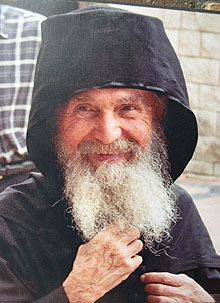
Elder Ephraim of Arizona
The Divine Liturgy, what a splendor indeed! Man has been honored by God in such a way that He Himself comes down to earth with His Angelic Orders every time there is a Liturgy, in order to nurture man with His Most Holy Body and His Most Precious Blood! For He has given us everything. Is there anything physical or spiritual, perishable or everlasting, that has not been offered to us? None! Is there anything superior to His Most Holy Body and Blood, which is given to us on a daily basis? There is certainly not. God has enabled man, who is full of soil and dirt, to serve the Divine Liturgy. So priceless is the Divine Love that just a tiny drop exceeds any earthly, physical and secular love.
Adam and Eve’s sin was the starting point of all the distressing events that have occurred to this day and of those that will occur until the end of time. Disobedience, like a sperm inside Eve’s womb, gave birth to and transmitted physical and spiritual death to all of humanity. Poor Eve, could there have been a way for her to see that “the split second” taste of the fruit would cause such turmoil, thus compelling the Holy Trinity to have a “co-entreaty” so that the one Person of the Life-Giving Trinity would be sent to the world and endure, by the works of His hands, the blows, insults, whipping, spitting as well as all kinds of obscenity and ultimately be hung on the Cross as a curse! “Cursed is everyone that hangeth on a tree” (Gal. 3:13).
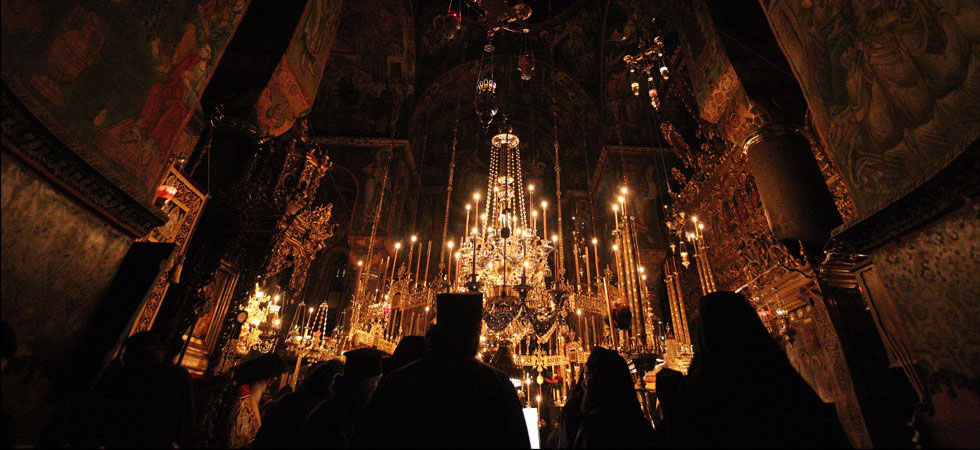 The sweet redemption of our Jesus, the light of our troubled souls, His Passion and Life-Giving Resurrection, are re-enacted in every Divine Liturgy through which every sinful soul is delivered. Great indeed is Jesus’ love for us! For He took on our human nature and was hung on the Cross, giving us freedom and thus wiping clean all our debts towards our Heavenly Father. And as our beloved Brother He makes us worthy of His co-inheritance which consists of the infinite riches of His Heavenly Father. And if during the time when the Law, which existed before Christ, had overshadowed things, and the blood of oxen and goats as well as a calf’s embers purified those who had partaken of them, how much more will Christ’s Most Holy Blood, which is partaken from the Holy Altar of the Holy Churches of God, cleanse us from sin and warm up our souls in order to receive the divine love of our most sweet Jesus. The Lamb which was slaughtered for our personal salvation will rinse us with His Most Precious Blood from the filth of our sins and give us eternal rest.
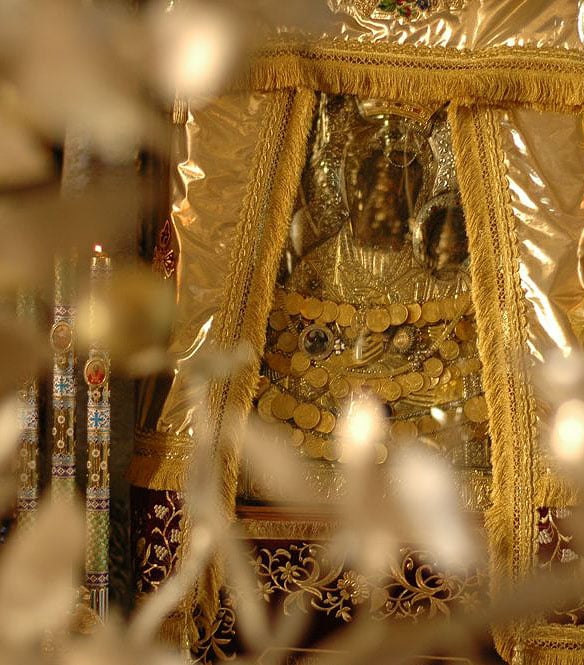
In any case, we owe it to ourselves to become partakers of this heavenly banquet which offers us this most wonderful Mystery of the Holy Altar. Once inside the church, we should stand in fear and devoutness, since our Lord Jesus Christ and His holy angels are present. Those who are attentive and devout are filled with grace and blessings; however, those who are inattentive are condemned, being unworthy.
On the one hand, the Angels serve the Divine Liturgy, and on the other, the faithful come to church in order to partake of the Body and Blood of Christ – “Receive the Body of Christ and taste the Fountain of Immortality” – so that they will live in Christ and not perish in sin. Thus, “let a man examine himself, and so let him eat of that Bread and drink of that Cup, for he that eateth and drinketh unworthily eateth and drinketh damnation to himself” (1 Cor. 11:28-29). For instance, when someone wants to appear before a king, it takes him days to get ready, in terms of general preparation, cleanliness, speech, manner, ethos, etc., so that he would succeed in drawing the king’s compassion and, in this way, have his desirable request granted. Even though there is no comparison as far as the two different kings are concerned, each believer should prior to Holy Communion prepare oneself in order to obtain divine mercy and forgiveness. Those who appear before a secular king are, most of the time, adorned by iniquity, flattery, pretence as well as deceit, in order to obtain that which is desired; nevertheless, the Christian believer who appears before the King of kings who in turn keeps an eye on the inner person must be adorned by holiness, humility and the sheer ethos of the soul that is more precious than lost gold.
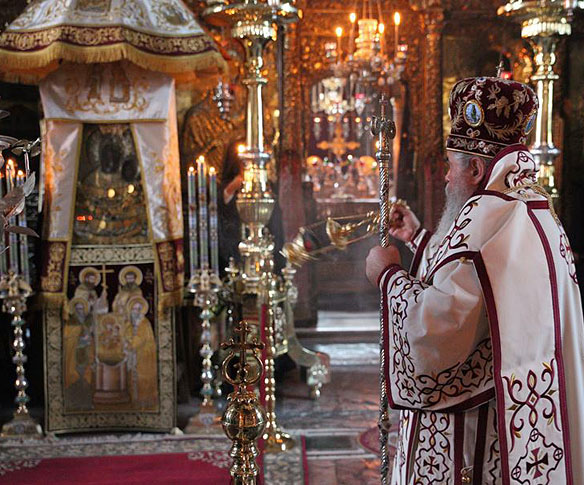
The Lord created His Church on earth as a Bride, so that She would intercede for His children. He left us the Great Mystery of the Holy Eucharist, in order to be cleansed, become holy and thus become one with God. He has invited us all; some in their childhood, others in their middle as well as old age. As He is Good, He took hold of us like a hen gathers her chicks under her wings, in order to make us partakers of His divine Kingdom. Nothing repelled Him – no ulcer, no wound, no illness, not even the deformity of spiritual phenomena which may characterize our soul. As a father He accepted us, as a mother He breast-fed us, and as an unmercenery doctor He took care of us and clothed us in the garment of adoption, with grace ignoring the heavy debt of our trespasses. We thus owe Him infinite love and worship. Love should remain in the heart like a life-giving source, gushing forth springs of communion wine and streams of divine eros.
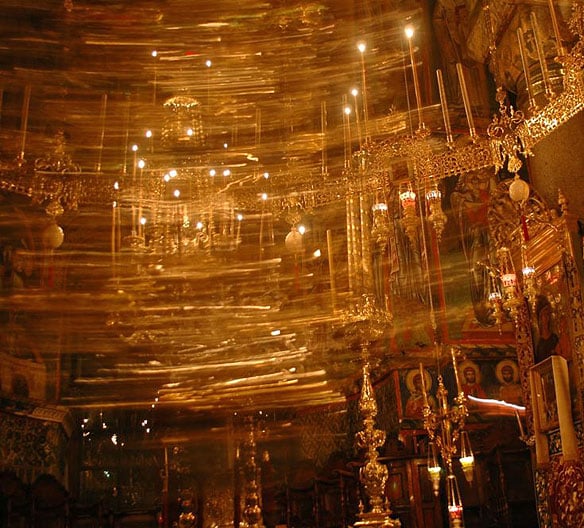
We should be partakers of the Sacrifice of the Slaughtered Lamb as often as we can, and as long as we are free to do so, since Holy Communion is a great aid for the believer which in turn helps him to fight sin. Also, we should approach this divine Mystery in a spirit of compunction, crushed hearts, and a good sense of our sins. Great is the mercy of God Who condescends to enter into us; not abhorring the multitude of our sins. Nonetheless, due to His infinite love and affection, we are sanctified, and in this way we are made worthy to become His children and co-heirs of His Kingdom. Hence, let us prepare with a pure conscience aiming at the fortification of our senses, and in chastity let us enter along with the Holy Apostles to the Mystical Supper and partake of our sweet Jesus so that He should dwell with us unto the infinite ages of ages.
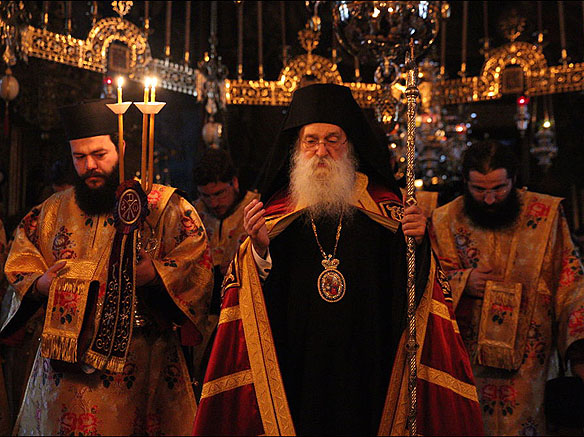
Unworthy as I am, I serve my Lord. A ministry rendered that is holy and mighty. Everyday I offer God a well-pleasing sacrifice, the Lamb of God, Immaculate to His Immaculate Father and God, in order that He might be merciful for the things with which we sadden the most good God. He whom we cause grief and Who sacrificed His only begotten Son. My God, Your most beloved Son for our sake! And who are we to deserve this ultimate sacrifice! “For being enemies, we were reconciled to God by the death of His Son” (Rom. 5:10). [...]
The most unworthy of all,
+ Father Ephraim
Source: Experiences During the Divine Liturgy, Piraeus, Greece 2008
http://pemptousia.com/2014/11/the-divine-liturgy/
 This confession of yours gave my soul much joy, because God and the angels, who were awaiting it, rejoiced. You succeeded in putting the devil to shame, who greatly rejoices when someone hides his thoughts from his spiritual father. When a snake leaves its lair, it rushes to hide somewhere because it feels as if it will be struck – the same thing happens with a diabolical thought, which is like a poisonous snake. When such a thought leaves a person’s mouth, it disperses and disappears, because confession is humility, and since Satan cannot even bear the smell of humility, how could he possibly remain after a humble, sincere confession? My child, I wish you a good beginning and cautious progress.
Don’t be ashamed before me. Don’t see me as a man, but as a representative of God. Tell me everything, even if you have a bad thought about me, because I am experienced with demonic influences, and I know how the devil fights man. I know that spiritual children have simple hearts and that if evil thoughts come to them, it is due to the devil’s malice and the spiritual child’s ego, who is permitted to fall and have such thoughts against his Elder, so that the spiritual child may be humbled more. Therefore, don’t worry. I will always rejoice when you speak freely and sincerely to me, for without frank confession, there will be no spiritual progress.
This confession of yours gave my soul much joy, because God and the angels, who were awaiting it, rejoiced. You succeeded in putting the devil to shame, who greatly rejoices when someone hides his thoughts from his spiritual father. When a snake leaves its lair, it rushes to hide somewhere because it feels as if it will be struck – the same thing happens with a diabolical thought, which is like a poisonous snake. When such a thought leaves a person’s mouth, it disperses and disappears, because confession is humility, and since Satan cannot even bear the smell of humility, how could he possibly remain after a humble, sincere confession? My child, I wish you a good beginning and cautious progress.
Don’t be ashamed before me. Don’t see me as a man, but as a representative of God. Tell me everything, even if you have a bad thought about me, because I am experienced with demonic influences, and I know how the devil fights man. I know that spiritual children have simple hearts and that if evil thoughts come to them, it is due to the devil’s malice and the spiritual child’s ego, who is permitted to fall and have such thoughts against his Elder, so that the spiritual child may be humbled more. Therefore, don’t worry. I will always rejoice when you speak freely and sincerely to me, for without frank confession, there will be no spiritual progress.
My child, have no worries. I have taken up your burden. I only beg you to be at peace. Your words may be just on paper, but I feel the power, the meaning, and the essence of what you write; I enter into the spirit of your words. I entreat you to be at peace from now on. You are forgiven everything with the confession you made. Satan perceived your character and torments you, but without anything serious having occurred. Everything you write (that is, the thoughts that torture you) is a trick of the evil one to make you despair, be distressed, and so forth.
Throw everything that happened to you into the depths of the sea. Map out a new course in your life. If you keep thinking the same way, know that you will become the laughing-stock of the demons. I beg you, just be obedient to me. After your confession, everything has been forgiven, so let bygones be bygones. Don’t scratch a wound that made you suffer so much. Don’t be deceived by the thought that it is your fault. If you hadn’t taken him to the doctors, etc., then such thoughts would rightfully fight you. Whereas, as things are now, you have fulfilled your duty. God wanted to take him, for a reason that only His infinite wisdom knows, while you are thinking you killed him! Be careful with this thought, or else it might lurk in your heart. It is a ruse of the devil to harm you, as he knows how. This skilled trickster has drowned in the depths of hell countless multitudes with despair. When something happens and the devil sees that a person is upset by it, his trick is to pile on a multitude of supposedly legitimate thoughts in order to lead the poor person to a great storm and drown him. (As the saying goes, a fox loves a scuffle). And when the storm passes, he sees that he was in danger of drowning in just a spoonful of water.
Humble yourself, and from now on confess, for confession contains most holy humility, without which no one is saved. The devil greatly rejoices when he manages to persuade a person to hide diabolical thoughts. This is because he will achieve his premeditated, soul-destroying goal.
I have written to you about the conscience, that we must be careful not to do something that will make it reproach and condemn us. Bear in mind that God sees everything and that nothing is hidden from His eyes. So how could I tell lies before God? Don’t you know that lies are from the devil, and that by not being careful, it becomes a practice, then a habit, and then a passion, and don’t you know that liars will not inherit the Kingdom of God? (cf. Rev. 21:8). Fear God. God is not pleased with material offerings when we neglect attending to our inner heart. But it is necessary to do these also without leaving the others undone. (cf. Mt 23:23). Attend to your conscience, for we do not know the hour of our death. And if we do not repay our creditor (our conscience, that is) everything we owe him, he will accuse us vehemently, without holding back. Then – alas! – our mouth will be silenced, not having any answer to give.
Every night, review how you passed the day, and in the morning review how the night passed, so that you know how your soul’s accounts are doing. If you see a loss, try to regain it through caution and forcefulness. If you see a profit, glorify God, your invisible helper. Do not let your conscience prick you for long, but quickly give it whatever it wants, lest it take you to the judge and the prison (cf. Mt. 5:25). Does your conscience want you to attend to your prayer rule* and regain prayer? Give it these things, and behold, you are delivered from going to the judge. Do not weaken the saving voice of your conscience by disregarding it, because later you will regret it to no avail.
Glossary:
* Prayer rule (κανών ) Α prayer rule consists of the prayers and metanoias** (prostrations) which one does daily, under the guidance of one’s spiritual father.
** Metanoia (μετάνοια) Ιn its primary sense, «μετάνοια» (pronounced ‘meh-tah-nee-ah’) means repentance, literally, ‘a change of mind’. However, it can also mean the specific act of making the sign of the cross, followed by a bow either down to the ground or to the waist. It is a gesture of reverence, worship, respect, or repentance. A typical prayer rule includes a number of metanoias done while saying the Jesus prayer. Some translators use the word “prostration” for this term.
See to it that you are sincere in your deeds as well as in your words, and especially in confession. For God searches out the hearts and reins (Ps. 7:9), and nothing remains obscure in the sight of His sleepless eye. Fear God; God is not mocked (Gal. 6:7); He is not fooled. He chastises severely when He does not see sincerity; so be careful. When you are disobedient and commit a secret sin, counteract it by openly revealing it in confession. Do not let your ego overcome you and make you hide the truth and remain uncorrected and passionate. Correct everything now if you want to see good days of dispassion*** and peace.
*** Dispassion (απάθεια) Dispassion is achieved when all three aspects of the soul (i.e., the intelligent, appetitive, and incensive aspects ) are directed towards God. It is the transfiguration of the passionate aspect of the soul (i.e., the aspect of the soul which is more vulnerable to passion, namely, the appetitive and incensive aspects ), rather than its mortification. Thus dispassion in this context does not signify a stoic indifference, but rather, a transfiguration and sanctification of the powers of the soul and eventually of the body also.
Source: easternorthodoxspirituality.blogspot.gr
http://pemptousia.com/

The following conversation was recorded by monastic spiritual children from Greece of Elder Ephraim of Arizona, formerly of Philotheou, who visited him in May 2014 at the Sacred Monastery of Saint Anthony the Great in Arizona. Elder Ephraim: Look at this photograph of Elder Joseph the Hesychast. I had a great spiritual father. He was fire – fire, a phenomenon of a man. He thought entirely of heavenly things; this is how he lived.
Two words he would continuously say to us – patience and prayer, and this is how the Providence of God helps us as much as He allows. Being in submission to him, we never fought amongst us. Others from the outside created problems for us, slandering the Elder, accusing him, but Elder Joseph would say: “Let them talk, we will say nothing”.
Interlocutor: Elder, we are very weak in all things. What will happen with us?
Elder Ephraim: We are living in different times now. God has other criteria for today. Elder Joseph had a spiritual university. I am pleased that you are in spiritual high school. Today there is such spiritual confusion. A large tornado drags everything away. Hold firmly to the tradition I gave you and know that today it is a confession to say that Jesus Christ is our God. The dark forces do not want this.
Interlocutor: Elder, after so many years of struggle, what has remained within your soul?
Elder Ephraim: Everything is secondary, all is secondary. The first thing is the name of our Christ and now, over the years that have passed, I saw in action how only with love can people win. My life was labor and pain, living in poverty during the time of the Germans, hunger during the occupation, temptations and sorrows in the monasteries. A great struggle. Only the name of Christ and our Panagia brought me through. Whoever does not say daily the name of Christ and our Panagia, is not a Christian.
Interlocutor: In other words, the prayer of Christ is the greatest?
Elder Ephraim: Of course, because then we continuously have the memory of our Christ. The Holy Fathers were illumined and left us these little prayers. A few words: “Lord Jesus Christ, have mercy on us” and “Most Holy Theotokos, save us”. We don’t need to read encyclopedias, nor many books. With these two little prayers, all Christians are saved. Monastics who do not have worldly concerns, pray much and achieve heights. Our Panagia also helps much. It is like they are speaking into the ears of our Christ, because they are dedicated to the prayer and this is their primary work, and whoever has the gift of prayer in their heart, when they die they are not bothered by the toll-houses. Immediately after their death they go straight to Christ. There are no hindrances, because the name of Christ has power. God is fire.
Interlocutor: And the Akathist to our Theotokos, is it a powerful prayer?
Elder Ephraim: Of course. When we say them we have joy and illumination from our Panagia. Our Panagia helps me very much. She delivers me from many dead ends.
Interlocutor: Today we suffer from despair and impatience.
Elder Ephraim: Despair is always from the devil and whoever despairs loses their strength. The basis of life is patience. When we don’t have it our life dissolves.
Interlocutor: Elder, the world, we, are in a difficult position with all that is taking place and all that we hear about. There is fear.
Elder Ephraim: Yes, we feel things will be catastrophic and they happen daily. This is why we run to the monasteries and churches, but we must not fear. Just think, if one order of angels became demons and did so much damage, how much help do we receive from the nine orders of angels. One time I saw Christ on His throne and next to Him was our Panagia and the orders of angels and the saints. They waited for a nod from our Christ to help humanity in this new situation. When we fill our hearts daily with Christ our faith strengthens and we face everything. Our Panagia pleads for us and intercedes constantly so that we will have strength and optimism.
Interlocutor: Elder, at the age you are at now, can you pray as you did at first, or is it different?
Elder Ephraim: I pray better now than I did at first. Of course I do not have the intensity of the prayer of Elder Joseph the Hesychast, but I have strong prayer and this comforts my little soul in all that I have gone through and go through.
Interlocutor: Many times holy relics are fragrant.
Elder Ephraim: It’s like they are saying we are relatives.
Interlocutor: Cancer is widespread today.
Elder Ephraim: Cancer patients are martyrs. I try to strengthen them by my prayer, my advice, and when I can I visit them.
Interlocutor: Many people are going through difficult trials, either due to the malice of others or their own misdeeds. It is so difficult, it’s as if they are living in hell here.
Elder Ephraim: When people live hell here and give value to this situation with spiritual criteria, then when they die they will not be judged at all, but they will immediately go into the arms of Christ. But if they do not give it value with spiritual criteria, this hell will also be suffered in the next life.
I wanted to say something to you about Paradise. Before I became eighty years old, I would often go to Paradise. And now also of course, but age plays a role. One time the Lord took me by the hand and said to me: “Here you made a church, here you confessed and saved a soul, here you comforted, here you admonished….” In other words, He would say to me everything and with this He gave me joy, together with His word, so much joy that I said: “My sweet Christ, I cannot take anymore. I cannot take anymore. I will explode. Return me.” Then I would be in my room again.
Another time in Paradise, I saw a wonderful young man of chivalry (leventi). Next to him was a horse with a spiral tail, most beautiful. Within me I was jealous for it. I also wanted to have such a horse. He yelled at me and said to me, in the tone of a commander: “Go and tell the army, that the back is unprotected and the rebels will go there [the demons, that is].” So I ran and told them. I returned running to say I did it. He hugged me, kissed me, and mounting his horse with a smile he left.
Interlocutor: In other words Elder, many things take place from behind that we do not catch?
Elder Ephraim: Of course. This is why we must be careful from everywhere. Great caution. We will go through a fearsome trial.
Interlocutor: What is hell like?
Elder Ephraim: What’s it like? Horror, horror. May even a bird never go there. Just as people drown at sea, so also they drown in the torments of hell, accompanied by demons. We must pray for the dead. It is a great act of mercy. My mother was a virtuous woman. I based my childhood on her words. Before she died she was bedridden for two years and would say: “Father, tell God to take me. I am tired.” But before she departed she battled.
Interlocutor: Who did she battle with?
Elder Ephraim: Demons.
Interlocutor: Did you see them?
Elder Ephraim: Yes, like I see people.
Interlocutor: Didn’t the Archangel help her?
Elder Ephraim: He was behind her. He stood back so she could battle alone and receive a crown.
Interlocutor: We hear of so many disasters coming, what will happen with us who seek the help of God?
Elder Ephraim: God will do according to His plan for each person to save each person. My! My! What we will go through! Great difficulties. Athens has many hidden saints, but Mount Athos together with Saint Demetrios support Northern Greece. I have a special love for Saint Demetrios. I sleep with his Holy Myrrh. Greece has turned its back on Christ. This is why it will suffer much. The children in Greece are either very illumined or very darkened. The children of virtuous parents are the leaven of Christ and the future of Greece.
Interlocutor: Many women suffer in families today.
Elder Ephraim: Christ is very close to the souls that are scorned.
Interlocutor: Some people have a special spiritual gift. How does this happen?
Elder Ephraim: These people have either been very wronged, slandered or reached such a depth in this field that they were given gifts. As we entone God, so also does He chant for us.
Interlocutor: Lately in Jerusalem wondrous things have happened.
Elder Ephraim: I also wanted to see these things. The basis of our Christ is there. The Holy Light is daily in the Most Holy Tomb, but at Pascha a gift is given generally to all. You should go to Jerusalem. There we see what Christ endured for us, and we thank Him as much as we can and respond to His love. I also went a few times in the olden days.
Interlocutor: Sometimes misunderstandings take place between us.
Elder Ephraim: These are human. They will never go away. We must go beyond them and run towards Christ. We must think about what Christ has prepared for us, in the good good Paradise, after the Second Coming. Now we go to the narthex of Paradise, but it cannot enter the mind of man what the good good Paradise is like. All light! All fragrance! Joy unspeakable! Blessedness! Nothing will grow old! Christ wants everything new in His Kingdom. Nothing odd. My mother died at 95 years old and I see her in Paradise at thirty years old.
During the occupation we had a neighbor that was absent minded. There were two children. We played and they still were walking towards us, even though we embarked together at the same time. I found them in Paradise, because they died during the occupation due to hunger while they were still young. I said to them: “What do you do here? How do you spend your time?” They told me: “Ephraim, here we do not speak. Here we only read, we study.” They did not know how to write their name and in Paradise they studied. This shows the perfection of Paradise.
Interlocutor: Many people help the monasteries with their needs.
Elder Ephraim: Whatever they do, all is written in heaven. May they have peace and health and blessings on their homes.
Interlocutor: In church there were people from all over the world. How beautiful Elder your work is, like the Holy Apostles. “Teach all nations”.
Elder Ephraim: I am a hollow walnut. I did nothing.
Interlocutor: What do you think about now at your age?
Elder Ephraim: I think about cementing my work here, because many people have been saved, many little souls. And how can I go and meet with the Lord? Where will I, the wretch, go?
Interlocutor: The Lord will send His angels to take you.
Elder Ephraim: I don’t know about that, how the Lord will judge. My little head fit the entire universe. Now my health won’t help me, I am old.
Interlocutor: Elder, Mr. P… died on the day of a great saint.
Elder Ephraim: He opened for him the doors of Paradise so he will enter. When someone dies and their little soul is saved, the saint that celebrates on that day receives him in Paradise, because it is their day, their feast that is.
Interlocutor: Many people die suddenly.
Elder Ephraim: Yes. Every day we must have our passports in our hand. We don’t know what can happen. Once I confessed someone in a hospital with nods then they died. He did something good in his life and was saved at the last moment. In my life I went through many hardships and I saw that Divine Providence directs everything for the good of man. May the memory of death never be absent from us. Read the Gerontikon, the dialogue between Saint Macarius with the skull.
Once in a vision I saw myself dressed very beautifully. With vestments, like on feasts, and I was up on a platform and girls were below me whom I had confessed, and they yelled: “Elder, Elder, we also want to be there with you”, but they were not allowed. This shows my responsibility and the grace of the priesthood. This is why you should pray for me. Have order and carefulness. Struggle every day, as much as you can. Our Christ loves the order of monastics, because they are His army.
Interlocutor: Elder, when you go to Paradise and have this communication with the Lord, will you also speak about us your monks and nuns and for the people who want your help.
Elder Ephraim: Of course I speak with Him.
Interlocutor: How does He respond?
Elder Ephraim: O.K. I will take care of it. O.K.
Interlocutor: Elder, if you die and we happen to be alive, do not forget us when you are having a good time with our Christ and we are here battling.
Elder Ephraim: (laughing) No, that will not happen.
Interlocutor: We are leaving tomorrow Elder. Tell us a final word.
Elder Ephraim: May you have a good and blessed journey. May you have my blessing. May you have health and come to us. Everyone knows what they have on their shoulders, but the Testament I leave you is to come to know the Holy Spirit. Work and build Him within you, keeping the commandments of the Gospel and having peace in your soul. Have love, concord and shout the name of Christ and our Panagia. May the angels accompany you.
How do they call those who are marrying illegally here?
Interlocutor: Do you mean homosexuals?
Elder Ephraim: Yes them. The Old Testament says: “My spirit will not remain with man because they are flesh.” This applies today. Sodom burned just like a nuclear bomb. Christ does not tolerate such sins. Everywhere the sins of the flesh are worshipped. There is no repentance. The Venerable Mary of Egypt repented. All homosexuals will be eliminated. Everything will become dirt, nuclear, all dirt. The war will begin because of our sins.
“Everything will pass and will end as if had never existed, whereas works done in God will remain with the soul that worked them so that the worker may reap eternal life from them. Blessed are the spiritual philosophers of God, who give away transient things and store up eternal things, so that when they depart, they will find their treasures in God’s treasury with accrued interest. Blessed are they who clean their hearts from the weeds of sin and cultivate the good seed, for the time will come for them to reap sheaves of eternal life! Blessed are they who sow tears with spiritual fasting, that is, always hungering and thirsting for good works, for they will reap eternal joy!”
Elder Ephraim of Arizona
How fearsome it is to feel that God is inside and outside of you, like the presence of a real spirit that looks you straight in the eyes and sees everything even down to your bone marrow, and observes you with the finest detail, without you realizing it! What a fearsome truth! And simultaneously, what faith and security it gives to the poor faithful to be escorted and protected by such a tremendous presence and guard!!!
Elder Ephraim of Arizona
When one keeps silent, he is given time and freedom for prayer and concentration, but when he passes his hours carelessly, he does not have time to pray.
Furthermore, through his careless speech he accumulates various sins. For this reason the Holy Fathers placed the virtue of silence at the summit of the virtues, for without it no virtue is able to remain in the soul of man.
Elder Ephraim of Arizona
For man is pressed by both consciences; the one works to save him and the other to destroy him, and many times he does not know which one to listen to. He who is under obedience avoids this danger and little by little becomes experienced and skilled in discerning the evil conscience from the good conscience.
Elder Ephraim of Arizona
My children, whatever grievous thing the devil, the enemy of our souls,reminds you of, make an effort to drive it away immediately without delay,for every delay brings about unfavorable consequences.
The devil is completely vanquished with prayer and vigilance. The essence of watchfulness consists of being sleeplessly vigilant with the nous, pitting it against the passionate thoughts and fantasies of the vile demons.
On this depends life or death, degradation or improvement. In other words, a soul that prays noetically and loathes and scorns the various evil thoughts is purified and sanctified with time.
Elder Ephraim of the Holy Mountain
Do not lose courage in the struggle, our Christ is invisibly standing by, observing the struggle of each one of us.
Therefore, struggle patiently, call out the name of our Jesus, so that it may be implanted within your hearts and so that you may become rich in the grace of God.
Struggle to acquire a pure intellect, so that you may feel the grace of the Holy Resurrection.
Counsels from the Holy Mountain
Elder Ephraim of Arizona
Let
us now strive more, my children, and the benefits will be great. No one
finds Grace without toil. If the farmer does not farm his field, he
will not see the results. When our fasting coexists, is strengthened and
is encompassed with prayer, with contemplation, with watchfulness, with
church attendance, with Confession, with Holy Communion, with good
works and charity giving, then is fulfilled the beauty of the souls
preparation for the reception of Holy Week. Then we will feel the Holy
and Honorable Passion of Christ more profoundly, because our hearts will
soften, and they will alter and recognize how boundless the love of God
is for man. Then the Holy Resurrection will be alive within us with
great strength, we will feast in a divinely-fitting manner and celebrate
together with the angels the Holy Pascha. Amen.
The Splendor of the Divine Liturgy, by Elder Ephraim of Arizona
The Divine Liturgy, what a splendor indeed! Man has been honored by God in such a way that He Himself comes down to earth with His Angelic Orders every time there is a Liturgy, in order to nurture man with His Most Holy Body and His Most Precious Blood! For He has given us everything. Is there anything physical or spiritual, perishable or everlasting, that has not been offered to us? None! Is there anything superior to His Most Holy Body and Blood, which is given to us on a daily basis? There is certainly not. God has enabled man, who is full of soil and dirt, to serve the Divine Liturgy. So priceless is the Divine Love that just a tiny drop exceeds any earthly, physical and secular love.
Adam and Eve's sin was the starting point of all the distressing events that have occurred to this day and of those that will occur until the end of time. Disobedience, like a sperm inside Eve's womb, gave birth to and transmitted physical and spiritual death to all of humanity. Poor Eve, could there have been a way for her to see that "the split second" taste of the fruit would cause such turmoil, thus compelling the Holy Trinity to have a "co-entreaty" so that the one Person of the Life-Giving Trinity would be sent to the world and endure, by the works of His hands, the blows, insults, whipping, spitting as well as all kinds of obscenity and ultimately be hung on the Cross as a curse! "Cursed is everyone that hangeth on a tree" (Gal. 3:13).
The sweet redemption of our Jesus, the light of our troubled souls, His Passion and Life-Giving Resurrection, are re-enacted in every Divine Liturgy through which every sinful soul is delivered. Great indeed is Jesus' love for us! For He took on our human nature and was hung on the Cross, giving us freedom and thus wiping clean all our debts towards our Heavenly Father. And as our beloved Brother He makes us worthy of His co-inheritance which consists of the infinite riches of His Heavenly Father. And if during the time when the Law, which existed before Christ, had overshadowed things, and the blood of oxen and goats as well as a calf's embers purified those who had partaken of them, how much more will Christ's Most Holy Blood, which is partaken from the Holy Altar of the Holy Churches of God, cleanse us from sin and warm up our souls in order to receive the divine love of our most sweet Jesus. The Lamb which was slaughtered for our personal salvation will rinse us with His Most Precious Blood from the filth of our sins and give us eternal rest.
In any case, we owe it to ourselves to become partakers of this heavenly banquet which offers us this most wonderful Mystery of the Holy Altar. Once inside the church, we should stand in fear and devoutness, since our Lord Jesus Christ and His holy angels are present. Those who are attentive and devout are filled with grace and blessings; however, those who are inattentive are condemned, being unworthy.
On the one hand, the Angels serve the Divine Liturgy, and on the other, the faithful come to church in order to partake of the Body and Blood of Christ - "Receive the Body of Christ and taste the Fountain of Immortality" - so that they will live in Christ and not perish in sin. Thus, "let a man examine himself, and so let him eat of that Bread and drink of that Cup, for he that eateth and drinketh unworthily eateth and drinketh damnation to himself" (1 Cor. 11:28-29). For instance, when someone wants to appear before a king, it takes him days to get ready, in terms of general preparation, cleanliness, speech, manner, ethos, etc., so that he would succeed in drawing the king's compassion and, in this way, have his desirable request granted. Even though there is no comparison as far as the two different kings are concerned, each believer should prior to Holy Communion prepare oneself in order to obtain divine mercy and forgiveness. Those who appear before a secular king are, most of the time, adorned by iniquity, flattery, pretence as well as deceit, in order to obtain that which is desired; nevertheless, the Christian believer who appears before the King of kings who in turn keeps an eye on the inner person must be adorned by holiness, humility and the sheer ethos of the soul that is more precious than lost gold.
The Lord created His Church on earth as a Bride, so that She would intercede for His children. He left us the Great Mystery of the Holy Eucharist, in order to be cleansed, become holy and thus become one with God. He has invited us all; some in their childhood, others in their middle as well as old age. As He is Good, He took hold of us like a hen gathers her chicks under her wings, in order to make us partakers of His divine Kingdom. Nothing repelled Him - no ulcer, no wound, no illness, not even the deformity of spiritual phenomena which may characterize our soul. As a father He accepted us, as a mother He breast-fed us, and as an unmercenery doctor He took care of us and clothed us in the garment of adoption, with grace ignoring the heavy debt of our trespasses. We thus owe Him infinite love and worship. Love should remain in the heart like a life-giving source, gushing forth springs of communion wine and streams of divine eros.
We should be partakers of the Sacrifice of the Slaughtered Lamb as often as we can, and as long as we are free to do so, since Holy Communion is a great aid for the believer which in turn helps him to fight sin. Also, we should approach this divine Mystery in a spirit of compunction, crushed hearts, and a good sense of our sins. Great is the mercy of God Who condescends to enter into us; not abhorring the multitude of our sins. Nonetheless, due to His infinite love and affection, we are sanctified, and in this way we are made worthy to become His children and co-heirs of His Kingdom. Hence, let us prepare with a pure conscience aiming at the fortification of our senses, and in chastity let us enter along with the Holy Apostles to the Mystical Supper and partake of our sweet Jesus so that He should dwell with us unto the infinite ages of ages.
Unworthy as I am, I serve my Lord. A ministry rendered that is holy and mighty. Everyday I offer God a well-pleasing sacrifice, the Lamb of God, Immaculate to His Immaculate Father and God, in order that He might be merciful for the things with which we sadden the most good God. He whom we cause grief and Who sacrificed His only begotten Son. My God, Your most beloved Son for our sake! And who are we to deserve this ultimate sacrifice! "For being enemies, we were reconciled to God by the death of His Son" (Rom. 5:10).
It is a fact that numerous interpretations of the Divine Liturgy which were mainly based on the illumination and grace of the Holy Spirit were handed down to us by the Church Fathers. What makes this current analysis of the Divine Liturgy of my spiritual child Father Stephanos Anagnastopoulos noteworthy and beneficial, is the fact that it is offered through the experiences and revelations of worthy Liturgists of the Most High, older and more recent ones.
I, as well as its author, wish that this book will lead us all to the genuine liturgical conscience and life in order to urge us in a spirited way, as grateful servants, to try to rest the heart of His feelings so that He will be comforted, according to the Psalter: "...and because of His servants shall He be comforted" (Psalm 134:14). May we sense that which God offered us and thus rejoice in the beauty of His eros. Amen.
The most unworthy of all
+ Father Ephraim

Everything begins from the mind and the imagination. There is no sin
or virtue that does not have its origin and beginning in the imagination of
the mind.
The first evil and sinful thought, primarily the ensuing sinful images
are the origin of all the various forms of sin. No sin takes place with actions
unless an evil thought is formed with the imagination beforehand.
In the beginning, sin approaches subtly like a sly fox. Cunningly and
quietly it assaults us and convinces us that it is nothing more than an ant,
and, consequently, it does not require attention. If the soul remains
indifferent, in following, this microscopic ant in no time turns into a
ferocious lion that cannot be tamed, and the soul is faced with a great
struggle.
First, submission to sin takes place internally, and in following it is
externalized through the body.
All the evil begins when a person gives in to his imagination and
allows sinful thoughts to prevail. When a person suffers many such
spiritual shipwrecks and is repeatedly wounded by sinful mental images,
every time the devil returns and presents similar images to the mind, man
is immediately taken captive. For this reason, it is necessary to remain
unyielding so that passions and fantasies do not take root within us and do
not become stronger.
When people reach the point of being enslaved to a passion, they
protest and state, "I cannot resist. I can't do anything during the time of
temptation." The answer is this: It is necessary to take the appropriate
measures before the mind and heart become disarmed and enslaved. We
must take the necessary precautions in order to avoid the danger; because
once we have been poisoned we are no longer able to take any action.
—by Elder Ephraim of Arizona—

We have arrived at Holy Week and the Passion of our Lord. His life-giving
Passion began at Bethany, from the village of Martha and Mary. This is where He
set out with the little donkey and His disciples in order to make His entrance into
Jerusalem. We witness Him Who sits upon a throne of glory simultaneously
sitting upon a throne of humility. This is what our Lord wanted to teach us by
mounting this humble animal: humility.
With His humility our Christ prompted everyone down here on the earth—
even the small children—to sing praises: “Hosanna to the Son of David! Blessed
is He who comes in the name of the Lord!” (Mt. 21:9). With His humble entrance
before the multitudes of people, He moved and shook up all of Jerusalem. “Who
is this person?” exclaimed everyone who was unaware [of what was taking
place]. All the people raced to cut branches from palm and bay trees in order to
lay them down before His path.
Yet, take a look at how the things of this world change so quickly. On
Sunday the crowds were crying out, “Hosanna to the son of David! Blessed is He
who comes,” as well as many other things; four-five days later, however, they
shouted, “Away with Him, away with Him! Crucify Him!” (Jn. 19:15). This is how
things are on the earth. Nothing is stable. One moment the world exalts a person
and the next moment it degrades him. Man is unstable; his works are unstable;
his thoughts are unstable; everything in his life is unstable.
The humility of our Christ is truly remarkable! It is awesome! We witness
the God-man humbly and unpretentiously seated upon a young donkey. His holy
example is such a beautiful lesson for us. As we proceed through the mostsacred week of His Passion, His supreme humility becomes even more
pronounced. We see Him enduring tortures, ridicule, and slaps. We watch Him
suffering the hardship of imprisonment, lifting the Cross, and eventually falling to
His knees from the weight of the Cross. Who can fathom that God on earth was
slapped by a human hand made of clay, by the hand of the creature whom He
fashioned with such beauty, perfection, and wisdom! This person whom He
[initially] created as “a god by grace” upon the earth afterward raised his hand
and hit God! If our child were to hit us, we would rise up and protest, “How you
dare hit me? Your mother, your father…?” But what is a mother or a father when
compared to God on the earth? They are just fellow human beings made of clay.
This is where the beauty of Christ lies: His humility! If He were not humble,
He would not be God. He is not a dictator; He is not a ruler; He is not haughty.
His glory is His humility.
—by Elder Ephraim of Arizona—