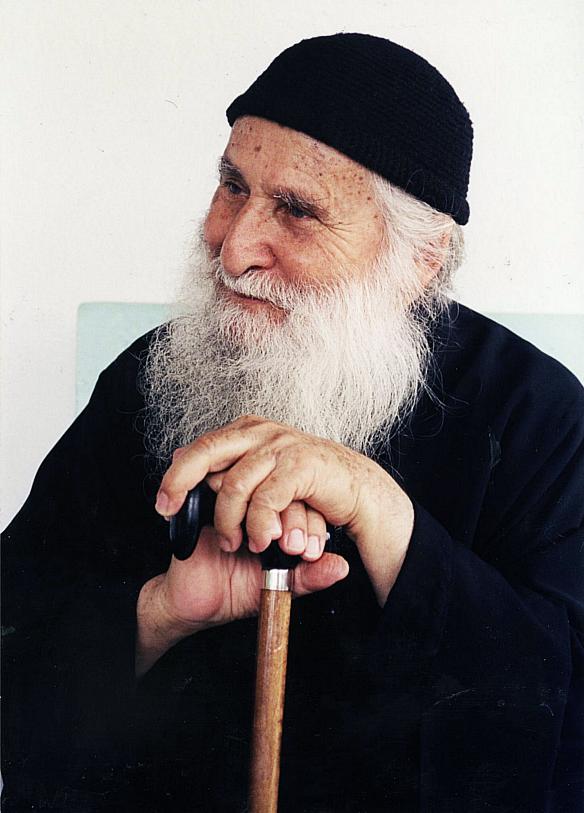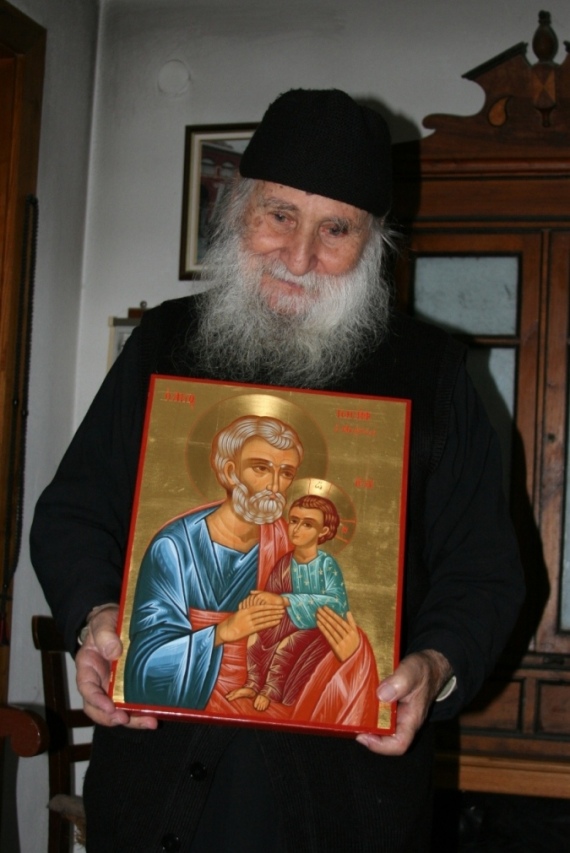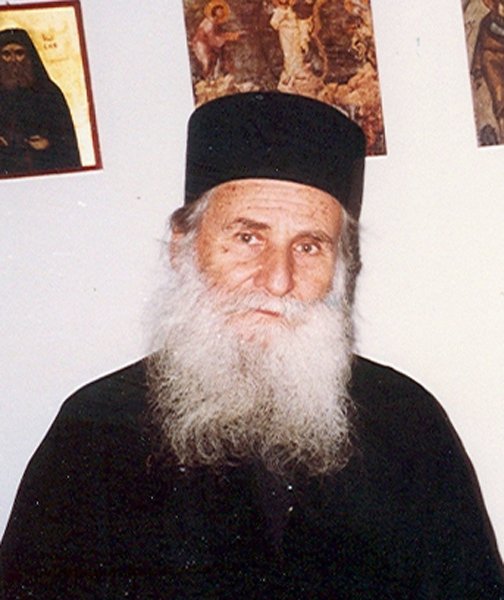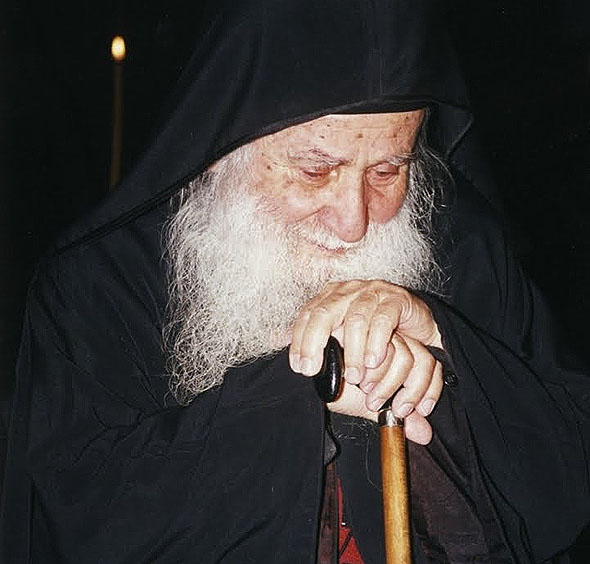
Showing posts with label Elder Joseph of Vatopaidi. Show all posts

Tuesday, December 2, 2014

On Humility and the Humble Outlook – 1 ( Elder Joseph of Vatopaidi )


Without question, the Scriptures as a whole, as well as Patristic philosophy, are ‘seasoned with salt’, as it were, garlanded with the good mother of the virtues, the humble outlook. This is particularly noticeable at the points related to the behavior and comportment of people living by the direct instructions to reach their destination and striving to put these into practice through repentance.

In another homily, we referred to obedience as a virtue. Now we’re obliged to describe humility as an attribute, the character and form of the soul and of the personality.

If duty is an inviolable rule of life for rational beings, how much superior to it must be the personal attributes, the form and the character? And if, again, humility were only a human skill and achievement, which adorns and perfects rational beings, without it also being divine, human boldness would be able to describe it. But from the moment that it was revealed to us that it reaches as far as the Incarnate Word of God Himself, humility became something beyond that which human thought can conceive, and which can be understood only with admiration and astonishment. He Himself says: ‘Learn from my example, for I am meek and humble in heart’.

In order to confirm what I’m saying, let me quote a description of the humble outlook from one of the greatest luminaries, a real philosopher of grace and of the Holy Spirit, Saint Isaac the Syrian, who continued the authenticity of the Fathers. It’s from his 20th discourse, from the 1770 Leipzig edition: ‘I would like to open my mouth, brethren and speak about the important matter of humility, and am filled with fear, just like someone who knows he’s going to speak about God with his own, human way of thinking. Because it’s the raiment of divinity. The Word incarnate wore it and spoke to us about it’.

As regards the nature of this great virtue, suffice it to leave the Patristic term as it is, which is that it is divine and the garment of divinity in its spiritual completion and, therefore, a gift of the Most Holy Spirit. Let’s confine ourselves instead to its attributes and energies and, even more so, to how it’s acquired and what it consists of, again with fear and on the basis of the judgment of our Fathers.

Since, in our terminology, we call it character and person in rational nature, it’s apposite to mention, broadly speaking, how it acquires these terms. So that, from the outset, it’s credible and desirable for people, since everybody has the right to acquire their real personality through it.

In the first place, the humble outlook should be placed within the context of moral law. But beyond the moral law, we should also look for the more general reason which makes it imperative, because it’s here we see that it’s endorsed by the new creation, the Word of God incarnate, and that He assigns it, not to doing one’s duty, but to the place of personality, private life and character.

It may be that the Apostles wished to learn what Jesus was like in the most profound depths of His being, in His Godly, inner world, but that they didn’t dare to inquire, though they asked so many other questions which He answered freely at the right time. This is why, on His own initiative, He told them these astonishing words: ‘Learn from my example, because I am meek and humble in heart and your souls will find rest’ (Matth. 11, 29).
The all-powerful God the Word, by Whom ‘all things were created, in heaven and on earth, visible and invisible, all things were created through him and for him’ (Col. 1, 16), is the centre of all personality and, through His grace, all personalities find their place.

The ‘humility of heart’ of the Word of God is characterized as a position of certainty and stillness. Since our Lord is the centre of every personality, it’s right and proper that He be called ‘humble in heart’, because the whole of the authority of His dominion is manifested in this position of stillness and certainty. It’s not our purpose here to go into theological terms regarding the Godly attributes, but to extol the particular significance of His humility, as well as that of all His followers in all ages and in every period of the divine revelation.

***

Humility penetrates and is penetrated, it doesn’t fear, doesn’t question, doesn’t seek and therefore doesn’t move. As truth in Himself, life in Himself and all-loving, Jesus also, rightly, has humility as the universal position of His personality. This is precisely what is transferred to those who follow Him and participate in it. It is demonstrated by this that humility is not merely a branch of moral law, which inverts the corresponding evil, as is the case with other virtues, but is an ontological feature of the integrity of people who by the nature of their existence are characterized as being self-contained, decisive and active in the certainty of their immobility.

At the other end of the spectrum are the characteristics of the absence of humility: uncertainty, fear, suspicion, need and- later- the undesirable mobilization of all kinds of lies and deception for salvation and safety.

A living image of this condition is the devil who suffers and activates all these negative positions of the perversion of the personality, and others like them. The outlook which is not humble, what we call egotism and pride, remains bogged down by itself in the mire of selfishness and individualism. It’s constrained by the suffocating framework of being a single unit, and, under pressure from the impersonal selfishness of individualism, diminishes constantly but increases in cowardice, uncertainty and isolation, until it bursts out in a variety of undesirably cunning attempts at self-justification. The constraints of nihilism do away with the notion of the absolute, of truth, of eternity, of the breadth of the union of all. Nihilists don’t recognize anyone other than their own sick selves. Nihilists evolve into anarchists, who don’t recognize any authority or divine or human dependence. They end up as atheists, which is the greatest of all the preceding woes, in essence becoming diabolical and utterly destroyed.

If you look carefully at his characteristics, what else is the devil? An individualist, a great individualist. He doesn’t welcome anything into himself except himself. Nor does he recognize any other principle, dominion or power. Always and everywhere he’s alone and, necessarily, a total nihilist, since nothing can get close to him. He went into self-exile, was expelled from everywhere and sits in the nothingness of his nihilism. This is why he fell. ‘I saw Satan fall like lightning from the sky’. This is why he was condemned: ‘the ruler of this world is condemned’ (Jn.16, 11). This is why he was expelled: ‘now will the ruler of this world be cast out’ (Jn. 12, 31). Outside every place and locus of life, the devil has a place only in the darkness of death, of perdition and of hell. He no longer has any place among other beings, because he expelled himself with his accursed individualism. This is why, since he himself is nothing, he tries to acquire significance and personality by treachery, lies and deceit and why he forms imaginary values that he pretends are his own, whereas, in fact, they don’t belong to him.

‘Wherever the basis of humility is missing, there’s no safety, because then the unity of all in Jesus, who is the peace of all and the resurrection, is also missing’.

This is the devil and this is the poverty of the egotism of his supporters, which forces them to pretend, to transform themselves, to act a part, because they want positions and honours of which they aren’t worthy, because, in essence, they’re destitute and poor because they’ve removed themselves from the body of others through their sick individualism. This misery is followed by all the other woes, culminating in hatred, envy and crime. The dark veil of death shrouds these unfortunates who’ve given themselves to the devil, these faded replicas of the murderer who sinned from the beginning and misleads, since he himself is a liar and the father of lies.

Elder Joseph of Vatopaidi


http://pemptousia.com/2014/07/on-humility-and-the-humble-outlook-1/

Saturday, October 4, 2014

On Humility and the Humble Outlook ( Elder Joseph of Vatopaidi )


With a variety of definitions, our Fathers lead us to humility, but the meaning is almost the same: the comprehensive labour of love that supports all the other virtues.

We shall now note some of the sayings of the Fathers which refer to the qualities and fruits of the humble outlook and the manner in which those who have it behave. This will give us more practical knowledge.

Anthony the Great, when he was once in an ecstatic state, saw all the land around him full of traps set by Satan. He sighed and asked God to tell him how anyone could avoid them and then heard a voice telling him: ‘only with humility’.


The same saint, when he was asked by Pimin (Poemen) the Great what the perfect work was for spiritual people, as regards virtue, answered that it is self-censure and living continuously in the expectation of temptation.

Abba Pimin [the word means ‘shepherd’ in Greek] said that those who condemn themselves obtain endurance and patience.

Abba Evagrios said that the beginning of spiritual progress for people is self-censure.

Another great ascetic, who had authority over demons, asked them what work or virtue of the saints vanquished them and they answered ‘being humble’.

Saint John the Short used to say that being humble and fearing God were above all the virtues.

Abba Longinos said that humble-minded people are incapable of judging others.

Saint John the Theban said that, above all, spiritual people have to achieve humility.

Abba Pimin, again, said that people need a humble outlook and fear of God the way they need air to breathe.

Abba Sisoïs, who was great among the Fathers, said that the route to a humble mind consists of restraint, constant prayer and a struggle to acquire the view that you’re inferior to all others.

Abbas Kronios said that the means that lead to humility are abandonment, as far as possible, of material things and whatever leads to fragmentation of the mind; bodily labour; and remembrance of death.

Another Elder said that those who have humility humiliate the demons. And again, he said that the soul acquires humility when it’s concerned only about its own woes and errors.

Another said that, just as the ground never falls down, neither do humble people, because they’re always so lowly.

When another was asked what humility was, he said, ‘If your brother sins against you and you forgive him before he asks’. He also said that people’s progress depended on the depth of their humility: the more profound their humility, the greater their progress.

Abbas Isaiah said that, with humility, all the achievements of the Evil One are destroyed.

Saint Synklitiki said that the beginning and end of all good things, that is the spiritual life, is the humble outlook.

The incontrovertible judgment of the Fathers regarding the practical manner in which to achieve this God-pleasing quality is- in their experience- bodily labour and self-knowledge, and these are things which are present in everyday life. In general, the narrow path of all-inclusive Christian morality leads to the fear of God and He then becomes a guide to that which constitutes ‘sentience in God’ and the great virtues, which are ‘not to think highly of yourself’, ‘to censure yourself’ and ‘to withstand all temptations’. Apart from his other efforts, the Prophet David put forward his struggles as means of expiation, saying: ‘Look upon my humility and my effort and forgive all my sins’. And elsewhere he offers as a convincing example of his forgiveness that: ‘I was humbled and the Lord saved me’. Again, he reveals that the Lord, ‘gives grace to the humble’, in contrast, of course to the egotists. So, if, ‘God will not despise a humble and contrite heart’, this is known to us because our Fathers and, indeed, all of those in the whole of human history who have been granted some knowledge of God, have all tried to be humble more than anything else.

With the sense of human insignificance, since, according to the Lord, we can do nothing without His help, and with the awareness of our likeness to Christ through His grace, which we are granted by acting and thinking in a humble manner, let no-one absent themselves [from the struggle] by investigating, desiring and doing whatever leads to easy, or rather, free salvation, because they’ll hear in their ears the blessed and sweet voice of the Lord saying that He’ll come again to bring close to Him those who are worthy. He said ‘blessed are the poor in spirit’ (i.e. the humble), for theirs is the kingdom of heaven, which we all hope to gain. Amen

Source: Elder Iosif, Λόγοι Παρακλήσεως, Ψυχωφελή Βατοπαιδινά 15, published by the Holy and Great Monastery of Vatopaidi, pp. 118-130


Sunday, September 14, 2014

Confession through martyrdom ( Elder Joseph of Vatopaidi )


A tropario of the liturgical Service in honour of the Forty Martyrs says: ‘Suffering with bravery at present, we are rejoicing at what we are anticipating, said the martyrs’. There was evident readiness from the very beginning to employ the confessionary approach to Christianity.

What were they ‘suffering at present’ from? They were tortured with whatever the devil threw at them, since he is always generating ways to prevent the devout from getting on with their business. He begins with minor internal or external annoyances and reaches even the highest of all evil, death. Hence Christians must always be ready to face the entire range of wickedness in order to endure what is inflicted on them ‘at present’ without cowardice. They will only be able to accomplish this if they ‘rejoice at what they are anticipating’. Indeed! Once we comprehend what the divine trophies will be for the devout, we will be able to say: ‘that the sufferings of this present time are not worth comparing with the glory that is to be revealed to us (Romans 8, 18). What kind of glory is this? It is the one revealed by the athlete of love: ‘We are God’s children now, and what we will be has not yet appeared; but we know that when he appears we shall be like him (A John 3, 2). Our Jesus will then dwell amongst us. God amongst Gods. As He rightly says: ‘I said, “You are gods, sons of the Most High, all of you’’ ‘(Psalms 82, 6).

Thinking about these anticipated trophies the forty martyrs were rejoicing and comforting each other, saying: ‘Even if we do not die now we will die one day nevertheless’. If we refuse to die now that we are called upon to demonstrate our faith and the devil is obstructing our path to Jesus, will we not die a little later nonetheless? Death exists and it is unavoidable. What will we gain therefore, if our lives extend a little longer in this hellish and chaotic life? We will die for the sake of the Lord to gain His love. See how prudent they were? Thus they endured the relentless frost and all the other torments inflicted on them. Indeed! Didn’t the torture come to pass? It didn’t last long. Did it?

Ever since their martyrdom on the 2nd century, how many millions of knees have bowed in front of their icon in the churches, pleading humbly for their assistance? This is the glory which followed them on earth. In what kind of glory are they basking now that they have become sons of the Lord?

We also ought to urge ourselves along in this way. For as our Jesus said: ‘The spirit is willing but the flesh is weak’ (Matthew 26, 41). The spirit and the flesh are two separate entities but they influence each other since they are in some way united. If we fail to find ways to coach the man of the ‘flesh’ away from his confusing and dark sentiments, acquired after the fall and he remains in this state, then his spirit will be affected and will obstruct his progress in spite of his good intentions. The flesh affects and drives him towards indifference and laziness, preventing him from accomplishing his fine goals.

Man is a fine creature and tends towards goodness. But he is also strongly drawn towards wickedness because of the fall; therefore he benefits greatly from persuasion which encourages him to remain in the right path, since he is an imitator by nature. We employ various ways and means, fear and threats, to incite and persuade ourselves to habitually turn towards goodness and avoid evil. We find this kind of encouragement in the lives of our Holy Fathers and the martyrs. During their martyrdom inside the arena, the martyrs either consoled each other or encouraged themselves. They knew that human nature had acquired some kind of heaviness after the fall and unless one cajoles it, it does not rise to the occasion. The Holy fathers, especially Abba Isaiah, give a number of examples and good illustrations which are helpful. Let us return however, to the martyrdom of these Saints.

As soon as one of them gave in to the pressure and denied the Lord, the rest started praying to the Lord to increase their number to forty just as they were in the beginning. Thus, immediately another one took the place of the deserter and forty of them became martyrs. After torturing them with various means, the executioners were ordered to throw all bodies either in the river or to the fire. One, however, was found to be alive. They put him aside since they only had orders to get rid of the dead bodies. The mother of the one who was still alive had been watching their suffering. She was a most devout woman. As soon as she heard that her son was arrested and was suffering martyrdom, she rushed to watch and boast about her Christian faith but also to strengthen him in case he relented. She was a true heroine! As soon as she saw that her son was left behind because he was not dead yet, she yelled to the executioners to take him along too, but they didn’t hear her. What did she do? She picked him up and followed them. And in order to complete her confession as a Christian mother, she tried to throw him in with the other bodies to die and not miss out on the glory which belonged to him.

One can only fall silent here. How it is possible for anyone to describe what went on inside her Christian heart? A mother who sees her smashed up son, screaming in pain, instead of finding ways to comfort him and alleviate his pain, or look to ease the horror inside her own wounded heard, she worries in case her love towards Jesus as well as her son’s is not fulfilled. She forgoes all pain and her female weakness and runs after them so that her son is not excluded from the wholesome glory awaiting those who had suffered martyrdom. Here is a Christian heart which loves the Lord above all else!

This is a perfect illustration which ought to move us, as monks, who have heeded the Lord’s call and special providence. The Lord has absolved us of the bondage of vainglory and has called us to fight at the special arena amongst all those who loved Him exclusively and sacrificed everything, even their lives, in fulfilling their love for Him.

We are the ancestors and co-athletes of the Forty Martyrs as well as of all those who, having heeded our Jesus’ call and been attracted by His Father and strengthened by the grace of the Holy Spirit, have demonstrated their absolute love for Him through all kinds of self-denials and adoration to the best of their human ability. We are not exaggerating when we consider ourselves amongst them. Of course we are found wanting in these unfortunate times. And it is also true that we have progressed to our detriment, but the Lord has not changed His stance towards us. His absolute Fatherly love stands as it was and He also loves us as He had loved the earlier athletes- those great martyrs and confessors. He has assigned us to the same arena and expects us to demonstrate to the measure of our ability that we prefer His love over everything else. ‘We put no obstacle in anyone’s way, so that no fault may be found with our ministry, but as servants of God we commend ourselves in every way’ (2 Corinthians 6, 3-4).

Therefore, you must be certain that in Its greatness Divine Grace which never errs and which has foreknown that we are indeed weak, worthless and wretched beings, has agreed not to deny us the blessing and has consigned us among the chosen ones. The earlier deified martyrs condescend to our wretchedness and support us. They plead with the Lord to make allowances for our weaknesses and strengthen us in our deficiencies without rescinding His fine call to us, in spite of our treason.

Let us, therefore, arm ourselves with our fine intention. Let us plead with the Martyrs today and all the Saints thereafter who are expecting us in the heavens, to intensify their effort and increase their fatherly affection by pleading with the most kind Jesus to receive us. And to pass down to us even a fraction of the zeal which they had when they had accomplished their mighty mission.

Indeed we will then resemble the children who had rich parents. Even though they had not worked nor were able to work, they nevertheless had inherited plenty of riches. If we try our best, then our holy Fathers, the Martyrs and the Saints will condescend and intercede on our behalf so that we will receive what is missing in order to succeed too.

All of us ought to truly demonstrate that we are not going back on our promise and that we also suffer daily because of our weaknesses. We ought to confess our wretchedness and our inability, as well as our intention to pursue our fine goal. We too intend to continue with our mission and complete it in Christ. Amen.


http://pemptousia.com

Wednesday, July 16, 2014

Testimony from Mount Athos, The significance of pain ( Elder Joseph of Vatopaidi )


“Lets us reject both pleasure and pain in this life with all our might in order to be freed from any schemes drawn by passions and from any demonic wickedness. For, we love passions for their hedonistic pleasure and because of pain we avoid virtue”. (Saint Maximus the Confessor, Seven Hundred Chapters on Theology, Third Hundred, paragraph 52) What describes a man’s life without God is how fiercely futility clashes with irrationality with tragic consequences. The wretched man is the victim of this tragedy. He is being dragged without mercy from the instigators of pain and fear to his death, which he alone has shaped when he severed himself from God, from eternal life and happiness. Had the Merciful Lord not put an end to death and the derived sin, there would have never been a more pitiful being than man. The joyful message that “The Word became flesh” (John 1, 14) ended this calamity and transfigured the tools of death into the beneficial sources of life and happiness. “The All Merciful God became flesh in order to draw human nature unto Himself and prevent it from behaving horribly to itself or rather, from rebelling against itself, having being severed in many pieces and being unable to rest anywhere because of the unbalanced movement of its intentions on everything”( As above, paragraph 47).

Here the all-wise Father, as an excellent anatomist, refers to the unbalanced nature of our being and the revolt which takes place against it and for its sake. No one who has the appropriate experience disputes this fact. Where do the reasons, the rules and the ways of this abnormality originate from? The problem started at the very moment man tragically fell. Everything had been originally created as “very good” and all natural and spiritual faculties were in order. It is the delusion of “autonomy” which has guided all the natural motions to the opposite direction, creating thus unnatural operations which are none other than the revolt against oneself and against one’s environment. When man used to perform and move naturally as a proper psychosomatic being, he was also promoting the equilibrium in life and was causing a mutual enjoyment. The fall reversed all these and corruption followed. It was inevitable then, that since man had severed himself from life, from God, to come under the authority of death and ruin and the tools of death to be set in motion. “With pain you will give birth to your children…by the sweat of your brow you will eat your food until you return to the ground, since from it you were taken… (See Genesis 3, 16-29). The penance of disobedience has been fully employed after man severed himself from life and God, and the tools of ruin and death took over. In the place of full godlike joy and pleasure in everything, came pain and sorrow. In the place of life came death.

Was it justified however, to have ruin and death reign over mortal creatures and especially over man who had been created in the ‘image and likeness’ of God? We will attempt to offer an answer to this by borrowing from the god-inspired wisdom of our Fathers, to whom the Holy Spirit has revealed the deep mysteries by which It governs creation.

The absolute All-Love, God, in his Godlike perfection and All-Wisdom, has freely created nature from nothing, as well as the world, the universe. This term “from nothing” is very crucial. It means that they have been created by another cause, “by God” and therefore they are fully dependent on Him. They are neither able to exist by themselves nor are they autonomous. Nevertheless, they have been created as “very good”, balancing in accordance with the precepts and the laws of their creator. However, as we have already mentioned, the tragic fall of man has caused reversal and deformity. The fall, having a moral implication, describes sin as the cause of the revolt and an insult to divine justice. By ‘divine justice’ we mean the perfection of the creation because of God’s love and his All-Wisdom. The creation, being intrinsically good, caused everything to be orderly and harmonious. We correctly describe this state as ‘the justice of creation’. Consequently there is a similarity and a correlation between the divine justice and the justice of creation. Man’s rebellion and insult towards God, did not manage to interfere with the divine justice, since the latter is infinite and unalterable. But it infringed on the justice of the creation because it is homogeneous. Thus it reversed its original harmonious precepts and conditions which governed its performance. Man’s revolt and insult against the conditions and rules of his personality, which God has created as “very good”, has caused a worldwide damage and misery. This transgression deserves a penance which the All-Good philanthropy of God has turned into a blessing. The ‘penance’ imposed on this transgression and insult was not derived from divine justice, because the latter was not trampled upon. But it was imposed by the justice of creation, whose equilibrium man disturbed because he did not safeguard that which God gave him which was “very good”. Since the laws of nature now act in an unbalanced and corrupted way, because they have been tampered with, they have also dragged man into this irregularity. Thus, they cause all the perils and hardships to man and to the whole creation. The punishment which the affected justice of creation imposes is none other than death with all its instruments. These perils would have been eternal had divine philanthropy not intervened to reform them and alter the poison into medicine. This is what Saint Maximus says on this issue: “Since we have been initially deceived by hedonistic pleasure and preferred death from true life, let us persevere in the face of the hardships befalling our bodies with delight, in order to destroy hedonistic pleasure. When, therefore, the death of hedonistic pleasure destroys the death from pleasure, let us regain through small physical hardships, life, which we have lost because of hedonistic pleasure”. Therefore, according to our Fathers the penance which was imposed on us was not a punishment but the appropriate therapy for the injury, which was devised by our Lord’s philanthropy and providence. The same is professed by the other great pillar of our Church, Saint Nicolaos Kavasilas, who writes: “Therefore, after the fall, God has permitted (συνεχώρησεν) death and pain, because he did not want to punish the sinner but rather to offer a medicine to the sick”. In the face of such divine philanthropy what more can one say other than Saint Paul’s exclamation? “Oh, the depth of the riches of the wisdom and knowledge of God! How unsearchable his judgments, and his paths beyond tracing out!”(Romans 11, 33).The final natural result of Adam’s fall and his greatest punishment was obviously death. As soon as death entered human history, God took the initiative and changed the nature of death in one single move totally and permanently.

Since man’s biological constitution was dressed in the law of corruption, death reigned upon it as a censure. Thus, God in His All-Wisdom turned death, which is the fruit of sin, against biological life. From then on death destroys not only man but also the corruption with which he has clothed himself.

“God Word, who has created human nature, neither created the experience of hedonism nor of pain. But he only planted in human nature a kind of spiritual propensity towards pleasure, so that man could derive joy in an inexpressible way. This force, which is the natural desire of the intellect for God, was given to the senses by the first man. Thus he experienced his first sentiment of pleasure, which acted unnaturally through his senses. Then God, who is providing for our salvation, placed next to pleasure pain as a punishing force. Hence, the law of death wisely took residence inside the body to prevent the desires of the irrational mind from moving unnaturally towards created things”

God in order to punish as well as cure our readiness for pleasure, established pain and death into human nature, to follow it everywhere and appear unwillingly. Because human nature prefers irrational pleasure, the equivalent pain, with all its innumerable hardships which cause death, has been invented in order to completely destroy pleasure. Here we must pay attention to one factor according to our Fathers’ thinking. The aforementioned fight which pain and all its constituents launch against pleasure does not destroy its essence neither does it uproot it. But it only destroys its sensual form, which is performed by the outer sensuous organs of man. Its spiritual essence is not invalidated because man is still able to enjoy the pleasure of the divine gifts and eventually the divine Eros. The invention of the willing, or of the reluctant hardships, which constitute the meaning of the cross, takes away pleasure and abolishes its active movement. According to the spiritual law, human debts incurred in this life are being paid off with the onslaught of willing or reluctant hardships.

The result of all human activity has two elements: pleasure and pain. Pleasure always comes first since the ailing intention prefers it or rather actively looks for it. Every transgression or wrongful deed, which in essence is sin, occurs for the sake of some kind of satisfaction, which in essence is pleasure. In order to abolish pleasure, or rather to pay for it, one must undergo hardships and sorrow caused either willingly by repentance or by any other painful way allowed by God’s providence.

Saint Maximus says: “When an unexpected temptation occurs to you, do not accuse the person who caused it, but examine why it has occurred and you will be able to correct yourself. Since either from this one or from someone else, you had to drink from the bitter glass of God’s judgment” (Saint Maximus the Confessor, Hundred Chapters on Love, Second Hundred, paragraph 42). Whenever our blessed Elder Joseph was giving a detailed explanation of the workings of the spiritual law through which our All-Wise and All-Good Lord governs His creation, he seemed to rise to a higher spiritual state, which we can only describe as beyond nature. His words were not the usual but would become predictions and prophesies and would attest that he practically lived inside the divine wishes and designs and was experiencing them, since they were irrefutable and true.

Generally speaking, temptations according to our Fathers are the bearers of every agitation and pain which occur in our lives. Sometimes they provoke sorrow, sometimes anxiety, at other times physical pain. As a doctor, God orders the appropriate medicine according to the source of the passion which has overcome the soul. “Where I to count them, they would outnumber the grains of the sand” (Psalm 139, 18). To some people God permits the onslaught of temptations to abolish sins which have already been committed; to others to prevent them from committing the sins which they were about to commit. Certainly there are also testing temptations. These occur to reveal the strength of the virtue and the holiness of the great athletes, like Job, in order to strengthen the Church. Unless there is a cause which will become a motive, the most evil demons cannot start a fight, from which the onslaught of the spiritual war is launched.

One basic source from which they usually direct the attack is the passions which reside in a man’s soul. These passions are the wicked habits, which he has created out of negligence or self-love. The evil demons are watching these passions and their demands which want satisfaction, and bring to the mind wicked thoughts and force man to agree to them. When they achieve this, they continue pressing the enslaved man to proceed with committing the deed which he almost cannot resist.

Now, what is a passion? Passion is an irrational motion of the soul; a movement out of its natural environment, especially towards perceived things. Wickedness is the wrong judgment of thoughts, which is followed by the mistreatment of things, whence abuse and self-love originates. Some people believe that evil would not exist in the world if there was no other force and motive to attract us to it. However, our Fathers tell us that evil is none other than the negligent performance by the natural faculties of the mind. The only way one may be rescued from this adventure is to keep his mind vigilant and control his sinful thoughts, so that he is not dragged into practical sin. In other words, if our natural rational faculties submit to divine commandments and our irrational tendencies come under control, then neither evil will exist in the world, nor the force which attracts us to it will be found.

The Scriptures indicate that man’s first transgression shows that he has preferred sensual satisfaction rather than his spiritual attraction and perception of God and divine things. This preference has created the sensual pleasure whence death and pain originated. God’s philanthropy has given us a remedy so that evil does not become eternal: the love for struggle (φιλοπονία), as a necessary penance to human life, from which there are no exceptions. Where is wisdom in this sense? It is to carry our cross eagerly, whence two benefits are derived: One is to freely submit to the love for struggle, which is also described as our ‘cross’ and through which we confess our Christian identity as we have promised during our baptism. The entire essence of our faith and our baptism is “the message of the cross and death”. The second benefit is that we come to acquire a payment method with which we are writing off our known and unknown debts. Saint Maximus says: “Since we must necessarily suffer because through our forefathers hedonism has entered our human nature, then let us accept the temporary hardships bravely and patiently. These not only soften the foundations of hedonism inside us, but also they set us free from eternal condemnation, which is in store for us because of it”.

As Saint Paul says, all the saints have been disciplined. Therefore let us also thank God when we are being disciplined along with them, so that we are also made worthy to participate in their glory. “The Lord disciplines those he loves, as a father the son he delights in” (Proverbs 3, 12).

The Lord has shown us another kind of philanthropy: He has condescended to also submit to the love for struggle in order to provide a consolation to us, since He was not obliged to surrender either to pain or to natural death. Unlike us, he had not participated in hedonism and passion during his physical birth. Since we now have the prototype of our salvation participating in our own hardships through His passion on the cross, we modify our natural love for struggle to become a struggle with a keen sense of honor (filotimo) because we imitate our Savior who has suffered and was crucified for us. Thus our insult becomes worthy of repayment.

A sensible way to succeed in our struggle is this one: When one desires the true life, he recognizes that any kind of hardship either willing or unexpected destroys the mother of all evil, hedonism, and thus he gladly accepts all the hard consequences of the unwilling hardships. With perseverance, he comes to transform hardship into easy and smooth paths which lead towards life without any doubt.

When during my life next to our ever-memorable elder, I would make a mistate our of ignorance, he would impose a penance with which I would have to take a difficult walk. When I had asked him why, he sadly told me this: “Along with repentance we need to perform a practical deed of hardship to extinguish the guilt, otherwise divine providence will impose some reluctant penalty, which might be more painful and hard to bear. That’s why we avert it with our willing double repentance to restore the equilibrium”. He would always teach us the meaning of the spiritual law in detail as well as the sense of that which the fathers’ call “conventional assaults”, by which God enforces His justice according to His vast philanthropy. All these convince us that nothing is happening in our lives without a reason. Therefore, the everyday temptations are part of the dispensation of divine providence in order to provoke the love for struggle, which is the most practical indication of our repentance. As we have already mentioned, temptations are generally regarded by our Fathers as the fruits of our own past, present or future transgressions which God, by His prognostic philanthropy, obstructs in order to secure our salvation. Those who also live a pious life meet with temptations. This is certified by the Scriptures which say: “a righteous man may have many troubles” (Psalms 34, 19) and “Everyone who wants to live a godly life in Jesus Christ will be persecuted” (B Timothy 3, 12).This is the meaning of the cross which our Lord is instructing us to carry always, along with all the saints.

If man perseveres in the face of all hardships without complaint, he will remain in the remembrance of God. Patient perseverance in this task will stimulate the remembrance of God and thus man will enter the state where he will adhere to Saint Paul’s command “pray continually” ( A Thessalonians 5, 17). Remembrance of God is the espousal of the love for struggle, which is being created so that one is able to obey the divine commandments. Whoever abandons the remembrance of God, turns towards hedonism and tries to find solace through external effusions. He who is ignorant of the divine grace tries to soothe himself by sensual pleasures and comforts. His preference for these causes the direct result which is the love for struggle and hardships. On the contrary, whoever loves God and readily submits to His wishes will receive the visitation of divine grace, which will be the wages for those who love struggle and will replenish any deficiency and answer any query. Grace becomes “all things to all men”; to the thirsty it becomes water; to the hungry food; to the naked garments, to the ignorant knowledge and to passion-slaves freedom and resurrection.

There is something weird about human life. We are forever hearing about bitterness, disillusionments, hardships, pain and the rest of it and we are wondering: Who is preventing man’s salvation since solace is clear? The presence of Word God has solved every problem and has granted in abundance everything we need. “Come to me all who are weary and burdened and I will give you rest. Take my yoke upon you and learn from me, for I am gentle and humble in heart, and you will find rest for your souls. For my yoke is easy and my burden is light” (Matthew 11, 22)

An indication that one has acquired spiritual wisdom is the fact that he perseveres in the coming hardships without blaming anyone for them, despite knowing those who have caused them. Then he imitates our Savor Christ, who was praying for those who crucified Him. “Father forgive them for they do not know what they are doing” (Luke 23, 34). How many of us view the commandments as oppression against our freedom and blame God for making demands on us? Where are now these demands? He who controls himself avoids the lack of restrain; He who has no property abstains from greed; the quiet from trouble; the pure from hedonism; the modest from fornication; the self-sufficient from the love for money; the gentle from fury; the humble from selfishness; the obedient from quarrel; the audacious from hypocrisy; the confessor from denial and the martyr from idolatry. There it is then. Every virtue which is performed unto death is nothing but the annulment of the corresponding vice and sin. Therefore, this becomes an obligation for our rational existence. Where are then, the so-called imposition and the harness to our freedom? This obligation is not even an exchange for the kingdom of heaven, since obeying the commandments constitutes a natural duty and therefore the kingdom of heaven is given for free.

source: Translated by Olga Konari Kokkinou from the Greek edition: Γέροντος Ιωσήφ Βατοπαιδινού, Αθωνική Μαρτυρία, Ψυχοφελή Βατοπαιδινά 2, Έκδοσις β΄, Ιερά Μεγίστη Μονή Βατοπαιδίου, Άγιον Όρος 2008.


http://pemptousia.com/2011/12/testimony-from-mount-athos-the-significance-of-pain/

Wednesday, November 20, 2013

Elder Joseph of Vatopaidi intervenes through the radio waves!


The following incident refers to a friendly family of mine, and it took place on the 2nd of July 2009, a day after the blessed repose of Elder Joseph of Vatopaidi.

A. and her husband were going through some very tough times for the last few years and particularly since last May. It has to do with how her parents in law view her and how they behave towards their own son. In effect they are trying to separate the couple, who already have four kids, one newly-born- through quarrels, slurs, and malicious behaviour with appalling letters full of vile and slurs. They even managed to turn other relatives against the couple. However, being the spiritual children of Elder Efrem of Vatopaidi, the couple does not return the fire but shows patience and perseverance in trying to protect their family.

Nevertheless, being human, they are suffering. The wife reached the point where she thought that it is all her fault since everybody had turned against her and was desperate. Elder Efrem told her to forget about it and that it is not her fault. However, she cannot get rid of this thought.

The day after Elder Joseph reposed to the Lord, while she was driving her children to school with her husband’s car, she heard on the radio a faint, husky voice saying quickly: ‘Do not allow Satan enter your house. You must get rid of him. He particularly likes to dissolve marriages and families. What is happening is not your fault. It is Satan who makes you believe it is your fault and gives you a hard time unnecessarily’. When she returned home she told her husband that she had listened to a wonderful speech by an elder with a faint, husky voice, talking about their specific problem. When the husband got into the car, he listened to an interview which Elder Joseph of Vatopaidi gave to the reporter of the Metropolis of Limassol Radio, Mr Louka Louka. It was a very good interview but it was referring to irrelevant to their problem issues. He thought to ask for the CD to listen to it with his wife. They made a copy of Elder Joseph’s interview, broadcasted on the 2nd of July 2009. The following night he drove to the Machaira monastery to attend an all night vigil. He turned the CD on but at no time did the Elder talk about Satan and the need to drive him out of our homes. The husband thought it was weird. Then he remembered that the radio station broadcasts the Holy Liturgy live from the Holy Monastery of Asomaton Petraki at 7.30am everyday. He confirmed this with those working at the radio station. Indeed, the previous day the radio was broadcasting the Holy Liturgy at 7.30 and not anything with Elder Joseph speaking. What had happened was inconceivable in our logic. Elder Joseph spoke to his wife during the Holy Liturgy!

This proved without any doubt that Elder Joseph, having gained accessibility to our Lord, intervened miraculously to calm down a devout soul which was unjustly suffering from slanders and slurs.

This event astounded us very much and proved that not only Elder Joseph had gained access to the Lord but also the fact that there is life after death and that Our Lord is a Living God. Our Lord is neither a theory nor some man-made fiction. However, we, His creations, doubt Him.

I mentioned this event to the Abbot of Vatopaidi, Elder Efrem. He was not surprised since he knew very well how his elder lived. The Metropolitan of Limassol Athanasios was also informed and confirmed again that at 7.30 every morning the station broadcasts the Holy Liturgy.

I have received the permission of the couple to reveal this astonishing ‘intervention through the radio waves’ by Elder Joseph, without mentioning their names.


NEARCHOS PANAGI

Dentist


http://www.diakonima.gr/2013/11/20/elder-joseph-of-vatopaidi-intervenes-through-the-radio-waves/

Monday, November 18, 2013

Variations in the Spiritual Life ( Elder Joseph of Vatopaidi )


Even though we’re in the season of winter, we had a fine day yesterday, with lots of sunshine. We felt the weather had taken a turn for the better, and then today it changed again and we’ve got turbulence. We can’t get out to do our work. We have to dig in until this situation passes, since we all know it’s temporary. This phenomenon of variations in the weather also occurs in our spiritual life. Changes and variations are a postlapsarian phenomenon. After the fall, people unfortunately lost their personality and are now subject to alterations. Before the fall, they had the Grace of the Holy Spirit living with them. They lived in accordance with nature, they lived without needs and “being lords of all”, held sway over time, manner, place and means and were not subject to variations of any kind, since they had a comprehensive personality. But, as the late Justin Popović observes, when they wanted to become God, through the devil, not only did they not do so, but became a particular kind of devil themselves. Something happened which cannot be rooted out and they now had no authority over anything in their personality. And they waited to see what they would find. All that was left to them was the power of reason and with this they thought up ways of freeing themselves from dangers, which had arisen because of the changes they had undergone. This is an important piece of thinking which will especially help us monks to succeed, since our life is the exact study of the conscience. We don’t monitor only the results of an action, in order to refrain from it; we also monitor the causes which gave rise to it.

In the period of Grace, Jesus has taught us to root out evil. In the period of the Law of Moses, the result, the fruit, the action had been punished. We live in the period of Grace. We don’t wait for the time for evil to happen in order to stop it or to pray not to implement it. We monks are on the watch from the conception of the thought, the “provocation” in the language of the Fathers, so that we can pull up by the roots the very plants that bear evil fruit, which is sin in action. To succeed in this we have to have great finesse in the handling of the variations. As we’ve already said, these variations are like weather conditions. They’re not permanent, but passing. They shouldn’t frighten people into changing the pattern of their lives. We have sailors as examples. They don’t renounce the call of the sea just because it becomes like hell when there’s a storm. What do they do? They tie up in a harbour and wait it out. Then they get back on course and the matter of the storm doesn’t concern them any more. So we aren’t frightened either, when we have the skill of dealing with variations. Through the variations, Satan tries to scare us, to block our path. But since we know in advance that the variations are intrusive and transient features, then we’re not bothered by them. Like the sailors, we tie up the ship and wait, knowing that the tempest will pass and we’ll continue. You see in the readings we listen to in the refectory that the Fathers place little store by the matter of troubling thoughts, or provocations, as they’re called, particularly that great teacher of discrimination Abba Pimin, who interprets precisely this detail for us. For us who are a long way from the causes, the variations really are laughable, because they achieve nothing. In practice, we’re living in reality. What reality? When we heard the call. Jesus called us with the prophetic words of Isaiah: “Therefore come out from them and be separate. Touch no unclean thing, and I will receive you. I will be a Father to you,

and you will be my sons and daughters”. And we heard the call; each one at the age and in the circumstances decided by the dispensation of divine grace, we “came out from them”. What? The causes, not people. Never let it be said. With people we’re brothers. People don’t harm us. We have relations with people. We came out, to be exact, from the root cause of mammon, in the language of Jesus, by which He meant the law of abnormality, the law of desire. We came out from there, and now don’t touch such kinds of “unclean things”, which make up the body of mammon… Anything to do with abuse and desire is no concern of ours. And we didn’t wait for a moment at a distance from the causes of evil, but built a dwelling and a hut in the deserts, like wild goats, and here we persevere, awaiting God’s mercy, convinced that He Who called us is faithful to His promises. So there’s not much the devil can get out of us, if we’re just a little bit careful. Because in the language of the Fathers, who interpret in detail the practical facet of our lives, most of the bad that we can suffer is due to the root causes of evil. Our backsliding starts where the senses and the natural resources and laws, with unspeakable pretexts, are all jumbled up by Satan. Now that we’re out of all that, Satan’s been stripped of his power. Divine Grace, with the Cross of Christ, has denuded him, because “the swords of the enemy have failed utterly”. And Jesus tells us that “the Lord of world is coming and in me he will find nothing” and “take courage, I have defeated the world”, including, naturally the devil himself. Not being able any longer to provoke us directly from the essence of things, which are the root causes and which excite us us, he tries through the variations to bring back old memories, in order to trouble us, to spoil our peace and take our minds off our aim. Which is what? To forget the past and concentrate on the future. To forget the old life, the old person of sin and abuse and to embrace the “new life”. To imitate Jesus and our Holy Fathers, whose followers we are.

The crown of the monastic hypostasis is virginity. We had virginity and purity as our goal, which is why we fled the root causes that provoked us. Intertwined with virginity are obedience and the renunciation of our own will, which is subordination, and then there follow physical service, humility, sobriety, silence, prayer and everything else the Fathers gave us and with which we occupy ourselves. By the Grace of Christ, each of us observes all these, more or less, with the strength he possesses and abstains in practice from the root causes. This is as far as human strength and effort will take us, there’s nothing we can do. Whether the roots of evil will be pulled up from within us and in their place the roots of good will strike, bringing as their fruit good memories and virtues, doesn’t depend on us. We long for it, we await it, we hope for it, we believe in it, but it’s not ours to hold. Only divine Grace will give it, and that’s what we wait for. It’s out of our control. All that’s within our control is to abstain, in practice, from anything which is called- and really is- sin. And, with as much strength as we have, to remain within the margins of the good and of virtue.

By the Grace of Christ, this is what we do, more or less. It’s as far as our strength will take us. The rest we await with faith, and if Grace comes, it grants it. So the devil can’t do us down, unless he troubles the waters and draws the monk away from his standards. What are these standards? Purity, subordination and obedience. Now if the monk hangs on to these unswervingly, the devil can’t do him any harm.

He can’t harm him in purity, because there aren’t any root causes. A monk would have to be really stupid to be deceived into entering into evil tastes you have to acquire and to think up ways of finding pleasure in that sort of filth and compliance, which are too disgusting even to think about. One of the most significant causes that blocks the road for us who want to observe virginity precisely, is the opposite sex. Because, in the presence of this cause, our purity is impugned. Anything at all that moves us to the remembrance of this kind of pleasure is entirely alien to us. In a real monk, the effect of Grace is so great that thoughts like that just make him laugh. If ever God allows a war to burst upon us, there must be some reason. Either because we’ve abandoned our duty and have resigned ourselves to negligence and sloth, and so are asking Grace to give us a wake-up call, or because it’s the time for it to give us the crown of purity, the comprehensive seal of virginity, which is why it allows Satan to trouble us: so that we can prove, in practice, our real appetite for purity. And in this battle, God will give us the appropriate strength. “And God is faithful; he will not let you be tempted beyond what you can bear. But when you are tempted, he will also provide a way out so that you can stand up under it”.

Now we come to our second duty, subordination and obedience. As you know, the fall of logical beings, both angels and people, occurred through rebellion. When Christ came to bring back into balance that which had fallen, he did not deign, nor provide nor attempt nor decide to make that return by any other gate but that of obedience. Because if He chosen any other way, He would have given the impression that He had made a mistake at the creation. But God made everything “very good”. In one of his discourses, Saint Neofytos the Enclosed interprets “very good” by saying: “And how was it possible, Our Good Lord, for You to make something wrong, something not “very good”. Since You’re the centre of all kindness. You’re the supreme good, so was it possible for You to make a mistake and make something that wasn’t good like You?”.

So what was made “very good” by God can’t be altered by the devil, by people or by any other factor. When Christ came, He had the power, as Lord of all to alter even the law of creation, because “He spoke and they were born, He commanded and they were made”. He is the craftsman. And yet, to prove the perfection of His Godly magnificence, He indicated that there should be a return to where the fall occurred. He was forced, therefore, to take on our own nature, to undergo a kind of selflessness that’s inconceivable for the thought process of logical beings and to persuade us, in practice, that our restitution could only succeed in this way. We monks, who keep the Gospel perfection in its highest form, are total imitators of Christ. This is why, after purity, we promised subservience and obedience. So long as a monk remains subservient and obedient, the devil can’t ever do him any harm, neither with variations, nor illnesses, nor dangers nor fears nor any logical or absurd pretext. Precisely because the obedient monk doesn’t accept his own thinking. Satan can never appear directly and speak face to face nor even make shapes for us that will deceive us. He certainly does something, but in what way? Deviously, through thoughts. From where the faculty of direct knowledge casts up its own thoughts and projects them onto the screen of the intellect and chooses them and decides, that’s where Satan goes and, through the same projector, beams the evil thought onto the same screen. This faculty of direct knowledge is guileless and doesn’t understand; it sees the image and doesn’t realize who put it there. It takes it for its own thought. Because the thought’s deceitful when it comes. It doesn’t say: “Eat, sleep, be idle, steal, lie, laugh”. If it did, people wouldn’t heed it. By nature, people are good and don’t go directly towards evil; unless they’re depraved. Then the thought comes with the reasonable pretext and says: “I don’t feel too good, I’ll just have sleep”, and many other unspeakable pretexts. Now when these come, the real person who’s really under obedience immediately thinks: “Any thought that comes to me, good or bad, I’ll tell the Elder about it”. Then they’re within the framework of subordination and obedience. Once the devil sees that the disciple behaves like that, he loses all his power. Try it and see. If there’s a subtle thought that won’t go away, say “I’ll go to the Elder and he’ll tell me what to do” and it’ll disappear straight away.

Unfortunately, variations exist and alter our disposition. People can be cheerful, enterprising, “fervent in the spirit”, and all of a sudden they’re arid, listless and lose all their vigour. Then comes the perfectly reasonable thought that they should be accommodating. If they’re not feeling well, they can eat a little more, maybe something better, go and have a rest before the usual time, not bother with their rule. But a monk says: “That’s not for me. And if necessary, I’ll ask the Elder”. So he’s in no danger. Because, if you allow yourself dispensations, they’re followed by a host of temptations and you’ll never hear the end of it. You’re seized with despair, discouragement, your conscience bothers you and doesn’t leave you in peace, so that you’re encouraged bodily to abandon your rule and spiritually to stop remembering God. This will shake up your whole world, body and soul. But if you’re careful, you’ll take whatever’s bothering you, whatever’s pressing upon you, to the Elder. Then you’re sheltered by the grace of obedience and dependence and, because of that, you’re not held in thrall to the various traps that Satan’s laid. Wherever Satan can’t get in, everything’s normal and peaceful, because we Christians have the peace of Jesus as a possession: “Peace I leave with you, my peace I give you” (Jn. 14, 27) and “Behold, I am with you always” (Matth. 28, 20). These are positions; they’re not just words.

By staying within the bounds of obedience and duty, we enjoy the continuation of the presence of the Grace of Jesus and we become peaceful. All of this increases within us the experience of how we should fight. Once we learn that, the problem’s solved. Nobody can do anything to us, because we’ve continued along our chosen path intelligently and wisely, because, to put it simply they don’t have the right to, because “the one who is within you is greater than the one who is in the world” (1 Jn. 4, 4).

Question: Elder, apart from what you’ve told us, what else should we do when these variations come?

Answer: As I said before, people have to learn the art of war. Central to this, as Jesus told us, is patience. “Who shows patience to the end will be saved” and “in your patience you will possess your souls. Since it’s patience that’ll show reality. Because the variations, which are up and down states, are not real. Neither the state of being up is real not that of being down. The wave of Grace which sweeps people, cools them and gives them comfort isn’t permanent, but then neither are despair and dryness. What they really are we’ll discover only with patient endurance. If you’re in the habit of being patient, you await the mercy of God, which will come and satisfy you.

The variations are caused by lots of reasons. Whether they’re from the right or the left the underlying causes have one aim. Whatever is in the interest, for the benefit of people. If the Lord of life and death allows anything to happen to people, He must have weighed it with His own Godly justice, which is certainly for people’s benefit. The matter of the great goodness and providence of God is Godly and perfect- as are all the divine perfections. God doesn’t change, so that evil can come out of one of His decisions. Only kindness, only love, only goodness, only caring, only charity- that’s what God is. So those whom He loves and those whom He chastises, He does so in accordance with His attributes- with love.

If God allows a variation, a temptation- especially to people, whom He loved so much that “He did not spare His own Son”- it means that He does so out of love, in our interest.

Source: Elder Iosif, Διδαχές από τον Άθωνα, Ψυχωφελή Βατοπαιδινά 8, 3rd ed. Publications of the Holy Great Monastery of Vatopaidi, Holy Mountain, 1999.


Wednesday, September 18, 2013

Should a man send his wife away for reasons of adultery? ( Elder Joseph of Vatopaidi )


Words of the recently reposed Elder Joseph of the Vatopedion Monastery:

“….Now then, today I am forced to speak about this matter also; it is a somewhat daring endeavour, but necessity has caused me to bring up the subject, when every day I hear men say “my wife is like this….my wife is like that….all women are devils…”.

So, I ask: “Excuse me dear fellow, but this woman you are referring to – weren’t you the one that married her?”

“Yes….”

“Well then, when you married her, didn’t you find every love, tenderness and happiness in her person?”

“Yes…”

“So, why have you changed now? She is the same person. Both when you married her, and now. Can you see that you are to blame?”

I met an elderly couple some years ago – quite elderly, in their eighties – who had so much bitterness between them that, if it were possible, they would kill each other. I felt sorry for them; I sat down next to them and began to search deeper and discovered that they had reached that point out of ignorance. They had no idea what Christianity was, or anything about morality – nothing whatsoever. When I sat down to talk to them, I saw that they were quite receptive and they would pay attention to whatever I told them…. Well ! After trying to briefly show them that mankind is descended from God and that it has eternity inside it, and that we will not be in this world forever, and that conjugality is not dissolved here but continues into eternity, they were both moved and they accepted all that they heard. I left them, and after some time, they sent me a letter in which they said: “Dear Elder, it is as though we are reliving the first month of our marriage…..” Imagine that – those who were ready to kill, to slaughter each other…. Can you see the evidence now?

I will tell you of another character, of a proper husband; one that we rarely encounter in our day. But we did encounter one such person. He was in every way a perfect character – a Christian, and a completely social sort of person. He married late, almost thirty years old, not because he was averse to marriage, but because he thought that was how it should be. So he said his prayers with faith, and found himself a young girl and married her. The girl was young – ten years younger than him. Soon after he married her, she began to get into mischief. He pretended not to notice; he regarded her as his daughter and himself as her father. However, they had important business interests overseas and they had to go there, even if only temporarily. So he took her and they went abroad. When they arrived, she became very obstinate, and would say to herself: “He did this on purpose, to estrange me from my environment. I will desert him.” So she just up and left him. She came back to Greece, and where do you think she went? To one of those “casino” places, and began to live the life of a free woman – one who is paid…”

The husband however, from the day that she left him, never stopped praying with tears and insisting – in fact extorting God: “Benevolent One, I will not retreat, I will not leave you alone; You were the One who gave me my wife. “By God is a woman suited to a man” (according to the Bible). I want my wife. If the young girl has strayed, must she be lost? Why did You come down to earth? Didn’t You come to find the lost ones, to heal the sick, to resurrect the dead? I will not budge. I will not let You rest. I want my wife. Bring her back to me.” He wept for two whole years.

His prayer was eventually heard and the young woman came to her senses. “Oh dear,” she confessed, “God will have to create another Hell, because this one is too small for me!”

So she sat down and wrote him a letter, saying: “I dare not address you; I have no such right. If I return, will you accept me as your servant?”

He replied: “My love, why did you mention that word and hurt my feelings? Wasn’t it me who sent you on a vacation and was waiting for my love to return, to my wide open arms?”

So, he went and waited for her at the airport, as they had arranged. When she arrived, she fell down and began to beat herself and cry. He took her in his arms.

“My love, why are you doing this and hurting my feelings? I was longing to see you again. Let’s go home now; we never parted – I was always with you.”

That young girl turned out to be a faithful wife after this….

And that is the stance that a man – a husband – should take. If husbands are like that one, then show me what woman is bad?”

Monday, September 16, 2013

Obedience ( Elder Joseph of Vatopaidi )


To my dearest A. and M., I send my fatherly prayers.

I have received both the letter and the goods, and we are most grateful to you, as is Fr Athanasios [now Metropolitan of Limassol], who received the phelonion. Let’s see who will get tired first, us from receiving, or you from sending.

You have clearly asked about the issue of obedience to the holy fathers and I say the following: no one on this earth is absolved of this duty of being obedient, no matter how high he stands or what his status is, even those in the Church hierarchy. Not even Paul was absolved of this duty by the fullness of grace which resided in him. We hear him say, ”Then after three years I went up to Jerusalem to see Peter, and remained with him fifteen days” . And he continues:”Then after fourteen years, I went up again to Jerusalem… by revelation, and communicated to them that gospel which I preach… lest by any means I might run, or had run, in vain” .

Here we find Paul, who was given not a command but an order on what to do and say, confessing and accepting advice. So, who is exempt from this duty? No one, no matter where he is, is acknowledged by Grace unless he accepts advice.

Moses says, ”Ask your father and he will relate to you; your elders, and they will tell you” . ”We see in part, we know in part, and we prophesy in part” , says Paul, and so perfection is seen as “in a mirror, dimly” . All this shows how deficient and weak man is. “We have this treasure in earthen vessels, that the excellence of the power may be of God and not of us”.

Here we see the moderation of our fathers manifested, who always regarded it their inviolable duty to “take counsel from one another”. This Grace of God has never been revealed to those who live by their own design and auspices rather than in obedience to elder spiritual fathers. “To the one that is alone, beware” ; and likewise “it is not good for man to be alone” . And again, “A cord of three strands is not quickly broken”, but “if a man falls alone, who will help him up? ”

The counsel for rational beings is to actually practice humility, without which nothing can be done…

I pray that the remainder of the days [of Great Lent] be peaceful and without hindrance and that you may receive the whole of grace on the great day of Pascha.

With all my love in Christ,


Your poor father,
Elder Joseph of Vatopaidi

Thursday, August 29, 2013

Hermit of Mount Athos


It is incredibly daring for one to believe that one may describe the life of someone who is a friend of the Lord, who is a spiritual person and who according to the Scriptures “he judges everything but no one can dare judge him” [1 Cor. 2:15]. Therefore we will not describe his life, but we will simply give a minimal account of the way he lived, since as it happens, he had been our acquaintance.

This ‘most holy’ man, as I, without hesitation, describe brother George, was known as ‘Branko’ the Serb. He approached our blessed elder Joseph the Hesychast, when we used to live at New Skete in order to receive some spiritual advice. It was on this ground that we came to meet with him and have known him until the end of his life, when this ended prematurely so that, as the Scriptures say, “vice will not change his prudence nor evil intention deceives his soul”. His brothers in the Holy Monastery of Hilandar know better the reasons behind his return to devoutness. Therefore, we will leave these for them to describe, while we will only refer to what he himself has relayed to us.

We must say that even though he did not speak good Greek initially he also avoided talking about anything which he did not intend to be of any spiritual benefit. Nevertheless, he seemed inflamed with godly zeal, and zealously followed even the most insignificant details of our monastic order. We had a lot to learn from his perfect attitude, especially his introversion, one of his special charisms. One of the initial questions he was asking our Elder was: Why did divine Grace, which visited him initially in order to attract him to goodness, lessened now that he had especially come to its source, the Holy Mountain Athos, to continue his life as a monk? Then our Elder, very patiently and speaking very slowly so that he could make himself understood because George did not speak Greek very well, explained that this is how things are and how grace habitually behaves towards those it beckons to the spiritual stage. Later, blessed George was wondering whether it was necessary to return to France - the place where he used to study when divine Grace visited him and revealed its mysteries - because holy Grace had weakened when he came here once he had acquired more comprehension of it.

“It did not get weaker, my child”, the Elder was explaining, “and it never will, since the holy charisms are fixed. It is the sense of the presence of grace which has been hidden, not its actual presence. Divine Grace usually appears in two ways. One is and is described as the ‘energy’ - theoria - of Grace and the other the ‘sense’ - aisthesis - of Grace, because it is comprehensible to us.

Divine Grace is always present in the faithful because without it no one would remain faithful. However, it appears, or rather it becomes obvious when it decides to console and enlighten the person who is worn-out, or ignorant, or in danger in his bitter trials. Divine Grace presented itself in a more obvious way, ‘as a sense’, in order to help you deny your former ways and attitudes and practice repentance which you had already started. Initially, you had been ignorant and had been questioning the mysteries of Faith and the practical ways of spiritual life. The first degree is 'renouncing the world' and 'parting from the world'. Holy grace has now receded; its obvious presence has been hidden, so that you can begin faithfully and in full obedience to God’s will to work for it by yourself as a result of your own struggle. This is the reason why Grace does not show itself so explicitly now as it did in the beginning when it beckoned you."

It is with these words that the Elder convinced devout George. Since then, not only did he never think about returning to France again, but he never ever parted with the Elder again and regarded him as a spiritual father. He used to stay with us for as long as he wanted and then he would return to the Russian Monastery of Saint Panteleimon - not actually inside the monastery, because he wanted to avoid the commotion - but on the “Palaiomonastero”, high on the mountains, as a designated guard. Blessed George not only kept silence, but also austere fasting. He would only eat dried bread, “paximadi” with water, unless he had to join other brothers or go to monasteries, where he would sit at the common table and eat in temperance. He also kept severe poverty and had almost nothing except the rags he wore. Even those clothes were very modest and humble. Once he stayed at the Monastery of Saint Paul, but he always preferred silence and went to places where he would live without care and quietly so that he would be able to continuously practice the Jesus Prayer.

He had apathetically endured two wounds on his body, which had always been pestering him, but he never bothered to seek any cure. When he was studying and was working at the same time in Europe, he wounded his knees in a car accident. He had taken care of the wounds at the time, but ever since his knees had remained sensitive. They had been bothering him and were open wounds when as a monk he had been standing for hours and did not seek any therapy. He would bind his legs with any rags he could find, but he was saying that they had been hurting him a lot. His predicament was also very obvious to the others.

The second wound was his tonsils. They had been so sensitive that his throat was swollen and it was difficult for him to speak. He had endured this problem without complaint and without medical care; he would only bind his neck with any rags he could find.

When he was staying at the Palaiomonastero, where the winters were bitterly cold and the temperatures several degrees below zero, he didn’t use any heating nor did he burn any wood fires even though they had been abundant. Neither did he cover himself with proper blankets, even though he could if he had wanted to. Living in such a harsh way was his rule of law and he never let go of this relentless habit till the day he died.

Once he left the Russian monastery and stayed with us in New Skete. I gave him my tiny cell for almost six months. It was situated towards the sea and above the caves. The monks at the Palaiomonastero had been looking for him since he was the guard. They probably needed him because they had also been few in numbers and had so many duties.

Once when I visited him, he told me that the monks had been insisting that he returned to the Russian monastery. Because he refused, they had been calling him “crazy”. Then I told him: "Never mind, brother Georgio, let them call you what they like, don’t be sad. Be obedient to them and you will gain merit from God”. He hugged me and his eyes filled with tears. Afterwards, he did return to the monastery and went on relentlessly in his harsh ways, eating only paximadi and tea, without any other consolation. On top of everything else, he also had his inflamed tonsils and his swollen throat to contend with. He only slept for three hours on his side, while the rest of the time he was standing up. He was steadfast in this. This is the reason why his legs were always swollen and fluid was gushing from his wounds.

This blessed man had another austere habit. He would never take Holy Communion unless he had prepared himself very well and examined his conscious exhaustively. As I have mentioned earlier, we passed by the tomb of our Elder Joseph before he left his tiny cell in New Skete to return to the Palaiomonastero. He kissed the tomb with devotion. “Had our Elder lived”, he said, “I would have always stayed with him”.

His attachment to our Elder was not just a simple acquaintance. It was a connection, a spiritual relationship which is recognized by all students who ever had teachers, or rather by all those obedient to their spiritual fathers. Some of the things which we have seen on this blessed man convinced us of this relationship. Whenever our Elder’s health was deteriorating, Father George would appear without us ever calling for him, or knowing where he was. During the last days of the life of our Elder, while we had been told to go to our cells, he had stayed with him and was holding a large carton and was trying to create some fresh air because our Elder had difficulties breathing. Therefore, he was the only one who bore witness to the last words and the passing away of our Elder. He also devotedly offered his help during the burial. He was also the first to appear from nowhere to help during the exhumation of the body, even though not even the closest to us had known of this event. He preserved our common spiritual relationship and we had loved him as our true spiritual brother. However, we had not been blessed to be present either at his burial or for the last rites. We had been upset to hear of our final separation. But we are pleased because his life ended after he had become a perfect example of a truly zealous, hard working Athonite monk, who had kept our patristic tradition as much as possible and had attested to the triumph of Orthodoxy. He is also the pride of Athos’ customs, which continuously offers witnesses to its tradition.

Indeed, he has become a brilliant case for the faithful people of his wounded and persecuted country, Serbia, to honor. He offers them the certain hope that their freedom is at hand by the grace of our Christ, our true God, his blessed Holy Mother, Mary, and our Great Saint Savva, who is the true protector of this country.

The Great and Holy Monastery of Vatopaidi, Elder Joseph monk, September 1988.

Thursday, June 13, 2013

Elder Joseph of Vatopaidi on Marital Advice


Do Not Complain About Your Spouse

Now then, today I am forced to speak about this matter also; it is a somewhat daring endeavour, but necessity has caused me to bring up the subject, when every day I hear men say "my wife is like this, my wife is like that, all women are devils...".

So, I ask: "Excuse me dear fellow, but this woman you are referring to - weren't you the one that married her?"

"Yes."

"Well then, when you married her, didn't you find every love, tenderness and happiness in her person?"

"Yes."

"So, why have you changed now? She is the same person. Both when you married her, and now. Can you see that you are to blame?"

Looking at Marriage From an Eternal Perspective

I met an elderly couple some years ago, approximately in their eighties, who had so much bitterness between them that, if it were possible, they would kill each other. I felt sorry for them; I sat down next to them and began to search deeper and discovered that they had reached that point out of ignorance. They had no idea what Christianity was, or anything about ethics - nothing whatsoever. When I sat down to talk to them, I saw that they were quite receptive and they would pay attention to whatever I told them. Well, after trying to briefly show them that mankind has origins from God and has eternity, and that we will not be in this world forever, and that the conjugal relationship is not dissolved here but continues into eternity, they were both moved and they accepted all that they heard. I left them, and after some time, they sent me a letter in which they said: "Elder, it is as though we are reliving the first month of our marriage." This from those who were ready to kill and to slaughter each other. Can you see the evidence now?

The Faithful Husband That Did Not Abandon His Adulteress Wife

I will tell you of another characteristic of a proper spouse, which is extremely difficult to find in our day. But we did encounter one such person. He was in every way a perfect character, a Christian, and completely social. He married late, around thirty years old, not because he was averse to marriage, but because he thought that was how it should be. So he said his prayers with faith, and found himself a young girl and married her. The girl was young, ten years younger than him. Soon after he married her, she began her mischief. He pretended not to notice; he regarded her as his daughter and himself as her father. However, they had important business interests overseas and they had to go there, even if only temporarily. So he took her and they went abroad. When they arrived, she became very obstinate, and would say to herself: "He did this on purpose, to estrange me from my environment. I will desert him." So she abandoned and left him. She came back to Greece, and where do you think she went? To one of those "casino" places, and began to live the life of a free woman - one who is paid.

The husband however, from the day that she left him, never stopped praying with tears and insisting - in fact exhorting God: "All Good One, I will not retreat, I will not leave you alone; You were the One who gave me my wife. 'By the Lord is a man and woman harmonized' (according to the Bible). I want my wife. If the young girl has been deceived, must she be lost? Why did You come down to earth? Didn't You come to find the lost ones, to heal the sick, to resurrect the dead? I will not retreat. I will not let You rest. I want my wife; bring her back to me." He wept for two whole years.

His prayer was eventually heard and the young woman came to her senses. "Oh my," she confessed, "God will have to create another Hell, because this one is too small for me!"

So she sat down and wrote him a letter, saying: "I dare not address your name; I have no such right. If I return, will you accept me as your servant?"

He replied: "My love, why did you mention that word and hurt my feelings? Wasn't it me who sent you on a vacation and I was longing for my love to return to my open arms?"

So, he went and waited for her at the airport, as they had arranged. When she arrived, she fell down and began to beat herself and cry. He took her in his arms.

"My love, why are you like this and hurt my feelings? I was longing to see you again. Let's go home now; we never parted - I was always with you."

And this young girl proved herself to be a faithful wife from then on.

And that is the stance that a man - a husband - should take. If spouses are like these, then show me what woman is bad?


Elder Joseph of Vatopaidi

Thursday, May 30, 2013

The Faithful Husband That Would Not Abandon His Unfaithful Wife


I will tell you of another characteristic of a proper spouse, which is extremely difficult to find in our day. But we did encounter one such person. He was in every way a perfect character, a Christian, and completely social. He married late, around thirty years old, not because he was averse to marriage, but because he thought that was how it should be. So he said his prayers with faith, and found himself a young girl and married her. The girl was young, ten years younger than him. Soon after he married her, she began her mischief. He pretended not to notice; he regarded her as his daughter and himself as her father. However, they had important business interests overseas and they had to go there, even if only temporarily. So he took her and they went abroad. When they arrived, she became very obstinate, and would say to herself: "He did this on purpose, to estrange me from my environment. I will desert him." So she abandoned and left him. She came back to Greece, and where do you think she went? To one of those "casino" places, and began to live the life of a free woman - one who is paid.

The husband however, from the day that she left him, never stopped praying with tears and insisting - in fact exhorting God: "All Good One, I will not retreat, I will not leave You alone; You were the One who gave me my wife. 'By the Lord is a man and woman harmonized' (according to the Bible). I want my wife. If the young girl has been deceived, must she be lost? Why did You come down to earth? Didn't You come to find the lost ones, to heal the sick, to resurrect the dead? I will not retreat. I will not let You rest. I want my wife; bring her back to me." He wept for two whole years.

His prayer was eventually heard and the young woman came to her senses. "Oh my," she confessed, "God will have to create another Hell, because this one is too small for me!"


So she sat down and wrote him a letter, saying: "I dare not address your name; I have no such right. If I return, will you accept me as your servant?"

He replied: "My love, why did you mention that word and hurt my feelings? Wasn't it me who sent you on a vacation and I was longing for my love to return to my open arms?"

So, he went and waited for her at the airport, as they had arranged. When she arrived, she fell down and began to beat herself and cry. He took her in his arms.

"My love, why are you like this and hurt my feelings? I was longing to see you again. Let's go home now; we never parted - I was always with you."

And this young girl proved herself to be a faithful wife from then on.

And that is the stance that a man - a husband - should take.


Elder Joseph of Vatopaidi

Wednesday, May 29, 2013

Blessed Elder Joseph of Vatopaidi: His 63 Year Monastic Life on Mount Athos in Pictures (1946-2009)


From the Cave of Saint Anne to the Monastery of Vatopaidi

These pictures are from the photographic archives of the Monastery of Vatopaidi which they have offered now to those who honor the Elder.

The Elder came to Mount Athos in 1946 from Cyprus to the Skete of Saint Anne to be with Elder Joseph the Hesychast. This photo was found in his passport.

This is the Church of the Sacred Forerunner John the Baptist belonging to the Brotherhood of the Elder Joseph the Hesychast and where Elder Joseph lived.

The Brotherhood of Elder Joseph the Hesychast. Behind the Elder Joseph the Hesychast's right shoulder is Elder Joseph. Noteworthy also is Elder Ephraim of Philotheou (now America) who is second from the far right of the seated Elder.

The cell of the Annunciation at New Skete where the Brotherhood lived until the death of Elder Joseph the Hesychast.

Elder Joseph at New Skete a few years after the passing of Elder Joseph the Hesychast.

This was taken in 1982 at the Sacred Monastery of Koutloumousiou where the Elder lived for a short time with his own Brotherhood. Depicted is Elder Paisios, Hieromonk Athanasios (now Metropolitan of Limassol) and he who is now Monk Niphon before entering the monastic life.

The cell of the Annunciation at New Skete as it was built for the needs of Elder Joseph's Brotherhood, until the year they left for the Sacred Monastery of Vatopaidi.

Below are a few photos from the Elders daily life at New Skete.


The donkeys of the Elder, whom he named Kitsos and Kastanis.

Fishing

In the Kitchen

Though he was the Elder of his Brotherhood, the Elder did not consider himself above everyone and worked just as hard as they did. Here he is shown resting from work.

With Papa-Haralambos at New Skete, who was then (1986) Abbot of the Monastery of Dionysiou.

The Elder in prayer on the grounds of the cell at New Skete.

The inside of Elder Joseph's cell at New Skete.

The Elder at his desk where he spent much time responding to letters and writing his books.

The Elder with the two hieromonks of his Brotherhood (in 1985) Athanasios (Metropolitan of Limassol) and Ephraim (Abbot of the Sacred Monastery of Vatopaidi).

The last photograph at New Skete on Pascha of 1987 before his departure for the Monastery of Vatopaidi.

The Elder deep in thought in the first years at Vatopaidi Monastery, wich were difficult years.

May of 1988. In front of the gate of Vatopaidi Monastery with Elder Ephraim Katounakioti and Elder Ephraim who was then Abbot of Philotheou (now in Arizona).

The first Pascha at Vatopaidi Monastery in 1989. The Elder looks astonished from when the visitors lit loud fireworks during the "Christ is Risen".

Cheesefare Sunday - March 1990. The installation of Elder Ephraim as Abbot of the Monastery of Vatopaidi.

Sunday of the Myrrhbearers - April 1990. Day of the enthronement of Abbot Ephraim. Visible in this photo also is Blessed Theoklitos Dionysatis.

After the enthronement refreshments were served in the synodikon of the Monastery. Visible also is the Governor of Mount Athos Mr. Loulis, the Archbishop of Athens Christodoulos (then Metropolitan of Dimitriados), the Abbot of Stavrovouniou Monastery in Cyprus, Abbot Ephraim and Elder Joseph.

September 1991. The visit to the Vatopaidi Monastery of Ecumenical Patriarch Dimitrios.

The cell in which the Elder lived at Vatopaidi and died.

One of the last photos of the Elder during Pascha 2009, his last Pascha.

"We believe in the resurrection of the dead."
Related Posts Plugin for WordPress, Blogger...