Thursday, January 10, 2013

St. Theophan the Recluse-On Charity


Give to every man that asketh of thee. (Luke 6:30)

This is one of the first Christian commandments. The Lord and His holy Apostles often remind us of it, and in order that we may be the more earnest to act upon it, they encompass it with the most moving incentives and the most striking admonitions. There is no one who is not familiar with this commandment, and everyone should act in accordance with their conscience to help the needy as far as they are able. If we examine our actions more closely, however, we shall not find any other area of Christian duty which is so shamefully neglected. Certainly, we do a little here and there -- just enough to get rid of the tiresome suppliant; sometimes we refuse altogether -- which is, in fact, more often the case. Our conscience somehow remains calm; it is silent and does not reprimand us for not helping -- or for extending such meager help. Why is this? Our sinful soul has adopted a calculated understanding of poverty which comes to mind in situations calling for our help. It frustrates our good intentions to the extent that not only does our conscience remain silent at our refusal -- or feeble beneficence; we even convince ourselves that we do better in evading the petitioner.

What have we not thought up, in our selfishness and avarice, to justify our coldness and hardheartedness towards those in need! We attribute ulterior motives to the one asking for help; we suspect his needs are not genuine; we think of what we lack, of hard times and the need to store up for a rainy day…All of these thoughts wander through the minds of those who are careless towards their obligations as Christians; they even enter the minds of those who are mindful and often throw them off the right path of action. Do we want to give freedom and space to feelings of tenderhearted compassion, not to allow them to be darkened by falsehoods? Then let us tear away these prejudiced thoughts and restore a healthy Christian attitude towards the giving of alms. Planting this firmly in our mind and keeping it clearly before us, especially when our assistance is called upon, we shall perfect the carrying out of this duty. Then we shall be able to hear the words: “Thou good and faithful servant.” Let us do this now, so that once and for all, having rejected what is wrong, we shall settle upon what is right.

The moment we find ourselves called upon to give help, the thought strikes us: Is this person really in need? who knows him? Perhaps this is a routine practice and he isn’t needy at all. We believe these thoughts and - either we turn aside altogether, or we help only minimally. Is this right? It’s true; there are cases which support our skepticism. But are we sure that the person standing before us with his request is a case in point? If we do not know this for a fact, why do we jump to conclusions and, even worse, act upon our unfounded suspicions? In fact, this may be a mother who has hungry children at home, or a husband whose wife is ill and his children in rags; perhaps it is the eldest of several homeless and helpless orphans; of a similar unfortunate soul. In such cases, of course, we would be willing to give help We must regard everyone, who approaches us for the first time, in like manner, and not grieve them with our suspicions. What if the person, whose heart is already burdened, should read in our eyes such distrustful thoughts? This would only add to his misery, and instead of being consoled, he would walk away from us with an even greater burden.

Today there is a widespread attitude of suspicion towards the poor. We must react to this with the following resolve: to make certain about those who have no cause to ask for help, and not to give to such a person; but to deny help to everyone simply because there are those whose demands are unjustified -- this is a sin.

When faced with an opportunity to give, we sometimes ask ourselves: with what? We can barely make ends meet ourselves. When there’s nothing to give, how can we feel obligated? The Apostle says we are to give out of our abundance: “For if there be first a willing mind, it is accepted according to that a man hath, and not according to that he hath not. For I mean not that other men be eased, and ye burdened” (II Cor. 8:12). But is it really true that we have nothing left after our own needs are satisfied? And are we being honest in defining what it is we cannot do without? What we consider to be “essential” may easily be reduced or expended. If we eliminate those “needs” which arise out of habit, whim, vainglory, the empty demands of the world, our passions…how much we shall have left for the use of charity. Even if we have already cut down on nonessentials, where there is a desire to give, good will always find means to set aside something for Christ.

One also often hears the criticism: Why are they uselessly loafing about? They should work and earn their daily bread.” A reasonable demand. Even the Apostle enjoins us to work with our hands so that we might satisfy not only our own needs but also have something to give away (Eph. 4:28). With this rationale we can easily dissuade ourselves from offering charity. Are we so certain, however, that whoever asks for help is able to work, or can find work? He may work and still be unable to meet his needs, especially if he has many mouths to feed…

People give all sorts of reasons to excuse their lack of charity, their hardheartedness! Some say, “hard times.” But if the times are hard for those who have a sufficiency, how much harder are they for the poor?! This pretext alone should lead one to give all the more generously. Another says, “I have to save for a rainy day.” Even so, this must have its limits. Otherwise our projected future needs will never allow us to help the poor in their immediate and very real distress. Furthermore, does the future depend on our prudence or on God’s Providence? Of course, on Providence. Let us, then, draw upon ourselves God’s mercy through extending mercy towards those in need; thereby we shall have real security for the future…Yet another says, “Someone else will meet his needs,” and he sends away the suppliant. But will another meet his needs, or will he also say, “Someone else…” and a third, “Someone else…” and so on? This is to leave the poor to the mercy of fate. No. The Lord sent this needy person to you; it is you who should help him. Do not miss an opportunity which may never repeat itself…

You see how many cunning rationales the devil has devised to deter even well-meaning people from charitable deeds. We have to admit that we have all, to a greater or lesser degree, succumbed to them at times. Let us resolve in our hearts not to give in to them anymore… How will these weak excuses hold up before God’s righteous judgment? The Christian mind and the Christian heart should not look upon poverty and the poor in this way. A true Christian adopts the mind of Christ…and carries the law of God in his heart to guide him in his actions Such a one regards the poor as Christ’s “lesser” brethren, or as Christ Himself Who draws close to us through them and accepts what is offered to them as being given to Him…

Let us maintain a charitable disposition and chase away all unkind thoughts. Then our heart will not allow us to break God’s commandment, Give to every man that asks of thee, and it will always urge us to be gracious, to love our brothers, to be courteous (I Peter 3:8), to be filled with compassion and kindness (Col. 3:12), and zealous to be merciful, even as our heavenly Father is merciful.

Όταν βιώνουμε τον Χριστό, δεν υπάρχει αντίχριστος…


του Γέροντος Πορφυρίου (Περί του αντιχρίστου) – Από το βιβλίο: «Ανθολόγιο Συμβουλών» – Εκδ. Μεταμόρφωσις του Σωτήρος ΜΗΛΕΣΙ ΑΤΤΙΚΗΣ
Αν έχουμε μέσα μας το Χριστό...
«Μη σας βασανίζουν τα έσχατα, ούτε ο αντίχριστος και τα σημάδια του. Γιατί να ξέρετε, αν εμείς έχουμε μέσα μας το Χριστό, δεν μπορεί σε τίποτα να μας πειράξει ο αντίχριστος, ούτε στο παραμικρό». [Α. Σ. Τζαβάρα - Αναμνήσεις από τον Γέροντα Πορφύριο]...
- «Γέροντα, πολύς λόγος γίνεται τελευταία για το 666, για την έλευση του αντίχριστου, πού πλησιάζει - μερικοί μάλιστα ισχυρίζονται ότι ήδη ήλθε -, για το ηλεκτρονικό χάραγμα του δεξιού χεριού ή του μετώπου, για τη σύγκρουση Χριστού καί αντίχριστου και τη συντριβή του τελευταίου, για τη Δευτέρα Παρουσία του Κυρίου. Εσείς, τί λέτε γι' αυτά;»
Ο Γέροντας απάντησε:
- «Τί να πω; Εγώ δεν λέω ότι είδα την Παναγία, ότι θα γίνει πόλεμος καί άλλα τέτοια. Ξέρω ότι θα έρθει ο αντίχριστος, ότι θα γίνει η Δευτέρα Παρουσία του Κυρίου, αλλά πότε δεν ξέρω. Αύριο; μετά χίλια χρόνια; δεν ξέρω. Όμως δεν ανησυχώ γι' αυτό. Διότι ξέρω, ότι η ώρα του θανάτου είναι για τον καθένα μας η Δευτέρα Παρουσία του Κυρίου. Καί η ώρα αυτή είναι πολύ κοντά». [Κ. Γιαννιτσιώτη – Κοντά στο Γέροντα Πορφύριο]

Να εξομολογούμαστε
- «Γέροντα, αν έρθει στις ημέρες μας ο αντίχριστος, θα μας δώσει ο Θεός τη δύναμη ν’ αντέξουμε στα μαρτύρια;»
Η απάντησή του ήταν:
- «Αν εξομολογούμαστε, θα μας δώσει τη δύναμη αυτή». Τόσο πολύ πίστευε στο μυστήριο της Θείας Εξομολογήσεως. [Κλ. Ιωαννίδη – Ο Γέροντας Πορφύριος]

Το 666 και ο αντίχριστος
«…Όταν έχουμε μέσα μας το Χριστό μας, μπορεί να έρθει ο αντίχριστος; Μπορεί να μπει καμιά άλλη αντίθετη ύπαρξη μέσα στην ψυχή μας; Γι' αυτό σήμερα, παιδί μου, δεν έχουμε το Χριστό μέσα μας καί γι' αυτό ανησυχούμε για τον αντίχριστο. Όταν βάλουμε το Χριστό μέσα μας, τα πάντα γίνονται Παράδεισος. Ο Χριστός είναι το πάν κι έτσι πάντοτε, παιδί μου, να λες στους ανθρώπους, και τον αντίθετο δεν τον φοβόμαστε. Και κοίταξε να σου πω κάτι. Εάν ερχόταν τώρα ο ίδιος ο αντίχριστος με μια συσκευή με ακτίνες Laser και με σφράγιζε με το 666 με το ζόρι, εγώ δεν θα στενοχωριόμουνα. Θα μου πεις, Γέροντα, μα δεν είναι το σημείο του αντίχριστου; Ναι αλλά και χίλια 666 να μου έγραφε πάνω μου με τις ακτίνες Laser, ανεξίτηλα, εγώ δεν θα στενοχωριόμουνα. Γιατί; Γιατί, παιδί μου, τους πρώτους μάρτυρες τους είχαν βάλει στα θηρία κι έκαναν το σταυρό τους και τα θηρία γινόντουσαν αρνάκια• τους είχαν στη θάλασσα, έκαναν το σταυρό τους και η θάλασσα γινόταν γη και περπατούσαν τους είχαν μέσα στη φωτιά, έκαναν το σταυρό τους και η φωτιά γινόταν δροσιά. Ευλογημένο μου παιδί, τι είμαστε σήμερα εμείς; Πιστεύουμε στο Χριστό; Το σταυρό μας; Μα γιατί κατέβηκε ο Χριστός; Δεν κατέβηκε για να δυναμώσει την ασθένειά μας; Έτσι, παιδί μου, να πεις και στο Γέροντα. Και συ, να πεις στους ανθρώπους να μη φοβούνται τον αντίχριστο. Είμαστε παιδιά του Χριστού, είμαστε παιδιά της Εκκλησίας»… (Κλ. Ιωαννίδη – Γεροντικό του 20ου αιώνος)

Η υπερηφάνεια


Διδαχές του Αγίου Κοσμά του Αιτωλού
Η ωραία κόρη
Ένας ασκητής παρεκάλεσε τον Θεό να του φανερώσει πολλά μυστήρια. Καί βγαίνοντας από το κελλί του να υπάγει σε μία χώρα, στον δρόμο όπου επήγαινε, σμίγει με ένα άγγελο, μα δεν τον εγνώρισε ο ασκητής• ενόμισε πως ήτο άνθρωπος. Στον δρόμο απαντούν ένα άλογο ψόφιο' έπιασε ο ασκητής την μύτη του, ο άγγελος τίποτε...
 Πηγαίνουν παρέκει, απαντούν ένα βόδι ψόφιο, οπού εβρώμα' πάλι πιάνει ο ασκητής την μύτη του, ο άγγελος τίποτε. Πηγαίνουν παρέκει, απαντούν ένα σκύλο ψόφιο πιάνει ο ασκητής την μύτη του, ο άγγελος τίποτε. Κοντά οπού ήθελαν να φθάσουν στη χώρα, ευρίσκουν μίαν κόρη πολύ ωραία, με στολίδια και φορέματα πολύτιμα. Τότε ο άγγελος έπιασε την μύτη του. Βλέποντας ο ασκητής του λέγει: Τί είσαι συ, άγγελος, άνθρωπος ή διάβολος; Απαντήσαμε το ψόφιο άλογο οπού εβρωμούσε, δεν έπιασες τη μύτη, ομοίως και το βόδι καί τον σκύλο, και δεν είδα να πιάσεις την μύτη σου• και τώρα, οπού απαντήσαμε τέτοια ωραία κόρη, έπιασες την μύτη σου; Τότε φανερώνεται ο άγγελος και του λέγει πως κανένα πράγμα δεν βρωμά του Θεού περισσότερο ωσάν την υπερηφάνεια. Και λέγοντας τον λόγο έγινε άφαντος ο άγγελος. Ευθύς εγύρισε ο ασκητής στο κελλί του και έκλαιε για τις αμαρτίες του παρακαλών τον Θεό να τον φυλάττει από τις παγίδες του διαβόλου και να μη τον ρίψει σε υπερηφάνεια και κολασθεί.

Η Ταπεινοφροσύνη τρομάζει τον διάβολο!


ΚΑΘΩΣ γύριζε μια μέρα στο κελί του ο Όσιος Μακάριος, φορτωμένος φοινικόφυλλα για το εργόχειρό του, τον σταμάτησε ο διάβολος, έτοιμος να του επιτεθεί, άλλα δεν μπορούσε. Μία ακατανίκητη δύναμη τον εμπόδιζε.
  — Πολύ μ' έχεις βασανίσει, Μακάριε, του φώναξε άγρια. Τόσα χρόνια σε πολεμώ καί δεν μπορώ να σε ρίξω. Και τι περισσότερο από μένα κατορθώνεις εσύ; Νηστεύεις τάχα; Αμ' εγώ ποτέ δεν τρώγω. Αγρυπνείς; Εγώ ούτε καν έχω ανάγκη από ύπνο. Ένα μόνο φοβερό έχεις πού με τρομάζει.
 
— Ποιο είναι αυτό; ρώτησε με πολύ ενδιαφέρον ο Όσιος.
— Η ταπεινοφροσύνη, ομολόγησε θέλοντας και μη ο διάβολος κι' εξαφανίστηκε.

About Alms- Constantine Zalalas


Wednesday, January 9, 2013

Habits and Inclinations that Imprison a Person in Sin.


Let us suppose that a beneficial thought has been accepted by and occupies our attention. Now we must hasten to lead it to a level of awakening at which it will become a strong linchpin, easily and powerfully leading all our inward parts into action. For this we must give it a wide berth to pass inward, and for that we must perform, let us say, an operation on ourselves as the most necessary and most effective preparation for awakening.

Such an operation should be in opposition to those subtle nets, or against the habits and inclinations that imprison a person in sin. Sin entangles a soul by its many nets, or hides itself from the soul by its many coverings; because sin is ugly in and of itself, and one glance finds it repulsive. The covering that is deepest and closest to the heart is comprised of self-deception, insensitivity and carelessness; over them and closer to the surface lie absent-mindedness and much-caring, the chief players, which hide and feed sin and sinful habits and conditions. The uppermost covering is prevalence of the flesh, which is the most visible covering, no less strong and significant.
The first covering (self-deception, insensitivity and carelessness) is the essential one. It prevents the person from seeing the danger of his condition and undercuts his desire to change. The second two are essentially only instruments — they only magnify and support the sinful condition. When divine grace comes unto the separation of soul and spirit, it strikes directly against the first covering and tears it apart. Under its action the sinful person is completely uncovered and stands before his own consciousness in all his ugliness. But when the person is seeking grace-filled awakening himself, he has to begin from the outside and work his way in.
Thus, if you want to properly contemplate the thought that has been presented to you about your sinful life, begin by removing the sinful coverings as one would remove layers of earth in order to expose a treasure buried beneath.
The Body.
First of all, go after the body. Refuse it delights and pleasures, restrict indulgences in even the most natural needs; lengthen the hour of vigil, decrease the usual amount of food, add labor to labor. Mainly, in whatever way you want or are able, lighten the flesh, thin its corpulence. Through this the soul will free itself of the bonds of matter, will become more energetic, lighter, and more receptive to good impressions. The material body prevailing over the soul communicates to the soul the body's lethargy and coldness. Physical ascetic labors weaken these bonds and eliminate their effects. True, not every sinner lives unrestrainedly and indulges the body. But it would be hard to find an individual in normal life who does not have something he would do well to refuse the body once the desire for salvation touches his heart. And the goal is very significant — it completely changes one's activity. What you have done previously according to habit, or in support of your usual occupations, you now begin to do with some changes and additional austerity for the sake of salvation — and there will be tangible results.
Cares and Scattered Thoughts.
The body burdens the soul from the outside; cares and scattered thoughts wear it down from within. Let us suppose that the flesh is already humbled — this, the first step, was taken. But two barriers divide the soul from its own self.
Cares do not leave any time to work on oneself. When they are present, you have one matter on your hands and ten more in your head. That is why they push a person always further onward, not giving him the opportunity to look back and see himself. Therefore, you must put aside cares for a time, all without exception. You will take up your usual affairs later on, but for now let them cease, fling them from your hands and throw them out of your thoughts.
But once the cares have ceased, the whirlwind still remains in the head — one thought after another, one in agreement, another diametrically opposed. The soul is scattered, and the mind swings in different directions and thus does not allow you to retain anything lasting and steadfast. Collect your scattered children into one, like a pastor gathers his flock, or like a glass gathers scattered rays, and turn them back on yourself.
The desire to go deeper within yourself and work on yourself, to cut off your scattered thoughts and cares, of course inevitably requires the following means: solitude on one hand and on the other, cessation of usual occupations both personal and duty-related. First of all, this humbling of the flesh requires a change in the way you satisfy your natural needs. In this light, the most convenient time to change your life should be considered to be during a fast, especially Great Lent. Everything is set up for this during Lent — at home, in church, and even in society. During this time everything is looked upon as preparation for repentance. Just the same, this does not mean that when the beneficial thought has come to change your life, you should put off its fulfillment until the Fast begins. Everything required during this time can be fulfilled at any other time, other than the fasting. But when the holy Fast has arrived it is a sin to miss the chance to take care for the salvation of your soul, as it is often missed at another time. If anyone who has had the salvific thought outside of the Fast to change his life, and whose hinders him from carrying it out, it would be better for him to retreat for a time to a monastery. There it will be easier for him to master himself.
Carelessness, Insensitivity and Blindness.
Now you stand before your heart. Before you is your inner man, sunk in the deep slumber of carelessness, insensitivity and blindness. Begin to awaken it. The beneficial thought that came has already troubled it a little. Step up to it with great good hope and mighty mental exertion, collecting all your attention, and begin to force on yourself various ideas, more or less strong and startling, accepting them all into your inner state.
First of all remove the veils from the eyes of your mind that keep your mind in a state of blindness. If a person does not deny sin and run from it, then that is because he does not know himself and the danger he is in for the sake of his sin. If his eyes were opened he would run from sin as he would run from a house engulfed in flames. Such blindness is the result of inattentiveness to himself — the person does not know himself because he has never entered inside himself, and has never thought about himself or his moral condition. But for the most part his blindness is supported by certain prejudices concerning himself. The person creates a net of thoughts, systematically closing himself off to himself. Perhaps these thoughts are but as spider webs — that is, they are of the slightest probability, but the mind never took them apart carefully, and the heart speaks very loudly of their reality and truthfulness. This is moral delusion or prejudice which comes from the heart's intrusion into things belonging to the reason. That is why it is necessary to unite particular soberness to deep attention at this moment, renouncing every deceit of an evil heart. If the heart needs to feel something at this moment, let it feel it under the influence of the mind's formulations, and not all by itself, sort of running ahead. Otherwise it will again force the reason to imagine things as the heart likes; again it will force the reason to submit to the heart, again bringing disorder to the understanding and, instead of enlightening, it will only sink it into deeper blindness.
An excerpt from "The Path to Salvation" 
By St.Theophan the Recluse

Lust, Born from Thoughts


“A brother overcome by lust went to see a great old man and besought him, saying, ‘Be so good as to pray for me, for I am overcome by lust.’ And the old man prayed to God for him. A second time he went to the old man and said the same thing, and once more the old man did not omit to beseech God for him, saying, ‘Lord, reveal to me the manner of life of this brother and whence comes this action of the devil, for I have already besought you and he has not found peace’. Then God revealed this to him about the brother: he saw him sitting with the spirit of lust beside him and an angel, sent to his aid, was standing beside him and becoming angry with him because he did not fall down before God but, taking pleasure in his thoughts, delivered up his spirit completely to the action of the devil. So the old man knew that the cause came from the brother, and he told him, ‘It is you who are consenting to your thoughts.’ Then he taught him how to resist thoughts, and the brother, restored by the old man’s prayer and teaching, found rest.”

 -From the Desert Fathers

Η δύναμη της ευχής


Στο σπίτι μας παραπάνω καθόταν ένας καλόγηρος και, κρίσις Θεού, ήτανε δαιμονισμένος. Οι γέροι δεν μπορούσαν να έρχονται κάτω στο σπίτι μας, να μεταλάβουν, και πήγαινα εγώ στο σπίτι τους απάνω, που είναι ο πάτερ-Γεδεών εκεί απάνω, και τους μετελάμβανα. Πήγαινα στο Ιερό, έβγαζα το Αρτοφόριο, ερχόντουσαν οι γέροι στην Ωραία Πύλη εκεί και τους μετελάμβανα. Αυτός μού 'λεγε: «Ο διάβολος εκεί κάθεται στην άκρη, στη Λιτή». Του λέω: «Τον βλέπεις;» «Τον βλέπω», λέει. Και ο ίδιος έλεγε ότι: «Όταν λέω την ευχή ταράττεται ο διάβολος, όταν λέω δεύτερη φορά αφρίζει· την τρίτη ευχή άφαντος γίνεται!» Να η δύναμις της ευχής. Αυτό που λένε τα βιβλία μας ότι:

-Παιδί μου, λέει ο Γέροντας, πες την ευχή.

-Μα λέω και δεν καταλαμβάνω τίποτες.

-Δεν καταλαμβάνεις, λέει, εσύ, αλλά ο διάβολος καταλαμβάνει και φεύγει.

Να, σ' αυτόν τον καλόγηρο.

Α, να πούμε και τον άλλο με το καλάθι.

Ένας υποτακτικός, σαν ο Γέροντας τώρα, λέει τον πατερ-Αρσένιο:

-Λέγε την ευχή.

-Λέω την ευχή, δεν καταλαμβάνω τίποτε.

-Ο διάβολος καταλαμβάνει και φεύγει.

-Ε, και πού θα καταλάβω εγώ;

-Ε, καλά, παιδί μου, θέλεις να δεις θαύμα;

-Ναί, θαύμα θέλω να δω, Γέροντα.

-Καλά, του λέει, θα προσευχηθώ στο Θεό να σου δείξει θαύμα, να καταλάβεις πόση δύναμη έχει η ευχή. (Τα γράφουν τα πατερικά βιβλία).

-Καλά.

Έκανε προσευχή ο Γέροντας, έκανε και νηστεία, τριήμερο νηστεία.

-Έλα εδώ, παιδί μου, τώρα, πάρε το καλάθι, πήγαινε απάνω στη βρύση να το γιομίσεις νερό.

-Γέροντα, με συγχωρείς, εγώ, λέει, τα μυαλά μου τά 'χω, το καλάθι θα γιομώσω νερό έξω;

-Καλά, παιδί μου, δεν είπες ότι θέλεις να δεις θαύμα; Να δεις τι δύναμη έχει η ευχή; Δεν θέλεις;

-Ναί, λέει.

-Ε, κάνε αυτό που σου λέω, αλλά θα λες την ευχή, όλο την ευχή θα λες.

-Νά 'ναι ευλογημένο.

Πάει. «Κύριε Ιησού Χριστέ, ελέησόν με», «Κύριε Ιησού Χριστέ, ελέησόν με», βάζει το καλάθι στη βρύση από κάτω. Το νερό γιομίζει το καλάθι, δεν τρέχει το καλάθι, αλλά λέει την ευχή. Εννοείται ο Γέροντας στο δωμάτιο προσηύχετο να του δείξει ο Θεός θαύμα στον παραγυιό του. Το γιόμωσε το καλάθι.

Μόλις το είδε, τρέχει λοιπόν να το δείξει στον Γέροντα.

«Γέροντα, γιόμωσε το καλάθι νερό!» Στο δρόμο λοιπόν φανερώνεται ο διάβολος με μορφή ανθρώπινη, λέει:

-Καλόγερε, πού πας;

-Πάω στον Γέροντά μου.

-Πώς σε λένε;

-Γεώργιο.

-Πόσα χρόνια έχεις καλόγερος;

-Πέντε-έξι.

-Τι δουλειά κάνεις;

-Σφραγίδια.

Πάει, έφυγε το νερό κάτω! Έπιασε την αργολογία, άφησε την ευχή, πήγε στον Γέροντα με άδειο το καλάθι!

-Τι συμβαίνει, παιδί μου;

-Γέροντα, έτσι κι έτσι.

-Άφησες την ευχή, παιδί μου, γι' αυτό έφυγε το νερό. Βλέπεις όταν έλεγες την ευχή, το καλάθι κρατούσε το νερό, όταν σταμάτησες κι άρχισες την αργολογία, έφυγε το νερό.

Και ο Θεός μας δοκιμάζει καμιά φορά να μας ξυπνήσει, να πούμε. Σου στέλνει έναν πειρασμό ο Θεός, ο Θεός θέλει να σε ξυπνήσει, μην κοιμάσαι· μην κοιμάσαι, λέγε την ευχούλα.


Και ο άνθρωπος, όταν προσεύχεται εις το Θεό, απορροφά, τρόπον τινά, τις ιδιότητες του Θεού. Ο Θεός, να πούμε, είναι αγαθός, δεν οργίζεται, μακροθυμεί. Και 'συ μετά την προσευχή, σού 'ρχεται ένα τέτοιο πράγμα, μακρόθυμος, ό,τι να σου κάνει ο άλφα, ο βήτα, δεν πειράζει, ε, δεν πειράζει αυτό. Επειδή η χάρις σε χαρίτωσε. Θα σε κάνει κατόπιν, πώς να πούμε, πάντα προσευχόμενον. Ναι. Επήρες αυτή την ιδιότητα, προσευχόμενος εις το Θεό, την πήρες αυτή την ιδιότητα του Θεού.

Συμβουλές στους γονείς για τα παιδιά ( Αγιος Πορφύριος )


Το έτος 1997 η σύζυγός μου έμεινε έγκυος. Η χαρά μας ήταν μεγάλη! Και η πρώτη μας φροντίδα ήταν να ενημερώσουμε τον π. Πορφύριο, ο οποίος συμμεριζόταν τις χαρές μας και τις λύπες μας, από την πρώτη ημέρα της γνωριμίας μας, και μας στήριζε με τις προσευχές του, αλλά και με τις συμβουλές του, οι οποίες ήσαν γεμάτες από σοφία και θεία έμπνευση!


Για το λόγο αυτό, τον επισκεφθήκαμε και του ανακοινώσαμε το ευχάριστο γεγονός. Ευχαριστήθηκε πολύ! Η χαρά του ήταν έντονα ζωγραφισμένη στο πρόσωπό του.


Τώρα ολοκληρώθηκε η ευτυχία σας! Ο καλός μας Θεός σας τα έδωσε όλα! Είσθε καλοί και τους καλούς ο Κύριος δεν τους στερεί τίποτε! Εξάλλου, σας το είχα πει. Θα κάνετε παιδί. Αλλά εσείς, μωρέ, ήσαστε άπιστοι Θωμάδες. Δεν πιστεύετε σ’ αυτά που σας λέω. Το ξέρω ότι με αγαπάτε, αλλά είστε ολιγόπιστοι. Λυγίζετε εύκολα ,που να σας πάρει η ευχή …Να έρχεσθε πιο συχνά να με βλέπετε, γιατί το έχετε ανάγκη. Όταν έρχεσθε, σας βλέπω σκυθρωπούς και απελπισμένους, και όταν φεύγετε, σας βλέπω στο δρόμο, που πηγαίνετε για το σπίτι σας, χαρούμενους, ευτυχισμένους και με τονωμένη την πίστη σας! Το αυτοκίνητό σας δεν κυλάει, αλλά πετάει!


Τώρα, συνέχισε ο Γέροντας, καθίστε να σας πω ορισμένα πράγματα, για να τα έχετε υπόψη σας, σαν υποψήφιοι γονείς που είσθε. Και αυτά που θα σας πω, θέλω να τα βάλετε καλά μέσα στο μυαλό σας, να τα συγκρατήσετε και να τα εφαρμόσετε κατά γράμμα, εάν δεν θέλετε να δείτε το παιδί σας δυστυχισμένο και τους εαυτούς σας το ίδιο.


Έρχονται εδώ εκατοντάδες γονείς και με κλάματα στα μάτια με παρακαλούν να βοηθήσω τα παιδιά τους γιατί άλλα έμπλεξαν με ναρκωτικά, άλλα με κακές παρέες ,άλλα τους βρίζουν, τους ζητούν χρήματα, για να τα χρησιμοποιήσουν στις χαρτοπαικτικές λέσχες και στα άλλα τυχερά παιχνίδια, και όταν δεν έχουν να τους δώσουν, τους απειλούν και ακόμη και τους χτυπούν! Έτσι, φθάνουν οι γονείς να καταρώνται και αυτά και την ώρα και τη στιγμή, που τα έφεραν στη ζωή! Έχω δει γονείς να κλαίνε με μαύρο δάκρυ για το κατάντημα των παιδιών τους και να λένε, χίλιες φορές να μην τα είχαμε! Γιατί τότε, θα είχαμε ένα καημό και μία στενοχώρια, που δε θα είχαμε παιδιά, ενώ τώρα, μου λένε, έχουμε χίλιους καημούς και άλλες τόσες στενοχώριες για τα προβλήματα τα φοβερά, που μας δημιουργούν καθημερινά και ντρεπόμεθα να κυκλοφορούμε στον κόσμο. Γι’ αυτό ζητάνε να τους βοηθήσω με τις προσευχές μου, για να σώσουν τα παιδιά τους. Όμως, όταν τους ρωτώ, εσείς τι κάνετε τώρα, για να βοηθήσετε αυτά τα δυστυχισμένα πλάσματα, μου απαντούν, σχεδόν στερεότυπα, ότι δεν μπόρεσαν να κάνουν τίποτε, γιατί ξέφυγαν από τον έλεγχό τους, μόλις έγιναν έφηβοι!


Ε! Επόμενο ήταν, τους λέω. Αφού αφήσατε όλα τα παιδικά χρόνια ανεκμετάλλευτα και περιμένατε να έλθει η ήβη, για να ασχοληθείτε με τα παιδιά σας , ασφαλώς αυτά τα αποτελέσματα θα είχατε και θα πρέπει να περιμένετε και χειρότερα. Το παιδί είναι σαν το ζυμάρι. Όσο πιο μαλακό είναι το ζυμάρι, τόσο πιο εύκολα πλάθεται. Το ίδιο και το παιδί. Όσο πιο μικρό είναι , τόσο πιο χρηστά διαπλάθεται, διαμορφώνεται, διαπαιδαγωγείται και τελειούται.


Τώρα, που θυμηθήκατε εσείς, ότι έχετε παιδιά, ή μάλλον σας το θύμισαν αυτά με τις αταξίες τους, τις απαιτήσεις τους, τις παρανομίες τους και γενικά με την ανήθικη συμπεριφορά τους, τώρα είναι αργά. Πέταξε το πουλάκι. Και εάν πετάξει ένα πουλί, που το είχαμε στο κλουβί, δύσκολα πιάνεται, για να μην πω, πως δεν ξαναπιάνεται!


Η διαπαιδαγώγηση του παιδιού είναι το Α και το Ω των υποχρεώσεων, που έχουν οι γονείς σ’ αυτή την ανθρώπινη ύπαρξη, που με τη θεϊκή σύμπραξη φέρνουν στη ζωή! Γονείς, που απέτυχαν να διαπαιδαγωγήσουν το παιδί τους σωστά, θεωρούνται αποτυχημένοι σε ΟΛΑ! Σε ΟΛΑ, με ακούτε; Γιατί, εάν υποθέσουμε ότι υπάρχουν γονείς , που αφιέρωσαν όλη την ζωή τους στο να επεκτείνουν τις βιομηχανικές τους εγκαταστάσεις και να πολλαπλασιάσουν τα χρήματά τους, με αποτέλεσμα να γίνουν μεγιστάνες του πλούτου, ενώ παράλληλα δεν έκαναν τίποτα για την χρηστή διαπαιδαγώγηση των παιδιών τους, τότε, σας λέω, ότι όχι μόνο δεν προσέφεραν τίποτε στα παιδιά τους, αλλά αγωνίστηκαν και κόπιασαν για να δημιουργήσουν τεμπέληδες, ακαμάτες και εγκληματίες! Ναι ! Σας το βεβαιώνω εγώ. Εγκληματίες έφτιαξαν!...


----------------
Σημ. Το παραπάνω κείμενο έχει δημοσιοποιηθεί με την άδεια των αδερφών του Ιερού ησυχαστηρίου Μεταμόρφωσις του Σωτήρος στο Μήλεσι της Αττικής.
Η επιλογή των κειμένων, έγινε σε συνεργασία με τον κύριο Κωνσταντίνο Καρακόλη, ο οποίος και έχει την επιμέλεια του βιβλίου και τον οποίο ευχαριστούμε θερμά για το ενδιαφέρον του.

Tuesday, January 8, 2013

Υπάρχουν αρρώστιες και ατυχήματα...από κατάρα!


Πολλές αρρώστιες που δεν βρίσκουν οι γιατροί από τι είναι, μπορεί να είναι από κατάρα. Τι να βρουν οι γιατροί, την κατάρα;
Μια φορά μου έφεραν στο Καλύβι έναν παράλυτο. Ολόκληρος άνδρας δεν μπορούσε να καθήση. Το κορμί του ήταν τεντωμένο σαν ξύλο. Τον κουβαλούσε ένας στην πλάτη και ένας άλλος τον κρατούσε από πίσω. Του έβαλα δυό κούτσουρα και ακουμπούσε λίγο ο καημένος. Μου λένε αυτοί που τον συνόδευαν: "Από δεκαπέντε χρονών παιδί είναι σ' αυτήν την κατάσταση και έχουν περάσει δεκαοκτώ χρόνια από τότε". "Μα πως στα καλά καθούμενα να το πάθη αυτό; είπα. Δεν μπορεί, κάτι συμβαίνει".
Έψαξα από δω-από 'κει και βρήκα ότι κάποιος τον είχε καταρασθή. Τι είχε συμβή; Κάποτε πήγαινε με το αστικό στην σχολή του και καθόταν σε μια θέση τεντωμένος. Σε κάποια στάση μπήκε ένας ηλικιωμένος παπάς και ένα γεροντάκι και στάθηκαν όρθιοι δίπλα του. Τότε του είπε ένας: "Σήκω, να καθήσουν οι μεγάλοι". Αυτός τεντώθηκε ακόμη περισσότερο στο κάθισμα, χωρίς να δώση σημασία. Οπότε το γεροντάκι που στεκόταν όρθιο του λέει: "Τεντωμένος να μείνης και ποτέ να μην μπορής να καθήσης". Και η κατάρα έπιασε.
Βλέπεις, είχε αναίδεια ο νέος. Σου λέει: "Γιατί να σηκωθώ, αφού την πλήρωσα την θέση;" Ναι, αλλά και ο άλλος πλήρωσε και είναι ηλικιωμένος, σεβάσμιος, και στέκεται όρθιος και εσύ είσαι μικρό παιδί, δεκαπέντε χρονών, και κάθεσαι. "Από αυτό είναι, του λέω. Κοίταξε να μετανοήσης, για να γίνης καλά, χρειάζεται μετάνοια". Ο καημένος, μόλις το κατάλαβε λίγο και το αναγνώρισε, αμέσως τακτοποιήθηκε.


Πόσα από αυτά που συμβαίνουν σήμερα είναι από κατάρα, από αγανάκτηση. Και όταν εξοντώνωνται ολόκληρες οικογένειες ή πεθαίνουν πολλά άτομα από μια οικογένεια, να ξέρετε, είναι ή από αδικία ή από μάγια ή από κατάρα.
Ένας πατέρας είχε ένα παιδί που όλο γύριζε. Μια φορά του λέει αγανακτισμένος: "Να έλθης μια και καλή". Το παιδί εκείνο το βράδυ, καθώς ερχόταν στο σπίτι, ακριβώς έξω από την πόρτα, το χτύπησε ένα αυτοκίνητο και έμεινε στον τόπο. Τον πήραν οι φίλοι του σκοτωμένο και τον πήγαν μέσα στο σπίτι του. Ήρθε μετά ο πατέρας στο Καλύβι και έκλαιγε. "Το παιδί μου σκοτώθηκε έξω από την πόρτα του σπιτιού μου", έλεγε. Από 'δω-από 'κει, μετά μου λέει: "Του είχα πει μια κουβέντα". "Τι του είπες;" του λέω. "Αγανάκτησα που ξενυχτούσε και του είπα: "Να έρθης μια και καλή!" Μήπως ήταν απ' αυτό"; "Εμ, από τι ήταν; του λέω. Κοίταξε να μετανοήσης, να εξομολογηθής". "Αυτήν την φορά να έρθης μια και καλή", του είπε, και το παιδί το έφεραν νεκρό. Άντε μετά να χτυπιέται ο πατέρας.

  Γεροντας Παισιος

The 7 Deadly Sins- Constantine Zalalas


“What goes into the mouth…”


Even though fasting is clearly documented in the Holy Scriptures,
some people still challenge this commandment of God. Often times the
words of our Lord “not what goes into the mouth, but what comes out
defiles man” are misused to claim that neither does God require us to fast,
nor is it a sin if someone chooses not to fast. Let us examine this Gospel
verse to see what exactly is recorded.
The scribes and Pharisees once asked our Lord: “Why do Your
disciples transgress the tradition of the elders? For they do not wash their
hands when they eat bread” (Mt. 15:2).
This question evidently refers to why Christ’s disciples did not wash
their hands before eating. It makes no mention of fasting. Thus Christ
responded: “Hear and understand: not what goes into the mouth defiles a
man, but what comes out of the mouth, this defiles a man” (Mt. 15:11).
That is to say, even if the food or our hands are not perfectly clean and we
consume foreign particles, this will not render us sinful before God. Why?
Because “whatever enters the mouth goes into the stomach and is
eliminated.”
Evil desires, however, which are contrary to the law of God, which
originate from within man, and which man externalizes, are what render
man sinful before God. “For out of the heart proceed evil thoughts,
murders, adulteries, fornications, thefts, false witness, blasphemies. These
are the things that defile a man. But to eat with unwashed hands,”
underlines the Lord, “does not defile a man” (Mt. 15:18-19).
It is thus evident that Christ’s statement that “what goes into the
mouth does not defile man” is in no way related to nor negates the
commandment of fasting.

Examples of true love


Agathon, our holy father among the saints, is commemorated by our
Church on January 8th. This righteous man who attained perfect love made
the following remarkable statement: “If it were possible for me to give my
body to someone with leprosy and for me to take his body, I would gladly
do so; because this is perfect love.”
One of his few possessions was a small gardening tool. One day,
another monk who was visiting the saint commented that the gardening
tool was very nice. Subsequently, abba Agathon insisted that the visitor
take it, and he did not permit him to leave until he accepted to take the
small gardening tool with him.
One time, this saint went to the city to sell certain items that he had
fabricated. In the city square, he saw a crippled man who was laying on the
ground, and who had no one to look after him. The elder took the man to
an inn and rented a room for him. He used part of the money he earned
from selling his handicrafts to pay for the room, and he spent the
remainder to purchase things needed for the sick man. He stayed with the
destitute man for four months until he became better, and then he left for
his hut with a peaceful conscience.
Another time, while on his way to the city to sell various small items,
abba Agathon came across a leper who was sitting at the side of the road.
The man asked him, “where are you headed?” “To the city to sell these
items,” replied abba Agathon. “Do me a favor,” said the man, “lift me up
and take me there.” So abba Agathon lifted him and carried him toward the
city. The poor man then told him, “set me down wherever you’re going to
sell your items.” Once again, abba Agathon did as he requested. In
following, when abba Agathon sold his first item, the man asked him: “How
much did you sell it for?” “This much,” the elder replied. “Buy me a small
pie,” requested the pauper. And he bought it for him. Each time he sold
something, the poor man would ask: “How much did you sell this for?” And
abba Agathon would respond, “this much.” And every time the man would
request, “buy me this thing,” the saint would buy it for him. Finally, after he
had sold all his handicrafts and was preparing to leave, the leper asked
him: “Are you leaving?” “Yes,” he replied. “Do me one more favor and take
me back to the place where you found me.” And so, he lifted him up on his
back and took him back to the same spot. After abba Agathon set him
down and turned to leave, he heard the man saying: “Blessed art thou, O
Agathon, by the Lord of the heaven and the earth.” And when the elder
looked back, he saw no one. It was an angel of the Lord who had come to
test him.
Through his holy prayers, may Christ our God grant us such love
also. Amen.

Monday, January 7, 2013

Η ΝΟΕΡΑ ΠΡΟΣΕΥΧΗ - JESUS PRAYER

Ορθοδοξια - Γεροντας Εφραιμ


Why Do We Feel Empty At Times - Constantine Zalalas


Τόν ταπεινό «ὑψώνει» καί δοξάζει ὁ Θεός


Ποιος έχει δει άνθρωπο πού να λάμπει με τίς αρετές του, αλλά να φαίνεται ευκαταφρόνητος στους ανθρώπους; Πού ή ζωή του να είναι φωτεινή και να είναι σοφός στη γνώση, αλλά να έχει ταπεινό φρόνημα; Μακάριος είναι όποιος κατά Θεόν ταπεινώνει τον εαυτό του σε όλες τίς περιστάσεις και μπροστά σε όλους τους ανθρώπους, γιατί αυτός θα δοξαστεί γιατί ένας τέτοιος άνθρωπος, πού ταπεινώνει τον εαυτό του και τον μικραίνει, από το Θεό δοξάζεται. Και αν κανείς υπομένει και πείνα και δίψα για την αγάπη του Θεού, όπως οί Απόστολοι και οί Μάρτυρες, θα τον μεθύσει ό Θεός με τα επουράνια αγαθά του.
Και όποιος δεν έχει να ντυθεί για την αγάπη του Θεού, τον ντύνει ό Θεός με τη στολή της αφθαρσίας και της δόξας.
Και όποιος ζει στη φτώχεια για την αγάπη του Θεού, ό Θεός τον παρηγορεί με τον αληθινό του πλούτο. Ταπείνωσε τον εαυτό σου για την αγάπη του Θεού, όπως ό Κύριος και οί Άγιοι, και χωρίς να το καταλάβεις θα δοξαστείς πολύ σε όλη σου τη ζωή. Να θεωρείς τον εαυτό σου αμαρτωλό, για να είναι δίκαιη όλη ή ζωή σου. Μη φανερώνεις τη σοφία σου, για να μην υψηλοφρονήσεις, και μη κάνεις το σοφό, ενώ είσαι αμαθής. Και εάν τον αφελή και τον αμαθή η ταπείνωσή του τον υψώνει, πόσης άραγε τιμής θα γίνει πρόξενος (η ταπείνωση) για τους μεγάλους και σπουδαίους ανθρώπους;

Να φεύγεις μακριά από την κενοδοξία, και θα δοξαστείς. Να φοβάσαι την υπερηφάνεια, και θα θεωρείσαι σπουδαίος. Ή κενοδοξία δε δόθηκε στους ανθρώπους από το Θεό, ούτε η υψηλοφροσύνη στις γυναίκες. Αν με τη θέλησή σου απαρνήθηκες, μοναχέ, όλα τα κοσμικά πράγματα, για τιποτένιο πράγμα σε καμιά περίπτωση να μη φιλονικήσεις. Αν σιχάθηκες την κενοδοξία, φεύγε μακριά άπ’ αυτούς πού την κυνηγούν. Να αποφεύγεις αυτούς πού αγαπούν τίς περιουσίες και να μη ζητάς αλλά αποκτήματα.
Να συναναστρέφεσαι με αυτούς πού έχουν ταπείνωση, και θα μάθεις και συ τους τρόπους τους. Γιατί αν το να βλέπεις τους ταπεινούς είναι ωφέλιμο, πόσο μάλλον ή διδασκαλία τους.
Να τιμάς τον πλησίον σου Πίεσε τον εαυτό σου, όταν συναντήσεις ένα άλλον άνθρωπο, να τον τιμήσεις πάνω από την αξία του. Φίλησε του τα χέρια και τα πόδια, και κράτησε τα χέρια του με πολλή τιμή και βάλε τα στα μάτια σου, και παίνεψε τον και γι’ αυτά πού δεν έχει. Και όταν αποχωρισθεί από σένα, πες γι’ αυτόν ότι καλό και σπουδαίο γιατί με αυτό τον τρόπο, ή με παρόμοιους τρόπους, τον προσελκύεις στο καλό, και τον αναγκάζεις να ντρέπεται για τα καλά λόγια πού του απηύθυνες. Και σπέρνεις μέσα του σπέρματα αρετής. Κι όσο για σένα, από μια τέτοια συνήθεια πού αποκτάς με τον καιρό, τυπώνεται μέσα σου αγαθός χαρακτήρας, και αποκτάς πολλή ταπείνωση, και χωρίς κόπο κατορθώνεις μεγάλες αρετές. Κι όχι μόνο αυτό, αλλά κι αν έχει αυτός κάποια ελαττώματα, καθώς εσύ τον τιμάς, με ευχαρίστηση δέχεται εκ μέρους σου τη θεραπεία από συστολή για την τιμή πού του απέδωσες.
ΆΓΙΟΥ ΙΣΑΑΚ ΤΟΥ ΣΥΡΟΥ

Value of Holy Water


During this time many Orthodox Christian will take from the Church bottles of Holy water to be used throughout the year.  It is common for the priest to come to the home during this period to bless the home with Water that has been consecrated on the day of Theophany.  Here are some thoughts on the value of Holy Water by Saint John of San Francisco.

On Theophany, the Day of the Lord's Baptism, every year a great miracle is performed. The Holy Spirit, coming down upon the water, changes its natural properties. It becomes incorrupt, not spoiling, remaining transparent and fresh for many years. This Holy Water receives the grace to heal illnesses, to drive away demons and every evil power, to preserve people and their dwellings from every danger, to sanctify various objects whether for church or home use. Therefore, Orthodox Christians with reverence drink Holy Water — a great Agiasma (holy thing), as the Greeks call it.

One should always have at home enough Theophany water to last the whole year, and make use of it at every need: in cases of illness, leaving on a journey, whenever one is upset, students prior to examinations, etc. People who drink a little Holy Water daily, before eating any kind of food, do well. It strengthens the powers of our soul—if it is done with prayer and reverence, and one does not merely expect a mechanical result from it.


Blessing of Homes

Why we bless our homes
We, as Christians, are engaged in a struggle to reclaim fallen nature for the Kingdom of God. We often talk about this in terms of our own salvation, but the Church, addressing all of creation in a wholistic manner, also reaches out and reclaims a bit here and a bit there of creation in general. We do this in order that we might restore the usefulness of creation for working out our own salvation. Hence we bless anything that might help us in our salvation - and by blessing it we reclaim it for the Kingdom of God.
There are few things more vital to our lives than our homes. In our homes we pray, we work, we talk to others, we order our lives, we work out our marriages, etc. What more important place to reclaim for the Kingdom of God - or is it better to continue living in a place which is occupied by the enemy. For the most effective working out of our salvation, we must drive the enemy out of our homes, and keep him at bay by our prayers, our righteous life, and the annual sprinkling by Holy Water at Theophany.
Source: http://www.orthodox.net/articles/whybless.html

OrthodoxWiki on Blessing the Home
Sanctification of the home
The sanctification of the home takes place with prayer and the sprinkling of holy water. The priest, at this annual visit, asks God to have mercy on the house, to rid it of every evil and to fill if with every blessing. Everyone of the house, prays together for the living and the dead of the family, and all who live and have lived in the house. They all sing the hymn of salvation and process from room to room while the priest blesses the house.

Preparation
Traditions of the ceremony differ according to local custom, but these general guidelines should are observed:
A candle with an icon and some holy water should be placed in a suitable place, such as kitchen or dining room table, or a home altar.
Also, a list of first names for whom prayers are to be offered, including members of the family and all those living in the house. The list should have a clear distinction between the living an the dead.
If it is the practice to give the priest a gift, it should not be placed with the holy objects on the table. It can be prepared in advanced, but given at the conclusion of the service.

The ceremony
When the priest comes, all who are present in the house should gather around the icon with the candle. They should, if they are able to join in, say theTrisagion Prayers and sing of the Troparion of the Feast of Epiphany. Then a family member leads the priest through the house with the candle. As he goes, he sprinkles holy water, and prays for a blessing upon each room and the activity that goes on there. When they have gone through the entire house, the family gathers again around the table and the priest blesses each person present.
Prayer for Blessing of Homes Priest: Blessed is our God always, both now and ever, and to the ages of ages.
Reader:
Amen. Trisagion Prayer. All Holy Trinity ... Our Father. (see page 32).

Priest:
For Yours is the Kingdom. . . Amen. Troparion, Tone I
When You in Jordan for Your baptism were come, O Lord, then was revealed unto us to worship the Trinity, for lo, the Father's voice spoke to bear witness of You, by Name, declaring You His well-beloved Son; and the Spirit in form like a dove appeared to confirm the sure truth of the spoken Word; O Lord made manifest and light of the world, we give glory to You, O Christ our God.

Priest:
Let us pray to the Lord. Lord have mercy.
O God our Savior, the True Light, Who was baptized *in the Jordan by the Prophet John, and Who did deign to enter under the roof-tree of Zacchaeus, bringing salvation unto him and unto his house: do You, the same Lord, keep safe also from harm those who dwell herein; grant to them Your blessing, purification and bodily health, and all their petitions that are unto salvation and Life everlasting; for blessed are You, as also Your Father Who is from everlasting, and Your All; Holy, Good and Life; creating Spirit, both now and ever, and to the ages of ages. Amen.

And the Priest shall bless the whole house with Holy Water, saying:
When You in Jordan ...

Apolysis
May He Who condescended to be baptized in the river Jordan by the Forerunner and Prophet John, for our salvation, through the intercessions of His immaculate Mother, the Theotokos and Ever-Virgin Mary, and of all the Saints, have mercy on us and save us, for He is our good and loving Lord.

The Priest proclaims:
Grant, O Lord, a prosperous and peaceful life, health and salvation, and the furtherance of all good things to all Your servants (Names)who dwell herein, and preserve them for many years.

Reader: Many years! (3)
Source: http://www.goarch.org/en/chapel/liturgical_texts/home_bless.asp

Homily on Marriage pt 1- Mystery of Marriage- Constantine Zalalas


Sunday, January 6, 2013

Μητρ. Αθανασιος Λεμεσου- Ορθοδοξη Εκκλησια και Ιατρικη τεχνη

Μητροπολίτης Λεμεσού- Περι Πονηριας

Greek Orthodox Christian Byzantine Music in Agia Sofia Kabarnos βυζαντινή μουσική

Apolitikion St John the Forerunner

Τα Θεοφάνεια: Μια αρχαιότερη εορτή από τα Χριστούγεννα


Θεοφάνεια

Στις 6 Ιανουαρίου κλείνει ένα πλουσιότατο σε λατρευτικά δρώμενα, παραδοσιακά έθιμα και μακραίωνες συνήθειες Δωδεκαήμερο, που συνδέεται με κεντρικά στοιχεία του χριστιανικού Ευαγγελίου.
Tην κατά σάρκα γέννηση, την Περιτομή και τη Βάπτιση του Ιησού Χριστού, που είναι βασικοί σταθμοί της Ενανθρώπησης του Θεού στον κόσμο.

Παράλληλα, την 1η του έτους εορτάζεται και η μνήμη του μεγάλου Πατέρα της Εκκλησίας μας, Βασιλείου αρχιεπισκόπου Καισαρείας της Καππαδοκίας. Ο συνδυασμός όλων αυτών των στοιχείων κάνουν το διάστημα αυτό έναν πόλο εορταστικό και λατρευτικό στην καρδιά του χειμώνα, που συμπληρώνεται από τον αντίστοιχο εαρινό, δηλαδή εκείνον των πασχαλίων εορτών. Πώς προέκυψε όμως ιστορικά το εορταστικό αυτό σύμπλεγμα;
1. Η αρχή των Θεοφανείων
Για τις εορτές και τη λατρεία των πρώτων Χριστιανών οι πηγές μας είναι βέβαια τα βιβλία της Καινής Διαθήκης, κατόπιν οι λεγόμενοι Αποστολικοί Πατέρες, που υπήρξαν μαθητές και “ακουσταί” των Αποστόλων, όπως ο Ιγνάτιος Αντιοχείας, ο Κλήμης Ρώμης και άλλοι, και κατόπιν άλλοι χριστιανοί συγγραφείς του 2ου και 3ου αιώνα, καθώς και κείμενα κανόνων, προτροπών και διδαχών που γράφτηκαν τότε.

Σ’ αυτά ξεχωρίζουμε το Πάσχα και την κυριακάτικη Θ. Λειτουργία, τις καθημερινές προσευχές και το βάπτισμα των νέων Χριστιανών, που γινόταν ομαδικά το Μέγα Σάββατο το βράδυ. Για την περίοδο αυτή, του χειμώνα, η πρώτη μαρτυρία που έχουμε είναι του Κλήμεντος του Αλεξανδρέως στο δεύτερο μισό του 2ου αιώνα (δηλαδή 150-210), που μας πληροφορεί ότι οι οπαδοί του Βασιλείδη (που ήταν της αίρεσης των Γνωστικών) γιόρταζαν την ημέρα “του βαπτίσματος του Κυρίου” με αγρυπνίες και αναγνώσματα, χωρίς όμως να συμφωνούν όλοι για την ημερομηνία – άλλοι την τοποθετούσαν στις 6 κι άλλοι στις 10 Ιανουαρίου.
΄Οπως συμπεραίνουν νεώτεροι ειδικοί, από το διάστημα αυτό, ξεκινώντας ίσως από την Αλεξάνδρεια, μέχρι τα μέσα του 4ου αιώνα σ’ όλη την Ανατολή, την 6η Ιανουαρίου εορταζόταν μια τριπλή εορτή: η γέννηση του Χριστού, η προσκύνηση των μάγων και η βάπτισή Του. Η λέξη “Επιφάνεια” καλύπτει και τις τρεις εορτές, είναι η φανέρωση του Θεού ως βρέφους στους ανθρώπους γενικά και στους Μάγους ειδικά, η φανέρωση της Θεότητας στον Ιορδάνη με τη συμμαρτυρία του Πατρός και του Πνεύματος. Γιατί όμως στις 6 Ιανουαρίου;
Η προέλευση, πιθανότατα, είναι εξωβιβλική: είναι γνωστό, ότι αιγύπτιοι λάτρεις ενός μυστηριακού θρησκεύματος εόρταζαν την εμφάνιση του Χρόνου ή Κρόνου μέσα από τα νερά του Νείλου στις 6 Ιανουαρίου. Αυτή ήταν μια από τις πολλές ειδωλολατρικές “Επιφάνειες”. Είναι φανερό ότι οι Χριστιανοί ξεκίνησαν στην Αίγυπτο να δίνουν τη δική τους απάντηση για το ποια είναι η πραγματική “Επιφάνεια” του Θεού μέσα από τα νερά: αυτή του βαπτιζομένου Ιησού. Με το παράδειγμά Του και την εντολή Του αργότερα για βάπτιση των πιστευόντων όχι μόνο πλέον “εν ύδατι” (όπως στην θρησκευτική πρακτική πολλών ανατολικομεσογειακών θρησκειών, όπου το λιγοστό νερό θεωρείται πάντα θεόσταλτο καθαρτήριο), αλλά και “εν Πνεύματι”, ο Χριστός αναδείκνυε τη μοναδική ιστορική “Επιφάνεια” του Θεού σε μια ιστορία ευθύγραμμη, που δεν επαναλαμβάνεται. Αντίθετα, η “Επιφάνεια” των νερών ή του θεού-Ηλίου (solis invicti) στη Δύση, κατά το χειμερινό ηλιοστάσιο, ήταν η αποθέωση της κυκλικής φυσικής ροής του κόσμου.
2. Η ανάδειξη της ημέρας των Χριστουγέννων
Το βέβαιο είναι ότι μέχρι τα μέσα του 4ου αιώνα τα Θεοφάνεια ή “Φώτα” ή Επιφάνεια εμπεριείχαν και την εορτή των Χριστουγέννων, ένας συνδυασμός που απαντά ακόμη και σήμερα στο εορτολόγιο της Αρμενικής Εκκλησίας. Την εποχή του Μ. Βασιλείου (+ 379) και του Γρηγορίου του Θεολόγου μαρτυρούνται στη Μικρά Ασία οι πρώτες περιπτώσεις χωρισμού των δύο εορτών, όπου τα Χριστούγεννα άρχισαν να εορτάζονται στις 25 Δεκεμβρίου από επίδραση της Εκκλησίας της Ρώμης.
Στη Ρώμη είχε αρχίσει από τις πρώτες δεκαετίες του 4ου αιώνα (περί το 330-340) ο εορτασμός των Χριστουγέννων ως απάντηση στα ειδωλολατρικά Βρουμάλια ή Σατουρνάλια, που ήταν η λατρεία του αναγεννώμενου Ηλίου, όταν (περισσότερο εμφανώς στα βορειότερα κλίματα) άρχιζε να ξαναμεγαλώνει η μέρα, μετά το χειμερινό ηλιοστάσιο. Οι Χριστιανοί στη λατρεία του «ξαναγεννημένου Ήλιου» του φυσικού κύκλου, απαντούσαν με τη γέννηση του «νοητού Ηλίου της Δικαιοσύνης». Περί το 375 άρχισαν να εορτάζονται τα Χριστούγεννα και στη Συρία και το 386 ο Ιωάννης ο Χρυσόστομος, πρεσβύτερος στην Αντιόχεια, εξέφρασε στο Λόγο του “Εις την γενέθλιον ημέρα του Σωτήρος” τη χαρά του, που επιτέλους η 25η Δεκεμβρίου μπήκε επίσημα στο εορτολόγιο της πόλης. Μέχρι το 432 η εορτή είχε φθάσει και στην Αλεξάνδρεια.
Ενώ στη Δύση τα Επιφάνεια συνδέονται μέχρι σήμερα, κυρίως, με την προσκύνηση των Μάγων, στην Ανατολή εξακολούθησαν να εορτάζονται με μεγάλη λαμπρότητα: στα Ιεροσόλυμα την εποχή εκείνη, μας πληροφορεί το Οδοιπορικό της Αιθερίας (ταξιδιωτικός οδηγός μιας ευσεβούς Μαυριτανής κυρίας στα τέλη του 4ου αιώνα) ότι επί μία εβδομάδα μετά τις 6 Ιανουαρίου τελούνταν μία Λειτουργία κάθε μέρα σε συγκεκριμένους μεγάλους ναούς της πόλης από τον επίσκοπο ή μοναχούς.
Οι γνωστές σε όλους μας ευχές του Μεγάλου Αγιασμού έχουν σαφώς εξορκιστικό χαρακτήρα και καταδεικνύουν το θρίαμβο της νίκης του ενανθρωπήσαντος Υιού του Θεού (άρα, τελικά, του ανθρώπου, που ενώνεται με το Θεό) πάνω στον “γκρίζο” κόσμο πνευμάτων, κακοποιών στοιχείων, αοράτων “αρνητικών” δυνάμεων (όπως λέμε σήμερα) κλπ. Πολύ σωστά έχει, λοιπόν, συνδεθεί στη λαϊκή αντίληψη η έξωση των καλικαντζάρων ή “παγανών” με τον αγιασμό των υδάτων. Βαθμιαία, το διάστημα των 40 ημερών πριν τα Χριστούγεννα και των 40 ημερών μετά, μέχρι την Υπαπαντή, έγινε μια λαμπρή εορταστική αλυσίδα, που στις μέρες μας έχει, δυστυχώς, εκφυλιστεί σε άλλοθι καταναλωτισμού».
 

Holy Day of Light -Theophany

Saint Gregory the Theologian refers to this great time of celebration in the Church as the "Day of Light."

 
He says,
For the Holy Day of Lights, to which we have come, and which we are celebrating today, has for it's origin the Baptism of my Christ, the True Light That lightens every man that comes into the world, and effects my purification, and assists that light which we received from the beginning from Him above, but which we darkened by sin.
The image of Christ as one who brings light to the world can be a powerful one if we realize that without Him we are in darkness. It is His light that lights the path to His Kingdom, to union with God. Without it the path is impossible to find and we are left wandering in darkness seeking what we cannot find.


Saint Gregory says,
Therefore listen to the voice of God, which sounds so exceeding clearly to me, who am both disciple and master of these mysteries, as would to God it may sound to you; I am the Light Of The World. Therefore approach ye to Him and be enlightened, and let not your faces be ashamed, being signed with the true Light. It is a season of new birth, let us be born again. It is a time of reformation, let us receive again the first Adam. Let us not remain what we are, but let us become what we once were... See the grace of the day; see the power of this mystery...
This event is the establishment of the Sacrament of Baptism where we begin our healing from the sinful natured we have inherited from the fall of Adam and Eve. It is an event celebrating our renewal through our baptism, the time we became Christians with the Holy Spirit within guiding us toward a life like Him, made evermore effect as we participate in the teachings, practices and sacraments of the Church.


Saint Gregory puts it this way,
We were turned into a den of all sorts of passions, which cruelly devour and consume the inner man; but there was this further evil, that man actually made gods the advocates of his passions, so that sin might be reckoned not only irresponsible, but even divine, taking refuge in the objects of his worship as apology.
It is on this day that Jesus entered the waters of the Jordan and submitted to the baptism of John to renew and fulfill it as an act to join us to God, being absolved of all our sins through the grace of the Holy Spirit.


Saint Gregory says,
Jesus goes up out of the water ...for with Himself He carries up the world ... And sees the heaven opened which Adam had shut against himself and all his prosperity, as the gates of Paradise by the flaming sword. And the Spirit bears witness to His Godhead, for he descends upon One that is like Him, as does the Voice from Heaven..., and like a Dove, for He honors the Body... By being seen in a body form...
On this day the divine nature of Christ is revealed as part of the Holy Trinity. He became fully flesh in the Incarnation to renew all of mankind. Today we celebrate the beginning of His actions to help us rejoin in union with Him.


Reference: On The Holy Lights by Saint Gregory the Theologian

Theophany - More than Blessing of Waters


On January 6th we celebrate the Theophany, the full manifestation of God, the Holy Trinity revealed to us. Too often we only think about this as the time when we get Holy Water from the Church or when the Priest comes to bless our homes, but the significance of this event is so much more. 

We are fortunate to have commentary from the second century by St Hippolytus [a.d. 170–236.] who was the disciple of Irenæus. We often raise the question, "Why did Jesus have to be baptized if He was sinless?" He explains why John, who resisted baptizing Jesus because he felt unworthy and inferior to Him thinking that he should be baptized by Jesus, baptized Him who was God Himself.
Hyppolytus shows how Christ comforted John,
And what saith the Lord to him?  “Suffer it to be so now, for thus it becometh us to fulfil all righteousness.” (Matt 3:15)  “Suffer it to be so now,” John; thou art not wiser than I. Thou seest as man; I foreknow as God. It becomes me to do this first, and thus to teach. I engage in nothing unbecoming, for I am invested with honour. Dost thou marvel, O John, that I am not come in my dignity? The purple robe of kings suits not one in private station, but military splendour suits a king: am I come to a prince, and not to a friend? “Suffer it to be so now for thus it becometh us to fulfil all righteousness:” I am the Fulfiller of the law; I seek to leave nothing wanting to its whole fulfilment, that so after me Paul may exclaim, “Christ is the fulfilling of the law for righteousness to every one that believeth.” (Rom 10:4)  “Suffer it to be so now, for thus it becometh us to fulfil all righteousness.”
Saint Hyppolytus tells us why Jesus was baptized, speaking from viewpoint of Jesus,
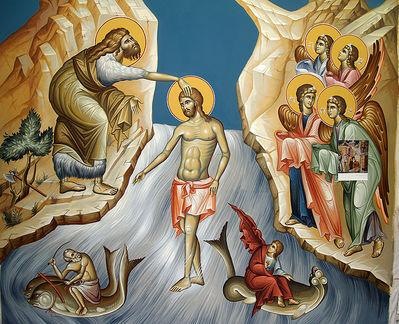
Baptize me, John, in order that no one may despise baptism. I am baptized by thee, the servant, that no one among kings or dignitaries may scorn to be baptized by the hand of a poor priest. Suffer me to go down into the Jordan, in order that they may hear my Father’s testimony, and recognise the power of the Son. “Suffer it to be so now, for thus it becometh us to fulfil all righteousness.” Then at length John suffers Him. “And Jesus, when He was baptized, went up straightway out of the water: and the heavens were opened unto Him; and, lo, the Spirit of God descended like a dove, and rested upon Him. And a voice (came) from heaven, saying, This is my beloved Son, in whom I am well pleased.” (Matt 3:16-17)
Jesus wanted to emphasize the role of the priest in baptizing those who chose to follow Him.  He wanted all to hear the testimony of the Father so others would accept Him as His Son as this was the time He began His public ministry.
Saint Hyppolytus continues uplifting our sight even higher,
Do you see, beloved, how many and how great blessings we would have lost, if the Lord had yielded to the exhortation of John, and declined baptism? For the heavens were shut before this; the region above was inaccessible. We would in that case descend to the lower parts, but we would not ascend to the upper. But was it only that the Lord was baptized? He also renewed the old man, and committed to him again the sceptre of adoption. For straightway “the heavens were opened to Him.” A reconciliation took place of the visible with the invisible; the celestial orders were filled with joy; the diseases of earth were healed; secret things were made known; those at enmity were restored to amity. For you have heard the word of the evangelist, saying, “The heavens were opened to Him,” on account of three wonders. For when Christ the Bridegroom was baptized, it was meet that the bridal-chamber of heaven should open its brilliant gates. And in like manner also, when the Holy Spirit descended in the form of a dove, and the Father’s voice spread everywhere, it was meet that “the gates of heaven should be lifted up.” (Ps 24: 7) “And, lo, the heavens were opened to Him; and a voice was heard, saying, This is my beloved Son, in whom I am well pleased.”

Most significantly we see in this event that the heavens are opened for all mankind who follow Him and join with Him through Baptism to become His adopted children. Christ shows us that we begin our Journey with Him through baptism. This is a Holy Sacrament where heavens are opened and we join with The Holy Trinity to be transformed, born again, so we can become like Him and have eternal life in His kingdom as one of His children.

Christ’s baptism in the Jordan was A “theophany,” in that the world was granted a revelation of the Holy Trinity. The Father testified from on high to the divine Sonship of Jesus; the Son received His Father’s testimony; and the Spirit was seen in the form of a dove, descending from the Father and resting upon the Son.
In the hymn of the Feast we sing, “Christ has appeared and enlightened the world.” Thus, January 6 is also known as the Feast of Lights. The Church celebrates on this day the illumination of the world by the light of Christ.

Reference: Ante-Nicene Fathers, vol 5, Hyppolytus, Discourse on Holy Theophany
Related Posts Plugin for WordPress, Blogger...