 Αν οι λογισμοί κι οι διαθέσεις μου είναι σύμφωνα με την αλήθεια του Θεού, με το θέλημά Του, τότε είμαι αναπαυμένος, γεμάτος θείο φως, χαρά κι ευλογία.
Αν όχι, τότε είμαι ανήσυχος, γεμάτος με πνευματικό και ψυχοφθόρο σκότος, νιώθω να με βαραίνει η απόγνωση. Αν μεταβάλλω τελείως τους απατηλούς κι ακάθαρτους λογισμούς και τις διαθέσεις της καρδιάς μου και τους κάνω αληθινούς και θεάρεστους, τότε αποκτώ πάλι ανάπαυση κι ευλογία.
Ο πλησίον μου είναι μια ύπαρξη με ίσα δικαιώματα μαζί μου. Είναι ένας άνθρωπος σαν και μένα, πλασμένος κατ’ εικόνα Θεού. Κι αφού είναι σαν και μένα, πρέπει να τον αγαπώ όπως αγαπώ και τον εαυτό μου. «Αγαπήσεις τον πλησίον σου ως σεαυτόν» (Ματθ. κβ΄ 39).
Πρέπει να τον φροντίζω και να τον προσέχω όπως προσέχω τη σάρκα και το αίμα μου, να του φέρομαι στοργικά, ευγενικά, καλοσυνάτα, να του συγχωρώ τις αστοχίες όπως θα συγχωρούσα και τις δικές μου, όπως θα ‘θελα να συγχωρήσουν κι οι άλλοι τα σφάλματά μου και να μου φέρονται με συγκατάβαση. Δηλαδή, όπως θα ‘θελα οι άλλοι άνθρωποι να μην παρατηρούν τα λάθη μου, σαν να μην υπάρχουν, ή να τα αγνοούν με ευγένεια, με καλοσύνη και μεγαλοψυχία, το ίδιο πρέπει να κάνω κι εγώ στον αδελφό μου.
Ο σαρκικός άνθρωπος δεν μπορεί να καταλάβει την ευλογία και την πνευματική ευφροσύνη που απολαμβάνουμε με την προσευχή και την άσκηση της αρετής. Ούτε στο ελάχιστο δεν μπορεί να κατανοήσει τι ευλογία και ποια μακαριότητα μάς περιμένει στον άλλο κόσμο. Δε γνωρίζει τίποτα υψηλότερο από την επίγεια σαρκική χαρά. Τις μέλλουσες ευλογίες τις λογαριάζει φαντασίες. Ο πνευματικός άνθρωπος όμως γνωρίζει εμπειρικά την ευλογία που νιώθει η ενάρετη ψυχή, γιατί η καρδιά του προγεύεται από τώρα τη μέλλουσα μακαριότητα.
Όσο περισσότερο προοδεύει στην πνευματική ζωή ο άνθρωπος, τόσο περισσότερο πνευματοποιείται. Αρχίζει σιγά σιγά να βλέπει παντού το Θεό, την ύπαρξη της δύναμής Του σε όλα τα πράγματα. Βλέπει παντού και πάντα τον εαυτό του να κατοικεί στο Θεό, να εξαρτάται απ’ Αυτόν ακόμα και στα πιο παραμικρά πράγματα. Αντίθετα, όσο περισσότερο ο άνθρωπος είναι δοσμένος στο σαρκικό τρόπο ζωής, τόσο περισσότερο σαρκικός γίνεται. Δε βλέπει παντού το Θεό. Δεν Τον βλέπει ούτε και στα πιο θαυμαστά επιτεύγματα της θείας Του δύναμης. Το μόνο που βλέπει παντού είναι σάρκα και ύλη. Στα δικά του μάτια ο Θεός δεν υπάρχει ποτέ και πουθενά. (πρβλ. Ψαλμ. 35: 2). ".
Άγιος Ιωάννης της Κροστάνδης
http://lllazaros.blogspot.ca/search?updated-max=2014-09-21T20:00:00%2B03:00&max-results=10&start=40&by-date=false
 Ὅλα τὰ κακὰ αἰσθήματα, ἡ ἀνασφάλεια, ἡ ἀπελπισία, ἡ ἀπογοήτευση, ποὺ πᾶνε νὰ κυριεύσουν τὴν ψυχή, φεύγουν μὲ τὴν ταπείνωση.
Αὐτὸς ποὺ δὲν ἔχει ταπείνωση, ὁ ἐγωιστής, δὲν θέλει νὰ τοῦ κόψεις τὸ θέλημα, νὰ τὸν θίξεις, νὰ τοῦ κάνεις ὑποδείξεις. Στενοχωρεῖται, νευριάζει, ἐπαναστατεῖ, ἀντιδρᾶ, τὸν κυριεύει ἡ κατάθλιψη.
Ἡ κατάσταση αὐτὴ θεραπεύεται μὲ τὴ χάρη. Πρέπει ἡ ψυχὴ νὰ στραφεῖ στὴν ἀγάπη τοῦ Θεοῦ. Ἡ θεραπεία θὰ γίνει μὲ τὸ ν’ ἀγαπήσει τὸν Θεὸ μὲ λαχτάρα.
Πολλοὶ ἅγιοί μας μετέτρεψαν τὴν κατάθλιψη σὲ χαρὰ μὲ τὴν ἀγάπη πρὸς τὸν Χριστό. Παίρνανε δηλαδὴ τὴν ψυχικὴ δύναμη, ποὺ ἤθελε νὰ τὴ συντρίψει ὁ διάβολος, καὶ τὴ δίνανε στὸν Θεὸ καὶ τὴ μεταβάλλανε σὲ χαρὰ καὶ ἀγαλλίαση.
Ἡ προσευχή, ἡ λατρεία τοῦ Θεοῦ μεταβάλλει σιγὰ σιγὰ τὴν κατάθλιψη καὶ τὴ γυρίζει σὲ χαρά, διότι ἐπιδρᾶ ἡ χάρις τοῦ Θεοῦ. Ἐδῶ χρειάζεται νὰ ἔχεις τὴ δύναμη, ὥστε ν’ ἀποσπάσεις τὴ χάρη τοῦ Θεοῦ, ποὺ θὰ σὲ βοηθάει νὰ ἑνωθεῖς μαζί του. Χρειάζεται τέχνη.
Ὅταν δοθεῖς στὸν Θεὸ καὶ γίνεις ἕνα μαζί του, θὰ ξεχάσεις τὸ κακὸ πνεῦμα, ποὺ σὲ τραβοῦσε ἀπὸ πίσω, κι ἐκεῖνο ἔτσι περιφρονημένο θὰ φύγει. Στὴ συνέχεια, ὅσο θ’ ἀφοσιώνεσαι στὸ Πνεῦμα τοῦ Θεοῦ, τόσο δὲν θὰ κοιτάζεις πίσω σου, γιὰ νὰ δεῖς αὐτὸν ποὺ σὲ τραβάει.
Ὅταν σὲ ἑλκύσει ἡ χάρις, ἑνώνεσαι μὲ τὸν Θεό. Κι ὅταν ἑνωθεῖς μὲ τὸν Θεὸ καὶ δοθεῖς σ’ Ἐκεῖνον, πᾶνε ὅλα τ’ ἄλλα, τὰ ξεχνάς καὶ σώζεσαι. Ἡ μεγάλη τέχνη, λοιπόν, τὸ μεγάλο μυστικό, γιὰ ν’ ἀπαλλαγεῖς ἀπ’ τὴν κατάθλιψη καὶ ὅλα τ’ ἀρνητικά, εἶναι νὰ δοθεῖς στὴν ἀγάπη τοῦ Θεοῦ.
Ἕνα πράγμα ποὺ μπορεῖ νὰ βοηθήσει τὸν καταθλιπτικὸ εἶναι καὶ ἡ ἐργασία, τὸ ἐνδιαφέρον γιὰ τὴ ζωή. Ὁ κῆπος, τὰ φυτά, τὰ λουλούδια, τὰ δέντρα, ἡ ἐξοχή, ὁ περίπατος στὴν ὕπαιθρο, ἡ πορεία, ὅλ’ αὐτά, βγάζουν τὸν ἄνθρωπο ἀπ’ τὴν ἀδράνεια καὶ τοῦ δημιουργοῦν ἄλλα ἐνδιαφέροντα. Ἐπιδροῦν σὰν φάρμακα.
Ἡ ἀσχολία μὲ τὴν τέχνη, τὴ μουσικὴ κ.λπ. κάνουν πολὺ καλό. Σ’ ἐκεῖνο, ὅμως, ποὺ δίνω τὴ μεγαλύτερη σημασία εἶναι τὸ ἐνδιαφέρον γιὰ τὴν Ἐκκλησία, γιὰ τὴ μελέτη τῆς Ἁγίας Γραφῆς, γιὰ τὶς ἀκολουθίες. Μελετώντας τὰ λόγια τοῦ Θεοῦ, θεραπεύεται κανεὶς χωρὶς νὰ τὸ καταλάβει.
Νὰ σᾶς διηγηθῶ γιὰ μιὰ κοπέλα, ποὺ ἦλθε σ’ ἐμένανε τὸν ταπεινό. Ἔπασχε ἀπὸ φοβερὴ κατάθλιψη. Δὲν κατάφερε κάτι μὲ τὰ φάρμακα. Παράτησε τὰ πάντα, τὴ δουλειά της, τὸ σπίτι της, τὶς ἀπασχολήσεις της. Κι ἐγὼ τῆς εἶπα αὐτὰ ποὺ ξέρω.
Τῆς εἶπα γιὰ τὴν ἀγάπη τοῦ Χριστοῦ, ποὺ αἰχμαλωτίζει τὴν ψυχή, διότι ἡ χάρις τοῦ Θεοῦ γεμίζει τὴν ψυχὴ καὶ τὴν ἀλλάζει. Τῆς ἐξήγησα ὅτι εἶναι δαιμονικὴ αὐτὴ ἡ δύναμη ποὺ καταλαμβάνει τὴν ψυχὴ καὶ μεταβάλλει τὴν ψυχικὴ δύναμη σὲ κατάθλιψη, τὴ ρίχνει κάτω, τὴ βασανίζει καὶ τὴν ἀχρηστεύει. Τὴν συμβούλευσα ν’ ἀσχολεῖται μὲ διάφορες ἀπασχολήσεις, ὅπως, γιὰ παράδειγμα, μὲ τὴ μουσικὴ ποὺ τῆς ἄρεσε πρῶτα κ.λπ.
Τόνισα, ὅμως, περισσότερο τὴ στροφὴ καὶ τὴν ἀγάπη της πρὸς τὸν Χριστό. Τῆς εἶπα ἀκόμη ὅτι μέσα στὴν Ἐκκλησία μας ὑπάρχει θεραπεία μὲ τὴν ἀγάπη πρὸς τὸν Θεὸ καὶ τὴν προσευχή, ἀλλὰ ποὺ θὰ γίνεται μὲ λαχτάρα.
Αὐτὸ εἶναι τὸ μυστικὸ τῆς θεραπείας. Αὐτὰ δέχεται ἡ Ἐκκλησία μας.
Άγιος Πορφύριος ο Καυσοκαλυβίτης
http://agiameteora.net/
The devil does not hunt after those who are lost; he hunts after those who are aware, those who are close to God. He takes from them trust in God and begins to afflict them with self-assurance, logic, thinking, criticism. Therefore we should not trust our logical minds. Never believe your thoughts.
Elder Paisios
What the prudent person does right at the onset, the foolish person waits to do at the end. The prudent person looks ahead at the consequences before he commits a sin.
The foolish person, on the other hand, commonly says, "I wasn't expecting to suffer such harm...," just as the greedy rich man said when he found himself in Hell (vid.Lk. 16:23-24).
Do not look at what the world is offering to you now because every pleasure it has to offer
rapidly races toward death and demise. Do not look at the present, but envision the future. Do not stare at today, but think of what will happen at the end of this life and consider the reality of eternal
Hell. Then you will gladly refuse all of the world's vain pleasures. The sinful pleasure you experience is short-lived and temporary; the punishment that
follows, however, is endless—forever!
The world has the habit of offering its friends a tasty lunch first, and then serving them a poisonous and deadly dinner. People serve the best
wine at the beginning of a party, just as the master of the feast stated, “Every man at the beginning sets out the good wine, and when the guests have well drunk, then the inferior”(Jn. 2:10).
The world’s festivities begin with laughter but end
with lamentation. On the other hand, Christ's
magnificent and delicious meal consists of the exact opposite: He saves the good wine for later. He gives sorrows in the beginning and consolation
in the end, just as He did with the nation of Israel, whom He allowed to suffer and grow weary in the beginning as they traveled through the desert, but to whom afterwards He gave much consolation and fertile land as an inheritance, just as He had promised.
This is how God also treated Jacob when he was living in the house of Laban, Joseph when he found himself in Egypt, and many other of His faithful servants. The world does the exact opposite: It conceals the sadnessin the beginning
so it can unveil it later.
When you feel as if you are on top of the world, and when you have risen to the summit
of honor and glory, it gives you a strong kick and you come crashing to the ground. It acts similar to an executioner who first makes a criminal climb up a ladder and step out onto a platform, only to,
later, place a rope around the convict’s neck, push
him off the edge,and thus bring his life to an end.
from the book The Salvation of Sinners

Ἐκεῖνος πού ἀντιστέκεται στά λυπηρά συμβάντα, πολεμᾶ χωρίς νά τό γνωρίζει τή διαταγή τοῦ Θεοῦ. Ἐκεῖνος πού τά παραδέχεται, γνωρίζοντας καλά γιατί ἔρχονται καί ὅτι ἀπό τό θέλημα τοῦ Θεοῦ προέρχονται, αὐτός, κατά τήν Γραφή, ὑπομένει τόν Κύριο (Ψαλμ. 26:14).
Ὅταν σοῦ ἔρθει πειρασμός, θλίψη καί συμφορά, μή ζητᾶς γιατί καί μέσω τίνος ἦρθε. Ζήτησε νά τόν ὑποφέρεις μ᾿ εὐχαρίστηση, χωρίς λύπη καί χωρίς μνησικακία.
Ἅγιος Μάρκος ὁ Ἀσκητής
http://agiameteora.net/

«Σκοπός και σημασία Κατηχήσεων για το Μυστήριο του Βαπτίσματος».
Με τον όρο «Κατήχηση», στην Εκκλησιαστική Γλώσσα εννοούμε τον «τύπο τῆς διδαχῆς»[17], που εισάγει τον υποψήφιο χριστιανό στις βασικές δογματικές θέσεις της πίστεως και που προηγείται του Βαπτίσματος. Ο Απόστολος των Εθνών Παύλος μας περιγράφει τα βασικά στοιχεία από τα οποία αυτή συνίσταται. Αυτά είναι η διδασκαλία περί μετανοίας, περί πίστεως στον Θεό, περί Βαπτίσματος, περί χειροθεσίας (περί του χρίσματος, με το οποίο ο πιστός γίνεται κοινωνός του Αγίου Πνεύματος), περί αναστάσεως των νεκρών και περί μελλούσης κρίσεως[18].
« Ὡς σκοπός τῶν Κατηχήσεων προς τους Φωτιζομένους καθορίζεται ἡ ἐκμάθησις τῶν χριστιανικῶν δογμάτων και δή το Σύμβολον τῆς Πίστεως, ἡ διασφάλισις τῶν Φωτιζομένων ἐκ τῶν διδασκαλιῶν τῶν ἐθνικῶν, Ἰουδαίων και αἱρετικῶν, και τέλος ἡ περιφρούρησις τῶν μελλόντων πιστῶν ἐκ τῶν μεθοδιῶν τοῦ διαβόλου. Ὡς σκοπός τῶν Μυσταγωγικῶν Κατηχήσεων καθορίζεται ἡ μύησις εἰς το νόημα τῶν χριστια-νικῶν μυστηρίων.
Ἐκ τοῦ σκοποῦ καταδεικνύεται και ἡ σημασία τῶν Κατηχήσεων. Αὕτη ἐκδηλοῦται εἰς τρία τινά: 1. Εἰς το γεγονός, ὅτι παραδίδονται χριστιανικά μυστήρια. 2. Εἰς το γεγονός, ὅτι το βάπτισμα εἶναι ἀνεπανάληπτον και 3. Εἰς το γεγονός, ὅτι οὐδέν ἔργον εἶναι εὐπρόσδεκτον εἰς τον Θεόν ἄνευ ὀρθῆς πίστεως.[19]»
Ο Άγιος Κύριλλος Ιεροσολύμων χωρίζει τις κατηχήσεις σε δύο κατηγορίες: α) Σ’ αυτές πού απευθύνονται στους Φωτιζομένους, και β) Σ’ αυτές που απευθύνονται στους Νέοφω-τίστους[20].
Ως σκοπό των κατηχήσεων που απευθύνονται στους Φωτιζομένους, θεωρεί την μελέτη και την μάθηση των χριστιανικών δογμάτων και του Συμβόλου της Πίστεως, την δογματική διασφάλιση των Φωτιζομένων, έναντι των εθνικών, των αιρετικών και των Ιουδαίων, καθώς και την ετοιμότητα των πιστών έναντι στη καταπολέμηση των διαβολικών πειρασμών.
Σκοπό δε, των κατηχήσεων των γνωστων και ως «Μυσταγωγικών», θεωρεί, την μύηση στο νόημα των μυστηρίων της Εκκλησίας. Προσδίδει ένα βαθύτατο πνευματικό αλλά και μυσταγωγικό χαρακτήρα, ο οποίος γίνεται αντιληπτός μόνο μέσω της εμπειρικής ζωής και πνευματικότητος της Εκκλησίας.
Από τους σκοπούς των κατηχήσεων συνάγεται και η σημασία τους. Ο Κύριλλος θεωρεί τις κατηχήσεις υψίστης σημασίας και στηρίζει την άποψή του αυτή σε τρείς κυρίως λόγους: α. Στο γεγονός ότι μέσω αυτόν παραδίδονται τα χριστιανικά μυστήρια[21]. Λέει αυτόλεξή: «Κατηχούμενος ἐλέγου, ἔξωθεν περιηχούμενος∙ ἀκούων ἐλπίδα, και μη εἰδώς∙ ἀκούων μυστήρια, και μη νοῶν∙ ἀκούων γραφάς, και μη εἰδώς το βάθος. Οὐκ ἔτι περιηχῇ, ἀλλ’ ἐνηχῇ∙ το γαρ ἔνοικον Πνεῦμα λοιπόν οἴκους θείους την διάνοιάν σου ἐργάζεται. Ὅταν ἀκούσης τα περί τῶν μυστηρίων γεγραμμένα, τότε νοήσεις ἅ μη ἤδεις»[22]. β. Στο γεγονός ότι το βάπτισμα είναι ανεπανάληπτο, οπότε κατά συνέπεια, η προετοιμασία του προσλαμβάνει ιδιαίτερη σημασία. Να τι λέει ο Άγιος Κύριλλος για το βάπτισμα: «Οὐκ ἔνι δίς και τρίς λαβεῖν το λουτρόν∙ ἐπεί ἦν εἰπεῖν. Ἅπαξ ἀποτυχών, δεύτερον κατορθῶ∙ ἐάν δε το ἅπαξ ἀποτύχης, ἀδιόρθωτον το πρᾶγμα»[23]. Γ. Στο γεγονός ότι κανένα έργο δεν είναι ευπρόσδεκτο στον Θεό χωρίς ορθή πίστη. Λέει επί λέξει:«…οὔτε τα μη μετ’ εὐσεβῶν δογμάτων ἔργα τελούμενα προσδέχεται ὁ Θεός…τι (γάρ)…ὄφελος σωφρονεῖν μέν καλῶς, και βλασφημεῖν ἀσεβῶς;»[24].
Είναι αναγκαίο να σημειωθεί το γεγονός πως μελετώντας προσεχτικά την Κ. Δ., διαπιστώνουμε ότι ο ίδιος ο Κύριος προτρέπει για την δόμηση και ανανέωση της Εκκλησίας λέγοντας: «πορευθέντες μαθητεύσατε πάντα τὰ ἔθνη, βαπτίζοντες αὐτοὺς εἰς τὸ ὄνομα τοῦ Πατρὸς καὶ τοῦ Υἱοῦ καὶ τοῦ Ἁγίου Πνεύματος διδάσκοντες αὐτοὺς τηρεῖν πάντα ὅσα ἐνετειλάμην ὑμῖν [25]».
Η προτροπή αυτή του Ιησού Χριστού όταν αναλυθεί δίνει τα ακόλουθα σημαντικά στοιχεία: 1) «μαθητεύσατε πάντα τὰ ἔθνη», 2) «βαπτίζοντες αὐτοὺς», 3) «διδάσκοντες αὐτοὺς». Σύμφωνα με την ανάλυση αυτή, η δόμηση της Εκκλησίας προϋποθέτει μάθηση, βάπτισμα και διδαχή. Στο σημείο αυτό θα πρέπει να τονίσουμε ότι η προσχώρησει στο σώμα της Εκκλησίας εξαρτάται από την μαθητεία που δείχνει το άτομο, από το βάπτισμα που παρέχει η Εκκλησία και από την διδαχή που προσφέρουν τα όργανα του θεσμού της Εκκλησίας. Προηγείται η μάθηση, ακολουθεί το βάπτισμα και έπειτα η διδασκαλία σε βάθος. Έχουμε δηλ. μια κλιμάκωση πρακτική που συνδέει το μαθητή με το διδάσκαλο, στη συνέχεια ακολουθεί ο σύνδεσμος και η πίστη στο διδάσκαλο που καταλήγει στη πράξη του Βαπτίσματος και τέλος έπεται η διδαχή και η εμβάθυνση στην πίστη ή καλύετρα πληροφόρηση που εξαγγέλεται από τον διδάσκαλο, για να γαλβανωθεί η πίστη στον θεσμό της Εκκλησίας.
Κατά συνέπεια, για να γίνει κανείς μέλος της Εκκλησίας οφείλει να διδαχθεί τι οφείλει να πιστεύσει και να κατανοήσει από τη δομή και τη διδασκαλία του θεσμού της Εκκλησίας ή καλύτερα να του δημιουργηθούν οι προϋποθέσεις ώστε να αποκτήσει θερμή πίστη. Με άλλα λόγια, προϋπόθεση του μυστηρίου του Βαπτίσματος είναι η πίστη σε όποιον επιθυμεί να ακολουθήσει τον διδάσκαλο Χριστό ή να γίνει μέλος της Εκκλησίας Του[26]. [Συνεχίζεται]
[17]Βλ. Ρωμ. 6,17
[18] Βλ. Εβρ. 6,11
[19] Βλ. Ηλία Αντ. Βουλγαράκη «ΑΙ ΚΑΤΗΧΗΣΕΙΣ ΤΟΥ ΚΥΡΙΛΛΟΥ ΙΕΡΟΣΟΛΥΜΩΝ ΙΕΡΑΠΟΣΤΟΛΙΚΗ ΘΕΩΡΗΣΙΣ» Π.Ι.Π.Μ., ΘΕΣΣΑΛΟΝΙΚΗ 1977, σ.86
[20] Βλ. «ΚΑΤΗΧΗΣΕΙΣ ΑΓΙΟΥ ΚΥΡΙΛΛΟΥ ΙΕΡΟΣΟΛΥΜΩΝ», εκδ. ΙΕΡΑ ΜΟΝΗ ΤΙΜΙΟΥ ΣΤΑΥΡΟΥ ΚΑΡΕΑΣ, 1999, σ. 19-20
[21] Ηλία Αντ. Βουλγαράκη «ΑΙ ΚΑΤΗΧΗΣΕΙΣ ΤΟΥ ΚΥΡΙΛΛΟΥ ΙΕΡΟΣΟΛΥΜΩΝ ΙΕΡΑΠΟΣΤΟΛΙΚΗ ΘΕΩΡΗΣΙΣ» εκδ. Π.Ι.Π.Μ,, ΘΕΣΣΑΛΟΝΙΚΗ 1977, σ..86
[22] Βλ. Πρκτχ. ΣΤ’/43 σ. 11-16. Πρβλ. Πρκτχ ΙΒ/45 σ.14, Πρκτχ ΣΤ,ΚΘ/43 σ. 29.
[23] Βλ. Πρκτχ., Ζ/43 σ. 28.
[24] Βλ. Πρκτχ., Δ, Β/67, σ .2.
[25] Ματθ.. 28, 19-20.
[26] Βλ. Γ.Θ. Βεργώτη, «Το Μυστήριο τοῦ Βαπτίσματος και ἡ ποιμαντική τοῦ σήμερα», τομ. «Το άγιονΒάπτισμα», εκδ. ΙεράΜητρόποληΔράμας, Δράμα 1996, σελ. 33-35.
http://www.pemptousia.gr/

Ξέρετε τι θα πει Γέροντας; Μόνο ο διάβολος ξέρει τι θα πει Γέροντας. Ο κατά σάρκα αδερφός αλλά και υποτακτικός του γερο-Ιωσήφ, ο πάτερ Αθανάσιος, είχε την Κοίμηση στη Νέα Σκήτη. Εκεί το Γεροντάκι που ζούσε πριν, εγώ το πρόλαβα, αλλά αυτό το ιστορικό που θα σας πω τώρα δεν το πρόλαβα, αλλά το άκουσα· το Γεροντάκι το πρόλαβα. Είχε έναν υποτακτικό.
Ο υποτακτικός, ε, κρίσις Θεού, ήρθε στο τέλος να πεθάνει. Την προηγούμενη ημέρα, την παραμονή προτού να πεθάνει, πήγαν οι δαίμονες και του λένε:
«Είσαι δικός μας, τώρα θα σε πάρουμε στην κόλαση γιατί έτσι κι έτσι...», τα συνηθισμένα των διαβόλων. Το παιδί ταράχθηκε. Μπήκε μέσα ο Γέροντας:
- Παιδί μου, γιατί είσαι ταραγμένος; λέει.
- Γέροντα, Γέροντα, θα κολασθώ, ήρθαν οι δαίμονες να με πάρουν, μου είπαν ότι αύριο στις τρεις η ώρα θά' ρθουμε να σε πάρουμε.
- Αχ, παιδάκι μου, λέει, εσύ είσαι υποτακτικός, όταν έρθουν οι δαίμονες να τους πεις: «Εγώ έχω Γέροντα».
- Νά' ναι ευλογημένο.
Τέλειωσε, τον ειρήνευσε τον υποτακτικό! την άλλη μέρα παν οι δαίμονες κατά τη συνήθειά τους, βγάλε τη γλώσσα, τράβα από 'δω... «Τι ερχόσαστε σε μένα», λέει, «εγώ είμαι υποτακτικός, έχω Γέροντα». Με το «έχω Γέροντα» άφαντοι όλοι οι δαίμονες! Αυτός είναι ο Γέροντας.
ΠΗΓΗ : ΓΕΡΟΝΤΑΣ ΕΦΡΑΙΜ ΚΑΤΟΥΝΑΚΙΩΤΗΣ, εκδ. Ι. ΗΣΥΧΑΣΤΗΡΙΟΥ «ΑΓΙΟΣ ΕΦΡΑΙΜ», ΚΑΤΟΥΝΑΚΙΑ ΑΓΙΟΥ ΟΡΟΥΣ
http://agiameteora.net/
Plecând de la Chilia Bunei Vestiri, cei trei au căutat un loc cât mai retras şi cât mai propice nevoinţei tăcerii întru cunoştinţă. Astfel, au ales Schitul Sfântului Vasile. Acesta era format din numai 8 colibe, locuite de călugări isihaşti, care, spre deosebire de cei de la Buna Vestire, vieţuiau de parcă nu ar fi fost acolo, trăind la o oarecare depărtare unii de alţii. Pentru că nu au găsit chilii libere, au fost nevoiţi să îşi zidească singuri chilii, cu foarte multă greutate (datorită în primul rând lipsei apei). Mica lor biserică au închinat-o Naşterii Sfântului Ioan Botezătorul. Au plecat de la Katounakia luând cu sine doar strictul necesar, câteva haine şi puţinele cărţi ce le aveau.

Bisericuța Înaintemergătorului Ioan de la Schitul Sfântului Vasilie, construită de Cuviosul Iosif Isihastul
Bătrânul Efrem a găsit aici odihnă, eliberat fiind de povara rucodeliei, însă, la scurt timp, din cauza vârstei, dar mai ales a condiţiilor precare de trai şi a vieţuirii aspre, a trecut la cele veşnice (+1929), împlinindu-se astfel proorocia făcută de Stareţul Daniil Katunakiotul. Şi tot lui dându-i ascultare, după moartea Stareţului Efrem, tânărul monah Iosif devine stareţ la vârsta de 32 de ani (neîmpliniţi), continuând astfel tradiţia athonită care spune că trebuie să îngropi stareţ, ca să ajungi stareţ, moştenind, pentru ascultarea şi smerenia arătată faţă de cei doi bătrâni monahi, harismele şi binecuvântarea acestora (mai ales pe cel al povăţuirii).

Chiliile Bisericuței Cinstitului Înaintemergător
Odată cu mutarea la Sfântul Vasile îl vor cunoaşte pe ieroschimonahul Daniil (+1929)[1] de la Chilia Sfântului Petru Atonitul (aproape de locul numit Ape Reci), aflată pe moşia Marii Lavre. Acesta a fost cel care le-a influenţat decisiv modul de vieţuire duhovnicească.
Ieroschimonahul Daniil era considerat de cei doi drept mai minunat decât toţi şi următor al Marelui Arsenie. Stareţul Iosif îl descria astfel: Iubitor de tăcere, izolat de toţi ceilalţi, slujitor permanent. Şaizeci de ani nu s-a gândit că poate lăsa măcar o zi Sfânta Slujbă. În timpul Postului Mare săvârşea în fiecare zi Liturghia Darurilor mai înainte sfinţite. A trăit până în ultima zi în trezvie, săvârşindu-se fără să fi fost vreodată bolnav. Sfânta Liturghie săvârşită de el ţinea trei ore şi jumătate, uneori chiar patru ore, deoarece întârzia, afundat în priveghere, să spună ecfonisurile. Lacrimile sale erau atât de multe, încât uda pământul acolo unde stătea. De aceea nu voia ca vreun străin să fie de faţă când slujea Sfânta Liturghie, pentru a nu-i vedea lucrarea. Pe mine m-a primit după multe rugăminţi. De fiecare dată când mergeam, trebuia să merg pe jos în miez de noapte cam trei ore pentru a ajunge la ora începerii acelei cu adevărat înfricoşătoare şi dumnezeiești lucrări. Îmi spunea un cuvânt, două de învăţătură, ieşind din Sfântul Altar, apoi dispărea imediat şi nu se mai arăta toată ziua. Întreaga lui viaţă a avut rugăciunea minţii şi priveghere de toată noaptea. De la el am luat şi eu această rânduială şi am avut mare folos. Mânca numai câteva fărâmituri de pâine pe zi, de aceea era la Sfânta Liturghie ca un fulg. Şi până nu uda cu lacrimi locul unde slujea, nu încheia.
Din cauza izolării şi a programului său strict, mulţi îl considerau înşelat, dar a acceptat dorinţa celor doi de a fi primiţi la Sfânta Liturghie şi de a primi sfaturi legate de viaţa isihastă. Aceste sfaturi erau întotdeauna rare, scurte şi la obiect, fiindcă, aşa cum le reamintea adesea: Sfânta Singlitichia mărturisea că opaiţul luminează, dar are buzele arse.
Nu s-au folosit doar de prezenţa şi învăţăturile pline de har ale acestui binecuvântat nevoitor, ci au luat rânduiala de viaţă personală a acestuia (a privegherii de toată noaptea şi cea legată de hrana zilnică), pe care au transmis-o, la rândul lor, ucenicilor lor, şi, prin aceştia, la multe obşti monahale, atât din Sfântul Munte, cât şi în Grecia şi mai târziu în America.
Trebuie menţionat faptul că deşi tânărul pustnic trăia în ascultare de duhovnic (ieromonahul Daniil, n.n.), se ruga, plângea şi se nevoia, cu toate acestea războiul nu contenea. Intrase în etapa caracterizată drept cuptorul dumnezeieştii părăsiri (adică părăsirea de către harul Duhului Sfânt a nevoitorului pentru o anumită perioadă de timp, cu scop pedagogic). Este perioada cea mai greu de suportat, lucru dovedit şi de cuvintele Cuviosului Iosif: dacă este să aflaţi Harul şi apoi să-l pierdeţi, atunci mai bine să vă rugaţi nu pentru dobândirea Harului, ci a experienţei, fiindcă omul, de unul singur, nu poate să sufere părăsirea de către acesta.
Lupta aceasta a fost cu adevărat înfricoşătoare. Nu doar că era un război aproape continuu, dar acesta lua de multe ori aspectul unei lupte faţă către faţă, corp la corp: „În fiecare noapte cete întregi de demoni, cu ciomege, cu securi şi cu orice altceva ar fi putut provoca vătămare, m-au supus la torturi groaznice, opt ani la rând. Unul mă apucă de barba mea micuţă pe atunci, altul de păr, altul de picioare, de mâini – toate relele şi chinurile posibile. Toţi strigau ca ieşiţi din minţi: «Strângeţi-l de gât, omorâţi-l!».

Sfântul Antonie cel Mare bătut de demoni, Stefano di Giovanni (Sassetta), 1430-1432
Şi continuă, într-un alt loc, spunând că aceştia veneau cu săbii, topoare, securi, lopeţi. «Pe el cu toţii!», strigau. Ce păţeam… «Ajută-mă, Maica Domnului!», strigam. Prindeam pe unul dintre ei şi îi loveam cât puteam pe ceilalţi. Îmi rupeam mâinile de pereţi. Cuviosul reuşea să-i alunge cu desăvârşire numai cu numele lui Hristos şi al Maicii Domnului.

Sfântul Antonie cel Mare ciomăgit de draci, detaliu de icoană bizantină
Un lucru deosebit de important de subliniat este faptul că doar trecut prin focul ispitelor, Cuviosul Iosif cunoştea Harul lui Dumnezeu în chip simţit. De aceea, le spunea mai târziu ucenicilor săi: mai întâi beam întristarea cu butoiul şi abia după aceea îmi dădea Dumnezeu Harul cu linguriţa.
Pentru a curma suferinţa provocată de diavoli prin lupta gândurilor şi a patimilor (în special cea a desfrânării, deşi nu cunoscuse niciodată pofta trupească), născocea tot felul de nevoinţe, pentru a reuşi să-şi strunească mintea şi a potoli pornirile trupeşti: nu dormeam culcat, ci în picioare, rezemat într-un colţ sau şezând pe scăunel. Mă băteam pe mine însumi de două-trei ori pe zi, oftând şi plângând, încât după astfel de chinuri, de lovituri pe care mi le administram în fiecare zi, mie însumi din cauza războiului trupului, de post aspru, priveghere şi alte nevoinţe, devenisem ca un cadavru. Acest fapt, oricât de înfricoşător ar suna, nu este un caz unic în scrierile ascetice. Patericele şi Scara Sfântului Ioan Sinaitul sunt pline de astfel de nevoinţe ascetice, prin care trupul, care este biserica Sfântului Duh, nu este pedepsit, ci este supus minţii stăpânitoare. Ascetismul ortodox nu este ucigător de trup, ci de patimi.
Trebuie subliniat faptul că, pe tot parcursul acestei perioade de mari lupte duhovniceşti, tânărul Iosif avea darul/harul rugăciunii neîncetate în inimă. Deci dobândirea rugăciunii nu presupune nepătimirea nevoitorului, ci constituie doar o armă în lupta cu „stăpânitorul acestei lumi” (Ioan 12, 31). Însăşi păstrarea rugăciunii curate şi neîncetate, precum şi sporirea în ea, presupune un efort deosebit: în timpul rugăciunii nu îngăduiam în nici un fel minţii să iasă din inimă. Curgea sudoarea de pe trupul meu ca din izvor.
Notă:
[1] Ucenicii Stareţului Iosif regretau lipsa detaliilor legate de acest minunat nevoitor, cu un rol atât de important (chiar decisiv) în modul de vieţuire al Cuviosului, cu toate că l-a cunoscut doar pentru o scurtă perioadă de timp, mai exact un an de zile (1928-1929).
Sursa: Pr. Dr. Cristian Groza, Gheron Iosif Isihastul (1897-1959) – Viaţa şi învăţătura
http://www.pemptousia.ro/
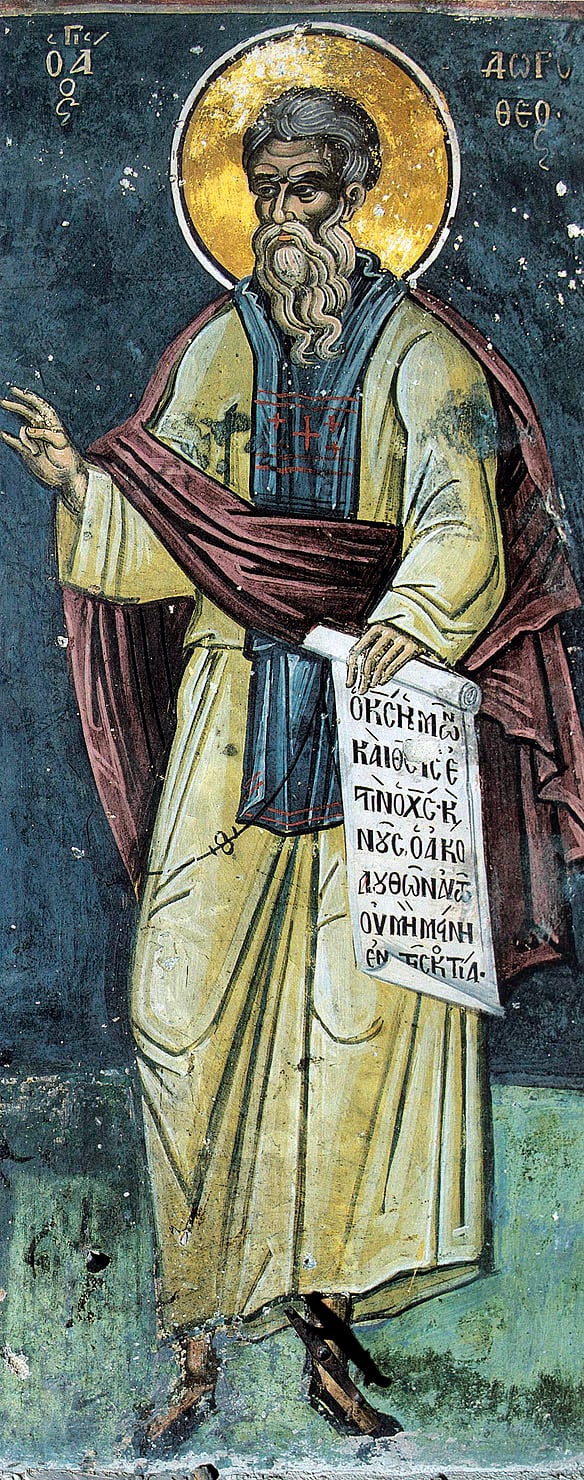 When I was in the coenobium, the Abbot, with the consent of the Elders, made me guest-master. I was, at the time, recovering from a serious illness. Strangers came and I stayed up with them; camel-drivers arrived and I looked after them. And there were lots of times when I was just about to go to sleep after all this when something would crop up and they’d rouse me again. Then it would be time for the vigil and, before I’d had time to get to sleep, the canonarch would come to wake me. Then, whether it was from tiredness or illness- because I still had a slight fever- I’d feel so completely exhausted that I had trouble knowing where I was. So I’d be half-asleep when I replied ‘Very well, Elder, may God remember your love and reward you. You’ve called me and I’m coming’. But as soon as he’d gone, I’d drop off again. I was really sad when I was late for the vigil, and since the canonarch couldn’t wait for me to get up, I asked two other brothers, one to wake me and the other not to let me fall asleep again when it was time for the service. Believe me, brethren, I really considered them agents of my salvation and I held them in great respect. You should feel the same towards those who wake you to get to church or to do anything good.
As we said before, we have an obligation to examine how we’ve spent the day and the night. Did we pay attention while we were standing listening to the hymns and prayers? Were we taken off guard by annoying thoughts or were we slack in our attention to the readings? Or did we leave the service and go out of the church, letting our minds wander? If we examine ourselves every day and make sure we repent for our sins and strive to correct them, the evil begins to decrease. If we’ve fallen nine times into an error, it becomes eight. Then, by God’s grace, we make gradual progress and He prevents the passions from taking root within us. It’s very dangerous to let passions take root within us, because then, as we’ve said, even if we want to, it’d be very difficult to overcome a passion on our own, without the help of the saints.
Shall I tell you about someone who allowed a passion to take root within him? Listen to this lamentable tale. When I was in the coenobium, I don’t know how but the brothers were fooled into coming to me with their problems. With the consent of the Elders, the Abbot assigned me to this task. So one day, one of the brothers came to me and said, ‘Forgive me, master, and pray for me, because I steal and eat’. I said to him, ‘Why? Are you hungry?’ He replied, ‘Yes. I’m never full at the refectory and I can’t ask for more’. I told him to go and tell this to the Abbot, but he said he was too ashamed. I asked him if he wanted me to go and tell the Abbot and he said, ‘Whatever you think best, master’.
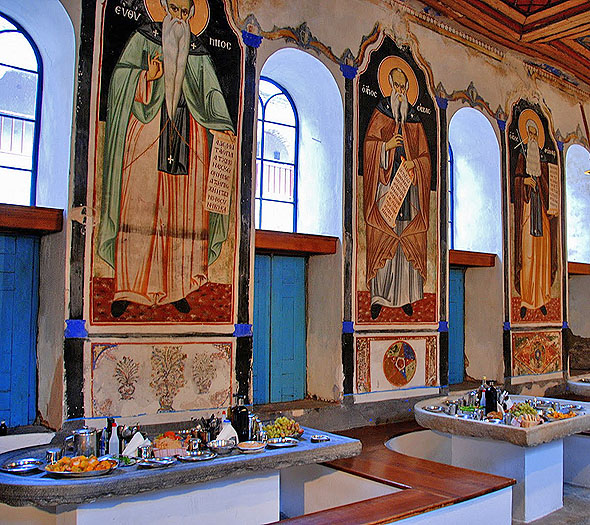
So I went and told the abbot and he said, ‘Of your love, do whatever you think’s best for him’. Well, I took the brother with me and we went to the cellarer and I told him, ‘Of your love, whenever this brother comes to you, give him as much as he wants and don’t deprive him of anything’. When the cellarer heard this he answered, ‘Whatever you say’. A few days went by and this brother came back to me and said, ‘Forgive me, master, but I’ve started stealing again’. I asked him why, because the cellarer was giving him whatever he wanted. ‘Yes, forgive me’, he answered, ‘he gives me what I want, but I’m still ashamed’. I asked if he was ashamed in front of me and he said he wasn’t, so I told him, ‘In that case, if you want anything, come to me to get it and don’t steal again’. Because I was then in charge of the hospice [and therefore had access to the stores], he would come to me and take whatever he wanted. But then, after a few days, he started stealing again and came to me contritely and said, ‘Look, I’m stealing again’. I asked him why and whether I wasn’t providing him with what he wanted, and he replied that I was. So I asked him, ‘Then why are you stealing?’ He said, ‘Forgive me, but I don’t know why, I just do’. I said to him, ‘Tell me truthfully what do you do with what you steal’, and he replied, ‘I give it to the donkey’.
It became clear that this brother was stealing rusks, dates, figs, onions and whatever else he came across. And he hid all of it: some of it under his mattress and some of it elsewhere. In the end, he didn’t know what to do with it, and when it began to go off, he would either throw it away or give to the animals.
So do you see what it means to let passions take root within you? Do you see how wretched they make us? How they torment us? He knew full well that it was wrong, he knew that he wasn’t doing the right thing, he was sad, he wept, but the unfortunate man was carried away by his bad habit, which he’d acquired through his earlier negligence. Abba Nisthero was right to say that if somebody is carried away by a passion, they became a slave to it. May the good God preserve us from bad habits, so that He won’t say to us: ‘What is the point of my blood and in my going down into Hell?’.
Abba Dorotheos
http://pemptousia.com/

Άγιος Κοσμάς ο Αιτωλός:
Λέει ο Άγιος Κοσμάς ο Αιτωλός στους Έλληνες για το "ΣΗΜΕΡΑ":
Σημείωση: Οι ακόλουθες προφητείες δεν αφορούν την Ελληνική Επανάσταση - Αυτήν την επροφήτευσε σε άλλες προφητείες οι οποίες σημειώστε έχουν καταπληκτικά επαληθευθεί... .Οι πιό κάτω προφητείες αναφέρονται στους σύγχρονους Έλληνες - τους Έλληνες της περιόδου μετά την Ελληνική Επανάσταση.
" Θα προσπαθούν να το λύσουν με την πέναν μα δέν θα μπορούν. 99 φορές με τον πόλεμο και μια με την πένα "
Σημείωση: Προφανώς αναφέρεται στο Κυπριακό και στο Αιγαίο.
"Αν βρεθούν τρεις δυνάμεις σύμφωνες τίποτε δεν θα πάθετε. Αν το ζήτημα λυθεί με τον πόλεμο θα πάθετε πολλές καταστροφές - σε τρεις χώρες μια θα μείνει..."
"Οι Τούρκοι θα μάθουν το μυστικό (ή θα καταλάβουν στο Αλβανικό Χειρόγραφο) τρεις μέρες γρηγορότερα από τους Χριστιανούς".
"Ξένος Στρατός θα έρθει. Χριστό θα πιστεύει, γλώσσα δεν θα ξέρει".
"Με άλλους θα κοιμηθείτε και με άλλους θα ξημερωθείτε".
"Εσείς θα πάτε να κατοικήσετε αλλού και άλλοι θα έρθουν να να κατοικήσουν σεσάς".
"Νάχετε το Σταυρό στο μέτωπο για να γνωρίζουν ότι είστε χριστιανοί".
"Δεν θα φθάσει ο στρατός στην Πόλη - στη μέση του δρόμου θα ρθει το μαντάτο ότι έφτασε το ποθούμενο".
"Θα έρθει καιρός που μια γυναίκα θα διώχνει 10 Τούρκους με τη ρόκα".
"Στην Αυλώνα θα γίνει χαλασμός. Θα έλθουν στρατεύματα να ελευθερώσουν τον τόπο".
"Από τρία μπουγάζια στενά, Κρά, Κράψη και Μουζίνα θα περνούν πολλά στρατεύματα για την Πόλη. Καλόν είναι τα γυναικόπαιδα να βγουν στα βουνά. Θα σας ρωτούν αν είναι μακρυά η Πόλη, εσείς να μή λέτε την αλήθεια, διότι θα σας κακοποιήσουν. Ο στρατός αυτός δεν θα φτάσει εις την Πόλη, στη μέση του δρόμου θα μάθει ότι ο πόλεμος ετέλειωσε".
"Να κρυφτείτε ή κοντά στην πόρτα ή κοντά στην πλάκα, άν είναι βιαστικό και γρήγορο".
"Πολλά θα συμβούν. Οι πολιτείες θα καταντήσουν σαν παράγγες".
"Μετά τον πόλεμο οι άνθρωποι θα τρέχουν μισή ώρα δρόμο για να βρίσκουν άνθρωπον και να τον κάμουν αδελφό".
"Στην Πόλη θα χυθεί αίμα που τροχρονίτικο δαμάλι θα πλέζει".
"Καλότυχος όποιος ζήσει μετά το γενικό πόλεμο. θα τρώγει με ασημένιο κουτάλι....".
"Μετά το γενικό πόλεμο θα ζήσει ο λύκος μετ' αρνί".
"Θάναι τον όγδοο (8ον) αιώνα που θα γίνουν αυτά".
"Θα μαζωχτεί το χιλιάρμενο στο Σκάλωμα (Άγιοι Σαράντα) και θαρθούν κοκκινογέλεκοι να πολεμήσουν για σας".
" 'Η τρεις μέρες, ή τρεις μήνες, ή τρία χρόνια θα βαστάξει".
"Θα ζητήσουν να σας πάρουν και στρατιώτας. Δεν θα προφτάσουν όμως".
"Οι αντίχριστοι θα φύγουν, αλλά θαρθούν πάλι. Έπειτα θα τους κυνηγήσετε έως την Κόκκινη Μηλιά".
Σημείωση: Αντίχριστους εννοεί τους Τούρκους και Κόκκινη Μηλιά εννοεί την Μέκκα.
"Οι Τούρκοι θα φύγουν αλλά θα ξανάρθουν πάλι και θα φθάσουν ως τα Εξαμήλια. Στο τέλος θα τους διώξουν στην Κόκκινη Μηλιά. Από τους Τούρκους, το 1/3 θα σκοτωθεί, το 1/3 θα βαπτιστεί και το άλλο θα πάει στην Κόκκινη Μηλιά".
Σημείωση: Στην τελευταία του προφητεία (η οποία θεωρείται πολύ σημαντική για το Ελληνικό Έθνος) αναφέρεται στην περιοχή Εξαμήλια. Αυτή μπορεί να είναι (σύμφωνα με Ελληνική Εγκυκλοπαίδεια) μια από τις ακόλουθες περιοχές:
>> χωριό της Επαρχίας Κορινθίας (Νομός Αργολιδοκορινθίας) - κοντά στον ισθμό της Κορίνθου, ή
>> τοποθεσία 3 μίλια νοτίως των Αγίων Σαράντα (Βόρειος Ήπειρος)
>> χωριό της κοινότητας Ασσήρου της επαρχίας Λαγκαδά του νομού Θεσαλλονίκης, ή
>> κώμη περι το μέσον του ισθμού της Θρακικής χερσονήσου.
Σημειώνεται επίσης ότι αυτή την τελευταία προφητεία του Αγίου Κοσμά, την βεβαιώνει και μια άλλη προφητεία, αυτή του Αγίου Μεθοδίου (Επισκόπου Πατάρων - 3ος αιώνας μ.χ.) η οποία λέει:
"Τους Ισμαηλίτας μερίσεται εις τρία μέρη και την μέν πρώτην εν ρομφαία, τήν δευτέραν βαπτίσει, τήν τρίτην καταδουλώσεται εν τη ανατολή". Σημειώνεται ότι με τον όρο Ισμαηλίτες αναφέρεται στους Τούρκους.
ΕΠΙΣΗΜΑΝΣΕΙΣ Γέροντα Παϊσίου (Μοναχού Αγίου Όρους)
Ο ΚΟΣΜΟΣ & Η ΑΝΑΣΦΑΛΕΙΑ ΤΩΝ ΑΝΘΡΩΠΩΝ
Ο κόσμος μοιάζει σήμερα , σαν μια κοχλάζουσα χύτρα ταχύτητος , με πολλές βαλβίδες ! Θα σκάσει εδώ , θα σκάσει εκεί . Προσεύχεσθε μη γίνει μ΄εμάς η αρχή .
Nα ζήτε όσο μπορείτε πιο απλά . Μη δυσκολεύετε από μόνοι σας τη ζωή σας .
Οι πολλές ευκολίες κάνουν δέσμιους τους ανθρώπους σήμερα
Γέροντα, γιατί οι άνθρωποι νοιώθουνε σήμερα ανασφάλεια ;
- Γιατί όλοι είμαστε ασφαλισμένοι ! Ασφαλίζουμε το αυτοκίνητό μας ,το σπίτι μας ,τη ζωή μας . Κάνοντας λοιπόν την κοσμική ασφάλεια, παραμερίζουμε την προστασία και Πρόνοια του Θεού!
ΑΡΜΑΓΕΔΩΝ ΚΑΙ Γ ΄ ΠΑΓΚΟΣΜΙΟΣ ΠΟΛΕΜΟΣ
Η θέση του Γέροντα για το πιο πάνω θέμα ήταν η εξής:
- Όταν ακούσετε , ότι τα νερά του Ευφράτη τα κόβουν ψηλά οι Τούρκοι με φράγματα , να ξέρετε ότι ήδη μπήκαμε στην προετοιμασία του Αρμαγεδώνα ,και ότι διακόσια εκατομμύρια στρατός θα διαβή τον Ευφράτη για την Μέση Ανατολή ….
Γέροντα , για ποιο λόγο βάζουν με τον γραμμωτό κώδικα το 6 6 6 , πού αναφέρει η Αγία Γραφή , και παρά τις διαμαρτυρίες δεν θέλουν την αλλαγή του ;
- Στην Παλαιά Διαθήκη , επί Σολομώντος , η Εθνική Εβραϊκή φορολογία για τα υποτελή έθνη ήταν 666 τάλαντα χρυσού ( Β΄ Παραλειπομένων ,κεφ. Θ΄ 13 και Γ ΄ Βασιλ. Ι ΄ 14 , γραμμένα εδώ και 3.000 χρόνια ) . Ο αριθμός λοιπόν δεν είναι τυχαίος ,είναι ιερός για τους Εβραίους και τον επαναφέρουν σήμερα πλαγίως , για να υποτάξουν οικονομικά τα άλλα έθνη …
Πόλεμος με Τουρκίας & Τα Εξαμίλια της Προφητείας Αγίου Κοσμά του Αιτωλού
Ήλθαν κάποιοι εδώ ,και άρχισαν να μου λένε ότι θα γίνη πόλεμος ,κι΄ότι οι Τούρκοι θα φθάσουν μέχρι τα Εξαμίλια στην Κόρινθο ! Με ανάγκασαν να τους εξηγήσω ότι τα Εξαμίλια πού γράφει ο Άγιος Κοσμάς ο Αιτωλός στις προφητείες του ,είναι τα 6 ναυτικά μίλια της υφαλοκρηπίδος και ότι γι΄αυτά θα «πιαστούμε»!
Όμως δεν θα μπούν στην Ελλάδα, μέχρι εκεί θα προχωρήσουνε , στα έξη μίλια, και τότε θα τους βρεί η μεγάλη συμφορά από τον Βορρά, που λένε τα γραφόμενα , και τίποτα δεν θα μείνει όρθιο …
THE NEW MONEY SYSTEM - ΤΟ ΝΕΟ ΣΥΣΤΗΜΑ ΧΡΗΜΑΤΟΣ
Βάλθηκαν, με πολύ πονηρό τρόπο ,να «περάσουν» , το Νέο Οικονομικό Σύστημα, στους Χριστιανούς ,και να τους παγιδεύσουν. Στην Αμερική ,το 1982 , χαράχθηκαν με ακτίνες Λέϊζερ , 3.000 άνθρωποι ,στο μέτωπο ή στο χέρι .
Ο γέροντας δείχνοντας το βιβλίο της Αμερικανίδος Mary Relf “ The New Money System 666 ” έλεγε στενοχωρημένος :
- Ενώ τόσο ολοκάθαρα ενεργείται το μυστήριο αυτό , για το οποίο μας έχει ενημερώσει ( εδώ και 2.000 χρόνια ) ο Άγιος Ιωάννης ο Θεολόγος στο βιβλίο της Αποκαλύψεως , στενοχωριέμαι γιατί πολλοί , ακόμη ιερείς και επίσκοποι , δεν βλέπουν το θέμα πνευματικά , αλλά καθαρά κοσμικά . Λένε στον κόσμο πώς δεν συμβαίνει τίποτα κι΄ούτε πειράζει να πάρουμε ταυτότητες και κάρτες…
ΤΗΛΕΟΡΑΣΗ
Σχετικά με την Τηλεόραση έλεγε :
Η τηλεόραση κάνει μεγάλο κακό, να μη την παρακολουθείτε . Τις ειδήσεις να τις μαθαίνετε από το ράδιο
ΤΑΥΤΟΤΗΤΕΣ
Είπε ο γέροντας : τώρα ο διάβολος αγρίεψε . Έγινε εξουσία , κι΄έχει κυκλοφορήσει (με τους ανθρώπους του), ειδικές κάρτες με τον αριθμό 666 ( κάρτες Τραπεζών, κλπ).
«Ο Αντίχριστος άρχισε την δουλειά του . Να τώρα μας ήρθε και το 666 . Θα το κάνουν από εδώ ,θα το κάνουν από εκεί , και θα καταλήγουν όλοι ότι πρέπει να σφραγισθούμε, γιατί δεν γίνεται αλλοιώς . Όλα αυτά σιγά – σιγά . Η Εκκλησία π ρ έ π ε ι να μας πεί τι θα κάνουμε »
Απαντήσεις Γέροντα Παϊσίου σε απορίες για Ταυτότητες:
Πως το πεντοχίλιαρο έχει το 666 και το χρησιμοποιούμε; το ίδιο θα είναι και η ταυτότητα;
- Το πεντοχίλιαρο είναι νόμισμα- και η λύρα της Αγγλίας έχει επάνω την Βικτώρια, αυτό δεν με πειράζει. "Τα Καίσαρος Καίσαρι". Εδώ όμως είναι η ταυτότητα μου, είναι κάτι προσωπικό, δεν είναι νόμισμα. Ταυτότητα σημαίνει ότι και η λέξη, ταυτίζεται δηλαδή κανείς μ αυτά που δηλώνει. Βάζουν το διάβολο και υπογράφω ότι τον αποδέχομαι. Πως να το κάνω αυτό;
Γέροντα τι σχέση έχει αυτή η ταυτότητα με το σφράγισμα;
- Η ταυτότητα δεν είναι σφράγισμα, είναι η εισαγωγή του σφραγίσματος.
Ο κόσμος Γέροντα, ρωτάει τι να κάνει σχετικά με τις νέες ταυτότητες.
- Εσείς καλύτερα, όταν σας ρωτούν, να τους λετε να συμβουλεύονται τους πνευματικούς τους και να κάνουν υπομονή να δουν πως θα ενεργήση η Εκκλησία, γιατί πολλοί κάνουν ερωτήσεις, αλλά λίγοι καταλαβαίνουν τις απαντήσεις. Αφού ξεκάθαρα το γράφω στο φυλλάδιο "Σημεία των καιρών", ας ενεργήσει ο καθένας ανάλογα με την συνείδηση του. Βέβαια μερικοί είπαν: "Ε, αυτά είναι μια γνώμη ενός καλογήρου, δεν είναι η θέση της Εκκλησίας". Εγώ όμως δεν είπα δική μου γνώμη, αλλά διατύπωσα απλά τα λόγια του Χριστού, του Ευαγγελίου, γιατί την δική μας γνώμη πρέπει να την υποτάσσουμε στο θέλημα του Θεού, που εκφράζεται μέσα στο Ευαγγέλιο. Αλλοι, αντίθετα από όσα λεω, λένε ότι τα είπε ο π. Παίσιος. Μερικοί πάλι που τα ακούν, αφού είναι τόσο σοβαρά θέματα, δεν ρωτούν αν είναι έτσι, αν πράγματι τα είπα, αλλά τα πιστεύουν. Εγώ δεν φοβάμαι, τα λεω έξω απ τα δόντια. Ερχονται στο Καλύβι, πετάν εξάρια στο κουτί. Καλά αυτά, τέλος πάντων! Μια μέρα πέταξαν μια πινακίδα έξω από την πόρτα….. Νόμιζα ότι ήρθε κάποιος, δεν με βρήκε και έγραψε "απουσιάζει", για να το δει και κανείς άλλος. Κοιτάω μετά, τι να δω! Είχε μια βρισιά! Τέτοια βρισιά δεν είχα ακούσει ούτε κοσμικός. Θα φαει ένα σκούπισμα όλη αυτή η κατάσταση, αλλά θα περάσουμε μια μπόρα. Ο κόσμος έχει ξεσηκωθεί, και εμείς πρέπει να ξεσηκωθούμε με πολλή προσευχή.Αλλοι ενδιαφέρονται για το θέμα των ταυτοτήτων, άλλοι το εκμεταλλεύονται και δημιουργούν προβλήματα. Η Εκκλησία πρέπει να πάρη μια θέση σωστή. Να μιλήση, να εξηγήση στους πιστούς, για να καταλάβουν ότι, αν πάρουν την ταυτότητα, αυτό θα είναι πτώση. Συγχρόνως να ζητήση από το κράτος τουλάχιστον να μην είναι υποχρεωτική η νέα ταυτότητα. Αν η Εκκλησία λάβη μια θέση σοβαρή και σεβασθούν την ελευθερία των πιστών, και όποιος θέλει θα βγάλη νέα ταυτότητα, όποιος θέλη θα έχει την παλιά, τότε θα την πληρώσουν μόνο μερικά γερά καρύδια, γιατί οι άλλοι θα τους πηγαίνουν κόντρα. Ο πολύς κόσμος θα κάνη την δουλειά του. Οσοι θα θέλουν να εξυπηρετηθούν θα έχουν την νέα και οι άλλοι οι καημένοι, οι ευλαβείς θα έχουν την παλιά ταυτότητα και θα τους ταλαιπωρούν.
Τώρα αφού ο υπουργός τους υποσχέθηκε να μη βάλει το 666 στις ταυτότητες ούτε ορατώς, ούτε αοράτως, και αυτό κάτι είναι. Θα κάνουμε υπομονή, θα δείξουν τα πράγματα. Και μόνον που λένε ότι δεν βάζουν το 666, είναι κάτι. Αρνούνται και οι ίδιοι. Ας δούμε τελικά τι θα βάλουν. Μέχρι που να κυκλοφορήσουν οι νέες ταυτότητες, μπορεί να ‘ρθη και η οργή του Θεού. Υστερα, δεν είναι ότι σε είκοσι τέσσερις ώρες θα πρέπει να βγάλουν όλοι ταυτότητες. Αν βγούν οι πρώτες θα εξετασθούν και, αν βγει ψεύτης ο υπουργός, θα είναι δίκαιος ο αγώνας. Αν τώρα συνεχίσουμε τις διαμαρτυρίες, εκείνοι θα πουν: "Να αυτοί δημιουργούν ταραχές. Ενώ δεν τίθεται θέμα φωνάζουν και διαμαρτύρονται". Το σκυλί, αν είναι καλός φύλακας, γαυγίζει, όταν έρχεται ο κλέφτης. Οταν φύγει ο κλέφτης σταματάει. Αν συνεχίσει να γαυγίζει, τότε δεν είναι καλός φύλακας.
Γέροντα, είπαν ακόμη, επειδή έχουμε ανεξιθρησκία, να μην αναγράφεται το θρήσκευμα στις νέες ταυτότητες.
Ναι, αυτούς δεν τους ενδιαφέρει, εμένα όμως με ενδιαφέρει, γιατί είναι η ταυτότητά μου. Γράφει από που είμαι και τι είμαι. Αν δεν μπη το θρήσκευμα, θα δημιουργηθούν προβλήματα. Θα πάει λ.χ. ένας στο γραφείο γάμων. Αν λέει η ταυτότητα "Ορθόδοξος" - άσχετα πόσων καρατίων είναι- εντάξει. Αν όμως δεν γράφει το θρήσκευμα, πως θα του δώσουν άδεια γάμου; Για την Εκκλησία αυτό είναι μπέρδεμα. Αν πάλι μπη το θρήσκευμα προαιρετικά, θα είναι και σαν ομολογία. Η Ευρώπη είναι Ευρώπη. Εδώ είναι διαφορετικά.Ύπουλος τρόπος εισαγωγής του σφραγίσματος Σιγά- σιγά, μετά την κάρτα και την ταυτότητα, δηλαδή το "φακέλωμα", θα προχωρήσουν πονηρά στο σφράγισμα. Με διάφορα πονηρά μέσα θα κάνουν εκβιασμούς, για να δέχονται οι άνθρωποι το σφράγισμα στο μέτωπο ή στο χέρι. Θα στριμώξουν τα πράγματα και θα πουν: "Μόνο με τις κάρτες θα κινείσθε, τα χρήσιμα θα καταργηθούν". Θα δίνη κανείς την κάρτα στο κατάστημα και θα ψωνίζη, και ο καταστηματάρχης θα παίρνει τα χρήματα από την Τράπεζα. Οποιος δεν θα έχη κάρτα, δεν θα μπορεί ούτε να πουλάει ούτε να αγοράζη. Από το άλλο μέρος θα αρχίζουν να διαφημίζουν "το τέλειο σύστημα", το σφράγισμα με ακτίνες λέιζερ με το 666 στο χέρι ή στο μέτωπο, που δεν θα διακρίνεται εξωτερικά. Συγχρόνως στην τηλεόραση θα δείχνουν ότι ο τάδε πήρε την κάρτα του τάδε και του πήρε τα χρήματα από την Τράπεζα και θα λένε συνέχεια: "Πιο σίγουρο είναι το σφράγισμα είναι το τελειότερο σύστημα. Ούτε το κεφάλι μπορεί να πάρη ο άλλος ούτε το χέρι, ούτε το σφράγισμα βλέπει". Γι’ αυτό τώρα αφήνουν τους ληστές, τους κακοποιούς να οργώνουν. Δεκαπέντε Κελλιά λήστεψαν εκεί γύρω στις Καρυές. Εναν τον σκότωσαν, για να τον ληστέψουν. Ετσι θα βρη τότε ευκαιρία ο καθένας να καταπατήση και να πάρη ότι θέλει. Ας πούμε, αν θέλει να καταπατήση ένα χωράφι, θα πη ότι ήταν δήθεν του παππού του ή ότι το είχε νοικιάσει κάποτε για βοσκοτόπι, οπότε άντε να βρής άκρη. Θα πουν μετά οι αρμόδιοι: "Δυστυχώς δεν μπορούμε να τους ελέγξουμε ο έλεγχος μόνο με το κομπιούτερ μπορεί να γίνη", και θα προχωρήσουν στο σφράγισμα. Θα χτυπάη μετά το κομπιούτερ, θα βλέπη αν είσαι σφραγισμένος, για να σε εξυπηρετήση ή όχι. Τα τριάμισι χρόνια θα είναι δύσκολα και θα την πληρώσουν μερικοί που δε θα συμφωνήσουν με αυτό το σύστημα. Γι αυτούς όλο και κάποια αιτία θα βρίσκουν και θα τους κλείνουν στη φυλακή. Μετά έναν χρόνο θα τους πηγαίνουν σε άλλη πόλη για ανακρίσεις, για να περάσουν από άλλο δικαστήριο, από την μία πόλη στην άλλη. Ύστερα θα πουν: "Μας συγχωρείς, είσαι αθώος. Αν ήσουν σφραγισμένος, θα το ελέγχαμε σε ένα λεπτό. Τώρα δεν μπορούμε να κάνουμε τον έλεγχο".
- Γέροντα, θα μπορούν να επιβάλλουν με την βία το σφράγισμα;
Μέχρι εκεί η … ευγένεια τους δεν θα φτάση! Θα είναι ευγενείς, γιατί θα είναι Ευρωπαίοι. Θα δείξουν ανωτερότητα. Δεν θα βασανίζουν τους ανθρώπους, αλλά δεν θα μπορη να ζήση ο άνθρωπος αν δεν έχει το σφράγισμα. Θα λένε: "Χωρίς το σφράγισμα ταλαιπωρείσθε! Αν το δεχόσασταν, δεν θα δυσκολευόσασταν". Ούτε χρυσά νομίσματα ούτε δολάρια, αν έχη, θα μπορεί να τα χρησιμοποιή. Γι αυτό, αν φροντίση κανείς να ζη από τώρα απλά, λιτά, θα μπορή να καλλιεργήση λίγο σιτάρι, πατάτες. Να βάλει λίγα ελαιόδεντρα, και τότε με κανένα ζώο, καμία κατσίκα, λίγες κότες θα μπορεί να αντιμετωπίσει τις ανάγκες της οικογένειας του. Γιατί και προμήθειες να κάνεις, δεν ωφελεί πολύ, αφού και τρόφιμα δεν κρατούν χαλούν γρήγορα. Φυσικά, το στρίμωγμα θα διαρκέση λίγο, τρία- τριάμισι χρόνια. Θα συντομευτούν οι ημέρες για τους εκλεκτούς. Δεν καταλάβουν πότε θα περάσουν. Ο Θεός δεν θα αφήση αβοήθητο τον άνθρωπο.
Γέροντα, σ’ αυτά τα δύσκολα χρόνια θα επέμβη ο Χριστός;
Ναι. Εδώ βλέπεις, σε έναν αδικημένο που έχει καλή διάθεση, επειδή δικαιούται την θεία βοήθεια, παρουσιάζονται πολλές φορές οι Αγιοι, η Παναγία, ο Χριστός, για να τον σώσουν πόσο μάλλον τώρα που θα βρίσκεται σε τόσο δύσκολη κατάσταση ο καημένος ο κόσμος. Τώρα μια μπόρα θα είναι, μια μικρή κατοχή του αντίχριστου σατανά. Θα φαει μετά μια σφαλιάρα από τον Χριστό, θα συγκλονισθούν όλα τα έθνη και θα έρθει η γαλήνη στον κόσμο για πολλά χρόνια. Αυτήν την φορά θα δώση ο Χριστός μια ευκαιρία, για να σωθή το πλάσμα Του, θα αφήση το πλάσμα του ο Χριστός; Θα παρουσιασθή στο αδιέξοδο των ανθρώπων, για να τους σώση από τα χέρια του Αντίχριστου. Θα επιστρέψουν στο Χριστό και θα έρθη μια πνευματική γαλήνη σε όλην την οικουμένη για πολλά χρόνια. Μερικοί συνδυάζουν με αυτήν την επέμβαση του Χριστού την Δευτέρα Παρουσία. Εγώ δεν μπορώ να το πω. Ο λογισμός μου λεει ότι δεν θα είναι η Δευτέρα Παρουσία του Χριστού, όταν έρθει ως Κριτής, αλλά μια επέμβαση του Χριστού, γιατί είναι τόσα γεγονότα που δεν έχουν γίνει ακόμη. Θα επέμβη ο Χριστός, θα δώση μια σφαλιάρα σε όλο αυτό το σύστημα, θα πατάξη όλο το κακό και θα το βγάλη σε καλό τελικά. Θα γεμίσουν οι δρόμοι προσκυνητάρια. Εξω τα λεωφορεία θα έχουν εικόνες. Θα πιστέψουν όλοι οι άνθρωποι. Θα σε τραβάν, για να τους πεις για το Χριστό! Ετσι θα κηρυχθή το Ευαγγέλιο σε ολόκληρη την οικουμένη και τότε ο Χριστός θα έρθη ως Κριτής να κρίνη τον κόσμο. Αλλο Κρίση, άλλο μια επέμβαση του Χριστού, για να βοηθήση το πλάσμα Του. Σφράγισμα ίσον άρνηση
Ενώ ξεκάθαρα ο Ευαγγελιστής Ιωάννης αναφέρει στην Αποκάλυψη για το χάραγμα, μερικοί δεν καταλαβαίνουν. Τι να τους πης; Ακούει δυστυχώς κανείς ένα σωρό ανοησίες του μυαλού από ορισμένους σημερινούς "Γνωστικούς". Ενας λεει: "Εγώ θα δεχθώ τη ταυτότητα με το 666 και θα βάλω και έναν σταυρό". Αλλος: "Εγώ θα δεχθώ το σφράγισμα στο μέτωπο και θα κάνω και έναν σταυρό στο μέτωπο.." και ένα σωρό παρόμοιες ανοησίες. Νομίζουν ότι θα αγιασθούν με αυτόν τον τρόπο, ενώ αυτά είναι πλάνες. Ενας δεσπότης μου είπε: "Εγώ εκεί που θα υπογράψω θα βάλω δίπλα έναν σταυρό. Δεν τον αρνούμαι τον Χριστό, απλώς εξυπηρετούμαι". "Εντάξει, του λεω, εσύ είσαι Δεσπότης και βάζεις στο όνομα σου λόγω ιδιότητος έναν σταυρό. Ο κόσμος τι θα κάνη;" το βρώμικο δεν αγιάζεται. Το καθαρό νερό δέχεται την Χάρη και γίνεται αγιασμός. Η πέτρα με θαύμα γίνεται ψωμί. Η ακαθαρσία δεν δέχεται αγιασμό. Επομένως, ο διάβολος, ο Αντίχριστος, όταν είναι στην ταυτότητα μας ή στο χέρι ή στο μέτωπό μας, με το σύμβολο του, δεν αγιάζεται, αν βάλουμε και έναν σταυρό. Εχουμε την δύναμη του τιμίου Σταυρού, του Αγίου Συμβόλου, την θεία Χάρη του Χριστού, μόνο όταν διατηρούμε την Χάρη του Αγίου Βαπτίσματος, με το οποίο απαρνούμαστε το σατανά, συντασσόμαστε με το Χριστό και δεχόμαστε το άγιο Σφράγισμα, "Σφραγίς δωρεάς Πνεύματος Αγίου". Βλέπεις, προχωράνε με μια λογική… Θα βάλουν δίπλα ένα σταυρό, και εντάξει! Και ενώ βλέπουμε ότι ο Απόστολος Πέτρος εξωτερικά αρνήθηκε τον Χριστό, αλλά και αυτό ήταν άρνηση, αυτοί αρνούνται το Αγιο Σφράγισμα του Χριστού που τους δόθηκε στο Αγιο Βάπτισμα, με το να δέχονται την σφραγίδα του Αντιχρίστου, και να λένε ότι έχουν μέσα τους το Χριστό!!!-
Γέροντα αν κάποιος δεχθεί το σφράγισμα από άγνοια;
Από αδιαφορία θα είναι. Τι άγνοια, όταν είναι ξεκάθαρα τα πράγματα; Και να μην ξέρει κανείς, πρέπει να ενδιαφερθή, να μάθη. Αν πούμε ότι δεν ξέραμε, γι αυτό δεχθήκαμε το σφράγισμα, θα μας πη ο Χριστός: "Υποκριταί, το μεν πρόσωπον του ουρανού γινώσκετε διακρίνειν, τα δε σημεία των καιρών ου δύνασθε γνώναι;".
Εστω και αγνοία του να σφραγισθεί κάποιος, χάνει την θεία Χάρη και δέχεται την δαιμονική ενέργεια. Βλέπεις, το παιδάκι στο Αγιο Βάπτισμα, όταν ο ιερεύς το βουτάει στο νερό, λαμβάνει το Αγιο Πνεύμα, χωρίς εκείνο να το ξέρει και μετά κατοικεί μέσα του η θεία Χάρις.Ερμηνείες των προφητειών-
Γέροντα, μερικοί λένε: "Ότι είναι γραμμένο από τον Θεό, αυτό θα γίνει. Τι να μας απασχολεί;"
Ναι, το λένε, αλλά δεν είναι έτσι, βρε παιδάκι μου! Και εγώ ακούω μερικούς να λένε: " Οι Εβραίοι δεν είναι τόσο κουτοί να προδοθούν με το 666, αφού το λέει ο Ευαγγελιστής Ιωάννης στην Αποκάλυψη. Αν ήταν θα το έκαναν με πιο έξυπνο τρόπο, πιο κρυφά". Ε, καλά οι Γραμματείς και οι Φαρισαίοι δεν ήξεραν την Παλιά Διαθήκη; Ο ‘Αννας και ο Καϊάφας δεν ήξεραν καλύτερα από όλους ότι έγραφε πως για "τριάκοντα αργύρια" θα προδώσουν τον Χριστό; Γιατί δεν ζητούσαν τριάντα ένα ή είκοσι εννέα αργύρια και ζήτησαν "τριάκοντα"; Αλλά ήταν τυφλωμένοι. ‘Ηξερε ο Θεός ότι μόνον έτσι θα γίνουν. Ο Θεός προγνωρίζει, δεν προορίζει- μόνον οι Τούρκοι πιστεύουν στο γραμμένο, στο κισμέτ. Ο Θεός γνωρίζει ότι αυτό θα γίνη έτσι, και ο άνθρωπος το κάνει από χαζομάρα. Δεν είναι ότι ο Θεός έβγαλε μία διαταγή, αλλά βλέπει την κακία των ανθρώπων που θα φθάσει και ότι η γνώμη τους δεν θα αλλάξει. ‘Οχι ότι τα κανόνισε έτσι ο Θεός.
‘Αλλοι ασχολούνται με προφητείες και κάνουν δικές τους ερμηνείες! Δεν λένε τουλάχιστον "έτσι μου λέει ο λογισμός", αλλά "έτσι είναι", και λένε ένα σωρό δικές τους θεωρίες. Μερικοί πάλι τα ερμηνεύουν όπως θέλουν, για να δικαιολογήσουνε τα πάθη τους. ‘Οπως αυτό που αναφέρει ο ‘Αγιος Κύριλλος, "καλύτερα να μη συμβούν τα σημεία του Αντιχρίστου στην εποχή μας", ο άλλος που θέλει να δικαιολογήση τον εαυτό του, την Δειλία του, λέει: "Ε, βλέπεις; Ο ‘Αγιος Κύριλλος φοβήθηκε μήπως αρνηθή, εγώ είμαι ανώτερος από τον ‘Αγιο Κύριλλο; Επομένως, και αν αρνηθώ τον Χριστό, δεν είναι τίποτε…"! Ενώ ο ‘Αγιος λέει να μη συμβούν, για να μη δουν τα μάτια του τον Αντίχριστο, όχι ότι φοβόταν. Βλέπεις ο διάβολος τί κάνει;
Δυστυχώς, και πάλι ορισμένοι "Γνωστικοί" φασκιώνουν τα πνευματικά τους τέκνα σαν τα μωρά, δήθεν για να μη στενοχωριούνται. "Δεν πειράζει αυτό, δεν είναι τίποτε. Αρκεί εσωτερικά να πιστεύετε"! Ε, λένε: "Μη μιλάτε γι' αυτό το θέμα - για τις ταυτότητες, το σφράγισμα-, για να μη στενοχωριούνται οι άνθρωποι". Ενώ, αν τους πούν " να προσπαθήσουμε να ζούμε πιο πνευματικά, να είμαστε κοντά στον Χριστό, και μη φοβάστε τίποτε, στο κάτω κάτω θα πάμε και μάρτυρες", θα τους προετοιμάσουν κάπως. Αν κανείς γνωρίση την αλήθεια, προβληματίζεται και ταρακουνιέται. Πονάει για την σημερινή κατάσταση, προσεύχεται και προσέχει να μην πέση σε παγίδα. Τώρα όμως τί γίνεται; Εκτός που δίνουν μερικοί δικές τους ερμηνείες, φοβούνται και αυτοί σαν κοσμικοί, ενώ έπρεπε να ανησυχούν πνευματικά και να βοηθούν τους Χριστιανούς, βάζοντάς τους την καλή ανησυχία, και να τους τονώνουν στην πίστη, για να νιώθουν θεϊκή παρηγοριά. Απορώ , δεν τους προβληματίζουν όλα αυτά τα γεγονότα που συμβαίνουν; Γιατί δεν βάζουν έστω ένα ερωτηματικό για τις ερμηνείες του μυαλού τους; Και αν επιβοηθούν τον Αντίχριστο για το σφράγισμα, πως παρασύρουν και άλλες ψυχές στην απώλεια; Η Γραφή, όταν λέη "… αποπλανάν, ει δυνατόν, και τους εκλεκτούς", εννοεί ότι θα πλανηθούν αυτοί που τα ερμηνεύουν με το μυαλό.
Πίσω λοιπόν από το τέλειο σύστημα "κάρτας εξυπηρετήσεως", ασφαλείας κομπιούτερ, κρύβεται η παγκόσμια δικτατορία, η σκλαβιά ου Ανιχρίστου. "… ‘Ινα δώσωσιν αυτοίς χάραγμα επί της χειρός αυτών της δεξιάς ή επί των μετώπων αυτών, και ίνα μή τις δύνηται αγοράσαι ή πωλήσαι, ει μή ο έχων το χάραγμα, το όνομα του θηρίου ή τον αριθμόν του ονόματος αυτού. Ώδε η σοφία εστίν, ο έχων νούν ψηφισάτω τον αριθμόν του θηρίου, αριθμός γαρ ανθρώπου εστί, και ο αριθμός αυτού χξς".
(Από το βιβλίο “Πνευματική Αφύπνιση”, Γέροντος Παίσίου Αγιορείτου, έκδοση Ιερού Ησυχαστηρίου Ευαγγελιστής Ιωάννης ο Θεολόγος- Σουρώτη Θεσσαλονίκης)
http://www2.cytanet.com.cy/gogreek/profities.htm

Ἕνας πολύπειρος γέροντας Ἀσκητὴς τοῦ Ἁγίου Ὄρους σ’ ὅσους τὸν ἐπισκέπτονταν στὸ κελλί του καὶ ζητοῦσαν κάποια συμβουλή του ἐπανελάμβανε: «Νὰ κοιτᾶτε ψηλά, νὰ κοιτᾶτε ψηλά!».
Τί σπουδαία πραγματικὰ συμβουλή! Αὐτὸ καὶ μόνο ἔλεγε ὁ γέροντας καὶ ὅμως ἔλεγε πολλά.
Καὶ κάποιος ἀείμνηστος τώρα δάσκαλος – πέθανε πολὺ νωρίς – μὰ τί δάσκαλος ἦταν αὐτός! Λὲς καὶ μάγευε τὰ παιδιὰ καὶ κρεμόντουσαν ἀπὸ τὰ χείλη του καὶ δένονταν μὲ τὴ ματιά του, τὰ μάθαινε νὰ τραγουδοῦν: «Σήκωσε ψηλὰ τὰ μάτια, στεῖλε πιὸ ψηλὰ τὸ νοῦ...».
Τί ἐννοοῦσαν ὁ γέροντας καὶ ὁ δάσκαλος προτρέποντας τοὺς μεγάλους καὶ τοὺς μικροὺς νὰ στρέφουν τὰ μάτια πρὸς τὰ ὕψη, πρὸς τὰ οὐράνια; Δὲν εἶναι καλὴ καὶ ἡ γῆ μὲ τὰ θαυμάσια τῆς Δημιουργίας; Ὁ Θεὸς δὲν «ἐποίησε πάντα τὰ ὡραῖα τῆς γῆς», ὅπως ψάλλει ὁ Δαβίδ (Ψαλ. ογ΄ [73] 17), γιὰ νὰ τὰ χαίρεται καὶ νὰ τὰ ἀπολαμβάνει ὁ ἄνθρωπος; Τὰ βουνά, τὰ ποτάμια, τὶς θάλασσες, τὰ δέντρα, τὰ λουλούδια τὰ πολύχρωμα; Ὅλα μιλοῦν γιὰ τὴ σοφία τοῦ Θεοῦ, ὅλα μιλοῦν γιὰ τὴν ἀγάπη Του πρὸς τὸν ἄνθρωπο.
Ἀναμφιβόλως ὅλα αὐτὰ εἶναι σωστά. Ὁ ἅγιος Νικόδημος ὁ Ἁγιορείτης μάλιστα γράφει σ’ ἕνα ἀπὸ τὰ πολλὰ καὶ σπουδαῖα βιβλία του ὅτι ἡ ὀμορφιὰ τῆς ὑλικῆς Δημιουργίας, τοῦ κόσμου, ποὺ δημιούργησε ὁ Θεός, εἶναι μιὰ ἀμυδρὴ εἰκόνα τῆς ὡραιότητας τοῦ οὐρανίου κόσμου, τοῦ Παραδείσου, ποὺ μᾶς περιμένει(*).
Ὅμως ἀφότου μπῆκε στὴ μέση ὁ Διάβολος καὶ παρέσυρε τοὺς ἀνθρώπους στὴν ἁμαρτία καὶ πλήθυναν οἱ ἁμαρτίες, ἀπὸ τότε καὶ ἡ ὀμορφιὰ τῆς Δημιουργίας μολύνθηκε. Μόνοι μας οἱ ἄνθρωποι μολύναμε τὸ περιβάλλον μας. Μὲ τὶς πλεονεξίες μας, μὲ τὶς ἀδικίες καὶ τοὺς πολέμους καταστρέψαμε τὸν ὄμορφο κόσμο ποὺ μᾶς εἶχε φτιάξει καὶ παραδώσει ὁ Θεός. Καὶ ὁ παμπόνηρος σατανᾶς κατάφερε νὰ πείσει πολλοὺς ὅτι ἡ Δημιουργία ἡ τόσο ὡραία δὲν ἔχει ἀνάγκη ἀπὸ κανένα Δημιουργό. «Ἔδιωξαν» ἔτσι μὲ τὴν εἰσήγηση τοῦ Διαβόλου τὸν Οἰκοδεσπότη ἀπὸ τὸ σπίτι Του. Ἄφησαν τὶς κρυστάλλινες πηγὲς τοῦ θείου Νόμου καὶ τρέχουν στὶς θολὲς πηγὲς τῆς ἁμαρτωλῆς ζωῆς, ποὺ ὑποδεικνύει ὁ εἰσηγητὴς τῆς ἁμαρτίας Διάβολος. Βυθίσθηκαν στὴ ζωὴ τῆς σαρκικότητας, τῆς ἀδικίας, τῆς ἐκμεταλλεύσεως τῶν ἀδυνάτων καὶ φτωχῶν, τοῦ πλουτισμοῦ μὲ ὁποιοδήποτε μέσο, ἀκόμη καὶ παράνομο καὶ ἀθέμιτο.
Τὸ ἀποτέλεσμα; Τὸ ζοῦμε καθημερινὰ καὶ κλαίει ἡ καρδιά μας. Πτωχεύουν τὸ ἕνα μετὰ τὸ ἄλλο τὰ κράτη τῆς γῆς. Πεθαίνουν ἑκατομμύρια παιδιὰ κάθε χρόνο στὸν κόσμο ἀπὸ τὴν πείνα. Οἱ πόλεμοι εἶναι ἀσταμάτητοι, γιὰ νὰ πλουτίζουν οἱ πολεμικὲς βιομηχανίες. Οἱ ἀσθένειες ποὺ ὀφείλονται σὲ ἁμαρτίες αὐξάνονται ἁλματωδῶς. Ἡ κτηνώδης ἁμαρτία ξεδιάντροπη παρελαύνει μὲ αὐθάδεια στοὺς δρόμους. Οἱ ὑπόνομοι τῶν πόλεων γεμίζουν μὲ ἀνθρώπινα ἔμβρυα. Τί νὰ δεῖ κανεὶς σήμερα στὴ γῆ καὶ νὰ μὴν πονέσει;
Ποῦ νὰ στρέψει τὸ βλέμμα του καὶ νὰ μὴ λυπηθεῖ; Ἀκόμη καὶ τὰ ὡραιότερα μέρη τῆς γῆς τὰ μολύνει ὁ ἄνθρωπος μὲ τὶς ἁμαρτίες του.
Αὐτὰ ἀσφαλῶς εἶχαν ὑπ’ ὄψιν τους ὁ Ἀσκητὴς καὶ ὁ δάσκαλος, γι’ αὐτὸ συμβούλευαν νὰ ὑψώνουμε ψηλὰ τὰ μάτια. Ὄχι στὰ γήινα καὶ χαμηλά, στὰ κατώτερα καὶ μολυσμένα, γιατὶ ὅπου καὶ νὰ δεῖς σ’ αὐτά, κινδυνεύεις νὰ μολυνθεῖς· ἀλλὰ στὰ ψηλά, στὰ οὐράνια τὰ μάτια μας, διότι εἶναι καθαρά, ἀφοῦ ἐκεῖ κατοικεῖ ὁ Θεός, μὲ ὅλους τοὺς Ἁγίους καὶ ἐπικεφαλῆς τὴν Παναγία· ἐκεῖ ἡ χορεία τῶν Ἀγγέλων, ἐκεῖ ὁ Παράδεισος μᾶς περιμένει.
Κι ἂν κάποτε εἴμαστε πεσμένοι ψυχικά, ἂν κάποια ἀσθένεια, κάποια οἰκονομικὴ δυσχέρεια, κάποια οἰκογενειακὴ δυσκολία ἢ ἄλλη αἰτία ἔχουν ρίξει τὸ ἠθικό μας, τότε προπάντων νὰ μὴ λησμονοῦμε νὰ κοιτᾶμε ψηλά. Τότε μᾶς χρειάζεται ἐπειγόντως νὰ σηκώνουμε ψηλὰ τὰ μάτια. Ψηλά! Πρὸς Ἐκεῖνον ποὺ μᾶς ἀγαπᾶ καὶ μπορεῖ νὰ μᾶς βγάλει ἀπὸ κάθε ἀδιέξοδο.
Λοιπόν, ψηλὰ τὰ μάτια καὶ ψηλότερα ἡ καρδιά!
(*) Νικοδήμου τοῦ Ἁγιορείτου, Ἀόρατος Πόλεμος, κεφ. κα΄.
http://agiameteora.net/index.php/gerontes-tis-epoxis-mas/6039-na-koit-te-psila.html
Striving to Live a Christ-centered Life: Five Reasons to Visit a Monastery
By Matushka Constantina Palmer

Introduction:
Journeying by boat to visit their beloved spiritual father, Constantine Palamas – the father of St. Gregory – suddenly realized he and his family had forgotten to bring food with them for the monastery. While his wife and five children looked on, he raised his voice in prayer and put his hand into the sea; immediately he caught a massive fish. Taking it out of the water, he glorified God for the miracle. Out of his great admiration and respect for the monastic life, Constantine Palamas worked a miracle so that his family would not arrive at the monastery empty-handed. In this way, and in countless others, he instilled in the hearts of his children a firm love for and reverence of monasticism.
This practice of going out into the wilderness to seek a word from a holy monastic is a tradition well established in the Church as early as Christ’s own times. St. John the Forerunner was the first monk, and people sought him out, as St. Andrew of Crete testifies: “The Forerunner of grace dwelt in the desert and all Judea and Samaria ran to hear him.”[1] He, like many of our prophets before him, preached amendment of life. The central difference between him and the prophets, however, was that St. John would become the first and greatest “Father of Monasticism.” Generations of monastics would take his way of life, his asceticism, his bold dedication to discipleship to Christ as the epitome of the monastic life, and they would follow him. “Verily I say unto you, Among them that are born of women there hath not risen a greater than John the Baptist” (Matt 11:11).
The radical lifestyle of St. John changed the world, especially the Christian world, because many who came after him decided to imitate him and live outside the cities solely for Christ’s sake. Thus, slowly the monastic life was established, and those in the world began to look to it as a shining example of the Christian lifestyle. It is an indisputably great and ancient practice of those living in the world to make pilgrimages to monasteries. Below are five of the many reasons one should.
 1. Spiritual Direction
Finding a spiritual guide who has the will and means to guide and direct a believer in his endeavour to live the Gospel precepts in his daily life is not an easy task. It requires prayer and discernment on the part of the seeker, a humble disposition, and an openness to the will of God. This is because once the believer asks a priest or monk to be his spiritual father, he enters into a relationship with that person that cannot easily be dissolved, and which will have everlasting effects on his spiritual life: “A spiritual father… becomes the means of leading the life of men out of hell (by the negative effect of their passions), and into pure Christian life and spiritual freedom.”[2]
Thus, the goal should be to find a spiritual guide who not only preaches Christ, but lives like Christ. As Monk Isaiah wrote to Nun Theodora: “The Holy Spirit is for everyone; but in those who are pure of the passions, who are chaste and live in stillness and silence, He reveals special powers.”[3] This is the primary reason why a person living in the world seeks spiritual direction from those living in monasteries. Not because the Holy Spirit only dwells in those who wear the monastic habit, but because their way of life is far more conducive to acquiring the Holy Spirit. The greatest spiritual guides are those whose manner of life teaches as much or more than their words and advice. If a spiritual guide does not live the commandments of Christ, if he has not experienced temptation, if he does not actively struggle to overcome his passions, then how will he teach others to do likewise? On this point Archmandrite Zacharias of Essex says: “if the word that the spiritual father says is not seasoned with grace, nor proceeds from a heart that is warmed by the love of Christ, it becomes like the work of psychologists or counsellors – a ‘half-blind’ worldly activity. The word of the spiritual father must bear the seal of grace, the seasoning of grace.”[4]
The life of the monk is a macrocosm of the Christian life in the world. And so, it follows that if there are good spiritual fathers in the world, there are great spiritual fathers in the monastery. The reason for this is very simple, as St. Nikodemus states: “monastics, through ascetic struggles and through the monastic way of life, first purified themselves (from the passions and from faults) and then set out to purify others: they were first enlightened and afterwards enlightened others: they were first perfected, and then perfected others, they were, to express it concisely, first made holy and afterwards made others holy…”[5]
For those who have spiritual fathers in the world, they need not forsake them for a priest-monk. They can, however, with the blessing of their spiritual father, seek the counsel of a monastic in certain circumstances that require the guidance of an experienced and specialized “doctor” since, as St. Zosimas says to St. Mary of Egypt: “Grace is recognized not by one’s orders, but by gifts of the Spirit.”
And in fulfilling the instructions of one’s spiritual guide, the layman becomes a candidate for the grace which is for the saints (2 Cor. 8:4). By this, one becomes like a certain youth who, living in the world, “began immediately, with great eagerness, to fulfill the command which the elder had given him… With this work that he did, he was made worthy to lift his mind up to Heaven, where he cried out to the Mother of Christ for compassion; and through her intercessions, he was atoned before God and there came down upon him the Grace of the Holy Spirit….”[6] Ultimately, this is the goal of seeking spiritual direction: to not only be “atoned before God” through a life of repentance, but through the counsels and prayers of one’s spiritual guide – who himself has attained grace – to have the Holy Spirit “come down upon us.”
 2. Spiritual Conversation and Action
One of the greatest benefits of visiting a monastery is the spiritual conversation and activity pilgrims are able to take part in. At a monastery, spiritual stories and uplifting anecdotes abound. Although many monastics shy away from conversation with pilgrims for a variety of reasons, given the appropriate circumstance a conversation with a monastic can rear a multitude of benefits – not to mention conversations with fellow pilgrims.
Whether they share a story they have heard, wisdom from the Mothers and Fathers of the Church, or even a tale from that monastery, their words inform and enlighten the pilgrim and help refocus his busy mind. Even time relaxing in the world does not refresh the soul the way a spiritual conversation does. This type of conversation, though found more rarely in the world, is often a common occurrence at a monastery.
Furthermore, many monastics, despite not living in the world any longer or dealing with its struggles and temptations, have great wisdom to share. Not only did they also once live in darkness (Matt. 4:16), but they have a wealth of experience from speaking with pilgrims who confide in them. Through prayer and reading, the monastic manages to help the pilgrim approach his problems with a bit more clarity and even a new perspective.
Coupled with this beneficial spiritual conversation is the spiritual activity that takes place in a monastery. Work and prayer are two primary tenets of the monastic life. Work, however, is done in a slightly different spirit than work done in the world. An Abbess at a monastery not far from Thessaloniki has often said work in a monastery is a great deed because it is done solely for the love of God, and the love of His saint, the monastery’s patron. She teaches that to even pick up a piece of garbage in a monastery yields a great heavenly reward because it is done in honour of the saint, to keep his house clean. After helping with work in the monastery, she would tell the pilgrims: “The patron saint wrote down the work you have done, and you will find it presented on the Day of Judgement.”
When a monastic bakes bread, he bakes for the glory of God. When he chants in church, he chants for the glory of God. When he sweeps, he does so for the glory of God. And when a pilgrim partakes of such God-honouring work, he begins to look at his own work in a different light, just as the monastic offers all his work for the glory of God, so too can the pilgrim – both while at the monastery, and when he returns to his work in the world. The Christian home is a microcosm of the coenobitic monastery; when the mother, father, or children clean the house, they too can do so for the glory of God.
Both the monastic and the pilgrim can approach work the way Abba Apollo did: “If someone came to find him about doing a piece of work, he would set out joyfully, saying, ‘I am going to work with Christ today, for the salvation of my soul, for that is the reward he gives.’”[7] The only difference between the monastic’s work in the monastery and the layman’s work in the world is that the monastic knows that he left behind his own success to seek the Kingdom of God; the layman merely needs a reminder now and again. He needs to ask himself which of the following he is and who he desires to glorify: “The man who loves himself seeks his own glory, whereas the man who loves God loves the glory of his Creator.”[8]
 3. Humility
The fallen human soul is predisposed toward pride. This is something that occurs with the monastic as much as with the layman. When the Christian keeps his prayer rule faithfully, observes the fasts of the Church, or attends church services regularly, the soul is inclined to become puffed up. The antidote is finding better examples than oneself of Christian dedication to remind the proud soul that she is lacking in virtue.
The layman has the ability to make pilgrimages to monasteries and so finds a helpful means to stay grounded in his spiritual life. Encountering monastics reminds the pilgrim that there are better Christians than himself (not that he cannot also learn this in the parish, he most certainly can, but it is an indisputable fact that one is faced with at a monastery). Hence the famous statement: “Angels are a light for monastics, and monastics are a light for the world.”[9] The monastic is simultaneously humbled and enlightened by reading the lives of the saints, just as the layman is when he compares his life with that of a monastic.
Humility is a virtue that the monastic and layman ought to strive for above all else, for as St. John Cassian says, “Humility of soul helps more than everything else; without it no one can overcome lewdness or any other sin.” And so, the layman makes pilgrimages to monasteries in order to draw the soul away from the distracting world and into an environment of stillness and prayer, where the atmosphere is conducive to taking stock of one’s life alongside that of a dedicated monastic, and to allow the grace of the monastery to help him see his own sinfulness.
The following story, taken from The Wisdom of the Desert Fathers, illustrates this point: There were three friends, all of whom chose different means of work. The first decided to become a peace-maker among men. The second decided to tend to the sick. While the third decided to live in prayer and stillness in the desert. The first two friends found that they were unable to complete the work they set out to do and became disheartened. So they decided to visit their third friend who was living in the stillness of prayer. They confessed their difficulties and asked for guidance. This was the third friend’s response: “After a short silence, he poured some water into a bowl and said to them, ‘Look at the water,’ and it was disturbed. After a little while he said to them again, ‘Look how still the water is now,’ and as they looked into the water, they saw their own faces reflected in it as in a mirror. Then he said to them, ‘It is the same for those who live among men; disturbances prevent them from seeing their faults. But when a man is still, especially in the desert, then he sees his failings.’”
And so it is with the pilgrim from the world. In the stillness of the monastery, he is able to reflect on his failings. Whether it be in comparing his spiritual life with the monastic who left all things behind to live “alone with God alone,” as Elder Porphyrios was wont to say, or simply due to slowing down and reflecting on his faults, the pilgrim returns to the world with greater humility of soul.
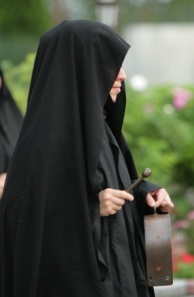 4. Imitation
The command to imitate Christ is found throughout the Gospels. He is the image of perfect obedience, extreme humility, utter chastity, and a life of poverty. To be sure, if a believer only ever read the Gospels, he would be informed on how to live a proper Christian life. However, because man is weak and in need of examples, the monastic life illustrates the Gospel commandments lived out to their perfection. Thus the layman has before him a pragmatic example of how the teachings of the Lord are upheld and practiced. In turn, he emulates those things in an appropriate and prudent way, just as St. Paul encourages: “what ye learned and received and heard and saw in me, these things be practising; and the God of peace shall be with you” (Phill. 4:9).
There is much to be learned and gained from spiritual books, practical guides, and the wisdom of the desert Fathers and Mothers. However, nothing compares to the spiritual benefit brought about by actually being around someone who shares in the grace of God in a deep and intimate way. For whether or not he has “the words of life,” his prayer, his patience, and his virtue are enough to form and inform the humble-hearted that seek his unique, if silent, wisdom. Abba Dorotheos writes: “It is said that a certain brother asked an elder, ‘What shall I do, father, in order to fear God?’ The elder answered, ‘Go and cling to a man who fears God and from the fact that he fears Him, he will teach you to do likewise.’”[10]
Laymen are called to keep the commandments of the Gospel with as much precision as monastics. The monk is not called to one type of life, and the layman to another. No, they are both called to “be perfect even as my Father in heaven who is perfect” (Matt. 5:48), just as St. John Chrysostom taught: “You greatly delude yourself and err, if you think that one thing is demanded from the layman and another from the monk; since the difference between them is in that whether one is married or not, while in everything else they have the same responsibilities… Because all must rise to the same height; and what has turned the world upside down is that we think only the monk must live rigorously, while the rest are allowed to live a life of indolence.”[11]
The only difference between a Christian living in the world and a monastic living in a monastery is that monasticism “rejects any kind of compromise and seeks the absolute”[12], whereas the layman struggles as best he can in the midst of the distracting world. Both are acceptable and blessed in the eyes of God. Both ways are only successful by the grace of God. The layman should not be disheartened by his struggles in “the darkness of the world” (Eph. 6:12). Rather, he should take courage that he is upheld by the prayers of countless monastics, as Bishop Nikolai of Lavreot has stated: “The life of the faithful is supported by the prayers of the monks. This is elucidated by the very fact that the faithful take refuge in such prayers. Just as Moses stretched out his hands and the Israelites conquered the Amalekites, so the monastics lift up their hands to God and we, the faithful who are struggling in the wilderness of this world, conquer the noetic Amalek.” And more significantly, the layman should take courage that “where sin abounded, grace did much more abound” (Rom. 5:20).

5. Encountering Sacred Place
Even if there were no other reason for visiting a monastery, there would remain this one: it is an agios topos, a holy place. “And Moses said, I will go near and see this great sight, why the bush is not consumed. And when the Lord saw that he drew nigh to see, the Lord called him out of the bush, saying, Moses, Moses… loose thy sandals from off thy feet for the place whereon thou standest is holy ground” (Exodus 3: 3-5).
Coupled with the prayers of the monastics, the saints that dwell within the monastery, and the angels that protect it, there are also at least one or more chapels. The presence of a temple of God alone is enough to sanctify a place. And it is in this sanctified place that even without hearing God-inspired words or witnessing miraculous events, the pilgrim is refreshed. His weary and tired body and soul are nourished with more than monastic fare – they are nourished with monastic stillness.
A pilgrim once asked a priest-monk why it was that out of all the monasteries the pilgrim had visited, this one particular well-known monastery was the one in which grace and divine fragrance was the most perceivable. The priest-monk answered that although all monasteries are holy, that that monastery held the typikon to celebrate Divine Liturgy every single day, and confessed people for hours on end, and so as a result it attracted the grace of the Holy Spirit and He dwelt there. As Dr. Constantine Carvanos surmises, “[t]hrough confession at these centers of spirituality, through participation in the moving services of the monks or nuns, and speaking with them, a Christian living in the world is aided by calm refuge from his worldly cares, by being purified, by rediscovering himself, and by tasting of the gifts of the Holy Spirit.”[13]
St. Nikolai Velimirovich records: “When [St. David of Garesja] arrived at a hill from which Jerusalem was visible, [he] began to weep and said, ‘How can I be so bold to walk in the footsteps of the God-man with my sinful feet?’ David then told his disciples that they, being more worthy, should go to worship at the holy places, and he took three stones and began to return.”[14] The saint’s humility was so great that he considered the sight of the Holy Land and even its pebbles to be overflowing with grace. How much more does the grace of a sacred place exceed sight and stones? In this sense the words of St. Theodora hold an even greater significance: “Love stillness. One who is not attached to the vanities of this world is strengthened in soul by stillness, abstinence and silence.”[15] This strength, harnessed by the grace of a sacred place, can then be brought back into the world if treasured and safeguarded through prayer and watchfulness.
 Conclusion:
In conclusion, “if you want to know if someone loves Christ, find out if he loves monasticism,” as the saying goes. Visit monasteries, acquire humble-mindedness, and abstain from judging others – both the believer who is too lax and he who is too strict. “Wherefore seeing we also are compassed about with so great a cloud of witnesses, let us lay aside every weight, and the sin which doth so easily beset us, and let us run with patience the race that is set before us, looking unto Jesus the author and finisher of our faith” (Heb. 12:1-2).
All photos that appear in this article belong to Nektarios and are used with permission.
[1] The Great Canon of Repentance, Song 9, [11].
[2] Archimandrite Zacharias, The Enlargement of the Heart, 174.
[3] Monk Isaiah to Honourable Nun Theodora, Matericon, 160.
[4] Archimandrite Zacharias, The Enlargement of the Heart, 174.
[5] St. Nikodemos, Handbooks of Counsel [Greek], 15-16.
[6] St. Symeon the New Theologian, from Dr. Constantine Carvanos’ article A Discourse for those living in the world, Orthodox Info: http://orthodoxinfo.com/praxis/discourselivingworld.aspx.
[7] Abba Apollo, Sayings of the Desert Fathers, 36.
[8] Philokalia, St. Diadochos of Photiki: “On Spiritual Knowledge and Discrimination: One Hundred Texts”, vol. 1, [12], 255.
[9] St. John Climacus, The Ladder of Divine Ascent, op. cit., 128.
[10] Abba Dorotheos, Practical teaching on the Christian life, “On the Fear of God,” [52], 113.
[11] St. John Chrysostom, Pros piston patera (To the faithful father) 3, 14, PG47, 372- 74.
[12] Professor Georgios Mantzarides, Images of Athos by monk Chariton, http://www.stanthonysmonastery.org/monasticism.php
[13] Constantine Carvanos, Discourse on those living in the world, Orthodox Info: http://orthodoxinfo.com/praxis/discourselivingworld.aspx.
[14] St. Nikolai Velimirovitch, Prologue, May 27.
[15] St. Theodora, Matericon, 85.
http://lessonsfromamonastery.wordpress.com/visiting-monasteries-2/
http://lessonsfromamonastery.wordpress.com/visiting-monasteries-2/
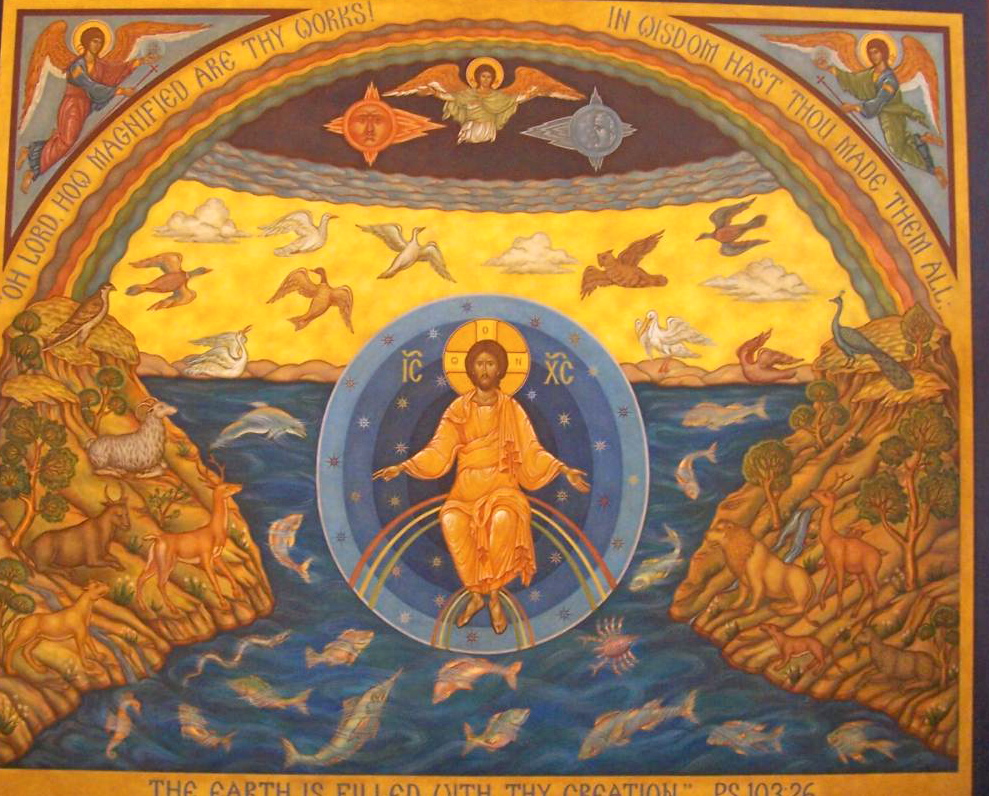
The Creator of All [1]
Metropolitan Avgoustinos (Kantiotes) of Florina
All things were made by him; and without him was not anything made that was made. (John 1:3)
Who is Christ? We hear one, two thousand different opinions. One person says he is a philosopher, another that he is a sociologist, and yet another that he is a poet. Others say still other things. Today’s Gospel reading gives us the correct answer: it says that Christ is God. You believe this? Then you are a Christian. You don’t believe this? Then you are not. You may well belong to one school of philosophy or another, but you are not a Christian!
Christ is God, then. He is not just a man; he is the God-man Jesus of Nazareth, who was crucified and who is God. In this passage, we hear that there was never a time when the Son and Word of God did not exist. There was indeed a time when man did not exist – science even concedes this – but there was never a time when Christ, the second person of the Triune God, did not exist. The Holy Trinity; Father, Son and Holy Spirit. Three suns in one sun; three-sunned Divinity. All Holy Trinity, have mercy on your world!
Further on, the Gospel says that Jesus Christ, the second person of the Holy Trinity, is he through whom all things were made – all things both seen and unseen. “All things,” it says, “were made by him; and without him was not anything made that was made.” (John 1:3). This requires analysis.
These God-inspired words speak of the world’s ontology, of the creation of things in other words. One of humanity’s ten greatest spiritual men, Blessed Augustine (whose name I unworthily bear), says that all the created things around us, from those we see through a telescope to those which may only be seen through a microscope, belong to the following four categories.
To the first category belong those things which are endowed with ‘being’ and being alone. In other words, they simply exist. What are these? They are the dust of the earth, the water, stones, the hills, priceless and useless metals, minerals, but also the heavenly bodies – the stars and even the galaxies.
To the second category belong those things which have something beyond being: they grow. What are these? They are the plants and the trees. Beyond existence, these things grow. Where does a tree begin? As a small seed. This seed then falls to the earth and grows. It is watered and it grows. It sprouts; it grows and develops, becoming a great tree.
On to the third category. According to Blessed Augustine, those things which belong to this category have something beyond existence and growth: they feel. Which things are these? These are the animals. A cute little lamb, for example, exists, grows and feels. It feels pain. O how it suffers these very days at the hands of men who slaughter it for their Paschal feast! Animals feel. Some of them even have senses which are stronger than those of other beings. The eagle, for example, has a sharp eye, he has crystal-clear vision, or what we call an ‘eagle-eye’, which allows him to soar as high as the sun and yet from this height he is able to discern the most miniscule thing on the earth below. The dog has both a very keen sense of smell and excellent hearing. I have read somewhere that in London the police have special dogs, as well as officers equipped with whistles which, when blown, cannot be heard by man. Only the dogs can hear these whistles. When the dogs hear these whistles they run immediately to find the officer calling them. The dog is also the first animal to sense an earthquake; he senses it even before the seismograph.
In summary; rocks have ‘being’, they just ‘are'; the trees both ‘are’ and ‘grow'; the animals ‘are’, ‘grow’ and ‘feel’. And now we have arrived at the peak of the ladder of beings; we have arrived at man. Man is matter, he is earth – we do not deny it! – and thus he has ‘being’. He grows, since from an embryo, from a little child, he grows into a full-grown man. He also feels, for he too experiences pain. He does not have these things alone, however; he also has something beyond these. What does he have beyond these? It is that he thinks; he has a mind. O, the human mind! Let them say, let them shout, that man comes from the ape, from the orangutan! This is a grave error. What separates us from the animals is the ability to think. The mind is a great thing. Next to it, the computer is nothing. The computer is nothing – a toy – next to that incomprehensible piece of equipment which we call the human intellect. It is this which separates us from all other beings. It is by means of the intellect that man understands, that he plans, that he invents, that he creates. Take an ape. Put him in school for ten years. He will not learn the alphabet; he will only grunt! From the time he is a young student, man grows in knowledge, eventually becoming a wise researcher or inventor. He is capable of progress on account of his intellect.
There are, then, four categories of beings. First, those things that ‘are'; second those things that ‘are’ and ‘grow'; third, those things that ‘are’, ‘grow’ and ‘feel'; and fourth, those things that ‘think’. Have we finished with the ladder of beings, I wonder? No! Because there exist not only those being that we see, but also those we cannot see. Those things that we see are few in comparison with those we cannot see. Beyond the world we see is found the invisible world which is infinite and wondrous. It is in this world that the bodiless hosts, the heavenly powers, the angels and archangels, are found, as well as the souls of men which have passed from the earth, and the demons who of their own will fell away from the aim for which they were created.
My brothers, this is the pyramid of beings, “of all things visible and invisible,” and at the peak of this pyramid is the Creator, the Triune God. As the Fathers and teachers of our Church teach, all things are made by the Father, through the Son, in the Holy Spirit. This dogma, this truth of our faith, is affirmed in today’s Gospel which says concerning the Son and Word of the Father: “All things were made by him; and without him was not anything made that was made.” The Son and Word of God, who humbled himself and came down to the earth, was incarnate, was crucified, and who arose from the dead and whose resurrection we celebrate today, is he, “by whom all things were made”.
All things, everything, from the smallest to the greatest, from the grass which we walk on to the huge trees, from the mite to the elephant, and from the atom to the planets and galaxies which swirl in outer space, all things were made by Christ. Do you believe this? Then you are a Christian. You don’t believe this? That is your right. Christ and the Church do not need followers. I am in favour of a Church of quality, not a Church of quantity. Thousands of faithless people are not worth one faithful Christian. He who believes does not say, “I have my opinion”. What is your opinion, sir? What God says here in the Gospel: “All things were made by him; and without him was not anything made that was made.”
To Christ himself, the eternal God – in spite of the atheists and unbelievers of all ages – to him be glory, honour and worship unto the ages of ages. Amen.
[1] From the book Εμπνευσμένα Κηρύγματα Ορθοδόξου Ομολογίας και Αγιοπατερικής Πνοής (Orthodoxos Kypseli: Thessaloniki, 2011), 22-26. Translated by Fr John Palmer.

http://lessonsfromamonastery.wordpress.com/
Οὔτε ἡ πνευματικὴ σωτηρία οὔτε ἡ κοσμικὴ σωτηρία (δηλαδὴ ἡ ἔξοδος ἀπὸ τὴν κρίση ποὺ μαστίζει τὴν ἐποχή μας) μπορεῖ νὰ ἐπέλθει ἀπὸ τοὺς κοσμικοὺς ἄρχοντες. Χρειάζεται πνευματικὴ ἀφύπνισις καὶ μετάνοια ἡ ὁποία νὰ ἑλκύσει τὴν Χάρη τοῦ Θεοῦ, ὥστε αὐτὴ νὰ θεραπεύσει τὰ ἀσθενῆ καὶ νὰ πραγματοποιήσει τὰ ἀδύνατα. Δὲν εἶναι δυνατὸν ὁ Ἅγιος Πορφύριος νὰ εἶπε ὅτι συγκεκριμένος πολιτικὸς ἄρχοντας θὰ σώσει τὴν Ἑλλάδα, διότι μιὰ τέτοια ἄποψη δὲν τὸν ἐξέφραζε. Ὁ ἀφυπνιστὴς τοῦ λαοῦ πρέπει νὰ εἶναι πνευματικὸς ἄνθρωπος, ποὺ θὰ ὁδηγήσει τὸν λαὸ στὴ μετάνοια, ἡ ὁποία θὰ ἐφελκύσει τὴν χάρη τοῦ Θεοῦ καὶ θὰ ὁδηγήσει τὸν λαὸ σὲ ἔξοδο ἀπὸ τὴν κρίση.
Άγιος Πορφύριος
http://www.porphyrios.net/
When a child is Baptized into the Orthodox Church, he is linked to the Church’s spiritual powers, including the intercessory power of the Saint—as one united to Christ—after whom he is named. Throughout his life, the intercession, comfort, and protection of this Saint, as part of the Grace flowing from Christ, is available to him. It is for this reason, indeed, that we Orthodox celebrate, considering birthdays to be of secondary or minor importance.
When adults are Baptized into the Orthodox Church, they must take the name of an Orthodox Saint, if their previous name was not Orthodox. They must also use this name at all times. Otherwise, they will have broken the very bond of Baptism, which includes the establishment of a close and real relationship between the Christian and the Saint to whom he is spiritually joined in that Baptism. In the unthinkable, but all too frequent, case of modernists who Baptize or Chrismate converts and fail to give them Orthodox names, these converts should go to a sober, traditionalist Priest and ask that an Orthodox name be assigned, also asking that this be done in conjunction with a service of supplication to the Saint whose name they are taking. That name should subsequently be used at all times, without exception—among friends, at school, at work, etc. It can be added to a convert’s former name on a driver’s license and other forms of identification, since the law allows the addition of such a religious name, as long as it is not for the purpose of fraud or misrepresentation.
Needless to say, then, the idea of “Church names,” taken from the Latin practice of having confirmation names, is unacceptable to Orthodox and constitutes a perversion of the Church’s teaching. It involves a denial of spiritual consolation which is dangerous and which will have consequences for the believer that will be understood only fully at the Day of Judgment. Those who persist in ignoring Church tradition in this matter are simply playing with disbelief, blasphemy, and their souls.


