Two hundred thirty-five years ago, on November 20th, 1778, Prokhor Moshnin, a tall, blue-eyed, light red-haired youth, the son of a Kursk builder-contractor, entered the Monastery of Sarov. He was leaving the worldly life because he wished to live constantly and wholly in God. He “loved Christ from his youth” and when yet a boy ten years of age was touched by the grace of the Lord: he was healed by the Mother of God, through her miraculous Icon of the Sign. This icon is now with us, in the Russian Diaspora.
Years passed. The youth Prokhor passed through all the monastic obediences, and eight years later was tonsured a monk with the name Seraphim; later, he was ordained to the rank of hierodeacon, and finally, when he had reached the age of 34, he was elevated to the rank of hieromonk, on the very day, the 20th of November, when he had entered the monastery. He withdrew to a cell in the forest wilderness and began the great, mystical life of a hermit, a man of silence, a stylite. But seventeen years after this, he returned to the monastery and began the new, even more difficult struggle of a recluse, which he bore for ten years. In 1820, he opened the door of his recluse’s cell, but lived for several more years in silence, after which, finally, he began his ultimate struggle of elder, teacher and comforter of the Russian people.
But on January 2nd, 1833, he left Sarov and the people entirely and departed to the Lord God. He serenely, blessedly, fell asleep during prayer, kneeling before the image of the Mother of God. Peacefully did “wretched Seraphim,” as that humble hieromonk of the Monastery of Sarov called himself, leave us, in bast sandals or leather stockings, in a sackcloth cassock, with a leather mantle on his shoulders, a brass cross on his breast, bent over, leaning on a hatchet. Seventy years after his repose, on July 19th, 1903, around his grave gathered, perhaps for the last time, Holy Russia, with its pious Tsar. It gathered there reverently to bow down and kiss the holy relics of “wretched Seraphim.” In ecstasy, Holy Russia chanted “Christ is risen!” and glorified the venerable Seraphim, the beloved chosen one of the Mother of God, who had acquired the love of Christ, the great ascetic and prophet, wonder-worker and theologian, comforter and healer, man of prayer who wept for the Russian people.
 St. Seraphim of Sarov
Many times did people come to him, and we would teach them attentively and carefully, like a mother, about the kingdom of God, life in God, the meaning of life on earth, and through those with whom he conversed with such love he now tells us that we should live in continual fellowship with God, the Holy Spirit. Faith in God is faith in what He is, and that He is love; and also that there exists an invisible, divine world, eternal and more real than the visible world, and in assuming its nature man prepares himself for life everlasting: “he will not come to judgment, but will pass from death to life.” Man must come to know this world, to become aware of it every time he is touched by it. This touching comes like a good gift, and the venerable Seraphim called this touch “grace.”
St. Seraphim of Sarov
Many times did people come to him, and we would teach them attentively and carefully, like a mother, about the kingdom of God, life in God, the meaning of life on earth, and through those with whom he conversed with such love he now tells us that we should live in continual fellowship with God, the Holy Spirit. Faith in God is faith in what He is, and that He is love; and also that there exists an invisible, divine world, eternal and more real than the visible world, and in assuming its nature man prepares himself for life everlasting: “he will not come to judgment, but will pass from death to life.” Man must come to know this world, to become aware of it every time he is touched by it. This touching comes like a good gift, and the venerable Seraphim called this touch “grace.”
The meaning of life, in his words, consists of the acquisition of grace, so that, more and more frequently, and finally as an exalted attainment, we may be ever with God the Holy Spirit, abiding in Him always, becoming His child, a fellow heir with our Lord Jesus Christ. “But how can I know if the divine world has touched me? How can I learn to recognize the grace of the Holy Spirit?,” they would ask the venerable one; and he would point directly at the person he was conversing with and say: “We are in the midst of grace right now,” and he taught them and us that it is recognized by spiritual peace, because the heart is warmed by perfect love, by peaceful, humble, spiritual compunction. “They always said to you, reverend sir, that the meaning of life consists of doing good deeds, keeping the fasts, going to church; but this is not how they taught you,” said the venerable one; and he explained that “these works are only the means for living life in God; these works are merely the oil in the lamp which the flame burns, only the wares we trade in; to amass the capital of grace we must perfect those virtues from which the fire of love will burn more brightly.”
This is the meaning of life, and this is what guided the venerable one. The peace of God, the fire of divine love, the venerable one loved with all his soul, and to live in it and only in it the saint departed for the monastery, for the wilderness hut, for the recluse’s cell; and while he was thus making himself steadfast in spirit, he did not wish either to see or speak with men, avoiding all contact with them. We can conjecture that he so carefully and humbly approached his final struggle as elder, consoler and healer of the people because he had tested himself as to whether he could live with men and among men without breaking his fellowship with God.
When the venerable one ended his reclusion, the faithful, Holy Russia, began to descend upon him from all the ends of the land. He stood before it as a living witness to the peace of God, one who shared therein, a living bearer of the fire of grace and the light of divine love. He received the people with a kiss, blessing them and saying, “Christ is risen!,” and calling them “my joy, my treasure.” In the bright light of love, tender, burning love for the people, his image stands forth in our heart. But while rejoicing in this his love, we must remember that in this feeling there lurks the danger that we will oversimplify his image and liken it more closely to ourselves, to our shallow, short-sighted understanding. Do we not, in rejoicing in his love, begin to forget that this was the love of Christ?
Yes, the last years of his life he lived with us and among us; but let us not forget that for thirty years before this he was not only not with us, but with all his loving closeness to us did not want to speak or even to see us. He is not only “ours,” because he was not raised in our midst. He came to us not because he had any need of us: he came to us for the sake of Christ. In the vision he received during his illness, the Mother of God came to him and aid, “This man is one of us.”
We ought never to forget this. On the day when the doors of his cell were opened, there stood before us both a man and a denizen of heaven, because he lived in the divine world, and from thence he brought his own greetings, his own love and care for sick, weeping and loving hearts. His love, compassion and joy are in no way similar to the analogous moods of ordinary men who are good, yet of the soul, not the spirit. Such men easily fall into sentimentality. In the saint there was not the slightest trace of this feeling. He imposed upon people such struggles, the fulfillment of which, as for example the struggle of voluntary poverty on Manturov, for many long years elicited tears and sufferings from those close to him.
Yet the venerable one was not troubled by such tears. Hearing of the sufferings of the fool-for-Christ’s-sake Pelagia Ivanovna, how neither beatings, nor torments of which it is difficult to hear, were able to break her resolve to be a fool-for-Christ’s-sake, he rejoiced in her strength, but did not embitter her with afflictions. The venerable one not only did not approach life like an ordinary man. He lived as though the laws of natural life had lost their power over him. At a distance of seven miles, he saw how a girl was giving alms, and he prayed, falling prostrate on the ground. This is revealed to us by a witness to this miracle, and we are determined to believe that it was given by the Lord to teach us to glorify the saint in a fitting manner.
Yet this picture of the venerable one will not be complete if we do not consider his encounter with a young officer, traditionally held to be one of the Decembrists, when the saint angrily pushed his hands away: “You plotted such a thing, and now you come to me for a blessing? Get away from me!,” he said to him. This meeting is an encounter between revolution and Holy Russia more than a hundred years ago. And how wrathful Saint Seraphim was, seeing the beginning of that villainy! This was a collision of two world views. “One thing is needful: seek ye first the kingdom of God and His righteousness; and all these things shall be added unto you,” says the icon of the venerable one. “Nay,” the face of the officer replies to him, “what is secondary to you is what is most important for us. What you must hold to, we fashion ourselves, in our own way. You submit yourself and your life to God; we do not submit ourselves to anything or anyone.”
This movement prevailed in Russia for a hundred years. The Tsar was slain; the Patriarch was tortured; the people enslaved. But why did this have to be so? Where was the Holy Russia which so loved the venerable one? Its history and life were pushed into the background by secular Russia. This was also Russia, but not profoundly so: a Russia of the soul, not the spirit; of the secular world, not the Church. The venerable Seraphim was a contemporary of Pushkin, Lermontov, Tiutchev, and others. Studying their lives, one would never know that the venerable Seraphim lived at that time, and that Holy Russia, many millions strong, knew him and journeyed thousands of miles to meet him. The writers and poets did not know him as a living man; but seventy years passed, and all of Holy Russia came together with the pious Tsar to kiss his bones and chant in ecstasy, “Christ is risen!”
This secular, soulful Russia, is not alien to the Church. In the writings of Pushkin and Lermontov there are moments of religious inspiration; but all of these are lacking in depth. The Lord Jesus Christ said: “He who is not against you, is for you.” Who will say that this Russia was against? Nay, but on another occasion the Lord also said: “He who is not with you, is against you.” This means that if at the moment when the confession of the Faith is required, a man or society or nation does not have the strength to say, “Yes, I am with you, Lord!” They have apostasized from Him, they are against Him. Soulful, shallow Russia, spiritually indolent, lukewarm, and not fiery, was unable to say this “Yes.”
The venerable one foresaw the great storm and trials of Russia, and said that the Lord would save Russia. He said that, in the eyes of the Lord, there is no better national life than that which is governed by a pious, Orthodox king, that for such a Russia do all the martyrs, righteous ones and saints pray. Of such a Russia did the venerable one speak in spiritual ecstasy, leaping about and clapping his hands, as King David did before the Ark of the Covenant. Such a Russia does not now exist. Or have these men of prayer turned away from us? But what do they want from us? They want what the venerable Seraphim desired and taught. He expected faith from us; he wanted, first and foremost, that we seek the divine world, the kingdom of God and His righteousness, as Christ said in the Gospel (Mt. 6:33). He wants us to submit to this goal ourselves, our thoughts and desires, so that in our life we are not guided by our senses, by our passions and sympathies, but on the contrary, that we eradicate or recast them according to the voice of the righteousness of God. He expects struggle from us, expects commitment to God, expects that we will be fiery, and not lukewarm, spiritual, and not merely soulful. The Lord God has need of men! The righteous pray for us; the venerable Seraphim prays for Russia, and the Lord wishes to save it; but He has need of men, and all the more of Orthodox men, because without them Orthodox Holy Russia cannot be established.
The venerable one calls us to the straight path which is faithful and without compromise. Let us follow him. And when questioned, “Are you with the Church? Are you on the side of righteousness?,” let us answer steadfastly in the affirmative, “Yes!” This is the first and only thing needful, and everything else “will be added unto us,” says Christ.
The content, in brief, of a speech delivered in Belgrade at the solemn assembly of the Brotherhood of Saint Seraphim, on January 15th, 1933.

1. Lord, deprive me not of Thy heavenly and eternal goods.
2. Lord, deliver me from the eternal torments.
3. Lord, if I have sinned in word or deed, with my mind or in thought, forgive me.
4. Lord, deliver me from every need, all ignorance, forgetfulness, indolence, and stony-hearted insensitivity.
5. Lord, deliver me from every temptation and abandonment.
6. Lord, enlighten my heart which evil desires have darkened.
7. Lord, I as a human continuously sin, but Thou as a generous God, have mercy on me.
8. Lord, look upon the weakness of my soul and send Thy grace to help me, so that Thy
holy Name may be glorified in me.
9. Lord Jesus Christ, write the name of Thy servant in the Book of Life, and grant me a
good end to my life.
10. O Lord my God, I have done nothing good in Thy sight; but through Thy compassion,
allow me to make a beginning.
11. Lord, sprinkle into my heart the dew of Thy grace.
12. O Lord, the God of heaven and earth, remember me the sinner, the indecent, the evil
and unclean when Thou comest in Thy kingdom, according to Thy great mercy.
13. O Lord, receive me in repentance and do not abandon me.
14. O Lord, lead me not into temptation.
15. O Lord, grant me good thoughts.
16. Lord, grant me tears, remembrance of death, and compunction.
17. Lord, grant me to confess my thoughts.
18. Lord grant me humility, to cut off my will, and obedience.
19. Lord, grant me patience, long-suffering, and meekness.
20. Lord, plant within me the root of all blessings, Thy fear.
21. Lord, allow me to love Thee with all my soul and mind and heart, and always to do Thy
will.
22. Lord, protect me from evil people, the demons, and passions, and from every inappropriate thing.
23. Lord, as you command; Lord, as you know; Lord as you wish, may Thy will be done in
me.
24. Lord, may Thy will be done, and not mine; through the intercessions and prayers of the
Most-Holy Theotokos and all Thy saints. For Thou are blessed unto the ages. Amen.

Lord Jesus Christ, my God: Thou didst weep for Lazarus and shed tears of sorrow
and compassion for him. Accept my bitter tears also.
Heal my passions through the suffering of Thine holy Passion. Heal the wounds
of my soul through the wounds which Thou didst suffer. Cleanse my blood with Thine
holy blood and unite my body with the fragrance of Thy life-giving body. May the gall
which Thou wast given to drink by Thine enemies sweeten my soul from the bitterness
that the devil has given me to taste. May Thy most-holy body that was stretched upon
the Cross elevate my mind, which has been lowered unto the earth by the demons.
May Thy most-holy head, which Thou didst bow upon the Cross raise my head, which
has been humiliated by the opposing demonic powers. May Thy most-holy hands
which were nailed to the Cross by the transgressors raise me to Thee from the depth of
destruction, just as Thy most-holy mouth hast promised. May Thy face which received
blows and spitting by the impious Jews illumine my face which has been defiled by sin.
May Thy soul, which was upon the Cross and which Thou didst hand to the Father,
lead me to Thee through Thy Grace.
A contrite heart that is required to seek Thee have I not. I have no repentance.
Neither have I compunction nor the tears that return children to their own homeland.
O Master, I have no tears with which to beseech Thee. My heart has become cold from
the multitude of temptations, incapable of being warmed with the tears of Thy love.
But Thou, O Lord Jesus Christ my God, the treasure of all good things: Grant
Thou me perfect repentance and a fervent heart that I may wholeheartedly come forth
to seek Thee. Without Thee, I will become estranged from all good things. Therefore,
grant Thou me Thy Grace, O Good One. May the Father Who didst beget Thee from
His bosom recreate in me the image of Thine icon. I have abandoned Thee; do not
forsake me. I have separated myself from Thee; come forth to find me. And when Thou
findest me, lead me into Thy pastures, and number me amongst the sheep of Thy select
flock, and nurture me with Thy divine mysteries, which dwell within a pure heart,
wherein the brilliance of Thy revelations are made manifest. This brilliance serves as
consolation and refreshment for them who toil in sorrows and various dishonors on
account of Thee. May we all be worthy of receiving this illumination, through Thy grace
and compassion, O Jesus Christ our Savior, unto the ages of ages. Amen.

Βουντού ονομάζεται μια μορφή αφροαμερικανικής μαγικής λατρείας
Η λέξη “Vodoun” (γνωστή και ως: Vu, Vodun, Vudu, Vodou)
Η κυριολεκτική σημασία είναι “αντλώ νερό” και χρησιμοποιείται για να υποδείξει την πλήρη διαδικασία του κύκλου της γέννησης, ζωής, θανάτου και αναγέννησης
Αρχικά παρουσιάστηκε τον 18ο αιώνα στα νησιά της Καραϊβικής και κυρίως στην Αϊτή μεταξύ των μαύρων
Σήμερα συναντά κάποιος τη λατρεία Βουντού εκτός από τα νησιά της Καραϊβικής, κυρίως στις Η.Π.Α.
-Tο Βουντού αποτελεί απ’ τον Απρίλιο του 2003 επίσημη θρησκεία στην Αϊτή.
Σε τι πιστεύουν οι οπαδοί του Βουντού;
-Οι οπαδοί του Βουντού πιστεύουν σε μία υπέρτατη θεότητα το Αγαθό πνεύμα, σε διάφορους αφρικανικούς θεούς που θεωρούνται κατώτερες θεότητες και σε θεοποιημένα πνεύματα προγόνων. Αυτοί οι θεοί και τα πνεύματα ονομάζονται Λόα (Loa).
-Τα Λόα, απαιτούν πιστότητα και αφοσίωση από τους λάτρεις τους. Τα πιο φοβερά και πλέον δαιμονικά Λόα ονομάζονται Guede και έχουν σχέση με το θάνατο, το σεξ, τη μαύρη μαγεία.
-Κάθε οικογένεια ή επιμέρους ομάδες ανθρώπων, συγκροτούν λατρευτικούς κύκλους ενός ή πολλών Λόα, με υποχρεωτική την παρουσία κάποιου ιερέα
Γνωρίσματα της λατρείας Βουντού
-Ο εξαιρετικά έντονος φρενήρης και εκστατικός τελετουργικός χορός.
Η έκχυση αίματος κατά τη διάρκεια της τελετουργίας συνήθως μέσω θυσίας ζώου.
-Η παρουσία ιερέως”χάνγκαν” ή ιέρειας”μάμπο” ως ενδιάμεσου για προστασία.
-Η κατάληψη κυριολεκτικώς των οπαδών -λάτρεων κατά την έκσταση από τα πνεύματα (Λόα).
-Η επικοινωνία ενός πιστού με ένα πνεύμα είναι τιμή για τον πιστό, καθώς το πνεύμα μπορεί την στιγμή της έκστασης να του αποκαλύψει κάτι απ’ το μέλλον του, να δώσει μια προφητεία, έναν οιωνό, ένα σημάδι, μια συμβουλή.
-Η έκδηλη παρουσία του μαγικού – δαιμονικού στοιχείου.
-Δεν είναι σπάνια η ταύτιση με την άσκηση μαύρης μαγείας.
-Ιδίως στις Η.Π.Α. και κυρίως στη Νέα Ορλεάνη, είναι γνωστές οι κούκλες Βουντού, που στις διάφορες αποκρυφιστικές και μαγικές τελετές χρησιμοποιούνται ως υποκατάστατα και ομοιώματα των ανθρώπων, στους οποίους θέλουν να προξενήσουν πόνο, ασθένεια ή κακό.
-Τον τελευταίο καιρό πολλά ηλεκτρονικά παιχνίδια έχουν παιχνίδια Βουντού όπου όταν χάνεις κάτι παθαίνεις
-Επιχειρείται έτσι η εξοικείωση ακόμη και των παιδιών με αυτή τη μορφή μαγείας έτσι ώστε όταν κάποιος έρθει στην πραγματικότητα σε επαφή με -παρόμοιες καταστάσεις να τις θεωρεί γνωστές και ακίνδυνες
Η αγορά γέμισε από κουκλάκια Βουντού
-Και από σχετικά «φυλαχτά»
Μπορεί κάποιος με Βουντού να μου κάνει κακό;
-Όχι……..εάν
-Συμμετέχω συνειδητά στο μυστήριο της εξομολόγησης kαι της Θείας Ευχαριστίας
-Είναι σημαντικό να φορώ πάντοτε σταυρό και να αποφεύγω να φορώ σύμβολα που δεν γνωρίζω
Του τομέα αιρέσεων και παραθρησκείας Ι.Μητροπόλεως Καστοριάς
http://iliaxtida.wordpress.com

«Η αυθεντικώς αγία έμπνευσις, η Άνωθεν εκ του Πατρός εκπορευομένη, εις ουδένα επιβάλλεται δια της βίας, αλλ’ αποκτάται, ως και παν άλλο δώρον του Θεού, δι’ εντατικού αγώνος προσευχής.
Τούτο δεν σημαίνει ότι ο Θεός, τρόπον τινά, αμείβει δια τους κόπους, αλλ’ ότι παν το δια συνέσεως και δια παθημάτων αποκτώμενον γίνεται αναφαίρετον κτήμα του ανθρώπου δια την αιωνιότητα.
Είναι απαραίτητον εις πάντας ημάς, όπως αναγεννηθώμεν πλήρως δια της ενεργείας της χάριτος και αποκαταστήσωμεν εν ημίν την ικανότητα να προσλάβωμεν την θέωσιν…Ο Θεός παραδίδει όντως εις ημάς την ζωήν Αυτού, ως προσωπικόν ημών κτήμα, υπό την πλήρη έννοιαν της λέξεως.
Η προαιώνιος Θεία δόξα κατοικεί εντός των λελυτρωμένων υπ’ Αυτού, και τούτο, ουχί ως τι επιπρόσθετον –αλλότριον της φύσεως ημών-, ουχί ως παρουσία εν ημίν πράγματος «ξένου» και «αδίκου». Ουχί. Η αληθής θέωσις έγκειται εις το ότι η λογική φύσις μετέχει της ανάρχου ζωής του Ιδίου του Θεού κατά τρόπον ενεργόν και αναφαίρετον εις τους αιώνας. Εν άλλαις λέξεσιν, η ζωή του Θεού «υποστασιούται» εν τω ανθρώπω δια του αυτού τρόπου, δι’ ου σαρκωθείς ο Θεός ενυποστασίασε –προσέλαβεν εν τη υποστάσει Αυτού- την κτισθείσαν υπ’ Αυτού μορφήν της υπάρξεως ημών.
Εν τω μέλλοντι αιώνι η ενότης του Θεού μετά του ανθρώπου θα καταστή πλήρης εν παντί τω περιεχομένω του Είναι Αυτού, εκτός, εννοείται, της ταυτότητος κατά την Ουσίαν. Η τελευταία αύτη είναι αμέθεκτος υπό των κτισμάτων και παραμένει πάντοτε απρόσιτος εις πάσαν κτισθείσαν ύπαρξιν: Αγγέλους και ανθρώπους. Δια της συνεπούς διαμονής εν τη σφαίρα των εντολών του Χριστού θεραπεύεται ο εκ της αμαρτίας ημών θάνατος, και η ζωή ημών άπασα διαπεράται υπό του Ακτίστου Φωτός της Θείας Αιωνιότητος.
Όταν η ψυχή κατά τρόπον υπαρκτικόν άπτηται της αιωνιότητος ταύτης, τότε εκπίπτουν αφ’ ημών τα χαμερπή πάθη. Απαλλασόμεθα της αδελφοκτόνου πάλης προς απόκτησιν επιγείων προνομίων, κατέρχεται εφ’ ημάς η «ειρήνη του Χριστού» και λαμβάνομεν την δύναμιν «να αγαπώμεν τους εχθρούς»… Η ειρήνη του Χριστού είναι πολυτιμοτέρα παντός θησαυρού, πάσης χαράς και απολαύσεως επί της γης. Είναι αρκετόν εις ημάς να έχωμεν ολίγην τροφήν, να είμεθα υπό στέγην και το σώμα ημών να είναι κεκαλυμμένον ένεκα του ψύχους και της αιδούς, προκειμένου ο νους ημών –το πνεύμα ημών- να είναι ελεύθερος να βυθίζηται εν τη μελέτη του Θείου Είναι, του υπό του Χριστού αποκαλυφθέντος εις ημάς».
(Απόσπασμα από το βιβλίο του γέροντα Σωφρόνιου Σαχάρωφ, «Οψόμεθα τον θεό καθώς εστί»)
http://www.agioritikovima.gr
Lord Jesus Christ, sweetest Father, God and
Lord of mercy, and Creator of the entire universe:
Look upon my humility and forgive all my sins
which I have committed all the years of my life up
to this very day and hour. Send forth Thine All-
Holy Spirit, the Comforter, so that He may teach,
illuminate, and safeguard me so that I no longer
sin, so that with a pure soul and heart I may adore,
worship, glorify, thank, and love Thee with all my
soul and heart, my sweetest Savior, Benefactor, and
God, Who is worthy of all love and worship. Yes,
good eternal Father, co-eternal Son, and All-Holy
Spirit, count me worthy of enlightenment and
divine spiritual knowledge, so that by beholding
Thy sweet grace I may bear the burden of this vigil
tonight, and render unto Thee my prayers and
thanksgiving, through the intercessions of the
Most Holy Theotokos and all the Saints. Amen.

Schema-Archimandrite Gabriel (Bunge)
You’ve asked me to speak to you about prayer. It’s doubtlessly one of the most important subjects in a Christian’s life, because when one scrutinizes the Holy Fathers’ doctrine on prayer, one notes very quickly that the human person is only himself in the act of prayer. I shall return to this aspect.
Like everything else in life, prayer is a process that grows and evolves according to the rhythm of our human life. Therefore, I’d first like to speak to you about the ages of the spiritual life. I’ll base myself essentially on the teaching of Evagrius of Pontus, because I know him the best and also because he was one the first Desert Fathers to synthesize and put into writing the doctrine of the first monastic Fathers about prayer.
You might know that Evagrius was the disciple par excellence of Macarius the Great, who was himself the disciple of Anthony the Great. Therefore we are at the third generation of monasticism, which had already accumulated a rich experience. Thanks to his exceptional philosophical, theological, and spiritual culture, Evagrius was able to present the process of the spiritual life in a coherent manner. Evagrius had first been a disciple of Basil the Great, and then of Gregory the Theologian, and later in the desert – as I’ve already said – of Macarius the Great, as well as of other Fathers of this era. Thus, one simultaneously finds in him the stamp of the theology of the Cappadocian Fathers and the spiritual, and even mystical, experience of the Desert Fathers.
In a manner that might at first glance appear a bit unsophisticated, Evagrius defines Christianity as the doctrine of Christ our Savior that is divided into praktike [ascetic discipline], physike [natural contemplation], and theologike [theology].
Praktike is the practice of the Evangelical commandments. Physike – physis is “nature” – is the indirect contemplation of God by means of His works, of His creatures. Finally, theologike – theology – is the immediate knowledge of God Himself and coincides with what we today call, using a modern term, “mysticism.”
In modern terms, we can speak of three different ages because, as in normal physical life, we pass from one phase to another. Man progresses slowly but, contrary to normal physical life, there is nothing automatic between the various stages of the spiritual life. That is to say, many people remain their entire lives at the level of the practice of the Evangelical commandments.
The goal of this first stage or age – which is that of infancy or childhood – is to attain, with God’s grace, purity of heart. Therefore, this is a very important aspect, because one cannot speak of the spiritual life and of the following stages – contemplation of God, first indirect and then immediate – without purity of heart.
Thus, with the grace of God, man can arrive at purity of heart (this is also referred to using a term from ancient philosophy: apatheia), which itself has Christian charity as its daughter. Thus, freedom from the passions (apatheia) is the fruit of praktike, but also has a daughter: Christian charity (agape), which is the Christian virtue par excellence. This charity, Evagrius says, is the door to natural contemplation, that is, to the contemplation of God’s works.
But the next step or age – that of seniority or wisdom, of the contemplation of God’s works – is not arrived at automatically, because for man to be able to know God immediately, God must reveal Himself to him; He is free, He is a Person. He does so only when He judges man to be worthy of such a revelation.
All of this might seem a bit abstract to you, and you might pose some questions about it. But I think that it’s important in the spiritual life to know the road; not to believe, for example, that one can satisfy oneself for one’s entire life only reciting or listening to the Psalms or to conventional prayers.
You can also easily imagine that corresponding to these three ages of the spiritual life are three manners of praying. At first, man recites the Psalms and conventional prayers – which is, of course, excellent. But when he is called to ascend higher, when he contemplates the works of God, then his prayer, which had previously been supplication (as it is in the Psalms), becomes a prayer of praise. Man sings the praises of God for all that He has done. Then at the summit of this height something very mysterious takes place, about which one can no longer speak with the usual words and concepts. Evagrius does not do this; he speaks in Biblical images. This is a highly symbolic language, which one needs to known how to decode. And even if you have decoded it, ultimately you can understand exactly what it means only if you’ve had this experience.
But one can say – and Evagrius does say – that this is a dialogue or conversation with God without any intermediaries. What are these intermediaries? Above all, the creatures that speak about God, but aren’t God. These are the concepts that our spirit forges through its contact with reality. These are concepts or ideas about God, but which aren’t God.
I will stop here, but something very mysterious then happens, something in which God completely takes the initiative. Evagrius’ language on this subject is very significant: he speaks of manifestation, apparition, visit, et cetera, on God’s part. All this language indicates that there’s someone, the supreme Person of God, Who reveals Himself to His creature and makes Himself known and understood by him. But the curious thing – which is where I’ll stop – is that the man who has reached this stage is not conscious. The contemplative – the one who sees God – is, as it were, in a state of sleep. When we sleep, we do not know that we’re asleep. Thus, curiously, the contemplative doesn’t know; he finds himself in an entirely peculiar state; he is here and is not here. He isn’t conscious. It’s not ecstasy, in which man goes out of himself or where he loses his consciousness. It’s nothing like that.
I will conclude this short exposition with a word from the Curé d’Ars, whom you might not know. He was a French priest of the nineteenth century, a saint of the Catholic Church. One day he found an old man, an old peasant, in his church, sitting on a bench and not appearing to be doing anything; he wasn’t even praying the rosary. He asked him: “What are you doing here?” In his old French, he said: “I’m looking at Him; and He’s looking at me.” That is the mystery.

God’s providence leads us through life; and how good it is for those who can hear it in time, who try to understand God’s will for themselves. If we make plans for one thing or another but find numerous obstacles on our path to attaining it, we have to slow down and try to discern—is this plan God’s will for us? Sometimes the Lord protects us from danger, holds us back from our impulsive race through life, but we don’t understand it, we keep fussing, insisting upon our own will, instead of simply stepping back, waiting a bit, trying some other way...
God’s will is revealed through circumstances in our life. St. Ambrose of Optina used to advise people, “Go where they lead you, look at what they show you, and always say, ‘Thy will be done!’” This seems very hard for us in the modern world; in fact it seems downright impossible. How could we, intelligent people, who know everything and are the creators of our own destiny, go wherever they lead us?! Why, they could lead us anywhere! But the saint was in no way talking about breaking the commandments; he was instructing us to see signs from God in our lives, to seek God’s will in circumstances, in coincidences that are not really coincidences at all.
The elder taught: “Every human destiny is in God’s hands. The person who commits himself to God’s Providence is under special care.” Also: “An asked-for cross is hard to carry; it is better in simplicity to give yourself over to God’s will.”
His faithful spiritual friend St. Joseph of Optina advised, “You should live as circumstances dictate, because they do not dictate accidentally, as many of our modern and new-fangled know-it-alls think. Everything happens to us through God’s Providence, which continually cares for our soul’s salvation.”
These thoughts came into my head when I heard my first spiritual instructor, Fr. Savvaty, tell me about the life of Nun Paula. I myself knew her—I recall a short, helpful, amiable sister of the Kazan Convent of St. Triphon. She was no longer young; she had suffered a stroke and moved about with difficulty. But God’s Providence was very clearly seen in her fate.
Liudmila, as she was called in the world, learned from her pious grandmother how to pray and go to church when she was still young. She loved to make pilgrimages to monasteries. Once when she was visiting a Moldavian monastery she became acquainted with the Abbess—a frail, tiny woman, outwardly ordinary in every respect. She wore an old ryassa, and performed the most menial tasks, like taking out the garbage. Liudmila learned that this seemingly unremarkable woman was respected as a very spiritual eldress.
The eldress talked with Liudmila and gave her some advice: to go to a monastery. “My child it will be better for you in a monastery than in the world.”
But Liudmila decided not to follow this advice—she got married. Family life did not turn out well for her. Her husband died, and all her hopes for family happiness were shattered. Not long after this her mother also died, and then her uncle. She had no other relatives, and so the young woman was left completely alone. She worked as a nurse, and went to church often. As time went on, she recalled the abbess’s words.
She lost all interest in worldly life, and nothing here attracted her. When Liudmila turned forty, she signed her one-room apartment over to an elderly woman entirely unrelated to her and left her home to live at a church somewhere. She was sitting in a bus station and thinking, where should she go now?
Have you ever experienced a similar situation, when it seems that all the doors are shut but you still have to decide which one to knock at? Or you think perhaps you should simply wait until one of them just flings open? It seems to me that I understand what Liudmila felt at that moment.
I felt roughly the same way one cold morning in January in an empty apartment—all the doors were closed. It seemed like yesterday all was joyful and noisy, and I was happily busy with my children, my husband, and a job I loved, where I had worked for twenty years. My husband died. My children grew up and had their own families. Of course they still love their mother, but they no longer need me like they did before. Then the reorganization and merger of several organizations left me and my colleagues without work overnight. How much of my strength and soul I left at that job, and suddenly I was no longer needed.
I remember that morning, how I arose early and drank a cup of coffee. Then, without turning on the light, I sat down in my armchair. A dark, winter morning was progressing and I just sat thinking—I am no longer in any hurry. No one is waiting for me.
But just when it seemed that all the doors were closed, the Lord clearly and authoritatively revealed His Providence to me: I had been given a blessing to go to Optina. Work, obedience, and a place to live were found. I began to write. When my first story found its reader, I wept. And my spiritual father said that the Lord was beside me throughout all those trials.
So there was Liudmila, sitting as I once sat, undecided, and it seemed to her that all the doors were closed. She waited for of sign, some indication. There were only a few people at the bus station. Suddenly she saw a familiar priest—Fr. Savvaty had come to Chusovoy on monastery business. Liudmila had visited that monastery, and when she recognized that priest, she went to get his blessing. The Lord arranged that she should feel like sharing her problems and anxieties with the priest. Fr. Savvaty listened to her story, and blessed her to go to the Kazan Convent of St. Triphon.
She went, and stayed there till to end of her life.
The Kazan Convent of St. Triphon is located on Miteinaya Hill. From the lofty hill you can see the forest, the fields, and the Chusova River, which is rather wide in these parts. In the summertime there are a profusion of greenery and the buzz of insects, the chirping of birds, all is awash with sunshine, warm rays caressing and warming. In the monastery garden grow vegetables, potatoes, and fragrant herbs, bursting with the juices of summer. In autumn are the golden forests and auburn grasses, the smell of falling leaves, frost crunching under foot... The first snow falls gently upon the river slipping into winter slumber...
In all, this land is beautiful every season of the year. Liudmila never wearied of admiring the ever changing views and colors of this vast landscape spreading from the top of the hill.
She lived in the monastery for twelve years, conscientiously fulfilling her obediences, which were: carrying water on a yoke to the bathhouse and kitchen, and later working in the almshouse for the aged. She had taken upon herself the ascetical task of caring for the bedridden elderly women. This is a particularly difficult obedience; you have to treat their bedsores, and endure the unpleasant smells of sickness. On Miteynaya Hill even now there is no running water, none of the comforts of the city, and in those days they did not have all the items for personal hygiene, pampers and so forth that we take for granted. Especially during the summer heat this task was not an easy one, and not everyone was able to bear it.
Liudmila never murmured; she put her whole soul into caring for the babushkas; and when one of them would die, she would wash her in preparation for burial, and read the psalter over her.
Despite all the hardships in her monastery, Liudmila found peace and rest for her soul, and finally felt that this was the place where she was destined to live. Such strange things these are—peace and rest of the soul. You can lose them in the most comfortable circumstances, overflowing with money and surrounded by expensive accoutrements, having a successful career and a powerful position.
But you can find it in a poor monastery, in prayer and obedience. Rejoicing in every minute of your life—the long, beautiful monastic services, an amiable meal in the refectory, the living waters of the holy spring that renew your strength. You immerse yourself in the spring, climb the hill, and there you see the chapel, the field and forests, and your spirit soars. The Lord sends such abundant grace that it seems you could simply fly away across the expanses, unburdened by the everyday buy-and-sell, light and free.
Sometime she would share her longings with her spiritual father:
—Batiushka, well, I pray to God and ask Him, “Lord, I am so afraid of a long, hard death! I will bear everything without murmuring, but still I ask You for a shameless, blameless, peaceful end, having received the Divine Mysteries. Please, don’t let me be bedridden for a long time, don’t let me suffer overmuch, so that others will not have to suffer taking care of me, let me die easily, without any bedsores...”
And by her prayers, the Lord gave her just such a death. At first she had a minor stroke. She received the small monastic tonsure, went to church, and prayed. One time, Sr. Paula was at the services and received Communion. She listened to the prayers of thanksgiving, felt a weakness in her legs, sat down on the bench in the church, and five minutes later her soul passed peacefully on to the Lord.
The Lord grant thee according to thy heart, and fulfill all thy purposes.[1]
For Thou, O Lord, art good and gentle, and plenteous in mercy unto all them that call upon Thee.[2]
Olga Rozhneva
Translation by Nun Cornelia (Rees)
 «Εάν μια μέρα με δεις “γέρο”… εάν λερώνομαι όταν τρώω και δεν μπορώ να ντυθώ… έχε υπομονή. Θυμήσου πόσο καιρό μου πήρε για να σου τα μάθω…
Εάν όταν μιλάω μαζί σου επαναλαμβάνω τα ίδια πράγματα, μην με διακόπτεις, άκουσε με. Oταν ήσουν μικρός κάθε μέρα σου διάβαζα το ίδιο παραμύθι μέχρι να σε πάρει ο ύπνος.gramma-patera
Όταν δεν θέλω να πλυθώ μην με μαλώνεις και μην με κάνεις να αισθάνομαι ντροπή… Θυμήσου όταν έτρεχα από πίσω σου και έβρισκες δικαιολογίες όταν δεν ήθελες να πλυθείς. Όταν βλέπεις την άγνοιά μου στις νέες τεχνολογίες, δώσε μου χρόνο και μη με κοιτάς ειρωνικά, εγώ είχα όλη την υπομονή να σου μάθω το αλφάβητο.
Όταν κάποιες φόρες δεν μπορώ να θυμηθώ ή χάνω τον συνειρμό των λέξεων, δώσε μου χρόνο για να θυμηθώ και εάν δεν τα καταφέρνω μην θυμώνεις… Το πιο σπουδαίο πράγμα δεν είναι εκείνο που λέω αλλά η ανάγκη που έχω να είμαι μαζί σου και κοντά σου και να με ακούς.
Όταν τα πόδια μου είναι κουρασμένα και δεν μου επιτρέπουν να βαδίσω μην μου συμπεριφέρεσαι σαν να ήμουν ένα “βάρος”, έλα κοντά μου με τα δυνατά σου μπράτσα, όπως έκανα εγώ όταν ήσουν μικρός και έκανες τα πρώτα σου βήματα.
Όταν λέω πως θα ήθελα να “πεθάνω”… μη θυμώνεις, μια μέρα θα καταλάβεις τι είναι αυτό που με σπρώχνει να το πω. Προσπάθησε να καταλάβεις πως στην ηλικία μου δεν ζεις, επιβιώνεις. Μια μέρα θα ανακαλύψεις ότι παρόλα τα λάθη μου πάντοτε ήθελα το καλύτερο για σένα, για να σου ανοίξω τον δρόμο.
Βοήθησέ με να περπατήσω, βοήθησέ με να τελειώσω τις ημέρες μου με αγάπη και υπομονή.
Σε αγαπώ παιδί μου…»
dreamfm.gr/
 Ήταν κάποτε ένας άνθρωπος ευλαβής που ονομαζόταν Αγαθόνικος. Αυτός είχε διδαχθεί, ακόμη από την παιδική του ηλικία, να λέγει μπροστά στην εικόνα της Παναγίας, τον ύμνο αυτό:
«Θεοτόκε, Παρθένε, χαίρε Κεχαριτωμένη Μαρία, ο Κύριος μετά σου. Ευλογημένη, συ εν γυναιξί και ευλογημένος ο καρπός της κοιλίας σου. Ότι Σωτήρα έτεκες, των ψυχών ημών».
Αργότερα έκανε μια ζωή με πολλές φροντίδες και έλεγε σπανιώτερα αυτόν τον ύμνο της Κυρίας Θεοτόκου. Κατόπιν σιγά σιγά έπαυσε να τον λέγη.
Ο Θεός όμως, ο Οποίος δεν θέλει τον θάνατο του αμαρτωλού, έστειλε στο σπίτι του έναν ερημίτη από την Θηβαΐδα για να τον ελέγξει διότι εξέχασε αυτόν τον ύμνο της Κυρίας Θεοτόκου. Ο Αγαθόνικος απήντησε στον ερημίτη μοναχό ότι έπαυσε να τον λέγει, διότι, παρότι τον έλεγε για πολλά χρόνια, όμως δεν ευρήκε καμμία ωφέλεια.
Τότε ο ερημίτης του είπε: «Φέρε στον νου σου τυφλέ και αχάριστε, πόσες φορές σε εβοήθησε αυτή η δοξολογική προσευχή και σε έσωσε από διάφορους πειρασμούς!
Θυμήσου, όταν ήσουν ακόμη παιδί, πως λυτρώθηκες από πνιγμό κατά ένα θαυμαστό τρόπο! Ενθυμήσου, όταν σε εκτύπησαν πολλοί γείτονες σε μία λακκούβα που είχες πέσει κι όμως έμεινες ατραυμάτιστος! Θυμήσου ακόμη, όταν ταξίδευες κάποτε με κάποιον φίλον σου, επέσατε και οι δυό σας από την καρότσα!
Αυτός έσπασε το πόδι του και συ δεν έπαθες τίποτε. Δεν γνωρίζεις ότι ο φίλος σου είναι κάτω αδύνατος από μία ασθένεια, ενώ εσύ είσαι υγιής και δεν αισθάνεσαι κανένα πόνο;
Και, όταν του έφερε στην μνήμη όλα αυτά τα θαυμαστά έργα, στο τέλος του είπε: «Να ξέρης ότι όλες αυτές οι δυστυχίες και ατυχίες που ήλθαν στην ζωήν σου, απομακρύνθηκαν από την θεία Σκέπη της Υπεραγίας Θεοτόκου, χάρις στην μικρή σου αυτή δοξολογική προσευχή, την οποίαν έλεγες κάθε ημέρα ενώπιόν της.
Δώσε λοιπόν προσοχή και συνέχιζε να προσεύχεσαι και στο μέλλον με την προσευχή αυτή και η Μητέρα του Κυρίου μας δεν θα σε εγκαταλείψη ποτέ». Έτσι κατάλαβε ο Αγαθόνικος και δεν άφησε πάλι αυτή την προσευχή.
Ούτε εμείς να μην αφήνουμε να περνά μία ημέρα χωρίς να προσευχηθούμε μ αὐτή την προσευχή μπροστά στην Κυρία Θεοτόκο κι έτσι θα φυλαγώμεθα από πολλές δοκιμασίες και πειρασμούς στην ζωή μας.
Πηγή: imverias.blogspot.gr

Η ζωή και οι αγώνες του Γέροντος π. Κλεόπα Ηλίε
1η Μαρτίου 1998
Στο Ονομα του Πατρός και του Υιού και του ‘Αγιου Πνεύματος.
Πανοσιώτατε πάτερ ‘Ηγουμενε, Πανοσιώτατοι Πατέρες και ‘Αδελφοι, έτσι όπως σας βλέπω όλους, αγαπητοί μου, έτσι επιθυμώ να σας ιδώ όλους και στον Παράδεισο, στις απέραντες παραδεισένιες χαρές, διότι όλοι είσθε στην υπηρεσία του Σωτήρος μας Χριστού και της Παναγίας Μητρός Του και ο καθένας σας κάνει υπακοή κατ’ ευθείαν στον Χριστό και στην Μητέρα του, οπουδήποτε και να υπηρετήτε.
Οταν σας βλέπω, πόσο χαίρομαι! ‘Αλλα πολλούς δεν σας γνωρίζω, διότι σπανίως έρχομαι εδώ. Εχω τόσο κόσμο στο κεφάλι μου και είμαι και ασθενής. ‘Αλλα γνωρίζω μερικούς από εσάς, που έρχεσθε για εξομολόγησι, οι οποίοι είναι και οι παλαιότεροι. . . ‘Εγω επιθυμώ όλοι, απολύτως όλοι να πάτε στην αιώνια χαρά και ούτε ένας, Θεός φυλάξοι, στα αιώνια βάσανα.
‘Αγαπητοι μου Πατέρες και ‘Αδελφοι, να γνωρίζετε ότι η ‘Εκκλησια μας είναι η πνευματική μας Μητέρα. Αυτή μας ανεγέννησε στο Βαπτισμα «δι’ ύδατος και Πνεύματος». ‘Ακουσατε τι λέγει ο ‘Αποστολος Παύλος ότι ελάβαμε το χάρισμα της παλιγγεννεσίας και της ανακαινίσεως του ‘Αγιου Πνεύματος. ‘Απο τότε όλοι εμείς είμεθα παιδιά κατά Χαριν του Θεού, διότι εβαπτισθήκαμε στο Ονομα της ‘Αγιας Τριάδος.
Γι’ αυτό σας παρακαλώ μέσα από την καρδιά μου να αγαπάτε την Μητέρα ‘Εκκλησια! ‘Ακομη, όσο σας είναι δυνατόν, ημέρα και νύκτα να πηγαίνετε στην ‘Εκκλησια.
Οσοι είναι γεροντώτεροι και καχεκτικοί στο σώμα να μένουν ολιγώτερο. Οσοι όμως είναι νεώτεροι να μένουν περισσότερο χρόνο, διότι η λειτουργική ζωη της ‘Εκκλησιας πλουτίζει τον νου του καθενός με την Χαρι του Παναγίου Πνεύματος, αρκεί ο ίδιος να έχη ευλάβεια στις ‘Ιερες ‘Ακολουθιες.
‘Αγαπητοι μου, εγώ ο αμαρτωλός και ανάξιος είμαι γέρων-86 ετών- με έξι εγχειρήσεις, με το δεξί χέρι σπασμένο και βαλμένο στον γύψο 32 ημέρες, αύριο-μεθαύριο θα ψάλλετε και για μένα το: <Αιωνία αυτού η μνήμη»! Τι περιμένω ακόμη; ‘Ο 89ος Ψαλμός μας λέγει: «Αι ημέραι των ετών ημών εν αυτοίς εβδομήκοντα έτη, εάν δε εν δυναστείαις ογδοήκοντα έτη, και το πλείον αυτών κόπος και πόνος>. ‘Εγω εισήλθα σ’ αυτό τον κόπο και πόνο. ‘Εγηρασα, 86 χρόνια εσυμπλήρωσα τώρα, στις 10 ‘Απριλιου.
‘Αγαπητοι μου Πατέρες, σας παρακαλώ με όλη μου την καρδιά, όσοι έχετε αγάπη και ημπορείτε, να μη με ξεχνάτε στις προσευχές σας. Να με μνημονεύετε.
‘Εγω έχω αγάπη για όλους σας, όταν σας βλέπω στην υπηρεσία του Κυρίου και της Παναγίας μας. Ετσι επιθυμώ να σας βλέπω και στον Παράδεισο όλους, αγαπητά μου παιδιά!
Το Μοναστήρι μας είναι ένα Μοναστήρι με καλή μοναχική τάξι. Δηλαδή δεν τρώγουμε κρέας, η εξομολόγησις είναι τακτική, οι ‘Ακολουθιες επιτελούνται κατά το Τυπικό του αγίου Σαββα του ‘Ηγιασμενου. . .
Οταν ήλθα εγώ εδώ ευρήκα 14 Πατέρες, που φορούσαν τσαρούχια και με μπότες μέχρι τα γόνατα και με κομποσχοίνια στα χέρια από ξύλινες χάντρες. . . Εφερα μαζί μου και τον αδελφό μου Βασίλειο. Οταν ήλθαμε εδώ, είχαμε 15 χρόνια και δεν ξέραμε τίποτε. . .
Οταν είδα στην τράπεζα του φαγητού όλους τούς Μοναχούς και τον Γεροντα ηγούμενο, άκουγαν και διδακτικούς λόγους του αγίου Θεοδώρου του Στουδίτου από τον άμβωνα της τραπέζης. Τοτε ερώτησα τον ‘Αδελφο μου: «Τι έχουν εδώ πανήγυρι;»
Εμεινα βέβαια λίγο και στην Σκήτη Κοζάντσεα, αλλά εκεί η τάξις δεν ήτο κοινοβιακή, αλλά καθένας είχε το ιδικό του φαγητό και το ιδικό του σπίτι. «’Αδελφε, δεν είναι πανήγυρις», μου είπε. Ετσι στέκονται στην τράπεζα του φαγητού πάντοτε όλοι οι μοναχοί! ‘Ο Γεροντας εδιάβαζε τον λόγο. Αυτός λειτουργούσε και ζούσε μόνο με την Θεία Κοινωνία περίπου 12 χρόνια. Μονο το Σαββατο και την Κυριακή γευόταν λίγο από την τράπεζα μαζί με όλους τούς Πατέρας. Γνωρίζω αυτά διότι ήμουν μάγειρος. ‘Ο Θεός να αναπαύση τον μακαριστό Γεροντα μου π. ‘Ιωαννικιο. Είχε μεγάλο φόβο του Θεού και δυνατή πίστι! Μ’ έκειρε μοναχό το έτος 1937 στην περίοδο της Μεγάλης Τεσσαρακοστής. Τα ενθυμούμαι όλα.
*Ητο ένας πατήρ Νικόλαος Γκραδινάρου με μακριά γενειάδα. Αυτός είπε, όταν με μετέφεραν μπροστά στο Αγιο Βήμα: «Πανοσιώτατε πάτερ, να του δώσουμε το όνομα Κλεόπας, διότι δεν έχουμε εδώ άλλον μ’αυτό το όνομα!» Και ο Γεροντας έβαλε το ψαλίδι στο χέρι και με ωνόμασε Κλεόπα. Ετσι ήτο γραμμένο! ‘Ο Θεός να τον αναπαύση! Εχω το χαρτι μνημονεύσεως όλων αυτών που απέθαναν εδώ από τότε& έχω και ονόματα επισκόπων και πατριαρχών. Οσο θα είμαι σ’ αυτή την ζωη, θα τούς μνηνμονεύω καθημερινά.
Σας παρακαλώ, αγαπητά μου παιδιά όλους σας, να μη με ξεχνάτε στις άγιες προσευχές σας! και έτσι όπως σας βλέπω όλους εδώ, έτσι να σας βλέπω και στον Παράδεισο, στην ατελεύτητη και αιώνια χαρά.
Το έλεος της Παναγίας Τριάδος και η σκέπη της ‘Υπεραγιας Θεοτόκου να είναι με όλους σας, αγαπητοί μου, και όλοι να υπάγετε στον Παράδεισο. ‘Αμην.
Μετάφρασις-επιμέλεια υπό Μοναχού Δαμασκηνού Γρηγοριάτου
Ιερά Μονή Οσίου Γρηγορίου
Άγιον Όρος Άθω
1999
Αναβάσεις
15 Οκτωβρίου 2013
http://www.diakonima.gr

Today's life is full of stress. What is it that makes it this way? We seem to have all the comforts we could possibly imagine. Even in the most well off people there is still this sense of anxiety and busyness. Is it our worldly comforts that are the culprit?
Elder Paisios offers some thoughts on this subject. He is direct in saying, yes, it is these worldly pleasures that are at the root of the problem.
He says,
Worldly stress is the result of worldly happiness, of worldly pleasures and self-indulgence. Educated externally and being full of anxiety, hundreds of people (even young children) are driven to psychoanalysis and psychiatrists. New psychiatric hospitals are being built and young psychiatrists go on for post-graduate studies. Many of them do not even believe in God or accept the existence of the soul. How can these people help the human soul when they themselves are full of anxiety? How can one feel truly comforted if he does not believe in God and in the true and eternal life after death? When man grasps the deeper meaning of this true life, stress goes away, divine consolation comes and he is healed...The answer to our anxiety is not drugs, alcohol, tranquilizers or psychiatric treatment. It will not be cured by Yoga or some new age or eastern meditation practice. The problem is that we have lost God as the center of our lives. Once we make our love of God the primary focus of our lives and allow His grace to work though us, then no matter what circumstance we encounter in life we will be comforted and embraced in His love. All anxiety disappears. This is the aim of the Orthodox way of life––To put God first and seek the Holy Spirit. The anxieties of modern life are only symptoms of our separation from God.
Saint Theophan the Recluse adds the following about anxiety:
Are you thinking of arranging your life on your own, through your own efforts and abilities, as if that was what you were told? Take a look, and if this is indeed the case, rush to correct it. With this attitude you will not get rid of your confusion....Seek the help of your spiritual father, participate int he sacraments of the Church, follow the fasting guidelines, read holy Scripture daily, and have a firm rule of daily prayer.
Reference: With Pain and Love for Contemporary Man, p 167-168

I said to the elder, "They are constantly saying prayers at the monastery. They are always saying the Jesus prayer. While at their various chores they recite supplications and salutations. They do this for whole hours at a time. After this they go to the Church for services.
"I cant stand it any more. My mind has become tired. I feel that I am about to burst. But Never the less I want to become a monk. What will I do? Help me."
The Elder said,
A young girl used to come here and confess her sins. She was in her second grade of Junior High School. She told me once, 'Father, I have fallen in love with a boy and I can't get him out of my mind. My mind is constantly on him, on Nick. One would think that Nick is here, (she pointed with her finger to her forehead). I begin to read and Hick is here. I go to eat and to sleep but nothing changes. Nick is here. What can I do father?'"
"My child," I told her, "you are still young. Be patient, finish school and then Nick will still be here. Now you must put effort into your lessons. A week passed and she came again."
"Dear Father, It's impossible for me to concentrate on my lessons. Constantly all day long my mind and my heart are on Nick. Nick has become an obsession with me and it won't go away."
(As he was saying these things, I was thinking, "What connection do these things have with me? Maybe he is telling me these things to give me a respite from my obsession.")
The elder continued, (while reading my thoughts) "you are now saying, why is he telling me these things?"
"But nevertheless, tell me, please."
"Did this girl sit on a stool? Did she force herself to focus her mind on Nick? No.
"This happened spontaneously. This was unforced love.
"This same happens with us. When we love Christ with divine love, without any coercion, pressure of worry, with love we will proclaim His holy name, 'Lord Jesus Christ.'
"And when the heart is flooded by this divine love, it does not require us to verbalize the whole prayer, 'Lord Jesus Christ, have mercy on me.'
Before he finishes the prayer the heart stops at that point of love and rejoicing.
Other times he proclaims only the "Lord..." and stops. He proclaims this mystically and without speaking."
In saying these things he gave me an answer to my first question that was not expressed verbally. I had only thought it without verbalizing it.
I was flabbergasted. I was totally amazed at his responses. A divine flame enveloped my inner being and I felt the desire to begin proclaiming within my heart the ineffable love I had for the name of our Christ.
Elder Porphyrios
From the Divine Flame: Elder Porphyrios Lit my Heart, by the monk Agapios, pp 25-26, Published by the Holy Convent of the Transfiguration of the savior, Athens 2005.

A basic condition for the spiritual life is that we should understand that, on our own, we can do absolutely nothing. No matter how hard we try, the spiritual life is something that someone else gives to us. And the “someone else” is the Spirit of God, the Comforter, the “treasury of good things and the giver of life”, the treasury from which all the riches of spirituality come forth, the source from which the spiritual life emerges and overflows.
Of course, sometimes we get confused, and think that to be spiritual means to be a “good person”: not to steal, not to kill, not to go to bad places or with bad friends, to go to Church on Sunday, to read spiritual books, and so on. But no, this is not the spiritual life.
A spiritual person, a true Christian, is someone whose entire life is sworn to God. Initially by means of his baptism, and later, in his heart, such a person swears an oath to God, to live for God, and to remain with God forever.
A spiritual person is an athlete who has burst into life, who stands out from the crowds of human beings, and runs with all the speed of his soul to heaven.
A spiritual person is one who with shining eyes and chest thrust forward, has set his course and races to heaven. He is not a “good man”.
A spiritual person knows that, in order to succeed, he needs strong wings: the wings of the Holy Spirit.
A spiritual person must therefore do everything possible to attract, to win over, the Spirit of God, because only the Holy Spirit, God himself, has the gifts of the spiritual life.
According to St Gregory of Nyssa, the “distribution of the royal gifts” of the Holy Spirit takes place in the Church through the Sacraments.
Archimandrite Aimilianos of Simonopetra

- Γέροντα, μερικοί άνθρωποι, αν συναντήσουν κάποια μεγάλη δυσκολία στην ζωή τους,
αμέσως σκέφτονται να αυτοκτονήσουν;
- Μπαίνει ο εγωισμός στην μέση. Οι περισσότεροι που αυτοκτονούν, ακούν τον διάβολο
που τους λέει πως, αν τερματίσουν την ζωή τους, θα γλιτώσουν από το εσωτερικό βάσανο που
περνούν, και από εγωισμό αυτοκτονούν.
Αν λ.χ. κάνη κάποιος μια κλεψιά και αποδειχθή ότι έκλεψε, «πάει, λέει, τώρα έγινα ρεζίλι» και, αντί να μετανοήση, να ταπεινωθή και να εξομολογηθή, για να λυτρωθή, αυτοκτονεί. Άλλος αυτοκτονεί, γιατί το παιδί του είναι παράλυτο. «Πως να έχω παράλυτο παιδί εγώ;» λέει και απελπίζεται.
Αν είναι υπεύθυνος γι' αυτό και το αναγνωρίζη, ας μετανοήση. Πως βάζει τέρμα στην ζωή του και αφήνει το παιδί του στον δρόμο; Δεν είναι πιο υπεύθυνος μετά;
- Γέροντα, συχνά ακούμε για κάποιον που αυτοκτόνησε ότι είχε ψυχολογικά
προβλήματα.
- Οι ψυχοπαθείς, όταν αυτοκτονούν, έχουν ελαφρυντικά, γιατί είναι σαλεμένο το μυαλό
τους. Και συννεφιά να δουν, νιώθουν ένα πλάκωμα. Αν έχουν και μια στενοχώρια, έχουν διπλή συννεφιά.
Γι' αυτούς όμως που αυτοκτονούν χωρίς να είναι ψυχοπαθείς - καθώς και για τους αιρετικούς -, δεν εύχεται η Εκκλησία, αλλά τους αφήνει στην κρίση και στο έλεος του Θεού. Ο ιερέας δεν μνημονεύει τα ονόματά τους στην Προσκομιδή ούτε τους βγάζει μερίδα, γιατί με την αυτοκτονία αρνούνται, περιφρονούν την ζωή που είναι δώρο του Θεού.
Είναι σαν να τα πετούν όλα στο πρόσωπο του Θεού.
Γεροντας Παϊσιος

«Εάν κάποιος θέλει να αγιάσει και για κάποιο λόγο δεν μπορεί να πάει σε μοναστήρι ας μετατρέψει το δωμάτιο του σε κελί.
Εκεί κρυφά από τους ανθρώπους ας κάνει όλα τα πνευματικά του καθήκοντα, δηλ. ακολουθίες, αναγνώσεις, μετάνοιες, κομποσχοίνια κ.λπ.
Ένας, για παράδειγμα, μπορεί να πηγαίνει στο ναό να κοινωνεί και μετά να γυρίζει στο σπίτι του και να συμπεριφέρεται όπως οι ερημίτες στα κελιά τους.
Δόξα τω Θεώ υπάρχουν πολλοί τέτοιοι στον κόσμο, μπροστά στους οποίους ντρεπόμαστε εμείς που ονομαζόμαστε μοναχοί».
Γέροντας Παΐσιος

Do you remember what happened when the Apostle Paul was visiting the Philippians?
He was apprehended, brutally hit with rods, thrown
in a dark jail, and had his feet tightened in shackles. Even in this state, around midnight, while the guards were sleeping, he was chanting and praising God (Acts 16:16-25). What courage! What patience! What long suffering! We are not impressed so much with the numerous miracles recorded in the Scriptures that he performed, as
we are astounded with the patience he displayed during his sufferings:when he was whipped, when he was ridiculed, and when he was stoned. "
And, having stoned Paul, they drew him out of the city, supposing he had been dead," we read in the
Acts (Acts 14:19).
Yet another time the following occurred: "And when they had laid many stripes upon them, they cast them into prison, charging the jailer to keep them safely" (Acts 16:23).
How content, how satisfied, how honored must
St. Paul have felt knowing that he was beaten and imprisoned on account of Christ! But pay close attention to the miracle that followed: "And suddenly there was a great earthquake, so that
the foundations of the prison were shaken: and
immediately all the doors were opened, and every one’s bands were loosed." (Acts 16:26). Do you see how these amazing bonds of St. Paul were able to loosen the bonds of others? "And the keeper of the prison awaking out of his sleep, and seeing the prison doors open, he drew out his sword, and would have killed himself, supposing that the
prisoners had been fled." (Acts 16:27). How did St. Paul react in this situation?
He yelled loudly to the guard, "Do thyself no harm: for we are all here." (Acts 16:28).Do you see the modesty and humility of the apostle? He did not say, "All these things took place because of me!"
Rather, as a simple prisoner amongst the other captives he confirmed that, "We are all here." If St. Paul would have remained silent, the guard would have committed suicide. How much compassion and tenderness did the Apostle Paul show! He preferred to remain in bondage instead of allowing
another person to lose his life. At that very moment,
those very same bonds revealed their awesome power once more, for they made the prison officer
kneel down before the prisoner. "Fearfully," state the Acts, "he fell to the feet of Paul" (Acts 16:29).
He who was free was suddenly found before the feet of him who was in bondage. He who had tied the apostle was now begging the apostle to loosen him from the bonds of ignorance and fear. "What
must I do to be saved?" he asked (Acts 16:30).
Tell us, O guard: didn't you tie him up? Didn't you throw him in jail? Didn't you secure his feet tightly in shackles? Why are you now trembling? Why are you panicking? Why are you crying? Why did you take out your sword to end your life? "I didn't know," he would respond to us, if he was present here, "I did not know that the servants of Christ, even when they are bound, have such great power!" What are you saying, O man? Christ’s apostle
received authority from the Lord to open the
heavens, and you think he would be incapable of opening the doors of the prison? He frees them who have been bound by the devil, and you believe a single chain would be capable of keeping him tied up? He frees souls who are bound by sin, and you imagine that he wouldn't be able to free his own body? It was for this very reason that he was tied
beforehand, prior to loosening the bonds of the prisoners: so you can learn that the servants of Christ have much greater power—even when they are bound—than them who are free.
St.John Chrysostom

The Elder speaks on the circumstance of being harmed by a brother in Christ:
If it is necessary to grieve at all, then we should grieve for the loss of that person who has harmed us, not for the loss of our possessions. For, that person has done injustice to himself by being cast out of the heavenly kingdom. ‘Wrongdoers shall not inherit the kingdom of God’ (1 Cor. 6:9). As for you that have been done injustice, the person that has wronged you has in face procured life for you. It is indeed said: ‘Rejoice and be glad, for your reward is great in Heaven’ (Matt. 5:12). Yet, instead of grieving over the loss of one of Christ’s members, we sit and weave thoughts about corruptible and insignificant matters, which are easily lost and worth nothing. We are truly and rightly condemning ourselves.”
In effect, God has placed us in an order of many members, which have Christ our God as their head, as the Apostle said: “Just as the body is one and has many members, and the head of all is Christ” (1 Cor. 12:12). Therefore, when your brother afflicts you, he is hurting you like a hand or an eye that suffers from some illness. Yet, even when we are in pain, we do not cut off our hand and throw it away; nor do we pull out our eye, but consider the rejection of each of these as being a very serious matter. Instead, we place on these members the sign of Christ, which is more precious than anything else, entreating the saints to pray for them, as well as offering our own fervent prayers to God on their behalf. In addition to this, we apply medication and plaster in order to heal the sore member. Therefore, in the same way that you pray for your eye or your hand to heal and longer to hurt, you should also do that for you brother. Nevertheless, when we see the members of Christ hurting in this way, not only do we not grieve for them, but we even curse them. Truly such conduct is appropriate for someone without any compassion.
Reflections of Abba Zossimas
The Lord never ceases calling us to Himself: “Come unto me, and I will give you rest.” He nourishes us with His most precious Body and Blood. In His mercy He schools us by His Word and the Holy Spirit. He has revealed His mysteries to us. He lives in us and in the sacraments of the Church, and leads us to where we shall behold His glory. But this glory shall each man behold according to the measure of his love. The more a man loves, ardently does he set his face towards God, yearning to be with the Beloved Lord, and therefore will he approach the nearer to Him; while the man who loves but little will have but little desire for the Lord, and man who does not love at all will neither wish nor aspire to see the Lord, and will spend his life in darkness.
St. Silouan the Athonite
Να κλείνετε τις πόρτες και τα παράθυρα να μην μπαίνει απ' εκεί ο Διάβολος. Εκεί είναι τα αδύνατα σημεία. Εάν αφήσεις μια σχισμή, μπορεί να μπει και να σου κάνει ζημιά. Εγώ αγωνίζομαι όλο το εικοσιτετράωρο, για να κλείσω όλες τις πόρτες του Σατανά («πόρτες και παράθυρα» είναι οι αισθήσεις).
Γεροντας Παϊσιος

Ό Θεός επιτρέπει τους πειρασμούς ανάλογα μέ τήν πνευματική μας κατάσταση.
Άλλοτε επιτρέπει νά κάνουμε ένα σφάλμα, λ.χ. μια μικρή απροσεξία, για να είμαστε άλλη φορά προσεκτικοί καί νά αποφύγουμε ή μάλλον νά προλάβουμε ένα μεγαλύτερο κακό πού θά μας
έκανε το ταγκαλάκι.
Άλλοτε αφήνει τόν διάβολο νά μάς πειράζη, γιά νά μάς δοκιμάση.
Δίνουμε δηλαδή εξετάσεις καί αντί κακό ό διάβολος μάς κάνει καλό.
Θυμηθήτε τόν Γερο-Φιλάρετο πού έλεγε:
Τέκνον, έγκατάλειψις Θεού, ούδένα πειρασμόν σήμερα.
Ήθελε νά παλεύη κάθε μέρα με τους πειρασμούς, γιά νά στεφανώνεται άπό τόν Χριστό.
Ένας δυνατός, όπως ό Γερο-Φιλάρετος, δέν αποφεύγει τους πειρασμούς, άλλα λέει στον
Χριστό:
Στείλε μου, Χριστέ μου, πειρασμούς καί δώσε μου κουράγιο νά παλέψω.
Ένας αδύνατος όμως θά πή: Μήν έπιτρέπης, Χριστέ μου, νά πειρασθώ.
Μη είσενέγκης ημάς εις πειρασμόν....
Εμείς όμως πολλές φορές, όταν έχουμε έναν πειρασμό, λέμε: ε, μά είμαι άνθρωπος κι εγώ δέν
αντέχω άλλο!, ενώ θά έπρεπε νά πούμε: Δέν είμαι άνθρωπος είμαι παλιάνθρωπος.
Θεέ μου, βοήθησε με νά γίνω άνθρωπος.
Δέν λέω νά επιδιώκουμε εμείς τους πειρασμούς, άλλα, όταν έρχωνται, νά τους αντιμετωπίζουμε με καρτερία καί προσευχή.
Σέ κάθε πνευματική χειμωνιά νά περιμένουμε με υπομονή καί ελπίδα τήν πνευματική άνοιξη.
Οι μεγαλύτεροι πειρασμοί είναι συνήθως στιγμιαίοι καί, εάν εκείνη τήν στιγμή τους ξεφύγουμε, περνάει καί φεύγει ή φάλαγγα τών δαιμόνων καί γλυτώνουμε.
Όταν ένωθή ό άνθρωπος μέ τόν Θεό, δέν έχει πιά πειρασμούς.
Μπορεί ό διάβολος νά κάνη κακό στον Άγγελο; Όχι, καίγεται.
Ή πνευματική ζωή είναι πολύ απλή καί εύκολη εμείς τήν κάνουμε δύσκολη, γιατί δεν αγωνιζόμαστε σωστά. Με λίγη προσπάθεια και πολλή ταπείνωση και εμπιστοσύνη στον
Θεό, μπορεί κανείς να προχώρηση πολύ. Γιατί, όπου υπάρχει ταπείνωση, δεν έχει θέση ό
διάβολος καί, όπου δεν υπάρχει διάβολος, επόμενο είναι να μην υπάρχουν καί πειρασμοί.
- Γέροντα, ή πτώση σε μιά αμαρτία μπορεί να γίνη κατά παραχώρηση του Θεού;
- Όχι, είναι βαρύ νά πούμε ότι παραχωρεί ό Θεός νά αμαρτήσουμε. Ό Θεός ποτέ δεν παραχωρεί νά αμαρτήσουμε. Εμείς κάνουμε παραχωρήσεις καί έρχεται ό διάβολος καί μας
πειράζει. Όταν λ.χ. ύπερηφανεύωμαι, διώχνω τήν θεία Χάρη, φεύγει ό Φύλακας Άγγελος μου,
έρχεται ό άλλος ...άγγελος, ό διάβολος, καί σπάζω τά μούτρα μου. Αυτή είναι δική μου
παραχώρηση, καί όχι τού Θεού.
- Είναι σωστό, Γέροντα, όταν έχουμε μιά πτώση νά λέμε:
Ό πειρασμός μέ έρριξε;
- Πολλές φορές ακούω κι εγώ μερικούς ανθρώπους νά λένε ότι φταίει ό πειρασμός, όταν ταλαιπωρούνται, ένω φταίνε οί ϊδιοι πού δέν αντιμετωπίζουν σωστά τά πράγματα.
Έπειτα ό πειρασμός, πειρασμός είναι. Μπορεί νά μας έμποδίση άπό το κακό;
Τήν δουλειά του κάνει.
Νά μήν τά φορτώνουμε καί όλα στον πειρασμό.
Ένας υποτακτικός, πού ζούσε σέ μιά Καλύβη μέ τον Γέροντα του, μιά φορά πού έμεινε γιά λίγο μόνος του, πήρε ένα αυγό, το έβαλε πάνω σέ ένα κλειδί - ήταν άπό εκείνα τά μεγάλα, τά παλιά κλειδιά - καί άναψε άπό κάτω ένα κερί, γιά νά το ψήση!
Μπαίνει ξαφνικά ό Γέροντας καί τον βλέπει. ¨Τί κάνεις εκεί;, τού λέει.
Νά, Γέροντα, ό πειρασμός μέ έβαλε νά ψήσω έδώ ένα αυγό, τού λέει ό υποτακτικός του. Καί τότε ακούσθηκε μιά άγρια φωνή: Αυτήν τήν τέχνη έγώ δέν τήν ήξερα- άπό αυτόν
τήν έμαθα!
Ό διάβολος μερικές φορές κοιμάται, καί εμείς τον προκαλούμε.
Γεροντας Παϊσιος

Several new studies have revealed that Facebook makes countless people feel bad about themselves, leading to anger and hate against other people. Why? Because of envy and jealousy.
Shine recently published the findings of the research. And it’s not pretty. Here’s an excerpt:
“More than a third of the respondents reported feeling negative, but it had nothing to do with Facebook’s ever-changing privacy policies and advertisements—most of those bad vibes were rooted in jealousy . . . We were surprised by how many people have a negative experience from Facebook, with envy leaving them feeling lonely, frustrated or angry . . . The fact that we spend so much time on Facebook means that our petty retaliations take place there as well. Users who felt jealous of their friends’ status updates, photos, and life events often dealt with it by exaggerating their own accomplishments, posting unrealistically pretty profile shots, and sharing over-the-top status updates. That, in turn led other Facebook friends to feel jealous and inadequate—something the researchers dubbed an ‘envy spiral.’ All of that virtual envy creates a real-life problem: Users end up feeling dissatisfied with their own lives. “

Many people who aren’t happy with themselves will read of the successes of other people on social media sites and blogs. Instead of “rejoicing with those who rejoice,” they will instead become envious. This will often lead them to embellish their own accomplishments, successes, and life-achievements, lifting themselves up while tearing others down. Often people they don’t know personally. This kind of envy and jealousy is often the root behind personal attacks, slander, and character assassination which are designed to hurt the reputation of others. The motive of which is jealousy.
Christians are not immune to this problem. And it has been with us since the first century. James wrote,
“Where jealousy and selfish ambition exist, there is disorder and every evil thing.” (James 3:16)
As I put it in another place,
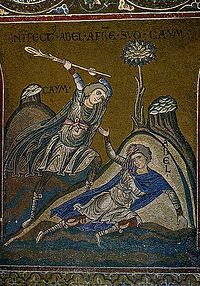 The murder of Abel by Cain. Mosaic, Monreale Cathedral
Jealousy over God’s favor in Abel’s life cost him that life. His brother Cain grew insanely jealous and killed him over it. Saul became jealous because of the favor of God in David’s life. That jealousy moved him to try to kill David. Jesus Christ Himself was put to death by those who were envious of His life and ministry (Matt. 27:18; Mark 15:10).
That jealousy seems to have taken root when Jesus was drawing larger crowds than both John the Baptist and the Pharisees: ”The Pharisees heard that Jesus was gaining and baptizing more disciples than John . . . When the Lord learned of this, He left Judea and went back once more to Galilee” (John 4:1, 3).
The servant is not greater than his Master.
If God chooses to put His favor on your life . . . or your ministry . . . be prepared for others to become jealous of you. People who are jealous become obsessed with tearing the objects of their jealousy down, misrepresenting them, distorting their words, and maligning them. And lifting themselves up in the process. It’s a pattern that’s woven into the flesh.
However, your reaction is everything. If you respond in kind, you will lose the Lord’s favor. But if you choose the path of David and Jesus, entrusting it to God and not returning evil for evil, the Lord’s favor will only increase in your life and He will produce more fruit through your ministry. The Lord stands with those who refuse to retaliate, but are willing to leave the matter in His hands.
The words of Peter say it all, I think: “When they hurled their insults at him, he did not retaliate; when he suffered, he made no threats. Instead, he entrusted himself to him who judges justly.”
“Men always hate most what they envy most.” ~ H.L. Mencken
“As a moth gnaws a garment, so doth envy consume a man.” ~ St. John Chrysostom
“If malice or envy were tangible and had a shape, it would be the shape of a boomerang.” ~ Charley Reese
Have you ever had someone try to hurt you because of envy and jealousy?

One of the problems we all face is the tendency for our minds to take over while we are in church where we are supposed to be in prayer. This happens to all of us as it i the nature of our mind to be always active unless we command through our soul to stop. This part of our mind is part of the body and needs to be controlled by the higher part of our being.
Here is some advice from Saint Theophan the Recluse:
First we are to pray as follows:
Pray with sincere warmth, with an outpouring before God, with feelings of contrition, humility and reverential fear and with diligent petitions for your spiritual needs. When we even approach prayer in church with this attitude we will still be faced with stray thoughts. Here is how how recommends to deal with them
As soon as you notice your thoughts have left church, turn them back and do not ever allow yourself consciously to daydream or to stray in thought... When the thoughts stray unbeknownst to you, this is also a small sin; but when you begin wandering off in thought purposely while you are in church , this is as sin...It is like a man who has gone to the king in order to ask him for something who then begins to make faces and fidget in the king's presence, without paying any attention to him... With respect to thoughts there are these two rules: 1) As soon as you notice this straying, turn the thoughts back, and 2) do not consciously allow the thoughts to wander.
A remedy against straying thoughts is mental attention, attention to the fact that the Lord is before us and we are before Him.... The attention is attached to the Lord by fear of God and by the desire to please God. From these come warmth of the heart, which draws the attention to the One Lord... Without labor and mental effort you will not attain anything spiritual... Reference: The Spiritual Life, pp 151-152

Φυσικές λύσεις για να συνέλθετε από τον πυρετό και να …σταθείτε στα πόδια σας. Κινήσεις που σας βοηθούν να μειώσετε τη θερμοκρασία του οργανισμού σας και να ανεβάσετε τη διάθεση σας.Πίνετε άφθονα υγρά μπορείτε όπως νερό, ζεστά ροφήματα και χυμούς. Λίγο νερό με μερικές σταγόνες φρεσκοστυμμένο λεμόνι (που περιέχει βιταμίνη C) είναι απαραίτητα γιατί βοηθούν στην ταχύτερη απομάκρυνση των βλεννών.
Το τζίντζερ (πιπερόριζα), σύμφωνα με τους επιστήμονες, μπορεί να καταπολεμήσει την αναπνευστική συμφόρηση, το βήχα και τον πυρετό. Την πιπερόριζα μπορείτε να τη βρείτε σε σιρόπι, τσάι, κάψουλες, αλλά και φρέσκια στα σούπερ μάρκετ και την λαϊκή αγορά. Συμβουλευτείτε το γιατρό σας προηγουμένως.
Βάλτε κανέλα: Η κανέλα έχει μια χημική ουσία, την κιναμαλμευδη, η οποία διαθέτει αντιμικροβιακή δράση. Θεωρείται επίσης ότι έχει αντιφλεγμονώδεις ιδιότητες και πως ρίχνει τον πυρετό. Σε ένα φλιτζάνι βραστό νερό προσθέστε ένα με δύο ξυλάκια κανέλας και μερικά γαρύφαλλα. Σκεπάστε το φλιτζάνι και αφήστε το για 20 λεπτά. Στη συνέχεια προσθέστε μέλι και λεμόνι και πιείτε το.

Οι σούπες, τα δημητριακά ολικής αλέσεως ή τα μαγειρεμένα λαχανικά είναι πιο εύκολα ανεκτά όταν έχουμε πυρετό σε σχέση με τα ωμά τρόφιμα. Αποφύγετε τη ζάχαρη και τα επεξεργασμένα τρόφιμα, καθώς μειώνουν την ικανότητα του οργανισμού να καταπολεμά τις ιώσεις.
Αν ο πυρετός είναι υψηλός (πάνω από 38) συμβουλευτείτε το γιατρό σας καθώς μπορεί να χρειαστεί να πάρετε κάποιο αντιπυρετικό.
Φροντίστε να ξεκουράζεστε επαρκώς και να κοιμάστε αρκετά. Σύμφωνα με έρευνες ο καλός βραδινός ύπνος, είναι απαραίτητος για ταχύτερη ανάρρωση και δυνατό ανοσοποιητικό. Μερικές κομπρέσες με δροσερό νερό θα σας βοηθήσουν να ανακουφιστείτε από τον πυρετό.
Αν θέλετε κάποια ανακούφιση και παράλληλα να ρίξετε τον πυρετό σας, χαλαρώστε σε μια μπανιέρα γεμάτη νερό. Το δροσερό νερό θα σας βοηθήσει να νιώσετε καλύτερα, ενώ καθώς εξατμίζεται θα σας δροσίζει ακόμη περισσότερο. Μην χρησιμοποιείτε κρύο νερό, καθώς αυτό μπορεί να σας προκαλέσει σοκ. To zεστό νερό από την άλλη πλευρά, απλά θα αυξήσει τη θερμοκρασία σας.
Πηγή: http://www.ehealthcyprus.com
 Η μετάβαση στην άλλη ζωή γίνεται όπως ανοίγεις μια πόρτα και βρίσκεσαι σε διπλανό χώρο, όπως περνάεις μια γέφυρα και πάεις απέναντι. Κανονικά δεν πρέπει να λέμε "άλλη ζωή".
Μία είναι η ζωή, κι αν ζούμε κατά το θέλημα του Θεού εδώ στη γη, θα μας φανερώσει πως θα είμαστε μετά θάνατον. Ακούστε τι μας λέει ο μαθητής της αγάπης, ο Ευαγγελιστής Ιωάννης: "Αγαπητοί, τώρα είμεθα τέκνα του Θεού, αλλ' ακόμη δεν έχει φανερωθή τι θα είμεθα στο μέλλον. Γνωρίζομεν όμως ότι όταν ο Χριστός φανερωθή με όλην αυτού την δόξαν, θα γίνωμεν και ημείς όμοιοι με αυτόν κατά την δόξαν, διότι θα τον ίδωμεν όπως είναι εις όλην του την θείαν δόξαν, η οποία θα είναι και ιδική μας δόξα". (Α' Ιω. 3,2).
Είναι απερίγραπτο το τι θα μας αποκαλυφθεί στη ζωή μετά το θάνατο. Είναι αυτό που λέει ο Απόστολος Παύλος: "...εκείνα που έχει ετοιμάσει ο Θεός από καταβολής κόσμου δια τους αγαπώντας αυτόν είναι τέτοια, τα οποία μάτι δεν είδε ποτέ και αυτί δεν έχει ακούσει και ανθρώπινος νους δεν έχει φαντασθή". (Α' Κορ. 2,9).
Κάποτε είχα πεθάνει για λίγο. Είχα πάει στον άλλο κόσμο. Είδα τις ομορφιές που υπάρχουν εκεί. Δεν ήθελα να φύγω. Στενοχωρέθηκα που γύρισα πίσω. Εκεί ήταν όλα φωτεινά, χαρά απερίγραπτη. Παράδεισος!
"Χριστός Ανέστη εκ νεκρών,
θανάτω θάνατον πατήσας
και τοις εν τοις μνήμασιν,
ζωήν χαρισάμενος".
Μου είπε μια μέρα ο Απόστολος:
- Γέροντα, βρίσκεσαι σε τέτοια ηλικία (85 ετών) και κάνεις ακόμη σχέδια για το μοναστήρι;
Του απήντησα:
- Εγώ είμαι αιώνιος. Και όλοι έτσι πρέπει να νιώθομε, να εργαζόμαστε ως αθάνατοι και να ζούμε ως ετοιμοθάνατοι.
Επομένως, μπορούμε να φυτεύομε, να κτίζομε, να προσφέρομε, χωρίς να σκεπτόμεθα αν θα προλάβομε ν' απολαύσομε οι ίδιοι.
Βίος και Λόγοι Γέροντος Πορφυρίου Καυσοκαλυβίτου. σελ 583

Αυτή είναι ή χειρόγραφη διαθήκη μιάς μητέρας, πού κοιμήθηκε στά 90 της χρόνια.
Η γυναίκα αυτή είχε 4 κόρες, 1 γυιό καί 15 εγγόνια. Πεθαίνοντας, δέν τούς άφησε παρά μόνο τήν διαθήκη της, ανορθόγραφη καί κακογραμμένη, πλούσια όμως σέ πνευματικό περιεχόμενο:
- Αγαπημένα μου παιδιά, (καί τούς αναφέρει έναν έναν, τά παιδιά της, τούς γαμπρούς, τήν νύφη καί όλα τά εγγονάκια, 25 ονόματα). Σάς φιλώ καί σάς αποχαιρετώ. Αυτό τό γράμμα θά τό ανοίξετε καί θά τό διαβάσετε μετά τόν θάνατό μου… Η πρώτη σας δουλειά, μόλις σηκωθήτε τό πρωί, είναι νά πλυθήτε, νά ανάψετε τό καντηλάκι σας καί νά θυμιάσετε όλο τό σπίτι. Κατόπιν θά κάνετε τήν προσευχή σας, όπως σας τήν έμαθα από τόν Συνέκδημο. Τό ίδιο θά κάμουν -άν θέλουν- καί οί άνδρες σας καί ή νύφη μου καί όλα τά εγγονάκια μου. Κι ύστερα όλοι στίς δουλειές σας. Μόνο έτσι θά σκεπάζει καί θά ευλογή ό Θεός καί τήν δουλειά καί τήν οικογένειά σας.
Κάθε Κυριακή πρωί όλοι σας στήν Εκκλησία, τό ίδιο καί κάθε μεγάλη γιορτή. Κάθε βράδυ, μικροί-μεγάλοι, πρίν από τόν ύπνο θά διαβάζετε τό Απόδειπνο, τούς Χαιρετισμούς, τήν Καινή Διαθήκη, τό Ψαλτήρι καί τήν “Αμαρτωλών Σωτηρία”.
Μήν ξεχνάτε καί τίς νηστείες, νά τίς κρατάτε όλες, όπως σάς τίς βαστούσα κι εγώ, από 6 χρονών καί μετά.Όλα αυτά, αγαπημένα μου παιδιά καί εγγόνια, όταν θά τά κρατάτε, θά είναι σάν νά μού ανάβετε κάθε μέρα ένα κεράκι.
Θά είναι γιά μένα τό καλύτερο καθημερινί μνημόσυνο.
Νά τηρήτε τά θρησκευτικά έθιμα τής πατρίδας μας καί νά ακολουθήτε τά ουράνια, γιατί όλα τά εγκόσμια είναι πρόσκαιρα καί μάταια. Τά καλά έργα καί τίς κρυφές ελεημοσύνες θά τά έχετε στήν αιωνιότητα. Όλα τά άλλα σάν όνειρο θά σβήσουν.
Μαζί σας δέν θά πάρετε τίποτε, ούτε πλούτη, ούτε δόξες, ούτε σπίτια. Μόνο τά καλά σας έργα καί τήν υπομονή.
Νά έχετε τήν ευχή μου καί νά είστε αγαπημένοι, πρώτα μεταξύ σας ώς αδέλφια καί ύστερα μέ τίς οικογένειές σας, αλλά καί μέ τούς συγγενείς καί μέ τούς γείτονες καί μέ τόν κόσμο όλο. Όσο μπορείτε καλά έργα νά κάμετε καί από τήν Εκκλησία νά μή λείπετε. Κι αυτούς πού θέλουν τό κακό σας, νά τούς συγχωράτε. Αυτά θά μείνουν κι εδώ κάτω στήν γή καί στόν ουρανό. Όσα χρόνια κι άν ζήσουμε, θά είναι σάν χθές. Γι’αυτό έργα καλά καί κρυφά. Αδικίες καί ψέματα σέ κανέναν, ούτε καί στόν εχθρό σας.
Τήν Εκκλησία καί τόν καλό Πνευματικό νά μήν αφήσετε.
Όλα αυτά θά τά διαβάζετε όλοι σας καί μπροστά στά παιδιά σας, κάθε φορά πού θά συμπληρώνεται χρόνος από τόν θάνατό μου, μετά από τό Τρισάγιο πού θά κάνετε.
Αυτό θά είναι καί τό μνημόσυνό μου.
Σάς δίνω τήν ευχή μου, σάς φιλώ, σάς αποχαιρετώ καί καλήν αντάμωση στόν Παράδεισο.