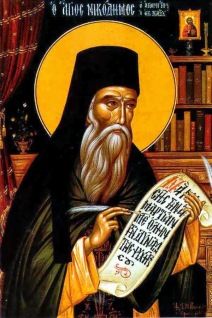
Ἅγιος Νικόδημος ὁ Ἁγιορείτης
Πρέπει μέ πολλή ἐπιθυμία νά πηγαίνετε, ἀδελφοί μου, στήν Ἐκκλησία. διότι ἡ Ἐκκλησία εἶναι παράδεισος καί περιβόλι. Καθώς λοιπόν κάθε ἄνθρωπος ἔχει μεγάλη χαρά νά μπαίνη σέ ἕνα ὄμορφο περιβόλι, γιά νά βλέπη ἐκεῖ τα διάφορα δένδρα καί λουλούδια καί ἔτσι νά χαίρεται καί νά εὐφραίνεται ἡ καρδιά του, ἔτσι καί οἱ Χριστιανοί πρέπει μέ μεγάλη χαρά νά τρέχουν καί νά μπαίνουν στήν Ἐκκλησία, γιά νά ἀπολαύσουν τά διάφορα ἄνθη καί λουλούδια τῶν θείων Γραφῶν, εὐαγγελικά, ἀποστολικά καί προφητικά.
Καί μάλιστα στόν Παράδεισο αὐτόν τῆς Ἐκκλησίας δέν ὑπάρχει κανένα φίδι νά ἐπιβουλεύεται, ἀλλά ὁ Χριστός, ποῦ συμβουλεύει. Δέν ὑπάρχει ἡ Εὕα νά γκρεμίζη, ἀλλά διδασκαλία, γιά νά διορθώνη, οὔτε μόνο φύλλα δένδρων ἀλλά οἱ καρποί τοῦ πνεύματος, ὅπως λέει ὁ ἴδιος ὁ Χρυσσορήμων· «Ποιός εἶναι τέτοιος κῆπος, ὅπως ἡ Ἐκκλησία; Ποιός παρόμοιος Παράδεισος, ὅπως ἡ δική μας Σύναξις; δέν ὑπάρχει ἐδῶ φίδι νά ἐπιβουλεύεται, ἀλλά ὁ Χριστός, ποῦ μυσταγωγεῖ· οὔτε ἡ Εὕα ποῦ γκρεμίζει, ἀλλά ἡ Ἐκκλησία, ποῦ ἀνορθώνει· δέν ὑπάρχουν ἐδῶ φύλλα δένδρων, ἀλλά ὁ καρπός τοῦ Πνεύματος» (Λόγος δ’ περί μετανοίας, τόμος 5). Καί πάλι· «Οἱ κῆποι ἔχουν ποικίλα καί διάφορα ἄνθη, ἄλλα γιά τέρψι τῶν ὀφθαλμῶν, ἄλλα γιά εὐωδία, ἄλλα γιά φροντίδα· κάθε ἕνα ἀπό αὐτά εἶναι κατάλληλα γιά τόν ἄνθρωπο· ἔτσι καί ἡ Ἐκκλησία· ἔχει τήν ἀνάγνωσι τῶν θείων Γραφῶν, ἀναγνώσματα εὐαγγελικά, ἀποστολικά καί προφητικά καί τά ὑπόλοιπα ἱερά βιβλία» (Λόγος περί ἐλεημοσύνης).
Ἀπό τό βιβλίο: Χρηστοήθεια τῶν χριστιανῶν
http://iliaxtida.wordpress.com/?fp=0

Penetrate mentally, O brethren, into the nature of things, and beware lest you be negligent, for even a small negligence subjects us to great dangers. I went not long ago to one brother, and finding him completely worn out from illness, I conversed with him and learned that he had been in a fever for only seven days, but then another forty days had passed and he still had not recovered his strength. So you see, O brethren, how a man suffers when he falls into a condition which is not natural to him. Another may never take care of his body's minor disorders, not realizing that if his body were to suffer even a slight illness, especially if he is weak, much time and labor will be needed for him to completely recover. This humble monk was sick for seven days, and see how many days passed and he still finds no comfort and cannot regain his strength.
Thus it happens also with the soul: one person sins a little, but what a great amount of time he later spends shedding his blood to correct himself! However, physical ailments are prolonged for many reasons—either the physician is unskilled and gives one medicine when he should have given another, or the patient does not conduct himself properly and does not follow the prescriptions of the physician. But with regard to the soul it is different. We cannot call the physician unskilled, and say that he does not give the right medicine. For the physician of souls is Christ, Who knows everything and gives a fitting treatment for every passion. Against vainglory He has given the commandment of the humility of wisdom, against love of pleasure the commandment of continence, against love of silver the commandment of almsgiving, and in short, every passion has as its treatment a corresponding commandment, so that no one can say that the physician is unskilled, or that the medicines are old and therefore ineffective; for the commandments of Christ never grow old—to the contrary, the more they are fulfilled, the more they renew themselves. Therefore nothing hinders the health of the soul but its own lawlessness.
And so let us pay heed to ourselves O brethren, let us labor while we have time. Why do we not take a care for ourselves? Let us do at least something good so as to find help in the time of temptation! Why do we ruin our own lives? We hear so much, yet we do not take a care for ourselves, and we disdain everything. We see how our brethren are taken from our midst, yet we do not pay heed to ourselves, although we know that we too draw ever nearer to death. See, from the time we have sat down to converse up till now, we have passed two to three hours of our lives and have drawn closer to death, and although we see that we are losing time, we have no fear. How is it that we do not remember the words of the elder who said, "If someone looses gold or silver he can find some other to replace it; but if we lose time by living in idleness and sloth, we will not be able to find any other time in place of what was lost—verily we will seek even a single hour of this time and will not find it. How many men are there who desire to hear the word of God but do not receive what they desire, and we hear so much yet disdain it, and do not wake up! God knows, I am astonished at the insensitivity of our souls—that we could be saved yet we do not want to be. For we could cut off our passions while they are still young, but we do not concern ourselves with this, and allow them to gain strength against us so that we might come to a worse end. For it is one thing, as I have many times said to you, to uproot a small blade of grass, because it is easily pulled out; but it is another thing to uproot a great tree.
One great elder was walking with his disciple in a certain place where there were several cypresses, great and small. The elder told one of his disciples, "Uproot this cypress. The cypress was small, and the brother immediately pulled it out with one hand. Then the elder pointed to a second which was larger than the first and said, "Uproot this one too." The brother pulled it this way and that with both hands and finally pulled it out. Again the elder showed him yet a larger tree, and with great labor he uprooted that one also. Then he showed him a yet larger one, the brother with the greatest labor at first pulled it back and forth, labored and sweated, and finally he pulled out this one also. Then the elder showed him one that was even larger, but although the brother labored sweated much over it, he still could not uproot it. When the elder saw that he did not have the strength to do this, he commanded another brother to stand and help him; and together they barely managed to uproot it. Then the elder said to the brethren, "And so it is with the passions, brethren; while they are small, if we want we can easily uproot them; but if we are negligent about them because they are insignificant, they will become strong, and the stronger they are the greater labor will be demanded of us. And when they become very strong in us, then even with great effort we will not be able to uproot them ourselves, without the aid of the saints who help us according to God."
Do you see how significant are the words of the early elders? The prophet teaches us this same thing, in the psalm, O daughter of Babylon, thou wretched one, blessed shall he be who shall reward thee wherewith thou hast rewarded us. Blessed shall he be who shall seize and dash thine infants against the rock (Ps. 136:11,12). Let us examine what has been said in order. Babylon he calls joining or disturbance—this is what that word signifies, being derived from the word Babel, which means also Sichem. The daughter of Babylon signifies enmity; for the soul at first is disturbed and then gives birth to sin. He calls her wretched because, as I have told you before, evil has no existence in itself, but receives its existence from our negligence, and in turn is uprooted and destroyed by our striving for virtue. Then St. David speaks as it were to her, Blessed shall he be who shall reward thee wherewith thou has rewarded us. Let us see what we have given, what we have accepted and what we would like to give? We gave our will and received sin. This passage calls blessed those who give to her, and "to give" here means: no longer to perform sin. Then he adds, Blessed shall he be who shall seize and dash thine infants against the rock; blessed is he who from the very beginning does not at all accept what is born of you, that is, evil thoughts, and gives them no room to grow in himself and bring evil into action; but swiftly, while they are still small and before they have grown strong and risen up against him, he takes them and crushes them against the rock, which is Christ (I Cor. 10:4), and destroys them, hastening to Christ. Behold how both the elders and the Holy Scripture are in agreement between themselves, and how they glorify those who labor to cut off their passions while they are still young, before experiencing the misfortune and bitterness they bring.
And so let us strive, O brethren, to receive mercy; let us labor a little and find great repose. The Fathers have told us how a man should gradually purify himself: every evening he should examine himself as to how he spent the day, and again in the morning how he spent the night, and repent before God for however he may have sinned. In truth, since we sin much, we need, because of our forgetfulness, to examine ourselves even after the passing of six hours as to how we spent the time and in what we have sinned. And each one of us should say to himself, "Did I not say something which angered my brother? When I saw him occupied with some work did I not judge him? Did I not belittle him and speak evil against him? Did I not ask something from the cellarer, and when he did not give it to me, did I not judge him and murmur against him? If the food was not good did I not say something about it? Or being embittered, did I not murmur against my own self?" For if someone should murmur even against himself, this is a sin. We should likewise say to ourselves, "Did the canonarch or some other brother say some unpleasant word to me and I did not endure it but talked back to him?" In this way we should daily probe ourselves as to how we spent the day. And in the same way each one should test himself how he spent the night: Did he arise with fervor for the Vigil? Or did he murmur against the one who woke him up? Or was he fainthearted against him? We should know that the one who awakens us for the Vigil show us a great benefaction and is for us the cause of great good things, for he awakens us in order that we might converse with God, pray for our sins, be enlightened and receive benefit of soul. How should we not give thanks to such a benefactor? In truth we should revere him just as if through him we receive salvation.
I will relate to you something miraculous which I heard concerning a great and clairvoyant elder. Standing in the church he saw that when the brethren began the psalmody, a certain light-bearing being came out of the altar, bearing what appeared to be a little case with myrrh and a brush. He moistened the brush in the case and went about all the brethren, placing a sign on each of them and on the places of certain of those who were absent, but he passed by the places of other ones who were absent. Toward the end of the divine service, they again saw that he came out of the altar and did the same thing. Once the elder stopped him and fell to his feet, entreating him to explain to him what he was doing and who he was. That light-bearing man replied to him, "I am an angel of God, and it has been commanded me to seal with this sign those who come to church at the beginning of the psalmody and remain to the end of it, for their zeal, striving, and good will." The elder asked him, "But why do you make the sign on the places of certain of those who are absent?" In reply to this the Holy Angel said to him, "Those of the brethren who are zealous and have a good will have left church because of extreme exhaustion, with the blessing of the fathers, or likewise by some command, being occupied with their obedience and therefore they are not here, so that although they are not in church, they still receive their blessing, for by their good will they are present together with those who sing. Only to those who could be in church and do not come out of laziness it is commanded not to give the sign, inasmuch as these make themselves unworthy of it." Do you see what gifts the brother who awakens you for the church rule is the cause of? Strive then O brethren never to be deprived of the sign of the holy angel; if it happens sometime that you be lazy and that others should remind you of this, you should not be indignant, but, having in view the benefit of such a reminder, you should give thanks to the one who reminds, whoever he might be.
When I was living in coenobitism, the Abbot, at the advice of the elders, made me the receiver of visitors, while not long before this I had had a severe illness. And thus it happened that visitors would come in the evening and I would spend the evening with them; then camel-drivers would come, and I would serve them; and often after I had gone to sleep, another need would arise, and they would wake me up, and meanwhile the hour of the Vigil would also be approaching. Hardly would I have fallen asleep when the canonarch would wake me up; but from labor or from illness I would be exhausted, and sleep would again take such possession of me that, weakened by fever, I would not remember myself and would answer through sleep: "Very well, my lord, may God remember your love and reward you; you have commanded, I will come, O lord." Then when he went out, I would again fall asleep and be very sad that I was late in going to church. And since the canonarch couldn't wait for me, I begged two brethren, one to wake me up, and the other not to let me doze at the Vigil; and believe me, brethren, I revered them as if through them my salvation was accomplished, and maintained toward them great piety. So you also should act with regard to those who rouse you to the church rule and to every good deed. Therefore each of us, as we have said, should test himself as to how he spent the day and night—did he stand with attention at psalmody and prayer, or was he distracted by passionate thoughts? Did he listen to the divine reading diligently, or, leaving the psalmody did he depart from church with his mind distracted? If one constantly tests himself in this way, he repents over his sins and strives to be corrected—then he will begin to lessen the evil within himself. And if he has made nine mistakes, he will in the future make only eight, and thus, advancing gradually with God's help, he will not allow the passions to grow strong in him. For it is a great misfortune for someone to fall into the habit of passion, because as we have said, although he might wish to repent, he will not be able to overcome the passion by himself if he does not receive help from the saints.
Would you like me to tell you about a certain brother for whom a passion was converted into a habit? Listen to something which deserves much lamentation. When I lived in the coenobium, the brethren in their simplicity, I think, confessed to me their thoughts, and the Abbot at the advice of the Elders commanded me to take this concern upon myself. Once there came to me one of the brothers who said to me, "Forgive me father and pray for me: I steal and eat." I asked him, "Why? Are you hungry?" He replied, "Yes, I do not get enough at the brothers' trapeza and I cannot ask." I told him, "Why don't you go and tell the Abbot?" He replied to me, "I am ashamed." I said to him again, "Do you wish me to go and tell him?" He said, "As it is pleasing to you, O master." And so I went and informed the Abbot of this. He said to me, "Show love and take care of him as you know how." Then I took him and said to the cellarer in his presence, "Show your love—when this brother will come to you give him as much as he wishes and do not refuse him in anything." Doing this the cellarer replied to me, "As you have ordered so will I fulfill it." Spending several days in this way the brother again came in and said to me, "Forgive me father, again I have begun to steal." I said to him, "But why? Doesn't the cellarer give you what you wish?" He replied to me, "Yes, forgive me, he gives me what I want, but I am ashamed before him." I said to him, "Are you ashamed also before me?" He replied, "No." Then I said to him, "Then whenever you wish come and take from me, but do not steal," for at that time I had the responsibility of being in the infirmary, and he came and took what he wished. But several days later he began again to steal, and he came with sorrow and told me, "Again I am stealing." I asked him, "Why my brother? Do I not give you what you want?" He replied, "Yes, you give me what I want." I said to him, "Then what is it, are you ashamed to take from me? He replied, "No." I said to him, "Then why do you steal?" He replied, "Forgive me, I myself do not know why; but I simply steal." Then I said to him, "At least tell me truthfully what you do with what you steal? He replied, "I give it to the donkey." And indeed it turned out that this brother stole pieces of bread, dates, figs, onions, and in general everything that he found, and hid it, some things under his bed, other things in different places, and finally not knowing where to use all this and seeing that it was spoiling, he brought it out and threw it away or gave it to the irrational creatures.
And so you see what it means to turn a passion into a habit? Do you see how pitiable this is, and what suffering it is? He knew that this was evil, he knew that he was doing wrong and he grieved and wept; however he was enticed, the poor wretch, by a bad habit which was formed in him because of his previous negligence. Abba Nisteroe has well said, "If someone is enticed by a passion he will be the slave of a passion." May the good God deliver us from evil habit, lest it be said to us, What profit is there in my blood when I go down into corruption? (Ps. 29:9). And how someone falls into a habit I have told to you many times. For a man who has become angry once is not necessarily called an angry man; one who has once fallen into fornication is not necessarily called a fornicator; and just because one has shown mercy to his neighbor on one occasion he is not necessarily called merciful. But just as with virtues so also with vices, from their frequent exercise the soul receives a certain habit, and then this habit either tortures the soul or give it repose. We have often repeated that virtue gives repose to the soul while vice tortures it, that is, virtue is natural, it is within us, for the seeds of virtues cannot be destroyed. And I have said that the more we do good, the more we acquire a habit for virtue, that is, we restore our natural characteristic to ourselves and ascend to our previous health, just as from having a cataract to our previous vision, or from some other ailments to our previous natural health. But it is not the same with regard to vice. Through exercise in vice we develop a tendency that is foreign and contrary to our nature, that is, we develop a tendency for a certain destructive infirmity, so that even if we want to be free of it we cannot without many prayers and tears which might incline Christ's mercy toward us. We note a similar thing in the body: there are certain kinds of food which by nature produce black bile, as for example cabbage, lentils, and certain other foods like these; but one becomes black-biled not because he once or twice eats cabbage or lentils or the like, but rather from eating them frequently. If the black bile should later increase in him, then fever occurs which torments him and brings other innumerable afflictions in its wake. The same thing happens with the soul: if one becomes hardened in sin, then an evil habit forms in the soul, and tortures it. However you should know also that the soul can have an attraction to certain passions, if it falls into committing this passion only once it immediately is in danger of falling also into a habit. The same thing happens also with the body: one man may have a disposition toward black bile from some previous negligence, so that a single one of the above-mentioned types of food can immediately produce black bile in him and cause a fever. And so one needs great attentiveness, effort and fear lest one fall into an evil habit.
Believe me brethren, if even one passion has become a habit in someone, he will deserve torment; it could happen that one might do ten good deeds but have one evil habit, and this one thing which proceeds from an evil habit supersedes his ten good deeds. If an eagle is caught in a net with one claw, even though the rest of him may be entirely outside the net, this small thing overcomes all his power. For is he not stuck in the net by that one claw even though he is otherwise entirely outside of it? Cannot the hunter seize him whenever he wishes? So also the soul: if even one passion turns into a habit, the enemy can overcome the soul whenever he wishes, for it is in his hands by reason of that passion. Therefore I also say to you constantly: do not allow any passion in you to become a habit, but labor and pray to God day and night so as not to fall into temptation. But if being human we should be conquered and fall into sin, let us then strive immediately to rise, let us repent over it, let us weep before God's goodness, let us keep vigil and struggle. And God, seeing our good will, humility, and contrition, will give us a hand of help and have mercy upon us. For to Him belongs all glory, honor and worship. Amen.
Abba Dorotheos

Abba Dorotheos said that one who trusts in his own understanding or judgment cannot submit to nor follow the good example of his neighbor.
He likewise said: Being passionate, we cannot at all believe in our own hearts; for a crooked rule will make even the straight crooked.
He likewise said: It is not a great matter to withhold judgment of or to feel compassion for someone who is in sorrow and submits to you; but it is a great thing not to judge one who contradicts you, not to take revenge on him according to your passion, not to agree with those who condemn him, and to rejoice together with those who respect him.
Again he said, Do not demand love from your neighbor, for he who demands it is disturbed if he does not encounter it; but rather you yourself show love to your neighbor, and you will find rest; and in this way you will also lead your neighbor to love.
Again he said: He who performs a work which is pleasing to God must unfailingly meet with temptation; for a temptation either precedes or follows every good work, and that which is done for the sake of God cannot be confirmed unless it is tested by temptation.
Again he said: Nothing unites men so closely among themselves as when they rejoice over one and the same thing and have a single way of thinking.
Again he said: Not to despise the gift of one's neighbor is a work of humility of wisdom; and one should accept the gift with thanksgiving even if it should be small and insignificant.
Again he said: If I should happen to encounter some work to be done, it is more pleasant for me to undertake it at the counsel of my neighbor, even though it might happen that the matter be ruined according to his counsel, rather to perform the work well following my own will.
Again he said: In every work it is good to attend personally to the little that you need, for it is not profitable to be granted repose in everything.
Again he said: In every matter which I encounter I never have desired to defend myself by means of human wisdom; but whatever the matter might be I always act according to my strength and present everything to God.
Again he said: He who does not have his own will always fulfills his desire. Such a man does not have any desire of his own--therefore he is satisfied with whatever might happen to him, and it happens that his own desires are continually fulfilled; for he does not want things to turn out according to his own wishes, but he rather wishes that they will be just as they will be.
Again he said: It is indecent to correct a brother while he is sinning against you. Indeed, at any other time you should not do this in order to avenge yourself.
He likewise said: Love according to God is more powerful than natural love.
He likewise said: Do not do evil even as a joke; for it happens that one may at first do some evil jokingly, but later he will be attracted by it even though he does not wish it.
He likewise said: One should not desire to be delivered from passion in order merely to flee the sorrows consequent to it, but rather out of complete hatred for it: With perfect hatred have I hated them, they are reckoned enemies with me (Ps. 138:22).
He likewise said: It is impossible for anyone to become angry at his neighbor if his heart has not first been lifted above him; unless he has not despised him, and considered himself higher than him.
He likewise said: A sign of the fact that someone has voluntarily given way to passion is his disturbance when accused or corrected of it. But to endure accusation, that is, exhortation, without disturbance is a sign that one has either been conquered by the passion, or has committed it out of ignorance. To our God belongs glory to the ages of ages. Amen.
Abba Dorotheos

Η νήψις εικονίζεται με την αξίνα, η οποία καταρρίπτει τα μεγάλα δένδρα χτυπώντας τη ρίζα τους. Κι όταν χτυπηθεί η ρίζα, δεν ξαναφυτρώνουν. Έτσι και όταν ο νους του ανθρώπου, του χριστιανού, έχει την προσοχή αυτή της νήψεως, φρουρεί την καρδιά και τις πέντε αισθήσεις, τόσον τις σωματικές όσον και τις πνευματικές, της ψυχής. Όταν ο νους νήφει, όταν προσέχει, όταν φρουρεί τα διανοήματα, τις σκέψεις, όταν ελέγχει την φαντασία, τότε όλος ο άνθρωπος ψυχοσωματικά διατηρείται καθαρός.Και όταν ο άνθρωπος δια της νήψεως και της εργασίας της πνευματικής καθίσταται καθαρός, οι προσευχές του έχουν παρρησία προς τον Θεό, διασχίζουν τον αιθέρα, ξεπερνούν τους αστέρας, διέρχονται τους ουρανούς και πλησιάζουν στον θείο θρόνο της χάριτος, όπου δέχονται τις ευλογίες του Θεού. Και ο άνθρωπος προσευχόμενος ούτως, πλουτίζει την κατά Θεόν χάριν.
Γεροντας Εφραιμ Φιλοθεϊτης
http://www.diakonima.gr
— Γέροντα, τι συμβαίνει με τους ομοφυλόφιλους; Μερικοί γιατροί λένε ότι γεννιούνται έτσι, ότι είναι δηλαδή θέμα χρωμοσωμάτων, θέμα της φύσης, άρα είναι αδύνατο αυτοί οι άνθρωποι να αλλάξουν και επομένως άδικα τους ταλαιπωρούν, και ότι δεν έχουν ευθύνη αυτοί.
— Πα! Πα! Όχι, βρε παιδί μου, δεν είναι έτσι. Είναι ένα πάθος και αυτό όπως και τα άλλα πάθη.
— Δηλαδή, μπορεί να διορθωθεί ένας τέτοιος άνθρωπος;
— Πως δεν μπορεί! Μπορεί!… Αν θέλει και προσπαθήσει μπορεί να κόψει την κακιά συνήθεια… Πολύ βοηθάει να έχει κανείς έναν πραγματικό και καλό φίλο.
— Πως γίνεται κανείς ομοφυλόφιλος; Φταίει η οικογένεια;
— Αν είναι μικρό παιδάκι πιο αδύνατο, πιο συνεσταλμένο και δεν προσέξουν τις παρέες του, τότε κανένας αλήτης μπορεί να το στριμώξει με το ζόρι… έλκεται και αυτό μετά από την ηδονή και σιγά-σιγά συνηθίζει.
Απόσπασμα από το βιβλίο:
Ο ΠΑΤΗΡ ΠΑΪΣΙΟΣ ΜΟΥ ΕΙΠΕ
Αθανασίου Ρακοβαλή
Κάποτε μετέφερε τα άγια Λείψανα και είχε την λειψανοθήκη δεμένη με λουριά από τους ώμους του. Σε ένα σημείο του δρόμου, που λέγεται «Μεγάλη Σκάλα», κόπηκε το λουρί και έπεσε η λειψανοθήκη στον γκρεμό. Ο Γέροντας από τον πόθο και την ευλάβεια προς τα άγια Λείψανα, χωρίς να υπολογίση τον εαυτό του και χωρίς τον παραμικρό δισταγμό, πήδησε αμέσως στον γκρεμό για να τα προλάβη.
Κατρακυλούσε η λειψανοθήκη και χτυπούσε στα βράχια. Τελικά ο ίδιος διαφυλάχθηκε, χάριτι Θεού, σώος. Δεν έπαθε τίποτε, ούτε γρατσουνιά! Η λειψανοθήκη με τα άγια Λείψανα έμειναν επίσης άθικτα, ενώ ο μεταλλικός κορβανάς που ήταν προσαρμοσμένος στην λειψανοθήκη είχε κατατσαλακωθή από τα χτυπήματα.

θα πρέπει να αναμένεται έξαρση των ψυχικών διαταραχών στον πληθυσμό παγκοσμίως, καθώς τα κάθε είδους χρέη των νοικοκυριών αυξάνονται διεθνώς τα τελευταία χρόνια, λένε επιστήμονες.
Οι άνθρωποι που έχουν χρέη, έχουν τριπλάσια πιθανότητα να εμφανίσουν ψυχικά προβλήματα σε σχέση με όσους δεν χρωστάνε, σύμφωνα με μια νέα βρετανική έρευνα. Καθώς τα κάθε είδους χρέη των νοικοκυριών αυξάνονται διεθνώς κατά τα τελευταία χρόνια λόγω της οικονομικής ύφεσης και κρίσης, σύμφωνα με τη μελέτη, θα πρέπει να αναμένεται παράλληλα και μία έξαρση των ψυχικών διαταραχών στον πληθυσμό.
Οι ερευνητές των πανεπιστημίων του Σαουθάμπτον και του Κίνγκστον, με επικεφαλής τον ψυχολόγο Τόμας Ρίτσαρντσον, που έκαναν τη σχετική δημοσίευση στο περιοδικό κλινικής ψυχολογίας «Clinical Psychology Review», έκαναν μια συστηματική συγκριτική αξιολόγηση (μετα-ανάλυση) όλων των έως τώρα δημοσιευμένων ερευνών πάνω στο ζήτημα (65 σε αριθμό), οι οποίες αφορούσαν συνολικά σχεδόν 34.000 άτομα.
Η μελέτη έδειξε ότι λιγότερο από το 9% όσων δεν εμφάνιζαν κανένα ψυχικό πρόβλημα, δεν είχαν χρέη, ενώ πάνω από το 25% των χρεωμένων ανθρώπων είχαν κάποιο ψυχολογικό πρόβλημα. Επίσης, όπως διαπιστώθηκε, όσοι έχουν χρέη, είναι πολύ πιθανότερο να υποφέρουν από κατάθλιψη, εξάρτηση από ναρκωτικά και άλλες ουσίες, καθώς και από ψύχωση. Ακόμα, όσοι αυτοκτονούν, είναι πιθανότερο να αντιμετώπιζαν χρέη.
Ο δρ Ρίτσαρτσον επεσήμανε πως «η έρευνα δείχνει ότι υπάρχει στενή συσχέτιση ανάμεσα στο χρέος και στην ψυχική – διανοητική υγεία, αν και είναι δύσκολο να πει κανείς ποιο προκαλεί ποιο; Μπορεί το χρέος να επιδεινώνει την ψυχική υγεία λόγω του στρες που προκαλεί, αλλά μπορεί επίσης οι άνθρωποι με ψυχολογικά προβλήματα να είναι πιο επιρρεπείς στη δημιουργία χρεών, λόγω π.χ. της ασταθούς απασχόλησής τους.
Δεν αποκλείεται εξάλλου η σχέση χρέους – ψυχικής υγείας να επιδρά αμφίδρομα. Για παράδειγμα, οι άνθρωποι με κατάθλιψη ίσως δυσκολεύονται να τα βγάλουν πέρα οικονομικά, με συνέπεια να χρεώνονται, πράγμα που, στη συνέχεια, τους βυθίζει περαιτέρω στην κατάθλιψη».
Για να ξεκαθαριστεί κι άλλο το θέμα, όπως είπε ο βρετανός ψυχολόγος, πρέπει να μελετηθεί πιο εξονυχιστικά.
 If “hell is other people,” as Sartre concluded, then maybe heaven is too.
Every once in a while we meet someone who leaves an indelible and transforming mark on us. They can be longtime friends, casual acquaintances, or people who cross our path one time only. They can leave us with good or bad memories, yet the effect they have on us is profound, often for reasons we don’t understand. In the rarest and most blessed moments of our life, encounters with such people can serve as signposts that point the way into the Kingdom of Heaven.
I recall a visit to a monastery long ago, and the face of an Orthodox monk who was seated by a window in a small library. He looked up from his book and greeted me with a warm and gracious smile. I don’t remember the few words he spoke, or even the specific subject. What I do remember is his face, what the French call the “regard.”
There was a radiant peace about him, and a stillness that came from deep inside. He spoke quietly, when he spoke at all, and his words conveyed something beyond their usual meaning. He was a simple monk who said simple things. Yet his presence, and the way he spoke, left an extraordinary impression. What I most remember of that conversation is that I left it with a mixed feeling of peace and longing. I never learned this man’s name, but he conveyed to me something precious, beyond anything we usually give to or receive from our closest friends. He made real and palpable the presence of Christ. Not many people can do that, and it’s a treasure beyond words.
Also many years back I served the Divine Liturgy one Sunday morning in a small Russian church on the outskirts of Paris. Before the service began, several elderly folks came up for confession. One, a woman we had known for many years, had tears in her eyes as she venerated the Gospel book and cross. All she had to confess was the fact that she wanted to receive the Holy Eucharist on that feast-day morning, but she had not read the canon of repentance the night before – only the prayers in preparation for communion, together with her usual nightly intercessions. There was nothing at all feigned about her tears. She was a genuinely humble soul, whose failure to do the “required” readings before receiving the Holy Gifts brought up to her what she experienced as a lifetime of sinfulness: lack of faith, selfishness in relation to others, neglect of persons who depended on her, failure to love God with all her heart…. Her tears made me aware of my own utter unworthiness to be doing what I was doing, hearing confessions and serving the Liturgy. The gift this woman offered me was a healthy sense of shame and regret at the casual and even resentful way I often took on activities connected with priestly ministry. In her presence I stood in the presence of Christ – as Judge, but also as the merciful Lord who time and again calls us back to our senses, puts things in perspective, and allows us to begin again, no matter how far we have drifted away.
One of the most influential people in my life and the life of my family was a Roman Catholic nun, who founded a contemplative monastic community in France some fifty years ago. She is “dead” now, no longer visibly with us. But we don’t need photographs to remember her face and her words. She had no formal theological training, yet she could speak theology to her sisters and to gathered laypeople with an unmatchable eloquence. She spoke from personal experience of the living Christ and His Holy Mother as friends and companions she cherished and loved. In her presence, they were present, too, more really, more concretely than through iconography or even services of worship. Her name, like that of so many anonymous nuns, was Marie. Just a few minutes with her, and the veil that so often covers spiritual reality in our daily life was lifted. She was a theologian because she prayed. And that prayer somehow enfolded the rest of us and lifted us, for a moment, to the heights we longed for.
There are so many others we have been blessed to know, even if their depths of faith and expressions of self-giving love leave me feeling empty and spiritually bankrupt. What has become clear over the years is that people like this exist virtually everywhere. We simply need to look for them and pray God that He will enable us to discover them.
It’s easy to see hell in other people, at least it is for me. Maybe first of all it’s easy to see it in myself: in my faithlessness, my doubt, my impatience, my neglect of people I love. That hell is merely the absence of God (merely!), an absence I provoke sometimes, I suspect, on purpose. I create it in myself, and I allow myself to create it, as it were, in others, or rather in my perception of others.
The miracle is that those same people really do bear God’s image, and it’s always possible to discover that image, in them and in myself. Yet it is special people of the kind I’ve mentioned who convey to us the real truth, both about God and about ourselves. In their simplicity and depth, their inner silence and eloquent wisdom, they make Christ present to us. Most of them have made their own journey out of darkness and into light. Like Adam and Eve, and other Old Testament saints in the paschal icon of the Descent into Hell, they have reached out and been grasped by the hand of Christ, then lifted by Him from the realm of death into the glory of His resurrected life.
These people have known, even in their earthly lifetime, what it is to live in, with and for Christ, in the beauty and splendor of the communion of saints. Their gift to us is to call us back to reality, to what is essential. When they do, their simple words and silent presence lift us out of our ourselves, to set us, gently and firmly, on the threshold of heaven.
Be kinder than necessary because everyone you meet is fighting some kind of battle.
A sharp tongue can cut your own throat.
Να είσαι πιο καλός από όσο χρειάζεται, γιατί ο καθένας που συναντάς δίνει την δική του μάχη.
Μια κοφτερή γλώσσα μπορεί να κόψει τον δικό σου λαιμό.

If you want your dreams to come true, you mustn’t oversleep.
Αν θες τα όνειρα σου να βγούν αληθινά μην παρακοιμάσαι.

Of all the things you wear, your expression is the most important.
Από όλα τα πράγματα που φοράς, η έκφραση του προσώπου σου είναι το πιο σημαντικό.

The best vitamin for making friends…… B1.
Η καλύτερη βιταμίνη για να κάνεις φίλους….Β1.

The happiness of your life depends on the quality of your thoughts.
Η ευτυχία της ζωής σου, εξαρτάται από την ποιότητα των σκέψεων σου.

The heaviest thing you can carry is a grudge.
One thing you can give and still keep…is your word.
Το βαρύτερο πράγμα που μπορείς να κουβαλάς είναι η μνησικακία.
Ένα πράγμα που μπορείς να δώσεις και ακόμα να το κρατάς…είναι ο λόγος σου.

You lie the loudest when you lie to yourself…
If you lack the courage to start, you have already finished.
Ψεύδεσαι περισσότερο όταν ψεύδεσαι στον εαυτό σου.
Αν σου λείπει το θάρρος να αρχίσεις, έχεις ήδη τελειώσει.

Ideas won’t work unless ‘ You’ do.
Οι ιδέες δεν πρόκειται να δουλέψουν εκτός αν δουλέψεις ΕΣΥ

Your mind is like a parachute….it functions only when open.
Το μυαλό μας είναι σαν αλεξίπτωτο…δουλεύει μόνο αν είναι ανοικτό.

The 10 commandments are not a multiple choice…
Οι 10 εντολές δεν είναι πολλαπλή επιλογή.

The pursuit of happiness is the chase of a lifetime!
It is never too late to become what you might have been.
Το κυνήγι της ευτυχίας είναι αναζήτηση μιας ζωής!
Ποτέ δεν είναι αργά να γίνεις αυτό που θα μπορούσες να είχες γίνει.

Believe everything happens for a reason. If you get a second chance, grab it with both hands. If it changes your life, let it. Nobody said life would be easy, but we were promised it would be worth it.
Friends are like balloons; once you let them go, you might not get them back. Sometimes we get so busy with our own lives and problems that we may not even notice that we’ve let them fly away. Sometimes we are so caught up in who’s right and who’s wrong that we forget what’s right and wrong. Sometimes we just don’t realize what real friendship means until it is too late.
Πίστεψε ότι όλα γίνονται για κάποιο λόγο. Αν σου δοθεί μια δεύτερη ευκαιρία, άρπαξε την με τα δυο χέρια. Αν αλλάξει την ζωή σου άστην. Κανένας δεν είπε ότι η ζωή θα είναι εύκολη, αλλά μας υποσχέθηκαν ότι θα άξιζε.
Οι φίλοι είναι σαν τα μπαλόνια. Αν τα αφήσεις να φύγουν μπορεί να μην ξαναγυρίσουν. Μερικές φορές είμαστε τόσο απασχολημένοι με την ζωή μας και τα προβλήματα μας που μπορεί να μην τους προσέξουμε που πετάνε μακριά μας. Μερικές φορές καταπιανόμαστε με το ποιος έχει δίκιο και ποιος άδικο και ξεχνάμε τι είναι σωστό και τι λάθος. Μερικές φορές δεν καταλαβαίνουμε τι σημαίνει αληθινή φιλία μέχρι να είναι πολύ αργά.

Αν ξύπνησες σήμερα το πρωί με περισσότερη υγεία παρά αρρώστια, είσαι πιο προνομιούχος από ένα εκατομμύριο ανθρώπους που δεν θα επιζήσουν μέχρι το τέλος της εβδομάδας.
Αν δεν έχεις ζήσει ποτέ τον κίνδυνο της μάχης, την μοναξιά της φυλάκισης, την αγωνία των βασανιστηρίων η την πείνα, είσαι πιο καλά από 500 εκατομύρια ανθρώπους στον κόσμο.
Αν μπορείς να πας στην εκκλησία, δίχως τον φόβο της τιμωρίας, της σύλληψης, των βασανιστηρίων η του θανάτου, είσαι πιο προνομιούχος από τρία δισεκατομύρια ανθρώπους στη γη.
Αν έχεις φαγητό στο ψυγείο σου, αν φοράς ρούχα, αν είσαι κάτω απο μια στέγη και ένα κρεβάτι για να κοιμηθείς, είσαι πιο πλούσιος από το 75% των κατοίκων της γης.
Αν έχεις χρήματα στην τράπεζα, μέσα στο πορτοφόλοι σου, και μπορείς να δώσεις έστω και ψιλά σε κάποιον, είσαι ανάμεσα στο 8% των πιο πλούσιων ανθρώπων της γης.
Αν οι γονείς σου ζουν και είναι ακόμα παντρεμένοι, είσαι πολύ σπάνιος.
Αν μπορείς να κρατήσεις το χέρι κάποιου, να τον αγκαλιάσεις, αλλα ακόμα να τον αγγίξεις στον ώμο, είσαι ευλογημένος επειδή μπορείς να προσφέρεις ένα θεραπευτικό άγγιγμα.
Αν διαβάζεις αυτές τις λέξεις, ήδη έχεις άλλη μια ευλογία επειδή δύο δισεκατομύρια άνθρωποι στον κόσμο δεν μπορούν να διαβάσουν.
Αν σηκώνεις το κεφάλι σου με χαμόγελο και είσαι πραγματικά ευγνώμων, είσαι ευλογημένος, επειδή η πλειονότητα των ανθρώπων μπορεί να το κάνει, αλλά οι περισσότεροι δεν το κάνουν.
http://www.agioritikovima.gr/perizois/30466-an

ΗΠΑ, 2004. Ο μικρός Ιρακινός Saleh ο οποίος έχει ακρωτηριαστεί από αμερικανική βόμβα στο Ιράκ, νοσηλεύεται σε νοσοκομείο του Όκλαντ, στην Καλιφόρνια, για να πραγματοποιηθούν διορθωτικές επεμβάσεις. Τα άλλα παιδιά, αρχίζουν να τον κοροϊδεύουν για την εμφάνισή του και ο μικρός αναστατώνεται. Οι νοσοκόμες για να τον ηρεμήσουν, δένουν πάνω στο ακρωτηριασμένο του χέρι, ένα μολύβι. Ο μικρός Saleh τότε ζωγραφίζει ένα αεροπλάνο που ρίχνει βόμβες. Η φωτογραφία ελήφθη από την Deanne Fitzmaurice και τιμήθηκε με βραβείο Πούλιτζερ το 2005.

Μια εικόνα αξίζει όσο χίλιες λέξεις…
…στη ζωή δεν υπάρχει δεν μπορώ…υπάρχει δε θέλω..

H πιτσιρίκα που πουλάει γλυκά στο δρόμο της Δαμασκού και ταυτόχρονα ετοιμάζει τα μαθήματά της δεν άφηνε με τίποτε τον Wasim Kheir Beik να την φωτογραφήσει.
Τελικά, ο φωτογράφος του πρακτορείου SANA την φωτογράφησε από 30 μέτρα απόσταση (παίρνοντας και το πρώτο βραβείο για το 2007 από την Ένωση Αραβικών Πρακτορείων Ειδήσεων), χαρίζοντας μας την θαυμάσια αυτή εικόνα.
Μη χαιδεύουμε λοιπόν τα αυτιά των παιδιών μας και μην υποθάλπτουμε την τεμπελιά και την αδιαφορία τους …
Η ανάρτηση αυτή είναι χαρισμένη σ’ όσους γονείς ψάχνουν να αγοράσουν – ας πούμε – ρούχα Armani στα παιδιά τους και σ’ όσους βάζουν δάσκαλο για να τα βοηθήσει να μάθουν τα μαθήματα του Δημοτικού!

Αφιερωμένη, όμως, και σ’ όσους μικρούς μαθητές που κακομαθημένοι από τους γονείς τους δεν μπορούν να αποφασίσουν ποιο κινητό να διαλέξουν.
http://www.diakonima.gr

(From the Holy Kalyva of Zoodochos Pege, of the Holy Skete of Kaufsokalyvia on Mount Athos)
At a time when more and more people feel the need, because of the profound crisis affecting mankind, to deal with eschatological events as described in the Apocalypse of Saint John the Theologian, as well as those things revealed by the Grace of God to the Prophets, the Fathers of the Church and contemporary saintly elders like Elder Paisios, we must especially stand with the view of Elder Porphyrios, and decode why such a great Saint of our time, while knowing with precision and detail everything that we are living and where things come from, avoided talking about these things.
It must especially puzzle us why the Elder didn't speak at all about what is coming, but only revealed what was necessarily required for certain people.
The core thought of Elder Porphyrios was that people need to consolidate and grow in love towards their Creator, not through fear of things to come, but through a selfless relationship, as an affectionate father towards his child.
Because the unity that was the greatest legacy of Christ to His Apostles, can be ensured when the child is joined with his Father primarily through love and not fear.
Elder Porphyrios aptly likened the times we live in to the years just before Jesus came.
What existed then? A Roman "peace" in power and idolatry, and a priesthood alienated by the passion for power that was hypocritical without being beneficial, but rather distanced the people from God. And finally there was a small portion of pure and good people.
All this describes in detail what is going on today, and the repetition of this in our era should probably strongly trouble us.
Before Christ there existed prophecies about His coming as well as warnings for repentance to the people of God, as in the case of Jonah and Ninevah.
However, these prophecies were sent by God for those few good and pure people of each era, as I said before, because they had the goodwill to receive the messages and know what to do.
Elder Porphyrios acted with this in mind, calling people to approach Christ with love and not the fear of terrible events.
He knew but he did not say. He spoke laconically and in codes, understanding that in our era there was a great gap between the spirituality of people on Mount Athos with the outside world.
For this reason he sent a man to notify Elder Paisios to stop speaking about the Antichrist, the mark, imminent wars, etc.
Not because it was wrong that which was informed to Elder Paisios through Divine Illumination, but because the spiritual measure of the world is at such a level that fear has no practical effect and that the only approach needed was love for Christ.
For if man loved God, then God, when people change, will change history. The same happened with the imminent destruction of Ninevah.
The same Elder Porphyrios, during his last days, stressed the moral degradation and misery which we find ourselves in as people, and stressed to his spiritual children to find a verse in the Old Testament that says "You have a cloak, you be our leader" (Is. 3:6).
There we were told describes clearly the current situation. The same situations of "old Israel" with the "new Israel" and the same symptoms.
The "old Israel" lost its unity with God and the "new Israel" lost exactly this path of unity with Christ.
This was the great longing of the Elder and he served it literally till his last breath.
The Hierarchical Prayer of Christ, "that all may be one", was what the Elder served as long as he lived and he slept with it on his lips. Because he knew that when mankind is ensured with unity with Christ, then they will fear neither wars nor the Antichrist.
In contrast, today we approach evil and examine those things that are coming as an inevitable evil. Here we lose the entire essence.
Wars, calamities and upcoming events are the ultimate remedy to human apostasy, which is why Elder Porphyrios would say: "The Apocalypse was written for it not to happen".
The Apocalypse has as its purpose to alert, and the way to avoid it is to serve the unity which Christ left to us as a legacy.
This is the therapeutical treatment to the sick, because if the sickness progresses, the events of the Apocalypse will be the amputation caused by the physician when gangrene sets.
The Elder would say: "Our time is like the time of Christ. Then the world had reached a terrible state. But God spared us. And now we must not despair. I see through the calamity to appear some very important person of God, who will rally and unite the world for good."
It was one of the few occasions when the Elder spoke about that which we are living and is upcoming. He stressed that the justice of God is changing and that our situation is miserable.
But he saw that the mercy of God will once again visit mankind. Elder Paisios said the same thing when visitors approached him with evident anxiety about upcoming events and when he was asked when the wrath of God will come. He would say: "We need to ask that His mercy comes, not His wrath."
This is what humanity needs and this is how we must approach what the Saints told us. That which was prophesied in our time are for those few who, like before the time of Christ, have the goodwill to serve their unity in Christ.
The tabloids, the foreign press, the electronic media channels deal systematically with what Elder Paisios and other contemporary elders said. I don't know if they do it for the sake of advertising, trade, etc. But we must think. We must think to look for the substance in all this.
In 2009 while visiting Russia, as part of the effort of issuing the letters of the first Ruler of Greece, Ioannis Kapodistrias, we met with senior officials of the Russian Federation. With surprise I heard a question that relates to all of the above.
He asked me:
"Elder George, the fathers of Mount Athos say there will be a war between Russia and Turkey for Constantinople. What do you say about this?"
I answered him without thinking, in a way I believe Elder Porphyrios would answer:
"Saint Kosmas Aitolos, who is a great Saint of Orthodoxy, said: 'They will try to resolve it with the pen, but will not be able to. 99 times with war, and once with the pen.' However, us, we are with the pen," I said.
The Greeks I believe had the blessing to be sent by God a revealing personality like Elder Porphyrios to show us the way and the path to avoid calamities and difficulties.
It is up to us to manage the legacy he left to us, and not wait for the ship to collide with the iceberg.
If each of us acts alone and cut off from Christ, it is certain that we will say that which the Holy Elder said: "He may, however, according to the plan of God, come; to come so that people can acquire an awareness, to see the chaos alive in front of them, and to say: 'Oh, we are falling into chaos, we are being lost. Everyone back, everyone back, turn back, we have been deluded.' And they will return again to the path of God and the Orthodox faith will shine."
The last days of Elder Porphyrios were the most revealing for his spiritual children and for all of humanity. The Elder gathered us in his Cell in Kaufsokalyvia and told us: "I don't like to prophesy, but I will tell you one prophecy."
The Elder told us about what will happen in Greece and what its future will be. It was revealing for the future of Greece. All of these have now begun to be realized. Today we are living all that he told us and began to take place with exactitude.
The greatest revelation of God was the last night of his life, when for a half hour he prayer the Hierarchical Prayer of Jesus: "That all may be one".
The same Holy Spirit prayed within Elder Porphyrios for the unity in Christ of all Christians and for all of humanity, so that the sufferings of the Apocalypse would not come.
This prayer is the greatest legacy of Christ to humanity. May the unity of humanity with God materialize.
This legacy today, 21 years after the repose of Elder Porphyrios, remains alive and is depicted in an icon: the Panagia "That All May Be One" Patriotissa, a prophetic and escatological icon, which all of Christendom knows.
We his children serve today this legacy and hope in it.
Saint Porphyrios

ΓΝΩΡΙΖΟΥΜΕ, ἄραγε, οἱ σημερινοὶ χριστιανοί, τί εἶναι ἡ ἀληθινὴ προσευχή, ποιὰ τὰ χαρακτηριστικά της καὶ ποιοὶ οἱ καρποί της;
Οἱ Ἅγιοι τῆς Ἐκκλησίας μας, ποὺ ὑπῆρξαν οἱ κατεξοχὴν προσευχόμενοι ἄνθρωποι, μᾶς ἔχουν παραδώσει τὴν ἱερή τους ἐμπειρία μὲ τρόπο ἐκφραστικὸ καὶ κατηγορηματικό.
Ἡ προσευχή, μᾶς λένε, εἶναι ἀνύψωση τοῦ νοῦ στὸ Θεὸ καὶ συνομιλία μαζί Του.
Ἡ προσευχὴ εἶναι ἕνωση τοῦ ἀνθρώπου μὲ τὸ Θεό•
ἔργο τῶν ἀγγέλων κλειδὶ τοῦ Παραδείσου•
φωτισμὸς τῆς ψυχῆς•
συγχώρηση τῶν ἁμαρτημάτων•
μητέρα τῶν ἀρετῶν.
Ἡ προσευχὴ εἶναι ὅπλο ἀκαταμάχητο•
θησαυρὸς ἀδαπάνητος•
γέφυρα ποὺ σώζει ἀπὸ τοὺς πειρασμούς•
τεῖχος ποὺ προστατεύει ἀπὸ τὶς θλίψεις.
Ἡ προσευχὴ εἶναι καθρέφτης τῆς πνευματικῆς ζωῆς τοῦ ἀνθρώπου καὶ ἐργασία ποὺ ποτὲ δὲν τελειώνει.
Εὔκολα, λοιπόν, ἀντιλαμβάνεται κανείς, πὼς ἡ προσευχὴ δὲν ἀποτελεῖ ἕνα ἁπλὸ «θρησκευτικὸ καθῆκον» ἢ μιὰ «συναισθηματικὴ ἐκτόνωση».
Εἶναι ἡ ἀτμόσφαιρα μέσα στὴν ὅποια ζεῖ ἡ ψυχή.
Εἶναι ἡ ὁλοκληρωτικὴ στροφὴ καὶ προσφορὰ τοῦ ἀνθρώπου στὸ Θεό.
Μιὰ προσφορά, πού, ὅταν συνοδεύεται ἀπὸ τὸν ἀγώνα γιὰ τὴν τήρηση τῶν ἐντολῶν τοῦ Χριστοῦ, ἑλκύει τὴ θεία χάρη.
Κι αὐτὴ μὲ τὴ σειρὰ τῆς καθαρίζει τὴν καρδιά, φωτίζει τὸ νοῦ, μεταμορφώνει τὸν ὅλο ἄνθρωπο καὶ τὸν χριστοποιεῖ.
Γὶ αὐτό, χριστιανὸς ποὺ δὲν προσεύχεται, δὲν εἶναι ἀληθινὸς χριστιανός. Καὶ ἄνθρωπος ποὺ δὲν ξέρει νὰ προσευχηθεῖ, δὲν εἶναι ὁλοκληρωμένος ἄνθρωπος.
«Ὅπως τὸ σῶμα», λέει ὁ ἱερὸς Χρυσόστομος, «χωρὶς τὴν ψυχή, εἶναι νεκρό, ἔτσι καὶ ἡ ψυχή, χωρὶς τὴν προσευχή, εἶναι νεκρή».
Στὶς ἑπόμενες σελίδες προσφέρεται ἐπιλεκτικά, σὲ ἐλεύθερη νεοελληνικὴ ἀπόδοση, ἕνα κλασικὸ ἔργο τῆς πατερικῆς γραμματείας, ὁ «Λόγος περὶ προσευχῆς», ποὺ βρίσκεται καταχωρισμένος στὴ Φιλοκαλία καὶ ἀποδίδεται στὸν Σινάϊτη ἅγιο Νεῖλο τὸν ἀσκητὴ (5ος αἰ.).
Ὁλόκληρο τὸ ἔργο ἀποτελεῖται ἀπὸ 153 μικρὰ μὰ περιεκτικὰ "κεφάλαια", ποὺ χειραγωγοῦν μὲ ἀσφάλεια στὴν ὁδὸ τῆς πνευματικῆς προσευχῆς ὅποιον θελήσει ὄχι νὰ τὰ διαβάσει βιαστικά, μὰ νὰ τὰ μελετήσει προσεκτικὰ καὶ νὰ τ' ἀφομοιώσει. Γιατί εἶναι ἀλήθεια, πὼς γιὰ τὸν σημερινὸ ἄνθρωπο ὁ λόγος τοῦ ἁγίου Νείλου εἶναι τροφὴ στέρεη. Εἶναι ἰσχυρὸ ἀντίδοτο στὸν πνευματικὸ λιμὸ τῆς ἐποχῆς μας, ὅπου τὸ «μυστήριον τῆς ἀνομίας» ἐνεργεῖται μὲ ταχύτατους ρυθμούς.
Στὶς ἐπερχόμενες δοκιμασίες θὰ μᾶς θρέψει καὶ θὰ μᾶς στηρίξει μόνο ἡ «ἐν πνεύματι καὶ ἀληθεία» κοινωνία μὲ τὸν ὄντως Ὄντα Θεό, τὸν Παντοκράτορα Κύριο. Ὁ δικός Του αἰώνιος λόγος ἀκούγεται σήμερα, ὅσο ποτὲ ἄλλοτε, ἀφυπνιστικὸς καὶ σωτήριος : «Βλέπετε, ἀγρυπνεῖτε καὶ προσεύχεσθε... ἴνα καταξιωθῆτε ἐκφυγεῖν πάντα τὰ μέλλοντα γίνεσθαι καὶ σταθῆναι ἔμπροσθεν τοῦ Υἱοῦ τοῦ ἀνθρώπου» (Μάρκ. 13:33 καὶ Λούκ. 21:36).
Ἱερὰ Μονὴ Παρακλήτου Ὠρωπὸς Ἀττικῆς

Δόση αγαθή από τους εύπορους στους άπορους. Κυρίως ελεήμων είναι ο Θεός, γι’ αυτό μας καλεί να τον μιμηθούμε. Τον κάθε ελεήμονα τον μακαρίζει ο Θεός.
Ο Χριστός ήταν φτωχός και φιλάνθρωπος και αυτά πάντοτε δίδασκε. Το βασικό κίνητρο της ελεημοσύνης είναι η αγάπη. Γνήσια αρετή της ελεημοσύνης είναι η έλλειψη ιδιοτέλειας και επαίνων. Υπάρχουν δυστυχώς και άνθρωποι που είναι σκληροί, ανελεήμονες και αφιλάνθρωποι. Υπάρχουν και σήμερα ελεήμονες αλλά δεν είναι πολλοί.
Το κέρδος, η ιδιοτέλεια, ο πλουτισμός κυριαρχούν. Δυστυχώς ο λόγος σήμερα περί ελεημοσύνης κάνει αρκετούς ατομιστές να δυσανασχετούν. Σήμερα αυτοί που κυριαρχούν είναι οι λεγόμενοι οικονομικοί άνθρωποι. Η σημερινή εποχή είναι ανελεήμων και η λογική της συμφεροντολόγα. Είναι καλό να ξεπεραστεί η απληστία και ο κορεσμός. Έχει ανάγκη μεγάλη ο αναγκεμένος συνάνθρωπος. Η φιλανθρωπία δίνει χαρά στον φιλάνθρωπο.
Παρά τις δυσκολίες των καιρών υπάρχουν αρκετοί φιλάνθρωποι. Δεν είναι τόσο πλούσιοι. Δίνουν και από το υστέρημά τους. Προσφέρουν φαγητό στους χιλιάδες άσιτους και άπορους φτωχούς. Είναι συγκινητικό το φαινόμενο και δείχνει ευγένεια μεγάλης καρδιάς. Πολλοί είναι ανώνυμοι. Στους καιρούς μας τέτοιες πράξεις είναι ηρωικές. Η εκκλησία πρωτοστατεί, μα δεν τιμάται. Το φιλανθρωπικό της έργο είναι οργανωμένο και πλούσιο σε πολλές ενορίες.
Φιλανθρωπία δεν είναι μόνο ένα πιάτο ξαναζεσταμένο φαΐ. Κάθε λόγος αγάπης, συμπαράστασης και παρηγοριάς, κάθε επίσκεψη σε ασθενή, μοναχικό, ηλικιωμένο, κάθε κίνηση φιλαλληλίας είναι ύψιστη φιλανθρωπία. Η φιλοϋλία ταλαιπωρεί τον άνθρωπο. Νομίζει ότι αποκτώντας πολλά θα ζήσει πολύ, ασφαλής και χαρούμενος. Η ηδονή δελεάζει. Να στερεωθούμε στο καλό. Ο πλουτισμός για πολλούς έχει γίνει κύριος σκοπός της ζωής. Είναι δυσπαράδεκτη δυστυχώς σήμερα η αγία ελεημοσύνη. Ελάχιστοι οι ακροατές της και οι ακόλουθοί της. Η αφιλαργυρία και η αφιλοχρηματία στα αζήτητα. Η θεοποίηση του χρήματος καταντά ειδωλολατρία. Η αρετή της αγάπης είναι η μεγαλύτερη.
Φιλανθρωπία είναι η συγχωρητικότητα, η κατανόηση και η αγάπη των άλλων. Μία αγάπη δίχως συμφέρον και συναλλαγή. Η συγχωρητικότητα είναι η ύψιστη μορφή αγάπης. Ιδιαίτερη θέση έχει η αγάπη προς τους εχθρούς. Είναι εύκολο να κατηγορούμε τους άλλους και να αμνηστεύουμε τον εαυτό μας. Η αμνηστία του εαυτού μας είναι συνήθης. Η κακία αναιρεί τις αρετές. Ο χριστιανισμός πρώτιστα είναι φιλάνθρωπος. Χαρακτηριστικό του χριστιανισμού είναι η ελεημοσύνη. Συμβαίνει να προέχει πρώτα η υλική δόση και μετά η πνευματική. Χρειάζεται προσοχή και αποφυγή σκανδαλισμού. Στην εποχή μας θεωρείται σπουδαίος κάθε κοινωνικός εργάτης. Η παραγωγικότητα, τα απαράγραπτα δικαιώματα των ανθρώπων, η κοινωνική πρόνοια, οι πολλές απεργίες ενθουσιάζουν την πολύβουη μάζα. Μια απρόσωπη κοινωνία δίχως αισθήματα.
Ο άνθρωπος γεννήθηκε για το αγαθό. Είναι ένα θαύμα η άρση της πενίας του πλησίον. Δεν έχουμε το δικαίωμα να διαπομπεύσουμε κανένα. Η θεία ελεημοσύνη τελείται με υλικά και πνευματικά αγαθά. Οι πλεονέκτες να γίνουν συναντιλήπτορες των υστερούμενων. Το δικό μας υστέρημα ας καλύψει τους πάσχοντες. Έτσι θα επικρατήσει η μακάρια ισότητα. Υπάρχουν σήμερα βασανισμένοι, αγχώδεις, μειονεκτικοί, τοξικομανείς, ανέραστοι, ναυάγια και ταλαίπωροι που βοηθήθηκαν από συνανθρώπους τους.
Μοναχός Μωυσής, Αγιορείτης
http://www.diakonima.gr
 του Αρχιεπισκόπου Κοστρομά κυρού Πλάτωνα
Πίεζε τον εαυτό σου να ξυπνάς νωρίς το πρωί με σταθερό ωράριο. Μόλις ξυπνήσεις, στρέψε το νου σου στο Θεό: κάνε το Σημείο του Σταυρού και ευχαρίστησέ Τον για τη νύχτα που πέρασε και όλους τους οικτιρμούς Του προς εσένα. Ζήτησέ Του να καθοδηγεί όλες σου τις σκέψεις, τα συναισθήματα και τις επιθυμίες, ώστε οτιδήποτε λες ή κάνεις να είναι ευάρεστο σε Αυτόν.
Καθώς ντύνεσαι, να θυμάσαι ότι είναι παρών ο Κύριος και ο Φύλακας Άγγελός σου. Ζήτησε από τον Κύριο Ιησού Χριστό να σου φορέσει το χιτώνα της σωτηρίας. Αφού πλυθείς, ξεκίνα την πρωινή προσευχή. Να προσεύχεσαι γονατιστός, με συγκέντρωση, σεβασμό και πραότητα, όπως αρμόζει μπροστά στα μάτια του Παντοδυνάμου.
Ζήτησέ Του να σου δώσει πίστη, ελπίδα και ευσπλαχνία, καθώς και την ήρεμη δύναμη για να αποδεχθείς όλα όσα μπορεί να σου φέρει η νέα ημέρα – τις δυσκολίες και τα προβλήματα. Ζήτησέ Του να ευλογεί τους κόπους σου. Ζήτησε βοήθεια, για να ολοκληρώσεις κάποιο συγκεκριμένο έργο που εκτελείς, για να καταφέρεις να μείνεις αλώβητος από κάποια συγκεκριμένη αμαρτία.
Αν γνωρίζεις ανάγνωση, διάβασε κάτι από την Αγία Γραφή, ειδικά από την Καινή Διαθήκη και τους Ψαλμούς. Διάβασε με προσήλωση για να λάβεις τον πνευματικό φωτισμό, που θα φέρει την καρδιά σου στη μετάνοια. Αφού διαβάσεις λίγο, να σταματάς και να συλλογίζεσαι αυτά που διάβασες, και έπειτα να συνεχίζεις παρακάτω και να αφουγκράζεσαι όσα ο Κύριος λέει στην καρδιά σου.
Προσπάθησε να αφιερώσεις τουλάχιστον δεκαπέντε λεπτά συλλογιζόμενος τις διδασκαλίες της Πίστης μας και την ψυχική ωφέλεια από αυτά που διάβασες. Πάντοτε να ευχαριστείς τον Κύριο που δε σε άφησε να χαθείς μέσα στις αμαρτίες σου, αλλά φροντίζει για σένα και με κάθε πιθανό τρόπο σε οδηγεί στη Βασιλεία των Ουρανών. Με αυτά που σου είπα, να ξεκινάς κάθε πρωί σαν μόλις εκείνη τη στιγμή να αποφάσισες να γίνεις Χριστιανός και να ζήσεις σύμφωνα με τις εντολές του Θεού.
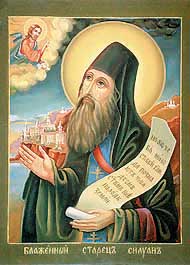
Although it is natural and usual to love those who love us and to do good to those who do good to us (Mt 5:46-47; Lk 6:32-33), to love our enemies is distasteful to our nature. One can say that it isn't in our power but is an attitude that can only be the fruit of grace, given by the Holy Spirit. This is why St. Silouan the Athonite writes, "The soul that has not known the Holy Spirit does not understand how one can love one's enemies, and does not accept it."
The Staretz repeatedly says that love of enemies is impossible without grace: "Lord, You have given the commandment to love enemies, but this is difficult for us sinners if Your grace is not with us"; "Without God's grace we cannot love enemies"; "He who does not love his enemies, does not have God's grace"; "He who has not learned to love from the Holy Spirit, will certainly not pray for his enemies." On the contrary, St. Silouan always teaches that this attitude is a gift of the Holy Spirit: "The Lord has commanded us to love our enemies, and the Holy Spirit reveals this love to us"; "One can only love one's enemies through the grace of the Holy Spirit"; "When you will love your enemies, know that a great divine grace will be living in you."
This grace does not suddenly erupt in the soul, but rather shows itself in a divine pedagogy, where taking into account the weakness and the difficulties of man, the Holy Spirit progressively teaches him to love and teaches him all the attitudes and ways which will allow him to do so. "The Holy Spirit teaches us to love even our enemies"; "The Holy Spirit teaches the soul a profound love for man and compassion for the lost. The Lord had pity for those who were lost. . . . The Holy Spirit teaches this same compassion for those who go to hell"; "I could not speak about it if the Holy Spirit had not taught me this love"; "The Lord taught me love of enemies. . . . The Holy Spirit taught [me] to love."
The grace of the Holy Spirit shows to him who possesses it the way to love his enemies. But it also reveals to him the foundation of this love: the love of God for all people and His will to save them: "No man can know by himself what divine love is if the Holy Spirit does not instruct him; but in our Church divine love is known through the Holy Spirit, and that is why we speak about it." Grace also "gives man the capacity and the strength to love his enemies, and the Spirit of God gives us the strength to love them."
Staretz Silouan insists that because love of enemies is a fruit of grace, it is essentially through prayer that it can be obtained. Several times he urges us to "ask the Lord with our whole being to give us the strength to love all men." He also advises to pray to the Mother of God and the Saints: "If we are incapable [of loving our enemies] and if we are without love, let us turn with ardent prayers to the Lord, to His Most Pure Mother, and to all the Saints, and the Lord will help us with everything, He whose love for us knows no bounds." The Staretz confesses that he himself constantly prays God for this: "I continuously beg the Lord to give me the love of enemies. . . . Day and night I ask the Lord for this love. The Lord gives me tears and I weep for the whole world." Wishing in his universal love for all men to receive such a gift, he links them to himself in his prayer: "Lord, teach us through Your Holy Spirit to love our enemies and to pray for them with tears . . . Lord, as you prayed for your enemies, so teach us also, through the Holy Spirit, to love our enemies."
Yet obtaining the grace to love one's enemies presupposes other conditions.
The love of enemies is completely bound to the love of God: we have seen that the principal foundation for the love of enemies is the love that God shows to all His creatures equally and His will that all people should be saved, and Christ gave us a perfect example of such love throughout his earthly life. The love of God leads man to accomplish His will and to imitate Him as much as possible, and so also to love his enemies. The Staretz also notes that he who does not love his enemies shows that he has not learned from the Holy Spirit to love God.
To love one's enemies is also tightly bound to humility. The Staretz often associate these two virtues. Almost all the difficulties we encounter in loving our enemies are linked with pride: it is from pride that flows the affliction that follows upon insults, hated, bad temper, spite, the desire for revenge, contempt for one's neighbor, refusing to forgive him and to be reconciled with him.
Pride excludes the love of enemies and love of enemies excludes pride: "If we love our enemies, pride will have no place in our soul." The fact that humility goes hand in hand with love of enemies proves the presence of grace and the authenticity of love: "If you have compassion for all creatures and love your enemies, and if, at the same time, you judge yourself the worst of all people, this shows that the great grace of the Lord is in you."
Indeed humility is the indispensable condition to receive and keep the grace that teaches us to love our enemies and gives us the strength to do so. The Staretz advises: "Humiliate yourself, then grace will teach you." On the other hand, "pride makes us lose grace. . . . The soul is then tormented by bad thoughts and does not understand that one must humiliate oneself and love one's enemies, for without that one cannot please God."
The Staretz sometimes also stresses the role played by penitence in connection with humility. "Regard yourself the worst of men," he advises. This is an attitude of great humility that of its nature implies penitence. He who counts himself the worst of men necessarily thinks others better than himself; he will judge and blame himself, and not judge and criticize his enemies, for he tends to estimate them better than himself.
The Staretz also gives us the example of another penitential attitude -- asking God's forgiveness each time one has not loved one's enemy: "If I judge someone or look at him angrily, my tears dry up and I fall into despondency; and again I start asking the Lord to forgive me, and the merciful Lord forgives me, a sinner. "Through such an attitude, by which the soul humbly recognizes before God its faults and shortcomings and obtains from Him forgiveness, an opening can be made that becomes bigger and bigger for grace and unceasing progress in love. As to a total absence of compassion for enemies, it shows the presence and the action of an evil spirit; sincere repentance is the only way to be freed from it."
The insistence on prayer, humility and penitence shows that, although St. Silouan recognizes a determining role to the action of grace in acquiring love of enemies, he does not neglect the role played by the efforts that man makes. The Staretz is very conscious of the importance of the initial action; this is why he says, "I beg you, try," and states, "In the beginning, force your heart to love your enemies." The efforts one makes must manifest themselves in a general way in a straight intention and constant good will, stretched toward the realization of God's command. God will not fail to respond.
For the person who feels discouraged by such a demanding task, St. Silouan reassures him: "Seeing your good intention, the Lord will help you in everything." The Staretz who felt in himself so acutely human powerlessness and weakness seems to think constantly of these words of the Apostle: "I can do all things through Christ who gives me strength" (Phil 4:13) and witnesses in his own experience the mighty help that everyone can receive from God.
For Christ there are no enemiesThe Staretz would say that for Christ there are no enemies -- there are those who accept "the words of eternal life," there are those who reject and even crucify; but for the Creator of every living thing, there can be no enemy. So it should be for the Christian, too, who "in pity for all must strive for the salvation of all."
Wherein, then, lies the force of the commandment, "Love your enemies"? Why did the Lord say that those who keep His commandments would know from very experience whence the doctrine?
. . . . God is love, in superabundance embracing all creatures. By allowing man to actually know this love the Holy Spirit reveals to him the path of fullness of being. To say "enemy" implies rejection. By such rejection a man falls from the plenitude of God. . . ."The whole paradise of Saints lives by the Holy Spirit, and from the Holy Spirit nothing in creation is hid," writes the Staretz. "God is love and in the Saints the Holy Spirit is love. Dwelling in the Holy Spirit, the saints behold love and embrace it, too, in their love."
. . . .[It] is possible to judge whether a given state of contemplation was a reality or an illusion only after the soul had returned to consciousness of the world; for then, as the Staretz pointed out, if there were no love for enemies and so for all creatures, it would be a true indication that the supposed contemplation had not been a real communion with God.
-- The Monk of Mount Athos (London: Mowbrays, 1973) by Archimandrite Sophrony; pp 70-71

Nobody would dispute that the most important day in a person's life, after his birth and baptism, is that of his marriage. It is no surprise, then, that the aim of contemporary worldly and institutional upheavals is precisely to crush the most honorable and sacred mystery of marriage. For many people, marriage is an opportunity for pleasures and amusements. Life, however, is a serious affair. It is a spiritual struggle, a progression toward a goal—heaven. The most crucial juncture, and the most important means, of this progression is marriage. It is not permissible for anyone to avoid the bonds of marriage, whether he concludes a mystical marriage by devoting himself to God, or whether he concludes a sacramental one with a spouse.
Today we will concern ourselves primarily with sacramental marriage. We will consider how marriage can contribute to our spiritual life, in order to continue the theme of our previous talk. We know that marriage is an institution established by God. It is "honorable" (Heb 13.4). It is a "great mystery" (Eph 5.32). An unmarried person passes through life and leaves it; but a married person lives and experiences life to the full.
One wonders what people today think about the sacred institution of marriage, this "great mystery", blessed by our Church. They marry, and it's as if two checking accounts or two business interests were being merged. Two people are united without ideals, two zeros, you could say. Because people without ideals, without quests, are nothing more than zeros. "I married in order to live my life", you hear people say, "and not to be shut inside four walls". "I married to enjoy my life", they say, and then they hand over their children—if they have children—to some strange woman so they can run off to the theater, the movies, or to some other worldly gathering. And so their houses become hotels to which they return in the evening, or, rather, after midnight, after they've had their fun and need to rest. Such people are empty inside, and so in their homes they feel a real void. They find no gratification there, and thus they rush and slide from here to there, in order to find their happiness.
They marry without knowledge, without a sense of responsibility, or simply because they wish to get married, or because they think they must in order to be good members of society. But what is the result? We see it every day. The shipwrecks of marriage are familiar to all of us. A worldly marriage, as it is understood today, can only have one characteristic—the murder of a person's spiritual life. Thus we must feel that, if we fail in our marriage, we have more or less failed in our spiritual life. If we succeed in our marriage, we have also succeeded in our spiritual life. Success or failure, progress or ruin, in our spiritual life, begins with our marriage. Because this is such a serious matter, let us consider some of the conditions necessary for a happy, truly Christian marriage.
In order to have a successful marriage, one must have the appropriate upbringing from an early age. Just as a child must study, just as he learns to think, and take an interest in his parents or his health, so too must he be prepared in order to be able to have a successful marriage. But in the age in which we live, no one is interested in preparing their children for this great mystery, a mystery which will play the foremost role in their lives. Parents are not interested, except in the dowry, or in other such financial matters, in which they are deeply interested.
The child, from an early age, must learn to love, to give, to suffer deprivation, to obey. He must learn to feel that the purity of his soul and body is a valuable treasure to be cherished as the apple of his eye. The character of the child must be shaped properly, so that he becomes an honest, brave, decisive, sincere, cheerful person, and not a half, self-pitying creature, who constantly bemoans his fate, a weak-willed thing without any power of thought or strength. From an early age, the child should learn to take an interest in a particular subject or occupation, so that tomorrow he will be in a position to support his family, or, in the case of a girl, also to help, if this is necessary. A woman must learn to be a housewife, even if she has an education. She should learn to cook, to sew, to embroider. But, my good Father, you may say, this is all self- evident. Ask married couples, however, and you'll see how many women who are about to marry know nothing about running a household.
Once we reach a certain age, moreover, the choice of one's life partner is a matter which should not be put off. Neither should one be in a hurry, because, as the saying goes, "quick to marry, quick to despair". But one should not delay, because delay is a mortal danger to the soul. As a rule, the normal rhythm of the spiritual life begins with marriage. An unmarried person is like someone trying to live permanently in a hallway: he doesn't seem to know what the rooms are for. Parents should take an interest in the child's social life, but also in his prayer life, so that the blessed hour will come as a gift sent by God.
Naturally, when he comes to choose a partner, he will take to account his parents' opinion. How often have parents felt knives piercing their hearts when their children don't ask them about the person who will be their companion in life? A mother's heart is sensitive, and can't endure such a blow. The child should discuss matters with his parents, because they have a special intuition enabling them to be aware of the things which concern them. But this doesn't mean that the father and mother should pressure the child. Ultimately he should be free to make his own decision. If you pressure your child to marry, he will consider you responsible if things don't go well. Nothing good comes from pressure. You must help him, but you must also allow him to choose the person he prefers or loves—but not someone he pities or feels sorry for. If your child, after getting to know someone, tells you, "I feel sorry for the poor soul, I'll marry him", then you know that you're on the threshold of a failed marriage. Only a person whom he or she prefers or loves can stand by the side of your child. Both the man and the woman should be attracted to each other, and they should truly want to live together, in an inward way, unhurriedly. On this matter, however, it is not possible to pressure our children. Sometimes, out of our love, we feel that they are our possessions, that they are our property, and that we can do what we want with them. And thus our child becomes a creature incapable of living life either married or unmarried.
Of course, the process of getting acquainted, which is such a delicate issue—but of which we are often heedless—should take place before marriage. We should never be complacent about getting to know each other, especially if we're not sure of our feelings. Love shouldn't blind us. It should open our eyes, to see the other person as he is, with his faults. "Better to take a shoe from your own house, even if it's cobbled", says the folk proverb. That is, it's better to take someone you've gotten to know. And acquaintanceship must always be linked with engagement, which is an equally difficult matter.
When I suggested to a young woman that she should think seriously about whether she should continue her engagement she replied: "If I break it off, my mother will kill me". But what sort of engagement is it, if there's no possibility of breaking it off? To get engaged doesn't mean that I'll necessarily get married. It means that I'm testing to see whether I should marry the person I'm engaged to. If a woman isn't in a position to break off her engagement, she shouldn't get engaged, or, rather, she shouldn't go ahead with the marriage. During the engagement, we must be especially careful. If we are, we will have fewer problems and fewer disappointments after the wedding. Someone once said that, during the period of getting to know me another, you should hold on to your heart firmly with both hands, as if it were a wild animal. You know how dangerous the heart is: instead of leading you to marriage, it can lead you into sin. There is the possibility that the person you've chosen sees you as a mere toy, or a toothbrush to be tried out. Afterwards you'll be depressed and shed many tears. But then it will be too late, because your angel will have turned out to be made of clay.
Don't choose a person who wastes his time at clubs, having good time, and throwing away his money on traveling and luxuries. Neither should you choose someone who, as you'll find out, conceals his self-centeredness beneath words of love. Don't choose a woman as your wife who is like gun powder, so that as soon as you say something to her, she bursts to flames. She's no good as a wife.
Moreover, if you want to have a truly successful marriage, don't approach that young woman or man who is unable to leave his or her parents. The commandment of Christ is clear: man leaves his father and mother, and is united to his wife" (Mk 10.7). But when you see the other person tied to his mother or father, when you see that he obeys them with his mouth hanging open, and is prepared to do whatever they tell him, keep well away. He is emotionally sick, a psychologically immature person, and you won't be able to create a family with him. The man you will make your husband should be spirited. But how can he be spirited when he hasn't realized, hasn't understood, hasn't digested the fact that his parents' house is simply a flower-pot in which he was put, to be taken out later, and transplanted somewhere else?
Also, when you're going to choose a husband, make sure that he's not an uncommunicative type—in which case he'll have no friends. And if today he has no friends, tomorrow he'll find it difficult to have you as a friend and partner. Be on your guard against grumblers, moaners, and gloomy people who are like dejected birds. Be on your guard against those who complain all the time: "You don't love me, you don't understand me", and all that sort of thing. Something about these creatures of God isn't right. Also be on your guard against religious fanatics and the overly pious. Those, that is, who get upset over trivial things, who are critical of everything and hypersensitive. How are you going to live with such a person? It will be like sitting on thorns. Also look out for those who regard marriage as something bad, as a form of imprisonment. Those who say: But I've never in my whole life thought about getting married.
Watch out for certain pseudo-Christians, who see marriage as something sordid, as a sin, who immediately cast their eyes down when they hear anything said about it. If you marry someone like this, he will be a thorn in your flesh, and a burden for his monastery if he becomes a monk. Watch out for those who think that they're perfect, and find no defect in themselves, while constantly finding faults in others. Watch out for those who think they've been chosen by God to correct everyone else.
There is another serious matter to which you should also pay attention: heredity. Get to know well the father, the mother, the grandfather, the grandmother, the uncle. Also, the basic material prerequisites should be there. Above all, pay attention to the person's faith. Does he or she have faith? Has the person whom you're thinking of making the companion of your life have ideals? If Christ means nothing to him, how are you going to be able to enter his heart? If he has not been able to value Christ, do you think he will value you? Holy Scripture says to the husband that the wife should be "of your testament" (Mal 2.14), that is, of your faith, your religion, so that she can join you to God. It is only then that you can have, as the Church Fathers say, a marriage "with the consent of the bishop," that is, with the approval of the Church, and not simply a formal license.
Discuss things in advance with your spiritual father. Examine every detail with him, and he will stand by your side as a true friend, and, when you reach the desired goal, then your marriage will be a gift from God (cf. 1 Cor 7.7).God gives his own gift to each one of us. He leads one person to marriage and another to virginity. Not that God makes the choice by saying "you go here", and "you go there", but he gives us the nerve to choose what our heart desires, and the courage and the strength to carry it out.
If you choose your spouse in this way, then thank God. Bring him into touch with your spiritual father. If you don't have one, the two of you should choose a spiritual father together, who will be your Elder, your father, the one who will remind you of, and show you God.
You will have many difficulties in life. There will be a storm of issues. Worries will surround you, and maintaining your Christian life will not be easy. But don't worry. God will help you. Do what is within your power. Can you read a spiritual book for five minutes a day? Then read. Can you pray for five minutes a day? Pray. And if you can't manage five minutes, pray for two. The rest is God's affair.
When you see difficulties in your marriage, when you see that you're making no progress in your spiritual life, don't despair. But neither should you be content with whatever progress you may have already made. Lift up your heart to God. Imitate those who have given everything to God, and do what you can to be like them, even if all you can do is to desire in your heart to be like them. Leave the action to Christ. And when you advance in this way, you will truly sense what is the purpose of marriage. Otherwise, as a blind person wanders about, so too will you wander in life.
What then is the purpose of marriage? I will tell you three of its main aims. First of all, marriage is a path of pain. The companionship of man and wife is called a "yoking together" (syzygia), that is, the two of them labor under a shared burden. Marriage is a journeying together, a shared portion of pain, and, of course, a joy. But usually it's six chords of our life which sound a sorrowful note, and only one which is joyous. Man and wife will drink from the same cup of upheaval, sadness, and failure. During the marriage ceremony, the priest gives the newly-weds to drink from the same cup, called the "common cup," because together they will bear the burdens of marriage. The cup is also called "union," because they are joined together to share life's joys and sorrows.
When two people get married, it's as if they're saying: Together we will go forward, hand in hand, through good times and bad. We will have dark hours, hours of sorrow filled with burdens, monotonous hours. But in the depths of the night, we continue to believe in the sun and the light. Oh, my dear friends, who can say that his life has not been marked by difficult moments? But it is no small thing to know that, in your difficult moments, in your worries, in your temptations, you will be holding in your hand the hand of your beloved. The New Testament says that every man will have pain, especially those who enter into marriage.
"Are you free from a wife?"—which means, are you unmarried?—asks the Apostle Paul. "Then do not seek a wife. But if you do marry, you are not doing anything wrong, it is no sin. And if a girl marries, she does not sin, but those who marry will have hardships to endure, and my aim is to spare you" (1 Cor 7.27-28). Remember: from the moment you marry, he says, you will have much pain, you will suffer, and your life will be a cross, but a cross blossoming with flowers. Your marriage will have its joys, its smiles, and its beautiful things. But during the days of sunshine, remember that all the lovely flowers conceal a cross, which can emerge into your sunshine at any moment.
Life is not a party, as some people think, and after they get married take a fall from heaven to earth. Marriage is a vast ocean, and you don't know where it will wash you up. You take the person whom you've chosen with fear and trembling, and with great care, and after a year, two years, five years, you discover that he's fooled you.
It is an adulteration of marriage for us to think that it is a road to happiness, as if it were a denial of the cross. The joy of marriage is for husband and wife to put their shoulders to the wheel and together go forward on the uphill road of life. "You haven't suffered? Then you haven't loved", says a certain poet. Only those who suffer can really love. And that's why sadness is a necessary feature of marriage. "Marriage", in the words of an ancient philosopher, "is a world made beautiful by hope, and strengthened by misfortune". Just as steel is fashioned in a furnace, just so is a person proved in marriage, in the fire of difficulties. When you see your marriage from a distance, everything seems wonderful. But when you get closer, you'll see just how many difficult moments it has.
God says that "it is not good for the man to be alone" (Gen 2.18), and so he placed a companion at his side, someone to help him throughout his life, especially in his struggles of faith, because in order to keep your faith, you must suffer and endure much pain. God sends his grace to all of us. He sends it, however, when he sees that we are willing to suffer. Some people, as soon as they see obstacles, run away. They forget God and the Church. But faith, God, and the Church, are not a shirt that you take off as soon as you start to sweat.
Marriage, then, is a journey through sorrows and joys. When the sorrows seem overwhelming, then you should remember that God is with you. He will take up your cross. It was he who placed the crown of marriage on your head. But when we ask God about something, he doesn't always supply the solution right away. He leads us forward very slowly. Sometime[s] he takes years. We have to experience pain, otherwise life would have no meaning. But be of good cheer, for Christ is suffering with you, and the Holy Spirit, "through your groanings is pleading on your behalf" (cf. Rom 8.26).
Second, marriage is a journey of love. It is the creation of a new human being, a new person, for, as the Gospel says, "the two will be as one flesh" (Mt 19.5; Mk 10.7). God unites two people, and makes them one. From this union of two people, who agree to synchronize their footsteps and harmonize the beating of their hearts, a new human being emerges. Through such profound and spontaneous love, the one becomes a presence, a living reality, in the heart of the other. "I am married" means that I cannot live a single day, even a few moments, without the companion of my life. My husband, my wife, is a part of my being, of my flesh, of my soul. He or she complements me. He or she is the thought of my mind. He or she is the reason for which my heart beats.
The couple exchanges rings to show that, in life's changes, they will remain united. Each wears a ring with the name of the other written on it, which is placed on the finger from which a vein runs directly to the heart. That is, the name of the other is written on his own heart. The one, we could say, gives the blood of his heart to the other. He or she encloses the other within the core of his being.
"What do you do?" a novelist was once asked. He was taken aback. "What do I do? What a strange question! I love Olga, my wife". The husband lives to love his wife, and the wife lives to love her husband.
The most fundamental thing in marriage is love, and love is about uniting two into one. God abhors separation and divorce. He wants unbroken unity (cf. Mt 19.3-9; Mk 10.2-12). The priest takes the rings off the left finger, puts them on the right, and then again on the left, and finally he puts them back on the right hand. He begins and ends with the right hand, because this is the hand with which we chiefly act. It also means that the other now has my hand. I don't do anything that my spouse doesn't want. I am bound up with the other. I live for the other, and for that reason I tolerate his faults. A person who can't put up with another can't marry.
What does my partner want? What interests him? What gives him pleasure? That should also interest and please me as well. I also look for opportunities to give him little delights. How will I please my husband today? How will I please my wife today? This is the question which a married person must ask every day. She is concerned about his worries, his interests, his job, his friends, so that they can have everything in common. He gladly gives way to her. Because he loves her, he goes to bedlastand gets up first in the morning. He regards her parents as his own, and loves them and is devoted to them, because he knows that marriage is difficult for parents. It always makes them cry, because it separates them from their child.
The wife expresses love for her husband through obedience. She is obedient to him exactly as the Church is to Christ (Eph 5.22-24). It is her happiness to do the will of her husband. Attitude, obstinacy, and complaining are the axes which chop down the tree of conjugal happiness. The woman is the heart. The man is the head. The woman is the heart that loves. In her husband's moments of difficulty, she stands at his side, as the empress Theodora stood by the emperor Justinian. In his moments of joy, she tries to raise him up to even higher heights and ideals. In times of sorrow, she stands by him like a sublime and peaceful world offering him tranquility.
The husband should remember that his wife has been entrusted to him by God. His wife is a soul which God has given to him, and one day he must return it. He loves his wife as Christ loves the Church (Eph 5.25). He protects her, takes care of her, gives her security, particularly when she is distressed, or when she is ill. We know how sensitive a woman's soul can be, which is why the Apostle Peter urges husbands to honor their wives (cf. 1 Pet 3.7). A woman's soul gets wounded, is often petty, changeable, and can suddenly fall into despair. Thus the husband should be full of love and tenderness, and make himself her greatest treasure. Marriage, my dear friends, is a little boat which sails through waves and among rocks. If you lose your attention even for a moment, it will be wrecked.
As we have seen, marriage is first of all a journey of pain; second a journey of love; and, third, a journey to heaven, a call from God. It is, as Holy Scripture says, a "great mystery" (Eph 5.32). We often speak of seven "mysteries", or sacraments. In this regard, a "mystery" is the sign of the mystical presence of some true person or event. An icon, for instance, is a mystery. When we venerate it, we are not venerating wood or paint, but Christ, or the Theotokos, or the saint who is mystically depicted. The Holy Cross is a symbol of Christ, containing his mystical presence. Marriage, too, is a mystery, a mystical presence, not unlike these. Christ says, "wherever two or three are gathered together in my name, there I am among them" (Mt 18.20). And whenever two people are married in the name of Christ, they become the sign which contains and expresses Christ himself. When you see a couple who are conscious of this, it is as if you are seeing Christ. Together they are a theophany.
This is also why crowns are placed on their heads during the wedding ceremony, because the bride and groom are an image of Christ and the Church. And not just this, but everything in marriage is symbolic. The lit candles symbolize the wise virgins. When the priest places these candles into the hands of the newly-weds, it is as if he is saying to them: Wait for Christ like the wise virgins (Mt 25.1-11). Or they symbolize the tongues of fire which descended at Pentecost, and which were in essence the presence of the Holy Spirit (Acts 2.1-4). The wedding rings are kept on the altar, until they are taken from there by the priest, which shows that marriage has its beginning in Christ, and will end in Christ. The priest also joins their hands, in order to show that it is Christ himself who unites them. It is Christ who is at the heart of the mystery and at the center of their lives.
All the elements of the marriage ceremony are shadows and symbols which indicate the presence of Christ. When you're sitting somewhere and suddenly you see a shadow, you know that someone's coming. You don't see him, but you know he's there. You get up early in the morning, and you see the red horizon in the east. You know that, in a little while, the sun will come up. And indeed, there behind the mountain, the sun starts to appear.
When you see your marriage, your husband, your wife, your partner's body, when you see your troubles, everything in your home, know that they are all signs of Christ's presence. It is as if you're hearing Christ's footsteps, as if he was coming, as if you are now about to hear his voice. All these things are the shadows of Christ, revealing that he is together with us. It is true, though, that, because of our cares and worries, we feel that he is absent. But we can see him in the shadows, and we are sure that he is with us. This is why there was no separate marriage service in the early Church. The man and woman simply went to church and received Communion together. What does this mean? That henceforth their life is one life in Christ.
The wreaths, or wedding crowns, are also symbols of Christ's presence. More specifically, they are symbols of martyrdom. Husband and wife wear crowns to show that they are ready to become martyrs for Christ. To say that "I am married" means that I live and die for Christ. "I am married" means that I desire and thirst for Christ. Crowns are also signs of royalty, and thus husband and wife are king and queen, and their home is a kingdom, a kingdom of the Church, an extension of the Church.
When did marriage begin? When man sinned. Before that, there was no marriage, not in the present-day sense. It was only after the Fall, after Adam and Eve had been expelled from paradise, that Adam "knew" Eve (Gen 4.1) and thus marriage began. Why then? So that they might remember their fall and expulsion from paradise, and seek to return there. Marriage is thus a return to the spiritual paradise, the Church of Christ. "I am married" means, then, that I am a king, a true and faithful member of the Church.
The wreaths also symbolize the final victory which will be attained in the kingdom of heaven. When the priest takes the wreaths, he says to Christ: "take their crowns to your kingdom", take them to your kingdom, and keep them there, until the final victory. And so marriage is a road: its starts out from the earth and ends in heaven. It is a joining together, a bond with Christ, who assures us that he will lead us to heaven, to be with him always. Marriage is a bridge leading us from earth to heaven. It is as if the sacrament is saying: Above and beyond love, above and beyond your husband, your wife, above the everyday events, remember that you are destined for heaven, that you have set out on a road which will take you there without fail. The bride and the bridegroom give their hands to one another, and the priest takes hold of them both, and leads them round the table dancing and singing. Marriage is a movement, a progression, a journey which will end in heaven, in eternity.
In marriage, it seems that two people come together. However it's not two but three. The man marries the woman, and the woman marries the man, but the two together also marry Christ. So three take part in the mystery, and three remain together in life.
In the dance around the table, the couple are led by the priest, who is a type of Christ. This means that Christ has seized us, rescued us, redeemed us, and made us his. And this is the "great mystery" of marriage (cf. Gal 3.13).
In Latin, the word "mystery" was rendered by the word sacramentum, which means an oath. And marriage is an oath, a pact, a joining together, a bond, as we have said. It is a permanent bond with Christ.
"I am married", then, means that I enslave my heart to Christ. If you wish, you can get married. If you wish, don't get married. But if you marry, this is the meaning that marriage has in the Orthodox Church, which brought you into being. "I am married" means I am the slave of Christ.
Archimandrite Aimilianos


