Tuesday, July 9, 2013

Pray for the Departed


The death of people who are close and dear to us is one of the most difficult trials sent to us by the Lord God during this temporary life. There are no tears more bitter than the tears of a mother for the beloved child of her heart who goes to the grave before his time. What sorrow can we compare to the sorrow of widows and orphans? Nonetheless, our Lord and Saviour turns to these people, the most unfortunate ones in the eyes of the world, saying respectfully, "Do not weep!" The Apostle Paul commands these sorrowing ones, saying, "Do not sorrow!" What does all this mean? Of course, it does not mean that we should forget those dear loved ones of ours who have departed, that we should cast them out of our hearts. No. We should love them after their death just as we loved them in life. However, we should not sorrow over their death. Death does not separate us who are Christians from communion in love with those who are dear to us. The Lord Himself has given us the very grace-filled means needed to have communion with them. The first among these means is prayer. Prayer is the best means for spiritual communion among people who are still alive. The Apostle Paul beseeched the believers to pray continually for him in order that the Lord would grant him strength and power to preach. Likewise, St. Paul prayed for others that the Lord would confirm them in the Faith and in a Christian life. There is no doubt that the prayers of believers strengthened the Apostle and that his prayers strengthened them.
We find an amazing example of the power and action of mutual prayer in the Acts of the Apostles. While St. Peter was in prison sleeping between two guards, prayer was made without ceasing of the Church unto God for him (Acts 12:5). What was the result of this prayer? During that very night, the Angel of the Lord appeared in the prison, awoke the sleeping Apostle, and led him out of prison.
The power and action of prayer for the souls of the departed is even greater than prayer for the living. There is no greater comfort than prayer and no greater joy than joy in the Lord for those who are separated from their bodies. It is unjust, as some think, to assume that the needs of our departed brethren are unknown to us. However, this is not true. The spiritual needs of the dead are the same as the spiritual needs of the living. The dead need the mercy and goodness of the Heavenly Father, forgiveness and remission of sins, grace-filled help from God in the fulfillment of all good desires, and the peace and ease of the heart and conscience. These things are most important both for the living and the dead. Give rest, O Lord, to the souls of Thy departed servants is the continual prayer and best intention of our Mother Church for the souls of Her departed. We should also beseech the Lord with this intention for the departed souls of our own loved ones.
It could be that some soul bound himself with earthly attachments, with earthly cares, and could not be free of them after death. Earthly thoughts about home and cares, about acquiring things, might still tug at this soul, torture him, and not allow him the freedom to strive with heart and soul towards God. We should pray that the Lord will grant rest to such a soul in the quiet harbor of His Kingdom. We should pray that the Lord will destroy and burn up in the fire of His Grace the memory of his earthly cares. We should pray that the Lord will warm this soul with love and with the desire for eternal treasure, that the Lord will give rest to this soul in the sweetest hope of eternal blessedness...
Perhaps, having confessed at the hour of death, some soul did so quickly, in a confused manner. This soul might have forgotten something because of troubled feelings, and he now grieves over this. Perhaps, this soul did not have time to offer God true repentance, to fully cleanse his sins by tears of compunction. Perhaps, the awareness of unconfessed and unforgiven sins tear and torture this soul. Pray for this soul who is suffering. Pray that the Lord God might comfort him with the protection of His inextinguishable mercy Pray that this soul might receive, albeit at this late hour, remission of sins because of his sincere remorse.
Who can enumerate all those bonds with which our soul might bind itself in this lifetime and by which it might remain bound for eternity. One might have been envious of his neighbor in the depths of ones soul and bound himself thus. Another person might have mocked the weakness of His neighbor and become according to the words of the Lord, worthy of Hell. Another person might have lied and as a result became the son of the father of lies. If Thou shouldest mark iniquities, O Lord, O Lord, who shall stand? Therefore, no matter how holy a man's life might be, no one can be sure that he will pass into the next world completely reconciled with God. No man can say that the prayerful intercessions of those brethren who are left alive are unnecessary for him.
Was not the repentance of St. Ephraim the Syrian sincere and deep? Even he, sensing that his end was near, besought his brethren, "O Brothers, accompany me into the world above with prayers, psalms, and offerings. Remember me on the fortieth day after my death; because prayers and offerings made by the living help the departed."
Works of charity are another means of communion with the departed. "If you desire to honor the dead, offer a gift for him. Honor him by good works, charitable offerings, and services" (St. John Chrysostom). Send gifts for the reposed through the hands of the poor and the hopeless. In the name of the reposed, do acts of charity to the best of your ability and be assured that your gift will be received by God. Our Lord Jesus Christ has assures us that our gifts will be received, saying, In as much as ye have done it unto one of the least of these My brethren, ye have done it unto Me (Matt. 25:40). Can it be that He Who is all-powerful will remain in debt to us? If you give food and drink to the hungry and the thirsty in His name, then the Lord will fill the soul of your departed brother with the appearance of His light-bearing and joy-filling Image.
It could be that the soul of your relative is ashamed before the holy angels because of his lack of good deeds and because of his wretched sins, and he hides in darkness and in murky depths from the face of God. Clothe the naked; wash the feet of the tired; receive and give rest to the traveler in the name of such a soul; and the merciful Lord will vest this soul in the Garment of His Mercy, will adorn it in the Robe of His justification, will wash its sinful filth in His Most Precious Blood...
It could be that the soul of your friend bound by sins languishes in a dungeon without the vision of God's face. Hurry to a prison and assuage the heart of a suffering prisoner in the name of your departed friend. The Lord will send His bright angels to comfort the soul of your sorrowing friend, to strengthen him with hope, and make him rejoice in the promise of God's mercy.
It could be that a soul has left this world for the spiritual world without having drawn close to the holy inhabitants of that world through prayer; he may have appeared in that higher sphere as one entering a strange and unfamiliar land and may not find any spiritual 'relative' in this upper Sion. Take in the stranger; give rest to the beggar; give him a place to rest his head, and the Lord will grant the soul, for whom you do this, one of the bright dwellings in His Father's mansion. The souls of the righteous will receive this soul in bright and joyful communion. St. John Chrysostom says, "If we desire to relieve the sufferings of a sinner, let us do acts of mercy in his name. Though he be unworthy, the Lord will comfort and pity him."
When we pray for the reposed and do charitable works in their name, it is necessary, Brethren, to reflect on our own death while there is still time. We should prepare now so that we will not pass into the future life of torture bound by bonds of sin. No matter how short or how long the Lord has determined that we will live on earth, there is no doubt that our entire present life is a road leading to death and to the threshold of eternity There is nothing better or of more value for us to acquire than a peaceful, blameless, repentant, and Christian end to our life. He who has lived piously will repose piously. He who has lived with the Lord will die with the Lord. He who zealously serves the Lord before death will be with the Lord after his repose. Where I am, there shall also My servant be. For if we believe that Jesus died and rose again, even so them also which sleep in Jesus will God bring with Him.
From Orthodox Life, Vol. 42, No. 6 (Nov.-Dec., 1992), pp. 29-32.
Translated from
Orthodox Russia, no. 13, 1990.

Hieromartyr John of Riga

A Guide to Confession


Genuine Repentance & Confession heals and makes the immortal soul holy. This is the correct way to prepare for Holy Communion.

So that we can better examine the depths of our conscience, it would be ideal to first read several books on the Sacrament of Confession.[1] Also, discuss any uncertainties that you may have with your wise Spiritual Father-Confessor.[2] The greatest science or knowledge is to get to know ourselves. Also we must not deny ourselves the greatest thing that every human soul thirsts for: a peaceful conscience and eternity with God.

This joy is only granted by the God-Man, our Lord Jesus Christ. He himself instituted the single path to salvation for the repentant sinner within his Church, the holy Sacrament of Repentance and Confession. This is why, friend, you must overcome any obstacle whatsoever that blocks the road to Holy Confession. Here awaits you with genuine Christian love the good Confessor, the representative of Christ, who as a fellow human being can understand and have compassion on his brethren who are also sinful.

Cast far away, brethren, any thought of embarrassment or fright. Why be seared or frightened when your soul frets and pains from the deadly consequences of multi-faceted sin. If sickness tortured your body, would you avoid the hospital or doctor because of embarrassment? But at the same time, do not be led astray by certain people who wish to have read on them a “blessing only,” without having previously confessed. Whenever this happens from ignorance or neglect, it is a terrible sin and an insult to God. With faith, then, and honesty, proceed to Holy Confession.

Be certain also that the infinite love of the crucified and resurrected Lord will welcome you and transform you, removing the weight that burdens you! He himself said, “Come to Me all ye that are heavy laden and I will grant you rest.”

You and God
Do you believe in God, the Holy Trinity, and in the divinity of Christ? Do you respect the Holy Virgin Mary, the Saints, and the Angels? Do you believe in the Church and its Mysteries (Sacraments)? Do you believe that Heaven and Hell exist?
Do you trust yourself always, and especially during the difficult times of your life, to the care and Providence of God? Or do you despair and show a lack of faith?
Perhaps in the problems, afflictions, sicknesses, and trials of your life you moan and complain against God and lose your faith and confidence?
Do you believe in mediums, fortune-telling, tarot card reading, or coffee-cup reading? Do you tell other people to believe in such things and go to such people?
Do you believe in superstition?
Do you believe in luck?
Do you pray morning and evening and before and after each meal? Are you embarrassed to make the sign of the cross in the presence of others, for example, in a restaurant or outside a holy church when you are passing by? Do you not make your cross properly?
Do you read the Holy Bible as well as other Orthodox spiritual books daily?
Do you go to church on Sundays and on the major Feast Days?[3]
Do you follow the Divine Liturgy carefully and reverently from the start until the end, or do you go late and leave before the end? Do you let your mind wander in church?
Do you go to church dressed in a proper and dignified way? Are you careful not to laugh, or talk even if it is a Wedding or Baptismal service?
Do you perhaps prevent or restrict your spouse or children from going to church? Or do you tell your acquaintances not to go to church?
Do you commune regularly or only once a year, and then without Holy Confession?
Do you give oaths without need or, if so, lie as well? Did you perhaps not fulfill your oath, vow, or promise? The Bible forbids oaths completely, saying that our “yes” be “yes” and our “no” be “no” (St Matthew 5:7).
Do you blaspheme the Name of God, the Virgin Mary, and our Saints by speaking irreverently of them?
Do you fast (unless you have a serious health problem) on Wednesdays and Fridays and during the appointed periods of the year?[4]
Do you throw religious books or periodicals in unclean places?

You and Others
Do you have hatred and ill-feelings towards someone who did you wrong or insulted you in their anger?
Are you suspicious and do you without reason suspect that everyone supposedly talks about you, that they don't want you, and that they don't love or like you?
Are you jealous and upset over the progress, fortune, possessions and beauty of others?
Are you unmoved by the misfortune and needs of your fellow men?
In your transactions with your business partners, co-workers, and clients, are you honest and forthright?
Have you criticized or slandered your fellow man, wrongly accusing them?
Are you sarcastic and patronizing towards believers, or towards those who fast and endeavor to live a Christian life, or towards those who have physical/mental problems and/or disabilities?
If you heard some information or criticism against someone, did you pass it on to others and harm (even unwillingly) their reputation and respect?
Did you criticize the conduct, actions, faults, and mistakes of another person when they were not present, even if what you said was the truth? Have you ever criticized the clergy? Do you gossip about and criticize the personal lives of others? Did you listen to someone blaspheming God or a holy person, and not protest?
Do you curse those who have harmed you, or curse yourself in difficult moments of your life, or curse the day and hour in which you were born?
Do you send others “to the devil” or give them rude hand gestures?
Do you respect your parents? Do you look after them? Do you put up with their elderly weaknesses? Do you help them with their bodily and spiritual needs? Are you mindful of their spiritual needs by making sure they go to church and partake worthily of Holy Communion? Have you abandoned them?
Have you misguided your parents to leave to you in their will more of their estate than is proper, thus causing injustice to your brothers and sisters?
Perhaps in your anger did you hit anyone with your hands or injure them with your words?
Do you perform your job or occupation properly and with a good conscience? Or are you unfair to others?
Do you steal? Perhaps you have encouraged or helped another person to steal? Have you agreed to cover up a theft? Have you bought or accepted goods known to be stolen?
Are you ungrateful towards God and generally towards your helpers and beneficiaries? Do you grumble and murmur against them?
Do you keep company with bad and sinful people or associates? With your words or example, have you ever pushed anyone to sin?
Have you ever committed forgery? Have you ever embezzled or defrauded the public? Have you borrowed money and/or other possessions and without returning or repaying them?
Have you ever committed murder, in any way?
Do you entangle yourself in the lives of others or in their work or their families and become the cause of strife, quarrels and disturbances?
Do you have mercy and compassion on the poor, on orphans, on the elderly, on families with many children struggling to make ends meet?
Have you lied or added or subtracted from the truth? Do you flatter others in order to get your own way?
Did you craftily ask for a dowry when you declared your intentions to marry?
Have you ever sent an anonymous or cruel letter to anyone?

Yourself
Are you a slave to materialism and worldly goods?
Are you greedy or a lover of money?
Are you stingy?
Are you wasteful? Do you live by the Gospel command that whatever you have leftover and above your needs belongs to the poor? Do you have too much love towards pets and waste money on them while people are dying of starvation?
Are you conceited and arrogant? Do you talk hack to your elders and superiors?
Do you like to show off with your clothing, wealth, fortunes, and the academic achievements of your children or of yourself?
Do you seek attention and glory from people? Do you wear perfume, make-up, and change the appearance that your Creator gave to you?
Do you accept compliments and praise from others gladly and like to be told that no one else exists who is as good as you?
Do you get upset when others reveal your faults and do you get offended when others examine you and when your seniors make comments about you? Do you get angry?
Are you perhaps stubborn, high-minded, egotistical, proud, or cowardly? Be careful with these sins, as the diagnosis and solution to them are difficult.
Do you gamble or play cards, even without money, with relatives and people at home to “kill time” as the saying goes?
Have sexual sins polluted your body, mind, or soul? For example, have you engaged in fornication (sexual intercourse before marriage), or masturbation, prostitution, homosexuality, lesbianism, etc.?
Do you watch dirty shows on television or at the movies?
Do you read pornographic, immoral books and magazines?
Have you ever considered committing suicide?
Are you a slave to your stomach (i.e. gluttony)?
Are you lazy, careless and negligent? Do you not help out when you can?
Do you say improper, dirty, and immoral words or use swear words for the sake of humor or to insult or humiliate others?
Do you have a spirit of self-denial?
Do you expel from your mind bad or sly thoughts that come to pollute your heart?
Are you careful so that your eyes don't gaze or stare at provocative pictures or people? Do you go to the movies and theatres?
Are you careful what you ears hear? Do you like to hear sinful music and conversations?
Do you dress immorally? If you are a woman, do you wear men's clothing, (e.g. pants) or short skirts, open shirts; transparent shirts, and scandalize others with your appearance? In addition, do you dress in this way when appearing at holy places? If you are a man, do you dress provocatively?
Have you appeared naked in public or semi-naked in a swimsuit or bikini publicly?
Do you dance in a provocative and sinful manner? Do you listen to sinful immoral songs? Do you frequent parties, nightclubs, and bars? Do you celebrate sinful, worldly festivals such as mardigras, gay and lesbian festivals, Halloween etc.?
Are you a drunkard? Do you abuse “recreational” or pharmaceutical drugs?
Do you smoke? Smoking destroys your God-given valuable health and is also wasteful of money, and therefore is a sin.
Do you talk excessively about meaningless things?

For Couples
Do you remain faithful to each other? It is tragic when one of you is unfaithful to the other.
Did one of you embarrass or criticize the other publicly or privately?
Do you not endure the apparent weakness of the other? Do you show harshness?
Do you or your partner permit the other to follow the latest fashion and trend and anything which is opposed to the law of God? Do you perhaps drag the other along to parties on the condition that you will in this way provide the other the means to follow fashion and a worldly life?
Do you take into consideration the struggle the other has outside and inside the home, so that you both help each other bodily and spiritually in the struggle?
As a partner, have you had excessive sexual demands and degraded your relationship? Do you abstain from sexual relations on Wednesdays, Fridays, Sundays, Feast Days, (including the night before) and on the days of the Holy Fasts of the Church?
Do you perhaps prevent your partner from going to church, spiritual gatherings and talks?
Do you bring up your children “in the instruction and counsel of Christ”? Do you only concern yourself with their intellectual growth and not with the nature of their character?
Do you direct your children to go to church regularly, to go to confession, to frequently partake of Holy Communion (properly prepared), and to go to Sunday school? Do you teach holy virtues by word and example? Have you taught them to pray in the morning, evening and before and after at each meal? Have you taught them to pray with respect and reverence?
Are you careful of the things they read? Do you buy books and periodical of religious and cultural subjects for them to read and lean?
Do you watch with whom they keep company and who their friends are?
Do you lead them to sinful shows and entertainment or allow them to watch television unsupervised?
Do you teach them humility and meekness and are you careful that they dress in a dignified way?
Do you curse them when they upset you? Do you “send them to hell” or “to the devil”?
Have you had abortions or do you prevent yourself from having children (i.e. contraception)?
Have you been unjust to your children in the division of your estate?
Do you as a parent believe that the responsibility of raising and educating your children rests only with your partner? You have an obligation to educate them and to read to them so that you can relieve you partner.
Do you scorn your children by giving them insulting hand gestures and reprimand them with improper language?
Does each of you love and respect the parents of the other?
Do the grandparents of your children and other relatives get too involved in the family and cause disagreements and disputes?
Do you interfere in your children's families?
Is your partner a blasphemer? Have patience, and try hard to eliminate cursed blasphemy!
Have you ever considered divorcing your partner?
Do you allow your children to become fanatical about sports and even miss church in order to play (e.g. Sunday morning games)?
Are you fair and just with your family, considering and respecting their views and wishes, or do you behave like a dictator?
+ + +

He who is accustomed to give account of his life at confession here will not fear to give an answer at the terrible judgment-seat of Christ. It is for this purpose that the mild tribunal of penitence was here instituted, in order that we, being cleansed and amended through penitence here below, may give an answer without shame at the terrible judgment-seat of Christ. This is the first motive for sincere confession, and, moreover, it must absolutely be made every year. The longer we remain without confessing, the worse it is for us, the more entangled we become in the bonds of sin, and therefore the more difficult it is to give an account. The second motive is tranquillity: the more sincere has been our confession, the more tranquil will the soul be afterwards. Sins are secret serpents, gnawing at the heart of a man and all his being; they do not let him rest, they continually suck his heart; sins are prickly thorns, constantly goring the soul; sins are spiritual darkness. Those who repent must bring forth the fruits of repentance.

Consciousness, memory, imagination, feeling, and will are helps to penitence. As we sin with all the powers of our soul, so penitence must be from our whole soul. Penitence in words only, without the intention of amendment and without the feeling of contrition, may be called hypocritical. Should the consciousness of sins be obscured, it must be cleared up; should the feeling be smothered and dulled, it must be roused; should the will become blunt and too weak for amendment, it must be forced; “the kingdom of heaven suffereth violence, and the violent take it by force.” (St. Matt. 11:12) Confession must be sincere, deep, and full.

—St John of Kronstadt (My Life in Christ, p. 280)

Desire , is it good or bad.....


Is our desire for a good life a sin? How can it be evil when we desire to do good and strive with all our energy to bring it about. Such desire cannot be evil. It only turns to evil when we do it out of our self-gratification, to boost our own self-image at the detriment to others.


Elder Macarius says,


It is nonsense to say that all desire is sinful, that we should never ask God to fulfill our wishes, that we should feebly abandon ourselves to what comes along. Surely to act in this manner would be contrary to reason, to human nature, and to Holy Scripture. Desire is not a sin; only the desire of evil is wrong. How could man belong to the kingdom of the Word, be reasonable creature and free––if all desires were wrong?... You are not a log or a stone; nor were you ever intended to be...


Reference: Russian Letter of Spiritual Direction, p 38

Μην καταδικάζουμε το κακό, πρεπει να το διορθώνουμε


Ο σκοπός μας δεν είναι να καταδικάζουμε το κακό, αλλά να το διορθώνουμε. Με την καταδίκη ο άνθρωπος μπορεί να χαθεί, με την κατανόηση και βοήθεια θα σωθεί.
Το κακό αρχίζει από τις κακές σκέψεις.

Όταν πικραίνεσαι και αγανακτείς, έστω μόνο με τη σκέψη, χαλάς την πνευματική ατμόσφαιρα.

Εμποδίζεις το Αγιο Πνεύμα να ενεργήσει και επιτρέπεις στο διάβολο να μεγαλώσει το κακό.

Εσύ πάντοτε να προσεύχεσαι, να αγαπάς και να συγχωρείς, διώχνοντας από μέσα σου κάθε κακό λογισμό.


Γέροντας Πορφύριος

ΤΟ ΜΥΣΤΙΚΟ ΓΙΑ ΝΑ ΑΚΟΥΣΤΕΙ Η ΠΡΟΣΕΥΧΗ ΣΟΥ


Το μυστικό για να ακουστεί η προσευχή σου δεν είναι πολύπλοκο...

Παρακολούθησε το διάλογο:

- Θέλεις ν’ ακούει παρευθύς ο Θεός την προσευχή σου, αδερφέ;

Λέγει ο αββάς Ζήνων:
- Σαν σηκώνεις τα χέρια σου στον ουρανό, προσευχήσου πρώτα απ’ όλα, με την καρδιά σου για τους εχθρούς σου και ο Θεός θα σου δώσει γρήγορα ό,τι άλλο του ζητήσεις.

Monday, July 8, 2013

Easiest way to win over an Atheist ( St. Nikolai Velimirovich )


"For such is the will of God, that by doing good you should put to silence the ignorance of foolish men" (1 Peter 2:15).


Brethren, it is difficult to argue with an atheist; it is difficult to talk with an unreasonable man; it is difficult to convince an embittered man.


It is difficult to convince the atheist, the unreasonable man and the embittered man with words. You will convince them easier by deeds. "They may through observing you by reason of your good works glorify God" (1 Peter 2:12).


Do good deeds to those who wish to argue with you and you will win the argument. One deed of compassion will bring the unreasonable man to his senses and will pacify the embittered man quicker than many hours of conversation.


If atheism, unreasonableness and bitterness stem from ignorance, that ignorance is as a fury, which can quickly be restrained by good works. If you argue with an atheist in his own rabid manner, you strengthen the fury of atheism. If you converse with the unreasonable by derision, the darkness of unreasonableness is increased. If you think you will overcome the embittered man with anger, you will stir up a greater fire of bitterness. A meek and good deed is like water over a fire.


Always remember the holy apostles and their successful methods of behavior with men. If an atheist provokes you, the man does not provoke you but the devil provokes you: man by nature is religious. If the unreasonable man scolds you, the man does not scold you but the devil scolds you: man by nature is reasonable. If the embittered one persecutes you, then it is not the man who persecutes you but the devil who persecutes you: for man by nature is good. The devil provokes you to lengthy arguments and unfruitful conversations and flees from good deeds. Do good work in the Name of Christ and the devil will flee and only then will you have dealings with men, with true men; religious, reasonable and good men. Therefore whatever you do, do in the Name of the Lord.


O All-Good Lord, help us to do good and by good to conquer in Your Name. To You be glory and thanks always. Amen.

St. Nikolai Velimirovich

Εξομολόγηση...να δένουμε το τραύμα μας ( Γέροντας Παίσιος )


- Γέροντα, όταν στον αγώνα μου έχω πτώσεις, πανικοβάλλομαι.

- Μη φοβάσαι. Αγώνας είναι και θα έχουμε και τραύματα. Με την εξομολόγηση αυτά θεραπεύονται. Βλέπεις, οι στρατιώτες στον πόλεμο, όταν τραυματίζωνται επάνω στην μάχη, τρέχουν αμέσως στον γιατρό, δένουν το τραύμα τους και συνεχίζουν να πολεμούν φιλότιμα. Εν τω μεταξύ αποκτούν και πείρα από τον τραυματισμό και προφυλάγονται καλύτερα, ώστε να μην ξανατραυματισθούν. Έτσι και εμείς, όταν τραυματιζώμαστε πάνω στον αγώνα μας, δεν πρέπει να δειλιάζουμε, αλλά να τρέχουμε στον γιατρό - στον πνευματικό -, να του δείχνουμε το τραύμα μας, να θεραπευώμαστε πνευματικά, και πάλι να συνεχίζουμε «τον καλόν αγώνα»[3]. Κακό είναι, όταν δεν ψάχνουμε να βρούμε τους φοβερούς εχθρούς της ψυχής, τα πάθη, και δεν αγωνιζώμαστε, για να τους εξοντώσουμε.

- Γέροντα, μερικοί από φιλότιμο δεν πάνε να εξομολογηθούν. «Αφού μπορεί να ξανακάνω το ίδιο σφάλμα, λένε, για ποιο λόγο να πάω να το εξομολογηθώ; για να κοροϊδεύω τον παπά;».

- Αυτό δεν είναι σωστό! Είναι σαν να λέη ένας στρατιώτης, όταν τραυματίζεται: «Αφού ο πόλεμος δεν τέλειωσε και μπορεί πάλι να τραυματισθώ, γιατί να δέσω το τραύμα μου;». Αλλά, αν δεν το δέση, θα πάθη αιμορραγία και θα πεθάνη. Μπορεί από φιλότιμο να μην πηγαίνουν να εξομολογηθούν, τελικά όμως αχρηστεύονται. Ο διάβολος, βλέπεις, εκμεταλλεύεται και τα χαρίσματα. Αν δεν καθαρίζουμε με την εξομολόγηση την ψυχή μας, όταν πέφτουμε και λερωνώμαστε, με τον λογισμό ότι πάλι θα πέσουμε και θα λερωθούμε, προσθέτουμε λάσπες πάνω στις παλιές λάσπες και είναι δύσκολο μετά να καθαρίσουν.

Η ανάγκη για εξομολόγηση


- Γέροντα, ο Όσιος Μάρκος ο Ασκητής λέει: «Ο γνωστικός εξομολογείται στον Θεό όχι με την απαρίθμηση των παραπτωμάτων του, αλλά με την υπομονή των επερχομένων θλίψεων»[4]. Τι εννοεί;

- Και το ένα πρέπει να γίνεται και το άλλο. Εξομολογείται ο πιστός στον πνευματικό, εξομολογείται και πριν από την προσευχή ταπεινά στον Θεό, απογυμνώνοντας τον εαυτό του: «Θεέ μου, έσφαλα, είμαι τέτοιος, τέτοιος». Συγχρόνως όμως δέχεται και τις θλίψεις που του συμβαίνουν σαν φάρμακο. Ο Άγιος δεν λέει να μην κάνης την πρώτη και την δεύτερη εξομολόγηση, αλλά μόνο να υπομένης τις θλίψεις. Τι θα πη «εξομολογούμαι;». Δεν θα πη «ομολογώ έξω αυτό που έχω μέσα μου»; Αν έχης μέσα στο καλά, «εξομολογείσαι τω Κυρίω»[5], δηλαδή δοξολογείς τον Θεό. Αν έχης κακά, εξομολογείσαι τις αμαρτίες σου.

- Γέροντα, την πρώτη φορά που θα πάη κανείς για εξομολόγηση, θα μιλήση στον πνευματικό για όλη την προηγούμενη ζωή του;

- Την πρώτη φορά θα κάνη μια γενική εξομολόγηση. Όπως ο ασθενής, όταν μπη στο νοσοκομείο, δίνει το ιστορικό του, π.χ. λέει: «είχα μια πάθηση στους πνεύμονες, αλλά τώρα έχει περάσει, έχω κάνει μια εγχείρηση με ολική ή τοπική νάρκωση κ.λπ.», έτσι και στην πρώτη εξομολόγηση, ας προσπαθήση κανείς να πη στον πνευματικό λεπτομέρειες από την ζωή του, και εκείνος θα βρη την πληγή, για να την θεραπεύση. Πολλές φορές ένα χτύπημα, που δεν του δίνεις σημασία, έχει ύστερα συνέπειες. Βέβαια, την πρώτη φορά που θα πάη στον πνευματικό, θα έχη να πη, ας υποθέσουμε, εκατό αμαρτίες. Την δεύτερη θα έχη να πη εκατόν δέκα, γιατί θα τον πολεμήση περισσότερο ο διάβολος, επειδή εξομολογήθηκε και του χάλασε τη δουλειά. Την Τρίτη φορά μπορεί να πη εκατόν πενήντα, αλλά ύστερα θα ελαττώνεται συνέχεια ο αριθμός, μέχρι που θα πηγαίνη για εξομολόγηση και θα έχη να πη ελάχιστες αμαρτίες.

Η σωστή εξομολόγηση


- Γιατί μερικές φορές, ενώ η συνείδηση μας ελέγχει, δεν κάνουμε τον ανάλογο αγώνα, για να διορθωθούμε;

- Αυτό μπορεί να συμβή και από ένα τσάκισμα ψυχικό. Όταν είναι κανείς πανικοβλημένος από κάποιον πειρασμό, θέλει να αγωνισθή, αλλά δεν έχει διάθεση, δεν έχει ψυχική δύναμη. Τότε πρέπει να τακτοποιηθή εσωτερικά με την εξομολόγηση. Με την εξομολόγηση παρηγοριέται, τονώνεται και ξαναβρίσκει με την Χάρη του Θεού το κουράγιο για αγώνα. Αν δεν τακτοποιηθή, μπορεί να του έρθη και άλλος πειρασμός, οπότε, θλιμμένος όπως είναι, τσακίζεται περισσότερο, τον πνίγουν οι λογισμοί, απελπίζεται και μετά δεν μπορεί να αγωνισθή καθόλου.

- Και αν αυτό συμβαίνη συχνά;

- Αν συμβαίνη συχνά, πρέπει ο άνθρωπος να τακτοποιήται συχνά, να ανοίγη την καρδιά του στον πνευματικό, για να παίρνη κουράγιο. Και όταν τακτοποιηθή, πρέπει να βάλη την μηχανή να τρέξη, να αγωνισθή φιλότιμα και εντατικά, για να πάρη καταπόδι τον έξω από 'δώ.

- Γέροντα, όταν δεν αισθάνωνται την ανάγκη για εξομολόγηση, τι φταίει;

- Μήπως δεν παρακολουθείς τον εαυτό σου; Η εξομολόγηση είναι μυστήριο. Να πηγαίνης και απλά να λες τις αμαρτίες σου. Γιατί, τι νομίζεις; Πείσμα δεν έχεις; Εγωισμό δεν έχεις; Δεν πληγώνεις την αδελφή; Δεν κατακρίνεις; Μήπως εγώ τι πηγαίνω και λέω; «Θύμωσα, κατέκρινα ...;» και μου διαβάζει ο πνευματικός την συγχωρητική ευχή. Αλλά και οι μικρές αμαρτίες έχουν και αυτές βάρος. Όταν πήγαιναν στον Παπα-Τύχωνα[6] να εξομολογηθώ, δεν είχα τίποτα σοβαρό να πω και μου έλεγε: «Αμμούδα, παιδάκι μου, αμμούδα»! Οι μικρές αμαρτίες μαζεύονται και κάνουν ένα σωρό αμμούδα, που είναι όμως βαρύτερη από μια μεγάλη πέτρα. Ο άλλος που έχει κάνει ένα αμάρτημα μεγάλο, το σκέφτεται συνέχεια, μετανοεί και ταπεινώνεται. Εσύ έχεις πολλά μικρά. Εάν όμως εξετάσης τις συνθήκες με τις οποίες εσύ μεγάλωσες και τις συνθήκες με τις οποίες μεγάλωσε ο άλλος, θα δης ότι είσαι χειρότερη από εκείνον. Να προσπαθής επίσης να είσαι συγκεκριμένη στην εξομολόγησή σου. Δεν φθάνει να πη κανείς λ.χ. «ζηλεύω, θυμώνω κ.λπ.», αλλά πρέπει να πη τις συγκεκριμένες πτώσεις του, για να βοηθηθή. Και, όταν πρόκειται για κάτι βαρύ, όπως η πονηριά, πρέπει να πη και πως σκέφθηκε και πως ενήργησε· αλλιώς κοροϊδεύει τον Χριστό. Αν ο άνθρωπος δεν ομολογή την αλήθεια στον πνευματικό, δεν του αποκαλύπτη το σφάλμα του, για να μπορέση να τον βοηθήση, παθαίνει ζημιά, όπως και ο άρρωστος κάνει μεγάλο κακό στην υγεία του, όταν κρύβη την πάθησή του από τον γιατρό. Ενώ, όταν εκθέτη τον εαυτό του όπως ακριβώς είναι, τότε ο πνευματικός μπορεί να τον γνωρίση καλύτερα και να τον βοηθήση πιο θετικά.

Ύστερα, όταν κανείς αδικήση ή πληγώση με την συμπεριφορά του έναν άνθρωπο, πρέπει πρώτα να πάη να του ζητήση ταπεινά συγχώρηση, να συμφιλιωθή μαζί του, και έπειτα να εξομολογηθή την πτώση του στον πνευματικό, για να λάβη την άφεση. Έτσι έρχεται η Χάρις του Θεού. Αν πη το σφάλμα του στον πνευματικό, χωρίς προηγουμένως να ζητήση συγχώρηση από τον άνθρωπο που πλήγωσε, δεν είναι δυνατόν να ειρηνεύση η ψυχή του, γιατί δεν ταπεινώνεται. Εκτός αν ο άνθρωπος που πλήγωσε έχη πεθάνει ή δεν μπορή να τον βρη, γιατί άλλαξε κατοικία και δεν έχει την διεύθυνσή του, για να του ζητήση, έστω και γραπτώς, συγγνώμην, αλλά έχη διάθεση να το κάνη, τότε ο Θεός τον συγχωρεί, γιατί βλέπει την διάθεσή του.

- Αν, Γέροντα, ζητήσουμε συγχώρεση και δεν μας συγχωρήση;

- Τότε να κάνουμε προσευχή να μαλακώση ο Θεός την καρδιά του. Υπάρχει όμως περίπτωση να μη βοηθάη ο Θεός να μαλακώση η καρδιά του, γιατί, αν μας συγχωρήση, μπορεί να ξαναπέσουμε στο ίδιο σφάλμα.

- Γέροντα, όταν κανείς κάνη ένα σοβαρό σφάλμα, υπάρχει περίπτωση να μην μπορή να το εξομολογηθή αμέσως;

- Γιατί να το αφήση; Για να ξινίση; Όσο κρατάς ένα χαλασμένο πράγμα, τόσο χαλάει. Γιατί να αφήση να περάσουν ένας-δύο μήνες, για να πάη στον πνευματικό να το εξομολογηθή; Να πάη το συντομώτερο. Αν έχη μια πληγή ανοιχτή, θα αφήση να περάση ένας μήνας, για να την θεραπεύση; Ούτε να περιμένη να πάη, όταν θα έχη πολύ χρόνο ο πνευματικός, για να έχη πιο πολλή άνεση. Αυτό το ένα σφάλμα, τακ-τακ να το λέη αμέσως και μετά, όταν ο πνευματικός θα έχη χρόνο, να πηγαίνη για πιο πολύ, για μια συζήτηση κ.λπ.

Δεν χρειάζεται ώρα πολλή, για να δώσω εικόνα του εαυτού μου. Όταν η συνείδηση δουλεύη σωστά, δίνει ο άνθρωπος με δυο λόγια εικόνα της καταστάσεώς του. Όταν όμως υπάρχη μέσα του σύγχυση, μπορεί να λέη πολλά και να μη δίνη εικόνα. Να, βλέπω, μερικοί μου γράφουν ολόκληρα τετράδια, είκοσι-τριάντα σελίδες αναφοράς με μικρά γράμματα, και μερικές σελίδες υστερόγραφο ...; Όλα αυτά που γράφουν, μπορούσαν να τα βάλουν σε μια σελίδα.


Τα ελαφρυντικά στην εξομολόγησή μας

γίνονται επιβαρυντικά για την συνείδηση


- Όταν, Γέροντα, κατά την εξομολόγησή μιας αμαρτίας δεν νιώθη κανείς τον πόνο που ένιωσε, όταν έκανε την αμαρτία, σημαίνει ότι δεν υπάρχει πραγματική μετάνοια;

- Αν έχη περάσει καιρός από τότε που έκανε αυτήν την αμαρτία, επουλώνεται η πληγή, γι' αυτό δεν νιώθει τον ίδιο πόνο. Αυτό που πρέπει να προσέξη, είναι να μη δικαιολογή τον εαυτό του κατά την εξομολόγηση. Εγώ, όταν πάω να εξομολογηθώ και πω λ.χ. «θύμωσα» - άσχετα αν χρειαζόταν να δώσω και σκαμπίλι -, δεν αναφέρω το θέμα, για να μη μου δώση ελαφρυντικό ο πνευματικός. Όποιος εξομολογείται και δικαιολογεί τον εαυτό του, δεν έχει ανάπαυση εσωτερική, όσο ασυνείδητος και αν είναι. Τα ελαφρυντικά που χρησιμοποιεί στην εξομολόγησή του γίνονται επιβαρυντικά για την συνείδησή του. Ενώ, όποιος υπερβάλλει τα σφάλματά του, γιατί έχει λεπτή συνείδηση, και δέχεται και μεγάλο κανόνα από τον πνευματικό, αυτός νιώθει ανέκφραστη αγαλλίαση. Υπάρχουν άνθρωποι που, αν κλέψουν λ.χ. μια ρώγα, νιώθουν σαν να πήραν πολλά καλάθια σταφύλια και σκέφτονται συνέχεια το σφάλμα τους. Δεν κοιμούνται όλη την νύχτα, μέχρι να το εξομολογηθούν. Και άλλοι, ενώ έχουν κλέψει ολόκληρα καλάθια σταφύλια, δικαιολογούν τον εαυτό τους και λένε πως πήραν ένα τσαμπί. Αυτοί όμως που όχι μόνο δεν δικαιολογούν τον εαυτό τους, αλλά μεγαλοποιούν το παραμικρό σφάλμα τους και στενοχωριούνται και υποφέρουν πολύ για μια μικρή τους αταξία, ξέρετε τι θεία παρηγοριά νιώθουν; Εδώ βλέπεις την θεία δικαιοσύνη, πως ο Καλός Θεός ανταμείβει.

Έχω παρατηρήσει ότι όσοι εκθέτουν τα σφάλματά τους ταπεινά στον πνευματικό και εξευτελίζονται, λάμπουν, γιατί δέχονται την Χάρη του Θεού. Ένας απόστρατος με πόση συντριβή μου διηγήθηκε ό,τι είχε κάνει από οκτώ χρονών παιδάκι. Ένα τόπι είχε πάρει από ένα παιδάκι για μια μόνο νύχτα - την άλλη μέρα του το έδωσε - και έκλαιγε, γιατί το στενοχώρησε. Όταν αποστρατεύθηκε, έψαξε και βρήκε όσους είχε λυπήσει, όταν υπηρετούσε - άσχετα αν εκτελούσε καθήκον της υπηρεσίας του-, και τους ζήτησε συγγνώμη! Μου έκανε εντύπωση! Όλα τα έπαιρνε επάνω του. Μένει τώρα σε ένα χωριό και τα χρήματά του τα δίνει ελεημοσύνη. Υπηρετεί και την ηλικιωμένη μάνα του, ενενήντα πέντε χρόνων, κατάκοιτη με ημιπληγία και, επειδή βλέπει το σώμα της, όταν την φροντίζη, τον πειράζει ο λογισμός. «Αν ο Χαμ που είδε την γύμνωση του πατέρα του τιμωρήθηκε[7], λέει, τότε εγώ ...;». Συνέχεια έκλαιγε. Το πρόσωπο του ήταν αλλοιωμένο. Πόσο διδάχθηκα από την συντριβή του!

- Μπορεί, Γέροντα, να μεγαλοποιή κανείς τα σφάλματά του, για να δείξη ότι κάνει λεπτή εργασία΄

- Εκείνο είναι άλλο· τότε υπερηφανεύεται από την ταπείνωση.

Μετά την εξομολόγηση


- Γέροντα, μετά την εξομολόγηση δικαιολογείται να νιώθης βάρος;

- Γιατί να νιώθης βάρος; Με μια σωστή εξομολόγηση σβήνουν όλα τα παλιά. Ανοίγονται νέα δεφτέρια. Έρχεται η Χάρις του Θεού και αλλάζει τελείως ο άνθρωπος. Χάνονται η ταραχή, η αγριάδα, το άγχος και έρχονται η γαλήνη, η ηρεμία. Τόσο αισθητό είναι αυτό ακόμη και εξωτερικά, που λέω σε μερικούς να φωτογραφηθούν πριν από την εξομολόγηση και μετά την εξομολόγηση, για να διαπιστώσουν και οι ίδιοι την καλή αλλοίωση, γιατί στο πρόσωπο ζωγραφίζεται η εσωτερική πνευματική κατάσταση. Τα μυστήρια της Εκκλησίας κάνουν θαύματα. Όσο πλησιάζει κανείς στον Θεάνθρωπο Ιησού Χριστό, θεώνεται, και επόμενο είναι να ακτινοβολή και να προδίδεται από την θεία Χάρη.

- Δηλαδή, Γέροντα, μετά από μια ειλικρινή εξομολόγηση νιώθεις αμέσως χαρά;

- Όχι πάντοτε. Μπορεί και να μη χαρής αμέσως, αλλά σιγά-σιγά γεννιέται μέσα σου η χαρά. Μετά την εξομολόγηση χρειάζεται η φιλότιμη αναγνώριση. Να νιώθης όπως αυτός που του χαρίζεται ένα χρέος που έχει, και από φιλότιμο αισθάνεται ευγνωμοσύνη και υποχρέωση προς τον ευεργέτη του. Να ευχαριστής τον Θεό, αλλά συγχρόνως να ζης και το ψαλμικό: «την ανομίαν μου εγώ γινώσκω και η αμαρτία μου ενώπιόν μου εστι διαπαντός»[8], για να μην ξεθαρρεύης και επαναλαμβάνης τα ίδια σφάλματα.

- Γέροντα, διάβασα κάπου ότι οι δαίμονες θα μας βασανίσουν στην άλλη ζωή ακόμη και για έναν κακό λογισμό που δεν εξομολογηθήκαμε.

- Κοίταξε, όταν ο άνθρωπος μετανοήση και πη στον πνευματικό ό,τι θυμόταν, χωρίς να έχη την πρόθεση να κρύψη κάτι, τελείωσε· τα ταγκαλάκια δεν έχουν καμμία εξουσία επάνω του. Όταν όμως δεν εξομολογηθή εν γνώσει του μερικές αμαρτίες του, θα βασανίζεται στην άλλη ζωή γι' αυτές.

- Γέροντα, όταν κάποιος εξομολογήθηκε νεανικά του σφάλματα, αλλά πάλι τα σκέφτεται και ταλαιπωρήται, είναι σωστή αντιμετώπιση;

- Αν έχη πολλή συντριβή για τα νεανικά του σφάλματα και τα εξομολογήθηκε, δεν υπάρχει λόγος να ταλαιπωρήται, αφού ο Θεός του τα συγχώρησε από την στιγμή που τα εξομολογήθηκε. Στο εξής δεν πρέπει να σκαλίζη τα παλιά, ιδίως σαρκικά αμαρτήματα, γιατί μπορεί να πάθη ζημιά. Στον πόλεμο π.χ. πέφτει μια χειροβομβίδα δίπλα σε έναν στρατιώτη, αλλά τον φυλάει ο Θεός και δεν σκάζει. Όταν τελειώση ο πόλεμος, βρίσκει ο στρατιώτης την χειροβομβίδα που δεν έσκασε και αρχίζει να την περιεργάζεται, και τελικά ανατινάζεται στον αέρα σε καιρό ειρήνης.

Η εμπιστοσύνη στον πνευματικό


- Γέροντα, αν στενοχωρεθή κάποιος πολύ, γιατί τον μάλωσε για κάποιο σφάλμα του ο πνευματικός, και πέση σε λύπη, αυτό έχει μέσα εγωισμό;

- Εμ βέβαια, έχει μέσα εγωισμό. Αν στενοχωρεθή κατά Θεόν, θα έχη παρηγοριά, θα έχη και πρόοδο, γιατί θα προσπαθήση να μην το ξανακάνη. Πρέπει να λέη τις δυσκολίες, τους λογισμούς του, τις πτώσεις του στον πνευματικό και να δέχεται με χαρά και την ήπια και την αυστηρή συμπεριφορά του, γιατί όλα από αγάπη και ενδιαφέρον γίνονται για την πρόοδο της ψυχής του.

- Και αν, Γέροντα, δεν δέχωμαι το μάλωμα ή την παρατήρηση;

- Αν δεν δέχεσαι, θα μείνης αδιόρθωτη. Όσοι δεν δέχονται παρατηρήσεις ούτε από τους ανθρώπους που τους αγαπούν, τελικά παραμένουν στραβόξυλα και αχρηστεύονται μόνοι τους πνευματικά. Όπως οι σανίδες που δεν δέχονται το πλάνισμα του μαραγκού, για να γίνουν έπιπλα, καταλήγουν στα μπετά ή στις σκαλωσιές και πατιούνται και λασπώνονται, μέχρι που καταλήγουν στην φωτιά, έτσι και αυτοί στο τέλος καταστρέφονται.

- Γέροντα, όταν κάποιος διαφωνή σε ένα θέμα με τον πνευματικό του, τι πρέπει να κάνη;

- Να πη απλά και ταπεινά τον λογισμό του. Βέβαια χρειάζεται πολλή προσοχή στην εκλογή του πνευματικού, ώστε να μπορή κανείς να τον εμπιστεύεται και να αναπαύεται με την καθοδήγησή του.

- Συμφέρει, Γέροντα, όταν κανείς βλέπη κάτι διαφορετικά από τον πνευματικό, να επιμένη στην γνώμη του;

- Όχι, γιατί δεν ξέρει τι κρύβεται πίσω από αυτό που ο ίδιος δεν θεωρεί σωστό. Για να καταλάβη π.χ. κάποιος τι κρύβεται πίσω από μια ενέργεια του πνευματικού του, ίσως ο πνευματικός να πρέπη να του πη την εξομολόγηση ενός άλλου. Επιτρέπεται να πη την εξομολόγηση του άλλου; Ασφαλώς όχι. Ας πούμε ότι έχει συνεννοηθή με τον πνευματικό να τον δη την τάδε ώρα, αλλά την ώρα εκείνη πηγαίνει και κάποιος άλλος που είχε λογισμούς να αυτοκτονήση και ο πνευματικός παίρνει πρώτα εκείνον. Οπότε σκέφτεται: «Πήρε πρώτα αυτόν, εμένα με περιφρονεί». Πώς να του πη όμως ο πνευματικός ότι αυτός είχε φθάσει στο σημείο να κάνη απόπειρα αυτοκτονίας; Αν του εξηγήση. Καταστρέφει, χαντακώνει τον άλλον. Ενώ, αν σκανδαλισθή αυτός ή αν κατεβάση τα μούτρα, δεν θα γίνη και μεγάλο κακό. Μια φορά έτσι σκανδαλίσθηκαν μερικοί που ήρθαν εκεί στο Καλύβι. Ήταν κάποιος που τον κατάφεραν με πολλή δυσκολία οι δικοί του να έρθη να συζητήσουμε και τον δέχθηκα με πολλή χαρά. Τον ασπάσθηκα, του έδωσα κομποσχοίνι, εικονάκια. Οι άλλοι παρεξηγήθηκαν. «Εμάς ο Γέροντας, είπαν, ούτε μας έδωσε σημασία». Αυτός ο καημένος ήταν άσωτος· εγώ ήξερα λεπτομέρειες από την ζωή του. Έφυγε μετά άλλος άνθρωπος. Χίλιες φορές να σκανδαλισθούν οι άλλοι. Δεν μπορείς, για να αναπαύσης τον έναν με μια εξήγηση, να καταστρέψης τον άλλον.


Η σωστή επικοινωνία με τον πνευματικό


Ένας πνευματικός άνθρωπος, όταν θέλη να βοηθήση κάποιον, προσπαθεί να τον συνδέση με τον Χριστό και όχι να τον δέση με τον εαυτό του. Στην συνέχεια χαίρεται, όταν καταφέρη να τον συνδέση με τον Χριστό, και ο άλλος αγωνίζεται προσβλέποντας στον Χριστό. Τότε και ο ένας και ο άλλος έχει τον μισθό του και τα πράγματα πάνε κανονικά. Όταν όμως ο άνθρωπος αγωνίζεται και κοιτάζη πώς να ευχαριστήση αυτόν που προσπαθεί να τον συνδέση με τον Χριστό, αν δηλαδή μια ενέργειά του θα στενοχωρήση ή θα χαροποιήση εκείνον, και δεν κοιτάζη πως ο Χριστός βλέπει αυτήν την ενέργειά του, τότε ούτε τον άνθρωπο που τον βοηθάει ευχαριστεί, ούτε τον Χριστό, αλλά ούτε ο ίδιος ωφελείται, γιατί δεν δέχεται θεϊκή βοήθεια. Δηλαδή ούτε ο Χριστός ούτε ο πνευματικός χαίρεται γι' αυτό το οποίο κάνει, αλλά ούτε ο ίδιος βοηθιέται, για να ξεπεράση μια δυσκολία. Ας υποθέσουμε ότι ψάλλει μια αδελφή και σκέφτεται: «Άραγε ψάλλω καλά; Θα χαρή η Γερόντισσα;». Ε, αυτή δεν βοηθιέται. Ενώ, αν ψάλλη για τον Χριστό, τα πράγματα πάνε κανονικά· και καλά θα ψάλη και την Γερόντισσα θα ευχαριστήση.

- Γέροντα, όταν κανείς δεν καταλάβη σωστά αυτό που του είπε ο πνευματικός, φταίει;

- Κοίταξε, αν δεν κατάλαβε, επειδή είχε μια επιθυμία και ο νους του ήταν εκεί, πάλι φταίει. Μερικοί το θέλημα το δικό τους το κάνουν θέλημα του Θεού. Ρωτάει λ.χ. κάποιος τον πνευματικό του για ένα πρόβλημά του και έχει στο λογισμό του την λύση που θέλει, που τον αναπαύει. Ο πνευματικός του λέει τι πρέπει να κάνη και αυτός καταλαβαίνει ότι του είπε να κάνη αυτό που ήθελε, και το κάνει με χαρά, νομίζοντας κιόλας ότι κάνει υπακοή. Και αν του πη μετά ο πνευματικός «γιατί ενήργησες έτσι;», του λέει: «Έτσι δεν μου είπες να κάνω;»

Αλλά και μερικές φορές, αυτό που λέει ο πνευματικός, δεν είναι να το πάρη κανείς κατά γράμμα. Μπορεί να είναι τρόπος του λέγειν. Θα σας πω μια περίπτωση, για να καταλάβετε. Μια σαρανταπεντάρα καθηγήτρια, που είχε και παιδιά, είχε μπλέξει έναν δεκαεξάχρονο μαθητή της. Το παιδί έφυγε από το σπίτι και συζούσε με την καθηγήτρια. Όταν ο πατέρας του ήρθε στο Καλύβι και μου είπε τον πόνο του, του είπα να κάνη για το θέμα αυτό ό,τι του πη ο πνευματικός του. Πήγε λοιπόν ο καημένος στον πνευματικό και μετά ήρθε πάλι σ' εμένα. Εγώ είχα εκείνη την ημέρα την Εξαρχία του Πατριαρχείου[9] , δεν μπορούσα να συζητήσω μαζί του και του είπα: «Να κάνης ό,τι σου είπε ο πνευματικός σου». Αυτός δεν έφευγε - και ευτυχώς που δεν έφυγε και επέμενε. Κάποια στιγμή που ευκαίρησα, τον είδα λίγο και μου είπε: «Γέροντα, αποφάσισα να την σκοτώσω αυτή την γυναίκα, γιατί έτσι μου είπε ο πνευματικός μου». «Για στάσου, καλέ μου άνθρωπε, του λέω, τι ακριβώς σου είπε ο πνευματικός;». «Μου είπε: ''Αυτή η γυναίκα είναι για σκότωμα''». Καταλάβατε; Ο πνευματικός είπε, τρόπος του λέγειν, «αυτή η γυναίκα είναι για σκότωμα», όχι να την σκοτώση! Από τότε δεν λέω σε κανέναν: «να κάνης ό,τι σου είπε ο πνευματικός», αλλά ρωτάω τι του είπε ο πνευματικός ...;

- Μπορεί, Γέροντα, να ζητάη κάποιος βοήθεια από τον πνευματικό του και συγχρόνως να προτείνη και την λύση;

- Εμ τότε, τι βοήθεια ζητάει; Άλλο είναι να πη ταπεινά σαν λογισμό στον πνευματικό του τι νομίζει ότι θα τον βοηθήση - αυτό επιβάλλεται - και άλλο είναι να επιμένη ότι ο λογισμός του αυτός είναι σωστός. Τότε είναι που δεν κάνει ο άνθρωπος προκοπή. Είναι σαν να πηγαίνη στον γιατρό και να του λέη: «Αυτό το φάρμακο να μου δώσης». Ο άρρωστος οφείλει να κάνη υπακοή στον γιατρό· δεν θα του υποδείξη τι είδους φάρμακα θα του δώση. Δεν είναι εδώ θέμα ορέξεως, όπως με τα φαγητά και τα γλυκά, για να πη κανείς: «Θέλω μπακλαβά ή θέλω κανταϊφι». Ανάλογα με την πάθηση ο γιατρός δίνει και το φάρμακο.


Γέροντας Παίσιος 


 http://1myblog.pblogs.gr/2013/20130701.html

ΠΡΟΣΟΧΗ:Η ΜΑΥΡΗ ΜΑΓΕΙΑ ΘΕΡΙΖΕΙ ΣΤΗΝ ΠΑΤΡΑ


Θερίζει η ''μαύρη μαγεία'' στην Πάτρα όπως ανέφερε σε σχετικό ρεπορτάζ της η εφημερίδα ´´Κόσμος´´-Το πρώην μοντέλο Κατερίνα Βελούδου μιλά στον «Κόσμο» για τους «επώνυμους» που είχαν εμπλακεί σε ιστορίες μαύρης μαγείας.
Χιλιάδες συνάνθρωποι μας έχουν καταστραφεί από τη ΄΄μαύρη μαγεία΄΄. Άλλη μία περίπτωση που χρειάζεται ιδιαίτερη προσοχή.

Η Κατερίνα Βελούδου έγραψε τη δίκη της ιστορία στο χώρο του μόντελινγκ, πλέον όμως γράφει την ιστορία της στο χώρο της μαγείας, αναφέρει η εφημερίδα "Κόσμος".
Όχι, δεν κάνει μάγια αλλά λύνει μάγια, λέει η εφημερίδα. Μάλιστα αρκετοί από τους πελάτες της βρίσκονται στην Πάτρα την οποία επισκέπτεται συχνά.
Η μελαχρινή κοπέλα που έκανε το μεγάλο “μπαμ” στο χώρο της μόδας, αλλά μετά χάθηκαν τα ίχνη της, μίλησε στον «Κόσμο» και ανέφερε τέσσερις περιπτώσεις Πατρινών που είχαν εμπλακεί σε υποθέσεις μαύρης μαγείας και οι οποίες την είχαν συγκλονίσει.
Η ίδια μιλά για ένα χάρισμα που το είχε από μικρή. Από 8 χρονών έλεγε τα χαρτιά στους γονείς της με την απλή τράπουλα, έβλεπε οράματα, είχε αναπτυγμένη την 6η αίσθηση: «Αγαπώ αυτό που κάνω, μου αρέσει να βοηθάω τους ανθρώπους να βρουν ξανά τη ζωή τους με το Θεό και με τίποτα άλλο. Εάν δεν έχουμε τον Θεό δίπλα μας και μέσα στη ψυχή μας δεν μπορούμε να καταφέρουμε τίποτα. Κλείνουμε μέρες, ώρες ατελείωτες και διαβάζω. Ταξίδεψα στο Θιβέτ, στο όρος Σινά και σε αλλά σημαντικά μέρη για να καταφέρω να είμαι μια άλλη Κατερίνα. Μου δόθηκε η ευκαιρία να δω τον αληθινό εαυτό μου. Τα τελευταία 10 χρόνια έψαξα να βρω την αλήθεια, διάβασα το Κοράνι, όλα τα βιβλία της Καινής Διαθήκης και μέσα από αυτά διδάχτηκα είναι ότι, εάν δεν έχουμε την αλήθεια και την αγάπη δεν καταφέρνουμε τίποτα» δηλώνει.


Οι τέσσερις περιπτώσεις με τις οποίες ασχολήθηκε στην Πάτρα

Η Κατερίνα Βελούδου δηλώνει στον «Κόσμο» πως η Πάτρα είναι μία πόλη «ενεργειακά φορτισμένη»! Για να συμπληρώσει πως υπάρχουν πολλά προβλήματα μαύρης μαγείας και βουντού. «Στην Πάτρα υπάρχουν τρία σημεία ενεργοποιημένα στα οποία κάνουν μυήσεις σατανισμού. Σε αυτές συμμετέχουν νέοι άνθρωποι ηλικίας 18 με 25 οι οποίοι ξεκινούν από χόμπι ή περιέργεια και τελικά μπλέκουν» μας λέει η μελλοντολόγος.
Οι κυριότερες υποθέσεις (λύσιμο μαγείας) με τις οποίες έχει ασχοληθεί και τα έχει καταφέρει είναι συγκλονιστικές.

Η πρώτη αφορά γνωστή οικογένεια της Πάτρας, ο πατέρας γιατρός στο κέντρο της πόλης. Η κόρη του αντιμετώπιζε πρόβλημα αφού… της είχαν πάρει τον άνδρα. «Με προσευχή και διαλογισμό κατάφερα να λύσω τα μάγια. Και οι ιερείς κάνουν προσευχή αλλά δεν έχουν το θάρρος να φθάσουν μέχρι εκεί που φτάνω εγώ» μας είπε.

Η δεύτερη περίπτωση αφορά επίσης γνωστό επιστήμονα της Πάτρας. «Είχε κάνει συμβόλαιο θανάτου πριν από πολλά χρόνια για να εξελιχθεί και να αποκτήσει χρήματα. Το παιδί του, Χρήστος, ήταν τότε νεογέννητο. Περνώντας τα χρόνια και ενώ ο γιος του σπούδαζε, τράκαρε με το πολυτελές σπορ αυτοκίνητό του, παραμονή εορτών. Το περιστατικό είχε συμβεί πριν 8 χρόνια και είχε καταγραφεί ως ένα απλό τροχαίο που είχε σημειωθεί σε μία μάντρα στον σταθμό των τρένων, κοντά στον Ιερό Ναό Αγίου Ανδρέου. Όμως ο αδελφός του είχε δηλώσει πως… ακολουθούσε το όχημα του Χρήστου και τον έβλεπε να «παλεύει» με κάποιον μέσα στο αυτοκίνητο. Ο νεαρός έμεινε ανάπηρος ενώ ο πατέρας αυτοκτόνησε λίγο αργότερα. Η ανακοινωθείσα αιτία θανάτου ήταν «παθολογική». Απέκρυψαν το γεγονός της αυτοκτονίας, όπως μας λέει η κυρία Βελούδου. Η ίδια βρίσκεται σε διαδικασία «λυσίματος» της μαγείας αφού ο νεαρός δεν μιλά, δεν περπατά και ζει σε ένα δωμάτιο. Η κυρία Βελούδου ισχυρίζεται πως κάνει «αστρική προβολή» προκειμένου να τον επαναφέρει.

Η τρίτη περίπτωση αφορά ένα κοριτσάκι 5 ετών. Το παιδί «δαιμονίστηκε» μετά από μαγεία που έκανε η ίδια η μητέρα του προκειμένου να σώσει τον γάμο της και να μην έχει ερωμένες ο σύζυγός της. «Χωρίς να μπορεί να το προβλέψει, την πλήρωσε το κοριτσάκι. Καταφέραμε και το θεραπεύσαμε μετά από 6 μήνες» ισχυρίζεται η μελλοντολόγος.

Η τέταρτη αφορά μαγεία που είχαν κάνει σε ζευγάρι από την Πάτρα και το οποίο δεν μπορούσε να κάνει παιδιά. «Αγωνίζονταν επί 8 χρόνια. Ηρθαν στην Αθήνα και βρήκαμε την άκρη. Το υπέδαφος του σπιτιού ήταν «τελματωμένο» από τις μαγείες. Παλιές και καινούργιες. Το ζευγάρι σήμερα έχει ένα κοριτσάκι 7,5 ετών.


Τι λέει για την αμοιβή της

Η Κατερίνα Βελούδου χαρακτηρίζει «μύθο» αυτό που λέγεται πως αμείβεται πλουιοπάροχα: «Εγώ έχω πλέον ταχθεί σ’ αυτή τη δουλειά! Με το να κάνεις καλό σε έναν άνθρωπο ο οποίος περιβάλλεται από μαγεία, γι’ αυτό και πιστεύω πάρα πολύ, έχω και τον πνευματικό μου, ακολουθώ τη πνευματική ζωή, και ακόμα και στις πελάτισσες μου κάνω κάθαρση μέσω προσευχής και διαλογισμού για να μπορέσω να τις βοηθήσω, αυτό δεν πληρώνεται, είναι λειτούργημα. Εγώ πληρώνομαι μόνο όταν τους λέω τη τράπουλα και συγκεκριμένα τις κάρτες της Σμύρνης! Γιατί κακά τα ψέματα το χαρτί είναι ‘δαιμόνιο” και το αντισταθμίζω με τη προσευχή και το διαλογισμό. Δεν φταίω που έχω αυτό το χάρισμα εκείνο με επέλεξε, δεν το επέλεξα εγώ»!


Η ιστορία της στο χώρο του μόντελινγκ

Εργάστηκε στο χώρο για 18 χρόνια. Ξεκίνησε στα 15 της, τη χρυσή δεκαετία του ‘90 και συμμετείχε στην εκπομπή “Πρωινός καφές” με την Ρούλα Κορομηλά. Όπως λέει μετά από εκατοντάδες εμφανίσεις σε εσωτερικό και εξωτερικό, εγκατέλειψε. «Η σημερινή διαπίστωση μου είναι ότι δεν είναι πλέον αναγνωρίσιμα τα μοντέλα στο δρόμο δεν ξεχωρίζουν. Τότε υπήρχαν ´πρότυπα” μας μετρούσαν με την μεζούρα για να μας πάρουν. Τώρα πια δεν υπάρχει ούτε το ύψος, ούτε το μέγεθος τίποτα! Βέβαια υπήρχαν και τα χρήματα με αποτέλεσμα ο σχεδιαστής να επιλεγεί καλά μοντέλα, ενώ τώρα από ανάγκη και μόνο επιλέγουν τα δευτεροκλασάτα όπως τα λένε στο ´χώρο” μου. Δεν υπάρχει πλέον ω –κουτυρ» δηλώνει χαρακτηριστικά. Και συνεχίζει αναφερόμενη και στη μελλοντολογία: «Τα δυο τελευταία χρόνια ο Θεός μου έδωσε πίσω αυτά που μου είχε πάρει. Έκανα μια εταιρία με ένα αξιόλογο άνθρωπο την “Power Force” που είναι πρώτη στις προτιμήσεις στα ai shop με προϊόντα γυμναστικής της ιταλικής φίρμας Diadora έχοντας και τη χοντρική για την Ελλάδα και την Κύπρο. Ξεκίνησα από το μηδέν έχοντας τα παιδιά μου διπλά να με στηρίζουν το ρίσκαρα και τα κατάφερα. Ξέχωρα από αυτή τη δραστηριότητα, ήρθε στην επιφάνεια και ένα άλλο όνειρο μου, η μελλοντολογία»! 
http://www.agioritikovima.gr/arxeio/24553-katerina-beloud

Σοβαρές παρενέργειες από την αλόγιστη χρήση αντιβιοτικών


Σοβαρά προβλήματα στον οργανισμό, ακόμη και καταστροφή των κυττάρων μπορεί να προκαλέσει η απερίσκεπτη χορήγηση αντιβιοτικών, σύμφωνα με νέα έρευνα που πραγματοποιήθηκε στις ΗΠΑ.

Ερευνητές του Πανεπιστημίου Χάρβαρντ διαπίστωσαν ότι οι ουσίες σιπροφλοξασίνη, αμπικιλλίνη και καναμυκίνη δεν είναι ασφαλείς για τον ανθρώπινο οργανισμό όταν χορηγούνται για θεραπεία διάρκειας άνω των τεσσάρων ημερών, καθώς προκαλούν δυσλειτουργίες στα μιτοχόνδρια. Σύμφωνα με τα αποτελέσματα της έρευνας, οι ουσίες αυτές δεν προκαλούν κανένα πρόβλημα όταν η θεραπεία δεν ξεπερνά το χρονικό διάστημα των έξι ωρών.

Όπως αναφέρει στην επιστημονική έκθεση ο επικεφαλής της έρευνας, δρ Jim Collins, τα κλινικά επίπεδα των αντιβιοτικών μπορεί να προκαλέσουν οξειδωτικό στρες που οδηγεί στην καταστροφή του DNA, των πρωτεϊνών και των λιπιδίων στα ανθρώπινα κύτταρα.

Επίσης, η έκθεση τονίζει ότι οι γιατροί συχνά χορηγούν αντιβιοτικά χωρίς να το σκεφτούν πολύ, επειδή νομίζουν ότι ο υγιής ιστός του οργανισμού θα παραμείνει ανέπαφος. Ωστόσο, όσο περνούν τα χρόνια, οι βλαβερές επιδράσεις συσσωρεύονται με αποτέλεσμα να προκαλούνται σοβαρά προβλήματα, από τενοντίτιδα και διάρροια μέχρι μείωση της ακοής και κακή νεφρική λειτουργία.

Μάλιστα, η έρευνα έδειξε ότι τα παραπάνω προκαλούνται επειδή τα αντιβιοτικά ενισχύουν το οξειδωτικό στρες, το οποίο προκαλεί την παραγωγή αντιδραστικών μορίων οξυγόνου από τα κύτταρα, που καταστρέφουν την κυτταρική μεμβράνη, αλλά και το DNA ενζύμων και βακτηρίων.

Για τον λόγο αυτόν, οι επιστήμονες τονίζουν ότι η χορήγηση αντιβιοτικών πρέπει να γίνεται μόνο όταν είναι απολύτως απαραίτητο και όχι επειδή είναι η εύκολη λύση ή επειδή το ζητούν οι ασθενείς. Τα αποτελέσματα της έρευνας δημοσιεύονται στο επιστημονικό περιοδικό Science Translational Medicine.

ΓΕΡΟΝΤΑΣ ΠΑΪΣΙΟΣ: ΑΡΡΩΣΤΙΕΣ ΚΑΙ ΑΤΥΧΗΜΑΤΑ ΑΠΟ ΚΑΤΑΡΕΣ


Πολλές αρρώστιες που δεν βρίσκουν οι γιατροί από τι είναι, μπορεί να είναι από κατάρα. Τι να βρουν οι γιατροί, την κατάρα;

Μια φορά μου έφεραν στο Καλύβι έναν παράλυτο. Ολόκληρος άνδρας, δεν μπορούσε να καθήση. Το κορμί του ήταν τεντωμένο σαν ξύλο.

Τον κουβαλούσε ένας στην πλάτη και ένας άλλος τον κρατούσε από πίσω. Του έβαλα δυο κούτσουρα και ακουμπούσε λίγο ο καημένος. Μου λένε αυτοί που τον συνόδευαν:

«Από δεκαπέντε χρονών παιδί είναι σ’ αυτήν την κατάσταση και έχουν περάσει δεκαοχτώ χρόνια από τότε».

«Μα πώς στα καλά καθούμενα να το πάθη αυτό; είπα. Δεν μπορεί∙ κάτι συμβαίνει». Έψαξα από ‘δω-από ‘κει και βρήκα ότι κάποιος τον είχε καταρασθή. Τι είχε συμβή;

Κάποτε πήγαινε με το αστικό στην σχολή του και καθόταν σε μια θέση τεντωμένος. Σε κάποια στάση μπήκε ένας ηλικιωμένος παπάς και ένα γεροντάκι και στάθηκαν όρθιοι δίπλα του. Τότε του είπε ένας:

«Σήκω, να καθήσουν οι μεγάλοι». Αυτός τεντώθηκε ακόμη περισσότερο στο κάθισμα, χωρίς να δώση σημασία. Οπότε το γεροντάκι που στεκόταν όρθιο του λέει:

«Τεντωμένος να μείνης και ποτέ να μην μπορής να καθήσης».

Και η κατάρα έπιασε. Βλέπεις, είχε αναίδεια ο νέος. Σου λέει:
«Γιατί να σηκωθώ, αφού την πλήρωσα την θέση;»

Ναι, αλλά και ο άλλος πλήρωσε και είναι ηλικιωμένος, σεβάσμιος, και στέκεται όρθιος και εσύ είσαι μικρό παιδί, δεκαπέντε χρονών, και κάθεσαι.
«Από αυτό είναι, του λέω. Κοίταξε να μετανοήσης για να γίνης καλά∙ χρειάζεται μετάνοια».

Ο καημένος, μόλις το κατάλαβε λίγο και το αναγνώρισε, αμέσως τακτοποιήθηκε.

Πόσα από αυτά που συμβαίνουν σήμερα είναι από κατάρα, από αγανάκτηση. Και όταν εξοντώνωνται ολόκληρες οικογένειες ή πεθαίνουν πολλά άτομα από μία οικογένεια, να ξέρετε, είναι ή από αδικία ή από μάγια ή από κατάρα.

Ένας πατέρας είχε ένα παιδί που όλο γύριζε. Μια φορά του λέει αγανακτισμένος:

«Να έλθης μια και καλή». Το παιδί εκείνο το βράδυ, καθώς ερχόταν στο σπίτι, ακριβώς έξω από την πόρτα, το χτύπησε ένα αυτοκίνητο και έμεινε στον τόπο. Τον πήραν οι φίλοι του σκοτωμένο και τον πήγαν μέσα στο σπίτι του. Ήρθε μετά ο πατέρας στο Καλύβι και έκλαιγε. «Το παιδί μου σκοτώθηκε έξω από την πόρτα του σπιτιού μου», έλεγε. Από ‘δω-από ΄κει, μετά μου λέει:

«Του είχα πει και μια κουβέντα». «Τι του είπες;», του λέω. «Αγανάκτησα που ξενυχτούσε και του είπα: “Να έρθης μια και καλή!”

Μήπως ήταν απ’ αυτό»; «Εμ, από τι ήταν; Του λέω. Κοίταξε να μετανοήσης, να εξομολογηθής». «Αυτήν την φορά να έρθης μια και καλή», του είπε, και το παιδί το έφεραν νεκρό. Άντε μετά να χτυπιέται ο πατέρας, να κλαίη…

«Αποσπασμα απο το βιβλιο Με πόνο και αγάπη για τον σύγχρονο άνθρωπο», Γέροντος Παϊσίου Αγιορείτου. 


 http://www.agioritikovima.gr/didaches/geronta-paisiou/24572-gerontas-paio

Many Confess, But Few Repent


What is repentance and confession?


Confession is a God-given commandment, and it is one of the Sacraments of our Church. Confession is not a formal, habitual (”to be on the safe side”, or, ”in view of upcoming feast-days”), forced and unprepared act, springing from an isolated duty or obligation and for psychological relief only. Confession should always be combined with repentance. A Holy Mountain Elder used to say: ”Many confess, but few repent!” (Elder Aemilianos of Simonopetra Monastery, Mt. Athos)

Repentance is a freely-willed, internally cultivated process of contrition and sorrow for having distanced ourselves from God through sin. True repentance has nothing to do with intolerable pain, excessive sorrow and relentless guilty feelings. That would not be sincere repentance, but a secret egotism, a feeling of our ”ego” being trampled on; an anger that is directed at our self, which then wreaks revenge because it is exposing itself and is put to shame—a thing that it cannot tolerate.

Repentance means a change in our thoughts, our mentality; it is an about-face; it is a grafting of morality and an abhorrence of sin.

Repentance also means a love of virtue, benevolence, and a desire, a willingness and a strong disposition to be re-joined to Christ through the Grace of the almighty Holy Spirit.

Repentance begins in the depths of the heart, but it culminates necessarily in the sacrament of divine and sacred Confession.

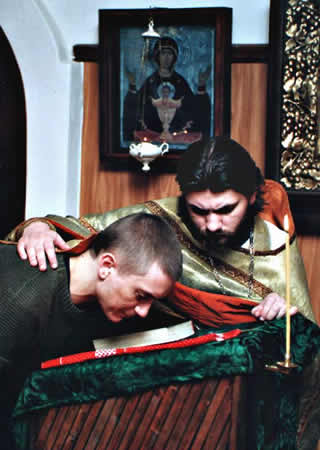
During confession, one confesses sincerely and humbly before the confessor, as though in the presence of Christ. No scientist, psychologist, psychoanalyst, psychiatrist, sociologist, philosopher or theologian can replace the confessor.

The father-confessor.

No icon—not even the most miracle-working one—can provide what the confessor's stole can: the absolution of sins. The confessor takes the person under his care; he adopts him and ensures he is reborn spiritually, which is why he is called a ”spiritual father”.

Normally, spiritual paternity is lifelong, sacred and powerful—even more powerful than a family bond. Spiritual birth is a painful process. The confessor must keep track of the confessing soul, with a fear of God (as one who is ”accountable to God”), with understanding, humility and love, and guide him with discretion in the ever-upward course of his life in Christ.

The confessor-priest has been given a special blessing by his bishop for the undertaking of his confessional work. However, the gift of ”binding and un-binding” sins is initially acquired through his ordination as presbyter, when he is rendered a successor to the Apostles. Thus, validity and canonicity in Apostolic succession, through bishops, is of central and great importance. Like all the other holy sacraments of our Church, the sacrament of Confession is performed (and it bestows Grace on the faithful), not in conjunction with the skill, the science, the literacy, the eloquence, the energy and the artfulness of the priest—not even with his virtue and holiness—but through the canonicity (validity) of his priesthood and through the ”Master of Ceremonies”—the Holy Spirit.

The possible sins of the priest do not obstruct divine Grace during the Sacraments. Woe betide, if we were to doubt (on account of the unworthiness of the priest) that the bread and the wine actually become the Body and the Blood of Christ during the Divine Liturgy! This of course does not mean that the priest should not have to constantly concern himself with his own ”cleanliness”.

Thus, there is no such thing as ”good” or ”bad” confessors. Each and every confessor provides the exact same absolution. However, we do have the right to choose our confessor; and of course we have the right to turn to the one who truly makes us feel at ease with him spiritually. To constantly change our confessor however, is not a very sober decision; this kind of tendency does not reveal spiritual maturity. But confessors should, respectively, not fret excessively—or even create problems—when a spiritual child of theirs happens to depart from them.

This may mean that they were morbidly attached to each other (sentimentally, to the person, and not to Christ, nor to the Church). They may also regard that departure as an insult; one that is demeaning to them and makes them think there is no-one better than them, or, it may give them a feeling that the other ”belongs” to them exclusively and they can therefore dominate them and in fact even behave forcibly towards them, as if they were repressed and confined subordinates.

We did mention that the confessor is a spiritual father, and that spiritual fatherhood and spiritual childbirth entails labor.

Thus, it is only natural for the confessor to feel sorrow upon the departure of his spiritual child. However, it is preferable for him to pray for his child's spiritual progress and his union to the Church, even despite his disengagement from him. He must wish for, and not against that child.

The confessor's work is not just the superficial hearing of a person's sins and the reciting of the prayer of absolution afterwards. Nor is it restricted to the hour of confession. Like a good father, the confessor continuously cares for his child; he listens to him and observes him carefully, he counsels him appropriately, he guides him along the lines of the Gospel, he highlights his talents, he does not place unnecessary burdens on him, he imposes canons (penances) with leniency and only when he must, he consoles him when he is disheartened, weighed down, resentful, exhausted, and he heals him accordingly, without ever discouraging him, but constantly pursuing the struggle for the eradication of his passions and the harvesting of virtues; constantly shaping his eternal soul to be Christ-like.

This ever-developing paternal and filial relationship between confessor and spiritual child eventually culminates in a feeling of comfort, trust, respect, sanctity and elation. When confessing, one opens his heart to the confessor and discloses the innermost, basest, and most unclean—in fact, all—of his secrets, his most intimate actions and detrimental desires, even those that he would not want to confess to himself, nor tell his next-of-kin or his closest friend. For this reason, the confessor must have an absolute respect for the unlimited trust that is being shown to him by the person confessing.

This trust most assuredly builds up with time, but also by the fact that the confessor is strictly bound (in fact to the death) by the divine and Sacred Canons of the Church, to the confidentiality that confession entails.

In Orthodox confession there are of course no general instructions, because the spiritual guidance that each unique soul requires is entirely personalized. Each person is unprecedented, with a particular psychosynthesis, a different character, differing potentials and abilities, limitations, tendencies, tolerances, knowledge, needs and dispositions. With the Grace of God and with divine enlightenment, the confessor must discern all these characteristics, in order to decide what he can utilize best, so that the person confessing will be helped in the best possible manner. At times, leniency will be required, while at other times, austerity.

The same thing does not apply to each and every person. Nor should the confessor ALWAYS be strict, just for the sake of being called strict and respected as such; and he should likewise not ALWAYS be excessively lenient, in order to become the preferred choice and be regarded as a ”spiritual father of many”. What is required of him is a fear of God, discernment, honesty, humility, deliberation, understanding and prayer.

”Economy” (Oekonomia: to make allowances for something, exceptionally) is not demanded of the person confessing, nor is it proper for the confessor to make it a rule. ”Economy” must remain an exception.

”Economy” must also be a temporary measure (Archmandrite George Gregoriates). When the reasons for implementing it no longer exist, it must naturally be retracted. The same sin can be confronted in numerous ways.

A canon (penance) is not always necessary. A canon is not intended as a form of punishment. It is educative by nature. A canon is not imposed for the sake of appeasing an offended God and an atonement of the sinner in the face of Divine Justice; that is an entirely heretic teaching. A canon is usually implemented during an immature confession, with the intent to arouse awareness and a consciousness of the magnitude of one's sin. According to Orthodox teaching, ”sin” is not so much the transgression of a law, as it is a lack of love towards God. ”Love, and do whatever you want”, the blessed Augustine used to say…

A canon is implemented for the purpose of completing one's repentance in view of confession, which is why Fr. Athanasios of Meteora rightly says:

”Just as the confessor is not permitted to make public the sins being confessed to him, so must the person confessing not make public the particular canon that the confessor has imposed in his specific case, as it is the resultant of many parameters.”

A confessor acts as the provider of the Grace of the Holy Spirit. During the hour of the Sacrament of Confession, he does not function as a psychologist and scientist. He functions as a priest, as an experienced doctor, as a caring father. When listening to the sins of the person confessing, he prays to God to give him enlightenment, to advise him what the best ”medication” for cure will be, and to gauge the degree and the quality of that confession.

The confessor does not place himself opposite a confessing person with curiosity, suspicion, envy, excessive austerity, power and arrogance; but equally not with indifference, thoughtlessly, carelessly and wearily. The humility, love and attention of the confessor will greatly help the person confessing.

The confessor should not ask too many, unnecessary and indiscreet questions.

He must especially interrupt any detailed descriptions of various sins (especially the carnal ones) and even the disclosure of names, to safeguard himself even more. But the person confessing should also not feel afraid, or hesitate and feel embarrassed; he should feel respect, trust, honor and show reverence to the confessor. This clime of sanctity, mutual respect and trust must be mainly nurtured, inspired and developed by the confessor.

The benefit of confession.

Our holy mother the Orthodox Church is the Body of the Resurrected Christ; She is a vast infirmary for the healing of frail, sinning faithful from the traumas, the wounds and the illnesses of sin; from pathogenic demons, and from the venomous demonic traps, and influences of demonically-driven passions.

Our Church is not a branch office of the Ministry of Social Services, nor does She compete with various social welfare organizations. This does no mean that She does not acknowledge their significant and well-meaning work, or that She Herself does not offer such services bounteously, admirably and wondrously. But the Church is mainly a provider of meaning in life, of redemption and salvation of the faithful, ”for the sake of whom Christ died,” through their participation in the sacraments of the Church.

”The priest's stole is a planing instrument,” as Elder Paisios of the Holy Mountain used to say, ”that planes and straightens out a person. It is a therapeutic scalpel that excises passions, and not a trowel for workaholics, or a symbol of power. It is a servant's apron intended for ministering to people, for providing therapy and salvation.”

God uses the priest for the forgiveness of His creature. It is plainly stated in the absolution blessing: ”May God forgive you—through me the sinner—everything, in both the present and future age, and may He render you blameless before His awesome Seat of Judgment. Having no longer any worry for the crimes that have been confessed, may you go forth in peace.” Sins that have not been confessed will continue to burden a person, even in the life to come.

How to confess.

Confessed sins should not be re-confessed; it would be as though one doesn't believe in the grace of the Sacrament. God is of course aware of them, but it is for the sake of absolution, humbling, and therapy that they need to be outwardly confessed. As for the occasional penance imposed for sins, one must realize that it does not negate the Church's love for the person, but that it is simply an educative imposition, for a better awareness of one's offenses.

According to Saint Nicodemus of the Holy Mountain, ”confession is a willed, verbal revealing of one's evil deeds and words and thoughts; solemn, accusatory, direct, without shame, decisive, to be executed before a legitimate spiritual father.” This God-bearing saint has succinctly, fully and meaningfully clarified that confession must be willed, free, effortless, without the confessor straining to extract the person's confession. It should be solemn; in other words, with an awareness of the sorrow that the sinner caused God with his sin, and not with sentimental, hypocritical, fainthearted tears.

Genuine ”solemnity” implies an inner compunction, remorse, hatred of sin, love of virtue, and a feeling of gratitude to the Gift-Giving God. ”Accusatory” implies a responsible confession, without attempts of justification, subterfuge, artiface, irresponsibility and seeking of scapegoats; with sincere self-reproach and genuine self-humiliation that bears the so-called ”joy producing sorrow” and the ”joyous grief” defined by the Church. ”Direct” implies a confession with all sincerity, directness and precision, valour and courage, severity and bravery.

It often happens that during the hour of confession, one avoids admitting his defeat, fall and weakness, and by means of eloquent and long-winded descriptions attempts to deflect his share of responsibility, with twists and turns and half-truths—or even by accusing others—all for the sake of preserving (even at that hour) a prim and proper ego. A confession ”without shame” implies a portrayal of our true, deplorable self.

Shame is a good thing to have prior to sin and not afterwards, and in the presence of the confessor. It is said that the shame felt during confession will free us from the sin at the Last Judgment, because whatever the confessor absolves will not be judged again. A ”direct” confession implies that it should be clean, specific, sincere, and accompanied by the decision that the faithful will never repeat the sins he has confessed.

Furthermore, confession should be continuous, so that the ”willfully recurring” passions (according to Saint John of the Ladder) are not strengthened, but rather are more speedily cured. Thus, old sins will not be entirely blotted out from the memory—there will be a regular self-monitoring, self-observation, self-awareness and self-reproach. Divine Grace will not abandon the penitent; demonic entrapment will be averted much more easily, and remembrance of Death will not seem so horrid and terrible. <…>

Modern problems that hinder pure confession.


A basic prerequisite for partaking in the holy Sacraments and for an upward spiritual course is a purity of heart; a purity that is devoid of various sins and the spirit of avarice and blissfulness inspired by today's hyper-consumerist society, the spirit of God-despised pride in a world of narcissism, individualism, lack of humility, misanthropy, and arrogance, the demonic spirit of mischievous thoughts, fantasies, imaginations, and unclean suspicions and envy.

Purity of heart has become a rare ornament—in brotherly and conjugal relations, in obligations towards colleagues, in friendships, in conversations, in thoughts, in desires, in pastoral callings. The so-called Mass Media have lapsed and become mere sources of contamination.

Forgotten are neptic awareness, ascetic sobriety, traditional frugality, simplicity and gallantry. This has led to a polluting of the soul's rationalizing ability, an arousal of its desirous aspect towards avarice, while its willpower has become severely blunted, thus drawing a weakened person towards evil, without any impediments or limitations.

Nowadays prevailant are self-justification, excuses for our passions, beautification of sin, and its reinforcement through modern psychological supports. The admission of mistakes is regarded as belittlement, weakness and generally improper. The constant justification of our self, and the meticulous transferal of responsibilities elsewhere have created a human being that is confused, divided, disturbed, worn-out, miserable and self-absorbed, taunted by the devil, and captured in his dark nets.

There is a prevalence of foolish rationalism nowadays, which observes evangelical virtues and Conciliar canons according to its liking, preference and convenience, on important issues such as fasting, abstinence, childbearing, morality, modesty, honesty and precision.

In view of all the above—none of which I believe has been exaggerated—it is our belief that the job of a confessor is not an easy one. Ordinary coercion to repent and the cultivating of humility are nowadays inadequate; the fold requires catechesis, re-evangelizing, spiritual training, as well as a spiritual about-face, in order to acquire powerful antibodies. Resistance, reaction and the confronting of the powerful current of de-sanctification, of secularization, of denegrating heroism, of eudaemonism (a theory that the highest ethical goal is happiness and personal well-being) and of amassing wealth are imperative. The young generation is in need of special attention, instruction, and love, because their upbringing has not proven to be of any help to make them aware of the meaning and the purpose of life, or of the emptiness, indecency, lawlessness, and the darkness of sin.

Another serious problem—even for our Christians—is the often over-zealous quest for a labor-free, toil-free and grief-free life. We are in search of Cyreneans to carry our crosses. We refuse to lift up our own personal cross. We have no idea of the depth and breadth of our own cross. We bow in reverence before the Cross in church, we cross ourselves, but we do not embrace our personal cross. In the long run, we would like a non-crucified Christianity. But there cannot be an Easter Sunday without a Good Friday.

We honor martyrs and saints, but we ourselves do not want to suffer any hardships or difficulties. Fasting is too difficult a task to accomplish, we feel resentful during an illness. We cannot tolerate any harsh words, not even when we are to blame; therefore how could we possibly tolerate injustice, slander, persecution and exile, the way our saints did? It is an indisputable fact that the contemporary, secular spirit of convenience, leisure and excessive consumerism has greatly affected the measure of spiritual living. Generally speaking, we demand a non-ascetic Christianity… Orthodoxy however has the ascetic Gospel as its basis.

One other serious problem of our time is man's morbid and undue reliance upon logic, intellect, knowledge, and personal judgment—we are referring to over-fed and ultimately tiring rationalization. Neptic Orthodox theology teaches us to consider our Nous a tool, and to lower it, into the Heart. Our Church does not cultivate and produce intellectuals. To us, rationalization is not a philosophical mentality, but a clearly sin-oriented life view—a form of atheism—since it goes contrary to the commandment of placing our faith, hope, love, and trust in God. A rationalist judges everything using the filter of his own, finite mind, with himself and his sovereign ego as the epicentre, and does not place any trust in divine Providence, divine Grace and divine Assistance in his life.

By often regarding himself as infallible, a rationalist does not allow God to intervene in his life and therefore judge him. Thus, he is convinced that he is not in need of confession. Saint Simeon the New Theologian says, however, that for one to believe he has not fallen into any sins is the greatest of falls and fallacies, and the greatest sin of all. Certain modern-day theologians speak of ”missing the target” instead of ”sinning” in their desire to blunt the natural protest of one's conscience. The self-sufficiency displayed by certain churchgoers and fasting Christians can sometimes be hiding a latent pharisaic stance, i.e., that ”they are not like the others” and therefore are not in need of confession.

Pride.

According to the holy fathers of our Church, the greatest evil is pride; it is the mother of all passions, according to Saint John of the Ladder. It is the mother of many offspring, the first ones being vainglory and self-justification. Pride is a form of denial of God; it is an invention of wicked demons, the result of too much flattery and praise, which in turn results in a person's debilitation and exhaustion, God-despised censure, anger, rage, hypocrisy, a lack of compassion, misanthropy, and blasphemy. Pride is a passion that is formidable, difficult, powerful and hard to cure.

Pride is also strong in many ways, and has many faces. It manifests itself as vainglory, boastfulness, conceit, arrogance, presumptuousness, pompousness, insolence, self-importance, megalomania, ambition, self-love, vanity, avarice, pampering of the flesh, desire for first place, accusations and arguments. It also manifests itself as smugness, favouritism, insolence, disrespect, outspokenness, insensitivity, contradiction, obstinacy, disobedience, sarcasm, stubbornness, disregard, indignity, perfectionism and hypersensitivity. Finally, pride can lead to impenitence.

The tongue often becomes the instrument of pride through unchecked, long-winded, useless talking; gossiping, and silliness; through vain, insincere, indiscreet, two-faced, beguiling, affected, and mocking conversations.

Out of the seven deadly sins many other passions spring forth. Having mentioned the offspring of Pride, we then have Avarice, which gives birth to the love of money, greed, stinginess, lack of charity, hardheartedness, fraud, usury, injustice, deceitfulness, simony, bribery, gambling. Fornication manifests itself in myriads of ways; for example, envy, with its underhanded and evil spite, insatiable gluttony, anger, as well negligence and lack of care.

Elements of family life.

Special attention should also be paid to many un-Orthodox elements in family life, which we believe should be examined carefully by confessors and the persons involved. The avoidance of childbearing, the idolizing of one's children (when parents regard them as an extension of their ego); overprotecting them, or constantly watching their moves and savagely oppressing them.

Marriage is an arena for exercising humility, mutual yielding and mutual respect, and not the parallel journey of two sefish egos, no matter how long they have been together. The devil dances for joy whenever there is no forgiveness for human weaknesses and in everyday mistakes.

Parents will help their children significantly not by excessive courtesy outside the home, but by their peaceful, sober and loving example in the home, on a daily basis. The participation of the children together with the parents in the sacrament of confession will fortify them with divine Grace in an experiential life in Christ.

When parents ask for forgiveness with sincerity, they simultaneously teach their children humility, which destroys all demonic plots. In a household where love, harmony, understanding, humility and peace bloom, there the blessings of God will be bounteous and the home becomes a castle that is impervious to the malice of the world around it. The upbringing of children with the element of forgiveness creates a healthy family hearth, which will inspire them and strengthen them for their own futures.

Self-justification.

One other huge matter that constitutes an obstacle for repentance and confession is self-justification, which also plagues many people of the Church. Its basis is, as we mentioned earlier, demonic Pride. A classic example is the Pharisee of the Gospel parable.

The self-justifying person has seemingly positive traits, which he himself will praise excessively, and which he would like others to honor and praise. He is happy to be flattered and to demean and humiliate others. He has excessive self-esteem, he excessively justifies himself, and believes that God is obligated to reward him. In the final analysis he is a poor wretch, who in his miserable state makes others miserable. He is overcome by nervousness and agitation and is overly demanding, thus imprisons himself, for these are tendencies that will not allow him to open the door to divine mercy through repentance.

An offspring of Pride is censure (fault-finding), which is unfortunately also a habit of many Christians, who tend to concern themselves more with others than themselves. This is a phenomenon of our time and of a society that pushes people into a continuous observation of others, and not of ourselves.

Modern man's myriad activities never allow him to remain alone to study, contemplate, pray; to attain self-awareness, self-critique, self-control, and remembrance of death.

The mass media are incessantly preoccupied with scandal-seeking, with human passions, sins, and peoples' crimes.

Such things provoke and leave impressions, and even if they do not tempt, they nevertheless burden the soul and the mind with filth and ugliness. They actually reassure us by making us believe that ”we are better” than those described. Thus, a person becomes accustomed to the mediocrity, lukewarmness, and transience of superficial day-to-day life, never comparing himself to saints and heroes. This is how censure prevails in our time—by giving others the impression that he is justly imposing a kind of cleansing by slinging mud at others. Meanwhile he is contaminating himself by generating malice, hatred, hostility, resentment, envy and coldness.

Saint Maximus the Confessor says that the one who constantly scrutinizes others' sins, or condemns his brother based on no more than suspicion, has not even begun to repent, nor has he begun any attempt to discover his own sins.

Conclusion

Many and various things can be said; but in the end, only one thing is significant and important: our salvation, to which we are not attending. Salvation is only attained through sincere repentance and pure confession.

Repentance not only opens the heavenly Paradise, but also the earthly one, with the foretaste—albeit incomplete—of the ineffable joy of the endless heavenly reign, and the reign of wonderful peace in the present time. Those who continually practice confession are potentially truly and genuinely happy people; peace-loving and peace-bearing; heralds of repentance, of resurrection, transformation, freedom, grace, with the blessing of God in their souls and lives. ”God's bounteous Grace turns the wolf into a lamb,” says Saint John the Chrysostom.

No sin can surpass God's love.

There is not a single sinner who cannot become a saint, if he so desires. This has been proven by innumerable names recorded in the Lives of the Saints.

The confessor listens to confessions and absolves those confessing, under his blessed stole. He cannot, however, confess himself and place the stole over his own head to obtain forgiveness in the same manner. He must necessarily kneel underneath another stole to confess and be absolved.

That is the way the spiritual law functions; this is what God's Wisdom and Mercy have ordained. We cannot confess others while never submitting ourselves to confession; we must practice what we preach. We cannot talk about repentance, but never repent; or talk about confession, but not go to confession ourselves regularly. No one can cast himself down, and no one can absolve himself. The unadvised, the disobedient, and the unconfessed are a serious problem for the Church.

Dear brothers and sisters! The confessor's stole can be a miraculous scalpel for the removal of malignant tumors; it can raise the dead, renew and transform the indecent world, and bring joy to earth and heaven. Our Church has entrusted this grand ministry, this sacred service, to our priests and not to the angels, so that we might be able to approach our confessor easily and fearlessly, as fellow-sufferers and corporeal counterparts.

All the above has been delivered sincerely and not at all pretentiously by a co-sinner who does not aspire to play the teacher, but who is a co-struggling, co-student with you. It was his sole desire to remind you in simple and artless words of the Tradition of our holy mother, the Church, on the ever-relevant matter of divinely-conceived and divinely-blessed Repentance, and the God-given, God-pleasing, blessed Sacrament of Confession.

From the book Repentance and Confession,

Posted on the website of the Serbian Orthodox Church in America

Excerpt edited by OrthoChristian.com
Monk Moses of the Holy Mountain
Related Posts Plugin for WordPress, Blogger...