Θα κάμεις ότι ημπορείς δια τα παιδιά σου, διότι εις την άλλην ζωήν ό Χριστός μας θα σου ζητήσει ή τα παιδιά σου σεσωσμένα ή τις πληγές στα γόνατα σου, από την πολλήν σου προσευχήν. Δεν γνωρίζουν δυστυχώς, οι γονείς την ευθύνη την οποίαν έχουν δια τα τέκνα των.
Γέροντας Ιερώνυμος της Αιγίνης
Temptation is beneficial only to those that endure it without agitation. For example, when some type of temptation disturbs us, don’t be agitated, because agitation arises from senselessness and pride, and from the fact that by not knowing our spiritual composition, we avoid the ordeal of self-denial. That’s why we don’t succeed in our spiritual life, because we don’t know our spiritual dimension and have insufficient patience, yet want to become creators of good deeds without effort.
Abba Dorotheus

Disciple of St. Anthony the Great
SPEAKS WITH THE DEVIL
ABBÂ Makarios used to dwell by himself in the desert, and there was below him another desert wherein many dwelt; and the old man was himself watching the road one day, and saw Satan traveling on it in the form of a man, and he came along with the intention of passing him; and he was arrayed in a garment, which was full of holes, and various fruits were hanging about him. And the old man Makarios said unto him, “Whither goest thou?” And he said, “I am going to visit the brethren, and to make them mindful [of their work].” And the old man said to him, “For what purpose are the various fruits which are on thee required?” And Satan answered and said, “I am carrying them to the brethren for food.” And the old man said, “All these?” And Satan said, “Yea. For if one pleaseth not a brother, I hand him over another; and if that pleaseth him not, I give him another, and one or other of these must certainly please him.” And having said these things Satan went on his way.
Then the old man continued to watch the road until Satan came along to return, and when he saw him, he said unto him, “Hast thou been successful?” And Satan said, “Whence am I to obtain help?” And the old man said, “For what purpose?” Then Satan said, “They have all forsaken me, and have rebelled against me, and not one of them will allow himself to be over persuaded by me.” And the old man said, “Hast thou not then one friend left there?” And Satan said to him, “Yea, I have one brother, but one only who will be persuaded by me, although whensoever he seeth me he turneth away his face as from that of an adversary.” The old man saith to him, “What is the name of this brother?” And Satan saith, “Theopemptus”; and having said these things he departed and went on his way.
Then Abbâ Makarios rose up and went down to the lower desert, and the brethren heard [of his coming], and they brought palm leaves, and went out to meet him, and every monk prepared and made ready his abode, thinking that he would come and dwell there; but the old man [only] asked for the brother whose name was Theopemptus, and he received him joyfully. Now when the brethren began to speak among themselves, the old man said unto him, “What hast thou to say, O my brother, and how are thine own affairs?” And Theopemptus said to him, “At the present moment matters are well with me,” for he was ashamed to speak. The old man said unto him, “Behold, I have now lived a life of stern asceticism for many years, and I am held in honour by every man, nevertheless, even though I am an old man, the spirit of fornication disturbeth me.” And Theopemptus answered and said, “Believe me, father, [it disturbeth] me also”; and the old man, like one who was vexed by many thoughts, made a reason for talking, and at length he led the brother to confess the matter. And afterwards he said unto him, “How long dost thou fast?” And the brother said unto Makarios, “Until the ninth hour.” And the old man saith, “Fast until the evening, and continue to do so, and thou shalt repeat passages from the Book of the Gospels, and from the other scriptures. If a thought riseth in thy mind let not thy mind look downwards, but always upwards, and the Lord shall help thee.” Thus having made the brother reveal his thoughts, and having given him encouragement, he departed to go to his own desert, and he traveled along the road and watched according to his custom.
And he saw the devil again, and said unto him, “Whither goest thou?” And he answered and said unto him, “I go to remind the brethren [of their work].” And having departed and come back again, the holy man said unto him, “How are the brethren?” and the devil said, “They are an evil case.” And the old man said, “Why?” and the devil said, “Because they are all [like] savage animals, and they are rebellious. But the worst thing of all is that even the one brother who used to be obedient to me hath turned, through what cause I know not, and he will not be in any way persuaded by me, and he is the most savage of them all against me; I have on this account taken an oath that I will never again go to that place, at least, only after a very long time.”
Now this Abbâ Makarios was marvelous in his life and deeds. Once as he was traveling along in the inner desert, he looked, and, behold, there was an old man coming towards him, and he was arrayed in apparel which was very old, and over his whole body there were hung very many things which were like unto pots, each one being provided with rings, and he was covering them over as it were with a covering. And he drove his staff into the ground, and though he was as timid and as terrified as a fugitive slave, he pretended to be bold, and stood up like a brave man, and spake to the blessed Makarios, face to face, saying, “What dost thou in this wilderness, and why art thou wandering hither and thither herein?” And the blessed Makarios answered and said unto him, “I wish to find God, for I am fleeing from error. But who art thou, O old man? Tell me, for I observe that thy raiment is very different from that of the children of men. Tell me, now, what are these things which thou hast upon thee?” Then the old man, though unwilling, confessed and said, “I am he whom thou callest by the name of ‘Calumniator,’ and these things which thou seest upon me are those wherewith I draw towards myself the children of men, and with each one of these, according as it befitteth and is suitable for a man, I take care to fulfil the work of error; and by means of their lusts, as with wings, I make to turn backwards those who are obedient unto me, and I have great happiness in those who, through my crafts and wiles, stumble and fall.”
And when the blessed Makarios had heard these things, he plucked up courage, and said unto Satan, “By Christ, Who caused thee to make a mockery of the holy angels, explain to me, one by one, each and all of the things which thou carriest, for by this thou shalt be revealed, so that a man may see the insidiousness of thy arts and wiles, and may learn thy hidden snares, and may recognize the multitude of the burning arrows of thine error, and may flee from the performance of thy will.” Then the Calumniator answered and said, “I must reveal unto thee my craftiness, even though I be unwilling so to do, for it is impossible for me to hide from thee any of the things which thou seest; learn thou the use (or reason) of each pot. If I find a man who meditateth continually on the Law of God, I pour out upon him from the pot which is on my head dizziness and headache, and I restrain him [from this work] thereby. On the man who hath chosen to watch by means of [the recital of] prayers and psalms I pour out from the pot which is on my eyelids a disposition to sleep, and I lead and drive him along by main force into slumber. These which thou seest that I have on my ears are prepared for disobedience and the transgression of the Commandments, and by their means I trap those who wish to lead a good life to disobey the word of truth. From those which hang from my nose I sprinkle on the young the sweet smell of happiness, and lead them into fornication. From those which are on my mouth I throw out flowers (?), and I incite the ascetic by means of blandishments, and I make to sin those who live a life of abstinence and self-denial by means of such dainty meats and foods according to my desire; and by means of those which are on my mouth I also draw many into the utterance of calumnies, and into filthy talk, and to speak briefly, in each one of these pots is the seed which is most useful for increasing the fruits which are worthy of me, and which may be gathered from the labours of the husbandmen who labour in my vineyard. And from the pots which are hung about my neck I pour out “pride, and I enclose with my nets those who are haughty in their minds; and so by means of all these I possess in the world multitudes of subjects who love the things which are mine, that is to say, worldly praise and wealth, which are the things that, by those who are remote from God, are believed to be good things in the world.
“And the pots which thou seest hanging from my breasts are full of my imaginings, and with some of these I water the hearts of the children of men, and by means of the drunkenness of the passions I dissipate and destroy the mind which feareth God; and through my error I confound the memory of those men who wish to meditate upon and to think about the things which concern the world to come. And those which hang upon my body are full of want of feeling and perception, and by their means I prepare those who are without understanding to live in a savage and animal manner a life which is characterized by various kinds of brutish habits. And in the pots which I carry below my body will be found all things which are useful and suitable for union with women in fornication, and for filthy wantonness. Those which are on my hands are useful in the committal of murders, and by their means, as by hands, is carried out and performed the work of those who are subject unto me voluntarily. And the pots which thou seest hanging from my neck and back have in them the thick darkness of my temptations, wherewith I am able to vanquish those who are so bold as to contend against me; and I lay ambushes behind me, and I rush out to overthrow those who depend upon and who boast in their own strength. And the pots which thou seest hanging on my loins and thighs, and which are arranged downwards to my feet, are full of the snares and nets which I pour out, and with which I make crooked and confound the ways of those who wish to journey in the narrow path of the fear of God; and I impede thereby the goings of those who cultivate ascetic excellence, and I make them to journey on my way which is easy to travel. For I take my seat between the two ways of life and death, and whilst I confound and lead astray those who wish to journey in the way of life, I lead and help on their way those who are traveling on the road of death, and I strengthen them also, and I make them valiant so that they may go forward easily in my paths. And when they are bowed down and labour under my yoke I sow evil and abominable vices among them like thorns and brambles, and having gathered in from seed of this kind the fruit of such crops which they believe to be pleasant, they deny the way of truth, because evil men are taken in the snares of the filthiness of abominable things. But thou, O Makarios, has never once inclined thyself to obey me, so that by thine obedience I might be able to find even a little consolation; but thou burnest me up wholly by means of the mighty armour of the humility which thou bearest, and for this reason I haste to depart to mine own subjects. For thou possessest a good Lord, and thou hast mighty companions, who tranquilly and happily serve God, and who protect thee as a beloved son.” And when the chosen athlete had heard these things, he made the sign of the Cross over himself, and said, “Blessed be God, Who hath made those who have put their hopes in Him to make thee a mockery and a laughing-stock, and Who hath preserved me wholly and completely from thy error, so that whilst turning aside from the same I was able to advance in the good fight; and having fought and conquered I shall receive a crown from the good Lord Whom I possess. Flee then, and get thee afar off, O thou who art envious of the things which are good, for Christ will make an end of thee, “so that thou mayest not dare to attack any of those who worship Him. For sufficient for thee are those whom thou hast drawn unto thyself by flattery, through thy evil wiles and their own sluggish will, and made to travel on the flat, wide road of destruction. Thou shalt not then dare to draw nigh unto those who of their own will have elected to travel in the narrow, and straight, and troubled, and vexatious way of life, but have fear, and depart from those who dwell in waste places and in deserts.” Now when the blessed man had said these things, straightway the Calumniator disappeared, and the holy man Makarios prostrated, and prayed, saying, “Glory be unto Thee, O Christ, Thou Who art the Refuge of those who are overtaken by storms, Thou Who art the straight way of those who err, Thou Who art the Redeemer of those who flee unto Thee for refuge, now both now, and always, and for ever and ever! Amen.”

Ζούσε στην Αλεξάνδρεια μια ανύπαντρη Χριστιανή γυναίκα που φαινόταν ταπεινή, στην πραγματικότητα όμως ήταν περήφανη και πολύ φυλαργυρη.
Ηταν μάλλον φιλόχρυση παρά φιλόχριστη. Δεν είχε προσφέρει ποτέ κάτι από την περιουσία της, ούτε σε ξένο ούτε σε φτωχό, ούτε σε καταπιεσμένο, ούτε σε μοναχό, ούτε σε φτωχό κορίτσι ...
Αυτή η γυναίκα που στο όνομα ήταν παρθένα και όχι στον τρόπο ζωής, ο αγιότατος Μακάριος ο πρεσβύτερος και προϊστάμενος του λεπροκομείου, θέλησε - κατά κάποιον τρόπο- να την εγχειρίσει σαν γιατρός για να την ανακουφίσει από την πλεονεξία και επινόησε το εξής τέχνασμα.
Πήγε και τη βρήκε και της είπε:
-Εχουν πέσει στα χέρια μου πολύτιμοι λίθοι, σμαράγδια και υάκινθοι. Δεν ξέρω αν προέρχονται από κλοπή ή από νόμιμο εμπόριο.Δεν έχουν αποτιμηθεί, μιας και είναι πέρα από κάθε αποτίμηση. Ο ιδιοκτήτης τους τους πουλάει πεντακόσια νομίσματα ...
Πέφτει αυτή στα πόδια του και του λέει:
- Να μη τους αγοράσει άλλος, σε παρακαλώ, αγόρασέ τους εσύ για λογαριασμό μου ...
Πήρε, λοιπόν, ο Μακάριος απ' αυτήν τα πεντακόσια νομίσματα, τα διέθεσε όμως για τις ανάγκες του λεπροκομείου.
Περνούσε ο καιρός, μα αυτή δίσταζε να του το υπενθυμίσει, επειδή ο Άγιος είχε μεγάλη υπόληψη στην Αλεξάνδρεια ...Τελικά, κάποια στιγμή που τον συνάντησε στην Εκκλησία, του είπε:
-Σε παρακαλώ, πες μου τι έγινε με εκείνους τους πολύτιμους λίθους για τους οποίους έδωσα τα πεντακόσια νομίσματα; Αυτός της απάντησε:
- Από την ημέρα που έδωσες τα χρήματα πλήρωσα την αξία των λίθων. Αν θέλεις να τους δεις, έλα στο σπίτι μου.Εκει βρίσκονται.Δες αν σου αρέσουν, αλλιώς πάρε πίσω τα χρήματά σου. Κι εκείνη πήγε πολύ ευχαρίστως
Στους επάνω ορόφους του λεπροκομείου βρισκόταν οι λεπρές γυναίκες και στους κάτω οι λεπροί άνδρες. Όταν φτάσανε στην είσοδο τη ρώτησε:
-Τι θέλεις να δεις πρώτα; Τους υάκινθους ή τα σμάραγδα; Του απάντησε:
-Ότι νομίζεις.
Τότε την ανεβάζει στους επάνω ορόφους, της δείχνει ακρωτηριασμένες γυναίκες με πληγιασμένα πρόσωπα και της λέει:
- Να οι υάκινθοι. Κατόπιν την κατεβάζει στα κάτω πατώματα και της δείχνει τους άνδρες λέγοντας:
- Να τα σμαράγδια. Και νομίζω ότι δε θα βρεθούν πολυτιμότερα. Αν, λοιπόν, σου αρέσουν, πάει καλά, αλλιώς πάρε πίσω τα χρήματά σου.
Μετανιωμένη αυτή, βγήκε και αφού πήγε στο σπίτι της, αρρώστησε από τη στενοχώρια της που δεν έκανε ένα τέτοιο καλό σύμφωνα με το θέλημα του Θεού, αλλά αναγκαστικά.
Αργότερα ευχαρίστησε τον Μακάριο και πορεύτηκε στη ζωή της όπως έπρεπε.

Η Αγ. Μαρία η Μαγδαληνή. Λεπτομέρεια χαλκογραφίας του 1870 με τη Μονή Σιμωνόπετρας. Από το βιβλίο του Παταπίου Μοναχού Αγιορείτου, “Αγία Μαρία η Μαγδαληνή: Αυτή που αγάπησε πολύ”, εκδ. Τέρτιος, 2005.
Εξαιρετική θέση ανάμεσα στα Άγια Λείψανα, που βρίσκονται στην Ιερά Μονή Σίμωνος Πέτρας, κατέχει το αριστερό χέρι της Αγ. Μυροφόρου και Ισαποστόλου Μαρίας της Μαγδαληνής. Αυτό το χέρι της Αγίας είναι άφθαρτο, με το δέρμα και τους τένοντες και έχει ευωδία ουράνια. Ακόμη όσοι το ασπάζονται με ευλάβεια και πίστι διαπιστώνουν ότι είναι θερμό.
Στην Ιερά Μονή Σίμωνος Πέτρας του Αγίου Όρους, από τα πολλά θαύματα που κάνει μέχρι σήμερα η Αγία Μαρία, θεωρείται και τιμάται από τους αδελφούς σαν δεύτερη Κτιτόρισσα της Ιεράς Μονής. Ας δούμε όμως μερικά από αυτά:
…
Το 1945, ξέσπασε μεγάλη πυρακαϊά στα δάση της Ιεράς Μονής των Ιβήρων. Ο άνεμος έπνεε δυνατός και η φωτιά μέσα σε λίγες ώρες έφθασε στην κορυφογραμμή που συνορεύουν τα μοναστήρια Ιβήρων, Φιλοθέου και Ξηροποτάμου με το δικό μας δάσος.
Όλοι πιστεύανε ότι τα δάση θα καταστραφούν. Οι αδελφοί του μοναστηριού μας ειδοποιήθηκαν έγκαιρα και τρέξανε στον τόπο της πυρκαϊάς. Τότε οι αδελφοί Ιερομόναχοι Νεόφυτος και Παντελεήμων, κινούμενοι από τη μεγάλη ευλάβεια, που είχαν στο λείψανο της Αγίας Μαρίας, το πήρανε μαζί τους. Κανένας δεν μπορούσε να πλησιάση στην πυρκαϊά, γιατί ήταν φόβος να περικυκλωθή από τη μανιασμένη φωτιά. Παρ’ όλα αυτά, ώ των θαυμάτων Σου Χριστέ Βασιλεύ! Μόλις πλησιάσανε οι αδελφοί με τα άγια λείψανα μπροστά από τη φωτιά, αμέσως η φωτιά έκοψε το δρόμο και μέχρις ότου οι Ιερείς τελειώσουν τον αγιασμό και τον Παρακλητικό κανόνα της Αγίας Μαρίας της Μαγδαληνής, η πυρκαϊά είχε τελείως σβήσει, σε μεγάλη έκπληξη των πατέρων που είχαν συγκεντρωθή εκεί.
Παρόμοιο θαύμα έγινε στο δάσος του ίδιου μοναστηριού από το Άγιο τούτο Λείψανο το 1947.
Στην περιοχή Γαλάτιστα της Θεσσαλονίκης το 1911 είχε εμφανιστεί σκουλήκι που κατέστρεψε τα φυτά. Οι κάτοικοι καλέσανε το λείψανο της Αγίας Μαρίας της Μαγδαληνής και κάνανε Αγιασμό. Αμέσως το καταστρεπτικό σκουλήκι εξαφανίστηκε.
Επίσης το 1912 στην περιοχή Επανωμής της Θεσσαλονίκης, είχε εμφανιστή πλήθος ακρίδων. Οι κάτοικοι παρακαλέσανε να τους σταλή το Άγιο Λείψανο. Όταν έγινε Παράκλησι και Αγιασμός, εξαφανίστηκαν τελείως οι ακρίδες. Οι Επανωμίτες ευγνωμονούν πολύ την Αγία Μαρία τη Μαγδαληνή.
Και άλλα πολλά θαύματα ετέλεσε και τελεί η Αγία καθημερινά σ’ αυτούς που την επικαλούνται με πίστι.
Πηγή: + Αρχιμ. Χαραλάμπους Βασιλόπουλου, Η Αγία Μαρία η Μαγδαληνή, εκδ. Ορθόδοξου Τύπου, Κάνιγγος 10, Αθήναι 1984 (σελ. 42-45)
Να μη σκέπτεσθε μόνο τι θα φάτε, τι θα φορέσετε, τι μεγάλο σπίτι θα χτίσετε. Να κτυπάτε τις πόρτες των φτωχών, των αρρώστων, των ορφανών. Περισσότερο να προτιμάτε τα σπίτια των θλιμμένων παρά των χαρούμενων. Εάν κάνετε καλά έργα, θα έχετε μεγάλο μισθό από τον Θεό. Θ’ αξιωθείτε να δείτε θαύματα, και στην άλλη ζωή θα έχετε απέραντη αγαλλίαση.
Όσιος Γεώργιος Καρσλίδης

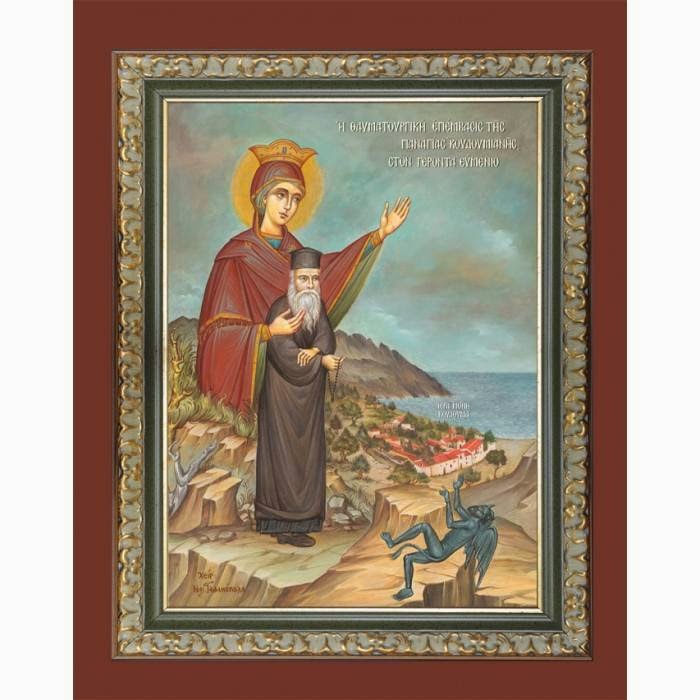
Το Θαύμα της Παναγίας "Κουδουμιανής" στον Γέροντα Ευμένιο
Όταν ήταν νέος μοναχός και δεν είχε αποκτήσει την εμπειρία από τον πόλεμο του Πονηρού, υπερηφανεύθηκε ότι νίκησε πια τις πλεκτάνες του Σατανά, τότε ακριβώς εισήλθε μέσα του ο Πονηρός ώστε να τον ταλαιπωρήσει για αρκετό χρονικό διάστημα.
Κάποτε "κυνηγημένος" έτρεχε στα δύσβατα μονοπάτια από το χωριό του, Εθιά, προς το μοναστήρι του "Κουδουμά", πριν ακόμα φθάσει τον αγκάλιασε η Παναγία και έτσι απαλλάχτηκε από την ενέργεια του Πονηρού. Μάλιστα του εδόθη πλουσιοπάροχα το διορατικό χάρισμα ώστε να βοηθήσει πολύ κόσμο.
Πηγή

The free will of all intelligent beings has been tested and till now is being tested until it is confirmed in goodness. Because without trials, goodness is never firm. Every Christian is subjected to some kind of test: one with poverty, another with sickness, a third with various bad thoughts, the fourth with some type of misfortune or humiliation, while another, with perplexities. This tests the strength of one’s faith, and hope, and love for God, that is, shows the person’s inclinations, his attachments, whether he aims for sorrows or is still affixed to earthly things. So that through these trials a person-Christian himself could see in what position he is in, what his disposition is, and involuntarily humble himself. Because without humility, as all the holy fathers of Godly wisdom confirm in one voice, all our works are unsettled. Even the free will of Angels was tested. If the Heavenly dwellers could not escape the test, then more so must the free will be tested of those living on earth.
Elder Ambrose of Optina
…Orthodox Christians of these latter times are indeed spiritually sleeping and desperately need to be awakened by a trumpet of the Spirit like Saint Symeon [the New Theologian]. Those who are Orthodox by birth and habit are not those who will inherit the eternal Kingdom of Heaven; they must be awakened to the conscious fulfillment of Christs commandments and a conscious reception of God’s Holy Spirit, as Saint Symeon so eloquently taught.
…For Saint Symeon, as for all true Orthodox Christians, theology is life; the true words of God which speak to the Christian heart, raise it from its sloth and negligence, and inspire it to struggle for the eternal Kingdom, which may be tasted in advance even now in the life of grace which God sends down upon His faithful through His sanctifying Holy Spirit.
Father Seraphim Rose

Επάκουσον της οικτράς μου δεήσεως και μη καταισχύνης με από της προσδοκίας μου, η μετά Θεόν ελπίς πάντων των περάτων της γης. Τον βρασμόν της σαρκός μου κατάσβεσον.
Τον εν τη ψυχή μου αγριώτατον• κλύδωνα κατεύνασον.
Τον πικρόν θυμόν καταπράϋνον.
Τον τύφον και την αλαζονείαν της ματαίας οιήσεως εκ του νοός μου αφάνισον.
Τας νυκτερινάς φαντασίας των πονηρών πνευμάτων και τας μεθημερινάς των ακαθάρων εννοιών προσβολάς εκ της καρδίας μου μείωσον.
Παίδευσόν μου την γλώσσαν λαλείν τα συμφέροντα.
Δίδαξον τους οφθαλμούς μου βλέπειν ορθώς της αρετής την ευθύτητα.
Τους πόδας μου τρέχειν ανυποσκελίστως ποίησον την μακαρίαν οδόν των του Θεού εντολών.
Τας χείράς μου αγιασθήναι παρασκεύασον, ίνα αξίως αίρω αυτάς προς τον Ύψιστον.
Κάθαρόν μου το στόμα, ίνα μετά παρρησίας επικαλήται Πατέραν, τον φοβερόν Θεόν και πανάγιον.
Άνοιξόν μου τα ώτα, ίνα ακούω αισθητώς και νοητώς τα υπέρ μέλι και κηρίον γλυκύτερα των αγίων Γραφών λόγια, και βιώ κατ αὐτά από Σου κραταιούμενος.
Δια γαρ Σου, πανύμνητε και υπεράγαθε Δέσποινα, περισώζεται πάσα βροτεία φύσις αινούσα και ευλογούσα Πατέρα, Υιόν και Άγιον Πνεύμα, την παναγίαν Τριάδα και ομοούσιον, πάντοτε, νυν και αεί και εις τους αιώνας των αιώνων. »
Αμήν!
Αγίου Γρηγορίου του Παλαμά
Πηγή: hristospanagia3.blogspot.gr
 Κανών Παρακλητικός
εις τον αρτιφανώς εκλάμψαντα
Όσιον και Θεοφόρον πατέρα ημών
Παΐσιον τον Αγιορείτην* [*] Η παρούσα υμνογραφία αποτελεί προϊόν ευλαβείας του υμνογράφου προς τον εν οσίοις Γέροντα και προορίζεται δια προσευχητική χρήση. Θα τεθεί εις δημοσίαν λατρείαν άμα τη αγιοκατατάξει του Γέροντος από τη Μητέρα Εκκλησία.
Ιερεύς: Ευλογητός ο Θεός ημών, πάντοτε, νυν, και αεί, και εις τους αιώνας των αιώνων. Αμήν.
Ψαλμός 142
Κυριε εισάκουσον της προσευχής μου, ενώτισαι την δέησίν μου εν τη αληθεία σου, εισάκουσόν μου εν τη δικαιοσύνη σου. Και μη εισέλθης εις κρίσιν μετά του δούλου σου, ότι ου δικαιωθήσεται ενώπιόν σου πας ζων. Ότι κατεδίωξεν ο εχθρός την ψυχήν μου· εταπείνωσεν εις γην την ζωήν μου. Εκάθισέ με εν σκοτεινοίς ως νεκρούς αιώνος, και ηκηδίασεν επ’ εμέ το πνεύμά μου, εν εμοί εταράχθη η καρδία μου. Εμνήσθην ημερών αρχαίων, εμελέτησα εν πάσι τοις έργοις σου, εν ποιήμασι των χειρών σου εμελέτων. Διεπέτασα προς σε τας χείράς μου· η ψυχή μου ως γη άνυδρός σοι. Ταχύ εισάκουσόν μου, Κυριε· εξέλιπε το πνεύμά μου. Μη αποστρέψης το πρόσωπόν σου απ’ εμού και ομοιωθήσομαι τοις καταβαίνουσιν εις λάκκον. Ακουστόν ποίησόν μοι το πρωί το έλεός σου, ότι επί σοι ήλπισα. Γνώρισόν μοι, Κυριε, οδόν, εν η πορεύσομαι, ότι προς σε ήρα την ψυχήν μου. Εξελού με εκ των εχθρών μου, Κυριε, προς σε κατέφυγον· δίδαξόν με του ποιείν το θέλημά σου, ότι συ ει ο Θεός μου. Το πνεύμά σου το αγαθόν οδηγήσει με εν γη ευθεία· ένεκεν του ονόματός σου, Κυριε, ζήσεις με. Εν τη δικαιοσύνη σου εξάξεις εκ θλίψεως την ψυχήν μου, και εν τω ελέει σου εξολοθρεύσεις τους εχθρούς μου. Και απολείς πάντας τους θλίβοντας την ψυχήν μου, ότι εγώ δούλός σου ειμι.
Και ευθύς το· Θεός Κύριος ως εξής:
Θεός Κυριος, και επέφανεν ημίν, ευλογημένος ο ερχόμενος εν ονόματι Κυρίου.
Στίχ. α . Εξομολογείσθε τω Κυρίω, και επικαλείσθε το όνομα το άγιον αυτού.
Θεός Κυριος, και επέφανεν ημίν,ευλογημένος ο ερχόμενος εν ονόματι Κυρίου.
Στιχ. β . Παντα τα έθνη εκύκλωσάν με, και τω ονόματι Κυρίου ημυνάμην αυτούς.
Θεός Κυριος, και επέφανεν ημίν, ευλογημένος ο ερχόμενος εν ονόματι Κυρίου.
Στιχ. γ . Παρά Κυρίου εγένετο αύτη, και έστι θαυμαστή εν οφθαλμοίς ημών.
Θεός Κυριος, και επέφανεν ημίν, ευλογημένος ο ερχόμενος εν ονόματι Κυρίου.
Ήχος δ . Τη Θεοτόκω εκτενώς.
Τω φρυκτωρήσαντι αρτίως τα σύμπαντα, χαρίτων θείων ταις ακτίσι προσπέσωμεν, εν σκότει οι καθεύδοντες παθών ζοφερών, κράζοντες· Παΐσιε, ασκητών ωραιότης, Άθωνος αγλάϊσμα και προπύργιον μέγα των ευσεβών, μη παύση εκτενώς, Χριστώ πρεσβεύων υπέρ των τιμώντων σε.
Δόξα. Το αυτό.
Και νυν. Θεοτοκίον.
Ου σιωπήσομέν ποτε, Θεοτόκε, τας δυναστείας σου λαλείν οι ανάξιοι· ει μη γαρ συ προΐστασο πρεσβεύουσα, τις ημάς ερρύσατο εκ τοσούτων κινδύνων; Τις δε διεφύλαξεν έως νυν ελευθέρους; Ουκ αποστώμεν, Δέσποινα, εκ σου· σους γαρ δούλους σώζεις αεί εκ παντοίων δεινών.
Είτα ο Ν Ψαλμός
Ελέησόν με ο Θεός κατά το μέγα ελεός σου, και κατά το πλήθος των οικτιρμών σου εξάλειψον το ανόμημά μου.
Επί πλείον πλύνόν με από της ανομίας μου, και από της αμαρτίας μου καθάρισόν με.
Ότι την ανομίαν μου εγώ γινώσκω, και η αμαρτία μου ενώπιόν μου εστι δια παντός.
Σοι μόνω ήμαρτον, και το πονηρόν ενώπιόν σου εποίησα, όπως αν δικαιωθής εν τοις λόγοις σου, και νικήσης εν τω κρίνεσθαί σε.
Ιδού γαρ εν ανομίαις συνελήφθην, και εν αμαρτίαις εκίσσησέ με η μήτηρ μου.
Ιδού γαρ αλήθειαν ηγάπησας· τα άδηλα και τα κρύφια της σοφίας σου εδήλωσάς μοι.
Ραντιείς με υσσώπω, και καθαρισθήσομαι· πλυνείς με, και υπέρ χιόνα λευκανθήσομαι
Ακουτιείς μοι αγαλλίασιν και ευφροσύνην· αγαλλιάσονται οστέα τεταπεινωμένα.
Απόστρεψον το πρόσωπόν σου από των αμαρτιών μου, και πάσας τας ανομίας μου εξάλειψον.
Καρδίαν καθαράν κτίσον εν εμοί ο Θεός, και πνεύμα ευθές εγκαίνισον εν τοις εγκάτοις μου.
Μη απορρίψης με από του προσώπου σου, και το πνεύμά σου το άγιόν μη αντανέλης απ’ εμού.
Απόδος μοι την αγαλλίασιν του σωτηρίου σου και πνεύματι ηγεμονικώ στήριξόν με.
Διδάξω ανόμους τας οδούς σου, και ασεβείς επί σε επιστρέψουσι.
Ρύσαί με εξ αιμάτων ο Θεός, ο Θεός της σωτηρίας μου· αγαλλιάσεται η γλώσσά μου την δικαιοσύνην σου.
Κυριε, τα χείλη μου ανοίξεις, και το στόμα μου αναγγελεί την αίνεσίν σου.
Ότι, ει ηθέλησας θυσίαν έδωκα αν· ολοκαυτώματα ουκ ευδοκήσεις.
Θυσία τω Θεώ πνεύμα συντετριμμένον· καρδίαν συντετριμμένην και τεταπεινωμένην ο Θεός ουκ εξουδενώσει.
Αγάθυνον, Κυριε, εν τη ευδοκία σου την Σιών, και οικοδομηθήτω τα τείχη Ιερουσαλήμ.
Τοτε ευδοκήσεις θυσίαν δικαιοσύνης, αναφοράν και ολοκαυτώματα.
Τοτε ανοίσουσιν επί το θυσιαστήριόν σου μόσχους.
Είτα ο Κανών, ου η ακροστιχίς·
«Παΐσιε, νέε ασκητά, πρέσβευε υπέρ ημών.Χ»
Ωδή α . Ήχος πλ. δ . Υγράν διοδεύσας.
Παΐσιε, άστρον νεολαμπές, Χριστού Εκκλησίας, εν τω Άθω αρτιφανώς, ο λάμψας ασκήσεως βολίσιν, υπέρ ημών τον Χριστόν καθικέτευε.
Αγάπης θεόδοτε θησαυρέ, Παΐσιε μάκαρ, Αθωνίτα πανευκλεές, αγάπης προς πέλας σους ικέτας, και προς Θεόν δείξον τείχη ακράδαντα.
Ικάνωσον, πάτερ, τυχείν ημάς, του θείου ελέους τους τιμώντας πανευλαβώς, Παΐσιε, πόνους τους αόκνους, ους έτλης άρτι ποθών την τελείωσιν.
Θεοτοκίον
Σωτήρος του γένους των χοϊκών υπέρλαμπρε Μήτερ, πανυπέρτιμε Μαριάμ, οδούς σωτηρίας δείξον τάχος, τω σω οικέτη και σώσόν με δέομαι.
Ωδή γ . Ουρανίας αψίδος.
Ισαγγέλως βιώσας, εν τοις δρυμοίς Άθωνος, άρτι και μυρίσας χαρίτων, θείων σου άπαντας, ταις ηδυπνόοις οδμαίς, την δυσωδίαν παθών μου, κάθαρον, Παΐσιε, ταις ικεσίαις σου.
Ευσυμπάθητε πάτερ, των μοναστών σέμνωμα, ο πιστών χορείας φαιδρύνας, θείοις σου ρήμασιν, αξίωσόν με τυχείν, του αμετρήτου ελέους, του Θεού, Παΐσιε, και Παντοκράτορος.
Νεοπύρσευτον σέλας, του νοητού, όσιε πάτερ, στερεώματος κόσμου πλήθη εφώτισας, πεζοπορούντα σεμνώς προς Παναγούδης κελλίον, ίνα ευλογίας σου φέγγους πλησθήσωνται.
Θεοτοκίον
Εντολών με των θείων, τον σε πιστώς, Δέσποινα, ανυμνολογούντα εργάτην, δείξον ανύστακτον, ίνα γεέννης πυρός, ταις προς Υιόν σου πρεσβείαις, ταις σεπταίς ρυσθήσωμαι, Θεογεννήτρια.
Διάνοιξον, τους οφθαλμούς της καρδίας ημών του βλέπειν, και απαύστως επιζητείν εν πόλω τα άρρευστα, Παΐσιε, σύσκηνε των αγγέλων.
Επίβλεψον, εν ευμενεία, πανύμνητε Θεοτόκε, επί την εμήν χαλεπήν του σώματος κάκωσιν, και ίασαι, της ψυχής μου το άλγος.
Αίτησις και το Κάθισμα.
Ήχος β . Πρεσβεία θερμή.
Βοήθει πιστοίς υψόθεν τοις προστρέχουσι, τη ση αρωγή εν κλύδωσι, Παΐσιε, και πιστώς ανακράζουσιν· ίσθι πάντων προστάτης και πρόμαχος, των σε τιμώντων ύμνοις μελιχροίς, νεότευκτον οίκον ως χρηστότητος.
Ωδή δ . Εισακήκοα, Κύριε.
Εγκρατείας καμάτοις σου, δωρεών επλήσθης του θείου Πνεύματος, χαριτόβρυτε Παΐσιε, θλιβομένων πάντων παραμύθιον.
Ακτησία και δάκρυσιν, έλεος προσείλκυσας του Παντάνακτος, Ου ευχαίς σου νυν, Παΐσιε, πέμψον και ημίν το μέγα έλεος.
Συμπαθείας ακρώρεια, ο μετά κλαιόντων αεί θλιβόμενος, κλίνον ους ημίν ευήκοον τοις σοι καταφεύγουσι, Παΐσιε.
Θεοτοκίον
Κυβερνήτις μοι, Δέσποινα, τω εν τω πελάγει νυν θαλαττεύοντι, πειρασμών γενού και θλίψεων, ζοφερών του βίου μου και σώσόν με.
Ωδή ε . Φώτισον ημάς.
Ήσχυνας εχθρόν, τον παμβέβηλον αγώσί σου, θεαρέστοις εν εσχάτοις τοις καιροίς, πρεσβευτά ημών θερμότατε, Παΐσιε.
Τλήμονες βροτοί, οι μη γνώντές σε, Παΐσιε, και μηδέποτε λαβόντες σην ευχήν, την ανοίγουσαν οδόν αυτοίς θεώσεως.
Άγγελον φωτός, ο σχων πάτερ, εστιάτορα, ομοζήλους πολιτείας της αυτού, δείξον πάντας τους τιμώντάς σε, Παΐσιε.
Θεοτοκίον
Πάντα της σαρκός, τα κινήματα υπόταξον, τω νοΐ των οικετών σου, αγαθή, τας ημών αισθήσεις πάσας ασφαλίζουσα.
Ωδή ς . Την δέησιν.
Ρωννύμενοι σαις ευχαίς, Παΐσιε, προς τον Κύριον της δόξης βοώμεν· εγκρατευτά Αθωνίτα, μη παύση, υπέρ ημών δυσωπών τον Θεάνθρωπον τον αναδείξαντα φανόν, διοράσεως σε τηλαυγέστατον.
Επίκουρος πάσης περιστάσεως, και ανάγκης άρτι τάχιστος ώφθης, τους πρόσφυγάς σου ρυόμενος, πάτερ, ως συμπαθέστατος φύλαξ, Παΐσιε, ους περίφρούρει, ασκητά, ανυποίστων κινδύνων απήμονας.
Στερέωσον τας καρδίας, όσιε, εις το θέλημα Χριστού του Σωτήρος, των σε τιμώντων, Παΐσιε μάκαρ, ως στυλοβάτην νεότευκτον πίστεως, θεμέλιον υπακοής, και κρηπίδα διπλής αγαπήσεως.
Θεοτοκίον
Βοήθησον τους εν ώρα θλίψεων, σε καλούντας ευλαβώς, Θεοτόκε, και εις χαράν τρέψον πάντων την λύπην, ευλογημένη, πανύμνητε Δέσποινα, τη ράβδω σου των πρεσβειών, προς Ον έτεκες Κτίστην και Κύριον.
Διάνοιξον, τους οφθαλμούς της καρδίας ημών του βλέπειν και απαύστως επιζητείν εν πόλω τα άρρευστα, Παΐσιε, σύσκηνε των αγγέλων.
Άχραντε, η δια λόγου τον Λόγον ανερμηνεύτως, επ’ εσχάτων των ημερών τεκούσα δυσώπησον, ως έχουσα μητρικήν παρρησίαν.
Αίτησις και το Κοντάκιον.
Ήχος β . Τοις των αιμάτων σου.
Νεοφανέντα των πάλαι εφάμιλλον, πατέρων πάντες Παΐσιον όσιον, ευώδες οσφράδιον Άθωνος, εγκωμιάσωμεν κράζοντες· πρέσβευε Χριστώ υπέρ των τιμώντων την μνήμην σου.
Προκείμενον. Τίμιος εναντίον Κυρίου ο θάνατος του Οσίου Αυτού.
Στιχ. Μακάριος ανήρ ο φοβούμενος τον Κύριον.
Ευαγγέλιον. Ματθ. ια , 27-30.
Δόξα. Ταις του Σου Οσίου πρεσβείαις, Ελεήμον, εξάλειψον τα πλήθη, των εμών εγκλημάτων.
Και νυν. Ταις της Θεοτόκου, πρεσβείαις, Ελεήμον, εξάλειψον τα πλήθη, των εμών εγκλημάτων.
Προσόμοιον
Στιχ. Ελεήμον, ελέησόν με, ο Θεός, κατά το μέγα έλεός Σου και κατά το πλήθος των οικτιρμών Σου εξάλειψον το ανόμημά μου.
Ήχος πλ. β . Όλην αποθέμενοι.
Όσιε Παΐσιε, των αρετών μυροθήκη, έμπνουν στηλογράφημα, νήψεως και κόσμημα, ταπεινώσεως, άρτι εφώτισας, ευσεβών τα πλήθη, διοράσεως ακτίσί σου, και ευηρέστησας τω Χριστώ ασκήσει συντόνω σου· διο και χάριν είληφας, δυσωπείν υπέρ των τιμώντων σε, τον Σωτήρα πάντων, Χριστόν και προσκυνούντων ευλαβώς, τον αναβλύζοντα νάματα, θαυμασίων τάφον σου.
Ο ιερεύς: Σώσον, ο Θεός, τον λαόν Σου…
Ωδή ζ . Οι εκ της Ιουδαίας.
Εραστής θείου κάλλους, εκ νεότητος πέλων, σοφέ Παΐσιε, και ζηλωτής αγγέλων, φωτολαμπών υπάρχων, ισαγγέλως εβίωσας, διδάσκων πάντας ημάς, ακολουθείν σαις τρίβοις.
Υπερόπτα γηΐνων, και φθαρτών μη παρίδης, τας ικεσίας μου, Παΐσιε παμμάκαρ, αλλά Χριστώ τω μόνω, φιλανθρώπω προσάγαγε, Θεώ αυτάς ασκητά, ως έχων παρρησίαν.
Εποπτεύων μη παύση, ουρανόθεν τους πίστει, σοι καταφεύγοντας, και θείαν αρωγήν σου, ταχύ προσδεχομένους, θεοφόρε Παΐσιε, χειραγωγί προς ζωήν, αγήρω σων προσφύγων.
Θεοτοκίον
Υπερύμνητε Κόρη, Παϊσίου πρεσβείαις, του ωραΐσαντος, τον σον λειμώνα άρτι, ασκήσεσι συντόνοις, και πιστούς κατευφράναντος, αυτού χαρίτων οδμαίς, ελέησον τον κόσμον.
Ωδή η . Τον Βασιλέα.
Ποδηγετήσας, πιστούς προς πόλιν την άνω, συμβουλών σου Παΐσιε πλήθει, ώφθης Παρακλήτου, χαρίτων κολυμβήθρα.
Ελέους βρύσις, και συμπαθείας χειμάρρους, πέλων πάτερ Παΐσιε κόσμου, άρδευσον καρδίας, των σων προσφύγων χέρσους.
Ρύσαι ικέτας, τους σους Παΐσιε πάτερ, κατακρίσεως πάσης και σκότους, αιωνίου λύχνε, αείφωτε αγάπης.
Θεοτοκίον
Η τον Σωτήρα, Χριστόν αφράστως τεκούσα, Θεοτόκε αγνή σώσον πάντας, μεγαλύνοντάς σε, πρεσβείαις σου αόκνοις.
Ωδή θ . Κυρίως Θεοτόκον.
Μεσίτην σε προς Κτίστην, ευμενή πλουτούντες, και τον σον τάφον πιστώς ασπαζόμενοι, βοώμεν· Χαίρε, οσίων φωστήρ, Παΐσιε.
Ωδήγησας σοις λόγοις, τον λαόν Κυρίου, προς σωτηρίας σκηνώσεις, Παΐσιε, ιθύντωρ θείος αρτίως πιστών γενόμενος.
Νεόφωτον ως άστρον, αρετής ενθέου, σε ανυμνούντες βοώμεν· Παΐσιε, των ικετών σου ακέστωρ γενού ταχύτατος.
Θεοτοκίον
Χαρίτων πλήσον πάντας, θεϊκών τους πόθω, σε μεγαλύνοντας, Μήτερ θεόνυμφε, του Παϊσίου πρεσβείαις, Κυρία Δέσποινα.
Άξιόν εστι ….και τα παρόντα
Μεγαλυνάρια.
Χαίροις, Εκκλησίας νεολαμπές, άστρον το εν Άθω, εξαστράψαν διαγωγή, ακραιφνεί εν χρόνοις, ημών τοις δυσχειμέροις, Παΐσιε, οσίων έμπνουν θησαύρισμα.
Ως οιακοστρόφος ψυχών στερρός, ίθυνας προς όρμον, ακλυδώνιστον αρετών, τους εν βίου ζάλαις, πανδείνως ποντουμένους, και καταφεύγοντάς σοι, πάτερ Παΐσιε.
Δέχου τας αιτήσεις των ευσεβώς, νυν ασπαζομένων, πνευματέμφορε ασκητά, τάφον σου τον θείον, και προστασίαν τάχος, την σην εκδεχομένων, μάκαρ Παΐσιε.
Τον φωστήρα πάντες τον φαεινόν, εν Αγίω Όρει, εγκρατεία και προσευχή, λάμψαντα αρτίως, Παΐσιον τον θείον, μελισταγέσιν ύμνοις, πάντες τιμήσωμεν.
Των θαυμάτων πάντες τον ποταμόν, και αγάπης κέρας, προς πλησίον και προς Θεόν, τον τας ασθενείας, βαστάζοντα των άλλων, τιμήσωμεν ασμένως, θείον Παΐσιον.
Στύλον αδιάσειστον προσευχής, τείχος συμπαθείας, και κρηπίδα υπακοής, τον εν Άθω άρτι, εκλάμψαντα τοις ύμνων, Παΐσιον παντέρπνοις, άνθεσι στέψωμεν.
Πάσαι των Αγγέλων αι στρατιαί, Πρόδρομε Κυρίου, Αποστόλων η δωδεκάς, οι Άγιοι πάντες, μετά της Θεοτόκου, ποιήσατε πρεσβείαν, εις το σωθήναι ημάς.
Το Τρισάγιον και το Απολυτίκιον.
Ήχος πλ. α . Τον συνάναρχον Λόγον.
Τον εν Όρει Αγίω αρτίως λάμψαντα, αδιαλείπτω ασκήσει, και νοερά προσευχή, επαινέσωμεν πιστοί, σεπτόν Παΐσιον, ότι ως ρόδον ευανθές, κατεμύρισε ψυχάς, τοις λόγοις τοις θεοφθόγγοις· και νυν τα κρείττονα νέμει, αυτού λιταίς τοις καταφεύγουσιν.
Εκτενής και Απόλυσις, μεθ’ ην ψάλλομεν το εξής·
Ήχος β . Ότε εκ του Ξύλου.
Δεύτε, αρετής τον ζηλωτήν, και μοναδικής πολιτείας, τον νεαυγή και λαμπρόν, νυν φανόν τιμήσωμεν, αυτού μιμούμενοι, την αγάπην προς άπαντας, και φρόνημα θείον, κράζοντες· Παΐσιε, Χριστόν ικέτευε, πέμψαι τοις πιστώς σε υμνούσιν, υετόν ελέους πλουσίου, και ψεκάδας θείας επιγνώσεως.
Δεσποινα, πρόσδεξαι τας δεήσεις των δούλων σου, και λύτρωσαι ημάς, από πάσης ανάγκης και θλίψεως.
Την πάσαν ελπίδα μου εις σε ανατίθημι, Μήτερ του Θεού, φύλαξόν με υπό την σκέπην σου.
Δίστιχον
Απέλασον νέφος εμής αθυμίας,
Παΐσιε μάκαρ, βοά Χαραλάμπης.
http://www.pemptousia.gr
Saint John Climacus wrote concerning dreams:
“The demons of vainglory prophesy in dreams. Being unscrupulous, they guess the future and foretell it to us. When these visions come true, we are amazed; and we are elated with the thought that we are already near to the gift of foreknowledge. A demon is often a prophet to those who believe him, but he is always a liar to those who despise him. Being a spirit, he sees what is happening in this lower air, and noticing that someone is dying, he foretells it through dreams to the more light-minded. But demons know nothing about the future from foreknowledge. For if they did, then the fortunetellers would also be able to foretell our death… He who believes in dreams is completely inexperienced. But he who distrusts all dreams is a wise man…” (The Ladder of Divine Ascent 3:28, 3:29)
The Holy Fathers have taught us that we should not put our trust in dreams.
There
is an account of an elder who spent many years in asceticism on Mount
Sinai who was deceived by the evil one through dreams:
The
Sabaite Antiochus… tells as a warning against trust in dreams the story
of a solitary on Sinai of many years’ standing, who had a series of
dreams that came true, and then one that showed him the people of the
martyrs and apostles and all the Christians dark and filled with shame,
while Moses, the prophets, and the Jews were enveloped in light, living
in joy and gladness. He left the Holy Mountain, came to the Jewish
settlements at Noara and Livias, on the two sides of the Jordan Valley
(Noara was only three or four miles from Choziba), was circumcised,
married a wife, and conducted open propaganda on behalf of the Jews
against the Christians… (The Desert A City by Derwas J. Chitty)
“Everything will pass and will end as if had never existed, whereas works done in God will remain with the soul that worked them so that the worker may reap eternal life from them. Blessed are the spiritual philosophers of God, who give away transient things and store up eternal things, so that when they depart, they will find their treasures in God’s treasury with accrued interest. Blessed are they who clean their hearts from the weeds of sin and cultivate the good seed, for the time will come for them to reap sheaves of eternal life! Blessed are they who sow tears with spiritual fasting, that is, always hungering and thirsting for good works, for they will reap eternal joy!”
Elder Ephraim of Arizona
Ποια στάση να κρατάμε στην εκκλησία; Πρέπει να στεκόμαστε με ένταση και αυτοσυγκέντρωση. Να έχουμε ένταση, δηλαδή μεγάλη προσοχή, ώστε να μην διαχέεται ο νους μας με επιφανειακά πράγματα και αλλότριες σκέψεις.
Γέροντας Σωφρόνιος Σαχάρωφ
Η αγάπη μας προς το Θεό, παιδί μου, πρέπει να είναι πάρα πολύ μεγάλη και χωρίς να υπάρχει καμιά διάσπαση σε άλλα πράγματα.
Αγιος Πορφύριος

Question yourself as to whether this faith is within you, or perhaps you are led by worldly wisdom. And if you leave all things in the hands of God, behold! You have acquired faith and undoubtedly, without any question, you will find God to be your helper. And so, even should you be tried a myriad of times and should satan tempt you to abandon faith, prefer death a thousand times more and don’t obey worldly wisdom. In this way the door of the mysteries will be opened to you and you will be amazed how the chains of worldly wisdom previously bound you. Now you will fly with divine wings above the earth and breathe the new air of freedom, which, of course, others are deprived of. If, however, you see that within you, you are governed by worldly wisdom, and in the smallest danger you lose hope and despair, know that you have not yet acquired faith, and consequently also hope, in God.
Excerpt taken from the book- Precious Vessels of the Holy Spirit.
Elder Joseph the Hesychast
Blessed are those who have Christ as their hearts’ axis and joyfully revolve around His Holy Name, noetically and unceasingly repeating "Lord Jesus Christ, Son of God, have mercy on me."
Elder Paisios

Κάθε φορά, που ο Γέροντας μιλούσε για την προσευχή, αντιλαμβανόμουν ότι δεν εννοούσε μια προσπάθεια επιδερμική και αποσπασματική , αλλά βαθιά και διαρκή.
Κάποτε αντιμετωπίζοντας το πρόβλημα του παιδιού μίας γνωστής στο Γέροντα και σε μένα μητέρας, η οποία μου ζήτησε να τον ρωτήσω σχετικά, μου είπε: « Το παιδί έχει ένα εσωτερικό πρόβλημα και γι' αυτό συμπεριφέρεται έτσι.
Το παιδί είναι καλό , δεν το θέλει αυτό που κάνει , αλλά αναγκάζεται , είναι δεμένο από κάτι. Δε διορθώνεται με τη λογική , δε μπορείς να το πείσεις με συμβουλές, ούτε να το αναγκάσεις με απειλές. Αυτό θα κάνει τα αντίθετα.
Μπορεί να γίνει χειρότερα, μπορεί να μείνει έτσι, μπορεί και να απαλλαγεί από αυτό. Για να απαλλαγεί, πρέπει να εξαγιασθεί η μητέρα του. Για να ελευθερωθεί, θέλει κοντά του έναν άγιο άνθρωπο , με πολλή αγάπη, που δε θα του κάνει διδασκαλία, ούτε θα το φοβερίζει , αλλά θα ζει με αγιότητα, και το παιδί, που θα τον βλέπει , θα ζηλέψει και θα τον μιμηθεί.
Προ πάντων το παιδί θέλει κοντά του έναν άνθρωπο πολλής και θερμής προσευχής. Η προσευχή κάνει θαύματα. Δεν πρέπει η μητέρα να αρκείται στο αισθητό χάδι στο παιδί της, αλλά να ασκείται στο πνευματικό χάδι της προσευχής.
Όταν πάει να το χαϊδέψει χωρίς προσευχή, το παιδί κάνει έτσι ( απλώνει βίαια τα χέρια και απωθεί τη μητέρα). Όταν όμως χωρίς να το χαϊδέψει , κάνει μυστικά για το παιδί της θερμή προσευχή, τότε αυτό αισθάνεται στην ψυχή του ένα ανεξήγητο , για κείνο, πνευματικό χάδι, που το ελκύει προς τη μητέρα του.
Η μητέρα στην προσευχή της για το παιδί πρέπει να λιώνει σαν τη λαμπάδα. Να προσεύχεται σιωπηλά και με τα χέρια ψηλά προς το Χριστό , ν' αγκαλιάζει μυστικά το παιδί της.
Αγιος Πορφύριος

Εάν θέλεις να δώσεις κάτι σε αυτόν που έχει ανάγκη, δώσε το με όμορφο πρόσωπο, και με λόγια καλά να παρηγορείς την θλίψη του· και αν πράξεις έτσι, νικάει η ομορφιά του προσώπου σου, αυτό που δίνεις, στην καρδία του, περισσότερο την ανάγκη του σώματος του· την ημέρα που θα ανοίξεις το στόμα σου να κατηγορήσεις κάποιον, θεώρησε τον εαυτό σου νεκρό εκείνη την ημέρα, και όλα σου τα έργα μάταια, και αν ακόμη σου φαίνεται, ότι ειλικρινά και προς οικοδομή σε παρακίνησε ο λογισμός σου να μιλήσεις· γιατί ποια η ανάγκη να καταστρέψει κάποιος το σπίτι του, και να διορθώσει το σπίτι του φίλου του;
Την ημέρα που θα λυπηθείς για κάποιον άνθρωπο, ο οποίος ασθενεί ψυχικά ή σωματικά, εκείνη την ημέρα θεώρησε τον εαυτό σου μάρτυρα, και ότι έπαθες για τον Χριστό, και αξιώθηκες την ομολογία Του.
Καθότι και ο Χριστός για τους αμαρτωλούς πέθανε και όχι για τους δίκαιους. Σκέψου πόσο μεγάλη είναι αυτή αρετή· στ' αλήθεια μεγάλη αρετή είναι να λυπάται κάποιος για τους κακούς, και να ευεργετεί τους αμαρτωλούς περισσότερο παρά τους δίκαιους· αυτό ο απόστολος Παύλος το αναφέρει ως άξιο θαυμασμού· εάν σε όλα σου τα έργα μπορέσεις να έχεις την συνείδησή σου καθαρή, μην φροντίσεις να εκτελέσεις άλλη αρετή.
Σε όλα σου τα έργα ας προηγηθεί η σωφροσύνη του σώματος σου και η καθαρότητα της συνείδησής σου· διότι χωρίς αυτά τα δύο κάθε άλλη αρετή θεωρείται μάταια για τον Θεό.
Να γνωρίζεις ότι κάθε έργο που κάνεις χωρίς σκέψη και εξέταση υπάρχει μάταιο· καθώς ο Θεός υπολογίζει την αρετή με την διάκριση και όχι με την αδιάκριτη ενέργεια.
ΑΓ. ΙΣΑΑΚ ΣΥΡΟΥ
On February 19th, we commemorate our holy Father Konon.
Saint Konon was from Kilikia. From a very young age, he became a monk at a monastery located
nearthe Jordan River, named Penthoukla.
Later he became a priest and lived with extreme asceticism. When the Archbishop of Jerusalem Peter (524-552 A.D.) learned of this saint’s
extraordinary ascetic way of life, he appointed him to baptize pilgrims who would go to the Jordan
River for this purpose.
The saint would first anoint the catechumens with the holy oil and, in following, baptize them.
Nonetheless, as a human being, he had difficulty
anointing certain ladies, and,fearing this temptation, he repeatedly contemplated to
abandon the monastery.
However, every time he thought of leaving, St. John the Forerunner would appear to him and assure him,“Be patient, Elder, and I will lighten the battle you have.”
One day, a certain young lady from Persia came to be baptized. This lady was so beautiful that the Saint was unable to anoint her unclothed, and
thus she remained in that desolate region waiting to be anointed and baptized. When word of this reached the Archbishop, he was astounded to hear how the elder had dealt with this difficulty, and he decided to send a pious lady to help the saint with the anointing and baptism of women.
However, due to various circumstances, including
the harsh climatic conditions of the desert, it was not possible for the appointed helper to reach
the monastery. Meanwhile, the elder took his cape and departed with the resolution,“I will no longer remain in this area.”
As he did so, the venerable Forerunner appeared to him outside the monastery and spoke to him in a
gentle tone: “Return to your monastery, and I will lighten the warfare you are experiencing.” But
Elder Konon responded angrily,“Believe me, I will not go back again, because you have promised many times to lighten my burden, and you have done nothing.” Then, the divine Forerunner took hold of the Elder, he lifted up his garment, and made the sign of the Venerable Cross over the area below his belly saying: “Believe me, Father Konon.
I wanted you to continue acquiring rewards from this warfare. But now return to your monastery and have no more doubts concerning this issue.” Hence, the elder returned to his monastery. On
the following day when he proceeded to anoint and baptize the Persian lady, the fact that she was a woman did not even cross his mind.
Thereafter, the saint attained such a degree of
dispassion, that he was viewed by many as a super
-natural man. Having lived another twenty years, he finally fell asleep in the Lord peacefully.
Through his holy prayers, and the intercessions of the venerable Forerunner, may Christ our God
deliver us from the evil passions. Amen.
"God does not create crosses for people, that is, cleansing spiritual and physical sufferings. And however heavy that cross may be for that individual, the tree that produces its timber grows from the soil of his heart."
"If a person walks a straight path, for him there is no cross. However, when he starts to lurch from one side to the other, then different circumstances appear which push him back onto the right track. These elements constitute a cross for a person. Of course they occur differently, according to the individual’s need."
Elder Ambrose of Optina

Αγαπητέ μας φίλε και αδελφέ Κώστα η περίπτωσή σου αποτελεί για εμάς εδώ στο pentapostagma.gr φωτεινό παράδειγμα μετανοίας. Καλούμε επίσης όλους του αναγνώστες να αντιμετωπίζουν με επιείκεια και σεβασμό τους απίστους που κατά καιρούς σχολιάζουν τα διάφορα άρθρα μας. Οι άνθρωποι αυτοί μπορεί αύριο με τη χάρη του Θεού να είναι πιστοί Χριστιανοί και αδελφοί μας. Αδελφέ μας Κώστα σε ευχαριστούμε για την εμπειρία που μοιράστηκες μαζί μας και για το όφελος που σίγουρα θα έχουν πολλοί αναγνώστες από την ανάγνωση αυτής. Ο Θεός να σε ευλογεί και να σε αγιάζει πάντοτε…
Χαίρετε. Θα ήθελα να μοιραστώ μαζί σας ένα θαυμαστό γεγονός που συνέβη σε μένα τον ανάξιο προ ολίγων μηνών. Έχω μεγαλώσει σε άθεη οικογένεια. Απο μωρό παιδί έχω διδαχθεί το μίσος προς οποιαδήποτε θρησκεία, είτε αυτή ονομάζεται μουσουλμανισμός, είτε χριστιανισμός κ.τ.λ. Μεγαλώνοντας λοιπόν δημιούργησα το δικό μου blog – ιστοσελίδα, μέσα απο το οποίο παρέθετα άρθρα ενάντια στην θρησκεία και ειδικότερα κατά του χριστιανισμού. Τα άρθρα μου περιείχαν αρκετά “σεβαστά” επιχειρήματα, μέσα απο τα οποία θα μπορούσε κανείς όχι μόνο να απορρίψει την ύπαρξη του Θεού, αλλά και να μισήσει ότιδήποτε τον θυμίζει. Μεταξύ αυτών των επιχειρημάτων, η θεωρία της εξέλιξης, άλλα επιστημονικά επιχειρήματα, χωρία απο την Παλαιά Διαθήκη τα οποία θεωρούσα ρατσιστικά και βίαια και άλλα πολλά.
Μέσω των άρθρων αυτών, έβγαζα τα απωθημένα μου εναντίον του Θεού και προσπαθούσα με κάθε τρόπο να χτυπήσω τον χριστιανισμό και να φέρω στην αθεΐα όσο το δυνατό περισσότερους πιστούς. Μέχρι που συνέβηκε το ακόλουθο θαύμα (εάν μπορεί να χαρακτηριστεί τέτοιο), το οποίο μου έχει αλλάξει ριζικά τη ζωή. Μερικούς μήνες πρίν, στα γενέθλιά μου, μια αγαπημένη φίλη μου, η οποία απο μικρή ήτανε στο δρόμο της εκκλησίας μου χάρισε για δώρο μια εικόνα του Χριστού. Εγώ απόρησα, γιατί όλοι οι φίλοι και φίλες μου γνώριζαν ότι απο μικρός ήμουνα άθεος και ότι είχα απορρίψει κάθε πιθανότητα και ενδεχόμενο ύπαρξης του Θεού. Δέχτηκα όμως το δώρο αυτό και απο ευγένεια τοποθέτησα την εικόνα του Χριστού στο δωμάτιό μου.
Ένα βράδυ λοιπόν, χωρίς να κατανοώ ακόμα το γιατί, άρχισα να “μιλάω” στην εικόνα του Χριστού και να της θέτω αρκετά ερωτήματα όπως “Αν υπάρχει Θεός, γιατί το κακό κυριαρχεί στον κόσμο”, “Γιατί ο Θεός δεν κάνει γνωστή την παρουσία του (αν υπάρχει) σε μένα και στους άλλους άθεους για να πιστέψουμε σε αυτόν” και άλλα τέτοιας φύσεως ερωτήματα. Ξαφνικά, αστραπιαία, φώς απλώθηκε απο την εικόνα σε όλο το δωμάτιό μου, ενώ παράλληλα ένα συναίσθημα που βίωσα για πρώτη φορά στη ζωή μου με κατέλαβε. Μια εσωτερική αγαλίαση, ένα αίσθημα που με διαβεβαίωνε για την ύπαρξη του Θεού, ενώ με δάκρυα στα μάτια ζήτησα συγχώρεση απο τον Χριστό για όλα τα χρόνια που όχι μόνο τον αμφισβήτησα, αλλά και τον πολέμησα.
Έκτοτε έχω διαγράψει το αντι-χριστιανικό μου blog, προσεύχομαι στον Θεό να με συγχωρέσει για την ζημιά που έχω κάνει σε πολύ κόσμο με τα πρώην αθεϊστικά άρθρα μου. Επίσης, βρήκα ένα πνευματικό πατέρα τον οποίο εμπιστεύομαι και στον οποίο προσπαθώ να εξομολογούμαι σε τακτική βάση για όλες μου τις αμαρτίες. Η ζωή μου έχει αλλάξει ριζικά, αφού για πρώτη φορά εδώ και χρόνια βιώνω το αίσθημα της εσωτερικής ησυχίας και χαράς. Εύχομαι να διαδώσετε το πιο πάνω θαύμα προς δόξαν Θεού, ώστε περισσότερος κόσμος να πιστέψει και να επιστρέψει στο δρόμο του Θεού. Ευχαριστώ.
Κώστας
Πηγή:pentapostagma.gr
Those who are sustained by the love of God often neglect material food, or, when they eat, are oblivious to the taste, for feeling the presence of God intensely, they are even then nurtured by the sweet blessing of His love.
Elder Paisios

Η ψυχή σας να δίδεται στην ευχή, «Κύριε Ιησού Χριστέ, ελέησόν με», για όλες σας τις έγνοιες, για όλα και για όλους.
Η ευαισθησία δεν έχει διόρθωση.
Μπορεί μόνο να μετασχηματισθεί, να μεταποιηθεί, να μετατραπεί, να μεταμορφωθεί, να μεταστοιχειωθεί, να γίνει αγάπη, χαρά, θεία λατρεία.
Πώς; Με τη στροφή προς τα άνω. Να στρέφετε την κάθε θλίψη στη γνώση του Χριστού, στην αγάπη Του, στη λατρεία Του.
Κι ο Χριστός που συνεχώς περιμένει με λαχτάρα να μας βοηθήσει, θα σας δώσει την χάρη Του και τη δύναμή Του και θα μεταστρέφει τη θλίψη σε χαρά, σε αγάπη για τούς αδελφούς, σε λατρεία προς τον ίδιο. Έτσι θα φύγει το σκοτάδι..
Να θυμάστε τον Απόστολο Παύλο. Τί έλεγε; «Νυν χαίρω εν τοις παθήμασί μου»
Η ψυχή σας να δίδεται στην ευχή, «Κύριε Ιησού Χριστέ,ελέησον με», για όλες σας τις έγνοιες, για όλα και για όλους.
Μην κοιτάζετε αυτό πού σας συμβαίνει, αλλά να κοιτάζετε το φως, τον Χριστό, όπως το παιδί κοιτάζει την μητέρα του, όταν κάτι του συμβεί. Όλα να τα βλέπετε χωρίς άγχος, χωρίς στενοχώρια, χωρίς πίεση, χωρίς σφίξιμο. Δεν είναι ανάγκη να προσπαθείτε και να σφίγγεστε.
Όλη σας ή προσπάθεια να είναι ν’ ατενίσετε προς το φως, να κατακτήσετε το φως. Έτσι, αντί να δίδεσθε στη στενοχώρια, που δεν είναι του Πνεύματος του Θεού, θα δίδεσθε στη δοξολογία του Θεού.
Αγιος Πορφύριος

“Lets us reject both pleasure and pain in this life with all our might in order to be freed from any schemes drawn by passions and from any demonic wickedness. For, we love passions for their hedonistic pleasure and because of pain we avoid virtue”. (Saint Maximus the Confessor, Seven Hundred Chapters on Theology, Third Hundred, paragraph 52) What describes a man’s life without God is how fiercely futility clashes with irrationality with tragic consequences. The wretched man is the victim of this tragedy. He is being dragged without mercy from the instigators of pain and fear to his death, which he alone has shaped when he severed himself from God, from eternal life and happiness. Had the Merciful Lord not put an end to death and the derived sin, there would have never been a more pitiful being than man. The joyful message that “The Word became flesh” (John 1, 14) ended this calamity and transfigured the tools of death into the beneficial sources of life and happiness. “The All Merciful God became flesh in order to draw human nature unto Himself and prevent it from behaving horribly to itself or rather, from rebelling against itself, having being severed in many pieces and being unable to rest anywhere because of the unbalanced movement of its intentions on everything”( As above, paragraph 47).
Here the all-wise Father, as an excellent anatomist, refers to the unbalanced nature of our being and the revolt which takes place against it and for its sake. No one who has the appropriate experience disputes this fact. Where do the reasons, the rules and the ways of this abnormality originate from? The problem started at the very moment man tragically fell. Everything had been originally created as “very good” and all natural and spiritual faculties were in order. It is the delusion of “autonomy” which has guided all the natural motions to the opposite direction, creating thus unnatural operations which are none other than the revolt against oneself and against one’s environment. When man used to perform and move naturally as a proper psychosomatic being, he was also promoting the equilibrium in life and was causing a mutual enjoyment. The fall reversed all these and corruption followed. It was inevitable then, that since man had severed himself from life, from God, to come under the authority of death and ruin and the tools of death to be set in motion. “With pain you will give birth to your children…by the sweat of your brow you will eat your food until you return to the ground, since from it you were taken… (See Genesis 3, 16-29). The penance of disobedience has been fully employed after man severed himself from life and God, and the tools of ruin and death took over. In the place of full godlike joy and pleasure in everything, came pain and sorrow. In the place of life came death.
Was it justified however, to have ruin and death reign over mortal creatures and especially over man who had been created in the ‘image and likeness’ of God? We will attempt to offer an answer to this by borrowing from the god-inspired wisdom of our Fathers, to whom the Holy Spirit has revealed the deep mysteries by which It governs creation.
The absolute All-Love, God, in his Godlike perfection and All-Wisdom, has freely created nature from nothing, as well as the world, the universe. This term “from nothing” is very crucial. It means that they have been created by another cause, “by God” and therefore they are fully dependent on Him. They are neither able to exist by themselves nor are they autonomous. Nevertheless, they have been created as “very good”, balancing in accordance with the precepts and the laws of their creator. However, as we have already mentioned, the tragic fall of man has caused reversal and deformity. The fall, having a moral implication, describes sin as the cause of the revolt and an insult to divine justice. By ‘divine justice’ we mean the perfection of the creation because of God’s love and his All-Wisdom. The creation, being intrinsically good, caused everything to be orderly and harmonious. We correctly describe this state as ‘the justice of creation’. Consequently there is a similarity and a correlation between the divine justice and the justice of creation. Man’s rebellion and insult towards God, did not manage to interfere with the divine justice, since the latter is infinite and unalterable. But it infringed on the justice of the creation because it is homogeneous. Thus it reversed its original harmonious precepts and conditions which governed its performance. Man’s revolt and insult against the conditions and rules of his personality, which God has created as “very good”, has caused a worldwide damage and misery. This transgression deserves a penance which the All-Good philanthropy of God has turned into a blessing. The ‘penance’ imposed on this transgression and insult was not derived from divine justice, because the latter was not trampled upon. But it was imposed by the justice of creation, whose equilibrium man disturbed because he did not safeguard that which God gave him which was “very good”. Since the laws of nature now act in an unbalanced and corrupted way, because they have been tampered with, they have also dragged man into this irregularity. Thus, they cause all the perils and hardships to man and to the whole creation. The punishment which the affected justice of creation imposes is none other than death with all its instruments. These perils would have been eternal had divine philanthropy not intervened to reform them and alter the poison into medicine. This is what Saint Maximus says on this issue: “Since we have been initially deceived by hedonistic pleasure and preferred death from true life, let us persevere in the face of the hardships befalling our bodies with delight, in order to destroy hedonistic pleasure. When, therefore, the death of hedonistic pleasure destroys the death from pleasure, let us regain through small physical hardships, life, which we have lost because of hedonistic pleasure”. Therefore, according to our Fathers the penance which was imposed on us was not a punishment but the appropriate therapy for the injury, which was devised by our Lord’s philanthropy and providence. The same is professed by the other great pillar of our Church, Saint Nicolaos Kavasilas, who writes: “Therefore, after the fall, God has permitted (συνεχώρησεν) death and pain, because he did not want to punish the sinner but rather to offer a medicine to the sick”. In the face of such divine philanthropy what more can one say other than Saint Paul’s exclamation? “Oh, the depth of the riches of the wisdom and knowledge of God! How unsearchable his judgments, and his paths beyond tracing out!”(Romans 11, 33).The final natural result of Adam’s fall and his greatest punishment was obviously death. As soon as death entered human history, God took the initiative and changed the nature of death in one single move totally and permanently.
Since man’s biological constitution was dressed in the law of corruption, death reigned upon it as a censure. Thus, God in His All-Wisdom turned death, which is the fruit of sin, against biological life. From then on death destroys not only man but also the corruption with which he has clothed himself.
“God Word, who has created human nature, neither created the experience of hedonism nor of pain. But he only planted in human nature a kind of spiritual propensity towards pleasure, so that man could derive joy in an inexpressible way. This force, which is the natural desire of the intellect for God, was given to the senses by the first man. Thus he experienced his first sentiment of pleasure, which acted unnaturally through his senses. Then God, who is providing for our salvation, placed next to pleasure pain as a punishing force. Hence, the law of death wisely took residence inside the body to prevent the desires of the irrational mind from moving unnaturally towards created things”
God in order to punish as well as cure our readiness for pleasure, established pain and death into human nature, to follow it everywhere and appear unwillingly. Because human nature prefers irrational pleasure, the equivalent pain, with all its innumerable hardships which cause death, has been invented in order to completely destroy pleasure. Here we must pay attention to one factor according to our Fathers’ thinking. The aforementioned fight which pain and all its constituents launch against pleasure does not destroy its essence neither does it uproot it. But it only destroys its sensual form, which is performed by the outer sensuous organs of man. Its spiritual essence is not invalidated because man is still able to enjoy the pleasure of the divine gifts and eventually the divine Eros. The invention of the willing, or of the reluctant hardships, which constitute the meaning of the cross, takes away pleasure and abolishes its active movement. According to the spiritual law, human debts incurred in this life are being paid off with the onslaught of willing or reluctant hardships.
The result of all human activity has two elements: pleasure and pain. Pleasure always comes first since the ailing intention prefers it or rather actively looks for it. Every transgression or wrongful deed, which in essence is sin, occurs for the sake of some kind of satisfaction, which in essence is pleasure. In order to abolish pleasure, or rather to pay for it, one must undergo hardships and sorrow caused either willingly by repentance or by any other painful way allowed by God’s providence.
Saint Maximus says: “When an unexpected temptation occurs to you, do not accuse the person who caused it, but examine why it has occurred and you will be able to correct yourself. Since either from this one or from someone else, you had to drink from the bitter glass of God’s judgment” (Saint Maximus the Confessor, Hundred Chapters on Love, Second Hundred, paragraph 42). Whenever our blessed Elder Joseph was giving a detailed explanation of the workings of the spiritual law through which our All-Wise and All-Good Lord governs His creation, he seemed to rise to a higher spiritual state, which we can only describe as beyond nature. His words were not the usual but would become predictions and prophesies and would attest that he practically lived inside the divine wishes and designs and was experiencing them, since they were irrefutable and true.
Generally speaking, temptations according to our Fathers are the bearers of every agitation and pain which occur in our lives. Sometimes they provoke sorrow, sometimes anxiety, at other times physical pain. As a doctor, God orders the appropriate medicine according to the source of the passion which has overcome the soul. “Where I to count them, they would outnumber the grains of the sand” (Psalm 139, 18). To some people God permits the onslaught of temptations to abolish sins which have already been committed; to others to prevent them from committing the sins which they were about to commit. Certainly there are also testing temptations. These occur to reveal the strength of the virtue and the holiness of the great athletes, like Job, in order to strengthen the Church. Unless there is a cause which will become a motive, the most evil demons cannot start a fight, from which the onslaught of the spiritual war is launched.
One basic source from which they usually direct the attack is the passions which reside in a man’s soul. These passions are the wicked habits, which he has created out of negligence or self-love. The evil demons are watching these passions and their demands which want satisfaction, and bring to the mind wicked thoughts and force man to agree to them. When they achieve this, they continue pressing the enslaved man to proceed with committing the deed which he almost cannot resist.
Now, what is a passion? Passion is an irrational motion of the soul; a movement out of its natural environment, especially towards perceived things. Wickedness is the wrong judgment of thoughts, which is followed by the mistreatment of things, whence abuse and self-love originates. Some people believe that evil would not exist in the world if there was no other force and motive to attract us to it. However, our Fathers tell us that evil is none other than the negligent performance by the natural faculties of the mind. The only way one may be rescued from this adventure is to keep his mind vigilant and control his sinful thoughts, so that he is not dragged into practical sin. In other words, if our natural rational faculties submit to divine commandments and our irrational tendencies come under control, then neither evil will exist in the world, nor the force which attracts us to it will be found.
The Scriptures indicate that man’s first transgression shows that he has preferred sensual satisfaction rather than his spiritual attraction and perception of God and divine things. This preference has created the sensual pleasure whence death and pain originated. God’s philanthropy has given us a remedy so that evil does not become eternal: the love for struggle (φιλοπονία), as a necessary penance to human life, from which there are no exceptions. Where is wisdom in this sense? It is to carry our cross eagerly, whence two benefits are derived: One is to freely submit to the love for struggle, which is also described as our ‘cross’ and through which we confess our Christian identity as we have promised during our baptism. The entire essence of our faith and our baptism is “the message of the cross and death”. The second benefit is that we come to acquire a payment method with which we are writing off our known and unknown debts. Saint Maximus says: “Since we must necessarily suffer because through our forefathers hedonism has entered our human nature, then let us accept the temporary hardships bravely and patiently. These not only soften the foundations of hedonism inside us, but also they set us free from eternal condemnation, which is in store for us because of it”.
As Saint Paul says, all the saints have been disciplined. Therefore let us also thank God when we are being disciplined along with them, so that we are also made worthy to participate in their glory. “The Lord disciplines those he loves, as a father the son he delights in” (Proverbs 3, 12).
The Lord has shown us another kind of philanthropy: He has condescended to also submit to the love for struggle in order to provide a consolation to us, since He was not obliged to surrender either to pain or to natural death. Unlike us, he had not participated in hedonism and passion during his physical birth. Since we now have the prototype of our salvation participating in our own hardships through His passion on the cross, we modify our natural love for struggle to become a struggle with a keen sense of honor (filotimo) because we imitate our Savior who has suffered and was crucified for us. Thus our insult becomes worthy of repayment.
A sensible way to succeed in our struggle is this one: When one desires the true life, he recognizes that any kind of hardship either willing or unexpected destroys the mother of all evil, hedonism, and thus he gladly accepts all the hard consequences of the unwilling hardships. With perseverance, he comes to transform hardship into easy and smooth paths which lead towards life without any doubt.
When during my life next to our ever-memorable elder, I would make a mistate our of ignorance, he would impose a penance with which I would have to take a difficult walk. When I had asked him why, he sadly told me this: “Along with repentance we need to perform a practical deed of hardship to extinguish the guilt, otherwise divine providence will impose some reluctant penalty, which might be more painful and hard to bear. That’s why we avert it with our willing double repentance to restore the equilibrium”. He would always teach us the meaning of the spiritual law in detail as well as the sense of that which the fathers’ call “conventional assaults”, by which God enforces His justice according to His vast philanthropy. All these convince us that nothing is happening in our lives without a reason. Therefore, the everyday temptations are part of the dispensation of divine providence in order to provoke the love for struggle, which is the most practical indication of our repentance. As we have already mentioned, temptations are generally regarded by our Fathers as the fruits of our own past, present or future transgressions which God, by His prognostic philanthropy, obstructs in order to secure our salvation. Those who also live a pious life meet with temptations. This is certified by the Scriptures which say: “a righteous man may have many troubles” (Psalms 34, 19) and “Everyone who wants to live a godly life in Jesus Christ will be persecuted” (B Timothy 3, 12).This is the meaning of the cross which our Lord is instructing us to carry always, along with all the saints.
If man perseveres in the face of all hardships without complaint, he will remain in the remembrance of God. Patient perseverance in this task will stimulate the remembrance of God and thus man will enter the state where he will adhere to Saint Paul’s command “pray continually” ( A Thessalonians 5, 17). Remembrance of God is the espousal of the love for struggle, which is being created so that one is able to obey the divine commandments. Whoever abandons the remembrance of God, turns towards hedonism and tries to find solace through external effusions. He who is ignorant of the divine grace tries to soothe himself by sensual pleasures and comforts. His preference for these causes the direct result which is the love for struggle and hardships. On the contrary, whoever loves God and readily submits to His wishes will receive the visitation of divine grace, which will be the wages for those who love struggle and will replenish any deficiency and answer any query. Grace becomes “all things to all men”; to the thirsty it becomes water; to the hungry food; to the naked garments, to the ignorant knowledge and to passion-slaves freedom and resurrection.
There is something weird about human life. We are forever hearing about bitterness, disillusionments, hardships, pain and the rest of it and we are wondering: Who is preventing man’s salvation since solace is clear? The presence of Word God has solved every problem and has granted in abundance everything we need. “Come to me all who are weary and burdened and I will give you rest. Take my yoke upon you and learn from me, for I am gentle and humble in heart, and you will find rest for your souls. For my yoke is easy and my burden is light” (Matthew 11, 22)
An indication that one has acquired spiritual wisdom is the fact that he perseveres in the coming hardships without blaming anyone for them, despite knowing those who have caused them. Then he imitates our Savor Christ, who was praying for those who crucified Him. “Father forgive them for they do not know what they are doing” (Luke 23, 34). How many of us view the commandments as oppression against our freedom and blame God for making demands on us? Where are now these demands? He who controls himself avoids the lack of restrain; He who has no property abstains from greed; the quiet from trouble; the pure from hedonism; the modest from fornication; the self-sufficient from the love for money; the gentle from fury; the humble from selfishness; the obedient from quarrel; the audacious from hypocrisy; the confessor from denial and the martyr from idolatry. There it is then. Every virtue which is performed unto death is nothing but the annulment of the corresponding vice and sin. Therefore, this becomes an obligation for our rational existence. Where are then, the so-called imposition and the harness to our freedom? This obligation is not even an exchange for the kingdom of heaven, since obeying the commandments constitutes a natural duty and therefore the kingdom of heaven is given for free.
source: Translated by Olga Konari Kokkinou from the Greek edition: Γέροντος Ιωσήφ Βατοπαιδινού, Αθωνική Μαρτυρία, Ψυχοφελή Βατοπαιδινά 2, Έκδοσις β΄, Ιερά Μεγίστη Μονή Βατοπαιδίου, Άγιον Όρος 2008.
http://pemptousia.com/2011/12/testimony-from-mount-athos-the-significance-of-pain/
Ό θεός δεν επιτρέπει σ' εμάς να βλέπουμε τον κόσμο των αοράτων, γιατί, αν τον βλέπαμε, θα τρελαινόμασταν. Αν βλέπαμε γύρω μας τι υπάρχει και κινείται, θα τρελαινόμασταν.
Γέροντας Αμβρόσιος

«Ήμουν ανθυπασπιστής στο τάγμα της Κορέας. Δεν πίστευα πουθενά, παρά μόνο στη δύναμη των βαρέων όπλων που κατεύθυνα. Επί πλέον ήμουν αδιόρθωτα βλάσφημος.
Όλες οι βλασφημίες μου συγκεντρώνονταν στην Παναγία. Όσοι με άκουγαν ανατρίχιαζαν. Οι φαντάροι μου έκαναν τον σταυρό τους, για να μην τους βρει κακό. Oι ανώτεροί μου διαρκώς με παρατηρούσαν και με τιμωρούσαν. Ώσπου μια νύχτα έζησα ένα ολοφάνερο θαύμα.
Ξημέρωνε η 7ηΑπριλίου 1951. Με τη διμοιρία μου είχα καταλάβει μια πλαγιά σε ύψωμα κοντά στον 38οπαράλληλο. Μέχρι τα ξημερώματα έμεινα άγρυπνος στο όρυγμα μου μαζί με τον στρατιώτη Σταύρο Αδαμάκο.
Όταν ρόδιζε η αυγή, οπότε δεν υπήρχε φόβος αιφνιδιασμού, αποκοιμήθηκα. Είδα τότε ένα όνειρο που με συνετάραξε:
Μία γυναίκα στα μαύρα ντυμένη, με αγνή ομορφιά και γλυκύτατη φωνή, με πλησιάζει και με ρωτά ακουμπώντας το χέρι στον ώμο μου:
-Θέλεις να βρίσκομαι κοντά σου Χρήστο;Ένοιωσα τότε μια βαθειά αγαλλίαση.
- Και ποια είσαι συ; τη ρώτησα.
Τότε εκείνη άλλαξε έκφραση και με παρατήρησε αυστηρά:
-Γιατί, Χρήστο, διαρκώς με βρίζεις;
- Πρώτη φορά σε βλέπω! διαμαρτυρήθηκα. Πως είναι δυνατό να βρίζω μια άγνωστή μου;
- Ναι, Χρήστο, επέμεινε εκείνη πιο αυστηρά. Με βρίζεις. Εγώ όμως είμαι πάντα κοντά σε σένα και σ' όλους τους στρατιώτες τού τάγματος. Γιατί δεν πηγαίνετε στο Πουσάν, ν' ανάψετε κεριά στ' αδέλφια σας που έχουν ταφεί εκεί;
Μ' αυτή τη φράση ξύπνησα τρομαγμένος. Ο Σταύρος δίπλα μου με κοίταζε σαστισμένος.
- Κύριε ανθυπασπιστά, κάτι έχεις, μου είπε. Βογγούσες και παραμιλούσες στον ύπνο σου.
Τού διηγήθηκα το όνειρο μου και καταλήξαμε πως ήταν αποτέλεσμα κοπώσεως και συζητήσεων γύρω από τους νεκρούς τού Πουσάν.
Ενώ όμως λέγαμε αυτά. ξαναβλέπω τη γυναίκα τού ονείρου μου μπροστά μου.
-Αδαμάκο! βάζω μια φωνή. Η γυναίκα... Αυτή... Να... τη βλέπεις;
Εκείνος προσπαθούσε να με καθησυχάσει, αλλά που εγώ! Η μαυροφορεμένη γυναίκα με την αγνή ομορφιά και τη γλυκύτατη φωνή στάθηκε κοντά μου και μου είπε:
- Μη φοβάσαι... Μη φοβάσαι, παιδί μου. Είμαι η Παναγία. Σας προστατεύω όλους παντού και πάντοτε. Αλλά θέλω από σένα να μη με βρίσεις ούτε στις δυσκολότερες στιγμές της ζωής σου.
Πέφτω αμέσως ταραγμένος να φιλήσω τα πόδια της. Εκείνη όμως είχε γίνει άφαντη. Έκλαψα τότε άπ' τα βάθη της καρδιάς μου ένα κλάμα ανακουφίσεως και χαράς, εγώ που δεν είχα κλάψει ποτέ στη ζωή μου».
"ΕΜΦΑΝΙΣΕΙΣ ΚΑΙ ΘΑΥΜΑΤΑ ΤΗΣ ΠΑΝΑΓΙΑΣ"
ΙΕΡΑ ΜΟΝΗ ΠΑΡΑΚΛΗΤΟΥ-ΩΡΩΠΟΣ ΑΤΤΙΚΗΣ 2011
http://1myblog.pblogs.gr/2014/20140701.html
Do not ask for love from your neighbour, for if you ask and he does not respond, you will be troubled.
Instead show your love for your neighbour and you will be at rest, and so will bring your neighbour to love.
St. Dorotheos of Gaza
In following Jesus Christ, it is not enough to carry only an outward cross. Indeed, external crosses are borne not only by Christians but by everyone. There exists no person free one or more sorrows.
He who wishes to become a true disciple of Christ must also carry his own inner cross.
St. Innocent of Alaska

Του Aρχιμ. Aιμιλιανού Kαθηγουμένου I. M. Σίμωνος Πέτρας
Tην προσευχήν του Aγίου Όρους ποιός δεν την γνωρίζει; Aποτελείται από μίαν φράσιν μικράν, από μετρημένας τας λέξεις.
Κύριε Ιησού Χριστέ, ελέησον με τον αμαρτωλόν
Mε την βοεράν κραυγήν «Kύριε», δοξολογούμεν τον Θεόν, την ένδοξον μεγαλειότητά Tου, τον βασιλέα του Iσραήλ, τον δημιουργόν της ορατής και αοράτου κτίσεως, όν φρίττουσι τα Σεραφείμ και τα Xερουβείμ.
Mε την γλυκυτάτην επίκλησιν και πρόσκλησιν «Iησού», μαρτυρούμεν, ότι είναι παρών ο Xριστός, ο σωτήρ ημών, και ευγνωμόνως τον ευχαριστούμεν, διότι μας ητοίμασε ζωήν αιώνιον.
Mε την τρίτην λέξιν “Xριστέ”, θεολογούμεν, ομολογούντες ότι ο Xριστός είναι αυτός ο Yιός του Θεού και Θεός. Δεν μας έσωσε κάποιος άνθρωπος, ούτε άγγελος, αλλά ο Iησούς Xριστός, ο αληθινός Θεός.
Eν συνεχεία, με την ενδόμυχον αίτησιν «ελέησόν με», προσκυνούμεν και παρακαλούμεν να γίνη ίλεως ο Θεός, εκπληρών τα σωτήρια αιτήματά μας, τους πόθους και τας ανάγκας των καρδιών μας.
Και εκείνο το «με», τί εύρος έχει! Δεν είναι μόνον ο εαυτός μου – είναι άπαντες οι πολιτογραφηθέντες εις το κράτος του Xριστού, εις την αγίαν Eκκλησίαν, είναι όλοι αυτοί που αποτελούν μέλος του ιδικού μου σώματος.
Kαι, τέλος, διά να είναι πληρεστάτη η προσευχή μας, κατακλείομεν με την λέξιν «τόν αμαρτωλόν», εξομολογούμενοι – πάντες γάρ αμαρτωλοί εσμεν – καθώς εξωμολογούντο και όλοι οι Άγιοι και εγίνοντο διά ταύτης της φωνής υιοί φωτός και ημέρας.
Eξ αυτών αντιλαμβανόμεθα, ότι η ευχή εμπεριέχει δοξολογίαν, ευχαριστίαν, θεολογίαν, παράκλησιν και εξομολόγησιν.
Πηγή: εδώ
-----------------------------------------------------------
Analysis of the Prayer "Lord Jesus Christ, Have Mercy On Me, A Sinner"
By Elder Aimilianos of Simonopetra
The prayer of Mount Athos, who does not recognize it? It is comprised of one small phrase, of measured words.
"Lord Jesus Christ, have mercy on me, a sinner."
With the loud cry "Lord", we glorify God, His glorious majesty, the King of Israel, the Creator of visible and invisible creation, Whom Seraphim and Cherubim tremble before.
With the sweet invocation and summons "Jesus", we witness that Christ is present, our Savior, and we gratefully thank Him, because He has prepared for us life eternal.
With the third word "Christ", we theologically confess that Christ is the Son of God and God. No man saved us, nor angel, but Jesus Christ, the true God.
There follows the intimate petition "have mercy", and we venerate and entreat that God would be propitious, fulfilling our salvation’s demands, the desires and needs of our hearts.
That "on me", what range it has! It is not only myself, it is everyone admitted to citizenship in the state of Christ, in the holy Church; it is all those who are members of the body of the Bridegroom.
And finally, so that our prayer be full of life, we close with the word "a sinner", confessing – since we are all sinners – as all the Saints confess and became through this sound sons of light and of the day.
Through this we understand, that this prayer involves:
Glorification
Thanksgiving
Theology
Supplication
and Confession
Source