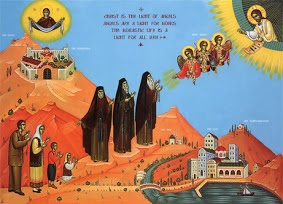
What is repentance and confession?
Confession is a God-given commandment, and it is one of the Sacraments of our Church. Confession is not a formal, habitual (”to be on the safe side”, or, ”in view of upcoming feast-days”), forced and unprepared act, springing from an isolated duty or obligation and for psychological relief only. Confession should always be combined with repentance. A Holy Mountain Elder used to say: ”Many confess, but few repent!” (Elder Aemilianos of Simonopetra Monastery, Mt. Athos)
Repentance is a freely-willed, internally cultivated process of contrition and sorrow for having distanced ourselves from God through sin. True repentance has nothing to do with intolerable pain, excessive sorrow and relentless guilty feelings. That would not be sincere repentance, but a secret egotism, a feeling of our ”ego” being trampled on; an anger that is directed at our self, which then wreaks revenge because it is exposing itself and is put to shame—a thing that it cannot tolerate.
Repentance means a change in our thoughts, our mentality; it is an about-face; it is a grafting of morality and an abhorrence of sin.
Repentance also means a love of virtue, benevolence, and a desire, a willingness and a strong disposition to be re-joined to Christ through the Grace of the almighty Holy Spirit.
Repentance begins in the depths of the heart, but it culminates necessarily in the sacrament of divine and sacred Confession.
During confession, one confesses sincerely and humbly before the confessor, as though in the presence of Christ. No scientist, psychologist, psychoanalyst, psychiatrist, sociologist, philosopher or theologian can replace the confessor.
The father-confessor.
No icon—not even the most miracle-working one—can provide what the confessor's stole can: the absolution of sins. The confessor takes the person under his care; he adopts him and ensures he is reborn spiritually, which is why he is called a ”spiritual father”.
Normally, spiritual paternity is lifelong, sacred and powerful—even more powerful than a family bond. Spiritual birth is a painful process. The confessor must keep track of the confessing soul, with a fear of God (as one who is ”accountable to God”), with understanding, humility and love, and guide him with discretion in the ever-upward course of his life in Christ.
The confessor-priest has been given a special blessing by his bishop for the undertaking of his confessional work. However, the gift of ”binding and un-binding” sins is initially acquired through his ordination as presbyter, when he is rendered a successor to the Apostles. Thus, validity and canonicity in Apostolic succession, through bishops, is of central and great importance. Like all the other holy sacraments of our Church, the sacrament of Confession is performed (and it bestows Grace on the faithful), not in conjunction with the skill, the science, the literacy, the eloquence, the energy and the artfulness of the priest—not even with his virtue and holiness—but through the canonicity (validity) of his priesthood and through the ”Master of Ceremonies”—the Holy Spirit.
The possible sins of the priest do not obstruct divine Grace during the Sacraments. Woe betide, if we were to doubt (on account of the unworthiness of the priest) that the bread and the wine actually become the Body and the Blood of Christ during the Divine Liturgy! This of course does not mean that the priest should not have to constantly concern himself with his own ”cleanliness”.
Thus, there is no such thing as ”good” or ”bad” confessors. Each and every confessor provides the exact same absolution. However, we do have the right to choose our confessor; and of course we have the right to turn to the one who truly makes us feel at ease with him spiritually. To constantly change our confessor however, is not a very sober decision; this kind of tendency does not reveal spiritual maturity. But confessors should, respectively, not fret excessively—or even create problems—when a spiritual child of theirs happens to depart from them.
This may mean that they were morbidly attached to each other (sentimentally, to the person, and not to Christ, nor to the Church). They may also regard that departure as an insult; one that is demeaning to them and makes them think there is no-one better than them, or, it may give them a feeling that the other ”belongs” to them exclusively and they can therefore dominate them and in fact even behave forcibly towards them, as if they were repressed and confined subordinates.
We did mention that the confessor is a spiritual father, and that spiritual fatherhood and spiritual childbirth entails labor.
Thus, it is only natural for the confessor to feel sorrow upon the departure of his spiritual child. However, it is preferable for him to pray for his child's spiritual progress and his union to the Church, even despite his disengagement from him. He must wish for, and not against that child.
The confessor's work is not just the superficial hearing of a person's sins and the reciting of the prayer of absolution afterwards. Nor is it restricted to the hour of confession. Like a good father, the confessor continuously cares for his child; he listens to him and observes him carefully, he counsels him appropriately, he guides him along the lines of the Gospel, he highlights his talents, he does not place unnecessary burdens on him, he imposes canons (penances) with leniency and only when he must, he consoles him when he is disheartened, weighed down, resentful, exhausted, and he heals him accordingly, without ever discouraging him, but constantly pursuing the struggle for the eradication of his passions and the harvesting of virtues; constantly shaping his eternal soul to be Christ-like.
This ever-developing paternal and filial relationship between confessor and spiritual child eventually culminates in a feeling of comfort, trust, respect, sanctity and elation. When confessing, one opens his heart to the confessor and discloses the innermost, basest, and most unclean—in fact, all—of his secrets, his most intimate actions and detrimental desires, even those that he would not want to confess to himself, nor tell his next-of-kin or his closest friend. For this reason, the confessor must have an absolute respect for the unlimited trust that is being shown to him by the person confessing.
This trust most assuredly builds up with time, but also by the fact that the confessor is strictly bound (in fact to the death) by the divine and Sacred Canons of the Church, to the confidentiality that confession entails.
In Orthodox confession there are of course no general instructions, because the spiritual guidance that each unique soul requires is entirely personalized. Each person is unprecedented, with a particular psychosynthesis, a different character, differing potentials and abilities, limitations, tendencies, tolerances, knowledge, needs and dispositions. With the Grace of God and with divine enlightenment, the confessor must discern all these characteristics, in order to decide what he can utilize best, so that the person confessing will be helped in the best possible manner. At times, leniency will be required, while at other times, austerity.
The same thing does not apply to each and every person. Nor should the confessor ALWAYS be strict, just for the sake of being called strict and respected as such; and he should likewise not ALWAYS be excessively lenient, in order to become the preferred choice and be regarded as a ”spiritual father of many”. What is required of him is a fear of God, discernment, honesty, humility, deliberation, understanding and prayer.
”Economy” (Oekonomia: to make allowances for something, exceptionally) is not demanded of the person confessing, nor is it proper for the confessor to make it a rule. ”Economy” must remain an exception.
”Economy” must also be a temporary measure (Archmandrite George Gregoriates). When the reasons for implementing it no longer exist, it must naturally be retracted. The same sin can be confronted in numerous ways.
A canon (penance) is not always necessary. A canon is not intended as a form of punishment. It is educative by nature. A canon is not imposed for the sake of appeasing an offended God and an atonement of the sinner in the face of Divine Justice; that is an entirely heretic teaching. A canon is usually implemented during an immature confession, with the intent to arouse awareness and a consciousness of the magnitude of one's sin. According to Orthodox teaching, ”sin” is not so much the transgression of a law, as it is a lack of love towards God. ”Love, and do whatever you want”, the blessed Augustine used to say…
A canon is implemented for the purpose of completing one's repentance in view of confession, which is why Fr. Athanasios of Meteora rightly says:
”Just as the confessor is not permitted to make public the sins being confessed to him, so must the person confessing not make public the particular canon that the confessor has imposed in his specific case, as it is the resultant of many parameters.”
A confessor acts as the provider of the Grace of the Holy Spirit. During the hour of the Sacrament of Confession, he does not function as a psychologist and scientist. He functions as a priest, as an experienced doctor, as a caring father. When listening to the sins of the person confessing, he prays to God to give him enlightenment, to advise him what the best ”medication” for cure will be, and to gauge the degree and the quality of that confession.
The confessor does not place himself opposite a confessing person with curiosity, suspicion, envy, excessive austerity, power and arrogance; but equally not with indifference, thoughtlessly, carelessly and wearily. The humility, love and attention of the confessor will greatly help the person confessing.
The confessor should not ask too many, unnecessary and indiscreet questions.
He must especially interrupt any detailed descriptions of various sins (especially the carnal ones) and even the disclosure of names, to safeguard himself even more. But the person confessing should also not feel afraid, or hesitate and feel embarrassed; he should feel respect, trust, honor and show reverence to the confessor. This clime of sanctity, mutual respect and trust must be mainly nurtured, inspired and developed by the confessor.
The benefit of confession.
Our holy mother the Orthodox Church is the Body of the Resurrected Christ; She is a vast infirmary for the healing of frail, sinning faithful from the traumas, the wounds and the illnesses of sin; from pathogenic demons, and from the venomous demonic traps, and influences of demonically-driven passions.
Our Church is not a branch office of the Ministry of Social Services, nor does She compete with various social welfare organizations. This does no mean that She does not acknowledge their significant and well-meaning work, or that She Herself does not offer such services bounteously, admirably and wondrously. But the Church is mainly a provider of meaning in life, of redemption and salvation of the faithful, ”for the sake of whom Christ died,” through their participation in the sacraments of the Church.
”The priest's stole is a planing instrument,” as Elder Paisios of the Holy Mountain used to say, ”that planes and straightens out a person. It is a therapeutic scalpel that excises passions, and not a trowel for workaholics, or a symbol of power. It is a servant's apron intended for ministering to people, for providing therapy and salvation.”
God uses the priest for the forgiveness of His creature. It is plainly stated in the absolution blessing: ”May God forgive you—through me the sinner—everything, in both the present and future age, and may He render you blameless before His awesome Seat of Judgment. Having no longer any worry for the crimes that have been confessed, may you go forth in peace.” Sins that have not been confessed will continue to burden a person, even in the life to come.
How to confess.
Confessed sins should not be re-confessed; it would be as though one doesn't believe in the grace of the Sacrament. God is of course aware of them, but it is for the sake of absolution, humbling, and therapy that they need to be outwardly confessed. As for the occasional penance imposed for sins, one must realize that it does not negate the Church's love for the person, but that it is simply an educative imposition, for a better awareness of one's offenses.
According to Saint Nicodemus of the Holy Mountain, ”confession is a willed, verbal revealing of one's evil deeds and words and thoughts; solemn, accusatory, direct, without shame, decisive, to be executed before a legitimate spiritual father.” This God-bearing saint has succinctly, fully and meaningfully clarified that confession must be willed, free, effortless, without the confessor straining to extract the person's confession. It should be solemn; in other words, with an awareness of the sorrow that the sinner caused God with his sin, and not with sentimental, hypocritical, fainthearted tears.
Genuine ”solemnity” implies an inner compunction, remorse, hatred of sin, love of virtue, and a feeling of gratitude to the Gift-Giving God. ”Accusatory” implies a responsible confession, without attempts of justification, subterfuge, artiface, irresponsibility and seeking of scapegoats; with sincere self-reproach and genuine self-humiliation that bears the so-called ”joy producing sorrow” and the ”joyous grief” defined by the Church. ”Direct” implies a confession with all sincerity, directness and precision, valour and courage, severity and bravery.
It often happens that during the hour of confession, one avoids admitting his defeat, fall and weakness, and by means of eloquent and long-winded descriptions attempts to deflect his share of responsibility, with twists and turns and half-truths—or even by accusing others—all for the sake of preserving (even at that hour) a prim and proper ego. A confession ”without shame” implies a portrayal of our true, deplorable self.
Shame is a good thing to have prior to sin and not afterwards, and in the presence of the confessor. It is said that the shame felt during confession will free us from the sin at the Last Judgment, because whatever the confessor absolves will not be judged again. A ”direct” confession implies that it should be clean, specific, sincere, and accompanied by the decision that the faithful will never repeat the sins he has confessed.
Furthermore, confession should be continuous, so that the ”willfully recurring” passions (according to Saint John of the Ladder) are not strengthened, but rather are more speedily cured. Thus, old sins will not be entirely blotted out from the memory—there will be a regular self-monitoring, self-observation, self-awareness and self-reproach. Divine Grace will not abandon the penitent; demonic entrapment will be averted much more easily, and remembrance of Death will not seem so horrid and terrible. <…>
Modern problems that hinder pure confession.

A basic prerequisite for partaking in the holy Sacraments and for an upward spiritual course is a purity of heart; a purity that is devoid of various sins and the spirit of avarice and blissfulness inspired by today's hyper-consumerist society, the spirit of God-despised pride in a world of narcissism, individualism, lack of humility, misanthropy, and arrogance, the demonic spirit of mischievous thoughts, fantasies, imaginations, and unclean suspicions and envy.
Purity of heart has become a rare ornament—in brotherly and conjugal relations, in obligations towards colleagues, in friendships, in conversations, in thoughts, in desires, in pastoral callings. The so-called Mass Media have lapsed and become mere sources of contamination.
Forgotten are neptic awareness, ascetic sobriety, traditional frugality, simplicity and gallantry. This has led to a polluting of the soul's rationalizing ability, an arousal of its desirous aspect towards avarice, while its willpower has become severely blunted, thus drawing a weakened person towards evil, without any impediments or limitations.
Nowadays prevailant are self-justification, excuses for our passions, beautification of sin, and its reinforcement through modern psychological supports. The admission of mistakes is regarded as belittlement, weakness and generally improper. The constant justification of our self, and the meticulous transferal of responsibilities elsewhere have created a human being that is confused, divided, disturbed, worn-out, miserable and self-absorbed, taunted by the devil, and captured in his dark nets.
There is a prevalence of foolish rationalism nowadays, which observes evangelical virtues and Conciliar canons according to its liking, preference and convenience, on important issues such as fasting, abstinence, childbearing, morality, modesty, honesty and precision.
In view of all the above—none of which I believe has been exaggerated—it is our belief that the job of a confessor is not an easy one. Ordinary coercion to repent and the cultivating of humility are nowadays inadequate; the fold requires catechesis, re-evangelizing, spiritual training, as well as a spiritual about-face, in order to acquire powerful antibodies. Resistance, reaction and the confronting of the powerful current of de-sanctification, of secularization, of denegrating heroism, of eudaemonism (a theory that the highest ethical goal is happiness and personal well-being) and of amassing wealth are imperative. The young generation is in need of special attention, instruction, and love, because their upbringing has not proven to be of any help to make them aware of the meaning and the purpose of life, or of the emptiness, indecency, lawlessness, and the darkness of sin.
Another serious problem—even for our Christians—is the often over-zealous quest for a labor-free, toil-free and grief-free life. We are in search of Cyreneans to carry our crosses. We refuse to lift up our own personal cross. We have no idea of the depth and breadth of our own cross. We bow in reverence before the Cross in church, we cross ourselves, but we do not embrace our personal cross. In the long run, we would like a non-crucified Christianity. But there cannot be an Easter Sunday without a Good Friday.
We honor martyrs and saints, but we ourselves do not want to suffer any hardships or difficulties. Fasting is too difficult a task to accomplish, we feel resentful during an illness. We cannot tolerate any harsh words, not even when we are to blame; therefore how could we possibly tolerate injustice, slander, persecution and exile, the way our saints did? It is an indisputable fact that the contemporary, secular spirit of convenience, leisure and excessive consumerism has greatly affected the measure of spiritual living. Generally speaking, we demand a non-ascetic Christianity… Orthodoxy however has the ascetic Gospel as its basis.
One other serious problem of our time is man's morbid and undue reliance upon logic, intellect, knowledge, and personal judgment—we are referring to over-fed and ultimately tiring rationalization. Neptic Orthodox theology teaches us to consider our Nous a tool, and to lower it, into the Heart. Our Church does not cultivate and produce intellectuals. To us, rationalization is not a philosophical mentality, but a clearly sin-oriented life view—a form of atheism—since it goes contrary to the commandment of placing our faith, hope, love, and trust in God. A rationalist judges everything using the filter of his own, finite mind, with himself and his sovereign ego as the epicentre, and does not place any trust in divine Providence, divine Grace and divine Assistance in his life.
By often regarding himself as infallible, a rationalist does not allow God to intervene in his life and therefore judge him. Thus, he is convinced that he is not in need of confession. Saint Simeon the New Theologian says, however, that for one to believe he has not fallen into any sins is the greatest of falls and fallacies, and the greatest sin of all. Certain modern-day theologians speak of ”missing the target” instead of ”sinning” in their desire to blunt the natural protest of one's conscience. The self-sufficiency displayed by certain churchgoers and fasting Christians can sometimes be hiding a latent pharisaic stance, i.e., that ”they are not like the others” and therefore are not in need of confession.
Pride.
According to the holy fathers of our Church, the greatest evil is pride; it is the mother of all passions, according to Saint John of the Ladder. It is the mother of many offspring, the first ones being vainglory and self-justification. Pride is a form of denial of God; it is an invention of wicked demons, the result of too much flattery and praise, which in turn results in a person's debilitation and exhaustion, God-despised censure, anger, rage, hypocrisy, a lack of compassion, misanthropy, and blasphemy. Pride is a passion that is formidable, difficult, powerful and hard to cure.
Pride is also strong in many ways, and has many faces. It manifests itself as vainglory, boastfulness, conceit, arrogance, presumptuousness, pompousness, insolence, self-importance, megalomania, ambition, self-love, vanity, avarice, pampering of the flesh, desire for first place, accusations and arguments. It also manifests itself as smugness, favouritism, insolence, disrespect, outspokenness, insensitivity, contradiction, obstinacy, disobedience, sarcasm, stubbornness, disregard, indignity, perfectionism and hypersensitivity. Finally, pride can lead to impenitence.
The tongue often becomes the instrument of pride through unchecked, long-winded, useless talking; gossiping, and silliness; through vain, insincere, indiscreet, two-faced, beguiling, affected, and mocking conversations.
Out of the seven deadly sins many other passions spring forth. Having mentioned the offspring of Pride, we then have Avarice, which gives birth to the love of money, greed, stinginess, lack of charity, hardheartedness, fraud, usury, injustice, deceitfulness, simony, bribery, gambling. Fornication manifests itself in myriads of ways; for example, envy, with its underhanded and evil spite, insatiable gluttony, anger, as well negligence and lack of care.
Elements of family life.
Special attention should also be paid to many un-Orthodox elements in family life, which we believe should be examined carefully by confessors and the persons involved. The avoidance of childbearing, the idolizing of one's children (when parents regard them as an extension of their ego); overprotecting them, or constantly watching their moves and savagely oppressing them.
Marriage is an arena for exercising humility, mutual yielding and mutual respect, and not the parallel journey of two sefish egos, no matter how long they have been together. The devil dances for joy whenever there is no forgiveness for human weaknesses and in everyday mistakes.
Parents will help their children significantly not by excessive courtesy outside the home, but by their peaceful, sober and loving example in the home, on a daily basis. The participation of the children together with the parents in the sacrament of confession will fortify them with divine Grace in an experiential life in Christ.
When parents ask for forgiveness with sincerity, they simultaneously teach their children humility, which destroys all demonic plots. In a household where love, harmony, understanding, humility and peace bloom, there the blessings of God will be bounteous and the home becomes a castle that is impervious to the malice of the world around it. The upbringing of children with the element of forgiveness creates a healthy family hearth, which will inspire them and strengthen them for their own futures.
Self-justification.
One other huge matter that constitutes an obstacle for repentance and confession is self-justification, which also plagues many people of the Church. Its basis is, as we mentioned earlier, demonic Pride. A classic example is the Pharisee of the Gospel parable.
The self-justifying person has seemingly positive traits, which he himself will praise excessively, and which he would like others to honor and praise. He is happy to be flattered and to demean and humiliate others. He has excessive self-esteem, he excessively justifies himself, and believes that God is obligated to reward him. In the final analysis he is a poor wretch, who in his miserable state makes others miserable. He is overcome by nervousness and agitation and is overly demanding, thus imprisons himself, for these are tendencies that will not allow him to open the door to divine mercy through repentance.
An offspring of Pride is censure (fault-finding), which is unfortunately also a habit of many Christians, who tend to concern themselves more with others than themselves. This is a phenomenon of our time and of a society that pushes people into a continuous observation of others, and not of ourselves.
Modern man's myriad activities never allow him to remain alone to study, contemplate, pray; to attain self-awareness, self-critique, self-control, and remembrance of death.
The mass media are incessantly preoccupied with scandal-seeking, with human passions, sins, and peoples' crimes.
Such things provoke and leave impressions, and even if they do not tempt, they nevertheless burden the soul and the mind with filth and ugliness. They actually reassure us by making us believe that ”we are better” than those described. Thus, a person becomes accustomed to the mediocrity, lukewarmness, and transience of superficial day-to-day life, never comparing himself to saints and heroes. This is how censure prevails in our time—by giving others the impression that he is justly imposing a kind of cleansing by slinging mud at others. Meanwhile he is contaminating himself by generating malice, hatred, hostility, resentment, envy and coldness.
Saint Maximus the Confessor says that the one who constantly scrutinizes others' sins, or condemns his brother based on no more than suspicion, has not even begun to repent, nor has he begun any attempt to discover his own sins.
Conclusion
Many and various things can be said; but in the end, only one thing is significant and important: our salvation, to which we are not attending. Salvation is only attained through sincere repentance and pure confession.
Repentance not only opens the heavenly Paradise, but also the earthly one, with the foretaste—albeit incomplete—of the ineffable joy of the endless heavenly reign, and the reign of wonderful peace in the present time. Those who continually practice confession are potentially truly and genuinely happy people; peace-loving and peace-bearing; heralds of repentance, of resurrection, transformation, freedom, grace, with the blessing of God in their souls and lives. ”God's bounteous Grace turns the wolf into a lamb,” says Saint John the Chrysostom.
No sin can surpass God's love.
There is not a single sinner who cannot become a saint, if he so desires. This has been proven by innumerable names recorded in the Lives of the Saints.
The confessor listens to confessions and absolves those confessing, under his blessed stole. He cannot, however, confess himself and place the stole over his own head to obtain forgiveness in the same manner. He must necessarily kneel underneath another stole to confess and be absolved.
That is the way the spiritual law functions; this is what God's Wisdom and Mercy have ordained. We cannot confess others while never submitting ourselves to confession; we must practice what we preach. We cannot talk about repentance, but never repent; or talk about confession, but not go to confession ourselves regularly. No one can cast himself down, and no one can absolve himself. The unadvised, the disobedient, and the unconfessed are a serious problem for the Church.
Dear brothers and sisters! The confessor's stole can be a miraculous scalpel for the removal of malignant tumors; it can raise the dead, renew and transform the indecent world, and bring joy to earth and heaven. Our Church has entrusted this grand ministry, this sacred service, to our priests and not to the angels, so that we might be able to approach our confessor easily and fearlessly, as fellow-sufferers and corporeal counterparts.
All the above has been delivered sincerely and not at all pretentiously by a co-sinner who does not aspire to play the teacher, but who is a co-struggling, co-student with you. It was his sole desire to remind you in simple and artless words of the Tradition of our holy mother, the Church, on the ever-relevant matter of divinely-conceived and divinely-blessed Repentance, and the God-given, God-pleasing, blessed Sacrament of Confession.
From the book Repentance and Confession,
Posted on the website of the Serbian Orthodox Church in America
Excerpt edited by OrthoChristian.com
Monk Moses of the Holy Mountain

All the saints of our Church "ended their lives after a good struggle and keeping the faith".
The saints are good-conquering strugglers and undaunted confessors. They were visited by the Holy Spirit and graced. They were not just good, kind, noble, smiling, and ethical, but they were icons of Christ. They are the ones that remain always indissolubly united with Christ, who reveal to the world and lead people to Christ. The saints assure us that the gospel is feasible and practicable throughout the centuries and we can if we want strive to unite with Christ. The saints by accepting Christ in their lives unreservedly are made christ-like, and become christ-bearers and christ-seers. In this way they testify, confess, preach, and present everywhere and always Him. They cannot live without Christ. For them He is everything.
Quite often we are given various opportunities to confess Christ. Sometimes we do it promptly and pleasantly, sometimes with difficulty and sometimes out of fear or shame not at all. The true believer confesses Christ always fearlessly, because they keep living in repentance and humility. He feels weak, but trusts fully in Christ and is richly strengthened. He confesses Christ Who is in him. Sometimes it is hard to confess Christ even to those very near and dear to us. Then, according to the Gospel, they become "household enemies of this man". It happens that our own people do not understand us, but shouldn't we make an attempt to discreetly talk about Christ. Or sometimes we go to the opposite end. We talk to them so much about Christ, where in the end we fatigue them, sicken them, and repress them, so they do not even want to hear about Christ. We can never push or dominate or threaten anyone, and even more our own people, to follow Christ.
Christ is freedom and love. He invites, and requires no blackmail. We are called to inspire people to love Christ. When man is self-imprisoned by the mighty "ego", suffering from selfishness, individualism, egopathy and pride, it is difficult to love others, more so God. And thus he is unable to confess in front of people. Whoever does not confess, this means that they don't have love. Whoever does not love is self-sentenced to an icy loneliness, which will begin in this life and continue to eternity. The selfish egoist feels the love of God as fire, and cannot resist it, does not want it, is bothered by it, and it burns him.
...
Today there are Christians who love the saints, study the lives of the saints, running to their feasts, lighting oil lamps to them, venerating their icons, building temples in their honor, as well as shrines, icons, lamps, bread, prosfora, boiled wheat and so on. There also exist those who do not love the saints, and I am not speaking about atheists, the impious and the irreligious, but those influenced by rationalism, from an intellectual modern theology, which considers all these things as sicknesses of non-theological popular piety. Unfortunately much of the Christian world has not fully realized the great value and importance of saints in our lives.
The reverence, piety and fervor of the faithful lovers of saints have not disappeared in our days. One can see and rejoice over houses full of icons, with an unwaning vigil lamp, unquenchable candle and censer; simple grandmothers speaking with tears about the wonderful presence of the saints in their lives, hoping in the intercessions of the saints and the Theotokos to save them and help them to enter into Paradise. The lovers of saints are those who seek also today real saints to be upheld and benefited. They do not create and imagine saints, nor follow those who play a god or false saints, but bow to true and genuine holiness. The lovers of saints are the finest of the congregation in the parishes. They continue the tradition, honor reverently the memories of our saints, are not easily scandalized by false saints and are not affected and ridden by ecclesiastical scandals, real or not. When found in difficult conditions, such as being under a totalitarian regime, they endure bravely, hopeful and victorious.
The saints always remain humble, because they have the certain conviction that what is good has been given from above, and are not their own spoils. So the saints can't boast about their gifts, being given by the Father of Lights. Our saints, in full consciousness of their gifts, give all glory, honor and worship to God the Gift-giver. When they are praised by people they praise the Source of all good, the All-Good God. The more God sees man humble himself, the more He blesses him and graces him, since always "to the humble He gives grace". A charismatic who uses his gifts to his own glory and gain, surely will soon lose it, and be exhibited miserably in the eyes of people he exploited. From this life he will be confused, bewildered and wretched and he will expect eternal hell.
There exists, my beloved, plenty of hidden holiness in our troubled times. Not only in life nameless, unknown, obscure monks in the deserts and monasteries, but also in the world. Spouses who endure the resignation and capricious prodigality of spouses - drunkards, night owls, worthless and indifferent. Who are not led to divorce, but endure and hope and pray and leave a good example for their children. The attitude of the mother teaches the children, she is an excellent example, an incitement to virtue. This course they will not ever forget in their lives. This heroic attitude can convert a violent husband and definitely give you the crown of patience for the long, and sometimes a life of, suffering. We have known such rare heroines of faith, who for many years lived a horrible secret and torment in silence, patience, prayer, tears, humility, trust and hope in God. How can God not grace such beautiful souls?
You see, holiness has many aspects. Those in the world will not be judged because they do not do a lot of prayer, though there are some who do more than monks. St. John Chrysostom said: the laity will be saved by almsgiving. Almsgiving shows a humble soul who knows how to love. In this wicked and challenging era, whoever is humbled, chaste, pure, honorable, honest, fair, righteous and prudent will have much in heaven.
Monk Moses the Athonite

The Holy Mountain during its history of more than a thousand years has always been a busy workshop of wisdom and virtue which has produced monks distinguished for their learning and sanctity.
From the mid 18th century down to our own times has been a period when the Holy Mountain has greatly flourished. Akakios Kafsokalyvitis († 1730), the extremely severe cave-dwelling ascetic, the imitator of St Maximus Kafsokalivitis; Ierotheos of Iveron († 1745), a wise teacher; Anthimos Kourouklis († 1782), the joyful missionary to the islands of the Aegean and the Ionian; Paisius Velichkovsky († 1794), the founder of the 'ascetic-literary' school; Sophronios Agiannanitis; Makarios Notaras († 1805), the bishop-ascetic; Georgios of Tsernika in Romania († 1806); Nicodemus the Athonite († 1809), a writer noted for his wisdom; Athanasios of Paros († 1813), a teacher of distinction; Sophronios Vratsis of Bulgaria († 1813); Arsenios of Paros († 1877), a renowned ascetic; Antipas of Moldavia († 1822); Siluan of Russia the Athonite († 1938), well-known from his fine biography; and Savvas of Kalymnos († 1948), the worker of miracles, form an important nucleus of enlightenment, education, and service to God and man. To these names we must add the glorious latter-day Athonite martyrs, who in the 18th and 19th century number as many as 60, of whom we could mention: Pachomios of the New Skete († 1730), Constantine the Russian († 1742), Damaskinos of Thessaly († 1771), Cosmas of Aetolia († 1779), that renowned teacher and founder of churches and schools, Loukas of Stavroniketa († 1802), Gerasimos of Koutloumousiou († 1812), Efthymios of the Skete of Iveron († 1814), Gideon of Karakallou († 1818), Agathangelos of Esphigmenou († 1819), Gregory V, Patriarch of Constantinople († 1821), Pavlos of Konstamonitou († 1824), and the renowned Athanasios of Lemnos († 1846).
The foundation of the Athonite Academy (1749) was an important point in this modern Athonite renaissance. The distinguished teachers who served there included Neophytos Kafsokalyvitis, its first principal, who was succeeded by Archimandrite Agapios of the Holy Sepulchre, slaughtered by the Turks outside Thessaloniki, Evgenios Voulgaris, that gifted techer, Nikolaos Zertzoulis of Metsovo, Panagiotis Palamas, and Athanasios of Paros, among others. Among those who served as the Academy's trustees and patrons were Gregory V, Nicodemus the Athonite, and Makarios Notaras. Among the Academy's students were the martyrs Cosmas of Aetolia, Constantine of Hydra, and Athanasios Koukaliotis; there were also leaders in the intellectual world such as Iosipos Moisiadax, Sergios Makraios, and Rigas Pheraios, who died for his country. It is an undoubted fact that for the Greek nation then enslaved to the Turks the Athonite Academy lit one more lantern of hope for its survival. The printing-press set up at the Great Lavra by Cosmas of Epidaurus (1755) and the school at the Vatopaidi Monastery also contributed to the awakening of the nation, but unfortunately these were short-lived.
The same period coincided with the lives and work of important men of letters such as Papa-Ionas Kafsokalyvitis, Dionysios Siatisteas, Neophytos Skourteos, Vartholomaios of Koutloumousiou, Pachomios of Tirnovo, Dionysios of Fourna († 1745), the icon-painter and author of the famous book on the art of painting, who lived at Karyes, Kaisarios Dapontes († 1784), a much-travelled writer and poet who was a monk of Xeropotamou, Dorotheos (Evelpidis) of Vatopedi, and Nikiphoros of Iveron.
In the mid 18th century a grave theological debate developed all over the Holy Mountain in connection with the issues of the holding of memorial services for the departed, frequency of Holy Communion, and other matters relating to the exact observance of Orthodox tradition. The starting-point for this prolonged controversy was the building of the kyriakon at the Skete of St Anne (1754). The question arose as to whether the commemoration of the founders and benefactors should be held on Saturday or Sunday, and with what frequency the monks should receive Holy Communion. The debate divided the monks, and those who insisted that the memorial services should be held on Saturdays were mockingly dubbed 'kollyvades'. It seems, however, that, behind their apparent obstinacy, they had a profound knowledge of church tradition and fought hard for its authenticity and for its purification from adulteration. Thus the name of 'kollyvas' became a title of honour and the movement was responsible for a profitable and beneficial regeneration and renewal. Indeed, this devout movement was led by three saints: Makarios Notaras, Nicodemus the Athonite, and Athanasios of Paros, and they numbered among their supporters and sympathizers distinguished scholars such as Neophytos Kafsokalyvitis, Christophoros Artinos, Agapios of Cyprus, Iakovos the Peloponnesian, Pavlos the hermit, Theodoritos of Esphigmenou, and a number of others. Some of them chose voluntary exile and took refuge in mainland Greece or the islands, where they founded scores of monasteries, of which a fair number survive today. Thus we see Makarios Notaras on Chios, Niphon on Skiathos, Dionysios of Skiathos on Skyros, Ierotheos on Hydra, with numerous disciples and friends of that Athonite tradition which has nourished monks and saints. The monasteries which they founded were noted for their vigour and service. The Ecumenical Patriarchate by decisions of the Holy Synod finally put an end to the 'kollyvades' issue, by ruling that memorial services could be held as circumstances demanded and that Holy Communion, with the proper preparation, could be received frequently, and that the life of the substance, and not the aridity of the form, was to be adhered to.
Sts Nicodemus the Athonite, Makarios Notaras, and Athanasios of Paros are the typical representatives of the renaissance on the Holy Mountain, and of the spirit which prevailed. They were the authors of widely circulating books which had their effect on the souls of the enslaved Greeks, and their works continue to be re-issued even today. The seal was set on the Athonite theological spirit of the time by the publication of the 'Philokalia of the Ascetic Fathers' (1785), a publication which was a landmark in theological literature.
In a difficult period such as that of Turkish rule, the Holy Mountain kept its lamp perpetually burning, and was able, moreover, to hand on the flame to the peoples of the Balkans and the North. Thus the exchange of visits and the sojourn of many on the Holy Mountain of Athos gave rise to an important spiritual and cultural movement. The quiet of Mount Athos acted as a school of superior philosophy in which not only asceticism and vigilance, but also study in its rich libraries, the translation of rare texts, concern for art, and the transmission of a spirit of service and self-sacrifice were cultivated. The work of the starets Paisius Velichkovski, the reformer of monasticism in Romania and Russia, after his departure from Athos, was particularly inspired. Similar work was carried out by his disciple the Blessed Georgios of Tsernika († 1806) in the monasteries of Moldavia, where hundreds of monks were his spiritual children, by the Blessed Sophronios Vratsis († 1813) in Bucharest, while the Blessed Antypas († 1882) from Moldavia went to Jassy and finally reached the Monastery of Varlaam in Finland. The Russian Saint Silouan the Athonite († 1938) continues to teach through his much-translated biography by Archimandrite Sophronius († 1993) even after his blessed death. Yet again the illuminating influence of the universality of the Holy Mountain is apparent.
The Athonite monastic community has never kept the fragrance of the blossoming of its virtues all for itself. In spite of the harshness of enslavement to the Turks, penury, the difficulties in travelling and the many perils, the Athonite monk in his humble cap went everywhere in the Greek world, to bring the sober preaching of salvation, of redemption, of consolation, of support, and of hope - fiery missionaries like Cosmas of Aetolia, who crowned his long preaching mission with martyrdom, the Blessed Anthimos Kourouklis, who travelled the islands and built churches and monasteries, the Blessed Makarios Notaras, who on the islands of the Aegean created real centres of refreshment and aspiration, while similar work was carried out by his companion Blessed Athanasios of Paros, Arsenios of Paros, and Savvas of Kalymnos, to name but a few. The Ecumenical Patriarch Gregory V the Martyr and the company of glorious latter-day Athonite martyrs still teach more strikingly today after their martyr's end and strengthen the hearts of the people.
In our own century the Holy Mountain has continued its hidden service to mankind which makes known the lofty spirituality and life of Orthodoxy and its benign influence beyond its boundaries by continuing to produce ascetics and figures of great spiritual and theological stature. In a world which thirsts and seeks in anguish for authenticity, discipline and truth, it gives its testimony of the experience of the Orthodox spiritual life and the salvation of the soul. The many young pilgrims today may not always be fired with enthusiasm, but they are set thinking by this way of life of asceticism, abstinence, simplicity, and quiet of the monks. Thus often a pilgrimage to the Holy Mountain is a turning-point in their lives. The humility and sanctity of Mount Athos play a role of spiritually alerting the Church and the people.
This spiritual portrait of Athos has to show in our own times many figures who vie with those of earlier eras, whose spirit they transmit, while at the same time providing a starting-point for the carrying on of their work in the future. Among those Abbots known for their great love for the Holy Mountain, for their monasteries, for their spiritual children, for the Theotokos and for God, lovers of virtue and hard work, were the now departed Archimandrites Symeon of Gregoriou († 1905), Neophytos of Simonopetra († 1907) - who were re-founders of their monasteries -, Kodratos of Karakallou († 1940), Athanasios of Gregoriou († 1953), Ieronymos of Simonopetra († 1957), Philaretos of Konstamonitou († 1963), who wore themselves out in the service of their monasteries and their monks, Seraphim of Agiou Pavlou († 1960), Vissarion of Gregoriou († 1974), Gabriel of Dionysiou († 1983), who successfully worked together to promote the common interests of the Holy Mountain, Haralambis of Simonopetra († 1970), and Ephraim of Xeropotamou († 1983).
Apart from these distinguished figures, the following, now at rest, were excellent and discreet spiritual counsellors and confessors in our own century: Savvas († 1908) and Gregorios of Little St Anne, Ignatios Koutounakiotis († 1927), Chariton Kafsokalyvitis, Kaisarios, and Mikhail the Blind († 1952) of the Skete of St Anne, Neophytos, Gabriel († 1967), Efstathios ( 1981) and Elpidios († 1983) the Cypriots, and Spyridon († 1990) of the New Skete, Gregorios of Dionysiou, Maximos of Karakallou, Nikodemos of Crete of the Koutloumousi Skete, among others.
Of widely acknowledged sanctity were the departed Elders Hatzighiorghis († 1886), renowned for the severity of his fasting, Daniel the Romanian, the cavedweller, of Kerasia, Avimelech of Crete and Gerasimos († 1991), the hymnographer of Little St Anne, Kallinikos († 1930), the ascetic and Hesychast and Daniel of Smyrna († 1929) of Katounakia, Gerasimos Menagias († 1957), the wise hermit, Avvakoum († 1978) the Barefoot, of the Lavra, Isaak († 1932), the best of coenobites, and Lazaros († 1974) of Dionysiou, Joseph the Cave-Dweller († 1959), the great ascetic, and Theophylaktos († 1986), the lover of the saints, of the New Skete, Gerontios († 1958) of St Panteleimon, Athanasios of Iveron († 1973), known for his humility and devotion to the Theotokos, Evlogios († 1948), the great faster, and Enoch († 1978), the delightful Romanian, at Karyes, Papa-Tychon († 1968), the great Russian ascetic of Kapsala, Porphyrios († 1992), an elder of Kafsokalyvia with pre-vision and insight, who for years carried the blessings of Athos into Attica, and Paisios († 1944) the Athonite, who gave rest to many who approached him with reverence. Many have written many worthy accounts of all of these.
The last two to be mentioned above were widely known for the grace which was given them. Elder Porphyrios was one of the most important figures of our times: he had the authority of authenticity, he had the experience of the Holy Spirit, he was truly humble, his simplicity was thoroughgoing; in him childlikeness was interwoven with holiness. He was a discerner of souls, a teacher and a guide to many, who, greatly moved, will tell of their meetings with him. Elder Paisios was also an experienced, patient and persistent physician of souls and a guide to a host of people with great needs. His joyful discourse, his example, his counsels reached people, and infected them with his peace, the joy of blessing, the refreshment of the spirit.
Amongst the men of letters of our time whom the Holy Mountain has produced are the priest-monk Theodoritos of the Lavra, Gerasimos of Esphigmenou (Smyrnakis), famed for his fine book on the Holy Mountain, the deacon-monk Cosmas of Agiou Pavlou (Vlachos), similarly, the priest-monk Christophoros of Docheiariou (Ktenas), the author of a host of works on the Holy Mountain, the Lavra Elders Paneleimon, Chrysostomos, Alexandros (Evmorphopoulos), Spyridon (Kambanaos), a doctor, Pavlos (Pavlidis), also a doctor, Alexandros (Lazaridis), Evlogios (Kourilas), subsequently Metropolitan of Korytsa, Ioakeim of Iveron, Theophilos, Nikandros, Iakovos and Arkadios of Vatopaidi, and the Xeropotamou Elders Pavlos, Chrysanthos and Evdokimos, Athanasios of Pantocrator, Zosimas of Esphigmenou, Neilos (Mitropoulos) of Simonopetra, Savvas of Philotheou, Varlaam of Gregoriou, Theodosios of Agiou Pavlou, and Ioakeim (Spetsieris) of New Skete.
The work of the saints, the abbots, the spiritual fathers, and the scholars of the Holy Mountain, of yesterday and today, radiates outwards and has a beneficial effect upon the world - because Athos, over and above its priceless material treasures, is the guardian of treasures of living virtue, which is of greater importance; it can provide a way of life to cope with the harshness of everyday life, its monotony and loneliness. Thus the Holy Mountain has been justly called by Prof. A. Stavropoulos "a school of spiritual fatherhood and counselling", through offering hospitality to many and through those monks who are able to go out into the world for confessions, conversation, and mission. The audience for their advice includes bishops, priests, monks, nuns, university and school teachers, and 'the least of the brethren'. As has been rightly said by J. Lacarriere "in the person of these few men who remain isolated in their kalyva or cave one can see the guardians, the trustees, the 'athletes' of a wisdom and a science of man which we hasten to admire when it comes from India or Tibet, but which we ignore when it is practised next door to us".
The words of Elder Paisios about Hatzi-Georgis, the subject of his biography, apply equally to himself and to many others of those whom we have spoken of and describe their noble fight for the well-being of the world. "He advises each one appropriately, with discretion, and comforts their souls and aids them with his prayers of the heart. His face is radiant with the holy life that he lives and brings divine grace to anguished souls. His reputation has spread everywhere and people hasten from every quarter to derive spiritual benefit. From morning till night he deals with the pain of the anguished and warms their hearts with his spiritual love, which is like the spring sunshine".
Elder Avimelech of Little St Anne used to say when asked what he was doing, "We are keeping alert". The blind Elder Leontios of Katounakia used to reflect that "now I see everything better, I experience everything better; God has given me more powerful light than that which I had when I had my health". Elder Mikhail of Kafsokalyvia with a perpetual smile on his lips used to converse with the saints. The Konstamonitou bibliophile Elder Modestos would say: "If we do not feel that all our brethren are ours and that we are theirs, the Holy Spirit will never dwell in our hearts. Our behaviour towards them should not be regulated by their spiritual quality". Elder Philaretos of Karoulia, a most strict ascetic, used to say: "My brethren, everybody strives for his salvation, except me, a sinner". A Koutloumousiou elder who suffered ill health for years on end would say that "it is the divine will and it is profitable that the body should be ill so that the soul should be saved". Another wise elder of our own times would often stress that "natural quiet helps towards inner peace. But if it doesn't exist, you must stick patiently to whatever you find before you, and God will give you the greater gifts. And look to see why you do not have peace". He also said, "you should be sad so that you may be glad", and "it's better to have difficulties than to think that you are doing fine; by means of difficulties you become more mature, more beautiful ...." In one of his books, Elder Mitrophanis of Hilandari says of the service which monks perform that it is "the heartfeltness of prayer, love which goes as far as sacrifice, forgiving humility, and the enthusiastic love of mankind".
It is a marvelous thing for holiness to be accompanied by skill with words. When on the Holy Mountain today there continue to be such figures, it is an unexpected blessing for the world.
Monk Moses the Athonite

Our age is often criticized for many reasons, fairly or unfairly. Yet truly difficult times hide treasures, generating small or great saints. Besides the officially recognized saints, there exist hidden saints throughout the entire twentieth century.
The venerable Methodia of Kimolos (†1908), Saint John of Kronstadt (†1908), the bishop of Zilon Euthymios (†1921), the bishop of Iconium Prokopios (†1922), the bishop of Kydonion Gregory (†1922), the bishop of Moschonision Ambrose (†1922), the bishop of Smyrna Chrysostomos (†1922), the wondrous Elder of Optina Monastery Venerable Anatoly (†1922), and many other venerable ones and new martyrs of Russia, Georgia, Estonia, Poland and other places in Europe, Asia and America.
In the twentieth century we also have the following saints: Arsenios of Cappadocia (†1924), Nicholas Planas of Athens (†1932), Silouan the Athonite (†1938), the venerable Savva of Kalymnos (†1948), the venerable George Karslides of Drama (†1959), the hieromonk Anthimos Vagianos of Chios (†1960), the archbishop of Shanghai John Maximovitch the Wonderworker(†1966), the Serbian hieromonk Justin Popovich (†1979), and the hieromartyr Philoumenos of Jerusalem (†1979).
A reputation of holiness and high virtuous life belongs also to these blessed elders: Archimandrite Ieronymos of Simonopetra (†1957), Joseph the Hesychast and Cave-dweller (†1959), Abbot Amphilochios Makris of Patmos (†1970), the abbot of Longovardos on Paros Philotheos Zervakos (†1980), the abbot of the Monastery of the Venerable David in Evia Iakovos Tsalikes (†1991), the discerning and clairvoyant Elder Porphyrios Kafsokalivites (†1995), the wise Elder Sophrony Sakharov (†1993), the known-to-all and charismatic monk Paisios the Athonite (†1994), the obedient and prayerful Ephraim of Katounakia (†1998), and others.
Holiness-bearing monasticism challenges us and invites us to stand more heroically, to greater frugality, simplicity, modesty and humility. We are obliged to maintain a solid, strong and pure spirit of Orthodox monasticism at all costs. We are called to teach the patience of the Elders of old.
The greatness of our Church is that it generates saints also today. Holiness will be needed much more in the 21st century world. Elder Paisios the Athonite would say that it is impossible to not keep monasticism intact. Holiness is not a forgotten vision or a false hope. Happiness-seeking, secularism, and laziness prevent the emergence of the tree of holiness. The contemporary spirit of having good times, of rushing, of effortless and trouble free work, and superficiality removes holiness.
The purpose of life is holiness. Holiness is the chief issue. Approaching holiness gives peace, joy, gentleness, patience, temperance, and spiritual gifts. The catalogue of new saints is growing also in the 21st century. Sometimes holiness hides itself in places where you would never expect, in cities and villages and not only on Mount Athos. Monasticism is booming today. We all pray that it continues to produce saints who walk the traditional path. Saint Silouan the Athonite would say according to his experience: "The Lord loves us exceedingly and through our unworthy prayers we converse with Him and repent and glorify Him. It is impossible to write how much the Lord loves us."
Through the Holy Spirit you know this love and the soul of one who prays knows the Holy Spirit.
Monk Moses the Athonite

Abba Moses asked Abba Sylvanus: "Can a person lay a new foundation every day?" The old man replied: "If you work hard, you can lay a new foundation every moment."
- Sayings of the Desert Fathers
The pathological love of self and of others is an obstacle to our relationship with God.
- Abba Isaiah, Sayings of the Desert Fathers
When the holy Abba Anthony lived in the desert he was beset by boredom, and attacked by many sinful thoughts. He said to God, 'Lord, I want to be saved but these thoughts do not leave me alone; what shall I do in my affliction? How can I be saved?'
A short while afterwards, when he got up to go out, Anthony saw a man like himself sitting at his work, getting up from his work to pray, then sitting down and plaiting a rope, then getting up again to pray. It was an angel of the Lord sent to correct and reassure him: 'Do this and you will be saved.' At these words, Anthony was filled with joy and courage. He did this, and he was saved.
- Sayings of the Desert Fathers
The necessary services which we are obliged to carry out, we must of course accept and carry out, but we must let go of those other purposeless activities and prefer rather to spend our time in prayer, particularly when these activities would lead us into the greed and luxury of money and wealth. For the more one can limit, with the help of God, these worldly activities and remove the material which feeds them, the more will one be able to gather his mind from such anxious wanderings. If again someone, out of weak faith or some other weakness, cannot do this, then, at least, let him understand well the truth and let him try, as much as he can, to censure himself for this weakness and for still remaining in this immature condition. For it is far better to have to give an account to God for omissions rather than for error and pride.
- Abba Mark, Sayings of the Desert Fathers
Unless a man can bring himself to say to his heart that he alone and God are present in this place, he will never find peace and rest of soul.
- Abba Alonios, Sayings of the Desert Fathers
God and the angels grieve over those who are not satisfied with heavenly nourishment.
- St. Makarios of Egypt
No matter where you are, you can set up your sanctuary. Just have pure intentions and neither the place, nor the time will be an obstacle, even without kneeling down, striking your chest or raising your arms to heaven. As long as your mind is fervently concentrated you are totally composed for prayer. God is not troubled by any place. He only requires a clear and fervent mind and a soul desiring prudence.
- St. John Chrysostom
Boredom is the breakdown of the soul, the disorientation of the mind, negligence of ascetic practice, hatred of monasticism, love of worldliness, irreverence toward God, forgetfulness of prayer.
- St. John Klimakos, Ladder of Divine Ascent
This condition brings you anxiety, dislike for the place where you are living, but also for your brothers and for every activity. There is even a dislike for Sacred Scripture, with constant yawning and sleepiness. Moreover, this condition keeps you in a state of hunger and nervousness, wondering when the next meal will come. And when you decide to pick up a book to read a little, you immediately put it down. You begin to scratch yourself and to look out of the windows. Again you begin to read a little, and then you count the number of pages and look at the titles of the chapters. Finally, you give up on the book and go to sleep, and as soon as you have slept a little you find it necessary to get up again. And all of these things you are doing just to pass the time.
- St. Antiochos of Palestine
Loneliness is abolished in God. We are all ‘members of each other’ according to St. Paul. Thus, our sins and our virtues have a bearing upon the others, since, as we have said, we are all members of one body. Accidia [boredom] provides a reason for more fervent prayer, and the difficulties are an opportunity for spiritual maturity and progress.
- Fyodor Dostoyevski, The Brothers Karamazov
They say that church is boring. It is boring because they do not understand the services! You need to study! It is boring because they do not care for it. So they do not see it as their own, but as something foreign to them. They could at least bring flowers or greenery to decorate it, they could take part in caring for the church; then it would not be boring.
- St. Anthony (Potapov) of Optina
We Christians of today do not feel the power of the redemption wrought by our Lord Jesus Christ, and it is as a result that we are so bad, unfeeling, that we look so perfunctorily at sin, and do not understand the Church Services, especially the Divine Liturgy, and find it boring.
- Hieromartyr Arseny (Zhadanovsky)
Forget for at least this space of time the bustle and concerns of everyday life. Be like an angel, filled only with thoughts of God and of serving Him. After all, He is present now, and is blessing you.
- Hieromartyr Seraphim (Zvezdinsky)
Generally speaking, I am bored by the Canons, and especially by the Akathists, and I read them only out of a sense of duty. I make an exception only for the penitential Canons of the Octoechos and the Lenten Triodion. But there are times when my heart is very heavy and sad, and then I recite certain canons — to the Mother of God and to the most Sweet Jesus — as if the words were my own. This means that our “lack of feeling” for the Canons is an accusation against us—it points to an absence in the given person of the religious mood in which these Canons were written.
- Fr. Alexander Elchaninov, Diary of a Russian Priest
In this loneliness, in this desolation of the cities, in this apparent absence of God, man is called to gather his thoughts, to come to his senses, to put aside his many worldly preoccupations and to retire to his place of prayer speechless, naked, a child so that God may speak to him, clothe him, and endow him with spiritual maturity. Then his loneliness will become the divine loneliness of liberation and he will achieve a sense of fullness. Only such radical loneliness leads to a fundamental understanding and experience of God, destroying every hesitation, doubt and torment.
In this sacred loneliness man finds himself face-to-face with his existential poverty and the fear of death which it provokes. Yet, even here, there is the danger that he may choose procrastination as a solution and, for a time, set his panic-stricken self at ease. He may resume running back and forth endlessly, expanding social activities, and seeking a variety of entertainments a program of extreme busyness. Other people, other things, work and extensive involvements may serve as a cover for his spiritual impoverishment for a time. And he may continue wandering aimlessly, driven by circumstances, tormented, flirting with one thing and another, fighting, being torn and finally annihilated.
A life of work without the liberation of communion with God is slavery. The struggle for excessive wealth is an incurable, tormenting disease. Fear of the future can stimulate greed, miserliness, hoarding. And God can be easily forgotten.
- Monk Moses the Athonite, The Community of the Desert and the Loneliness of the City
The Holy Mountain during its history of more than a thousand years has always been a busy workshop of wisdom and virtue which has produced monks distinguished for their learning and sanctity.
From the mid 18th century down to our own times has been a period when the Holy Mountain has greatly flourished. Akakios Kafsokalyvitis († 1730), the extremely severe cave-dwelling ascetic, the imitator of St Maximus Kafsokalivitis; Ierotheos of Iveron († 1745), a wise teacher; Anthimos Kourouklis († 1782), the joyful missionary to the islands of the Aegean and the Ionian; Paisius Velichkovsky († 1794), the founder of the 'ascetic-literary' school; Sophronios Agiannanitis; Makarios Notaras († 1805), the bishop-ascetic; Georgios of Tsernika in Romania († 1806); Nicodemus the Athonite († 1809), a writer noted for his wisdom; Athanasios of Paros († 1813), a teacher of distinction; Sophronios Vratsis of Bulgaria († 1813); Arsenios of Paros († 1877), a renowned ascetic; Antipas of Moldavia († 1822); Siluan of Russia the Athonite († 1938), well-known from his fine biography; and Savvas of Kalymnos († 1948), the worker of miracles, form an important nucleus of enlightenment, education, and service to God and man. To these names we must add the glorious latter-day Athonite martyrs, who in the 18th and 19th century number as many as 60, of whom we could mention: Pachomios of the New Skete († 1730), Constantine the Russian († 1742), Damaskinos of Thessaly († 1771), Cosmas of Aetolia († 1779), that renowned teacher and founder of churches and schools, Loukas of Stavroniketa († 1802), Gerasimos of Koutloumousiou († 1812), Efthymios of the Skete of Iveron († 1814), Gideon of Karakallou († 1818), Agathangelos of Esphigmenou († 1819), Gregory V, Patriarch of Constantinople († 1821), Pavlos of Konstamonitou († 1824), and the renowned Athanasios of Lemnos († 1846).
The foundation of the Athonite Academy (1749) was an important point in this modern Athonite renaissance. The distinguished teachers who served there included Neophytos Kafsokalyvitis, its first principal, who was succeeded by Archimandrite Agapios of the Holy Sepulchre, slaughtered by the Turks outside Thessaloniki, Evgenios Voulgaris, that gifted techer, Nikolaos Zertzoulis of Metsovo, Panagiotis Palamas, and Athanasios of Paros, among others. Among those who served as the Academy's trustees and patrons were Gregory V, Nicodemus the Athonite, and Makarios Notaras. Among the Academy's students were the martyrs Cosmas of Aetolia, Constantine of Hydra, and Athanasios Koukaliotis; there were also leaders in the intellectual world such as Iosipos Moisiadax, Sergios Makraios, and Rigas Pheraios, who died for his country. It is an undoubted fact that for the Greek nation then enslaved to the Turks the Athonite Academy lit one more lantern of hope for its survival. The printing-press set up at the Great Lavra by Cosmas of Epidaurus (1755) and the school at the Vatopaidi Monastery also contributed to the awakening of the nation, but unfortunately these were short-lived.
The same period coincided with the lives and work of important men of letters such as Papa-Ionas Kafsokalyvitis, Dionysios Siatisteas, Neophytos Skourteos, Vartholomaios of Koutloumousiou, Pachomios of Tirnovo, Dionysios of Fourna († 1745), the icon-painter and author of the famous book on the art of painting, who lived at Karyes, Kaisarios Dapontes († 1784), a much-travelled writer and poet who was a monk of Xeropotamou, Dorotheos (Evelpidis) of Vatopedi, and Nikiphoros of Iveron.
In the mid 18th century a grave theological debate developed all over the Holy Mountain in connection with the issues of the holding of memorial services for the departed, frequency of Holy Communion, and other matters relating to the exact observance of Orthodox tradition. The starting-point for this prolonged controversy was the building of the kyriakon at the Skete of St Anne (1754). The question arose as to whether the commemoration of the founders and benefactors should be held on Saturday or Sunday, and with what frequency the monks should receive Holy Communion. The debate divided the monks, and those who insisted that the memorial services should be held on Saturdays were mockingly dubbed 'kollyvades'. It seems, however, that, behind their apparent obstinacy, they had a profound knowledge of church tradition and fought hard for its authenticity and for its purification from adulteration. Thus the name of 'kollyvas' became a title of honour and the movement was responsible for a profitable and beneficial regeneration and renewal. Indeed, this devout movement was led by three saints: Makarios Notaras, Nicodemus the Athonite, and Athanasios of Paros, and they numbered among their supporters and sympathizers distinguished scholars such as Neophytos Kafsokalyvitis, Christophoros Artinos, Agapios of Cyprus, Iakovos the Peloponnesian, Pavlos the hermit, Theodoritos of Esphigmenou, and a number of others. Some of them chose voluntary exile and took refuge in mainland Greece or the islands, where they founded scores of monasteries, of which a fair number survive today. Thus we see Makarios Notaras on Chios, Niphon on Skiathos, Dionysios of Skiathos on Skyros, Ierotheos on Hydra, with numerous disciples and friends of that Athonite tradition which has nourished monks and saints. The monasteries which they founded were noted for their vigour and service. The Ecumenical Patriarchate by decisions of the Holy Synod finally put an end to the 'kollyvades' issue, by ruling that memorial services could be held as circumstances demanded and that Holy Communion, with the proper preparation, could be received frequently, and that the life of the substance, and not the aridity of the form, was to be adhered to.
Sts Nicodemus the Athonite, Makarios Notaras, and Athanasios of Paros are the typical representatives of the renaissance on the Holy Mountain, and of the spirit which prevailed. They were the authors of widely circulating books which had their effect on the souls of the enslaved Greeks, and their works continue to be re-issued even today. The seal was set on the Athonite theological spirit of the time by the publication of the 'Philokalia of the Ascetic Fathers' (1785), a publication which was a landmark in theological literature.
In a difficult period such as that of Turkish rule, the Holy Mountain kept its lamp perpetually burning, and was able, moreover, to hand on the flame to the peoples of the Balkans and the North. Thus the exchange of visits and the sojourn of many on the Holy Mountain of Athos gave rise to an important spiritual and cultural movement. The quiet of Mount Athos acted as a school of superior philosophy in which not only asceticism and vigilance, but also study in its rich libraries, the translation of rare texts, concern for art, and the transmission of a spirit of service and self-sacrifice were cultivated. The work of the starets Paisius Velichkovski, the reformer of monasticism in Romania and Russia, after his departure from Athos, was particularly inspired. Similar work was carried out by his disciple the Blessed Georgios of Tsernika († 1806) in the monasteries of Moldavia, where hundreds of monks were his spiritual children, by the Blessed Sophronios Vratsis († 1813) in Bucharest, while the Blessed Antypas († 1882) from Moldavia went to Jassy and finally reached the Monastery of Varlaam in Finland. The Russian Saint Silouan the Athonite († 1938) continues to teach through his much-translated biography by Archimandrite Sophronius († 1993) even after his blessed death. Yet again the illuminating influence of the universality of the Holy Mountain is apparent.
The Athonite monastic community has never kept the fragrance of the blossoming of its virtues all for itself. In spite of the harshness of enslavement to the Turks, penury, the difficulties in travelling and the many perils, the Athonite monk in his humble cap went everywhere in the Greek world, to bring the sober preaching of salvation, of redemption, of consolation, of support, and of hope - fiery missionaries like Cosmas of Aetolia, who crowned his long preaching mission with martyrdom, the Blessed Anthimos Kourouklis, who travelled the islands and built churches and monasteries, the Blessed Makarios Notaras, who on the islands of the Aegean created real centres of refreshment and aspiration, while similar work was carried out by his companion Blessed Athanasios of Paros, Arsenios of Paros, and Savvas of Kalymnos, to name but a few. The Ecumenical Patriarch Gregory V the Martyr and the company of glorious latter-day Athonite martyrs still teach more strikingly today after their martyr's end and strengthen the hearts of the people.
In our own century the Holy Mountain has continued its hidden service to mankind which makes known the lofty spirituality and life of Orthodoxy and its benign influence beyond its boundaries by continuing to produce ascetics and figures of great spiritual and theological stature. In a world which thirsts and seeks in anguish for authenticity, discipline and truth, it gives its testimony of the experience of the Orthodox spiritual life and the salvation of the soul. The many young pilgrims today may not always be fired with enthusiasm, but they are set thinking by this way of life of asceticism, abstinence, simplicity, and quiet of the monks. Thus often a pilgrimage to the Holy Mountain is a turning-point in their lives. The humility and sanctity of Mount Athos play a role of spiritually alerting the Church and the people.
This spiritual portrait of Athos has to show in our own times many figures who vie with those of earlier eras, whose spirit they transmit, while at the same time providing a starting-point for the carrying on of their work in the future. Among those Abbots known for their great love for the Holy Mountain, for their monasteries, for their spiritual children, for the Theotokos and for God, lovers of virtue and hard work, were the now departed Archimandrites Symeon of Gregoriou († 1905), Neophytos of Simonopetra († 1907) - who were re-founders of their monasteries -, Kodratos of Karakallou († 1940), Athanasios of Gregoriou († 1953), Ieronymos of Simonopetra († 1957), Philaretos of Konstamonitou († 1963), who wore themselves out in the service of their monasteries and their monks, Seraphim of Agiou Pavlou († 1960), Vissarion of Gregoriou († 1974), Gabriel of Dionysiou († 1983), who successfully worked together to promote the common interests of the Holy Mountain, Haralambis of Simonopetra († 1970), and Ephraim of Xeropotamou († 1983).
Apart from these distinguished figures, the following, now at rest, were excellent and discreet spiritual counsellors and confessors in our own century: Savvas († 1908) and Gregorios of Little St Anne, Ignatios Koutounakiotis († 1927), Chariton Kafsokalyvitis, Kaisarios, and Mikhail the Blind († 1952) of the Skete of St Anne, Neophytos, Gabriel († 1967), Efstathios ( 1981) and Elpidios († 1983) the Cypriots, and Spyridon († 1990) of the New Skete, Gregorios of Dionysiou, Maximos of Karakallou, Nikodemos of Crete of the Koutloumousi Skete, among others.
Of widely acknowledged sanctity were the departed Elders Hatzighiorghis († 1886), renowned for the severity of his fasting, Daniel the Romanian, the cavedweller, of Kerasia, Avimelech of Crete and Gerasimos († 1991), the hymnographer of Little St Anne, Kallinikos († 1930), the ascetic and Hesychast and Daniel of Smyrna († 1929) of Katounakia, Gerasimos Menagias († 1957), the wise hermit, Avvakoum († 1978) the Barefoot, of the Lavra, Isaak († 1932), the best of coenobites, and Lazaros († 1974) of Dionysiou, Joseph the Cave-Dweller († 1959), the great ascetic, and Theophylaktos († 1986), the lover of the saints, of the New Skete, Gerontios († 1958) of St Panteleimon, Athanasios of Iveron († 1973), known for his humility and devotion to the Theotokos, Evlogios († 1948), the great faster, and Enoch († 1978), the delightful Romanian, at Karyes, Papa-Tychon († 1968), the great Russian ascetic of Kapsala, Porphyrios († 1992), an elder of Kafsokalyvia with pre-vision and insight, who for years carried the blessings of Athos into Attica, and Paisios († 1944) the Athonite, who gave rest to many who approached him with reverence. Many have written many worthy accounts of all of these.
The last two to be mentioned above were widely known for the grace which was given them. Elder Porphyrios was one of the most important figures of our times: he had the authority of authenticity, he had the experience of the Holy Spirit, he was truly humble, his simplicity was thoroughgoing; in him childlikeness was interwoven with holiness. He was a discerner of souls, a teacher and a guide to many, who, greatly moved, will tell of their meetings with him. Elder Paisios was also an experienced, patient and persistent physician of souls and a guide to a host of people with great needs. His joyful discourse, his example, his counsels reached people, and infected them with his peace, the joy of blessing, the refreshment of the spirit.
Amongst the men of letters of our time whom the Holy Mountain has produced are the priest-monk Theodoritos of the Lavra, Gerasimos of Esphigmenou (Smyrnakis), famed for his fine book on the Holy Mountain, the deacon-monk Cosmas of Agiou Pavlou (Vlachos), similarly, the priest-monk Christophoros of Docheiariou (Ktenas), the author of a host of works on the Holy Mountain, the Lavra Elders Paneleimon, Chrysostomos, Alexandros (Evmorphopoulos), Spyridon (Kambanaos), a doctor, Pavlos (Pavlidis), also a doctor, Alexandros (Lazaridis), Evlogios (Kourilas), subsequently Metropolitan of Korytsa, Ioakeim of Iveron, Theophilos, Nikandros, Iakovos and Arkadios of Vatopaidi, and the Xeropotamou Elders Pavlos, Chrysanthos and Evdokimos, Athanasios of Pantocrator, Zosimas of Esphigmenou, Neilos (Mitropoulos) of Simonopetra, Savvas of Philotheou, Varlaam of Gregoriou, Theodosios of Agiou Pavlou, and Ioakeim (Spetsieris) of New Skete.
The work of the saints, the abbots, the spiritual fathers, and the scholars of the Holy Mountain, of yesterday and today, radiates outwards and has a beneficial effect upon the world - because Athos, over and above its priceless material treasures, is the guardian of treasures of living virtue, which is of greater importance; it can provide a way of life to cope with the harshness of everyday life, its monotony and loneliness. Thus the Holy Mountain has been justly called by Prof. A. Stavropoulos "a school of spiritual fatherhood and counselling", through offering hospitality to many and through those monks who are able to go out into the world for confessions, conversation, and mission. The audience for their advice includes bishops, priests, monks, nuns, university and school teachers, and 'the least of the brethren'. As has been rightly said by J. Lacarriere "in the person of these few men who remain isolated in their kalyva or cave one can see the guardians, the trustees, the 'athletes' of a wisdom and a science of man which we hasten to admire when it comes from India or Tibet, but which we ignore when it is practised next door to us".
The words of Elder Paisios about Hatzi-Georgis, the subject of his biography, apply equally to himself and to many others of those whom we have spoken of and describe their noble fight for the well-being of the world. "He advises each one appropriately, with discretion, and comforts their souls and aids them with his prayers of the heart. His face is radiant with the holy life that he lives and brings divine grace to anguished souls. His reputation has spread everywhere and people hasten from every quarter to derive spiritual benefit. From morning till night he deals with the pain of the anguished and warms their hearts with his spiritual love, which is like the spring sunshine".
Elder Avimelech of Little St Anne used to say when asked what he was doing, "We are keeping alert". The blind Elder Leontios of Katounakia used to reflect that "now I see everything better, I experience everything better; God has given me more powerful light than that which I had when I had my health". Elder Mikhail of Kafsokalyvia with a perpetual smile on his lips used to converse with the saints. The Konstamonitou bibliophile Elder Modestos would say: "If we do not feel that all our brethren are ours and that we are theirs, the Holy Spirit will never dwell in our hearts. Our behaviour towards them should not be regulated by their spiritual quality". Elder Philaretos of Karoulia, a most strict ascetic, used to say: "My brethren, everybody strives for his salvation, except me, a sinner". A Koutloumousiou elder who suffered ill health for years on end would say that "it is the divine will and it is profitable that the body should be ill so that the soul should be saved". Another wise elder of our own times would often stress that "natural quiet helps towards inner peace. But if it doesn't exist, you must stick patiently to whatever you find before you, and God will give you the greater gifts. And look to see why you do not have peace". He also said, "you should be sad so that you may be glad", and "it's better to have difficulties than to think that you are doing fine; by means of difficulties you become more mature, more beautiful ...." In one of his books, Elder Mitrophanis of Hilandari says of the service which monks perform that it is "the heartfeltness of prayer, love which goes as far as sacrifice, forgiving humility, and the enthusiastic love of mankind".
It is a marvellous thing for holiness to be accompanied by skill with words. When on the Holy Mountain today there continue to be such figures, it is an unexpected blessing for the world.
Monk Moses the Athonite
What
does it mean to be joyful? What makes you happy? Do you find a endless
cycle of happiness and joy followed by sadness, sorrow, pain or even
despair. This is the normal pattern in today's life. We gear ourselves
up for a big event, a dinner out, a sports activity, and achievement of
a new position or rank, an increase in salary, then, once we have
experienced this that we anticipated with such eagerness, have
experienced the joy of it, we are left feeling a bit empty. This kind
of joy does never lasts.
Monk Moses the Athonite tells us,
Some
think that joy will be found in unbridled fun, shameless revels, the
overnight hunt for pleasure, the celebration of drunkenness, the
drunkenness of luxury, extravagance and indulgence. If one could
photograph the depths of the hearts of these patrons of so-called
entertainment centers, we would observe an abyss of pain, desolation,
coldness and hard loneliness. Joy is not sold in any store nor bought
with little or much money..... They return from secular entertainment
jaded, downcast, sad, more alone. Some think that all rich people are
quite happy. This is a big lie, which often is confirmed by the same.
Our
self-efforts to create happiness are all in vain. What ever we seek
through our own will is temporary. In the end it does not satisfy. Our
souls seek more, something that is beyond our own will. True and
lasting joy only comes from God. It comes when we are in touch with
what is divine and above our human will. It brings us lasting
life-giving warmth, peace, inner cheerfulness, and an unbothered
conscience. True joy is liberating.
Monk Moses says,
Wanting
to become independent and self-deified, he became estranged
automatically from the source of his great joy. Joy is for the soul of
man what bread and water is for his body. Joy is divine inspiration,
life-giving warmth, the mother of health and sister of wonderful
consolation.... Joy is the light of the virtuous. It springs from the
depths of existence. It is not something make-believe, exterior,
illusory, but something quite profound and certainly more important.
One who does not seek God, and act willfully through His grace, cannot experience lasting joy.
Moses the Monk tells us,
Basil
the Great points out that an ungodly person cannot be completely and
truly joyful. Sophocles in Antigone will say: "Man without God is a
seafaring pauper." Saint John Chrysostom says that good will and true
joy do not come with the size of one's possessions, nor the amount of
one's money, nor the size of one's sovereignty, nor physical strength,
nor luxurious tables, nor fashionable clothing, but only in spiritual
accomplishments and a good conscience.
The
endless food of joy is virtue. The selfish, the individualist, the
miser, the hater cannot be happy. Joy cannot be jealous of anyone, nor
hostile nor hateful. One's joy is gained with humility, patience, truth,
freedom and love. True joy comes lovingly to every sincere, honorable,
heroic and saintly person. Our age suffers from a lack of true joy, and
sorrow is at a surplus through evil and dishonor. The option is open for
the acquisition of true joy indeed.