You see very clearly that it is extremely difficult, and without God’s grace and your own fervent prayer and abstinence, impossible, for you to change for the better. You feel within yourself the action of a multitude of passions: of pride, malice, envy, greediness, the love of money, despondency, slothfulness, fornication, impatience, and disobedience; and yet you remain in them, are often bound by them, whilst the long-suffering Lord bears with you, awaiting your return and amendment; and still bestows upon you all the gifts of His mercy.
Be then indulgent, patient, and loving to those who live with you, and who also suffer from many passions; conquer every evil by good, and, above all, pray to God for them, that He may correct them—that He may turn their hearts to Himself, the source of holiness.
Do not help the Devil to spread his kingdom. Hallow the name of your Heavenly Father by your actions; help Him to spread His Kingdom on earth. ‘For we are laborers together with God.’
Be zealous of the fulfillment of His will on earth, as it is in heaven. Forgive them that trespass against you with joy, as a good son rejoices when he has a chance of fulfilling the will of his beloved father.
St. John of Kronstadt

If God had not been incarnate upon earth, if He had not made us godly, if He had not taught us in His Own person how to live, what to hope for and expect, if He had not pointed out to us another perfect and eternal life, if He had not suffered and died and risen from the dead—then we should still have had some reason to live, as we all now live—that is to mostly lead a carnal, earthly life.
But, now, we ought to meditate upon higher things, and count all earthly things but dung, for, everything earthly is nothing, in comparison with heavenly things.
Meanwhile, the Devil, the father of lies, in spite of the Savior’s teaching and His spirit, teaches us to attach ourselves to earthly goods, and forcibly nails our sensual heart to them.
The heart naturally seeks happiness—and the Devil gives a false direction to this tendency, and allures it by earthly happiness, that is—by riches, honors, splendor of dress, furniture, silver, equipages, gardens and various amusements.
St. John of Kronstadt
Every man on earth is sick with the fever of sin, with the blindness of sin and is overcome with its fury. As sins consist mostly of malice and pride, it is necessary to treat everyone who suffers from the malady of sin with kindness and love. This is an important truth, which we often forget. Very often we act in the opposite manner: we add malice to malice by our anger, we oppose pride with pride. Thus, evil grows within us and does not decrease; it is not cured – rather it spreads.
St. John of Kronstadt
The Comforter, the Holy Spirit, Who fills the whole universe, passes through all believing, meek, humble, good and simple human souls, dwelling in them, verifying and strengthening them.
He becomes one spirit with them and everything to them-light, strength, peace, joy, success in their undertakings, especially to a pious life, and everything good.
St. John of Kronstadt

Christian man! While there is still time, strive to appropriate God and His Saints to thyself here upon the earth through faith and piety; be churchly, nourish in thyself the spirit of churchliness; the spirit of repentance, holiness, peace, and thoughts of God; the spirit of love, meekness, humility, patience, submissiveness to good, and salvation. Lift not thine head, and scorn not thy Mother the Church which saves thee - attend church often during Divine Service, stand with humility, listen, reflect, or read and chant. If thou dost not gain Her here - and through Her, God-thou shalt remain foreign to Her and to God, and after death, God shall not take thee, and all His Saints shall renounce thee as some one foreign to them in spirit and in disposition of heart and thoughts. Thou shalt be driven into a strange country, into the gloomy and fiery place of the fallen spirits and unrepentant souls of men. Be wise, therefore, in order to escape the craftiness of the devil, and attain thy great calling.
St. John of Kronstadt
Every sinner who sincerely turns to God must rely completely upon every sort of grace-filled help from God during his warfare with sins, passions, and every kind of sinful habit. It is only necessary to believe in God sincerely and undoubtingly; to heartily to call upon His aid, and sincerely to despise sin; to repent earnestly with a pure intention and thenceforth not yield to sin. All the Saints, the Mother of God Herself, the holy guardian Angels, and God's servants are all ready to provide help for our salvation; spiritual fathers and pastors have been ordained by God in order to save and guide those who seek salvation. Behold the conscience of every man, this unbribable, stern, and righteous judge-thou must but obey it eagerly and unceasingly.
St. John of Kronstadt
For man, the earthly life, life in the body, serves only as a preparation for eternal life, which will begin after death of the body.
Therefore we must avail ourselves without delay of the present life as a preparation for the other life.
As we chiefly work during weekdays for the earthly life, we must work on Sundays and other holidays wholly for the Lord God, devoting them to attendance at Divine service, to reading the Word of God, to pious meditation ( Jesus Prayer ), to edifying conversations, good works, and especially to works of mercy.
St. John of Kronstadt

But if we are sons, we are heirs also: heirs indeed of God and joint heirs with Christ, provided, however, we suffer with Him that we may also be glorified with Him. (Rom. 8:17)
Our Saviour and the God-bearing Fathers teach that our only concern in this life should be the salvation of our souls. Bishop Ignatius says: "Earthly life — this brief period — is given to man by the mercy of the Creator in order that man may use it for his salvation, that is, for the restoration of himself from death to life" (The Arena). Therefore, we must "look upon everything in this world as upon a fleeting shadow and cling with our heart to nothing of it...for we look not at the things which are seen, but at the things which are not seen; for the things which are seen are temporal, but the things which are not seen are eternal" (St. John of Kronstadt, Spiritual Counsels). For Orthodox Christians, the center of our life is not here, but there, in the eternal world.
How long we live, what disease or illness accompanies our death — such things are not the proper concern of Orthodox Christians. Although we sing "many years" for one another at Namesdays and other celebrations, this is only because the Church in her wisdom knows that we indeed need "many years" to repent of our sins and be converted, not because a long life has any value in itself. God is not interested in how old we are when we come before His Judgment, but whether we have repented; He is not concerned about whether we died of a heart attack or cancer, but whether our soul is in a state of health.
Therefore, "we should not dread any human ill, save sin alone; neither poverty, nor disease, nor insult, nor malicious treatment, nor humiliation, nor death" (St. John Chrysostom, On the Statues), for these "ills" are only words; they have no reality for those who are living for the Kingdom of Heaven. The only real "calamity" in this life is offending God. If we have this basic understanding of the purpose of life, then the spiritual meaning of bodily infirmity can be opened for us.
In the preceding chapter we learned how the all-wise God allowed suffering to enter the world in order to show us that we are but creatures. It is a lesson still not learned by the race of Adam which, in its pride, ever seeks to be like "gods": for every sin is a renewal of the sin of the first-created ones, a willful turning away from God towards self. In this way we set ourselves in the place of God, actually worshipping self instead of the Creator. In this way the suffering of illness serves the same purpose today as it did in the beginning: for this reason it is a sign of God's mercy and love. As the Holy Fathers say to those who are ill: "God has not forgotten you; He cares for you" (Sts. Barsanuphius and John, Philokal' ia).
Yet, it is difficult to see how sickness can be a sign of God's care for us — unless, that is, we understand the relationship that exists between body and soul. Elder Ambrose of Optina Monastery spoke of this in a letter to the mother of a very sick child:
"We should not forget that in our age of 'sophistication' even little children are spiritually harmed by what they see and hear. As a result, purification is required, and this is only accomplished through bodily suffering....You must understand that Paradisal bliss is granted to no one without suffering."
St. Nicodemos of the Holy Mountain explained that since man is dual, made up of body and soul, "there is an interaction between the soul and the body" (Counsels), each one acting on the other and actually communicating with the other. "When the soul is diseased we usually feel no pain," St. John Chrysostom says. "But if the body suffers only a little, we make every effort to be free of the illness and its pain. Therefore, God corrects the body for the sins of the soul, so that by chastising the body, the soul might also receive some healing....Christ did this with the Paralytic when He said: Behold, thou art made whole; sin no more, lest a worse thing come unto tbee. What do we learn from this? That the Paralytic's disease had been produced by his sins" (Homily 38, On the Qospel of St. John).
On one occasion a woman was brought to St. Seraphim of Sarov. She was badly crippled and could not walk because her knees were bent up to her chest. "She told the Elder that she had been born in the Orthodox Church but, after marrying a dissenter, had abandoned Orthodoxy and, for her infidelity, God had suddenly punished her....She could not move a hand or foot. St. Seraphim asked the sick woman whether she now believed in her Mother, our Holy Orthodox Church. On receiving a reply in the affirmative, he told her to make the sign of the Cross in the proper way. She said that she could not even lift a hand. But when the Saint prayed and anointed her hands and breast with oil from the icon-lamp, her malady left her instantly." Behold, thou art made whole; sin no more, lest a worse thing come unto thee!
This connection between body and soul, sin and sickness, is clear: pain tells us that something has gone wrong with the soul, that not only is the body diseased, but the soul as well. And this is precisely how the soul communicates its ills to the body, awakening a man to self-knowledge and a wish to turn to God. We see this over and over in the lives of the saints, for illness also teaches that our "true self, that which is principally man, is not the visible body but the invisible soul, the 'inner man'" (St. Nicodemos of the Holy Mountain, Christian Morality).
But does this mean that the man who enjoys continual good health is in "good shape" spiritually? Not at all, for suffering takes many forms, whether in the body or in the mind and soul. How many in excellent health lament that life is not "worth the living"? St. John Chrysostom describes this kind of suffering:
"Some think that to enjoy good health is a source of pleasure. But it is not so. For many who have good health have a thousand times wished themselves dead, not being able to bear the insults inflicted upon them....For although we were to become kings and live royally, we should find ourselves compassed about with many troubles and sadnesses....By necessity kings have as many sadnesses as there are waves on the ocean. So, if monarchy is unable to make a life free from grief, then what else could possibly achieve this? Nothing, indeed, in this life" (Homily I8, On the Statues).
Protestants often "claim" health in the "Name of Christ." They regard health as something to which the Christian is naturally entitled. From their point of view, illness betrays a lack of faith. This is the exact opposite of the Orthodox teaching as illustrated by the life of the Righteous Job in the Old Testament. St. John Chrysostom says that the saints serve God not because they expect any kind of reward, either spiritual or material, but simply because they love Him: "for the saints know that the greatest reward of all is to be able to love and serve God." Thus, "God, wishing to show that it was not for reward that His saints serve Him, stripped Job of all his wealth, gave him over to poverty, and permitted him to fall into terrible diseases." And Job, who was not living for any reward in this life, still remained faithful to God (Homily I, On the Statues).
Just as healthy people are not without sin, so too, God sometimes allows truly righteous ones to suffer, "as a model for the weak" (St. Basil the Great, The Long Rules). For, as St. John Cassian teaches, "a man is more thoroughly instructed and formed by the example of another" (Institutes).
This we see in the Scriptural case of Lazarus. "Although he suffered from painful wounds, he never once murmured against the Rich Man nor made any request of him....As a result, he found rest in the Bosom of Abraham, as one who had accepted humbly the misfortunes of life" (St. Basil the Great, The Long Rules).
The Church Fathers also teach that illness is a way by which Christians may imitate the suffering of the martyrs. Thus, in the lives of very many saints, intense bodily suffering was visited upon them at the end, so that by their righteous suffering they might attain to physical martyrdom. A good example of this may be found in the life of that great champion of Orthodoxy, St. Mark of Ephesus:
"He was sick fourteen days, and the disease itself, as he himself said, had upon him the same effect as those iron instruments of torture applied by executioners to the holy martyrs, and which as it were girdled his ribs and internal organs, pressed upon them and remained attached in such a state and caused absolutely unbearable pain; so that it happened that what men could not do with his sacred martyr's body was fulfilled by disease, according to the unutterable judgment of Providence, in order that this Confessor of Truth and Martyr and Conqueror of all possible sufferings and Victor should appear before God after going through every misery, and that even to his last breath, as gold tried in the furnace, and in order that thanks to this he might receive yet greater honor and rewards eternally from the Just Judge" (The Orthodox Word, vol. 3, no. 3).
You who believe when you are well, see to it that you do not fall away
from God in the time of misfortune.
St. John of Kronstadt.

Addressing his listeners, St. John continued his speech.
"I will tell all of you, beloved fathers, that prayer must be our constant companion. And I always keep up within me a constant prayerful frame of mind: I thank, praise and glorify God the Benefactor in all places of His dominion. Prayer — it is the life of my soul; without prayer I cannot exist. To keep up within myself a constant prayerful frame of mind and intercourse with God’s grace, I try to serve as often as possible, daily if possible, and to partake of Christ’s Holy Body and Blood, each time drawing from this most holy source rich and powerful strength for the different pastoral labors. During my prayerful appeals to God I use the prayers laid down in the service book. This book represents such wealth, from which a man can draw everything required for his multifarious needs and prayerful sighs to God. Here the Holy Church, like a loving mother, has painstakingly gathered all that is essential for us in different occasions in life. At times which are free from church services and pastoral activities, I read the Holy Scriptures of the Old and New Testaments, especially the holy Gospels — these most precious and good tidings for us about our salvation. When reading, I try to delve into each verse, into each phrase, even into separate words and expressions. And then, with such an attentive regard to the Holy Book, such a wealth of ideas arises, as it were, a wealth of basic material for sermons, that no preacher could ever exhaust this depth of God. And when I have to deliver a sermon, for example, on the daily reading of Holy Writ, then at times I do not know which thought to choose, which one to prefer, so edifying are they. And how marvelously is the soul of man revealed in the Scriptures; it seems there isn’t a single state of the soul which would not find itself an answer here. But if reading of the Holy Scriptures is cursory and insufficiently thoughtful, their boundless wealth slips away.
"So as not to fall behind current events, I read contemporary periodicals by choice during my spare minutes."
One of those present addressed St. John with this question:
"You, Batiushka, with your constant travels all over Russia and at home, have to almost constantly serve with new people; when mistakes are often made, and confusion occurs among your co-servers, it appears as if you do not notice them; see, within a minute you are again in deep and concentrated prayer. Tell us, please, how you came to achieve this."
"Only by habit," replied St. John, "by the habit of always praying. Whenever any state of mind in a man becomes a habit with him, he is very quick to pass into that state. And the same way I, having formed the habit of being in a constant prayerful frame of mind, am able very quickly to concentrate on prayer."
His interlocutor continued:
"Tell us, Batiushka, what set of prayers do you say before celebrating the Liturgy during your multifarious labors, demanding from you both time and great effort?"
"In this case I perform the usual rule of prayers laid down by the Church for those preparing to partake of Holy Communion; but in case it is totally impossible to perform this rule, either as a result of insufficient time or for other reasons, I reduce the number of prayers, but the prayers before Holy Communion I always read without fail. In this I am guided by the consideration that God needs from us and finds pleasing, not numerous prayers, but attentive supplication, offered from the whole heart. For this reason it is better to read a small number of prayers with complete attention and heartfelt, deep emotion, than many hurriedly and absent-mindedly. But I am especially strongly elevated and put into a prayerful frame of mind before celebrating Divine Liturgy by the reading of the canons at Matins. I always read the canons at Matins myself. What wealth is contained here, what deep meaning, what marvelous examples of burning faith in God, patience in afflictions, and faithfulness to duty amid the most savage tortures is here offered to us daily by the Church. Through the reading of canons the soul is little by little imbued with the high feelings and emotions of these saints which are glorified by the Church; it lives among Church recollections and through that becomes accustomed to Church life. And I, one might say, was brought up in Church life upon this reading, which is why I advise others also, who sincerely wish to obtain spiritual wealth, to pay serious attention to the reading of the canons out of the Octoechos, Menaion, or Triodion... So, dear fathers and brothers, I have bared my soul before you; I have, so to speak, revealed the countenance of my soul, so that you would see by which method I attained what you see in me. My life — is a lengthy, stubborn and constant battle with myself, a battle which I am waging at present being constantly fortified by God’s grace. And each one of you can achieve the same results, if he will keep a constant vigil over himself with the aim of battling with his ‘old man’ and the spirits of wickedness, so as to be, with the aid of God’s grace, a candle, burning not under a bushel, but on a candlestick..."
St. John of Kronstadt

But if we are sons, we are heirs also: heirs indeed of God and joint heirs with Christ, provided, however, we suffer with Him that we may also be glorified with Him. (Rom. 8:17)
Our Saviour and the God-bearing Fathers teach that our only concern in this life should be the salvation of our souls. Bishop Ignatius says: "Earthly life — this brief period — is given to man by the mercy of the Creator in order that man may use it for his salvation, that is, for the restoration of himself from death to life" (The Arena). Therefore, we must "look upon everything in this world as upon a fleeting shadow and cling with our heart to nothing of it...for we look not at the things which are seen, but at the things which are not seen; for the things which are seen are temporal, but the things which are not seen are eternal" (St. John of Kronstadt, Spiritual Counsels). For Orthodox Christians, the center of our life is not here, but there, in the eternal world.
How long we live, what disease or illness accompanies our death — such things are not the proper concern of Orthodox Christians. Although we sing "many years" for one another at Namesdays and other celebrations, this is only because the Church in her wisdom knows that we indeed need "many years" to repent of our sins and be converted, not because a long life has any value in itself. God is not interested in how old we are when we come before His Judgment, but whether we have repented; He is not concerned about whether we died of a heart attack or cancer, but whether our soul is in a state of health.
Therefore, "we should not dread any human ill, save sin alone; neither poverty, nor disease, nor insult, nor malicious treatment, nor humiliation, nor death" (St. John Chrysostom, On the Statues), for these "ills" are only words; they have no reality for those who are living for the Kingdom of Heaven. The only real "calamity" in this life is offending God. If we have this basic understanding of the purpose of life, then the spiritual meaning of bodily infirmity can be opened for us.
In the preceding chapter we learned how the all-wise God allowed suffering to enter the world in order to show us that we are but creatures. It is a lesson still not learned by the race of Adam which, in its pride, ever seeks to be like "gods": for every sin is a renewal of the sin of the first-created ones, a willful turning away from God towards self. In this way we set ourselves in the place of God, actually worshipping self instead of the Creator. In this way the suffering of illness serves the same purpose today as it did in the beginning: for this reason it is a sign of God's mercy and love. As the Holy Fathers say to those who are ill: "God has not forgotten you; He cares for you" (Sts. Barsanuphius and John, Philokal' ia).
Yet, it is difficult to see how sickness can be a sign of God's care for us — unless, that is, we understand the relationship that exists between body and soul. Elder Ambrose of Optina Monastery spoke of this in a letter to the mother of a very sick child:
"We should not forget that in our age of 'sophistication' even little children are spiritually harmed by what they see and hear. As a result, purification is required, and this is only accomplished through bodily suffering....You must understand that Paradisal bliss is granted to no one without suffering."
St. Nicodemos of the Holy Mountain explained that since man is dual, made up of body and soul, "there is an interaction between the soul and the body" (Counsels), each one acting on the other and actually communicating with the other. "When the soul is diseased we usually feel no pain," St. John Chrysostom says. "But if the body suffers only a little, we make every effort to be free of the illness and its pain. Therefore, God corrects the body for the sins of the soul, so that by chastising the body, the soul might also receive some healing....Christ did this with the Paralytic when He said: Behold, thou art made whole; sin no more, lest a worse thing come unto tbee. What do we learn from this? That the Paralytic's disease had been produced by his sins" (Homily 38, On the Qospel of St. John).
On one occasion a woman was brought to St. Seraphim of Sarov. She was badly crippled and could not walk because her knees were bent up to her chest. "She told the Elder that she had been born in the Orthodox Church but, after marrying a dissenter, had abandoned Orthodoxy and, for her infidelity, God had suddenly punished her....She could not move a hand or foot. St. Seraphim asked the sick woman whether she now believed in her Mother, our Holy Orthodox Church. On receiving a reply in the affirmative, he told her to make the sign of the Cross in the proper way. She said that she could not even lift a hand. But when the Saint prayed and anointed her hands and breast with oil from the icon-lamp, her malady left her instantly." Behold, thou art made whole; sin no more, lest a worse thing come unto thee!
This connection between body and soul, sin and sickness, is clear: pain tells us that something has gone wrong with the soul, that not only is the body diseased, but the soul as well. And this is precisely how the soul communicates its ills to the body, awakening a man to self-knowledge and a wish to turn to God. We see this over and over in the lives of the saints, for illness also teaches that our "true self, that which is principally man, is not the visible body but the invisible soul, the 'inner man'" (St. Nicodemos of the Holy Mountain, Christian Morality).
But does this mean that the man who enjoys continual good health is in "good shape" spiritually? Not at all, for suffering takes many forms, whether in the body or in the mind and soul. How many in excellent health lament that life is not "worth the living"? St. John Chrysostom describes this kind of suffering:
"Some think that to enjoy good health is a source of pleasure. But it is not so. For many who have good health have a thousand times wished themselves dead, not being able to bear the insults inflicted upon them....For although we were to become kings and live royally, we should find ourselves compassed about with many troubles and sadnesses....By necessity kings have as many sadnesses as there are waves on the ocean. So, if monarchy is unable to make a life free from grief, then what else could possibly achieve this? Nothing, indeed, in this life" (Homily I8, On the Statues).
Protestants often "claim" health in the "Name of Christ." They regard health as something to which the Christian is naturally entitled. From their point of view, illness betrays a lack of faith. This is the exact opposite of the Orthodox teaching as illustrated by the life of the Righteous Job in the Old Testament. St. John Chrysostom says that the saints serve God not because they expect any kind of reward, either spiritual or material, but simply because they love Him: "for the saints know that the greatest reward of all is to be able to love and serve God." Thus, "God, wishing to show that it was not for reward that His saints serve Him, stripped Job of all his wealth, gave him over to poverty, and permitted him to fall into terrible diseases." And Job, who was not living for any reward in this life, still remained faithful to God (Homily I, On the Statues).
Just as healthy people are not without sin, so too, God sometimes allows truly righteous ones to suffer, "as a model for the weak" (St. Basil the Great, The Long Rules). For, as St. John Cassian teaches, "a man is more thoroughly instructed and formed by the example of another" (Institutes).
This we see in the Scriptural case of Lazarus. "Although he suffered from painful wounds, he never once murmured against the Rich Man nor made any request of him....As a result, he found rest in the Bosom of Abraham, as one who had accepted humbly the misfortunes of life" (St. Basil the Great, The Long Rules).
The Church Fathers also teach that illness is a way by which Christians may imitate the suffering of the martyrs. Thus, in the lives of very many saints, intense bodily suffering was visited upon them at the end, so that by their righteous suffering they might attain to physical martyrdom. A good example of this may be found in the life of that great champion of Orthodoxy, St. Mark of Ephesus:
"He was sick fourteen days, and the disease itself, as he himself said, had upon him the same effect as those iron instruments of torture applied by executioners to the holy martyrs, and which as it were girdled his ribs and internal organs, pressed upon them and remained attached in such a state and caused absolutely unbearable pain; so that it happened that what men could not do with his sacred martyr's body was fulfilled by disease, according to the unutterable judgment of Providence, in order that this Confessor of Truth and Martyr and Conqueror of all possible sufferings and Victor should appear before God after going through every misery, and that even to his last breath, as gold tried in the furnace, and in order that thanks to this he might receive yet greater honor and rewards eternally from the Just Judge" (The Orthodox Word, vol. 3, no. 3).
You who believe when you are well, see to it that you do not fall away
from God in the time of misfortune.
St. John of Kronstadt.

We see the grace of God openly working in life. If a man was proud, a lover of self, and unkind, but became humble and gracious, he became so by the power of grace. By the power of grace the unbeliever becomes a believer; the lover of money, no longer greedy, but honest and generous by the power of grace. The glutton becomes moderate in eating from the conscious knowledge of high moral purpose, by the grace of God; he who hated and was full of malice, a lover of his fellow man by the power of grace; he who was cold toward God and toward the Church is transformed, he becomes a fervent believer in God, by the act of grace. "From this it is evident that many live without grace, not knowing its importance and its need for themselves, and do not seek it... Many live in all kinds of abundance, and pleasure, but they have no grace in their hearts, this most valuable treasure for the Christian, without which the Christian cannot be a true Christian and inherit the kingdom of God."
"The sign of God's mercy and that of His Most Holy Mother of God toward us, after or during prayer, is peace within the heart, especially after the affect of some passion, which is the absence of peace of soul. By peace of soul and a certain holy inclination of the heart we can easily ascertain that our prayer is heard and the grace asked for is received."
Take advantage then, Christian, of God's treasure of grace! "When you pray to the Father and the Holy Spirit in the Trinity, the One God, do not seek Him outside yourself, but perceive Him within yourself as living in you, completely penetrating within you and knowing you. Know ye not that ye are temples of God, and the Spirit of God dwelleth in you?"
Remember "that your soul is like some imprint of godliness and all the riches of the soul consist of God, as within a treasure (the treasure of grace) from which we can draw every spiritual good, by the prayer of faith, and by patience, and by purifying ourselves from all iniquity."
"As there is an overabundance of sources of water on earth, and all drink from them, come and draw freely, for the Lord is an ocean of spiritual waters; come and draw all the spiritual good with the dipper of true, firm, and unashamed faith. Only extend this hearty dipper and you will inevitably draw abundantly the water of life, the forgiveness of sins, and peace of conscience. But fear doubt; it deprives you of the means of drawing forth every mercy of God."
The waters from this source you will also find in communion with the saints during prayer; they are in the graceful life of the Church. "The priesthood and in general, all the saints, are blessed water containers, from which the water of grace is transmitted to other believers. Living waters will flow from the depths of rivers."
In such a manner Father John teaches us the fundamental truths of the Christian faith and life founded on these truths. The value of his theological teaching for us consists in the close connection between his theological thought, his words, his life, and all his sanctified activity. The value is in this, that his personal life is justified, proved, and realized by his faith in action. "Experience!" - "Based on experience!" with this exclamation Father John often finishes his separate writings. "No matter how many times I prayed with faith, God always heard me and answered my prayers." What can be said stronger than these words!
St. John of Kronstadt
As sins consist mostly of malice and pride, it is necessary to treat everyone who suffers from the malady of sin with kindness and love.
This is an important truth, which we often forget. Very often we act in the opposite manner, we add malice to malice by our anger, we oppose pride to pride.
Thus, evil grows within us, and does not decrease, it is not cured, rather it spreads....
St. John of Kronstadt
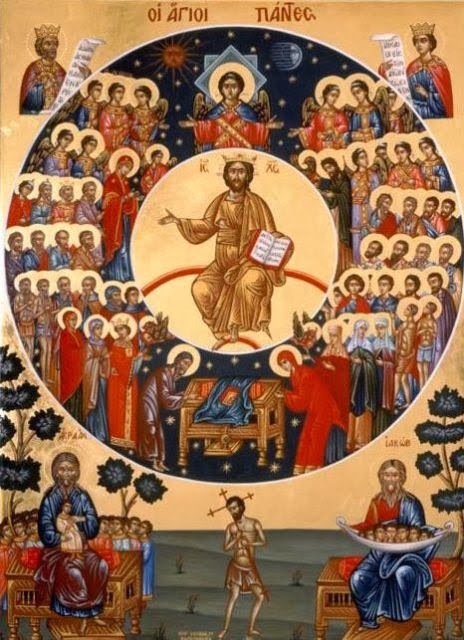
 We are obligated to have a living, spiritual union with the heavenly world: with the Saints, the Apostles, the Prophets, the Martyrs, and the Righteous. Because all of them are members of Christ's Body, of His Holy Church, to which
we also belong, despite our sinfulness. This is why we call upon them during worship, we speak with them, we thank them, and we praise them. It is an urgent need for all Christians to be united spiritually with them, if they desire to advance in the way of the Gospel. Because the Saints are our friends who guide us toward salvation by praying and interceding for us.
The Saints, through the grace of God, see us because they live in God and God lives in them. They are all one spirit with the Lord, for "he that is joined unto the Lord is one spirit" (1 Cor. 6:17), and the Lord sees and hears everything. Therefore, when you go to church—for example—and you see the icons of the Saints of God, believe that they are looking at you, and, above all, that they see what is in your heart.
God "rests upon the Saints" (Isa. 57:15). His power is found both within their names and icons. When someone calls upon the Saints with faith, their icons can perform miracles. The Lord greatly respects the works of His hands, whom He adorned with logic and free will (that is, the angels and the Saints), and through them He carries out our sanctification and salvation. Therefore, don't say, "I will ask help only form God for my various needs." Sometimes it is necessary for you to also
go to the Saints, as His instruments. God Himself does not want these temples of His Grace and
Holy Spirit to remain inactive in our salvation.
The Saints kept and fulfilled the word of God. The Lord now fulfills their word. They worked for Him; He now works on their behalf. The Lord Himself stated, "with what judgment ye judge, ye shall be judged: and with what measure ye mete, it shall be measured to you again" (Mt. 7:2). This is why the Lord quickly fulfills the requests that the Saints make on our behalf.
The Saints of God are successful merchants who became rich by acquiring all the spiritual treasures, all the virtues: meekness, humility, abstinence, patience, fervent faith, hope, and love.
Thus, we ask for their holy prayers, just as
a pauper asks for assistance from a wealthy man: so they can help us in our spiritual poverty; so they can teach us how to pray and how to improve in all the virtues; so they intercede for us with the boldness they possess before God for the sins we have committed until now to be forgiven; and so we can be shielded from the sins that await us in the future. We go to the shops of earthly businessmen to purchase their merchandise. How is it possible for us not to address the heavenly merchants as well with our fervent prayer? How is it possible for us not to ask for their intercessions before God for our sins to be forgiven and for us to receive grace? It is very natural for us to do this.
Call upon the Saints with wholehearted faith and sincere love, if you want them to hear and fulfill your prayer. The Saints pleased God with their faith and love. They desire the same from you.
Along with your faith and love, also unite the honor that is due to them.

LET US CONCENTRATE our attention on how Father John expresses his Christian teaching about God the Father. How often God the Father is presented as distant from the world! In philosophical religious teachings about God the Word, or Logos, it is explained in another sense, that God the Father, as the Absolute, is not equal with the relative world, and therefore cannot have direct contact with it, and consequently, is in need of an intercessor between Himself and the world, and that such an intercessor is God the Word, God the Son (Son of God). Such an outlook, incidentally, was expressed in the philosophical system of Vladimir Soloviev. This view penetrates often also into our common religious ideas: God the Father, living in unapproachable Light, has reserved the right for this same reason to be remote from this earthly world and from us people. In a similar manner, the thought of the remoteness of God the Father from people is felt in the Roman Catholic teaching about atonement (redemption) where the redemption of mankind with the Blood of the Son of God, is explained by the necessity of appeasing and satisfying God the Father for His being insulted through the sin of man.
Father John teaches an entirely different idea:
God, Father of the Word, is also our benevolent and loving Father. When saying "The Lord's Prayer," we must believe and remember that the Father in heaven never forgets and will never forget us, for what earthly father forgets or does not care for his children? Remember that our Heavenly Father constantly surrounds us with love and care, and not in vain is He called our Father - this is not a name without meaning and force, but a name with great significance and power." "Should we not recognize Him as all the more benevolent, because He gave ... the greatest gift of His benevolence, wisdom, and omnipotence - by this is meant freedom.... not being shaken by the ingratitude of those who received the gift, in order that His goodness could shine brighter than the sun before everyone? And has He not shown by His deeds His boundless love and unlimited wisdom by bestowing upon us freedom, when, after our fall into sinfulness, and our withdrawal from Him, and spiritual ruin, He sent into the world His Son, the Only-Begotten One, in the likeness of perishable man, and gave Him to suffer and die for us?"
"Christian! Remember and constantly bear in mind and in your heart the great words of the Lord's Prayer: 'Our Father, Who art in the Heavens.' Remember Who our Father is. God is our Father, our Love: who are we? We are His children, and among ourselves, brothers; in what manner of love ought children to live among themselves, having such a Father? If you were children of Abraham you would have done the deeds of Abraham; what kinds of deeds must we do?" "Our life is that of love - yes, love. And where there is love, there is God, and where there is God, there is all-good... And so with joy feed and delight everyone, please all and depend in all things upon the heavenly Father, the Father of mercies, and God of all consolation. Bring to your neighbor in sacrifice that which is dear to you..." And so, we see Father John converts the fundamental dogmas into immediate moral admonitions; he shows that every truth of Faith contains in itself a moral purpose.
Father John, in his theology about the Father teaches, first of all, about divine thought. "From God's mind, from God's thought, proceeds every thought in the world. In general, everywhere in the world we see the kingdom of thought, as in all the structure of the visible world, so also, in particular, on earth, in the rotation and life of the earthly planet, in the distribution of the elements of the world: air, water, fire, whereas other phenomena are distributed in all animals, in birds, fish, snakes, beasts, and in man, in their wise and purposeful formation, and in their capabilities, morals, habits; in plants, in their adaptation, in nutrition, and so on; everywhere we see the kingdom of thought, even in the inanimate stone and sand."
St. John of Kronstadt

THE HOLY SPIRIT is the third person of the Holy Trinity, indivisible, "Within you, there is breath, and material impersonal in nature, but in God as life itself, breath is a personal spirit, indivisible, simple, that gives Life to everything." "We may ask, why is the third Person called Spirit, and why is He a separate Person, when God, even without Him, is Spirit? I answer: The Holy Spirit is called Spirit in relation to creatures: the Lord breathed with His Hypostatic Spirit, and there appeared, by the power of His Life-Giving Spirit, an innumerable host of spirits: In the power of His Spirit lies their strength; He breathed with His Spirit into man's body: and now man became a living soul, and from this Breath, until now, people are born, and will be born until the end according to the commandment: increase and multiply. If the Lord created by His Spirit so many personal separate beings, then why is it impossible for the Holy Spirit Himself to be a Person, or a personal creative Being? If there are countless numbers of created personal spirits, then is God Himself to remain without Spirit, without His independent, Hypostatic Personality?"
"The Holy Spirit, like air, 'is present everywhere and fillest [penetrates] all things.'" "The Lord Jesus Christ Himself likens the Holy Spirit in His action to the substance of water (John 7:38-39), air, or wind (John 3:8)." "As the air in the room is identical with the outer air and comes from it, and necessarily presupposes the air spread out everywhere, so in like manner, our soul, the breath of the Spirit of God, presupposes the existence of the omnipresent, transcendent Spirit of God."
"It is the Spirit that quickeneth" (John 6:63). "The life in creatures belongs to God, from the time of their creation, and to God the Son, their creator, bringing them from non-existence to existence... The Holy Spirit creates us in the womb of our mother; our spiritual wealth belongs to the Holy Spirit."
Our soul lives by the Holy Spirit, through Him we pray, through Him we become purified, through Him we save ourselves. "As breath is necessary for the body, and without breathing man cannot live, so without the Breath of the Holy Spirit the soul cannot live the true life. What the air is for the body, the Holy Spirit is for the soul. Air is likened to the Spirit of God. The Spirit breathes wherever It wishes." "He who prays by the Holy Spirit." "Prayer is the breath of the soul, as air is the breath of the natural body. We breathe by the Holy Spirit. You cannot say a single word of prayer from your heart without the Holy Spirit."
"As in a conversation with people the sound-conveying medium between our words and the words of another is air, which is everywhere and fills all space, and through air the words reach the ear of another, and without air it would be impossible to speak and hear: so in a spiritual manner, in communication with spiritual beings the mediator is the Holy Spirit, omnipresent and transcendent."
"We are filled with One Spirit: Do you see how the Holy Spirit surrounds us like water and air on all sides?"
"For a long time I did not know with full clarity how necessary was the strengthening of our soul by the Holy Spirit. And now the Most Merciful One gave me the opportunity to find out how indispensable it is. Yes, it is necessary every minute, as is breathing, necessary at prayer, and throughout life. It is necessary that our heart rest on a rock. And that rock is the Holy Spirit."
"All upright people are filled by the One Divine Spirit, similarly as a sponge is saturated with water. The comforting Holy Spirit, filling the universe, penetrates through all the believing, humble, good, and simple souls of men; living in them, reviving them and strengthening them; He becomes all for them: light, power, peace, joy, success in deeds - especially in an upright life. The Holy Spirit is all goodness."
Thus we see what the dogma of the Holy Spirit in the thought of Father John and how closely it is connected with life. The teaching about the Holy Spirit is at the same time teaching about the life of the world, about the source and nourishment of all uprightness and holiness.
St. John of Kronstadt
The Holy Angels and the Saints of God are our best, kindest, truest, brethren and friends, so often helping us in circumstances in which no one on this earth can do so.
As these brothers, who load us with benefits, are invisible, whilst we, on account of our corporality, wish to have them before our eyes, we have images of them; and looking upon these images we call upon these images, we call upon them in our prayers, knowing that they have great boldness before God, to help us.
St. John of Kronstadt

A meditation for those preparing to stand before the Creator and Church community in the awesome Mystery of Holy Confession, thereby being given the renewal of a second baptism.
I, a sinful soul, confess to our Lord God and Savior Jesus Christ, all of my evil acts which I have done, said or thought from baptism even unto this present day.
I have not kept the vows of my baptism, but have made myself unwanted before the face of God.
I have sinned before the Lord by lack of faith and by doubts concerning the Orthodox Faith and the Holy Church; by ungratefulness for all of God's great and unceasing gifts; His long-suffering and His providence for me, a sinner; by lack of love for the Lord, as well as fear, through not fulfilling the Holy Commandments of God and the canons and rules of the Church.
I have not preserved a love for God and for my neighbor nor have I made enough efforts, because of laziness and lack of care, to learn the Commandments of God and the precepts of the Holy Fathers. I have sinned: by not praying in the morning and in the evening and in the course of the day; by not attending the services or by coming to Church only halfheartedly.
I have sinned by judging members of the clergy. I have sinned by not respecting the Feasts, breaking the Fasts, and by immoderation in food and drink.
I have sinned by self-importance, disobedience, willfulness, self-righteousness, and the seeking of approval and praise.
I have sinned by unbelief, lack of faith, doubts, despair, despondency, abusive thoughts, blasphemy and swearing.
I have sinned by pride, a high opinion of my self, narcissism, vanity, conceit, envy, love of praise, love of honors, and by putting on airs.
I have sinned: by judging, malicious gossip, anger, remembering of offenses done to me, hatred and returning evil for evil; by slander, reproaches, lies, slyness, deception and hypocrisy; by prejudices, arguments, stubbornness, and an unwillingness to give way to my neighbor; by gloating, spitefulness, taunting, insults and mocking; by gossip, by speaking too much and by empty speech.
I have sinned by unnecessary and excessive laughter, by reviling and dwelling upon my previous sins, by arrogant behavior, insolence and lack of respect.
I have sinned by not keeping my physical and spiritual passions in check, by my enjoyment of impure thoughts, licentiousness and unchastity in thoughts, words and deeds.
I have sinned by lack of endurance towards my illnesses and sorrows, a devotion to the comforts of life and by being too attached to my parents, children, relatives and friends.
I have sinned by hardening my heart, having a weak will and by not forcing myself to do good.
I have sinned by miserliness, a love of money, the acquisition of unnecessary things and immoderate attachment to things.
I have sinned by self-justification, a disregard for the admonitions of my conscience and failing to confess my sins through negligence or false pride.
I have sinned many times by my Confession: belittling, justifying and keeping silent about sins.
I have sinned against the Most-holy and Life-creating Mysteries of the Body and Blood of our Lord by coming to Holy Communion without humility or the fear of God.
I have sinned in deed, word and thought, knowingly and unknowingly, willingly and unwillingly, thoughtfully and thoughtlessly, and it is impossible to enumerate all of my sins because of their multitude. But I truly repent of these and all others not mentioned by me because of my forgetfulness and I ask that they be forgiven through the abundance of the Mercy of God.
Prayer
May Almighty God, by His Holy Spirit, inspire the sincere image of repentance in all our hearts so that we may learn the standards of God, truly face our sins and humbly confess them to Him, both in our private prayers and in public Confession, and so be unburdened, relieved and freed from guilt, and reunited to the Body of Christ - the Church. How great a gift is the mystery of Confession!
St. John of Kronstadt
 Fear evil like fire. Don’t let it touch your heart even if it seems just or righteous. No matter what the circumstances, don’t let it come into you. Evil is always evil. Sometimes evil presents itself as an endeavor to God’s glory, or as something with good intentions towards your neighbor. Even in these cases, don’t trust this feeling. It’s a wrong labor and is not filled with wisdom. Instead, work on chasing evil from yourself. Evil, however innocent it looks, offends God’s long-suffering love, which is His foremost glory. Judas betrayed his Lord for 30 silver pieces under the guise of helping the poor. Keep in mind that the enemy continuously seeks your death and attacks more fiercely when you’re not alert. His evil is endless. Don’t let self-esteem and the love of material goods win you over.
When you feel anger against someone, believe with your whole heart that it’s a result of the devil’s work in your heart. Try to hate him and his deeds and it will leave you. Don’t admit it as a part of yourself and don’t justify it. I know this from experience. The devil hides himself behind our souls and we blindly think we’re acting by ourselves. Then we defend the devil’s work as something that is a part of us. Sometimes we think that anger is a fair reaction to something bad. But the idea that a passion could ever be fair is a total and deadly lie. When someone is angry at you, remember that this evil feeling is not him. He’s just fooled by the devil and is a suffering instrument in his hand. Pray that the enemy leaves him and that God opens his spiritual eyes, which have been darkened by the evil spirit. Pray to God for all people enslaved by passions because the enemy is acting in their hearts. Perhaps you hate your neighbor, despise him, don’t want to talk to him peacefully and lovingly because he has been rude, arrogant, or disgusting in his speech or manners. You may despise him for being full of himself or proud or disrespectful. But you are to blame more than he is. “Physician, heal yourself!” (Luke 4:23). So, teacher, teach yourself. This kind of anger is worse than any other evil. How could evil be chased out by another evil? How can you take a needle from the eye of another person while having a log in your own? Evil defects must be fixed with love, kindness, resignation, and patience. Admit yourself as the worst of all sinners, and believe it. Consider yourself the worst one, chase away any boldness, anger, impatience and fury. Then you may start helping others. Be indulgent about defects of others, because if you see their faults all the time, there will be continuous enmity. “The plowers plowed upon my back: they made long their furrows.”(Psalm 129:3). ” For if you forgive men their trespasses, your heavenly Father will also forgive you.”(Matthew 6:14). We can feel from time to time the most perfect love for God without loving each other. This is a strange thing, and only few care about it. But love for our neighbor will never come without our own effort.
A real Christian doesn’t have any reason to be angry about anybody. Anger is the devil’s deed. A Christian should have only love inside and since love doesn’t boast, he shouldn’t boast or have any bad thoughts towards others. For example, I must not think about another person that he is evil, proud etc; and I must not think that if I forgive his offense he would laugh at me or upset me again. We must not let evil hide in us under any pretense. Evil and anger usually have many different veils.
Don’t yield to gloomy feelings in your heart but control and eradicate them with the power of faith and the light of the sane mind. These strengths will make you feel secure. Let me not be put to shame, for I take refuge in you. (Psalm 25:20). Gloomy feelings usually develop deep in the heart. Someone who didn’t learn how to control them will be gloomy, pensive most of the time and it will be hard for him to deal with himself and other people. When he comes close to you, sustain yourself with inner strength, happiness and innocent jokes: and they will leave you soon. This is from experience.
Lord, give me strength to love everyone like myself and never to get angry or work the for devil. Give me strength to crucify my self-esteem, my pride, my greed, my skepticism and other passions. Let us have a name: a mutual love. Let us not worry about anything. Be the only God of our hearts, and let us desire nothing except You. Let us live always in unifying love and let us hate anything that separates us from each other and from love. So be it! So be it!
If God showed Himself to us and lives inside us as we in Him (according to His eternal Word), wouldn’t He give us everything? Would He ever , would He ever trick us or leave us? He who did not spare his own Son, but gave him up for us all—how will he not also, along with him, graciously give us all things? (Romans 8:32). Now be comforted, my dear, and know nothing but love. This is my command: Love each other (John 15:17).
St. John of Kronstadt

Excerpts from the diary of St. John of Kronstadt on Love
Be zealous after love: all things shall pass away, but love shall eternally remain, as God Himself, who is Love.
Love calms and agreeably expands the heart and vivifies it, whilst hatred painfully contracts and disturbs it. Those who hate others torture and tyrannise themselves
What is sweeter than love? And yet there is not much love in us! Wherefore? We love our flesh exceedingly, and with it everything carnal, material and earthly! Let us, therefore, despise the flesh and walk by the spirit, mortifying the works of the flesh by the spirit.
Lord! Thou, Whose love to us infinitely surpasses the love of every father, of every mother, of the tenderest wife, have mercy upon us!
Looking upon the Saviour's cross, contemplate Love, crucified upon it for our salvation; and think, for what blessedness He has saved us, and from what torments He has redeemed us! He has snatched us from the jaws of the beast and has brought us to the Father! O love! O redemption! O terrors of everlasting torments! O indescribable, endless blessedness!
The most abominable enemy [the devil] endeavours to destroy love by love itself: love for God and our neighbour — by love for the world, for its fleeting blessings and its corrupt, impious habits, by carnal love, by the love of riches, of honours, of pleasure, of various amusements. Therefore let us extinguish every love for this world in ourselves, and let us kindle in ourselves, by self-denial, love for God and our neighbour. Every beauty in this world (personal beauty) is only a faint, insignificant shadow of the uncreated beauty, of the unspeakable goodness of God's face; every earthly enjoyment is nothing in comparison to future delights. I pray, Lord, that the faith of Christ may penetrate into the depths of my heart, that Christ's Gospel may penetrate all my thoughts, feelings, words, and deeds, into all my bones and my brains, and not me only, but all men, as the universal truth, the highest wisdom, and the life eternal. " And this is life eternal, that they might know Thee, the only true God, and Jesus Christ, Whom Thou hast sent."[806]
The heart that loves carnal delights is unfaithful to the Lord. "Ye cannot serve God and Mammon."[509]
What is mercy? Mercy is to love our enemies, to bless those who curse us, to do good to those who hate us, who do us harm, who drive us away, to defend those who are persecuted, and so on.
What is the name of our God? Love, Mercy, Compassion, Bountifulness. When you pray, contemplate with the eyes of your heart Love and Mercy standing before you — the Lover of men listening to you.
God is love, and I am an image of God; therefore I ought to be all love. God is the most perfect good, free from the least shadow of evil; I am an image of God; therefore I ought also to be perfectly good, without even a shadow of evil.
Love does not suffer self-justification, does not exalt itself, is not puffed up.
In order to test yourself, whether you love your neighbour in accordance with the Gospel, pay attention to yourself at the time when others offend you, abuse you, mock at you, or do not render you the respect due to you, and which is customary in social intercourse, or when your subordinates err against the rules of the service, and are negligent. If you remain calm on such occasions, are not filled with the spirit of enmity, hatred, impatience — if you continue to love these persons as much as previously, before their offences or negligence, then you do love your neighbour in accordance with the Gospel; but if you become irritable, angry, agitated, then you do not do so. "If ye salute your brethren only, what do ye more than others?"[792]
The purer the heart is, the larger it is, and the more able it is to find room within it for a greater number of beloved ones; whilst the more sinful it is, the more contracted it becomes, and the less number of beloved can it find room for, because it is limited by self-love, and that love is a false one; we love ourselves in objects unworthy of the immortal soul — in silver and gold, in adultery, in drunkenness, and such like.
We stand before the altar of love in the presence of Incarnate Love Itself, but we have no love to each other. How strange it is! And we do not even care about this. But love will not come of itself without our zeal, efforts and activity.
Up till now you have not learned to love your neighbour. You answer men's dislike towards you by dislike on your part. But do the contrary; answer others' dislike by heartfelt goodwill and love; the more dislike you see towards you, the more you should love. Dislike is a malady, and a sick person should be more pitied, should be shown greater care and greater love, exactly because he is ill. Do you not know that the bodiless enemy uses his craftiness against all, infects all with the poison of his hatred? And you, too, are not exempt from his craftiness. Do not serve him, then, the spirit of enmity, but serve the God of love with the utmost zeal. Remember that God the Word died for your brethren.
The Lord is my life, my breath, my strength, my light, peace and joy, my food and drink; what shall I bring to such a Benefactor, or what shall I render unto Him? I will render unto Him, with His help, obedience to His Will, the fulfilment of His commandments. "If ye love Me," says He Himself, "keep My commandments."[1227] I will endeavour to please Him by seeking the Kingdom of God and His righteousness, and by counting earthly blessings as naught in comparison to heavenly ones; I will not let my heart cleave to anything earthly. O, Lord! grant me strength to accomplish this. Strengthen me Thyself by Thy right hand. My Strength, do not forsake me! Grant that I may put my trust in Thee alone, my Nourisher — in Thee, Who hast never forsaken me!
St. John of Kronstadt
Pray, my brethren, to the Mother of God when the storm of enmity and malice bursts forth in your house. She, Who is all-merciful and all-powerful, can easily pacify the hearts of men.
Peace and love proceed from the one God, as from their Source, and our Lady-in God, as the Mother of Christ, is zealous and prays for the peace of the whole world, and above all- of all Christians.
St. John of Kronstadt