The mystery of repentance is the greatest and most blessed mystery, which prepares us perfectly beforehand for Heaven...
There is no sin on earth which is unforgivable for the person who will repent, and for the God of love Who receives him.
God is pleased and takes rest in the man who repents, no matter how great a sinner he is. Repentance is always open to every sinful person. God desires only the confession of the error. From there forward, all things are perfected. Through humility comes confession, and confession brings purification, and purification brings the vision of God.
The tears of the repenting soul purify the heart, the nous, the soul, the body, the life, the word, and purify more than every expression of man.
Let us never loose home. Even if we fall and are traumatized, let us not loose hope. As long as God grants us life, let this become an approach towards God, for He waits for us. If God were not incomparably merciful, no one would be saved. Our Christ waits for us, we should not procrastinate and put it off.

"We should not despair when we struggle but see no progress, remaining continuously at zero. All people earn zeros with their human strength, some more and some less. Christ, seeing our small human effort, places the number one before our zeros, and thus they acquire value and we can detect some improvement. Thus, we must not despair, but hope in God."
St. Paisios
http://full-of-grace-and-truth.blogspot.ca/2015/01/st-paisios-we-must-not-despair-but-hope.html

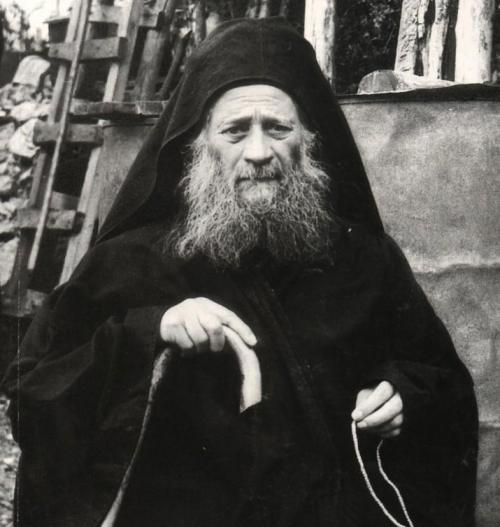
Question yourself as to whether this faith is within you, or perhaps you are led by worldly wisdom. And if you leave all things in the hands of God, behold! You have acquired faith and undoubtedly, without any question, you will find God to be your helper. And so, even should you be tried a myriad of times and should satan tempt you to abandon faith, prefer death a thousand times more and don’t obey worldly wisdom. In this way the door of the mysteries will be opened to you and you will be amazed how the chains of worldly wisdom previously bound you. Now you will fly with divine wings above the earth and breathe the new air of freedom, which, of course, others are deprived of. If, however, you see that within you, you are governed by worldly wisdom, and in the smallest danger you lose hope and despair, know that you have not yet acquired faith, and consequently also hope, in God.
Elder Joseph the Hesychast
Excerpt taken from the book- Precious Vessels of the Holy Spirit.
The prophet David asked the following:
“Who shall ascend into the mountain of the Lord? Or who shall stand in His holy place?”
The same prophet gives the answer:“He that is innocent in hands and pure in heart, who hath not received his soul in vain” (Ps. 23:3-4).
A person receives something in vain when he does
not use it for the purpose for which he initially acquired it. For example, if we acquire a piece of clothing, or shoes, or something else similar, and
we never ever wear it, it is in vain that we gained possession of them.
Similarly, it is in vain that we received our soul if
we do not cooperate and work with it in order to fulfill and execute the purposes for which God
created us. God gave us our memory so we can
think of Him; He gave us our mind in order to come to know Him; He gave us desire so we can
love Him. Thus, we are obligated to love Him with all our heart and to serve Him all the days of our lives, in order to attain and be able to enjoy the glory for which we have been destined.
Whoever has a soul but does not live with virtuous conduct resembles the animals. Whoever has a mind that is completely occupied and surrendered to acquiring honor and wealth, and whoever
desires only temporary goods has received his soul in vain, because the Lord did not create the soul for these functions. Divine bliss is your ultimate goal, O man! Neither wealth, nor education, nor any other similar thing can ever make you content or provide you with any satisfaction. Raise your eyes you poor man!
Lift your heart away from the soul-harming desires and the pursuit of temporary things, and love God alone, for this is why He created you. Despise and disregard every secular and sinful pleasure, if you want to attain the sought-after goal and purposeful end for which you were created; that is, the Kingdom of Heaven, where you will enjoy and delight in our wondrous God. In His absence, you will never be able to experience perfect joy or enjoyment.
from the book The Salvation of Sinners
The pleasures and prosperity of the present world are like a lit wick that remains lit for as long as there is wax or oil to keep the flame alive. Shortly thereafter, however, the flame is extinguished,
and the only thing that remains is a puff of smoke and a bad smell. Similarly, the temporary things of this life appear beautiful and shiny; however, they end in sorrows and torment, and, unfortunately,
unrepentant sinners will melt away like wax and smoke.
For,according to the Prophet David, “As smoke vanishes, so let them vanish; as wax melts before the fire, so let sinners perish from the face of God. And let the righteous be glad” (Ps. 67:3-4).
Since the end result of the secular world is so destructive for man’s soul, loathe it with all your heart. Instead, think of your true purpose and the
intention for which God created you. Desire and seek this out continuously, just as all things naturally desire to fulfill their purpose and
innately run their course until completion.
All the rivers come forth from the oceans, and they ultimately return back to the ocean. The ocean, from which our soul came forth, is our God and Creator to Whom the soul desires to return once more. Thus, the human soul is not content with any worldly thing because God is its ultimate end. This is why the heart cannot be satisfied with anything until it returns to its Creator and Savior.
All the things God brought into existence were created out of love for man: so they can be of assistance to him and serve him; however, He
made man for Himself. God made man to glorify, praise, and respect Him.
God did not create you for the earth but for Heaven. Neither did he bring you into existence
in order to desire corrupt and vain things. The
four-legged animals that God created for the earth have their heads steadily turned toward the ground.
This is all they look at because when they die they
return back to the earth, and this is where their
existence ends. Conversely, O man, you were created for Heaven! This is why you walk
standing upright so you can look at and be reminded of the path that you will take one day in
the near future. The Lord did not make you in order to seize and rule over corrupt and transient
things but to proceed toward the Jerusalem above, to your permanent homeland, to your blissful and final destination, where you will eternally delight in God.
from the book
The Salvation of Sinners
What the prudent person does right at the onset, the foolish person waits to do at the end. The prudent person looks ahead at the consequences before he commits a sin.
The foolish person, on the other hand, commonly says, "I wasn't expecting to suffer such harm...," just as the greedy rich man said when he found himself in Hell (vid.Lk. 16:23-24).
Do not look at what the world is offering to you now because every pleasure it has to offer
rapidly races toward death and demise. Do not look at the present, but envision the future. Do not stare at today, but think of what will happen at the end of this life and consider the reality of eternal
Hell. Then you will gladly refuse all of the world's vain pleasures. The sinful pleasure you experience is short-lived and temporary; the punishment that
follows, however, is endless—forever!
The world has the habit of offering its friends a tasty lunch first, and then serving them a poisonous and deadly dinner. People serve the best
wine at the beginning of a party, just as the master of the feast stated, “Every man at the beginning sets out the good wine, and when the guests have well drunk, then the inferior”(Jn. 2:10).
The world’s festivities begin with laughter but end
with lamentation. On the other hand, Christ's
magnificent and delicious meal consists of the exact opposite: He saves the good wine for later. He gives sorrows in the beginning and consolation
in the end, just as He did with the nation of Israel, whom He allowed to suffer and grow weary in the beginning as they traveled through the desert, but to whom afterwards He gave much consolation and fertile land as an inheritance, just as He had promised.
This is how God also treated Jacob when he was living in the house of Laban, Joseph when he found himself in Egypt, and many other of His faithful servants. The world does the exact opposite: It conceals the sadnessin the beginning
so it can unveil it later.
When you feel as if you are on top of the world, and when you have risen to the summit
of honor and glory, it gives you a strong kick and you come crashing to the ground. It acts similar to an executioner who first makes a criminal climb up a ladder and step out onto a platform, only to,
later, place a rope around the convict’s neck, push
him off the edge,and thus bring his life to an end.
from the book The Salvation of Sinners
Do not take pride in your education and wisdom because these are of no help to you, unless your
knowledge helps to improve your conduct and way of life. If the knowledge you acquire does not increase your love for God, then it actually
becomes a cause of greater blindness for you.
When darkness covered the entire land of Egypt, there was broad daylight for the servants of God:
“And there was thick darkness in all the land
of Egypt for three days. No one saw his brother for three days; nor did anyone rise from his bed
for three days. But all the children of Israel had light in their dwellings”(Ex.10:23).
When a person is void of the love of God, even if he happens to be the wisest of men, he will always
remain and walk in the darkness—for only the love of God enlightens the mind. In the absence of this light, even if you possess the wisdom of
Solomon, you will walk as the Egyptians within darkness.
Do not have confidence in your wealth or in any other temporary thing because all such things
deteriorate and become worthless. A judge who makes a verdict without first listening to both parties lacks common sense.
If you have a preference for the things of this
present world, it is because you have not seen the heavenly and divine things through the eyes of
our precious faith. They who love earthly
pleasures praise and vote in favor of the world, and they choose the earth’s clay and dirt because they have never wanted to hear the other side, the testimony of the spirit.
Thus, they value and desire worldly things
because they have never seen or experienced
the things of God. When someone tastes the grace of the Spirit, he then despises the flesh; and when someone adequately experiences the grace of God, he henceforth completely disregards all the pleasures of the flesh.
Therefore, do not be overcome by the sensual pleasures of the flesh lest you become similar to the animals,as the prophet David states:
“Man, being in honor, did not understand; he is compared to the mindless animals, and is become like unto them”(Ps. 48:20).
In other words, man, who was created with so
much honor and nobility by God, did not
understand the purpose for which he was created; rather, he became like the irrational animals. He did not perceive what lies ahead (i.e. the bitter
end of worldly vanity). He only paid attention to and was captivated by the momentary honor and pleasure that was in front of him, without
considering and taking into account the future retribution that awaited him.
from the book The Salvation of Sinners
"Put not your trust in princes, nor in the sons of men, in whom there is no salvation," says the prophet David (Ps. 145:3). Do not place your
hope in any person, or in your beautiful looks, or in your family's nobility, or in any other transient and perishable attribute. The entire world is vanity,
and whoever hopes in temporary things is attempting to build his home upon moving waters. Do not pride yourself or boast in such short-lived
things, and do not place your confidence in friends and relatives, for all these things are false and vain.
Do not feel assurance in your mighty strength and courage, because the world has seen countless brave and valiant men who have, nonetheless, been forgotten. Do not brag about your expensive homes because your life is extremely short. Do not brag about your familial lineage because we have all been created from the same earth. Do not be conceited about your appealing appearance so that
you do not become like a dead corpse who boasts about his beautiful grave; for the body of the sinful person serves as a grave and a shell for
his dead soul. Do not take pleasure in your bodily health and strength.
Rather, you should fear lest your wretched soul is condemned to Hell; for there is no greater danger than having your enemy locked up with you
in your home. According to the Apostle Paul, physical health becomes the cause of spiritual illness: “
Even though our outward man is perishing, yet
the inward man is being renewed day by day”
(cf. 2 Cor. 4:16). Just as it is foolish for someone to take great pleasure in the health of his legs when his head is diseased and full of wounds
, similarly, it is silly for a person to boast in his physical health when his soul is weak and diseased.
from the book The Salvation of Sinners
We should not despair when we struggle but see no progress, remaining continuously at zero. All people earn zeros with their human strength, some more and some less. Christ, seeing our small human effort, places the number one before our zeros, and thus they acquire value and we can detect some improvement. Thus, we must not despair, but hope in God.
Elder Paisios
All those having firm hope in God are raised to Him and enlightened with the radiance of eternal light.
If a person does not have superfluous care for himself, out of his love for God and for virtuous deeds, and knows that God will take care of him, then this hope is true and wise. But if a person places all his hope in his works, and turns to God in prayer only when unforeseen misfortunes befall him, then he, seeing that he lacks the means of averting them in his own abilities, begins to hope for help from God -- but such a hope is trivial and false. True hope seeks the one Kingdom of God and is sure that everything necessary for this mortal life will surely be given. The heart cannot have peace until it acquires this hope. This hope pacifies it fully and brings joy to it. The most holy lips of the Saviour spoke about this very hope: "Come unto Me, all ye that labour and are heavy laden, and I will give you rest" (Mt. 11:28).
St. Seraphim of Sarov
Keep away human thoughts and maintain your hope in God, Who does more than we think.
Hope in God will bring you comfort. Let the Lord help you, my child,the prayers of His Saints.
St. Dorotheos of Gaza

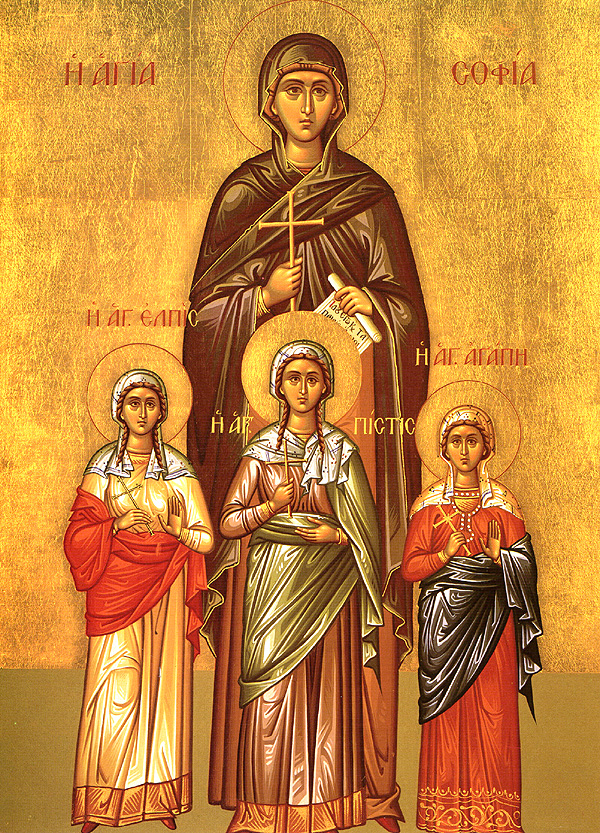
During the reign of the impious Roman Emperor Hadrian, a widow of Italian ancestry called Sophia, whose name means wisdom, lived in Rome. She was a Christian, and in accordance with her name, she lived wisely, showing that wisdom praised by the Apostle James, who says, The wisdom that is from above is first pure, then peaceable, gentle, and easy to be entreated, full of mercy and good fruits. This wise gentlewoman, Sophia, while living in honorable wedlock, bore three daughters, whom she named after the three great virtues. The first was named Faith, the second Hope, and the third Love, for to what does Christian wisdom give birth other than to God-pleasing virtues?
Soon after the birth of her three daughters, Sophia was widowed. Living piously, she pleased God by prayer, fasting, and almsgiving. She reared her three daughters in a manner befitting a wise mother so that they, being the namesakes of virtues, might in truth acquire those traits, the names of which they bore. As they matured, they increased in virtue, and they learned well the books of the prophets and the apostles. They became accustomed to listen to the words of their teachers and earnestly occupied themselves with spiritual reading, prayer, and household chores. Moreover, they submitted themselves in all things to their holy mother, who was filled with divine wisdom. Thus, going from strength to strength, they were successful in all things. As they were exceedingly fair and perfect in wisdom, the eyes of all were soon upon them.
Word spread throughout Rome of the wisdom and beauty of the three sisters, and even the Eparch Antiochus wished to see them. When they were brought before him, Antiochus learned that they were Christians, for they did not hide their faith in Christ. Hoping in Christ, they did not doubt or falter in their love for Him, but before all they glorified Christ, showing disdain for the idols, hateful to God.
Antiochus related all these things to the Emperor Hadrian, who immediately sent his servants to bring the virgins before him. When the servants arrived at Sophia’s house, they found the mother occupied with instructing her daughters. They told her that she was to come, together with her daughters, to the Emperor. Realizing the purpose of this summons, they arose to pray and said, “0 Almighty God, do with us according to Thy holy will, and forsake us not, but rather grant us Thy holy aid, that our hearts be not frightened by the proud tormentor, that we be not terrified by his fearful tortures nor terrorized by bitter death, and that nothing might separate us from Thee, our God.”
After praying and bowing down before God, all four martyrs, the mother and her daughters, took one another by the hand, forming as it were a plaited garland. They went forth, frequently looking up to the heavens, committing themselves with sighs and silent prayers to the help of Him Who commanded us to fear not them which kill the body, but are not able to kill the soul. When they arrived at the Emperor’s palace, they signed themselves with the sign of the Cross and said, “Help us, 0 God our Savior, for the sake of the glory of Thy holy name!”
They were then led before the Emperor, who sat proudly upon his throne. They rendered him fitting honor but stood before him without fear, their faces radiant, their hearts steadfast, their eyes gazing gladly upon all as though they had been summoned to a banquet. Such was their joy with which they came to suffer torment for their Lord!
Seeing their honorable, fair, and fearless countenances, the Emperor questioned the mother as to their lineage, names, and faith. She, being most wise, answered so sagaciously that all were amazed at her prudence. Having spoken but briefly of the maidens’ ancestry and names, she began to tell of Him Whom she confessed and before Whose name every knee should bow. Having confessed her faith in Christ Jesus, the Son of God, she called herself His handmaiden and gave praise to His name. “I am a Christian,” she said, “and in that honorable name I rejoice.” She added that she had betrothed her daughters to Christ so that they might preserve their chastity for the incorruptible Bridegroom, the Son of God.
The Emperor, seeing that Sophia was a wise woman, did not wish at that time to speak further with her or pass judgment on her. He laid the matter aside for a time and sent all four martyrs to a certain noblewoman named Palladia, whom he charged to watch over them and to present them on the third day to be judged.
Staying in Palladia’s house, Sophia had sufficient time to instruct her children. She confirmed them in the faith day and night, teaching them with words inspired by God and saying, “My beloved daughters, the time has now come for you to contend for Christ; the hour has arrived for you to be betrothed unto your immortal Bridegroom. In accordance with your names, may you display firm faith, undoubting hope, and unfeigned and never failing love. The hour has come for you to rejoice, for you shall be crowned with the crown of martyrdom by your most beloved Bridegroom and will enter with gladsome voices into His bridal chamber.
“My daughters, for the sake of the honor in which you will be held by Christ, Who is more comely than the sons of men, do not spare your flesh. For the sake of life eternal, pity not the bloom of your youth nor hesitate to suffer the deprivation of this fleeting life, for your Beloved, Jesus Christ, Who dwells in the heavens, is eternal well-being and beauty inexpressible. When your bodies have been tortured to death for His sake, He will robe them in incorruption, and the wounds which you bear on your flesh will shine like the stars in heaven.
“When you have been deprived of your beauty for His sake, He will adorn you with heavenly beauty, such as the eye has not beheld. When you have laid down your souls for your Lord and suffered the loss of your temporal lives, He will grant you life eternal, and He will glorify you unto the ages before His heavenly Father and before His holy angels. You will be called Christ’s brides and His confessors by all the hosts of heaven; all the holy monastics shall praise you, and the wise virgins will rejoice over you and will receive you into their company.
“My sweet children, do not allow yourselves to be deceived by the enemy’s allurements, for the Emperor will entice you greatly and promise you rich presents, offering you glory, wealth, honor, and all the beautiful and sweet things of this corruptible and vain world. But love none of these things, for they all vanish like smoke and are scattered like dust by the wind and like a flower or grass wither and return to the earth. Neither be daunted by the prospect of grievous tortures, for having suffered them but a short while and having overcome the foe, you will rejoice forever.
“I believe that my God, Jesus Christ, will not forsake you should you resolve to suffer for Him, for He said, Even if a woman should forget her offspring, yet I shall not forget thee. He will remain with you throughout all the tortures you will suffer, looking upon your struggles, strengthening your infirmity, and preparing a plaited crown for your reward.
“My good daughters, remember the pains which I underwent in bearing you! Remember the labors I endured in rearing you, remember my words by which I taught you the fear of God, and comfort your mother in her old age with your good and brave confession of Christ. When I am deemed worthy to be called the mother of martyrs and will behold you suffering bravely for Christ, confessing His holy name and dying for Him, I will have more happiness, joy, honor, and glory than any of the faithful. My soul will be magnified and my spirit will rejoice and I will be strengthened in my old age. Having obeyed the instructions of your mother you will truly be my daughters, if you contest for your Lord even unto the shedding of your blood and with fervor submit to death for Him.”
Having hearkened with compunction to their mother’s words, the daughters were stricken in heart, and they rejoiced in spirit, awaiting the time of their martyrdom as though it were the hour of their nuptials. Being the holy branches of a sacred root, they desired with all their heart that which their most wise mother Sophia had taught them to thirst after. They stored her words in their hearts and prepared themselves for the contest of martyrdom as though they were to enter a bridal chamber. Girding themselves with faith, bolstering themselves with hope, and kindling in themselves the fire of love for the Lord, they strengthened one another and promised their mother that with Christ’s help they would translate into deeds her edifying words to them.
When the third day had come, the saints were brought to judgment before the impious Emperor. Thinking that they were but young maidens who could easily be brought to obey his deceptive words, he began to speak to them thus, “I see, children, that you are fair, and I feel pity for your youth. I advise you as a father to worship the gods who rule the universe. If you obey me and do what I command, then I shall call you my own children. I will summon the eparchs, governors, and all of my counselors and shall adopt you in their presence, and they all will hold you in the highest respect and praise you. But if you do not obey me and do not submit to my ordinance, then much evil will befall you, and you will bring much grief to your mother in her old age. You will yourselves perish at an age when you should be happy and dwell amid the sweet, good things and the joys of this world. I will cause you to perish miserably and will cast out your severed limbs to be food for dogs, and you will be despised by all. Therefore, obey me, that it might go well with you. I care for you and do not wish to destroy your beauty and to deprive you of this present life; rather, I desire to have you as my children.”
The holy virgins answered the persecutor as though with a single voice, saying, “God, Who dwells in heaven, is our Father, Who takes care for our life and has mercy on our souls. His love we desire, and we wish to be called His true children. We keep His commandments, and we spit on your gods. Your threats do not frighten us, for we wish to suffer and bear bitter torments for the sake of our sweet God, Jesus Christ.”
The Emperor, having heard them answer thus, questioned their mother Sophia as to their names and ages. She replied, “My eldest child is named Faith and is twelve years old. The second is Hope, who is ten years of age. My third child’s name is Love, and she is nine years old.”
The Emperor marveled at the maidens’ spirit, intelligence, and ready answers, especially since they were so young. He then began to attempt to force each of them to submit to his impiety, beginning with Faith, the eldest sister, to whom he said, “Sacrifice to the great goddess Artemis!”
But Faith would not agree to submit. Therefore, the Emperor had her stripped naked and ordered that she be beaten severely. The torturers thrashed her mercilessly, saying, “Sacrifice to the great goddess Artemis!” She remained silent, however, as though it were another’s body which bore the suffering. Since the tormentor accomplished nothing by flogging her, he had her virginal breasts cut off. Seeing milk instead of blood flow forth from her wounds, the people shook their heads and secretly reproached the Emperor for his foolishness and cruelty, saying, “In what has this fair maiden transgressed? Why does she suffer thus? What a pity! Such is the mindlessness of the Emperor and his beastly cruelty that he not only tortures to death the aged but young children as well!”
Then a metal gridiron was brought, which was placed on a great fire which had been kindled. When it had been heated red hot, giving forth sparks, the holy martyr Faith was placed upon it. She lay there for two hours, calling out to her Lord, but she was not burnt at all, to the astonishment of everyone present. Then she was cast into a cauldron filled with boiling pitch and oil, but there too she remained unharmed, sitting as though she were in cool water, singing to God. The persecutor, not knowing what else to do with her to weaken her faith in Christ, pronounced upon her the sentence of death by the sword.
When Saint Faith heard this, she was filled with joy and said to her mother, “Pray for me, Mother, that I may complete my course and arrive at the end which I desire, to behold my beloved Lord and Savior and be filled with the vision of His divinity.”
Then Faith said to her sisters, “You know, my dear sisters, to Whom we have promised ourselves and to Whom we have been betrothed. You know that we have been signed with the holy Cross of our Lord to serve Him to eternity. Therefore, let us endure unto the end. A single mother has borne us and has reared and instructed us, so let us accept a common death since we are sisters and share a single will. May I be an example to you, that you both might follow me to our Bridegroom, Who summons us to Himself.”
Having said this, Faith kissed her mother, and embracing her sisters, she kissed them and then submitted herself to the sword. Her mother did not sorrow for her daughter, for her love for God overcame her maternal love and pity for her children. She only feared that one of her daughters might renounce the Lord, so she said to Faith, “My daughter, I bore you and on this account endured suffering. But you will redeem my suffering if you die for Christ’s sake, confessing Him and shedding the blood which you received in my womb. Go to Him, my beloved offspring, stained with your blood, as if clothed in crimson. When you appear most fair before the eyes of your Bridegroom, remember before Him your lowly mother and pray to Him for your sisters, that He strengthen them so that they might have the same patience which you possess.”
And so Saint Faith’s honorable head was cut off and she departed to Christ God her Master. Her mother took her much-suffering body, and as she kissed it, she rejoiced and glorified Christ God, Who had received her daughter Faith into the heavenly bridal chamber.
Then the impious Emperor had the second sister, the holy virgin Hope, brought before him, and he said to her, “Good child, I appeal to you as a father who loves you. Heed my advice and worship the great Artemis so that you might not perish as your elder sister did. You have seen her bitter death. Do you wish to suffer likewise? Believe me, child; I pity your youth and would have you as my daughter if you would agree to obey my command.”
But Saint Hope replied, “0 Emperor, was it not my sister whom you put to death? Were we not born of the same mother? Were we not fed with the same milk? Did I not receive the same Baptism as my holy sister? I grew up with her, and from the same books and the same maternal instruction I learned to know the one God, our Lord Jesus Christ, and to believe in Him and to worship Him alone. Therefore, 0 Emperor, do not imagine that I shall reason, think, or desire other than as did my sister Faith. I am ready to follow her path; therefore, do not delay or weary yourself with much speaking, but begin that which you have resolved to do. You will see that I am of the same mind as my sister who has gone before me.”
When the Emperor heard this reply, he handed Hope over to the torturers. His henchmen stripped her as they had Faith, and they beat her so long and mercilessly that they grew weary. But she remained silent as though she suffered no pain. She only gazed upon her mother, the blessed Sophia, who stood nearby and who valiantly looked on as her child underwent torment, fervently praying to God that He grant her daughter firm patience.
Then the wicked Emperor commanded that Hope be cast into fire, but she remained unharmed, praising God like the Three Youths. After this, she was suspended and scraped with iron claws. Her flesh was torn off, streams of her blood gushed out, and a wondrous fragrance came forth from her wounds. Her countenance shone with the grace of the Holy Spirit, and she mocked the persecutor because he was unable to overcome even a young maiden. She said, “Having Christ’s help, I fear no torments; rather, I desire them as I desire the sweet things of paradise, so sweet is my Lord to me. But unending fiery torments and the demons which you regard as gods await you in Gehenna.”
These words greatly angered the tormentor, who ordered that a cauldron be filled with pitch and oil and heated over a fire and that the saint be cast into it. When the cauldron had come to a boil and the Emperor’s servants were preparing to hurl the saint into it, the kettle suddenly melted down like wax, and the hot pitch and oil poured forth from it upon all who stood nearby.
Such was the wondrous power of God which guarded Saint Hope. Although the persecutor saw all these things, he did not wish to know the true God, for his heart was ensnared by demonic darkness and pernicious error. Thus, seeing himself put to shame by a young maiden and not wishing to bear further humiliation, he condemned the saint to beheading.
When the maiden heard that she was to be put to death, she hastened joyfully to her mother and said, “Peace and salvation to you, mother: remember your child!”
Her mother embraced and kissed her, saying, “My daughter Hope, you are blessed by the Lord God on high in Whom you trust and for Whose sake you have not spared your blood. Go now to your sister Faith, to stand in the presence of our Beloved.”
Hope then kissed her sister Love, who had been watching her torture, and she said to her, “Do not linger here, sister, but hasten, that we might enter the presence of the Holy Trinity together.” Then she went to the headless corpse of her sister, Saint Faith, and kissed it lovingly. Nature compelled her to shed tears, but love for Christ turned her tears into joy. Then she bowed her head beneath the sword, and thus Saint Hope was beheaded. Her mother took her body and glorified God, rejoicing over the courage of her two daughters. She then inspired her third daughter with sweet words and wise counsels to contest in like manner.
The persecutor summoned Love, the third maiden, seeking to entice her to abandon the Crucified One and to worship Artemis, but the deceiver labored in vain. For no one has so desired to contend for our beloved Lord as did Love, even as it is written, Love is as strong as death; many waters cannot quench love, neither can the floods drown it.
The many waters of the world’s temptations did not quench the fire of love for God in that maiden, neither was it drowned in the floods of misfortunes and sufferings. Her great love was made manifest in that she was prepared to lay down her soul for her beloved Jesus Christ, for greater love hath no man than this, that a man lay down his life for another.
The persecutor, realizing that he was unable to accomplish anything with his flatteries, began to torture Love, hoping by various torments to separate Love from the love of Christ. But she replied with the words of the Apostle, “Who shall separate me from the love of Christ? Shall tribulation, or distress, or persecution, or famine, or nakedness, or peril, or sword? Nay, in all these things, I am more than a conqueror through Him that loved me.”
The persecutor began her torture by ordering that she be stretched out upon a wheel and beaten with rods. The saint’s young body was stretched in such a way that her members were pulled from their sockets, and she was beaten until she had been dyed as red as scarlet by her blood, which watered the earth like rain.
The tormentor then showed the saint a furnace which had been heated white hot, and he said, “Maiden, say only that the goddess Artemis is great, and I will release you. But if you will not, you will without delay be burnt in the fiery furnace.”
The saint said, “Great is my God Jesus Christ, but may you perish, together with Artemis!”
The persecutor became enraged, and he ordered those standing nearby to hurl Love into the furnace. The saint did not wait for another to cast her into the furnace, but she hastened to enter it herself. She walked into the furnace but was not burned, and she rejoiced as though she were in a cool place, singing and blessing God. And at once fire shot forth from the furnace, consuming the unbelievers standing nearby, burning some to ashes and scorching others. The Emperor himself was singed, and he fled far from the furnace. Within the furnace other radiant persons could be seen rejoicing together with the martyr. Thus the name of Christ was magnified while the impious were put to shame.
When the furnace was extinguished, the saint, Christ’s fair bride, emerged radiant and unharmed as though from a bridal chamber. The torturers, in accordance with the Emperor’s command, seized her and bored through her members with drills, but God’s help strengthened the saint as she endured these torments so that she did not die. For how could she otherwise bear such torments and not perish immediately? Her beloved Bridegroom, Jesus Christ, strengthened her so that the impious might be filled with shame and so that she might receive a greater reward and that God’s mighty power might be glorified in a frail vessel.
Finally, the persecutor, stricken with pain from being burned by the fire, commanded that the saint be beheaded by the sword. When she heard that she was to be beheaded, she rejoiced and said, “I sing to Thee, and I bless Thy much-hymned name, 0 Lord Jesus Christ, Who hast loved Thy handmaiden Love! Number me together with my sisters, and count me worthy to suffer for Thy name, even as they suffered.”
Her mother Saint Sophia did not cease praying to God for her third daughter, that He grant her patience to the end. She said to Love, “My third offspring, my beloved child: endure to the end! You are traveling along the path which is good, and a crown has already been woven for you. The bridal chamber has been prepared and stands open for you. The Bridegroom awaits you, looking down from on high on your contest so that when you have bent your head beneath the sword, He might receive and embrace your pure and immaculate soul and grant you repose together with your sisters. Remember me, your mother, in the kingdom of your Bridegroom, that He might be merciful to me and not deprive me of an inheritance and portion with you in His holy glory.”
At that moment Saint Love was beheaded by the sword. Her mother took her body and laid it in a beautiful coffin, together with the corpses of Faith and Hope, adorning their bodies as was fitting. She placed them in a chariot, took them several miles outside the city, and reverently buried her daughters there upon a lofty hill, weeping for joy. She sat by their grave, praying with compunction to God for three days, after which she slept the sleep of death in the Lord and was buried by the faithful in that same place, together with her daughters. She was deprived neither of an inheritance with them in the heavenly kingdom nor of a martyr’s crown, inasmuch as she suffered for Christ, not in the flesh but rather in her heart. Thus the most wise Sophia wisely finished her course, having brought as a gift to the Trinity her three virtuous daughters, Faith, Hope, and Love.
O holy and righteous Sophia! What woman hath been thus saved through childbearing as thou, who bore children who were betrothed to the Savior and suffered for Him and now reign and are glorified together with Him? In truth thou art a wondrous mother, worthy of remembrance, for having beheld the cruel and bitter torments which thy beloved children underwent and their death, thou hast not, as is the custom with mothers, suffered grief, but thou dost rejoice, comforted by the grace of God. Thou didst encourage them to accept martyrdom and to pray, that they might not weaken and preserve their fleeting lives but that they should instead resolutely offer to shed their blood for Christ. And now exulting in the vision of His most radiant countenance, together with thy holy daughters, do thou enlighten us, that we may be preserved in the virtues of faith, hope, and love and be deemed worthy to glorify and stand in the presence of the most holy, uncreated, and life-bestowing Trinity, unto the ages of ages. Amen.
On this same day we commemorate the holy martyr Theodota and the one hundred and fifty-six holy martyrs who perished by fire.
From The Great Collection of the Lives of the Saints, Volume 1: September,

Question yourself as to whether this faith is within you, or perhaps you are led by worldly wisdom. And if you leave all things in the hands of God, behold! You have acquired faith and undoubtedly, without any question, you will find God to be your helper. And so, even should you be tried a myriad of times and should satan tempt you to abandon faith, prefer death a thousand times more and don’t obey worldly wisdom. In this way the door of the mysteries will be opened to you and you will be amazed how the chains of worldly wisdom previously bound you. Now you will fly with divine wings above the earth and breathe the new air of freedom, which, of course, others are deprived of. If, however, you see that within you, you are governed by worldly wisdom, and in the smallest danger you lose hope and despair, know that you have not yet acquired faith, and consequently also hope, in God.
Excerpt taken from the book- Precious Vessels of the Holy Spirit.
Elder Joseph the Hesychast

The entire world is God's creation and therefore it is by nature good; evil does not have an ontological existence. Natural evil is the result of discord which was created after man's fall; even death is a means of educating man in order to lead him back to communion with God. Moral evil, sin, does not have its cause in man's nature, but in man's disposition.
Through man's fall, all of nature was dragged into servitude to corruption. God, however, in the person of His Incarnate Word or Logos entered into the reality of the world and renewed it. By His death, Resurrection and Ascension, He led man, whom He had assumed, to the life of incorruption and immortality; and He exalted him to the height of the glory of God the Father.
This glory, which during the second coming of oui Lord shall become our possession, is prefigured in the life of the Church, and especially in the life of the saints. The bodies of the saints, the sacred relics, are surrounded by the sanctifying grace of God and become a source of divine blessings and miracles (IV Kings 13,21. Wisdom of Sirach 18,14). The grace, honor and glory which God grants to the relics of the saints constitute a foretaste and predepiction of man's transfiguration and that of all creation. This same grace surrounds the saints even during this life and can be discerned in some as warmth, in others as light, or through various miraculous energies, which are blessings for man. Even material objects in the life of the Church bear God's grace.
The presence of God's grace and glory in man and in material creation prefigures the liberation of all of creation from servitude to corruption and guarantees the certainty of our hope in life and incorruption. The world's sanctification was also wrought in the Jordan River during our Lord's Baptism. The hymns of our Church on the day of Epiphany and the prayers of the Great Sanctification of the Waters reveal the new reality of the world: "Today the earth and the sea share in the world's joy and the world is filled with gladness", states the prayer of St. Sophronios of Jerusalem.
Christ hallowed the waters of the Jordan, the banks of the river and all of creation: " You, Ο Lord, being baptized in the Jordan did sanctify its waters"; "having hallowed the waters of the Jordan You did crush the power of sin"; " Today creation is enlightened; today all things rejoice, the heavenly together with the earthly", states the hymnology of our Church.
Through the participation of the material creation in the divine worship of the Church and in the praise and doxology of God the hope of incorruption is expressed. In the Divine Liturgy all of creation is taken on and becomes a new creation in Christ. It is the bread and wine that becomes the Body and Blood of Christ, the candles, the icons, the Holy Cross; and all the material objects participate in some way in the Divine Liturgy. The water, the oil, the incense, the palms, the flowers, and even the new harvest of the crops of the earth are blessed, and the whole world regains that which it lost through man's fall: internal unity, the correct relationship with God, which is an eucharistic relationship, a relationship of offering in which all things are referred up and offered to God, Who becomes once again the centre of the world.
The unity of the entire creation which offers up "with one mouth" doxology to the Triune God is expressed at the end of the prayer for the Great Blessing of the Waters: "...that with the elements, and men, and Angels and with all things visible and invisible they may magnify Thy most holy Name, together with the Father, and the Holy Spirit, now and ever and unto ages of ages. Amen." Man thus forsakes his autonomy and his egoistic use of God's creation; he once again finds his correct place in the world and his "royal" and "priestly" ministry (Gen. 1, 28. 2, 15).
The Christian does not reject this world, nor does he consider it to be something negative. He is not called to abandon the world, but to serve or liturgize in it. Christ wants his faithful to be in the world; to be "the salt oi the earth" and "the light of the world" (Matth. 5, 13-14). If our world is "tasteless and unsalted" and in darkness, if it follows a process of disintegration, then this means that Christians do not serve "as the salt of the earth" and the "light of the world". We must not then look for the cause of the world's misfortune in others.
This place that the Christians hold in the world implies responsibility for the preservation and the sanctification of God's creation, a task which stems from the service which God intrusted to man in Paradise ("...to cultivate and preserve", Gen. 2, 15). A Christian cannot be indifferent to the world's problems; he must labor to bring the world once again back to its doxological relationship with God. This means that the use of the world cannot have as its centre the satisfaction of man's ego and the "needs" which man constantly creates.
The true believer does not attribute absolute and exclusive value to the needs of this life nor to man's abilities. He does not intervene in God's creation in an autonomous way, independent of God's will, and egocentrically; he feels that he is responsible for creation. He does not seek knowledge and use of God's creation "unconditionally". The faithful does not use the powers of the world in a manner not blessed by God and contrary to the balance and harmony in creation and to the unity of God's world.
The Orthodox believer knows that man after the fall ceased to offer creation up to God as a doxology, i.e. to practise his priestly duties vis-a-vis creation; it was he who led creation into servitude to corruption. Within the Church however, he acquires the experience of freedom from this servitude. With this experience he is now called to return to the world with the assurity of the transfiguration and salvation of the entire creation. Having once again acquired within the liturgical place his correct relationship with creation and his correct place within it, he is called to practise his service as priest of the world.
This transfiguration of man and creation in the Church is still not yet the "new heavens" and the "new earth". These will become a reality during Christ's Second Coming. Thus it is that the Christian hope is "not of this world". Every chiliastic-messianic concept which looks to an establishment of an earthly kingdom and the creation of Paradise on earth, is foreign to the spirit of Christ.
Christians respect the authorities of the world and submit themselves to human laws which do not go against their Christian hope (Rom. 13, 1-8. Acts 3, 30). They do not preach a "gospel" conforming to the aspirations and the aims of this world. This is the saving message of the Church to a world which has an exclusively intersecular character and can discern no other vertical dimension in its life. It is for this reason that Orthodox Monasticism with its ascetical character and heavenly orientation offers to our society a great service. It shows to contemporary man, who is exclusively orientated towards the horizontal dimension, the vertical dimension which is at the centre of monastic life.
The monks thus constitute the indicators of the reality of heaven, which man who lives in the world cannot easily grasp. Monasticism opens the way to the absolute experience of life in Christ: a way of asceticism and obedience which is followed throughout one's life without ending; a way which is at the same time dangerous for those who fail to remain humble and steadfast in love that "seeks not its own". This life of the monastics constitutes a continuous vocation to contemporary man's disposition and an excellent prefiguration of the future life.
This anticipation of a new life creates in the Christians the conviction that here on earth they are strangers and sojourners, and that in traversing this life they walk towards their true homeland (Hebrews 11, 13-16). The believer has his eyes always fixed upon heaven and considers death to be the last stop in his journey, his "passing on" or birth into the next life.
We believe that after their separation from the body the souls of the righteous are in the hands of God (Wisdom of Solomon, 3,1) and they await the resurrection of the bodies, so that they may "totally" become partakers in God's love and glory. On the contrary, the souls of the unrighteous who in their lives rejected God's love and communion with Him and with the brethren, and who had as the only centre of reference their "ego", are deprived of this love, for their egoism does not allow them to accept it.
Christ's Second Coming will signal the general resurrection; our bodies will be clothed with incorruption and immortality. The righteous shall be raised unto life, the unrighteous unto condemnation. This will be the general judgment of the world; God's love will judge man in accordance with the position he assumes towards it, i.e. whether he accepts it or rejects it.
The Lord desires the salvation of all men, and their return to their true homeland: to the love and communion with the Triune God. This we call Paradise. By this word we do not mean a material but a spiritual reality. Holy Scripture compares this communion to the relationship between the Bridegroom and the Bride, and their union is compared to marriage (Rev. 19,7).
The sons of the Kingdom shall be eternally united with Christ and shall henceforth absolutely live the condition of being "one in Christ"; then shall we be in Him participators by grace of His unity with the Father ("I in my Father and you in me" Jn 14,20). All who live in this life closed up within themselves, all those who do not rejoice in seeing the face of their brother shall be deprived of this joy. They of their own accord have chosen their eternal torment.
Christ's Second Coming is for the faithful the fulfilment of their hope, just as is the arrival of the Bridegroom for the Bride. This is why the preparation for the reception of the coming Christ constitutes the chief concern of this life.
But when shall the Lord come? Christians do not concern themselves in pinpointing a specific date. They are vigilant and take care to be ready at every moment, for the Lord shall come suddenly, when we do not expect Him (Matth. 24, 13. 33. Acts 1, 7). The Lord Himself warns us to protect ourselves from false prophets who will be workers of guile and treachery. Outwardly they shall appear in the guise of Christ or in the form of an angel (Matth. 24, 4-5. 23-27. II Cor. 11, 13-15). Their teaching shall not be identical with that oi Christ; thus the knowledge of the only real truth oi Christ is necessary in order to avoid error and deceit.
All who have firm hope in God are raised up to Him and enlightenedby the radiance of the eternal Light.
If a man has no care whatever for himself because of love for God and virtuous deeds, knowing that God will take care of him, such hope is true and wise.
But if a man takes care for his own affairs and turns with prayer toGod only when unavoidable misfortunes overtake him and he sees noway of averting them by his own power, only then beginning to hopein God's aid, such hope is vain and false.
True hope seeks the Kingdom of God alone and is convinced that everythingearthly that is necessary for this transitory life will unfailingly be given. The heart cannot have peace until it acquires this hope. It gives peace to the heart and brings joy into it.
Little Russian Philokalia vol. 1 - St. Seraphim of Sarov