Showing posts with label St. Silouan the Athonite. Show all posts

Monday, May 15, 2017

Confess everything to your spiritual father ( St. Silouan the Athonite )

 If a man does not tell everything to his spiritual father, then his path is crooked and does not lead to the Kingdom of Heaven.
 But the path of one who tells everything leads directly to the Kingdom of Heaven. 
 
St. Silouan the Athonite

Monday, May 8, 2017

Many think that the Saints are far from us. ( St. Silouan the Athonite )

Many think that the saints are far from us. But they are far from those who distance themselves from them, and very close to those keep the commandments of Christ and have the grace of the Holy Spirit.
 In the heavens, all things are moved by the Holy Spirit. But the Holy Spirit is on earth too. He lives in our Church. He lives in the Mysteries. He is in the Holy Scriptures. He is in the souls of the faithful. The Holy Spirit unites all things, and therefore the saints are close to us. And when we pray to them, then the Holy Spirit hears our prayers, and our souls feel that they are praying for us.

St. Silouan the Athonite

Thursday, September 24, 2015

Filled with love, the holy Apostles went into the world, preaching salvation to mankind and fearing nothing, for the Spirit of God was their strength. ( St. Silouan the Athonite )


“Filled with love, the holy Apostles went into the world, preaching salvation to mankind and fearing nothing, for the Spirit of God was their strength. When St. Andrew was threatened with death upon the cross if he did not stay his preaching he answered: ‘If I feared the cross I should not be preaching the Cross.” In this manner all the other Apostles, and after them the martyrs and holy men who wrestled against evil, went forward with joy to meet pain and suffering. For the Holy Spirit, sweet and gracious, draws the soul to love the Lord, and in the sweetness of the Holy Spirit the soul loses her fear of suffering.” 


 St. Silouan the Athonite

Monday, December 8, 2014

St. Silouan the Athonite on the Knowledge of God


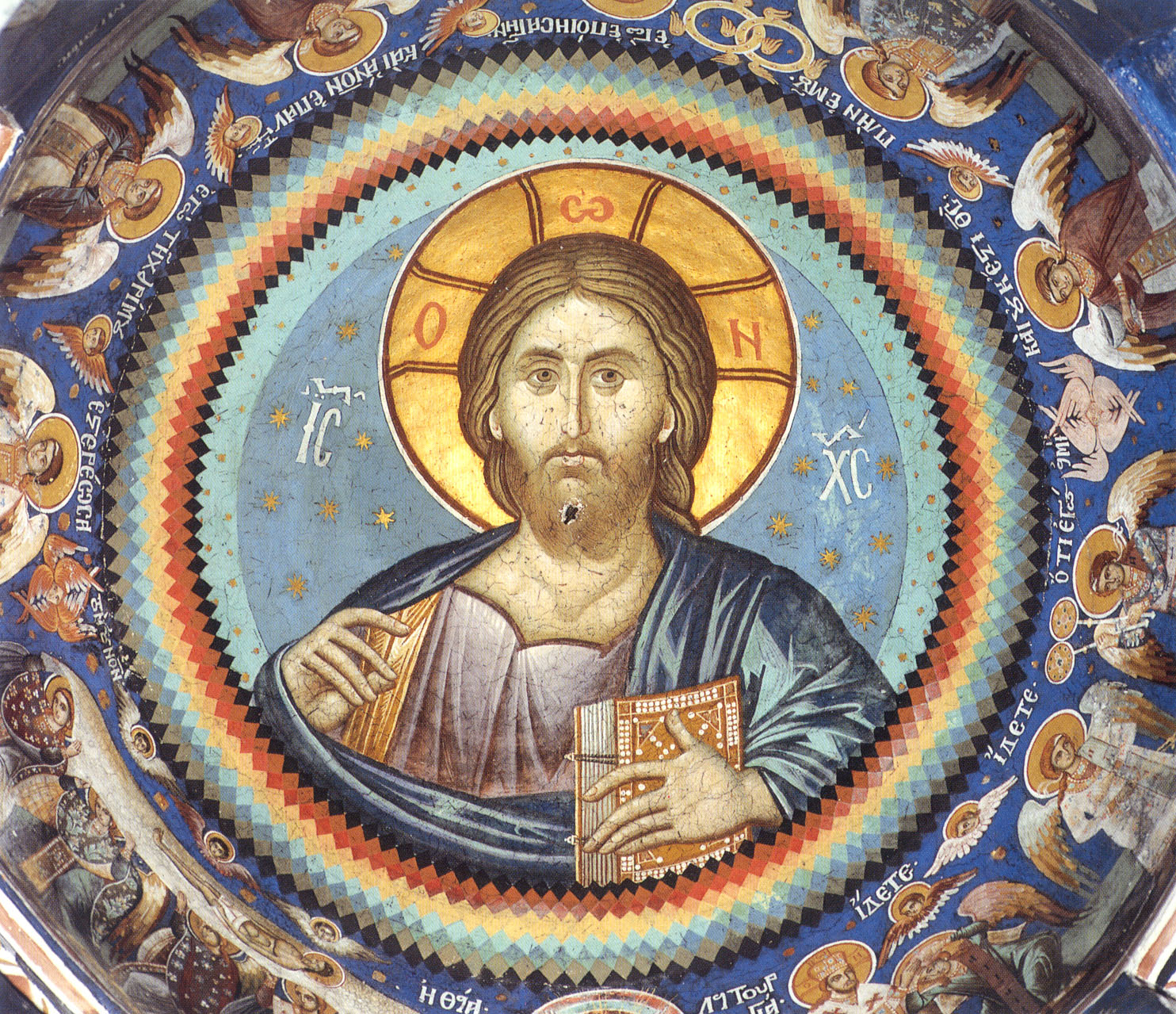
Jesus Christ "Pantocrator" ("All-governing"), the Son of God, the Savior (source)
St. Silouan the Athonite on the Knowledge of God


The Father so loved us that He gave us His Son; but such was the will of the Son too, and He became incarnate and lived with us on earth. And the holy Apostles and a multitude of people beheld the Lord in the flesh, but not all knew Him as the Lord; yet it has been given to me, a poor sinner, through the Holy Spirit to know that Jesus Christ is God.

The Lord loves man and reveals Himself to man. And when the soul beholds the Lord she humbly rejoices in the Master's compassion, and from that hour her love for her Creator is greater than her any other love: though she may see all things and love all men, yet will she love the Lord above all.

The soul suddenly sees the Lord and knows that it is He.

Who shall describe this joy, this gladness?

The Lord is made known in the Holy Spirit, and the Holy Spirit pervades the entire man - soul, mind and body.

After this wise is God known in heaven and on earth.

The Lord in His boundless mercy granted this grace to me, a sinner, that others might come to know God and turn to Him.

I write out of the grace of God.

Yea, this is truth.

The Lord Himself is my Witness.

The Merciful Lord gave the Holy Spirit on earth, and by the Holy Spirit was the Holy Church established.

The Holy Spirit unfolded to us not only the things of the earth but those too which are of heaven.

The Prophets, the beloved of the Lord, rejoiced in the Holy Spirit, wherefore the words that they spake were mighty and pleasant, for every soul would hear the word of the Lord.

Filled with love the holy Apostles went into all the world, preaching salvation to mankind and fearing nothing, for the Spirit of God was their strength. When St Andrew was threatened with death upon the cross if he did not stay his preaching he answered:

'If I feared the cross I should not be preaching the Cross.'

In this manner all the other Apostles, and after them the martyrs and holy men who wrestled against evil, went forward with joy to meet pain and suffering. For the Holy Spirit, sweet and gracious, draws the soul to love the Lord, and in the sweetness of the Holy Spirit the soul loses her fear of suffering.

The Lord is love; and He commanded us to love one another and to love our enemies; and the Holy Spirit teaches us this love.

The soul that has not come to know the Holy Spirit does not understand how it is possible to love one's enemies, and will not receive this commandment; but in the Lord is pity for all men, and he who would be with the Lord must love his enemies.

How may we know whether the Lord loves us or no?

Here are tokens: If you battle firmly against sin the Lord loves you. If you love your enemies you are even more beloved of God. And if you lay down your life for others you are greatly beloved of the Lord, who Himself laid down His life for us.

The man who has known the Lord through the Holy Spirit becomes like unto the Lord, as St John the Divine said: 'We shall be like him; for we shall see him as he is.' And we shall behold his glory.

Many numbers of people, you say, are suffering every kind of adversity and from evil men. But I entreat you: Humble yourself beneath the strong hand of God, and grace will be your teacher and you yourself will long to suffer for the sake of the love of the Lord. That is what the Holy Spirit, whom we have come to know in the Church, will teach you.

But the man who cries out against evil men, who does not pray for them will never know the grace of God.

If you would know of the Lord's love for us, hate sin and wrong thoughts, and day and night pray fervently. The Lord will then give you His grace, and you will know Him through the Holy Spirit, and after death, when you enter into paradise, there too you will know the Lord through the Holy Spirit, as you knew Him on earth.

We do not need riches or learning in order to know the Lord: we must simply be obedient and sober, have a humble spirit and love our fellow-men. The Lord will love a soul that does this, and of His own accord make Himself manifest to her and instruct her In love and humility, and give her all things necessary for her to find rest in God.

We may study as much as we will but we shall still not come to know the Lord unless we live according to His commandments, for the Lord is not made known through learning but by the Holy Spirit. Many philosophers and scholars have arrived at a belief in the existence of God, but they have not come to know God.

To believe in a God is one thing, to know God another.

Both in heaven and on earth the Lord is made known only by the Holy Spirit, and not through ordinary learning. Even children, who have no learning at all, come to know the Lord by the Holy Spirit. St John the Baptist felt the presence of the Lord while still In his mother's womb. St Simeon Stylites was a seven-year-old boy when the Lord appeared to him and he knew Him; St Seraphim a grown man of twenty-seven when the Lord showed Himself to him during the Liturgy; and another Simeon was stricken with years when he received the Lord in his arms in the temple, and knew Him.

Some there are who spend their whole lives in trying to find out about the sun, or the moon, or in seeking like knowledge; yet this is of no profit to the soul. But if we take pains to explore the human heart this is what we shall see: the kingdom of heaven in the soul of the saint, but in the soul of the sinner are darkness and torment. And it is good to know this because we shall dwell eternally either in the kingdom or in torment.

Just as the love of Jesus Christ is beyond our understanding so we cannot conceive of the depth of His suffering, because our own love for the Lord is so infinitely small. But with greater love comes more understanding even of the Lord's sufferings. There is love in small degree, medium love and perfect love; and the more perfect our love the more perfect our knowledge.

We are able to treat of God only in so far as we have known the grace of the Holy Spirit; for how can a man think on and consider a thing that he has not seen or heard tell of, and does not know? Now the Saints declare that they have seen God; yet there are people who say that God is not. No doubt they say this inasmuch as they have not known God, but it does not at all mean that He is not.

The Saints speak of that which they have actually seen, of that which they know. They do not speak of something they have not seen. (They do not tell us, for instance, that they have seen a horse a mile long or a steamer ten miles long, which do not exist.) And I think that, if God were not, there would be no intimation of Him on earth; but people want to live after their own fashion and consequently they declare that God is not, and in so doing they establish that He is.

Even the souls of the heathen sensed that God is, though they were ignorant how to worship the true God. But the Holy Spirit instructed the Prophets of old and after them the Apostles and then our holy Fathers and bishops, and in this wise the true faith came down to us. And we knew the Lord by the Holy Spirit, and when we knew Him our souls were confirmed in Him.

The Lord loves us so dearly that it passes description. Through the Holy Spirit alone can the soul know His love, of which she is inexpressibly aware. The Lord is all goodness and mercy. He is meek and gentle, and we have no words to tell of His goodness; but the soul without words feels this love and would remain wrapped in its quiet tranquility for ever.

Christ said: 'I will not leave you comfortless', and we see, in truth, that He did not forsake us but gave us the Holy Spirit.

O ye peoples of the earth, fashioned by God, know your Creator and His love for us! Know the love of Christ, and live in peace and thereby rejoice the Lord, who in His mercy waits for ill men to come unto Him.

Turn to Him, all ye peoples of the earth, and lift your prayers to God. And the prayers of the whole earth shall rise to heaven like a soft and lovely cloud lit by the sun, and all the heavens will rejoice and sing praises to the lord for His sufferings whereby He '.saved us.

Know, all ye peoples, that we are created for the glory of God in the heavens. Cleave not to the earth, for God is our Father and He loves us like beloved children.

O Lord grant to all nations to know Thee by Thy Holy Spirit. As Thou didst give the Holy Spirit to the Apostles and they knew Thee, so grant to all men to know Thee by Thy Holy Spirit.
From: St. Silouan, Wisdom From Mount Athos - The Writings of Staretz Silouan 1866-1938, Sofronii (Archimandrite), trans. Rosemary Edmonds, (St. Vladimir's Seminary Press, Crestwood, NY 1974) pp. 19-23. (source)


St. Silouan the Athonite (source)

Through the prayers of our Holy Fathers, Lord Jesus Christ our God, have mercy on us and save us! Amen!

http://full-of-grace-and-truth.blogspot.ca/2013/12/st-silouan-athonite-on-knowledge-of-god.html

Thursday, September 25, 2014

A Cure for Depression from St. Silouan the Athonite


The greatest plague of the 21st century is not AIDS, nor cancer, nor the H1N1 flu, but something that affects much more people in ways we can barely start to understand: depression. Reportedly one in ten Americans suffers from one or the other forms of this malady. The rates of anti-depressant usage in the United States are just as worrisome. A recent poll unveils that one in eight Americans is using them. Prozac, Zyprexa, Cymbalta are not strange alien names anymore, but familiar encounters in almost every American household. Even children approach the usage rates of adults. These are very high and paradoxical numbers in a country where all are free to enjoy “life, liberty and the pursuit of happiness.”

Even in times of crisis, Americans have a better life than most countries in the world, in all respects. Just glance over to the life of the Christians in the Middle East, and you’ll realize the blessings we enjoy every day. Most of us have a job, a house, a car or two, enough food, education, equal opportunity, religious freedom to name just a few. Practically we shouldn’t be in want for anything; yet, every tenth person is longing for something, is missing something so bad, so important, that they cannot cope with this need on their own. This explains the usage of drugs; with them, the negative aspects of life can be more easily coped with. They are a crutch that helps people move along with their lives for a short while.

But a crutch is still a crutch; it can only take one so far. The depressed man needs a different cure, one that will take care of the root of his problems, will erase his desperation and offer him a new lease on life. A cure, however, cannot come without the understanding of the underlying disease. So, this begs a question: why is America depressed? What are we still missing in the abundance that surrounds us?

A short answer is: we miss God. We may think we miss something else, we can justify our depression by creating some imaginary needs, but at the end of the day, we miss Him. He has created us for a purpose: union with Him unto eternity. Losing sight of this, we lose it all and, in our shortsightedness, we keep longing for something we don’t know we have lost. It all goes back to who we are, what are we doing here and where we are going; it is back to the basics.

In the midst of the information revolution, the world wide web and the boom of technology, man still yearns for the same fundamental things: purpose and direction. The secular society can’t give him either. The purpose is temporary, ceasing to exist when life expires, and the directions one gets are so contradictory that they end up canceling themselves. So man is confused, lost and at the brink of despair. He is thirsty, but there is no well of life, he is hungry but there is no food for his eternal soul, he is lonely and he has no man.


So what to do? In an interview I recently read (you can find it here, it is very edifying), the Archimandrite Sophrony Sacharov, of blessed memory, at that time a younger monk, was asked by a visiting priest: “Fr. Sophrony, how will we be saved?” Fr. Sophrony prepared him a cup of tea, gave it to him, and told him, “Stand on the edge of the abyss of despair and when you feel that it is beyond your strength, break off and have a cup of tea.” Obviously this was a very odd answer, and the young priest was definitely confused. So off he went to St. Silouan the Athonite, who lived not far from there, and told him everything, asking for advice. Long story short, next day, St. Silouan came to the cell of Fr. Sophrony and the two started a conversation about salvation. The beautiful fruit of their conversation was an unforgettable phrase that I would like to also offer as the answer to our conversation today about depression: “Keep your mind in hell and despair not.”

At first glance, St. Silouan’s take on salvation is not less strange that Fr. Sophrony’s initial answer, but it actually makes great sense. In traditional Christianity, the difficulties of life, the hardships are assumed as part of our fallen existence. Our bodies and our minds suffer the torments, but this is nothing but a temporary stage. The ascetic Fathers considered them as tests on par with the athletic exercises, very useful in practicing and improving the powers of the soul like patience, kindness, hope, faith and so forth. We keep our mind in hell when we consciously assume the pain of living in a fallen world, when we learn from this passing agony to avoid the even greater torture of an eternity without Christ. But there is hope in this suffering because Christ himself has suffered them first and has opened for us a way out of despair, a way out of pain, a way out of death. Christ is the well of life, the bread of eternity, and the only Man we need.

So as Christians we keep our minds in hell and we despair not, but courageously give glory to God in all things, even in pain, hoping, always hoping, in our Savior, the only One who can take us out of the brink of despair and set us for a new life in Him. In Him we put our hope, in Him we find our purpose, and on Him we set our goal.

Through the intercessions of our Father among the Saints Silouan the Athonite, through the prayers of Fr. Sophrony of Essex, of all the ascetic Fathers and all the saints, O Lord of compassion and hope, have mercy on us and save us!
St. Silouan the Athonite

http://pemptousia.com/

Source: Myocn.net

Friday, February 28, 2014

Without God there is no peace in the soul ( St. Silouan the Athonite )


You don't need money nor titles to get to know God.
How much joy for us that the Lord not only forgives our sins , but also gives the soul the knowledge of Him , if only to be humbled .And the last poor person in the world can be humbled to know God through the Holy Spirit . You don't need money, nor titles to get to know God , but only humility . The Lord is given for free of charge , only because of His mercy . Before I did not know , but now I see every day , every hour , every minute clearly the mercy of God . God gives peace even at bedtime and without God there is no peace to the soul .


St. Silouan the Athonite

Wednesday, November 20, 2013

We must honor the saints ( Part 4 ) - St. Silouan the Athonite


The Lord granted the Holy Spirit to the Saints, and they love us with the Holy Spirit. The souls of the Saints know the Lord and His compassion for man, and this is why their souls burn with love for the people. When they lived on the earth, it was not possible for them to hear of a sinful person without feeling pain in their heart, and they would shed many tears when they prayed for such
people. The Holy Spirit selected them to pray for t
he entire world, and He granted them streams of tears. The Holy Spirit pours upon His chosen ones such great love, that their souls are aflame with the desire for all people to be saved and to see the glory of the Lord.


Through the Holy Spirit, the Saints envelop the entire world with love. They see and know that we grow weary from sorrows, that our hearts have become dry, and that despondency has paralyzed our souls; for this reason, they interceed ceaselessly to God for us. The Saints rejoice when we repent, and they are sad when people abandon God and, in this manner, become similar to
irrational animals.


Pray with faith to the Mother of God and to the Saints. They hear our prayers, and they are even aware of our thoughts. Don't let this surprise you. All the Saints in heaven live with the Holy Spirit, and nothing in the entire creation is unknown to the Holy Spirit. Previously, I could not understand how the Saints who dwell in heaven can see us. When, however, the holy Mother of God
censured me for my sins, I realized that the Saints see us through the Holy Spirit, and that they are aware of our entire life.


The Saints hear our prayers, and they have received the power from God to help us. This is known to the entire generation of Christians.
Fr. Romanos told me that when he was a boy he had to cross the Don River in winter. Unexpectedly,his horse fell through the ice and was just about to go under, dragging the sled with it. He was a little boy at the time, and he cried at
the top of his voice: “St. Nicholas, help me pull the horse out!” And he tugged at the bridle and pulled the horse and sled out from under the ice.


And when Fr. Matthew, who came from my village, was a little boy he used to graze his father’s sheep. At the time, he was no bigger than a sheep himself.


His older brother was working on the other side of a large field, when suddenly he saw a pack of wolves rushing at Misha (Fr. Matthew’s name in the world). Then, little Misha cried out, “St. Nicholas, help!” No sooner had the words left his
lips than the wolves turned back and did no harm either to him or his flock. And for a long time after that, the villagers would smile and say, “Our Misha was terribly frightened by a pack of wolves,
but St. Nicholas rescued him!”


All of us know a multitude of such instances where the Saints come immediately to the aid of people. From all this, it is clearly evident that our
prayers are heard in heaven.

Wednesday, November 13, 2013

We must honor the Saints ( Part 3 )- St. Silouan the Athonite


"I love them who love Me, and I will glorify them who glorify Me," says the Lord (cf. Pr. 8:17 &1Kg. 2:30).

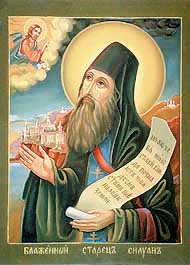
God is glorified by His Saints, and, in turn, the Saints are glorified by God.
 

The glory that God gives to the Saints is so great, that if people were to see a saint as he truly is, they would fall to the ground on account of reverence
and fear, because physical man cannot endure the glory of such a heavenly appearance. Do not marvel at this. The Lord loved man,whom He created,to such an extent that He poured the Holy Spirit abundantly upon man, and through this Holy Spirit man became like unto God.


The Lord gave His grace to the Saints, and they loved Him and completely devoted themselves to Him, because the sweetness of God's love surpasses the love for the world and its beauty. And if things are so here on the earth, then in
Heaven the saints are even more closely united with the Lord through love.


God is love, and the Holy Spirit is love for the saints. With the Holy Spirit the Lord becomes known. With the Holy Spirit, the Lord is magnified in the heavens. With the Holy Spirit the Saints glorify God, and with the Holy Spirit the
Lord glorifies the Saints—and this glory has no end.


To many people it seems as though the Saints are far away from us. In reality, they are far from those people who have distanced themselves from the Saints; whereas, they are very close to the people who keep Christ's commandments and who have the grace of the Holy Spirit.


In Heaven, everything lives and moves in the Holy Spirit. But even on the earth, we have the same Holy Spirit. This Holy Spirit lives in our Church. The Holy Spirit unites everyone, and for this reason the Saints are close to us. And when we pray to them, they hear our prayers through the Holy Spirit, and our souls sense and feel their intercessions for us.


The Saints live in another world where they behold, through the Holy Spirit, the divine glory and beauty of the Lord's face. Through this same Holy Spirit they also see our lives and our deeds. They are familiar with our sorrows, and they hear our fervent prayers. While on the earth, they were taught the love of God by the Holy Spirit. And whoever has acquired love on the earth proceeds with it to the eternal life in the Kingdom of Heaven, where this love increases until it becomes perfect. And if on the earth love cannot forget about its fellow man, then even more so the
Saints in Heaven do not forget about us, and they pray for us. 


St. Silouan the Athonite

Saturday, October 19, 2013

The Lord never ceases calling us to Himself ( St. Silouan the Athonite )


The Lord never ceases calling us to Himself: “Come unto me, and I will give you rest.” He nourishes us with His most precious Body and Blood. In His mercy He schools us by His Word and the Holy Spirit. He has revealed His mysteries to us. He lives in us and in the sacraments of the Church, and leads us to where we shall behold His glory. But this glory shall each man behold according to the measure of his love. The more a man loves, ardently does he set his face towards God, yearning to be with the Beloved Lord, and therefore will he approach the nearer to Him; while the man who loves but little will have but little desire for the Lord, and man who does not love at all will neither wish nor aspire to see the Lord, and will spend his life in darkness.

St. Silouan the Athonite

Monday, October 14, 2013

Loving your enemies ( St. Silouan the Athonite )


Although it is natural and usual to love those who love us and to do good to those who do good to us (Mt 5:46-47; Lk 6:32-33), to love our enemies is distasteful to our nature. One can say that it isn't in our power but is an attitude that can only be the fruit of grace, given by the Holy Spirit. This is why St. Silouan the Athonite writes, "The soul that has not known the Holy Spirit does not understand how one can love one's enemies, and does not accept it."

The Staretz repeatedly says that love of enemies is impossible without grace: "Lord, You have given the commandment to love enemies, but this is difficult for us sinners if Your grace is not with us"; "Without God's grace we cannot love enemies"; "He who does not love his enemies, does not have God's grace"; "He who has not learned to love from the Holy Spirit, will certainly not pray for his enemies." On the contrary, St. Silouan always teaches that this attitude is a gift of the Holy Spirit: "The Lord has commanded us to love our enemies, and the Holy Spirit reveals this love to us"; "One can only love one's enemies through the grace of the Holy Spirit"; "When you will love your enemies, know that a great divine grace will be living in you."

This grace does not suddenly erupt in the soul, but rather shows itself in a divine pedagogy, where taking into account the weakness and the difficulties of man, the Holy Spirit progressively teaches him to love and teaches him all the attitudes and ways which will allow him to do so. "The Holy Spirit teaches us to love even our enemies"; "The Holy Spirit teaches the soul a profound love for man and compassion for the lost. The Lord had pity for those who were lost. . . . The Holy Spirit teaches this same compassion for those who go to hell"; "I could not speak about it if the Holy Spirit had not taught me this love"; "The Lord taught me love of enemies. . . . The Holy Spirit taught [me] to love."

The grace of the Holy Spirit shows to him who possesses it the way to love his enemies. But it also reveals to him the foundation of this love: the love of God for all people and His will to save them: "No man can know by himself what divine love is if the Holy Spirit does not instruct him; but in our Church divine love is known through the Holy Spirit, and that is why we speak about it." Grace also "gives man the capacity and the strength to love his enemies, and the Spirit of God gives us the strength to love them."

Staretz Silouan insists that because love of enemies is a fruit of grace, it is essentially through prayer that it can be obtained. Several times he urges us to "ask the Lord with our whole being to give us the strength to love all men." He also advises to pray to the Mother of God and the Saints: "If we are incapable [of loving our enemies] and if we are without love, let us turn with ardent prayers to the Lord, to His Most Pure Mother, and to all the Saints, and the Lord will help us with everything, He whose love for us knows no bounds." The Staretz confesses that he himself constantly prays God for this: "I continuously beg the Lord to give me the love of enemies. . . . Day and night I ask the Lord for this love. The Lord gives me tears and I weep for the whole world." Wishing in his universal love for all men to receive such a gift, he links them to himself in his prayer: "Lord, teach us through Your Holy Spirit to love our enemies and to pray for them with tears . . . Lord, as you prayed for your enemies, so teach us also, through the Holy Spirit, to love our enemies."

Yet obtaining the grace to love one's enemies presupposes other conditions.

The love of enemies is completely bound to the love of God: we have seen that the principal foundation for the love of enemies is the love that God shows to all His creatures equally and His will that all people should be saved, and Christ gave us a perfect example of such love throughout his earthly life. The love of God leads man to accomplish His will and to imitate Him as much as possible, and so also to love his enemies. The Staretz also notes that he who does not love his enemies shows that he has not learned from the Holy Spirit to love God.

To love one's enemies is also tightly bound to humility. The Staretz often associate these two virtues. Almost all the difficulties we encounter in loving our enemies are linked with pride: it is from pride that flows the affliction that follows upon insults, hated, bad temper, spite, the desire for revenge, contempt for one's neighbor, refusing to forgive him and to be reconciled with him.

Pride excludes the love of enemies and love of enemies excludes pride: "If we love our enemies, pride will have no place in our soul." The fact that humility goes hand in hand with love of enemies proves the presence of grace and the authenticity of love: "If you have compassion for all creatures and love your enemies, and if, at the same time, you judge yourself the worst of all people, this shows that the great grace of the Lord is in you."

Indeed humility is the indispensable condition to receive and keep the grace that teaches us to love our enemies and gives us the strength to do so. The Staretz advises: "Humiliate yourself, then grace will teach you." On the other hand, "pride makes us lose grace. . . . The soul is then tormented by bad thoughts and does not understand that one must humiliate oneself and love one's enemies, for without that one cannot please God."

The Staretz sometimes also stresses the role played by penitence in connection with humility. "Regard yourself the worst of men," he advises. This is an attitude of great humility that of its nature implies penitence. He who counts himself the worst of men necessarily thinks others better than himself; he will judge and blame himself, and not judge and criticize his enemies, for he tends to estimate them better than himself.

The Staretz also gives us the example of another penitential attitude -- asking God's forgiveness each time one has not loved one's enemy: "If I judge someone or look at him angrily, my tears dry up and I fall into despondency; and again I start asking the Lord to forgive me, and the merciful Lord forgives me, a sinner. "Through such an attitude, by which the soul humbly recognizes before God its faults and shortcomings and obtains from Him forgiveness, an opening can be made that becomes bigger and bigger for grace and unceasing progress in love. As to a total absence of compassion for enemies, it shows the presence and the action of an evil spirit; sincere repentance is the only way to be freed from it."

The insistence on prayer, humility and penitence shows that, although St. Silouan recognizes a determining role to the action of grace in acquiring love of enemies, he does not neglect the role played by the efforts that man makes. The Staretz is very conscious of the importance of the initial action; this is why he says, "I beg you, try," and states, "In the beginning, force your heart to love your enemies." The efforts one makes must manifest themselves in a general way in a straight intention and constant good will, stretched toward the realization of God's command. God will not fail to respond.

For the person who feels discouraged by such a demanding task, St. Silouan reassures him: "Seeing your good intention, the Lord will help you in everything." The Staretz who felt in himself so acutely human powerlessness and weakness seems to think constantly of these words of the Apostle: "I can do all things through Christ who gives me strength" (Phil 4:13) and witnesses in his own experience the mighty help that everyone can receive from God.
For Christ there are no enemiesThe Staretz would say that for Christ there are no enemies -- there are those who accept "the words of eternal life," there are those who reject and even crucify; but for the Creator of every living thing, there can be no enemy. So it should be for the Christian, too, who "in pity for all must strive for the salvation of all."

Wherein, then, lies the force of the commandment, "Love your enemies"? Why did the Lord say that those who keep His commandments would know from very experience whence the doctrine?

. . . . God is love, in superabundance embracing all creatures. By allowing man to actually know this love the Holy Spirit reveals to him the path of fullness of being. To say "enemy" implies rejection. By such rejection a man falls from the plenitude of God. . . ."The whole paradise of Saints lives by the Holy Spirit, and from the Holy Spirit nothing in creation is hid," writes the Staretz. "God is love and in the Saints the Holy Spirit is love. Dwelling in the Holy Spirit, the saints behold love and embrace it, too, in their love."

. . . .[It] is possible to judge whether a given state of contemplation was a reality or an illusion only after the soul had returned to consciousness of the world; for then, as the Staretz pointed out, if there were no love for enemies and so for all creatures, it would be a true indication that the supposed contemplation had not been a real communion with God.

-- The Monk of Mount Athos (London: Mowbrays, 1973) by Archimandrite Sophrony; pp 70-71

Wednesday, August 7, 2013

“Come unto me, and I will give you rest.” ( St. Silouan the Athonite )


The Lord never ceases calling us to Himself: “Come unto me, and I will give you rest.” He nourishes us with His most precious Body and Blood. In His mercy He schools us by His Word and the Holy Spirit. He has revealed His mysteries to us. He lives in us and in the sacraments of the Church, and leads us to where we shall behold His glory. But this glory shall each man behold according to the measure of his love. The more a man loves, ardently does he set his face towards God, yearning to be with the Beloved Lord, and therefore will he approach the nearer to Him; while the man who loves but little will have but little desire for the Lord, and man who does not love at all will neither wish nor aspire to see the Lord, and will spend his life in darkness. 


St. Silouan the Athonite
Related Posts Plugin for WordPress, Blogger...