
Friday, July 18, 2014
Η μητέρα στην προσευχή της για το παιδί πρέπει να λιώνει σαν τη λαμπάδα ( Αγιος Πορφύριος )

Κάθε φορά, που ο Γέροντας μιλούσε για την προσευχή, αντιλαμβανόμουν ότι δεν εννοούσε μια προσπάθεια επιδερμική και αποσπασματική , αλλά βαθιά και διαρκή.
Κάποτε αντιμετωπίζοντας το πρόβλημα του παιδιού μίας γνωστής στο Γέροντα και σε μένα μητέρας, η οποία μου ζήτησε να τον ρωτήσω σχετικά, μου είπε: « Το παιδί έχει ένα εσωτερικό πρόβλημα και γι' αυτό συμπεριφέρεται έτσι.
Το παιδί είναι καλό , δεν το θέλει αυτό που κάνει , αλλά αναγκάζεται , είναι δεμένο από κάτι. Δε διορθώνεται με τη λογική , δε μπορείς να το πείσεις με συμβουλές, ούτε να το αναγκάσεις με απειλές. Αυτό θα κάνει τα αντίθετα.
Μπορεί να γίνει χειρότερα, μπορεί να μείνει έτσι, μπορεί και να απαλλαγεί από αυτό. Για να απαλλαγεί, πρέπει να εξαγιασθεί η μητέρα του. Για να ελευθερωθεί, θέλει κοντά του έναν άγιο άνθρωπο , με πολλή αγάπη, που δε θα του κάνει διδασκαλία, ούτε θα το φοβερίζει , αλλά θα ζει με αγιότητα, και το παιδί, που θα τον βλέπει , θα ζηλέψει και θα τον μιμηθεί.
Προ πάντων το παιδί θέλει κοντά του έναν άνθρωπο πολλής και θερμής προσευχής. Η προσευχή κάνει θαύματα. Δεν πρέπει η μητέρα να αρκείται στο αισθητό χάδι στο παιδί της, αλλά να ασκείται στο πνευματικό χάδι της προσευχής.
Όταν πάει να το χαϊδέψει χωρίς προσευχή, το παιδί κάνει έτσι ( απλώνει βίαια τα χέρια και απωθεί τη μητέρα). Όταν όμως χωρίς να το χαϊδέψει , κάνει μυστικά για το παιδί της θερμή προσευχή, τότε αυτό αισθάνεται στην ψυχή του ένα ανεξήγητο , για κείνο, πνευματικό χάδι, που το ελκύει προς τη μητέρα του.
Η μητέρα στην προσευχή της για το παιδί πρέπει να λιώνει σαν τη λαμπάδα. Να προσεύχεται σιωπηλά και με τα χέρια ψηλά προς το Χριστό , ν' αγκαλιάζει μυστικά το παιδί της.
Αγιος Πορφύριος

Κάθε έργο που κάνεις χωρίς σκέψη και εξέταση υπάρχει μάταιο ( ΑΓ. ΙΣΑΑΚ ΣΥΡΟΥ )

Εάν θέλεις να δώσεις κάτι σε αυτόν που έχει ανάγκη, δώσε το με όμορφο πρόσωπο, και με λόγια καλά να παρηγορείς την θλίψη του· και αν πράξεις έτσι, νικάει η ομορφιά του προσώπου σου, αυτό που δίνεις, στην καρδία του, περισσότερο την ανάγκη του σώματος του· την ημέρα που θα ανοίξεις το στόμα σου να κατηγορήσεις κάποιον, θεώρησε τον εαυτό σου νεκρό εκείνη την ημέρα, και όλα σου τα έργα μάταια, και αν ακόμη σου φαίνεται, ότι ειλικρινά και προς οικοδομή σε παρακίνησε ο λογισμός σου να μιλήσεις· γιατί ποια η ανάγκη να καταστρέψει κάποιος το σπίτι του, και να διορθώσει το σπίτι του φίλου του;
Την ημέρα που θα λυπηθείς για κάποιον άνθρωπο, ο οποίος ασθενεί ψυχικά ή σωματικά, εκείνη την ημέρα θεώρησε τον εαυτό σου μάρτυρα, και ότι έπαθες για τον Χριστό, και αξιώθηκες την ομολογία Του.
Καθότι και ο Χριστός για τους αμαρτωλούς πέθανε και όχι για τους δίκαιους. Σκέψου πόσο μεγάλη είναι αυτή αρετή· στ' αλήθεια μεγάλη αρετή είναι να λυπάται κάποιος για τους κακούς, και να ευεργετεί τους αμαρτωλούς περισσότερο παρά τους δίκαιους· αυτό ο απόστολος Παύλος το αναφέρει ως άξιο θαυμασμού· εάν σε όλα σου τα έργα μπορέσεις να έχεις την συνείδησή σου καθαρή, μην φροντίσεις να εκτελέσεις άλλη αρετή.
Σε όλα σου τα έργα ας προηγηθεί η σωφροσύνη του σώματος σου και η καθαρότητα της συνείδησής σου· διότι χωρίς αυτά τα δύο κάθε άλλη αρετή θεωρείται μάταια για τον Θεό.
Να γνωρίζεις ότι κάθε έργο που κάνεις χωρίς σκέψη και εξέταση υπάρχει μάταιο· καθώς ο Θεός υπολογίζει την αρετή με την διάκριση και όχι με την αδιάκριτη ενέργεια.
ΑΓ. ΙΣΑΑΚ ΣΥΡΟΥ
St. John the Forerunner performs miracles ( part 4 )

On February 19th, we commemorate our holy Father Konon.
Saint Konon was from Kilikia. From a very young age, he became a monk at a monastery located
nearthe Jordan River, named Penthoukla.
Later he became a priest and lived with extreme asceticism. When the Archbishop of Jerusalem Peter (524-552 A.D.) learned of this saint’s
extraordinary ascetic way of life, he appointed him to baptize pilgrims who would go to the Jordan
River for this purpose.
The saint would first anoint the catechumens with the holy oil and, in following, baptize them.
Nonetheless, as a human being, he had difficulty
anointing certain ladies, and,fearing this temptation, he repeatedly contemplated to
abandon the monastery.
However, every time he thought of leaving, St. John the Forerunner would appear to him and assure him,“Be patient, Elder, and I will lighten the battle you have.”
One day, a certain young lady from Persia came to be baptized. This lady was so beautiful that the Saint was unable to anoint her unclothed, and
thus she remained in that desolate region waiting to be anointed and baptized. When word of this reached the Archbishop, he was astounded to hear how the elder had dealt with this difficulty, and he decided to send a pious lady to help the saint with the anointing and baptism of women.
However, due to various circumstances, including
the harsh climatic conditions of the desert, it was not possible for the appointed helper to reach
the monastery. Meanwhile, the elder took his cape and departed with the resolution,“I will no longer remain in this area.”
As he did so, the venerable Forerunner appeared to him outside the monastery and spoke to him in a
gentle tone: “Return to your monastery, and I will lighten the warfare you are experiencing.” But
Elder Konon responded angrily,“Believe me, I will not go back again, because you have promised many times to lighten my burden, and you have done nothing.” Then, the divine Forerunner took hold of the Elder, he lifted up his garment, and made the sign of the Venerable Cross over the area below his belly saying: “Believe me, Father Konon.
I wanted you to continue acquiring rewards from this warfare. But now return to your monastery and have no more doubts concerning this issue.” Hence, the elder returned to his monastery. On
the following day when he proceeded to anoint and baptize the Persian lady, the fact that she was a woman did not even cross his mind.
Thereafter, the saint attained such a degree of
dispassion, that he was viewed by many as a super
-natural man. Having lived another twenty years, he finally fell asleep in the Lord peacefully.
Through his holy prayers, and the intercessions of the venerable Forerunner, may Christ our God
deliver us from the evil passions. Amen.
Thursday, July 17, 2014
If a person walks a straight path, for him there is no cross ( Elder Ambrose of Optina )

"God does not create crosses for people, that is, cleansing spiritual and physical sufferings. And however heavy that cross may be for that individual, the tree that produces its timber grows from the soil of his heart."
"If a person walks a straight path, for him there is no cross. However, when he starts to lurch from one side to the other, then different circumstances appear which push him back onto the right track. These elements constitute a cross for a person. Of course they occur differently, according to the individual’s need."
Elder Ambrose of Optina
Το θαύμα που άλλαξε τη ζωή μου: Η εξομολόγηση ενός πρώην άθεου Blogger

Αγαπητέ μας φίλε και αδελφέ Κώστα η περίπτωσή σου αποτελεί για εμάς εδώ στο pentapostagma.gr φωτεινό παράδειγμα μετανοίας. Καλούμε επίσης όλους του αναγνώστες να αντιμετωπίζουν με επιείκεια και σεβασμό τους απίστους που κατά καιρούς σχολιάζουν τα διάφορα άρθρα μας. Οι άνθρωποι αυτοί μπορεί αύριο με τη χάρη του Θεού να είναι πιστοί Χριστιανοί και αδελφοί μας. Αδελφέ μας Κώστα σε ευχαριστούμε για την εμπειρία που μοιράστηκες μαζί μας και για το όφελος που σίγουρα θα έχουν πολλοί αναγνώστες από την ανάγνωση αυτής. Ο Θεός να σε ευλογεί και να σε αγιάζει πάντοτε…
Χαίρετε. Θα ήθελα να μοιραστώ μαζί σας ένα θαυμαστό γεγονός που συνέβη σε μένα τον ανάξιο προ ολίγων μηνών. Έχω μεγαλώσει σε άθεη οικογένεια. Απο μωρό παιδί έχω διδαχθεί το μίσος προς οποιαδήποτε θρησκεία, είτε αυτή ονομάζεται μουσουλμανισμός, είτε χριστιανισμός κ.τ.λ. Μεγαλώνοντας λοιπόν δημιούργησα το δικό μου blog – ιστοσελίδα, μέσα απο το οποίο παρέθετα άρθρα ενάντια στην θρησκεία και ειδικότερα κατά του χριστιανισμού. Τα άρθρα μου περιείχαν αρκετά “σεβαστά” επιχειρήματα, μέσα απο τα οποία θα μπορούσε κανείς όχι μόνο να απορρίψει την ύπαρξη του Θεού, αλλά και να μισήσει ότιδήποτε τον θυμίζει. Μεταξύ αυτών των επιχειρημάτων, η θεωρία της εξέλιξης, άλλα επιστημονικά επιχειρήματα, χωρία απο την Παλαιά Διαθήκη τα οποία θεωρούσα ρατσιστικά και βίαια και άλλα πολλά.
Μέσω των άρθρων αυτών, έβγαζα τα απωθημένα μου εναντίον του Θεού και προσπαθούσα με κάθε τρόπο να χτυπήσω τον χριστιανισμό και να φέρω στην αθεΐα όσο το δυνατό περισσότερους πιστούς. Μέχρι που συνέβηκε το ακόλουθο θαύμα (εάν μπορεί να χαρακτηριστεί τέτοιο), το οποίο μου έχει αλλάξει ριζικά τη ζωή. Μερικούς μήνες πρίν, στα γενέθλιά μου, μια αγαπημένη φίλη μου, η οποία απο μικρή ήτανε στο δρόμο της εκκλησίας μου χάρισε για δώρο μια εικόνα του Χριστού. Εγώ απόρησα, γιατί όλοι οι φίλοι και φίλες μου γνώριζαν ότι απο μικρός ήμουνα άθεος και ότι είχα απορρίψει κάθε πιθανότητα και ενδεχόμενο ύπαρξης του Θεού. Δέχτηκα όμως το δώρο αυτό και απο ευγένεια τοποθέτησα την εικόνα του Χριστού στο δωμάτιό μου.
Ένα βράδυ λοιπόν, χωρίς να κατανοώ ακόμα το γιατί, άρχισα να “μιλάω” στην εικόνα του Χριστού και να της θέτω αρκετά ερωτήματα όπως “Αν υπάρχει Θεός, γιατί το κακό κυριαρχεί στον κόσμο”, “Γιατί ο Θεός δεν κάνει γνωστή την παρουσία του (αν υπάρχει) σε μένα και στους άλλους άθεους για να πιστέψουμε σε αυτόν” και άλλα τέτοιας φύσεως ερωτήματα. Ξαφνικά, αστραπιαία, φώς απλώθηκε απο την εικόνα σε όλο το δωμάτιό μου, ενώ παράλληλα ένα συναίσθημα που βίωσα για πρώτη φορά στη ζωή μου με κατέλαβε. Μια εσωτερική αγαλίαση, ένα αίσθημα που με διαβεβαίωνε για την ύπαρξη του Θεού, ενώ με δάκρυα στα μάτια ζήτησα συγχώρεση απο τον Χριστό για όλα τα χρόνια που όχι μόνο τον αμφισβήτησα, αλλά και τον πολέμησα.
Έκτοτε έχω διαγράψει το αντι-χριστιανικό μου blog, προσεύχομαι στον Θεό να με συγχωρέσει για την ζημιά που έχω κάνει σε πολύ κόσμο με τα πρώην αθεϊστικά άρθρα μου. Επίσης, βρήκα ένα πνευματικό πατέρα τον οποίο εμπιστεύομαι και στον οποίο προσπαθώ να εξομολογούμαι σε τακτική βάση για όλες μου τις αμαρτίες. Η ζωή μου έχει αλλάξει ριζικά, αφού για πρώτη φορά εδώ και χρόνια βιώνω το αίσθημα της εσωτερικής ησυχίας και χαράς. Εύχομαι να διαδώσετε το πιο πάνω θαύμα προς δόξαν Θεού, ώστε περισσότερος κόσμος να πιστέψει και να επιστρέψει στο δρόμο του Θεού. Ευχαριστώ.
Κώστας
Πηγή:pentapostagma.gr
Feeling the presence of God ( Elder Paisios )

Those who are sustained by the love of God often neglect material food, or, when they eat, are oblivious to the taste, for feeling the presence of God intensely, they are even then nurtured by the sweet blessing of His love.
Elder Paisios
Wednesday, July 16, 2014
Να στρέφετε την κάθε θλίψη στη γνώση του Χριστού, στην αγάπη Του, στη λατρεία Του. ( Αγιος Πορφύριος )

Η ψυχή σας να δίδεται στην ευχή, «Κύριε Ιησού Χριστέ, ελέησόν με», για όλες σας τις έγνοιες, για όλα και για όλους.
Η ευαισθησία δεν έχει διόρθωση.
Μπορεί μόνο να μετασχηματισθεί, να μεταποιηθεί, να μετατραπεί, να μεταμορφωθεί, να μεταστοιχειωθεί, να γίνει αγάπη, χαρά, θεία λατρεία.
Πώς; Με τη στροφή προς τα άνω. Να στρέφετε την κάθε θλίψη στη γνώση του Χριστού, στην αγάπη Του, στη λατρεία Του.
Κι ο Χριστός που συνεχώς περιμένει με λαχτάρα να μας βοηθήσει, θα σας δώσει την χάρη Του και τη δύναμή Του και θα μεταστρέφει τη θλίψη σε χαρά, σε αγάπη για τούς αδελφούς, σε λατρεία προς τον ίδιο. Έτσι θα φύγει το σκοτάδι..
Να θυμάστε τον Απόστολο Παύλο. Τί έλεγε; «Νυν χαίρω εν τοις παθήμασί μου»
Η ψυχή σας να δίδεται στην ευχή, «Κύριε Ιησού Χριστέ,ελέησον με», για όλες σας τις έγνοιες, για όλα και για όλους.
Μην κοιτάζετε αυτό πού σας συμβαίνει, αλλά να κοιτάζετε το φως, τον Χριστό, όπως το παιδί κοιτάζει την μητέρα του, όταν κάτι του συμβεί. Όλα να τα βλέπετε χωρίς άγχος, χωρίς στενοχώρια, χωρίς πίεση, χωρίς σφίξιμο. Δεν είναι ανάγκη να προσπαθείτε και να σφίγγεστε.
Όλη σας ή προσπάθεια να είναι ν’ ατενίσετε προς το φως, να κατακτήσετε το φως. Έτσι, αντί να δίδεσθε στη στενοχώρια, που δεν είναι του Πνεύματος του Θεού, θα δίδεσθε στη δοξολογία του Θεού.
Αγιος Πορφύριος
Testimony from Mount Athos, The significance of pain ( Elder Joseph of Vatopaidi )

“Lets us reject both pleasure and pain in this life with all our might in order to be freed from any schemes drawn by passions and from any demonic wickedness. For, we love passions for their hedonistic pleasure and because of pain we avoid virtue”. (Saint Maximus the Confessor, Seven Hundred Chapters on Theology, Third Hundred, paragraph 52) What describes a man’s life without God is how fiercely futility clashes with irrationality with tragic consequences. The wretched man is the victim of this tragedy. He is being dragged without mercy from the instigators of pain and fear to his death, which he alone has shaped when he severed himself from God, from eternal life and happiness. Had the Merciful Lord not put an end to death and the derived sin, there would have never been a more pitiful being than man. The joyful message that “The Word became flesh” (John 1, 14) ended this calamity and transfigured the tools of death into the beneficial sources of life and happiness. “The All Merciful God became flesh in order to draw human nature unto Himself and prevent it from behaving horribly to itself or rather, from rebelling against itself, having being severed in many pieces and being unable to rest anywhere because of the unbalanced movement of its intentions on everything”( As above, paragraph 47).
Here the all-wise Father, as an excellent anatomist, refers to the unbalanced nature of our being and the revolt which takes place against it and for its sake. No one who has the appropriate experience disputes this fact. Where do the reasons, the rules and the ways of this abnormality originate from? The problem started at the very moment man tragically fell. Everything had been originally created as “very good” and all natural and spiritual faculties were in order. It is the delusion of “autonomy” which has guided all the natural motions to the opposite direction, creating thus unnatural operations which are none other than the revolt against oneself and against one’s environment. When man used to perform and move naturally as a proper psychosomatic being, he was also promoting the equilibrium in life and was causing a mutual enjoyment. The fall reversed all these and corruption followed. It was inevitable then, that since man had severed himself from life, from God, to come under the authority of death and ruin and the tools of death to be set in motion. “With pain you will give birth to your children…by the sweat of your brow you will eat your food until you return to the ground, since from it you were taken… (See Genesis 3, 16-29). The penance of disobedience has been fully employed after man severed himself from life and God, and the tools of ruin and death took over. In the place of full godlike joy and pleasure in everything, came pain and sorrow. In the place of life came death.
Was it justified however, to have ruin and death reign over mortal creatures and especially over man who had been created in the ‘image and likeness’ of God? We will attempt to offer an answer to this by borrowing from the god-inspired wisdom of our Fathers, to whom the Holy Spirit has revealed the deep mysteries by which It governs creation.
The absolute All-Love, God, in his Godlike perfection and All-Wisdom, has freely created nature from nothing, as well as the world, the universe. This term “from nothing” is very crucial. It means that they have been created by another cause, “by God” and therefore they are fully dependent on Him. They are neither able to exist by themselves nor are they autonomous. Nevertheless, they have been created as “very good”, balancing in accordance with the precepts and the laws of their creator. However, as we have already mentioned, the tragic fall of man has caused reversal and deformity. The fall, having a moral implication, describes sin as the cause of the revolt and an insult to divine justice. By ‘divine justice’ we mean the perfection of the creation because of God’s love and his All-Wisdom. The creation, being intrinsically good, caused everything to be orderly and harmonious. We correctly describe this state as ‘the justice of creation’. Consequently there is a similarity and a correlation between the divine justice and the justice of creation. Man’s rebellion and insult towards God, did not manage to interfere with the divine justice, since the latter is infinite and unalterable. But it infringed on the justice of the creation because it is homogeneous. Thus it reversed its original harmonious precepts and conditions which governed its performance. Man’s revolt and insult against the conditions and rules of his personality, which God has created as “very good”, has caused a worldwide damage and misery. This transgression deserves a penance which the All-Good philanthropy of God has turned into a blessing. The ‘penance’ imposed on this transgression and insult was not derived from divine justice, because the latter was not trampled upon. But it was imposed by the justice of creation, whose equilibrium man disturbed because he did not safeguard that which God gave him which was “very good”. Since the laws of nature now act in an unbalanced and corrupted way, because they have been tampered with, they have also dragged man into this irregularity. Thus, they cause all the perils and hardships to man and to the whole creation. The punishment which the affected justice of creation imposes is none other than death with all its instruments. These perils would have been eternal had divine philanthropy not intervened to reform them and alter the poison into medicine. This is what Saint Maximus says on this issue: “Since we have been initially deceived by hedonistic pleasure and preferred death from true life, let us persevere in the face of the hardships befalling our bodies with delight, in order to destroy hedonistic pleasure. When, therefore, the death of hedonistic pleasure destroys the death from pleasure, let us regain through small physical hardships, life, which we have lost because of hedonistic pleasure”. Therefore, according to our Fathers the penance which was imposed on us was not a punishment but the appropriate therapy for the injury, which was devised by our Lord’s philanthropy and providence. The same is professed by the other great pillar of our Church, Saint Nicolaos Kavasilas, who writes: “Therefore, after the fall, God has permitted (συνεχώρησεν) death and pain, because he did not want to punish the sinner but rather to offer a medicine to the sick”. In the face of such divine philanthropy what more can one say other than Saint Paul’s exclamation? “Oh, the depth of the riches of the wisdom and knowledge of God! How unsearchable his judgments, and his paths beyond tracing out!”(Romans 11, 33).The final natural result of Adam’s fall and his greatest punishment was obviously death. As soon as death entered human history, God took the initiative and changed the nature of death in one single move totally and permanently.
Since man’s biological constitution was dressed in the law of corruption, death reigned upon it as a censure. Thus, God in His All-Wisdom turned death, which is the fruit of sin, against biological life. From then on death destroys not only man but also the corruption with which he has clothed himself.
“God Word, who has created human nature, neither created the experience of hedonism nor of pain. But he only planted in human nature a kind of spiritual propensity towards pleasure, so that man could derive joy in an inexpressible way. This force, which is the natural desire of the intellect for God, was given to the senses by the first man. Thus he experienced his first sentiment of pleasure, which acted unnaturally through his senses. Then God, who is providing for our salvation, placed next to pleasure pain as a punishing force. Hence, the law of death wisely took residence inside the body to prevent the desires of the irrational mind from moving unnaturally towards created things”
God in order to punish as well as cure our readiness for pleasure, established pain and death into human nature, to follow it everywhere and appear unwillingly. Because human nature prefers irrational pleasure, the equivalent pain, with all its innumerable hardships which cause death, has been invented in order to completely destroy pleasure. Here we must pay attention to one factor according to our Fathers’ thinking. The aforementioned fight which pain and all its constituents launch against pleasure does not destroy its essence neither does it uproot it. But it only destroys its sensual form, which is performed by the outer sensuous organs of man. Its spiritual essence is not invalidated because man is still able to enjoy the pleasure of the divine gifts and eventually the divine Eros. The invention of the willing, or of the reluctant hardships, which constitute the meaning of the cross, takes away pleasure and abolishes its active movement. According to the spiritual law, human debts incurred in this life are being paid off with the onslaught of willing or reluctant hardships.
The result of all human activity has two elements: pleasure and pain. Pleasure always comes first since the ailing intention prefers it or rather actively looks for it. Every transgression or wrongful deed, which in essence is sin, occurs for the sake of some kind of satisfaction, which in essence is pleasure. In order to abolish pleasure, or rather to pay for it, one must undergo hardships and sorrow caused either willingly by repentance or by any other painful way allowed by God’s providence.
Saint Maximus says: “When an unexpected temptation occurs to you, do not accuse the person who caused it, but examine why it has occurred and you will be able to correct yourself. Since either from this one or from someone else, you had to drink from the bitter glass of God’s judgment” (Saint Maximus the Confessor, Hundred Chapters on Love, Second Hundred, paragraph 42). Whenever our blessed Elder Joseph was giving a detailed explanation of the workings of the spiritual law through which our All-Wise and All-Good Lord governs His creation, he seemed to rise to a higher spiritual state, which we can only describe as beyond nature. His words were not the usual but would become predictions and prophesies and would attest that he practically lived inside the divine wishes and designs and was experiencing them, since they were irrefutable and true.
Generally speaking, temptations according to our Fathers are the bearers of every agitation and pain which occur in our lives. Sometimes they provoke sorrow, sometimes anxiety, at other times physical pain. As a doctor, God orders the appropriate medicine according to the source of the passion which has overcome the soul. “Where I to count them, they would outnumber the grains of the sand” (Psalm 139, 18). To some people God permits the onslaught of temptations to abolish sins which have already been committed; to others to prevent them from committing the sins which they were about to commit. Certainly there are also testing temptations. These occur to reveal the strength of the virtue and the holiness of the great athletes, like Job, in order to strengthen the Church. Unless there is a cause which will become a motive, the most evil demons cannot start a fight, from which the onslaught of the spiritual war is launched.
One basic source from which they usually direct the attack is the passions which reside in a man’s soul. These passions are the wicked habits, which he has created out of negligence or self-love. The evil demons are watching these passions and their demands which want satisfaction, and bring to the mind wicked thoughts and force man to agree to them. When they achieve this, they continue pressing the enslaved man to proceed with committing the deed which he almost cannot resist.
Now, what is a passion? Passion is an irrational motion of the soul; a movement out of its natural environment, especially towards perceived things. Wickedness is the wrong judgment of thoughts, which is followed by the mistreatment of things, whence abuse and self-love originates. Some people believe that evil would not exist in the world if there was no other force and motive to attract us to it. However, our Fathers tell us that evil is none other than the negligent performance by the natural faculties of the mind. The only way one may be rescued from this adventure is to keep his mind vigilant and control his sinful thoughts, so that he is not dragged into practical sin. In other words, if our natural rational faculties submit to divine commandments and our irrational tendencies come under control, then neither evil will exist in the world, nor the force which attracts us to it will be found.
The Scriptures indicate that man’s first transgression shows that he has preferred sensual satisfaction rather than his spiritual attraction and perception of God and divine things. This preference has created the sensual pleasure whence death and pain originated. God’s philanthropy has given us a remedy so that evil does not become eternal: the love for struggle (φιλοπονία), as a necessary penance to human life, from which there are no exceptions. Where is wisdom in this sense? It is to carry our cross eagerly, whence two benefits are derived: One is to freely submit to the love for struggle, which is also described as our ‘cross’ and through which we confess our Christian identity as we have promised during our baptism. The entire essence of our faith and our baptism is “the message of the cross and death”. The second benefit is that we come to acquire a payment method with which we are writing off our known and unknown debts. Saint Maximus says: “Since we must necessarily suffer because through our forefathers hedonism has entered our human nature, then let us accept the temporary hardships bravely and patiently. These not only soften the foundations of hedonism inside us, but also they set us free from eternal condemnation, which is in store for us because of it”.
As Saint Paul says, all the saints have been disciplined. Therefore let us also thank God when we are being disciplined along with them, so that we are also made worthy to participate in their glory. “The Lord disciplines those he loves, as a father the son he delights in” (Proverbs 3, 12).
The Lord has shown us another kind of philanthropy: He has condescended to also submit to the love for struggle in order to provide a consolation to us, since He was not obliged to surrender either to pain or to natural death. Unlike us, he had not participated in hedonism and passion during his physical birth. Since we now have the prototype of our salvation participating in our own hardships through His passion on the cross, we modify our natural love for struggle to become a struggle with a keen sense of honor (filotimo) because we imitate our Savior who has suffered and was crucified for us. Thus our insult becomes worthy of repayment.
A sensible way to succeed in our struggle is this one: When one desires the true life, he recognizes that any kind of hardship either willing or unexpected destroys the mother of all evil, hedonism, and thus he gladly accepts all the hard consequences of the unwilling hardships. With perseverance, he comes to transform hardship into easy and smooth paths which lead towards life without any doubt.
When during my life next to our ever-memorable elder, I would make a mistate our of ignorance, he would impose a penance with which I would have to take a difficult walk. When I had asked him why, he sadly told me this: “Along with repentance we need to perform a practical deed of hardship to extinguish the guilt, otherwise divine providence will impose some reluctant penalty, which might be more painful and hard to bear. That’s why we avert it with our willing double repentance to restore the equilibrium”. He would always teach us the meaning of the spiritual law in detail as well as the sense of that which the fathers’ call “conventional assaults”, by which God enforces His justice according to His vast philanthropy. All these convince us that nothing is happening in our lives without a reason. Therefore, the everyday temptations are part of the dispensation of divine providence in order to provoke the love for struggle, which is the most practical indication of our repentance. As we have already mentioned, temptations are generally regarded by our Fathers as the fruits of our own past, present or future transgressions which God, by His prognostic philanthropy, obstructs in order to secure our salvation. Those who also live a pious life meet with temptations. This is certified by the Scriptures which say: “a righteous man may have many troubles” (Psalms 34, 19) and “Everyone who wants to live a godly life in Jesus Christ will be persecuted” (B Timothy 3, 12).This is the meaning of the cross which our Lord is instructing us to carry always, along with all the saints.
If man perseveres in the face of all hardships without complaint, he will remain in the remembrance of God. Patient perseverance in this task will stimulate the remembrance of God and thus man will enter the state where he will adhere to Saint Paul’s command “pray continually” ( A Thessalonians 5, 17). Remembrance of God is the espousal of the love for struggle, which is being created so that one is able to obey the divine commandments. Whoever abandons the remembrance of God, turns towards hedonism and tries to find solace through external effusions. He who is ignorant of the divine grace tries to soothe himself by sensual pleasures and comforts. His preference for these causes the direct result which is the love for struggle and hardships. On the contrary, whoever loves God and readily submits to His wishes will receive the visitation of divine grace, which will be the wages for those who love struggle and will replenish any deficiency and answer any query. Grace becomes “all things to all men”; to the thirsty it becomes water; to the hungry food; to the naked garments, to the ignorant knowledge and to passion-slaves freedom and resurrection.
There is something weird about human life. We are forever hearing about bitterness, disillusionments, hardships, pain and the rest of it and we are wondering: Who is preventing man’s salvation since solace is clear? The presence of Word God has solved every problem and has granted in abundance everything we need. “Come to me all who are weary and burdened and I will give you rest. Take my yoke upon you and learn from me, for I am gentle and humble in heart, and you will find rest for your souls. For my yoke is easy and my burden is light” (Matthew 11, 22)
An indication that one has acquired spiritual wisdom is the fact that he perseveres in the coming hardships without blaming anyone for them, despite knowing those who have caused them. Then he imitates our Savor Christ, who was praying for those who crucified Him. “Father forgive them for they do not know what they are doing” (Luke 23, 34). How many of us view the commandments as oppression against our freedom and blame God for making demands on us? Where are now these demands? He who controls himself avoids the lack of restrain; He who has no property abstains from greed; the quiet from trouble; the pure from hedonism; the modest from fornication; the self-sufficient from the love for money; the gentle from fury; the humble from selfishness; the obedient from quarrel; the audacious from hypocrisy; the confessor from denial and the martyr from idolatry. There it is then. Every virtue which is performed unto death is nothing but the annulment of the corresponding vice and sin. Therefore, this becomes an obligation for our rational existence. Where are then, the so-called imposition and the harness to our freedom? This obligation is not even an exchange for the kingdom of heaven, since obeying the commandments constitutes a natural duty and therefore the kingdom of heaven is given for free.
source: Translated by Olga Konari Kokkinou from the Greek edition: Γέροντος Ιωσήφ Βατοπαιδινού, Αθωνική Μαρτυρία, Ψυχοφελή Βατοπαιδινά 2, Έκδοσις β΄, Ιερά Μεγίστη Μονή Βατοπαιδίου, Άγιον Όρος 2008.
http://pemptousia.com/2011/12/testimony-from-mount-athos-the-significance-of-pain/
Tuesday, July 15, 2014
Ό θεός δεν επιτρέπει σ' εμάς να βλέπουμε τον κόσμο των αοράτων ( Γέροντας Αμβρόσιος )

Ό θεός δεν επιτρέπει σ' εμάς να βλέπουμε τον κόσμο των αοράτων, γιατί, αν τον βλέπαμε, θα τρελαινόμασταν. Αν βλέπαμε γύρω μας τι υπάρχει και κινείται, θα τρελαινόμασταν.
Γέροντας Αμβρόσιος
Με βρίζεις. Εγώ όμως είμαι πάντα κοντά σε σένα και σ' όλους τους στρατιώτες

«Ήμουν ανθυπασπιστής στο τάγμα της Κορέας. Δεν πίστευα πουθενά, παρά μόνο στη δύναμη των βαρέων όπλων που κατεύθυνα. Επί πλέον ήμουν αδιόρθωτα βλάσφημος.
Όλες οι βλασφημίες μου συγκεντρώνονταν στην Παναγία. Όσοι με άκουγαν ανατρίχιαζαν. Οι φαντάροι μου έκαναν τον σταυρό τους, για να μην τους βρει κακό. Oι ανώτεροί μου διαρκώς με παρατηρούσαν και με τιμωρούσαν. Ώσπου μια νύχτα έζησα ένα ολοφάνερο θαύμα.
Ξημέρωνε η 7ηΑπριλίου 1951. Με τη διμοιρία μου είχα καταλάβει μια πλαγιά σε ύψωμα κοντά στον 38οπαράλληλο. Μέχρι τα ξημερώματα έμεινα άγρυπνος στο όρυγμα μου μαζί με τον στρατιώτη Σταύρο Αδαμάκο.
Όταν ρόδιζε η αυγή, οπότε δεν υπήρχε φόβος αιφνιδιασμού, αποκοιμήθηκα. Είδα τότε ένα όνειρο που με συνετάραξε:
Μία γυναίκα στα μαύρα ντυμένη, με αγνή ομορφιά και γλυκύτατη φωνή, με πλησιάζει και με ρωτά ακουμπώντας το χέρι στον ώμο μου:
-Θέλεις να βρίσκομαι κοντά σου Χρήστο;Ένοιωσα τότε μια βαθειά αγαλλίαση.
- Και ποια είσαι συ; τη ρώτησα.
Τότε εκείνη άλλαξε έκφραση και με παρατήρησε αυστηρά:
-Γιατί, Χρήστο, διαρκώς με βρίζεις;
- Πρώτη φορά σε βλέπω! διαμαρτυρήθηκα. Πως είναι δυνατό να βρίζω μια άγνωστή μου;
- Ναι, Χρήστο, επέμεινε εκείνη πιο αυστηρά. Με βρίζεις. Εγώ όμως είμαι πάντα κοντά σε σένα και σ' όλους τους στρατιώτες τού τάγματος. Γιατί δεν πηγαίνετε στο Πουσάν, ν' ανάψετε κεριά στ' αδέλφια σας που έχουν ταφεί εκεί;
Μ' αυτή τη φράση ξύπνησα τρομαγμένος. Ο Σταύρος δίπλα μου με κοίταζε σαστισμένος.
- Κύριε ανθυπασπιστά, κάτι έχεις, μου είπε. Βογγούσες και παραμιλούσες στον ύπνο σου.
Τού διηγήθηκα το όνειρο μου και καταλήξαμε πως ήταν αποτέλεσμα κοπώσεως και συζητήσεων γύρω από τους νεκρούς τού Πουσάν.
Ενώ όμως λέγαμε αυτά. ξαναβλέπω τη γυναίκα τού ονείρου μου μπροστά μου.
-Αδαμάκο! βάζω μια φωνή. Η γυναίκα... Αυτή... Να... τη βλέπεις;
Εκείνος προσπαθούσε να με καθησυχάσει, αλλά που εγώ! Η μαυροφορεμένη γυναίκα με την αγνή ομορφιά και τη γλυκύτατη φωνή στάθηκε κοντά μου και μου είπε:
- Μη φοβάσαι... Μη φοβάσαι, παιδί μου. Είμαι η Παναγία. Σας προστατεύω όλους παντού και πάντοτε. Αλλά θέλω από σένα να μη με βρίσεις ούτε στις δυσκολότερες στιγμές της ζωής σου.
Πέφτω αμέσως ταραγμένος να φιλήσω τα πόδια της. Εκείνη όμως είχε γίνει άφαντη. Έκλαψα τότε άπ' τα βάθη της καρδιάς μου ένα κλάμα ανακουφίσεως και χαράς, εγώ που δεν είχα κλάψει ποτέ στη ζωή μου».
"ΕΜΦΑΝΙΣΕΙΣ ΚΑΙ ΘΑΥΜΑΤΑ ΤΗΣ ΠΑΝΑΓΙΑΣ"
ΙΕΡΑ ΜΟΝΗ ΠΑΡΑΚΛΗΤΟΥ-ΩΡΩΠΟΣ ΑΤΤΙΚΗΣ 2011
http://1myblog.pblogs.gr/2014/20140701.html
Do not ask for love from your neighbour ( St. Dorotheos of Gaza )

Do not ask for love from your neighbour, for if you ask and he does not respond, you will be troubled.
Instead show your love for your neighbour and you will be at rest, and so will bring your neighbour to love.
St. Dorotheos of Gaza
Carrying your cross ( St. Innocent of Alaska )

In following Jesus Christ, it is not enough to carry only an outward cross. Indeed, external crosses are borne not only by Christians but by everyone. There exists no person free one or more sorrows.
He who wishes to become a true disciple of Christ must also carry his own inner cross.
St. Innocent of Alaska
Monday, July 14, 2014
Ανάλυση της ευχής ”Κύριε Ιησού Χριστέ, ελέησον με τον αμαρτωλόν” – Analysis of the Prayer "Lord Jesus Christ, Have Mercy On Me, A Sinner"

Του Aρχιμ. Aιμιλιανού Kαθηγουμένου I. M. Σίμωνος Πέτρας
Tην προσευχήν του Aγίου Όρους ποιός δεν την γνωρίζει; Aποτελείται από μίαν φράσιν μικράν, από μετρημένας τας λέξεις.
Κύριε Ιησού Χριστέ, ελέησον με τον αμαρτωλόν
Mε την βοεράν κραυγήν «Kύριε», δοξολογούμεν τον Θεόν, την ένδοξον μεγαλειότητά Tου, τον βασιλέα του Iσραήλ, τον δημιουργόν της ορατής και αοράτου κτίσεως, όν φρίττουσι τα Σεραφείμ και τα Xερουβείμ.
Mε την γλυκυτάτην επίκλησιν και πρόσκλησιν «Iησού», μαρτυρούμεν, ότι είναι παρών ο Xριστός, ο σωτήρ ημών, και ευγνωμόνως τον ευχαριστούμεν, διότι μας ητοίμασε ζωήν αιώνιον.
Mε την τρίτην λέξιν “Xριστέ”, θεολογούμεν, ομολογούντες ότι ο Xριστός είναι αυτός ο Yιός του Θεού και Θεός. Δεν μας έσωσε κάποιος άνθρωπος, ούτε άγγελος, αλλά ο Iησούς Xριστός, ο αληθινός Θεός.
Eν συνεχεία, με την ενδόμυχον αίτησιν «ελέησόν με», προσκυνούμεν και παρακαλούμεν να γίνη ίλεως ο Θεός, εκπληρών τα σωτήρια αιτήματά μας, τους πόθους και τας ανάγκας των καρδιών μας.
Και εκείνο το «με», τί εύρος έχει! Δεν είναι μόνον ο εαυτός μου – είναι άπαντες οι πολιτογραφηθέντες εις το κράτος του Xριστού, εις την αγίαν Eκκλησίαν, είναι όλοι αυτοί που αποτελούν μέλος του ιδικού μου σώματος.
Kαι, τέλος, διά να είναι πληρεστάτη η προσευχή μας, κατακλείομεν με την λέξιν «τόν αμαρτωλόν», εξομολογούμενοι – πάντες γάρ αμαρτωλοί εσμεν – καθώς εξωμολογούντο και όλοι οι Άγιοι και εγίνοντο διά ταύτης της φωνής υιοί φωτός και ημέρας.
Eξ αυτών αντιλαμβανόμεθα, ότι η ευχή εμπεριέχει δοξολογίαν, ευχαριστίαν, θεολογίαν, παράκλησιν και εξομολόγησιν.
Πηγή: εδώ
-----------------------------------------------------------
Analysis of the Prayer "Lord Jesus Christ, Have Mercy On Me, A Sinner"
By Elder Aimilianos of Simonopetra
The prayer of Mount Athos, who does not recognize it? It is comprised of one small phrase, of measured words.
"Lord Jesus Christ, have mercy on me, a sinner."
With the loud cry "Lord", we glorify God, His glorious majesty, the King of Israel, the Creator of visible and invisible creation, Whom Seraphim and Cherubim tremble before.
With the sweet invocation and summons "Jesus", we witness that Christ is present, our Savior, and we gratefully thank Him, because He has prepared for us life eternal.
With the third word "Christ", we theologically confess that Christ is the Son of God and God. No man saved us, nor angel, but Jesus Christ, the true God.
There follows the intimate petition "have mercy", and we venerate and entreat that God would be propitious, fulfilling our salvation’s demands, the desires and needs of our hearts.
That "on me", what range it has! It is not only myself, it is everyone admitted to citizenship in the state of Christ, in the holy Church; it is all those who are members of the body of the Bridegroom.
And finally, so that our prayer be full of life, we close with the word "a sinner", confessing – since we are all sinners – as all the Saints confess and became through this sound sons of light and of the day.
Through this we understand, that this prayer involves:
Glorification
Thanksgiving
Theology
Supplication
and Confession
Source
Η σημασία του κομποσχοινιού ( Γέροντας Παΐσιος )

- Γέροντα, ποιά σημασία έχει το κομποσχοίνι;
- Το κομποσχοίνι είναι μια κληρονομιά, μια ευλογία, που μας έχουν αφήσει οι Άγιοι Πατέρες μας. Και μόνο γι’ αυτό έχει μεγάλη αξία. Βλέπεις, σε κάποιον αφήνει ο παππούς του μια κληρονομιά ένα ασήμαντο πράγμα και το έχει μετά σαν φυλαχτό, πόσο μάλλον το κομποσχοίνι που μας το άφησαν κληρονομιά οι Άγιοι Πατέρες!
Παλιά, που δεν υπήρχαν ρολόγια, οι μοναχοί μετρούσαν την ώρα της προσευχής με το κομποσχοίνι, αλλά οι κόμποι του κομποσχοινιού ήταν απλοί. Κάποτε ένας ασκητής έκανε πολύ αγώνα, πολλές μετάνοιες κ.λπ., και ο διάβολος πήγαινε και έλυνε τους κόμπους του κομποσχοινιού του. Έκανε – έκανε μετάνοιες ο καημένος και απέκαμε, γιατί δεν μπορούσε να τις μετρά, αφού ο διάβολος του έλυνε συνέχεια τους κόμπους. Τότε παρουσιάσθηκε Άγγελος Κυρίου και του δίδαξε πώς να πλέκη τους κόμπους, ώστε σε κάθε κόμπο να σχηματίζωνται εννέα σταυροί. Ο διάβολος μετά, ο οποίος τρέμει τον σταυρό, δεν μπορούσε να τους λύση. Έτσι κάθε κόμπος του κομποσχοινιού έχει εννέα σταυρούς, που συμβολίζουν τα εννέα τάγματα των Αγγέλων.
- Γέροντα, τι σημαίνουν οι τριάντα τρεις, οι πενήντα, οι εκατό και οι τριακόσιοι κόμποι που έχουν τα κομποσχοίνια;
- Μόνον ο αριθμός τριάντα τρία είναι συμβολικός συμβολίζει τα τριάντα τρία χρόνια που έζησε ο Χριστός επάνω στην γη. Οι άλλοι αριθμοί απλώς μας βοηθούν να μετράμε τις μετάνοιες που κάνουμε ή πόσες φορές θα πούμε την ευχή.
Μερικές μηχανές έχουν ένα σχοινί με μια χειρολαβή στην άκρη και, όταν θέλης να τις βάλης μπρος, τραβάς μερικές φορές το σχοινί με δύναμη, μέχρι να ξεπαγώσουν τα πνευματικά λάδια. Έτσι και το κομποσχοίνι είναι το σχοινί το οποίο τραβάμε μία – δύο – πέντε – δέκα φορές και ξεπαγώνουν τα πνευματικά λάδια και παίρνει μπρος η πνευματική μηχανή της αδιάλειπτου προσευχής, οπότε δουλεύει μετά μόνη της η καρδιά στην ευχή. Αλλά, και όταν η καρδιά πάρη μπρος στην ευχή, και πάλι δεν πρέπει να καταργήσουμε το κομποσχοίνι, για να μην παρακινηθούν και άλλοι να το καταργήσουν, ενώ δεν πήρε ακόμη μπρος η καρδιά τους στην ευχή.
- Όταν, Γέροντα, κρατώ το κομποσχοίνι μου και λέω την ευχή μηχανικά, μήπως υπάρχει κίνδυνος ανθρωπαρέσκειας;
- Αν κάνης κομποσχοίνι εξωτερικά από ανθρωπαρέσκεια, ακόμη και τα χέρια σου να ξεφλουδίσης, σε τίποτε δεν θα σε ωφελήση. Μόνον κούραση θα σου φέρη και την ψευδαίσθηση ότι δήθεν ασχολείσαι με την νοερά προσευχή.
- Γέροντα, εγώ δεν έχω συνηθίσει να κρατώ κομποσχοίνι.
- Το κομποσχοίνι να το κρατάς, για να μην ξεχνάς την ευχή, την οποία πρέπει να εργάζεσαι εσωτερικά, στην καρδιά. Όταν μάλιστα βγαίνης από το κελλί σου, να θυμάσαι ότι ο εχθρός είναι έτοιμος για επίθεση. Γι’ αυτό, να μιμήσαι τον καλό στρατιώτη που βγαίνοντας από το πολυβολείο έχει πάντοτε «ανά χείρας» το αυτόματο όπλο. Το κομποσχοίνι έχει μεγάλη δύναμη είναι το όπλο του μοναχού και οι κόμποι είναι σφαίρες, που θερίζουν τα ταγκαλάκια.
Από το βιβλίο «Περί Προσευχής», Λόγοι ζ
Πηγή
Prayer nourishes the soul ( Elder Paisios )

Prayer, combined with a curtailment of sleep, nourishes the soul — in addition to granting it spiritual alertness — and safeguards it, like a child in its mother’s embrace. The infant who runs with yearning to the embrace of its mother to breast-feed and is filled with her sweet love and affection is smarter than us adults when we avoid union with God through prayer, which we often consider drudgery.
Elder Paisios
Lips simply move your mind ( Elder Ephraim of Vatopedi )

Elder Joseph, ''Such practice is being kept on Mount Athos and in the monastery of Vatopedi as well.'' Elder Joseph the Hesychast used to say that in that way the mind can easier accept its meaning. It helps a monk to keep his attention. Uttering of this prayer reduces or completely removes in quietude: “lips simply move your mind.” Then comes the moment when man can not say the prayer with his lips, since it transforms in a more perfect form – prayer of the heart.
Elder Ephraim of Vatopedi
Sunday, July 13, 2014
The Cell Rule of Five Hundred of the Optina Monastery

In ADDITION to the church services: the Liturgy, Matins, and Vespers with Compline, which all of the brethren of the monastery are obligated to attend, many of them daily read in their cells: One chapter from the Gospel in order, beginning first with the Gospel of Matthew, to the last chapter of the Gospel of John, and two chapters from the Epistle, likewise in order, beginning with the Acts of the holy Apostles and ending with the last chapter of the Apocalypse of Saint John the Theologian. The last seven chapters of the Apocalypse are read one a day. In this way the last chapter is read on exactly the same day as the last chapter of the Gospel of John. Then, after the completion of the reading of the whole New Testament, in this manner they begin again from the first chapters a new cycle of reading in precisely the same order. From the Psalter they read one kathisma a day, beginning with the first and ending with the last. In addition to this, they perform the so-called Cell Rule of Five Hundred in the following order:
After the customary three prostrations performed at the commencement of every rule of prayer, both in church and in one's cell, with the prayers: (1) God, be merciful to me a sinner. (2) God be gracious unto my sins and have mercy on me. (3) O Thou Who hast fashioned me, Lord, have mercy. I have sinned beyond measure, O Lord, forgive me. In one's cell a fourth prostration is added together with the prayer: My Lady, Most Holy Theotokos, save me a sinner. Then the following prayers are said:
Through the Prayers of our holy Fathers, Lord Jesus Christ our God, have mercy on us. Amen.
Glory to Thee, our God, glory to Thee. O Heavenly King. Holy God (3). Glory. Both Now. Amen.
All Holy Trinity. Lord, have mercy (3). Glory. Both Now. Amen.
Our Father. Through the prayers of our holy Fathers, Lord Jesus Christ our God, have mercy on us. Amen. Lord, have mercy (12). Glory. Both Now. Amen.
O come, let us worship God our King.
O come, let us worship and fall down before Christ our King and God.
O come, let us worship and fall down before Him, Christ the King and our God.
Psalm 50. Symbol.
First group. Then one hundred prayers: Lord Jesus Christ, Son of God, have mercy on me a sinner, with full prostrations for the first ten prayers, full bows for the next twenty prayers, and on the last, that is, the hundredth prayer, again a full prostration.
After this, the following Prayer to the Most Holy Theotokos:
My Most Holy Lady Theotokos, by thy holy and all-powerful entreaties dispel from me, thy humble, wretched servant, despondency, forgetfulness, folly, carelessness, and all impure, evil, and blasphemous thoughts out of my wretched heart and my darkened mind. And quench the flame of my passions, for I am poor and wretched, and deliver me from my many cruel memories and deeds, and free me from all evil actions: for blessed art thou by all generations, and glorified is thy most honourable name unto the ages of ages. Amen.
At the end of this prayer a full prostration.
Second group. Then again one hundred Jesus Prayers in the same order as before with ten full prostrations and twenty full bows. On the last Jesus Prayer a full prostration and again the same prayer: My Most Holy Lady Theotokos, with a full prostration.
Third group. One hundred likewise as the first and second.
Fourth group. One hundred consisting of prayers to the Most Holy Theotokos: My Most Holy Lady Theotokos, save me a sinner. In this group of one hundred the first ten prayers are likewise made with full prostrations and the following twenty with full bows, the remaining without bows. The last and hundredth prayer is made with a full prostration, after which with a full prostration the prayer: My Most Holy Lady Theotokos.
Then fifty prayers: O Holy Angel of God, my Guardian, pray to God for me a sinner. On the first five prayers, full prostrations; on the following ten, full bows; the remaining thirty-four, without bows. Only on the last prayer a full prostration and again the prayer: My Most Holy Lady Theotokos, with a full prostration.
Then fifty prayers: All Saints, pray to God for me a sinner. On the first five prayers, full prostrations; on the following ten, full bows; the remaining thirty-four, without bows. Again the last prayer with a full prostration, after which is said the prayer: My Most Holy Lady Theotokos, with a full prostration. Then:
It is truly meet to call thee blessed, the Theotokos, the ever-blessed and all-immaculate and Mother of our God. More honourable than the Cherubim, and beyond compare more glorious than the Seraphim, thee who without corruption gayest birth to God the Word,the very Theotokos, thee do we magnify.
At the end of this prayer a full prostration.
After this: Glory to Thee, Christ God, our Hope, glory be to Thee. Glory. Both now. Lord, have mercy (3) and Through the prayers of our Holy Fathers, Lord Jesus Christ our God, have mercy on us. Amen.
On weekdays all of the above-mentioned bows and prostrations are performed. On the days of Pentecost, on days when there is the Polyeleos, on Forefeasts and for the duration of the Feasts, on days when the Great Doxology is chanted at Matins and in the church services full prostrations are dispensed with, in like manner in one's cell the full prostrations are replaced with full bows, as is also the case on all days throughout the year when there is a Vigil. On the last two days of Passion Week, for all of Bright Week, and from the twenty-fourth of December until the seventh of January, this cell rule is completely dispensed with, as is likewise the case on all Sundays throughout the year, even if the all-night Vigil has not been performed, but only Vespers and Matins, as is done in winter.
Any change in the composition of this cell rule, as well as deduction from it or addition to it, is left to the will and blessing of the Elder or Spiritual Father of the individual.
http://orthodoxinfo.com/praxis/cellrule.aspx
Εάν κάνετε καλά έργα, θα έχετε μεγάλο μισθό από τον Θεό ( Όσιος Γεώργιος Καρσλίδης )

Να μη σκέπτεσθε μόνο τι θα φάτε, τι θα φορέσετε, τι μεγάλο σπίτι θα χτίσετε. Να κτυπάτε τις πόρτες των φτωχών, των αρρώστων, των ορφανών. Περισσότερο να προτιμάτε τα σπίτια των θλιμμένων παρά των χαρούμενων. Εάν κάνετε καλά έργα, θα έχετε μεγάλο μισθό από τον Θεό. Θ’ αξιωθείτε να δείτε θαύματα, και στην άλλη ζωή θα έχετε απέραντη αγαλλίαση.
Όσιος Γεώργιος Καρσλίδης
Οι πιστεύοντες εις τον Χριστόν ( Γέροντας Σωφρόνιος Σαχάρωφ )

Οι πιστεύοντες εις τον Χριστόν διά πίστεως ελευθέρας πάσης αμφιβολίας ως Θεόν δημιουργόν και Θεόν σωτήρα ημών, εν παραφορά μετανοίας, λαμβάνουν πείραν και του Αδου και της Αναστάσεως, πρίν ή γευθούν του σωματικού θανάτου.
Γέροντας Σωφρόνιος Σαχάρωφ
The devil loves nothing like luxury and drunkenness ( Saint Tikhon of Zadonsk )

Drunkenness is sin in and of itself… "nor drunkards... shall not inherit the Kingdom of God," according to the teaching of the Apostle (1 Cor. 6:10). And Christ says, And "take heed to yourselves, lest at any time your hearts be overcharged with surfeiting, and drunkenness" (Lk. 21:34). This is the cause of so many and serious sins. It brings about the quarrels, fights, and bloodshed, and murders that follow upon it. It is rough talk, blasphemy, and cursing. It causes disappointment and offence to neighbor. It teaches lying, flattery, seizure of the things of others so as to somehow satisfy the passion. It ignites anger and wrath. It makes people cast themselves into impurity as swine into the mire.
In a word, it makes a man a beast, and the rational irrational, so that not only the inward condition but also the outward appearance of a man often changes. Wherefore St. John Chrysostom says, "The devil loves nothing like luxury and drunkenness" (Homily 58 on St. Matthew), because nothing fulfils his evil will as does a drunkard.
Saint Tikhon of Zadonsk
Saturday, July 12, 2014
Have our Panagia as your protectress and entreat her constantly. ( Elder Joseph the Hesychast )

Have our Panagia, His dear, sweet Mother, as your protectress and entreat her constantly. Embrace her holy icon as if she were alive, and wet it with tears as the myrrh-bearer did to Jesus' feet.
You will derive substantial consolation as if she were beside you.
Elder Joseph the Hesychast
Friday, July 11, 2014
Ὅταν ἁμαρτάνει τὸ παιδί ( Γερ. Αιμιλιανός Σιμωνοπετρίτης )

Τὸ σκοτάδι, ὡς συνέπεια τῆς πτώσεως τοῦ ἀνθρώπου, δὲν βγάζει ποτὲ στὸ φῶς. Τὸ φῶς διαλύει τὸ σκοτάδι, διότι τὸ σκοτάδι εἶναι ἀνυπόστατο, δὲν ἔχει οὐσία. Ὑπάρχει ὅμως μία περίπτωσις τὴν ὁποία πανσόφως ἐκμεταλλεύεται ὁ παντουργὸς Θεὸς γιὰ τὸ καλό μας, βγάζοντας καὶ ἀπὸ τὸ κακὸ καλό, ἀπὸ τὸ σκοτάδι φῶς.
Πῶς; Διὰ τῆς μετανοίας. Βλέπω τὴν κακία μου, τὴν ἁμαρτία μου, μετανοῶ, κλαίω, θρηνῶ, ὁδηγοῦμαι στὸν Θεόν, ἀναλαμβάνω τὶς εὐθύνες μου, νήφω, καρτερῶ, καὶ μέσα μου καλλιεργεῖται ὁ καινούργιος ἄνθρωπος ποὺ βγαίνει ἀπὸ τὴν μετάνοια.
Ἄρα, τὸ καλὸ δὲν βγαίνει ἀπὸ τὸ κακό, ἀλλὰ ἀπὸ τὴν μετὰνοια, ποὺ εἶναι ἄλλος νοῦς, ὁ νοῦς ποὺ τὸν παρέχει ὁ Θεὸς μέσα στὴν καρδιά.
Ὅταν ἀνησυχῆ, λόγου χάριν, ὁ πατέρας ἢ ἡ μητέρα, ἐπειδὴ ἁμαρτάνει τὸ παιδί, καὶ τὸ κτυπᾶ, ὁπωσδήποτε θὰ βγάλη ἀντίθετο ἀποτέλεσμα. Διότι, ἐὰν τὸ παιδὶ κάνη ἁμαρτίες, σημαίνει ὅτι ζητάει τὴν ἁμαρτία καὶ θὰ τὰ βάλη μὲ σένα, ποὺ γίνεσαι κήρυξ τῆς ἀρετῆς. Καὶ τώρα μὲν φοβᾶται νὰ ἁμαρτήση, ἀλλὰ μόλις ἀπελευθερωθῆ ἀπὸ σένα, θὰ ὁδηγηθῆ ἀμέσως στὸ κακό. Ἡ βία, τὸ κακό, δὲν μπορεῖ νὰ βγάλη καλό.
Πὲς λοιπὸν στὸ παιδάκι σου τὸ καλό, μάθε του τί εἶναι ὁ Θεός. Μίλησέ του ἀπὸ τὸ πλήρωμα τῆς δικῆς σου καρδιᾶς, φώτισέ του λίγο τὴν συνείδησι μὲ τὴν δική σου λαχτάρα καὶ θεία ἐμπειρία, καὶ μπαίνοντας μέσα του ὁ Θεός, θὰ τὸν ἀγαπήση.
Μπορεῖ νὰ βρίζη, μπορεῖ νὰ κάνη ἁμαρτίες, ἀλλὰ ἔχοντας τὰ σπέρματα τοῦ Θεοῦ, ποὺ εἶναι τόσο ἰσχυρά, ὁ Θεὸς τὰ καλλιεργεῖ καὶ βγαίνει ἡ καινούργια φύτρα, τὸ καινούργιο βλαστάρι, τὸ ὁποῖο δίδει καινούργια ζωή. Αὐτὴ εἶναι ἡ μετάνοια.
Τὸ παιδὶ δηλαδὴ αὐτό, ἐπειδὴ τὸ ἀφήνεις ἐλεύθερο, ἐπειδὴ τὸ σέβεσαι, ἐπειδὴ τοῦ εἶπες τὴν ἀλήθεια, ἐπειδὴ τοῦ ἀπεκάλυψες τί ἔχει ἡ καρδούλα σου καὶ τί κόσμοι ὑπάρχουν μέσα σὲ αὐτήν, λέγει μετά: Μά, τί φρικτὴ ζωὴ ποὺ κάνω!
Τί εἶναι αὐτὴ ἡ ἁμαρτία! «Ἀναστήσομαι καὶ ἐπιστρέψω εἰς τὸν Πατέρα» (Λουκ. 15, 18). Καὶ ὁ βλαστὸς τῆς μετανοίας βγάζει τὸν καρπὸ τῆς καινῆς ζωῆς. Ἔτσι τὰ καταφέρνει ὁ Θεὸς νὰ βγάζη καὶ ἀπὸ τὸ στόμα τοῦ λύκου τὴν σωτηρία.
Ὁ Ἰώβ, ἀπὸ τὴν κατάρα στὴν ὁποία εἶχε πέσει, ἔβγαλε τὴν εὐλογία τοῦ Θεοῦ καὶ ἀνεκαινίσθη. Ὁ Μωυσῆς ὁ Αἰθίοψ, ἀπὸ τὰ ἐγκλήματα καὶ τὶς ληστεῖες, ἔβγαλε τὴν καινούργια ἀσκητικώτατη ζωὴ καὶ ἔγινε ἀγνώριστος. Δὲν τὸν γνώρισαν κἄν οἱ παλαιοὶ σύντροφοί του καὶ οἱ ἄλλοι ληστὲς· τόσο «ἀνεκαινίσθη ὡς ἀετοῦ ἡ νεότης του» (Ψαλμ. 102, 5), ἔγινε καινούργια ἡ ζωή του.
Ἑπομένως, μποροῦμε νὰ ποῦμε: Ὅποιος εἶναι θυμώδης, ἂς στρέψη ὅλον τὸν θυμό, ὅλη τὴν ἐσωτερικὴ ἔντασί του πρὸς τὴ ἀγάπη τοῦ Θεοῦ, πρὸς τὴν εἰρήνη, πρὸς τὰ σωτήρια λόγια, πρὸς τὸ «Κύριε Ἰησοῦ Χριστέ, ἐλέησόν με, τὸν ἁμαρτωλόν», χρησιμοποιώντας ὅποιον τρόπο τὸν βοηθεῖ. Κάποιος τὸ ἔλεγε, κτυπώντας τὰ χέρια του.
Τὸν εἶδα καὶ τὸν ρώτησα: Τί κάνεις ἐκεῖ; Καὶ μοῦ ἀπήντησε: Εἶχα μάθει μὲ τὰ μηχανήματα νὰ κουνῶ τὰ χέρια μου καὶ δὲν μπορῶ τώρα νὰ κάνω ἀλλοιῶς. Μπράβο, τοῦ λέγω, συγχαρητήρια. Βλέπετε πῶς τὸ κακό, ὁ θόρυβος, ποὺ εἶναι τὸ χειρότερο κακό, μπορεῖ νὰ βγάλη καὶ καλό; Κάποιος θαλασσινὸς τὸ ἔλεγε, ἔχοντας τὴν ἐντύπωσι ὅτι ἔπιανε τὰ κουπιά, γι’ αὐτὸ καὶ κουνοῦσε τὰ χέρια του. Πραγματικὰ ἔπιανε τὸ κουπί, τὸν Χριστόν.
Ἄρα, τὸ πᾶν μποροῦμε νὰ χρησιμοποιήσωμε. Ὅ,τι μᾶς δίνει ὁ Θεός, ὅ,τι μᾶς κάνουν οἱ ἄλλοι, ὅ,τι παθαίνομε μέσα μας καὶ γύρω μας, ὅλα εἶναι μεταγωγικὰ πρὸς τὸν Θεόν. Τόσο ἀπέραντη εἶναι ἡ ἀγάπη τοῦ Θεοῦ. Μόνον τὰ ἀποβράσματα τοῦ ἐγώ μας δὲν εἶναι σωτήρια. Αὐτὰ μᾶς ἀπομακρύνουν ἀπὸ τὸν Θεόν.
Γέροντας Αιμιλιανός Σιμωνοπετρίτης
Πηγή: εδώ
St. John the Forerunner performs miracles ( part 3 )

I have never told you, my brother Lazarus, [says monk Leontios] what happened to me several years ago, when I was young and had just been newly tonsured, which has to do with the subject of obedience.
I do not remember exactly, but it was either during 1916 or 1917 when my Elder of blessed memory advised me to make a prostration and to go serve at the mill located at Mariana as an attendant. Unfortunately, because I did not particularly like this dependency, I foolishly started to make excuses, arguing that I could not go because, supposedly, it was too cold, I did not have enough
clothing, perhaps I would get sick, and other such reasons. Additionally, there were many thieves wandering in that region, and I was afraid.
My Elder of blessed memory made the same recommendation to me again and again, assuring me that he would provide me with the all the necessary clothing and provisions. I distinctly remember him saying to me,
"Go ahead, my child. May you have the blessing of the Honorable Forerunner. Do obedience and go, because the manager is there all alone and needs help. Go my child..." I, however,
continued to retort with my usual obstinacy.
Finally, my Elder got fed up and tired with me, and vexed he left the matter in St. John's hands. This is how I left from the Elder's quarters and went to my room to retire for the evening.
But alas! Every time I think about what followed, my brother, I am always overcome with trembling with fear. About 8 or 9 o'clock that same evening, I saw a fearsome, towering man appear in my bedroom with a whip in his hand.
As I was lying down, I jumped out of bed horrified. No sooner had I stood on my feet when he started to lash me. "What type of a monk are you? Why don't you do obedience?" he remarked, and simultaneously he whacked from one direction ... he whacked me from the direction. I started to cry and begged him to stop hitting me, promising that I would henceforth be obedient.
Immediately, he vanished from sight. I was a nervous wreck as I ran that very moment to the Abbot's quarters. I woke up the Elder, and with tears and lamentation I fell at his feet and asked him to read me a prayer of absolution, I related to him what had taken place, and promised to never again disobey any of his orders. Thus my Elder
was appeased, he read me the prayer of absolution, I took courage, and I returned to my cell and rested peacefully. The next morning, as soon as I woke up, I packed my bags and set out for Mariana.
from the book
Narrations from Dionysiou Monastery
Tuesday, July 8, 2014
Η Χάρις του Θεού ( Γέροντας Ευσέβιος Γιαννακάκης )
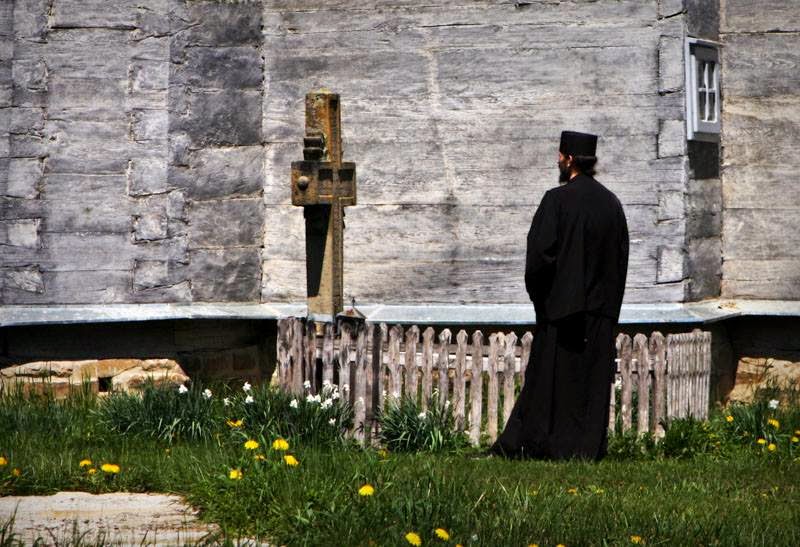
Η Χάρις του Θεού «η τα ασθενή θεραπεύουσα». Όταν εμείς αγωνιζόμαστε για αγνή και καθαρή ζωή, με προσευχή, Εξομολόγηση, θεία Κοινωνία, τότε δίνει πλούσια τη Χάρη Του, που αρδεύει την ψυχή, όπως το νερο ζωογονεί τα πάντα. Ο αδύναμος άνθρωπος που πέφτει, τρεκλίζει , όσο κι αν τον πολιορκεί η αμαρτία, να αγωνίζεται. Να μην το βάζει κάτω. Να λέει» ο Θεός είναι κοντά, μαζί μου· δεν θα μ’ αφήσει…
Γέροντας Ευσέβιος Γιαννακάκης
Ζηλεύεις, γι' αυτό δεν έχεις κουράγιο ( Γεροντας Παϊσιος )

-Γέροντα, δεν έχω καθόλου κουράγιο.
-Ζηλεύεις, γι' αυτό δεν έχεις κουράγιο. Όταν ζηλεύη κανείς , στενοχωριέται, δεν μπορεί να φάη, οπότε αδυνατίζει και χάνει το κουράγιο του και οι άλλοι μπορεί να νομίζουν πως είναι μεγάλος ασκητής!
-Γέροντα, αισθάνομαι πολύ φτωχή πνευματικά και αδύναμη.
-Εσύ έχεις πολλές δυνάμεις, αλλά τις χαραμίζεις με την χαζή ζήλεια και, ενώ είσαι ένα αρχοντόπουλο, βασανίζεσαι σαν κακόμοιρο γυφτάκι. Θα είχες προχωρήσει πολύ στην πνευματική ζωή, αν δεν σκάλωνες στην ζήλεια. Πρόσεξε, γιατί η ζήλεια σου ρουφάει όλες τις ψυχικές και σωματικές σου δυνάμεις, που θα μπορούσες να τις προσφέρης θυσία στον Θεό. Εάν έδιωχνες την ζήλεια, και η προσευχή σου θα είχε δύναμη.
Με την ζήλεια αποδυναμώνεται κανείς πνευματικά . Γιατί ,νομίζετε, οι Απόστολοι δεν μπόρεσαν να βγάλουν το δαιμόνιο από το δαιμονισμένο παιδί , ενώ είχαν λάβει αυτήν την εξουσία από τον Χριστό και είχαν βγάλει άλλα δαιμόνια;
Επειδή ζήλεψαν, που ο Χριστός πήρε στην Μεταμόρφωση μόνον τους τρεις Μαθητές, τον Πέτρο, τον Ιάκωβο και τον Ιωάννη. Μπορούσε ο Χριστός να πάρη όλους τους Μαθητές , αλλά δεν ήταν όλοι σε κατάσταση να χωρέσουν αυτό το μυστήριο, γι' αυτό πήρε αυτούς που μπορούσαν να το χωρέσουν.
Λέτε να μην αγαπούσε τους άλλους Μαθητές; Ή μήπως αγαπούσε τον Ιωάννη περισσότερο από τους άλλους; Όχι, αλλά ο Ιωάννης αγαπούσε περισσότερο από τους άλλους μαθητές τον Χριστό και γι' αυτό καταλάβαινε την αγάπη του Χριστού καλύτερα. Είχε πολλή χωρητικότητα η μπαταρία του ήταν μεγάλη.
Βλέπετε πώς η ζήλεια απομάκρυνε την Χάρη του Θεού από τους άλλους Αποστόλους και δεν μπόρεσαν να γιατρέψουν το δαιμονισμένο παιδάκι; Γι' αυτό ο Χριστός είπε: «Ω γενεά άπιστος και διεστραμμένη! έως πότε έσομαι μεθ' υμών; έως πότε ανέξομαι υμών;»!
Από το βιβλίο: «ΠΑΘΗ ΚΑΙ ΑΡΕΤΕΣ» ΓΕΡΟΝΤΟΣ ΠΑΪΣΙΟΥ ΑΓΙΟΡΕΙΤΟΥ ΛΟΓΟΙ Ε΄
The mastery of the soul over the body ( Saint Nektarios of Aegina )

The rational soul of man has supernatural, infinite aspirations. If the rational soul were dependent upon the body and died together with the body, it should necessarily submit to the body and follow it in all its appetites. Independence would have been contrary both to the laws of nature and to reason, because it disturbs the harmony between the body and the soul. As dependent upon the body it should submit to the body and follow in all its appetites and desires, whereas, on the contrary, the soul masters the body, imposes its will upon the body. The soul subjugates and curbs the appetites and passions of the body, and directs them as it (the soul) wills. This phenomenon comes to the attention of every rational man; and whoever is conscious of his own rational soul is conscious of the soul's mastery over the body.
The mastery of the soul over the body is proved by the obedience of the body when it is being led with self-denial to sacrifice for the sake of the abstract ideas of the soul. The domination by the soul for prevalence of its principles, ideas, and views would have been entirely incomprehensible if the soul died together with the body. But a mortal soul would never have risen to such a height, would never have condemned itself to death along with the body for the prevalence of abstract ideas that lacked meaning, since no noble idea, no noble and courageous thought has any meaning for a mortal soul.
A soul, therefore, which is capable of such things, must be immortal.
Saint Nektarios of Aegina
Orthodox celebrate Namedays, birthdays are secondary

When a child is Baptized into the Orthodox Church, he is linked to the Church’s spiritual powers, including the intercessory power of the Saint—as one united to Christ—after whom he is named. Throughout his life, the intercession, comfort, and protection of this Saint, as part of the Grace flowing from Christ, is available to him. It is for this reason, indeed, that we Orthodox celebrate Namedays, considering birthdays to be of secondary or minor importance.
When adults are Baptized into the Orthodox Church, they must take the name of an Orthodox Saint, if their previous name was not Orthodox. They must also use this name at all times. Otherwise, they will have broken the very bond of Baptism, which includes the establishment of a close and real relationship between the Christian and the Saint to whom he is spiritually joined in that Baptism. In the unthinkable, but all too frequent, case of modernists who Baptize or Chrismate converts and fail to give them Orthodox names, these converts should go to a sober, traditionalist Priest and ask that an Orthodox name be assigned, also asking that this be done in conjunction with a service of supplication to the Saint whose name they are taking. That name should subsequently be used at all times, without exception—among friends, at school, at work, etc. It can be added to a convert’s former name on a driver’s license and other forms of identification, since the law allows the addition of such a religious name, as long as it is not for the purpose of fraud or misrepresentation.
Needless to say, then, the idea of “Church names,” taken from the Latin practice of having confirmation names, is unacceptable to Orthodox and constitutes a perversion of the Church’s teaching. It involves a denial of spiritual consolation which is dangerous and which will have consequences for the believer that will be understood only fully at the Day of Judgment. Those who persist in ignoring Church tradition in this matter are simply playing with disbelief, blasphemy, and their souls.
—Orthodox Insights — Archbishop Chrysostomos, Bishop Avxentios, and Archimandrite Akakios
Monday, July 7, 2014
The man who asks your sincere forgiveness, to forgive him (Elder Paisios)

The man who asks your sincere forgiveness when doing wrong, you must forgive him, whenever wrong with kindness and to also love him up close. He who is evil and asks for forgiveness , inorder to get his way and then gets involved in your affairs , mentally harming other people, forgive him seventy-seven times and henceforth to show love to him from afar and to pray for him.
Elder Paisios
Ο άνθρωπος που σου ζητάει ειλικρινή συγχώρεση, να τον συγχωράς ( Γέροντας Παΐσιος )

Ο άνθρωπος που σου ζητάει ειλικρινή συγχώρεση, όταν σφάλλει, να τον συγχωράς, κάθε φορά που σφάλλει, με καλοσύνη και να τον αγαπάς και από κοντά. Τον δε πονηρό που σου ζητάει δήθεν συγχώρεση, για να κάνει την δουλειά του και συνέχεια να σε μπλέκει στις υποθέσεις του, που βλάπτουν ψυχικά και άλλους ανθρώπους, συγχώρεσέ τον εβδομήντα επτά φορές μαζεμένες και στο εξής να τον αγαπάς από μακριά και να εύχεσαι γι' αυτόν.
Γέροντας Παΐσιος
Σου έκανε εκείνο, του έκανες εσύ ( Όσιος Γεώργιος Καρσλίδης )

Σου έκανε εκείνο, του έκανες εσύ, σου έκανε εκείνος, πάλι του έκανες εσύ… Αυτά δεν τελειώνουν. Εσύ δεν έπρεπε να συνεχίσεις την ανταπόδοση του κακού.
Όσιος Γεώργιος Καρσλίδης
Conquering passions ( St. Seraphim of Sarov )

He who has conquered passions has also defeated sorrow. But one overcome by passions will not avoid the shackles of sorrow. As an ill person can be identified by the color of his face, so is one overcome by passions distinguished by sorrow.
St. Seraphim of Sarov
Sunday, July 6, 2014
Η οικογένεια είναι μια μικρή Εκκλησία ( Ιερομόναχος Σάββας Αγιορείτης )

Η οικογένεια είναι μια μικρή Εκκλησία
Ο εν τω κόσμω πιστός και τα μέλη της οικογένειας στην οποία ανήκει θα πρέπει να λειτουργούν ως μέλη μιας «κατ’ οίκον Εκκλησίας». Η οικογένεια είναι μία μικρή Εκκλησία. Θα πρέπει τα μέλη της, κατά μίμηση της μοναστικής Ενορίας, να καλλιεργήσουν την κοινή λειτουργική ζωή, την νηστεία, την φιλανθρωπία, την απλότητα και αφελότητα, την ανιδιοτελή αγάπη, την κοινή προσευχή μέσα στο σπίτι καθώς και την πνευματική συμμελέτη της Αγίας Γραφής και των Πατερικών συγγραφών.
Ο συμπνευματισμός, η φιλόθεος αδολεσχία και η κοινή προσευχή καλό είναι να γίνονται σε τακτά χρονικά διαστήματα και σε καθορισμένες ώρες που να μπορούν όλοι να συμμετέχουν. Τα μικρά παιδιά ας συμμετέχουν για λιγότερο χρόνο. Η νηστεία επίσης προσαρμόζεται από τον Πνευματικό ανάλογα με τις δυνατότητες και την ηλικία του καθενός.
Πρέπει να τονιστεί ότι η κατήχηση των παιδιών από τον πατέρα που έχει και την συμπαράσταση της μητέρας, καθώς και η κοινή τράπεζα το μεσημέρι και το βράδυ είναι πρακτικές που έχουν καίρια σημασία για… την πνευματική πρόοδο των μελών της οικογένειας και την εν Χριστώ ενότητά τους.
Η κοινή προσευχή ας γίνεται τουλάχιστον το πρωί, το βράδυ (το Απόδειπνο) καθώς και στο γεύμα και στο δείπνο (πριν και μετά). Υπάρχουν στα συνήθη προσευχητάρια οι τυποποιημένες προσευχές πριν και μετά το φαγητό τις οποίες καλό είναι να τις γνωρίζουν όλα τα μέλη της οικογένειας και να τις απαγγέλουν. Πολύ βοηθητικό για την οικογένεια είναι να έχουν όλα τα μέλη της τον ίδιο Πνευματικό οδηγό, στον οποίον να εξομολογούνται τακτικά.
Το κορυφαίο γεγονός στην χριστιανική οικογένεια είναι η Θεία Κοινωνία στην οποία όλοι, με την ευλογία του Πνευματικού, θα πρέπει να μετέχουν πολύ συχνά.
«Φύλακας άγγελος της οικογενείας» δίδασκε ένας αγιασμένος σύγχρονος Αγιορείτης είναι η άσκηση. «Όταν λέµε άσκηση εννοούµε τη λειτουργική ζωή της οικογενείας. Χωρίς την Εκκλησία δεν µπορεί να διατηρηθεί η οικογένεια. Η οικογένεια πρέπει να έχει τον Πνευµατικό της σαν τον οικογενειακό της γιατρό. Όταν είναι υπό την παρακολούθηση του Πνευµατικού λύνονται όλα τα προβλήµατα και οι σύζυγοι αλληλοκατανοούνται.
Η πνευµατική αγάπη ανέχεται και τα αρνητικά στοιχεία του άλλου. Δεν επιµένει εγωϊστικά να εκπληρώνονται όλα τα θελήµατά του. Η νηστεία, η προσευχή και η Θεία Λειτουργία αγιάζουν τα παιδιά και τους συζύγους. Η καλυτέρη πρακτική άσκηση είναι οι µετάνοιες.
Η µεγαλυτέρη όµως άσκηση και ευλογία στην οικογένεια είναι η συµµετοχή στην Θεία Κοινωνία. Πρέπει να εγκρατεύεστε και να ρυθµίζετε έτσι την ζωή σας, ώστε µε την ευλογία του Πνευµατικού σας να µπορείτε τακτικά να κοινωνάτε Σώμα και Αίμα Χριστού. Όταν το επιτύχετε αυτό δεν ζείτε σαρκικά, αλλά πνευµατικά και η Χάρις του Θεού αναπαύεται επάνω σας. Το πρόβληµα στην οικογένεια προέρχεται από τον σαρκικό τρόπο ζωής, διότι σκοτίζεται ο νους και αρχίζει η εµπάθεια και ο εγωϊσµός.
Όταν µάς κατευθύνει µόνο το σώµα κάνουµε πολλά λάθη.
Αλλάζουν όµως τα κριτήρια όταν υπάρχει άσκηση και η βίωση της χριστιανικής ζωής. Τότε υπάρχει ευλογία και χαρά στην οικογένεια. Ο Χριστός µάς τα δίνει όλα τα αγαθά και είναι όλα ευλογηµένα. Είναι κρίµα να µήν αγαπάτε την οµορφιά και την ζεστασιά που φέρνει ο Χριστός στην οικογένεια!»
Πολύ βοηθητικό για τα μέλη της χριστιανικής οικογένειας είναι το να εκμεταλλεύονται τις διάφορες πνευματικές ευκαιρίες, να παρακολουθούν τις διαλέξεις-κηρύγματα του Πνευματικού τους και άλλων αγιασμένων προσωπικοτήτων.
Επίσης συντελούν πολύ στην πνευματική πρόοδο οι επισκέψεις σε Μοναστήρια και ο σύνδεσμος μικρών και μεγάλων με Γέροντες και Γερόντισσες. Ιδιαίτερα τα παιδιά πολύ βοηθούνται όταν αναπτύξουν πνευματική φιλία με καλούς μοναχούς, τα αγόρια και εξαγιασμένες μοναχές τα κορίτσια. Η αλληλοσυμβουλευτική που αναπτύσσεται μεταξύ των νέων δεν βοηθεί, αντίθετα τους βλάπτει πολύ. Η επικοινωνία με αγιασμένους μοναχούς μπορεί να την υποκαταστήσει πολύ επιτυχημένα.
Παράλληλα με την οικογενειακή Πνευματική ζωή ο ποιμένας της κοσμικής Ενορίας οφείλει ιδιαίτερα να μεριμνήσει ώστε να δημιουργηθεί στην Ενορία μία ακμάζουσα λατρευτική ζωή.
Ιερομόναχος Σάββας Αγιορείτης
Ζητώντας από το Θεό

Στο ταξίδι για την Ιθάκη
η Πίστη ενδυναμώνει,
η Ελπίδα δίνει φτερά,
η Αγάπη πάντα κερδίζει.
Στο ταξίδι για την Ιθάκη
η Σοφία λαμπρύνει με θυσίες,
η Αρετή αποκτιέται με κόπο,
η Ουσία μας επιστρέφεται.
Στο ταξίδι για την Ιθάκη
η Αλήθεια ελευθερώνει,
η Ενατένιση πλουταίνει,
η Θέωση ταπεινώνει.
Καλόν αγώνα!
Πηγή: εδώ
Why the Orthodox World-View ( Father Seraphim Rose )
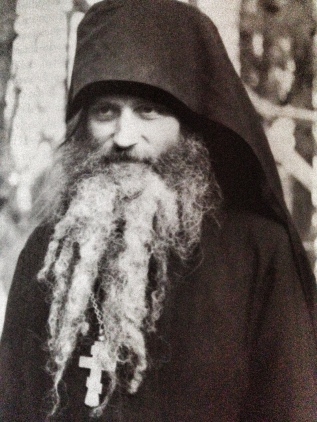
by Hieromonk Seraphim (Rose) of Platina
“It is truly later than we think; the Apocalypse is now.“
Before beginning my talk, a word or two on why it is important to have an Orthodox world-view, and why it is more difficult to build one today than in past centuries.
In past centuries—for example, in 19th century Russia—the Orthodox world-view was an important part of Orthodox life and was supported by the life around it. There was no need even to speak of it as a separate thing—you lived Orthodoxy in harmony with the Orthodox society around you, and you had an Orthodox world-view provided by the Church and society. In many countries the government itself confessed Orthodoxy; it was the center of public functions and the king or ruler himself was historically the first Orthodox layman with a responsibility to give a Christian example to all his subjects. Every city had Orthodox churches, and many of them had services every day, morning and evening. There were monasteries in all the great cities, in many cities, outside the cities, and in the countryside, in deserts and wildernesses. In Russia there were more than 1000 officially organized monasteries, in addition to other more unofficial groups. Monasticism was an accepted part of life. Most families, in fact, had somewhere in them a sister or brother, uncle, grandfather, cousin or someone who was a monk or a nun, in addition to all the other examples of Orthodox life: people who wandered from monastery to monastery, and fools for Christ. The whole way of life was permeated with Orthodox kinds of people, of which, of course, monasticism is the center. Orthodox customs were a part of daily life. Most books that were commonly read were Orthodox. Daily life itself was difficult for most people: they had to work hard to survive, life expectancy was not great, death was a frequent reality—all of which reinforced the Church’s teaching on the reality and nearness of the other world. Living an Orthodox life in such circumstances was really the same thing as having an Orthodox world-view, and there was little need to talk of such a thing.
Today, on the other hand, all this has changed. Our Orthodoxy is a little island in the midst of a world which operates on totally different principles—and every day these principles are changing for the worse, making us more and more alienated from it. Many people are tempted to divide their lives into two sharply distinct categories: the daily life we lead at work, with worldly friends, in our worldly business, and Orthodoxy, which we live on Sundays and at other times in the week when we have time for it. But the world-view of such a person, if you look at it closely, is often a strange combination of Christian values and worldly values, which really do not mix. The purpose of this talk is to see how people living today can begin to make their world-view more of one piece, to make it a whole Orthodox world-view.
Orthodoxy is life. If we don’t live Orthodoxy, we simply are not Orthodox, no matter what formal beliefs we might hold.
Life in our contemporary world has become very artificial, very uncertain, very confusing. Orthodoxy, it is true, has a life of its own, but it is also not very far from the life of the world around it, and so the life of the Orthodox Christian, even when he is being truly Orthodox, cannot help but reflect it in some way. A kind of uncertainty and confusion have also entered into Orthodox life in our times. In this talk we will try to look at contemporary life, and then at Orthodox life, to see how better we might fulfill our Christian obligation to lead other-worldly lives even in these quite terrible times, and to have an Orthodox Christian view of the whole of life today that will enable us to survive these times with our faith intact.
Life Today Has Become Abnormal
Anyone who looks at our contemporary life from the perspective of the normal life lived by people in earlier times—say, Russia, or America, or any country of Western Europe in the 19th century—cannot help but be struck by the fact of how abnormal life has become today. The whole concept of authority and obedience, of decency and politeness, of public and private behavior—all have changed drastically, have been turned upside down except in a few isolated pockets of people—usually Christians of some kind—who try to preserve the so-called “old-fashioned” way of life.
Our abnormal life today can be characterized as spoiled, pampered. From infancy today’s child is treated, as a general rule, like a little god or goddess in the family: his whims are catered to, his desires fulfilled.; he is surrounded by toys, amusements, comforts; he is not trained and brought up according to strict principles of Christian behavior, but left to develop whichever way his desires incline. It is usually enough for him to say, “I want it!” or “I won’t do it!” for his obliging parents to bow down before him and let him have his way. Perhaps this does not happen all the time in every family, but it happens often enough to be the rule of contemporary childrearing, and even the best-intentioned parents do not entirely escape its influence. Even if the parents try to raise the child strictly, the neighbors are trying to do something else. They have to take that into consideration when disciplining the child.
When such a child becomes an adult, he naturally surrounds himself with the same things he was used to in his childhood: comforts, amusements, and grown-up toys. Life becomes a constant search for “fun” which, by the way, is a word totally unheard of in any other vocabulary; in 19th century Russia they wouldn’t have understood what this word meant, or any serious civilization. Life is a constant search for “fun” which is so empty of any serious meaning that a visitor from any 19th-century country, looking at our popular television programs, amusement parks, advertisements, movies, music—at almost any aspect of our popular culture—would think he had stumbled across a land of imbeciles who have lost all contact with normal reality. We don’t often take that into consideration, because we are living in this society and we take it for granted.
Some recent observers of our contemporary life have called the young people of today the “me generation” and our times the “age of narcissism,” characterized by a worship of and fascination with oneself that prevents a normal human life from developing. Others have spoken of the”plastic” universe or fantasy world in which so many people live today, unable to face or come to terms with the reality of the world around them or the problems within themselves.
When the “me generation” turns to religion—which has been happening very frequently in the past several decades—it is usually to a “plastic” or fantasy form of religion: a religion of “self-development” (where the self remains the object of worship), of brainwashing and mind-control, of deified gurus and swamis, of a pursuit of UFO’s and “extra-terrestrial” beings, of abnormal spiritual states and feelings. We will not go into all these manifestations there, which are probably familiar enough to most of you, except to discuss a little later how these touch on the Orthodox Christian spiritual life of our days.
 It is important for us to realize, as we try ourselves to lead a Christian life today, that the world which has been formed by our pampered times. makes demands on the soul, whether in religion or in secular life, which are what one has to call totalitarian. This is easy enough to see in the mind-bending cults that have received so much publicity in recent years, and which demand total allegiance to a self-made “holy man”; but it is just as evident in secular life, where one is confronted not just by an individual temptation here or there, but by a constant state of temptation that attacks one, whether in the background music heard everywhere in markets and businesses, in the public signs and billboards of city streets, in the rock music which is brought even to forest campgrounds and trails, and in the home itself, where television often becomes the secret ruler of the household, dictating modern values, opinions, and tastes. If you have young children, you know how true this is; when they have seen something on television how difficult it is to fight against this new opinion which has been given as an authority by the television.
 The message of this universal temptation that attacks men today—quite openly in its secular forms, but usually more hidden in its religious forms—is:Live for the present, enjoy yourself, relax, be comfortable. Behind this message is another, more sinister undertone which is openly expressed only in the officially atheist countries which are one step ahead of the free world in this respect. In fact, we should realize that what is happening in the world today is very similar whether it occurs behind the Iron Curtain or in the free world. There are different varieties of it, but there is a very similar attack to get our soul. In the communist countries which have an official doctrine of atheism, they tell quite openly that you are to: Forget about God and any other life but the present; remove from your life the fear of God and reverence for holy things; regard those who still believe in God in the “old-fashioned’ way as enemies who must be exterminated. One might take, as a symbol of our carefree, fun-loving, self-worshipping times, our American “Disneyland”; if so, we should not neglect to see behind it the more sinister symbol that shows where the “me generation” is really heading: the Soviet Gulag, the chain of concentration camps that already governs the life of nearly half the world’s population.
Two False Approaches to Spiritual Life
But what, one might ask, does all this have to do with us, who are trying to lead, as best we can, a sober Orthodox Christian life? It has a lot to do with it. We have to realize that the life around us, abnormal though it is, is the place where we begin our own Christian life. Whatever we make of our life, whatever truly Christian content we give it, is still has something of the stamp of the “me generation” on it, and we have to be humble enough to see this. This is where we begin.
There are two false approaches to the life around us that many often make today, thinking that somehow this is what Orthodox Christians should be doing. One approach—the most common one—is simply to go along with the times: adapt yourself to rock music, modern fashions and tastes, and the whole rhythm of our jazzed-up modern life. Often the more old-fashioned parents will have little contact with this life and will live their own life more or less separately, but they will smile to see their children follow after its latest craze and think that this is something harmless.
This path is total disaster for the Christian life; it is the death of the soul. Some can still lead an outwardly respectable life without struggling against the spirit of the times, but inwardly they are dead or dying; and— the saddest thing of all—their children will pay the price in various psychic and spiritual disorders and sicknesses which become more and more common. One of the leading members of the suicide cult that ended so spectacularly in Jonestown four years ago was the young daughter of a Greek Orthodox priest; satanic rock groups like Kiss—”Kids in Satan’s Service”—are made up of ax-Russian Orthodox young people; the largest part of the membership of the temple of satan in San Francisco, according to a recent sociological survey—is made up of Orthodox boys. These are only a few striking cases; most Orthodox young people don’t go so far astray—they just blend in with the anti-Christian world around them and cease to be examples of any kind of Christianity for those around them.
This is wrong. The Christian must be different from the world, above all from today’s weird, abnormal world, and this must be one of the basic things he knows as part of his Christian upbringing. Otherwise there is no point in calling ourselves Christian—much less Orthodox Christians.
The false approach at the opposite extreme is one that one might call false spirituality. As translations of Orthodox books on the spiritual life become more widely available, and the Orthodox vocabulary of spiritual struggle is placed more and more in the air, one finds an increasing number of people talking about hesychasm, the Jesus Prayer, the ascetic life, exalted states of prayer, and the most exalted Holy Fathers like St. Symeon the New Theologian, St. Gregory Palamas, and St. Gregory the Sinaite. It is all very well to be aware of this truly exalted side of Orthodox spiritual life and to have reverence for the great saints who have actually lived it; but unless we have a very realistic and very humble awareness of how far away all of us today are from the life of hesychasm and how little prepared we are even to approach it, our interest in it will be only one more expression of our self-centered, plastic universe. “The me-generation goes hesychast!”— that is what some are trying to do today; but in actuality they are only adding a new game called “hesychasm” to the attractions of Disneyland.
There are books on this subject now that are very popular. In fact, Roman Catholics are going in very big for this kind of thing under Orthodox influence and themselves influencing other Orthodox people. For example, there is a Jesuit priest, Fr. George Maloney, who writes all kinds of books on this subject and translates St. Macarius the Great and St. Symeon the New Theologian and tries to get people in everyday life to be hesychasts. They have all kinds of retreats, usually “charismatic”; people are inspired by the Holy Spirit, supposedly, and undertake all types of these disciplines which we get from the Holy Fathers, and which are far beyond the level at which we are today. It is a very unserious thing. There is also a lady, Catherine de Hueck Doherty (in fact, she was born in Russia and became a Roman Catholic), who writes books about Poustinia, the desert life, and Molchanie, the silent life, and all these things which she tries to put into life like you would have some fashion for a new candy. This, of course, is very unserious and is a very tragic sign of our times. These kind of exalted things are being used by people who have no idea of what they are about. For some people it is only a habit or a pastime; for others who take it seriously, it can be a great tragedy. They think they are leading some kind of exalted life and really they have not come to terms with their own problems inside of them.
Let me re-emphasize that both of these extremes are to be avoided—both worldliness and super-spirituality—but this does not mean that we should not have a realistic awareness of the legitimate demands which the world makes upon us, or that we should cease respecting and taking sound instruction from the great hesychast Fathers and using the Jesus prayer ourselves, according to our circumstances and capacity. It just has to be on our level, down to earth. The point is—and it is a point that is absolutely necessary for our survival as Orthodox Christians today—we must realize our situation as Orthodox Christians today; we must realize deeply what times we live in, how little we actually know and feel our Orthodoxy, how far we are not just from the saints of ancient times, but even from the ordinary Orthodox Christians of a hundred years or even a generation ago, and how much we must humble ourselves just to strive as Orthodox Christians today.
What We Can Do
More specifically, what can we do to gain this awareness, this realization, and how can we make it fruitful in our lives? I will try to answer this question in two parts: first, concerning our awareness of the world around us, which as never before in the history of Christianity has become our conscious enemy; and second, concerning our awareness of Orthodoxy, which, I am afraid, most of us know much less than we should, much less than we have to know if we wish to keep it.
First, since whether we wish it or not we are in the world (and its effects are felt strongly even in a remote place like our monastery here), we must face it and its temptations squarely and realistically, but without giving in to it; in particular, we must prepare our young people for the temptations facing them, and as it were inoculate them against these temptations. We must be aware that the world around us seldom helps and almost always hinders the upbringing of the child in the true Orthodox spirit. We must be ready every day to answer the influence of the world by the principles of a sound Christian upbringing.
This means that what a child learns at school must constantly be checked and corrected at home. We cannot assume that something he is going to learn at school is simply something that is profitable or secular and has nothing to do with his Orthodox upbringing. He may be taught useful skills and facts (although many schools in America today are failing miserably even at this; many school teachers tell us that all they can do is keep the children in good order in class without even teaching them anything), but even if he gets this much, he is also taught many wrong attitudes and philosophies. A child’s basic attitude towards and appreciation of literature, music, history, art, philosophy, even science, and of course life and religion—must come first of all not from school, for the school will give you all this mixed up with modern philosophy; it must come first from the home and Church, or else he is bound to be miseducated in today’s world, where public education is at best agnostic, and at worst openly atheistic or anti-religious. Of course, in the Soviet Union all this is forced upon the child, with no religion whatsoever and an active program of making the child an atheist.
Parents must know exactly what is being taught their children in education courses, which are almost universal today in American schools, and correct it at home, not only by a frank attitude to this subject (especially between fathers and sons—a very rare thing in American society), but also by a clear setting forth of the moral aspect of it which is totally absent in public education.
Parents must know just what kind of music their children are listening to, what is in the movies they see (listening and seeing together with them when necessary), what kind of language they are exposed to and what kind of language they use, and give the Christian attitude to all this.
Television—in households where there is not enough courage to throw it out the window—must be strictly controlled and supervised to avoid the poisonous effects of this machine which has become the leading educator of anti-Christian attitudes and ideas in the home itself, especially to the young.
I speak about the raising of children because this is where the world first strikes its blows at Orthodox Christians and forms them in its image; once wrong attitudes have been formed in a child, the task of giving him a Christian education becomes doubly difficult.
But it is not only children, it is all of us, who are facing the world which is trying to form us in anti-Christianity, by means of schools, television, movies, popular music, and all the other influences that pound in upon us, most of all in the big cities. We have to be aware that what is being pounded in upon us is all of one piece; it has a certain rhythm, a certain message to give us, this message of self-worship, of relaxing, of letting go, of enjoying yourself, of giving up any thought of the other world, in various forms, whether in music, or in movies, television, or what is being taught in schools, the way subjects are emphasized, the way the background is given, and everything else; there is one particular thing which is being given to us. It is actually an education in atheism. We have to fight back by knowing just what the world is trying to do to us, and by formulating and communicating our Orthodox Christian response to it.
Frankly, from observing the way Orthodox families in today’s world live and pass on their Orthodoxy, it would seem that this battle is more often lost than won. The percentage of Orthodox Christians who retain their Orthodox identity intact and are not changed into the image of today’s world, is small indeed.
Still, it is not necessary to view the world around us as all bad. In fact, for our survival as Orthodox Christians we have to be smart enough to use whatever is positive in the world for our own benefit. Here I will go into a few points where we can use something in the world which seems to have nothing to do directly with Orthodoxy in order to formulate our Orthodox world-view.
The child who has been exposed from his earliest years to good classical music, and has seen his soul being developed by it, will not be nearly as tempted by the crude rhythm and message of rock and other contemporary forms of pseudo-music as someone who has grown up without a musical education. Such a musical education, as several of the Optina elders have said, refines the soul and prepares it for the reception of spiritual impressions.
The child who has been educated in good literature, drama, and poetry and has felt their effect in his own soul—that is, has really enjoyed them—, will not easily become an addict of the contemporary movies and television programs and cheap novels that devastate the soul and take it away from the Christian path.
The child who has learned to see beauty in classical painting and sculpture will not easily be drawn into the perversity of contemporary art or be attracted by the garish products of modern advertising and pornography.
 The child who knows something of the history of the world, especially in Christian times, and how other people have lived and thought, what mistakes and pitfalls people have fallen into by departing from God and His commandments, and what glorious and influential lives they have lived when they were faithful to Him—will be discerning about the life and philosophy of our own times and will not be inclined to follow the first new philosophy or way of life he encounters. One of the basic problems facing the education of children today is that in the schools they are no longer given a sense of history. It is a dangerous and fatal thing to deprive a child of a sense of history. It means that he has no ability to take examples from the people who lived in the past. And actually, history constantly repeats itself. Once you see that, it becomes interesting how people have answered problems, how there have been people who have gone against God and what results came from that, and how people changed their lives and became exceptions and gave an example which is lived down to our own times. This sense of history is a very important thing which should be communicated to children.
 In general, the person who is well acquainted with the best products of secular culture—which in the West almost always has definite religious and Christian overtones—has a much better chance of leading a normal, fruitful Orthodox life than someone who knows only the popular culture of today. One who is converted to Orthodoxy straight from “rock” culture, and in general anyone who thinks he can combine Orthodoxy with that kind of culture—has much suffering to go through and a difficult road in life before he can become a truly serious Orthodox Christian who is capable of handing on his faith to others. Without this suffering, without this awareness, Orthodox parents will raise their children to be devoured by the contemporary world. The world’s best culture, properly received, refines and develops the soul; today’s popular culture cripples and deforms the soul and hinders it from having a full and normal response to the message of Orthodoxy.
Therefore, in our battle against the spirit of this world, we can use the best things the world has to offer in order to go beyond them; everything good in the world, if we are only wise enough to see it, points to God, and to Orthodoxy, and we have to make use of it.
The Orthodox World-view
With such an attitude—a view of both the good things and the bad things in the world—it is possible for us to have and to fire an Orthodox world-view, that is, an Orthodox view on the whole of life, not just on narrow church subjects. There exists a false opinion, which unfortunately is all too widespread today, that it is enough to have an Orthodoxy that is limited to the church building and formal “Orthodox” activities, such as praying at certain times or making the sign of the Cross; in everything else, so this opinion goes, one can be like anyone else, participating in the life and culture of our times without any problem, as long as we don’t commit sin.
Anyone who has come to realize how deep Orthodoxy is, and how full is the commitment which is required of the serious Orthodox Christian, and likewise what totalitarian demands the contemporary world makes on us, will easily see how wrong this opinion is. One is Orthodox all the time every day, in every situation of life, or one is not really Orthodox at all. Our Orthodoxy is revealed not just in our strictly religious views, but in everything we do and say. Most of us are very unaware of the Christian, religious responsibility we have for the seemingly secular part of our lives. The person with a truly Orthodox world-view lives every part of his life as Orthodox.
Let us, therefore, ask here: How can we nourish and support this Orthodox world-view in our daily life?
The first and most obvious way is to be in constant contact with the sources of Christian nourishment, with everything that the Church gives us for our enlightenment and salvation: the Church services and Holy Mysteries, Holy Scripture, the Lives of Saints, the writings of the Holy Fathers. One must, of course, read books that are on one’s own level of understanding, and apply the Church’s teaching to one’s own circumstances in life; then they can be fruitful in guiding us and changing us in a Christian way.
But often these basic Christian sources do not have their full effect on us, or don’t really affect us at all, because we don’t have the right Christian attitude towards them and towards the Christian life they are supposed to inspire. Let me now say a word here about what our attitude should be if we are to obtain real benefit from them and if they are going to be for us the beginning of a truly Orthodox world-view.
First of all, Christian spiritual food, by its very nature, is something living and nourishing; if our attitude towards it is merely academic and bookish, we will fail to get the benefit it is meant to give. Therefore, if we read Orthodox books or are interested in Orthodoxy only to gain information—or show off our knowledge to others, we are missing the point; if we learn of the commandments of God and the law of His Church merely to be “correct” and to judge the “incorrectness” of others, we are missing the point. These things must not merely affect our ideas, but must directly touch our lives and change them. In any time of great crisis in human affairs—such as the critical times right in front of us in the free world—those who place their trust in outward knowledge, in laws and canons and correctness, will be unable to stand. The strong ones then will be those whose Orthodox education has given them a feel for what is truly Christian, those whose Orthodoxy is in the heart and is capable of touching other hearts.
Nothing is more tragic than to see someone who is raised in Orthodoxy, has a certain idea of the catechism, has read some Lives of Saints, has a general idea of what Orthodoxy stands for, understands some of the services, and then is unaware of what is going on around him. And he gives his children this life in two categories: one is the way most people live and the other way is how Orthodox live on Sundays and when they are reading some Orthodox text. When a child is raised like that he is most likely not going to take the Orthodox one; it is going to be a very small part of his life, because the contemporary life is too attractive, too many people are going for it, it is too much a part of reality today, unless he has been really taught how to approach it, how to guard himself against the bad effects of it and how to take advantage of the good things which are in the world.
Therefore, our attitude, beginning right now, must be down-to-earth and nominal. That is, it must be applied to the real circumstances of our life, not a product of fantasy and escapism and refusal to face the often unpleasant facts of the world around us. An Orthodoxy that is too exalted and too much in the clouds belongs in a hothouse and is incapable of helping us in our daily life, let alone saying anything for the salvation of those around us. Our world is quite cruel and wounds souls with its harshness; we need to respond first of all with down-to-earth Christian love and understanding, leaving accounts of hesychasm and advanced forms of prayer to those capable of receiving them.
So also, our attitude must be not self-centered but reaching out to those who are seeking for God and for a godly life. Nowadays, wherever there is a good-sized Orthodox community, the temptation is to make it into a society for self-congratulation and for taking delight in our Orthodox virtues and achievements: the beauty of our church buildings and furnishings, the splendor of our services, even the purity of our doctrine. But the true Christian life, even since the time of the Apostles, has always been inseparable from communicating it to others. An Orthodoxy that is alive by this very fact shines forth to others—and there is no need to open a “department of missions” to do this; the fire of true Christianity communicates itself without this. If our Orthodoxy is only something we keep for ourselves, and boast about it, then we are the dead burying the dead—which is precisely the state of many of our Orthodox parishes today, even those that have a large number of young people, if they are not going deeply into their Faith. It is not enough to say that the young people are going to church. We need to ask what they are getting in church, what they are taking away from church, and, if they are not making Orthodoxy a part of their whole life, then it really is not sufficient to say that they are going to church.
Likewise, our attitude must be loving and forgiving. There is a kind of hardness that has crept into Orthodox life today: “That man is a heretic; don’t go near him;” “that one is Orthodox, supposedly, but you can’t really be sure;” “that one there is obviously a spy.” No one will deny that the Church is surrounded by enemies today, or that there are some who stoop to taking advantage of our trust and confidence. But this is the way it has been since the time of the Apostles, and the Christian life has always been something of a risk in this practical way. But even if we are sometimes taken advantage of and do have to show some caution in this regard, still we cannot give up our basic attitude of love and trust without which we lose one of the very foundations of our Christian life. The world, which has no Christ, has to be mistrustful and cold, but Christians, on the contrary, have to be loving and open, or else we will lose the salt of Christ within us and become just like the world, good for nothing but to be cast out and trodden underfoot.
A little humility in looking at ourselves would help us to be more generous and forgiving of the faults of others. We love to judge others for the strangeness of their behavior; we call them “cuckoos” or “crazy converts.” It is true that we should beware of really unbalanced people who can do us great harm in the Church. But what serious Orthodox Christian today is not a little “crazy”? We don’t fit in with the ways of this world; if we do, in today’s world, we aren’t serious Christians. The true Christian today cannot be at home in the world; he cannot help but feel himself and be regarded by others as a little “crazy.” Just to keep alive the ideal of other-worldly Christianity today, or to get baptized as an adult, or to pray seriously, is enough to put you into a crazy house in the Soviet Union and in many other countries, and these countries are leading the way for the rest of the world to follow.
Therefore, let us not be afraid of being considered a little “crazy” by the world, and let us continue to practice the Christian love and forgiveness which the world can never understand, but which in its heart it needs and even craves.
Finally, our Christian attitude must be what, for want of a better word, I would call innocent. Today the world places a high value on sophistication, on being worldly-wise, on being a “professional.” Orthodoxy places no value on these qualities; they kill the Christian soul. And yet these qualities constantly creep into the Church and into our lives. How often one hears enthusiastic converts especially, express their desire of going to the great Orthodox centers, the cathedrals and monasteries where sometimes thousands of the faithful come together and everywhere the talk is of church matters, and one can feel how important Orthodoxy is, after all. That Orthodoxy is a small drop in the bucket when you look at the whole society, but in these great cathedrals and monasteries there are so many people that it seems as though it is really an important thing. And how often one sees these same people in a pitiful state after they have indulged their desire, returning from the “great Orthodox centers” sour and dissatisfied, filled with worldly church gossip and criticism, anxious above all to be “correct” and “proper” and worldly-wise about church politics. In a word, they have lost their innocence, their unworldliness, being led astray by their fascination with the worldly side of the Church’s life.
In various forms, this is a temptation to us all, and we must fight it by not allowing ourselves to overvalue the externals of the Church, but always returning to the “one thing needful”: Christ and the salvation of our souls from this wicked generation. We needn’t be ignorant of what goes on in the world and in the Church—in fact, for our own selves we have to know—but our knowledge must be practical and simple and single-minded, not sophisticated and worldly.
Conclusion
It is obvious to any Orthodox Christian who is aware of what is going on around him today, that the world is coming to its end. The signs of the times are so obvious that one might say that the world is crashing to its end.
What are some of these signs?
—The abnormality of the world. Never have such weird and unnatural manifestations and behavior been accepted as a matter of course as in our days. Just look at the world around you: what is in the newspapers, what kind of movies are being shown, what is on television, what it is that people think is interesting and amusing, what they laugh at; it is absolutely weird. And there are people who deliberately promote this, of course, for their own financial benefit, and because that is the fashion, because there is a perverse craving for this kind of thing.
—The wars and rumors of wars, each more cold and merciless than the preceding, and all overshadowed by the treat of the unthinkable universal nuclear war, which could be set off by the touch of a button.
—The widespread natural disasters: earthquakes, and now volcanoes— the newest one forming not far from here near Yosemite Park in central California—which are already changing the world’s weather patterns.
—The increasing centralization of information on and power over the individual, represented in particular by the enormous new computer in Luxembourg, which has the capacity to keep a file of information on every man living; its code number is 666 and it is nicknamed “the beast” by those who work on it. To facilitate the working of such computers, the American government plans to begin in 1984 the issuance of Social Security checks to persons with a number (apparently including the code number 666) stamped on their right hand or forehead—precisely the condition which will prevail, according to the Apocalypse (ch. 13) during the reign of antichrist. Of course, it doesn’t mean that the first person to get himself stamped 666 is the antichrist, or the servant of antichrist, but once you are used to this, who will be able to resist? They will train you first and then they will make you bow down to him.
—Again, the multiplication of false Christs and false Antichrists. The latest candidate just this summer spent probably millions of dollars advertising his impending appearance on world television, promising to give at that time a “telepathic message” to all the world’s inhabitants. Quite apart from any occult powers that might be involved in such events, we already know well enough the opportunities for presenting subliminal messages by radio and especially by television, as well as the fact that this can be done by anyone with the technology for breaking into normal radio and television signals, no matter how many laws there might be against it.
—The truly weird response to the new movie everyone in America is talking about and seeing: “E.T.”, which has caused literally millions of seemingly normal people to express their affection and love for the hero, a “Saviour” from outer space who is quite obviously a demon—an obvious preparation for the worship of the coming Antichrist. (And incidentally, the movie editor of the official Greek Archdiocese newspaper in America, an Orthodox priest, has heartily recommended this movie to Orthodox people saying that it is a wonderful movie which can teach us about love, and everyone should go see it. There is quite a contrast between people who are trying to be aware of what is going on, and those who are simply led into the mood of the times.)
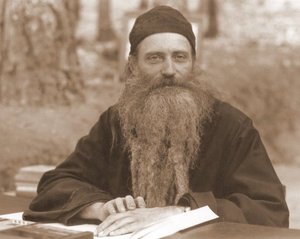 I could go on with details like this, but my purpose is not to frighten you, but to make you aware of what is happening around us. It is truly later than we think; the Apocalypse is now. And how tragic it is to see Christians, and above all Orthodox young people, with this incalculable tragedy hanging over their heads, who think they can continue what is called a “normal life” in these terrible times, participating fully in the whims of this silly, self-worshipping generation, totally unaware that the fool’s paradise we are living in is about to crash, completely unprepared for the desperate times that lie just ahead of us. There is no longer even a question of being a “good” or a “poor” Orthodox Christian; the question now is: will our Faith survive at all? With many, it will not survive; the coming Antichrist will be too attractive, too much in the spirit of the worldly things we now crave, for most men even to know that they have lost their Christianity by bowing down to him.
 Still the call of Christ comes to us; let us begin to heed it. The clearest expression of this call today is coming from the enslaved atheist world, where there is real suffering for Christ and a seriousness of life which we are rapidly losing or have already lost. One Orthodox priest in Romania, Fr. George Calciu, is now near death in a communist prison for daring to challenge young seminarians and students to put off their blind allegiance to the spirit of the times and come forward to labor for Christ. After speaking of the emptiness of atheism, he tells today’s young people: “I call you to a much higher flight, to total abandonment, to an act of courage which defies reason. I call you to God. To the One that transcends the world so that you might know an infinite heaven of spiritual joy, the heaven which you presently grope for in your personal hell, and which you seek even while in a state of non-deliberate revolt….Jesus has always loved you, but now you have the choice to respond to His invitation. In responding, you are ordained to go and bear fruit that will remain. To be a prophet of Christ in the world in which you live. To love your neighbor as yourself and to make all men your friend. To proclaim by every action this unique and limitless love which has raised man from the level of a serf to that of a friend of God. To the prophets of this liberating love which delivers you from all constraint, returning to you your integrity as you offer yourself to God.”
Fr. George, speaking to young people who had little inspiration to serve Christ’s Church because they had accepted the worldly opinion (common also among us in the free world) that the Church is only a set of buildings or a worldly organization, calls them and us to a deeper awareness of Christ’s Church and of how our “formal membership” in it is not enough to save us.
“The Church of Christ is alive and free. In her we move and have our being, through Christ Who is her Head. In Him we have full freedom. In the Church we learn of truth and the truth will set us free (John 8:32). You are in Christ’s Church whenever you uplift someone bent down in sorrow, or when you give alms to the poor, and visit the sick. You are in Christ’s Church when you cry out: “Lord, help me.” You are in Christ’s Church when you are good and patient, when you refuse to get angry at your brother, even if he has wounded your feelings. You are in Christ’s Church when you pray: ‘Lord, forgive him.’ When you work honestly at your job, returning home weary in the evenings but with a smile upon your lips; when you repay evil with love—you are in Christ’s Church. Do you not see, therefore, young friend, how close the Church of Christ is? You are Peter and God is building His Church upon you. You are the rock of His Church against which nothing can prevail….Let us build churches with our faith, churches which no human power can pull down, a church whose foundation is Christ….Feel for your brother alongside you. Never ask: ‘Who is he?’ Rather say: ‘He is no stranger; he is my brother. He is the Church of Christ just as I am.”
With such a call in our hearts, let us begin really to belong to the Church of Christ, the Orthodox Church. Outward membership is not enough; something must move within us that makes us different from the world around us, even if that world calls itself “Christian” and even “Orthodox.” Let us keep and nourish those qualities of the true Orthodox world-view which I mentioned earlier: a living, normal attitude, loving and forgiving, not self-centered, preserving our innocence and unworldliness even with a full and humble awareness of our own sinfulness and the power of the worldly temptations around us. If we truly live this Orthodox world-view, our Faith will survive the shocks ahead of us and be a source of inspiration and salvation for those who will still be seeking Christ even amidst the shipwreck of humanity which has already begun today.
From The Orthodox Word, vol. 18, no. 4 (105), July-August 1982, pp. 160-176.
(Source)


Subscribe to:
Posts (Atom)
