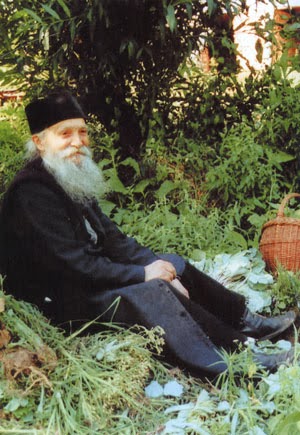
Since the devil has as nourishment the passions and pleasures of the senses, he too will die as he is deprived of this nourishment. “The strong lion perishes for lack of prey” (Job 4:11). St. Neilos has noted that the devil is often referred to as an “ant-lion,” just as the passions are. This means that at first these passions appear as something very small, but later become great and strong like lions. Do you see, dear brother, what great enemies you have to defeat? Do you see that by cutting off the passions of the senses, you are also going to put Satan to death? But alas this cutting off and this victory cannot be won without a war. It is like the external wars, no one can win a victory without first waging a war against the enemy. It is certain that you have to experience a great struggle in each of your senses both from the point of view of habit and of the enemy.
For the bad habit desires to draw each sense toward its pleasurable object when it is present. On the other hand, the enemy desires to wage a great battle in the memory and imagination of the mind in order to achieve its consent to enjoy that pleasure, so that, in doing so, the devil can also enjoy the same pleasure. But you must stand courageously and never consent to the will of the enemy. Say to yourself that iambic proverb of St. Gregory the Theologian: “No one can excel by beginning from cowardice; it is the victories that bring praise.”
An ancient people recognized their children to be their genuine offspring only after placing before them a viper and observing them catch it courageously. You too, dear brother, must make the enemy realize that you are a true child of Christ Who is your heavenly Father, and who has overcome the passions and the devil-through the courage you demonstrate in fighting against the evil passions of your senses. And if the enemy stands to fight you, be not afraid to tell him what that brave Spartan said to Xerxes: “Oh king, you managed to sail the sea and to cut a channel across the peninsula of Athos, but you will not pass the side of one armed Spartan.” For this reason then show the enemy that you are not a slave of your senses, but lord and king. Show that you are not only flesh and blood, but a rational mind, appointed by God to be leader and sole ruler over the irrational passions of the body. Say to yourself that wise proverb about evil habits: “The best learning for man is to unlearn evil.” Now, if I have learned, wrongly, to give to my senses their sensual objects, and this wrong learning has brought about a bad habit, and this bad habit a still further bad condition, why can I not now learn to do the opposite? Let, therefore, the good learning become a good habit and the good habit a good and permanent condition. If, in doing this, I am to experience difficulties and bitterness at first, let me experience them. Afterward I will be able to experience both ease and joy. The first efforts to learn and practice the virtues and establish the habit of virtuous living are often very bitter and most difficult for the senses. The activity that follows after these initial efforts to acquire the habit of virtuous living is very easy, ineffably sweet, and enjoyable. Briefly we can say that angels are invisibly present, holding crowns in their hands. Christ himself is the one Who will crown you every time you are victorious in the battle against the evil passions of the senses and you do not succumb to them. St. Basil said: “Suffering brings glory, and tribulation brings crowns.” But you have been beaten once or twice (I hope not!). Be not completely overcome. Stand firm and courageous, calling upon God for help. If you do so, the grace of God will come directly to your help and will not leave you to be completely overcome by the enemy. Do you want to be sure of this? Follow me and let us travel to Sodom. Have you come? Behold the five kings of Sodom mentioned in Holy Scripture (Gen 14), who were then under the hegemony of the Assyrian king Chedorlaomer and who were paying tribute to him and to the other kings with him for ten years. In the thirteenth year they rebelled and did not want to pay the tribute to the Assyrian king, who then declared war on them. It appeared soon afterward that the five kings were subdued and captured by the Assyrians. What happened next? When Abram heard about this, he ran to their aid; he fought, he won, and he liberated them for the sake of his nephew Lot.
St. Nicodemos of the Holy Mountain - A Handbook of Spiritual Council – Chapter 8; Guarding All the Senses in General pp. 136-145 (“The Classics of Western Spirituality” series.)

- Γέροντα, γιατί πολλοί άνθρωποι, ενώ πίστευαν, έχασαν την πίστη τους;
- Αν δεν προσέχει κανείς στα θέματα της πίστεως και της λατρείας, σιγά-σιγά ξεχνιέται και μπορεί νά γίνει αναίσθητος, νά φθάσει σέ σημείο νά μην πιστεύει τίποτε.
- Μερικοί, Γέροντα, λένε οτι ή πίστη τους κλονίζεται, όταν βλέπουν να υποφέρουν καλοί άνθρωποι.
- Ακόμη κι αν κάψει ό θεός όλους τους καλούς, δεν πρέπει νά βάλει κανείς αριστερό λογισμό, άλλα νά σκεφθεί πώς ό Θεός, ο,τι κάνει, οπό αγάπη το κάνει. Ξέρει ό Θεός πώς εργάζεται. Γιά νά επιτρέψει νά συμβεί κά ποιο κακό, κάτι καλύτερο θά βγεί.
- Γέροντα, σήμερα ακόμη και τά πιστά παιδιά άμφιταλαντεύονται, γιατί στά σχολεία υπάρχουν καθηγητές πού διδάσκουν την αθεΐα.
- Γιατί νά άμφιταλαντεύωνται; Ή Άγια Αικατερίνη δεκαεννιά χρονών ήταν και διακόσιους φιλοσόφους τους άποστόμωσε μέ την κατά Θεόν γνώση και τήν σοφία της. Ακόμη και οι Προτεστάντες τήν έχουν προστάτιδα τής επιστήμης.
Στα θέματα τής πίστεως και στα θέματα τής πατρίδος δεν χωράνε υποχωρήσεις· πρέπει να είναι κανείς αμετακίνητος, σταθερός.
- Γέροντα, παλιά προσευχόμουν με πίστη στον Θεό και ο,τι ζητούσα μου το έκανε. Τώρα δέν έχω αυτήν την πίστη. Που οφείλεται αυτό;
- Στην κοσμική λογική πού έχεις. Ή κοσμική λογική κλονίζει τήν πίστη. «Έάν έχητε πίστιν καί μή διακρίθήτε, πάντα όσα έάν αίτήσητε εν τη προσευχή πιστεύοντες, λήψεσθε», είπε ό Κύριος. "Ολη ή βάση εκεί είναι. Στην πνευματική ζωή κινούμαστε στο θαΰμα. "Ενα σύν δύο δέν κάνει πάντα τρία- κάνει και πέντε χιλιάδες και ένα εκατομμύριο!
Χρειάζεται καλή διάθεση και φιλότιμο.
Γιατί, αν ό άνθρωπος δέν έχει καλή διάθεση, τίποτε δέν καταλαβαίνει. Νά, και γιά τήν Σταύρωση τοϋ Χριστού, τόσες λεπτομέρειες είχαν πει οι Προφήτες - μέχρι και τί θά κάνουν τά ιμάτια Του, τί θά κάνουν τά χρήματα της προδοσίας, ότι θά αγοράσουν μ' αυτά τόν αγρό τοϋ Κεραμέως, γιά νά θάβουν τους ξένους -, άλλα οι Εβραίοι πάλι δέν καταλάβαιναν. «Ό δέ παράνομος Ιούδας ουκ ήβουλήθη συνιέναι»...
Γεροντας Παϊσιος
Ρώτησε ένας αδελφός τον αββά Ποιμένα: «Εάν δώ κάποιο σφάλμα του αδελφού μου, είναι καλό να το σκεπάσω;» Κι ο Γέροντας απάντησε: «Όποια ώρα σκεπάσουμε το σφάλμα του αδελφού μας,
σκεπάζει και ο Θεός το δικό μας.
Και όποια ώρα θα φανερώσουμε του αδελφού το σφάλμα, θα φανερώσει και ο Θεός το δικό μας».
Aββάς Ποιμένας

For most of us who are serious about our spiritual life, we feel we have a good degree of self-control. We are able to follow the regular fasts and other Traditions of the Church. We don't seem to have any major sins. This is a good condition, but also one where we need to be especially vigilant. The passions that do remain can become seen as frivolous or insignificant. But these are like the glowing embers of a fire that is about to go out. At any time a wind can come along and restart an immense blase and even start a whole forest on fire. Each glowing ember needs to be attended to to prevent the danger of a major forest fire. Every passion, no matter how slight, needs to be attacked.
Saint Theophan advises us in this way,
No matter how small or weak a passion appears, it is necessary to regard it as if it were the largest and most powerful.How do we respond then to the passions that we seem to regard lightly as we become more spiritually mature? One thing we cannot do is ignore them and surely if we do they will eventually flame up and possibly destroy us.
Saint Theophan says that we have to get very angry at them and treat them with hostility.
Try to stir up anger within yourself against it as quickly as possible. This anger is a firm rejection of the passion. The passionate cannot be sustained unless there is sympathy for it, but any sympathy is destroyed by anger, and the passionate will leave or fall away at the first manifestation of it. Here is the only case where anger is permissible and useful.The Prophet David told us, "Be angry, and sin not (Psalm 4:5).
Saint Paul says, "Be angry and sin not" (Ephesians 4:26).
It s important to always be on the lookout for the work of our passions. It is as if there are terrorists lurking about who want to destroy us. They may be silent and not too visible but we must always be on the lookout and ready to act with quick and firm action against them. Do not delay in action against them when you see even the slightest action of a passion. Your sympathy towards it will only lead to its growth and the potential of a raging fire that you cannot put out.
Saint Theophan says,
Self-indulgence still lives concealed within even long after we have obviously renounced and devoted ourselves to God... Thus, it is necessary to reject this sympathy and stir up anger... As son as you realize a passion's belligerence, get angry at it in a very obvious way.
Reference: The Spiritual Life, pp 233-236

We are constantly called to be watchful because our passions are ever active, lurking to arise when we least expect. This war we are engaged in is a spiritual war. The challenge is to not let our passions have any air or food. If we were not successful in our watchfulness, we can starve them with external actions. This is always a challenge, but the approach is one of using our will to deny the passion what it desires. When we deny them, we starve them of food and air and they die. We should learn to combine our inner efforts with external efforts.
Saint Theophan tells us that one kind of active warfare against our passions is to carry out actions that are directly opposed to them.
He writes,
For example, to suppress stinginess, it is necessary to become generous; to combat pride, it is necessary to choose humbling occupations; to combat carousing, one must stay at home; and the like. It is true that one such mode of action does not lead directly to the goal, because the passion, enduring external constraint, may erupt inwardly--either the same passion, or some other in its place. When inner and spiritual warfare are united with this active combat, however, they soon defeat any passion against which they are directed together.This means we must learn to be watchful of our inner thoughts as well as take direct wilful action to counter the rise of a passion. Both are useful in our spiritual effort to control our passions.
Ordering our life is one important aspect of the Orthodox way of life. We need to choose our friends, our work, our activities, and so forth so that we do not allow ourselves to be tempted in ways we cannot control. We need to make changes in how we live to increase activities that are the opposite of the passions we encounter repeatedly. With a balanced life, when we do experience a passion coming forth, we can have the poser of our will to aggressively oppose it with opposite action. Do this and you will find you will make progress in overcoming the passion that haunts you.
Remember, passions are what lead us into sin and separation from God. As we learn to conquer them we develop a more virtuous life and our prayer life becomes more effective. God will send more grace that will aid us in this battle. Slow down and order your life so that you can overcome all your passions and come closer to God at all times.
"Since this habit has acquired power over your heart through frequent repetition of certain actions, which satisfy the passion dwelling in the heart, opposing it in the heart is not enough to weaken and destroy this power; you must use actions which are contrary to the former ones, actions opposed to the passion, smashing and destroying it. - Unseen Warfare
Saint Theophan the Recluse
“Each person must bear the weaknesses of others. Who is perfect? Who can boast that he has kept his heart undefiled? Hence, we are all sick, and whoever condemns his brother does not perceive that he himself is sick, because a sick person does not condemn another sick person.”
-Elder Ephraim of Philotheou & Arizona
http://frmilovan.wordpress.com/2013/11/15/we-are-all-sick/

Αναγνωρίζουν ομιλίες, αντιλαμβάνονται συμπεριφορές, ξέρουν να μετρούν. Τα βρέφη είναι τελικά πολύ πιο «σύνθετα» όντα από ό,τι νομίζουμε.
Τα βρέφη αντιλαμβάνονται και γνωρίζουν πολύ περισσότερα από όσα πιστεύουμε
Ο υπέροχος αλλά μυστηριώδης κόσμος των βρεφών αρχίζει να φωτίζεται ολοένα και περισσότερο αφού οι επιστήμονες τα τελευταία χρόνια έχουν καταφέρει να αποκωδικοποιήσουν μια σειρά ικανότητες και δυνατότητες που έχει ο άνθρωπος κατά τους πρώτους μήνες, ακόμη και κατά τις πρώτες εβδομάδες της ζωής του. Όπως φαίνεται, τα βρέφη γνωρίζουν αλλά και αντιλαμβάνονται πολύ περισσότερα από όσα πιστεύαμε ως σήμερα.
Μας καταλαβαίνουν προτού καν… ξεμυτίσουν
Τα έμβρυα μπορούν να «αποκωδικοποιήσουν» τον λόγο ακόμη και τρεις μήνες πριν από τη γέννησή τους. Αυτό έδειξε μελέτη γάλλων ερευνητών του Εργαστηρίου GRAMFC (Groupe de Recherche sur l’ Analyse Multimodale de la Fonction Cérébrale) που βασίστηκε σε λεπτομερείς απεικονίσεις του εγκεφάλου 12 βρεφών τα οποία είχαν γεννηθεί πρόωρα. Μόλις στις 28 εβδομάδες της κύησης τα βρέφη φάνηκε ότι μπορούσαν να διακρίνουν μεταξύ διαφορετικών συλλαβών όπως «γκα» και «μπα» αλλά και μεταξύ ανδρικών και γυναικείων φωνών. Οι ερευνητές αναφέρουν ότι είναι σχεδόν απίθανο η ελάχιστη εμπειρία των μωρών εκτός της μήτρας να ήταν εκείνη που τους χάρισε την ικανότητα να αντιλαμβάνονται τις συλλαβές. Όπως υποστηρίζουν, τα βρέφη μαθαίνουν τη… γλώσσα των μεγάλων κατά την ενδομήτρια ζωή τους. Τα νέα αυτά ευρήματα ενισχύουν τη θεωρία που αναφέρει πως τα βρέφη αποκτούν γλωσσικές ικανότητες ενόσω βρίσκονται στη μήτρα αποκρινόμενα στις φωνές των γονιών τους.
Αναγνωρίζουν τα ψέματα!
Πρόσφατη μελέτη έδειξε ότι τα μωρά, ακόμη και από την ηλικία των 18 μηνών, μπορούν να καταλάβουν πότε ο γονιός τους τούς λέει ψέματα! Τα βρέφη, όπως αναφέρουν ψυχολόγοι του Πανεπιστημίου Κονκόρντια στον Καναδά, είναι σε θέση να καταλάβουν πότε κάποια συναισθήματα που δείχνουν οι γύρω τους δεν συνάδουν προς τα γεγονότα που λαμβάνουν χώρα εκείνη τη στιγμή, όπως π.χ. όταν ένας ενήλικος δείχνει λυπημένος ενώ του δίνουν κάποιο αντικείμενο που επιθυμεί.
Οι μαθηματικές ικανότητες
Επιστήμονες του Πανεπιστημίου Ντιουκ στη Βόρεια Καρολίνα υποστηρίζουν ότι τα μωρά που αντιλαμβάνονται τη διαφορά ανάμεσα σε τρία μήλα και σε έξι μήλα στην ηλικία των έξι μηνών είναι πιθανότερο να έχουν καλύτερες αριθμητικές ικανότητες όταν φτάσουν στο προνήπιο. Και αυτό σημαίνει ότι ορισμένες μαθηματικές ικανότητες μπορεί να είναι έμφυτες. Προηγούμενες μελέτες έχουν δείξει ότι τα βρέφη έχουν την ικανότητα να ξεχωρίζουν σύνολα που περιέχουν διαφορετικό αριθμό αντικειμένων. Πολλοί νευροεπιστήμονες και αναπτυξιακοί βιολόγοι υποψιάζονται ότι η «διαισθητική» αντίληψη του πλήθους αποτελεί τη βάση για τις μαθηματικές ικανότητες των ενηλίκων. Οι ερευνητές αναφέρουν ότι τα αποτελέσματα της μελέτης που έκαναν ενισχύουν την άποψη ότι η διαισθητική αντίληψη των αριθμών είναι έμφυτη ικανότητα στην οποία θα βασιστούν αργότερα οι μαθηματικές ικανότητες. Επισημαίνουν πάντως ότι το ταλέντο στα μαθηματικά επηρεάζεται και από πολλούς περιβαλλοντικούς παράγοντες όπως η παιδεία και η ενθάρρυνση από τους γονείς.
Η αριθμητική
Τα 18μηνα βρέφη κατανοούν τους βασικούς κανόνες της αριθμητικής, σύμφωνα με μια μελέτη ειδικών του Πανεπιστημίου του Κουίνσλαντ στην Αυστραλία. Οι ερευνητές κατέληξαν σε αυτό το συμπέρασμα αφού παρακολούθησαν βρέφη της συγκεκριμένης ηλικίας και είδαν ότι τα μικρά επιλέγουν να βλέπουν βίντεο όπου γίνεται σωστή αρίθμηση παρά άλλα όπου δεν ακολουθούνται οι κανόνες της πρόσθεσης. Παρ’ ότι ως σήμερα πιστεύαμε πως τα παιδιά κατακτούν τους κύριους κανόνες της αριθμητικής στην ηλικία των περίπου τεσσάρων ετών, η συγκεκριμένη μελέτη δείχνει ότι οι βασικές αρχές γίνονται «κτήμα» των παιδιών από τη βρεφική ακόμη ηλικία.
Σούπερ παιδιά τα βρέφη που κολυμπούν
Η εκμάθηση κολύμβησης από την αρχή της ζωής χαρίζει στα παιδιά εντυπωσιακές δεξιότητες αργότερα στον βίο τους, σύμφωνα με μελέτη ειδικών του Νορβηγικού Πανεπιστημίου Επιστήμης και Τεχνολογίας και του Πανεπιστημίου του Λάνκαστερ. Οι επιστήμονες ανακάλυψαν ότι τα μωρά που κολυμπούν εμφανίζουν καλύτερη ισορροπία και μπορούν να αρπάζουν και να κρατούν αντικείμενα πολύ πιο εύκολα από όσα βρέφη δεν μαθαίνουν κολύμβηση. Μάλιστα η διαφορά αυτή σε σημαντικές δεξιότητες φάνηκε να ισχύει ακόμη και όταν τα παιδιά είχαν συμπληρώσει τα πέντε έτη τους.
Οι ερευνητές συνέκριναν 19 βρέφη-κολυμβητές με αντίστοιχο αριθμό παιδιών που δεν συμμετείχαν σε μαθήματα κολύμβησης. Τα βρέφη είχαν συμμετάσχει σε πρόγραμμα κολύμβησης επί δύο ώρες την εβδομάδα από την ηλικία των δύο-τριών μηνών ως την ηλικία των επτά μηνών. Όταν τα παιδιά των δύο ομάδων εξετάστηκαν στην ηλικία των πέντε ετών, η διαφορά στις επιδόσεις τους σε ασκήσεις ισορροπίας και άλλων φυσικών δεξιοτήτων ήταν εντυπωσιακή, σημειώνουν οι ερευνητές.
http://iliaxtida.wordpress.com

Ήταν κάποιος κοινοβιάρχης που είχε πολλή δόξα από τους ανθρώπους και ήταν πατέρας διακοσίων μοναχών. Σ' αυτόν ήρθε ένας γέροντας φτωχός και παρακάλεσε το θυρωρό να ειδοποιήσει τον αββά, ότι είναι ο τάδε αδελφός.
Με πολύ δυσκολία μπήκε ο θυρωρός να τον ειδοποιήσει και βρήκε τον αββά να μιλάει με άλλους. Στάθηκε δε λίγο και του μετέφερε όσα αφορούσαν το φτωχό, χωρίς να ξέρει ποιος στην ουσία ήταν
Ο αββάς τότε τον μάλωνε λέγοντας δεν κοιτάς που μιλάω με τους ανθρώπους; Άσε με τώρα. Αυτό έφυγε. Μακροθύμησε δε ο Κύριος, έμεινε και τον περίμενε, μέχρι να έρθει.
Γύρω στις έντεκα, ήρθε κάποιος πλούσιος, τον οποίον γρήγορα τον υποδέχτηκε ο κοινοβιάρχης. Τον είδε να είναι μαζί με τον πλούσιο, και ο φτωχός τότε γέροντας τον παρακάλεσε λέγοντας:
-Θέλω να σου μιλήσω, αββά.
Αυτός όμως μπήκε μέσα μαζί με τον πλούσιο να φάνε, θέλοντας δήθεν να φροντίσει τους φιλοξενουμένους. Έπειτα πάλι μετά το γεύμα ξεπροβοδίζει μέχρι τη θύρα τον πλούσιο και επέστρεψε αιχμαλωτισμένος στις πολλές φροντίδες και λησμονώντας την παράκληση του πτωχού και ανεξίκακου γέροντα.
Όταν έφτασε το βράδυ και ο κοινοβιάρχης δεν αξιώθηκε να δεχτεί τον ευλογημένο και αληθινά ξένο και αναχωρώντας τότε ο γέρος είπε στον πορταρη μοναχό
-Πες στον αββά, αν θέλει τη δόξα των ανθρώπων, εγώ για τους προηγουμένους κόπους και τις πολλές του προσπάθειες, θα του στείλω από τα τέσσερα μέρη του ορίζοντα να τον παρακαλούνε, επειδή θέλει να αλείφει και να αλείφεται αλλά τα αγαθά της δικής μου Βασιλείας όμως δε θα τα γευτεί.
Και έτσι φανερώθηκε ο γέροντας ο φτωχός... ο Παντοκράτωρ Χριστός!!!

Ό,τι κι αν μας συμβούλευε ο γέροντας Μακάριος, πάντοτε τοποθετούσε την ταπείνωση στην πρώτη γραμμή των συμβουλών του. Από αυτήν την αρετή παρήγαγε όλες τις επόμενες αρετές που συναποτελούν το ήθος του αληθινού Χριστιανού. Αυτή είναι η ουσία των μαθημάτων, που ο γ. Μακάριος δίδαξε σε όλους, όσοι διψούσαν για τις εντολές και την καθοδήγησή του:
να εξετάζεις τη συνείδησή σου,
να πολεμάς συνεχώς με τα πάθη σου,
να καθαρίζεις την ψυχή σου από τις αμαρτίες,
να αγαπάς το Θεό εν απλότητι καρδίας,
να πιστεύεις σ' αυτόν χωρίς υπολογισμούς,
να έχεις ακατάπαυστα ενώπιόν σου το απεριόριστο έλεός του, και με όλη τη δύναμη της ψυχής σου να Τον δοξάζεις και να Τον ευλογείς σε όλες τις δυσάρεστες περιστάσεις της ζωής,
να αναζητάς τη δική σου ενοχή, και να συγχωρείς κάθε παράπτωμα του διπλανού σου εναντίον σου, ούτως ώστε να αποσπάσεις το έλεος του Θεού για τις δικές σου αμαρτίες,
να προσπαθείς να θεμελιώσεις μέσα σου την αγάπη για το διπλανό σου,
να περισώζεις την ειρήνη και την ηρεμία στην οικογένεια και τους γνωστούς σου,
να θυμάσαι πιο συχνά τις εντολές του Θεού και να προσπαθείς να τις εκπληρώσεις, καθώς επίσης και τους κανόνες της Εκκλησίας,
όσο είναι δυνατόν, να πηγαίνεις για εξομολόγηση και να μετέχεις των Θείων Μυστηρίων αρκετές φορές το χρόνο,
να τηρείς και τις τέσσερις περιόδους νηστείας, καθώς και τις Τετάρτες και τις Παρασκευές,
να παρακολουθείς τις ακολουθίες και τη Θεία Λειτουργία σε κάθε εορτή,
να λες πρωινές και βραδινές προσευχές και ακόμη μερικούς ψαλμούς κάθε μέρα, και, αν το επιτρέπει ο χρόνος, να διαβάζεις ένα κεφάλαιο από τα Ευαγγέλια και τις Επιστολές των Αποστόλων,
να προσεύχεσαι κάθε πρωί και βράδυ για την ανάπαυση των κεκοιμημένων και τη σωτηρίου των ζωντανών.
Αν, για οποιεσδήποτε συνθήκες, δεν μπορείς να εκπληρώσει αυτά τα καθήκοντα, τότε να επιτιμήσεις τον εαυτό σου ώστε να μετανοήσεις ειλικρινά, και να πάρεις σταθερή απόφαση να μην αποτύχεις ξανά στο μέλλον. Προσευχήσου ακόμη για εκείνους για τους οποίους έχεις κάποια κακή επιθυμία, γιατί αυτός είναι ο σιγουρότερος τρόπος για την εν χριστώ συμφιλίωση.
«Γέρων Μακάριος της Όπτινα»

Everyone, whether or not he is a Christian, must expect a certain amount of sickness and discomfort to enter his life. Physical pain is universal; no one escapes it. Therefore, how much we suffer from illness, or how intensely, does not matter so much as how we understand these infirmities. The understanding is all.
If a man supposes that life should be one long, luxurious "vacation," then any amount of suffering that comes to him is unbearable. But if a man views life as a time of sorrows, correction, and purification, then suffering and pain become not only bearable, but even useful.
Saint Ambrose of Milan says of the Christian attitude toward sickness: "If the occasion demands it, a wise man will readily accept bodily infirmity and even offer his whole body up to death for the sake of Christ....This same man is not affected in spirit or broken with bodily pain if his health fails him. He is consoled by his struggle for perfection in the virtues" (Exegetical Works). Hearing this, the man of the world is quite likely to exclaim: "What an idea! How can a man 'readily accept' illness and disease?"
To an unbeliever this is indeed an incomprehensible thing. He cannot reconcile the fact of human suffering with his own idea of God. To him, the very thought that God would allow pain is repugnant; usually he sees every kind of suffering as evil in an absolute sense.
Without the aid of Divine Revelation man cannot understand the origin and cause of pain, nor its purpose. Many people, not having help in understanding, are haunted by fear of pain, terrified at the thought of a lingering illness, and quick to seek medical relief because they believe illness is only the result of "chance."
If it is true that infirmity comes through mere "bad luck" (which even common sense tells us is not so, since much disease is the result of immoderate living), then indeed it is permissible and even desirable to use all means to avoid the pain of illness and even the illness itself. Furthermore, when a disease becomes irreversible and terminal, worldly wisdom teaches that it is acceptable to end the life of the patient — what is called euthanasia, or "mercy killing" — since, according to this view deathbed suffering is useless and cruel, and therefore "evil."
But even in everyday life we know that suffering really isn't "absolutely evil." For example, we submit to the surgeon's knife in order to have a diseased part of the body cut away; the pain of the operation is great, but we know that it is necessary in order to preserve health or even life. Thus, even on a strictly materialistic level, pain can serve a higher good.
Another reason why human suffering is a mystery to an unbeliever is because his very "idea" of God is false. He is shocked when the Holy Fathers speak of God in the following way: "Whether God brings upon us a famine, or a war, or any calamity whatsoever, He does so out of His exceeding great care and kindness" (St. John Chrysostom, Homily 7, On the Statues).
The God-bearing Elder Macarius of Optina, in 19th-century Russia, wrote thusly to a friend: "Being weak in health as you yourself are, I cannot fail to feel much sympathy for your plight. But kind Providence is not only more wise than we are; It is also wise in a different way. It is this thought which must sustain us in all our trials, for it is consoling, as no other thought is."
Wise in a different way... Here we can begin to see that the Patristic understanding of God's ways is contrary to the world's view. In fact, it is unique: it is not speculative, scholarly, or "academic." As Bishop Theophan the Recluse has written: "Christian faith is not a doctrinal system but a way of restoration for fallen man." Therefore, the criterion of faith — true knowledge of God — is not intellectual. The measure of truth, as Professor Andreyev wrote, "is life itself ...Christ spoke of this clearly, plainly, and definitely: I am the Way, the Truth, and the Life (John 14:6). That is, I am the Way of perceiving the Truth; I am Myself the incarnate Truth (everything I say is true)...and I am Life (without Me there cannot be life)" (Orthodox Christian Apologetics). This is very far from the wisdom of this world.
We can either believe or disbelieve Christ's words about Himself. If we believe, and act upon our belief, then we can begin to ascend the ladder of living knowledge, such as no textbook or philosopher can ever give: Where is the wise? Where is the scribe? Where is the disputer of this world? Hath not God made foolish the wisdom of this world? (I Cor. 1:20)
One of the difficulties in compiling a handbook of Patristic teaching on illness is that sickness cannot be strictly separated from the general question of pain (e.g., psychological pain and the suffering which results from war, famine, etc.). Some of what the Holy Fathers have to say here about illness also establishes a foundation for their teaching about adversity, which will be the subject of the fourth book in this series.
Another difficulty is that the Orthodox Fathers sometimes use such words as "sin," "punishment," and "reward" without limiting themselves to the meanings our modern society gives them. For instance, "sin" is a transgression of the Divine Law. But in Patristic thought it is also more than this: it is an act of "treachery," a faithlessness to God's love for man and an "arbitrary violation of [man's] sacred union with God" (Andreyev, Ibid.). Sin is not something we should see within a strict legal framework of "crime and punishment"; man's faithlessness is a universal condition, not limited to just this or that transgression. It is always with us, for all have sinned, and come short of the glory of God (Rom. 3:23).
God's dealings with man are not limited to our legalistic ideas about reward and punishment. Salvation, which is the ultimate goal of Christian life, is not a "reward," but a gift freely given by God. We cannot "earn" or "merit" it by anything we do, no matter how pious or self-effacing we think ourselves.
In everyday life we naturally think that good deeds should be rewarded and crimes punished. But our God does not "punish" on the basis of human standards. He corrects and chastises us, just as a loving father corrects his erring children in order to show them the way. But this is not the same thing as being "sentenced" to a "term" of pain and suffering for some misdeed. Our God is not vindictive; He is at all times perfectly loving, and His justice has nothing to do with human legal standards.
He knows that we cannot come to Him without purity of heart, and He also knows that we cannot acquire this purity unless we are free from all things: free of attachments to money and property, free of passion and sin, and even detached from bodily health if that stands between us and true freedom before God. He instructs us, through both Revelation and correction, showing us how we may acquire this freedom, for Ye shall know the truth, and the truth shall make you free (John 8:32). As St. John Cassian teaches:
God "leads you on by a still higher step to that love which is free of fear. Through this you begin effortlessly and naturally to observe all those things you originally observed out of fear of God and punishment, but now you do them no longer from fear of punishment, but from love of Goodness itself, and delight in virtue" (Institutes).
Keeping in mind this deeper spiritual meaning of such words as "sin," "reward," and "punishment," we can proceed to study the divinely-wise discourses of the Holy Fathers on the subject of illness, thanking God that "our Faith has been made secure y wise and learned Saints" (St. Kosmas Aitolas), for "truly, to know oneself is the hardest thing of all," as t. Basil the Great writes. The Holy Fathers point the way. Their lives and writings act, as it were, like a mirror in which we may take the measure of ourselves, weighed down as we are by passions and infirmities. Illness is one of the ways by which we can learn what we really are.

Even though we’re in the season of winter, we had a fine day yesterday, with lots of sunshine. We felt the weather had taken a turn for the better, and then today it changed again and we’ve got turbulence. We can’t get out to do our work. We have to dig in until this situation passes, since we all know it’s temporary. This phenomenon of variations in the weather also occurs in our spiritual life. Changes and variations are a postlapsarian phenomenon. After the fall, people unfortunately lost their personality and are now subject to alterations. Before the fall, they had the Grace of the Holy Spirit living with them. They lived in accordance with nature, they lived without needs and “being lords of all”, held sway over time, manner, place and means and were not subject to variations of any kind, since they had a comprehensive personality. But, as the late Justin Popović observes, when they wanted to become God, through the devil, not only did they not do so, but became a particular kind of devil themselves. Something happened which cannot be rooted out and they now had no authority over anything in their personality. And they waited to see what they would find. All that was left to them was the power of reason and with this they thought up ways of freeing themselves from dangers, which had arisen because of the changes they had undergone. This is an important piece of thinking which will especially help us monks to succeed, since our life is the exact study of the conscience. We don’t monitor only the results of an action, in order to refrain from it; we also monitor the causes which gave rise to it.
In the period of Grace, Jesus has taught us to root out evil. In the period of the Law of Moses, the result, the fruit, the action had been punished. We live in the period of Grace. We don’t wait for the time for evil to happen in order to stop it or to pray not to implement it. We monks are on the watch from the conception of the thought, the “provocation” in the language of the Fathers, so that we can pull up by the roots the very plants that bear evil fruit, which is sin in action. To succeed in this we have to have great finesse in the handling of the variations. As we’ve already said, these variations are like weather conditions. They’re not permanent, but passing. They shouldn’t frighten people into changing the pattern of their lives. We have sailors as examples. They don’t renounce the call of the sea just because it becomes like hell when there’s a storm. What do they do? They tie up in a harbour and wait it out. Then they get back on course and the matter of the storm doesn’t concern them any more. So we aren’t frightened either, when we have the skill of dealing with variations. Through the variations, Satan tries to scare us, to block our path. But since we know in advance that the variations are intrusive and transient features, then we’re not bothered by them. Like the sailors, we tie up the ship and wait, knowing that the tempest will pass and we’ll continue. You see in the readings we listen to in the refectory that the Fathers place little store by the matter of troubling thoughts, or provocations, as they’re called, particularly that great teacher of discrimination Abba Pimin, who interprets precisely this detail for us. For us who are a long way from the causes, the variations really are laughable, because they achieve nothing. In practice, we’re living in reality. What reality? When we heard the call. Jesus called us with the prophetic words of Isaiah: “Therefore come out from them and be separate. Touch no unclean thing, and I will receive you. I will be a Father to you,
and you will be my sons and daughters”. And we heard the call; each one at the age and in the circumstances decided by the dispensation of divine grace, we “came out from them”. What? The causes, not people. Never let it be said. With people we’re brothers. People don’t harm us. We have relations with people. We came out, to be exact, from the root cause of mammon, in the language of Jesus, by which He meant the law of abnormality, the law of desire. We came out from there, and now don’t touch such kinds of “unclean things”, which make up the body of mammon… Anything to do with abuse and desire is no concern of ours. And we didn’t wait for a moment at a distance from the causes of evil, but built a dwelling and a hut in the deserts, like wild goats, and here we persevere, awaiting God’s mercy, convinced that He Who called us is faithful to His promises. So there’s not much the devil can get out of us, if we’re just a little bit careful. Because in the language of the Fathers, who interpret in detail the practical facet of our lives, most of the bad that we can suffer is due to the root causes of evil. Our backsliding starts where the senses and the natural resources and laws, with unspeakable pretexts, are all jumbled up by Satan. Now that we’re out of all that, Satan’s been stripped of his power. Divine Grace, with the Cross of Christ, has denuded him, because “the swords of the enemy have failed utterly”. And Jesus tells us that “the Lord of world is coming and in me he will find nothing” and “take courage, I have defeated the world”, including, naturally the devil himself. Not being able any longer to provoke us directly from the essence of things, which are the root causes and which excite us us, he tries through the variations to bring back old memories, in order to trouble us, to spoil our peace and take our minds off our aim. Which is what? To forget the past and concentrate on the future. To forget the old life, the old person of sin and abuse and to embrace the “new life”. To imitate Jesus and our Holy Fathers, whose followers we are.
The crown of the monastic hypostasis is virginity. We had virginity and purity as our goal, which is why we fled the root causes that provoked us. Intertwined with virginity are obedience and the renunciation of our own will, which is subordination, and then there follow physical service, humility, sobriety, silence, prayer and everything else the Fathers gave us and with which we occupy ourselves. By the Grace of Christ, each of us observes all these, more or less, with the strength he possesses and abstains in practice from the root causes. This is as far as human strength and effort will take us, there’s nothing we can do. Whether the roots of evil will be pulled up from within us and in their place the roots of good will strike, bringing as their fruit good memories and virtues, doesn’t depend on us. We long for it, we await it, we hope for it, we believe in it, but it’s not ours to hold. Only divine Grace will give it, and that’s what we wait for. It’s out of our control. All that’s within our control is to abstain, in practice, from anything which is called- and really is- sin. And, with as much strength as we have, to remain within the margins of the good and of virtue.
By the Grace of Christ, this is what we do, more or less. It’s as far as our strength will take us. The rest we await with faith, and if Grace comes, it grants it. So the devil can’t do us down, unless he troubles the waters and draws the monk away from his standards. What are these standards? Purity, subordination and obedience. Now if the monk hangs on to these unswervingly, the devil can’t do him any harm.
He can’t harm him in purity, because there aren’t any root causes. A monk would have to be really stupid to be deceived into entering into evil tastes you have to acquire and to think up ways of finding pleasure in that sort of filth and compliance, which are too disgusting even to think about. One of the most significant causes that blocks the road for us who want to observe virginity precisely, is the opposite sex. Because, in the presence of this cause, our purity is impugned. Anything at all that moves us to the remembrance of this kind of pleasure is entirely alien to us. In a real monk, the effect of Grace is so great that thoughts like that just make him laugh. If ever God allows a war to burst upon us, there must be some reason. Either because we’ve abandoned our duty and have resigned ourselves to negligence and sloth, and so are asking Grace to give us a wake-up call, or because it’s the time for it to give us the crown of purity, the comprehensive seal of virginity, which is why it allows Satan to trouble us: so that we can prove, in practice, our real appetite for purity. And in this battle, God will give us the appropriate strength. “And God is faithful; he will not let you be tempted beyond what you can bear. But when you are tempted, he will also provide a way out so that you can stand up under it”.
Now we come to our second duty, subordination and obedience. As you know, the fall of logical beings, both angels and people, occurred through rebellion. When Christ came to bring back into balance that which had fallen, he did not deign, nor provide nor attempt nor decide to make that return by any other gate but that of obedience. Because if He chosen any other way, He would have given the impression that He had made a mistake at the creation. But God made everything “very good”. In one of his discourses, Saint Neofytos the Enclosed interprets “very good” by saying: “And how was it possible, Our Good Lord, for You to make something wrong, something not “very good”. Since You’re the centre of all kindness. You’re the supreme good, so was it possible for You to make a mistake and make something that wasn’t good like You?”.
So what was made “very good” by God can’t be altered by the devil, by people or by any other factor. When Christ came, He had the power, as Lord of all to alter even the law of creation, because “He spoke and they were born, He commanded and they were made”. He is the craftsman. And yet, to prove the perfection of His Godly magnificence, He indicated that there should be a return to where the fall occurred. He was forced, therefore, to take on our own nature, to undergo a kind of selflessness that’s inconceivable for the thought process of logical beings and to persuade us, in practice, that our restitution could only succeed in this way. We monks, who keep the Gospel perfection in its highest form, are total imitators of Christ. This is why, after purity, we promised subservience and obedience. So long as a monk remains subservient and obedient, the devil can’t ever do him any harm, neither with variations, nor illnesses, nor dangers nor fears nor any logical or absurd pretext. Precisely because the obedient monk doesn’t accept his own thinking. Satan can never appear directly and speak face to face nor even make shapes for us that will deceive us. He certainly does something, but in what way? Deviously, through thoughts. From where the faculty of direct knowledge casts up its own thoughts and projects them onto the screen of the intellect and chooses them and decides, that’s where Satan goes and, through the same projector, beams the evil thought onto the same screen. This faculty of direct knowledge is guileless and doesn’t understand; it sees the image and doesn’t realize who put it there. It takes it for its own thought. Because the thought’s deceitful when it comes. It doesn’t say: “Eat, sleep, be idle, steal, lie, laugh”. If it did, people wouldn’t heed it. By nature, people are good and don’t go directly towards evil; unless they’re depraved. Then the thought comes with the reasonable pretext and says: “I don’t feel too good, I’ll just have sleep”, and many other unspeakable pretexts. Now when these come, the real person who’s really under obedience immediately thinks: “Any thought that comes to me, good or bad, I’ll tell the Elder about it”. Then they’re within the framework of subordination and obedience. Once the devil sees that the disciple behaves like that, he loses all his power. Try it and see. If there’s a subtle thought that won’t go away, say “I’ll go to the Elder and he’ll tell me what to do” and it’ll disappear straight away.
Unfortunately, variations exist and alter our disposition. People can be cheerful, enterprising, “fervent in the spirit”, and all of a sudden they’re arid, listless and lose all their vigour. Then comes the perfectly reasonable thought that they should be accommodating. If they’re not feeling well, they can eat a little more, maybe something better, go and have a rest before the usual time, not bother with their rule. But a monk says: “That’s not for me. And if necessary, I’ll ask the Elder”. So he’s in no danger. Because, if you allow yourself dispensations, they’re followed by a host of temptations and you’ll never hear the end of it. You’re seized with despair, discouragement, your conscience bothers you and doesn’t leave you in peace, so that you’re encouraged bodily to abandon your rule and spiritually to stop remembering God. This will shake up your whole world, body and soul. But if you’re careful, you’ll take whatever’s bothering you, whatever’s pressing upon you, to the Elder. Then you’re sheltered by the grace of obedience and dependence and, because of that, you’re not held in thrall to the various traps that Satan’s laid. Wherever Satan can’t get in, everything’s normal and peaceful, because we Christians have the peace of Jesus as a possession: “Peace I leave with you, my peace I give you” (Jn. 14, 27) and “Behold, I am with you always” (Matth. 28, 20). These are positions; they’re not just words.
By staying within the bounds of obedience and duty, we enjoy the continuation of the presence of the Grace of Jesus and we become peaceful. All of this increases within us the experience of how we should fight. Once we learn that, the problem’s solved. Nobody can do anything to us, because we’ve continued along our chosen path intelligently and wisely, because, to put it simply they don’t have the right to, because “the one who is within you is greater than the one who is in the world” (1 Jn. 4, 4).
Question: Elder, apart from what you’ve told us, what else should we do when these variations come?
Answer: As I said before, people have to learn the art of war. Central to this, as Jesus told us, is patience. “Who shows patience to the end will be saved” and “in your patience you will possess your souls. Since it’s patience that’ll show reality. Because the variations, which are up and down states, are not real. Neither the state of being up is real not that of being down. The wave of Grace which sweeps people, cools them and gives them comfort isn’t permanent, but then neither are despair and dryness. What they really are we’ll discover only with patient endurance. If you’re in the habit of being patient, you await the mercy of God, which will come and satisfy you.
The variations are caused by lots of reasons. Whether they’re from the right or the left the underlying causes have one aim. Whatever is in the interest, for the benefit of people. If the Lord of life and death allows anything to happen to people, He must have weighed it with His own Godly justice, which is certainly for people’s benefit. The matter of the great goodness and providence of God is Godly and perfect- as are all the divine perfections. God doesn’t change, so that evil can come out of one of His decisions. Only kindness, only love, only goodness, only caring, only charity- that’s what God is. So those whom He loves and those whom He chastises, He does so in accordance with His attributes- with love.
If God allows a variation, a temptation- especially to people, whom He loved so much that “He did not spare His own Son”- it means that He does so out of love, in our interest.
Source: Elder Iosif, Διδαχές από τον Άθωνα, Ψυχωφελή Βατοπαιδινά 8, 3rd ed. Publications of the Holy Great Monastery of Vatopaidi, Holy Mountain, 1999.

We grow spiritually both from our temptations for pleasure and the trials we face from pain. We are either drawn to something based on our appetite for it or reject it by our refusal to accept it. The spiritual tests we receive are either attractive or repulsive. These tests are not merely for our self-knowing, but hey are aimed to correct ourselves; to help our soul regain control over the biological demands of our body. It is the way we master our passions.
Let's consider temptations. We may have a simple temptation for a second helping of ice cream which only brings to us later the feeling of being stuffed and then problems with being overweight. But our desire for more pleasure temps us to take more of what we know not to be in our best interests. By rejecting a temptation we strengthen our will, increasing our capacity to do God's will. This resistance demonstrates and fortifies our self-control. But resisting temptations may be easier to master than our capacity to reject dejection, anger and disgust. While pleasure is something we can anticipate, pain is something we must wait to address. It's easier to not be controlled by temptation for pleasure than to avoid pain because we never seek pain. It often appears due to our life experience and not necessarily something we can avoid, although much pain is the aftermath of pleasure. Dealing with our temptations is our first priority.
Fr. Dimitru says,
The primordial and direct cause of man's decadence isn't an avoidance of pain but a seeking of pleasure. The avoidance of pain comes later, because it is caused by pleasure. So first we must do battle with pleasure, principally and directly. Pleasure is often sought by our previous initiative, while pain is almost always avoided, by a reaction which is produced when it arises; likewise if we wish to escape the preliminary initiative which looks for pleasure, we must also do it with a previous, contrary initiative, and if we want to escape the reaction contrary to pain which is produced the moment of the appearance of pain, we must wait for that moment to stop the reaction.... I run for pleasure as a reaction to something I am waiting for. But I must wait for the moment of pain to stop the repulsive reaction to it.We can see this in the life of Jesus. First He was tested by pleasure in the wilderness and then faced the trial of suffering in His Passion and Crucifixion.
We seek pleasure for its own sake, but also because of our fear of pain.
Fr. Dimitru says,
The restraint from pleasure and the patient endurance of suffering, far from being something negative-passive and of a weak nature, instead strengthens it and this means a spiritualization, a putting the spirit in control... . By refraining from pleasure we have taken a big step toward the spiritual force of dispassion.... . Dispassion isn't a passivity, but a concentration of the spirit in the realm of the good and of the spiritual world.
The true joy we seek does not come from pleasure. When we are no longer automatically moved by an attraction to pleasure nor fear pain, we find a peace and stability in our life. We can see the divine providence of God at work. We understand how God uses our life's situation in the world as both grace and judgment. We appreciate how we grow through our self-control to avoid pleasure and exercise patience in our times of difficulty.
In suffering we are attracted to God and tested so we will be stronger to resist future sins. Our difficulties may not be due to our own sinfulness but due to that of others. In this fallen world stuff happens and we need to be prepared to respond to all kinds of difficulty with love and patience. Our ability to endure with patience is a sign of our recognition of God's power and wisdom. We thank God for all he sends to us along our path of life. It is through our avoidance of temptations and endurance of pain that we grow our faith in Him and find true joy.
As we say in the Lord's Pray, "Lead us not into temptation, but deliver us from evil."
Reference: Orthodox Spirituality, pp 170-176

Μα, γιατί πλασθήκαμε; Δεν μας έπλασε ο Θεός, απλώς διότι θέλησε να δείξει ότι έχει την δύναμη να φτιάξη ανθρώπους, δημιουργήματα.
Μας έφερε στο είναι , για να είμαστε όντα που θα νοιώθουν την ευτυχία Του και θα απολαμβάνουν τον εαυτόν Του.
Έπλασε μακάρια πλάσματα και δημιουργήματα, για να ευτυχούν.
Όμως εμείς χάσαμε τον προορισμό μας με την παρακοή που του κάναμε και φθάσαμε να παραγνωρίσουμε τελείως τον φυσικό Πατέρα και να αγαπούμε τόσα άλλα πράγματα και τον Θεό να μην Τον αγαπούμε καθόλου.
Εάν αγαπούσαμε τον Θεό, θα φυλάγαμε τις εντολές Του.
Από το βιβλίο «Η τέχνη της σωτηρίας»
τόμος Α’ σελ.127
http://agioritikesmnimes.blogspot.ca

Λίγες μέρες προ της δικής του κοιμήσεως προς νουθεσία μου και βοήθειά πνευματική ο Γέροντας μου είπε: «Παιδί μου νιώθω μέσα μου ολόκληρο Παράδεισο. Χάρι πολύ μεγάλη, ευλογία Θεού. Βλέπεις οι κόποι της νεότητος τι κέρδος έφεραν. Βλέπεις ότι τίποτε δεν πήγε χαμένο; Το κάθε τι το μέτρησε ο Θεός. Και για ένα ποτήρι νερό αξιώνεται μισθού ο Χριστιανός. Πολλώ μάλλον οι κόποι οι μοναχικοί ενώπιον του Θεού τυγχάνουν άνταποδόσεως εδώ μέν με χάρη και ευλογία, στον άλλο κόσμο κατατίθενται στην τράπεζα του Θεού. Και όταν ο μοναχός απέλθη από τούτον τον κόσμο, όλο αυτό το ποσόν θα το «σηκώσει», όταν βρεθεί επάνω στον άλλο κόσμο. Δηλαδή οι καταθέσεις των κόπων τον περιμένουν και ανάλογα του ποσού που θα έχει απ' εντεύθεν κατατεθεί εκεί θα γίνει και ο άνθρωπος πλούσιος εν τω Παραδείσω».

"I am the Way, the Truth, and the Life" (John 14: 6).
Christ Is the Way
At a moment in mankind's history which had been determined by God and foretold by prophets, about 2000 years ago, in the ancient nation of Israel, the Saviour of the world was born - Jesus Christ, the Messiah Who had been foretold by the ancient prophets.
At His Incarnation a great and unfathomable mystery came to pass. In the one Person of the Son of God there were united two natures: His Divinity, Which was before all time, and the humanity Which He assumed, so as to become like us in every way.
Living among men, Jesus Christ taught them by His Words and His own example to believe correctly and to live righteously. His public ministry did not last long, only three and half years, but it was extraordinarily full. His every word and act reflected His infinite wisdom, love and moral perfection. He shone like a brilliant light that had come to us from the ideal world above, a Light Which enlightens, and will continue to enlighten, every person who seeks goodness.
The teachings of Jesus Christ contained everything that people needed to know in order to live rightly; however, man had become morally weakened, so much so that he was unable to attain spiritual renewal by his own efforts alone. Sin had grown its roots too deep in human nature; evil had acquired such immense strength in all aspects of human life that men could not throw off its yoke by their own unaided efforts.
Therefore, out of unfathomable compassion for us sinners, and moved by His immeasurable love, the Righteous One took upon Himself the sins of all men - the sins of each one of us - and on their account offered a redemptive sacrifice on the Cross. With His most pure Blood He washed away our guilt before God; by His Death He conquered our death. Then, descending into the depths of hell, He, as Almighty God, freed and led out the souls of all those who wished to return to God and to live rightly. He took away Satan's power over men and set the day of his final condemnation in fiery Gehenna.
Why was it necessary to have such a terrible sacrifice as the shameful and excruciatingly painful death on the Cross of Christ, the God-Man? Was there not any other way for God to bring about man's salvation? These are mysteries which we cannot comprehend. We only know that Christ's redemptive sufferings, together with His glorious Resurrection from the dead, contain a power by which we can be born again. Through this great power, which overcomes all obstacles, any sinner, no matter how deeply he has sunk in the mire of vice, can undergo a complete spiritual renewal; he can become a righteous person, and even a great saint.
Forty days after His Resurrection from the dead, Jesus Christ ascended into heaven, where He now abides as the God-Man. He is the Head of the Church, and together with the Father and the Holy Spirit He governs the world. On the fiftieth day after His Resurrection, Jesus Christ sent down the Holy Spirit on His Apostles and disciples and founded the Church, to which He entrusted everything needed for the salvation of believers.
If the Son of God Himself undertook to perform such extraordinary acts, coming down to the earth, taking on Himself human nature, suffering and dying the shameful and exceedingly painful death of the Cross, it is clear that there cannot be any way to salvation other than that which is offered to us by Jesus Christ.
Thanks to all that our Lord Jesus Christ did, everyone is now able to be freed from sins, to throw off the burden of passions, to be spiritually renewed and to start to live rightly, with the help of His grace. Anyone who wishes can now attain eternal life in the kingdom of heaven. The devil cannot stop us, unless we fall away from Christ through our own carelessness or lack of seriousness.
Thus, thanks to Jesus Christ, the incarnate Son of God, immortality and the bliss of paradise are not the dream of poets or the fantasy of philosophers, but a reality accessible to all. Everyone who wishes can reach the kingdom of heaven by following the path indicated by the Saviour, and by imitating Him as much as possible. He is the ideal of moral perfection, the supreme criterion of truth, the infallible spiritual authority and the inexhaustible source of inspiration.
Truly, He is our Way, Truth and Life! All other "great teachers" of mankind (such as Confucius, Zoroaster, Buddha, Krishna, Mohammed, and including the founders of today's totalitarian cults) turn out to be poor parodies if they are set up in opposition to Christ, or if they are used in an effort to "correct" or "improve" what He said and did.
Christ Is the Truth
God the Father foreordained that men should find salvation through His Only-begotten Son, our Lord Jesus Christ. All that Jesus Christ did and said is contained in the New Testament portion of the Bible, in what are called the Gospels, of which there are four. The Old Testament portion of the Bible contains the writings of the prophets who lived before the time of Christ. Their purpose was to prepare the human race to receive Christ as the Messiah, that is, the Saviour anointed by God. The books of the New Testament were written by the disciples of Christ, the Apostles, and set forth the teachings of Jesus Christ more fully and in greater detail.
The first book of the Bible, Genesis, teaches that everything visible and invisible was created by God from nothing. First God made the invisible world of the angels (heaven), and then our visible or material world (earth). To crown His creation of the material world, God made man, adorning him with His own image and likeness (Gen. 1:26-27). The physical world was made by God not all at once, but in stages, which are called in the Bible "days." God did not make the world out of any necessity or need for it, but because of His all-good desire that other beings, created by Him, should enjoy the gift of life.
Being infinitely good, God made everything good, beautiful and pure. Just as the angels were, man was also predestined for eternal life and everlasting blessedness in a union of grace with His Creator. The Creator was pleased to honour man with His most precious gift, free will, in order that man might grow towards perfection in the moral life. By this gift God gave rational beings a dignity incomparably greater than the rest of irrational nature, but at the same time it was a test. Being a boundless ocean of love (1 John 4:8-12), God wanted us all to love Him with the purest and most selfless kind of love, as tender children love their caring father. It was His desire that we should run to Him because we ourselves wanted to do so, and that we should grow steadily towards perfection by imitating Him to the best of our ability.
In order for us to get to know Him more fully, God revealed to us that He is not simply Oneness (a monad), but Three-in-Oneness, or Trinity. This means that in God there is one divine nature or essence, but three free and rational Persons - the Father, the Son and the Holy Spirit - Who dwell in perfect harmony and love with one another. In the Deity, God the Father is the source of the divine nature which is common to all three; this is His hypostatic characteristic (what characterizes Him as a distinct Person). The Son was "begotten" from the Father before all time; the Holy Spirit "proceeds" from the Father before all time; these are their hypostatic characteristics. The words "begotten" and "proceeds," however, do not carry any connotation of time. God was always the Trinity - the Father, the Son and the Holy Spirit.
Since God is three in Persons, but One in essence, He desired that the human race which He created should also reflect His three-in-oneness to a certain degree. In other words, He desired men to live, not as isolated individuals, solitary "I's," but as "we," as an integral and cohesive society, held together by love, in which each one takes the joys or sorrows of his neighbour as his very own. This, of course, was the ideal intended by the Creator. This all-encompassing unity was not meant, however, to suppress the personalities of rational beings. On the contrary, just as in the Creator Himself each Person possesses His own personal qualities, which are beyond our comprehension, so too in human society each distinct person was meant to preserve his own individual and unique characteristics, his particular talents. This unity in multiplicity was the type of existence that man was called to live, first of all in family life, then in society and finally on the level of the whole human race.
As we have already said, sin did great damage to human nature. As a result, mankind was not only torn away from its Maker, but it was also broken into a multitude of individuals, who were mutually jealous and at odds. Jesus Christ intended to bring men back to the path of unity with their Maker and closeness with one another; therefore, He began His preaching with the good news, or glad tidings (which is the meaning of the Greek word Evangelion, or "Gospel"), that "the Kingdom of God is at hand." God is ready to forgive each one of us and to accept him as His son, on condition that a man believe in the Saviour Whom God has sent, accept His divine teachings and begin to live rightly. Everything that Jesus Christ did and said had the purpose of teaching people and inspiring them to start to live for God, for the good, for inner renewal. The kingdom of God proclaimed by Jesus Christ had to begin within believers, in hearts made new by love.
After His glorious Resurrection from the dead, and shortly before His Ascension into heaven, Jesus Christ revealed that He will come to the earth again before the end of the world. This Second Coming of Christ will not be like the first, when He came in the form of an ordinary man, as the merciful and compassionate Saviour. He lived in poverty and meekly endured all the reproaches of sinners. Before the end of the world He will come in His heavenly glory, as the terrible and just Judge, surrounded by a multitude of angels and saints, and He will give each one the reward of his deeds. Immediately preceding the Second Coming of Christ the worldwide miracle of the resurrection of the dead will take place at His almighty command. The bodies of all the people who have ever lived on the earth will rise up out of the dust in the twinkling of an eye and will be reunited with their souls. At that time every man will be restored in his bipartite nature, in which soul and body form a single human being.
Let us recall that man was created for eternal life. Death, in the sense of complete annihilation or reduction to non-being, simply does not exist. What we call death is only the temporary separation of the soul and the body. When the body loses its life-giving principle, which is the soul, the body decomposes into the elements of which it was made up. The soul, the very personality of man, in a fully conscious and aware state, crosses over into some sphere of existence which is unknown to us, where it remains until the day of Christ's Last Judgement. At His Second Coming Christ will resurrect us in our twofold nature.
With the Second Coming of Christ the history of the human race will come to an end. The earth and everything on it, matter and the whole cosmos, will be subjected to fiery flame. Yet this fiery furnace will not be the destruction of the material world, but rather its transfiguration, as if in a smelter that removes all impurities. The physical world will be transformed into "a new heaven and new earth, wherein dwelleth righteousness" (2 Pet. 3:13; Rev. 21:1-2).
Christ will pass judgement not only on men, but also on the devil and his demons. This judgement will decide the eternal fate of every rational creature. All who did not wish to respond to God's love with love, all who did evil and spread falsehood, will be condemned to fiery Gehenna. This will be a "second death," which will not be annihilation, but rather complete separation from God in unending and fruitless sufferings.
On the "new earth," under the "new heaven," in the "new Jerusalem," a new life will begin, the happy and endless life which God foreordained from all eternity for those who love Him. There will be that true salvation, for which each man thirsts, thought not always knowingly. The purpose for which God in His boundless love created us will finally be realized.
Christ is the Life
The goal, then, of our earthly life is to inherit eternal life in the kingdom of heaven. To reach it our loving Creator requires of us only that we respond to Him with the kind of sincere, pure and selfless love with which He loves us.
Such love is a spring which flows from this temporal life into the beauty of eternal life. The reason for man's life is to become more and more like God and to draw nearer and nearer to Him. The substance of our life should be the continuous upholding of everything in us that furthers nearness to God and rejection of everything that takes us away from Him.
How can the fire of such love and such striving be kindled in the soul? Once it is lit, how can it be guarded, so that it is not allowed to go out, but rather, as much as possible, it is turned into the flame of salvation, which burns up all impurity in the heart? Man cannot do this by his own power, no matter how sincerely he desires it. The winds and waves of the passions are too strong, and they come from sources hostile to man: the world which lies in sin, the flesh which loves sin and the devil, the originator of all evil.
For salvation, therefore, it is necessary to cling to Christ with all one's strength, to become one with Him. Then His divine power and His love will fill our souls. They will protect, sanctify and strengthen us; they will lead us on the sure but narrow path to eternal life. Christ speaks thus about the necessity of staying with Him: "I am the Vine, ye are the branches. The branch cannot bear fruit of itself, except it abide in the vine" (John 15:5). In other words, authentic spiritual life, which brings forth good fruit, is impossible unless one is united in the closest possible way with the Source of spiritual strength - Christ.
The Need for the Church
The mystery of the Church, the kingdom of God - a mystery which is great and wise, surpassing our understanding - was brought into being by Christ in the following way. First, when He was baptized by John in the Jordan, at the moment when the Holy Spirit came down and the voice of the Father was heard, He sanctified the nature of water. By this act the water of Baptism became a conduit of God's grace, which gives a man new birth. Christ taught that a man is spiritually born and becomes a member of the Church only by being "born of water and of the Spirit" in the sacrament of Baptism (John 3:5).
Just as a newborn infant requires nourishment in order to grow, so also one who is born anew in the mystery of Baptism requires spiritual nourishment, which the Lord gives us in the sacrament of Holy Communion, of which He says: "I am that bread of life. ... The bread that I will give is My flesh, which I will give for the life of the world. ... Except ye eat the flesh of the Son of man, and drink His blood, ye have no life in you. ... He that eateth My flesh, and drinketh My blood, dwelleth in Me, and I in him. As the living Father hath sent Me, and I live by the Father: so he that eateth Me, even he shall live by Me" (John 6:48-57).
At His Mystical Supper, the evening before He suffered on the Cross, Christ Himself first changed bread into His true Flesh and wine into His true Blood and gave Them in communion to His disciples, thereby showing them how the Sacrament of Holy Communion should be observed.
From that time on, the sacrament of Holy Communion has been celebrated at a divine service, called the Liturgy. Believers receive the Flesh and Blood of Jesus Christ and are thereby united with Him, and not in a purely abstract or mystical sense, but really and truly! The whole being of a man, spiritual and physical, partakes of the spiritual and physical life of Jesus Christ, the God-Man. Love opens a path to spiritual closeness; moreover, in Holy Communion, while people are united with Christ, they are united with one another at the same time, and in Christ they become a single whole, a living organism, called the Church. This is why the Apostle Paul called the Church the Body of Christ (Col. 1:24).
Just as the Incarnation of the Son of God was accomplished by the descent of the Holy Spirit on the Virgin Mary, so also the Church was founded on the day of the Descent of the Holy Spirit, Whom Jesus Christ sent from the Father to the Apostles on the fiftieth day after His Resurrection. Since that day the Holy Spirit has remained with the Church constantly, giving it life, illuminating it and cultivating it as a single living organism of the Body of Christ, consisting of many "members," faithful Christians.
There is something which must not be forgotten, especially in our times when Christianity is being split up into more and more churches and "jurisdictions." Man is called to be saved not by a mere mental acknowledgement of the truth of Christianity, and not merely by his own best efforts, but by belonging organically to the living body of the Church. Only in the Church, in this mystical Body of Christ, does the believer find correct spiritual guidance and the strength necessary for an authentically Christian life.
Too much attention irritates children. Children should know that their parents love them, but the parents should not smother their children with love.
Elder Thaddeus of Vitovnica
Your spirit should not grow weary, but should become warm from spiritual reading, from it
should come thoughts about eternity, and from prayer, even though it may be brief.
Say to the Lord; '' Gather my scattered mind, O Lord and humble my hardened heart with fear of Thee, and have mercy on me.''
For without Divine help we are powerless; we cannot even deal with pesky flies, much less
invisible enemies.
St. Anthony of Optina
Δύο αδέλφια πήγαν μαζί στην έρημο κι ασκήτευαν στην ίδια καλύβη. Ο διάβολος, φθονώντας την αγάπη τους, βάλθηκε να τους χωρίση.
'Ενα βράδυ ο νεώτερος πήγε ν'ανάψη το λυχνοστάτη, τον αναποδογύρισε και χύθηκε το λάδι. Ο μεγαλύτερος θύμωσε και του έδωσε ένα μπάτσο. Τότε ο πιο μικρός, χωρίς να ταραχτεί, έσκυψε, του έβαλε μετάνοια και είπε ταπεινά:
-Συγχώρησε την απροσεξία μου, Αδελφέ. Τώρα αμέσως θα ετοιμάσω άλλο.
Την ίδια νύχτα ένας ειδωλολάτρης ιερεύς, που έτυχε να βρίσκεται μέσα στο ειδώλειο, άκουσε τα δαιμόνια να κάνουν δικαστήριο μεταξύ τους. 'Ενα απ' αυτά ομολόγησε ντροπιασμένο στον αρχηγό του:
-Πηγαίνω και κάνω άνω κάτω τους Μοναχούς. Μα τι φταίω, όταν κάποιος απ'αυτούς γυρίζει και βάζει στον άλλο μετάνοια και μου καταστρέφει όλη τη δουλειά;
Ακούγοντας αυτά ο ειδωλολάτρης, έγινε ευθύς χριστιανός κι' αποτραβήχτηκε στην έρημο. Σ' όλη του τη ζωή κράτησε στην καρδιά του την ταπείνωσι και στο στόμα του είχε διαρκώς πρόχειρο το «συγχώρησόν με».
Γεροντικό

"Όλοι όσοι θέλουν να ζουν ευσεβώς, θα διωχθούν" (Β΄ Τιμ. 3/γ: 12) είπε ο απόστολος Παύλος. Αυτό το "όλοι", δεν είναι τυχαίο. Ακόμα και ο Ίδιος ο Κύριος Ιησούς Χριστός, διώχθηκε: "Καταφρονημένος και απορριμμένος από τους ανθρώπους· άνθρωπος θλίψεων και δόκιμος ασθένειας· και σαν άνθρωπος από τον οποίο κάποιος αποστρέφει το πρόσωπο, καταφρονήθηκε, και τον θεωρήσαμε σαν ένα τίποτα" (Ησαίας 53/νγ: 3).
Και το ίδιο είπε ότι θα συνέβαινε στους ακολούθους Του: "Να θυμάστε τον λόγο, που εγώ σας είπα: Δεν υπάρχει δούλος μεγαλύτερος από τον κύριό του. Αν εμένα δίωξαν, θα διώξουν και σας· αν φύλαξαν τον λόγο μου, θα φυλάξουν και τον δικό σας" (Ιωάννης 15/ιε: 20).
Και όχι μόνο από διωγμούς θα έπασχαν οι πιστοί, αλλά από κάθε είδους θλίψη: "Μέσα στον κόσμο θα έχετε θλίψη· αλλά, να έχετε θάρρος· εγώ νίκησα τον κόσμο" (Ιωάννης 16/ις: 33). Και δήλωσε: "Αν κάποιος θέλει νάρθει πίσω μου, ας απαρνηθεί τον εαυτό του, κι ας σηκώσει τον σταυρό του, κι ας με ακολουθεί. Επειδή, όποιος θέλει να σώσει τη ζωή του, θα τη χάσει· και όποιος χάσει τη ζωή του, εξαιτίας μου, θα τη βρει" (Ματθαίος 16/ις: 23,24).
Έχοντας υπ' όψιν αυτά τα λόγια, που πολλοί από εμάς τα έχουμε βιώσει "στο πετσί μας", παίρνουμε θάρρος μέσα από τις θλίψεις, καθώς βιώνουμε καθημερινά τα λόγια του αποστόλου Παύλου: "σε κάθε τι συνιστώντας τον εαυτό μας ως υπηρέτες τού Θεού, με πολλή υπομονή, με θλίψεις, με ανάγκες, με στενοχώριες, 5. με ραβδισμούς, με φυλακές, με ακαταστασίες, με κόπους, με αγρυπνίες, με νηστείες· 6. με καθαρότητα, με γνώση, με μακροθυμία, με αγαθότητα, με Πνεύμα Άγιο, με αγάπη ανυπόκριτη· 7. με λόγο αλήθειας, με δύναμη Θεού· με τα όπλα τής δικαιοσύνης, τα δεξιά και τα αριστερά· 8. με δόξα και ατιμία, με συκοφαντία και με εγκωμιασμό· σαν πλάνοι, όμως κάτοχοι της αλήθειας· 9. σαν αγνοούμενοι, αλλά είμαστε καλά γνωστοί· σαν να φτάνουμε στον θάνατο, αλλά, δέστε, ζούμε· σαν να περνάμε από παιδεία, αλλά δεν θανατωνόμαστε· 10. σαν λυπούμενοι, αλλά πάντοτε έχουμε χαρά· σαν φτωχοί, όμως πλουτίζουμε πολλούς· σαν να μη έχουμε τίποτε, όμως τα πάντα κατέχουμε" (Β΄ Κορ. 6/ς: 4-10).
Θυμάμαι σαν σήμερα, τα λόγια ενός φίλου απίστου, για τη ζωή του νονού μου, τον οποίο ο Θεός ευλόγησε με χαρίσματα του Αγίου Πνεύματος, αλλά κατά κόσμον θλιβόταν υπερβολικά ως τον θάνατό του. Μου είπε ο άπιστος εκείνος: "Μα πώς είναι δυνατόν ο Θεός να επιτρέπει να βασανίζεται τόσο ένας δικός Του; Αν είχατε την αληθινή πίστη, δεν θα ήταν η ζωή του ένα βασανιστήριο. Να μην έχει δουλειά, να τον κοροϊδεύουν οι εργοδότες, να αρρωσταίνει, να γκρεμίζεται το σπίτι του, να θλίβεται τόσο πολύ!
Αυτό δεν είναι πίστη, είναι πλάνη!" Και πράγματι, είχα δει κι εγώ αυτόν τον ευλογημένο άνθρωπο, να προσεύχεται με δάκρυα, να ζητάει από τον Θεό να τον πάρει "ΤΩΡΑ!". (Και πράγματι, έφυγε νέος, όταν ο αγώνας του έφθασε στην τελείωση). Απάντησα στον άπιστο φίλο μου, ότι αυτή είναι η εν Χριστώ ζωή.
Όχι χαρά και διασκέδαση, αλλά θλίψη και πόνος, και δοκιμασία. Αλλά δεν μπορούν αυτό να το δεχθούν όλοι. Μάλιστα θα έλεγα, ότι αν κάποιος δεν βιώνει αυτή τη θλίψη στη Χριστιανική του ζωή, κάτι δεν πάει καλά με αυτόν. Θα πρέπει να ανησυχεί! Γιατί δεν γνωρίζω ΚΑΝΕΝΑΝ που να προοδεύει στην εν Χριστώ ζωή, χωρίς να υφίσταται δοκιμασίες και θλίψεις.
Άγιος Σιλουανός ο Αθωνίτης

When praying, it is important to turn away from our usual cares and preoccupations, collect our scattered thoughts, as if closing the door of the soul against all that is worldly, and direct all our attention towards God.
Placing oneself before the face of God and bringing to mind His greatness, one who prays must necessarily recognize his unworthiness and spiritual poverty. "While praying one should imagine all creation as nothing compared to God, and only God as everything" (St. John of Kronstadt). An edifying example of the proper attitude of prayer was given by our Savior in the parable regarding the publican who was justified by God for his humility (Luke 18:9-14).
Christian humility does not cause depression or hopelessness. On the contrary, it is linked with firm faith in the goodness and omnipotence of the Heavenly Father. Only prayer of faith is accepted by God, as we read in the Gospel: "Therefore I say to you, whatever things you ask when you pray, believe that you receive them, and you will have them" (Mark 11:24). Warmed by faith, a Christian's prayer is very powerful. The Christian remembers the command of Jesus Christ that it is necessary to pray always and not lose heart (Luke 18:1), and His promise: "Ask, and it will be given to you; seek, and you will find; knock, and it will be opened to you" (Matt. 7:7).
The Gospel has many examples of the great power of prayer: the Canaanite woman who begged the Lord to heal her daughter (Matt. 15:21-28), the defenseless widow who persuaded the unjust judge to take her side (Luke 18:5-8 and others). One should not despair if his prayer is not answered immediately: this is a test, not a refusal. "This is why the Lord said `knock,' to show that if He does not open the doors of His mercy immediately, we should nevertheless remain waiting with the light of hope" (St. John Chrysostom). The true Christian will continue his prayer with uninterrupted effort until he convinces the Lord, and until he calls down upon himself His mercy, like the Old Testament patriarch Jacob who said to the stranger wrestling with him, "I will not let You go unless You bless me!" (Gen. 32:26) and indeed he received God's blessing.
Because the Lord is our Heavenly Father, we are all brothers. He will answer our prayer only when we have a true, brotherly, benevolent relationship with each other, when we have vanquished all strife and enmity and have shrouded all offenses with forgiveness and made peace with everyone. "Whenever you stand praying, if you have anything against anyone, forgive him, that your Father in heaven may also forgive you your trespasses" (Mark 11:25).

"Η ταπείνωση έχει μεγάλη δύναμη και διαλύει τον διάβολο. Είναι το πιο δυνατό σόκ για τον διάβολο. Όπου υπάρχει ταπείνωση, δεν έχει θέση ο διάβολος. Και όπου δεν υπάρχει διάβολος, επόμενο είναι να μην υπάρχουν πειρασμοί.
Μια φορά ένας ασκητής ζόρισε ένα ταγκαλάκι να πή το "Άγιος ο Θεός ...;" Είπε το ταγκαλάκι "Άγιος ο Θεός, άγιος ισχυρός, άγιος αθάνατος", "ελέησον ημάς" δεν έλεγε. Πές: "ελέησον ημάς"! Τίποτε! Αν το έλεγε, θα γινόταν Άγγελος. Όλα τα λέει το ταγκαλάκι, το "ελέησόν με" δεν το λέει, γιατί χρειάζεται ταπείνωση. Το "ελέησον με" έχει ταπείνωση, και δέχεται η ψυχή το μεγάλο έλεος του Θεού που ζητάει.
Ό,τι και να κάνουμε, ταπείνωση-αγάπη-αρχοντιά χρειάζεται. Τα πράγματα είναι απλά. Εμείς τα κάνουμε δύσκολα. Όσο μπορούμε, να κάνουμε ό,τι είναι δύσκολο στον διάβολο και εύκολο στον άνθρωπο. Η αγάπη και η ταπείνωση είναι δύσκολες στον διάβολο και εύκολες στον άνθρωπο. Και ένας φιλάσθενος που δεν μπορεί να κάνει άσκηση, μπορεί να νικήση τον διάβολο με την ταπείνωση.
Σε ένα λεπτό μέσα μπορεί ο άνθρωπος να γίνη Άγγελος ή ταγκαλάκι. Πώς; Με την ταπείνωση ή την υπερηφάνεια. Τι, μήπως χρειάσθηκαν ώρες γι ανα γίνη ο Εωσφόρος από Άγγελος διάβολος; Μέσα σε δευτερόλεπτα έγινε. Ο ευκολώτερος τρόπος για να σωθούμε, είναι η αγάπη και η ταπείνωση. Γι΄αυτό από την αγάπη και τηνταπείνωση να αρχίσουμε και μετά να προχωρήσουμε στα άλλα.
Να εύχεσθε να δίνουμε συνέχεια χαρά στον Χριστό και στενοχώρια στο ταγκαλάκι, μια που του αρέσει η κόλαση και δεν θέλει να μετανοήσει".
Γεροντας Παϊσιος

With the love of Christ He becomes our friend. Saint John says, "There is no fear in love, but perfect love casts out fear, because fear involves torment. The person who fears is not perfected in love" (1 John 4:18). So as our love grows it dissolves our fear. Christ then becomes our friend.
Elder Porphyrios says,
Let us stretch out to Him and approach Him as a friend. Do we fall? Do we sin? With familiarity, love and trust let us run to Him––not with fear that He will punish us, but with the confidence which we deserve from the sense of being with a friend. We can say to him, 'I have fallen, forgive me.' At the same time however, let us have the sense that He loves us and that He receives us with tenderness and love and forgives us. This requires a surrender to His lordship and a willingness to work continually to carry out His will. We cannot lead a life of disregard and willful pursuit of self-gratifying pleasure a the expense of love for others and expect Christ to be our friend.
He continues,
Don't let sin separate us from Christ. When we believe that He loves us and we love Him, we don't feel strangers and distanced from Him, even when we sin. We have secured His love, and however we behave, we know that He loves us.With true love for Him there is no fear. As long as we bind our soul with Him, our relationship with Him is unshakable. Love permeates and dominates.
Elder Porphyrios reminds us,
It is not the outward formalities that count; it is living with Christ that matters. When you achieve this, what else do you want? You have gained everything. You live in Christ and Christ lives in you. Thereafter everything is easy: obedience, humility and peace.Quotes from Wounded By Love, pp 104 - 105.
 " All these evil things come from within and defile a man."
Jesus Christ (Mark 7:23)
Watchfulness is essential. We find our mind is continually influenced by thoughts which pollute our heart. These are not necessarily temptations that come from our external environment but are our reactions to external factors. The thing that we need to gain control over is our inward reactions that generate thoughts and bound up our heart
Saint Theophan says,
"The mind's thoughts are all directed toward this earth, and there is no way to raise them to heaven. Their object is vain, sensual, sinful. You have seen how fog drifts along the valley. This is a precise picture of our thoughts. They all crawl and drift along the earth. In addition to this downward drifting, they constantly seethe, not standing still in a single place; they jostle each other, like a swarm of mosquitoes in the summer. In addition, they are always in motion.
Beneath these there lies the heart. It is from the thoughts that blows are continually struck in the heart and corresponding actions of the heart. from this is joy, anger, envy, fear, hope, pride, despair––they arise in the heart one after the other. There is no stopping them; just as with the thoughts, there is no order whatsoever. The heart continually trembles from the emotions like an aspen leaf."
Our challenge in prayer is to cut off these thoughts.
Elder Nikodim says,
"When the mind is pure, then the heart will be pure. And when the heart is pure, then the mind will also be pure."When we have mastered this we will find the mind becomes a true partner in our prayer.
Fr. Sophrony says,
"The mind becomes all ears and eyes, and sees and hears every extrinsic thought approaching from without, before it can invade the heart. Praying the while, the mind not only refuses to admit extraneious thoughts into the heart but positively throusts them aside and preserves itself from association with them." Knowing the interaction between the mind and the heart is an important discovery to make about our inner life.
See Christ the Eternal Tao pp 363-365.