Thursday, May 2, 2013

Ντιμίτρι Μεντβέντεφ: "Η ζωή μου άλλαξε από τότε που ασπάσθηκα την ορθοδοξία"


Ο Πρόεδρος της Ρωσικής Ομοσπονδίας κ. Ντιμίτρι Μεντβέντεφ εξέπληξε τους πάντες, όταν στο Αμερικάνικο Τηλεοπτικό δίκτυο (ABC) δήλωσε, ότι η ζωή του άλλαξε ριζικά αφότου ασπάσθηκε την Ορθοδοξία.

«Πιστεύω είναι καλό για μένα, γιατί από τότε η ζωή μου, έχει αλλάξει! Δεν μιλάς ποτέ δυνατά για κάτι τέτοιο, γιατί τα θρησκευτικά αισθήματα πρέπει να παραμένουν κάπου βαθειά μέσα σου. Όταν κάποιος επιδεικνύεται γι΄ αυτό δεν είναι ειλικρινής, το κάνει για δημόσιες σχέσεις και αυτοπροβολή».

Ερωτηθείς ο Πρόεδρος Μεντβέντεφ γιατί μπήκε μέσα στην Εκκλησία, μεταξύ άλλων τόνισε: «Ένιωσα ότι το έχω ανάγκη, ένιωσα εσωτερικά την επιθυμία να το κάνω».

Επίσης, σύμφωνα με τον Πρόεδρο της Ρωσίας κ. Μεντβέντεφ, οι άνθρωποι γιατί πηγαίνουν στην Εκκλησία; «επειδή αισθάνονται μια εσωτερική ανάγκη, εκτός αν πηγαίνουν σαν περιηγητές και τουρίστες».

Τέλος, ο ισχυρός άνδρας της Ρωσίας, τόνισε: «Εγώ στα 23 μου αισθάνθηκα ότι το είχα ανάγκη».

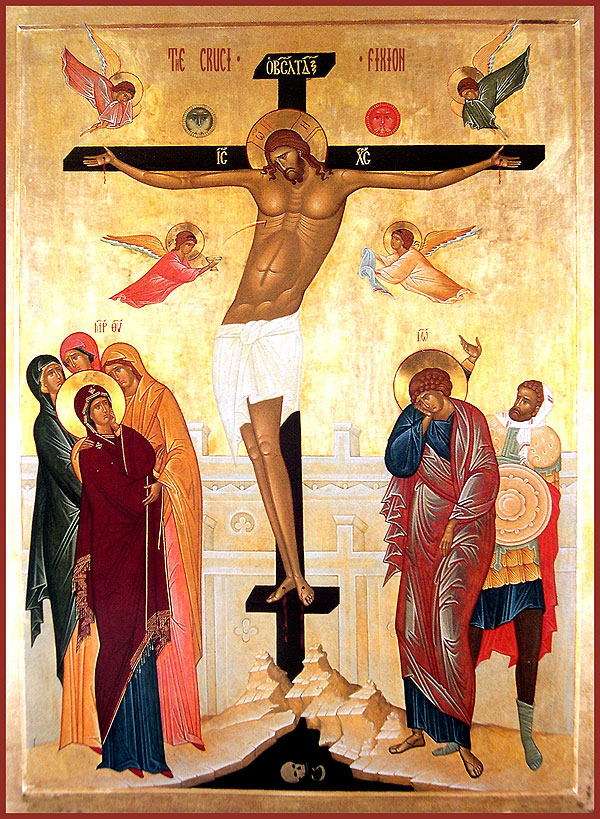
Μεγάλη Παρασκευή – Τα άγια πάθη του Κυρίου

MegaliParaskeui04Εορτάζει 2 ημέρες πριν το Άγιο Πάσχα.
Την Παρασκευή, στέλνεται ο Ιησούς δέσμιος από τον Καϊάφα στον τότε ηγεμόνα της Ιουδαίας Πόντιο Πιλάτο.
Αυτός, αφού Τον ανέκρινε με πολλούς τρόπους και αφού ομολόγησε δυο φορές ότι ο Ιησούς είναι αθώος, έπειτα, για να ευχαριστηθούν οι Ιουδαίοι, τον καταδικάζει σε θάνατο• και αφού τον μαστίγωσε σαν δραπέτη δούλο τον Δεσπότη των όλων, Τον παρέδωσε για να σταυρωθεί.
Από ’κει και πέρα ο Ιησούς, αφού παραδόθηκε στους στρατιώτες, γυμνώνεται, φοράει κόκκινη χλαμύδα, στεφανώνεται με ακάνθινο στεφάνι, κρατάει κάλαμο σα σκήπτρο, προσκυνείται χλευαστικά, φτύνεται και χτυπιέται στο πρόσωπο και στο κεφάλι.
Μετά, φορώντας πάλι τα ρούχα του και βαστάζοντας το Σταυρό, πηγαίνει προς τον Γολγοθά, τον τόπο της καταδίκης και εκεί, γύρω στην Τρίτη ώρα της ημέρας, σταυρώνεται μεταξύ δυο ληστών, βλασφημείται από αυτούς που είχαν πάει στον Γολγοθά μαζί του, μυκτηρίζεται από τους αρχιερείς, ποτίζεται από τους στρατιώτες με ξύδι ανακατεμένο με χολή. Γύρω στην ενάτη ώρα, αφού βγάζει πρώτα φωνή μεγάλη, και λέει: «Τετέλεσται», εκπνέει «ο αμνός του Θεού, ο αίρων την αμαρτίαν του κόσμου», την ώρα κατά την οποία σφάζονταν, σύμφωνα με τον νόμο, ο πασχαλινός αμνός, ο οποίος καθιερώθηκε ως έθιμο στους Ιουδαίους, προτυπώνοντας τον Εσταυρωμένο Χριστό, πρίν από 1043 χρόνια.
Το δεσποτικό αυτό θάνατο και η άψυχη κτίση, πενθώντας, τον τρέμει και αλλοιώνεται από το φόβο αλλά ο Δημιουργός της κτίσεως ακόμα και όταν είναι νεκρός, λογχίζεται την ακήρατη πλευρά Του και ρέει απ’ αυτή αίμα και νερό. Τέλος, κατά τη δύση του ηλίου, έρχεται ο Ιωσήφ από Αριμαθείας και ο Νικόδημος μαζί με αυτόν, και οι δυο κρυφοί μαθητές του Ιησού, αποκαθηλώνουν από το Σταυρό το πανάγιο του διδασκάλου σώμα, το αρωματίζουν, το τυλίγουν με καθαρό σεντόνι και αφού το έθαψαν σε καινούργιο τάφο, κυλούν στο στόμιο του μεγάλο λίθο.
Αυτά τα φρικτά και σωτήρια πάθη του Κυρίου μας Ιησού Χριστού επιτελούμε σήμερα και εις ανάμνηση αυτών παραλάβαμε από αποστολική διαταγή, τη νηστεία της Παρασκευής.

Αγιογραφίες / Φωτογραφίες
MegaliParaskeui02
Ο Εσταυρωμένος
MegaliParaskeui01
Ο Εσταυρωμένος
Picture 022
H Σταύρωση – άγνωστος ζωγράφος από τη Βόρεια Ιταλία ή τη Βενετία, δεύτερο μισό του 14ου αιώνα μ.Χ.
σταυρωση_ζαγγλιβερίου
H Σταύρωση – Σάββας Παντζαρίδης©
AkraTapinosi01
Άκρα ταπείνωση – Γεωργία Δαμικούκα© (http://www.tempera.gr)
epitaphios20sec20xivbizantinoo
Ο Επιτάφιος του Βυζαντινού Μουσείου της Θεσσαλονίκης (περ. 1300)
Epitafios03
Επιτάφιος
002063c
Επιτάφιος
Χαιρετισμοί εἰς τόν Τίμιον Σταυρόν
Τούς Χαιρετισμούς μποροῦμε νά τούς διαβάζουμε κάθε Παρασκευή, ἡμέρα ἀφιερωμένη στό Σταυρό, τήν Κυριακή τῆς Σταυροπροσκυνήσεως, στήν ἑορτή τῆς παγκοσμίου Ὑψώσεως τοῦ Τιμίου Σταυροῦ (14 Σεπτεμβρίου) καί τήν Μεγάλη Παρασκευή.
Κοντάκιον.
Ἦχος πλ. δ’. Τῇ ὑπερμάχῳ.
Ὦ τρισμακάριστε Σταυρέ καί πανσεβάσμιε, σέ προσκυνοῦμεν οἱ πιστοί καί μεγαλύνομεν, ἀγαλλόμενοι τῇ θείᾳ σου ἀνυψώσει. Ἀλλ’ ὡς τρόπαιον καί ὅπλον ἀπροσμάχητον, περιφρούρει τε καί σκέπε τῇ σῇ χάριτι, τούς σοί κράζοντας· χαῖρε, Ξύλον μακάριον.
Οἱ ΚΔ’ (24) Οἶκοι
Ἄγγελοι οὐρανόθεν ἀοράτως κυκλοῦσι, Σταυρόν τόν ζωηφόρον ἐν φόβῳ (τρίς)καί φωτοπάροχον χάριν λαμπρῶς παρεχόμενον, νῦν τοῖς πιστοῖς βλέποντες, ἐξίστανται καί ἵστανται βοῶντες πρός αὐτόν τοιαῦτα·
Χαῖρε Σταυρέ, οἰκουμένης φύλαξ·
χαῖρε, ἡ δόξα τῆς Ἐκκλησίας.
Χαῖρε, ὁ πηγάζων ἀφθόνως ἰάματα·
χαῖρε, ὁ φωτίζων τοῦ κόσμου τά πέρατα.
Χαῖρε, ξύλον ζωομύριστον, καί θαυμάτων θησαυρέ·
χαῖρε, συνθετοτρισόλβιε, καί χαρίτων παροχεῦ.
Χαῖρε, ὅτι ὑπάρχεις ὑποπόδιον θεῖον·
χαῖρε, ὅτι ἐτέθης εἰς προσκύνησιν πάντων.
Χαῖρε κρατήρ τοῦ νέκταρος ἔμπλεως·
χαῖρε, λαμπτήρ τῆς ἄνω λαμπρότητος.
Χαῖρε, δι’ οὗ εὐλογεῖται ἡ κτίσις·
χαῖρε, δι’ οὗ προσκυνεῖται ὁ Κτίστης.
Χαῖρε, Ξύλον μακάριον.
Βλέπουσα ἡ Ἑλένη ἑαυτήν ἐν ἐφέσει, φησί τῷ Βασιλεῖ θαρσαλέως· Τό παμπόθητόν σου τῆς ψυχῆς εὐχερέστατόν μου τῇ σπουδῇ φαίνεται· ζητοῦσα γοῦν τό κράτιστόν σοι τρόπαιον, ὡς λέγεις, κράζω·
Ἀλληλούϊα.
Γνῶσιν ἄγνωστον πρώην ἡ Βασίλισσα γνοῦσα, ἐβόησε πρός τούς ὑπουργοῦντας· Ἐκ λαγόνων τῆς γῆς εὑρεῖν ἐν τάχει, καί δοῦναι τόν Σταυρόν σπεύσατε, πρός ὅν ἰδοῦσα ἔφησεν ἐν φόβῳ, πλήν κράζουσα οὕτω·
Χαῖρε, χαρᾶς τῆς ὄντως σημεῖον·
χαῖρε, ἀρᾶς τῆς ἀρχαίας λύτρον.
Χαῖρε, θησαυρός ἐν τῇ γῇ φθόνῳ κρυπτόμενος·
χαῖρε, ὁ φανείς ἐν τοῖς ἄστροις τυπούμενος.
Χαῖρε, τετρακτινοπύρσευτε καί πυρίμορφε Σταυρέ·
χαῖρε, κλῖμαξ ὑψοστήρικτε, προοραθεῖσά ποτε.
Χαῖρε, τό τῶν Ἀγγέλων γαληνόμορφον θαῦμα·
χαῖρε, τό τῶν δαιμόνων πολυστένακτον τραῦμα.
Χαῖρε, τερπνόν τοῦ Λόγου κειμήλιον·
χαῖρε, πυρός τῆς πλάνης σβεστήριον.
Χαῖρε, Σταυρέ, ἀπορούντων προστάτα·
χαῖρε, στερρέ εὐδρομούντων ἀλεῖπτα.
Χαῖρε, Ξύλον μακάριον.
Δύναμις ἡ τοῦ Ξύλου, ἐπιδέδεικται τότε, πρός πίστωσιν ἀληθῆ τοῖς πᾶσι· καί τήν ἄφωνόν τε καί νεκράν πρός ζωήν ἀνέστησε, φρικτόν θέαμα τοῖς μέλλουσι καρποῦσθαι σωτηρίαν, ἐν τῷ μέλπειν οὕτως·
Ἀλληλούϊα.
Ἔχουσα ἡ Ἑλένη, τὸ ἀήττητον ὅπλον, ἀνέδραμε πρός τόν ταύτης γόνον· ὁ δέ, μέγα σκιρτήσας εὐθύς, ἐπιγνούς τόν μέγιστον Σταυρόν ἔχαιρε, καί ἅλμασιν ὡς ᾄσμασιν, ἐβόα πρός αὐτόν τοιαῦτα·
Χαῖρε Σταυρέ, τοῦ φωτός δοχεῖον·
χαῖρε, Σταυρέ, τῆς ζωῆς ταμεῖον.
Χαῖρε, ὁ δοτήρ χαρισμάτων τοῦ Πνεύματος·
χαῖρε, ὁ λιμήν ποντοπόρων ἀχείμαστος.
Χαῖρε, τράπεζα, βαστάζουσα ὥσπερ θῦμα τόν Χριστόν·
χαῖρε, κλῆμα, βότρυν πέπειρον φέρον οἶνον μυστικόν.
Χαῖρε, ὅτι τά σκῆπτρα τῶν ἀνάκτων φυλάττεις·
χαῖρε, ὅτι τάς κάρας τῶν δρακόντων συνθλάττεις.
Χαῖρε, λαμπρόν τῆς πίστεως γνώρισμα·
χαῖρε, παντός τοῦ κόσμου διάσωσμα.
Χαῖρε, Θεοῦ πρός θνητούς εὐλογία·
χαῖρε, θνητῶν πρός Θεόν μεσιτεία.
Χαῖρε, Ξύλον μακάριον.
Ζῆλον ἔνδοθεν θεῖον, ἡ Ἑλένη λαβοῦσα, ἐζήτησε καί εὗρε σπουδαίως, τόν ἐν γῇ κρυπτόμενον Σταυρόν, καί δεικνύμενον ἐν οὐρανῷ Ἄνακτι· ὅν ὕψωσε· καί βλέπων τό πολίτευμα, ἐν πίστει ἔφη·
Ἀλληλούϊα.
Ἡλιόμορφος ὤφθη, ὁ Σταυρός ἐν τῷ κόσμῳ, καί πάντες φωτισμοῦ ἐμπλησθέντες, καί δραμόντες ὡς πρός ἀστέρα, θεωροῦσι τοῦτον ὡς καλῶν αἴτιον, ἐν ταῖς χερσί ταῖς θείαις ὑψωθέντα· ὅν ὑμνοῦντες εἶπον·
Χαῖρε, αὐγή νοητοῦ Ἡλίου·
χαῖρε, πηγή ἀκενώτου μύρου.
Χαῖρε, τοῦ Ἀδάμ καί τῆς Εὔας ἀνάκλησις·
χαῖρε, τῶν ἀρχόντων τοῦ ᾅδου ἡ νέκρωσις.
Χαῖρε, ὅτι ἀνυψούμενος, συνανυψοῖς νῦν ἡμᾶς·
χαῖρε, ὅτι προσκυνούμενος, καθαγιάζεις τάς ψυχάς.
Χαῖρε, τῶν Ἀποστόλων κοσμοκήρυκτον κλέος·
χαῖρε, τῶν ἀθλοφόρων εὐμενέστατον σθένος.
Χαῖρε Σταυρέ, Ἑβραίων ὁ ἔλεγχος·
χαῖρε, πιστῶν ἀνθρώπων ὁ ἔπαινος.
Χαῖρε, δι’ οὗ κατεβλήθη ὁ ᾅδης·
χαῖρε, δι’ οὗ ἀνατέταλκε χάρις.
Χαῖρε, Ξύλον μακάριον.
Θεοβράβευτον Ξύλον, θεωρήσαντες πάντες, τῇ τούτου νῦν προσέλθωμεν σκέπῃ· καί ὡς ὅπλον κρατοῦντες αὐτό, δι’ αὐτοῦ τροποῦμεν τῶν ἐχθρῶν φάλαγγας, καί ψαύοντες τόν ἄψαυστον, τοῖς χείλεσιν αὐτῷ βοῶμεν·
Ἀλληλούϊα.
Ἴδε φῶς οὐρανόθεν, Κωνσταντῖνος ὁ Μέγας, δεικνύμενον Σταυροῦ τό σημεῖον, δι’ ἀστέρων, ἐν ᾧ καί νικᾶν πολεμίων πληθύν, ἔσπευσε τό Ξύλον φανερῶσαι, καί βοῆσαι πρός αὐτό τοιαῦτα·
Χαῖρε, βουλῆς τῆς ἀρρήτου πέρας·
χαῖρε, λαοῦ εὐσεβοῦντος κέρας.
Χαῖρε, πολεμίων ὁ τρέπων τάς φάλαγγας·
χαῖρε, φλόξ καθάπερ φλέγων τούς δαίμονας.
Χαῖρε, σκῆπτρον ἐπουράνιον τοῦ Βασιλέως τοῦ στρατοῦ·
χαῖρε, τρόπαιον ἀήττητον τοῦ φιλοχρίστου στρατοῦ.
Χαῖρε, ὁ τῶν βαρβάρων τήν ὀφρύν καταβάλλων·
χαῖρε, ὁ τῶν ἀνθρώπων τάς ψυχάς περιέπων.
Χαῖρε, κακῶν πολλῶν ἀμυντήριον·
χαῖρε, καλῶν πολλῶν βραβευτήριον.
Χαῖρε, δι’ οὗ Χριστοφόροι σκιρτῶσι·
χαῖρε, δι’ οὗ Ἰουδαῖοι θρηνοῦσι.
Χαῖρε, Ξύλον μακάριον.
Κλῖμαξ οὐρανομήκης, ὁ Σταυρός τοῦ Κυρίου ἐγένετο, τούς πάντας ἀνάγων, ἀπό γῆς πρός ὕψος οὐρανοῦ, τοῦ χοροῖς Ἀγγέλων συνοικεῖν πάντοτε, ἀφέντας τά νῦν ὄντα ὡς μή ὄντα, καί εἰδότας ψάλλειν·
Ἀλληλούϊα.
Λάμψας φῶς ἐπί πᾶσιν, ὁ Σωτήρ τοῖς ἐν ᾅδη, ἐφώτισας τούς κάτω κειμένους· πυλωροί δέ ᾅδου τήν αὐγήν μή ἐνέγκαντές σου, ὡς νεκροί πεπτώκασιν· οἱ τούτων δέ ρυσθέντες, νῦν ὁρῶντες τόν Σταυρόν βοῶσι·
Χαῖρε, ἀνάστασις τεθνεώτων·
χαῖρε, παράκλησις τῶν πενθούντων.
Χαῖρε, τῶν ταμείων τοῦ ᾅδου ἡ κένωσις·
χαῖρε, Παραδείσου τρυφῆς ἡ ἀπόλαυσις.
Χαῖρε, ράβδος ἡ ποντίσασα τόν Αἱγύπτιον στρατόν·
χαῖρε, αὖθις, ἡ ποτίσασα Ἰσραηλίτην λαόν.
Χαῖρε, ἔμψυχον Ξύλον, τοῦ Λῃστοῦ σωτηρία·
χαῖρε, εὔοσμον ρόδον, εὐσεβῶν εὐωδία.
Χαῖρε, τροφή πεινώντων ἐν πνεύματι·
χαῖρε, σφραγίς, ἥν ἔλαβον ἄνθρωποι.
Χαῖρε Σταυρέ, μυστηρίων ἡ θύρα·
χαῖρε, ἐξ οὗ ρεῖθρα χέονται θεῖα.
Χαῖρε, Ξύλον μακάριον.
Μέλλοντος Μωϋσέως, τό πολύμοχθον γένος λυτρώσασθαι ἐκ τοῦ λυμεῶνος, ἐπεδόθης ὡς ράβδος αὐτῷ, ἀλλ’ ἐγνώσθης τούτῳ καί Θεοῦ σύμβολον· διόπερ κατεπλάγη σου Σταυρέ, τήν δυναστείαν κράζων·
Ἀλληλούϊα.
Νόμον ὁ ἐν Σιναίῳ, τῷ Θεόπτῃ δούς πάλαι, Σταυρῷ ἐθελοντί προσηλοῦται, ὑπέρ ἀνόμων ἀνόμως ἀνδρῶν, καί κατάραν νόμου παλαιάν ἔλυσεν, ἵνα Σταυροῦ τήν δύναμιν ὁρῶντες, ἅπαντες νῦν βοῶμεν·
Χαῖρε, ἀνόρθωσις πεπτωκότων·
χαῖρε, κατάπτωσις κοσμολάτρων.
Χαῖρε, Ἀναστάσεως Χριστοῦ τό ἐγκαίνισμα·
χαῖρε, μοναζόντων τό θεῖον ἐντρύφημα.
Χαῖρε, δένδρον εὐσκιόφυλλον, ὑφ’ οὗ σκέπονται πιστοί·
χαῖρε, Ξύλον προφητόφθεγκτον, πεφυτευμένον ἐν γῇ.
Χαῖρε, τῆς Βασιλείας κατ’ ἐχθρῶν συμμαχία·
χαῖρε, τῆς πολιτείας κραταιά προστασία.
Χαῖρε, Κριτοῦ δικαίου φανέρωσις·
χαῖρε, βροτῶν πταιόντων κατάκρισις.
Χαῖρε Σταυρέ, ὀρφανῶν ἀντιλῆπτορ·
χαῖρε Σταυρέ, πλουτιστά τῶν πενήτων.
Χαῖρε, Ξύλον μακάριον.
Ξένον θαῦμα ἰδόντες, ξένον βίον βιῶμεν, τόν νοῦν εἰς οὐρανόν ἀνυψοῦντες· διά τούτο γάρ ἐν τῷ Σταυρῷ ὁ Χριστός ἐπάγη, καί σαρκί πέπονθε, βουλόμενος ἑλκῦσαι πρός τό ὕψος, τούς αὐτῷ βοῶντας·
Ἀλληλούϊα.
Ὅλος ἦλθεν ἐξ ὕψους, τήν Θεότητα ἔχων, ὁ μόνος προαιώνιος Λόγος· καί τεχθείς ἐκ Παρθένου Μητρός, καί φανείς τῷ κόσμῳ ταπεινός ἄνθρωπος, Σταυρόν καταδεξάμενος, ἐζώωσε τούς αὐτῷ βοῶντας.
Χαῖρε Σταυρέ, τῆς εἰρήνης ὅπλον·
χαῖρε, βαλβίς τῶν ὁδοιπορούντων.
Χαῖρε, σωζομένων σοφία καί στήριγμα·
χαῖρε, ἀπολλυμένων μωρία καί σύντριμμα.
Χαῖρε, εὔκαρπον, ἀθάνατον καί ζωηφόρον φυτόν·
χαῖρε ἄνθος, ὅπερ ἤνθησε τήν σωτηρίαν ἡμῶν.
Χαῖρε, ὅτι συνάπτεις τά ἐν γῇ σύν τοῖς ἄνω·
χαῖρε, ὅτι φωτίζεις τάς καρδίας τῶν κάτω.
Χαῖρε δι’ οὗ φθορά ἐξωστράκισται·
χαῖρε, δι’ οὗ ἡ λύπη ἠφάνισται.
Χαῖρε, καλῶν μυριάριθμος ὄλβος·
χαῖρε, πιστῶν μυριώνυμος εὖχος.
Χαῖρε, Ξύλον μακάριον.
Πέπτωκε τῶν δαιμόνων ἡ παμβέβηλος φάλαγξ, καί γένος τῶν Ἑβραίων ᾐσχύνθη, προσκυνούμενον τόν Σταυρόν παρά πάντων, μετά πόθου βλέποντες, ἀεί δέ ἀναβλύζοντα ἰάματα τοῖς ἐκβοῶσιν·
Ἀλληλούϊα.
Ρεύματα συνεστάλη, λογισμῶν κακοδόξων παγέντος σου Χριστέ ἐπί ξύλου· ἀποροῦσι γάρ ὄντως τό, Πῶς καί Σταυρόν ὑπέστης, καί φθοράν πέφευγας· ἡμεῖς δέ τήν Ἀνάστασιν δοξάζοντες ἀναβοῶμεν.
Χαῖρε, σοφίας Θεοῦ τό ὕψος·
χαῖρε, προνοίας Αὐτοῦ τό βάθος.
Χαῖρε, μωρολόγων ἀλόγων ἡ ἄγνοια·
χαῖρε, μαντιπόλων ἀφρόνων ἀπώλεια.
Χαῖρε, ὅτι τήν Ἀνάστασιν ἐμφανίζεις τοῦ Χριστοῦ·
χαῖρε, ὅτι τά παθήματα ἀνακαινίζεις Αὐτοῦ.
Χαῖρε, τῶν πρωτοπλάστων τήν παράβασιν λύσας·
χαῖρε, τοῦ Παραδείσου τάς εἰσόδους ἀνοίξας.
Χαῖρε Σταυρέ, τοῖς πᾶσι σεβάσμιε·
χαῖρε, ἐθνῶν ἀπίστων ἀντίπαλε.
Χαῖρε Σταυρέ, ἰατρέ τῶν νοσούντων·
χαῖρε, ἀεί βοηθέ τῶν βοώντων·
Χαῖρε, Ξύλον μακάριον.
Σῶσαι θέλων τόν κόσμον, ὁ τοῦ κόσμου κοσμήτωρ, κατῆλθε πρός αὐτόν ἀπορρήτως· καί Σταυρόν ὑπέστη, Θεός ὤν, δι’ ἡμᾶς, τά πάντα καθ’ ἡμᾶς δέχεται· διό καί λυτρωσάμενος ἡμᾶς, ἀκούει παρά πάντων·
Ἀλληλούϊα.
Τεῖχος τῆς οἰκουμένης, ὦ Σταυρέ ζωηφόρε, ἀπόρθητον καί θεῖον νοοῦμεν· ὁ γάρ τοῦ οὐρανοῦ καί τῆς γῆς, κατασκευάσας σέ Ποιητής τάννυσι τάς χεῖρας, ξένον ἄκουσμα· καί ἅπαντας ἐκφωνεῖν διδάσκει.
Χαῖρε, ἡ βάσις τῆς εὐσεβείας·
χαῖρε, τό νῖκος τῆς κληρουχίας.
Χαῖρε, Ἀμαλήκ νοητόν ὁ τροπούμενος·
χαῖρε, Ἰακώβ ταῖς χερσί προτυπούμενος.
Χαῖρε, σύ γάρ ἀνεμόρφωσας τάς παλαιτάτας σκιάς·
χαῖρε, σύ γάρ ἀνεπλήρωσας προφητοφθέγκτους φωνάς.
Χαῖρε, ὁ τόν Σωτῆρα τῶν ἀπάντων βαστάσας·
χαῖρε, ὁ τόν φθορέα τῶν ψυχῶν καταργήσας.
Χαῖρε, δι’ οὗ Ἀγγέλοις ἡνώθημεν·
χαῖρε, δι’ οὗ φωτί κατηυγάσθημεν.
Χαῖρε, σέ γάρ προσκυνοῦμεν τιμῶντες·
χαῖρε, σοί γάρ προσφωνοῦμεν, βοῶντες·
Χαῖρε, Ξύλον μακάριον.
Ὕμνος ἅπας μειοῦται, συνακολουθεῖν θέλων, τῷ πλήθει τῶν πολλῶν σου θαυμάτων· ἐγκωμίων πληθύν καί γάρ ἄν προσάξωμέν σοι, ὦ Σταυρέ τίμιε, οὐδέν τελοῦμεν ἄξιον, ὧν δέδωκας ἡμῖν· ἀλλ’ οὖν βοῶμεν·
Ἀλληλούϊα.
Φωτοπάροχον αἴγλην, τοῖς ἐν σκότει δωρεῖται, Σταυρός ὁ ζωοδώρητος οὗτος· τό γάρ ἄϋλον δέδεικται φῶς, καί πρός γνῶσιν θείαν δᾳδουχεῖ ἅπαντας· ὑψοῖ δέ νῦν ὑψούμενος τόν νοῦν ἡμῶν, ἀναμέλπειν ταύτα·
Χαῖρε, φωστήρ, τοῖς ἐν σκότει φαίνων·
χαῖρε, ἀστήρ, τόν κόσμον αὐγάζων.
Χαῖρε, ἀστραπή, χριστοκτόνους ἀμβλύνουσα·
χαῖρε, ἡ βροντή τούς ἀπίστους ἐκπλήττουσα.
Χαῖρε, ὅτι κατελάμπρυνας Ὀρθοδόξων τούς χορούς·
χαῖρε, ὅτι κατηδάφισας τῶν εἰδώλων τούς βωμούς.
Χαῖρε, οὗπερ ὁ τύπος οὐρανόθεν ἐφάνη·
χαῖρε, οὗπερ ἡ χάρις πονηρίας ἐλαύνει.
Χαῖρε, σαρκός σημαίνων τήν νέκρωσιν·
χαῖρε, παθῶν ὁ κτείνων ἐπέγερσιν.
Χαῖρε, ἐν ᾧ ὁ Χριστός ἐσταυρώθη·
χαῖρε, δι’ οὗ πᾶς ὁ κόσμος ἐσώθη.
Χαῖρε, Ξύλον μακάριον.
Χάριν δοῦναι θελήσας, ὁ Χριστός τοῖς ἀνθρώποις, τάς χεῖρας ἐπί Ξύλου ἐκτείνει, καί τά ἔθνη πάντα συγκαλεῖ, καί βασιλείαν πᾶσιν οὐρανῶν δίδωσι, τοῖς μέλπουσι τόν ὕμνον ἐπαξίως, καί πιστῶς βοῶσιν·
Ἀλληλούϊα.
Ψάλλοντές σου τόν ὕμνον, εὐφημοῦμεν ἐκ πόθου, ὡς ἔμψυχον Κυρίου σε Ξύλον· ἐπί σοί γάρ παγείς ἐν σαρκί, ὁ δεσπόζων τῶν δυνάμεων, ἡγίασεν, ἐδόξασεν, ἐδίδαξε βοᾶν σοι ταῦτα·
Χαῖρε Σταυρέ, νοητή ρομφαία·
χαῖρε, Ἁγίων ἅγιον βλέμμα.
Χαῖρε, Προφητῶν καί Δικαίων προκήρυγμα·
χαῖρε, τοῦ Χριστοῦ λαμπροφόρον στρατήγημα.
Χαῖρε, κάλλος καί διάδημα βασιλέων εὐσεβῶν·
χαῖρε, κράτος καί ὀχύρωμα ἱερέων εὐλαβῶν.
Χαῖρε, τῆς ἀληθείας εὐκλεέστατος κόσμος·
χαῖρε, τῆς σωτηρίας εὐτυχέστατος ὅρμος.
Χαῖρε, φαιδρόν ἁπάντων ἀγλάϊσμα·
χαῖρε, υἱῶν τῆς Ἄγαρ φυγάδευμα.
Χαῖρε, φωτός ἀκηράτου λυχνία·
χαῖρε, ψυχῆς τῆς ἐμῆς θυμηδία.
Χαῖρε, Ξύλον μακάριον.
Ὦ πανύμνητον Ξύλον, τό βαστάσαν τόν πάντων ἁγίων, Ἁγιώτατον Λόγον (τρίς)· δεδεγμένον ἡμῶν τάς λιτάς, ἀπό πάσης ρῦσαι συμφορᾶς ἅπαντας καί αἰωνίου λύτρωσαι κολάσεως τούς σοί βοῶντας·
Ἀλληλούϊα.
Προσευχητάριον ὑπέρ τῶν κεκοιμημένων
Ἀρχιμανδρίτου Παύλου Κ. Ντανᾶ
Ἐκδόσεις «Ἄθως»
Ἀθήνα 2005


http://vatopaidi.wordpress.com/

Holy Friday Lamentations-ΜΕΓΑΛΗΣ ΠΑΡΑΣΚΕΥΗΣ-ΤΑ ΕΓΚΩΜΙΑ

HOLY FRIDAY 12th Antiphon-ΜΕΓΑΛΗ ΠΑΡΑΣΚΕΥΗ Άντίφωνο ιβ

St. John Chrysostom on the Holy Cross

https://blogger.googleusercontent.com/img/b/R29vZ2xl/AVvXsEg7x4gJ-A_bVpwxrVkAkD8MUkZcmHM7JzA_9Y_rZYkxFCAnsv9BUDfermPA8kjJZlBQBYM1lB7ju5dl8U7TRHU3BQtMivkgQViXcK18_gP8h-YqJya4FDqZ_5ll51FWZDuWY_Y9V1ez6Dai/s1600/chrysostom.jpg"The Cross of the Lord is unpleasant and sorrowful to the ear, but it consists of joy and gladness. It is the originator not so much of suffering as much as of passionlessness. For Jews the Cross is temptation, for pagans it is madness, but for us believers it reminds us of our salvation. When in church one reads about the Cross and one is reminded of the sufferings on the Cross, the faithful are indignant at the Cross and let out a plaintive wail and murmur not at the Cross but at the crucifiers and unbelievers. For the Cross is the salvation of the Church, the Cross is the praise of those who hope on it. The Cross has released us from the evil that possessed us and is the beginning of the blessings received by us. The Cross is the reconcilement of His enemies with God, the promise of sinners to Christ. For by the Cross we were freed from enmity and through the Cross we have become amiable to God. The Cross delivered us from the authority of the devil, the Cross saved us from death and destruction. The Cross changed human nature to the angelic, having released it from all that is corruptible, and have found lives worthy of immortality."


"How great is the power of the Cross! How great is the change made by it in the human race! How from the deep darkness it has led us to the boundless light, from death it has restored us to eternal life, from corruption it has transferred us to incorruption. What good is not accomplished for us by means of the Cross? Through the Cross we learned piety and learned the properties of the Divine essence. Through the Cross we learn the truth about God, through the Cross we who were far from Him are united to Christ, and we become worthy of the grace of the Holy Spirit. Through the Cross we learn the power of love and we are taught to die for others. Through the Cross we are scorned and all what we do is not temporal, we search the blessings of the future and we accept the invisible as if seen. The Cross is preached, and the faith in God is confessed, His truth is spread throughout the universe. The Cross is preached, and the faith in the resurrection, the life and the kingdom of heaven is made without a doubt. What is more precious than the Cross and what is more saving for the soul? The Cross is the triumph over demons, the armor against sin and the sword with which the Lord has struck the snake. The Cross is the will of the Father, the glory of the Only-begotten, the joy of the Holy Spirit, the ornament of angels, the protection of the Church, the praise of St. Paul, the protection of the Saints, the lamp of all the world."


"See, however desired and deservedly amiable the Cross is made today, it was the most terrible and shameful sign of the cruelest execution in antiquity! And the Cross makes the best ornament on the imperial crown, the most precious in all the world. The image of the Cross is now found on you, both masters and servants, both wives and husbands, both maidens and married, both slaves and free. All place the sign of the Cross on the noblest part of their body, daily carrying this sign on their forehead, as on a depicted pillar. It shines on a sacred meal, on the clothes of the priest and together with the Lord's body at the mystical supper. You see it lifted everywhere: on houses, in market-places, in the deserts, on the paths, on mountains and hills, on the sea, on ships, on islands, on boxes, on clothes, on armor, in the halls, on golden and silver vessels, in pictures, on the bodies of sick animals, on the bodies of the demon-possessed, in war, in the world, in the afternoon, at night, in festal assemblies and in the cells of the ascetics. Already no one is ashamed and does not blush at the thought that the Cross is a sign of a shameful death. To the contrary, all of us honor this as an adornment for ourselves, which has surpassed crowns and diadems and precious stones. Let us not run, let us not be frightened, but let us kiss and honor it as an invaluable treasure."

The Pain of the Mother of God


by Saint Silouan the Athonite

When the soul abides in the love of God - how good and gracious and festive all things are! But even with God's love sorrows continue, and the greater the love the greater the sorrow. Never by a single thought did the Mother of God sin, nor did she ever lose grace, yet vast were her sorrows; when she stood at the foot of the Cross her grief was as boundless as the ocean and her soul knew torment incomparably worse than Adam's when he was driven from Paradise, in that the measure of her love was beyond compare greater than the love which Adam felt when he was in Paradise. That she remained alive was only because the Lord's might sustained her, for it was His desire that she should behold His Resurrection, and live on after His Ascension to be the comfort and joy of the Apostles and the new Christian peoples.

We cannot attain to the full the love of the Mother of God, so we cannot thoroughly comprehend the grief. Her love was complete. She had an illimitable love for God and her Son, but she loved the people too with great love. What, then, must she have felt when those same people whom she loved so dearly, and whose salvation she desired with all her being, crucified her beloved Son?

We cannot fathom such things, since there is little love in us for God and man.

Just as the love of the Mother of God is boundless and passes our understanding, so is her grief boundless and beyond our understanding.


O holy Virgin Mary, tell us, thy children, of thy love on earth for thy Son and God. Tell us how thy spirit rejoiced in God thy Savior. Tell us of how thou didst look upon His fair countenance, and reflect that this was He whom all the heavenly hosts wait upon in awe and love. Tell us what thy soul felt when thou didst bear the wondrous Babe in thine arms. Tell us of how thou didst rear Him, how, sick at heart, thou and Joseph sought Him three long days in Jerusalem. Tell us of thine agony when the Lord was delivered up to be crucified, and lay dying on the Cross. Tell us what joy was thine over the Resurrection. Tell us how thy soul languished after the Lord's Ascension. We long to know of thy life on earth with the Lord, but wast not minded to commit all these things to writing, and didst veil thy secret heart in silence.


http://www.johnsanidopoulos.com/2010/04/pain-of-mother-of-god.html

Synaxarion For Holy and Great Friday


By Nikephoros Kallistos Xanthopoulos

GREAT FRIDAY

On this day, Holy and Great Friday, we celebrate the awesome, holy, and saving Passion of our Lord and God and Savior Jesus Christ - the spitting, the blows with the palm of the hand, the buffeting, the mockery, the reviling, the wearing of the purple robe, the reed, the sponge, the vinegar, the nailing, the lance, and above all, the Crucifixion and Death which He condescended to endure willingly for our sakes - and also the saving confession of the grateful thief upon the cross.

Verse for the Crucifixion

Thou art a living God, even though Thou wast lifeless on the Wood. O naked corpse, Thou art the Word of the living God.

Verse for the Penitent Thief

The thief opened the locked gates of Eden with the key, "Remember me".


Synaxarion


After our Lord Jesus Christ was sold for thirty pieces of silver and was betrayed by a friend and disciple, He was led to Annas the High Priest. Annas again sent the Lord to Caiaphas, where He was spat upon and at the same time mocked and laughed at. He heard them saying to Him, "Prophesy to us, Christ! Who is the one that struck you?" (Matt. 26:68). Then many false witnesses and accusers arrived, perhaps because He said, "Destroy this temple, and in three days I will raise it up" (John 2:19) and because He said about Himself, "I am the Son of God" (Matt. 27:43), or because He said, "Nevertheless, I say to you, hereafter you will see the Son of Man sitting at the right hand of the Power and coming on the clouds of heaven" (Matt. 26:64). At that point, the High Priest tore his own garment, saying, "He has spoken blasphemy! What further need do we have of witnesses? Look, now you have heard His blasphemy!" (Matt. 26:65). And when morning came, Jesus was led into the Praetorium to Pilate, and "they did not enter," as they said, "lest they should be defiled, but that they might eat the Passover" (John 18:28).

Then when Pilate came, he asked them about Jesus, saying, "What accusation do you bring against this Man?" (John 18:29). Since he did not find any reasonable cause for the accusation, he sent Him to Caiaphas, since he was the one who was seeking His execution, and Caiaphas sent Him back again to Pilate. Then Pilate said to them, "You take Him and judge Him according your Law." Therefore the Jewish leaders said to him, "It is not lawful for us to put anyone to death" (John 18:31). They said this so Pilate would pronounce the judgment of death on the cross. Pilate asked Jesus whether He was the King of the Jews, and Jesus acknowledged this and said that His Kingdom is eternal and not of this world (John 18:36). Pilate wished to release Jesus and first told the crowd that he did not find any serious accusation against Him. Then he reminded the Jews of their custom of releasing a prisoner of their choice on the feast of Passover. The crowd named Barabbas the robber as acceptable choice but not Christ. Pilate then sought to placate the crowd, but with no success. Leading Him out through the soldiers, he first had Jesus scourged. Then clothing Him with a purple cloak, the soldiers forced a crown of thorns upon His most pure head and placed a reed in His right hand as though it were a royal scepter. All this time, the soldiers were mockingly sneering and shouting a parody of their salute to Caesar, "Hail, King of the Jews" (Matt. 27:29; Mark 15:18; John 19:3). Clearly, this public humiliation and torment was for the gratification of the mob, for Pilate showed that he was acting against his conscience by saying again, "I find no fault in this Man" (John 18:38; John 19:6; Luke 23:4). The Jewish leaders answered him, "We have a law, and according to our law He ought to die, because He made Himself the Son of God" (John 19:7).

While these things were being said, Jesus was silent. But the crowd cried out to Pilate, "Crucify Him, crucify Him" (John 19:6). Thus they wished to destroy Him through an inglorious and shameful death, so that they might destroy the noble fame that Jesus possessed. Pilate incited their ethnic pride and said, "Shall I crucify your King?" The chief priests answered, "We have no king but Caesar!" (John 19:15). Since they could not get their way by any other means, they uttered this blasphemy because Jesus clearly called Himself the Son of God, and they wanted Caesar to stand in His place so that their madness would be satisfied. Therefore they said, "Whoever makes himself a king speaks against Caesar" (John 19:12).

While these events were taking place, Pilate's wife - Procula Claudia (comm. Oct. 27), sent a message to him that she was troubled by a fearful dream, and she said, "Have nothing to do with that just Man, for I have suffered many things today in a dream because of Him" (Matt. 27:19). Then Pilate washed his hands and clearly rejected the responsibility for the blood of the Righteous One. But the people cried out, "His blood be upon us and upon our children" (Matt. 27:25). If you let this Man go, you are not Caesar's friend" (John 19:12). Even though Pilate surely knew that Jesus was not guilty, he feared Caesar and thus confirmed the Lord's condemnation to death on the Cross, and he released Barabbas. When Judas beheld this, he threw away the silver coins and went out and hanged himself from a tree.


The soldiers mocked Jesus, hitting His head with a reed, and they placed the Cross on Him to bear. Then they coerced Simon of Cyrene, obliging him to carry the Cross. About the third hour, they reached the Place of the Skull, and they crucified Him there. On the right and on the left they suspended two thieves so that Jesus would appear to be an evildoer. In a spirit of greed, the soldiers divided His garments, but they cast lots for His seamless tunic. They performed each deed with excessive animosity, as if they were drunk. They not only did these things, but they also feigned ignorance, saying ironically to Jesus on the Cross, "Aha! You who destroy the temple and build it in three days, save Yourself, and come down from the Cross!" (Mark 15:29-30). And they continued, "Let the Christ, the King of Israel, descend now from the Cross, that we may see and believe" (Mark 15:32). However, if they had reflected and understood correctly, they would have wished to have recourse to Him without hesitation, because He proved Himself to be not only King of Israel, but even of all the world.

For what other meaning was there when the sun was darken during the Crucifixion of Christ at the third hour, in the middle of the day, but that the Lord's Passion would be revealed to all men? Likewise, when the earth shook and the rocks were rent asunder, did this not reprove the stony-heartedness of the chief priests? And when many bodies arose for the acknowledgment of the common resurrection, did it not provide the evidence that the power of the Suffering One might appear? Moreover, when the curtain of the temple was split in twain, did it not mean that the temple was certainly angered, because the One who was glorified in it was suffering, thereby revealing these things which were not apparent to the multitudes? Therefore, at the third hour, Christ was crucified, as says the divine Mark; from the sixth hour until the ninth there was darkness over the whole land (Mark 15:33). The Centurion Longinus (comm. Oct. 16), seeing these marvelous events and especially the darkening of the sun, cried out with a mighty voice, "Truly this Man was the Son of God" (Matt. 27:54; Mark 15:39). Of the two thieves, one reviled Jesus, but the other reproached him, most profoundly reproving him, and confessed Christ to be the Son of God. Because of his confession, the Savior rewarded his faith and promised that he would be with Him in Paradise that very day. The "good thief" is commemorated on October 12.


When every sort of abuse had been hurled at the Lord Jesus, Pilate wrote out His title, which read, "JESUS OF NAZARETH, THE KING OF THE JEWS", and placed it on the Cross. (See John 19:19.) Therefore, the chief priests said to Pilate, "Do not write, The King of the Jews, but He said, 'I am the King of the Jews'." Pilate answered, "What I have written, I have written" (John 19:21-22). And when the Savior said, "I thirst" (John 19:28), they put vinegar on hyssop and brought it to Him. After saying, "It is finished" (John 19:30), He inclined His head and gave up the spirit. He was crucified on the day when the moon was full and at the hour when, according to the old Law, the Passover lamb was to be slain (See Exod. 12). When all had fled away, His Mother alone kept vigil at the Holy Cross with her sister Mary, the wife of Cleopas (the one, some say, Joachim begot in accordance with the Mosaic Law since his brother Cleopas died childless, but this assertion is false), Mary Magdalene, and John, the Disciple beloved by Him. (See John 19:25.) Then the ungrateful people, not being able to tolerate seeing the bodies on the crosses, since it was the great day of the Passover, asked Pilate that the legs of the condemned might be broken so that death might come more quickly. They broke the legs of the thieves, since they were still alive and, coming upon Jesus, as soon as they saw that He was already dead, they refrained from breaking His legs. One of the soldiers, doing a favor for the ungrateful ones, took his spear and pierced the right side of Christ, and immediately there flowed forth blood and water. On the one hand, the outpouring was as from a man, and on the other hand on behalf of mankind; that is, the blood, for the sake of the Holy Communion of the divine sanctified elements, and the water, for the sake of Holy Baptism. In fact, this two-fold fountain constitutes the foundation of the Holy Mysteries for us.


Also, St. John the Theologian saw and bore witness to these events, and his witness is true, because he was present at all these happenings, and after he saw them he recorded them. For if they were false, clearly he would not have written them, for such things would have appeared as a dishonor to the Teacher. It is said that when he was present at that time, he collected in some kind of vessel the Divine and All-holy Blood from the Life-giving side. Moreover, while these extraordinary events were being accomplished, when night approached, Joseph of Arimathea arrived (he was a disciple from the beginning, as the others, but secretly). He then went to Pilate with boldness since he was clearly known by him, asked for the Body of Jesus, and was given permission to take It. Then he immediately took the divine Body down from the Holy Cross with all reverence. And when night came, Nicodemus arrived, bearing a certain mixture of myrrh and aloes, which had been prepared for the special purpose of anointing, and he wrapped the Holy Body in a winding cloth, as was the regular custom of the Jews. They then entombed the Body of the Lord nearby in the garden tomb of Joseph of Arimathea, which had been cut into a rock, rolling a great stone over the entrance. In this tomb, no one had been buried before, so that when Christ arose the chief priests might not attribute the Resurrection to another person. The mixture of aloes and myrrh strongly cemented the winding cloth to the Body of Christ, so that when the winding cloth and the face cloth would be seen folded up in the Tomb, no one would suppose that His Body had been stolen away. How would it have been possible that anyone could have detached the linen so firmly glued to the flesh? However, those foolish men who shaped this falsehood did not know that in accordance with the economy of God, all these proofs remained inside the Tomb for the censuring of their slander. All these events marvelously happened on Friday. Accordingly, the God-bearing Fathers decreed that we should commemorate all these events with a compunctious and contrite heart. Furthermore, the Church, as received from the time of the Holy Apostles, has given the commandment that every Friday is to be observed as a fast day in remembrance of Christ's Holy Passion and Life-giving Death.


It is fitting to understand that on the sixth day of the week, Friday, the Lord was crucified because on the sixth day of the week during Creation, Adam, the first man, was formed. Furthermore, at the sixth hour of the day, He was suspended on the Holy Cross because at the sixth hour, tradition tells us, Adam stretched out his hands toward the forbidden tree to eat the fruit and inherited death. Therefore it was fitting that at the same shattering hour the Old Adam would be created anew. The Lord's Crucifixion was in a garden because Adam was deceived in a garden in Paradise. The bitter drink which the Lord tasted on the Cross healed the tasting of Adam. The Holy Cross replaced the tree in Paradise. The slap on the Face signified our awakening from the stupor of sin. The spitting and the dishonorable behavior toward the Lord makes manifest the value He places on us. The crown of thorns relieved us from the curse surrounding the head of Adam and Eve. The purple cloak replaced the garment of skin and symbolized the royal garment with which He covers us. The nails indicated our total immobility in our sins. The pierced Side of the Lord, from which our salvation came forth, represented the side of Adam, from which Eve came forth and out of whom the transgression occurred. The spear removed the fiery sword which guarded Paradise after the disobedience. The water from the Side was an image of Holy Baptism. The blood and the reed were the means through which the Savior, as though writing in imperial red ink, decreed, as a King from on high, the restoration of the ancient homeland.

It is said that the skull of Adam lay where Christ, as the Head of all, was Crucified, and Adam was "baptized" through the Blood of Christ, which flowed from Him and down onto Adam's skull. It is called the Place of the Skull because during the Flood the earth expelled the skull of Adam, which rolled around by itself in a circle, and this was viewed as a fearsome sign. The Holy Prophet and King Solomon, out of respect toward the Forefather, covered it up with many stones. Moreover, the eminent saints say, as is the tradition, that Adam was buried there by an angel. Therefore, where Adam's corpse lay, there Christ stood as the everlasting King, the New Adam, healing by the wood of the Holy Cross the Old Adam who had fallen by the wood of the tree.

It should be noted that on this day there is no celebration of the Divine Liturgy, nor of the Liturgy of the Presanctified Gifts. On this day of the Holy Crucifixion we neither eat nor drink anything according to the words which the Lord spoke to the Pharisees: "But the days will come when the Bridegroom will be taken away from them, and then they will fast" (Matt. 9:15). Yet, if anyone is weak or old and cannot keep the fast, let him be given bread and water after sunset.

Wherefore, O Christ our God, through Your boundless compassion for our sakes,
have mercy on us and save us. Amen.


Apolytikion in Plagal of the Fourth Tone
When the glorious disciples at the supper were illumined by the washing of the feet, then was the impious Judas darkened by the disease of avarice. And he betrays Thee, the Righteous Judge, to the lawless judges. See, O lover of possessions, how for money's sake he hanged himself! Flee from that insatiate soul, which dared such things against His Master. O Lord, who art good towards all men, glory to Thee!

Antiphon Six in Plagal of the Third Tone
Coming to Thy voluntary Passion, O Lord, Thou didst cry out to Thy disciples, "If ye were not able to watch one hour with Me, how could ye promise to die for My sake? Behold how Judas does not sleep, but hastens to betray Me to lawless men. Arise and pray that no one deny Me when he sees Me on the Cross." O longsuffering Lord, glory to Thee!

Antiphon Fifteen in Plagal of the Second Tone
He who hung the earth upon the waters hangs today upon the Cross.
He who is King of the Angels is arrayed in a crown of thorns.
He who wraps the heavens in clouds is wrapped in the purple of mockery.
He who in the Jordan set Adam free receives blows upon His face.
The Bridegroom of the Church is transfixed with nails.
The Son of the Virgin is pierced with a spear.
We worship Thy Passion, O Christ.
Show us also Thy glorious Resurrection.

Kontakion in Plagal of the Fourth Tone
Come, let us all praise Him who was crucified for us, for when Mary beheld Him on the Cross, she cried, "Though Thou sufferest on the Cross Thou art my Son and my God!"

Ikos
Seeing her own Lamb led to slaughter, Mary let down her hair in grief and followed Him with the other women, crying thus: "Where goest Thou, my Child? Why dost Thou run so swiftly? Perhaps there is another wedding in Cana of Galilee, and Thou dost make haste now to go there and change their water into wine? Shall I go with Thee, O my Child, or shall I wait for Thee? Grant me some word, O Word, and pass me not by in silence, O Thou who hast preserved me in virginity. For Thou art my Son and my God.

Exapostilarion
The wise thief at that same hour, O Lord, Thou didst deem worthy of Paradise. Enlighten me as well by Thy Cross, and save me.

Apolytikion in the Fourth Tone
Thou hast redeemed us from the curse of the Law by Thy precious Blood. Nailed to the Cross and pierced by the spear, Thou hast poured forth immortality upon mankind. O our Saviour, glory to Thee!


http://www.johnsanidopoulos.com/2011/04/holy-week-resource-page.html

Πόσο ευτυχισμένοι είμαστε οι ορθόδοξοι


Πόσο ευτυχισμένοι είμαστε εμείς οι ορθόδοξοι χριστιανοί! Τι Θεό έχουμε! Είναι αξιολύπητοι όσοι δεν γνώρισαν το Θεό. Αυτοί δεν βλέπουν το αιώνιο φως, και μετά το θάνατο πορεύονται στο αιώνιο σκοτάδι. Αυτό το ξέρουμε, γιατί το Άγιο Πνεύμα πληροφορεί μέσα στην Εκκλησία τους αγίους για το τι υπάρχει στον ουρανό και τι στον άδη.


Ω, πόσο αξιολύπητοι είναι οι πλανεμένοι άνθρωποι! Αυτοί δεν μπορούν να ξέρουν τι είναι η αληθινή χαρά. Μερικές φορές διασκεδάζουν και γελούν, αλλά το γέλιο και η απόλαυση, που δοκιμάζουν, θα μεταβληθούν σε θρήνο και θλίψη. Δική μας χαρά είναι ο Χριστός. Με τα πάθη Του μας έγραψε στο βιβλίο της ζωής, και στη βασιλεία των ουρανών θα είμαστε αιώνια με το Θεό και θα βλέπουμε τη δόξα Του και θα ευφραινόμαστε μαζί Του. Η χαρά μας είναι το Άγιο Πνεύμα. Είναι τόσο γλυκό και ευχάριστο! Αυτό μαρτυρεί στην ψυχή για τη σωτηρία.


Όσιος Σιλουανός Αθωνίτης

Wednesday, May 1, 2013

Η Φυλακή του Χριστού 2000 χρόνια μετά !

Τελειώνοντας η μέρα


" Όταν το βράδυ, με ευχάριστη καρδιά φτάσεις στο κρεβάτι σου για ύπνο, φέρνε στο νου σου τις ευεργεσίες και την πρόνοια του Θεού.
Θα γεμίσεις τότε από αγαθές σκέψεις και θα ευφρανθεί πιο πολύ η ψυχή σου.

Τότε ο ύπνος του σώματος γίνεται ξύπνημα πνευματικό της ψυχής και το κλείσιμο των ματιών σου θα γίνεται αληθινή όραση του Θεού και η σιωπή σου, γεμάτη από τα αγαθά αυτά δώρα, θα σου επιτρέψει με όλη τη δύναμη της ψυχής σου να προσφέρεις στο Θεό των όλων δυνατή και βαθιά δοξολογία.

Διότι, όταν απουσιάζει η κακία από την ψυχή , και μόνη η ευχαριστία και η ευγνωμοσύνη αρέσει Στο Θεό περισσότερο από οποιαδήποτε πολυτελή εξωτερική θυσία.

Σ' Αυτόν ανήκει η δόξα εις τους αιώνας των αιώνων. Αμήν ".

Μέγας Αντώνιος

"Ο γέροντας Παϊσιος στο Σινά"

Τα τελευταία λόγια του Αγίου Λουκά Συμφερουπόλεως


«Παιδιά μου πολύ σας παρακαλώ,
Ντυθείτε με την πανοπλία που δίνει ο θεός
για να μπορέσετε να αντιμετωπίσετε τα τεχνάσματα του διαβόλου.
Δεν μπορείτε να φανταστείτε πόσο πονηρός είναι.
Δεν έχουμε να παλέψουμε με ανθρώπους, αλλά με αρχές και εξουσίες
δηλαδή με τα πονηρά πνεύματα.
Προσέξτε!
Τον διάβολο δεν τον συμφέρει να δεχθεί κανείς την ύπαρξη του
να σκέφτεται και να αισθάνεται ότι είναι κοντά στον άνθρωπο.
Ένας κρυφός και άγνωστος εχθρός είναι πιο επικίνδυνος από έναν ορατό εχθρό.
Ο πόσο μεγάλος και τρομερός είναι ο στρατός των δαιμόνων.
Πόσο αμέτρητο είναι το μαύρο τους πλήθος!
Αμετάβλητα, ακούραστα, μέρα και νύχτα, επιδιώκουν να σπρώξουν όλους εμάς
που πιστεύουμε στο όνομα του Χριστού, να μας παρασύρουν στο δρόμο της απιστίας της κακίας και της ασέβειας.
Αυτοί οι αόρατοι εχθροί του Θεού, έχουν βάλει ως μοναδικό τους σκοπό μέρα και νύχτα να επιδιώκουν την καταστροφή μας.
Όμως μη φοβάστε, πάρτε δύναμη από το όνομα του Ιησού.» Άγιος Λουκάς Συμφερουπόλεως

Excerpt from the Homily on the Betrayal of Judas, by St. John Chrysostom


The Mystical Supper (source)
   
Excerpt from the Homily on the Betrayal of Judas, by St. John Chrysostom
Translated by Monk Moses of the St. Herman of Alaska Brotherhood from the original Greek, in Patrologia Graeca 49.373–80. 
  
Today, beloved, our Lord Jesus Christ was betrayed. It was on this approaching evening that the Jews seized him and took Him away. But do not be dejected, hearing that Jesus was betrayed; rather, be dejected and weep bitterly—not over Jesus Who was betrayed, but over the traitor, Judas. For, indeed, the One Who was betrayed saved the whole world, while the one who betrayed Him lost his own soul. And the One Who was betrayed is seated at the right hand of the Father, while the one who betrayed Him is now in hades, awaiting the inevitable punishment. Thus, weep and moan for his sake; mourn for his sake, since even our Master shed tears on his account. Seeing him, Jesus was troubled and said: One of you shall betray Me ( John 13:21). Oh, how great is our Master’s compassion! The One Who was betrayed grieved for the one who betrayed Him. Seeing him, Jesus was troubled and said: One of you shall betray Me. Why was He disheartened? In order to show His tender love and, at the same time, to teach us that it is altogether fitting to mourn, not for the one enduring evil, but for the one committing it. Committing evil is worse than enduring it; or rather, enduring evil is not evil, but committing it is evil. While enduring evil procures us the Kingdom of Heaven, committing evil results in Gehenna and punishment for us. For Blessed, says the Lord, are they which are persecuted for righteousness’ sake: for theirs is the Kingdom of Heaven (Matt 5:10). Do you see how enduring evil has as its recompense and reward the Kingdom of Heaven?

...What will ye give me and I will deliver Him unto you? Tell me, did Christ teach you that? Did He not restrain in advance your covetous intention, saying: Provide neither gold, nor silver, nor brass in your purses (Matt. 10:9)? Did He not continually advise this, and also say: If someone shall smite thee on thy right cheek, turn to him the other also (Matt. 5:39)? What will ye give me and I will deliver Him unto you? Oh, what madness! Tell me, for what? With what small or great accusation do you betray the Teacher? That He granted you power over demons? That He granted you the power to put an end to sicknesses? To cleanse lepers? To raise the dead? That He brought an end to the tyranny of death? For these benefactions you give this recompense? What will ye give me and I will deliver Him unto you? Oh, what madness! Or rather, what covetousness! For it is covetousness that produced all this evil: lusting after money, he betrayed the Teacher. Such is the root of this evil; worse than the devil, it excites to frenzy the souls it has conquered and renders them oblivious to everyone, both to themselves
and to their neighbors, as well as to the laws of nature, driving them out of their minds and making them insane. See how much it cast out from the soul of Judas: the fellowship, the intimacy, the common
table, the miracles, the instruction, the counsel, the admonitions—all of that was then cast into oblivion by covetousness. Thus Paul rightly said: The love of money is the root of all evil (I Tim. 6:10)...

...I have said all this so that no one will accuse Christ, saying: “Why did He not change Judas? Why did He not make him sensible and good?” How ought Judas to have been made good? By force or voluntarily? If by force, he would not have become better, for no one becomes good by force. But if, by his own deliberate choice, Judas had wanted to, then Christ would have used all means to amend his will and intent. But if he did not want to take the medicine, it is not the Physician Who is at fault but the one who evaded the treatment. Look at how much Christ did in order to win him over and save him: He taught him all wisdom by deeds and by words; He placed him above the demons; He prepared him to perform numerous miracles; He inspired fear in him with the threat of hell; He impelled him forward with the promise of the Kingdom; He continually censured his unspeakable plans, without making them public; He washed his feet along with the others and shared His table with him. He did not leave anything undone, either small or great, but Judas of his own free will remained uncorrected...

But it is time then to approach that fearful table. Therefore, let us all approach with fitting discretion and sobriety. And let no one be Judas any longer; let no one be wicked; let no one possess venom, bearing one thing in his mouth and another in his mind. Christ is present, and He Who set in order that meal of old also sets this one in order now. For it is not a man who causes the elements that are set forth to become the Body and Blood of Christ, but Christ Himself, Who was crucified for our sake. Fulfilling the figure, the priest stands and utters the words. But the power and the grace belong to God. This is My Body, the priest says. These words transform the elements set forth; and just as the words Increase and multiply and fill the earth (Gen. 1:28) were said once, but throughout all time they give our nature the power to beget children, so also from that time until now and until His Coming, these words that were said once accomplish the perfect Sacrifice on each altar table in the churches.
Therefore, let no one hide festering sores within; let no one be filled with wickedness; let no one have venom in his thoughts, lest he partake unto condemnation. For truly it was after Judas had received the Holy Gifts that the devil fell upon him, out of contempt not for the Body of the Lord but for Judas, on account of his shamelessness—so that you understand that the devil especially falls upon and repeatedly attacks those who partake of the Holy Mysteries unworthily, as with Judas at that time. For honors benefit those who are worthy, but honors cast into greater torment those who enjoy them unworthily. I do not say these things to frighten you, but in order to warn you. Therefore, let no one be Judas; let no one that enters have the venom of wickedness. The sacrifice is spiritual food; and just as bodily food that enters a stomach having foul juices makes the illness even worse—not because of its own nature but because of the sickness of the stomach—so also does it usually happen with the spiritual Mysteries. For they also, when they enter a soul that is full of wickedness, ruin and destroy it even more—not on account of their own nature but on account of the sickness of the soul that receives them.
Therefore, let no one have evil thoughts within, but let us purify our mind, for we are truly drawing near to the spotless sacrifice. Let us make our soul holy; it is possible for this to happen even in a single day. How, and in what way? If you have anything against your enemy, expel your anger, treat your wound, put an end to your enmity, so that you may receive healing from the holy table—for you are approaching the fearful and holy sacrifice. Stand in awe before the meaning of this sacrifice. The slain Christ is laid out before us. On what account was He slain and why? In order to make peace between heaven and the earth, in order to make you a friend of the angels, in order to reconcile you entirely to God, to make you, an enemy and opponent, into a friend. He gave His life for those who hate Him, but you continue to hate your fellow servant? And how can you come to the table of peace? He did not decline to die for you, but you cannot bear, for your own sake, to get rid of your anger toward your fellow servant? And what sort of forgiveness are you worthy of?

He abused me, you say, and hurt me a great deal. But what is this? The damage is only to property; by no means did he wound you like Judas did Christ, but nevertheless Christ gave His own Blood for the salvation of those who caused it to pour forth. What can you say is equal to that? If you do not forgive your enemy, you do not hurt him but yourself. You wound him many times in this present life, but you make yourself unpardonable at the judgment in the day to come. For God hates nothing so much as a man who remembers past wrongs, nothing so much as a puffed-up heart and a soul inflamed. Listen to what He says: When you bring your gift to the altar, and there remember, standing high-up at the altar, that your brother has something against you, leave … your gift at the altar and go … be reconciled to your brother, and then … offer your gift (Matt. 5:23–24).
What are you saying?—that I should leave my gift? Yes, for it was for the sake of peace with your brother that this sacrifice took place. Thus, if it is for the sake of peace with your brother that this sacrifice took place, but you have not accomplished that peace, then you take part in the sacrifice to no purpose, the good work is of no benefit to you. Therefore, let us first do that on account of which the sacrifice has been offered, and then we will benefit well from it. The Son of God came down in order to reconcile our nature to the Master. And not only for that did He come down, but also in order to make us who do these things sharers in His name. For He says: Blessed are the peacemakers, for they shall be called sons of God (Matt. 5:9). Do also, according to human strength, that which the only-begotten Son of God did, becoming an agent of peace both for yourself and for others. On account of this, O peacemaker, He even calls you a son of God. And therefore He did not mention any other commandment regarding the time of the sacrifice except to be reconciled with one’s brother, showing that this is the most important of all.
I had wanted to extend my discourse, but what has been said is enough for those who are attentive, if they call it to mind. Beloved ones, let us continually call to mind these words, the holy greetings, and the awe-inspiring kiss of peace with each other. For this joins our minds together and makes everyone become one Body, since we all also partake of one Body. Let us be joined together in one Body, not
mingling with the bodies of one another, but uniting our souls with each other in the bond of love. In this way we will be able to partake with boldness of the meal which is set forth. Even if we possess countless righteous deeds, if we bear remembrance of wrongs, they are all to no avail and in vain, and we will not be able to reap from them any benefit toward our salvation.
Therefore, being conscious of these things, let us bring an end to all anger, and purifying our conscience, let us approach with all meekness and gentleness the table of Christ, to Whom is all glory, honor, and power, together with the Father and the Holy Spirit, now and ever and unto the ages of ages. Amen.
   
The Betrayal of Judas 
  
Through the prayers of our Holy Fathers, Lord Jesus Christ our God, have mercy on us and save us! Amen!


http://full-of-grace-and-truth.blogspot.ca/
Related Posts Plugin for WordPress, Blogger...