Toward the end of the eighteenth century, St. Kosmas Aitolos foretold that a time would come when a person would have to travel for days to meet another person whom he could embrace as a brother. We are living in an age where this is already happening. Contemporary man, in his loneliness, experiences pathological anxiety, anguish and suffering. He is tormented and, in turn, torments others.
Why? This essay will attempt an answer by bringing the fragrance of community found in the desert to the loneliness and the desolation found in cities.
Contemporary Loneliness
Loneliness is the absence of communication and relationship- the inability to develop and maintain associations with others. Contemporary culture and the structures of society, the mass media reflecting prevailing ideologies, even children’s games, lead to social alienation, political estrangement and personal isolation. The individual person begins, early on, to be possessed by an overwhelming feeling of inadequacy, to lose the meaning and purpose of life, to live without principles and discipline, to be constantly suspicious and in doubt.
Alone and insecure, anxious and disorderly, modern man and particularly the contemporary young person attempts to build bridges, to raise flags, to shout slogans. But without a guide or with bad guides he is readily disillusioned and becomes hard and aggressive, a plaything for political exploiters and power-hungry anarchists. The desire for freedom becomes the bitter death of his freedom.
The young, who earlier had declared that they would never compromise with anyone, are now themselves compromised. They take refuge in demonstrations and sit-ins, becoming rebellious in an effort to relieve themselves of the weight of their loneliness, not realizing that they are thrusting themselves into an even more unbearable slavery.
It is particularly unfortunate that all this is happening where least expected even with young people of good education, exceptional intelligence, energy and talent. Unsatisfied with material prosperity and disillusioned by the hypocrisy of their elders, these young people struggle for simpler life, for quality in life, for a better way of life but unfortunately they do not manage to make the right beginning.
Modern art is a good example of the spiritual alienation that we see. Instead of shedding light and opening windows toward others and toward heaven it tends to shut us in and to plunge us, ever deeper, into obscurity and darkness.
It is not long before isolated man begins to talk to himself, to the irrational animals, to the shadows that surround him, and to the dead. By now he is seriously sick. Melancholy, phobias, suspicion and mistrust have made him a psychopath. A most appropriate observation characterizes our time as the century of the psychiatrist. According to World Health Organization statistics for 1985 there are more than 400 million people in the world suffering from deep depression, with about 400,000 committing suicide each year. And these statistics refer only to the developed countries!
In his isolation man is plagued relentlessly by egotism and pride which are the natural parents of his loneliness.
Humility — An Antidote to Loneliness
If egotism and pride foster this kind of loneliness, then true humility — even though the term is misused and loses meaning among those who merely talk about it — produces the climate in which this loneliness is not permitted to thrive. Behold how the desert that good mother, excellent philosopher and theologian speaks about holy humility, silence and peace.
The humble person, according to Abba Poimen, is comfortable and at peace wherever he may find himself.
Abba Isaac tells us that he who makes himself small in everything will be exalted above all. And his discerning voice continues:
“Hate honor and you will be honored indeed. He who runs after honors causes honor itself to be banished from him. But if you merely disdain yourself hypocritically in order to appear humble, God will reveal you.”
In the Gerontikon, which contains a wide variety of spiritual writings from the Fathers, it is repeatedly made clear that:
“The humble-minded and lowly in heart is not the one who cheapens himself and talks about humility, but the one who endures joyfully the dishonors which come from his neighbor.”
In another place the Gerontikon states that:
“The person honored more than he deserves is actually harmed, while the person who is not honored at all by his fellow human beings will be honored in heaven by God.”
Abba Poimen gives us this advice:
“Every possible sorrow that comes to you can be overcome with silence.”
Abba Isaiah agrees with him:
“Until your heart is at peace through prayer, make no effort to explain anything to your brother.”
In studying the writings of the holy fathers of the desert, one can easily observe a common mind, a common noble spirit, a humaneness, an understanding, a wisdom. These are dew drops of the Holy Spirit, which fall in the arid desert after long struggles, which make fragrant flowers grow among the communities of faithful committed totally to God, and which make fragrant the souls of those who truly thirst for God.
Abba Isaiah, that great mind, notes with particular grace and subtlety:
“He who humbles himself before God is capable of enduring every insult. The humble person is not concerned about what others say about him. The person who bears the harsh word of a rude and foolish man for the sake of God is worthy of acquiring peace.”
Abba Mark, on this important topic — our relationship with ourselves and with others, in which we find ourselves stumbling on a daily basis — goes on to note the following:
“When you become aware of the thought in your mind dictating human glory, you should know for sure that this thought is preparing you for shame. And if you discern someone praising you hypocritically, expect also his accusation some time soon.”
And with the daring precision of a surgeon of the soul, the holy Abba continues:
“When you see someone crying over the many insults he has received, you should know that, because he was overcome by vainglory, he is now unknowingly reaping the crop of evils in his heart. He who loves pleasure is grieved by accusations and abuse. On the other hand, he who loves God is grieved by praises and other superfluous remarks. The degree of our humility is measured by slander. Don’t think that you have humility when you cannot forbear even the slightest accusation.”
Abba Zosima goes even further:
“Remember the one who has ridiculed you, who has grieved you, who has wronged you, who has done evil to you, as your physician, your healer. Christ sent him to heal you; don’t remember him with anger.”
Evagrios considered those who spoke badly of him as benefactors.
The divine wisdom of these physicians of the desert has tremendous significance to our topic. It has been said that these remarks are addressed by monks and for monks, but this is a superficial view. The epidemic of loneliness and depression that we are discussing results from proud minds lacking in humility, from failed interpersonal relationships, from unsatisfied egotistical aspirations, from self-aggrandizement, praise-seeking and self-love. This loneliness is strong enough to weaken a person and to make him sick. But love is stronger, capable of healing and regenerating the whole world.
Man has an irrepressible need to communicate, but communication must be properly developed. Initially, we must strike up a conversation a sincere, honorable and courageous conversation with our unknown self. We must rediscover in the very depths of our soul the hidden innocence of our childhood years. Next we must learn to have unmasked face-to-face conversation with the only, true living friend our heavenly Father and God. Only then will we be able to effectively communicate with others, whoever they are — the worst, the best, the neighbors, the distant, our brothers and sisters in Christ. In this manner the webs of loneliness are removed, the inaccessible and sunless dungeons of the heart are illumined, the shell of our ego is broken. When we have rejected the loneliness of miserable, self-centered egotism we can begin to rejoice, to be free, to breathe, to live.
Natural Loneliness: A Sanctuary of Knowledge of Self and of God
There is another type of loneliness — natural loneliness which is not pathological but creative, life-giving, full of grace. It is exemplified by the natural separation of monastics from the world. It is a loneliness to which we all should devote much time. We must be able to withdraw ourselves from the noisy crowds which are so superficial, so distracting, and so counterproductive in a withdrawal which is healthy, beautiful and good. It is important that we learn to shut off the constant communication with the many, which does not allows us to be alone with our self and as a consequence, we are not able to be with the One who is always waiting, the incarnate Logos and God. We must make the time and find the way for this other kind of sacred communication of natural loneliness. And we must pursue this knowledgeably, with an orderly, disciplined program.
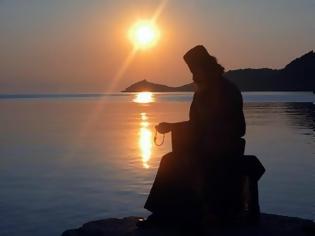
Please keep in mind that we are not talking about those who seek to escape from preoccupations with the world in order to find rest, to view beautiful sunsets, to gaze at star-studded skies. Such activities are not spiritual. Neither are we talking about those who seek to meditate using techniques of doubtful origins to achieve dubious results. Nor are we discussing those who devote fleeting moments to superficial daydreams and who presume to have repented when they feel sentimental emotions as they remember indiscretions of their past. And we certainly are not talking about the well-meaning but naïve who think the spiritual life of sacred quietude consists of strolling at the sea shore with a komboschoini (prayer beads) in hand. Furthermore, we are not referring to the spiritual tourists who visit holy places and converse boldly with holy persons, but who do not deny their ego nor sacrifice their will. Activities such as these are only superficial attempts to escape from life, through shallow day-dreaming and capricious imagination.
What we are talking about is sacred quietude achieved with ascetic effort which liberates us from the loneliness of the world, even though we find ourselves in a noisy city or a disorderly household. We are talking about the persistence and the patience which help us probe the deepest roots of our existence and understand its limits, and which dispel the darkness that tires and discourages us.
We need to learn to pray. We need vigils constant vigilance in a posture of immobility and calmness.
When I am near God what do I have to fear? He has guided me to where I may be guided by him. Despairing of friends and acquaintances — sorely disappointed with the arts, the technologies, the ideologies — disenchanted with social chatter and vacuous etiquette — I come to the privilege of ultimate despair. I become aware that, in my nakedness, God himself is there to vest me with authentic hope. And in this miracle the blessed Panaghia and all the saints are present to lend their support.
In this natural loneliness — this divine loneliness — I find relief. The actor’s masks which I had felt obliged to put on or which had been put on me have been discarded. It had been a dreadful state. Every night I needed to go to another gathering, to be part of another group, for I had to be included somewhere. I was constantly changing my mask. Now, however, by turning inward I begin to live, to become aware that I am a child of God, to unveil my unique and irreplaceable identity, my face, my person. I begin to observe the activities of the passions. I can see my strengths and my limitations. I am redeemed from errors, fantasies, excesses, and languid apathy.
A firm resolve helps guide our steps to this lonely sanctuary of knowledge of self and of God. In this sanctuary the loneliness the aloneness which had been feared becomes a delight. For the person who is with God can never be alone since he is in dialogue with himself and with God. Here we find ourselves with less individualism, and greater love for others. We find tears for the pain and suffering of our brothers and sisters, and strength for greater efforts that will help them. For the voice which arises from the depths of the lone person cuts through the clouds and reaches the Triune God, who always listens and always responds.
The Divine Loneliness of Man in Communion with God
The man in communion with God knows how to make his voice more fervent and to rejoice while standing in second place. He knows how to be a friend even with the stranger and to be satisfied with little. Moreover, he knows how to become tired in his diligent efforts and how to wash with tears those who are grasping and prodigal. And he knows how to do these things without complaint or dissatisfaction, even if abandoned by relatives, friends, colleagues.
Far from the tumultuous crowds and the confusion of the public arena, in the privacy of your room, choose freely and without coercion. It may appear that you are not offering anything to others and that you are being self-centered, particularly when others are saying that they need you, as they suffer from painful loneliness. This loneliness which you have chosen for yourself is an arduous task, requiring great strength, heroism, persistence. It is a long and endless undertaking. And sometimes it can be preparation for a return to those whom you have left out of your life, although this should never be the purpose of your ascetic commitment.
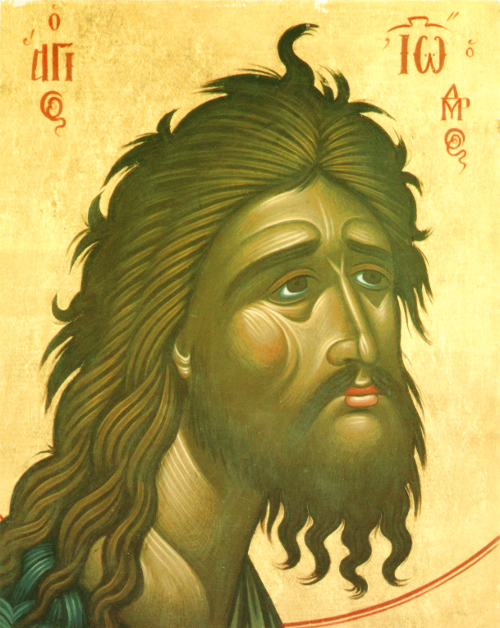
All the saints of our Church, the most fervent and active missionaries, even the Lord himself in his earthly life, experienced the mystery of divine loneliness. Remember those great personalities, the prophets of the Old Testament Moses, Elijah, Isaiah and John the Forerunner.
Returning to our century, we find it tragically alone, in despair, pessimistic. In spite of efforts to the contrary, the world is in conflict with everyone and everything countries, governments, races, colleagues, parents, friends, children, books, lessons, work. And being in conflict with itself it is also in conflict with God, to whom it never speaks, never says anything.
The most painful loneliness is to be next to your spouse and yet be unable to transmit your inner feelings, even as external messages are transmitted instantaneously from one hemisphere to another. It is painful loneliness for married couples to keep secrets from each other for years. It is painful when dialogue is non-existent between children and parents, between children and teachers, between children and clergy. There is no more cruel loneliness than for a family to sit for hours in front of the television without speaking a word among themselves. We live in a difficult time. Loneliness is at an all-time high. Man is lost. God is silent.
In this loneliness, in this desolation of the cities, in this apparent absence of God, man is called to gather his thoughts, to come to his senses, to put aside his many worldly preoccupations and to retire to his place of prayer speechless, naked, a child so that God may speak to him, clothe him, and endow him with spiritual maturity. Then his loneliness will become the divine loneliness of liberation and he will achieve a sense of fullness. Only such radical loneliness leads to a fundamental understanding and experience of God, destroying every hesitation, doubt and torment.
In this sacred loneliness man finds himself face-to-face with his existential poverty and the fear of death which it provokes. Yet, even here, there is the danger that he may choose procrastination as a solution and, for a time, set his panic-stricken self at ease. He may resume running back and forth endlessly, expanding social activities, and seeking a variety of entertainments a program of extreme busyness. Other people, other things, work and extensive involvements may serve as a cover for his spiritual impoverishment for a time. And he may continue wandering aimlessly, driven by circumstances, tormented, flirting with one thing and another, fighting, being torn and finally annihilated.
A life of work without the liberation of communion with God is slavery. The struggle for excessive wealth is an incurable, tormenting disease. Fear of the future can stimulate greed, miserliness, hoarding. And God can be easily forgotten.
Here is what Abba Markos says, on how man can avoid the slavery of misguided work and instead become a free servant of God:
“The one who casts off anxious cares for ephemeral things and is freed from their every need, will place all his trust in God and in the eternal good things. The Lord did not forbid the necessary daily care for our physical well-being; but he indicated that man should be concerned only for each day. To limit our needs and cares to what is absolutely necessary is quite possible through prayer and self-control, but to eliminate them altogether is impossible.”
In the discerning remarks of Abba Markos which continue, let me call your attention to a subtle point which applies to many faithful:
“The necessary services which we are obliged to carry out, we must of course accept and carry out, but we must let go of those other purposeless activities and prefer rather to spend our time in prayer, particularly when these activities would lead us into the greed and luxury of money and wealth. For the more one can limit, with the help of God, these worldly activities and remove the material which feeds them, the more will one be able to gather his mind from such anxious wanderings. If again someone, out of weak faith or some other weakness, cannot do this, then, at least, let him understand well the truth and let him try, as much as he can, to censure himself for this weakness and for still remaining in this immature condition. For it is far better to have to give an account to God for omissions rather than for error and pride.”
Let me repeat this last point:
“It is far better to have to give an account to God for omissions rather than for error and pride!”
A drama is played out in man wherein he continuously and intently seeks peace and knowledge externally. But when he comes to his senses he realizes that true hospitality exists in an unexpected place. For it is precisely within himself that he discovers and experiences the particularity of his personhood. It is here that the divine loneliness of liberation, based on the knowledge of his individual personality, is to be found. It is here, in mystical quietude, that he measures, decides, and takes on his responsibilities.
Achieving the mystical experience of what we are, what we should seek, and what we can do, involves troublesome effort which, nevertheless, is critical. It is within us that we rescue ourselves from the loneliness of ego and where we find the way to the light and joy of communion.
Much of the world is governed by sophistry, wisdom has been ostracized, and decency has been lost. Lies and deception abound, revisionism has made history counterfeit, the Gospel is misinterpreted, schoolbooks are political tools mouthing the ideologies of those in power. There is a tendency to mimic false western ideologies, including sentimental pietism and painless social neochristianitiy. The life of the Church and its life-giving Sacred Traditions are ignored.
The only refuge is for each of us to set up our own sanctuary wherever we can. To a world which considers deception to be intelligence and honor to be weakness, we must dare say “Do not touch me!” We must choose to remain voluntarily and responsibly alone, even though such aloneness requires great courage in a society which aggressively seeks our applause and urges us into amalgamation. The weariness over vanities, bitterness, constant motion and joyless joys that has filled our lives, helps us come to the realization that this is the best form of resistance to the general disorientation.
By restoring our inner world, we increase our resistance, and in time become invincible to, the organized attacks of evil. By placing our whole life at God’s feet and seeking the authentic life he wants us to live we begin to have a foretaste of immortality, where we are never alone but in the company of Christ and his saints. All loneliness is dispelled by inner self-sufficiency.
And it may help you to know that there are many, out of sight, who are assisting you with their prayers. These are the monastics, dedicated totally to God, who keep vigil. Even though you have not met them they pray for you, with arms raised and with knees and knuckles callused by their prostrations.
The Supreme Loneliness of Believers Today
It has been said that each person carries his own loneliness. The mentally unbalanced individual has a dangerous loneliness. The sick person has an agonizing loneliness. One who has unjustly accumulated wealth has a bitter and ugly loneliness. But the believer carries a permanent, incurable and supreme loneliness, the loneliness of the way to salvation.
We have become accustomed to referring to the loneliness of late evening, of mourning, of living abroad. And each of us deals with our own individual circumstances as best we can. But, how long will we continue to go around in circles, examining the subject externally yet never entering its reality? Standing before the eternal enigma of existence, when will we the sons and daughters of God by grace and participation, created in his image and likeness, the children of light when will we dare to cast aside worldly ideas and discussions and, standing face to face before God, make the decision to fundamentally change our lives?
Our movements remain uncertain. We talk about God, yet God remains someone we do not really know. We desire to be with God, we advance toward him, yet at the last minute we find an escape route and evade him.
We love ourselves excessively, beyond measure. We are unwilling to bear God. We are afraid of him, and we try to deceive him — although in fact we only deceive ourselves — with excuses which appear to be convincing. We have come to love our deceptions to the point of no longer being ashamed of them. And yet God himself never tires of seeking us out discreetly, reminding us of his presence in our sufferings and in our joys, in our mistakes and in our victories.
It is necessary for believers to begin again the way of the Lord. Let us abandon the crowds and their excited shouting; let not their words entice and influence us. The way of the Lord is narrow, uphill, demanding, lonely, but it is also salutary, as he himself has promised us. The believer must at last attach himself with love to what is essential to his personal existence, setting aside decisively and irrevocably the secondary and superfluous.
The message of the Book of Revelation is truly awesome. The lukewarm believers will be spewed out of the mouth of God! (Rev. 3:15-16) The term used is most expressive of God’s dissatisfaction with those who are indecisive and ambiguous, neither hot nor cold.
To be in the company of God is both a joy to God and the greatest liberating blessedness to man. But reconciliation with God cannot be detached from reconciliation with ourselves and with our brothers and sisters. These always go together the friend of God is a friend of himself and of others.
The relationships that result have no room for conceit or isolation. Love of God must never degenerate into Pharisaism, nor love of neighbor into sterile duty. Openness in three directions — toward self, God and neighbor — is achieved symmetrically, with balance, with knowledge, with freedom and with love.
The great fourth century teacher of the desert, Abba Isaiah, reminds us that
“the pathological love of self and of others is an obstacle to our relationship with God.”
Cicero used to say that
“a great city is a great loneliness!”
This loneliness produces boredom, lack of appetite, pessimistic bitterness, a constant looking to the future and doing nothing today, dissatisfaction, a desire to escape, cowardice. These conditions, collectively referred to by the ascetic literature as accidia, mercilessly plague many, including the careless monastic.
Here is how St. Maximos the Confessor, the great Byzantine theologian, speaks about accidia:
“All of the powers of the soul are enslaved by accidia, while almost all of the other passions are also and immediately aroused by it, because, of all the passions, accidia is the most burdensome.”
St. John of the Ladder, who knows profoundly even the most subtle movements of the soul, described accidia to monks who inquired with characteristic harshness:
“Accidia is the breakdown of the soul, the disorientation of the mind, negligence of ascetic practice, hatred of monasticism, love of worldliness, irreverence toward God, forgetfulness of prayer.”
Evagrios mentions that this unbearable condition of the soul devastates its victim,
“who does not know what to do anymore, seeing the time not passing and wondering when the mealtime will come which seems delayed.”
Antiochos, who lived in the seventh century, is even more vivid and precise in his definition of accidia:
“This condition brings you anxiety, dislike for the place where you are living, but also for your brothers and for every activity. There is even a dislike for Sacred Scripture, with constant yawning and sleepiness. Moreover, this condition keeps you in a state of hunger and nervousness, wondering when the next meal will come. And when you decide to pick up a book to read a little, you immediately put it down. You begin to scratch yourself and to look out of the windows. Again you begin to read a little, and then you count the number of pages and look at the titles of the chapters. Finally, you give up on the book and go to sleep, and as soon as you have slept a little you find it necessary to get up again. And all of these things you are doing just to pass the time.”
St. John of Damascus says that this struggle is very heavy and very difficult for monks.
St. Theodore of Studion says that the passion of accidia can send you directly to the depths of Hades.
Dostoyevski, who had a patristic mind, offered a solution to this problem when he had the Starets Zosima tell us we must make ourselves responsible for the sins of the whole world:
“This understanding of our salvation through others helps us to realize that love is not exhausted only in doing good, but in making the agonies and the sufferings of others our very own. The monks pray daily for the salvation of the whole world. Created in the image of God, we are all his, we are all brothers, his children. Loneliness is abolished in God. We are all ‘members of each other’ according to St. Paul. Thus, our sins and our virtues have a bearing upon the others, since, as we have said, we are all members of one body. Accidia provides a reason for more fervent prayer, and the difficulties are an opportunity for spiritual maturity and progress.”
Let me repeat. Separation from the world, maligned by some as desertion, is courageous and necessary, a resistance to the general leveling of all things. Man finds his authenticity, the beauty of his uniqueness, within the sacred silence of quietude, standing apart from the crowd. His suffering in solitude prepares him to return to the common and familiar, revitalized and ready for whole-hearted service.
Abba Alonios once said:
“Unless a man can bring himself to say to his heart that he alone and God are present in this place, he will never find peace and rest of soul.”
St. John Chrysostom said: “Quietude in solitude is no small teacher of virtue.” Elsewhere he also said:
“No matter where you are, you can set up your sanctuary. Just have pure intentions and neither the place, nor the time will be an obstacle, even without kneeling down, striking your chest or raising your arms to heaven. As long as your mind is fervently concentrated you are totally composed for prayer. God is not troubled by any place. He only requires a clear and fervent mind and a soul desiring prudence.”
St. Makarios of Egypt, in his spiritual homilies, becomes a little more affectionate:
“Even if you find yourself poverty stricken of spiritual gifts, just have sorrow and pain in your heart for being outside of his kingdom, and as a wounded person shout to the Lord and ask him to make you also worthy of the true life.”
Further on, he says:
“God and the angels grieve over those who are not satisfied with heavenly nourishment.”
Finally, St. Makarios makes this significant and remarkable observation:
“Everything is quite simple and easy for those who desire to be transfigured spiritually. They need only to struggle to be a friend of God and pleasing to him, and they will receive experience and understanding of heavenly gifts, an inexpressible blessedness, and a truly great divine wealth.”
Being inexperienced in these more profound spiritual conditions, I should simply work in the beloved desert to uproot my passions. But there is a need to speak of men I have seen and heard, who live on the peaceful mountain sides of the sacred Athonite peninsula, who experience the mysteries of God. They are charismatic monks consumed by heaven, bearing Christ in their hearts and loving God, devotees of quietude, of solitude, thunderous workers of silence, alone but without loneliness, who, in their solitude, remember the loneliness of the whole world. While some in the world suffer involuntarily sleeplessness and others spend their nights without love in strange places, the monks of Mt. Athos keep a voluntary vigil, praying for the health, mercy and salvation of the whole world.
An amazing book by a contemporary hermit, which circulated recently, describes the famous ascetic of Mt. Athos, Hatzi-Georgis, as a faithful friend of quietude in the caves of the desert, an honorable and noble fighter, a great faster who found his rest in vigils, in prayer and in solitude. The desert did not make him wild and harsh like itself. On the contrary it refined and beautified him. His reverend biographer writes as follows:
“Hatzi-Georgis had much innocent love for all. He was always peaceful, tolerant and forgiving. He had a great heart and that is why he had room for everything and everyone, just as they were. In a sense he had been rendered incorporeal. Living the angelic life on earth he became an angel and flew to heaven, for he held on to nothing neither spiritual passions nor material things. He had thrown everything away and, consequently, flew very high.”
The Elder Gerasimos, the hesychast from Katounakia, remained for seventeen years, as noted by his fellow ascetic, at the peak of Prophet Elijah struggling with demons and the elements. He remained an immovable pillar of patience. His tears were flowing constantly. He completed his carefree and quiet life in the sweetness of the constant vision of Christ.
Another hesychast from Katounakia, Fr. Kallinikos, loved pain, toil and quietude beyond measure. He bathed in his tears and perspiration. The last forty-five years of his life he passed in seclusion, praying without ceasing. His face attained the grace of shining like that of Moses when he descended from Mt. Sinai.
The spiritual Father Ignatios had the peculiar habit of closing the shutters of his cell so that he would not notice the coming of the new day, but could continue his prayers. It was his custom to beseech his visitors in this manner:
“Love God who has loved you!”
He would sometimes forget to wash, to comb himself, to eat, but prayer beads were always in his hand and prayer always on his lips and heart. When he lost his eyesight, he became even brighter. He was fragrant in life and he was also fragrant after falling asleep in the Lord.
The remarkable priest and father confessor, Fr. Savvas, from the Little St. Anna, drew his strength from the daily Divine Liturgy which he celebrated in tears. During Liturgy, and during his all night vigils, he would take hours to commemorate thousands of names.
This is the nature of the community of the desert silent, praying, serene, blessed. This is the life of the desert. If a monk does not possess an intense spiritual life and a constant vigilance, he will certainly fall into a myriad of temptations. Accidia will lead him to a barren isolation when, mocked by angels and demons, he will become the worse of the worst, and the loneliness of the desert will become unbearable for him.
Summing Up the Paradoxes
The cities become more and more desolate and they will continue in this direction, while the deserts will become inhabited and will again blossom. No one who remains unrepentant will be able to block the repentance of the willing, the prayer of the faithful, the supplication of the poor. No one can prevent the free person from self-imprisonment, self-exile, from living the mystery of the living God. This miracle is experienced in martyrdom and in humility, where the Orthodox way of life always blossoms in quietude, in silence, in anticipation. We are called to experience the transcendence of Christianity, which is not so much the abolition of evil as it is the honorable acceptance of ourselves and of others, living the wealth of poverty, the health of illness, the blessing of tribulation, the power of weakness, the joy of patience, the victory of defeat, the honor of dishonor, the freedom of seclusion, the majesty of meekness, the resistance to death, the incarnation of God, the deification of man. And we should expect all these spiritual realities, not from the authority of the leaders of this world, but from the authority we exercise over ourselves, and from the creation of healthy and bright spiritual hearths which we call parish, family, cell, workshop, office, auditorium, room.
In this way, though the desolation and loneliness of the cities will continue to exist, it will not penetrate into our hearts. In this way the world can be changed, not from without, but from within and from above.
Do not consider great the missionary to Africa or the significant inventor. Great is the little person who forbears the madness, the injustice, the persecution, the pain of his neighbor and of his own life. According to Abba Isaac, the person who recognizes and overcomes his passions is greater than the person who raises the dead.
All who seek redemption from pathological anxiety, from sorrow and sadness, from emptiness and loneliness are invited to a rendezvous with themselves and with God. And when you do meet, remember the humble person who has offered these thoughts.
— From Athonite Flowers: Seven Contemporary Essays on the Spiritual Life by Monk Moses. The author was born in Athens, Greece and has been living the monastic life on Mount Athos since 1975. He is the Elder of the Kalyvi of St. John Chrysostom at the Skete of St. Panteleimon of the Koutloumoussiou Monastery. He devotes much of his time to studying the lives of saints and poetry, to writing articles and books.
Monk Moses

Father Paolos, a member of St. Catherine's Monastery's Holy Council, walks out of the farm for an interview with Al-Monitor on Monday, Sept. 2, 2013. He has been living in the monastery since 1972. (photo by Mohannad Sabry)
By: Mohannad Sabry for Al-Monitor Posted on September 4.
ST. CATHERINE'S — In the Sinai city of St. Catherine, a few thousand people and around 800 camels have been left struggling since the first week of August, when Egyptian security authorities ordered the total shutdown of the town's 1,500-year-old monastery. Bedouin residents of the mountainous area were forced to sell their camels, which they cannot feed, to feed their families.
Over the past 50 years, St. Catherine's Monastery closed its gates twice, in 1977 when former President Anwar Sadat made his historic visit to Jerusalem, and in 1982 when the Egyptian military entered Sinai after the withdrawal of Israeli forces. This time, the shutdown, which wasn’t explained by any official statements from either the Defense or Interior Ministry, was allegedly ordered after a failed attempt to kidnap a monk traveling in South Sinai in June and rising suspicions of a possible attack on the monastery.
"This is the third time we've closed since the early 1960s before the Israeli occupation. And even during the occupation, we remained open," Father Paolos, a member of the monastery's Holy Council who's been serving in St. Catherine's since 1972, told Al-Monitor on Monday, Sept. 2 "After the attacks on churches around the country in the past two months, we received orders from security authorities to shut down for security reasons."
"Despite having more time to pray and practice, our priests live without crowds of visitors, we are suffering a major financial crisis, and we cannot cover the monastery's expenses and dozens of families that we constantly support," said Paolos, who wore his farming clothes covered in mud.
St. Catherine's Monastery employs 400 workers from the surrounding community at its olive groves, grape farms, honey bee farms and several processing facilities including an olive oil press. As of the beginning of September, the monastery reserves decreased to a level that is barely enough to cover two months of expenditure.
"We respect the Egyptian government, and we will continue to close if they require the closure," said Paolos, "But we will have to drastically cut down salaries and other expenditures. We are saddened to lose the income we shared with the Bedouin community."
Meanwhile, the state authorities haven’t moved to help rescue the ailing community despite generating millions of dollars in revenues from hundreds of thousands of tourists who have visited St. Catherine's over the past two decades.
One example of the income generated by the state is the entrance tickets imposed by the Ministry of Environment in 2004. Since then, every single tourist is required to pay $5 to enter the town of St. Catherine's.
The monastery's administration told Al-Monitor that it operated at full capacity between 2004 and 2011, receiving 4,000 visitors — mostly foreign tourists — five days a week. And even on the monastery's days off, the town received hundreds of tourists climbing Mount Sinai and venturing around the mountains on Bedouin safari trips.
"We demanded the Egyptian government allocate a portion of those profits to the development of the local community to resolve its long-standing issues, but our requests were never answered since the entrance tickets were imposed," said Paolos.
Akin to the rest of Sinai's Bedouin communities, and despite being a bustling, internationally known tourist destination, residents of St. Catherine's have no other sources of income and their infrastructure remains considerably substandard, even non-existent. Until today, potable water hasn’t reached St. Catherine's houses, and those who don't have enough capital to dig wells are forced to buy water or carry their jerry cans to public taps built by other residents who have operating wells on their farms.
Since the January 2011 uprising that toppled Hosni Mubarak's 30 years of dictatorship, the prosperous, tourism-dependent life St. Catherine's Bedouins once enjoyed started dwindling as Egypt descended into political and security turmoil, but no other time was as devastating for this community as the two past months since the ouster of President Mohammed Morsi on July 3.
Sheikh Mousa al-Jebaly, the founder of Sheikh Mousa Lodge that was built yards from the monastery in 1982, hadn’t received a single guest since the first week of August. Sipping boiled anis at his lodge yard, Jebaly spoke on behalf of his 7,000-member Jabaleyya tribe.
"Everyone is out of business since the monastery's shutdown. The lodges, the camel stables, the safari guides and even the supermarkets and restaurants," said Jebaly. "If a foreigner appears in town now, it’s those living in the beach towns on the southern shore. They are not tourists, and they don’t stay or shop in town."
Jebaly said that the government turned a blind eye to the town's deteriorating situation.
"The tourism sector workers in Luxor have been compensated for the losses they sustained over the past two and a half years. But here no one even paid us a visit, not even the Tourism Ministry and the Tourism Development Department."
The Jabaleyya tribe — which moved from Upper Egypt to St. Catherine's around 1,600 years ago and is committed to the protection of the Eastern Orthodox community and the monastery — is composed of four clans, known locally as quarters. A few decades ago, they imposed a system of dividing all incoming businesses among the four quarters, and each quarter organizes its members to take turns in providing the services and reaping the profits. A strict ban on monopolies is imposed by the tribal chiefs.
Ahmed Mousa, a 17-year-old Bedouin of the Jabaleyya, sat at the coffee shop in the town center. A couple of weeks prior, he sold his camel after he could no longer buy it food. His father passed away seven years earlier, and he has taken responsibility for his mother and two sisters since age 10.
"Feeding a camel costs around 600 Egyptian pounds per month ($85). [This amount was] covered when I worked every day, giving rides and tours to visitors of the monastery," said Mousa, who has worked tirelessly since his father's death to save extra money for his marriage. But his life and future plans were gradually destroyed by several factors: deteriorating tourism conditions since 2011, the monastery's closure last month and, finally, the sale of his only camel.
"Thanks to God, I sold the camel for a fair price," said Mousa, "but this camel was the family's only capital. Now we are spending its money to live and when tourism returns I will not be able to work."
At the town's coffee shop, Mousa, as well as several others who have sold or struggled to feed their camels and a few tribal elders, agreed that the town's main request for the government is for it to provide townspeople with food for their camels, the community's most precious possession.
A simple calculation made by the Bedouin gathering proposed that one month's food for the town's 800 camels would cost the government around $68,000 if bought at retail prices the Bedouins normally pay, an amount equivalent to that paid by 13,600 tourists for entrance tickets, which according to the monastery's estimates was collected in less than four days until January 2011.
"We are not asking the government for millions of dollars, we are just asking it for camel food, which would cost it nothing in comparison with the fortunes it made with the help of this community," said Mousa. "We don’t mind suffering until the tourism crisis is over, but selling our camels means destroying our lives permanently."
The Bedouins' calculation was made yards from the town's local grocery shop, where hundreds of residents opened account tabs to register their accumulating debts as they bought food for their houses and camels. On Monday, the debts had reached 70,000 Egyptian pounds ($10,000) since the monastery shut down last month.
Read more: http://www.al-monitor.com/pulse/originals/2013/09/st-catherine-shutdown-monastery-sinai-unrest.html#ixzz2eA1hrdPU

Excerpts from the diary of St. John of Kronstadt on Love
Be zealous after love: all things shall pass away, but love shall eternally remain, as God Himself, who is Love.
Love calms and agreeably expands the heart and vivifies it, whilst hatred painfully contracts and disturbs it. Those who hate others torture and tyrannise themselves
What is sweeter than love? And yet there is not much love in us! Wherefore? We love our flesh exceedingly, and with it everything carnal, material and earthly! Let us, therefore, despise the flesh and walk by the spirit, mortifying the works of the flesh by the spirit.
Lord! Thou, Whose love to us infinitely surpasses the love of every father, of every mother, of the tenderest wife, have mercy upon us!
Looking upon the Saviour's cross, contemplate Love, crucified upon it for our salvation; and think, for what blessedness He has saved us, and from what torments He has redeemed us! He has snatched us from the jaws of the beast and has brought us to the Father! O love! O redemption! O terrors of everlasting torments! O indescribable, endless blessedness!
The most abominable enemy [the devil] endeavours to destroy love by love itself: love for God and our neighbour — by love for the world, for its fleeting blessings and its corrupt, impious habits, by carnal love, by the love of riches, of honours, of pleasure, of various amusements. Therefore let us extinguish every love for this world in ourselves, and let us kindle in ourselves, by self-denial, love for God and our neighbour. Every beauty in this world (personal beauty) is only a faint, insignificant shadow of the uncreated beauty, of the unspeakable goodness of God's face; every earthly enjoyment is nothing in comparison to future delights. I pray, Lord, that the faith of Christ may penetrate into the depths of my heart, that Christ's Gospel may penetrate all my thoughts, feelings, words, and deeds, into all my bones and my brains, and not me only, but all men, as the universal truth, the highest wisdom, and the life eternal. " And this is life eternal, that they might know Thee, the only true God, and Jesus Christ, Whom Thou hast sent."[806]
The heart that loves carnal delights is unfaithful to the Lord. "Ye cannot serve God and Mammon."[509]
What is mercy? Mercy is to love our enemies, to bless those who curse us, to do good to those who hate us, who do us harm, who drive us away, to defend those who are persecuted, and so on.
What is the name of our God? Love, Mercy, Compassion, Bountifulness. When you pray, contemplate with the eyes of your heart Love and Mercy standing before you — the Lover of men listening to you.
God is love, and I am an image of God; therefore I ought to be all love. God is the most perfect good, free from the least shadow of evil; I am an image of God; therefore I ought also to be perfectly good, without even a shadow of evil.
Love does not suffer self-justification, does not exalt itself, is not puffed up.
In order to test yourself, whether you love your neighbour in accordance with the Gospel, pay attention to yourself at the time when others offend you, abuse you, mock at you, or do not render you the respect due to you, and which is customary in social intercourse, or when your subordinates err against the rules of the service, and are negligent. If you remain calm on such occasions, are not filled with the spirit of enmity, hatred, impatience — if you continue to love these persons as much as previously, before their offences or negligence, then you do love your neighbour in accordance with the Gospel; but if you become irritable, angry, agitated, then you do not do so. "If ye salute your brethren only, what do ye more than others?"[792]
The purer the heart is, the larger it is, and the more able it is to find room within it for a greater number of beloved ones; whilst the more sinful it is, the more contracted it becomes, and the less number of beloved can it find room for, because it is limited by self-love, and that love is a false one; we love ourselves in objects unworthy of the immortal soul — in silver and gold, in adultery, in drunkenness, and such like.
We stand before the altar of love in the presence of Incarnate Love Itself, but we have no love to each other. How strange it is! And we do not even care about this. But love will not come of itself without our zeal, efforts and activity.
Up till now you have not learned to love your neighbour. You answer men's dislike towards you by dislike on your part. But do the contrary; answer others' dislike by heartfelt goodwill and love; the more dislike you see towards you, the more you should love. Dislike is a malady, and a sick person should be more pitied, should be shown greater care and greater love, exactly because he is ill. Do you not know that the bodiless enemy uses his craftiness against all, infects all with the poison of his hatred? And you, too, are not exempt from his craftiness. Do not serve him, then, the spirit of enmity, but serve the God of love with the utmost zeal. Remember that God the Word died for your brethren.
The Lord is my life, my breath, my strength, my light, peace and joy, my food and drink; what shall I bring to such a Benefactor, or what shall I render unto Him? I will render unto Him, with His help, obedience to His Will, the fulfilment of His commandments. "If ye love Me," says He Himself, "keep My commandments."[1227] I will endeavour to please Him by seeking the Kingdom of God and His righteousness, and by counting earthly blessings as naught in comparison to heavenly ones; I will not let my heart cleave to anything earthly. O, Lord! grant me strength to accomplish this. Strengthen me Thyself by Thy right hand. My Strength, do not forsake me! Grant that I may put my trust in Thee alone, my Nourisher — in Thee, Who hast never forsaken me!
St. John of Kronstadt

One of the elders has said: "Before everything else humility of wisdom is needful for us, so that we may be ready to say to every word which we hear, forgive me; for by humility of wisdom all the arrows of the enemy and adversary are broken." Let us examine what meaning the words of the elder has. Why does he not say that continence (temperance) is needed first of all? For the Apostle says, (I Cor. 9:25) Every man that strivest for the mastery is temperate in all things. Or why did the elder not say that before everything else the fear of God is needful for us? For in the Scriptures it is said: (Ps. 110:10) The fear of the Lord is the beginning of wisdom, and again, (Prov. 15:27) By the fear of the Lord everyone departs from evil. Why did he not say that before everything else alms-giving or faith is necessary for us? For it is said, (Prov. 15:27), By alms and by faithful dealings sins are purged away, and the Apostle says, (Heb. 11:6) Without faith it is impossible to please Him (God).
Thus, if without faith it is impossible to please God, and if by means of almsgiving and faith sins are cleansed, if by the fear of the Lord everyone is brought away from evil, and if the beginning of wisdom is the fear of the Lord, and one who is laboring must be continent in everything, then why did the elder say before everything else that humility of wisdom is needful for us, setting aside everything else which is so needful? The elder wishes to show us by this that neither the very fear of God, nor almsgiving, nor faith, nor continence, nor any other virtue can be perfected without the humility of wisdom. This is why he says, "Before everything else, humility of wisdom is needful to us—so as to be ready to say to every word we hear forgive me; for by humility of wisdom are all the arrows of the adversary broken." And so you see, brethren, how great is the power of humility of wisdom; you see what force the word forgive has. But why is the devil called not only enemy, but also adversary? He is called enemy because he is the hater of mankind, the hater of good, and a slanderer; and he is called adversary because he strives to hinder every good deed. If one should wish to pray, he opposes and hinders him by means of evil remembrances, by means of captivity of the mind and despondency. If one wishes to give alms, he hinders by means of the love of money and stinginess. If one wishes to keep vigil, he hinders by means of laziness and carelessness, and in this way he opposes us in every deed when we wish to do something good. This is why he is called not only enemy, but also adversary. But by humility of wisdom, all the weapons of the enemy and adversary are broken. For in truth, great is humility of wisdom, and every one of the saints has travelled by this path; by labor they have made short their path, as the Psalmist says, Behold my lowliness and my toil, and forgive all my sins; (Ps. 24:18) and I was brought low, and He saved me (Ps. 114:6). And besides, it is humility alone that may conduct us into the Kingdom, as the elder Abba John has said—but only slowly.
Thus, let us also be humbled a little, and we shall be saved. If we who are infirm cannot labor, then let us try to be humbled; and I believe in the mercy of God that for the little we do with humility, even we shall be in the place of the saints who have labored much and worked for God. Even if we are infirm and cannot labor—can it be that we cannot become humble? Blessed, O brethren, is he who has humility. Great is humility! One saint who had true humility said it very well: "Humility does not become angry at anyone and angers no one, and it considers anger completely foreign to itself." Great is humility, for it alone opposes vainglory and preserves a man from it. And do not people become angry also over property and food? But how is it that the elder says that humility does not become angry at anyone and angers no one? Humility is great, as we have said, and it strongly attracts to the soul the grace of God. Having come, the grace of God protects the soul from the two onerous passions mentioned above. For what can be more onerous than to become angry and to anger one's neighbor? As someone has said: "It is not at all the nature of monks to become angry, nor likewise, to anger others." For in truth, if such a one, (i.e. one who becomes angry or angers others) is not soon covered with humility then he, little by little, comes into a demonic state, disturbing others and himself being disturbed. This is why the elder said that humility does not become angry and does not anger. But what am I saying? As if humility protected from only two passions… It protects the soul also from every passion and from every temptation.
When St. Anthony saw all the nets of the devil and, sighing, he asked God: "But who can escape them?" Then God replied to him: "Humility will escape them," and what is even more astonishing, He added: "They will not even touch you." Do you see the grace of this virtue? In truth there is nothing stronger than humility of wisdom—nothing vanquishes it. If something painful should happen to one who is humble, he immediately turns to himself, judges himself that he is worthy of this, and he does not begin to reproach anyone, or lay the blame on anyone else. In this way he bears whatever happens without disturbance, without sorrow, with complete calmness, and therefore he does not become angry, nor does he anger anyone. And thus, before everything else, humility of wisdom is needful for us.
There are two humilities, just as there are two prides. The first pride occurs when one reproaches his brother, when one judges and dishonors him as being of no importance, and deems himself superior. If that person does not soon come to himself and strive to correct himself, little by little comes to the second kind of pride, rising up against God Himself. He ascribes all his labors and virtues to himself and not to God, as if he performed them by himself, through his own reason and efforts, and not with the help of God. In truth my brethren, I know one person who once came to such a pitiable condition. At first when any of the brethren would say something to him, he would belittle each one and reply: "What is the meaning of that? There is no one worthy apart from Zosimas and those like him." Then he began to judge these persons also and say: "There is no one worthy except for Macarius." After a little time he began to say, "Who is Macarius? There is no one worthy except for Basil and Gregory." But soon he began to judge these also, saying: "Who is Basil, and who is Gregory? There is no one worthy except for Peter and Paul." I said to him: "In truth, brother, you will soon begin to belittle them also." And believe me, in a short time he began to say: "Who is Peter? And who is Paul? No one has any significance except for the Holy Trinity." Finally he raised himself up in pride against even God Himself, and in this way he went out of his mind. Therefore, O my brethren, we must labor with all our power against the first pride, so that we may not little by little fall into the second, that is, into complete pride.
There is a worldly pride and a monastic pride: worldly pride is when one becomes proud before his brother that he is richer or more handsome than he, or that he wears better garments than he or that he is more nobly born than he. When we see that we are becoming vainglorious over such qualities, or because our monastery is larger or richer than others, or because there are many brethren in it, then we must know that we are still in worldly pride. It likewise happens that one becomes vainglorious because of some kind of natural gifts: one, for example, is vainglorious because he has a good voice and sings well, or because he is modest, works zealously, and is efficient in service. These qualities are better than the first ones mentioned, however this is also worldly pride. Monastic pride, on the other hand, is when one becomes vainglorious because he is exercising himself in vigils, in fasting, that he is devout, that he lives well and is careful. It likewise happens that one might become humble for the sake of glory. All this has to do with monastic pride. It is possible for us not to become proud at all; but if one is unable to escape this entirely, then at least let him become proud over the qualities of monastic deeds, and not over something worldly.
We have talked about the first kind of pride is and what is the second. We have likewise talked about worldly pride and monastic pride. Let us examine now the two kinds of humility. The first kind of humility consists in respecting one's brother as more intelligent than oneself and more excellent in every way, and in a word, as the Holy Fathers have said, it consists in considering that one is lower than all." The second kind of humility consists in ascribing one's labors to God—this is the perfect humility of the saints. It is naturally born in the soul from the fulfillment of the commandments. It is just as with a tree—when there is much fruit on it, the fruits themselves bend the branches down; and the branches on which there is no fruit strive upwards and grow straight. There are certain trees which do not give fruit; but if someone were to take a stone and hang it to the branch and bend it down, then it would give fruit. The soul also, when it is humble, produces fruit, and the more fruit it produces, the humbler it becomes; and the nearer the saints came to God, the more they saw themselves as sinners.
I recall that once we were conversing about humility, and when one of the well-known citizens of Gaza heard us say that the closer one comes to God, the more one sees himself as a sinner, he was astonished and said: "How could this be?" Not understanding, he wished to know what these words meant. I said to him: "Noble citizen, tell me what you consider yourself to be in your city." He replied, "I consider myself to be great and the first one in the city." Then I said to him, "But if you were to go to Caeserea, then whom would you consider yourself to be there? He replied, "To be the last of the nobles who are there." "And if," I said, "you were to go to Constantinople, and come near to the Emperor, whom would you consider yourself to be there?" He replied, "Almost as a beggar." Then I said to him, "Even so, the nearer the saints came to God, the more they considered themselves to be sinners. So, when Abraham saw the Lord, he called himself earth and ashes. (Gen. 18:27); and Isaias said I am wretched and unclean (Isa. 6:5); and likewise Daniel, when he was in the pit with the lions and Habakkuk brought him bread saying: Receive the meal which God hath sent thee, replied: Thou has remembered me, O God (Dan. 14:36, 37). What humility his heart had! He was in the pit in the midst of the lions and was unharmed by them, and not once only, but twice, and after all this he was astonished and said, And thus God hath remembered me.
Do you see the humility of the saints and how their hearts were? They even refused out of humility what was sent from God to help them, fleeing glory. Just as one who is clothed in a silk garment would run away if someone were to throw an unclean garment at him, so as not to soil his own precious garment, so also the saints, being adorned with virtues, flee human glory so as not to be defiled by it. One who seeks glory is like a naked man who desires to find some shirt or anything else with which to cover his shame; so also one who is not clothed in virtue seeks human glory. Thus the saints, sent by God to help people, in their humility refused glory. Moses said (Exod. 4:10, 12), I beg Thee to place another one who is able, for I am a stutterer. Jeremiah said: I am the youngest one (Jer. 1:6). In a word, each of the saints acquired this humility, as we have said, through the fulfillment of the commandments. But what precisely this humility is and how it is born in the soul, no one can express in words, unless a man learn this by experience; for it is impossible to learn it from words alone.
Once Abba Zosimas spoke about humility, and a certain sophist who was present heard what he said and desired to understand it precisely. He asked him, "Tell me, why do you consider yourself sinful? Do you not know that you are holy? Do you not know that you have virtue? After all, you see how you fulfill the commandments—so how can you consider yourself sinful when you act in this way?" The elder did not know what answer to give him, but only said: "I do not know what to say to you, but I consider myself sinful." The sophist insisted, desiring to know how this could be. Then the elder, not knowing how to explain this to him, began to say to him in his holy simplicity, "Do not upset me; in truth I consider myself to be sinful."
Seeing that the elder was perplexed as to how to reply to the sophist, I said to him: "Does not the same thing happen in the arts of both sophistry and medicine? When someone has studied an art well and is practicing it, then according to the measure of his practice the physician or sophist acquires a certain habit, but he cannot say and does not know how to explain how he became experienced. In fact, the soul acquires the habit gradually and imperceptibly, through practice in the art. So it is also with humility—from the fulfillment of the commandments there comes a certain habit of humility, but it is impossible to express this in words." When Abba Zosimas heard this he rejoiced, immediately embraced me and said, "You have understood that matter, it is precisely as you have said." Having heard these words, the sophist was satisfied and agreed.
The elders also have told us something which helps us to understand humility. No one can explain the very condition into which the soul comes from humility. Thus, when Abba Agathon was near death and the brethren asked him, "Are you also afraid, Father?" he replied, "As much as I was able, I forced myself to keep the commandments, but I am a man, and how can I know if what I have done is pleasing to God? For one is the judgment of God, and another the judgment of man." Behold how he opened our eyes to understand humility and showed us the path whereby we acquire it. But how it is in the soul, as I have already said many times, no one can say or aphrehend through words alone—the soul can learn this but a little, and only from life. However, the Fathers have told us what brings us to humility, for in the Patericon it is written: "A certain brother asked an elder, "What is humility?" The elder replied, "Humility is a great and divine matter. Serving as a path to humility are bodily labors, performed reasonably. Also, it is when one considers himself below everyone else and constantly prays to God—this is the path to humility. But humility itself is divine and beyond understanding."
But why did the elder say that bodily labors bring a soul to humility? In what way do bodily labors become spiritual virtues? By considering himself below everyone, as we have already said, one opposes the demons and the first kind of pride—for how can one consider himself greater than his brother, or become proud towards another or reproach or belittle anyone, if he considers himself below everyone? Likewise, to pray without ceasing also clearly opposes the second kind of pride, for it is evident that one who is humble and reverent, knowing that it is impossible to perform any kind of virtue without the help and protection of God, does not cease always to pray to God that He might have mercy on him. For one who is ceaselessly praying to God, even if he should be able to do something, knows why he did this and cannot become proud. He does not ascribe this to his own power, but he ascribes all his success to God, always gives thanks to Him, and always calls upon Him, trembling lest he be deprived of such help and his infirmity and powerlessness be discovered. And thus with humility he prays, and by prayer he becomes humble, and the more he advances always in virtues, the more he always becomes humble. And to the degree he becomes humble he receives help and advances through humility of wisdom. But why does the elder say that bodily labors bring one to humility? What relation do bodily labors have to the disposition of the soul? I will explain this for you. After transgressing the commandments the soul was given over, as St. Gregory says, to the deception of the love of pleasure and self-will and came to love the bodily. It became, as it were, united or one with the body, and everything became flesh as, is written, (Gen. 6:4) My spirit shall not remain among these men, for they are flesh. The poor soul then sympathizes with the body and with everything which is done with the body. This is why the elder also said that bodily labor also brings the soul to humility. For there is one disposition of soul in a healthy man and another in a sick man; one disposition in one who is hungry and another in one who is full. Likewise, there is one disposition of soul in a man who is riding upon a horse, another in one who is sitting on a throne, and yet another in one who is sitting on the earth; there is one disposition in one who wears beautiful clothing and another in one who wears poor clothing. Thus, labor humbles the body; and when the body is humbled, the soul is also humbled with it. So, the elder said well that bodily labor leads to humility. Therefore, when Agapius was subjected to warfare from blasphemous thoughts, knowing as a wise man that the blasphemy proceeded from pride, and that when the body is humbled then the soul is also humbled with it, he spent forty days in the open air so that his body, as the writer of his life says, began to bring forth worms as happens with wild animals. He undertook such a labor not for the sake of the blasphemy, but for the sake of humility. Thus, the elder said truly that bodily labors also lead to humility. May the good God grant us humility, for it delivers a man from many evils and protects him from great temptations. May there be glory and dominion to God forever. Amen.
Abba Dorotheos
Walk before God in simplicity and not in subtleties of the mind. Simplicity brings faith,
but subtle and intricate speculations bring conceit, and conceit brings withdrawal from God.
St. Isaac the Syrian
Do not steal anything from anyone, and take nothing, and be content with what you
earn by your own labors.
Be diligent and avoid idleness. For as diligence is pleasing to God, so idleness on
the contrary, as a source of every evil, is a sin very offensive to God.
St. Tikhon of Zadonsk
 Dearest N…,
Christ is among us.
Your blessing.
I received your card and I thank you in everything and for everything. I humbly wish that you become an earthly angel and a heavenly man. Axios.
Your life should not be like a firework cracker which vanishes after the first burst, but should be like an inextinguishable oil lamp just like those of the wise virgins. Your life should be a fire of Christ. It should not be a boastful display but a humble one. Not a false earthly joy but a heavenly intoxication, divine love, holy bliss, resurrection following a grief and a cross.
Enjoy then the OBEDIENCE – LACK OF POSSESSIONS – VIRGINITY.
OBEDIENCE means that your actions will not have YOU as the centre, but something or someone beyond YOU.
OBEDIENCE is freedom from self-declared godliness, and from glory seeking.
LACK OF POSSESSIONS means to have but not to own. Freedom from ownership. Common life, common property.
VIRGINITY means to be involved and at the same time to remain intact. To give yourself but not to be consumed. It is deeper than just the abstinence from a sexual relationship.
Respectable Fr N…, I wish that you become a genuine monk, the reshaping back to the “ancient beauty”, the nostalgia of life in paradise before the fall, put in practice. The image of God, cleansed and redrawn in a world which is mostly under demonic influence. A living lightning rod of the divine wrath. A living sacrificial altar of God Sabaoth from which the offerings of your burning heart will rise – unceasing day and night prayers – for us, your brothers. Tireless intercessor to the Heavenly Father.
With deepest respect, Least of all,
† Fr. N.M.
http://www.diakonima.gr/
 «Ο θυμός καθ’ εαυτόν είναι φυσικός. Όπως τα νεύρα στο σώμα. Είναι και αυτός νεύρον ψυχής και οφείλει να τον μεταχειρίζεται ο καθείς εναντίον των δαιμόνων, ανθρώπων αιρετικών, και παντός κωλύοντος από την όδόν του Θεού. Εάν δε θυμώνεις κατά των ομοψύχων αδελφών ή, εκτός εαυτού γενόμενος, χαλάς τα έργα των χειρών σου, γίνωσκε ότι κενοδοξίαν νοσείς και κάμνεις παράχρησιν του νεύρου της ψυχής. Απαλλάττεσαι δε διά της αγάπης προς πάντας και αληθούς ταπεινώσεως.
Διά τούτο όταν σοι έλθει θυμός κλείσε το στόμα σου δυνατά και μη ομιλήσεις εις τον υβρίζοντα ή ατιμάζοντα ή ελέγχοντα ή πολυειδώς σε πειράζοντα άνευ λόγου.
Ο άνθρωπος είναι πλασμένος ήμερος και λογικός και επομένως ο θυμός δεν αρμόζει ουδέποτε εις την φύσιν του, ενώ με την αγάπην πάντοτε ευδοκιμεί και υποτάσσεται. Με το καλό και με την αγάπην μπορείς να κάμεις πολλούς να ημερέψουν και αν κανείς είναι καλοπροαίρετος, τον κάμνεις ογλήγορα να συμμορφωθεί, να γένη Άγγελος Θεού».
«Μη ζητήσεις ποτέ σου να ευρείς το δίκαιον, διότι τότε έχεις το άδικον. Αλλά μάθε να υπομένεις ανδρείως τους πειρασμούς, οιουσδήποτε και αν επιτρέψει ο Κύριος.
Χωρίς πολλές δικαιολογίες να λέγεις «Ευλόγησον»! Και χωρίς να σφάλλεις να μετανοείς ότι έσφαλες. Εν επιγνώσει ψυχής και όχι απ’ έξω, δι΄ έπαινον, να λέγεις πως έσφαλες και μέσα να κατακρίνεις. Μη ζητάς εις τις θλίψεις σου παράκληση από τους ανθρώπους, διά να παρακληθείς από τον Θεόν. Μη νομίζεις ανάπαυσιν οπόταν ομιλήσεις, εάν ζητήσεις να ευρείς το δίκαιον. Το δίκαιον είναι να υπομείνεις ανδρείως τον επερχόμενον πειρασμόν διά να βγης νικητής καν έπταισες ή δεν έπταισες. Ει δε και λέγεις «μα διατί;» μάχεσαι τον Θεόν, τον αποστείλαντα λυπηρά διά την εμπαθή σου κατάσταση».
πηγή: Γέροντος Ιωσήφ του Ησυχαστού-διδασκαλίες, «Έκφρασις Μοναχικής εμπειρίας», εκδ. Ι. Μ. Φιλοθέου -Αγ. Όρος
Agioritikovima.gr

“And the servant of the Lord must not strive, but be gentile unto all men . . .” (II Timothy 2:24)
OUR PIOUS BROTHERS AND SISTERS, the laity in Christ, must also take care not to be led astray by the spirit of the world and to confuse imprudent zeal with the true spirit of evangelical love.
St. Nectarios of Aegina offers us, in just a few lines, an image of the true zealot of Christ:
“The zealot according to knowledge, motivated by the love of God and his neighbor, does all things with charity and self-effacement; he does nothing that might bring sorrow to his neighbor; such a zealot is enlightened by knowledge and nothing prompts him to deviate from what is morally right” (see Self-Knowledge, pp. 135-136).
The zealot blessed by Christ is a model for the true Christian, the principle characteristics of whom are fervent love for God and neighbor, gentleness, religious tolerance, forgiveness, graciousness of manner, and, in general, all of those fruits of one dwelling in the Holy Spirit.
By contrast, that unfortunate Christian who is inspired by zeal not according to knowledge is a “ruinous man” who literally turns the Gospel of Grace and love upside down.
Let us see how the saints of the Orthodox Church view the zealot whose zeal is not according to wisdom:
his zeal is a “seductive fire, a consuming fire”
“destruction comes forth from him and desolation follows in his wake”
“he beseeches God to send down fire from Heaven and to devour all of those who do not embrace his principles and convictions”
he is “characterized by hatred for those of other religions and confessions, envy and persistent anger, violent resistance to the true spirit of Divine law, an unreasonable obstinacy in defending his own views, a passionate zeal for prevailing in all things, the love of glory, quarrels, contention, and a love of turmoil” (St. Nectarios, ibid.).
Orthodox spirituality has always considered it essential that zeal go hand-in-hand with love, so as not to become deviant:
“Zeal for piety [or preserving the Church and Holy TraditionBMB] is a good thing, but when combined with love” (St. John Damascene, Patrologia Graeca, Vol. SCIV, col. 1436).
The magnificent epistle of St. Dionysios the Areopagite to the Monk Demophilos, in which he expounds in a God-inspired way on the subject of the extremes of importune zeal, shows that this “temptation” among the pious is ancient.
But now let us juxtapose with the demon of imprudent zeal the zealots of Patristic deity, calling to mind their Patristic precepts:
“We will not approve of your fits of rage, which are alien to genuine zeal (‘unenviable impulses’), even if you should invoke Phineas and Elias a thousand times” (St. Dionysios the Areopagite, Patrologia Graeca, Vol. III, col. 1096C, “Epistle to Demophilos the Monk [or Therapeutes, a term used by St. Dionysios for a monastic],” 5).
Likewise, our Savior, through the Apostle Paul, “teaches us that we should educate with gentleness those who reject the teaching of God”; “for the ignorant need to be instructed, not punished, just as we do not chastise the blind, but lead them by the hand” (ibid.).
Let the pious Faithful never forget that the criterion of the genuineness of our love is not imprudent zeal, but withdrawal from all of our passions:
“Strive to love every man equally, and in short you will drive out all of your passions” (St. Thalassios, Philokalia, Vol. 2, p. 213, and Patrologia Graeca, Vol. XCI, col. 1441B).
Our zeal for piety, like every other spiritual endeavor, is of doubtful purity and genuineness if it does not incline the heart towards love and humility:
“For every pursuit and every endeavor involving great toil that does not end up in love and a contrite spirit is futile, and yields no profitable result” (St. Symeon the New Theologian, Catechesis I, Sources Chretiennes, Vol. 96, pp. 143-145).
Hence: “Zeal for piety is a good thing, but when combined with love!”
Metropolitan Cyprian of Oropos and Fili

Just as we are referring to the wonders performed by Saint John, The Baptist, in the present times, we are not departing from our purpose if we also refer to some miracles performed in the past, which have so far been unknown to most of our brothers, through which it is brilliantly manifested how he protects and helps the monastery and its monks…
We will omit the totally unexpected and paradoxical appearance of this protection by the Saint, because its detailed description is read during the joint feast on the day of its commemoration, the Fourth Sunday of Lent.
Let’s talk about some events which took place in the island of Poros, and refer to the dangers which those who were at sea have avoided from the day of their departure. In order to avoid talking about these things ourselves, let’s us present the account given by the Abbot Stephanos, who refers to the reasons for this sea voyage and to some historical facts. (These accounts are found in Code 627 of the monastery, 1733-1833).
He writes: “Kassandra has fallen, everyone have been taken captives by the agarinous(Turks) who have even been threatening to capture Ayio Oros. When the monks saw the Turks advancing, they picked up their holy relics and left towards romeiko. I also left among them, with my holy relics. Taking those of the monks who wanted to leave, we deserted the monastery on the 23 of February 1821. That night, there was a storm and high seas, but nevertheless, were embarked and let the waves take us whenever they wanted. During the night we arrived at Amouliani and moored. All the ships belonging to the kleftes also anchored there, but God did not give them permission to touch us.
We got up in the morning, the weather was better. We sailed towards the monastery again, so that we could take some of the things which we had left behind together with the other seven monks. However, a boat from Psara hunted us down; they fired four shots with their guns but we managed to escape towards the port of Sikia and they couldn’t reach us.
While at sea, we met with a lot of dangerous people, who had the same faith as us, but the Lord freed us from all evil. Finally we reached the island of Poros. There, our Christian brothers helped us, despite the presence of some evil people who wanted at first to harm us. Saint John, however, protected us. One such person, a marauder, who wanted us to hand over some silver to decorate his guns, threatened to visit us during the night and do us a lot of harm. Therefore, seeing that I had no choice, I gave him a silver lantern, weighing 80 ounces, and left it to Saint John to judge.
A few days later, the poor guy who got the silver died from dysentery. Then I related everything to his brother, who was a very good man. He was saddened and said to me: “St John certainly killed him”. Then, he run to his brother’s house; he was looking to verify the matter and when he found all the silver he brought it straight back to us, crying bitterly all the way…
Another one, who was the first captain in Poros, took the oars from our boat, bowing to his own wishes and while he was on his boat on the way towards Piada, he had a fight with others. When they shot at each other, one bullet went through one of our oars and hit him on the thigh. Afterwards, he returned to Poros and gave the oars back to us. He even carried out twice, a blessing of water in front of St John’s holy relic but he was not cured. He later died even though his wound was not fatal.
All these have been made known to everyone and the whole world. What happened next? Those villains, who intended to come during the night and steal all our belongings later, became our protectors. Even the Greek parliament sent a boat and a letter to the provosts of the island to send us on our way to Korinthos, which was free from the Turks at the time, but the people of Poros would in no way let us go. This was a miracle performed by Saint John because had we gone, we would have surely lost the treasures of the monastery, since Korinthos’ castle fell once again to the Turks after a little while. The people of Poros did this good deed to us and Saint John benefited them a lot in return. From these I will tell you one:
For seven years they had been suffering from the presence of locusts and they have been losing all they had. Not only the locusts would not leave even a single green leaf but they would eat away even the peels from the lemon trees. As soon as a procession was launched with the relic of the holy, right hand of Saint John leading the way, all the locusts disappeared and the people were consoled because they had started reaping the fruits of their efforts. Indicatively, those days we never needed a doctor, because of the presence of Saint John. They had so benefited from all the miracles that were happening that they wanted us to live at the monastery of Zoodohou Pigis. We did, and we no longer had any material needs. Until the Turks torched Psara from one end to the other and we got scared and left for Eptanisa, the island of Zakinthos. There, the Christians welcomed us and we lived peacefully for four years, truly contended.
When the governor, John Kapodistrias, arrived in Greece, we left Zakinthos and returned to Greece, to the island of Skopelos, at our metohi of Faneromeni, where we stayed for one and a half years. Then, we eventually returned to our own holy monastery with our entire collection of holy relics. Glory be to the Lord, to His Holy Mother, our benefactor, and to our protector, Saint John, for everything. We returned to our monastery on the 5th June 1830. I beg the readers to pray for me, the humble abbot Stephanos, so that my soul finds mercy in the Lord, because of your holy prayers. Amen.
2. A miracle performed by the holy right hand of Saint John.
On Monday, the 16th of May 1961, during the Holy liturgy in honor of the Holy Spirit, ieromonahos Paul, described to me the miracle performed by the right hand of Saint John:
“Did you realize what has happened to me during the liturgy, father Lazaros?”
“What? Please explain to me better”.
“Of course you must have heard me how difficult it was for me to chant because my throat was closed up as a result of the long standing laryngitis”.
“Yes, I did realize this. I was even asking myself how you were going to offer the prayers during the liturgy, especially today when there is a sillitourgo”.
“Listen then. When the priests gathered in the church to take “kero” seeing that I was in such a state, I asked the abbot to bless me with the Saint’s holy hand and to cross me with it. The abbot agreed and crossed me on the head with the hand and offered the specific prayer. I also worshipped the hand, praying with fervor and adoration to the saint to cure me from this illness so that I could offer glory to the Lord, chant the proper hymns and read the Gospel clearly and loudly as I should on such a holy day. This is what I more or less said to the saint. And lo! and behold! The great Saint rushed to give me a fast and wonderful response! I immediately felt the presence of Grace, my throat softened up, my voice could now be heard, and in complete comfort, I gave the responses and I read the Gospel. I then offered sincere and heartfelt thanks from the bottom of my heart to our glorious protector, our Lord’s Baptist, with whose intervention we hope to have a blessed end to our lives, and be received in the k. Let it be done, father! Let it be done!”

Η εικόνα αυτή βρισκόταν από πολύ παλιά στο Καθολικό της Ιεράς Μονής Βατοπεδίου στον κίονα του αριστερού χορού.
Το 1730 όμως εξαφανίστηκε ξαφνικά από τη θέση της, ενώ οι πύλες του ναού ήταν κλειδωμένες, και έτσι η εικόνα μεταφέρθηκε πίσω στη θέση της, ενώ οι Βατοπεδινοί πατέρες έλαβαν αυστηρότατα μέτρα ασφάλειας και σφράγισαν το ναό.
Σε λίγη ώρα, όταν ανοίχτηκε η εκκλησία, για την ακολουθία, η εικόνα έλειπε και πάλι από τη θέση της και πολύ σύντομα έφρανε είδηση από τη Μονή του Ξενοφώντος ότι βρέθηκε και πάλι στην αντίστοιχή θέση του εκεί Καθολικού.
Οι Βατοπεδινοί πείσθηκαν για το θαύμα και αποφάσισαν να μην αντισταθούν άλλο στη θέληση της Θεομήτορος.
Έτρεξαν στη Μονή Ξενοφώντος για να προσκυνήσουν την ";Οδηγήτρια"; και για πολύ καιρό της έστελναν λάδι και κερί στη νέα της κατοικία.
 1. Τη συμπεριφορά μας να τη στολίζη το μέτρο. Χωρίς το μέτρο, ακόμη κι αυτά, πού θεωρούνται ως καλά, καταντούν βαρετά και βλαβερά.
2. Δεν μπορείς να νικήσης την αμαρτία, αν δεν φύγης από τα αίτια, πού τη γεννούν. Και τα κυριώτερά της αίτια είναι: Η πολλή ανάπαυση, η καλοπέραση, τα χρήματα, η συναναστροφή με το άλλο φύλο, το ποτό κ.λ.π. Όχι πώς αυτά καθεαυτά είναι αμαρτία, αλλά η κακή χρήση αυτών των πραγμάτων εύκολα μας παρασύρει προς την αμαρτία. Για τούτο ο άνθρωπος πρέπει να προσέχη από όλ’ αυτά. Είπε κάποιος: «Μή χορτάσης ψωμί, και δεν θα επιθυμήσης κρασί». Αυτό θέλει να ‘πή ότι η πτώση σ’ ένα πάθος οδηγεί σε πτώση και σ’ άλλο πάθος.
3. Το ουσιαστικά μοναδικό κακό στον άνθρωπο είναι μόνον η αμαρτία. Να φοβάστε την αμαρτία. Αυτόν, πού φοβάται τις αμαρτίες, τον φυλάττει ο Θεός στον δρόμο της ζωής του. Κι αν συμβή και σκοντάψη σε κάποιο σφάλμα, τον προφθάνει όμως ο Κύριος και τον βοηθεί σύμφωνα με το μεγάλο Του έλεος!
4. Αυτά, πού λέγεις, κι αυτά, πού στοχάζεσαι στη διάρκεια της ημέρας, γεννούν ανάλογα όνειρα στη διάρκεια της νύκτας. Αν όλη την ημέρα προσεύχεσαι και κάνης καλούς λογισμούς, θα ‘χης ύπνο ήρεμο και όνειρα καλά. Αν όλη την ήμερα αργολογής και συγκατατίθεσαι στους αμαρτωλούς λογισμούς, θα ‘χης και ύπνο άσχημο, μαζί και πειρασμούς.
5. Τέλεια αμαρτία είναι, όταν τη διαπράττη κανείς και με τον λογισμό και με το σώμα. Κατά το ήμισυ αμαρτία είναι, όταν αφίνης τον λογισμό μόνο να σκέφτεται την αμαρτία. Αλλ’ όμως δεν μένει ατιμώρητος ούτε κι αυτός, πού, έστω και κατά διάνοιαν μόνο, αμαρτάνει.
6. Αυτό είναι ο αόρατος πόλεμος: Το να πολεμά ο άνθρωπος να νικά την αμαρτία από το στάδιο των λογισμών, οπότε ασφαλώς θα αποφεύγη και τις αμαρτωλές πράξεις.
7. Η αγάπη μαζί με την ταπείνωση είναι οι δύο φτερούγες, τις οποίες, αν αποκτήσουμε, γινόμαστε «ως αετοί υπόπτεροι», και μπορούμε να φθάσουμε μέχρι τους επτά ουρανούς! Για τούτο να μή αμελούμε τον αγώνα γι’ αυτές τις δύο κορυφαίες αρετές.
8. Πρέπει πάντοτε να έχωμε μνήμη Θεού. Και ο,τι πρόκειται να κάνουμε, η να ειπούμε, η να σκεφτούμε πρέπει να ερωτούμε τον εαυτό μας: «Αρέσει αυτό στον Θεό; Είναι καλό;» Και η φωνή του Θεού, η συνείδηση, θα μας απαντήση μέσα μας αν είναι καλό η όχι. Γι’ αυτό και τώρα, πού αρχίζετε τον πνευματικό αγώνα, να βάλετε καλή αρχή, για να είναι και το τέλος καλό
pentapostagma.gr

Pride, of course, is the head of the family of the seven capital sins in Christian tradition, the granddaddy of evil. It might seem like it only appears in the ownership of mansions, sportscars, and the ability to command untold numbers of other people to fan you with banana leaves. But pride is a problem of anyone who can somehow look in the mirror and pronounce the word invincible.
You may remember the story in the Bible of the Pharisee and the tax collector who visit the Temple to pray (Luke 18:9-14 ). The tax collector who earns his bread by extorting from his own people the large taxes and tolls the occupying Roman forces require knows he is a terrible sinner and makes no bones about it. He buries his face in his hands and begs God for mercy.
The Pharisee, a ¨religiοus man¨, feels no such guilt or need for divine help. He smugly thanks God he is not like that sinner, the tax collector, and then goes on to bend the Almighty’s ear with his ¨ hefty spiritual accomplishments¨. He somehow forgets to mention any possible failures. This is a man who knows his strengths but is unfamiliar with his weaknesses!!
Such is the sound of spiritual pride or arrogance.
In God’s eyes, spiritual arrogance is not to be taken lightly.

Eventually, Elder Paissios got cancer and was taken into hospital in Thessaloniki. At the hospital, they looked after him as best they could. Nevertheless, his cancer spread so much that the end was very near. His departure for Heaven was a matter of time. He had been preparing himself for this journey all his life. Thus, for whatever time was left, he wished to stay at the monastery of St John the Apostle in Souroti. Mr. Christofer Oikonomou, now deceased, was near him and he describes in a letter geronta’s departure from the hospital.
“Today, Fr Paisios left the hospital. There were many people there. We were told that he would give his blessing in the reception. Lots of people, women, doctors, nurses, even the ailing, were swarming besides him. He lifted up his hand and said goodbye to those sick in the other rooms. There was this man, who had the drip on his hand, bowed to kiss Fr Paisios’s hand, but Fr. Paisios kissed his instead. While standing in front of the lift, he blessed us all. He went into the lift to go down in the street. We all run down the stairs to see him for the last time. People surrounded the car while snowflakes danced on the street. The nurse was admonishing us so that people would let him get in the car, because he was sick and very weak.
He finally got in the car after crossing himself. Everyone was trying to touch him, some were holding his hand, and some were touching the glass of the window. The car began leaving very slowly because there was a lot of traffic. Even then, doctors, nurses, all came down to say goodbye and were touching the car’s windows, since the car was moving very slowly. His car passed in front of my house”.
Mr Christopher continues:
“What was that all about? People were following him as if he was the Messiah. It was like something out of Palm Sunday, except that we had a car instead of the donkey! Everyone was moved, some women were crying. He, himself was also touched because of the abundant love that people were showering him with. It was as if he was saying that he would pay everyone back with a lot of praying”.
And Mr Christopher went on to reflect:
“Does our generation owe little to the prayers of this man? He is a saint amongst us. He is the incarnation of the fulfillment of the Gospel”.
Fr Paisios died on the 12th July 1994.
The last days of gerontas Paissios eventually, gerontas Paisios got cancer and was taken into hospital in Thessaloniki. At the hospital, they looked after him as best they could. Nevertheless, his cancer spread so much that the end was very near. His departure for Heaven was a matter of time. He had been preparing himself for this journey all his life. Thus, for whatever time was left, he wished to stay at the monastery of St John the Apostle in Souroti. Mr. Christofer Oikonomou, now deceased, was near him and he describes in a letter geronta’s departure from the hospital.“Today, Fr Paisios left the hospital. There were many people there. We were told that he would give his blessing in the reception. Lots of people, women, doctors, nurses, even the ailing, were swarming besides him. He lifted up his hand and said goodbye to those sick in the other rooms. There was this man, who had the drip on his hand, bowed to kiss Fr Paisios’s hand, but Fr. Paisios kissed his instead. While standing in front of the lift, he blessed us all. He went into the lift to go down in the street. We all run down the stairs to see him for the last time. People surrounded the car while snowflakes danced on the street. The nurse was admonishing us so that people would let him get in the car, because he was sick and very weak. He finally got in the car after crossing himself. Everyone was trying to touch him, some were holding his hand, and some were touching the glass of the window. The car began leaving very slowly because there was a lot of traffic. Even then, doctors, nurses, all came down to say goodbye and were touching the car’s windows, since the car was moving very slowly. His car passed in front of my house”.Fr Christopher continues:“What was that all about? People were following him as if he was the Messiah. It was like something out of Palm Sunday, except that we had a car instead of the donkey! Everyone was moved, some women were crying. He, himself was also touched because of the abundant love that people were showering him with. It was as if he was saying that he would pay everyone back with a lot of praying”.And Fr Christopher went on to reflect:“Does our generation owe little to the prayers of this man? He is a saint amongst us. He is the incarnation of the fulfillment of the Gospel”.Fr Paisios died on the 12th July 1994.