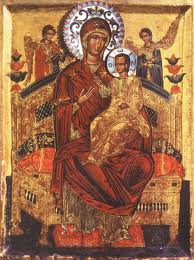
Our challenge as Christians is to learn how to take hold of the reins of our passions––To tame them and direct them for the good of God’s Kingdom as He originally intended. This involves a struggle. As Saint Paul cries out,
For what I am doing, I do not understand. For what I will not to do, that I do not practice; but what I hate that I do… I find then a law, that evil is present with me. I delight in the law of God according to the inward man. But I see another law in my members, warring against the law of my mind, and bringing me into captivity to the law of sin... (Rom 7:15, 21-23)
Like Adam and Eve, we are tempted by our pride to disobey our Creator and God. We are fooled into believing that we know better than God, just like Eve was deceived by the snake in Paradise. We trust in our own will, not realizing that we are under the influence of negative forces of evil nature.
Our challenge is to learn obedience––”Thy will be done.” Unfortunately, obedience is a bad word in our society. Most of us rebel at the thought of obedience of almost any kind. But this is what Jesus taught us. He prayed to His Father; Not my will but Thine be done. (Luke 22:42). He willing gave up his life for us to carry out the will of the Father. Just like He offered his full life to His Father, so too must we offer our full life to our God and Father.
The Church gives practical guides for this obedience:
1. Following the liturgical cycle of divine services.
2. Adherence to the canons established for our well being by the Councils of the Church which call for prayer, fasting, and regular participation in Confession and Holy Communion.
3.Following the direction of our spiritual Father.
This is the foundation of an Orthodox Way of Life.
We are required to undertake an ascetical or disciplined way of life focused on God’s Kingdom. But it cannot be aimed solely at our own benefit. We must be willing to give ourselves for God’s work. God is all merciful and can help us, but only if we can cry out “Thou hast come into the world to save sinners, of whom I am chief (cf I Tim 1:15).
This ascetical life serves a twofold purpose.
1. To remind us to “fulfill the call to mission… to take serious stock of our struggle and our lives, and work to better what is wanting.”
2. To remind us that “it is precisely in our serious attentiveness to the struggle and its right contours, that we have the power to speak to the world the true message of Christ, of the Spirit, of the Father.”
This requires boldness to think, speak, act, and orientate one’s whole life toward a Kingdom, the very existence of which may be questioned by those around us.
Saint Basil writes,
Examine what sort of being you are. Know your own nature, that your body is mortal but your soul is immortal, and that our life is twofold in kind. One kind is proper to the flesh, quickly passing by, while the other is akin to the soul, not admitting of circumscription. Therefore be attentive to yourself (Deut 15:9), neither remaining in mortal things as if they were eternal, nor despising eternal things as if they were passing. […] Understand yourself with all exactness, that you may know what gift to apportion to each––for the flesh nourishment and coverings, and for the soul doctrines of piety, education in courtesy, training in virtue, correction of the passions.
Through the defeat of the passions the self-will can be overcome.

Brother Nikanor, a Nasdaq broker turned monk, advises former colleagues to put a jar with soil on their desks to remind them where we are all heading and what matters in life.
As western banks fold into each other like crumpled tickets and commentators portray the current crisis as the last gasp of modern capitalism, Hristo Mishkov, 32, shares the pain -- and offers home truths.
His story partly resembles that of Brother Ty, the monk-tycoon protagonist of the 1998 satire "God is my Broker" by U.S. writers Christopher Buckley and John Tierney -- he failed on Wall Street and became a monk.
But 10 years later, the similarities are superficial: the Bulgarian had a successful broking career, does not write self-help manuals and aims to get happy, not rich.
His interest in financial markets began under communism in the 1980s when he and other children created their own play stock exchange in their apartment block's basement in Sofia.
Five years ago, after failing to find happiness in the life he lived, the Christian Orthodox who hadn't practiced as a child quit the New York-based market for a dilapidated Bulgarian monastery that once served as a communist labor camp.
Retaining one luxury -- a mobile phone, which connects him with both potential donors and former trading colleagues -- he has brought the rigor of his broking experience to his faith.
He has helped to raise hundreds of thousands of levs (dollars) to rebuild the monastery -- a hard task in a country where charity is not part of the mentality and building shopping malls and golf courses is a priority.
"Many people... in the world do not realize that they have not earned the food they eat, that they take without giving," Mishkov said. "But if someone consumes more than they have earned, it means someone else is starving.
"It is right to see people who consume more than they deserve shattered by a financial crisis from time to time, to suffer so that they can become more reasonable."
Being a trader has seldom been more traumatic: placing bets on political decisions about billion-dollar bank bailouts which, if they fail, could mean much more than a bad day for yourself or colleagues, but also jeopardize livelihoods.
Some have found solace in religion, others in humor, but a few fall. Surveys show traders reporting more stress and every news report of a trader suicide is accompanied by suggestions the pressure may have been too much.
HAPPINESS
"We always search for happiness in the outside world, in material things, which makes us constantly unsatisfied, angry with ourselves and the world," said Mishkov, who exudes a sense of tranquility, intelligence, and humor.
Greed and the marketization of our lives have reached the point where people have been turned into a commodity -- even their health can be traded like a stock, he said.
"We have so quickly lost our human appearance, we have become beasts ... There's no-one to count on and say 'hey neighbor come help me.' He will come but demand a payment."
His monastery, tucked among hills 50 km (31 miles) west of Sofia, was founded in the 12th century. The communist regime which banned religion turned it into a labor camp, then a children's pioneer camp and a livestock farm.
Now Mishkov works hard every day milking buffalo cows and building stone walls. He says he is not against rich people but can only respect those who contribute to the good of society -- pointing to Microsoft founder Bill Gates as an example.
As a younger man working for more than two years for Karoll, one of Bulgaria's leading brokerages, Mishkov was good at his job, former colleagues say.
"He was a religious person and that annoyed me sometimes," said Alexander Nikolov, head of international capital markets at Karoll. "There were occasions when he would not show up at work because of some religious holiday."
His colleagues were stunned when he decided to become a monk, but Mishkov felt the time had come to look after people's souls.
"Everybody can be a good broker but this does not bring much benefit for the world," he said. Religion can help people cope in today's stressful times and find answers, Mishkov added.
Churches in New York's financial district reported last month increased attendance at lunchtime meetings, with many more people in business attire than usual, when some of the world's biggest investment banks collapsed.
Steven Bell, chief economist of London hedge fund GLC, said keeping a sense of reality is what traders needed.
"It is very important to just remind yourself that there is a real world out there. In any job but particularly in financial markets, you need to try and keep your feet on the ground," Bell told Reuters by phone.
Mishkov says the crash should also help correct a dangerous global trend of an excessive outflow of labor to the service sectors, by people attracted by high pay and an easy life.
"Milk is not produced by computers, bread doesn't come from a good company PR. It is necessary to plow, sow and harvest before that," says the monk.

Awareness of the present
Death is the touchstone of our attitude to life. People who are afraid of death are afraid of life. It is impossible not to be afraid of life with all its complexity and dangers if one is afraid of death. This means that to solve the problem of death is not a luxury. If we are afraid of death we will never be prepared to take ultimate risks; we will spend our life in a cowardly, careful and timid manner. It is only if we can face death, make sense of it, determine its place and our place in regard to it that we will be able to live in a fearless way and to the fulness of our ability. Too often we wait until the end of our life to face death, whereas we would have lived quite differently if only we had faced death at the outset.
There is a patristic injunction, constantly repeated over the centuries, that we should be mindful of death throughout our life. But if such a thing is repeated to modern man, who suffers from timidity, and from the loss of faith and experience which prevails in our time, he will think he is called upon to live under the shadow of death, in a condition of gloom, haunted always by the fear that death is on its way and that then there will be no point in having lived. And death, if remembered constantly and deeply, would act as a sword of Damocles for him, suspended over his head by a hair, preventing the enjoyment of life and the fulfilment of it. Such an approach to the saying must be rejected. We need to understand mindfulness of death in its full significance: as an enhancement of life, not a diminution of it.
Most of the time we live as though we were writing a draft for the life which we will live later. We live not in a definitive way, but provisionally, as though preparing for the day when we really will begin to live. We are like people who write a rough draft with the intention of making a fair copy later. But the trouble is that the final version never gets written. Death comes before we have had the time or even generated the desire to make a definitive formulation. We always think that it can be done tomorrow. 'I will live approximately today. Tomorrow is when I shall act in a definitive way. It is true that things are wrong, but give me time. I will sort them out somehow, or else they will come right of themselves'. Yet we all know that the time never actually comes.
The injunction 'be mindful of death' is not a call to live with a sense of terror in the constant awareness that death is to overtake us and that we are to perish utterly with all that we have stood for. It means rather: 'be aware of the fact that what you are saying now, doing now, hearing, enduring or receiving now may be the last event or experience of your present life'. In which case it must be a crowning, not a defeat; a summit, not a trough. If only we realized whenever confronted with a person that this might be the last moment either of his life or ours, we would be much more intense, more much attentive to the words we speak and the things we do.
There is a Russian children's story in which a wise man is asked three questions: What is the most important moment in life? What is the most important action in life? And who is the most important person? As in all such stories, he seeks everywhere for an answer and finds none. Finally he meets a peasant girl who is surprised that he should even ask. ‘The most important moment in life is the present - it is the only one we have, for the past is gone, the future not yet here. The most important action in this present is to do the right thing. And the most important person in life is the person who is with you at this present moment and for whom you can either do the right thing or the wrong'. That is precisely what is meant by mindfulness of death.
The value of the present moment may be realized when someone dear to us has a terminal illness and, more particularly, when we are aware that he or she may be dead within minutes. It is then that we recognize the importance of every gesture and action, then that we realize how slight the differences between what we usually consider the great things in life and those which are insignificant. The way we speak, the manner in which we prepare a tray with a cup of tea, the way in which we adjust an uncomfortable cushion become as important as the greatest thing we have ever done. For the humblest action, the simplest word, may be the summing up of a whole relationship, expressing to perfection all the depth of that relationship, all the love, concern and truth that are within it.
If only we could perceive the urgency of every moment in the awareness that it may be the last, our life would change profoundly. The idle words which the Gospel condemns (Matt 12:36), all those statements and actions which are meaningless, ambiguous or destructive — for these there would be no place. Our words and actions would be weighed before they are spoken or performed so that they might be culminating point in life and express the perfection of a relationship, never less.
Only awareness of death will give life this immediacy and depth, will bring life to life, will make it so intense that its totality is summed up in the present moment. Such precisely is the way in which the ascetics fought against mindlessness, lack of attention and carelessness, against all the attitudes which allow us to miss the moment of opportunity, to pass the other person by, not to notice the need. One of the chief things that we are called upon to learn is awareness - awareness of our own self and of the other person's situation, an awareness that will stand the test of life and death. All life is at every moment an ultimate act.
Fear of death, longing for death
We know from experience, our own and other people's, that we are afraid of death or uncertain about it. To be precise, I think that we are more afraid of the process of dying than of the fact of death. Most people might be ready to accept death if they were sure that death would come as sleep, without an intermediate period of fear and uncertainty.
Indeed, there is even something beguiling and attractive about death. How often people say, 'I wish I were dead': it is a way of saying, 'I wish I could be free of all responsibility either to myself or God or anyone else, I wish I could return to the condition of my early childhood when there was no need for me to live responsibly and I could simply play'. Most of us would prefer to play at living rather than to live commitedly. Consequently there is a fascination in death, seen as a liberation from the burden and responsibility of life. But in that sense death must be seen as an adversary, for it is one of the ways in which we are beguiled into turning away from what life offers in terms of a challenge and in terms of relationship. When people say, 'I am not afraid of death', we should always be ready to challenge them and ask whether their acceptance or even longing for death does not disguise a fear of life: 'I am terrified of life and would like to escape from it at all costs - if only I could go to sleep and never wake up, if only I could leave others to face my responsibilities, all the things which I have left undone or done amiss'. We should not be romantic in our attitude to death.
If we look to the saints we discover an altogether different attitude to death. Their love of death was not founded on a fear of life. When St. Paul says, 'For me to live is Christ and to die is gain [...]. I should like to depart and to be with Christ, which is far better' (Phil 1:21, 23), he is expressing a completely positive attitude to death. Death appears to him as a gate that will open on to eternity, enabling him to meet face to face the Lord who is all his love and all his life. But this cannot be achieved by wishful thinking. There is more to it than that. In order to be able to long for death in this particular way and to see death as the crowning of our life, as its unfolding to the measureless measure of eternity (to use a paradoxical phrase of St Maximus the Confessor), we must have an experience of eternal life here and now. We must not think of eternal life as something that will come later, as future happiness or future security. The apostles became fearless only when they themselves became - here and now - partakers of eternal life. As long as they had not received the witness of Christ's resurrection, as long as they had not received the Spirit, they were still afraid and clung in fear to their temporal life. But the moment they had access to life eternal, their fear of losing temporal life disappeared; for they knew that hatred, persecution and murder could do nothing more than free them from this life's limitations and enable them to enter into the boundless depths of eternal life. And this eternal life was known as a present experience, not only in an act of faith. The same is true of the martyrs. They were ready to die and possessed the sovereign freedom of self-giving because they knew life eternal and had in some measure already entered into it.
Death as an event in daily life
We could learn much about death if we took the trouble to look at our own experience. Death is much closer to us than we imagine, and we all could speak of experiences of 'death' which are in no sense frightening. What I have to say on this subject is neither new nor my own: perhaps more than anything else in my talk it is borrowed from others.
First of all, dying from a practical point of view means to drop out of self-awareness into an oblivion of self. This is something many people are afraid to do. Yet each of us goes to sleep every evening, loses himself completely in sleep, and without any fear. Why? Because we feel certain - to a great extent unjustifiably pertain - that we shall wake the next morning. We trust that the next morning will dawn for us, that sleep is a temporary experience. Could we not treat this as a parable of the process by which we die and wake in eternity? For in reality there is a great risk in closing one's eyes and going to sleep. There is no more dangerous place than one's bed, as noted in the story of the sailor and the peasant, who were considering the dangers of their respective conditions. The peasant insisted that he would never risk his life on the sea: 'It is far too dangerous'. When the sailor asked why he should think so, the peasant replied: 'Where did your father die?' 'At sea.' 'And your grandfather?' 'Also at sea.' 'And you still can't see how dangerous it is to go to sea?' But the sailor countered the question with his own: 'And where did your father die?' 'He died in his bed.' 'And his father?' 'Also in his bed.' 'And yet you dare to go to bed each night?' In this sense we ourselves face death trustfully and confidently each night. And when this kind of temporary death does not come easily to us, we even go so far as to take sleeping pills or nightcaps. Is it not curious that we fail to draw conclusions from the simplest things of life?
There is another way in which the experience of death is familiar to us all. As Romano Guardini has pointed out in his book The Last Things, there are several ways of dying in the course of a life. When we move from infancy to childhood, then to youth and adolescence and so to maturity and old age, we imagine that we grow out of one stage into the next. But if we are to develop, a number of things which were previously our condition must die in us: for a youth or adult preserves the characteristics of his childhood becomes childish, even infantile. In order to acquire maturity at the next stage of development, we must accept that something in us dies. And this dying may be a painful and difficult process, in a way as difficult as the actual dying of our body in the dissolution of death. Many parents know this all too well. They may long for their child to remain a little boy and they may be deeply disturbed at the sight of the young adult emerging out of the youngster. The process of dying in order to live is going on within us all the time: by contrast with such parents we must become aware of it and participate more actively in it. Then shall we be less afraid of death as an irrevocable loss. Rather shall we learn to regard it as an inevitable part of the process by which we grow into a more mature and complete life.
Death to self
Christ calls us to die to ourselves. What does this mean? The phrase is ambiguous, like everything else that is said about death. Does it mean self-destruction? Many imagine that it does, and try to apply it in that sense. Fortunately they fail, but they remain wounded by the terror of it. Properly understood, dying to oneself means acceptance of this progressive dying of things within us, until we come to the point when we realize that there is in us a real and deep self that belong to eternity, and a superficial self that has to be dissolved. We must let go of the superficial self in order to live fully.
Many feel that they cannot be aware of their own existence unless they assert themselves and demand recognition; and others of course react by trying to defend themselves against this kind of aggression. We can accept not to assert ourselves, not to impress upon others this awareness that we exist, only if we can believe - and we can believe it only on the strength of experience - that we are loved and affirmed by others. We must learn to be far greater than we are. It is not enough to know that God loves us and affirms us. We need to be affirmed by our neighbour, by at least one person, who says to us, 'You matter ultimately to me'. Gabriel Marcel insists in one of his books that to tell a person 'I love you' is tantamount to saying 'You shall never die', meaning as it does 'You matter to me so ultimately that I will assert you before the face of God, even if no one asserts you but God and myself'. We could achieve a great deal if we were prepared to recognize one another and to say, however tentatively, 'Yes, I am prepared to assert you. Although I am not sure how to do it completely, since your existence so far is a challenge, even an aggression, although I am afraid to do so, yet I will assert you as much as I can'. In this way, we could grow to the maturity that will allow us to assert the other and proclaim his ultimate value whatever the cost. The person who is asserted in such a way can forget about himself and live. Such is the line along which we are called to go.
We must have the courage to struggle through layers of fear in asserting one another ever more, fighting fear, yet overcoming it. At every step we have to renounce ourselves so that the other can be. As St John the Baptist spoke of himself decreasing in order that the Other might increase (John 3:30), so are we called to die progressively to ourselves that the other, our neighbour, may live. So to die means to leave nothing within us except that which is essential to the fullness of life.
Death as enemy and friend
Yet things are not so simple. It is true that, as St. Paul says, to live is Christ and to die is gain. It is true that to die is not to be divested of temporal life, but to be clothed with eternity. But there is a further point emphasised by St Paul, as also by the rest of Scripture. Man was not created for death; his calling is for eternal life; death is the result of sin in the sense of separation from God, breach with neighbour, loss of contact with man's real and deeper self. From that point of view, death is the last enemy that shall be destroyed (1 Cor 15:26). Death is the enemy, God's as much as ours. Indeed, it is God's enemy in the most striking and dramatic way, for it extends even to Christ himself. But while on the one hand death is such an enemy, the fact that it does reach out to Christ, that it kills him who is perfect man and God himself incarnate, also shows that it is not an evil devoid of meaning. For however much a result of sin and evil death may be, it is not in itself a sin or an evil which necessarily corrupts whoever it touches. Christ was not defiled in his death on the Cross, in his descent into hell, in his partaking of the total tragedy of death: his person was not polluted by communing in its mystery.
So there is an ambiguity here. On the one hand death should not exist, death is the result of evil and is to be defeated. On the other hand death alone enables us to break through the vicious circle of endlessness (and endlessness is something quite different from eternity). If there were no death in a world of sin, evil and corruption, we would slowly decay and disintegrate without ever being able to escape the horror of such gradual destruction.
There was a soldier in a Russian fable who managed to capture death and put it into a bag. He carried the bag on his back, safely secured, and was regarded at first as a benefactor who had saved mankind from its greatest scourge. But then it became obvious that while death might have gone, illness and old age were as much present as before. And when the soldier one day met an old woman, bent with age and illness, she shook her fist at him and shouted: 'Look what you have done, you evil good-for-nothing. You may have captured death, but you have deprived me of my freedom. Here am I, a prisoner of endlessness, part of a process that has no resolution'. The soldier realized what harm he had done and unleashed death. I need hardly add that it is still free and abroad.
Physical and spiritual death
Each Easter midnight and throughout the forty days that follow we sing that Christ is risen, having undone death by death. And yet what do we see? Death free and abroad, people dying as before. It would seem as if we are affirming something that we know to be untrue.
But we should keep in mind that there are two aspects or death. There is physical death, but there is also death, understood as separation from God, as descent into Sheol, the place where God is not, the place of his radical and definitive absence. It is this second aspect of death which is certainly the more cruel and atrocious. When we look at icons of Christ's harrowing of hell or speak of it in the Apostle's Creed, we are confronted by something unquestionably real. The Lord experienced not only the first aspect of death, but the second also. He chose to share with us in all the consequences of evil - including the final separation from God ('My God, my
God, why has thou forsaken me?'). But although he descends to the place where all those who have lost God descend, he brings with him the fullness of the divine presence. Consequently there is now no place left where God is not. And it is this which allows us to understand our situation since Christ's death and resurrection. We have still to undergo a temporary death, what St Paul describes as a falling asleep (1 Cor 15:6). But there is no longer the death which was the terror of mankind, the final dissolution and separation from God. And in that sense death is indeed undone by death. Even now - however germinally and tentatively - we are the heirs of eternal life.
Facing death
I once went to preach about death at a British university. Afterwards, the chaplain said to me, 'Do you know, I have never seen a dead person'. I was utterly amazed that a priest, a man in his fifties moreover, had never met death in his family life or in his priestly function - even during the war. It was an incident that made me take more note of my surroundings, and I realized that there is a very strong feeling here that death is a subject to avoid. The dead person should be committed to the care of the undertakers, while the living should turn away from the problem, and the less said about it the better. I found all this very offensive. Since giving that sermon I have taken every opportunity to speak about preparation for death to medical students, doctors, nurses, and to anyone else who is willing to listen. And I have made the discovery that people are quite ready to think about preparing for the death of others. At the same time very few are prepared to reflect that their own turn will come, and that preparation for death really begins with assessing death for oneself, taking a stand, and learning how to live well in order to die well - not so much in moral terms as skilfully, in the right way.
Yet we are all of us sick with the terminal disease known as mortality. It may take us some time to die of it, possibly thirty, sixty years or more. But we are all without exception sick with it and there is no doubt but that death will ensue. It follows that preparing for death cannot concern merely the other person or persons in our care, it concerns ourselves.
Freedom from the power of death
How then shall we prepare? From one point of view death has power over us. We were born and we shall die. It is as simple as that. But there is another aspect of death over which we can have some control.
Some years ago one of our parishioners fell ill. He was taken to hospital, where it was discovered that he had inoperable cancer and would die. He was not told about it at first. But his family was, and so was I. When I went to see him his first reaction (as so often is the case) was one of protest and recrimination. 'There is so much still to do, and here am I lying in this bed, unable to do a thing. How long is it to be?' I reminded him of something he had often said: 'If only I could put a stop to time, if only I could simply be'. I reminded him also that as yet he had never made any serious attempt to put a stop to time. Now God had done it for him. Thus he had no reason to complain, nor any reason to feel guilty. The whole thing was beyond his power to change. Yet lying still as he was, with time flowing by on either side of him, he was given the stillness of his present condition. And he could be as freely, completely and perfectly as he chose.
When I asked him whether he felt that he was yet in a condition of being, he answered, ‘There is still turmoil within me. I can do nothing, yet I go through the motions in respect of all sorts of things'. I put it to him that illness always confronts us with the things that are ultimate, most obviously with death. In death there are two elements or powers in action. The one power is extrinsic: the germs, the virus, the cancer or whatever it is that seeks to destroy the body. The other consists of all the negative attitudes and feelings that suck away vitality from within: resentment, bitterness, remorse, regrets, lack of peace. I urged him to concentrate on all the power of death that lay within him, and to let the doctors look after the rest.
After that we went through a long process (extending over several months) during which, day by day, he assessed his attitude to those who were closest to him. He had the time to do it; moreover was able to do it in the right spirit, seeing things as they were, not from a pragmatic point of view, but from an absolute angle. In the process he made his peace with all those around him.
Next we went back into his past, moving from one thing to another, seeking to understand his own sense of guilt, to assess what he had done or left undone, what others had done or omitted to do. Gradually all this field was cleared. It took a great deal of courage. For it is by no means easy for a man to look at his own life from the stability of the present moment and to make this moment the beginning of God's judgement on himself.
Eventually, he reached the point when he was almost transparent, so weak that he could hardly use his hands to bring food to his lips. Yet he said to me, 'How extraordinary it is. I am a dying man, there is nothing left of my strength. Yet I have never felt so intensely alive as I feel now'. He had found himself at that point of absolute cogency and stability which was free and independent of whatever might happen to his body.
Only if we free ourselves from all the germs of death which are within us can we reach such a point, where we become aware that we are ultimately immortal, though our bodies die.
It is not too late
When we recall our past as this man did, we sometimes remember someone we have harmed, but who is now long since dead; and it seems as if there is no way of setting things right. Let me give an example. I met a man in his eighties who, nearly sixty years before, when he was an officer in the Russian Civil War, had accidentally shot the girl he loved, a nurse in his unit. For the rest of his life he could never find peace. He told me that he had repented deeply, had confessed and received absolution. But it made no difference: nothing could free him from his sense of guilt. So I said to him, 'Why do you turn only to God, to Christ, to a priest to be forgiven? These were not your victims. Turn to the one you killed, to the girl'. He was taken aback. 'What do you mean, "turn to the girl"? I killed her sixty years ago.' 'Indeed you did', I answered. 'For that very reason, when you are at prayer this evening turn to her and say, "It is sixty years ago now, but I still carry the guilt and reproach of what I did to you. As the victim, you are the only one who has the power to forgive. Forgive me. And ask God to give me an assurance of forgiveness through peace".' He acted on my suggestion and indeed gained such assurance.
Too often we fail to resolve something in our past because we turn in the wrong direction. If God is not the God of the dead but of the living (Matt 22:33), then all those who have departed this life are alive in him; we, for our part, can turn to them for their intercession and forgiveness. All too frequently people who have lost someone whom they loved feel that they have not loved them as perfectly as they should; that they are indebted to them in terms of love, but that now it is too late to do anything about it. This is a mistake which we should never allow ourselves to make. It is never too late if we truly believe that God is the God of the living. Never should we say that we loved one another in the past tense. The death of the body does not involve a breach in a relationship that was, is and always remains between people who met and loved each other on earth.
The seeds we sow
Death is never the end. The good we have done continues after us and bears fruit in the lives of others. Unfortunately, the corollary is also true: we can also leave a legacy of evil.
On the positive side, consider the effect of the Gospels. There are countless people who have been converted and transformed by reading even a small passage from them. This they gain from what someone, many centuries ago, formulated and wrote down for the sake of Christ. I myself owe my faith to St Mark. If there is anything good that has come out of my life it is because one day, when I was fifteen years of age, I read St Mark's Gospel and Christ revealed himself and entered into my life.
By contrast, I think of quite other people who have written books, such as the French nineteenth century writer Gobineau. Gobineau wrote some remarkable short stories, but also a miserable little treatise on the inequality of races. It is a treatise that would now be altogether and deservedly forgotten, except for one thing: it was read by Hitler. It is difficult to suppose that Gobineau shares no responsibility before God for all that resulted from his book. He was a theoretician. But his theories became practice, and they were to cost millions of innocent lives.
In this connection, I remember a fable by Krylov. Two individuals were sentenced to hell and placed in neighbouring cauldrons. One was a murderer, the other had merely written some trashy novels. The author took a quick look over the rim of his cauldron to see how the murderer was faring. He himself was being boiled so fiercely that he could not imagine how his neighbour might be treated. To his indignation he saw the murderer basking in tepid water. He summoned the devil on duty and expressed his dissatisfaction: 'I merely wrote some novels, and yet you give me such a violent boiling. Whereas this man committed murder and he is relaxing as if that were his bath'. 'True', said the devil, 'but that's no accident, it's deliberate.' 'How so?' 'Well', said the devil, 'this man murdered someone in a fit of rage. So we give him a hard boiling every now and again because that's how his rage flared up, then we give him a rest because it subsided. As for you, whenever anyone buys one of your books we stoke up the fire under your cauldron and add extra fuel'.
There is a theological point here. Our life does not end conveniently when we die, even on earth. It continues over the centuries through heredity and through the by-products of our existence; and we continue to carry a responsibility for its repercussions. Thus, we have met today; I have spoken; I shall be answerable for anything that you will have received and for the way in which it may affect your life.
Metropolitan Anthony of Sourozh

The Lord Jesus said something once that I found odd. He said, take care HOW you hear.” I would have thought that he would have said to take care WHAT you hear. Apparently, the way in which you hear something is about as important as what you are hearing. When you think of it, the Lord warned often about ears becoming so dull that people would hear, but they would not hear.
You know I’ve never really given much thought about how I listen. Of course, my mom used to tell me that I wasn’t a good listener. Women often complain that men never really listen to them. Most of the time, we are so distracted we don’t really hear what is being said. I wonder how we listen when the Bible is read or when the sermon is preached. Do we hear, or are our ears dull.
If our ears are dull, it may be the reason why our faith is so weak. The Bible makes it very simple: “Faith comes by hearing, and hearing by the word of God.” So, the way we get faith is through our ears, and if our ears are dull, it’s no wonder our faith is so small. How we hear makes all the difference.
We need to understand why our ears grow dull. St. James gives us a clue – “Be doers of the word and not hearers only. For if anyone is a hearer of the word and not a doer, he is like a man who sees his face in a mirror, but when he turns away, he forgets what he looks like.” This happens in Orthodoxy. We get excited about the things we’ve learned or heard that convince us that Orthodoxy is truth. We say, “YES, this is the truth.” Then, we don’t do what we have heard. The next we hear the same thing we say, “Yes, this is the truth.” Again, we don’t do what we have heard. Then we hear the same thing and now we say, “Yawn! Yes, that’s the truth, I guess.”
Yet, if we act upon what we hear, then St. James says that we will be blessed in everything that we do. Imagine that – blessed in everything we do. Such is the power of being careful about HOW we hear.
Then, it’s hard to hear when you are emotional. Have you ever tried to speak to someone who is very angry, or very sad, or even very happy? They hardly hear what you say. Many of us are such a roller coaster of emotions, it’s a wonder we hear anything at all. We need emotional sobriety. We need Jesus to command us as he did the storm and the waves –“Peace, be still.”
Finally, we don’t often hear because our brains aren’t fully engaged. Women are right that often men only listen with 10% of their brain while the rest of the brain is somewhere else. Do we do the same in Church? Do we listen with divided attention? I often wonder if people hear the sermon that I preach. There’s a simple way to find out. About an hour later, just ask someone, “Well, what was the sermon about?” The answers are usually quite amusing if not somewhat sad.
We need to become active listeners with our brains fully engaged. I have some “radical” suggestions. First, read the relevant scriptures for each Sunday, and if you have time, read an orthodox commentary on the passage. Study the Saints who are to be commemorated. If you let Father know that you come to Church prepared to listen, he will knock himself out to write the best sermons possible. Second, I know that not everything that I say in a sermon is straight from God. Jeremiah, the Prophet, said that God’s Word is like chaff to wheat. Well, in the old days they would beat the wheat on the threshing floor and then it would be thrown into the air so that the chaff would blow away, and the heavier wheat will fall back to the floor. Maybe my sermons and blogs are 95% chaff and only 5% wheat. If so, the 5% of wheat is worth keeping. So, if something you hear in the reading or the sermon impresses you as the truth, then God has just spoken to you. Realize that this is being impressed upon you as the truth because it is something that you are meant not only to hear, but to do as well.
Jesus said, “Take care how you hear. For whoever has, to him more will be given; and whoever does not have, even what he seems to have will be taken from him.” It is a blessing to stand in the Holy Orthodox Church and hear the word of God, but it is not enough if all you do is hear, but never do. Even your Orthodoxy can be taken from you. Is this hard to believe? Well, in my short time, I have seen many come to the Faith with great enthusiasm and piety. Sadly, like the seed sown on bad ground, the word did not take root. Eventually, these people left the Church and so far they haven’t returned.
Be doers of the Word and not hearers only. Take care how you hear!

It is not easy to be an Orthodox Christian in the modern world. Or more accurately, in what is now called by the historians and sociologists, the “postmodern” age, where the only truth is personal opinion, and where the fallen human will to will whatever it wants, no matter what the consequences may be, is the only supreme and sovereign good.
But then again, to be a follower of Christ has never been easy in any age or culture, pagan, secular, or otherwise.
Even in the so-called “golden era” of the patristic age, from the 4th through the 8th centuries ad, troubles and tribulations abounded. St. Athanasius the Great, ardent defender of the Nicene Creed, took to the desert in order to be hid from death by the Egyptian monastics no less than 5 times. St. Basil the Great, author of the Church’s most beautiful Liturgy, died with only a few bishops at his side who had not “bowed their knees to the Baal” of the Arian heresy. At that time, towards the end of the 4th century, the entire Byzantine Church had succumbed to the Arian creed, as decreed by the Emperor! St. John Chrysostom was exiled from his throne at the Great Church of St. Sophia’s in Constantinople not once, but twice, dying from the hardships he encountered during his second exile. A century later, St. Maximus the Confessor was tortured, once again by the Byzantine authorities, on account of his refusal to give in to the heresy of “monotheletism,” the false teaching that Christ only had one divine will. While imprisoned, his tongue and right hand were cut off in order to prevent him from confessing the truth of the faith – no longer could he speak, no longer could he write. These are just a few examples showing that things were not so “golden” during these earlier centuries of Church history.
Today there is no doubt in my mind that the greatest error of this age is the denial of something more elemental than let’s say, the Church’s doctrine of the two natures of Christ, or that the Virgin Mary is indeed, the “Theotokos,” the Mother of the Son of God – the Second Person of the Holy Trinity. The problem we currently face is, instead, more fundamental in that it deals not with the “Who and What” of the Divine Reality, but with the “who and what” of human reality. For at the heart of the secular view of the world, is the assumption that we human beings are at the very best, “tool-making” mammals, naked apes. Any talk of the beauty of the soul, of eternity and the love of God, or the transcendent calling of life has been proscribed from our vocabulary, simply because such dangerous ideas belong not to world rational thought, but to the realm of superstition and myth. So they say.
The difficulty of living in this era as an Orthodox Christian is thus realizing that we have been seated in the corner of the world’s classroom and that a cone with the label “dunce” has been placed on our heads for all to see. Even worse, at least in my mind, is the fact that there are many Christians content to sit there with their faces to the wall and pretend that things are not so bad as they would seem. But deny it or not, the reality is that we Christians have been expelled from the public forum, and the so-called “secular elite” has made sure that the power of law, politics, and academia, remains squarely in their hands. One is no longer allowed to speak with any seriousness of thought to the possibility that human existence contains within itself anything higher and nobler than the physical brain, which thereby regulates all emotions, thoughts, decisions, and actual behaviors through the firing of electrical impulses through its billions and billions of neurons. All of human life is here seen as being an electrical-chemical phenomenon, and nothing more.
Yet to preach Christ in this “day and age” simply means to remind everyone we possibly can, and in whatever way we possibly can, that we cannot be truly human unless we move beyond that which is merely physical in order to see the eternal mystery of Christ within the human soul. We human beings are made from the dust of the earth, no doubt. And yes, we do share vital a solidarity with all living things – flora and fauna. But it is wrong to think that this is all there is to the phenomenon of a living, human person.
Which brings us to the final point. For if the holy fathers of the Church suffered and died for their belief in the full divinity of the Virgin’s Son, (“light from light, true God of true God”) we today must not be afraid to defend the next logical supposition of this teaching, which is that the Son of God became the Son of the Virgin precisely in order to show us the way towards our truest goal, to achieve deification, to become by grace all that God is Himself by nature. “And the LORD God formed man of the dust of the ground, and breathed into his nostrils the breath of life; and man became a living being.” (Gen. 2:7).
The breath of life by which we live is the eternal life of Christ given to us as gift through the outpouring of the Holy Spirit. Apart from this divine breath, we remain at a “sub-human” level of existence, not really living the way we are meant to live “in the beginning.” So here is the message we whisper into the ears of those who would rather not hear what we have to say: “Are you ready to become something more than you presently are? Are you ready to become an authentic human person with all its wondrous and infinite spiritual potentialities?” “If so, then come, and let us to show you a higher and far more joyful way. “

Πολλές φορές οι άνθρωποι φοβούνται να παραδεχθούν την παρουσία του Θεού, το θαύμα, και προσπαθούν μέσα από διάφορες επιστημονικές εξηγήσεις να διώξουν το «φόβο», την «άγνοια» ή όπως αλλιώς θα μπορούσαν να το ερμηνεύσουν. Η διαδικασία της πίστης στο θαύμα είναι λίγο ακατάληπτη για τους περισσότερους, όχι όμως και γι αυτούς που το έχουν νιώσει, βιώσει, αισθανθεί, πιστέψει. Αυτό είναι μία ευλογία.
Στη ζωή μου είχα αυτή την ευλογία αρκετές φορές, κάτι που με έκανε να αισθάνομαι αυτή την υπέροχη ευωδία της παρουσίας ενός Αγίου που άλλοι θα προσπαθούσαν να ερμηνεύσουν με χίλιους, άσχετους, κατ’ εμένα τρόπους.
Είχα μία πρόσκληση στο χωριό Γούρι πρόσφατα. Προχωρώντας λίγο έξω από την Κλήρου, ένιωσα ένα μεγάλο και οξύ πόνο στο στήθος, εφίδρωση, και διάχυση του πόνου αριστερά. Με δεδομένο ένα σοβαρό πρόβλημα στην καρδιά, τα συμπτώματά μου δεν ήταν και τα καλύτερα. Σε κάποια στιγμή νόμιζα ότι είχα πάθει έμφραγμα. Θέλησα να επιστρέψω και να πάω στο νοσοκομείο, ή και να καλέσω βοήθεια. Όταν ετοιμάστηκα να επιστρέψω, κάτι μέσα μου με έσπρωχνε προς το Γούρι. Ο πόνος ήταν αφόρητος και με μικρές στάσεις και παρακλήσεις προς την Παναγία κατάφερα να φτάσω. Ο πόνος συνέχισε για αρκετή ώρα. Όταν συνάντησα κάποιο γνωστό μου στην κοινότητα, μου είπε πως η Εικόνα της Παντάνασσας, το ακριβές αντίγραφο της εικόνας που βρίσκεται στο Άγιο Όρος, βρίσκεται στην εκκλησία και πως την επομένη θα γίνει παράκληση.
Αμέσως κάτι μέσα μου, μου είπε πως ίσως γι’ αυτό έπρεπε να είμαι στην Κοινότητα.
Όταν την επομένη το πρωί, προσκύνησα το εικόνισμα, μετά από λίγες ώρες κατευθύνθηκα για τη Λευκωσία. Κοιτάζοντας τον καθρέφτη με έκπληξη συνειδητοποίησα πως το πρήξιμο στη φλέβα είχε εξαφανιστεί και πως η βραχνή φωνή μου είχε αλλάξει και επανήλθε κανονικά. Το πρόβλημα με τη φωνή μου άρχισε πολύ έντονα να με βασανίζει από τον Φεβρουάριο του 2013, σύμπτωμα όπως μου είχαν πει οι γιατροί της πάθησης μου (και για τη φωνή και για τη φλέβα).
Ίσως, αυτά για κάποιους να ακούγονται απλά, άσχετα, χαζά, εκπληκτικά όμως και εντυπωσιακά για κάποιους άλλους.
Προσωπικά , λέω πως ήταν μία σειρά από θαύματα, τα οποία η Παναγία φρόντισε να κάνει για κάποιον που την κάλεσε σε βοήθεια.
Καθημερινά συμβαίνουν θαύματα. Εμείς όμως ίσως δεν είμαστε σε θέση να τα αποδεχθούμε και να τα αγκαλιάσουμε.
 Ο γέροντας ‘Ιάκωβος Τσαλίκης (1991) εξομολόγησε κάποτε μία γερόντισσα και της έβαλε κανόνα νά μην κοινωνήσει για τρία χρόνια.
Γιατί δεν κοινωνάς; τη ρώτησε μία μέρα ο ιερέας της ενορίας της. Μου έβαλε κανόνα ο π. ‘Ιάκωβος, απάντησε
Εκείνη, και του είπε την αιτία. Όχι γιαγιά, μη στενοχωριέσαι. Αυτός είναι αγράμματος καλόγερος.
Εγώ είμαι μορφωμένος και σόι λύνω τον κανόνα. Νά έρθεις την Κυριακή νά σε κοινωνήσω.
Καθώς όμως πλησίασε ή γιαγιά νά μεταλάβει, ένιωσε στο στόμα της την άγία λαβίδα άδεια και κρύα, δεν κατάλαβε τη γεύση της-θείας Κοινωνίας.
Το θαυμαστό γεγονός επαναλήφθηκε άλλες δύο Κυριακές, όπότε ή γυναίκα ανησύχησε και ξαναπήγε στο γέροντα ‘Ιάκωβο.
Παιδί μου, της είπε εκείνος, ο κανόνας δεν λύνεται. Πρέπει νά κάνεις τον κανόνα πού σου έβαλα.
Το 1987, ο π. Ιάκωβος εξομολόγησε μία κοπέλα, αλλά της απαγόρευσε νά κοινωνήσει.
Εκείνη τότε επισκέφθηκε κάποιον επίσκοπο, πού της επέτρεψε τη θεία μετάληψη.
Όταν όμως πλησίασε νά κοινωνήσει, ή άγία λαβίδα μπήκε άδεια στο στόμα της.
Αυτό ο παράδοξο και θαυμαστό επαναλήφθηκε κι άλλη φορά, όπότε ή κοπέλα τρόμαξε, μετανόησε και πήγαινα εξομολογηθεί πάλι στον π. ‘Ιάκωβο.
Όταν κοινωνώ τούς ανθρώπους, διηγιόταν χαρακτηριστικά άλλοτε ο μακαριστός γέροντας Ιάκωβος, ποτέ δεν κοιτάζω τα πρόσωπά τους.
Μερικές φορές όμως μου λέει ο λογισμός νά τα κοιτάξω.
Τότε βλέπω μερικά πρόσωπα νά έχουν μορφή σκύλου, πιθήκου ή άλλων ζώων.
Είναι φοβερή ή μορφή τους. Βλέπω όμως και μερικά ήρεμα και ιλαρά πού μετά τη θεία μετάληψη λάμπουν σαν τον ήλιο.
Μία φορά του είπε κάποιος συλλειτουργός του:Μ’ έκαψε ή θεία Κοινωνία!…
Εγώ, απάντησε ο γέροντας, δεν αισθάνθηκα νά με καίει.
Αντίθετα, ζούσε τόσο έντονα τη μέθεξη του δεσποτικού Σώματος, ώστε ανακαινιζόταν ψυχικά και σωματικά.
Σήμερα πού κοινώνησες, είπε σ’ ένα πνευματικό του παιδί, βλέπεις πώς αισθάνεσαι; Εγώ αισθάνομαι έτσι πάντοτε. Ό Χριστός βρίσκεται μέσα μου πάντα.
ΘΑΥΜΑΤΑ ΚΑΙ ΑΠΟΚΑΛΥΨΕΙΣ ΑΠΟ ΤΗ ΘΕΙΑ ΛΕΙΤΟΥΡΓΙΑ
Έκδοση Ιεράς Μονής Παρακλήτου Αττικής
Γέροντας Ιάκωβος Τσαλίκης
http://www.diakonima.gr

Του Γιώργου Θεοχάρη
Πριν δυο εβδομάδες στο Ιερό προσκύνημα του Αγίου Ιωάννη του Ρώσου στο Προκόπι Ευβοίας συνέβη ένα συγκλονιστικό γεγονός αφήνοντας άφωνους πιστούς και κληρικούς.
Κατά το προσκύνημα της μία γυναίκα θέλησε εν κρυπτώ να πάρει μαζί της τη ζώνη του Αγίου, που μόλις είχε φορέσει στη μέση της, ώστε να θεραπευτεί συγγενικό της πρόσωπο, όπως υποστήριξε εκ των υστέρων.
Χωρίς να γίνει αντιληπτή, εξήλθε από τον Ιερό Ναό με τη ζώνη στη τσάντα της και κατευθύνθηκε στο λεωφορείο του ΚΤΕΛ για Αθήνα. Το λεωφορείο δεν ξεκινούσε, κατέβηκε ο οδηγός έλεγξε τα πάντα και διαπίστωσε ότι δεν υπήρχε ένδειξη για τεχνικό πρόβλημα .
Ξαφνικά άρχισαν να χτυπάνε οι καμπάνες οι οποίες λειτουργούν μόνο χειροκίνητα, όπως υποστήριξαν στο΄΄Αγιορείτικο Βήμα΄΄ άνθρωποι από οργανισμό της Ιεράς Μητρόπολης.
Μετά από αυτά τα σημάδια, η γυναίκα που είχε τη ζώνη του Αγίου στη τσάντα της έτρεξε στον οδηγό και του είπε ΄΄ πρέπει να γυρίσω στο Ναό να αφήσω κάτι που πήρα για να θεραπευτεί ένας δικός μου άνθρωπος΄΄.
Πήγε στο Ναό, άφησε διακριτικά τη ζώνη του Αγίου πάνω στο Ιερό Λείψανο του και επέστρεψε στο λεωφορείο. Αμέσως το λεωφορείο ξεκίνησε προκαλώντας έκπληξη στους επιβάτες.
Το θαυμαστό γεγονός σκόρπισε δέος στην ευρύτερη περιοχή του Νομού Ευβοίας και έκανε ακόμα περισσότερους πιστούς να προσέρχονται στη χάρη του θαυματουργού Αγίου για να του ζητήσουν να τους ελεεί .
ΠΗΓΗ: http://www.pentapostagma.gr/2013/08/thavma-agiou-ioanni-rwsou.html#ixzz2cvt542T8

Among other mysterious perceptions from the world of spirits, the saints also had perceptions of sweet fragrances from good spirits and foul stenches from impure spirits.
During every appearance of luminous, pure spirits, a life-giving and sweet fragrance wafted about; and during every appearance of dark and impure spirits, a suffocating, unbearable stench filled the air.
The saints were able to discern which passion possessed a man by the kind of stench he emanated. Thus it was that St. Euthymius the Great recognized the stench of the passion of adultery in the monk Emilian of the Lavra of St. Theoctistus. Going to Matins one morning, Euthymius passed by Emilian's cell and smelled the stench of the demon of adultery. Emilian had not committed any physical sin, but had adulterous thoughts that were being forced into his heart by the demon, and the saint already sensed it by its smell.
The power of this perception once revealed itself even more wondrously in St. Hilarion the Great. A certain avaricious miser had sent some of his vegetables to Hilarion. When they were brought to Hilarion for a meal, the saint said: "Take these away from here. I cannot stand the stench that comes from these vegetables! Do you not smell how they reek of avarice?" When the brethren were amazed by these words, Hilarion told them to take the vegetables to the oxen, and they would see that not even the oxen would eat them. Indeed, the oxen merely sniffed at them, and turned their heads away in disgust.
St. Nikolai Velimirovich

"My wounds are foul and festering because of my foolishness" (Psalm 38:5).
The prophet speaks of the wounds of sin that he himself committed, and from which he sensed in himself the stench of sin. As much as this acknowledgment reveals the impurity of previous sins, so is the subsequent purity of the repentant one also shown. For as long as man follows the corrupt path of sin, he does not sense its suffocating stench; but when he withdraws from this path and sets off on the pure path of righteousness, he senses the inexpressible difference between purity and impurity, between the path of virtue and the path of vice.
Imagine a man who has spent the night in a stinking tavern and finds himself in a garden of roses the next morning. In the former there was stench, poison, debasement of soul and body, anger, discord, and the tormenting of himself and others. In the latter is God's great sun overhead, beautiful flowers everywhere, fresh air, wondrous fragrance, serenity and health. Imagine this, and understand that there is an even greater difference between the path of sin and the path of God.
My wounds are foul and festering. Thus the great king describes the fruits of his sinful past. Nothing is as foul as sin, nothing festers as much and nothing spreads as much as sin. The stench of bodily wounds suggests, in only a small way, the unbearable stench of a sinful soul. That is why every holy thing distances itself from such a soul. The pure heavenly spirits hide from such a one, and the impure spirits of hades seek its company. Every new sin is a fresh wound on the soul; every sin is corruption and stench.
How does sin arise? From my foolishness explains the prophet. A mind derailed from its divine track leads man to sin. Until the mind is cleansed, man cannot be cleansed. "But we have the mind of Christ" (I Corinthians 2:16), says the Apostle. In other words, we have a mind put back on track, as was Adam's mind before the sinful stench.
Hence brethren, all Orthodox teaching on asceticism concentrates on one main point: on the mind of man; on the cleansing and correcting of the mind.
O Lord Jesus Christ, Purity and eternal Source of purity, help us to reject our foolishness; help us to reason according to Thy mind. To Thee be glory and praise forever. Amen.
St. Nikolai Velimorivich
 St. Kosmas Aitolos, the New Hieromartyr and Equal-to-the-Apostles - Commemorated on August 24 (taken from:
The New Hieromartyr Cosmas, Equal of the Apostles, in the world Constas, was a native of Aitolia. He studied at first under the guidance of the archdeacon Ananias Dervisanos, and afterwards continued his education on Mount Athos, at the Vatopedi school renowned for teachers such as Nicholas Tzartzoulios (from Metsovo) and Eugenius Voulgaris (afterwards in the years 1775-1779 the archbishop of Ekaterinoslav and the Chersonessus).
Remaining on Athos at the Philotheou monastery to devote himself to spiritual labors, he was tonsured a monk with the name Cosmas, and later was ordained hieromonk. The desire to benefit his fellow Christians, to guide them upon the way of salvation and strengthen their faith, impelled St Cosmas to seek the blessing of his spiritual fathers and go to Constantinople. There he mastered the art of rhetoric and, having received a written permit of Patriarch Seraphim II (and later from his successor Sophronius) to preach the Holy Gospel.

St. Kosmas Aitolos, with scens from his life (http://pravicon.com/images/sv/s1222/s1222007.jpg)
So the saint began to proclaim the Gospel at first in the churches of Constantinople and the surrounding villages, then in the Danube regions, in Thessalonica, in Verroia, in Macedonia, Chimaera, Akarnania, Aitolia, on the islands of Saint Maura, Kephalonia and other places.
 Icon of St. Kosmas preaching to the people (taken from: http://www.vlasiostsotsonis.com/main.php?go=for)
His preaching, filled with the grace of the Holy Spirit, was simple, calm, and gentle. It brought Christians great spiritual benefit. The Lord Himself assisted him and confirmed his words with signs and miracles, just as He had confirmed the preaching of the Apostles.
Preaching in the remote areas of Albania, where Christian piety had almost disappeared among the rough and coarse people entrenched in sin, St Cosmas led them to sincere repentance and improvement with the Word of God.
 Another icon of St. Kosmas preaching to the people (Icon courtesy of http://www.eikonografos.com/ used with permission)
Under his guidance, church schools were opened in the towns and villages. The rich offered their money for the betterment of the churches, for the purchase of Holy Books (which the saint distributed to the literate), veils (which he gave women, admonishing them to come to church with covered heads),for prayer ropes and crosses (which he distributed to the common folk), and for baptismal fonts so that children could be baptized in the proper manner.
Since the churches could not accommodate everyone wanting to hear the wise preacher, St Cosmas with forty or fifty priests served the Vigil in the fields, and in city squares, where thousands of people prayed for the living and for the dead, and were edified by his preaching. Everywhere that St Cosmas halted and preached, the grateful listeners set up a large wooden cross, which remained thereafter in memory of this.
 Icon of St. Kosmas being martyred by the Turks (taken from: http://www.vlasiostsotsonis.com/main.php?go=for)
The apostolic service of St Cosmas was brought to a close by his martyric death in the year 1779. At 65 years of age, he was seized by the Turks and strangled. His body was thrown into a river, and after three days, was found by the priest Mark and buried near the village of Kolikontasi at the monastery of the Entrance into the Temple of the Most Holy Theotokos. Afterwards, part of his relics were transferred to various places as a blessing.
 Icon depicting the finding of the sacred body of St. Kosmas (taken from: http://www.vlasiostsotsonis.com/main.php?go=for)
He was glorified by the Ecumenical Patriarchate in 1961."
(taken from: http://ocafs.oca.org/FeastSaintsViewer.asp?SID=4&ID=1&FSID=102390)

Icon depicting the dormition of St. Kosmas Aitolos (Icon courtesy of http://www.eikonografos.com/ used with permission)
"It is interesting to note that the initiative for the first church to be built in memory of Father Kosmas was taken by the Moslem ruler of Albania, Ali Pasha, who held Father Kosmas in high esteem not only because he believed Kosmas to be a holy man but also because Kosmas had earlier predicted great success for him [Note: see the first prophecy of St. Kosmas below]. In 1810 Ali Pasha became master of the city of Berat and its environs. Within four years he succeeded in raising the money required to build the first church in honor of St. Kosmas. Moreover, he personally contributed not only toward the building of the church but paid to have a silver reliquary made in which Kosmas' skull was placed and saw to it that the Saint's service (akolouthia) was composed. It was later printed in Venice by the Epirot printer Nicholas Glykys."
(taken from: http://www.stjohn-mb.org/ministries/Apostle%20to%20the%20Poor.pdf)

St. Kosmas Aitolos (http://2.bp.blogspot.com/_XQqgvQ4ZKB4/TG1dA_X3mtI/AAAAAAAACCc/8kKQ44iUDj4/s1600/24.+%CE%9A%CE%9F%CE%A3%CE%9C%CE%91%CE%A3+%CE%91%CE%99%CE%A4%CE%A9%CE%9B%CE%9F%CE%A3.jpg)
Selected Prophecies of St. Kosmas Aitolos (taken from: http://members.cox.net/orthodoxheritage/St.%20Kosmas.htm; see the link for many more prophecies of this great saint)
"You will become a great man, you will conquer all of Albania, you will subjugate Preveza, Parga, Souli, Delvino, Gardiki, and the very stronghold of Kurt Pasha. You will leave a great name in the world. Also, you will go to Constantinople,...but with a read beard. This is the will of Divine Providence. Remember, however, throughout your whole reign, to love and defend the Christians, if you want your successors to retain their power."
(This was said at Tepeleni, in present day Albania, to Ali Pasha, and found amazing fulfillment after some thirty years. He became the sole, powerful ruler of Epiros. In saying the Ali Pasha would go to Constantinople but with a "red beard", the Saint meant that Ali Pasha would be beheaded and his head with bloody beard would be sent to that city. This, too, found fulfillment.)
"Things will come out of the schools that your mind does not even imagine."
"You will see in the field a carriage without horses running faster than a rabbit."

St. Kosmas Aitolos (http://pravicon.com/images/sv/s1222/s1222006.jpg)
"A time will come when the earth will be girded by a thread."
(electrical power grid and telephone lines)
"A time will come when people will speak from one distant place to another, as though they were in adjoining rooms--for example, from Constantinople to Russia."
"You will see men flying in the sky like starlings, and throwing fire on the earth. Those who will live then will run to graves and will cry out: "Come out you who are dead so that we the living may enter."
(These five successive prophecies of St. Kosmas are in books that were written about a century before the related inventions were made. Hence, they arouse admiration and manifestly testify to the Saint's gift of prophecy.)

St. Kosmas Aitolos (http://www.egolpion.com/img/saints/kosmas_aitwlos.jpg)
"The Turks will leave, but they shall return and will come as far as Hexamilia. In the end, they shall be driven away to Kokkina Milia. Of the Turks, one third will be killed, another third will be baptized, and the remaining third will go to Kokkina Milia."
(Kokkina Milia was a region which the imagination of the enslaved Greeks placed in the depths of Asia Minor and beyond. It is there that they hoped to push back their oppressors, i.e., where they originally came from.)
"In the City (Constantinople) so much blood will be spilled that a three-year old calf will swim in it."
"After the war, a man will have to run half an hour to find another human being to join him in fellowship."
(The situation prophesied here fits with that anticipated today in the case of a nuclear war.)

Icon of St. Kosmas Aitolos with scenes from his life (Icon courtesy of http://www.eikonografos.com/ used with permission)
Selected quotes from St. Kosmas Aitolos (taken from: http://www.serfes.org/writtings/stcosmas.htm; see the link and Modern Orthodox Saints I by Dr. Constantine Cavarnos for more information and quotes from St. Kosmas Aitolos)
"This All-holy Trinity we pious Orthodox Christians glorify and worship. He is the true God, and all other so-called gods are demons. And it is not we along that believe, glorify, and worship the Holy Trinity, but angels, archangels, and all the heavenly hosts, as numerous as the stars of the heavens and the grains of the sand of the sea unceasingly praise in hymns and worship and glorify this All-holy Trinity. Again, out of their love for the Holy Trinity men and women as numerous as the stars of the heavens and the grains of the sand of the sea spilt their blood, and as many renounced the world and went to the deserts and led a life of spiritual endeavor, and still as many lived in the world with temperance and virginity, fasting, prayer, almsgiving and other practices; and all went to Paradise and rejoice forever."
"If we want to fare well in this life and to go to Paradise, and to call our God love and father, we must have two loves: the love for God and the love for our neighbor. It is natural for us to have these two loves, and contrary to nature not have them. Just as a swallow needs two wings in order to fly in the air, so we need these two loves, because without them we cannot be saved."
"If you wish to be saved, seek no other thing here in this world as much as love."

St. Kosmas Aitolos (http://pravicon.com/images/sv/s1222/s1222009.jpg)
"The Martyrs won Paradise through their blood; the Ascetics, through their ascetic life. Now you, my brethren, who have children, how will you win Paradise? By means of hospitality, by giving to your brothers who are poor, blind, or lame."
"If you want cure your soul, you need four things. The first is to forgive your enemies. The second is to confess thoroughly. The third is to blame yourself. The fourth is to resolve to sin no more. If we wish to be saved, we must always blame ourselves and not attribute our wrong acts to others. And God, Who is most compassionate, will forgive us."
"God created woman equal with man, not inferior...My Christian, you must love your wife as your companion, not consider her as your slave, for she is a creature of God, just as you are. God was crucified for her as much as for you. You call God Father, she calls Him Father, too. Both of you have the same Faith, the same Baptism, the same Book of the Gospels, the same Holy Communion, the same Paradise to enjoy. God does not regard her as inferior to you. "
"This prayer should never be absent from you: Lord Jesus Christ, Son and Logos of the living God, through the Theotokos and all the Saints, have mercy upon me, Thy sinful and unworthy servant." (This is the actual Jesus Prayer: "O LORD JESUS CHRIST, SON OF GOD, HAVE MERCY UPON ME, A SINNER.") Always say this prayer both with your mouth and with your mind, day and night, wherever you may be, whether eating, walking, working, or sitting. Always meditate on it, as it benefits you a great deal., frees you here from every evil, delivers you there from eternal Hell, and renders you worthy of going to Paradise, our heavenly country."

Icon of St. Kosmas Aitolos the Hieromartyr (taken from: http://christopherklitou.com/icon_24_aug_cosmas_aitolos.htm)
APOLYTIKION IN THE THIRD TONE
By teaching the Divine Faith, thou hast richly adorned the Church and become a zealous emulator of the Apostles; for having been lifted up by the wings of divine love, that hast spread far and wide the message of the Gospel. O glorious Cosmas, entreat God that He grants us His great mercy.
KONTAKION
Having led an irreproachable life on Athos, like Moses thou hast been deemed worthy of God's manifestation; wherefore truly thou dost gladden the Church exceedingly by thy deeds and thy God-inspired words, O Father Cosmas, having contended for which, thou hast been adorned with a double crown.
MEGALYNARION
Rejoice thou emulator of the Apostles, teacher and luminary of the Church; rejoice thou divine cultivator of piety, associate of Martyrs and peer of Angels.
(hymns taken from: http://www.serfes.org/writtings/stcosmas.htm)

St. Kosmas Aitolos (https://blogger.googleusercontent.com/img/b/R29vZ2xl/AVvXsEi_pOJEK1LIwciz9THIZ0vVGIBWuSgcHJlk1VNbVYjDqCU5oZO20bP33zwRVB9oDus8fQvEE5TKY-HO_EixZnqqECkPj2XsrnkKlECtycbVGIOTlOossl70Ul-LB2tYup_wAJdMmhCK4LPP/s1600/agkosmas1.jpg)
Through the prayers of our Holy Fathers, Lord Jesus Christ our God, have mercy on us and save us! Amen!
http://full-of-grace-and-truth.blogspot.ca
Όσοι έχουν σταθερή ελπίδα προς τον θεό πλησιάζουν κοντά Του και φωτίζονται με τη λάμψη του αιωνίου φωτός.
Ο άνθρωπος, που για την αγάπη του Θεού δεν μεριμνά για τον εαυτό του, έχει ελπίδα αληθινή. Πιστεύει ότι μεριμνά γι’αυτόν ο Θεός.
Αν όμως στηρίζει την ελπίδα του στα έργα του και καταφεύγει στον Θεό μόνο όταν συναντά απρόοπτες δυσκολίες τις οποίες δεν μπορεί να αντιμετωπίσει με τις δικές του δυνάμεις, τότε μια τέτοια ελπίδα είναι μάταια και ψεύτικη. Όποιος έχει την αληθινή ελπίδα ζητεί μόνο τη βασιλεία του Θεού.
Όσο για τα απαραίτητα αγαθά της πρόσκαιρης ζωής είναι σίγουρος πως θα του δοθούν.
Αν στην καρδιά δεν υπάρχει τέτοια ελπίδα δεν είναι δυνατόν να υπάρχει και η ειρήνη.
Η ελπίδα είναι εκείνη που δίνει χαρά και ειρήνη στην καρδιά.
Γι’ αυτή την ελπίδα είπε ο Κύριος : «Δεύτε προς με πάντες οι κοπιώντες και πεφωρτισμένοι καγώ αναπαύσω υμάς (Ματθ,ια΄ 28).
Ελπίζετε δηλαδή σ’ εμένα, κι εγώ θα σας ανακουφίσω από τους κόπους και τους φόβους σας.
Άγιος Σεραφείμ του Σάρωφ
 Αφού επί σειρά ετών ο κόσμος γνώριζε ότι η χημειοθεραπεία είναι ο μόνος τρόπος προσπάθειας καταπολέμησης του καρκίνου, το JOHN HOPKINS HOSPITAL επιτέλους ισχυρίζεται ότι υπάρχει κι άλλος τρόπος.
1. Κάθε άνθρωπος έχει καρκινικά κύτταρα στο σώμα του. Αυτά τα καρκινικά κύτταρα δεν φαίνονται στις συνήθεις εξετάσεις, εφόσον δεν έχουν πολλαπλασιαστεί σε ορισμένα δισεκατομμύρια. Όταν ο γιατρός διαβεβαιώνει τους καρκινοπαθείς ότι δεν υπάρχουν πλέον καρκινικά κύτταρα στο σώμα τους μετά από θεραπεία, αυτό σημαίνει απλώς ότι είναι αδύνατη η ανίχνευση των καρκινικών κυττάρων στις εξετάσεις τους, επειδή ο αριθμός τους δεν ανέρχεται καν στο ανιχνεύσιμο ποσό.
2. Καρκινικά κύτταρα εμφανίζονται από 6 έως και περισσότερες από 10 φορές στη ζωή ενός ανθρώπου.
3. Όταν το ανοσοποιητικό σύστημα ενός ατόμου είναι ισχυρό, τα καρκινικά κύτταρα καταστρέφονται και έτσι αποτρέπεται ο πολλαπλασιασμός τους και κατά συνέπεια ο σχηματισμός όγκων.
4. Όταν κάποιος έχει καρκίνο αυτό υποδεικνύει ότι παρουσιάζει πολλαπλές διατροφικές ελλείψεις. Κάτι τέτοιο μπορεί να οφείλεται σε γενετικούς, περιβαλλοντικούς και διατροφικούς παράγοντες, καθώς και στον τρόπο ζωής του ατόμου.
5. Για να ξεπεραστούν οι πολλαπλές διατροφικές ελλείψεις, πρέπει να αλλάξει η διατροφή και να συμπεριληφθούν συμπληρώματα, τα οποία θα ενισχύσουν το ανοσοποιητικό σύστημα.
6. Η χημειοθεραπεία έχει να κάνει με τη δηλητηρίαση των ραγδαία αναπτυσσόμενων καρκινικών κυττάρων, αλλά και με την καταστροφή των ραγδαία αναπτυσσόμενων υγειών κυττάρων στο μυελό των οστών, την γαστρεντερική οδό κ.λπ. και μπορεί να προκαλέσει οργανικές βλάβες, στο ήπαρ, τους νεφρούς, την καρδιά, τους πνεύμονες κ.λπ.
7. Η ακτινοβολία καταστρέφει τα καρκινικά κύτταρα και παράλληλα, καυτηριάζει, σημαδεύει και καταστρέφει υγιή κύτταρα, ιστούς και όργανα.
8. Η αρχική θεραπεία με ακτινοβολίες και χημειοθεραπεία συχνά μειώνει το μέγεθος ενός όγκου. Ωστόσο, η παρατεταμένη χρήση χημειοθεραπείας και ακτινοβολίας δεν έχει ως αποτέλεσμα την περαιτέρω καταστροφή ενός όγκου.
9. Όταν το σώμα φέρει υπερβολικό τοξικό φορτίο από χημειοθεραπείες και ακτινοβολίες, το ανοσοποιητικό σύστημα έχει είτε κατασταλεί είτε καταστραφεί, έτσι το άτομο μπορεί να υποκύψει σε διάφορα είδη μολύνσεων και επιπλοκών.
10. Η χημειοθεραπεία και η ακτινοβολία μπορούν να προκαλέσουν τη μετάλλαξη των καρκινικών κυττάρων, ούτως ώστε να γίνουν πιο ανθεκτικά με αποτέλεσμα να καταστρέφονται πιο δύσκολα. Οι χειρουργικές επεμβάσεις μπορεί να έχουν ως αποτέλεσμα την εξάπλωση των καρκινικών κυττάρων και σε άλλες περιοχές.
11. Ένας αποτελεσματικός τρόπος καταπολέμησης του καρκίνου είναι η εξασθένηση των καρκινικών κυττάρων, με το να μην τους παρέχεται η τροφή που χρειάζονται για να πολλαπλασιαστούν.
ΤΑ ΚΑΡΚΙΝΙΚΑ ΚΥΤΤΑΡΑ ΤΡΕΦΟΝΤΑΙ ΜΕ:
α. Η ζάχαρη τρέφει τον καρκίνο. Αφαιρώντας τη ζάχαρη από τη διατροφή μας απομακρύνουμε μία σημαντική πηγή ενέργειας από τα καρκινικά κύτταρα. Τα υποκατάστατα ζάχαρης, όπως τα Canderel, NutraSweet, Equal, Spoonful κ.λπ. παράγονται από ασπαρτάμη, που είναι βλαβερή. Ένα καλύτερο φυσικό υποκατάστατο θα ήταν το μέλι Manuka ή οι μελάσες αλλά μόνο σε πολύ μικρές ποσότητες. Το επιτραπέζιο αλάτι περιέχει χημικές προσθήκες για να αποκτήσει το λευκό του χρώμα.
Καλύτερη εναλλακτική είναι μπαχαρικά τύπου Bragg’s aminos ή θαλασσινό αλάτι.
β. Το γάλα κάνει το σώμα μας να παράγει βλέννα, ιδίως στη γαστρεντερική οδό. Ο καρκίνος τρέφεται από τη βλέννα. Διακόπτοντας το γάλα και υποκαθιστώντας το με γάλα σόγιας χωρίς προσθήκη γλυκαντικών, τα καρκινικά κύτταρα εξασθενούν.
γ. Τα καρκινικά κύτταρα ευδοκιμούν σε όξινα περιβάλλοντα. Μία διατροφή βασισμένη στο κρέας είναι όξινη. Είναι προτιμότερο να τρώμε ψάρι και λίγο κοτόπουλο, από ότι μοσχαρίσιο ή χοιρινό κρέας. Το κρέας περιέχει επίσης αντιβιοτικά, αυξητικές ορμόνες και παράσιτα που είναι όλα επιβλαβή, ειδικά για καρκινοπαθείς.
δ. Μία διατροφή που αποτελείται από 80% φρέσκους χυμούς και λαχανικά, σιτηρά ολικής αλέσεως, σπόρους, ξηρούς καρπούς και λίγα φρούτα σας βοηθά να δημιουργήσετε ένα αλκαλικό περιβάλλον στο σώμα σας. Το 20% μπορεί να αποτελείται από μαγειρεμένα γεύματα στα οποία να περιλαμβάνονται τα φασόλια.
Οι χυμοί από φρέσκα λαχανικά παρέχουν ζωντανά ένζυμα που απορροφούνται εύκολα και φτάνουν στα κύτταρα μέσα σε 15 λεπτά τρέφοντας και ενισχύοντας την ανάπτυξη υγιών κυττάρων. Για την πρόσληψη ζωντανών ενζύμων και τη δημιουργία υγιών κυττάρων δοκιμάστε να πιείτε φρέσκο χυμό λαχανικών (από τα περισσότερα λαχανικά, συμπεριλαμβανομένων των βλαστών από τα φασόλια) και να φάτε ωμά λαχανικά 2 ή 3 φορές την ημέρα. Τα ένζυμα καταστρέφονται σε θερμοκρασίες άνω των 40 βαθμών Κελσίου (104 βαθμοί Φαρενάιτ).
ε. Αποφεύγετε καφέ, τσάι και σοκολάτα, τα οποία περιέχουν μεγάλη ποσότητα καφεΐνης. Το πράσινο τσάι είναι η καλύτερη εναλλακτική και έχει ιδιότητες κατά του καρκίνου. Νερό, καλύτερα καθαρισμένο ή φιλτραρισμένο, για την αποφυγή γνωστών τοξινών και βαρέων μετάλλων που περιέχονται στο νερό της βρύσης. Το αποσταγμένο νερό είναι όξινο και καλύτερα να αποφεύγεται.
12. Η πρωτεΐνη του κρέατος είναι δύσπεπτη και απαιτεί πολλά πεπτικά ένζυμα. Το άπεπτο κρέας που παραμένει στα έντερα αποσυντίθεται και έχει ως αποτέλεσμα μεγαλύτερη συσσώρευση τοξικών ουσιών.
13. Τα τοιχώματα των καρκινικών κυττάρων αποτελούνται από μία σκληρή πρωτεϊνική στιβάδα. Αποφεύγοντας ή μειώνοντας την κατανάλωση κρέατος απελευθερώνονται περισσότερα ένζυμα που επιτίθενται στα πρωτεϊνικά τοιχώματα των καρκινικών κυττάρων με αποτέλεσμα τα κύτταρα φονείς να μπορούν να τα καταστρέψουν.
14. Ορισμένα υποκατάστατα ενισχύουν το ανοσοποιητικό σύστημα (IP6, Flor ssence, Essiac, αντιοξειδωτικά, βιταμίνες, μεταλλικά στοιχεία, ουσιαστικά λιπαρά οξέα κ.λπ.). Άλλα υποκατάστατα όπως η βιταμίνη Ε είναι γνωστό ότι προκαλούν απόπτωση ή προγραμματισμένο κυτταρικό θάνατο, τη φυσιολογική μέθοδο του σώματος να απορρίπτει τα κατεστραμμένα, ανεπιθύμητα ή αχρείαστα κύτταρα.
15. Ο καρκίνος είναι μία ασθένεια του μυαλού, του σώματος και της ψυχής. Ένα ενεργό και θετικό πνεύμα θα βοηθήσει τον μαχητή του καρκίνου να επιβιώσει. Ο θυμός, η πικρία και τα δυσάρεστα συναισθήματα θέτουν το σώμα σε ένα αγχώδες και όξινο περιβάλλον. Μάθετε το πνεύμα σας να αγαπά και να συγχωρεί. Μάθετε να χαλαρώνετε και να απολαμβάνετε τη ζωή.
16. Τα καρκινικά κύτταρα δεν μπορούν να ευδοκιμήσουν σε οξυγονωμένα περιβάλλοντα. Η καθημερινή άσκηση και οι βαθιές αναπνοές βοηθούν στη διοχέτευση περισσότερου οξυγόνου στα κύτταρα. Η οξυγονοθεραπεία είναι μία ακόμα μέθοδος που χρησιμοποιείται για την καταστροφή των καρκινικών κυττάρων.
http://www.agioritikovima.gr/ugeia/27145-telos-tis-chime

We have one particular idea right now that’s taking possession of people: the so-called idea of women’s liberation. This takes the form of women priestesses in the Anglican Church, and also in the Catholic Church, which is preparing for it now.
Of course, if you look at this seriously, sit down and think about it, and you read what St. Paul says about women and so forth, you have no problems. It’s all very clear that this is some kind of crazy new idea. But it is also very interesting to look at this more deeply and see where it comes from—why is there such an idea, what is it, what’s behind it?—because if you understand the strategy of the devil, you’re a little better equipped to fight against it.
This particular idea of women’s liberation can be traced back at least two hundred years. Of course, you can go back even before that, but its present from goes back at least two hundred years, to the forerunners of Karl Marx, the early Socialists. These Socialists were talking about a great new utopian age which is going to come when all the distinctions of class and race and religion and so forth are abolished. There will be a great new society, they said, when everybody is equal. This idea, of course, was based originally upon Christianity, but it distorted Christianity, and amounted to its opposite.
There was a particular philosopher in China in the late nineteenth century who brought this philosophy to its logical conclusion, as far as it could go. His name is K’ang Yu-Wei (1858-1927). He’s not particularly interesting except as he incarnates this philosophy of the age, this spirit of the times. He was actually one of the forerunners of Mao Tse-Tung and the takeover of China by the communists. He based his ideas not only on distorted Christianity, which he took from the liberals and Protestants in the West, but also on Buddhist ideas. He came up with the idea of a utopia which was to come into being, I think, in the 21st century according to his prophecies. In this utopia, all ranks of society, all religious differences, and all other kinds of differences which affect social intercourse will be abolished. Everyone will sleep in dormitories and eat in common halls. And then with his Buddhist ideas he began to go beyond this. He said that all distinctions between the sexes would be abolished. Once mankind is united, there’s not reason to halt there—this movement must go on further. There must be an abolition between man and animals. Animals also will come into this kingdom, and once you have animals… The Buddhists are also very respectful to vegetables and plants; therefore, the whole vegetable kingdom has to come into this paradise, and in the end the inanimate world, also. So, at the very end of t he world, where will be an absolute utopia of all kinds of beings who have somehow become intermingled with each other, and everybody’s absolutely equal.
Of course, you read about this and you say the man must be crazy. But if you look deeply, you see that this is coming from a deep desire to have some kind of happiness on earth. No pagan philosophy, however, gives happiness; no man-made philosophy gives happiness. Only Christianity gives hope for a kingdom which is not of this world. The idea to have a perfect kingdom comes from Christianity, but since the early Socialists did not believe in the other world or in God, they dreamed of making this kingdom in this world. That is what communism is all about.
We see what happens, of course, when this idea is put into practice. You have the experiment of the French Revolution, which had apparently good ideas—liberty, equality, fraternity—or the Bolshevik Revolution, or in more recent times the various other communist revolutions. Last of all you have Cambodia, a poor little country which for three years suffered absolute communism and found that at least one-fourth of its population was exterminated because it didn’t fit. Everyone who had more than a high-school education had to be eliminated, everyone who thought for himself, and so forth. Now the regime has been overthrown by people who are a little less ruthless, but there’s nothing much to cheer about.
This shows that once you try to put these ideas into operation, you get, not paradise on earth, but more like hell on earth. In fact, the whole experiment in Russia for the last sixty years has been a proof of this, that there is no paradise on earth, except in the Church of Christ, with sufferings.8 Our Lord prophesied that already in this life we would receive back a hundredfold what we give, but it must be with persecutions and sufferings. Those who wish to have this happiness on earth without suffering and persecutions, and without even believing in God, make hell on earth.
Fr. Seraphim Rose
O ye who have been banished from Paradise! It is not for enjoyments, not for festivity, not for playing that we find ourselves on earth, but in order that by faith, repentance, and the Cross, we might kill the death which has killed us and restore to ourselves
the lost Paradise !
St. Ignatius Brianchaninov
Without the gift of discrimination no virtue can stand or remain firm to the end, for it is the mother of all the virtues and their guardian.
St. Anthony the Great