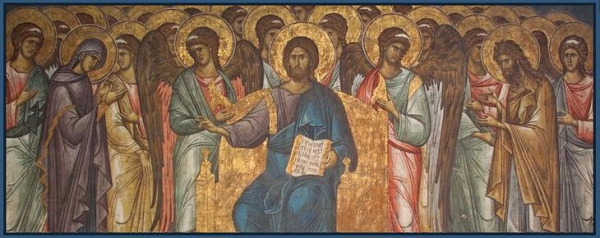
Έμαθα για το Μωϋσή τον Αιθίοπα, που ήταν πολύ φημισμένος ανάμεσα στους πατέρες της Σκήτης ότι, πριν γίνει μοναχός, ήταν δούλος κάποιου, που ανακατευόταν στη διοίκηση της πολιτείας. Ο κύριός του όμως τον έδιωξε, επειδή ήταν πολύ δύστροπος και είχε χαρακτήρα αιμοβόρο και άγριο.
Έφυγε λοιπόν ο Μωυσής κι έγινε ληστής. Αναδείχθηκε μάλιστα σε λήσταρχο, για την υπερβολική σωματική του δύναμη.
Ανάμεσα στα ληστρικά του κατορθώματα αναφέρεται και τούτο: Χολώθηκε κάποτε μ’ ένα βοσκό, επειδή τα τσοπανόσκυλά του τον εμπόδισαν να κάνει μια νυχτερινή ληστεία. Βάζοντας λοιπόν σκοπό να σκοτώσει το βοσκό, πάσχιζε με κάθε τρόπο να τον εντοπίσει μαζί με το κοπάδι του.
Επιτέλους άκουσε πως ήταν από την άλλη μεριά του Νείλου. Εκείνη την εποχή το ποτάμι πλημμύριζε και η κοίτη του πλάταινε, φτάνοντας το ένα σημείο, (δηλαδή το ένα περίπου μίλι):Ο Μωυσής όμως έβγαλε τον κοντό χιτώνα που Φορούσε και τον έβαλε στο κεφάλι του.
Άρπαξε και το μαχαίρι με τα δόντια, και ρίχθηκε στο ποτάμι. Κατόρθωσε να φτάσει κολυμπώντας στην άλλη όχθη. Ο βοσκός, βλέποντάς τον από μακριά να περνάει απέναντι κολυμπώντας, το βαλε στα πόδια και κρύφτηκε. Τότε ο Μωυσής, έχοντας χάσει το βοσκό, ξέσπασε πάνω στο κοπάδι.
Έσφαξε τέσσερα κριάρια, τα καλύτερα, τα έδεσε στη σειρά και πέρασε πάλι κολυμπώντας το Νείλο. Ήρθε σ’ ένα πλάτωμα, έγδαρε τα σφαχτά, άναψε φωτιά, τα έψησε, κι έφαγε τα πιο καλά κομμάτια. Τις προβιές τις πούλησε, και αγόρασε κρασί. Ήπιε περίπου δεκαοχτώ ιταλικούς ξεστούς, κι έπειτα τράβηξε για το λημέρι του, πενήντα σημεία μακρύτερα από κει.
Αυτός λοιπόν ο φοβερός ληστής, μετά από πολύ καιρό και με αφορμή ένα τυχαίο περιστατικό, ήρθε σε κατάνυξη, μετανόησε για την προηγούμενη ζωή του και προσχώρησε στη μοναχική πολιτεία.
Πήρε ένα κελί στη Σκήτη και επιδόθηκε σε αυστηρή άσκηση.
Λέγεται μάλιστα, ότι στην αρχή κιόλας της μοναχικής του ζωής, μόλις πήρε το κελί, του επιτέθηκαν τέσσερις ληστές, αγνοώντας βέβαια πως ο καλόγερος αυτός ήταν ο διαβόητος Μωυσής.
Έτσι, εκείνος τους εξουδετέρωσε, τους έδεσε, τους φορτώθηκε στη πλάτη σαν ένα σακί άχυρο, τους έφερε στην εκκλησία, όπου ήταν συναγμένοι οι αδελφοί, και είπε.
- Επειδή δεν μου πρέπει να κάνω πια κακό σε κανένα, τί προστάζετε γι’ αυτούς εδώ, που τους έπιασα να έρχονται εναντίον μου;
Οι αδελφοί τους έλυσαν και τους άφησαν ελεύθερους. Οι ληστές όμως, στο μεταξύ, αναγνώρισαν το Μωϋσή και είδαν τη μετάνοιά του. Δεν θέλησαν λοιπόν ούτε κι αυτοί να γυρίσουν στη προηγούμενη ζωή τους. Ακολουθώντας το παράδειγμα του Μωϋσή, εγκατέλειψαν τη ζωή της αμαρτίας και έγιναν δοκιμότατοι μοναχοί.
Αλλά κι ο Μωυσης τόσο σκληρή άσκηση έκανε, για την οποία και αλλού έχει γραφτεί, και τόσο πολέμησε τους δαίμονες, ύποβάλλοντας τον εαυτό του σε κάθε είδος σκληραγωγίας, ώστε συναριθμήθηκε κι αυτός στους μεγάλους και κορυφαίους Πατέρες, έγινε και πρεσβύτερος [=ιερέας], και διακρίθηκε για τα μεγάλα πνευματικά του χαρίσματα. Έτσι, κοιμήθηκε αφήνοντας και εβδομήντα μαθητές.

Από το Γεροντικό:
Κάποιος αδελφός της Σκήτης [κοινότητας των ερημιτών] έσφαλε [=αμάρτησε]. Έγινε συγκέντρωση στην οποία κάλεσαν τον αββά Μωυσή αλλ’αυτός δεν θέλησε να πάει. Του παρήγγειλε τότε ο πρεσβύτερος: «Έλα, γιατί σε περιμένουν όλοι». Κι εκείνος σηκώθηκε και πήγε κρατώντας στην πλάτη ένα καλάθι τρύπιο που το γέμισε με άμμο. Οι Πατέρες που βγήκαν να τον προϋπαντήσουν του λένε: «Τι είναι αυτό, πάτερ;» «Οι αμαρτίες μου―απαντά ο Γέροντας―που κυλούν και πέφτουν πίσω μου και δεν τις βλέπω και ήλθα εγώ σήμερα να κρίνω τα σφάλματα άλλου». Όταν τ’ άκουσαν αυτά οι Πατέρες, δεν είπαν τίποτε εναντίον του αδελφού αλλά τον συγχώρεσαν.
Σελίδες της Ερήμου:
ΑΚΟΥΟΝΤΑΣ ο ευσεβής Έπαρχος της Αλεξανδρείας την καλή φήμη του Αββά Μωϋσέως του Αιθίοπος, ανέβηκε κάποτε στη σκήτη να τον γνωρίση απο κοντά. Σαν το έμαθε όμως εκείνος, έφυγε κρυφά από την καλύβα του και πήγε κατά το έλος. Στο δρόμο συνάντησε τον άρχοντα και την ακολουθία του, που έτυχε να περνάνε από κει. Οι ξένοι, που δεν τον γνώριζαν, τον σταμάτησαν και τον ερώτησαν να τους δείξη την καλύβα του Αββά Μωϋσέως.
- Τί γυρεύετε απ’ αυτόν; έκανε μ’ αποστροφή ο Γέροντας. Αυτός είναι άνθρωπος μωρός.
Ο άρχοντας λυπήθηκε που είχε κάνει άδικα τόσο κόπο. Όταν έφτασε στην εκκλησία της σκήτης, είπε στους κληρικούς:
- Κάτω στην πόλι λένε τόσα καλά για τον Αββά Μωϋσή, γι’ αυτό ξεκίνησα να τον συναντήσω. Μα πριν από λίγο συναντήθηκα μ’ ένα Καλόγερο κι έμαθα από λόγου του πως πρόκειται για ανόητο άνθρωπο.
- Τί άνθρωπος ήταν αυτός; Ρώτησαν αγανακτισμένοι οι κληρικοί, που τόλμησε να μιλήση έτσι για τον Άγιο.
- Ένας μελαμψός Καλόγερος, πολύ ψηλός, με τριμμένα ρούχα.
Οι κληρικοί γέλασαν με την καρδιά τους.
- Αμ αυτός είναι ο Αββάς Μωϋσής.
Ο άρχοντας θαύμασε την ταπεινοσύνη του Γέροντος και γύρισε στην πόλι ωφελημένος.
***
St Moses the Black

Brotherhood of St. Moses the Black
St Moses the Ethiopian was a former gang leader, murderer, and thief in ancient Africa. However, he became a model of transformation. His is one of the most inspiring stories among the African saints.
Moses, an escaped slave, was the leader of a group of 75 robbers. He was a large and powerful man, who with his gang terrorized the entire region. Moses was transformed after he and his group attacked a monastery, intending to rob it. He was met by the abbot, whose peaceful and warm manner overwhelmed him. He immediately felt remorse for all his past sins, sincerely repented, and begged to remain at the monastery.
Moses was tortured by his past and for years was tempted to return to his old ways. One day, as he was confessing his sins to St. Macarius, an angel appeared with a tablet full of his sins. As he confessed, the angel began wiping the tablet clean. The more he confessed, the more the angel wiped, until by the end it was completely clean. After meeting St. Macarius and St. Isidore, he completely left his old ways behind him and became a monk.
Later, St. Moses was ordained to the priesthood -- a rare honor among the Desert Fathers -- and founded a monastery of 75 monks, the same number as his former group of thieves. He was known for his wisdom, humility, love, and non-judgment of others. Once a brother had been caught in a particular sin, and the abbot asked St. Moses to come to the church and render judgment. He came reluctantly, carrying on his back a leaking bag of sand. When he arrived, the brothers asked him why he was carrying such a thing. He simply said, "This sand is my sins which are trailing out behind me, while I go to judge the sins of another." At that reply, the brothers forgave the offender and returned to focusing on their own salvation rather than the sins of their brother.
In 405 A.D., at age 75, St. Moses suffered a martyr's death, when his monastery was attacked by a group of barbarians. He is remembered on the 28th of August. He is the patron saint of our brotherhood.

Ήρθε κάποτε ο αββάς Αγάθων στην πόλη να πουλήσει τα σκεύη του και βρίσκει κάποιο λεπρό κοντά στην οδό.
Τον ρώτησε ο λεπρός «πού πηγαίνεις;» και του απαντά ο αββάς Αγάθων «στην πόλη για να πουλήσω σκεύη». Τότε του λέει ο λεπρός «κάνε αγάπη και πήγαινέ με εκεί».
Τον σήκωσε ο αββάς και τον έφερε στην πόλη και του λέει ο λεπρός «Εκεί που πουλάς τα πράγματά σου, εκεί να με βάλεις».
Ο αββάς έκανε όπως του είπε. Τότε, όταν πουλούσε κάποιο σκεύος, του έλεγε ο λεπρός «Πόσο το πούλησες;». «Τόσο», του έλεγε. «Αγόρασέ μου πίτες». Και του αγόραζε. Και πάλι πουλούσε ο αββάς άλλο σκεύος, και του έλεγε ο λεπρός «Κι αυτό πόσο το πούλησες;». «Τόσο». Και έλεγε «αγόρασέ μου το τάδε». Και του το αγόραζε.
Αφού λοιπόν ο αββάς πούλησε όλα του τα σκεύη και σκόπευε να φύγει, του λέει ο λεπρός «Φεύγεις;» Του λέει «Ναι». «Κάνε πάλι αγάπη και πήγαινέ με εκεί που με βρήκες».
Ο αββάς τον σήκωσε και τον έφερε στον τόπο του. Τότε του λέει ο λεπρός «Είσαι ευλογημένος, Αγάθων, από τον Κύριο στον ουρανό και στη γη».
Σήκωσε ο αββάς τα μάτια του και δεν είδε κανένα γιατί ήταν άγγελος Κυρίου που είχε έλθει να τον δοκιμάσει.
αββάς Αγάθων
 «Ας μετανοήσουμε λοιπόν γνήσια, για να ελευθερωθούμε από τα πάθη και να επιτύχουμε την άφεση των αμαρτιών. Ας περιφρονήσουμε τα πρόσκαιρα, για να μην μαχόμαστε για αυτά με τους ανθρώπους και παραβούμε την εντολή της αγάπης, και εκπέσουμε από την αγάπη του Θεού. Ας περπατούμε κατά το Πνεύμα, και ας μην εκτελούμε την επιθυμία της σαρκός.
Ας αγρυπνούμε, ας καθαριστούμε, ας αποβάλλουμε λοιπόν τον ύπνο της πνευματικής τεμπελιάς. Ας γίνουμε ζηλωτές των αγίων αθλητών του Κυρίου· ας μιμηθούμε τους αγώνες τους ξεχνώντας τα παλιά, και αποβλέποντας στα μέλλοντα. Ας μιμηθούμε τον ακατάπαυστο δρόμο τους, την ζέουσα προθυμία, την προσμονή της εγκράτειας, τον αγιασμό που φέρει η σωφροσύνη, την γενναιότητα της υπομονής, την ανοχή της μακροθυμίας, τον οίκτο της συμπάθειας, την ηρεμία της πραότητας, την θερμότητα του ζήλου, το ανυπόκριτο της αγάπης, το ύψος της ταπεινοφροσύνης, την απλότητα της ακτημοσύνης, την ανδρεία, την καλοσύνη, την επιείκεια.
Μην υπερηφανευόμαστε στις ηδονές, μην υπερηφανευόμαστε με λογισμούς, μην μολύνουμε την συνείδηση, να διώκουμε την ειρήνη και τον αγιασμό, χωρίς του οποίου κανείς δεν θα δει τον Κύριο. Και με αυτά θα φύγουμε από τον κόσμο, αδελφοί, και από τον κοσμοκράτορα. Ας εγκαταλείψουμε την σάρκα και τα σαρκικά. Ας ανατρέξουμε στους ουρανούς, εκεί θα έχουμε το πολίτευμα.
Ας μιμηθούμε τον θείο Απόστολο, ας κατανοήσουμε τον Αρχηγό της ζωής, ας απολαύσουμε την πηγή της ζωής. Ας χορέψουμε με τους αγγέλους, μαζί με τους αρχαγγέλους ας υμνήσουμε τον Κύριό μας Ιησού Χριστό, στον οποίο είναι η δόξα και η εξουσία μαζί με τον Πατέρα και το Άγιο Πνεύμα, τώρα και για πάντα, και στους αιώνες των αιώνων. Αμήν».
(Λόγοι ασκητικοί, άγιος Μάξιμος ο Ομολογητής)
 Below is "The Rule For Attending To Oneself For One Dwelling In The World" that was written for a layman as a result of his desire to live a vigilant life in the world by St. Ignatius Brianchaninov.
"The soul of all practices in the Lord is VIGILANCE. Without VIGILANCE, all these practices are fruitless. He who is desirous of saving himself must so establish himself that he might remain continuously VIGILANT toward HIMSELF, not only in solitude, but also under conditions of distraction, into which he is sometimes unwillingly drawn by circumstances.
Let the fear of God outweigh all other sensations upon the scales of your heart; and then will it be convenient to for you to be VIGILANT TOWARD YOURSELF, both in the silence of your kellia [cell] and in the midst of the noise that surrounds you from all sides.
A well-reasoned moderation in foodstuffs, diminishing the passionate heat of his blood, tends greatly to facilitate your being able to ATTEND TO YOURSELF; while the impassioning of your blood, stemming, as it does, from an excessive consumption of foodstuffs, from extreme and intensified bodily movements, from the inflammation of wrath, from being heady with vanity, and by reason of other causes, gives rise to a multitude of thoughts and reveries-in other words, to distraction. The Holy Fathers, first of all, ascribe to such a one as is desirous of ATTENDING TO HIMSELF a moderate, evenly-measured, constant abstention from food. (Dobrotoliubiye [Philokalia], Pt. II, Ch. of St. Filofei [Philotheus] of the Sinai)
Upon awakening from sleep-an image of the awakening from the dead, which awaits all men-direct your thoughts to God, offering up to Him the first-thoughts of your mind, which has not yet become imprinted with any vain impressions whatsoever.
Having carefully fulfilled all the needs of the flesh upon arising from sleep, quietly read your customary rule of prayer, taking care not so much for the quantity of your prayerful expression, as for the quality of it; i.e., do it ATTENTIVELY, so that, by reason of your ATTENTION, your heart might be enlightened and enlivened through prayerful feeling and consolation.
Upon concluding your rule of prayer, do you again, direct all your strength to the ATTENTIVE reading of the New Testament, primarily the Evangel. In the course of this reading, intently take note of all the instructions and commandments of Christ, so that you might direct all your actions-both manifest and veiled-in accordance with them.
The quantity of the reading is determined by one's strength and by one's circumstances. It is unnecessary to weight-down one's mind with an excessive reading of prayers and Scripture; likewise, is it unnecessary to neglect one's needs in order to practice immoderate prayer and reading. Just as the excessive use of foodstuffs disorders and weakens the belly, so too does the immoderate use of spiritual food weaken the mind and create in it a revulsion to pious practices, leading it to despair. ([St.] Isaak the Syrian, "Sermon 71")
For the novice, the Holy Fathers suggest frequent-but brief-prayers. When one's mind matures with spiritual age, becoming stronger and more manly, then shall one be in proper condition to pray without ceasing. It is to such Christians as have attained to maturity in the Lord that the words of the Apostle Paul pertain:
I DESIRE, THEREFORE, THAT MEN PRAY EVERYWHERE, LIFTING UP HOLY HANDS, WITHOUT ANGER AND REPROACH. (I Tim. II, 8) i.e., dispassionately, and without any distraction or inconstancy. For that which is natural to the man is not yet natural to the infant.
Enlightened, through prayer and reading, by our Lord, Jesus Christ, the Sun of Righteousness, one may then go forth to carry out the affairs of one's daily course, VIGILANTLY taking care that in all one's deeds and words, in one's entire being, the All-holy will of God might prevail, as it was revealed and explained to men in the Commandments of the Evangel.
Should there be any free moments during the course of the day, use them to read ATTENTIVELY some chosen prayers, or some chosen portions of Scripture; and, by means of these, fortify the powers of your soul, which have become exhausted through activity in the midst of a world of vanities.
Should there not be any such golden moments, it is necessary to regret their loss, as though it were the loss of a valuable treasure. What is wasted today should not be lost on the day following, because our heart conveniently gives itself up to negligence and forgetfulness, which lead to that dismal ignorance, so ruinous of Divine activity, of the activity of man's salvation.
Should you chance to say or to do something that is contrary to God's commandments, immediately treat your fault with repentance; and, by means of sincere contrition, return to the Way of God, from which you stepped aside through your violation of God's will. Do not linger outside the Way of God! Respond with faith and humility to sinful thoughts, reveries and sensations by opposing to them the Gospel commandments, and saying, along with the holy patriarch Joseph:
HOW SHALL I SPEAK THIS EVIL WORD AND SIN BEFORE GOD? (Gen. XXX, 9)
One who is VIGILANT toward oneself must refuse himself all reverie, in general-regardless of how attractive and well-appearing it might seem, for all reverie is the wandering of the mind, which flatters and deceives it, while being outside the truth, in the land of non-existent phantoms, and incapable of realization. The consequences of reverie are: loss of VIGILANCE toward oneself, dissipation of the mind, and hardness of heart during prayer, whence comes distress of the soul.
In the evening, departing into slumber-which, in relation to the day just past, is death-examine your actions during the course of that day. Such [self-] examination is not difficult, since, in leading an ATTENTIVE life, that forgetfulness which is so natural to a distracted man is destroyed through VIGILANCE TOWARD ONESELF. And so, having recollected all your sins, whether through act, or word, or thought, or sensation, offer your repentance to God for them, with both the disposition and the heart-felt pledge of self-amendment. Later, having read the rule of prayer, conclude the day which was begun by meditating upon God by meditating, once again, upon God. Whither do they depart-all the thoughts and feelings of a sleeping man? What mysterious state of being is this sleep, during which the soul and body are both alive and yet not alive, being alienated from the awareness of their life, as though dead? Sleep is as incomprehensible as death. In the course of it, one's soul reposes, forgetting the most-cruel earthly afflictions and calamities that have beset it, while it images its eternal repose; while one's body (!!) ... if it rises from sleep will also arise, inevitably, from the dead.
The great Agafon said: "IT IS IMPOSSIBLE TO SUCCEED IN VIRTUE WITHOUT EXERTING VIGILANCE TOWARD ONESELF." (The Patericon of Skete)
Amen."
http://orthodoxwayoflife.blogspot.ca/2009/11/rule-for-attending-to-oneself.html

"The goal of human freedom is not in freedom itself, nor is it in man, but in God. By giving man freedom God has yielded to man a piece of His divine authority, but with the intention that man himself would voluntarily bring it as a sacrifice to God, as a most perfect offering."
Saint Theophan the Recluse
Often we find ourselves thinking that freedom is about political freedom or personal freedom to do our own thing. Political freedom is good but only if it encouratges us to seek God. Individual ego based freedom is neveer good.We must alswy seek to show our love for others and to carry out the commandments of God, but as freely chosen. When we do surrender to God and become partcipating member of His Church, we find real freedom when we allow ourseves to act according to God's will. Then nothing can oppress us.
Jesus said,
"If you continue in my word, then you are my disciples indeed; And you shall know the truth and the truth shall make you free" And those who heard Him said, "We are Abraham’s seed, and we were never in bondage to any man, how sayest thou, you shall be made free?" And He answered, Verily I say unto you, Whosoever committeth sin is the servant of sin." (1 John 8:31-34)
St. Paul in the Epistle to the Romans says,
"For when you were the servants of sin, you were free from righteousness. But what fruit had you then from those things of which you are now ashamed? For the end of those things is death. But now set free from sin and become servants to God, you have your fruit unto holiness, and as your end, life everlasting." (6:20-22)
The deepest and most fundamental of the Church’s understandings of freedom is simply the freedom from sin and its wage or consequences. The understanding that Christ has given to men a freedom that cannot be taken away, no matter what the external circumstances of life may be, has provided the strength, the dynamism, the very life of the Church in the different periods of her bondage, her restrictions. There was the long three century persecution of the Church by the Roman Empire, and the very martyrs were witnesses and advocates of their freedom in Christ. The Moslem conquest and domination of much of the world that had been Christian, and the reduction of Christians to second-class citizenship, the restrictions against their proclaiming the Gospel, brought no despair to those who knew Christ and His truth. This lasted well into the nineteenth century in certain places. And in our own twentieth century, restrictions and persecutions, perhaps heavier and more severe than in any other time, in Communist lands failed to extinguish the light of Christian truth, and finally the most essential Christian freedom.
It is in Christ, as perfect Man, that man comes to the full realization of what it means to be in the image and likeness of God. For man’s freedom is an Icon, an image of the Divine Freedom itself.
Our challenge is to take our free will that God has blessed us with and commit it to abandon sin and to instead please God.

With faith, zeal, experience of God's grace, and a realization of our sinfulness we now move toward the goal of all Orthodox Christians ––"A Living Unity with God."
Saint Theophan makes his point with several Scripture references.
"Seek ye the Lord and be strengthened; seek ye His face at all times. (Ps 104:4)
Paul reminds us,
For you are the temple of the living God. As God has said: “ I will dwell in them... (2 Cor 6:16)
Do you not know that you are the temple of God and that the Spirit of God dwells in you? (1 Cor 3:16)
Jesus says,
“If anyone loves Me, he will keep My word; and My Father will love him, and We will come to him and make Our home with him. (Jn 14:23)
If anyone hears My voice and opens the door, I will come in to him and dine with him, and he with Me. (Rev 3:20)
I am in My Father, and you in Me, and I in you. (Jn 14:20)
Saint Theophan says this living unity with God is enlivening and God's goal for us.,
God's indwelling is not merely mental... but is a living, enlivening thing, to which contemplation should only be considered a means. Mental and heartfelt longing for God, that has come by God's good will, prepares a person to truly receive God. It is a kind of unity in which, without eradicating human strrength and personality, God manifests Himself as one that worketh in him both to will and to do (Phil 2:23); and the person, according to the Apostle, does not live but Christ lives in him (cf. Gal 2:20). This is not only the person's goal, but also the goal of God Himself.
The Orthodox Way of life is about attaining this living unity with God. It is something we must continually work at. Its much more than a conversion experience. Such experiences are only the beginning of an Orthodox Christian life. This is when the real work begins. Knowing this indwelling God is a process of purifying our heart, purging our actions of all sinfulness. All this prepares us to receive His grace to align our will with His. This is our aim. This is the path to a truly virtuous life.
Saint Theophan the Recluse

St. Paisius Velichkosvsky
“Virtue is acquired by every kind of forcing oneself.
Therefore, if you wish to conquer the passions, cut off the love of pleasure; but if you are pursuing food, you will spend a life in passions; the soul will not be humbled if the flesh is not deprived of bread. It is not possible to deliver the soul from perdition while protecting the body from unpleasantness. Therefore let us return to what is primary.
If you wish to be saved, O my soul, to go first on the most sorrowful path which has been indicated here, to enter into the Heavenly Kingdom and receive eternal life – then refine your flesh, taste voluntary bitterness, and endure difficult sorrows, as all the Saints tasted and endured. And when a man is preparing himself and gives himself the command to endure for the sake of God all sorrows and pain which come upon him, then light and painless seem for him all sorrows, unpleasantnesses and attacks of devils and men. He does not fear death, and nothing can separate such a one from the love of Christ.
Have you heard, my beloved soul, how the Holy Fathers spent their lives? O my soul! Imitate them at least a little.
Did they not have tears? O woe, my soul.
Were they not sorrowful, thin and worn out in body? O woe, my soul.
Did they not have bodily illnesses, great wounds and lamentation of soul with tears? O woe, my soul.
Were they not clothed in the same infirm body that we have? O woe, my soul!
Did they not have the desire for splendid, sweet and light repose in this world and every bodily repose?
Yes, they desired these things, and their bodies in truth were afflicted, but they exchanged their desires for patience and their grief for future joy. They cut off everything once and for all. They considered themselves as dead men, and tormented themselves mercilessly in spiritual labors. Do you see, my soul, how the Holy Fathers labored, having no repose and suffering every kind of evil? They subjected the flesh to the spirit and fulfilled all the other commandments of God, and were saved.
But you, O pitiful soul, do not at all wish to force yourself, and you grow faint from small labors, grow despondent and do not at all remember the hour of death and weep over your sins; but you have become accustomed, my wretched soul, to eat to the fill, to drink to the fill and to be slothful. Do you not know that you are called voluntarily to torment? And yet you endure nothing. How then do you wish to be saved?
At least from this time forth, then: Arise, my beloved soul, and do what I shall tell you.
If you cannot labor as the Holy Fathers did, then at least begin according to your strength.”
- St. Paisius Velichkosvsky

Our prayers are not heard because we are not worthy.
Elder Porphyrios tells us that "the slightest murmuring against your neighbor affects your soul and you are unable to pray." We must make ourselves worthy for prayer he advises us. And our unworthiness comes from our inability to love our neighbor as ourselves.
Jesus says,
If you bring your gift to the altar and there you remember that your brother holds something against you leave your gift before the altar and go first to be reconciled with your brother and then offer your gift. Matt. 5:23 - 4True prayer is not easy. It is based on a close relationship with God. It requires a self-giving to God and His will.
Elder Porphyrios says,
Those who desire and crave to belong to Christ and who abandon themselves tot he will of God become worthy.This is the greatest spiritual challenge to give up our will and submit it to God's will. It is a necessity to be able to keep all of His commandments. This is the sign of our love of God.
Jesus says,
He who has my commandments and keeps them, he is the one who loves me; and he who loves me shall be loved by my Father and I will love him and will manifest myself to him. John 14:21To be in union with God takes great effort on our part.
The Elder says,
We have to wrestle with the roaring lion.More on Orthodox Prayer
Reference: Wounded by Love, p 116

Πριν από την Δευτέρα Παρουσία του Χριστού, που ο Χριστιανισμός, η πνευματική μόρφωση και η κρίση θα αμβλυνθούν, και θα χαλαρώσουν σε φοβερό βαθμό, θα παρουσιασθούν ψευδόχριστοι και ψευδοπροφήται, που θα κάνουν σημεία μεγάλα και τέρατα, με αποτέλεσμα να πλανούν ακόμη και (αν αυτό είναι δυνατόν) εκλεκτούς. Ιδίως δε, ο ίδιος ο αντίχριστος, όταν θα έλθη, θα γεμίση τον κόσμο θαύματα, που θα καταπλήττουν και θα χορταίνουν τους ανθρώπους με σαρκικό φρόνημα και άγνοια. Αυτός τότε θα δώση και «σημείον εκ του ουρανού», που οι άνθρωποι τόσο το ποθούν και το διψούν. Η παρουσία του, λέγει ο άγιος Απόστολος Παύλος, θα είναι κατ’ ενέργειαν του σατανά• εν πάση δύναμει και σημείοις και τέρασι ψεύδους• και εν πάση απάτη της αδικίας, μεταξύ των απολλυμένων, που δεν φρόντισαν να αγαπήσουν την αλήθειαν για να σωθούν.
Οι άνθρωποι με άγνοια και σαρκικό φρόνημα, βλέποντας τα θαύματα αυτά, δεν θα σταθούν καθόλου να σκεφθούν. Θα τα δεχθούν αμέσως. Γιατί το πνεύμα τους θα έχη με αυτά συγγένεια. Και από την τύφλωσή τους θα τα παραδεχθούν. Και θα ονομάζουν την ενέργεια του σατανά σαν την πιο μεγάλη φανέρωση της δύναμης του Θεού. Ο αντίχριστος θα γίνη δεκτός στα πεταχτά, χωρίς καθόλου σκέψη]. Ούτε καν θα κάτσουν να σκεφθούν οι άνθρωποι, ότι τα θαύματά του δεν θα έχουν κανένα καλό και λογικό σκοπό, καμμιά σαφή σημασία• ότι δεν θα έχουν καμμιά σχέση με την αλήθεια και θα είναι γεμάτα ψέμα• ότι θα είναι ένας τερατώδης και γεμάτος μοχθηρία, χωρίς κανένα νόημα θεατρινισμός, που θα κάνη το παν για να καταπλήξη και να οδηγήση σε μια αποχαύνωση και σ’ ένα ολοκληρωτικό δόσιμο, να τους γοητέψη, «να τους τυλίξη» και να τους παρασύρη• με τη γοητεία μιας πληθωρικής αλλά κενής και ανόητης εντύπωσης, ενός εφφέ!
Δεν είναι φοβερό, ότι τα θαύματα του αντιχρίστου, οι αποστάτες, οι εχθροί της αλήθειας και του Θεού, θα τα δεχθούν με ενθουσιασμό;
Γιατί; Γιατί έχουν προετοιμάσει τον εαυτό τους, να δεχθούν ανοιχτά και φανερά τον απεσταλμένο του σατανά, το όργανό του, την διδασκαλία του και τις πράξεις του, και να έλθουν σε πνευματική επικοινωνία μαζί του στην κατάλληλη ώρα.
Άγιος Ιγνάτιος Μπριαντσιανίνωφ

Ἀγαπητοί, γενώμεθα ὡς γενναῖοι στρατιῶται ὑπὲρ τοῦ βασιλέως ἡμῶν ἑτοίμως ἀποθνῄσκοντες.
Ὅτε γὰρ ἐν κόσμῳ ὑπήρχομεν, ὅτε ἐν βιωτικοῖς ἀνεστρεφόμεθα πράγμασι, ταῦτα οὐκ ἐπάσχομεν, οὐδὲ τοιαύτας θλίψεις ὑφιστάμεθα.
Ἀλλὰ νῦν,
ὅτε προσήλθομεν τῷ Κυρίῳ εὐαρεστῆσαι,
θερμῶς τοιαῦται ἐπαναστάσεις καὶ πειρασμοὶ καθ' ἡμῶν ἐγείρονται καὶ θλίψεις ὑπὸ τοῦ Πονηροῦ.
Ὁρᾷς ὅτι διὰ τὸν Κύριον ταῦτα πάσχομεν;
Φθονοῦντος γὰρ ἡμῖν τοῦ Πονηροῦ,
καὶ πειράζοντος διαστρέψαι ἀπὸ τῆς ὁδοῦ τῆς ζωῆς,
εἰς χαύνωσιν καὶ ὀλιγωρίαν ἄγει,
ἵνα μὴ εὐαρεστήσαντες σωθῶμεν.
Ὅσον τοίνυν καθ' ἡμῶν ὁ Πονηρὸς ἐπεγείρεται,
ἡμεῖς ἐὰν εὑρεθῶμεν ἐν ὑπομονῇ καὶ ἀνδρείᾳ γενναῖοι καὶ πρόθυμοι, ἑτοίμως ἔχοντες μέχρι θανάτου ὑπομένειν διὰ τὴν εἰς Χριστὸν ἐλπίδα,
πᾶσαι αἱ μεθοδεῖαι αὐτοῦ λύονται·
ἔχομεν γὰρ τὸν ὑπερασπιστὴν ἡμῶν καὶ ὑπέρμαχον Χριστόν,
ὃς ἡμῖν θλιβομένοις καὶ ἐλπίζουσιν ἐπ' αὐτὸν ὑπομονὴν δίδωσι, καὶ ἐκείνους καταισχύνει, ἡμῶν τὰ νικητήρια τῶν πόνων, τουτέστι τὴν βασιλείαν τοῦ Κυρίου, κομιζομένων.
Γενώμεθα ὡς ἄκμονες τυπτόμενοι καὶ μὴ ἐνδίδοντες,
μηδὲ ἐν τύπῳ χαυνώσεως ἢ ὀλιγωρίας ἢ ἀκηδίας διὰ τῶν μαστίγων καὶ πειρασμῶν ἐν ἑαυτοῖς τι δεχόμενοι.
∆ερόμενοι νικήσωμεν τὸν ἀντίπαλον διὰ τῆς ὑπομονῆς.
Καὶ γὰρ ὁ Κύριος ἡμῶν οὕτως τὸν ἀγῶνα τοῦτον διώδευσεν,
μαστιζόμενος,
ὀνειδιζόμενος,
ἐμβριμούμενος,
ἐμπτυόμενος,
λιθαζόμενος,
ἔσχατον καὶ ἀτίμῳ θανάτῳ σταυροῦ ὑπὸ ἀνόμων τιμωρούμενος·
καὶ πάντα ὑπήνεγκε διὰ τὴν ἡμῶν σωτηρίαν,
ὑπολιμπάνων ἡμῖν ὑπόγραμμα ζωῆς,
ἵνα, δι' ἧς ὁδοῦ θλίψεως καὶ πειρασμῶν καὶ θανάτου αὐτὸς διώδευσε,
τῇ αὐτῇ ὁδῷ διοδεύσωσιν οἱ ἐν ἀληθείᾳ εἰς αὐτὸν πιστεύσαντες καὶ συγκληρονόμοι αὐτοῦ γενέσθαι βουλόμενοι·
ἵνα ὥσπερ αὐτὸς διὰ πολλῶν παθῶν,
ἔσχατον δὲ ἀποθανὼν ἐπὶ σταυροῦ ἐνίκησε καὶ ἐθανάτωσε καὶ κατέκρινε τὴν ἁμαρτίαν διὰ τῆς σαρκός,
καταργήσας καὶ ἀπεκδυσάμενος τὰς ἀντικειμένας δυνάμεις, καθὼς εἴρηται, τὰς ἀρχὰς καὶ τὰς ἐξουσίας ἐπὶ τοῦ σταυροῦ ἐδειγμάτισε,
θριαμβεύσας αὐτὰς ἐν αὐτῷ,
οὕτω καὶ ἡμεῖς πᾶσαν αὐτοῦ ἐπανάστασιν καὶ θλῖψιν ὑπὸ τοῦ Πονηροῦ ἐμποιουμένην γενναίως καὶ προθύμως καὶ ἕως θανάτου ἐλθόντες,
ἐὰν ὑπομείνωμεν,
τότε νικήσομεν τὸν ἀντίπαλον διὰ τῆς πίστεως καὶ ὑπομονῆς καὶ τῆς εἰς τὸν Κύριον ἐλπίδος.
Καὶ οὕτως δόκιμοι εὑρεθέντες ἐντεῦθεν,
τῆς ἀπολυτρώσεως καταξιώμεθα καὶ τοῦ ἁγιασμοῦ τοῦ Ἁγίου Πνεύματος πληρώμεθα καὶ τῆς ἐκεῖθεν αἰωνίου ζωῆς κληρονόμοι γενώμεθα.
Εἰς γὰρ τὸν πνευματικὸν ἀγῶνα ἡ κατὰ τοῦ ἀντικειμένου νίκη διὰ παθῶν καὶ θανάτου γίνεται.
Πάσχοντες οὖν καὶ θανατούμενοι διὰ τὸν Κύριον προθύμως,
νικήσομεν πᾶσαν τῶν ἀντικειμένων τὴν δύναμιν καὶ πᾶσαν θλῖψιν, καὶ πειρασμοὺς μὴ ἐπιπόνους ἡγώμεθα,
ἀλλ' εὐκαίρως ὑπομένωμεν πᾶσαν τὴν τοῦ Πονηροῦ ἐπανάστασιν,
τὸν τοῦ Κυρίου θάνατον ἐπιθυμίᾳ πάντοτε πρὸ ὀφθαλμῶν ἔχοντες.
Καὶ καθὼς εἴρηται ὑπὸ τοῦ Κυρίου,
καθ' ἡμέραν τὸν σταυρὸν αἴροντες,
ὅ ἐστι θάνατος,
ἀκολουθῶμεν αὐτῷ ὀπίσω·
καὶ οὕτως εὐκαίρως ὑπομένωμεν πᾶσαν θλῖψιν ἤτοι κρυπτὴν ἤτοι φανεράν.
Εἰ γὰρ θάνατον ὑπὲρ τοῦ Κυρίου ὑπομένειν προσδοκῶμεν,
καὶ πρὸ ὀφθαλμῶν ἔχοντες πάντοτε ἐπιποθοῦμεν,
πολλῷ μᾶλλον καὶ θλίψεις βαρείας εὐκαίρως καὶ ἀκαίρως μετὰ χαρᾶς πάντως ὑπομενοῦμεν.
∆ιὰ τοῦτο γὰρ βαρείας καὶ φορτικὰς τὰς θλίψεις ἡγούμεθα ἀνυπομονήτως ἔχοντες,
ἐπειδὴ τὸν τοῦ Κυρίου θάνατον πρὸ ὀφθαλμῶν ἔχομεν οὐδαμῶς,
καὶ ἐν αὐτῷ πάντοτε ἡ διάνοια οὐκ ἐπιποθεῖ.
Ὁ γὰρ Χριστὸν ἐπιθυμῶν κληρονομῆσαι,
καὶ τὸ αὐτοῦ πάθος ἀκωλύτως ἐπιθυμητὸν ἡγήσεται·
ὥστε οἱ Χριστὸν ἀγαπῶντες,
ἐν τούτῳ φαίνονται,
ὅταν πᾶσαν θλῖψιν ἐπερχομένην αὐτοῖς γενναίως καὶ προθύμως ὑπομείνωσι διὰ τὴν εἰς τὸν Χριστὸν ἐλπίδα.
Παρακαλέσωμεν οὖν τὸν Κύριον δοῦναι ἡμῖν σύνεσιν εἰς τὸ γνωρίζειν τὸ αὐτοῦ θέλημα καὶ προθύμως ἐπιτελεῖν ἐν πάσῃ ὑπομονῇ καὶ μακροθυμίᾳ,
μετὰ χαρᾶς ἣν αὐτὸς ἡμῖν χαρίσεται,
δυναμώσας ἡμᾶς εἰς πᾶσαν εὐαρέστησιν·
ἵνα δόκιμοι καὶ ἄξιοι εὑρεθέντες,
σωτηρίας αἰωνίου τύχωμεν ἐν Χριστῷ Ἰησοῦ,
τῷ Κυρίῳ ἡμῶν·
ᾧ ἡ δόξα καὶ τὸ κράτος εἰς τοὺς αἰῶνας τῶν αἰώνων.
Ἀμήν.
Ἁγίου Ἐφραὶμ τοῦ Σύρου

We are all involved in a life long struggle against our sinful tendencies. Our greatest challenge is to recognize the weaknesses in our character, to gain a clear view of our defects and failings so we can overcome them. Normally this is done through inner introspection. Sometimes others will point our weaknesses out to us and in this case we must be careful not to react badly, but to accept this information as a gift from God.
A disciple of Elder Paisios asked him if it was possible to try and see oneself as he really is, but be unable to actually do so. He answered "Yes, if his attempt to do so contains pride, he will not be able to see the real self." We need a bit of humility to begin to see our true self so we can begin the work to grow spiritually. We can use a good mirror.
Elder Paisios advises us that until we are able to uproot our defects we should mirror ourselves in the defects of others. He says that other people are a mirror in which we can see ourselves.
Do you find that you can easily spot the failings of others, but find it difficult to see your own failings? This is a most common condition. When Elder Paisios was asked about this condition he pointed out that we see the illness in others when we cannot see them in ourselves.
If you knew you own illness, you wouldn't know the illness of others. I am not saying you shouldn't be concerned with their pain and suffering, but you mustn't preoccupy yourself with other's faults. If a person is not concerned with his self, the tempter devil will lead him to be concerned with other's faults. If we work on ourselves, then we know ourselves and come to know others as well. Otherwise, we judge others by the wrong assumptions we make about ourselves. There are two important points here. One is that we can see our own faults in others if we are not blocked from seeing them because of our pride. Our efforts to focus on others' defects can block us from seeing our own defects because of our pride. Second, once we recognize the failings of others in ourselves, we will no longer judge them because we will know the true assumptions about them. We now know them in ourselves are now focused on our own defects and not theirs.
Next time you catch yourself judging others, or being critical of their behavior, stop and reflect on what you have in yourself that mirrors this behavior. When you find that weakness in yourself, see if that does not change your view of the one you were about condemn. Most likely you will find that you now do not have time for such speculation as you are busy working on your own perfection.
When you do find a weakness in yourself all you need is willpower to make changes, according to Elder Paisios. It's just like with a physical illness. We must accept the treatment to get well and carry it out.
Elder says,
This is why the starting point is for one not to be embarrassed, but gladly aware of his illness, his faults. From that point, he must accept the necessary treatment, the appropriate medicines, and be grateful to his physicians - the spiritual father or the elder - and not resist them.
When you catch yourself judging others, stop and seek to find the weakness in yourself. Pretend you are looking into a mirror. By using others as a mirror in this way you can begin to dig deeper into your true self. With the help of your spiritual father you will find cures for what you find and you will also find your relations with others and God changes as you change.
Reference: Elder Paisios of Mount Athos Spiritual Counsels III: Spiritual Struggle, pp157-164
http://orthodoxwayoflife.blogspot.ca/search/label/Sin

Boredom can easily lead to loneliness and loneliness to depression. Saint Theophan gives us some good advice how to avoid boredom. He says that each time you feel yourself alone, think of God and your guardian angel who is with you at all times. Take advantage of all such opportunities for a moment of solitude with God and have a conversation with Him. Then learn to fill your day with meaningful activities.
He shares advice a father gave to his daughter.
Everyone has a number of daily chores, which they work off like some sort of quitrent. There are many people, however, for whom these quitrent chores are simple and do not take much time. there is a lot of time left over whereby, if it is not filled with anything, there is no way to avoid boredom. Here is the most reliable way for you to avoid it: Arrange things so you do not have a single moment and al your time is filled with suitable occupations so that , upon completion of one activity, you have another one ready to begin.
What kind of activities should these be? 1) Aesthetic occupations: music, singing, painting. 2) Some sort of handicraft: knitting, needlework and the like. 3) The best remedy for boredom, however, is to acquire a taste for serious reading and the study of subjects that you are unfamiliar with. It is not so much the reading that drives away boredom as the study.
If you follow this smile advice you will find shortly you will not a enough time to do everything you want to do. You will lose that feeling of loneliness and avoid the terrible problem of depression. Even one who lives alone and rarely has guests will have a life filled with activity, one without boredom or loneliness.
Take up the reading of spiritual books and avoid frivolous novels and such. Dig into something that will engage your mind fully. Avoid the trap of TV which can dumb the mind. If you do go to the TV when bored then seek out something that will give you new insight about our world and that will engage your mind in an active way.
You can also seek out regular activities such as volunteering at Church or with another agency in town. But it's not necessary to become over active in social activities as these for many create to many tensions and often includes engaging with people who distract you spiritually. Each person has a different makeup so you need to seek activities that fit your personality, especially those that keep you learning. To be alone does not mean to be lonely. In reality we are never alone. God is always with us along with our guardian angel.
The more you study spiritual matters, including the Church history, teachings of the Fathers, as well as Holy Scripture, you will discover forever new topics which you are not aware of. Each one will broaden your world view and open you to greater and greater spiritual awareness at the same time. Your desire to learn will never be satisfied. Read and keep busy and you will become wise, devoid of loneliness. You will become more aware of God's ever presence.
Saint Theophan the Recluse
Reference: The Spiritual Life, pp 265-266

The nine orders of the angels are divided into three heirarchies, each of which is divided into three orders: the highest, the intermediate, the lower.
The first hierarch, the highest and closest to the Most Holy Trinity, consists of the SERAPHIM, CHERUBIM, and THRONES.
The God-loving six-winged SERAPHIM stand closer than all before their Creator and Mker, as the prophet Isaiah saw, saying: “And the seraphim stood around Him, each having six wings” (Isaiah 6:2). They ar fire-like since they stand before That One of Whom it is written: “For our God is a consuming fire.” (Heb 12:29); “His throne was a flame of fire” (Dan 7:9); “the appearance of the Lord was like a blazing fire” (Ex 24:17). Standing before such glory, the seraphim are fire-like, as it said: “Who maketh his angels spirits; his ministers a flaming fire” (Ps 103:4). They are aflame with love for God and kindle others to such love, as i shown by their very name, for “seraphim” in the Hebrew language means: “flaming”.
After the seraphim, before the All-knowing God, Who resides in inaccessable light, stand the many-eyeed CHERUBIM in ineffable radiance. More than the other lower orders of angels, they are always radiant with the light of th knowledge of God, with the knowledge of the mysteries of God and the depths of His Wisdom; being themselves enlightened, they enlighten others. Their name “cherubim” in translation from the Hebrew language, means: “great understanding” or “effusion of wisdom”, because throught the cherubim wisdom is sent down to tohers and enlightenment of the spiritual eyes is given for the seeing of God and knowledge of God.
Thereafter stand the God-bearing THRONES (as St Dionysius the Areopagite calls them) before Him Who sits on the high and exulted throne, being named “thrones” since on them, as on inctellectual thrones (as writes St Maximus the Confessor) God intellectually resides. They are not called “God bearing” according to essence but according to grace and according to their office, as the flesh of Jesus Christ (as St Basil the Great writes) is called “God-bearing” according to essence since it was indivisibly united with God the Word Himself. The thrones are then called “God-bearing” not according to essence but according o grace, given for their service, which is mystically and incomprehensibley to bear God in themselves. Residing on them in an incomprehensible manner, God makes His righteous judgement, according to the word of David: “Thou hast sat upon a throne, O Thou that judgest righteousness.” (Ps 9:4). Therefore through them the justice of God is pre-eminently manifesed; they erve His justice, glorifying it and pour out the power of justice onto the thrones of earthly judges, helping kings and masters to bring forth right judgement.
Th middle hierarchy also consists of three orders of holy angels: the DOMINIONS, the VIRTUES, and the POWERS.
The DOMINIONS are so nemed because, being themselves free, they dominate over the rest of the angels which follow behind them. Having abandoned servile fear, as St Dionysius the Aeropagite says, they voluntarily and with joy serve God unceasingly. Also they send down power for prudent governing and wise management to authorities on the earth set up by God. Further they teach how to control the senses, how to subdue in oneself dissolute desires and passions, how to enslave the flesh to the spirit, and how to rule over one’s will and be above all temptations.
The VIRTUES, [the usual translation of the name of this order of angels as "virtues" is readily misleading if the old meaning of the word "virtue" as "power" or "force", especially as regards to divine beings (cf Oxford English Dictionary), is not remembered. Note of translator.] filled with divine strength, quickly fulfill the will of the All-High and Omnipotent Lord, strong and powerful. They both work very great miracles and send down the grace of miracle-working to God’s saints, who are worthy of such grace, in order that these may work miracles, such as heal every sickness and foretell the future. The holy virtues also help people laboring and those overburdened by the bearing of an obedience placed on them by someone – by which their names “virtues” is explained – and they bear the infirmities of the weak. They also strengthen every man in patience, so that he does not faint away in affliction but rather bears all misfortune with a strong spirit, courageously, and with humility, giving thanks for everything to God, arranging all for our benefit.
The POWERS are so called because they have power over the devil, in order to restrain the power of the demons, to repulse the temptations brought upon people by them, and to prevent the demons from harming anyone to the degree that they would wish. The powers strengthen the good ascetics in spiritual struggles and labors, protecting them so that they may not be deprived of the spiritual kingdom. They help thos wrestling with passions and vices to cast out evil thoughts and slanders of the enemy and to conquer the devil.
In the lowest hierarchy there are also three orders: the PRINCIPALITIES, the ARCHANGELS, and the ANGELS.
The PRINCIPALITIES are named thus because they have command over the lower angels, directing them to the fulfilment of divine orders. The management of the universe and the keeping of all the kingdoms and princedoms, of lands and all peoples, races and nations, is also entrusted to them since each kingdom, race and people have for themselves a special deeper and manager from the heavenly order called the principalities, for all their country. Further, the service of this angelic order (according to the explanation of St Gregory the Dialogist) consists in teaching the people to requite each person in authority according to his calling. Finally, the angels of this order raise worthy people to various honorable offices and direct them so that they take power not for the sake of their own gain and benefit, nor for the sake of love of honr and vain renown, but for the sake of honor from God, for the sake of spreading and augmenting of His holy glory, and for the sake of the benefit of their neighbors – as serving the general needs of all their subordinates.
The ARCHANGELS are called the great heralds of good news, announcing the great and most glorious. Their service (as the great Dionysius the Aeropagite says) consists in revealing prophecies, knowledge, and understanding of God’s will which they receive from the higher orders of angels and announce to the lower order, ie. the angels, and through them, to men. St Gregory the Dialogist says that the archangels strengthen people in the holy faith, enlightening their mind with the light of knowledge of the holy Gospel and revealing the mysteries of devout faith.
The ANGELS are the lowest of all the orders in the heavenly hierarchy and the closest to man. They aannounce the lesser mysteries and intentions of God and teach people to live virtuously and righteously before God. They are appointed to guard each of us who believe: they sustain virtuous people from fallen, and never leave us though we have sinned, but are always ready to help us, if only we ourselves want it.
All of the heavenly orders are also called by the common name “angels”. Although they have different names according to their situation and grace given by God (as seraphim, cherubim, thrones and the rest of the orders), yet all in general are called angels, because the word “angel” is not a denomination of essence, but of service, as it is written: “Are they not all ministering spirits, sent forth to minister” (Heb 1:14). But their service is different and not identical: each order has its own service; for the All-Wise Creator does not reveal the mystery of His design to all to the same degree, but from the one to the others, through the higher He enlightens the lower, revealing to them His will and commanding it to be as in the book of the Prophet Zachariah. There it is said that one angel, after conversing with the prophet, met another angel who ordered him to go again to the prophet and reveal the future fate of Jerusalem: “And behold, the angel that talked with me went forth and another angel went out to meet him, and said unto him, Run, speak to thes young man (that is, the prophet Zachariah), saying, Jerusalem shall be inhabited as towns without walls for the multitude of mena and cattle therein: For I, saith the Lord will be unto her a wall of fire round about” (Zach 2:3-5).
Deliberating about this, St Gregory the Dialogist says, “When one angel says to the other: ‘Run speak to this young man’ there is no doubt that certain angels send others, that the lower ones are sent, that the higher send” (St Gegory the Dialogist, Interpretation of the Gospels, #4).
We find exactly the same thing in the prophecy of Daniel, that one angel orders another to interpret the vision to the prophet. From this it is evident that angels of higher orders reveal the divine will and intention of their Creator to angels of the lower orders, that they enlighten them and send them to people.
The Orthodox Church militant, being in need of the help of the angels, celebrates the Assembly of all the nine angelic orders with a special supplication, as is fitting, on the eighth day of the month of November (Nov 21 OS) ie. the ninth month, since all these nine orders of angels will gather on the day of the Terrible Judgment of the Lord, which the divine teachers of the Church call the eighth day. For they say, at the end of seven thousand years will begin as if an eighth day, “When the Son of man shall in His glory, and all the holy angels with Him” (as the Lord Himself foretold in the Gospel – Matt 25:31). “And he shall send his angels with a great sound of a trumpet, and they shall gather together His elect from the four winds.” (Matt 24:31), ie. from the East, West, North, and South.
The following is from the Minea of St Dimitry of Rostov

My beloved, you ought to never despair, because in the worst circumstances of your life, the Lord will stretch out His hand to deliver you. I could speak to you of hundreds of instances in my life when everything seemed lost on the horizon, when I saw no hope for me, yet at that very moment God opened a door…. Countless times in my life, especially when I was imprisoned [in the gulag-tr. note], God delivered me form sin and from this world.

I remember when I was appointed professor at the theological seminary. It was during the summer time and in the fall, the Patriarch Justinian came to me at the seminary and said:
“Prepare yourself for the priesthood!”
I did not have enough theological training at the time, as I completed only the college training, not yet the Seminary, so I had some knowledge but I wasn’t too confident! When I reflected on how Saint John Chrysostom fled when he was to be ordained a priest, and on St. Gregory [the Theologian], who also wrote of his experience, I too feared! If these saints fled from the priesthood as been a great responsibility, who was I not too? Then the patriarch came to me the second time that fall and said:
“Thursday you’ll be made deacon!”
As that following Thursday was dedicated to the seminary; and I was troubled again, especially when he added:
”And on Sunday, you’ll be ordained priest.”
And it was so. I tried to pray…. but he said: “You’re ready.”
And I was ordained a priest.
Many [terrible] things have happened in life, which can trouble many people. But God freed me from all as if my guardian angel would have pulled me by the neck and deliver me from everything; from great spiritual temptations while imprisoned, threats, etc. They all passed over me like a cloud, which God drove away. And even though I was in prison with no hope to be freed, God delivered me from this also.

When I go to visit my village and meet with my fellow primary-school mates, there are only two or three left [alive], and they have not lived the gulag experience, and from my fellow high school colleagues, there are only ten left.
All these things that God works with us, we ought to see. We must see the hand of the Lord over us in all circumstances. Let’s not be carried away by temptations that we’re strong, or wealthy, or smart, or that we can accomplish much…
My brother, let’s not give into any temptation, but we ought to always say: “God willing it will do this and that” … And it [His] will be done. Do not imagine that chance, luck or fate governs your life, as our life is in the hands of God. Let us remember what our Savior said:
“Not even one hair from your head will perish without My knowledge.”

(Excerpt from: Father George Calciu’ Living Words: “To serve Christ means suffering”,

- Γέροντα, όταν το παιδί δεν υπάκουει και αντιδρά, πώς πρέπει να φερθούν οι γονείς;
- Για να μην υπάκουει το παιδί και να φέρεται άσχημα, κάτι θα φταίει. Μπορεί να βλέπει άσχημες σκηνές ή να ακούει άσχημα λόγια μέσα στο σπίτι ή έξω από αυτό. Πάντως τα παιδιά στα πνευματικά θέματα τα βοηθούμε κυρίως με το παράδειγμα μας, όχι με το ζόρισμα.
Περισσότερο μάλιστα τα βοηθάει ή μητέρα με το παράδειγμα της, με την υπακοή της και τον σεβασμό της προς τον σύζυγο. Αν σε κάποιο θέμα έχει διαφορετική γνώμη από εκείνον, ποτέ να μην την εκφράζει μπροστά στα παιδιά, για να μην το εκμεταλλεύεται ο πονηρός. Ποτέ να μη χαλάει τον λογισμό των παιδιών για τον πατέρα. Ακόμη και αν φταίει ο πατέρας, να τον δικαιολογεί.
Αν λ.χ. φερθεί άσχημα, να πει στα παιδιά: «ο μπαμπάς είναι κουρασμένος, γιατί ξενύχτησε, για να τελειώσει μια επείγουσα δουλειά. Και αυτό για σας το κάνει».
Πολλοί γονείς μαλώνουν μπροστά στα παιδιά και τους δίνουν άσχημα μαθήματα. Τα καημένα τα παιδιά θλίβονται. Αρχίζουν μετά οι γονείς, για να τα παρηγορήσουν, να τους κάνουν όλα τα χατίρια. Πηγαίνει ο πατέρας και καλοπιάνει το παιδί: «τι θέλεις, χρυσό μου, να σου πάρω;». Πηγαίνει και ή μάνα, το καλοπιάνει κι εκείνη και τελικά τα παιδιά μεγαλώνουν με νάζια και καμώματα και υστέρα, αν δεν μπορούν οι γονείς να τους δώσουν ότι τους ζητούν, τους απειλούν ότι θα αυτοκτονήσουν...
Όταν τα παιδιά βλέπουν τους γονείς τους να έχουν αγάπη μεταξύ τους, να έχουν σεβασμό, να φέρονται με σύνεση, να προσεύχονται κ.λπ., τότε αυτά τα τυπώνουν στην ψυχή τους. Γι' αυτό λέω ότι ή καλύτερη κληρονομιά, που μπορούν να αφήσουν οι γονείς στα παιδιά τους, είναι να τους μεταδώσουν την δική τους ευλάβεια...

ΑΝ
«Δεν ασχολούμαστε με θρησκείες»
Οι υπεύθυνοι κέντρων όπου γίνονται μαθήματα γιόγκα στην Ελλάδα εκφράζουν την έκπληξή τους για τους «αφορισμούς» της Εκκλησίας. Όπως λένε, οι πολίτες που έρχονται στα κέντρα τους το κάνουν για λόγους υγείας. «Δεν ασχολούμαστε με καμία θρησκεία. Στη γιόγκα δεν μιλάει κανείς για μετενσάρκωση.
Μιλάμε για εισπνοές, τη στάση του σώματος, πώς πρέπει να τρώμε σωστά. Πράγματα που παραπέμπουν σε έναν υγιεινό τρόπο ζωής, τον οποίο μάλλον δέχεται και η Εκκλησία» λέει στα «ΝΕΑ» η Δέσποινα Λυκομήτρου που είναι υπεύθυνη του πολυχώρου Εssence Ηuman Space στου Ψυρή, όπου παραδίδονται και μαθήματα γιόγκα. «Για παράδειγμα η forrest γιόγκα που διδάσκεται εδώ έχει να κάνει μόνο με εισπνοές και την άσκηση του σώματος.
Και βέβαια, οι περισσότεροι άνθρωποι που έρχονται να κάνουν γιόγκα το κάνουν διότι αναζητούν μια άλλη ποιότητα γυμναστικής και όχι για να βρουν πνευματικό δάσκαλο...» προσθέτει.
Παρόμοια είναι η άποψη που διατυπώνει η κ. Βιβή Λέτσου που διατηρεί στην Αθήνα κέντρο στο οποίο γίνονται μαθήματα γιόγκα. «Αυτό που λέει η Εκκλησία ακούγεται στενοκέφαλο. Η γιόγκα γίνεται για σωματική και πνευματική ευεξία. Σκεφτείτε ότι εκατομμύρια Αμερικανοί κάνουν γιόγκα. Το κάνουν κυρίως για να αντεπεξέρχονται στο στρες» τονίζει.
ΤΑ ΝΕΑ
ΑΛΛΑ
Οι ινδουιστές είναι διαιρεμένοι σ εκατοντάδες αιρέσεις - σχολές που έχουν διαφωνίες αλλά και εχθρότητες μεταξύ τους. Όλες όμως αυτές οι σχολές υποκλίνονται στην Μπαγκαβάτ - Γκιτά (= Θείο τραγούδι), το «Ευαγγέλιο» του Ινδουισμού. Είναι ένα κείμενο που συναντιούνται όλοι οι Ινδουιστές. Ένα κείμενο που θεωρείται «ιερό» και «θεόπνευστο» απ΄' όλους...
Το κείμενο αυτό το μελετούν και το ψάλλουν ως λατρεία στο «θεό» Κρίσνα καθημερινά οι γιόγκι. Στο άσραμ του Σατυανάντα, στο Μακγκύρ της Ινδίας, κάθε πρωί επί μία ώρα έψαλλαν αποσπάσματα από την Μπαγκαβάτ Γκιτά, μ' ένα λατρευτικό τρόπο.
Τι είναι η Μπαγκαβάτ -Γκιτά; Είναι διάλογος, υπό μορφή ποιήματος. Κάτι σαν τη «θεογονία» το ποίημα του αρχαίου Έλληνα Ησιόδου, όπου περιγράφεται η «γέννηση των «θεών» του Ολύμπου: κάτι σαν την «Ιλιάδα» του Ομήρου, όπου με αφορμές τον πόλεμο της Τροίας «Θεοί» και ... άνθρωποι συμπλέκονται σε έχθρες και φιλίες.
Μέσα λοιπόν στην Γκιτά, κατά τη διάρκεια ενός πολέμου, λίγο πριν αρχίσει μία μεγάλη μάχη, ο «θεός» Κρίσνα αποκαλύπτει τη γιόγκα στο μαθητή και φίλο του Αρτζούνα. Ο βασιλιάς -μαχητής Αρτζούνα ρωτά και ο Κύριος (=Κρίσνα) δίδασκει. Αλλά ας δώσουμε το λόγο στο ίδιο το κείμενο που είναι αποκαλυπτικό. Όλα τα αποσπάσματα είναι από το βιβλίο Μπαγκαβάτ-Γκιτά.
Αφιερώνεται από το μεταφραστή στο γκουρού του Σουάμι, Gihanananda , του τάγματος Rainakrisna , πρόεδρο του Ramakrisna Vedanta Center του Λονδίνου και προλογίζεται ευμενώς από τον νυν πρόεδρο του Κέντρου Swami Bhavynanda .
Σύμφωνα λοιπόν με την Γκιτά, η γιόγκα δεν είναι ανθρώπινο εύρημα, ανθρώπινο δημιούργημα, όπως λόγου χάρη η επιστήμη. Η γιόγκα είναι «θεία» αποκάλυψη, δώρο, που ο «Κύριος της Γιόγκα», ο «Θεός» Κρίσνα προσφέρει στην ανθρωπότητα, μέσω του Αρτζούνα.
«Ο κύριος είπε: Στον κόσμο αυτόν από παλιά ένας διπλός δρόμος φανερώθηκε από μένα, ω αναμάρτητε. Του Γνιάνα-Γιόγκα για τους ανθρώπους της συλλογής και το Κάμμα Γιόγκα για τους ανθρώπους της δράσης» (Κεφ 3ο, στίχος 3/33).
Κι αλλού ο Κύριος (=Κρίσνα) λέει στο μαθητή του Αρτζούνα:
«Ο κύριος είπε: Αυτός ο ίδιος ο αρχαίος Γιόγκα σου φανερώθηκε σήμερα από Εμένα. Λάτρης μου είσαι και φίλος κι αυτό το μυστικό είναι πραγματικά υπέρτατο.» (κεφ.4ο, στίχος 3) .
Λίγα ακόμη από τα' αναρίθμητα αποσπάσματα της Μπαγκαβάτ Γκιτά θα μας πείσουν ότι η Γιόγκα είναι μια μορφή λατρείας με την οποία ο «θεός» επιθυμεί να λατρεύεται από τους οπαδούς του. Λέει λοιπόν ο Κρίσνα:
«Μα οι μεγάλες ψυχές ω Γιε της τιρίτχα, που έχουν θεία φύση, Εμένα λατρεύουν ,με απαρασάλευτη σκέψη, έχοντας γνωρίσει την πηγή των άρτων, την Άφθαρτη. Πάντα δοξάζοντας με και αγωνιζόμενοι με αποφασιστικότητα προσκυνώντας με, με λατρεύουν με αφοσίωση πάντα σε Γιόγκα».
ΚΑΙ
H ετυμολογία της λέξης yoga πηγάζει από τη λέξη ''yug'' όπου στα σανσκριτικά σημαίνει ''ένωση''.
Αινιγματικός φιλόσοφος και συγγραφέας, ο Patanjali υπήρξε ο πιο γνωστός υπέρμαχος της Samkhya, μια από τις έξι κλασικές σχολές της Ινδικής φιλοσοφίας. Σχεδόν κάθε δάσκαλος της Γιόγκα έχει μελετήσει μέχρι κάποιο σημείο την πραγματεία του, τις Σούτρες (Yoga Sutras), που θεωρείται η πρώτη συστηματική παρουσίαση της Γιόγκα.
****************************
Η γιόγκα είναι μία αρχαία πρακτική τέχνη περίπου 3000 χρόνων, η οποία διατήρησε τις ρίζες της στην Ινδία και διαδόθηκε στη δύση από τον μεγαλύτερο σύγχρονο γιόγκι τον Παραμαχάνσα Γιογκανάντα, που γεννήθηκε στην Ινδία, στα τέλη του 19ου αιώνα και ξεκινώντας από την Αμερική, μετέδωσε τη γιόγκα σε ολόκληρο τον κόσμο.
Η γιόγκα συνδέεται στενά με τη θρησκευτική πίστη και τις πρακτικές των ινδικών θρησκειών. Η επιρροή της γιόγκα είναι επίσης ορατή στο Βουδισμό, ο οποίος διακρίνεται για την αυστηρότητα, τις πνευματικές ασκήσεις, και τα στάδια έκστασης του.
********************
. Σε ένα πιό πρακτικό επίπεδο, η Γιόγκα είναι ένα μέσο για την εξισορρόπηση και την εναρμόνιση του σώματος, του νου και των συναισθημάτων. Με την πάροδο του χρόνου αναπτύχθηκαν διάφοροι κλάδοι της γιόγκα όπως:
Χάθα (Yoga), Ράτζα (Raja), Γκιάνα (Jnana), Κάρμα (Karma), Μπάκτι (Bhakti), Κουνταλίνι (Kundalini), Κρίγια (Kriya) είναι μερικοί από αυτούς, οι οποίοι καλύπτουν τις ποικίλες ιδιοσυγκρασίες των ανθρώπων. Οι πιο διαδεδομένες πρακτικές της στο Δυτικό κόσμο, ιδίως κατά το δεύτερο ήμισυ του εικοστού αιώνα είναι η Χάθα, η Ράτζα, οι Τεχνικές χαλάρωσης και ο Διαλογισμός.
*****************
ΚΥΡΙΕΣ ΤΕΧΝΙΚΕΣ ΤΗΣ ΧΑΘΑ ΓΙΟΓΚΑ
Η Χάθα Γιόγκα χρησιμοποιεί τις εξής τεχνικές αυτοελέγχου:
Κάθαρσης (Κρίγια)
Σωματικές ασκήσεις & στάσεις (Ασάνες)
Αναπνευστικές ασκήσεις (Πραναγυάμα)
Χαλάρωσης (Νίντρα)
Αποστασιοποιημένης αυτοπαρατήρησης (Πρατυαχάρα)
Συγκέντρωσης του νου (Νταράνα)
Διαλογισμού (Ντυάνα).
*******************
ΚΙΝΔΥΝΟΙ ΤΗΣ ΓΙΟΓΚΑ
Η Γιόγκα έχει και κινδύνους, όταν δεν την εκτελεί κανείς σωστά.
Σαν τέχνη, η Γιόγκα χρειάζεται μέθοδο, τεχνική, καθοδήγηση από έμπειρο δάσκαλο, ατομικές προσαρμογές και διορθώσεις, σταδιακή βελτίωση και τακτική εξάσκηση.
Περιλαμβάνει ασυνήθιστες στάσεις και πολύ ακραίες θέσεις για τις αρθρώσεις.
Οι κίνδυνοι αυξάνονται όταν οι ασκήσεις γίνονται με ανταγωνιστική προσπάθεια και υπέρβαση των ορίων ασφαλείας.
Κακότεχνη Γιόγκα μπορεί να προξενήσει φθορά στις αρθρώσεις - ισχία, γόνατα, καρπούς - πόνους της μέσης, της πλάτης ή του αυχένα, αυξημένη υπερένταση και εξάντληση.
ΤΟΤΕ ΓΙΑΤΙ
Σεμινάρια για όλους τους εκπαιδευτικούς Πρωτοβάθμιας και Δευτεροβάθμιας Εκπαίδευσης
Η Yoga στην Εκπαίδευση
§ Για τους εκπαιδευτικούς της Δευτεροβάθμιας Εκπαίδευσης
Σάββατο 19 Σεπτεμβρίου 2009, ώρα 10.30 π.μ.
§ Για τους εκπαιδευτικούς της Πρωτοβάθμιας Εκπαίδευσης
Κυριακή 20 Σεπτεμβρίου 2009, ώρα 10.30 π.μ.
...
Συνδιοργάνωση:
Ο Σχολικός Σύμβουλος φυσικής αγωγής Β΄ Δ/νσης Δ.Ε. Αθήνας
Γερμανική Σχολή Αθηνών
Είσοδος ελεύθερη
§ Εγγραφές κατά την άφιξη.
§ Θα δοθούν βεβαιώσεις συμμετοχής.
...
ΟΡΓΑΝΩΤΙΚΕΣ ΕΠΙΤΡΟΠΕΣ
§ Η Yoga στην Εκπαίδευση
Για τους εκπαιδευτικούς Δευτεροβάθμιας Εκπαίδευσης
Ξένια Ντόβα, εκπαιδευτικός
Χρήστος Κωνσταντινίδης, εκπαιδευτικός
Μαρία Μαυρομμάτη, εκπαιδευτικός
Κανέλλα Περιβολάρη, εκπαιδευτικός
Παναγιώτα Ψυχογιού, εκπαιδευτικός
Νικόλαος Τριπόδης, Σχολικός Σύμβουλος
§ Η Yoga στην Εκπαίδευση
Για τους εκπαιδευτικούς Πρωτοβάθμιας Εκπαίδευσης
Ξένια Ντόβα, εκπαιδευτικός
Χρήστος Κωνσταντινίδης, εκπαιδευτικός
Σταμάτιος Τριπόδης, μοντέρ, τεχνολόγος μουσικής και ακουστικής
Κανέλλα Περιβολάρη, εκπαιδευτικός
Αλεξάνδρα Τεννέ, εκπαιδευτικός
Νικόλαος Τριπόδης, Σχολικός Σύμβουλος
ΕΚΠΑΙΔΕΥΤΕΣ
Ξένια Ντόβα, εκπαιδευτικός φυσικής αγωγής, δασκάλα Hatha Yoga
Νικόλαος Τριπόδης, Σχολικός Σύμβουλος φυσικής αγωγής
ΠΡΟΓΡΑΜΜΑ ΣΕΜΙΝΑΡΙΩΝ
10.30 - 11.00 Εγγραφές
11.00 - 11.30
§ Η φιλοσοφία της yoga και τα οφέλη της.
§ Η σωστή ευθυγράμμιση του σώματος.
§ Ο ρόλος της αναπνοής και της χαλάρωσης.
Hatha Yoga
11.00 - 13.00
Αναπνευστικές ασκήσεις (Prananayama):
§ διαφραγματική αναπνοή,
§ πλευρική αναπνοή,
§ θωρακική αναπνοή,
§ πλήρης αναπνοή (Ujjayi Pranayama).
Στάσεις (Asanas):
§ στην όρθια θέση,
§ στην καθιστή θέση,
§ στην πρόσθια στάση,
§ στην ύπτια στάση.
Βαθιά χαλάρωση (Yoga Nidra).
13.00 - 13.30 Αυτογενής χαλάρωσης (training autogeno) με σωματικές ασκήσεις.
Σημείωση
Οι εκπαιδευτικοί που θα παρακολουθήσουν το σεμινάριο είναι απαραίτητο:
§ να φορούν αθλητική φόρμα και να έχουν γυμνά πόδια,
§ να φέρουν μαζί τους αθλητικές κάλτσες, ένα ελαφρύ φούτερ και μια πετσέτα μπάνιου.
Νικόλαος Τριπόδης
Σχολικός Σύμβουλος Φυσικής Αγωγής
Να μας πουν ξεκάθαρα τι πρεσβεύουν.

There are some who say Baptism should only be given to adults because we must first have repentance and faith. Earlier I was asked to comment on this subject and recently found the teaching of Elder Cleopa on this topic.
The Elder begins his explanation by pointing out the precursors to Baptism found in the Old Testament. He writes,
There in [the Old Testament] we read how God appeared to Abraham when he was ninety-nine years of age and, among things, told him to circumcise all the men and to circumcise all the male children who would be born from that time on on the eighth day after their birth. As for him who would not be circumcised , he would perish (Gen 17: 10-14). We see, then, that God did not say to Abraham that children and youth should be circumscribed when they became adults... Some say the Baptism of babies is meaningless since they don't understand anything when they are Baptized. But what did Issac, Abraham's child, understand on the eighth day? Undoubtedly he understood nothing. His parents, however, understood. This is how it is with Baptism as well, as it is practiced in the Orthodox Church, since it is well-known that circumcision symbolizes Baptism in the Old Testament.
He gives another example of the Exodus from Egypt and the passage through the Red Sea which is also seen by Church Fathers as prefiguring Baptism. This is affirmed by Paul who says, "Moreover brethren, I would not that ye should be ignorant, how that all our fathers were under the cloud, and all passed through the sea; and were all baptized unto Moses in the cloud and in the sea" (1 Cor 10:1-2). Moses had told the pharaoh , "We will go with our young and with our old, with our sons and with our daughters, with our flocks and with our herds we will go." (Ex 10:9).
He then points out that on the day of Pentecost the Apostles received the Holy Spirit and preached to the people what the Spirit had tight them, telling them to repent and to be baptized in the name of Jesus Christ for "the promise is unto you, and to your children" (Acts 2:39).
Elder Cleopa says,
"For what promise? The promise of Baptism. Thus, the promise was for the children as well. When it is said that they were baptized, it does not say three thousand men and women were Baptized, but three sous and fouls, which means that among those baptized were children."He next presents examples of families who were baptized as recorded in the New Testament. Lydia with her whole family (Acts 16:14). The prisons guard who took Paul and Silias to his house who was Baptised with his whole family ( Acts 16:33). Then there was Crispus and his family (Acts 18:8), and Stephanos and his household (1 Cor 1:16).
He writes,
Jesus Christ likewise, made it clear that little children ought to be Baptized, for when they brought Him some children to be blessed by Him, and His disciples obstructed them, the Lord scolded them, saying: "Suffer little children, and forbid them not, to come unto me: for of such is the kingdom of heaven; And He laid His hands on them, and departed hence" (Matt 19: 13-15). Hence , if the Lord calls children unto salvation from a young age, why would we obstruct them from receiving Holy Baptism?But how about the question of faith. Is it possible for children to be saved without faith?
The Elder responds,
"It is true that children are not capable of believing at the young age of their Baptism, but neither are they able to doubt or deny Christ. He is not saved who only believes, but he who first of all is baptized... While children do not have faith, they have godparents. These sponsors are adults who accompany the infants to Baptism and make the required confession of faith in their stead. Godparents are the spiritual parents of the children whom they baptize and undertake to guide them into a new life in the Holy Spirit... The priest conducts the Baptism based on the faith of the parents, the sponsors, and the other witnesses present.It is written in Scripture that the faith of a few can save others.
Here are examples given by Elder Cleopa,
"By faith the Roman centurion healed his servant (Matt 8:13). The servant did not believe, but on account of the faith of his master, Christ returned him to full health. Four people brought a paralytic tot he Savior: When Jesus saw their faith, he said unto the sick of the also, Son, thy sons be forgiven thee (Mark 2:3-5)... On the basis of the faith of Jarius the Lord raised his twelve-year-old daughter (Matt 9:18). On account of faith of others, the Lord healed a dumb, demon-possessed man (Matt 9:32). On account of the faith of the woman of Canaan, the Savior healed her daughter, casting out the demon that possessed her (Matt 15:21). Likewise on the account of faith of a father, the Lord healed his epileptic son (Matt 17:14). These and many other testimonies from Holy Scripture make clear to us that on account of the faith of parents, and others who stand as witnesses at Holy Baptism, the Lord grants sanctification and salvation to the baptized children."We also see this practice from the early days of the Church, The earliest explicit reference to child or infant baptism is in the Apostolic Tradition of Hippolytus, about 215 A.D.: "Baptize first the children, and if they can speak for themselves let them do so. Otherwise, let their parents or other relatives speak for them." (Hippolytus, Apostolic Tradition 21:15, c. 215 A.D.)
We must also keep in mind that baptism marks the beginning of our Christian life, each of us who are baptized must continue daily to persevere in our faith until the end of our earthly life. As St. Paul says: Not that I have already obtained all this, or have already been made perfect... I do not consider myself yet to have taken hold of it. But one thing I do... I press on toward the goal to win the prize..." (Philippians 3:12-14)
Elder Cleopa
Reference: The Truth of our Faith, Vol. II, 17-34

Before David became the King of Israel, he was a servant of King Saul. Since Saul knew that David would someday take his throne, he attempted to kill him. Once when his life was in danger, the Prophet David said to those who were his supporters: “I am only one step away from death.At one time I was almost dead.I hardly had a pulse and my heart almost stopped beating.But the Lord was merciful to me and I am still weak and I am able to speak to you only in a seated position.I wish to tell you something very important about this. I want to talk to you about being cognizant of death because it is very close to each one of us, as it was close to me last Saturday.Anyone of us can die suddenly at a time when it is unexpected.You should know that the lives of many people are ended abruptly.”
Remember always—engrave the name of the Lord in your hearts.Always remember this and do not ever forget it.When people prepare to go for a long walk or start a new chore, they gird themselves for the effort.And when they walk in the darkness of night they carry with them a lantern and this is very important because it must always light our way.
The same thing is true about our spiritual lives.We must gird ourselves and keep our lanterns lit.We must be untiring workers of God and we must struggle against Satan who tries at every turn to hinder us from reaching Christ. He tries to kill us with temptations.This is why the Lord Jesus gave us this command: “They encircled us while we had our lanterns burning.”
We must never forget that earthly life has been given to us so that we can prepare for eternal life. Our fate in eternal life will be judged and based on how we have lived our lives in this world.
You should be faithful to Christ.You should be faithful to the way of life He has shown you in the Book of Revelations written by John the Apostle and Evangelist.He tells us in that book: “Become faithful until death and you will be given the crown of life.” (Rev. 2:8).We must be faithful to God.We must serve God tirelessly every day, every hour and every moment of our lives.Our life is short, we cannot waste the few hours, days, and years living our lives aimlessly.We should always think about the hour of our death.
All of the holy ascetics always remembered the hour of their death.It was part of their daily prayer life.They even had human skulls in their cells to remind them of their own death.They would look at them with tears in their eyes knowing that they too would follow in their footsteps.They served God tirelessly and worked for the Lord just like St. Seraphim of Sarov did.They would remember every day the words of the 33rd psalm which is read at the vesper service: “The death of the sinners is evil.”Just like you, they also remember the following words: “Precious in the sight of the Lord is the death of His saints.” (Psalm 16:5).Sinners have a great fear of death and I have seen many examples of this in my life.But there is one particular incident that I witnessed forty years ago that made such a deep impression on me that I will never forget it.
At that time I was a provincial doctor and I was invited to the home of a very evil man.As I entered his house I was startled by the great deal of turmoil that I found there.People in the house were running all over the place.An old man was lying on a bed. His face was very red and as soon as he saw me enter the room he began to yell out at me saying: “Doctor, I beg you to save me.I am dying, I realize now that I will die.”
Where was this man before this moment in life?What was he thinking when he was terrorizing so many people during his life?What was he thinking when he was taking all the people’s money?Now death had arrived.It is here and it is too late now to say: “I am dying, and I realize that I will die.” He should have lived his life knowing someday that he would die so that he would not now be prepared for death.
Who is there in the world that does not fear death?Only he who follows Christ and lives by His commandments does not fear death because he knows the promises made by Jesus Christ in the Beatitudes: “Rejoice and be exceedingly glad, for great is your reward in heaven.” (Mt 5:12).
The deaths of the saints were completely different from those of us who lack faith. St. Seraphim of Sarov died while kneeling in front of an icon of the Holy Mother to whom he always prayed.He fell asleep in the Lord on his knees for precious was his death in the eyes of the Lord.
Our Lord Jesus Christ tells us: “Walk while you have the light, lest darkness overtakes you.”(John 12:35).While you are alive you still have the Light of Jesus Christ. In life you still have the ability to go to Church to hear the commandments of God and to hear the words of Scriptures.You should walk in that Light because when death comes, the Light will go out for you.This is so because beyond the grave, there is no remission of sins and you will receive your reward in accordance to the good deeds that you did in life.
Therefore, walk in the Light while you have the Light so that you will not be overwhelmed by the darkness, the eternal darkness of death.St. Paul the Apostle says: “Behold, now is the accepted time; behold, now is the day of salvation.”
(2 Cor. 6:2).Now that we are living is the acceptable time for our salvation.Now, we should think about our salvation and to prepare ourselves for eternal life.That is what all Christians do, all those who love Christ.
Seventy years ago a doctor lived in St. Petersburg, Russia.His name was Gaaz.He had been assigned to serve the needs of those in jail.He had a very kind heart.He had a heart full of compassion and he loved all people.In his position as a doctor to those in jail, he did everything in his power to help these unfortunate people. He saw the prisoners being sent off to far away prisons in chains.He knew that they would be forced to walk thousands of miles until they reached the jails in Siberia and his compassionate heart went out to them.In order for him to feel their pain, he also wore chains on his feet and walked for hours around the yard of his home.When he was on his death bed, this holy man and physician said to the people around him the following miraculous words, words that all of us should keep in our hearts.“You should make it a priority in your lives to do good deeds for people.It is urgent for you to do this because death awaits all of us.Do not be frivolous in your lives.You should be faithful to Christ until death and God will give you the crown of life.”
The Prophet Isaiah said something which we also should remember andimprint it upon our hearts.“Be troubled you complacent ones; strip your lives bare, and gird sackcloth on your waists.” (Isaiah 32:11).
Tremble and remember death.You should always remember the time when you will leave this life and do not ever forget it.In order for us to have this mindset, and to follow Jesus Christ, we need the help of God.Without this help we will not be able to defeat the temptations of Satan.This is why we should ask God to send us Divine Grace.
Lord, have mercy on us sinners. Lord help us.
We should entreat Jesus like the idol worshipping woman did as you heard today in the Gospel reading.She was a Canaanite woman and when she saw Christ with His disciples she began calling after Him and entreating Him with the following request: “Have mercy on me, O Lord, Son of David, my daughter is severely demon-possessed.” (Mt. 15:20).But the Lord did not pay any attention to her and He silently continued his journey.The woman continued to entreat Him but He would not answer her.Finally His disciples said to Him: “Send her away, for she cries after us.” (Mt. 15:23).And the Lord answered: “I was not sent except to the lost sheep of the House of Israel.” (Mt.15:24).
The woman continued to entreat Him. What did the Lord say to her?“It is not good to take the children’s bread and throw it to the little dogs.” Mt. 15:26.And in response he heard an astounding answer filled with humbleness and compassion.“True Lord, yet even the little dogs eat the crumbs which fall from their master’s table.” (Mt. 15:27), give me a crumb from your mercy.The Lord stopped when He heard this and said to her: “O woman, great is your faith.Let it be to you as you desire and her daughter was healed from that very hour.” (Mt.15:28).
Many of us live a life that is not consistent with the Christian message.Many of us are burdened with various sins.Many of us have forgotten the Word of God which says: “The sting of death is sin.” (1 Cor. 15:56).Death wounds the person who becomes a slave to sin.Then, if we areweak and if the garments of our souls are all black with sins aren’t we like the dogs?Shouldn’t we also shout unto Christ as the Canaanite woman did: “Lord, I am like a dog, have mercy on me!” “You have girded me with strength for battle and the lanterns are lit around me. Amen.”
St. Luke Archbishop of Simferopol

St. Theophan the Recluse, On prayer, Homily 1 Written by Theophan the Recluse
Delivered 21 November, 1864
"On the feast day of the Entrance into the Temple of the Most-holy Theotokos, I find it timely to give you instruction in prayer - the main work of the temple. A temple is a place of prayer and arena of prayer's development. For us, entry into the temple is entry into a prayerful spirit. The Lord has the kindness to call our hearts His temple, where we enter mentally and stand before Him, ascending to Him like the fragrant smoke of incense. We are going to study how to attain this state.
Gathering in the temple, you pray, of course. And in praying here, you surely ought not abandon prayer at home. Therefore, it would be extraneous to speak to you about our duty to pray, when you already pray. But I do not think that it is extraneous in any way to give you two or three rules about how to pray, if not in the way of teaching, then simply as a reminder. The work of prayer is the first work in Christian life. If in everyday affairs the saying: "live and learn" is true, then so much more it applies to prayer, which never stops and which has no limit.
Let me recall a wise custom of the ancient Holy Fathers: when greeting each other, they did not ask about health or anything else, but rather about prayer, saying "How is your prayer?" The activity of prayer was considered by them to a be a sign of the spiritual life, and they called it the breath of the spirit. If the body has breath, it lives; if breathing stops, life comes to an end. So it is with the spirit. If there is prayer, the soul lives; without prayer, there is no spiritual life.
However, not every act of prayer is prayer. Standing at home before your icons, or here in church, and venerating them is not yet prayer, but the "equipment" of prayer. Reading prayers either by heart or from a book, or hearing someone else read them is not yet prayer, but only a tool or method for obtaining and awakening prayer. Prayer itself is the piercing of our hearts by pious feelings towards God, one after another – feelings of humility, submission, gratitude, doxology, forgiveness, heart-felt prostration, brokenness, conformity to the will of God, etc. All of our effort should be directed so that during our prayers, these feelings and feelings like them should fill our souls, so that the heart would not be empty when the lips are reading the prayers, or when the ears hear and the body bows in prostrations, but that there would be some qualitative feeling, some striving toward God. When these feelings are present, our praying is prayer, and when they are absent, it is not yet prayer.
It seems that nothing should be simpler and more natural for us than prayer and our hearts' striving for God. But in fact it is not always like this for everyone. One must awaken and strengthen a prayerful spirit in oneself, that is one must bring up a prayerful spirit. The first means to this is to read or to hear prayers said. Pray as you should, and you will certainly awaken and strengthen the ascent of your heart to God and you will come into a spirit of prayer.
In our prayer books, there are prayers of the Holy Fathers - Ephraim the Syrian, Makarios the Egyptian, Basil the Great, John Chrysostom, and other great men of prayer. Being filled with the spirit of prayer, they were able to up that living spirit into words, and handed it down to us. When one enters into these prayers with attention and effort, then that great and prayerful spirit will in turn enter into him. He will taste the power of prayer. We must pray so that our mind and heart receive the content of the prayers that we read. In this way the act of praying becomes a font of true prayer in us. I will give here three very simple instructions: 1. always begin praying with at least a little preparation; 2. do not pray carelessly, but with attention and feeling; and 3. do not go on to ordinary work immediately after prayer.
Even if prayer is common for us, it always demands preparation. What is more common for those who can read and write than reading and writing? However, sitting down to read or write, we do not immediately begin, but we calm ourselves before beginning, at least to the point that we can read or write in a peaceful state. Even more so preparation for the work of prayer is necessary before praying, especially when what we have been doing before praying is of a totally different nature from prayer.
Thus, going to pray, in the morning or in the evening, stand for a moment, or sit, or walk, and strive in this time to focus your thoughts, casting off from them all earthly activities and objects. Then call to mind the One to Whom you are praying, Who He is and who you are, as you begin this prayerful petition to Him. From this, awaken in your soul the feeling of humility and reverent awe of standing before God in your heart. As you stand piously before God, all of this preparation may seem small and insignificant, but it is not small in meaning. This is the beginning of prayer and a good beginning is half the work.
Having stood up in your heart, now stand before your icons, make a few prostrations, and begin with the usual prayers: "Glory to Thee, our God, glory to Thee. O Heavenly King…", and so on. Do not read hurriedly; pay attention to every word and let the meaning of each word enter into your heart. Accompany your words with prostrations. With this effort, the reading of prayers becomes pleasant to God and fruit-bearing. Pay attention to every word, and let the sense of each word enter into your heart; understand what you are reading and feel what you are understanding. No other rules are necessary. These two – understanding and feeling – have the effect of making prayer fitting, and fruitful. For example, you read: "cleanse us from every stain" - feel your stain, desire cleanliness, and ask it from the Lord with hope. You read: "forgive us our debts as we forgive our debtors" - forgive all in your soul, and having forgiven everyone everything in your heart, ask for forgiveness for yourself from the Lord. You read: "Thy will be done" - completely give up your own will to the Lord in your heart, and honestly be prepared to meet everything that the Lord is well-pleased to send to to you with a good heart. If you read each verse of your prayers in this way, then you will be truly praying.

The Agony of Christ in Gethesemane
In order to facilitate the development of true prayer, take these steps: 1) keep a prayer rule according to the blessing of your spiritual father - not more than you can read unhurriedly on a normal day; 2) before you pray, in your free time become familiar with the prayer in your rule, fully take in each word and feel it, so that you would know in advance what should be in your soul as you read. It will be even better if you learn the prayers by heart. When you do this, then all of your prayers will be easy for you to remember and feel. There is only one final difficulty: your thoughts will always stray to other subjects, therefore: 3) you must struggle to keep your attention focused on the words of your prayer, knowing in advance that your mind will wander.
When your mind does wander during prayer, bring it back. When it wanders again, bring it back again. Each and every time that you read a prayer while your thoughts are wandering (and consequently you read it without attention and feeling,) then do not fail to read it again. Even if your mind wanders several times in the same place, read it again and again until you read it all the way through with understanding and feeling. In this way, you will overcome this difficulty so that the next time, perhaps, it will not come up again, or if it does return, it will be weaker. This is how one must act when the mind wanders. On the other hand it may happen that a particular word or phrase might act so strongly on the soul, that the soul no longer wants to continue with the prayer, and even though the lips continue praying, the mind keeps wandering back to that place which first acted on it. In this case: 4) stop, do not read further, but stand with attention and feeling in that place, and use the prayer in that place and the feelings engendered by it to feed your soul. Do not hurry to get yourself out of this state. If time cannot wait, it is better to leave your rule unfinished than to disturb this prayerful state. Maybe this feeling will stay with you all day like your guardian Angel! This sort of grace-filled action on the soul during prayer means that the spirit of prayer is becoming internalized, and consequently, maintaining this state is the most hopeful means of raising up and strengthening a spirit of prayer in your heart.
Finally, when you finish your prayers, do not immediately go off to any sort of work, but remain and think at least a little about what you have just finished and what now lies before you. If some feeling was given to you during prayer, keep it after you pray. If you completed your prayer rule in the true spirit of prayer, then you will not wish to quickly go about other work; this is a property of prayer. Thus our ancestors said when they returned from Constantinople: "he who has tasted sweet things does not desire bitter things". So it is with each person who has prayed well during his prayers. One should recognize that tasting this sweetness of prayer is the very goal of praying, and if praying leads to a prayerful spirit, then it is exactly through such a tasting.
If you will follow these few rules, then you will quickly see the fruit of prayerful labor. And he who fulfills them already without this instruction, of course, is already tasting this fruit. All praying leaves prayer in the soul - continual prayer in this manner gives it root, and patience in this work establishes a prayerful spirit. May God grant this to you by the prayers of our All-pure Mistress, the Theotokos!
I have given you initial basic instruction in the ways of raising up in yourselves a prayerful spirit, that is, how to pray in a way appropriate to the meaning of prayer - at home in the morning and the evening, and here in the temple. But this is not yet everything. Tomorrow, if God helps, I will teach you a second method. Amen."